This wiki page shows pictures of geophytes growing in the wild in northern California along the Sonoma Mendocino coast arranged alphabetically from Marah through S. Rainfall in this location starts in the fall with the most rain coming in December and January with less rain continuing sometimes as late as May. Summers are dry although there are periods of fog in summer which brings some moisture. Temperatures are moderate year round. Habitats are mixed evergreen and Redwood forests, bluff scrub, riparian and some limited grasslands, but much of this latter habitat (grasslands) is now gone. Most flowers bloom late spring into summer.
Mendocino Sonoma Coast Index - Allium to Calypso - Camassia to Dodecatheon - Epipactis to Maianthemum - Taraxia to Zigadenus
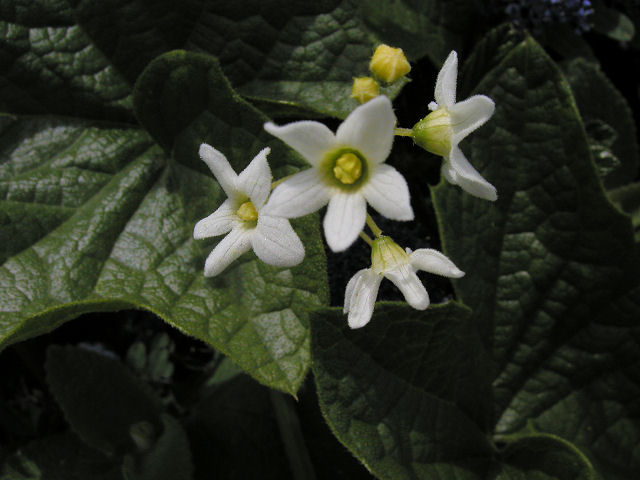
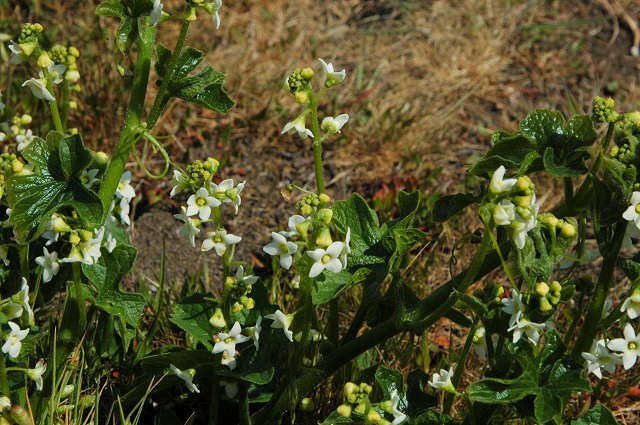
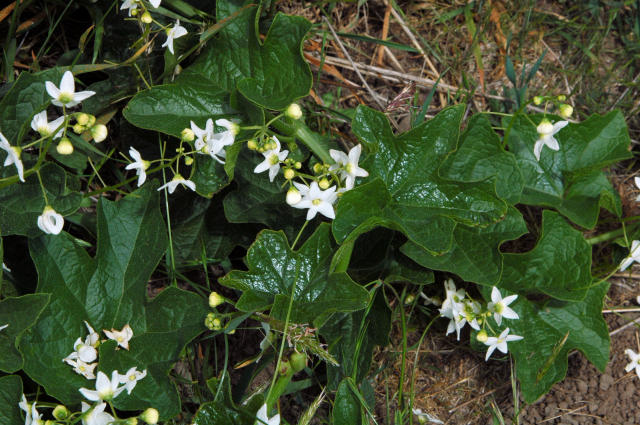
Marah fabacea (previously known as Marah fabaceus) grows along streams and embankments and in shrubby and open areas. It has yellowish green or cream-colored flowers or occasionally white (those found inland), rotate (spreading, with a short or non existent tube), flowers. The fruit is globe shaped with a spiny surface. It is found in California in the Sierra Nevada and the coast ranges. I believe these pictures taken on the bluff at Salt Point State Park are this species although Marah oreganus also grows in the park. Photos by Mary Sue Ittner.
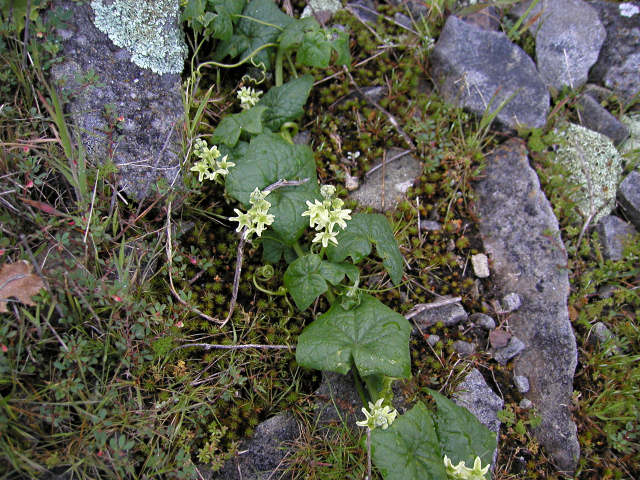
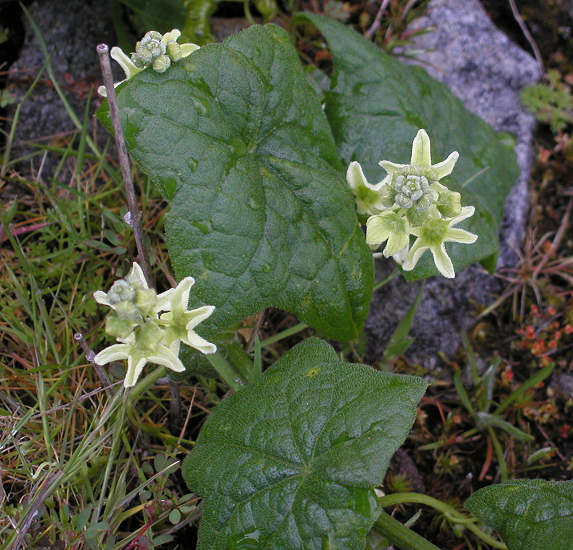
Marah oregana (previously known as Moraea oreganus) grows on slopes, in canyons and hilly areas and the edge of forests from San Francisco Bay area, California, north to British Columbia. Flowers are white, small, and bell like. The fruit is tapered to a beak, often striped dark green with prickles sparse to dense. Photos taken by Bob Rutemoeller and Mary Sue Ittner at Manchester State Beach and another sandy areas near the ocean.

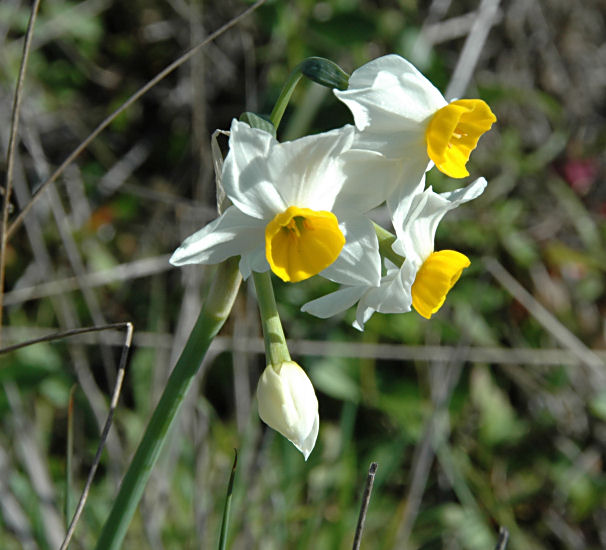
Narcissus spp. Various Narcissus species or cultivars can be found along the coast as garden escapees since they are not native. Photos below were taken by Bob Rutemoeller at Salt Point State Park in January 2009. Plants look like Narcissus tazetta, but they could be a cultivar.

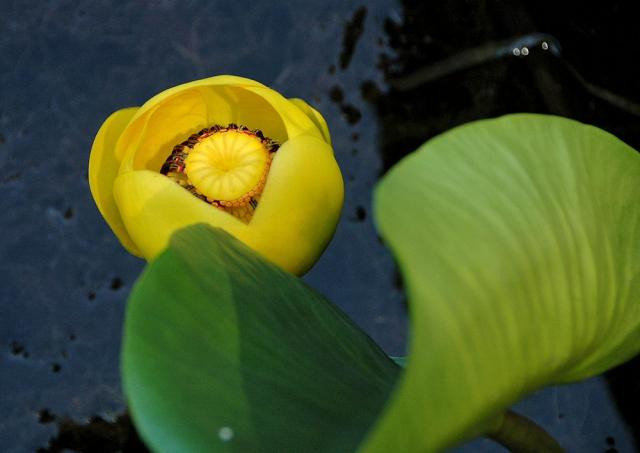
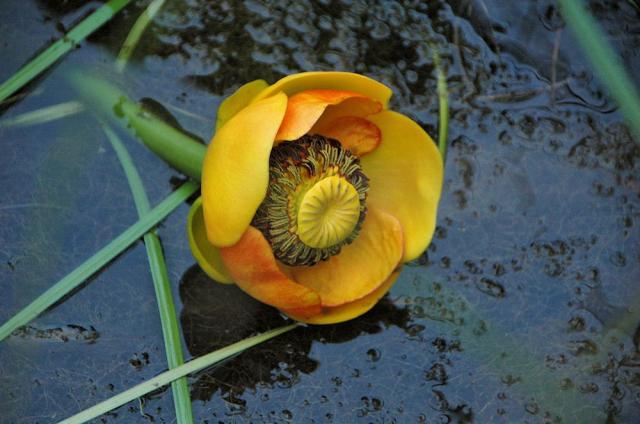
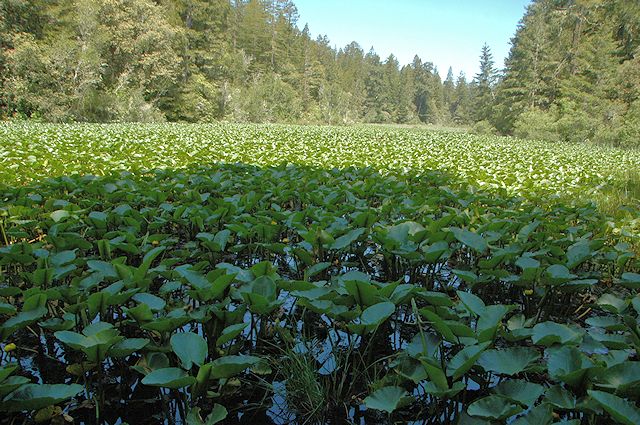
Nuphar polysepala is native to western North America where it grows in ponds, lakes, and sluggish streams. It flowers late spring to summer. It has shiny large leaves lying flat on the water and big waxy yellow flowers. The photos below were taken by Bob Rutemoeller in Sonoma County where a pond was completely covered with this plant. The leaves were much more upright than usual so from a distance we did not recognize it, but a closer look at the striking flower made the identification secure.
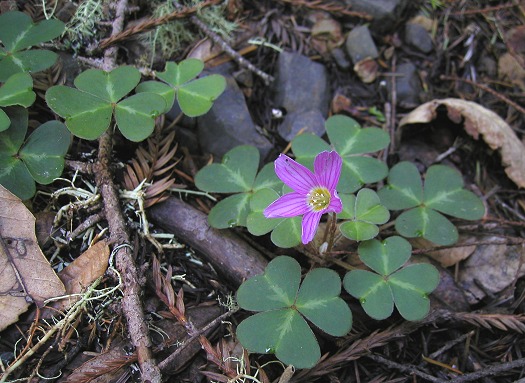
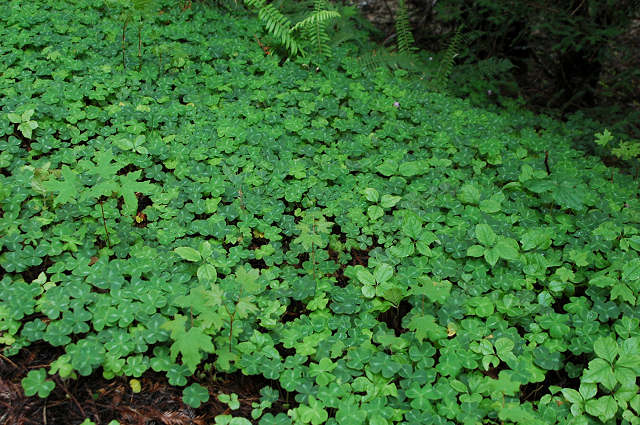
Oxalis oregana is a plant with green trifoliate leaves and purple flowers growing on horizontal rootstocks. It is a ground cover found in coastal forests from California to Washington. In shady Redwood forests it is one of the few plants that competes well and you can often see great carpets of it there. The first one was photographed in Kruse Rhododendron State Park in California by Bob Rutemoeller and the second picture from Mary Sue Ittner shows the carpet of leaves you often see.
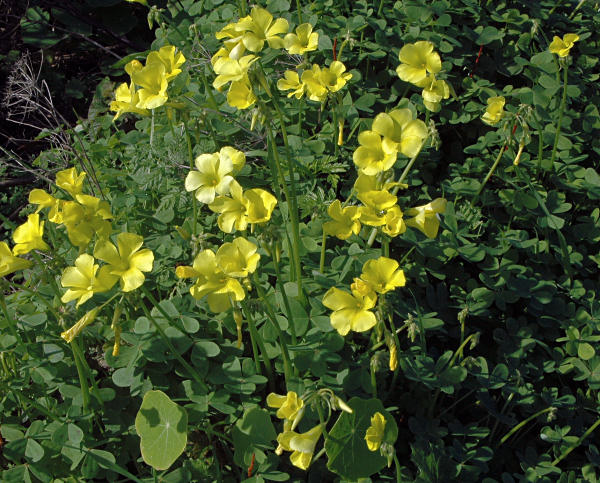
Oxalis pes-caprae is a terrible escaped exotic that is native to South Africa. It is found in many areas along the coast. These pictures were taken in Mendocino County close to Highway One. Photos by Mary Sue Ittner.
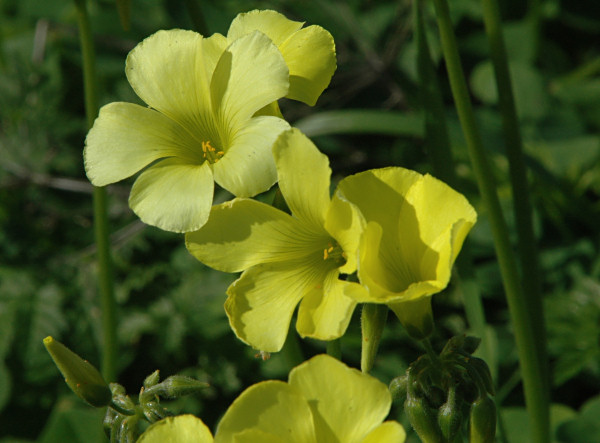
Piperia elegans ssp. elegans is generally found in dry, open sites, scrub, conifer forest below 500 m from California north to British Columbia flowering May through September. Photos taken by Bob Rutemoeller different years in July and September.
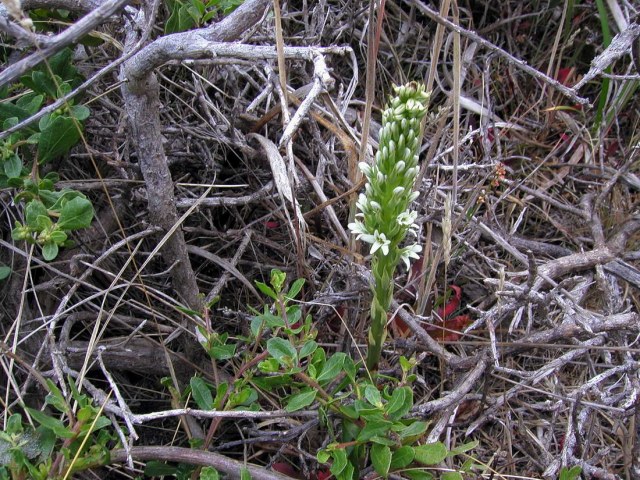
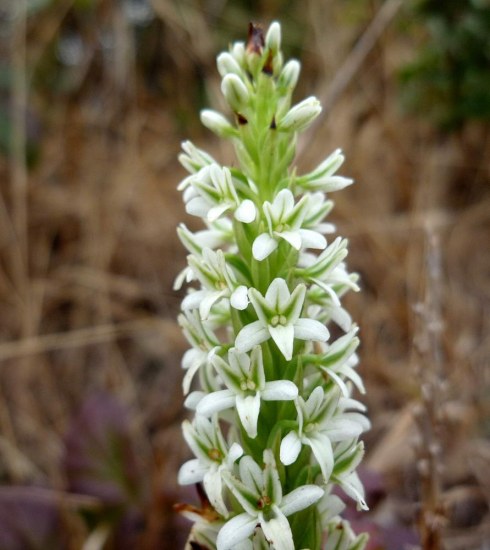
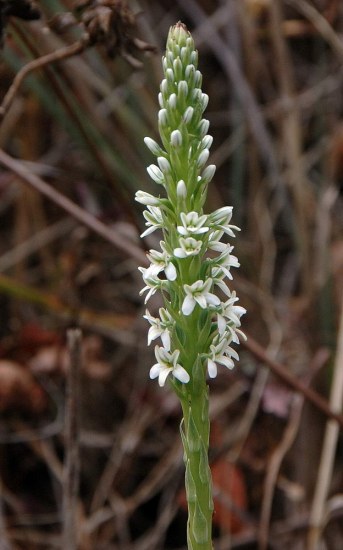
Piperia transversa or the royal rein orchid is found from California north to British Columbia. It is usually found in dry sites, scrub, oak woodland, mixed-evergreen or conifer forest. The basal leaves are usually withered by the time it blooms, late May to August. Photos taken by Mary Sue Ittner early July 2016.
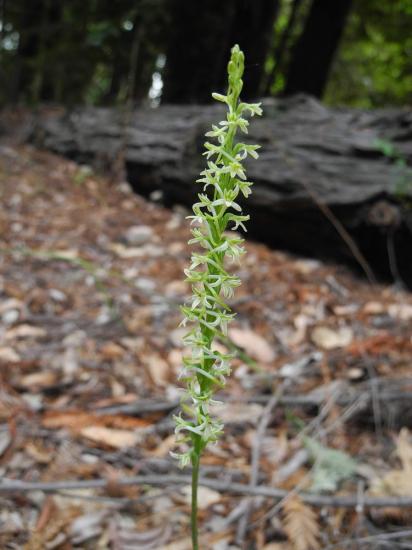

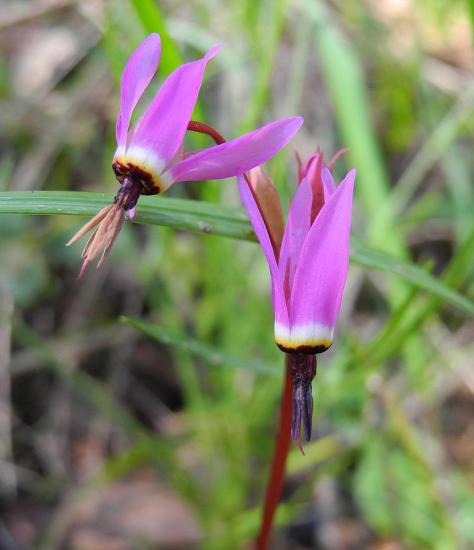
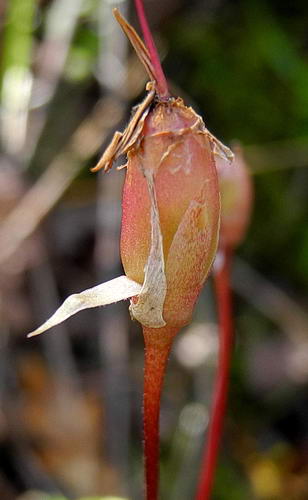
Primula hendersonii, syn. Dodecatheon hendersonii, known by common names Henderson's shooting stars and mosquito bills, grows in grassland communities and oak and conifer woodlands where it is found in sunny or often shady places from British Columbia, Canada, south to California. Photos from Mary Sue Ittner were taken March 2016 where it was growing in Sonoma County on the bank on a shady forested road.

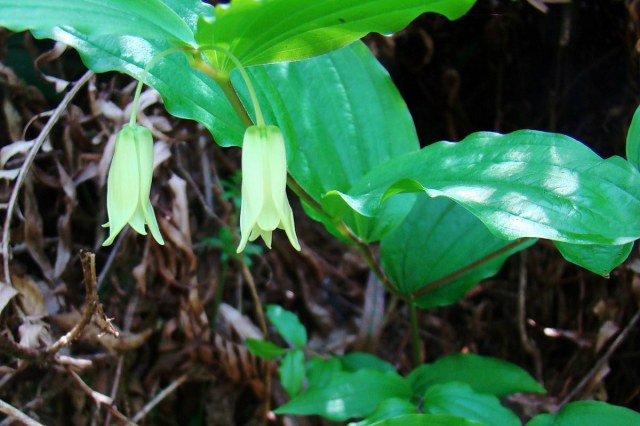
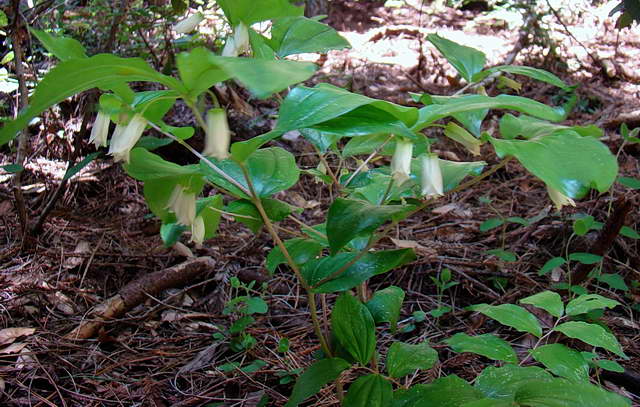
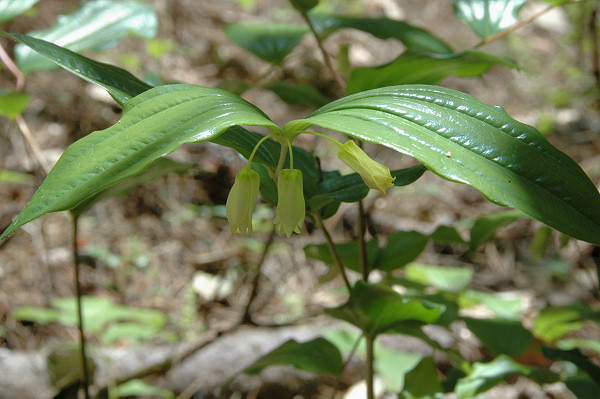
Prosartes hookeri Torr., syn. Disporum hookeri (Torr.) G.Nicholson, known as Hooker's fairy bells or drops-of-gold has creamy white bell shaped flowers and is found in shady woods flowering early spring to mid summer. In the pacific states it occurs more inland and away from the coast. It has smaller flowers than the other species with stamens equal or greater than the perianth. Photos from Mary Hunter, Bob Rutemoeller, and Mary Sue Ittner.
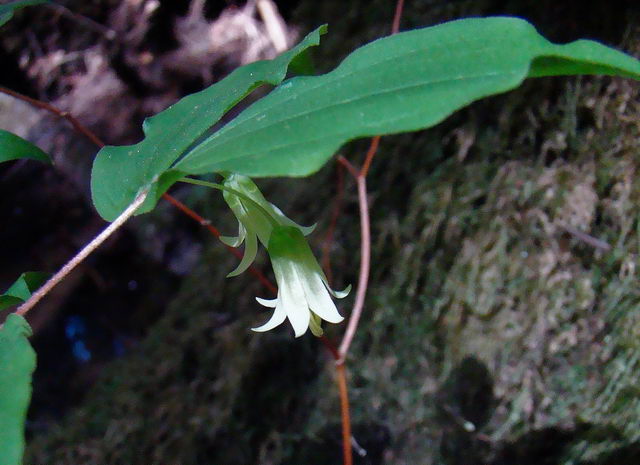
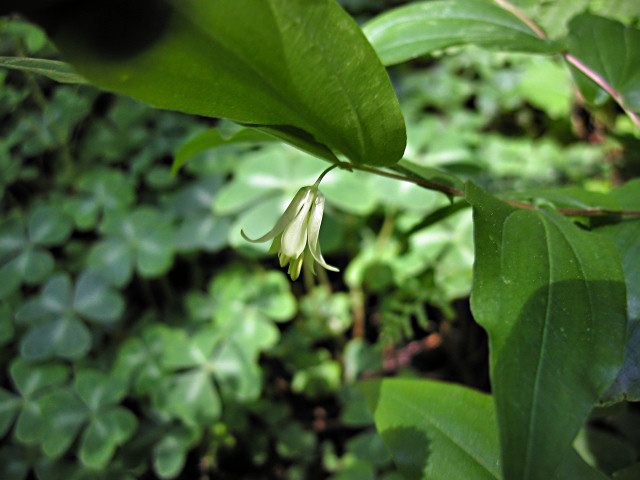
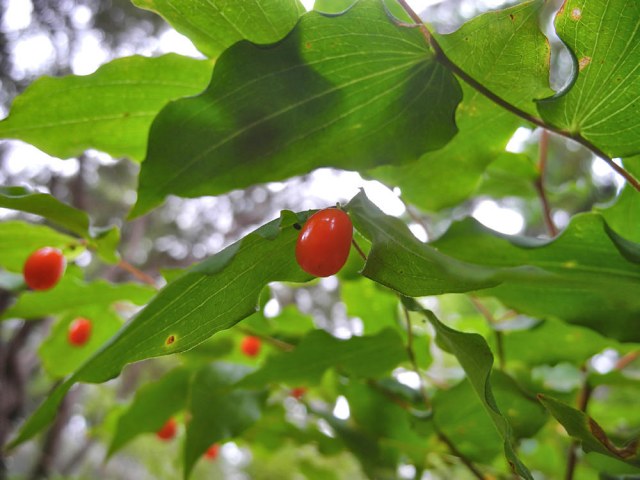
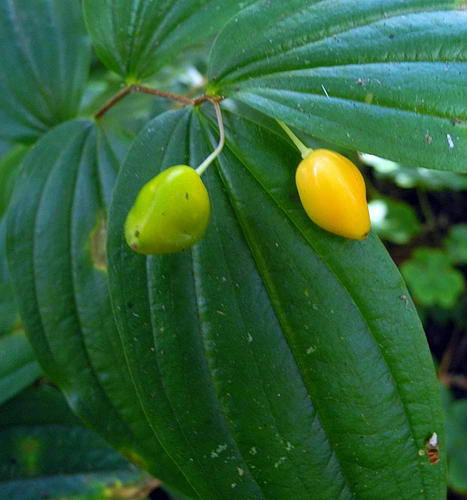
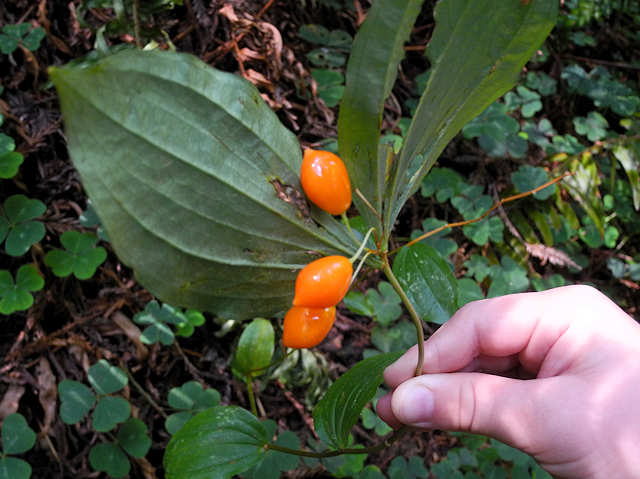
Prosartes smithii , syn. Disporum smithii or Fairy Bells is found in moist shady forests near the coast. It has creamy white bells that hang under the leaves and therefore are not easy to see followed by the ovate berries that eventually turn from green to large orange red. This species spreads only at the tip and stamens are inside the perianth. Photos from Mary Hunter, Bob Rutemoeller, and Mary Sue Ittner.
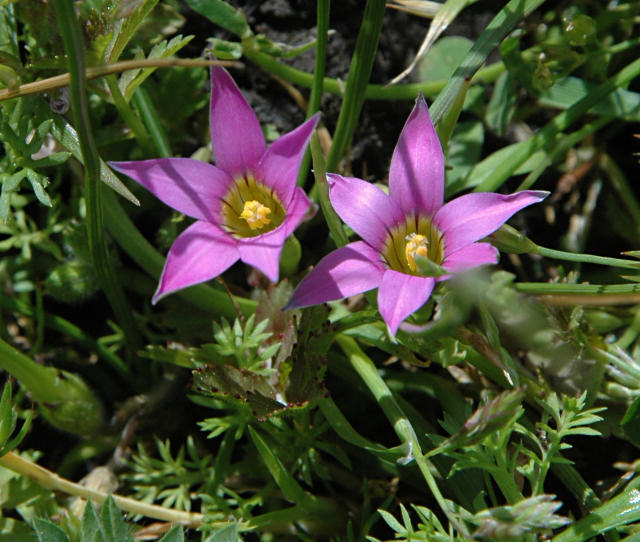
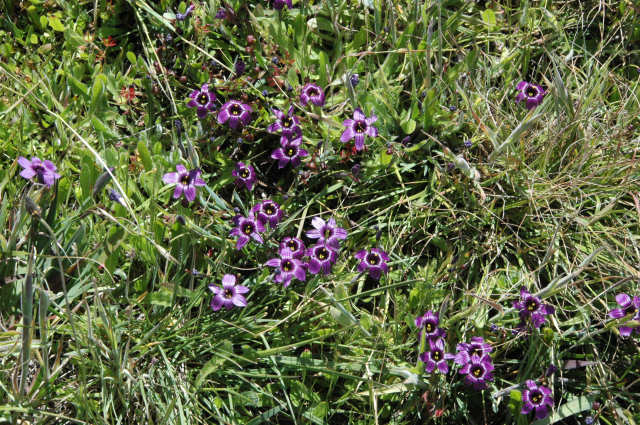
Romulea rosea is another exotic from South Africa that in 2010 was noted by the California Weed Council as a species to be concerned about after it was discovered in large numbers on the Jenner Headlands in Sonoma County. When hiking there, we saw a huge number in bloom and in seed. Most were growing in grassland that already is composed of a majority of exotic species (including the non-native grasses). Photo by Mary Sue Ittner.
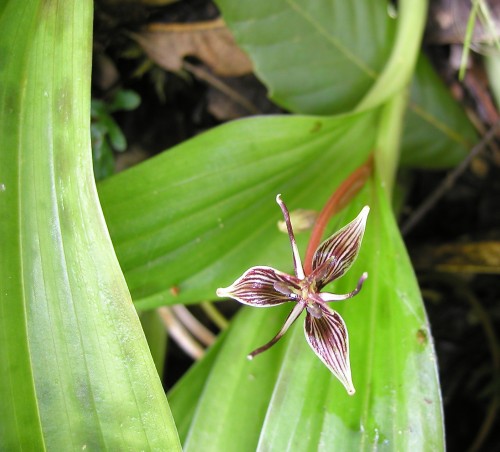
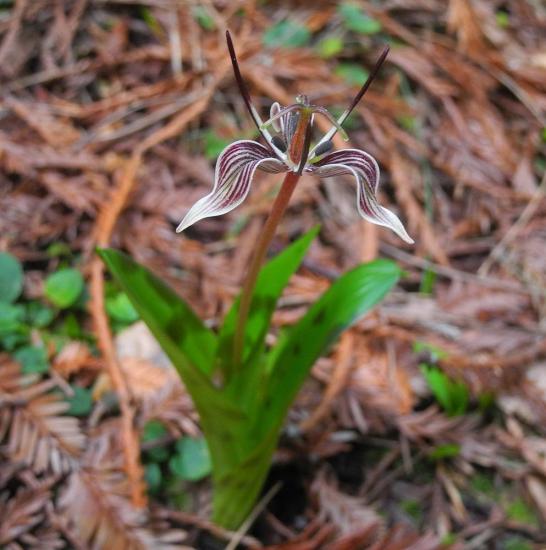
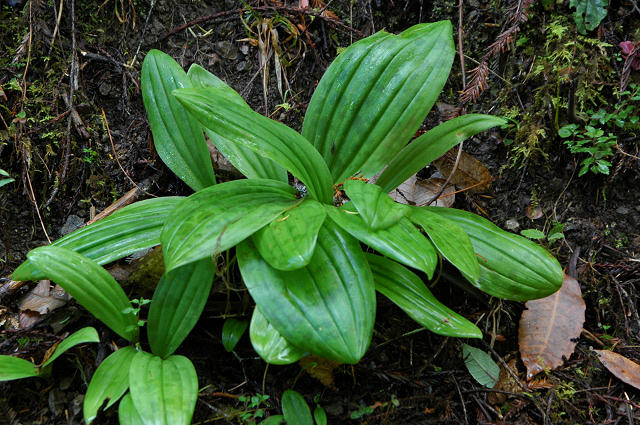
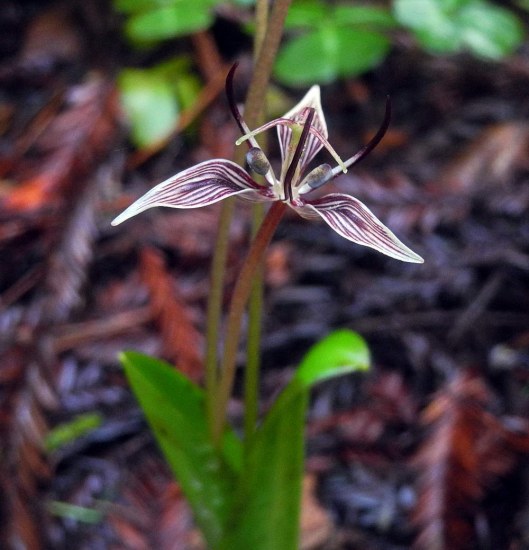
Scoliopus bigelovii is a northern coastal California species that is found in very wet habitats: mossy streambanks and moist, shady forests. This plant is called slink pod or fetid adder’s tongue by locals. The first one photographed by Bob Rutemoeller was blooming in May 2003 in Sonoma County, California. The next three photos were taken by Mary Sue Ittner of new leaves and a flower in February 2016 and later in another year of the spotted leaves after flowering has finished. The last photo was taken along Skaggs Springs Road late January, 2019.
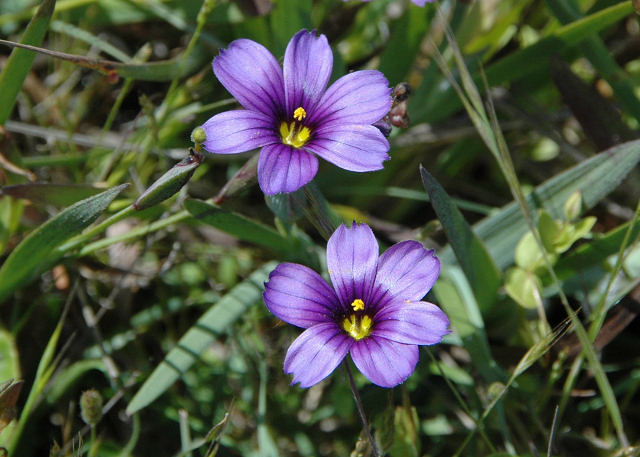
Sisyrinchium bellum , known as Blue-eyed Grass, is found in open grassy places in the Pacific States. The first photograph was taken by Bob Rutemoeller in Sonoma County, California in May 2003. A later picture of his is a close-up. The last photo from Mary Sue Ittner was taken in Mendocino County near Navarro Point June 2007.
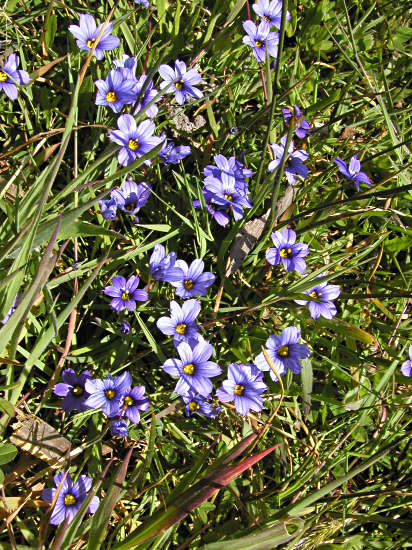
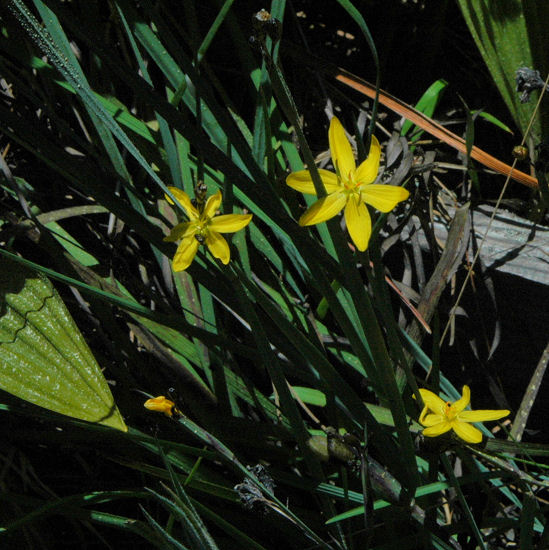
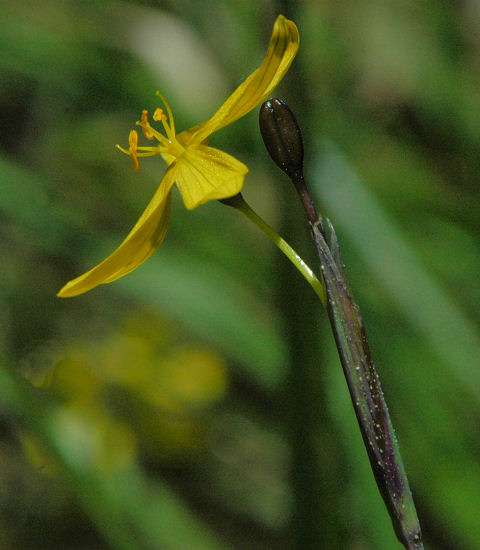
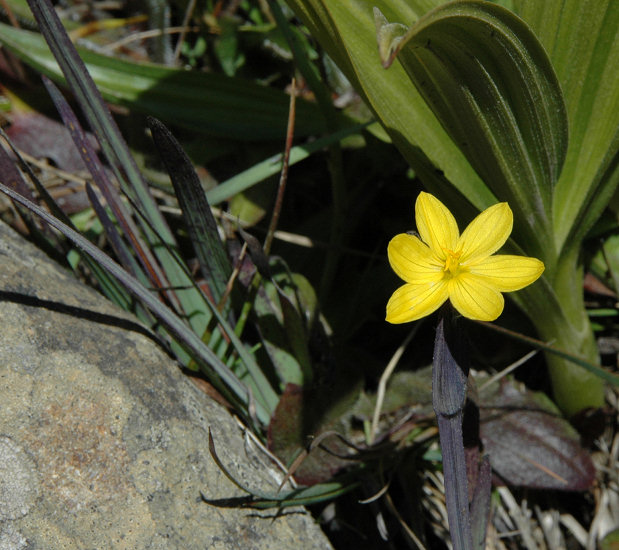
Sisyrinchium californicum , known as yellow-eyed or golden-eyed grass, is found near the coast in wet places from British Columbia to central California. Photos from Salt Point State Park, Sonoma County, California where it is found growing only in marshy places or areas that get extra water such as road verges. Photos by Mary Sue Ittner and Bob Rutemoeller.

Smilacina racemosa see Maianthemum racemosum
Smilacina stellata see Maianthemum stellatum
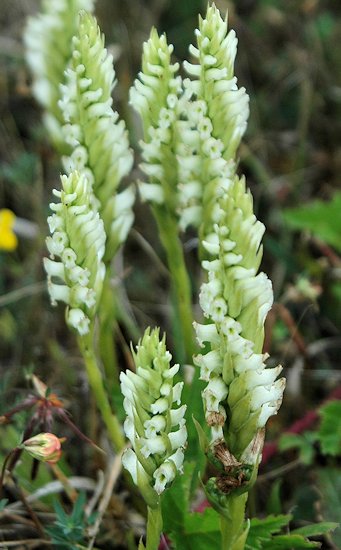
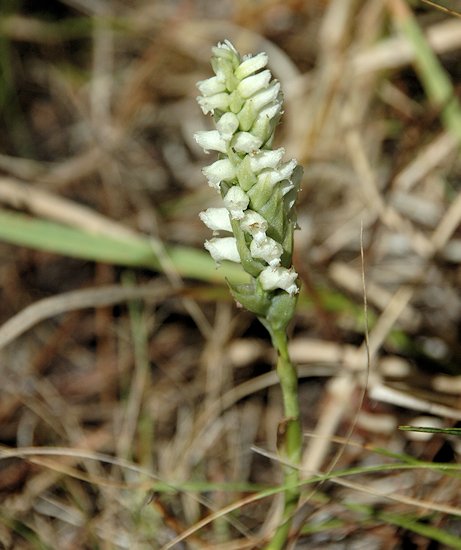
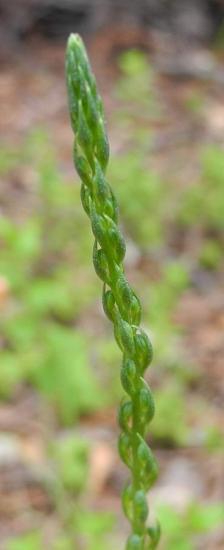
Spiranthes romanzoffiana known by the common name of hooded ladies tresses is found in various habitats in North America (forests, riparian wetland), but also coastal bluffs and dunes. Photos taken by Mary Sue Ittner and Bob Rutemoeller at Manchester State Beach and Salt Point State Park in summer.