This wiki page shows pictures of geophytes growing in the wild in northern California along the Sonoma Mendocino coast arranged alphabetically from T through Z. Rainfall in this location starts in the fall with the most rain coming in December and January with less rain continuing sometimes as late as May. Summers are dry although there are periods of fog in summer which brings some moisture. Temperatures are moderate year round. Habitats are mixed evergreen and Redwood forests, bluff scrub, riparian and some limited grasslands, but much of this latter habitat (grasslands) is now gone. Most flowers bloom late spring into summer.
Mendocino Sonoma Coast Index - Allium to Calypso - Camassia to Dodecatheon - Epipactis to Maianthemum - Marah to Spiranthes
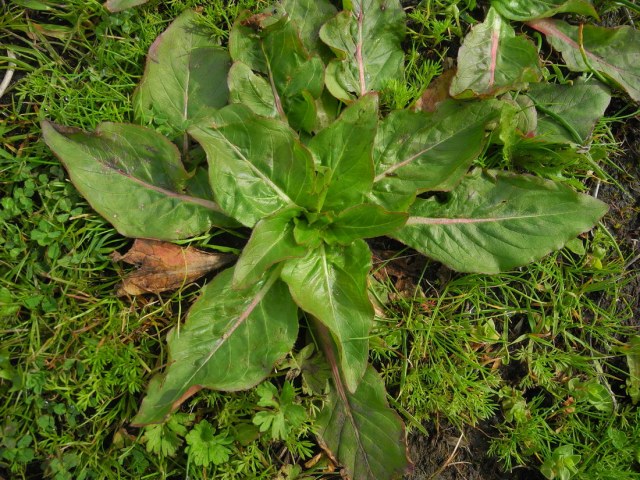
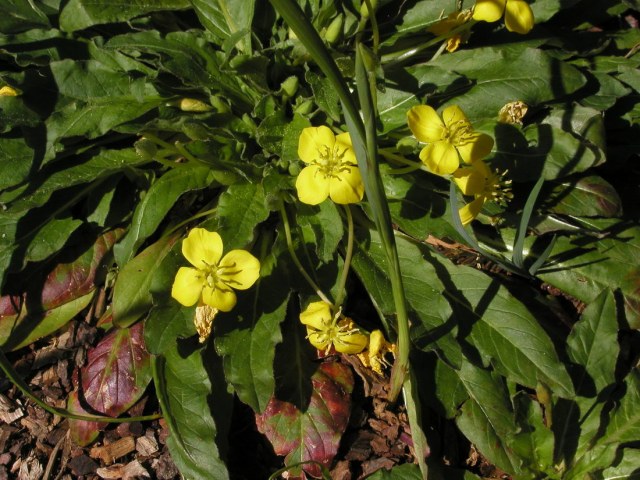
Taraxia ovata, formerly known as Camissonia ovata and by the common name of coast sun cup or sun cups, is found in grassy fields not far from the coast from Oregon to central California. It grows from a long taproot and flowers March to June. Photos taken by Mary Sue Ittner in Mendocino and Sonoma Counties, California.

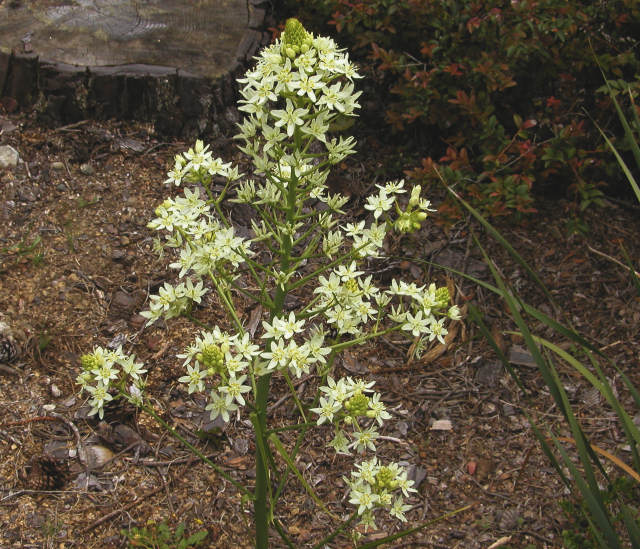
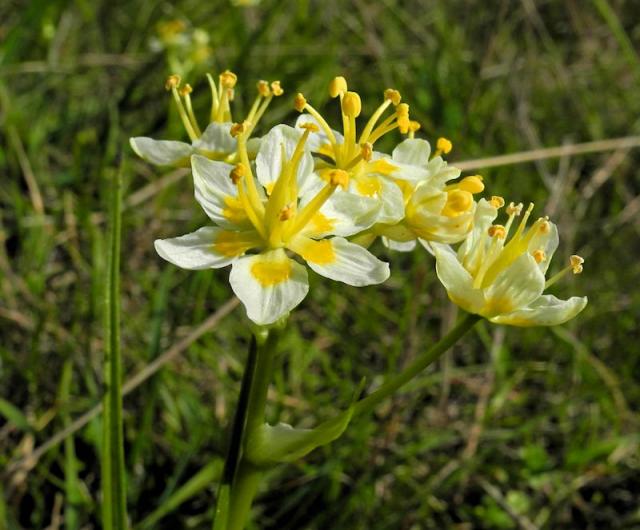
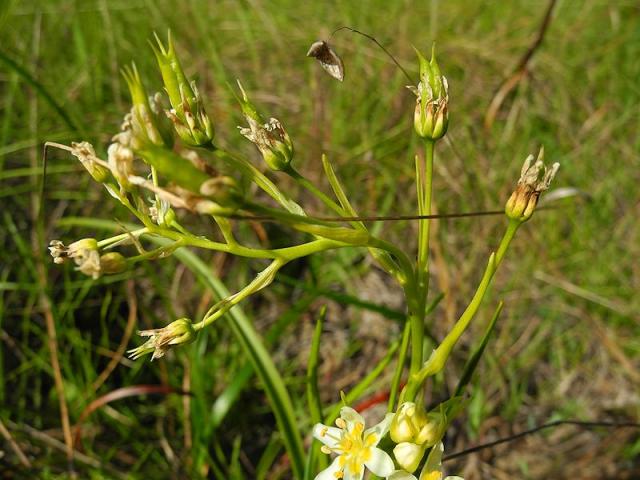
Toxicoscordion fremontii formerly known and still listed in books as Zigadenus fremontii is a plant with white showy flowers in open panicles. It is found both near the coast and on the ridges. It can be seen flowering in abundance in areas that have been cleared by fire or otherwise the following spring. All species of Toxicoscordion are poisonous because of a toxic alkaloid they contain. There is a shorter form that may be this species or another that blooms earlier in the year than the more common robust form. Photos by Mary Sue Ittner of a plant blooming on the bluff at Salt Point State Park, and some growing on the ridge in Mendocino County.
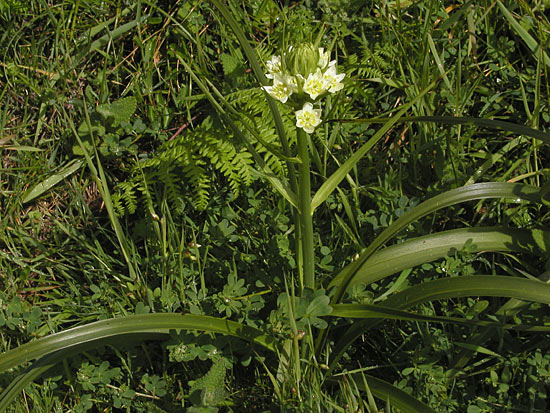
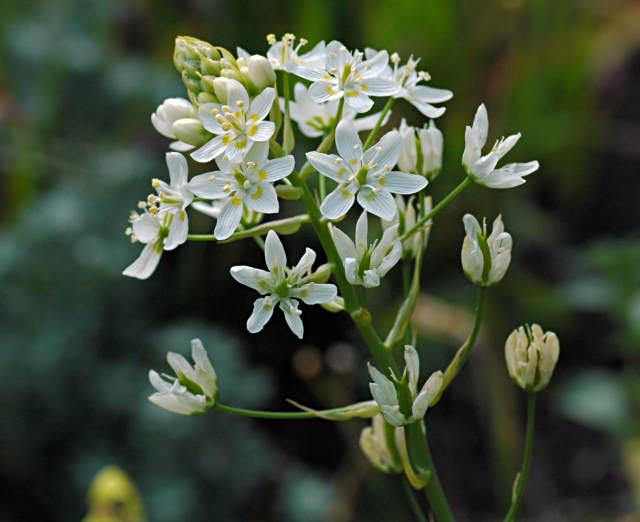
Toxicoscordion sp. photos below were taken on The Sea Ranch in Northern California in January 2015 by Mary Sue Ittner and Bob Rutemoeller in a number of locations. This smaller, shorter species with thinner leaves grows in open grassy areas and blooms early in the flowering year. It doesn't quite fit any of the current descriptions for species. In the past we assumed these plants were Zigadenus fremontii var. minor, but in the change to Toxicoscordion and in the revised Jepson Manual this variety is no longer recognized.
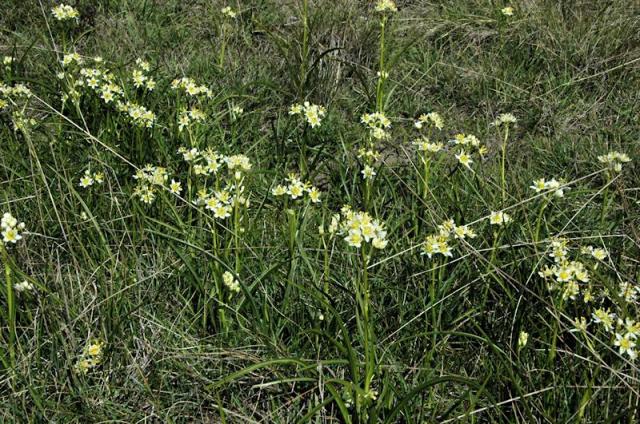
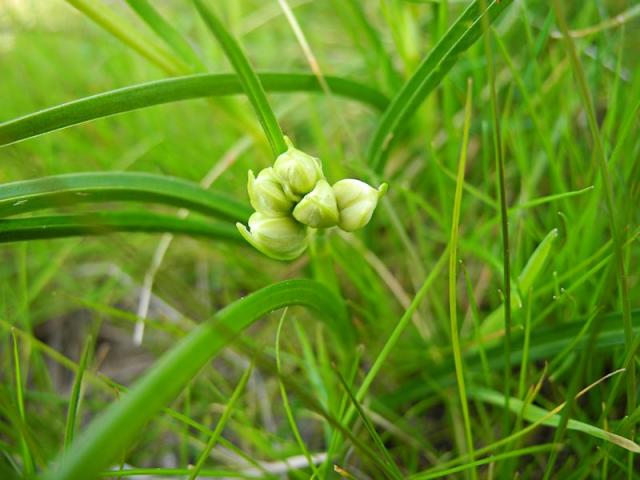
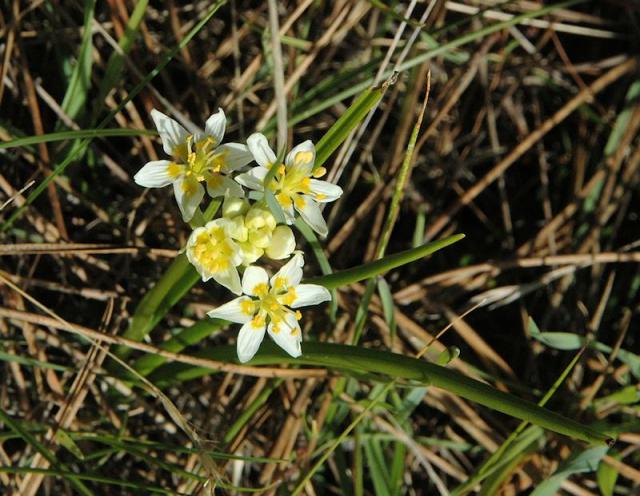

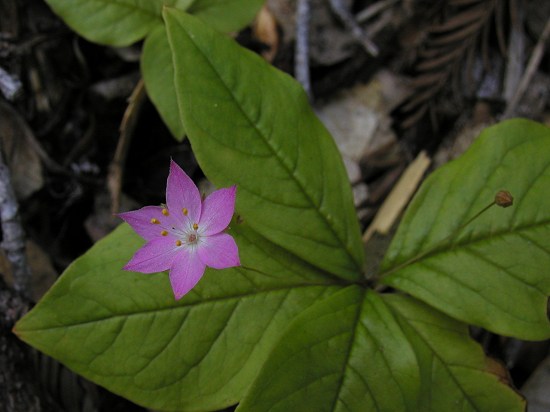
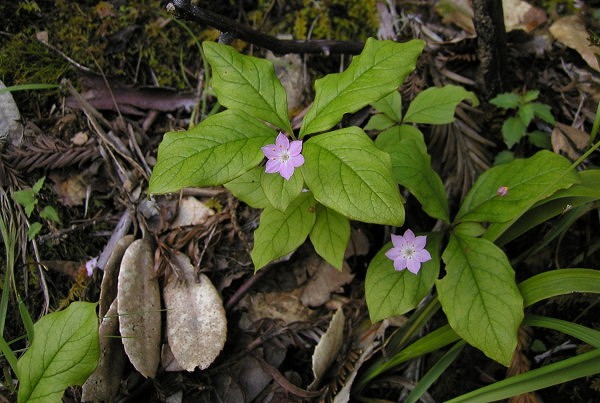
Trientalis latifolia (Pacific Starflower) is a fall and winter dormant perennial with a deep-seated tuber. It is a short plant of the shaded northwest forests with white to pale pink star-like flowers that appear in spring. These photos were taken in May 2003 in Sonoma County, California by Bob Rutemoeller
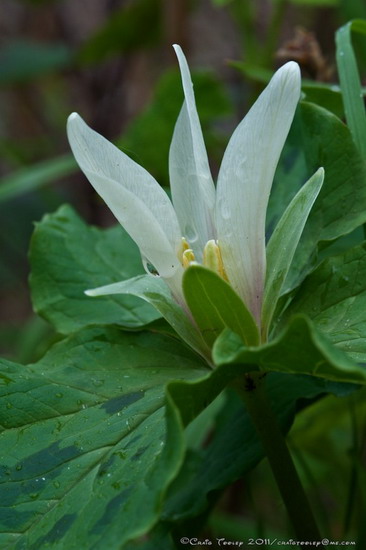
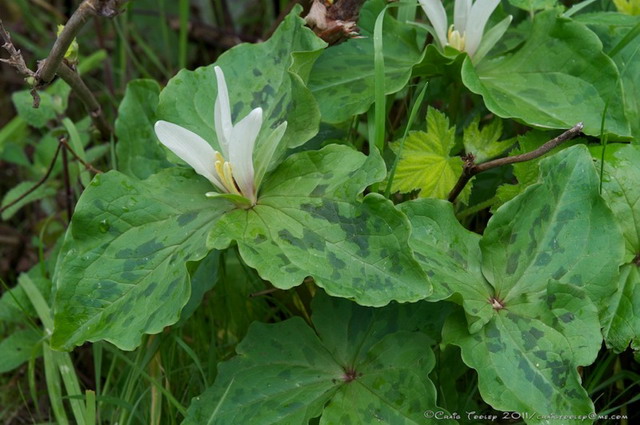
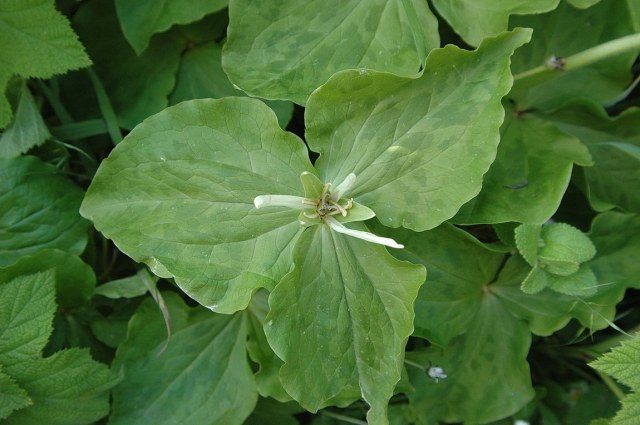
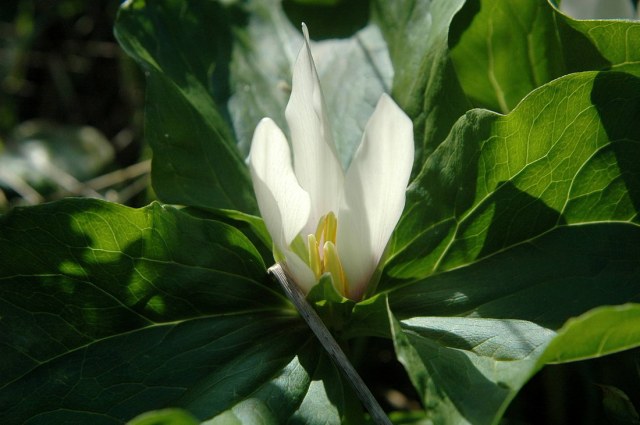
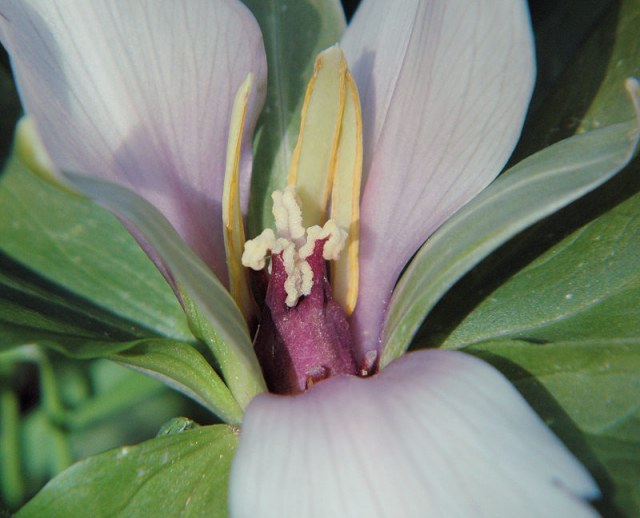
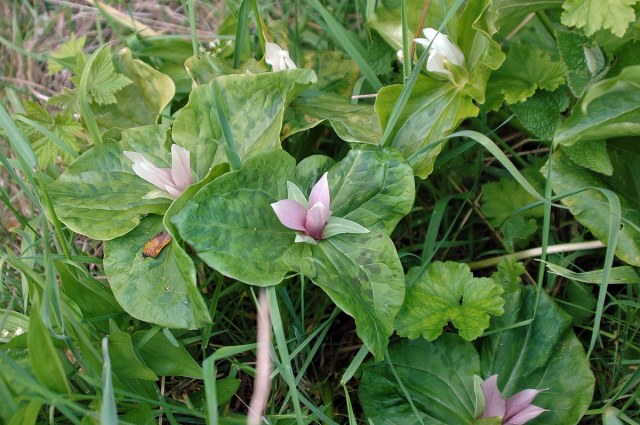
Trillium albidum is found in damp shady areas. It has white flowers to pink flowers that bloom on top of the 3 large oval mottled leaves without a flowering stem. The first two photos were taken by Craig Tooley on The Sea Ranch and the rest were taken by Mary Sue Ittner.
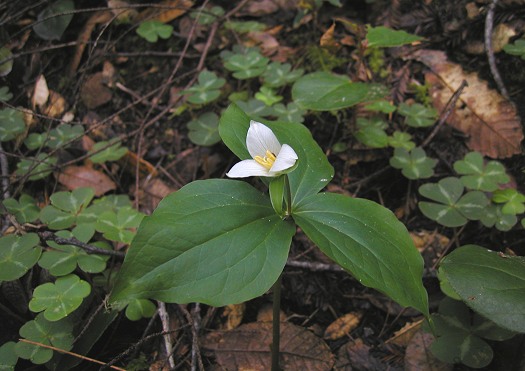
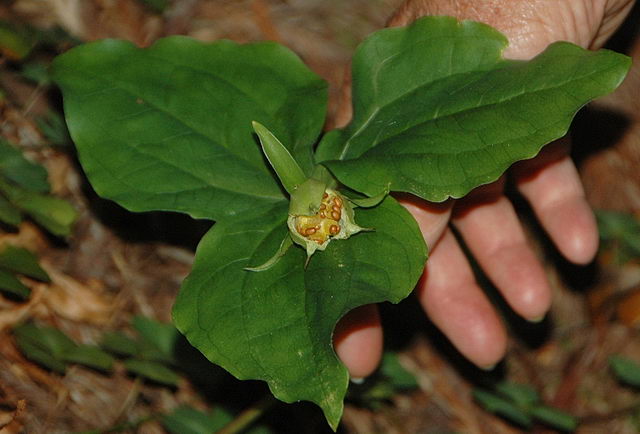
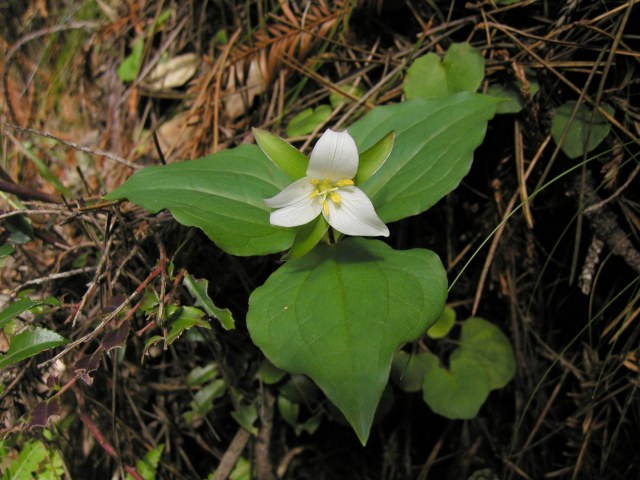
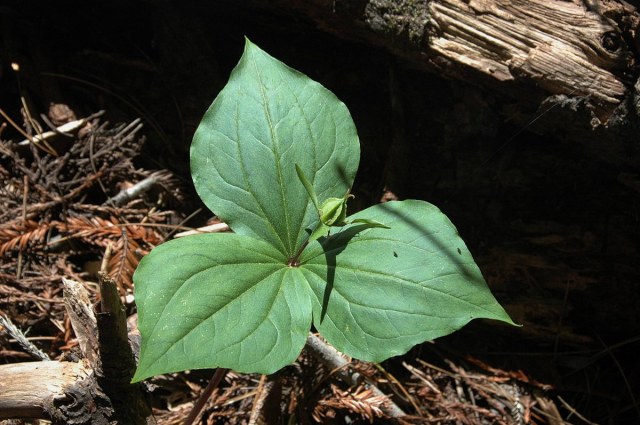
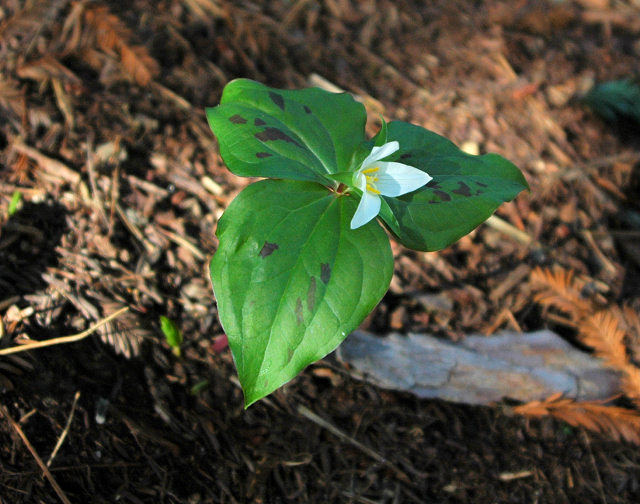
Trillium ovatum blooming May 1, 2003, photographed in the first two photos in Kruse Rhododendron State Park in Northern California by Bob Rutemoeller (with Oxalis oregana). The third photo from Bob Rutemoeller shows the fruit splitting open exposing seeds. This species carries its flowers on stems above the leaves, all in threes and is found growing in shady forests. This species opens white, but by the end of the week fades to rose. The fourth and fifth photos from Mary Sue Ittner are of a flower and the fruit. There are some plants with spotted leaves growing in this area called forma maculosum. The last photo from Mary Sue Ittner illustrates this one.

Triteleia hyacinthina is found in areas that are temporarily wet in spring. Photos by Bob Rutemoeller taken in Sonoma County in a grassy area.
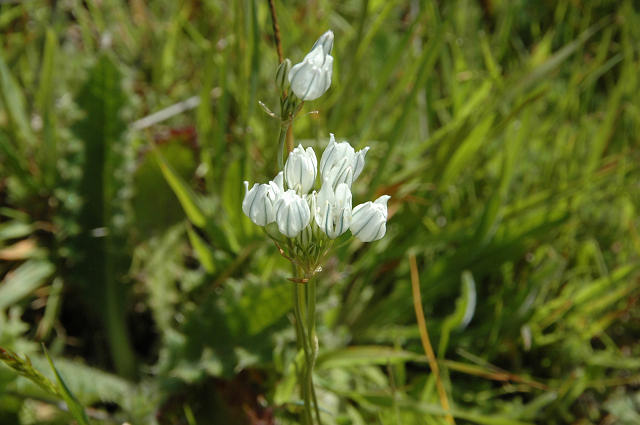
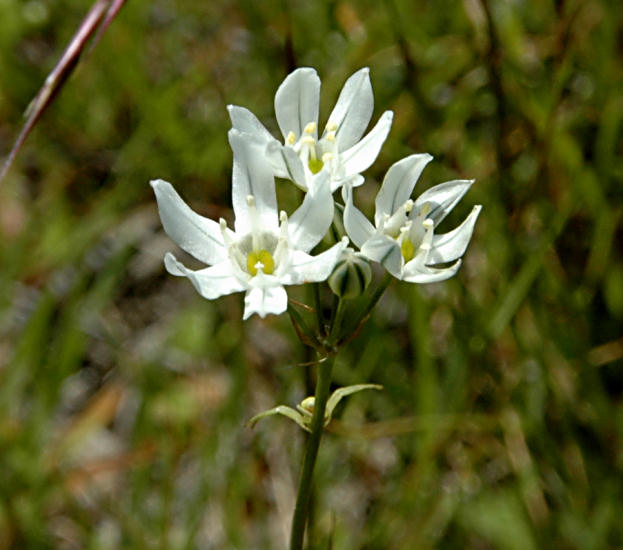
Triteleia laxa (Ithuriel’s Spear) that grows in this area is found in multiple habitats, grassy open areas near the ocean, and filtered light on the edge of forest and can be in flower in summer after the leaves have withered. Some of our populations are short with darker purple flowers, but others are tall and lighter. Photos below show many variations of plants photographed at Spring Ranch, Moat Creek, Point Arena Stornetta Public Lands, and near the Gualala River in Mendocino County and near the Gualala River and at Salt Point State Park in Sonoma County. Photos from Bob Rutemoeller and Mary Sue Ittner.
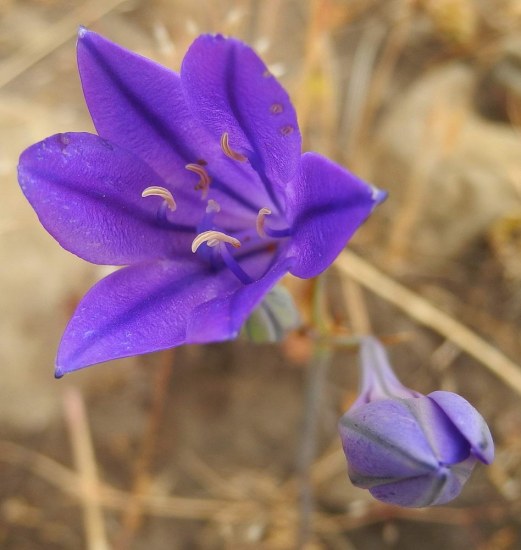
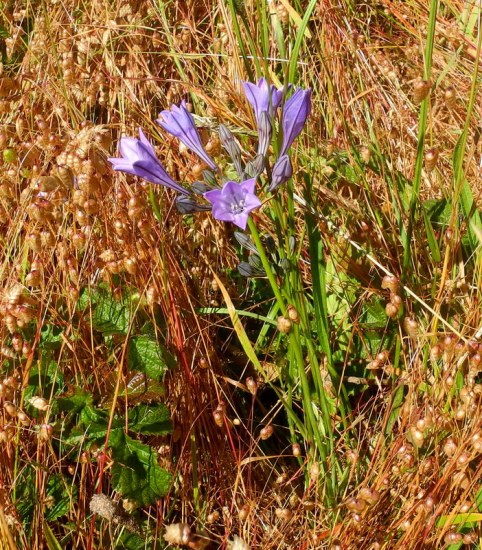
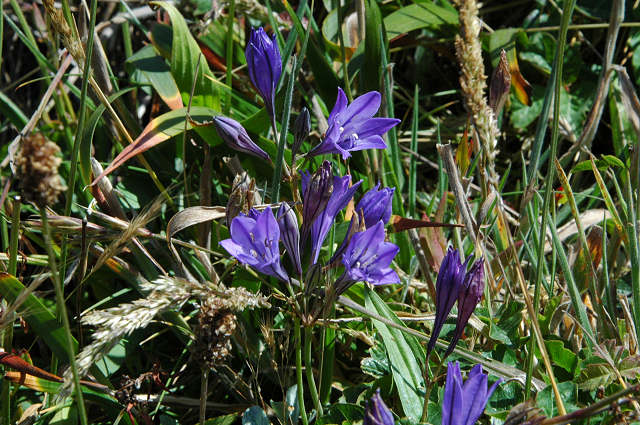
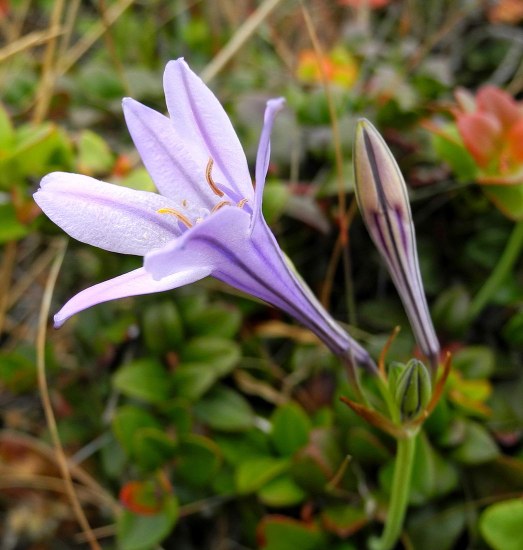
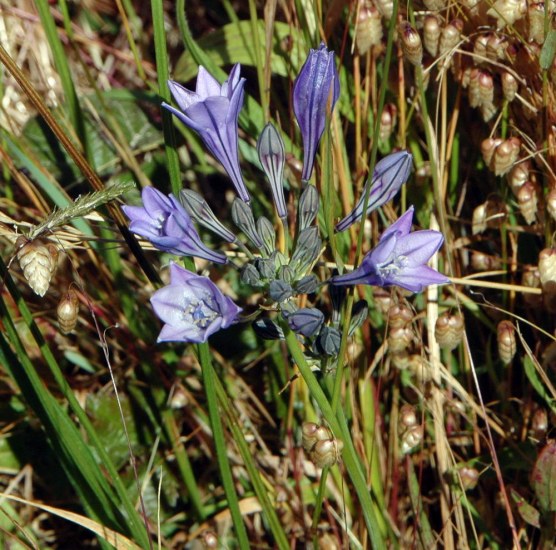
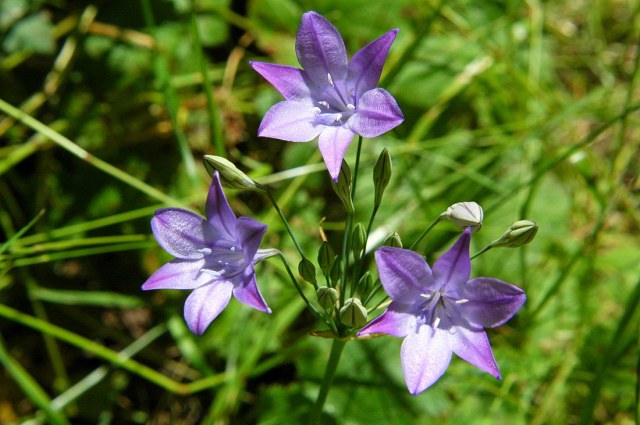

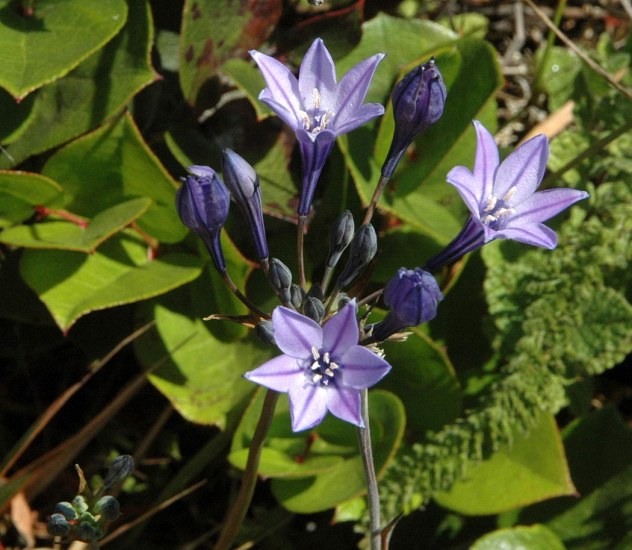
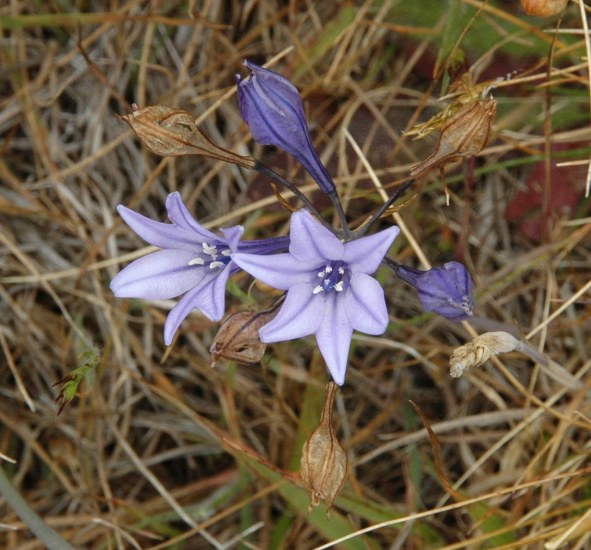
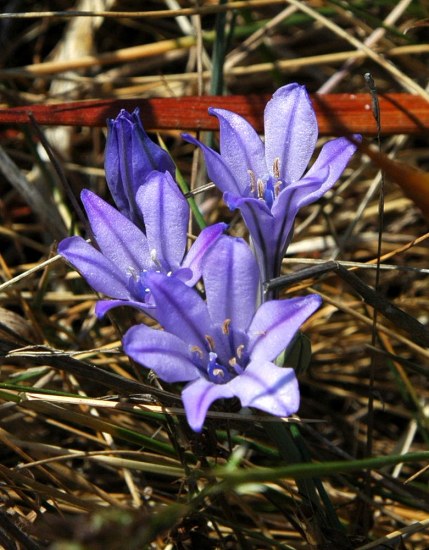
Triteleia peduncularis (long rayed hyacinth) is usually found in vernally wet habitats such as swales, marshes, and temporary streams. Flowering June 2006 in Stornetta Public lands, these plants did not have the long pedicel which so often is used as a distinguishing characteristic of this species. Photos by Bob Rutemoeller and Mary Sue Ittner showing the yellow ovary and distinctive markings on the back.
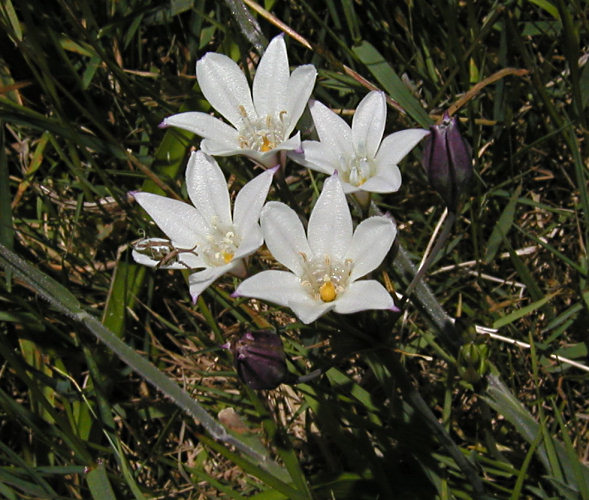
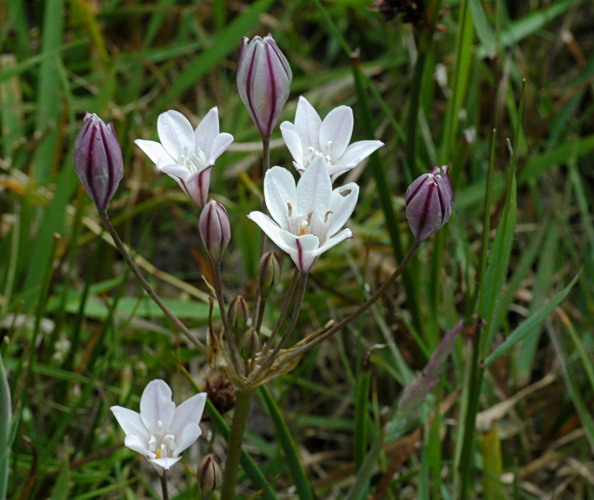
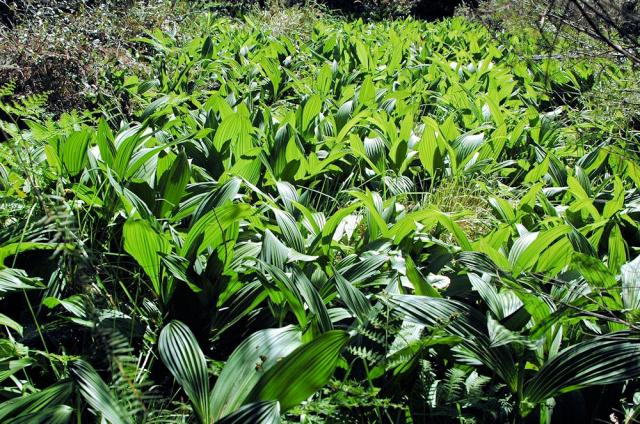
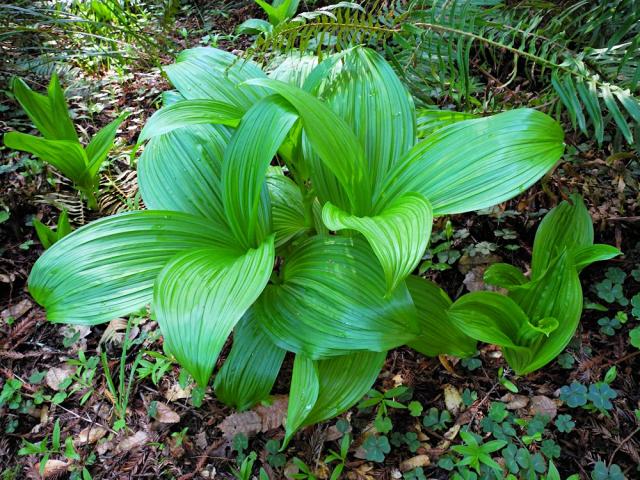
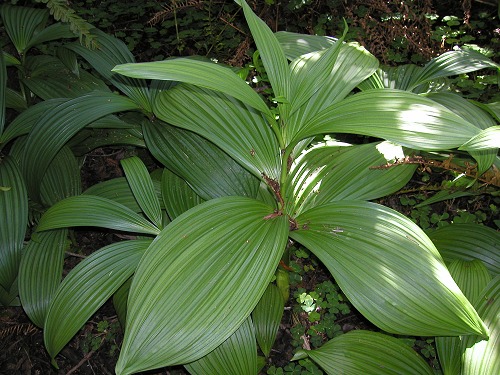
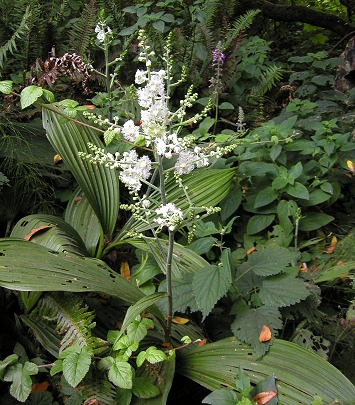
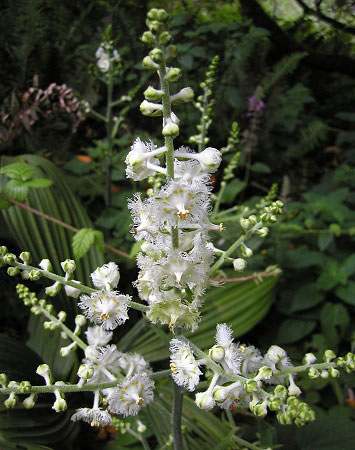
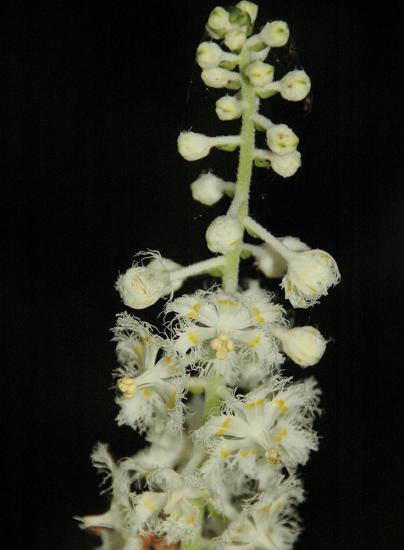
Veratrum fimbriatum known as the Fringed Corn Lily, is rare and restricted to shaded wet places on the Mendocino and Sonoma Coasts. It has white flowers with a yellow base and the petals are fringed. Leaves are large and pleated, emerging in spring, when they make a statement. By the time the plants blooms late summer, the leaves can be a bit weathered. Photos below from Bob Rutemoeller and Mary Sue Ittner first show leaves in spring and then flowering in late summer-fall. Habitat companions are: Oxalis oregana, Asarum caudatum and Polystichum munitum.
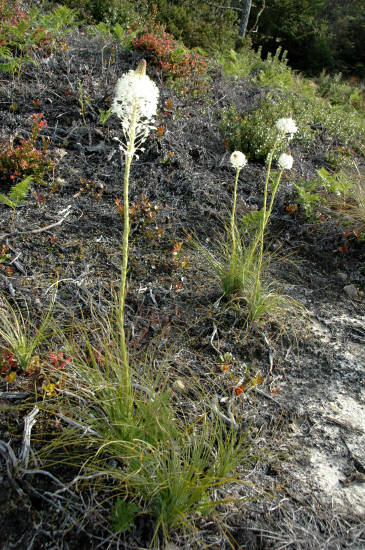
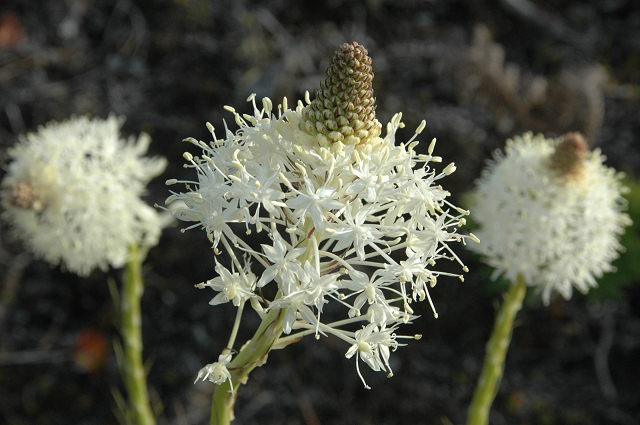
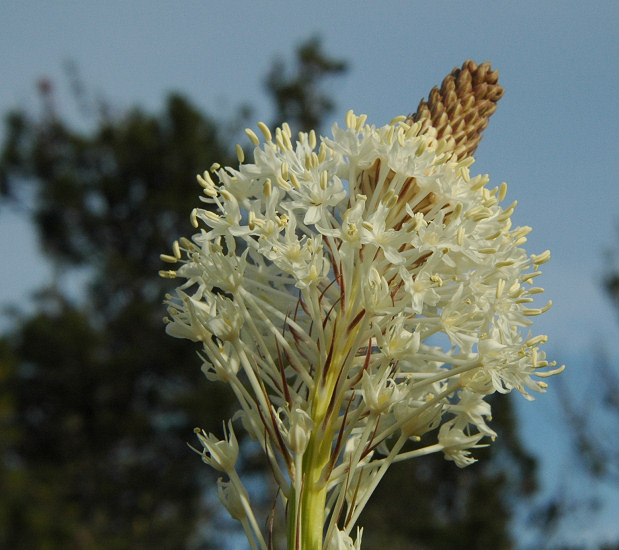
Xerophyllum tenax, commonly known as "Bear Grass", is an evergreen perennial growing from a large woody rhizome. Leaves are grassy growing in a clump and in our area flowers are rarely seen except after a fire. Plants photographed in May 2008 by Mary Sue Ittner and Bob Rutemoeller on a coastal ridge where they were blooming in an open area cleared for the power lines.

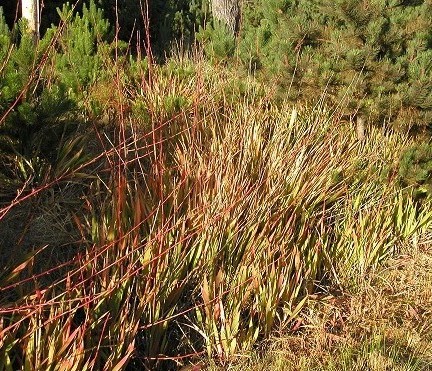
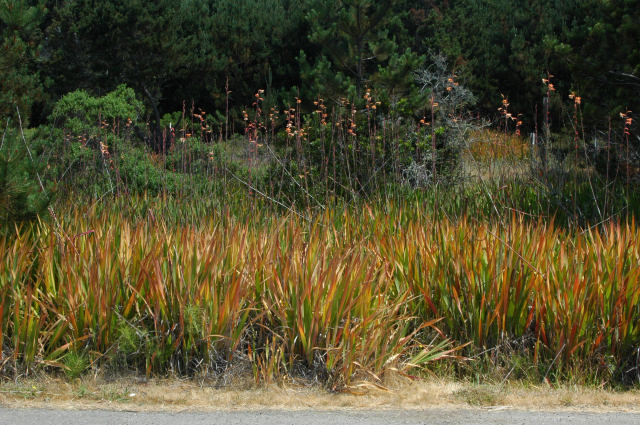
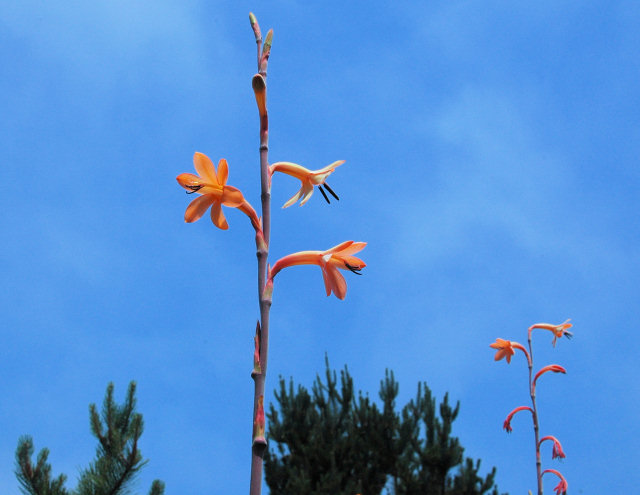
Watsonia meriana var. bulbillifera which is native to South Africa produces bulbils in the leaf axis and in the right climate can become a big pest as it has in coastal northern California. This first photo by Bob Rutemoeller shows the drying foliage which makes an ugly and ever extending display along Highway One in Sonoma and Mendocino Counties. The next two photos from Mary Sue Ittner were taken of a large stand near Salt Point State Park.
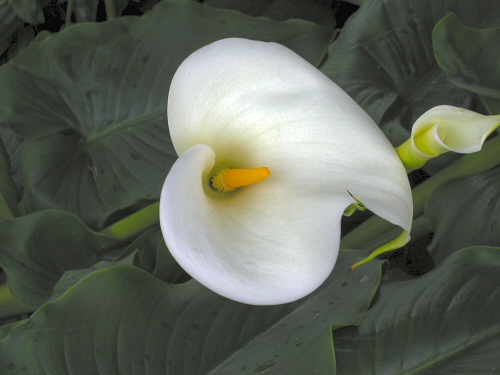
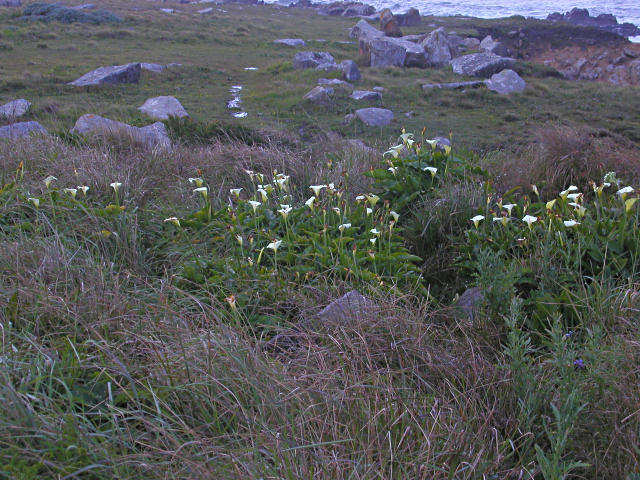
Zantedeschia aethiopica know in California as Calla Lily is native to South Africa, but has naturalized and is found in many places along the coast, including abandoned homesteads. Photos by Mary Sue Ittner show a close up of one in such a place and a grouping found at Salt Point State Park.
Zigadenus fremontii see Toxicoscordion fremontii