Amaryllis L. is the type genus for the family Amaryllidaceae. Although it is the common name used for hybrid hippeastrums which are found on the Hippeastrum Hybrids page, there are actually only two species in this genus and one of them was only named in 1998. Both are found in the winter rain area of South Africa. Both genera have large ground-level bulbs and strap-like leaves, but Hippeastrum has hollow stems and Amaryllis has massive stems. Amaryllis is summer-dormant and blooms in fall, before the leaves emerge. The flowers are in shades of pink and white, and the seeds are fleshy pink or white pea-sized spheres. Hippeastrum species are generally evergreen or winter-dormant, and many bloom with the leaves present. Flower colors vary from white to greenish yellow to reds and oranges. The seeds are black or brown, thin and papery, and will often float on water.
Cameron McMaster wrote a series of articles for Farmer's Weekly starting with this one in 2007 in which he described how plants were named and then wrote about the two species. Many Amaryllis selections have been made, and the species has also been hybridized very heavily with related genera for more than a century. To learn more about the history of some of these hybrids, read this conversation between David Sneddon and Jim Lykos, two Australian members of the PBS list. An example of these is xAmarcrinum, a hybrid between Amaryllis and Crinum. See also xAmarygia.
For more information and photos of some of the hybrids see Amaryllis hybrids, Les Hannibal hybrids 1-25, and Les Hannibal hybrids 26-48.
Amaryllis and its hybrid relatives have relatively large bulbs (the size of a softball or larger) and grow with the top of the bulb at the surface of the soil. The flower stalk is about two feet tall (0.7 m). Flowering is in fall, with individual florets opening over a period of a couple of weeks. The hybrids bloom over a period of 6-8 weeks, with different plants blooming at slightly different times. Flowering may be stimulated by summer fires, clearing away the weeds and other plant debris over them, and/or summer thundershowers. The flowers appear before the strap-shaped green leaves, which grow throughout winter and die back in spring. The plants are hardy to light frost, but prolonged freezes or hard frosts may damage the leaves and prevent flowering the next year. These bulbs are grown widely in Australia, and also thrive in coastal areas of California (USDA zones 9-10). They are harder to grow in inland areas of the state, where they do not bloom as reliably. We're not sure if the better flowering on the coast is due to milder temperatures there, or fog and higher humidity during the summer. If you're trying them inland, very occasional summer watering may help as it will keep the fleshy roots from drying out. But too much summer moisture will rot them.
Most bulb species should be transplanted when they are dormant (no leaves), but this is not true of Amaryllis and their relatives. The best time to transplant Amaryllis is just after they bloom in the fall, as the leaves are starting to emerge. Bulbs can be transplanted at other times, but often will not flower for a few years afterwards. Give the bulbs a good soaking at bloom time so the soil will be soft, then dig them up as the blooms fade. Save as many roots as you can. Separate the clumps gently, and plant the bulbs into a new spot that has also been watered so the soil is ready for them. Keep the roots lightly moist during this process. Plant them with their tops at ground level. If you transplant in summer while the bulbs are dormant, they may not flower for a year or two.
Amaryllis are notoriously difficult to flower in other parts of the United States. If you're trying them in those areas, take special care to protect them from rain in summer, and avoid winter freezing. If you're using pots, make them large ones, as these are massive bulbs with very large root systems. If you have trouble growing Amaryllis, you might want to try Lycoris, which have similar flowers but are much more tolerant of wet summers.
Amaryllis belladonna L., known to many as "Naked Ladies" because the flowers are pink to white and bloom before the leaves develop, is found in loamy soils in seasonally moist sites in the Cape Floral Province. It has a great variation in time of bloom, starting in summer and extending into fall. It has naturalized in many Mediterranean climates throughout the world and is especially popular in California. Height range: 2-3 ft.
Many people confuse Lycoris squamigera and Amaryllis belladonna because both bloom in the fall on bare stalks with no leaves, and both can have large pink flowers. You can see the differences on the Amaryllis belladonna versus Lycoris squamigera page.
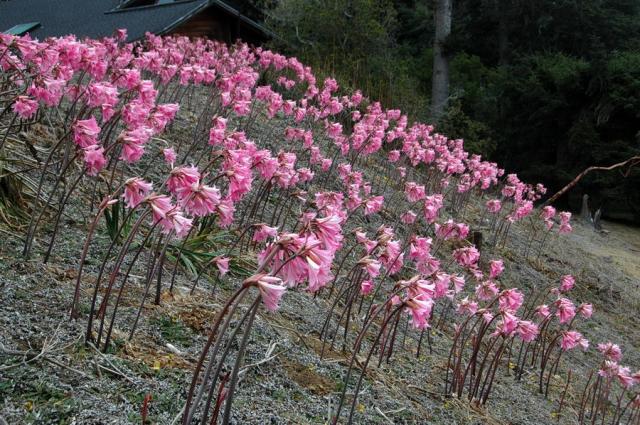
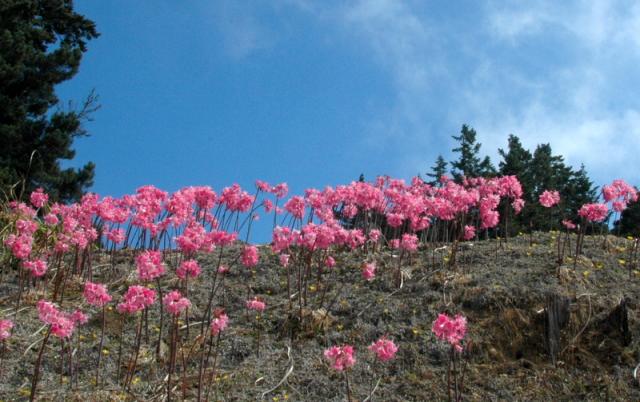
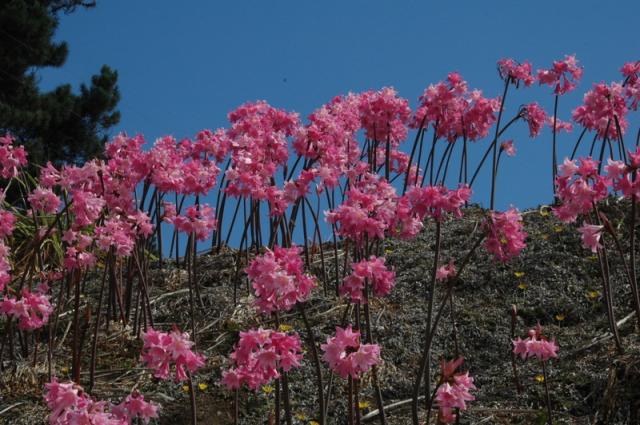
There have been many discussions on the PBS list about how to get Amaryllis belladonna to bloom. Members living in Mediterranean climates are much more likely to get it to bloom. People have said the bulbs need to stick out of the ground and they have also said they need to be covered. Some summer water may help, but you also hear a dry dormancy is helpful. Plants in the ground bloom better than plants in pots and plants growing in the sun are much more likely to bloom than ones in the shade. One factor that influences blooming in the wild is fire. After a summer fire, there is usually good bloom in the fall in the wild. In September 2009 a restaurant burned to the ground in northern California denuding the slope below which was covered with low growing vegetation. Several weeks later spikes were appearing. It's hard to know when or if these bulbs were planted since the slope is steep and it would seem to be impossible to plant them. The photos from Mary Sue Ittner don't capture how steep the slope is since I had to take the pictures with my zoom lens from the bottom. The third picture was taken the following month when more flowers were open. In 2012 the slope is now covered with non-native weedy vegetation and the plants are no longer flowering.
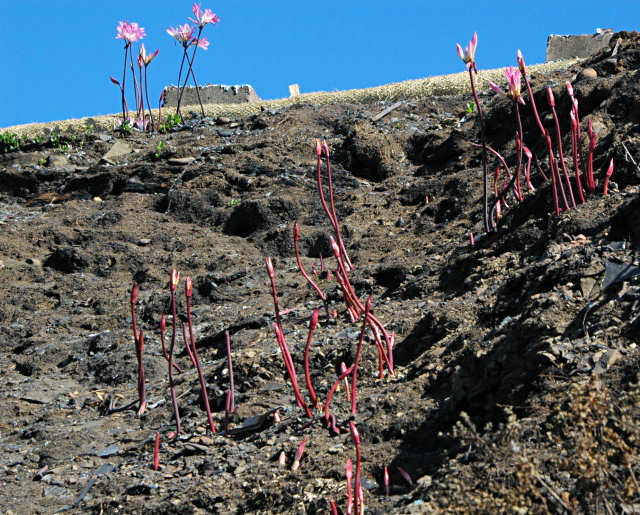
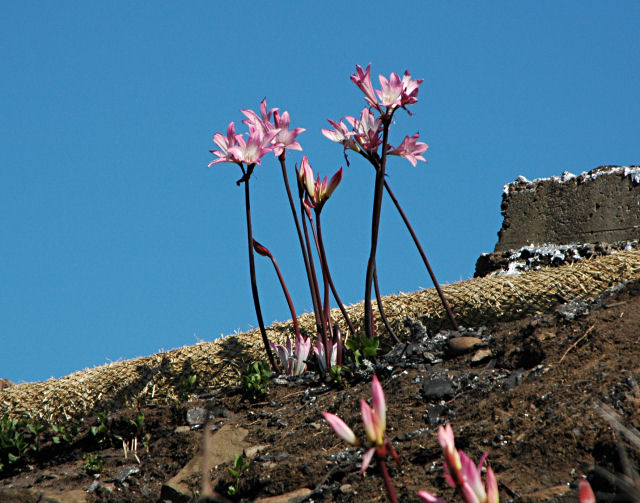
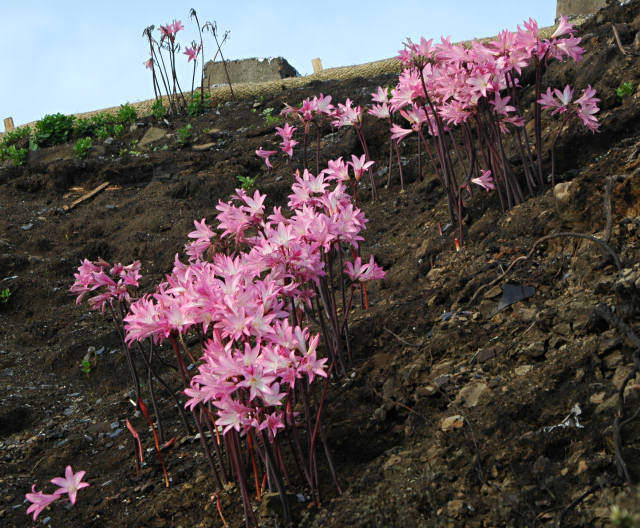
An article in Veld & Flora magazine described the plants' strong response to fire in the wild and speculated that they bloom more frequently in cultivation because weeds are removed from around them. The article has been reproduced here.
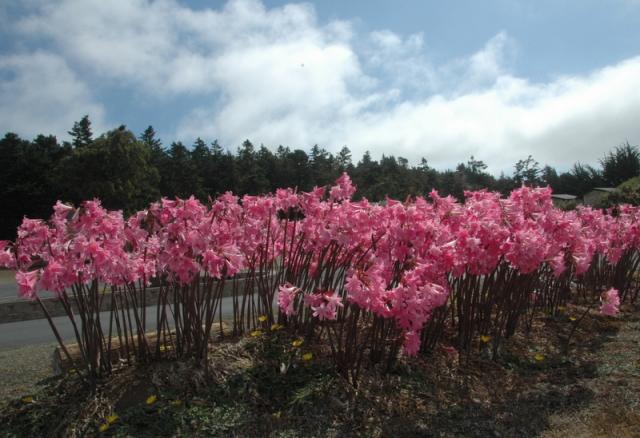
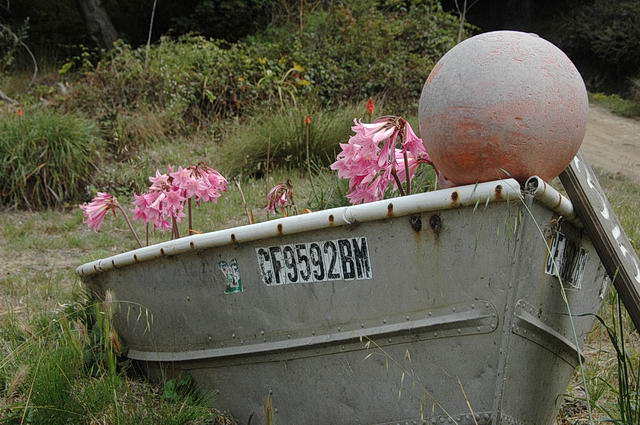
The first photo by Bob Rutemoeller shows some in bloom September 2004 on the Mendocino coast in northern California. Photos 2-4 are by Nhu Nguyen. Photo #2 is from a yard in Berkeley, CA and #3 is from the UC Botanical Garden showing these plants blooming dramatically en masse. The plants from the UC Botanical Garden bloomed in an early year in mid July, 2008. Photo #4 is a closeup. The last two photos from Mary Sue Ittner show a close-up of one flower and leaves.
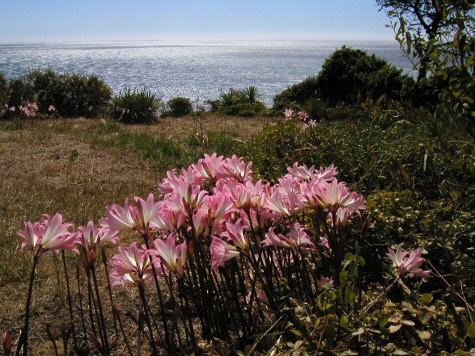
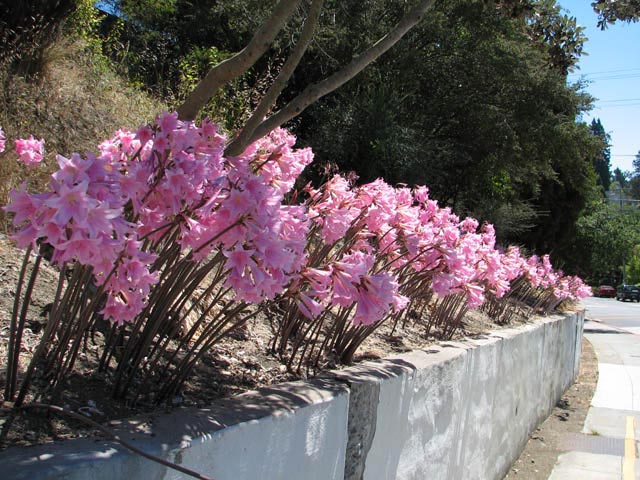
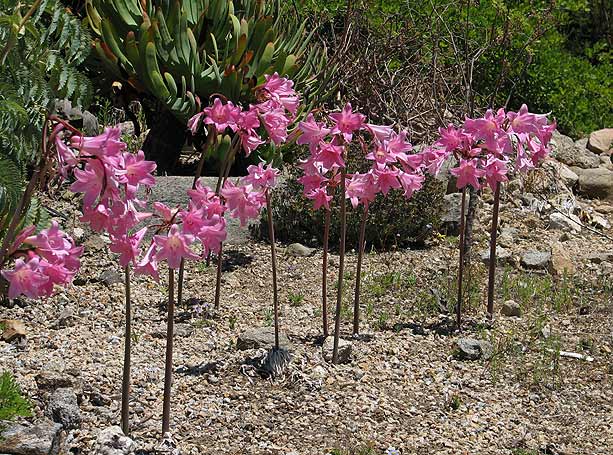
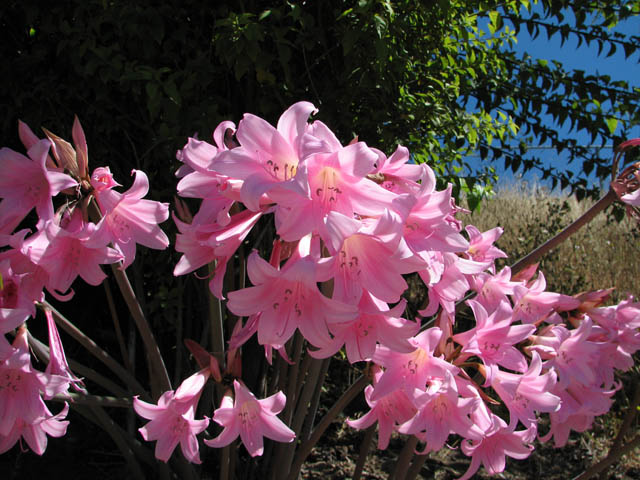
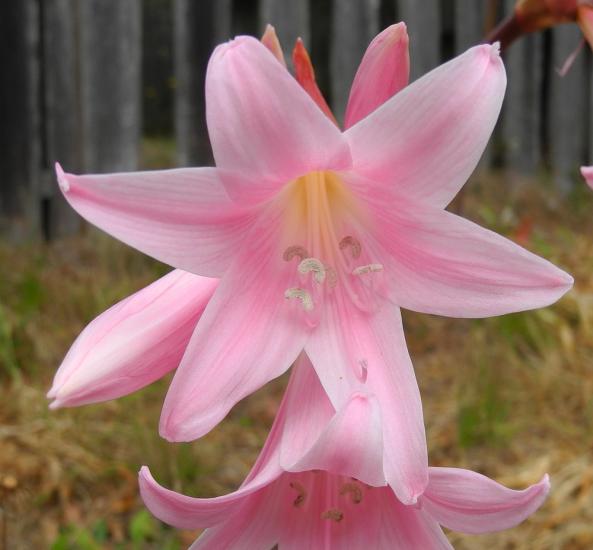
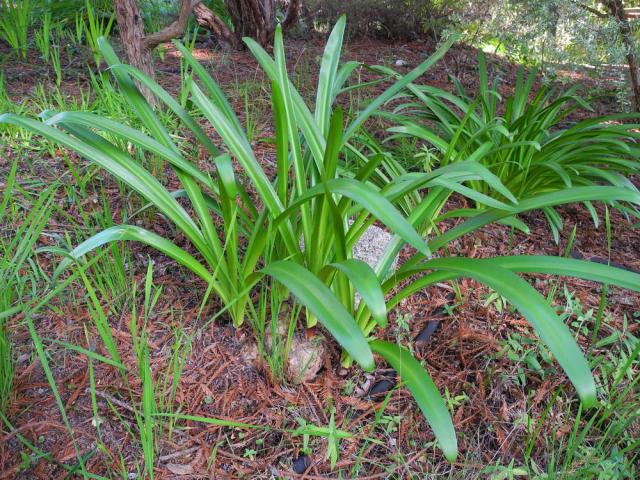
Photos from Bob Rutemoeller below show blooms along the Mendocino Coast August 2014 where they are growing in full sun with no summer water.

Photographs by David Pilling with the first one of (less than flowering size) bulbs four years after the seed was sown (the coin is about an inch in diameter) and the second showing a flower emerging. Photos 3 and 4 are of commercially supplied bulbs of the white variety on a 10 mm grid.
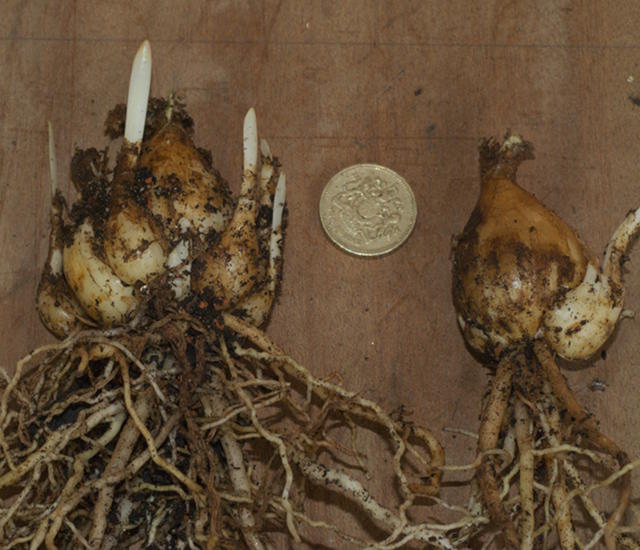
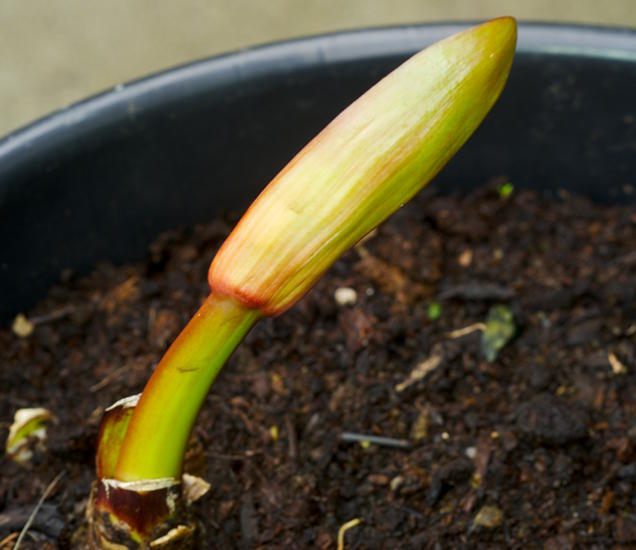
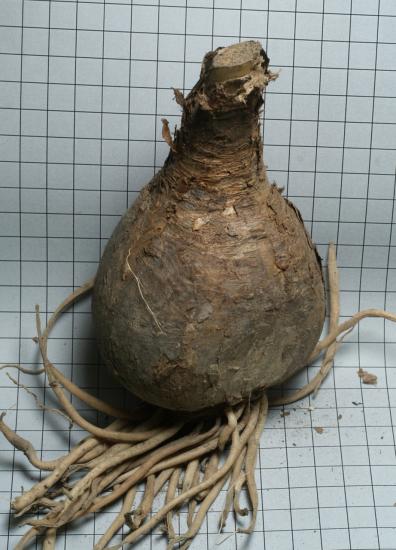

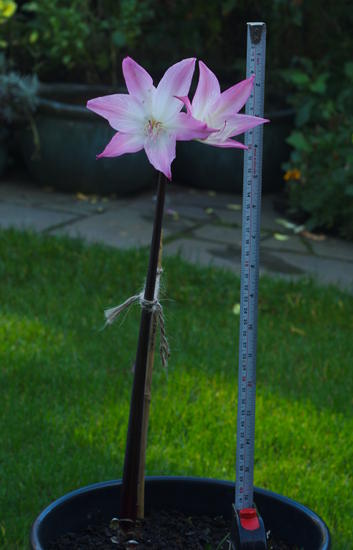
David Pilling describes his experience of buying three bulbs on ebay in the following paragraphs. Apparently a large clump was being dug up and I thought they might flower well if they had survived in someone's garden for some time; every piece of root had been removed from the bulbs and they took time to settle down. It was reasonable to put them all in an 8" pot. In 2012, a year with a spring and summer dark, cold and wet by even the demanding standards of the North of England, one bulb flowered in the middle of October (the bulbs had gone dormant in August). It came as a surprise to me that the flowers are fragrant.
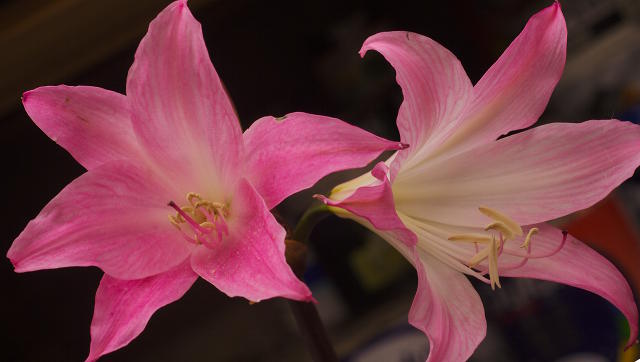
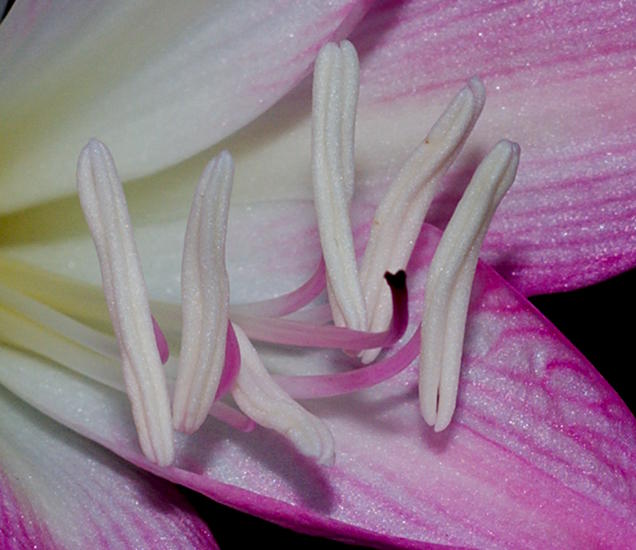
In the first photo the top of the tape is 18" above the surface of the soil. The next photo shows how the flower colour changes (old flower on the left). Photo three is of unopened anthers; photo four shows them in various stages of opening. The last two photos show the tip of the style and the style with pollen applied.
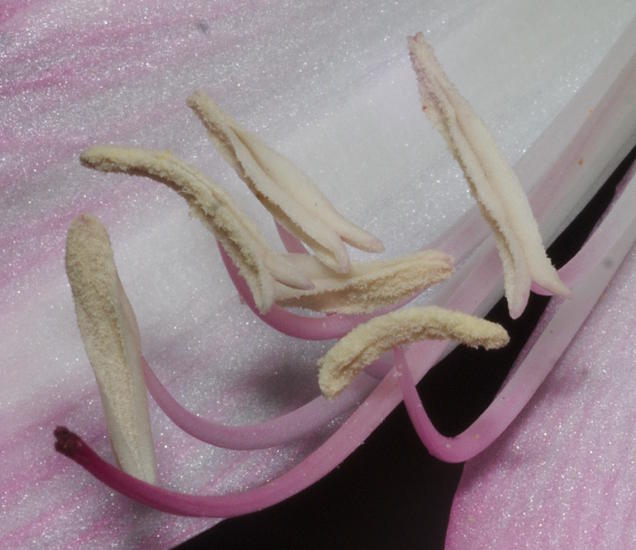

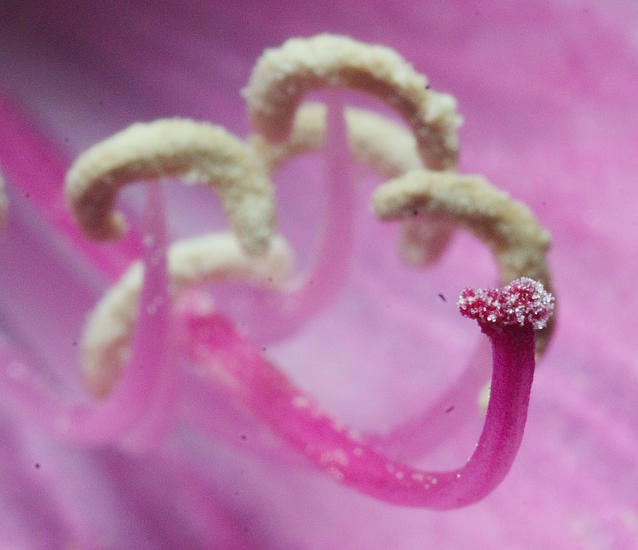
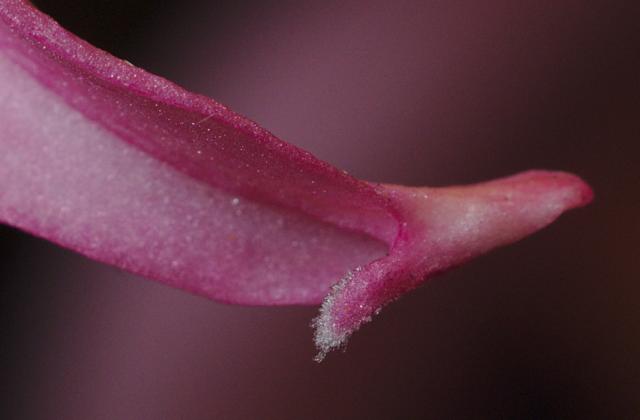
In 2013, two bulbs produced flowers. The photos below show detail from the tips of the flower petals. A question to the PBS list as to what these structures did and were called, brought forth a comprehensive reply from Dylan Hannon. They are called "cohering keels" and keep the flower closed until it has developed fully. The classic paper on the subject is "Cohering Keels in Amaryllids and Related Plants" by H. Harold Hume Proceedings of the Florida Academy of Sciences (1: 48-57, 1936). More photos can be seen for Nerine bowdenii.
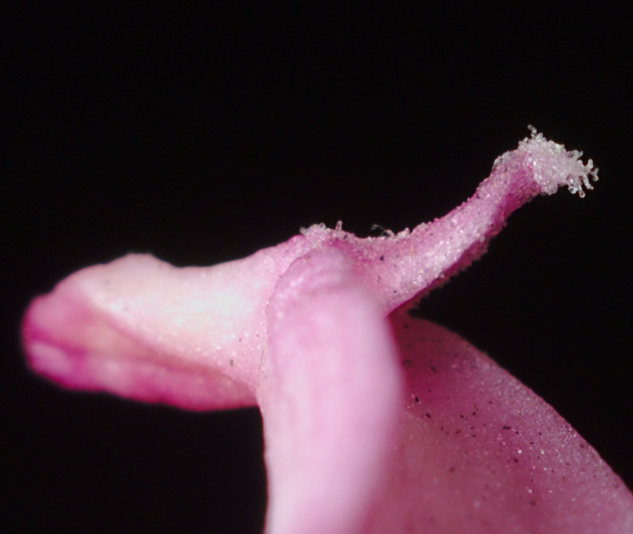
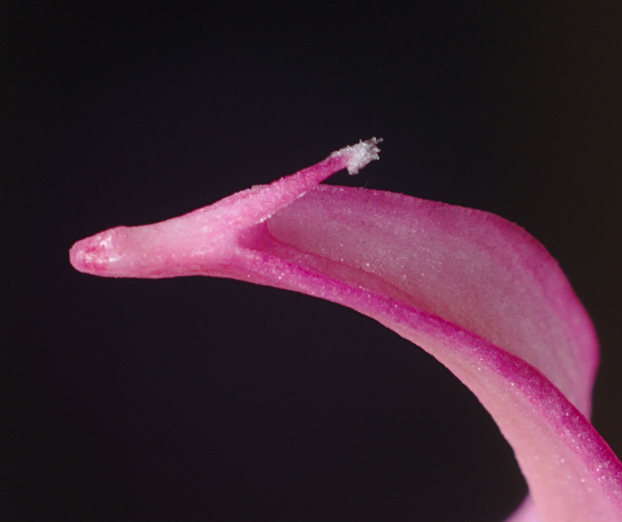

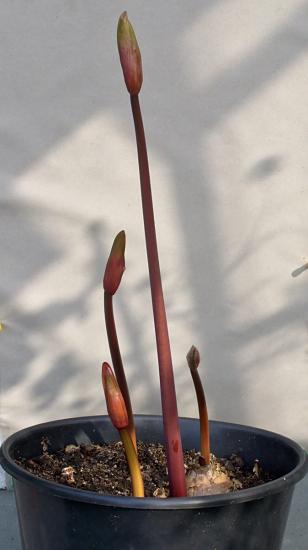
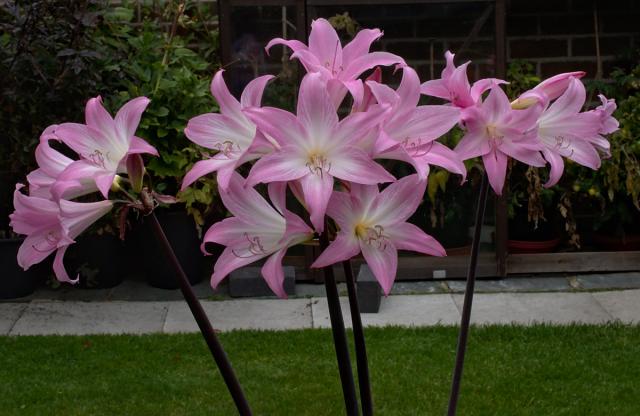
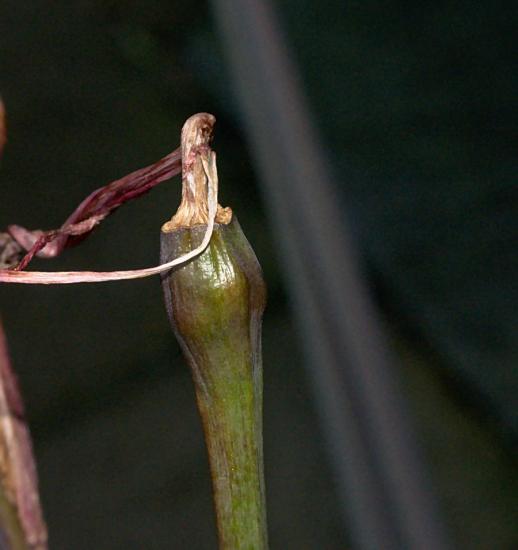
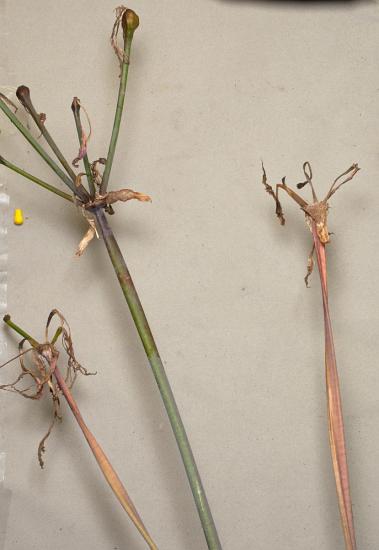
In 2014, there were four flower stems. I cross pollinated the flowers by hand; for a long time I thought this had failed; but eventually I became convinced there were seed pods and after more time this proved correct. In other words seed development is slow. The photos below show the time line; hover over them to see the dates; in total 11 weeks from flower stem appearing to seed.
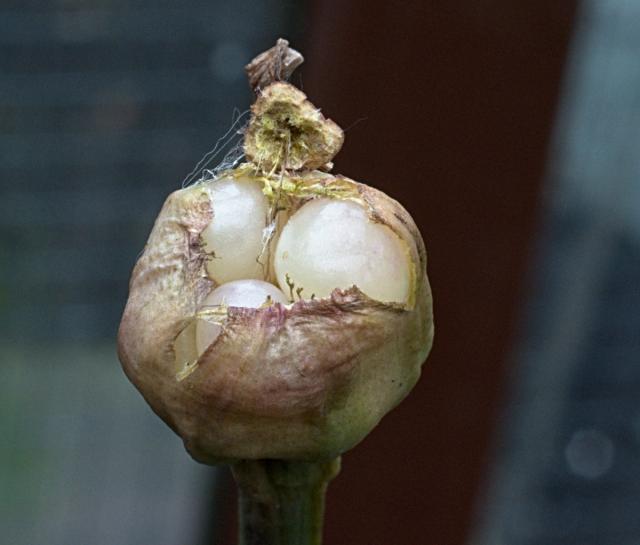
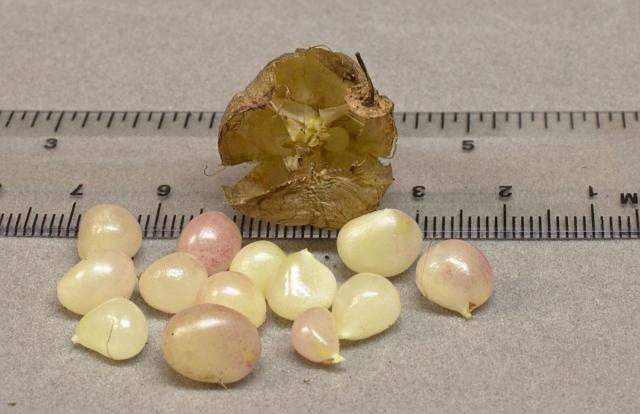
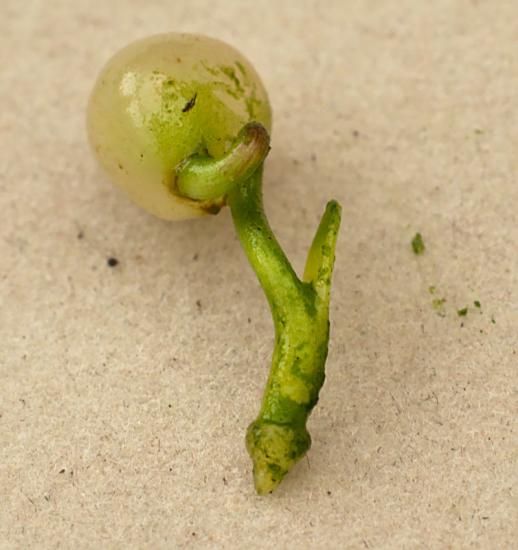
Photograph of one of the seeds which was left outside (in frost free conditions) and germinated at the end of Winter.
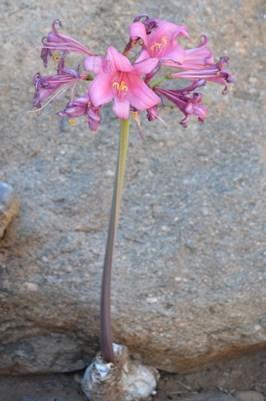
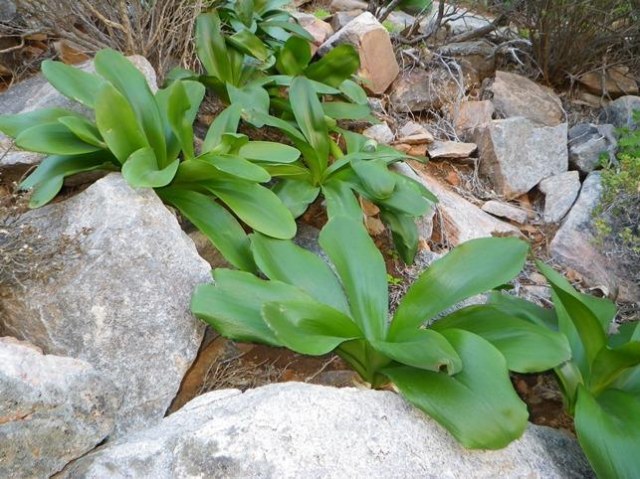
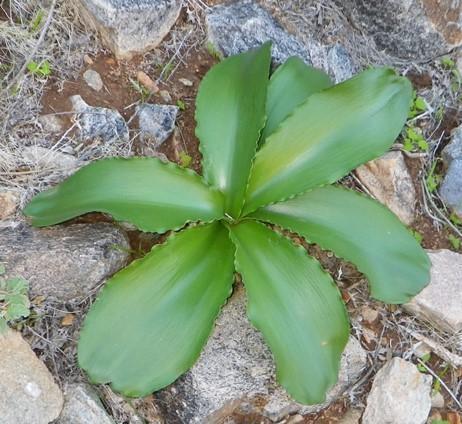
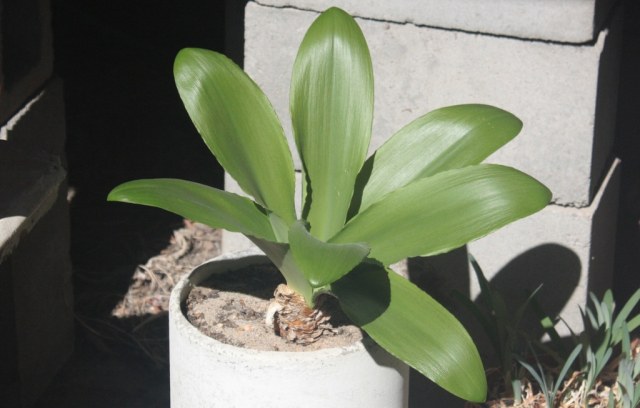
Amaryllis paradisicola Snijman was described in 1998. In distinction to the moister Cape areas where Amaryllis belladonna is found, it is adapted to a relatively cool montane arid habitat. It grows in quartzite cliffs, and narrow rock ledges with partly vegetated screes that provide some shade in the Richtersveld National Park in the Northern Cape, growing to about 75 cm. It is on the red list of threatened plants and is considered vulnerable. It differs from Amaryllis belladonna in having leaves that are broad and tongue like, rosulate when mature and quite wide and channeled, with short patent hairs on both sides of the leaves. The inner stamens are also longer and the outer stamens are longer than the inner by 15 mm. The stigma is also more distinctively trifid than A. belladonna. The flowers have a Narcissus like scent and are a uniformly purplish pink that darken with age and are arranged in a ringet. They bloom in mid autumn (April) if there has been rainfall in March (beginning of autumn). The first three photos from iNaturalist were taken by pietermier and shared under a CC BY-NC license. The last photo was taken by Alan Horstmann.
Amaryllis hybrids - Les Hannibal Hybrids 1-25 - Les Hannibal Hybrids 26-48 - x Amarcrinum - x Amarygia