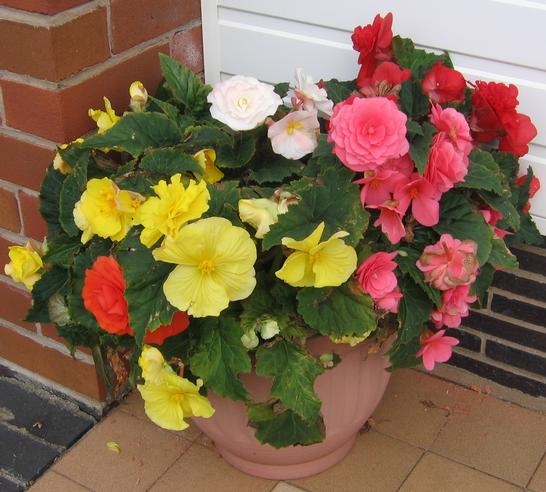
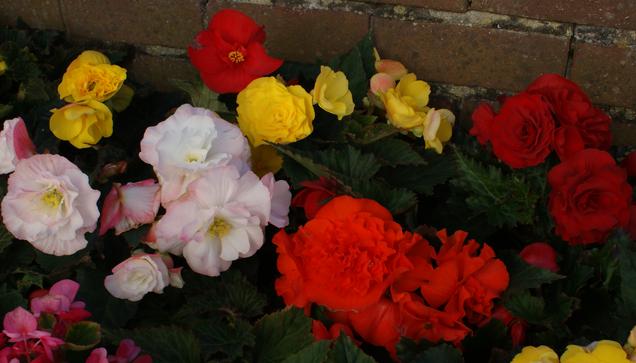
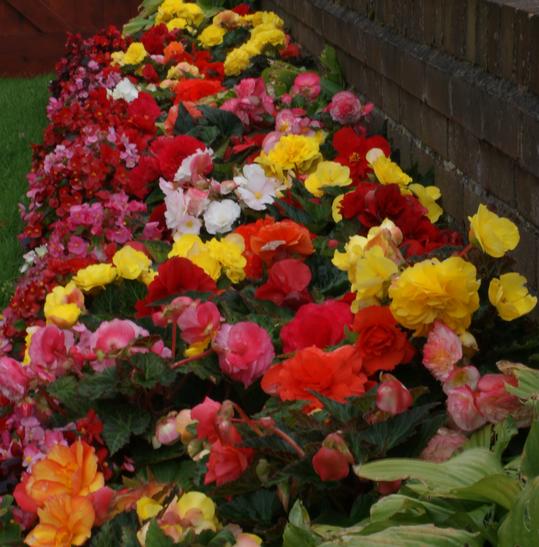
Begonia is a large genus in the Begoniaceae family with many tuberous or rhizomatous species. Probably this genus is best known for its showy tuberous hybrids that are summer growers, tender, and dormant in winter.
Begonias are monoecious, with separate male and female flowers on the same plant. Photographs by David Pilling: the first two show a female flower and the second two a male flower; the last photo shows a male flower in which there are no anthers left. It is believed the extra petals in double (male) flowers replace anthers.

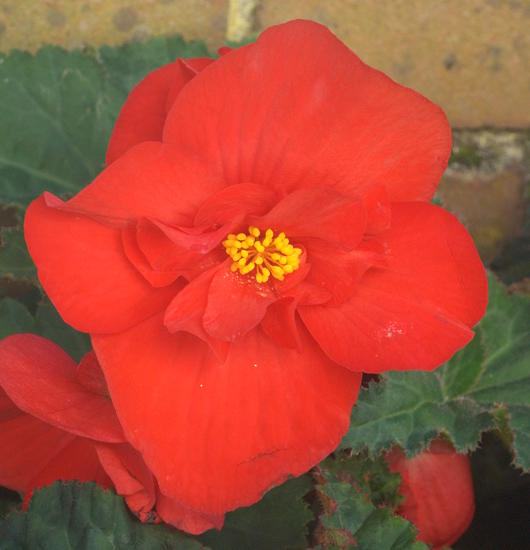
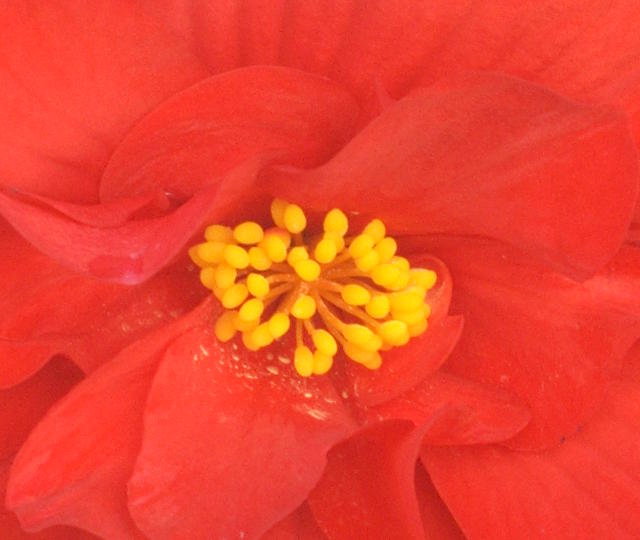
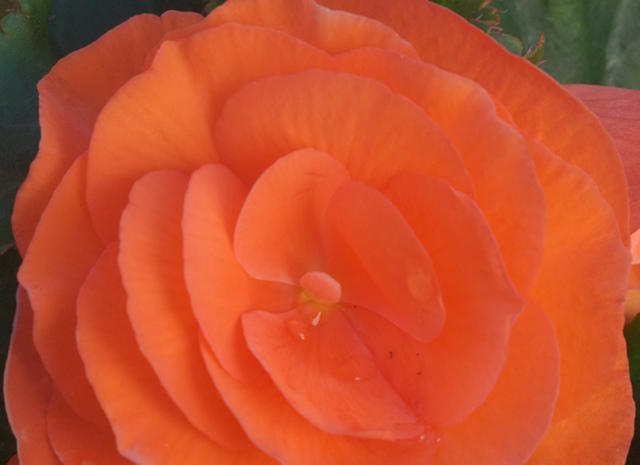
This genus can be propagated by leaf cuttings.
Begonia baumannii Lemoine ex Wittm. is native to the rocky areas in the Andes in Cochabamba Dept., Bolivia from 2500-3400 m (8200-11100 ft). Because of the high elevation, they require cool temperatures during the summer growing season and dry during winter dormancy. Height range: 2-3 ft. Photos from Nhu Nguyen show plants in cultivation.
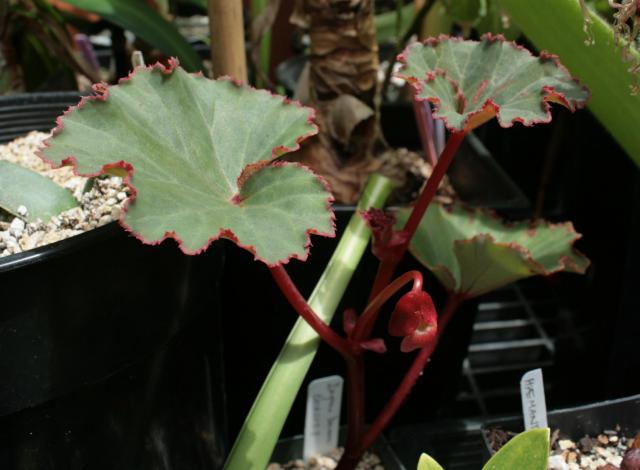
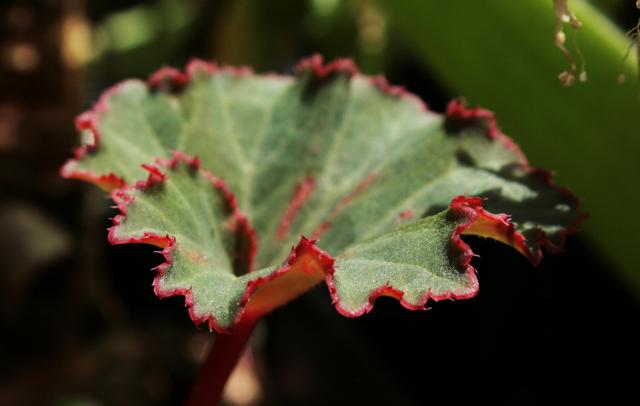
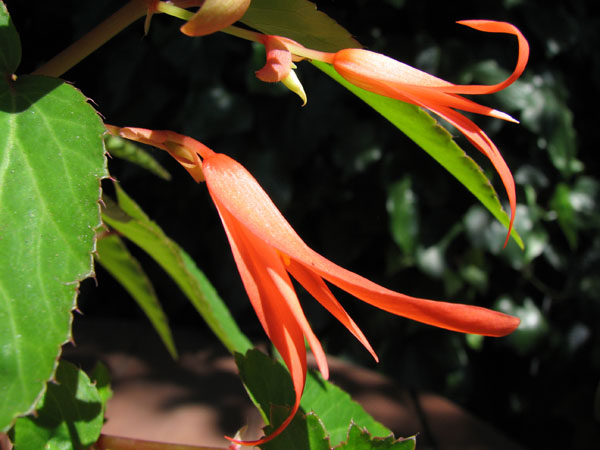
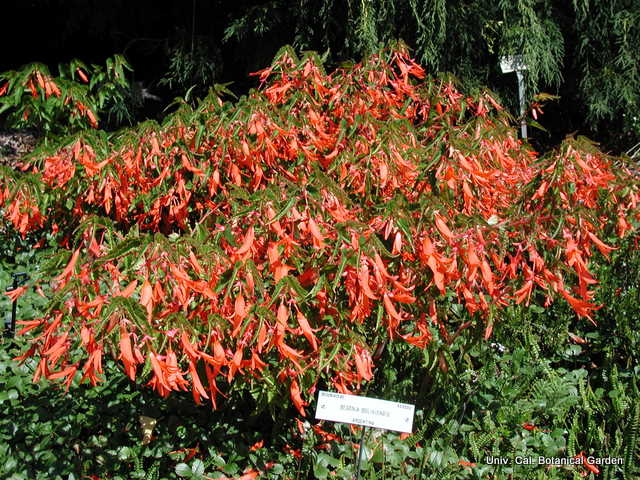
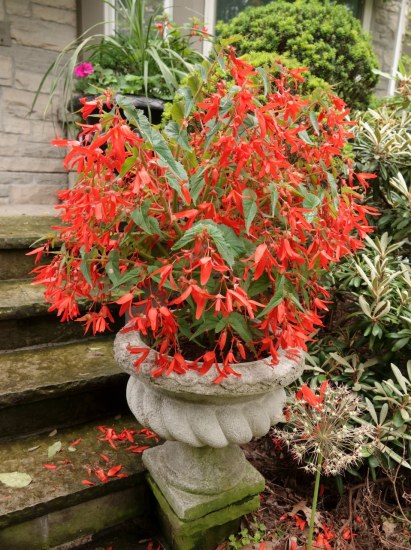
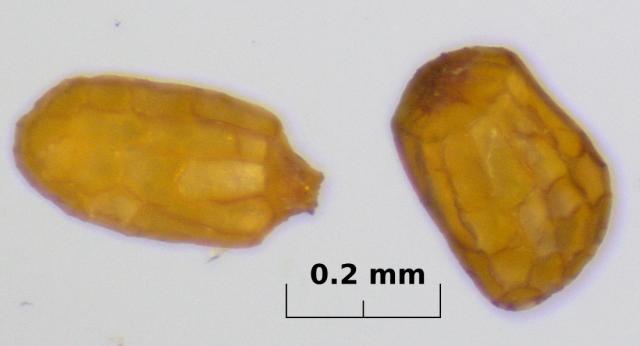
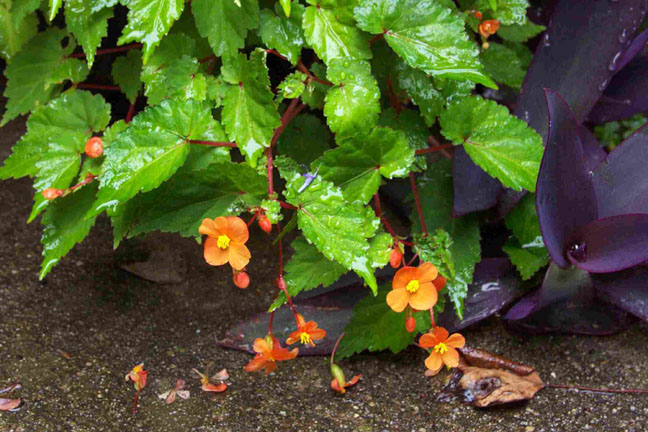
Begonia boliviensis A.DC. is a tuberous species native to Bolivia to Argentina. It has small orange-red flowers and can be grown as a pot plant. They do best in part sun and bloom prolifically during Mediterranean-type summers if planted in the ground where they can reach 2-3 ft (<1 meter) tall. Propagation is easy by cuttings. If a cutting is taken during summer, it will form a thumb-sized tuber by winter and will go deciduous like adult plants and return in late spring. Photos 1-2 are by Mary Sue Ittner of plants blooming summer 2004 in the Mendocino Coast Botanical Gardens and 3-4 of her own plants including a seed pod.
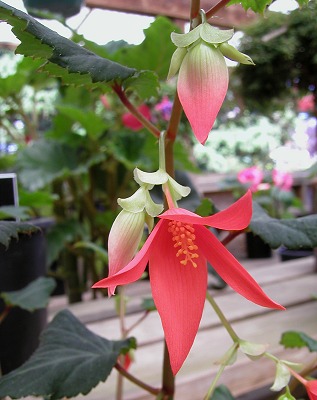
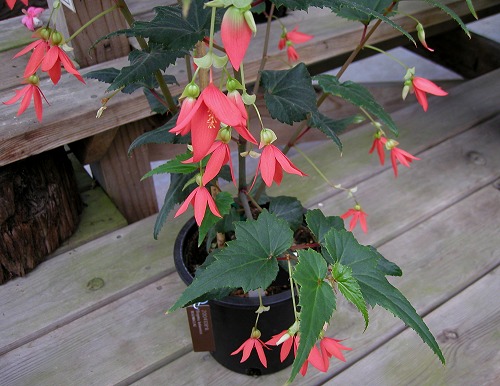
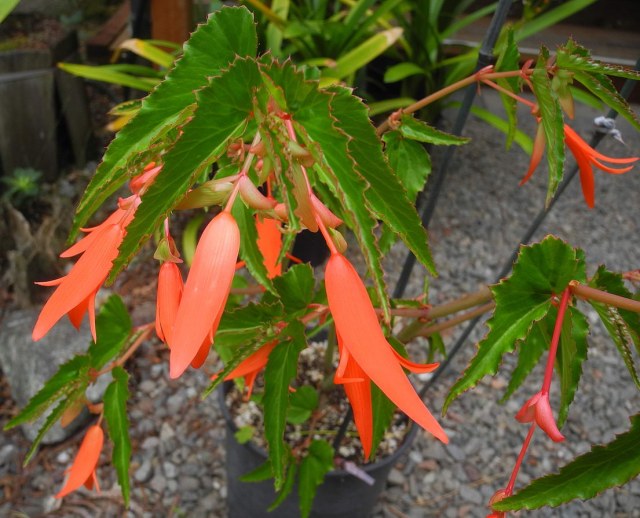

Photo #1 was taken by Nhu Nguyen. Photo 2 was contributed by the UC Botanical Garden. Photo 3 is from Laura Grant.
Photographs by David Pilling: the first is of seed which was then sown in February 2014; the remaining photos are of the resulting plants flowering in September 2014. Photo 2 shows a male flower (four petals); photo 3 is of a female flower (five petals). Photo 4 shows female (left) and male (right) flowers; the notable difference from this angle is the female flower has an ovary above it which becomes the seed pod; the female flower has not opened yet. Photo 5 shows detail from a female flower.
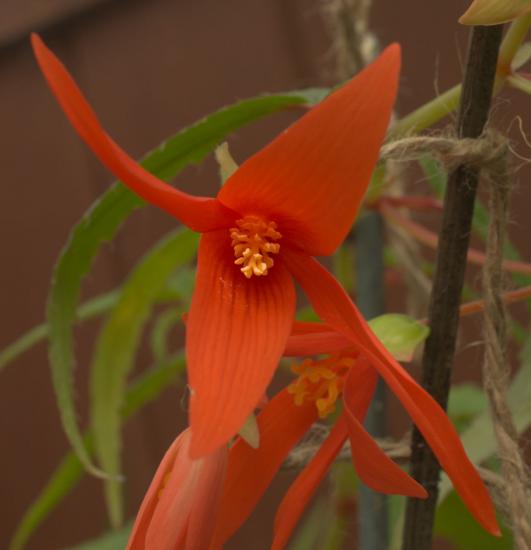
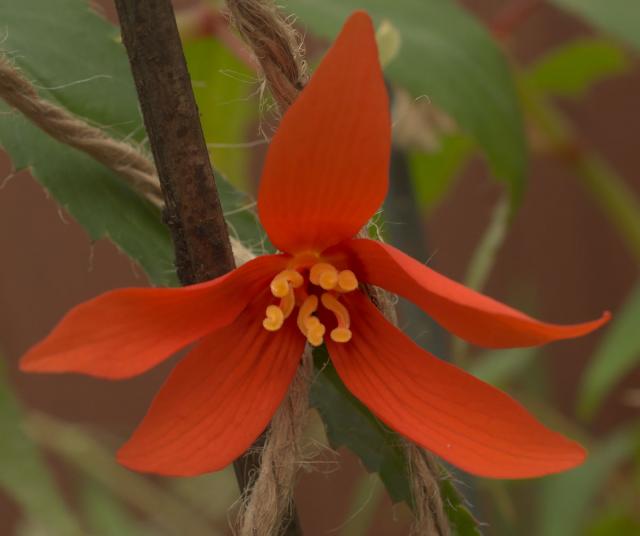
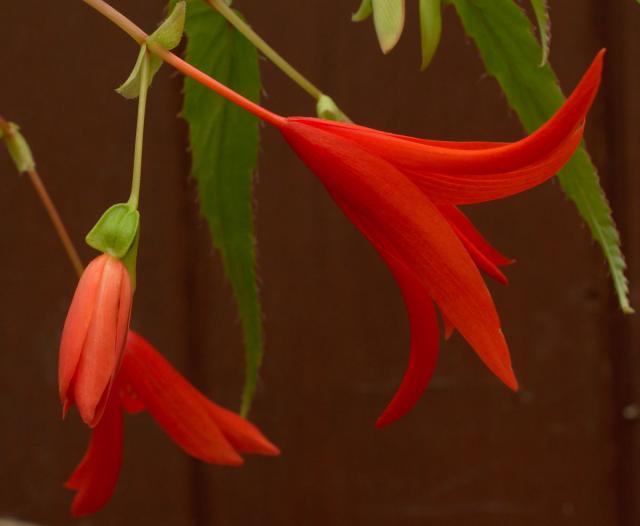

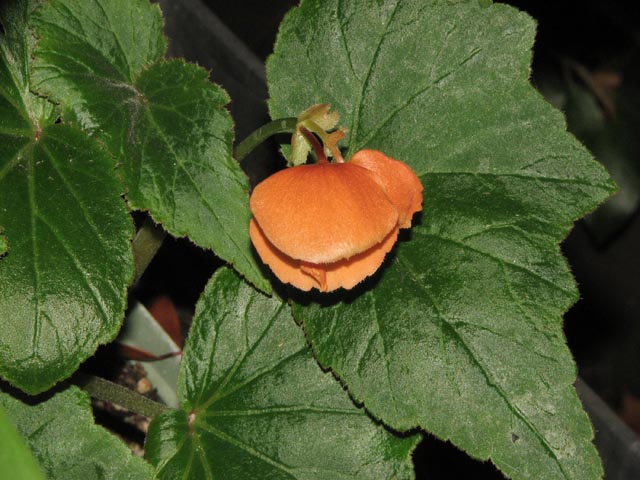
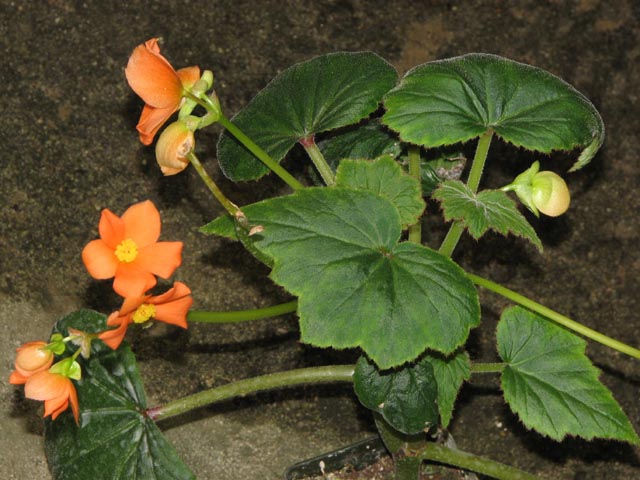
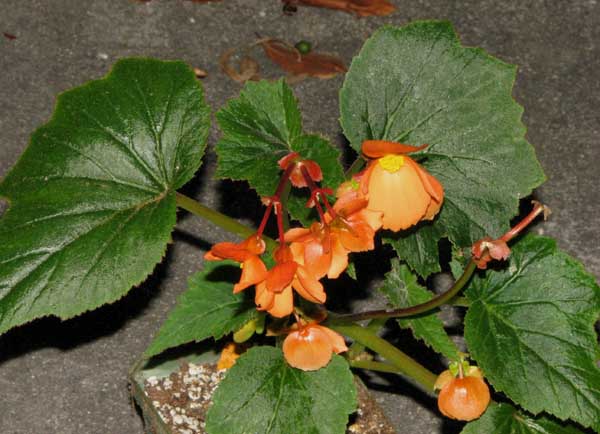
Begonia cinnabarina Hook. is a compact Andean (Bolivia to Argentina) species that grows from a tuber similar to that of the hybrid tuberous begonias -- it is nearly globose and depressed on top and grows well partly exposed above the soil line. In the Los Angeles area it has proved reliable in shade and kept pot-bound. The growth period is late spring to fall with flowers appearing August to October. Height range: 30-60 cm. The four pictures below show plants grown and photographed by Dylan Hannon who obtained them from the late Rudy Ziesenhenne, who probably got it as seed from one of the famous Goodspeed expeditions. The plants depicted in the photos here have been in 4" pots for over 10 years.
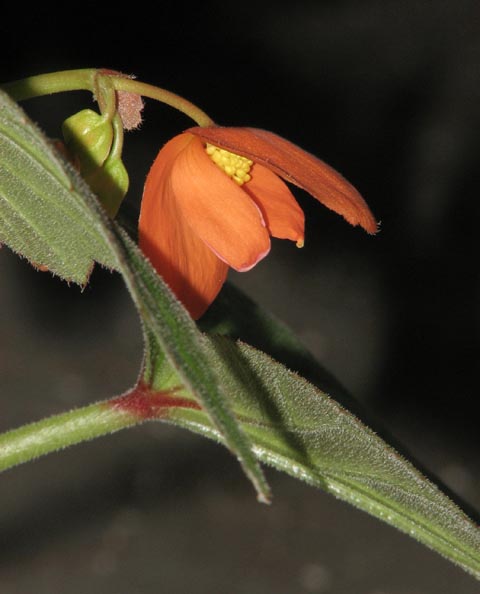
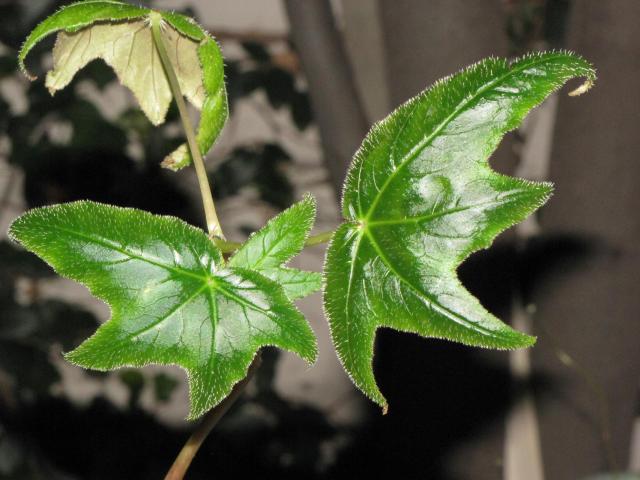
Begonia falciloba Liebm. is a graceful upright species from Mexico to Guatemala. The habit is similar to other tuberous begonias from Mexico like Begonia biserrata, Begonia sandtii, Begonia gracilis, etc. It is distinctive by the striking lobes of the leaves. It grows from early summer into fall, sometimes extending into winter and has endured brief spells in the mid-20s (°F) in winter when it is normally dormant. As with other tuberous begonias it prefers to be pot-bound. Height: to about 30 cm. Photos 1-4 below show plants grown by grown and photographed by Dylan Hannon of a form obtained from Rudy Ziesenhenne that was probably collected by Dave and Don Harris of Santa Barbara, CA. Online info (Smithsonian) gives this indicative locality for this species: Cerro de San Andres, Oaxaca, at 800 m elevation.
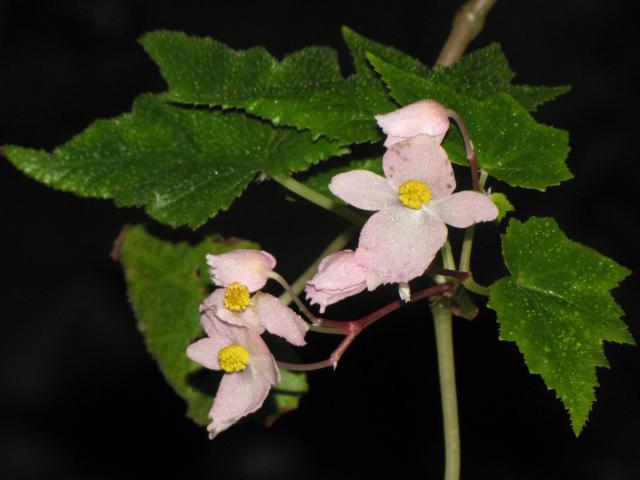
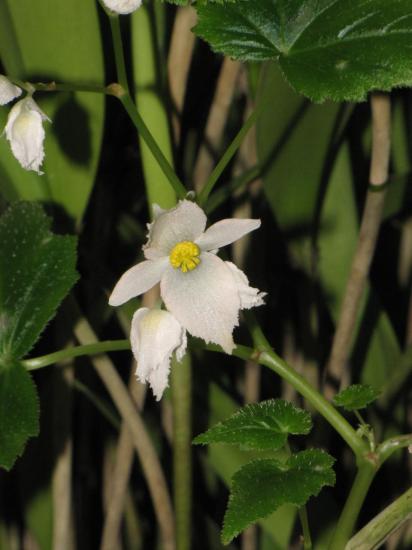
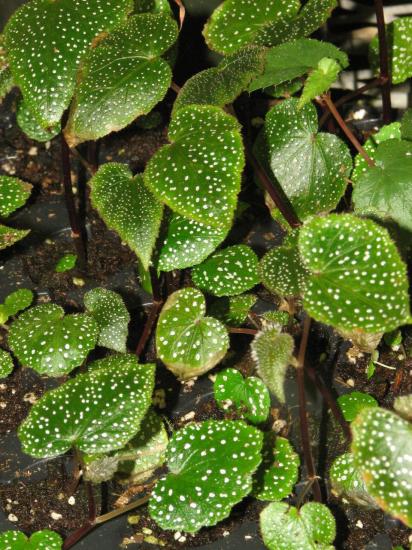
Begonia geraniifolia Hook. is a tuberous rooted begonia with pinkish white flowers found both in Peru and Bolivia, South America. Most of the collections in the field come from Peru. Seeds take about 30 days to germinate and they will continue to sprout after that. This is a winter growing species so it's best to sow the seeds in that time of the year. There is evidence that ancient Peruvian villagers domesticated this species between 5700-3000 B.C. for their edible tubers. Height range: 30-45 cm. Photos by Norton Cuba.
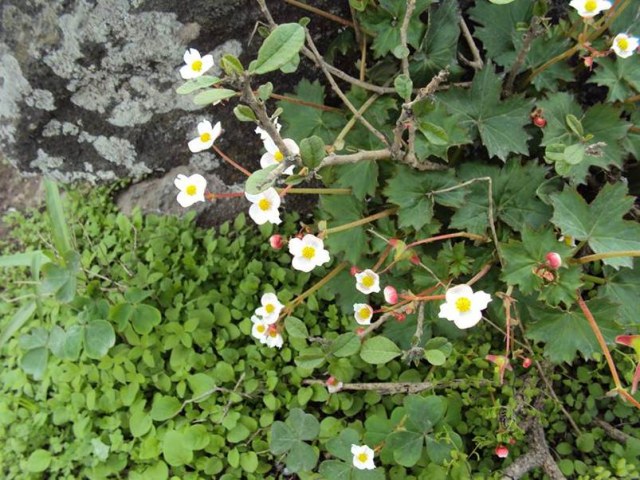
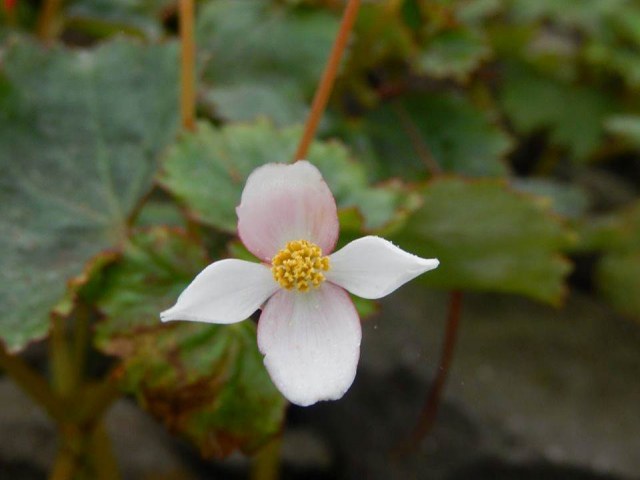
Begonia geranioides Hook.f. is a delicate species from Natal and the Eastern Cape, South Africa. The rounded leaves are borne on a very short stem on top of the tuber. In my experience this is a rather ephemeral plant that is suited to cool, shady conditions and is a good companion for small ferns. In winter it is dormant and should be kept dry. In small pots (2" to 3") it will grow and flower when only a few inches tall, though in nature the plants can be larger. A good write-up is here. Height: 30 cm. Photos show plants grown and photographed by Dylan Hannon of material originally collected near Merrivale.
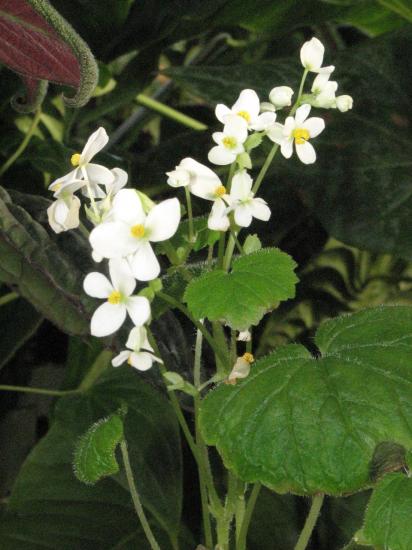
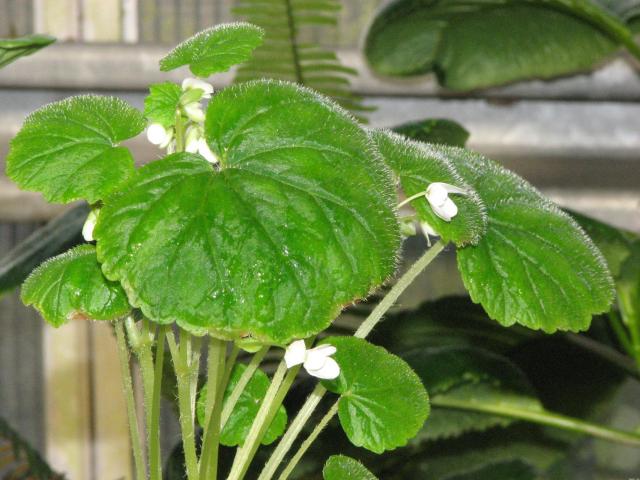
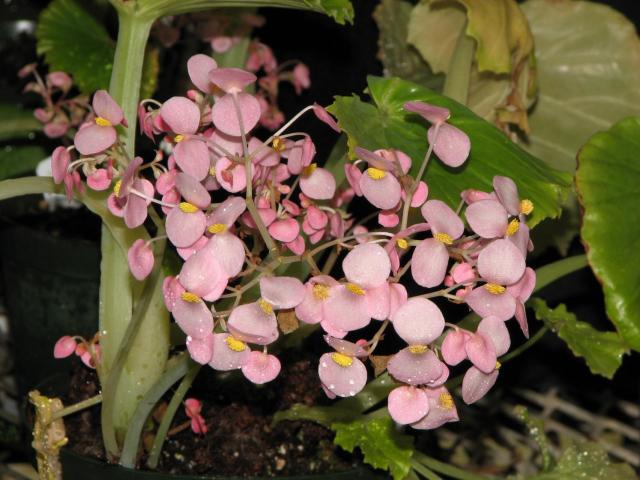
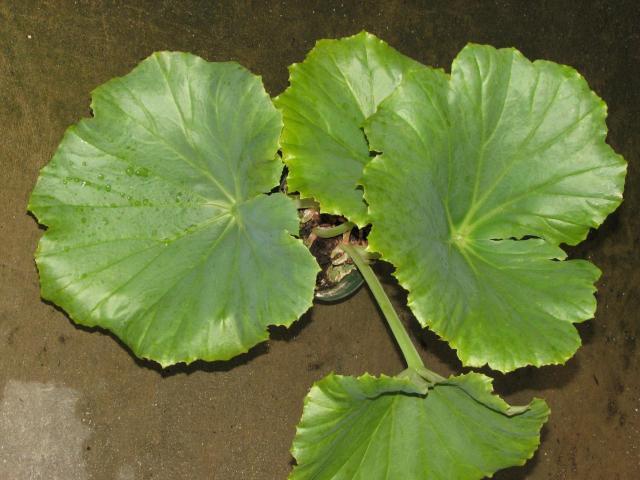
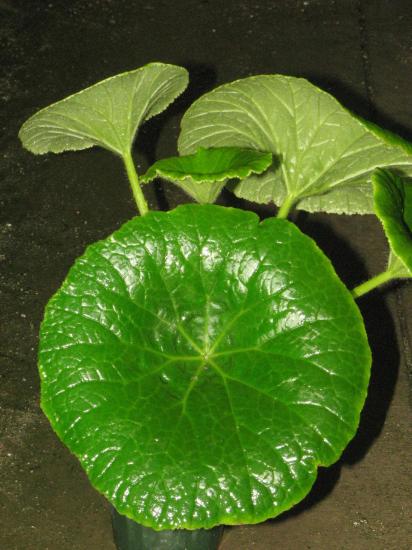
Begonia goudotii A.DC. is a tuberous species from Madagascar where it grows on tsingy limestone formations in the north of the island. The plant resembles a cyclamen by its large leaves that form a dome of foliage obscuring the large tuber. One or a few short perennial stems clothed in dried stipules cap the tuber. This is a summer growing plant that needs a dry winter dormancy. Flowering follows the rest period and consists of sprays of small pink flowers. B. goudotii requires warm conditions all year and appreciates high humidity and part shade when in growth. The leaves are subject to powdery mildew. Height: to about 2 ft. Photos show plants grown and photographed by Dylan Hannon.
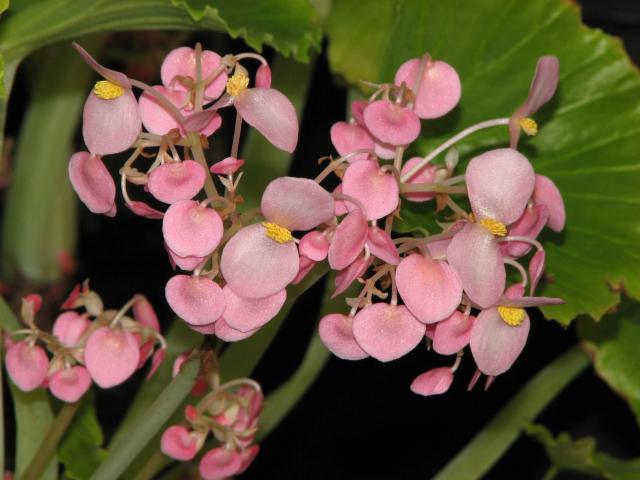
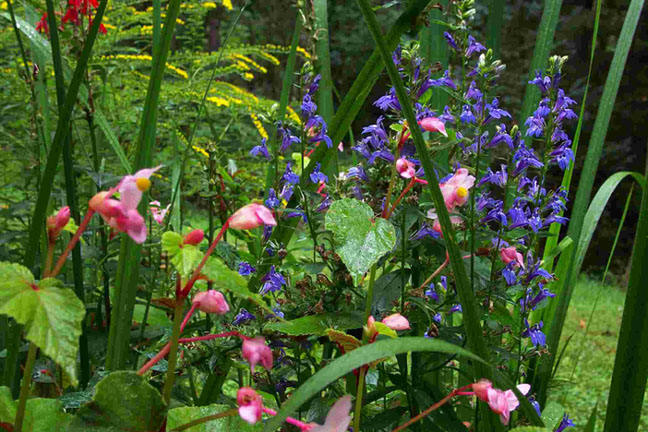
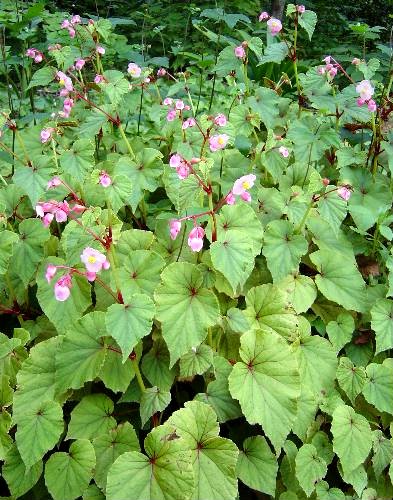
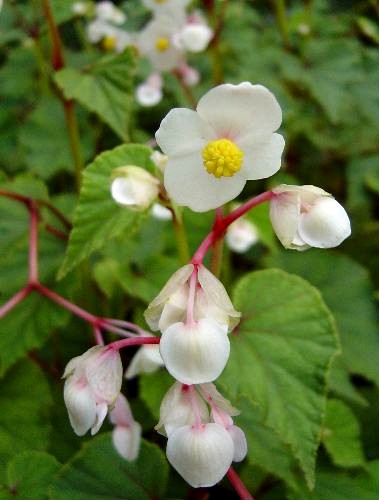
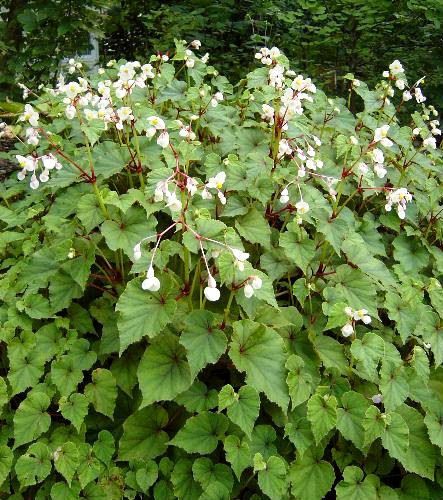
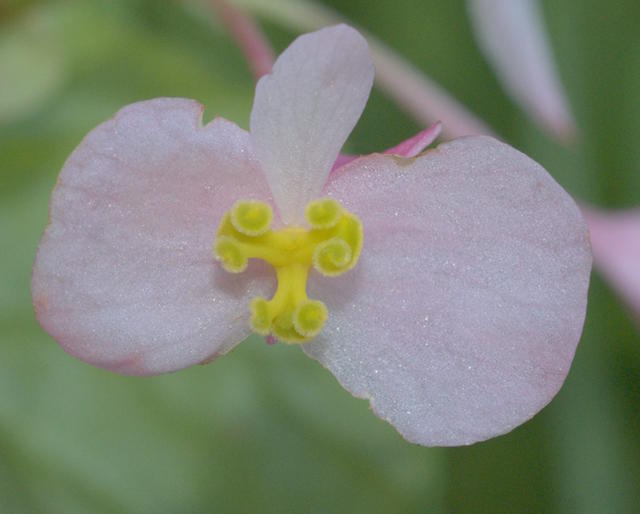
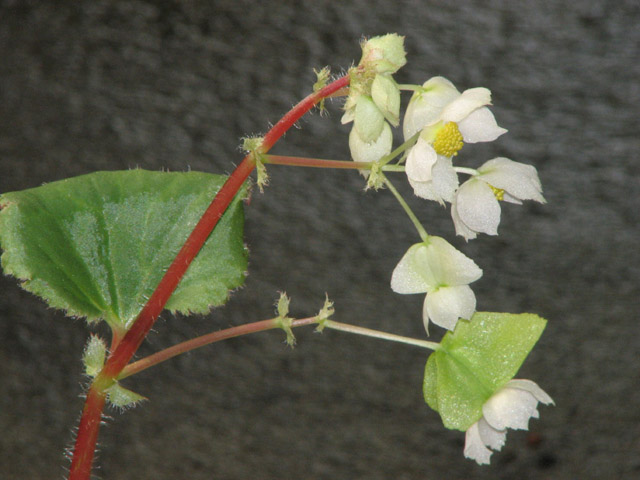
Begonia grandis Dryand. is a tuberous species native to China and Japan and is among the most cold hardy. A common synonym is Begonia evansiana. It blooms in late summer and autumn and does an outstanding job of propagating itself by seed and bulbils formed in the leaf axils. The bulbils appear at the end of the season as the plants lose their leaves and are 3-4 mm in size. Height range: 45-60 cm. The first photo below is from Wayne Crist who photographed it in his garden in early September. The companion plants include blue Lobelia syphilitica and yellow Solidago rugosa 'Fireworks'; the dash of red is from Lobelia cardinalis (the real thing, not the garden plants sometimes given that name). The other photos are from Jay Yourch taken August 2004. The second and third photos are of the typical medium pink form and the next two of a white or very pale pink form.
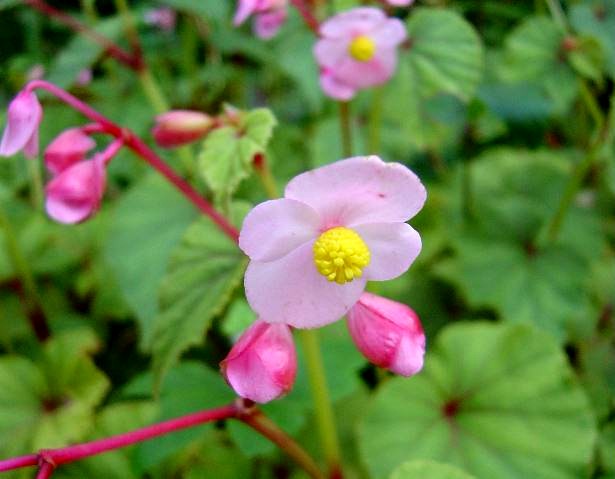
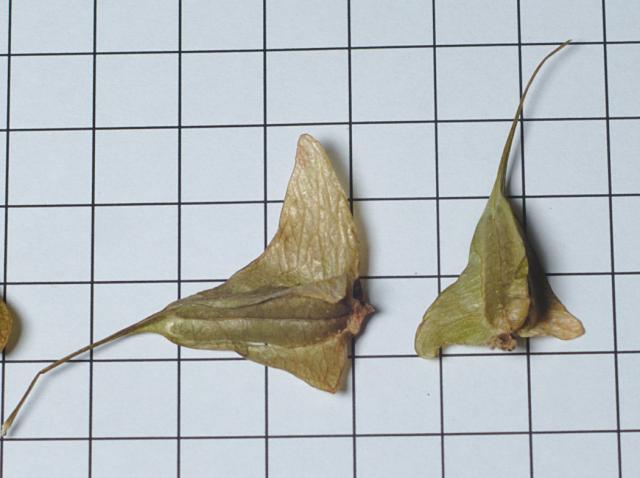
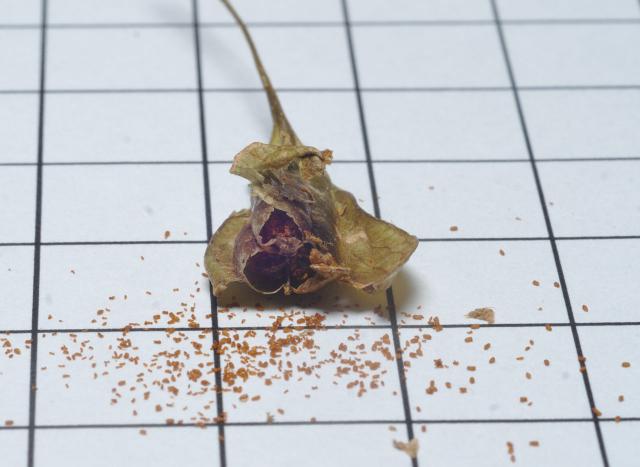
Photos below were taken by David Pilling. The first three are of a female flower and bulbils; the grid is 10 mm.
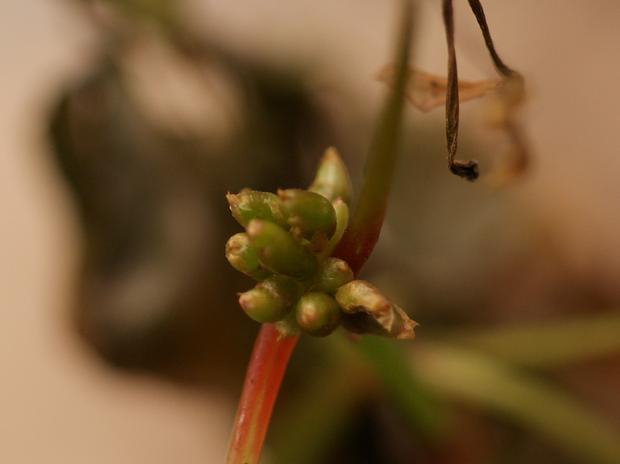
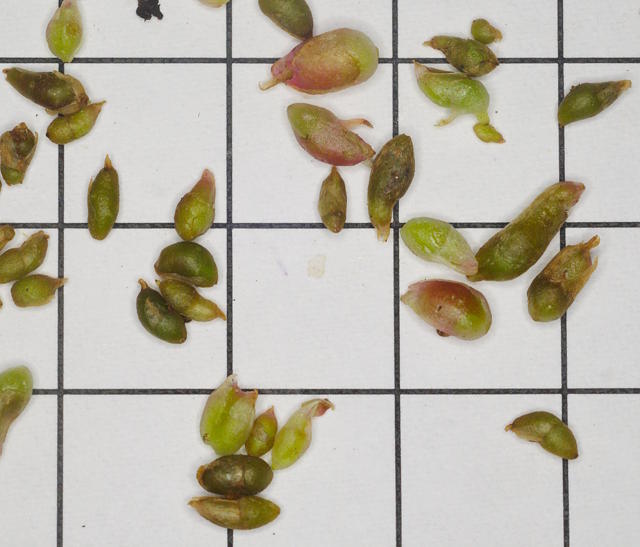
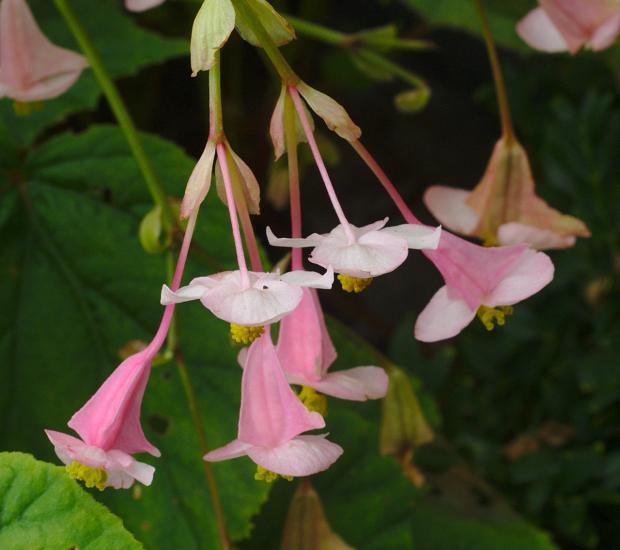
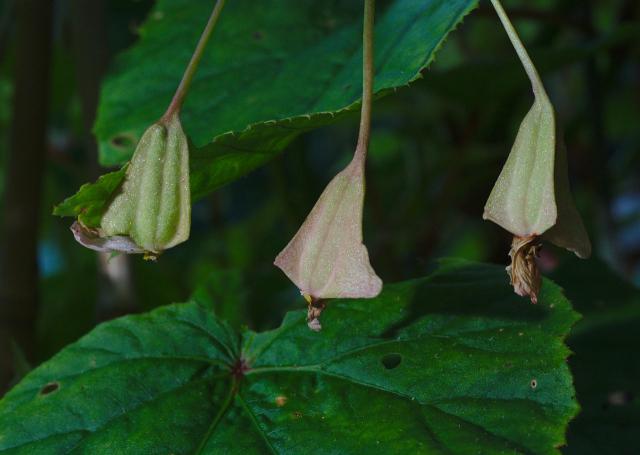
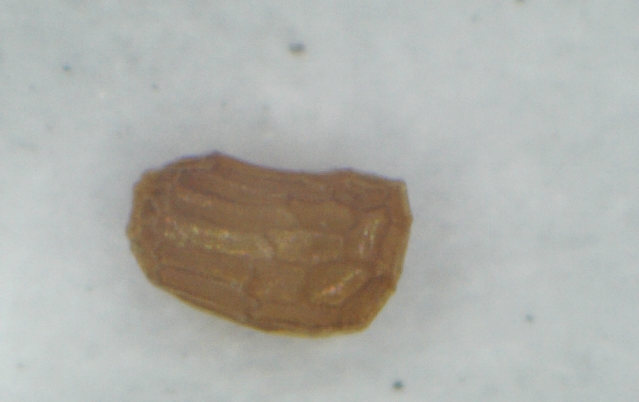
The series below was taken between September 3rd, 2013 and October 29, 2013. Photo 1 shows the back of both male (higher) and female (lower) flowers, photos 2-5 are of seed pods and seed. Photo 6 shows dormant flowering size tubers. The grid spacing in photos 3, 4 and 6 is 10 mm; the width of photo 5 is around 1 mm.

Begonia monophylla Pav. ex A.DC. is a summer-through-autumn growing geophyte with a single orbicular leaf about 8" across. The leaf is appressed to the ground in nature (or to the pot in cultivation). Its tuber is cylindrical and relatively small compared to the leaf. Flowers appear September to October and are white, fragrant, rather large and borne on a sometimes branched inflorescence to about 10" tall. Widespread in western Mexico and probably centered in the states of Puebla and Jalisco where it grows in the open on road cuts (as near the city of Taxco) and under the cover of shrubs and trees in seasonally dry habitats. Cultivation is straightforward in a light, sandy mix. B. monophylla thrives under warm greenhouse conditions in relatively small pots that can dry out twice per week mid-season. Plants do not break dormancy until about June and enter a dry, cool dormant period around November. Dylan Hannon calls this the ballerina begonia in allusion to the appearance of the single pleated leaf and graceful flowers. Height range: 30-45 cm. The five photos below show plants originally from Puebla near Jolalpan, grown and photographed by Dylan Hannon.
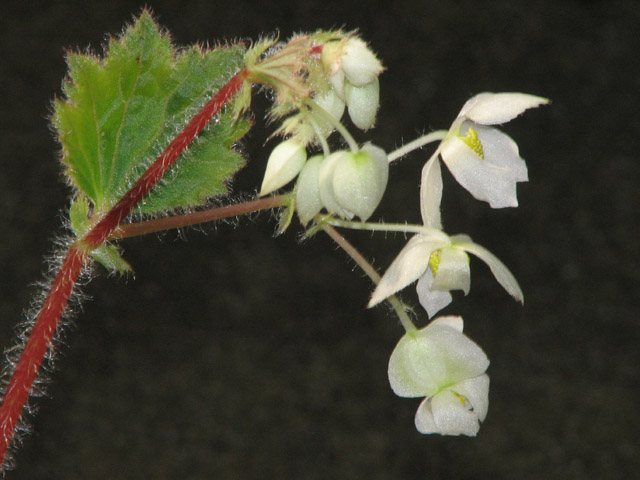
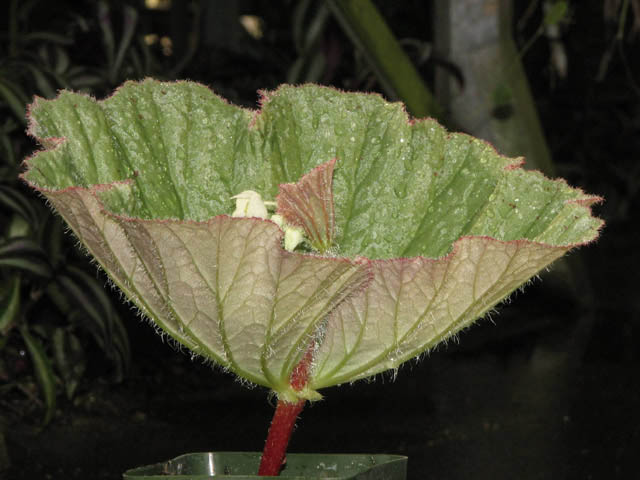
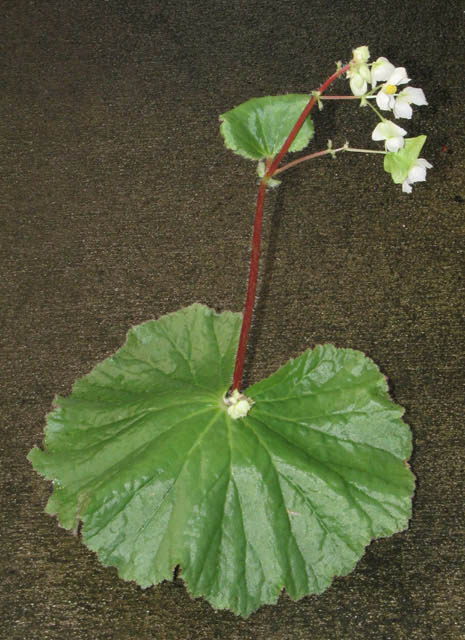
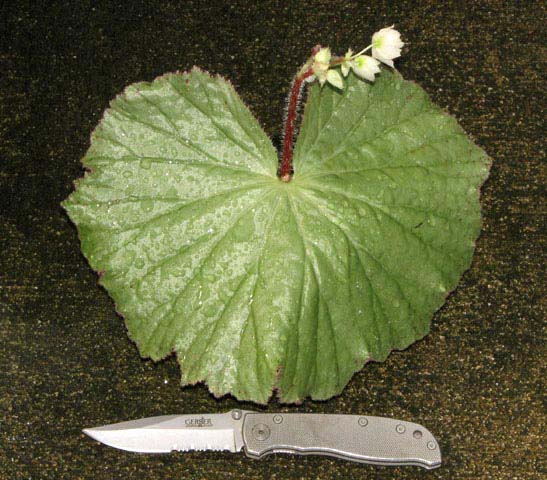
Begonia octopetala L'Hér. is a tuberous-rooted begonia from South America. Similar to Begonia geraniifolia, there is evidence of the domestication of this species by ancient Peruvian villagers in between 5700-3000 B.C. for their edible tubers. Height: to about 20 cm. Photos by Norton Cuba.
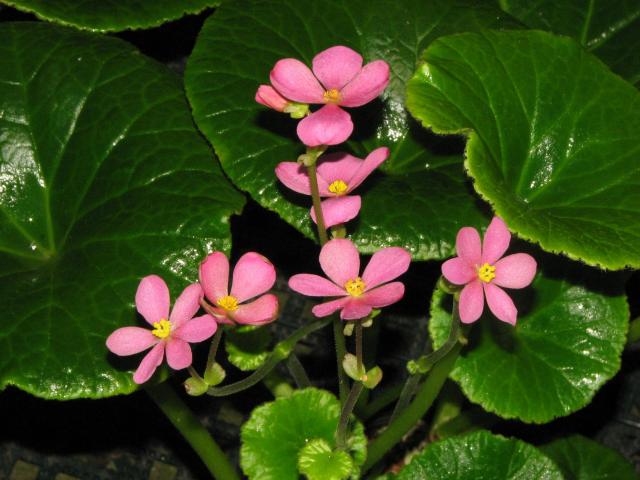
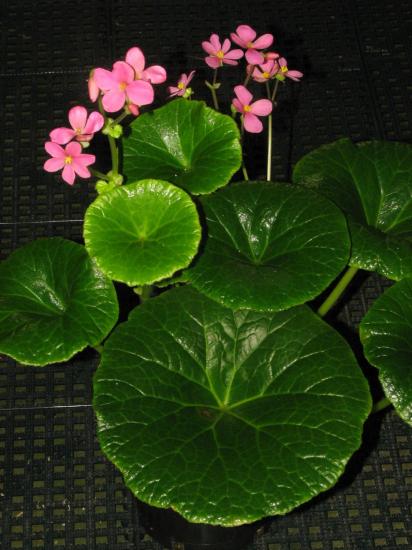
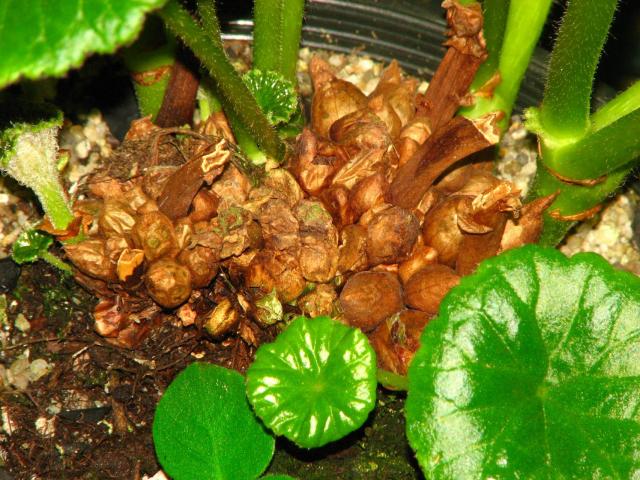
Begonia socotrana Hook.f. is one of the most remarkable begonias for a number of reasons. First is its geographic isolation on the island of Socotra, an extension of the northern escarpment of Somalia and administered by Yemen. The island is warm and semi-arid and B. socotrana finds a foothold only in the Hagghier Mountains at around 900 m elevation. No begonias are known from nearby Somalia or Arabia; the nearest occurs in Ethiopia. Also unusual and perhaps unique is the morphology of the dormant stems. Rather than a tuber or caudex, the crown forms at ground level numerous “bulbs” comprised of a few scales (probably stipules) enclosing a leafy bud. The mature leaves are almost perfectly circular and perfectly peltate, with the petiole joining the blade at its middle. The flowers are showy and bright pink. Because this is a winter growing species that is active from autumn to late winter it was used in hybridizing with tuberous species soon after its introduction in the late 19th century. This work yielded the winter flowering groups B. x Hiemalis and B. x Cheimantha. In cultivation, B. socotrana needs cool nights (55-65 °F), shade and a well-drained soil mix. In dormancy it should be watered lightly on occasion. Height range: 30-45 cm. Photos show plants grown and photographed by Dylan Hannon.
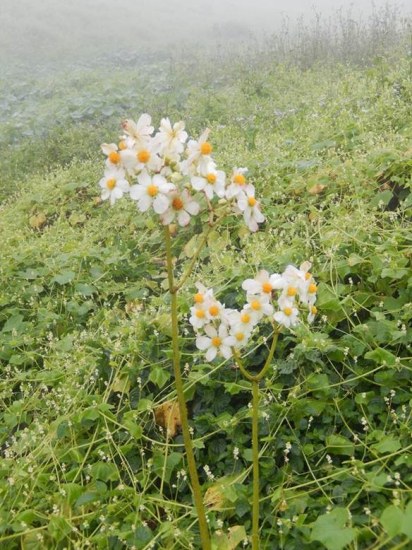
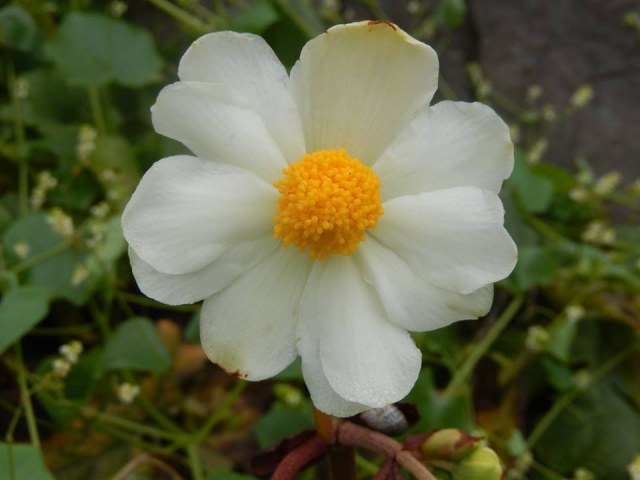
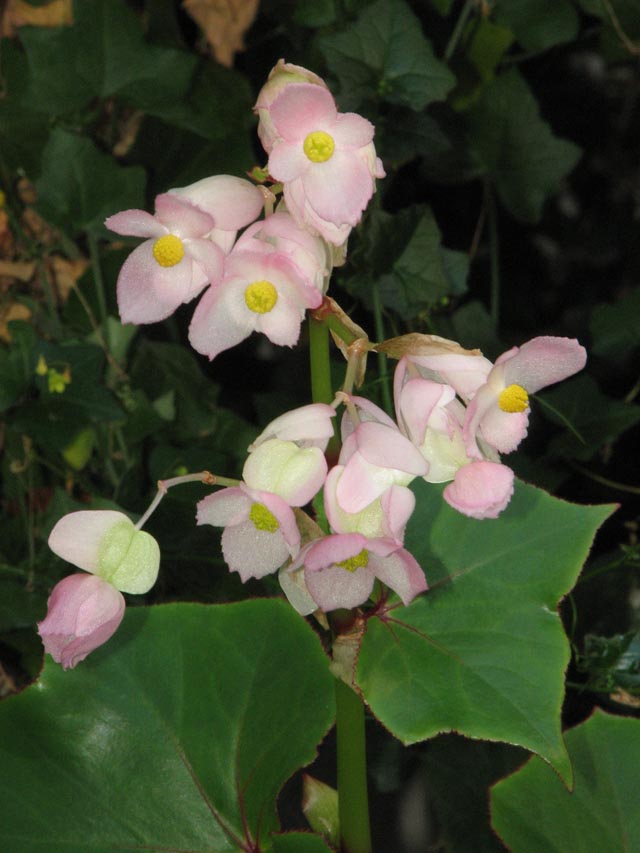
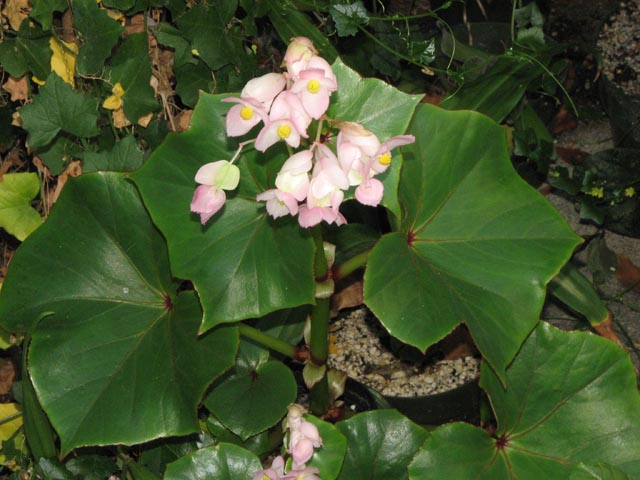
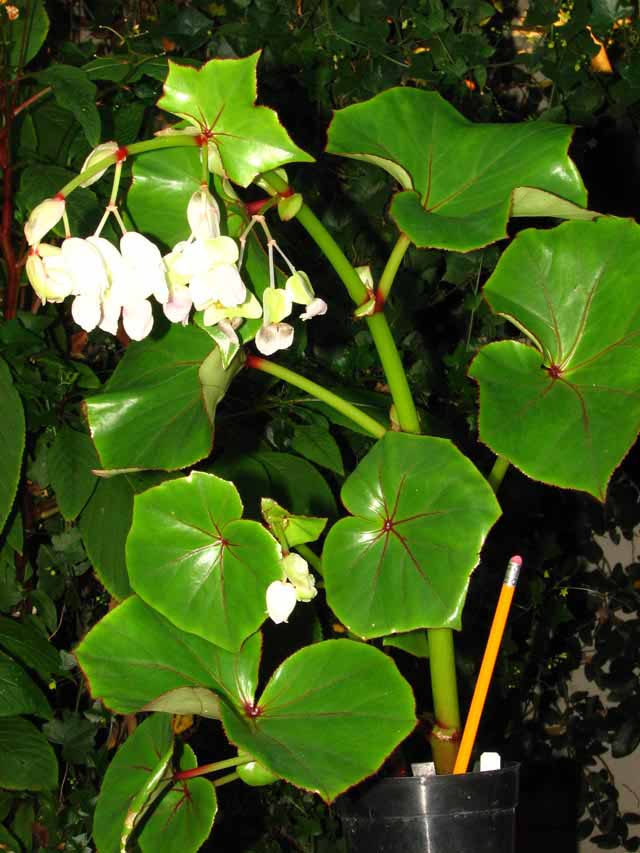
Begonia sp. Arteaga is a striking unidentified species with robust annual growth from a subterranean tuber. The plant is glabrous (no hairs) and the leaves are quite large (10" across or more) and rubbery. This species is especially notable for its inflorescence with pedicels, bracts and flowers all white and turning a light pink as they age. Flowers appear in summer. As with other plants of western Mexico, this geophytic begonia is dormant winter-spring and requires a dry rest period. In growth it enjoys warm to intermediate conditions and light shade. Originally collected in Mexico in the state of Michoacán, near Arteaga, in tropical deciduous forest at ca. 3000 ft elevation. The three pictures below show plants grown and photographed by Dylan Hannon.
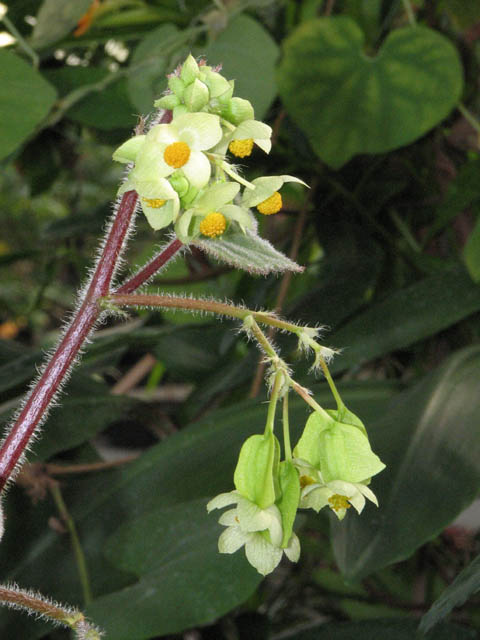
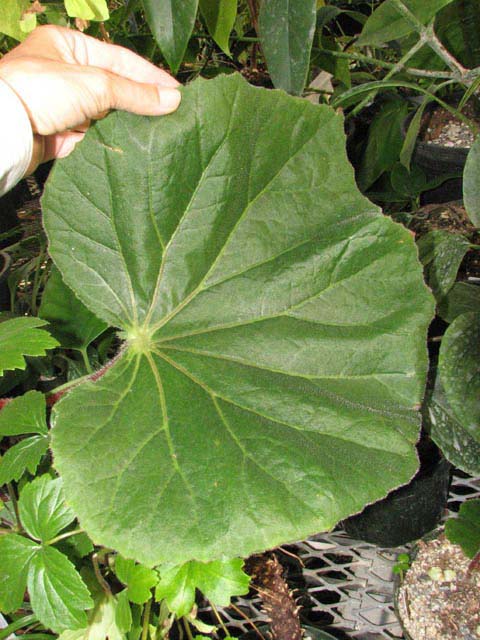
Begonia sp. Mochitlán is an unidentified tuberous species that is robust and has red stems and green flowers in August. The plant is hairy throughout and the leaves are large (6" across or more). Overall size when confined to small (5" or 6") pots is about 2 ft tall. Growth begins in early summer and continues until early winter. In growth this species enjoys warm to intermediate conditions and light shade. Originally collected in Mexico in the state of Guerrero, near Mochitlán, in tropical deciduous forest at ca. 3000 ft elevation. The pictures below show plants grown and photographed by Dylan Hannon.
Begonia sutherlandii Hook.f., from KwaZulu-Natal, South Africa, is precariously hardy in the Washington, D.C. area. Here it is seen in the garden of Wayne Crist in North Bethesda, Maryland. This species grows from tubers and forms little tubers in the leaf axils. Height range: 15-30 cm.
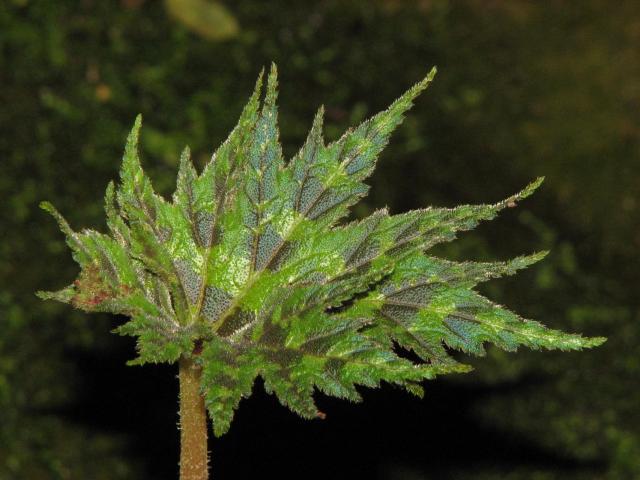
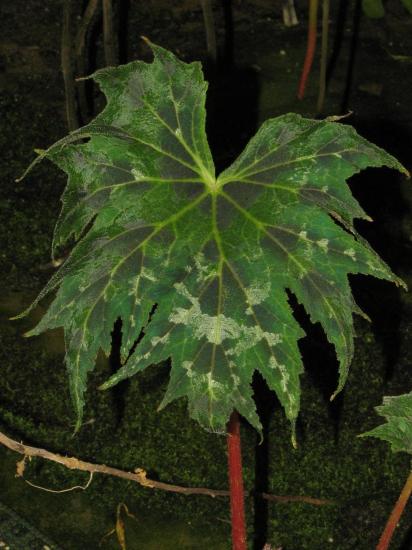
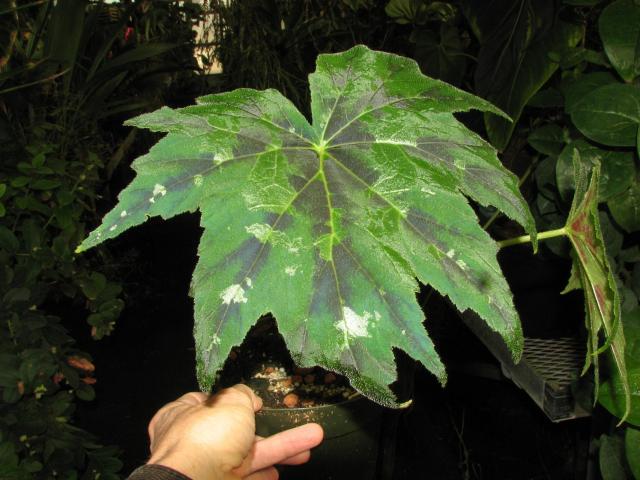
Begonia taliensis Gagnep. is a recent introduction to cultivation from China. Dylan Hannon has grown it for a few years and found that it behaves like a geophyte (totally deciduous over winter) but am unsure whether the rootstock is a short stem or a “proper” tuber. It is essentially stemless and produces strikingly patterned leaves with incised margins and a beautiful iridescent sheen. Toward the end of the growing season multiple inflorescences of pale pink flowers are sent up. B. taliensis seems happy to grow under intermediate conditions (cool nights, 55-60 °F) in shade and high humidity. Height range: 1-2 ft. The photos show plants grown and photographed by Dylan Hannon of material from the Kang-Ding area of Sichuan Province.
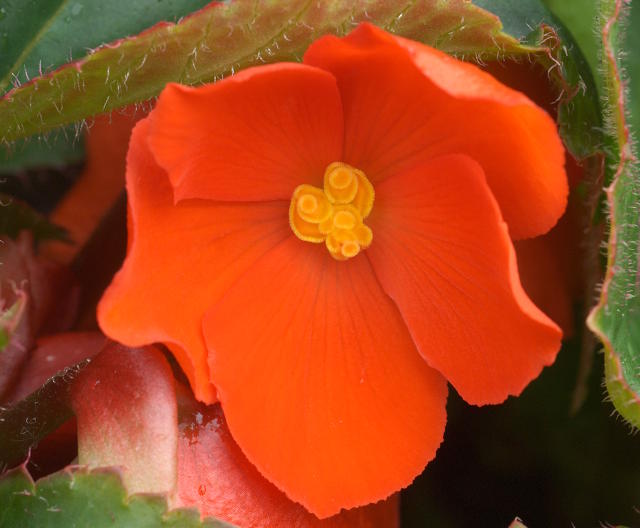
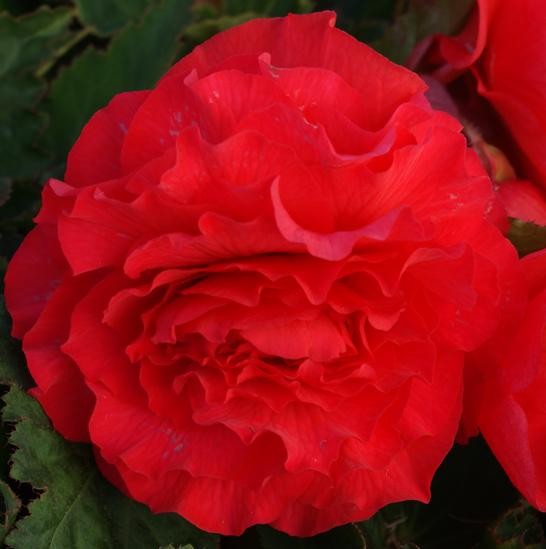
Begonia × tuberhybrida 'Nonstop' is an F1 hybrid seed strain introduced by the German seed company Ernst Benary in 1972. They feature bright big flowers on small robust plants. Seed is dust-like, sown in February it will produce flowering plants by August. In the photographs below by David Pilling notice the difference between the (double) male and (single) female flowers. Leaf cuttings can be used to produce more plants.
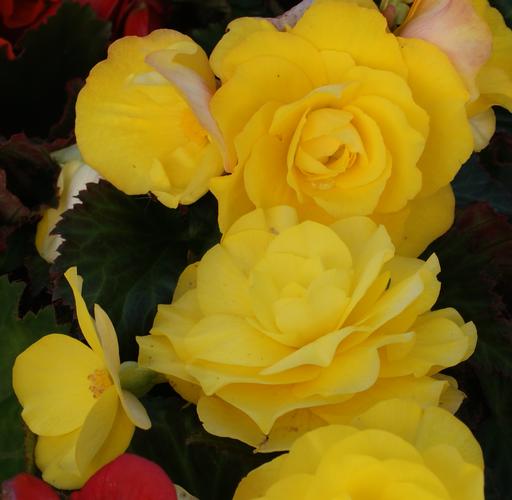
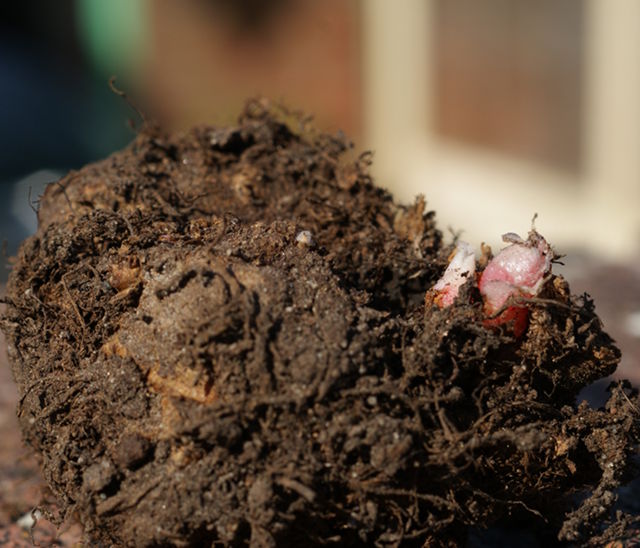
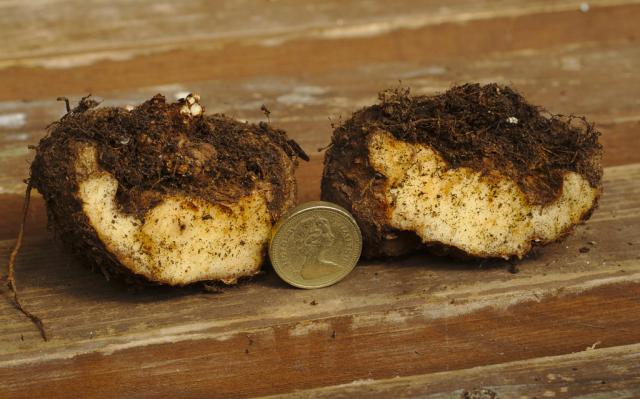
Tubers are dug up and stored frost free through the Winter, the first photo shows the first sign of growth in spring; they can be split in two if both halves have shoots (see photo 2).
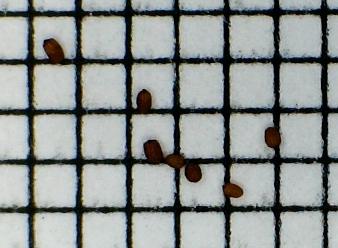
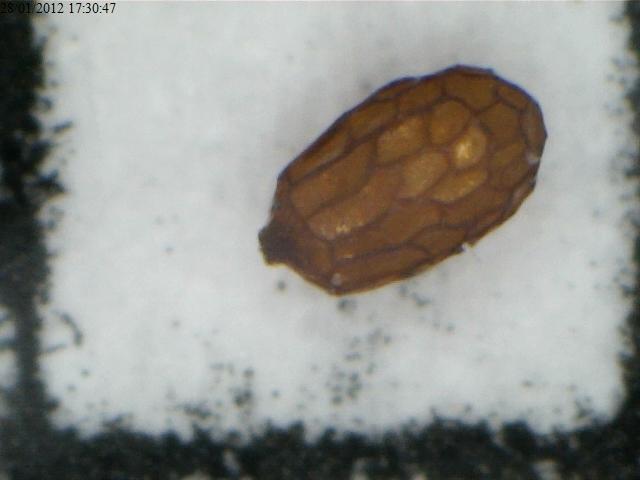
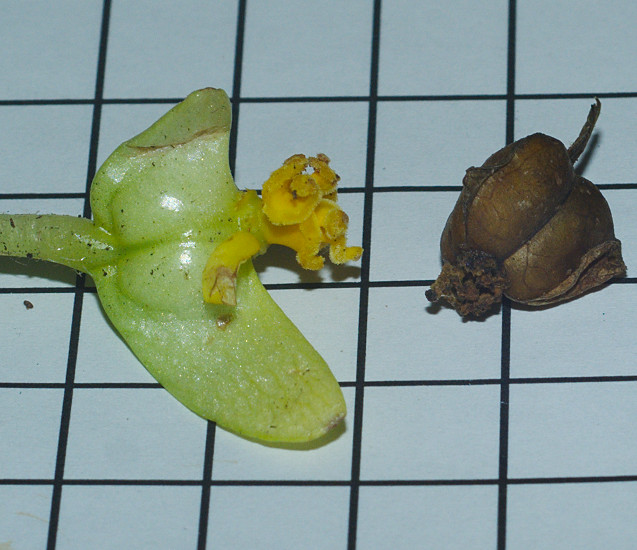
Photographs of commercially supplied viable seed on a 1 mm grid; in the second image the grid lines are just visible at left and right. The third photo shows a seed pod forming and a ripe one, this time on a 10 mm grid; I have never got seed collected from this strain to germinate.