Cryptostephanus is a genus in the Amaryllidaceae family and is most closely related to Clivia. There are three species in this genus. Plants have a thick fleshy rhizome, are smaller than Clivia and have a different set of floral pigments. Two similar species once included in this genus are now classified as Cyrtanthus herrei and Cyrtanthus merkenskyanus. However, these have bulbs and flat seeds, unlike Cryptostephanus.
Cryptostephanus densiflorus Welw. ex Baker is native to areas from Angola to Namibia. It has 20-30 dark purple flowers, and is a perennial woody climber that can grow up to 5 meters high.
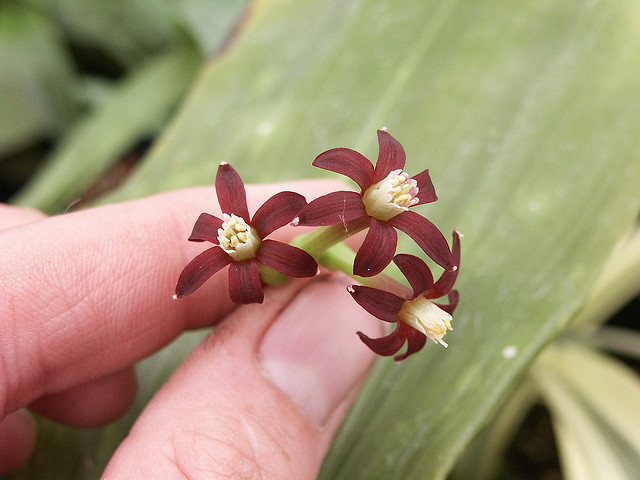
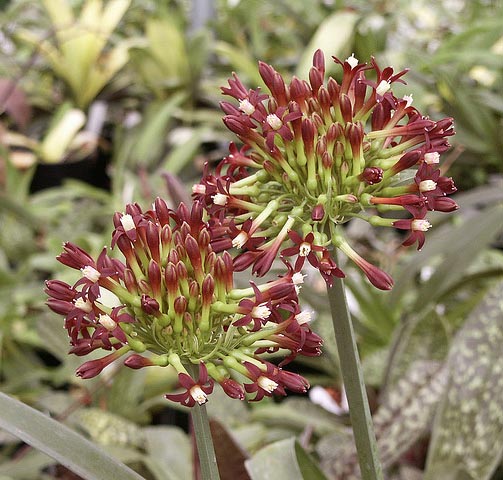
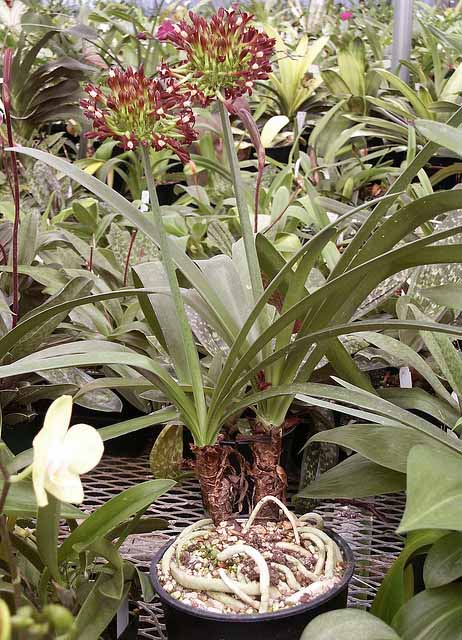
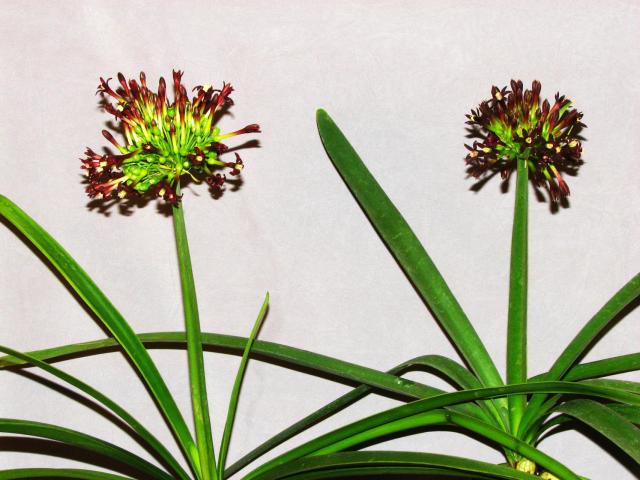
Cryptostephanus haemanthoides Pax is native to SE Kenya to Tanzania. It is a deciduous species with red or purple flowers that some people have found to be difficult in cultivation. John Grimshaw has seen it growing in northern Tanzania in decomposed granite soil with not much humus, in seasonally very dry and hot areas. Rainfall there was about 500 mm/pa, but there was a dry season of 6 months or more. This species grows and flowers in the summer rainy season, when it must compete with rapidly growing grasses and other plants; in the dry season its sites look like a dry stubble field. Height: up to 2 ft. In cultivation, it requires warm temperature, even in the dry dormant period. It is successfully grown by Harold Koopowitz in a 1 gallon (4L) container with a mix of 1:1 organic matter to pumice. Temperature ranged from 10-35 °C (50-95 °F). The plants go dormant in winter and drop their leaves. At this time water should be reduced but not withheld. While in growth they should be fed with a well-balanced fertilizer.
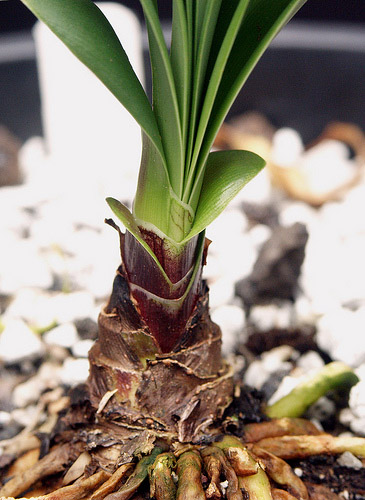
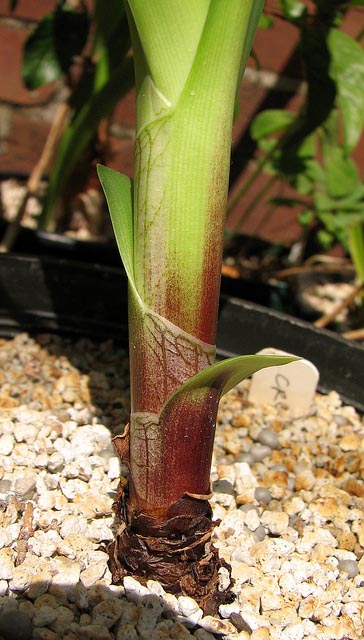
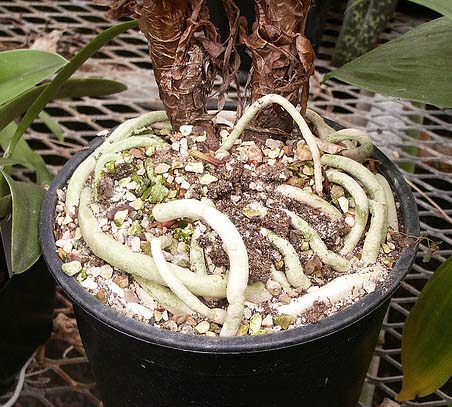
Uluwehi Knecht has found this easy to grow outdoors in full sun in Honolulu, Hawai'i at 75 m elev. in hot, dry Kaimukī as well as in cooler, wet upper Mānoa Valley at 150 m elevation. He grows it potted in a medium of pure horticultural grade pumice and gives it daily water while in active growth. He also feeds his plant with time-release fertiliser (Nutricote 13-13-13). It emerges from dormancy in June and grows through the summer till late October/early November. Once the plant has yellowed more than 50% he removes it from the sun and rain and allows it to dry on a storage rack, staying bone-dry until the beginning of the following year's growing season. During dormancy all its leaves wither. He has also found success growing it indoors on a shelf under HID lights (30 cm below a 400 watt sodium halide bulb, light strength at approximately 3500 foot candles) alongside Costus spectabilis and Vanda orchids. His plant has not yet reached blooming size but doubles in size each year. The first photo below by Uluwehi Knecht shows his young plant emerging from dormancy in 2009. The second and third photos show the same plant in full growth in 2010. The fourth photo by Nhu Nguyen shows the extensive, fleshy, perennial root system of the same plant bare-rooted mid-winter.
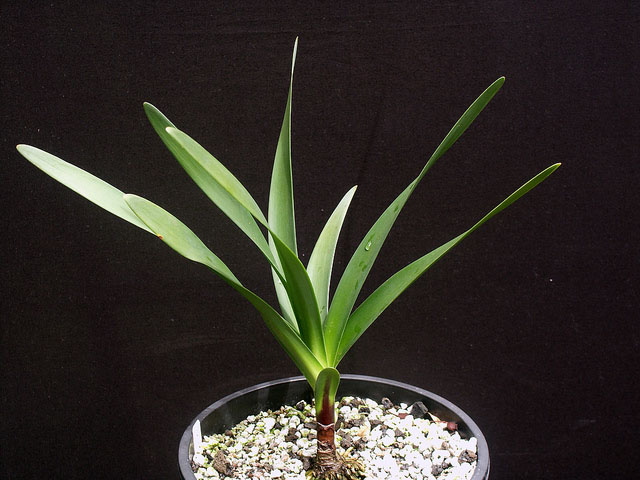

The following four photos by John Ingram are of a plant grown by Harold Koopowitz in a greenhouse under conditions favourable to Paphiopedilum orchids. Harold reports that this plant flowers regularly each year, unlike his other clones of this species that are reluctant to flower.
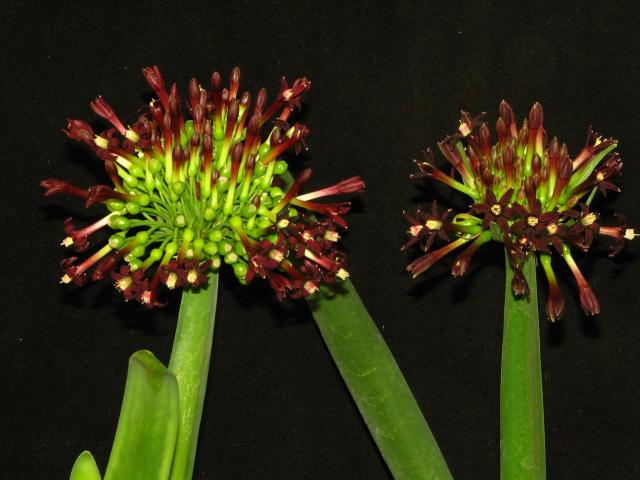
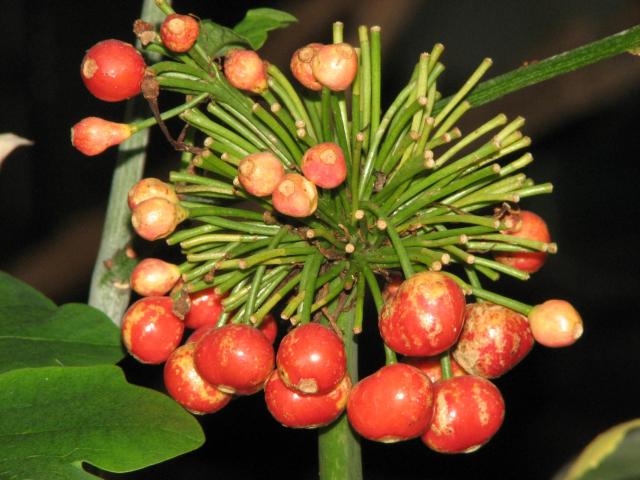
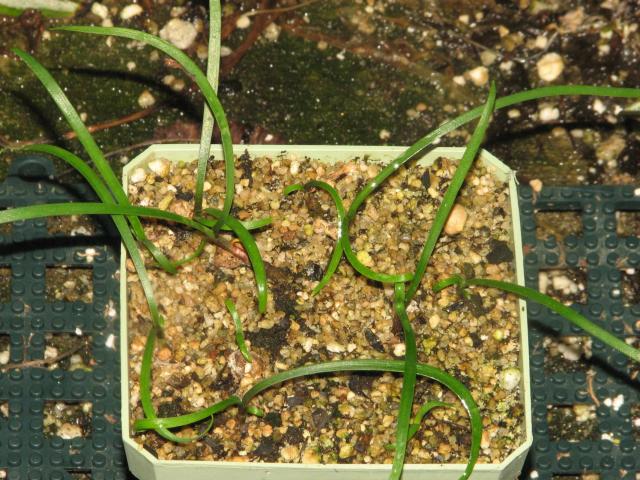
The photos below were taken by Dylan Hannon showing various aspects of the plants, including different clones, seed pods, seeds and seedlings.


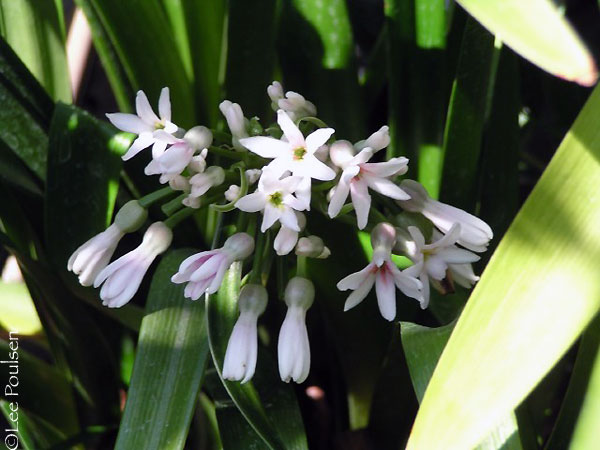
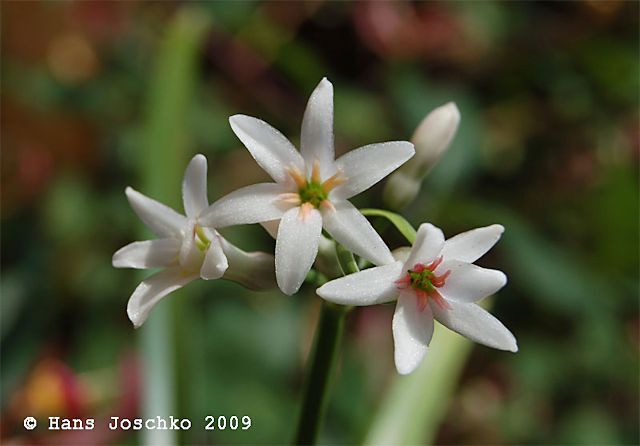
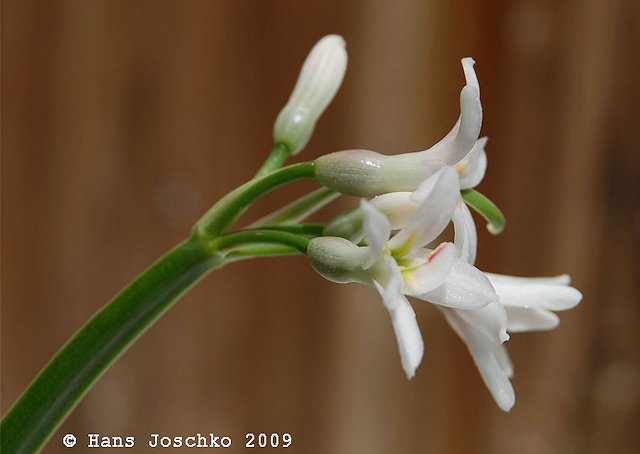
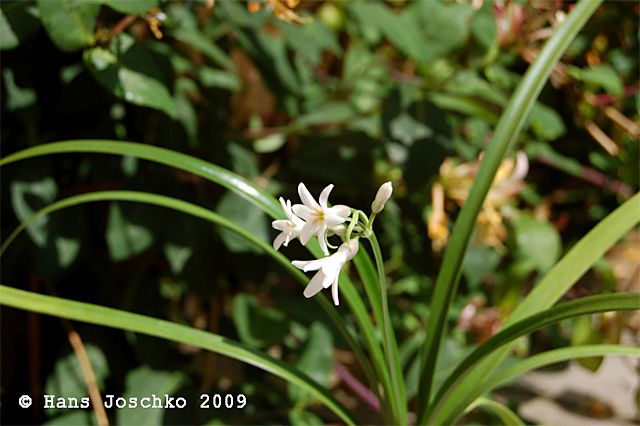
Cryptostephanus vansonii is an evergreen species native to eastern Zimbabwe to western Mozambique. It was originally described as having purple flowers. In cultivation there are white and pink forms. Fresh seeds germinate easy to moderately easy and bloom in a couple years. Blooming time seems to be erratic. The plant pictured in the first photo below was grown from seed from Silverhill Seeds. Most people grow this species much as they do Clivia, but it doesn't require as much shade. Many of the white flowers have a pinkish cast to them. The flowers have gotten better each year. There are three scapes all blooming at the same time this year. Height range: 20-45 cm. Photo taken October 2006 by Lee Poulsen. Photos 2-4 taken by Hans Joschko.