Daubenya is a genus in the Hyacinthaceae family from South Africa. Most of the species are found in the winter rainfall area. Originally thought to have a single species, Daubenya aurea, it was expanded by John Manning and Peter Goldblatt in 2000 to include other genera (Androsiphon, Amphisiphon) and species that have been considered Polyxena, Massonia, or Neobakeria in the past. Common to all are two spreading prostrate leaves and white to yellow or red tubular flowers in a condensed raceme followed by papery capsules with smooth glossy seeds. Flowers are pollinated by butterflies, beetles, sunbirds, and bees depending on the species. Cameron McMaster has provided interesting information about this genus in an article he wrote for Farmer's Weekly in 2008.
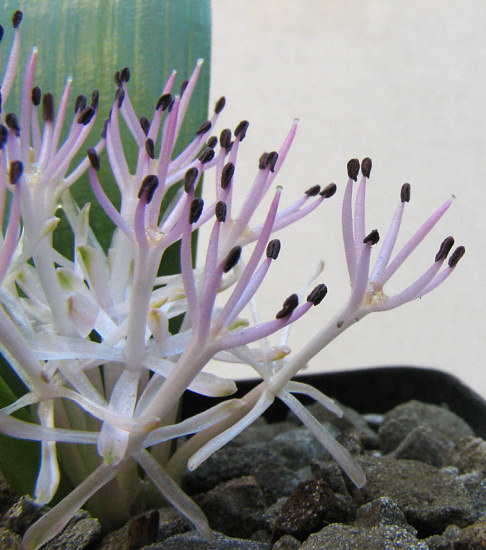
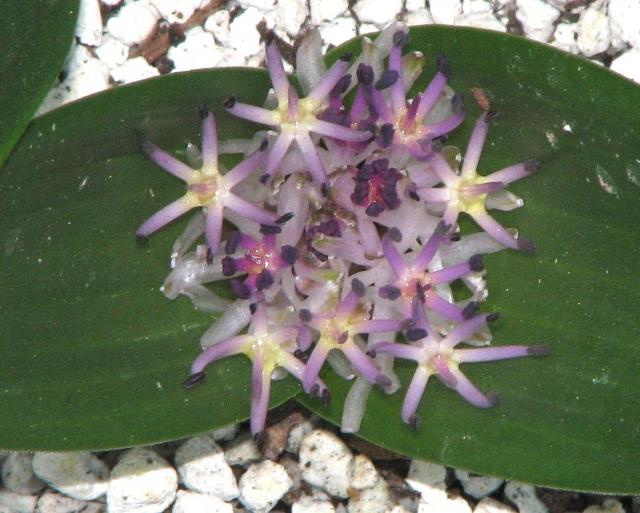
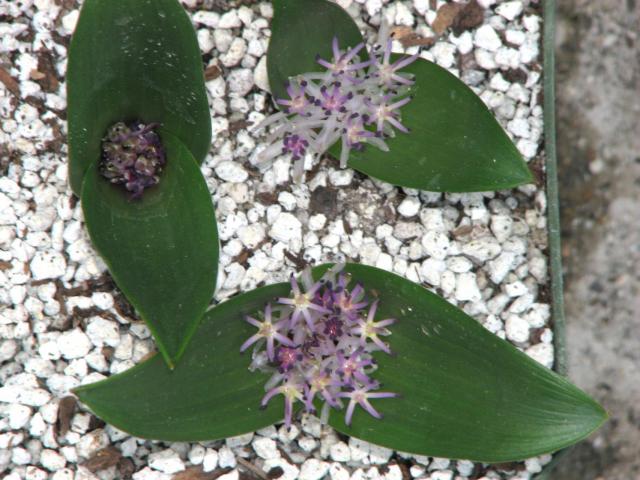
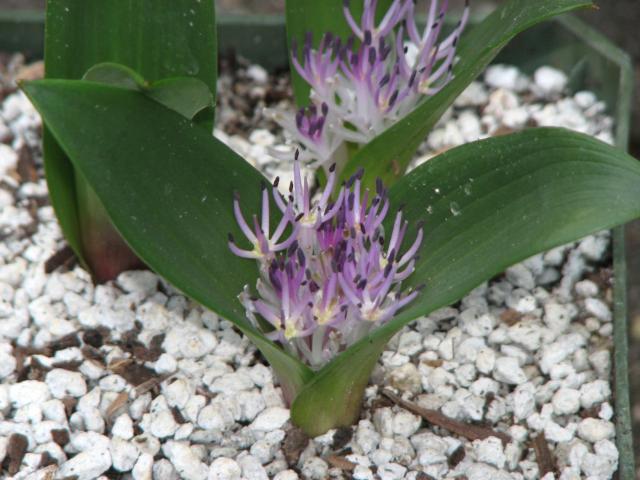
Daubenya alba A.M.van der Merwe is a species described in 2002 distributed from the edge of the Roggeveld escarpment in the Northern Cape Province. The name suggests white flowers, but they may also commonly be pale lilac, which fades more white as the flowers mature. They are easily distinguished from other daubenyas by the long tubes formed by the united stamens. Height: to 5 cm. The plants are slow to flower, taking about 5 years from seeds. Photo 1 was taken by Paul Cumbleton. Photos 2-4 were taken by Uluwehi Knecht.
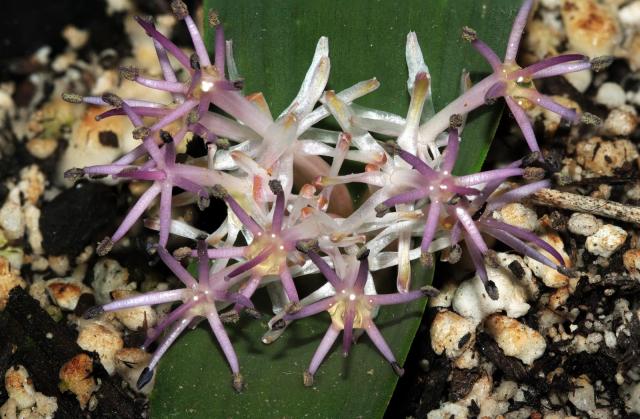

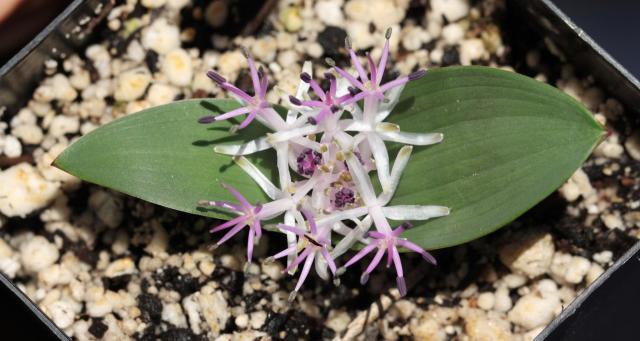
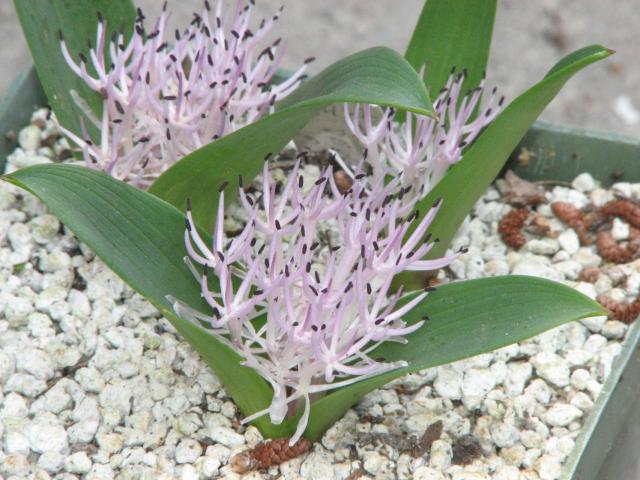
Photos 1-4 were taken by Dylan Hannon of a form collected from the Bos Rivier, near Sutherland. The photos show bulbs that are about 20 years old. These bulbs have not made any offsets.
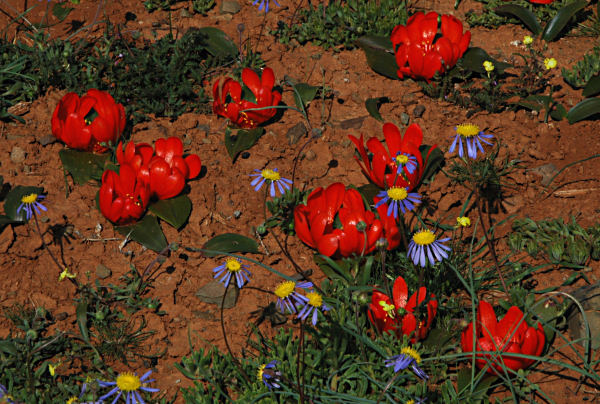
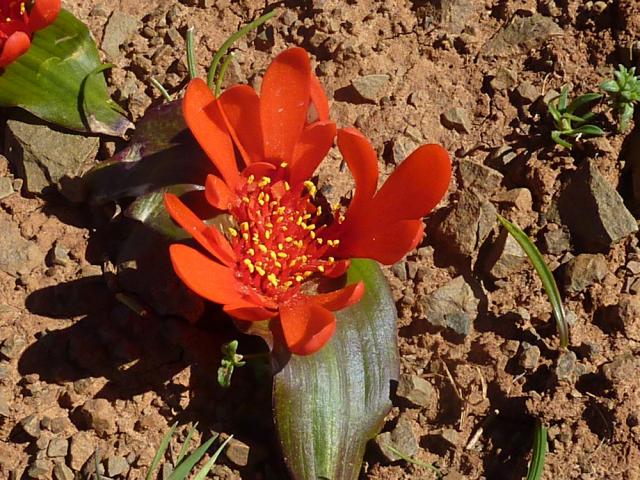
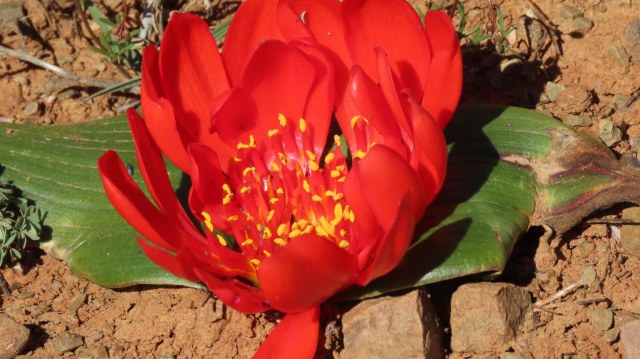
Daubenya aurea Lindl., a really beautiful and rare species, has red or yellow flowers and is found growing on dolerite clay flats in the Roggeveld. Height: to 5 cm. This species is pollinated by monkey beetles. The first three photos from Bob Rutemoeller show plants grown by Alan Horstmann in South Africa that were flowering in September 2003. The next two pictures were taken by Alan of his plants.
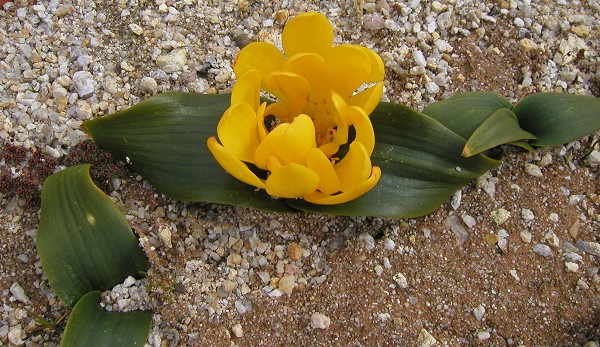
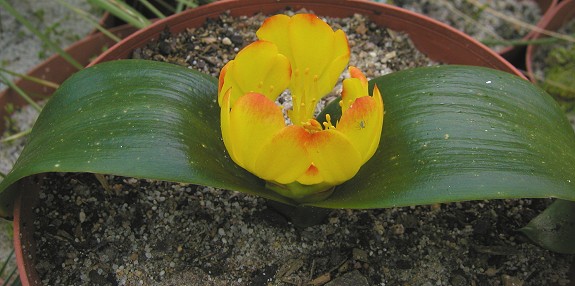
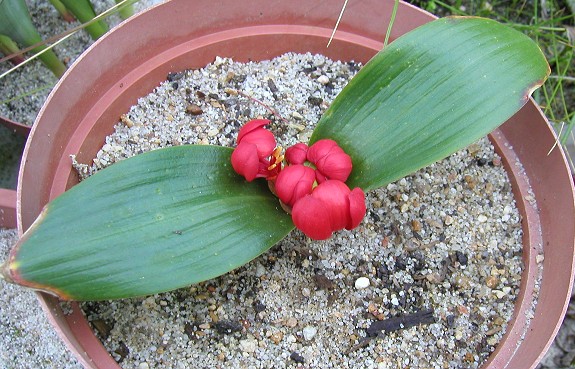
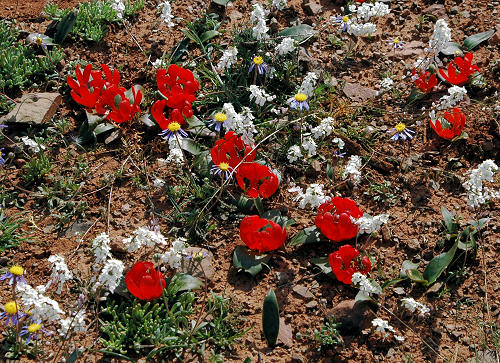
In September 2006 in a glorious year there were masses of red ones in bloom for the IBSA annual trip to Middelpos along with other blooming annuals and bulbs. For other flowers blooming at the same time see the Roggeveld wiki page. The first three photos of the red ones were taken by Bob Rutemoeller and Mary Sue Ittner. The fourth photo was taken by Cameron McMaster. The fourth photo was taken by Cameron McMaster September 2011. The last photo was taken by Alan Horstmann in 2023.
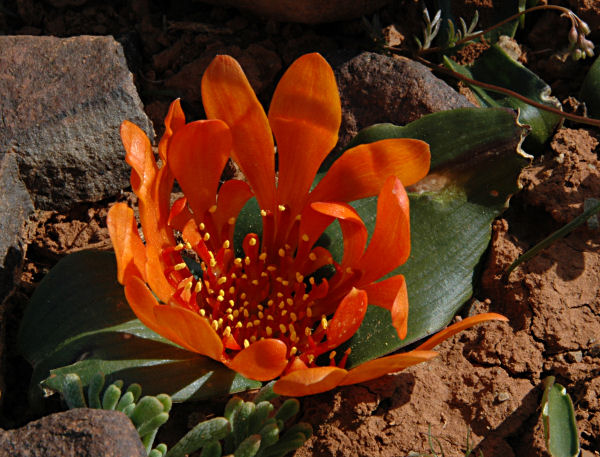
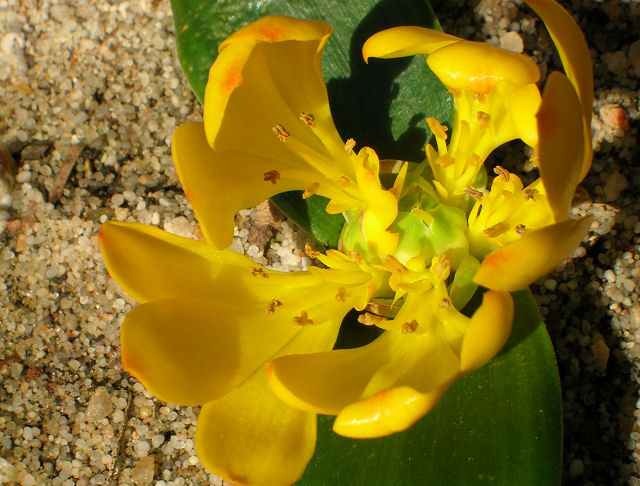
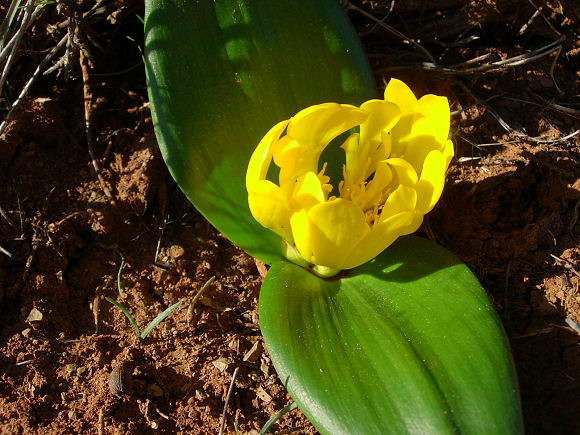
The yellow form below was photographed by Cameron McMaster in the same area in different years and also by Mary Sue Ittner in September 2006 when there were just a few in bloom. The last photo was taken in 2023 by Alan Horstmann.
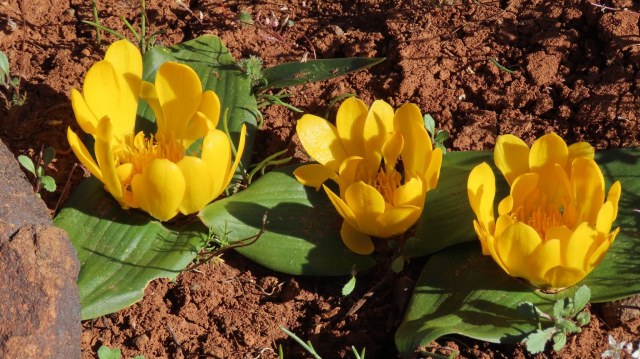
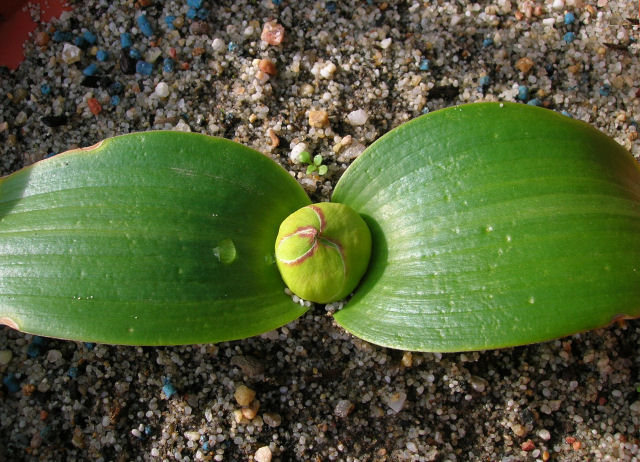
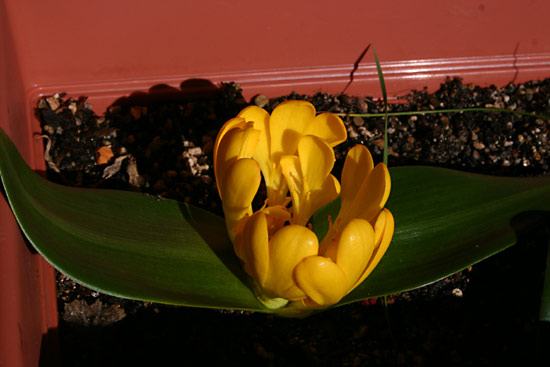
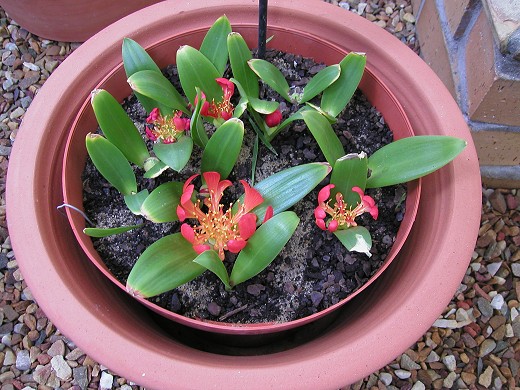
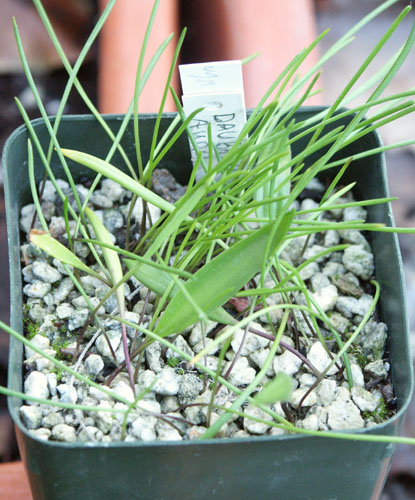
The first photo by Bob Werra is of one that he grows that is yellow. The second photo was taken by Bob Rutemoeller of a pot of red ones blooming in the Kirstenbosch National Botanical Garden bulb room in the Conservatory in August 2003. The third image is of seedlings in their 4th winter after sowing from Uluwehi Knecht. The last two photos were taken by Michael Mace of a plant grown in California. The weirdness of these flowers is hard to fully capture on film. Viewed up close, they look more like a piece of coral or an exotic starfish than a flower.
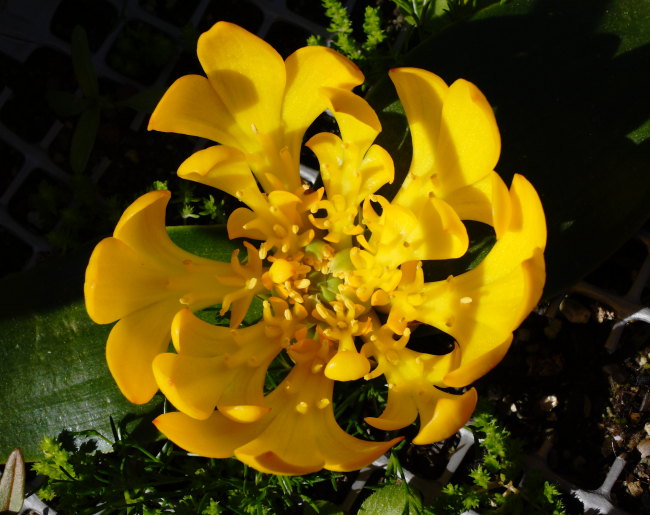
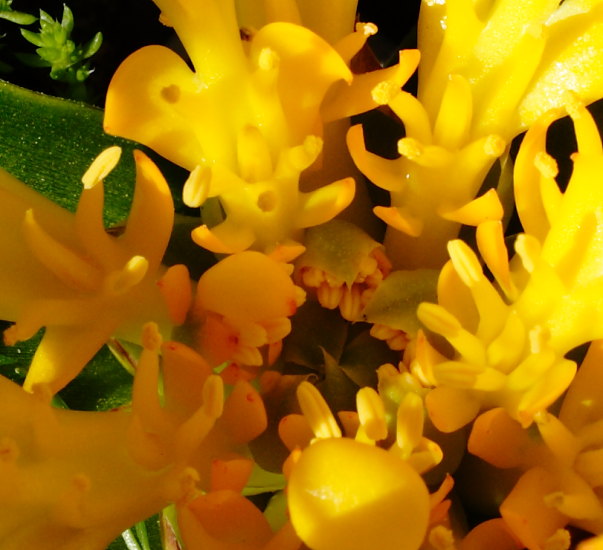
Daubenya capensis (Schltr.) A.M.van der Merwe & J.C.Manning, syn. Androsiphon capensis Schltr., grows in doleritic clay in the northwest Cape. It has yellow yeast scented flowers. Height: 5 cm. Photo by Alan Horstmann.

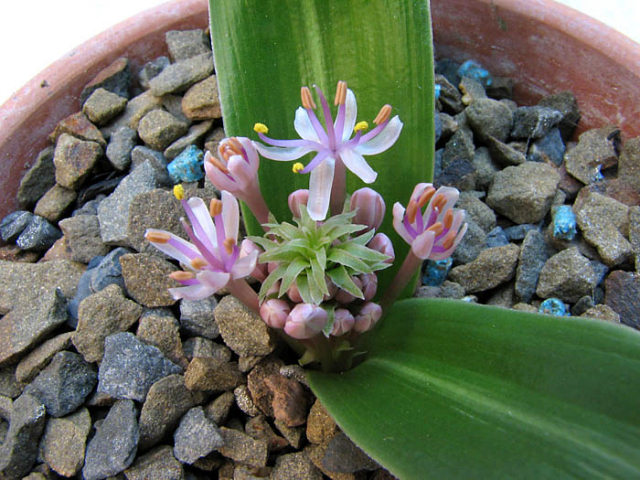
Daubenya comata (Burch. ex Baker) J.C.Manning & A.M.van der Merwe is a species that is rare in cultivation, even though in the wild it has a wider distribution than most other Daubenyas, occurring in the Free State, Northern Cape and the North Eastern parts of Western Cape. This puts it into areas that get some summer rainfall, but it still behaves as a winter grower. Grazing threatens this species survival in some of its range. The flowers can be white or pinkish and have a strong spicy scent. Height: 5 cm. Photo by Paul Cumbleton of one of the pinkish ones:
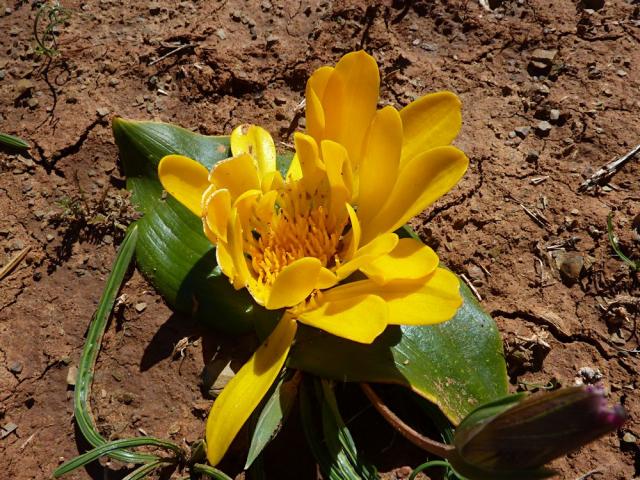
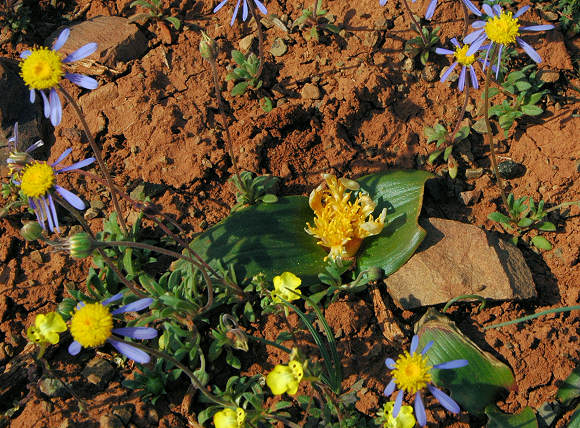
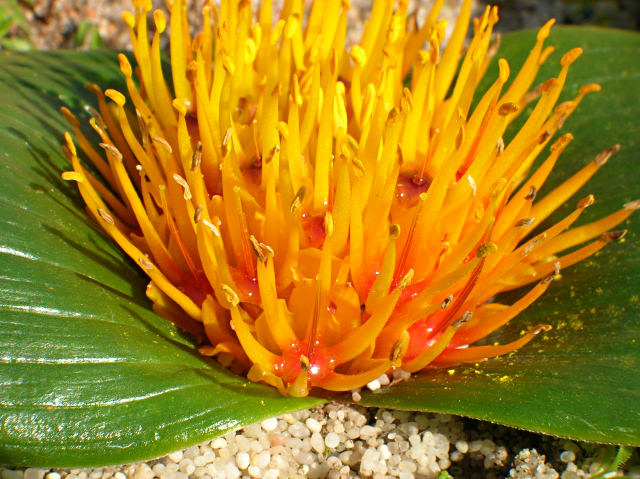
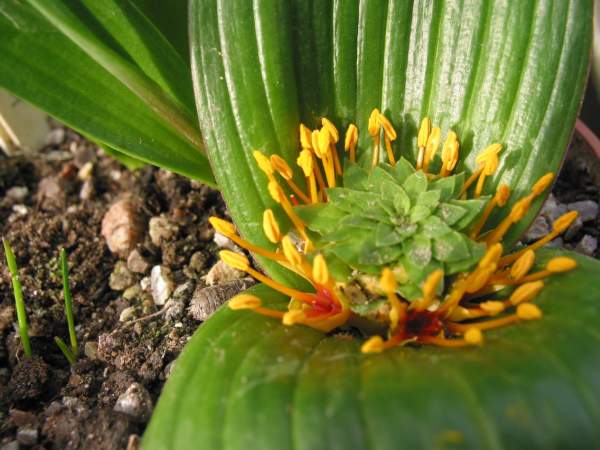
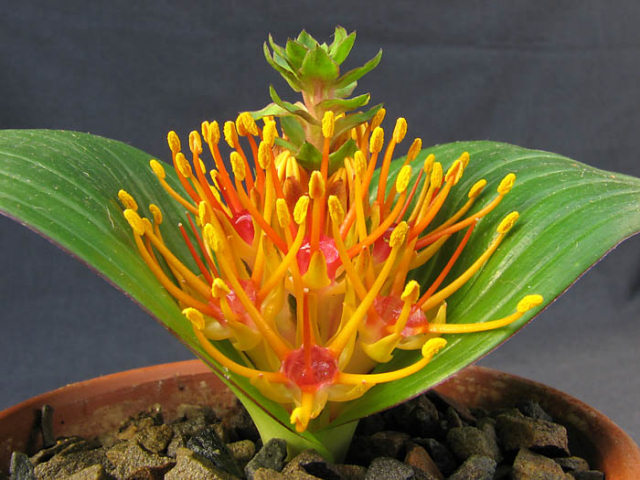
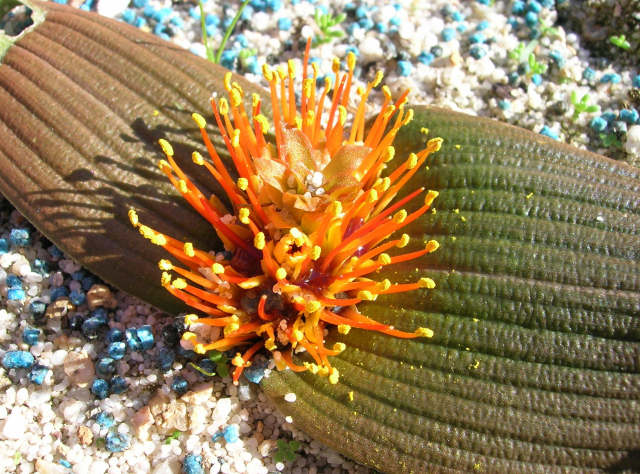
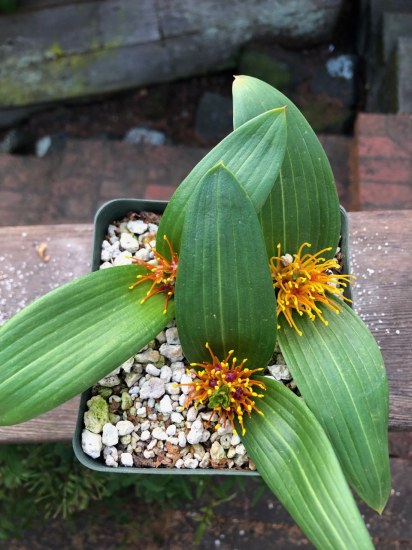
Daubenya marginata (Willd. ex Kunth) J.C.Manning & A.M.van der Merwe has previously been known as Massonia marginata Willd. ex Kunth. It has broad leathery shiny prostrate leaves with longitudinal grooves. The flowers are in a dense cluster between the leaves with prominent yellow to orange stamens. It grows in clay flats in the Roggeveld and the northwest Cape. Height: to 8 cm. The first two photos were taken near Middelpos by Mary Sue Ittner and Bob Rutemoeller where it was almost finished blooming in September 2006. It grows close to Daubenya aurea. The last photo was taken by Cameron McMaster.
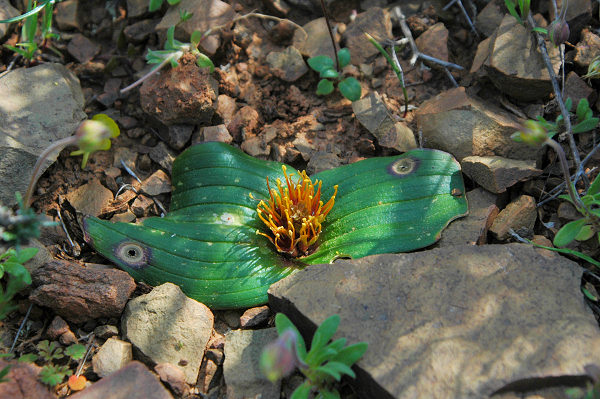
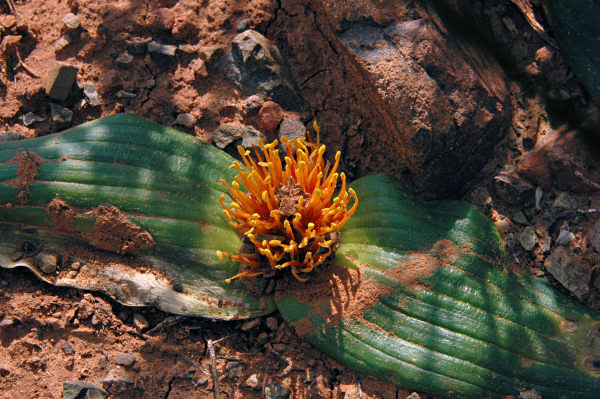
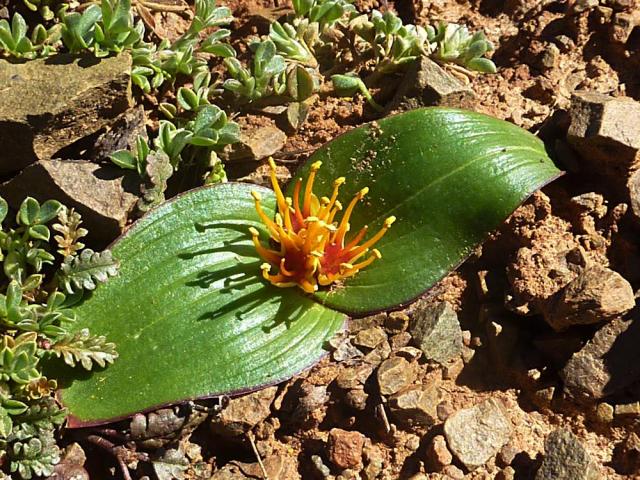
Pictured below are two growing in the UK. The first one was grown from seed by Peter Maynard where it blooms in the fall unlike the spring in its native land. The second one was photographed by Paul Cumbleton. It makes a fine display, often in December, so is a Christmas treat. The third picture was taken by Alan Horstmann. The last photo was taken by Carl Frederick.
Daubenya namaquensis (Schltr.) J.C.Manning & Goldblatt photos taken by Arthur Benjamin Cloete in the Concordia Commonage in Namaqualand. He writes that the flowers smell like sweet honey. Height: 5 cm.
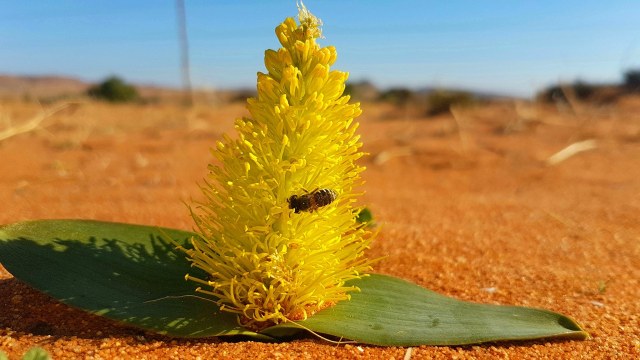
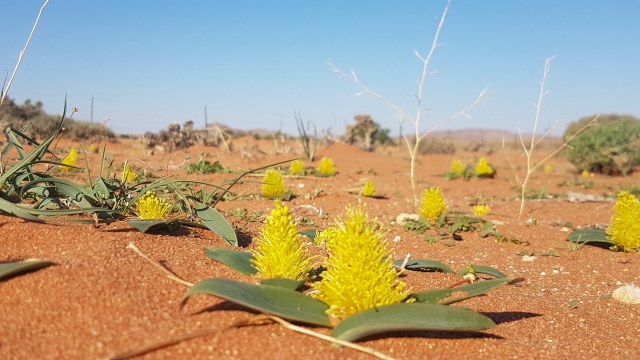
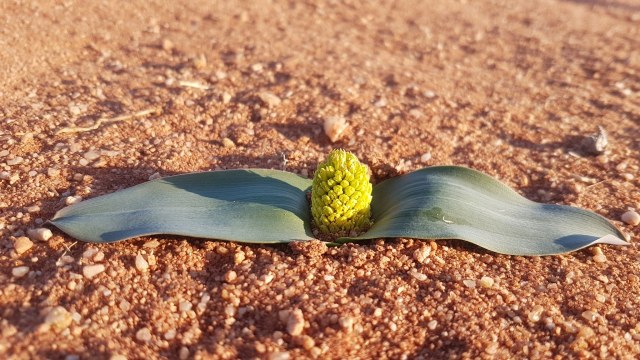
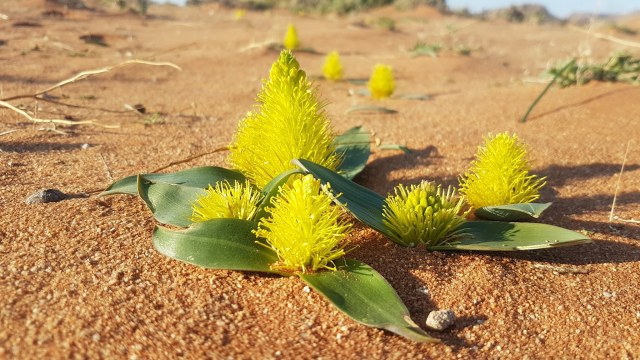
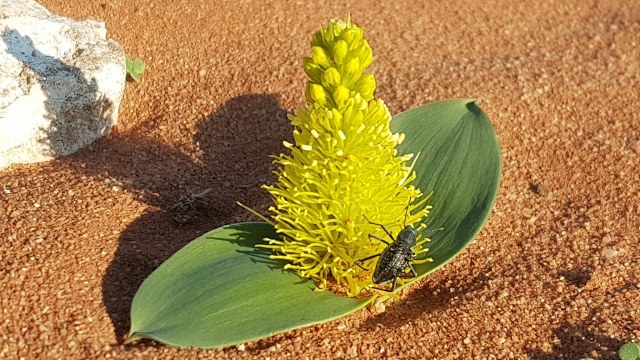
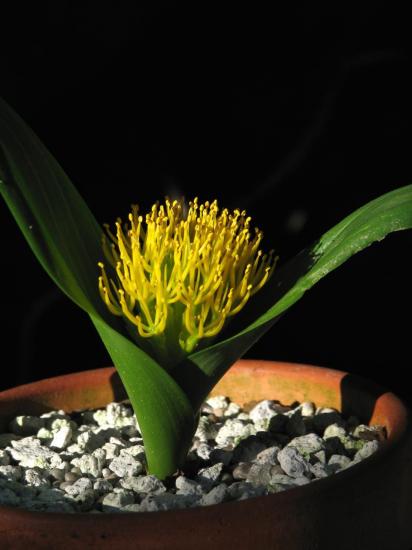
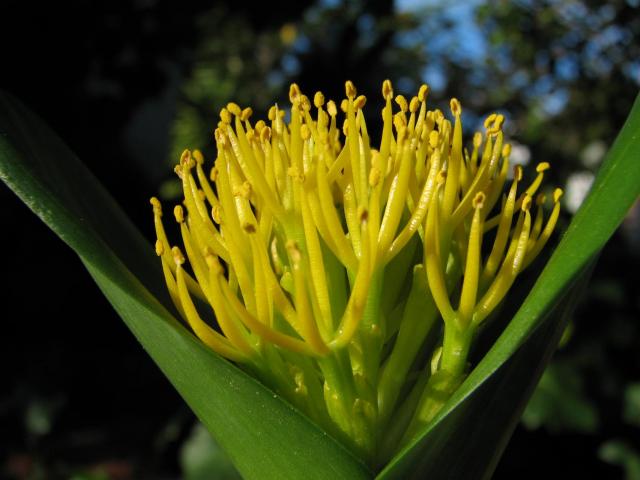
Daubenya stylosa (W.H.Baker) A.M.van der Merwe & J.C.Manning is found in clay soils in the Bokkeveld Plateau. It is a most attractive species with glowing bright yellow flowers that have a smell of honey, growing to 5 cm tall. For Paul Cumbleton, this starts flowering in October and goes on into November. Photos 1-2 by Paul Cumbleton, 2-4 from Alan Horstmann, and 5-6 from Nhu Nguyen.
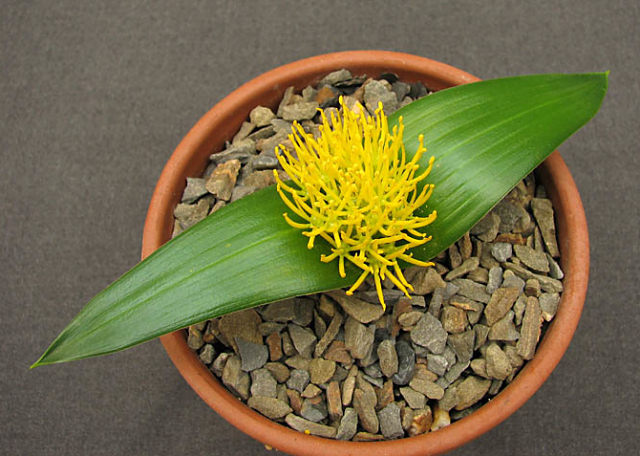
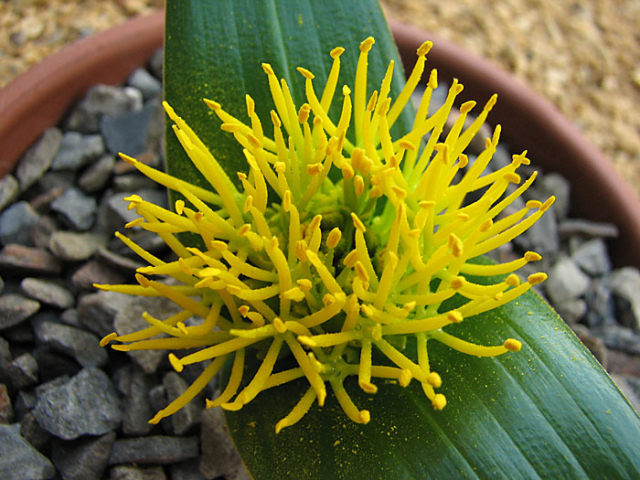
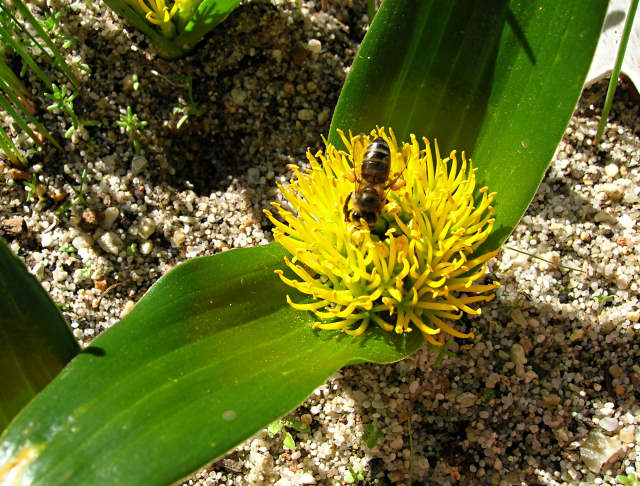
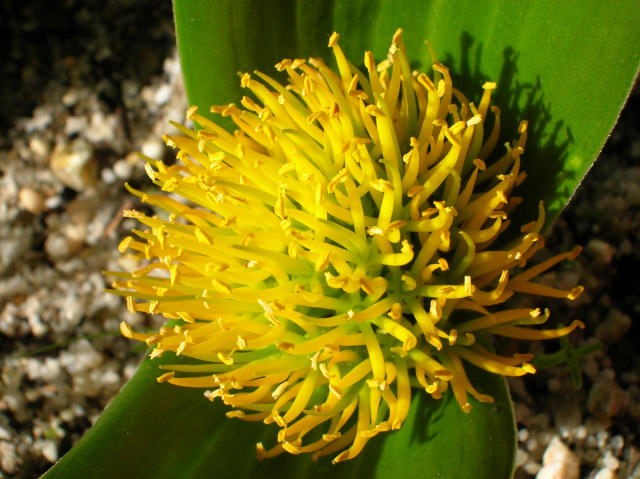
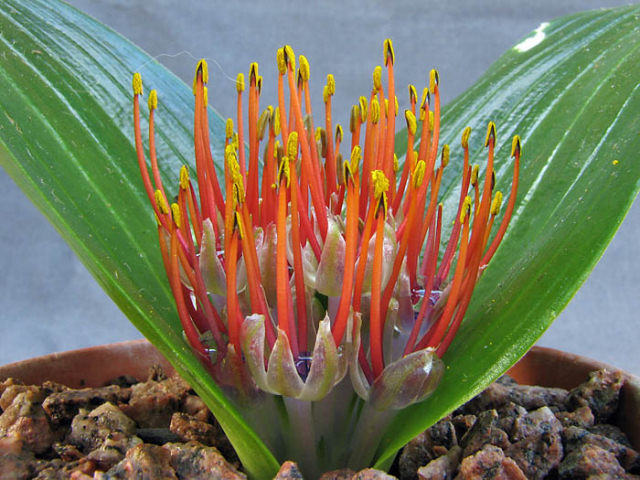
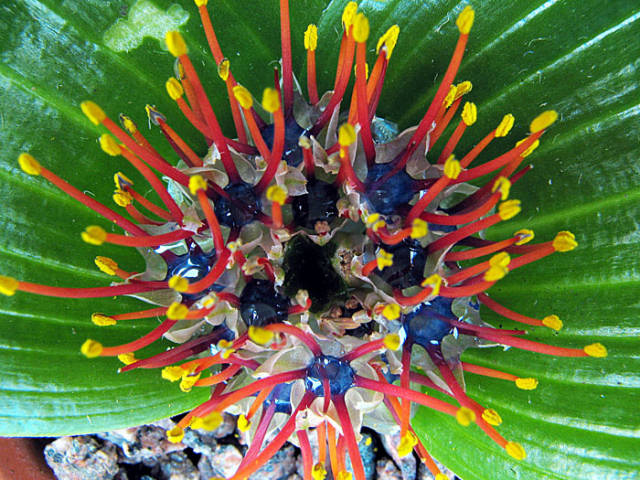
Daubenya zeyheri (Kunth) J.C.Manning & A.M.van der Merwe is from calcareous-coastal sands in the South Western Cape. It has glossy green leaves and flowers with white petals and showy red-orange filaments, growing about 5 cm high. That much alone makes this an attractive plant when viewed from the side. The wonderful surprise comes when you view it from above. The bottoms of the stamens are coloured purple and this colour reflects in the copious nectar pools that gather in the flowers. It looks like the flowers are filled with glowing amethysts. the nectar attracts sunbirds who pollinate it. This plant can truly be described as a jewel of the desert!! The first two photos from Paul Cumbleton show a side view and a top view. The last two photos from Mary Sue Ittner.
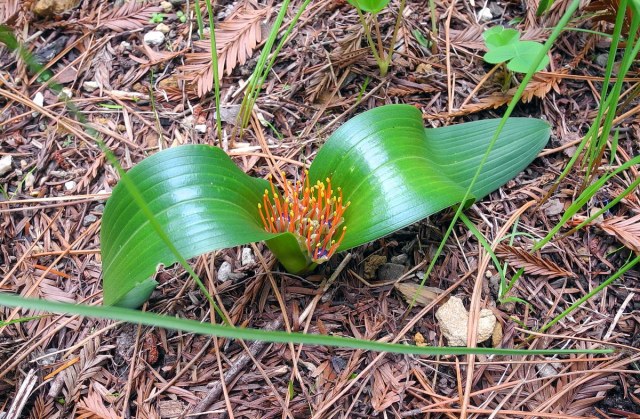
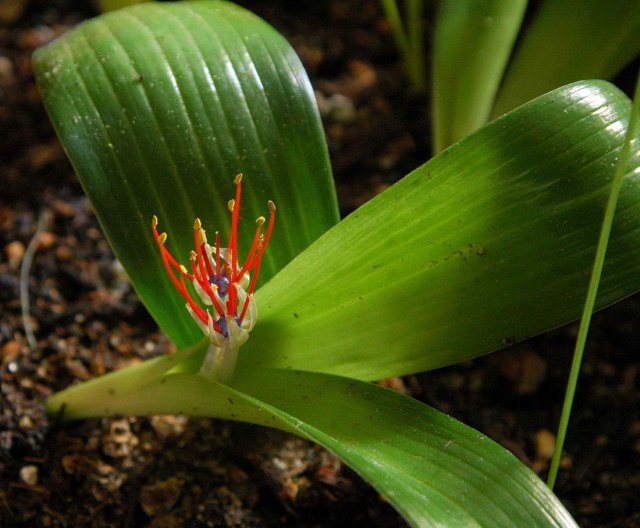
Larger views of the photos by Paul Cumbleton and cultivation information can be found on his Wisley’s Alpine Log