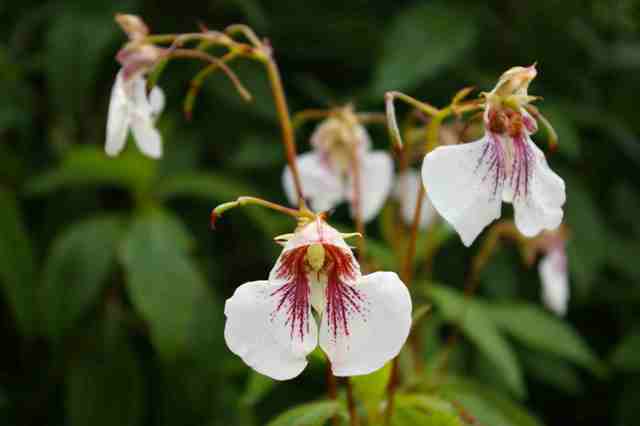
Impatiens is a vast genus of well over a thousand described species with a wide distribution in the Northern Hemisphere and extensions into sub-equatorial Africa, India, Ceylon, and southeastern Asia where the genus extends to New Guinea. Among gardeners, Impatiens is the best known member of the family Balsaminaceae, and the only one with commonly cultivated members. Most species occur in cool climate montane areas. Some non-bulbous species are commonly cultivated: Impatiens walleriana, familiarly known as impatiens or Bizzie Lizzie which originated in Africa, Impatiens hawkeri, the main parent of the plants known as New Guinea impatiens, as well as the annual Jewelweed (Impatiens capensis) and the huge and sadly quite invasive Impatiens glandulifera.
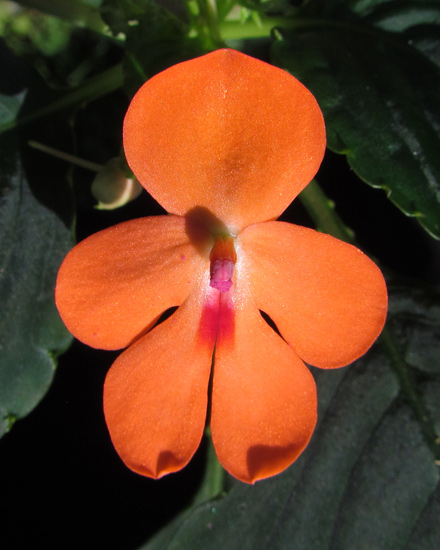
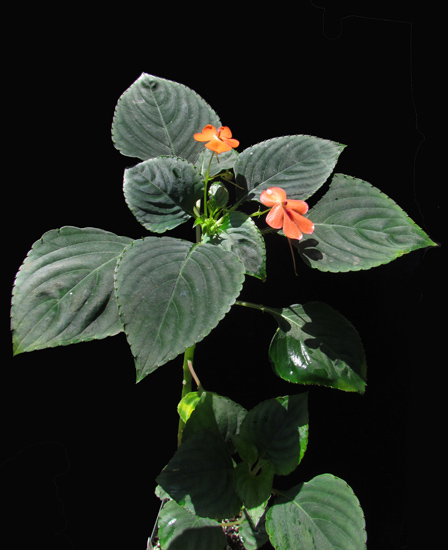
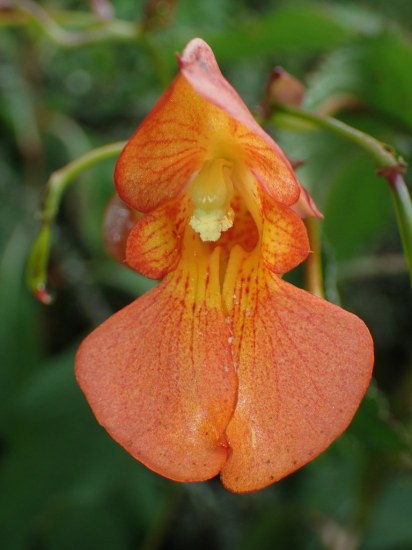
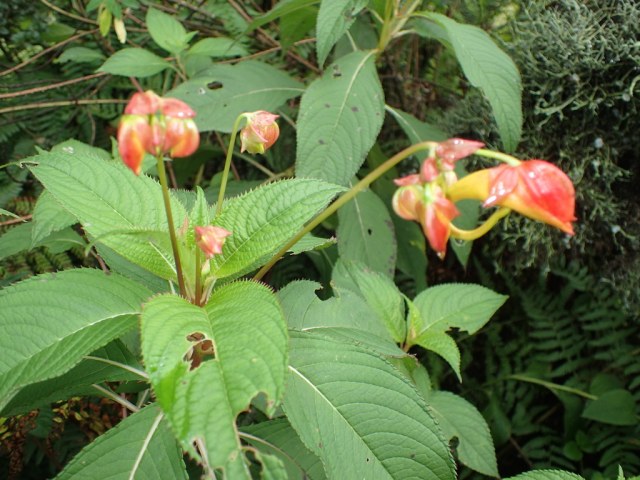
Impatiens cinnabarina Grey-Wilson is endemic to the Kimboza area, Uluguru Mountains in Tanzania at about 1000 ft (300 m). The plants grow in limestone outcrops and produce potato-shapped tubers that allow them to survive the occasional dry spells. Temperature in the area fluctuates between ~80 °F (28 °C) during the day and 60 °F (15 °C) at night. Plants can grow up to a meter (3 ft) tall with a semi-woody stem. The tubers may allow the plant to survive light frost, but it is best if the plants are kept to above 50 °F (10 °C). In cultivation this species can be grown in bright shade or filtered to good sun in cooler areas. It thrives when there is higher humidity in the air but makes a perfectly good houseplant with enough light. Grown in good light, the leaves have an almost iridescent, velvety quality. When grown from seeds, plants can make a caudex. The photos below were taken by Nhu Nguyen. Flowers in full sunlight are orange in color, but when shaded, the flowers have a cinnabar tone, true to the name.
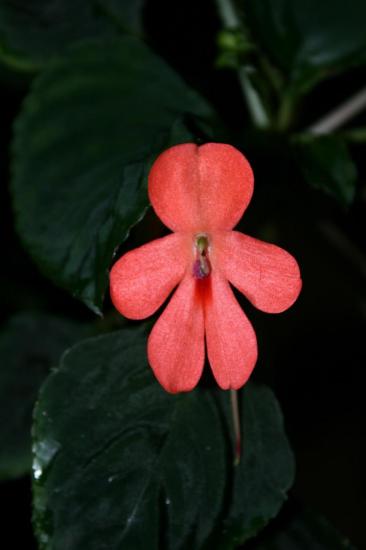
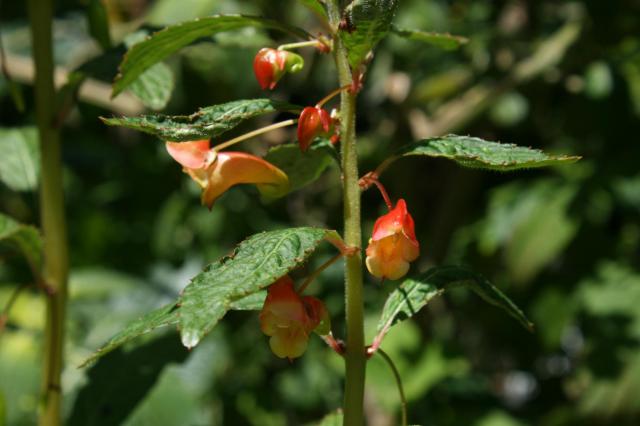
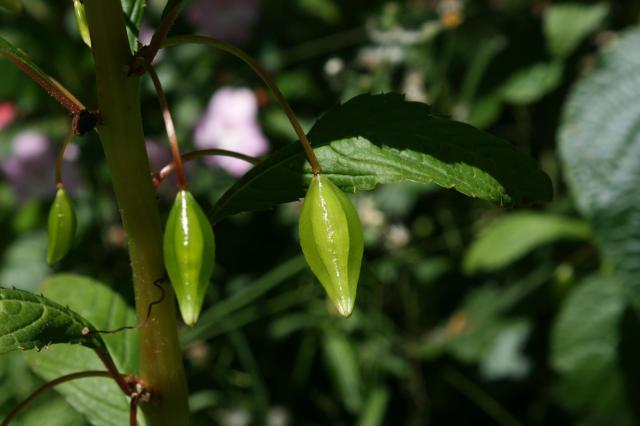
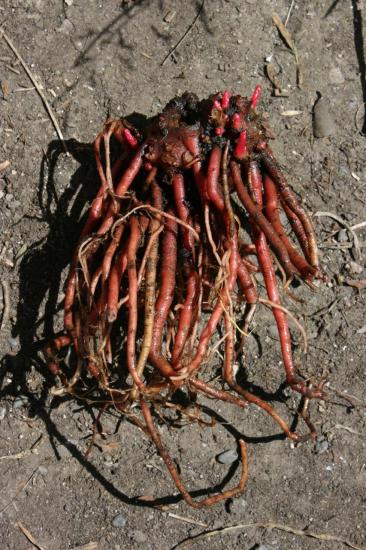
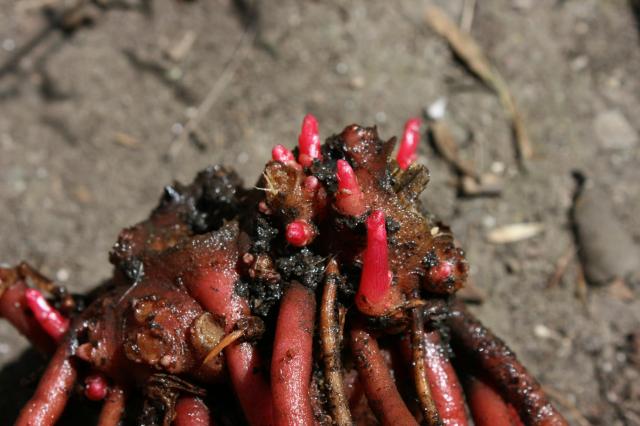
Impatiens flanaganae Hemsl. is a rare tuberous species known only from a few localities near Port St. Johns, Eastern Cape, South Africa. It can also be found in less well-known location in central southern KwaZulu-Natal. Plants grow to about 3 ft (1 m) with startling rose-red tubers. John Grimshaw had a good discussion on some of the geophytic members of the genus on the pbs list. This species can be grown in climates with warm summers such as New York and Southern California. However, in excess heat, the plant will continue growing but flowers will abort (Ernie deMarie). Grow this species in a well-drained mix with light morning sun or good filtered sun throughout the day. It does not like strong afternoon sun and will suffer. During spring, give it a some good fertilizer as it comes into growth. Throughout the season, it will produce increasingly larger sized and numbers of tubers. If not repotted, it can break the pot. Photos 1-3 were taken by Jim Murrain and photos 4-6 were taken by Nhu Nguyen. Photos 5-6 show the tubers and new shoots.
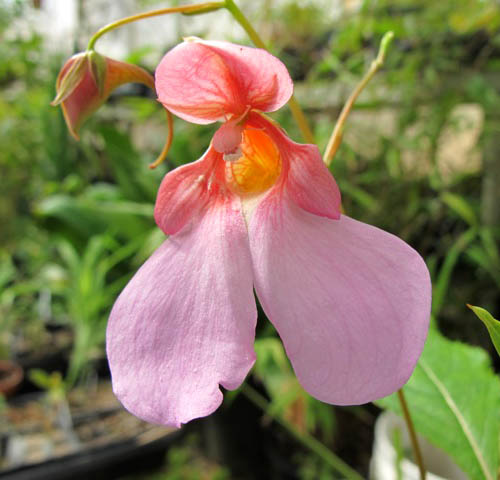
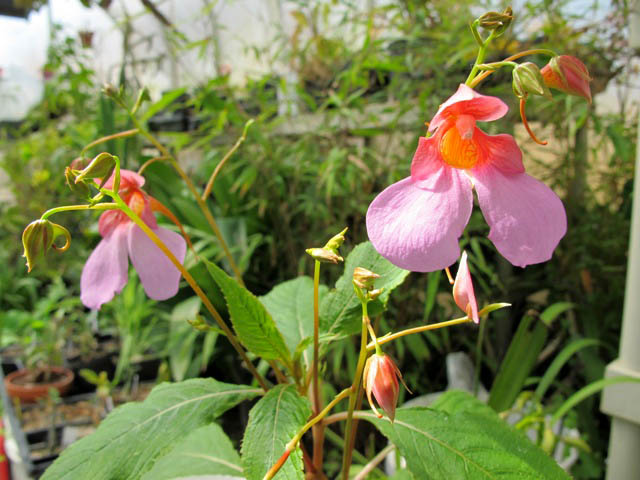
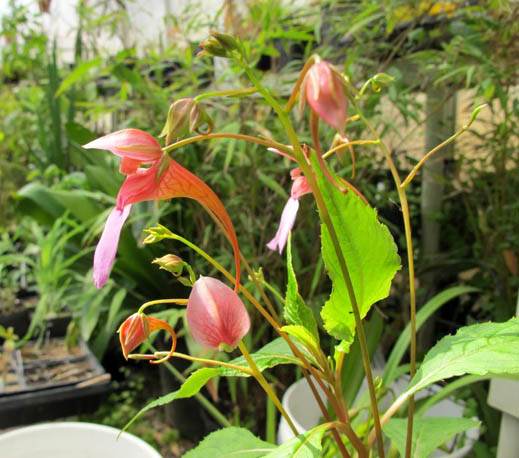
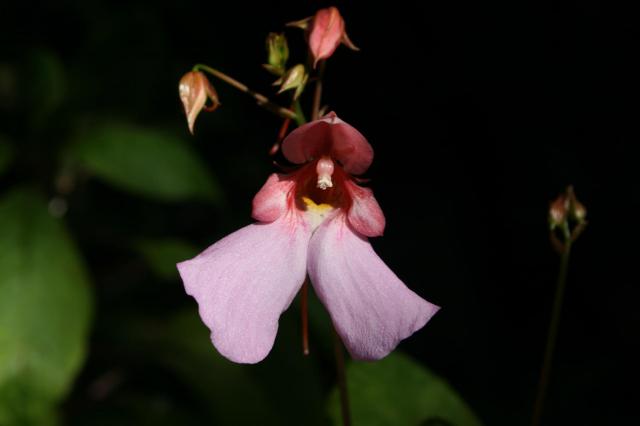
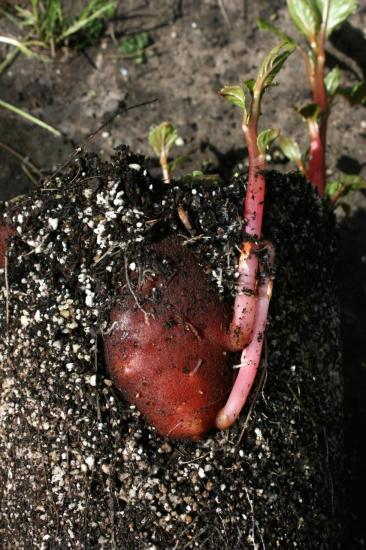
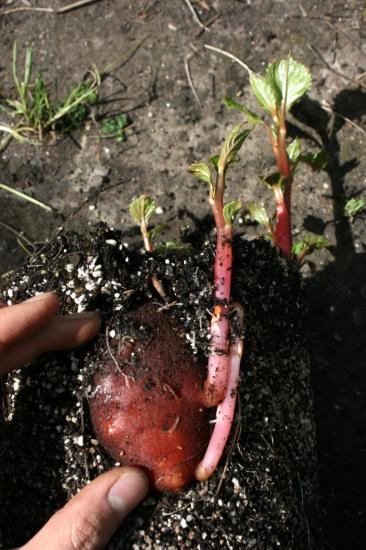
Impatiens gomphophylla Baker is native to the southern highlands of Tanzania where it inhabits open grasslands. This species is considered to be a perennial by major databases. Grow this species in good morning sun or semi-filtered afternoon light. It likes more light than many other Impatiens but too much light will cause the leaves to look yellow and bleached out. This species is said to be hardy up to USDA zone 8 where it can freeze down to the nicely thickened root-stock and return the following year. It prefers a cool summer but may persist up to 40 °C where the heat may induce dormancy. Height range: 3-5 ft tall. The photos below taken by Nhu Nguyen show various aspects of the plants. Photos 5-6 show the root-stock and the pretty young shoots emerging after a winter dormancy.
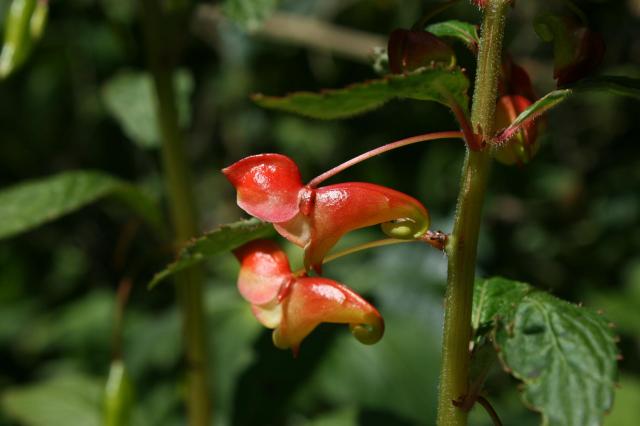
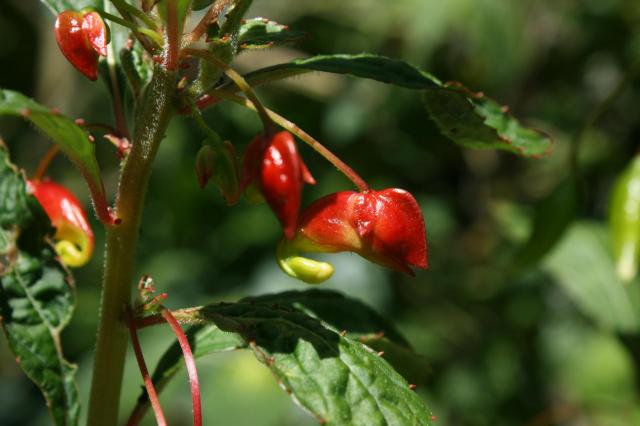
Impatiens rothii Hook.f. is another tuberous species relative to I. tinctoria and I. flanaganae. The native range of this species is Ethiopia. It is a tuberous geophyte that grows primarily in the montane tropical biome and reaches heights of 3-4 ft. Photos from iNaturalist were taken by Tom Kirschey and shared under a CC BY-NC license.
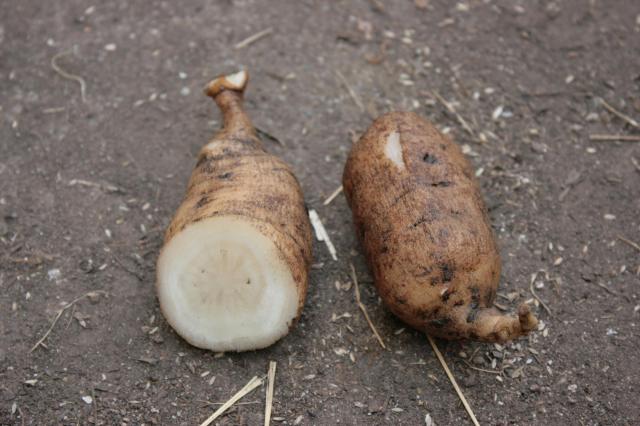
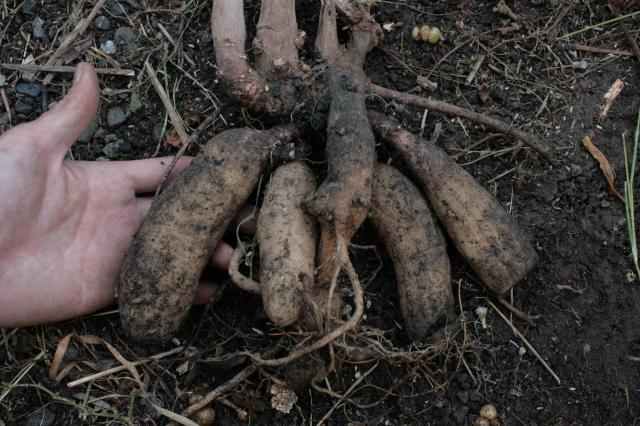
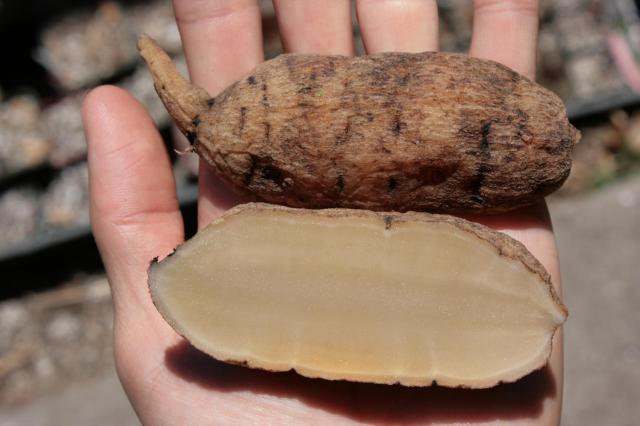
Impatiens tinctoria A.Rich. is a native of higher elevations of tropical central Africa from Ethiopia south to southern Tanzania. The plant can grow to more than 3 meters in the wild from just a single season. It produces large tubers from which new shoots resprout after winter dormancy. The flowers, which are moth pollinated, are very large (see photo below) and are very fragrant at night. The species gets its specific epithet tinctoria (Latin, relating to dyers) from its use as a skin dye. "Women cook and pound the tubers into a paste which has a strong red dye in it. The paste is applied to the palms of the hands and to the feet where it turns the skin and nails black and shiny. This treatment helps control fungal infections as well as toughen the skin. It is considered a beauty treatment similar to that of henna." -- Flora of Ethiopia and Eritrea. However, as seen in the photos below, neither fresh nor cooked tubers show any signs of a red dye, which leads to question whether the form in cultivation doesn't have such color in the tubers, a chemical component to bring out the color is missing, or that the report from Flora of Ethiopia and Eritrea is incorrect.
This species, like other montane Impatiens, resents summer heat. The plants grow well for those in maritime climates with cool summers. In the British Isle, this species can be treated as a hardy perennial, although some protection of the crown is probably necessary. Grow it in a moist area with partial or filtered sunlight. The stems will die back in winter and resprout in spring where it can bloom continuously until the next frost. In good conditions, it can set a good amount of seeds. Cuttings can be made easily from stems, although John Grimshaw suggests that they be made early enough in the season where the plant has a chance to produce tubers before the next winter. This species grows very well in almost full sun of the San Francisco Bay area. Treated with rich compost and/or chemical fertilizer, it can grow and bloom very well throughout the summer and fall. The photos below were taken by Nhu Nguyen. The last photo shows a cooked tuber that does not have any pigmentation as described in Flora of Ethiopia and Eritrea.
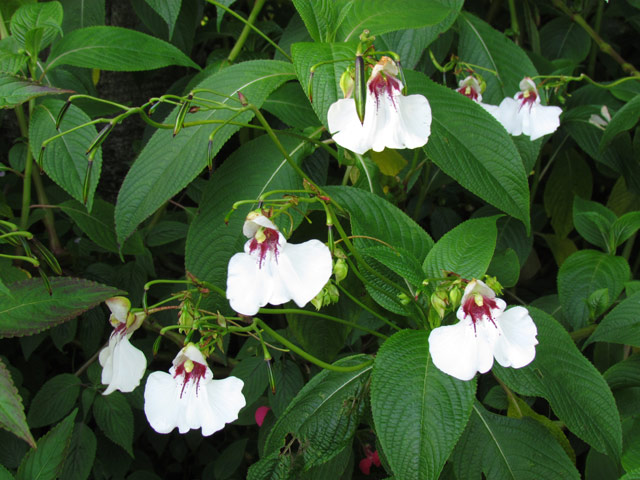
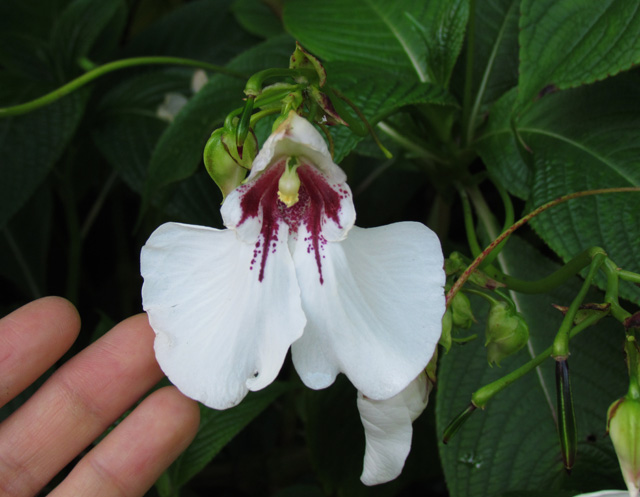
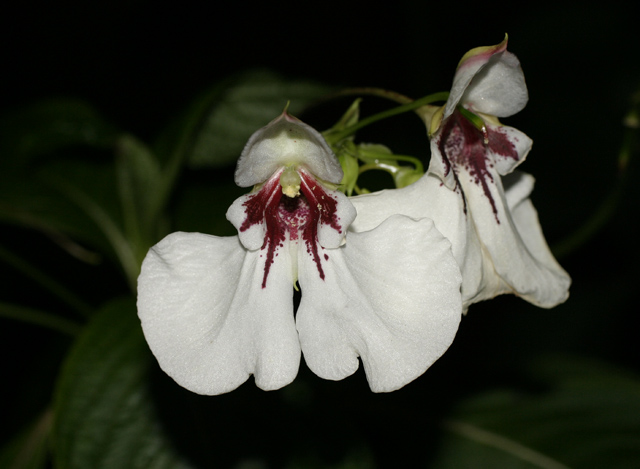
Impatiens tinctoria subsp. elegantissima (Gilg) Grey-Wilson is shown here in a photograph provided by John Grimshaw taken in the wild at 2410 m on Mt. Kenya, Kenya. It grows to about 8 ft tall.