Lewisia is a genus of western North America species in the new Montiaceae or previously Portulacaceae family. They usually have a rosette of fleshy leaves that resemble a succulent, and may be produced from a thickened taproot or tuber. Some species pass the long arid season by becoming dormant. Two good books on this subject are Davidson, 2000 and Mathew, 1989. More information on them is found in References. Common species like Lewisia tweedyi and Lewisia cotyledon are evergreen so not included here.
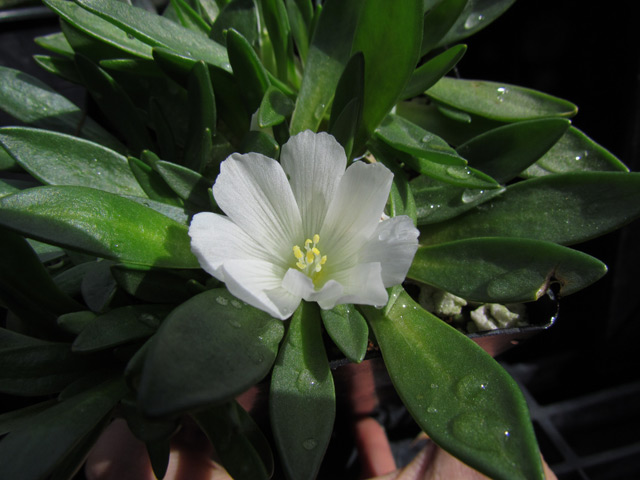
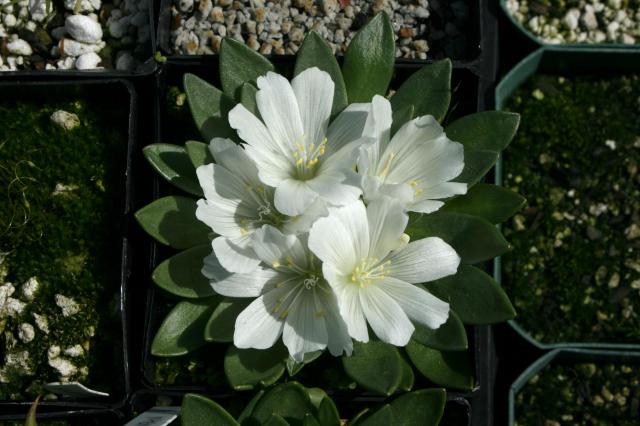
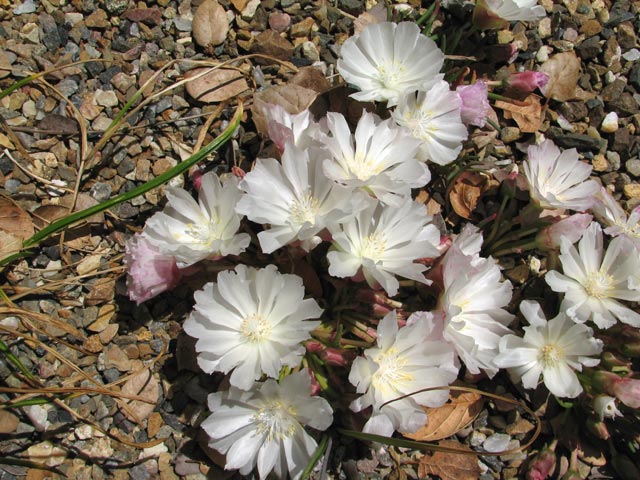
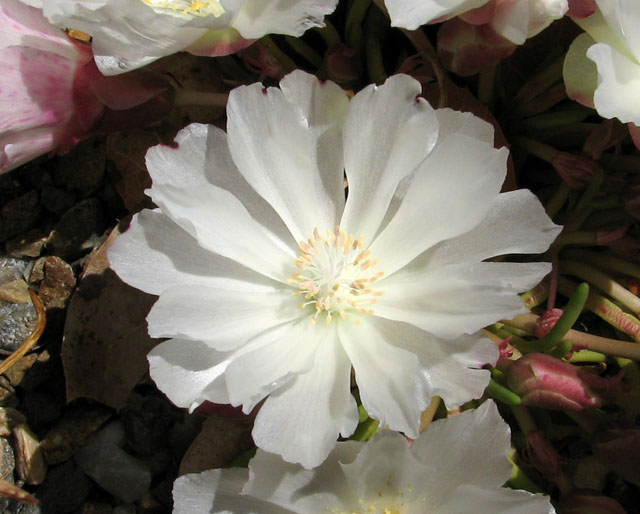
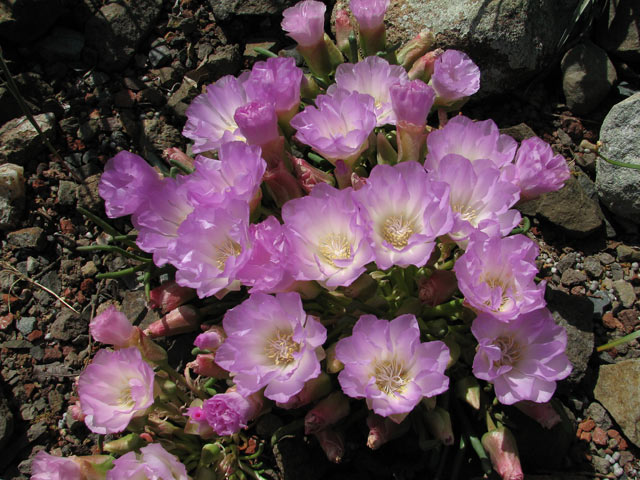
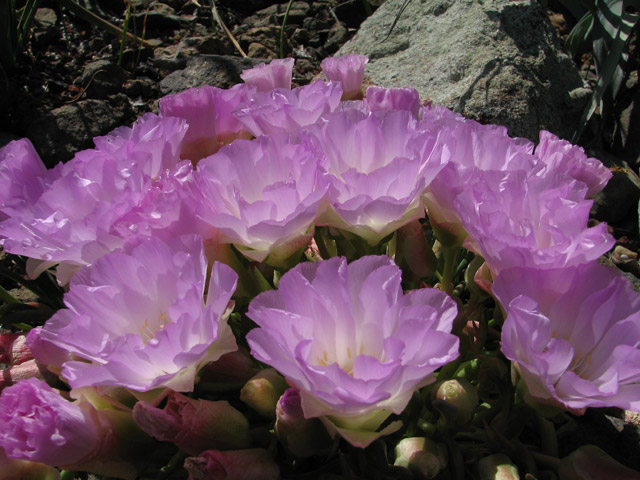
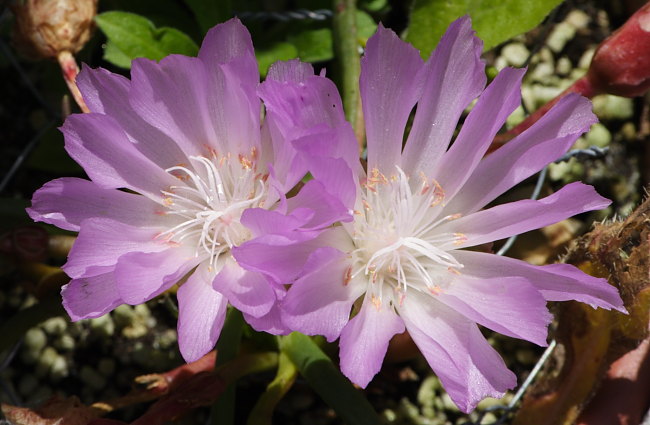
Lewisia brachycalyx Engelm. ex A.Gray is native to the American Southwest and southern California, south to Baja, Mexico. In California, they can be found in the Peninsular Range and the San Bernardino Mountains. The leaves are arranged in a rosette with flowers in the middle. The number of flowers depend on the age of the plant. Flower color can range from white to pink. The plant goes completely dormant in the summer and returns in the fall. Height: 8 cm. The photos below were taken by Nhu Nguyen of a plant grown from seeds collected in the San Bernardino Mountains. It took 4 years for this plant to flower from seeds. Photo 1 was from the first year blooming and photo 2 was from the second year blooming.

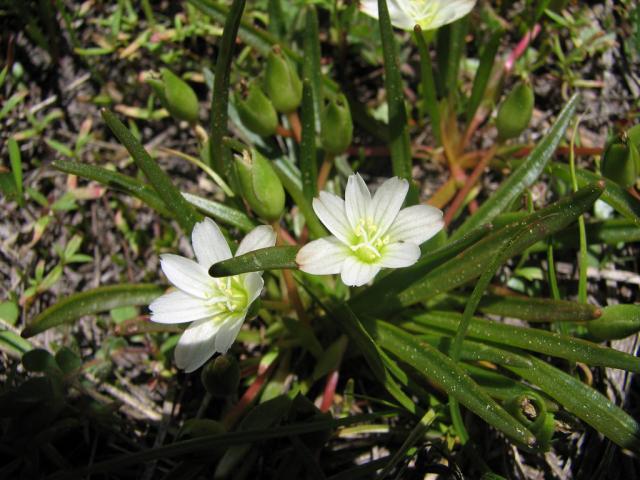
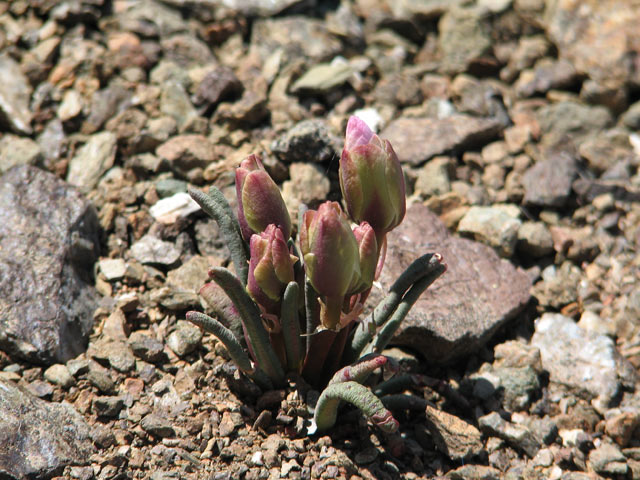
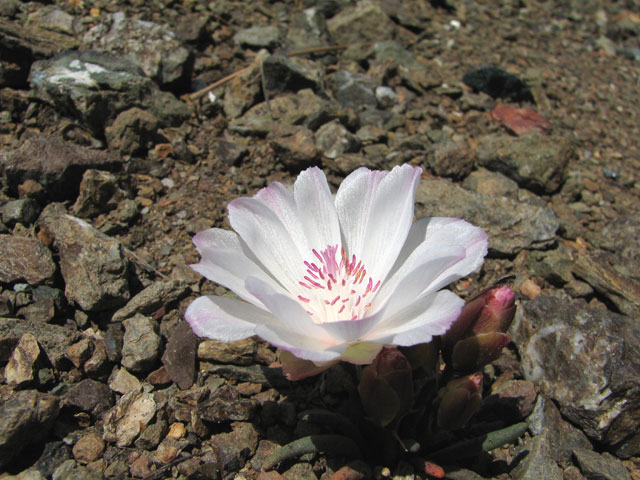
Lewisia nevadensis (A.Gray) B.L.Rob. is a western North America species that grows in vernal wet gravel flats and meadows at mid to high elevations. It is a small plant with long strap-shaped leaves and white to light pink flowers. The plant forms a corm-like caudex. Height range: 15-20 cm. Photographed in situ in Yosemite National Park in June 2009 by Nhu Nguyen.
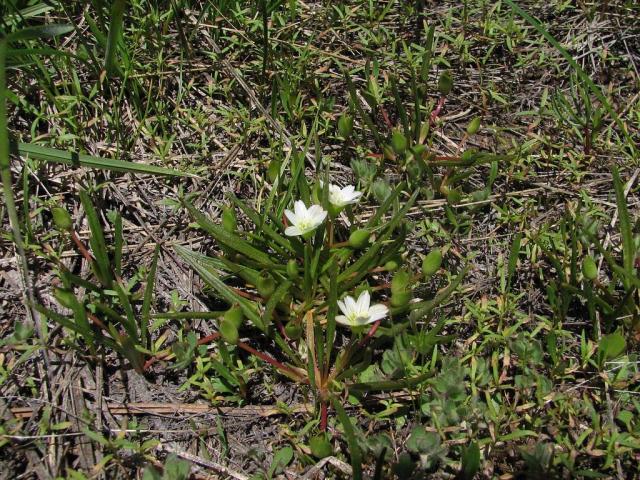
Lewisia pygmaea (A.Gray) B.L.Rob. is one of the smaller members of this genus and has tufted leaves instead of a rosette. It has a short compact, carrot-like or branched rootstock. It is widespread from Alaska to California and east to Montana and New Mexico where it is found in open places in the mountains. It prefers seasonally moist sites. Leaves appear in spring and flowering can continue until frost. Flower color ranges from white to pink to purple. Matthew suggests these plants should be kept just moist throughout the year and not be over-potted. Height range: 5-15 cm. Photos by Mary Sue Ittner.
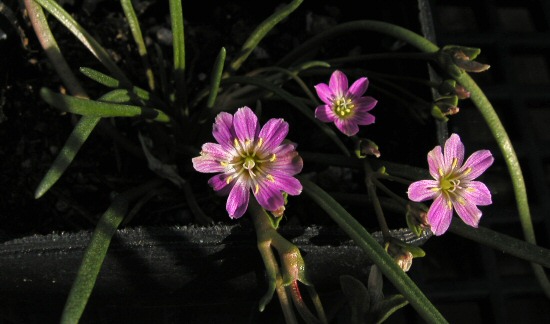
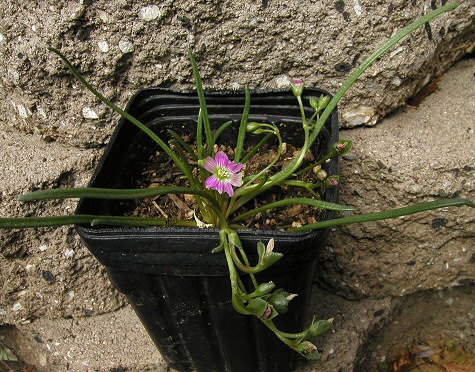
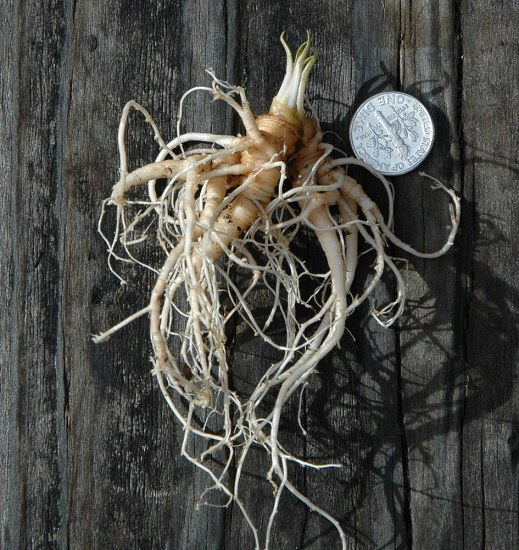
Lewisia rediviva Pursh is the state flower of Montana, USA, but it is widely distributed throughout the western United States. The common characteristic of the habitats where it is found is a dry summer climate without heavy rainfall, and a long cool or cold winter growing season. In the coldest areas it sprouts in fall, waits under the snow, and blooms in spring. In milder climates it grows in winter and blooms in spring. In all cases, it does not appreciate summer water. It has a short thick caudex that can be single or develop into multiple crowns. Flowers are white or pink, and vaguely resemble cactus flowers (but without the spines). The plants are summer dormant and bloom nicely in spring once established. Height range: 1-5 cm. It is known as bitterroot because the root was a food source for western North American Indians. The plant was first brought to the attention of science when it was collected during the Lewis & Clark expedition, and the genus is named after Meriwether Lewis, who tried eating the roots of Lewisia rediviva: "I...found that they became perfectly soft by boiling, but had a very bitter taste, which was naucious to my pallate, and I transferred them to the Indians who had ate them heartily." Seeds germinate readily in autumn after 20 days post sowing. Cultural information on L. rediviva can be found here, a large collection of photos here, and more information on the history of the plant here.
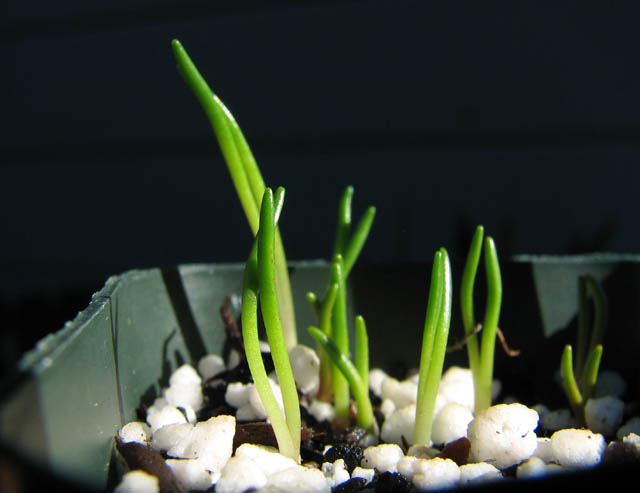
Photos 1-5 were taken by Nhu Nguyen. Photos 1-2 are of a white form from the UC Botanical Garden and photos 3-4 are of a magenta form from the Tilden Botanic Garden. Photo 5 shows two week old seedlings. Photo 6 was taken by Michael Mace.
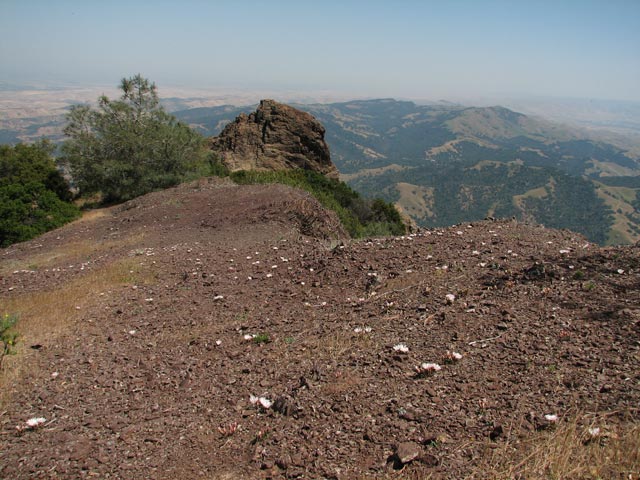
The photos below were taken by Nhu Nguyen on Mount Diablo.

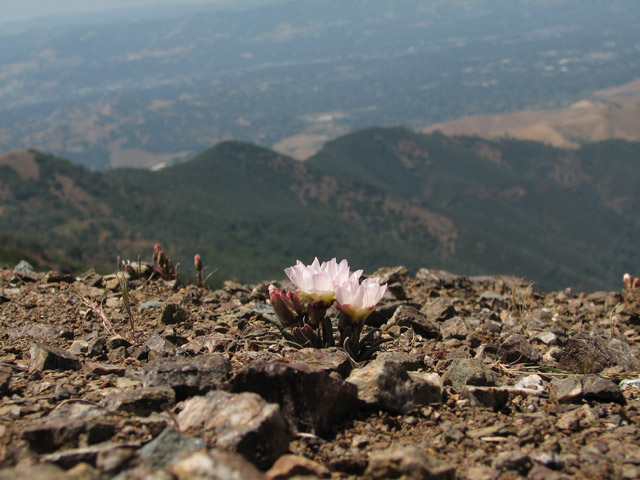
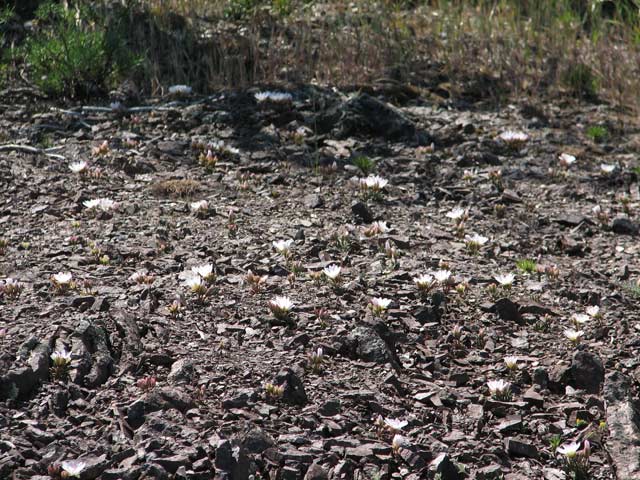
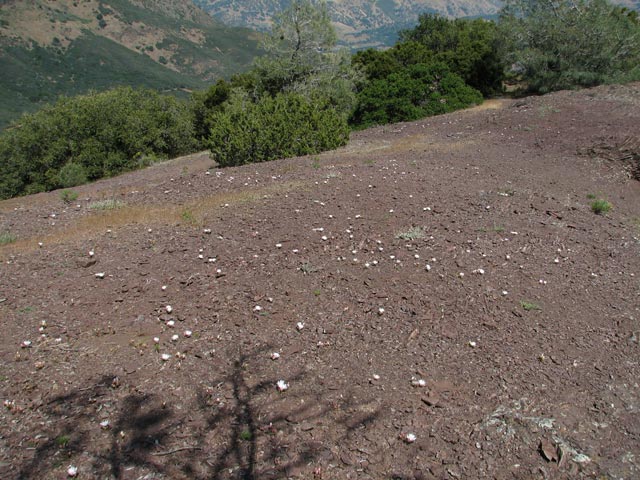
The photos below were taken by Nhu Nguyen. Photos 1-2 were taken on Mount Diablo. Photos 3-4 were taken at Pinnacles National Park. Photos 5-6 are of plants grown from seeds collected in Lake Co., CA.
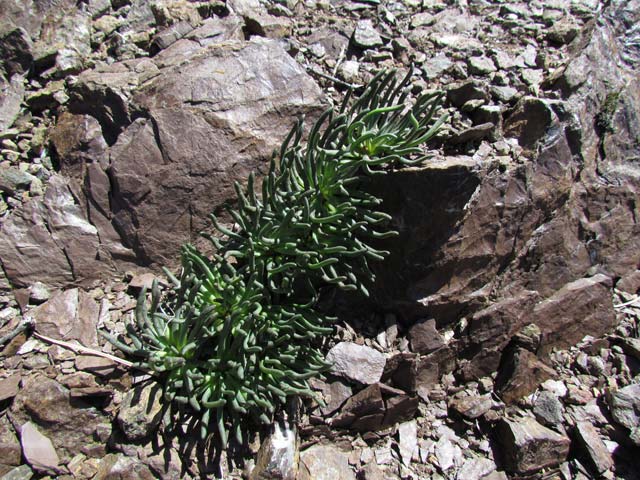
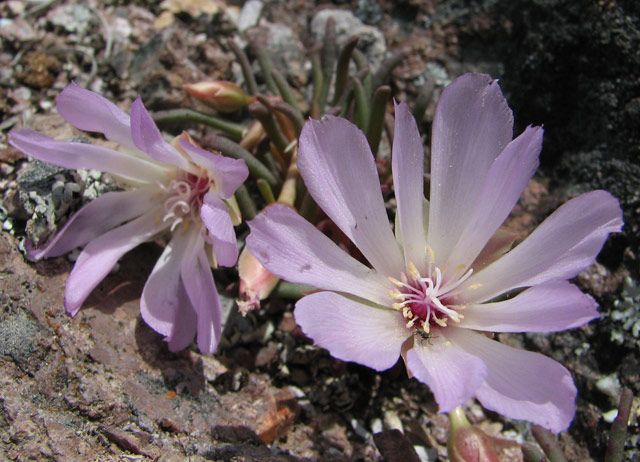
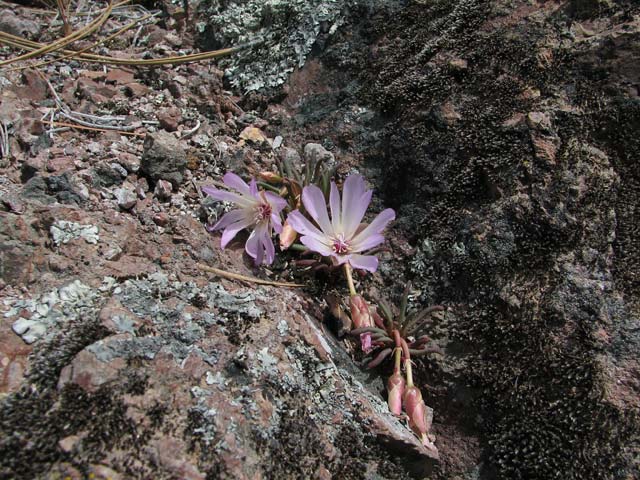
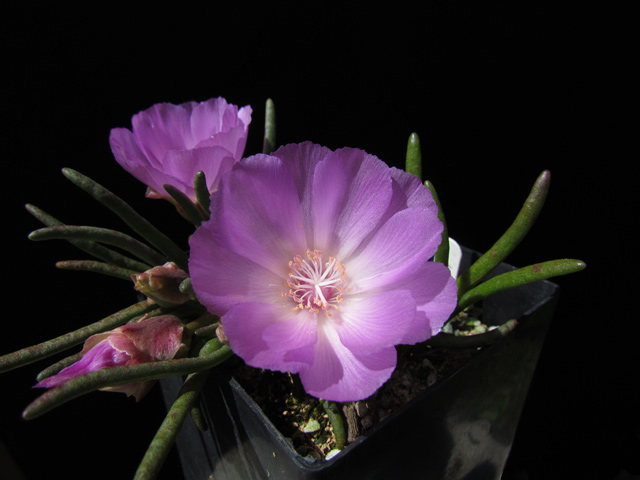
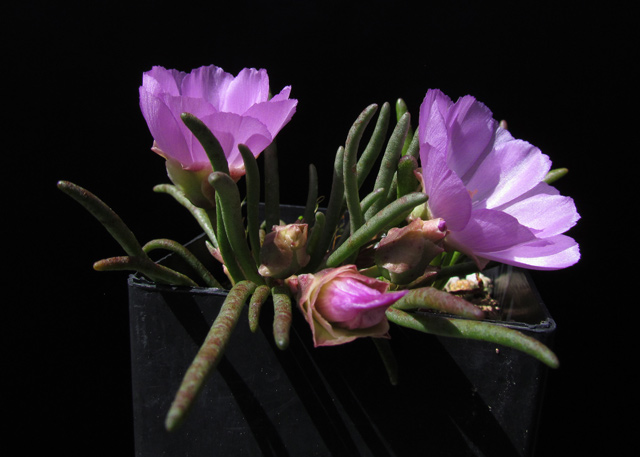
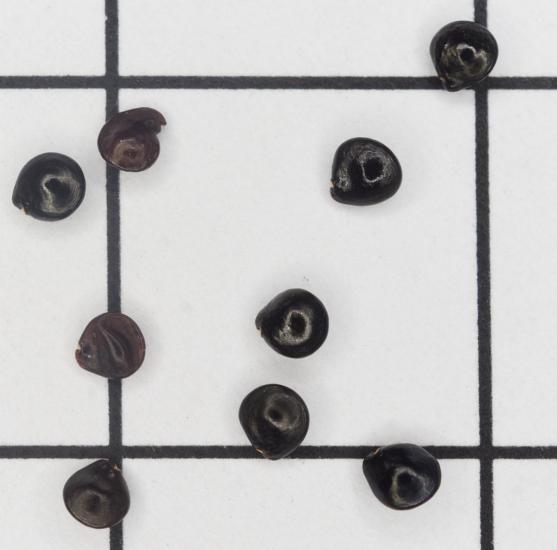
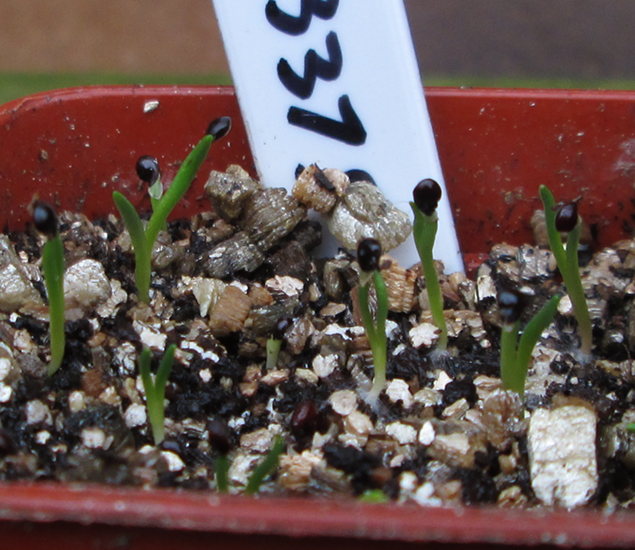
Photograph of seed on a 10 mm grid and resulting seedlings by David Pilling, from which it can be seen they are dicots with epigeal germination.
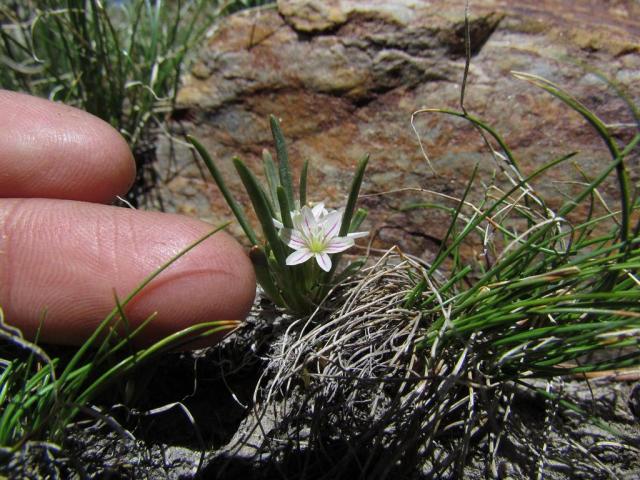
Lewisia triphylla (S.Watson) B.L.Rob. is a tiny species that produces tiny deep corms. It lives in open rock outcrops in high altitudes of the Sierra Nevada north to the Cascade and Klamath Ranges. Height: to about 10 cm. The plant below was from Yosemite National Park near Tioga Pass, about 10,600 ft (3200 m), photographed by Nhu Nguyen in June 2012 with fingers for scale. At this altitude, the area would be covered by thick snow in winter. Snow only starts melting around May.