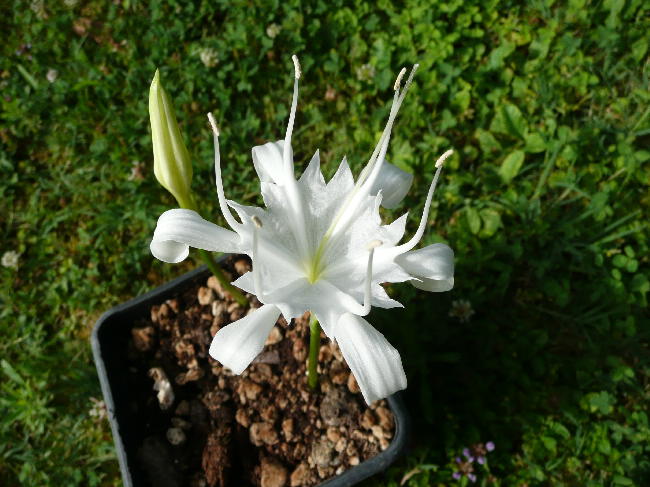
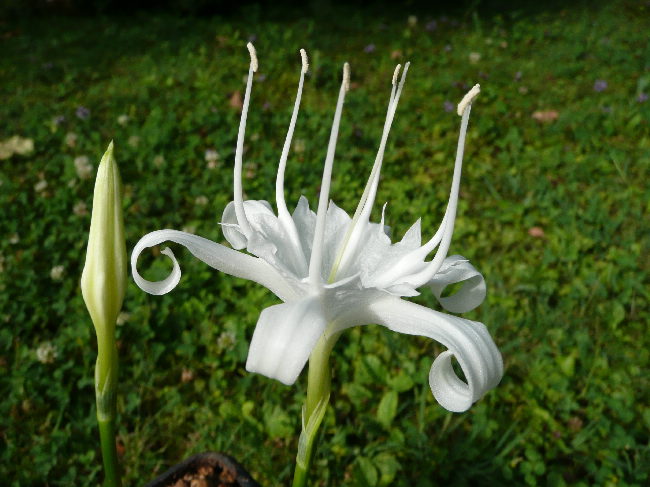
Pancratium L. is a bulbous genus in the Amaryllidaceae family with species from the Canary Islands, the Mediterranean region, tropical Africa and tropical Asia. It is related to Narcissus and Galanthus. Flowers of Pancratium have a characteristic corona and six elegant white segments and are very beautiful. This genus was the subject of the PBS list Topic of the Week March 2004. Pascal Vigneron provided the very interesting Introduction which is the source of much of the information on this page. He has links to pictures of species on his Website. It was proposed in 2000 that some species formerly included in this genus should transfer to the genus Clinanthus.
Pancratium canariense Ker Gawl. is native to the Canary Islands. It grows on cliff faces. Height: to about 80 cm. Photos below were taken by Nhu Nguyen at the UC Botanical Garden.
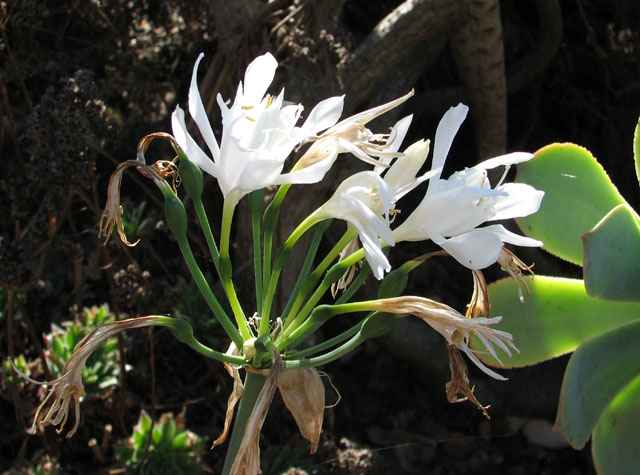
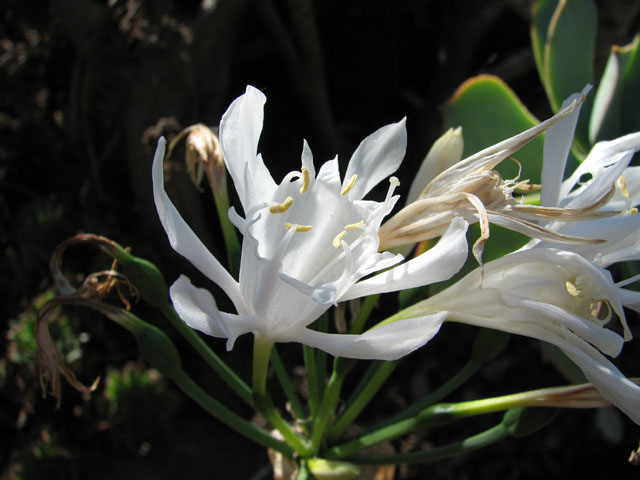
Seeds from a form present on the island of La Gomera were distributed years ago, supposed to be a larger form, but it doesn't seem significantly bigger than others. Some differences are visible anyway. Leaves are arranged in an arching-fan like Hippeastrum and not erect and weakly spirally-twisted as in the normal form, bulbs are more spindle-shaped (on the right) compared to the classic round shape (on the left) as shown in photo, while flowers and seeds are just the same. This form from La Gomera gets routinely damaged from frost in my yard, while the normal form never does. Text and photos by Angelo Porcelli
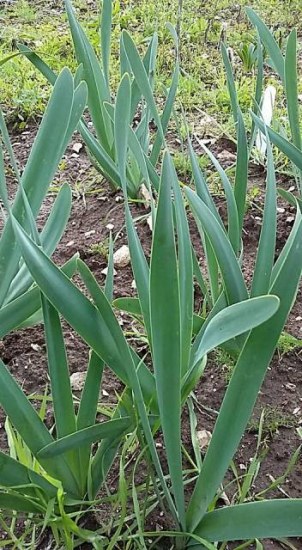
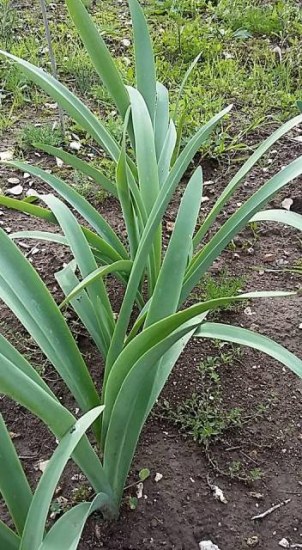
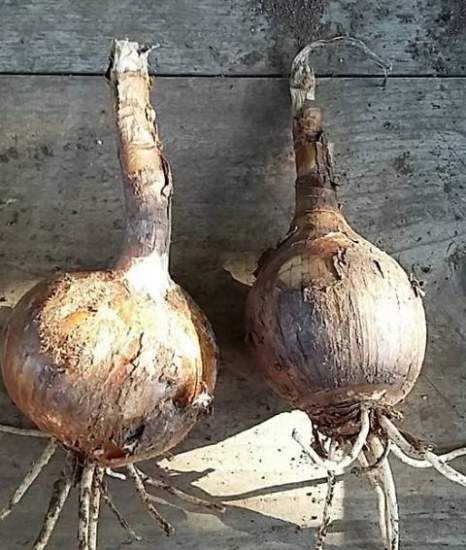
Pancratium foetidum Pomel is present from Morocco to Tunisia. It resembles a stockier version of Pancratium canariense with broader leaves and more rich umbels, and seeds also bigger. The specific name refers to the 'musky' scent of the flowers, but it's not a bad smell. Strictly summer dormant, it blooms in September in the Northern Hemisphere. Height: to about 40 cm. Photos below were taken by Angelo Porcelli in his yard, grown for many years and has withstood light frosts without damage.
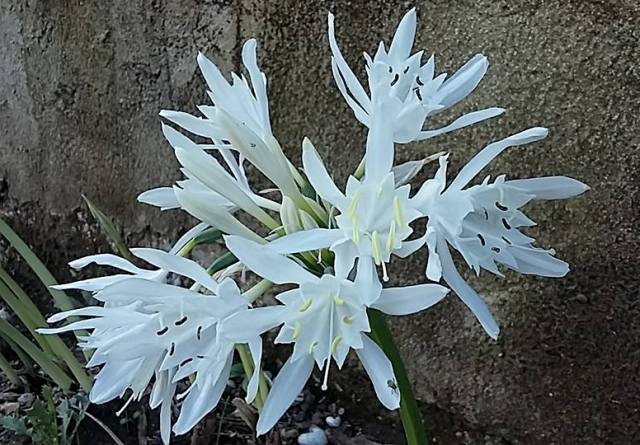
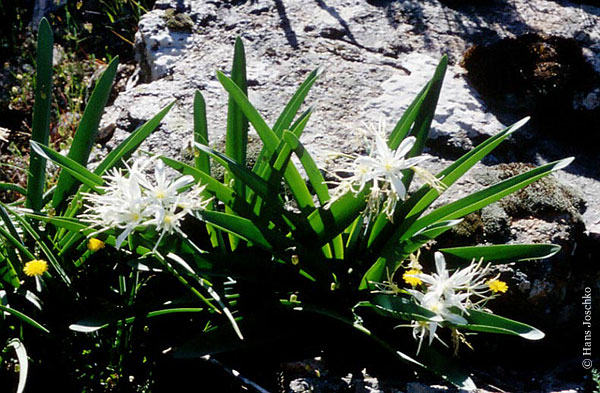
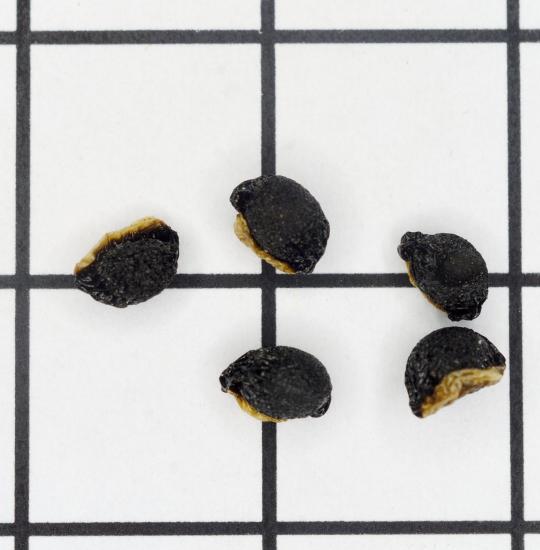
Pancratium illyricum L. comes from Corsica, Sardinia and Capraia. It grows inland on rocky slopes and sparse woodland areas, from sea level to more than 1300 m above sea level. Flowering time is May (April-June). The white flowers are fragrant. The Italian name "giglio stella", i.e. Star Lily, is a good description of the flowers. The large glaucous leaves (30-60 cm x 1.5-5.5 cm) appear at the end of winter, while flowering occurs in late spring to early summer, and the plants go dormant after a few weeks. It is the hardiest pancratium: USDA zone 8 and probably 7 in a sheltered position with a southern aspect. Full sun, but in the South, light shade. The photos below from Hans Joschko were taken in Corsica in May and June, where he found them on rocky slopes at 800 m. The first picture is a habitat shot followed by a close-up. The last photo by David Pilling shows seed on a 10 mm grid.

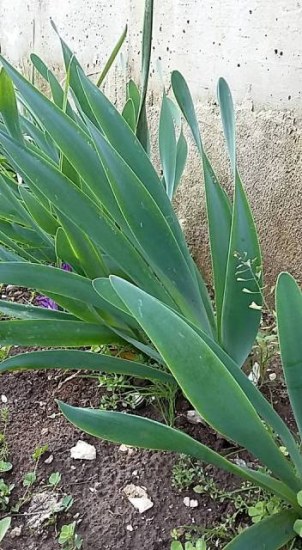
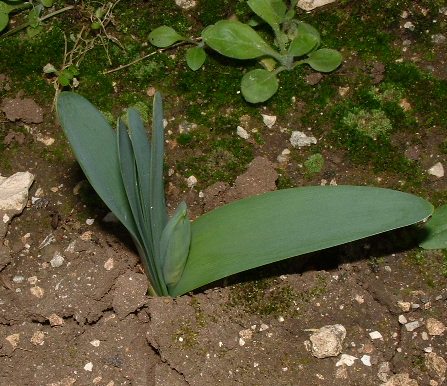
This species has a rather short growing cycle and is slow to reach flowering size. Leaves last about three months only and the flower stalk quickly elongates together with the emerging leaves. Better a cool corner in the hottest climates. Photo by Angelo Porcelli.
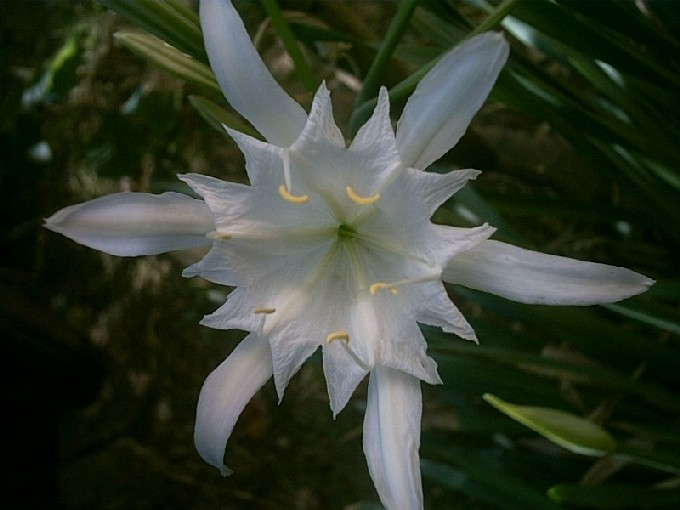
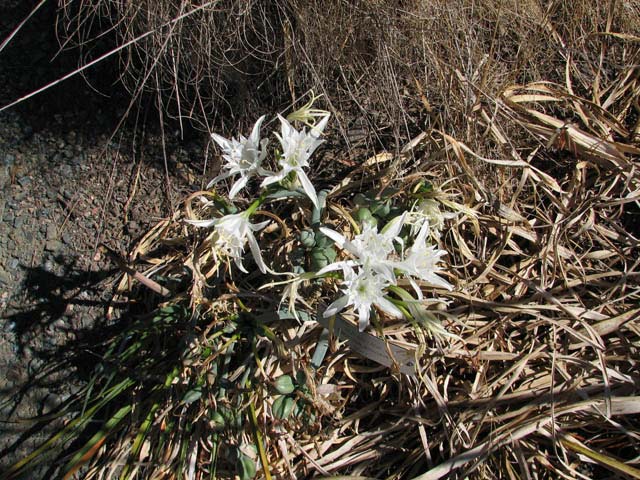
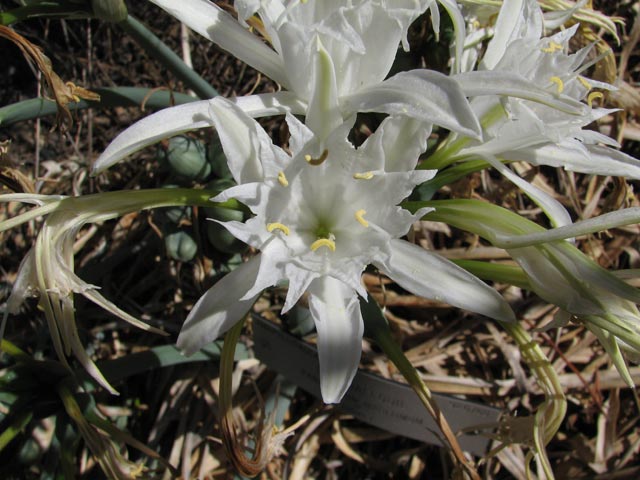
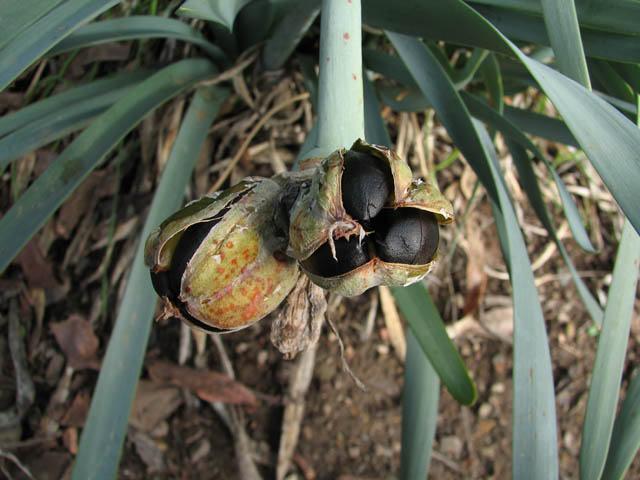
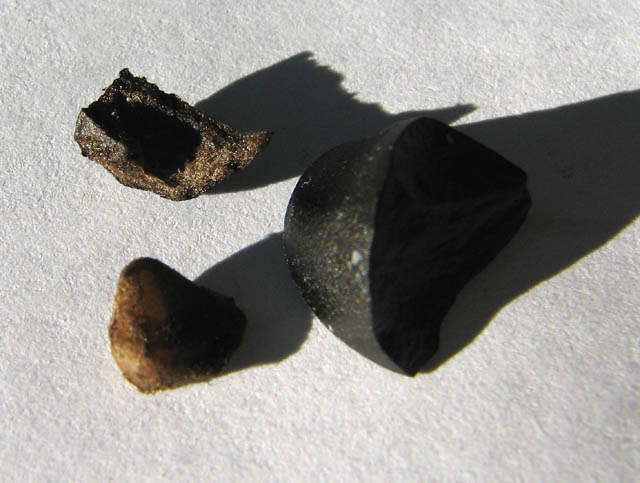
Pancratium maritimum L. is a very nice species, dwelling along sandy coasts of the whole Mediterranean sea. Although winter growing, it will stay evergreen in moist soils. The flowers are short lived, but produced in succession and very scented at evening. It will grow well in ordinary garden soil, but needs full sun. Seeds are thickened, mostly due to the spongy outer layer which helps them float on water. Height: to about 40 cm. Photo #1 is by Angelo Porcelli. Photos #2-5 by Nhu Nguyen. Photo 4 shows the mature seed pod splitting. Photo 5 shows the whole seed (right), a seed peeled of its outer spongy layer (lower left), and the spongy tissue that covers the seeds (upper left).
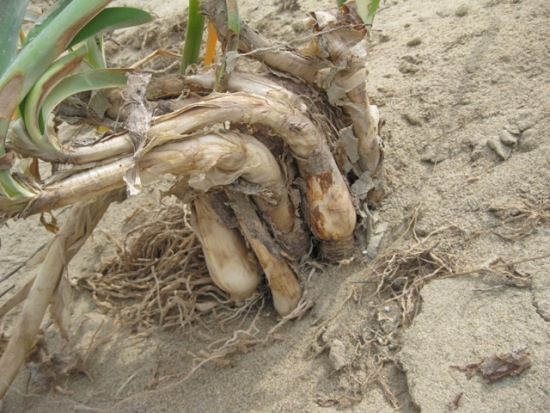
The following two photos by Angelo Porcelli show the bulbs exposed after a sea storm. Most people may not realize how large they are and how deep they grow.
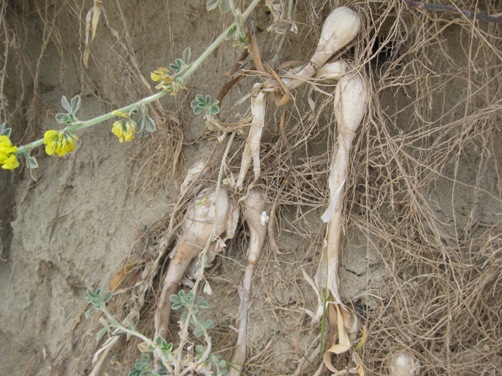
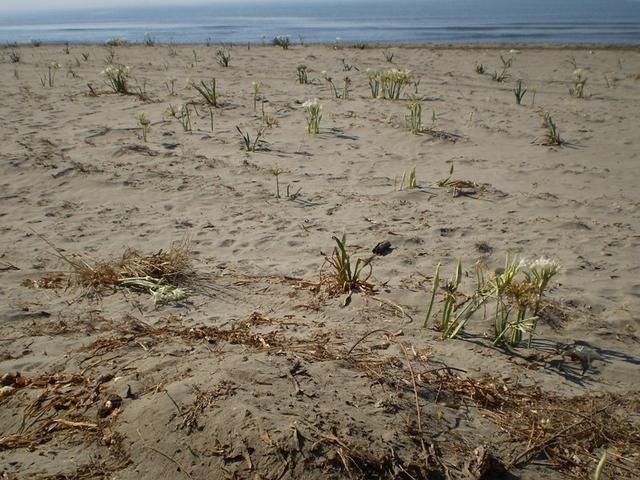
The next series of photographs were taken by Antigoni Rentzeperis on a beach of Laconia, S. Peloponnese, Greece.


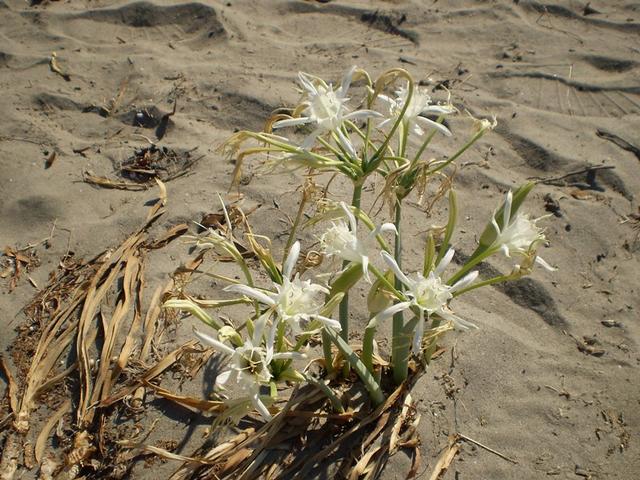
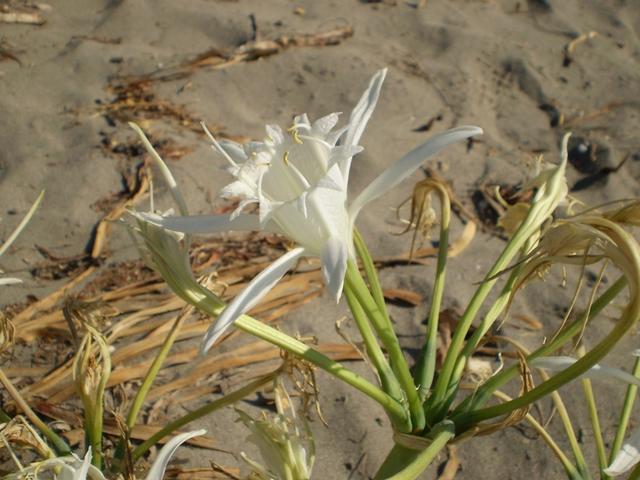

Pancratium linosae Soldano & F.Conti in 2025 is considered a synonym of Pancratium maritimum. This form is endemic to the small island of Linosa in the Sicilian Channel. Unlike other forms which grow in seashore dunes, this form grows in black volcanic cinder. The bulbs are quite different, being smaller, round and without the long neck. Photo and text by Angelo Porcelli

Pancratium maximum Forssk., syn. Mizonia maxima (Forssk.) A.Chev., is native to Oman, Saudi Arabia, Sudan, South Sudan, and Yemen. Height: 30 cm. Photographs by Dylan Hannon who reports "This one flowered late October 2020 after last blooming c. 2002. It likes heat! Pancratium cf. maximum, collected by John Lavranos in Yemen: Wadi Surdud, Bani Sa'ad, above Khamis."

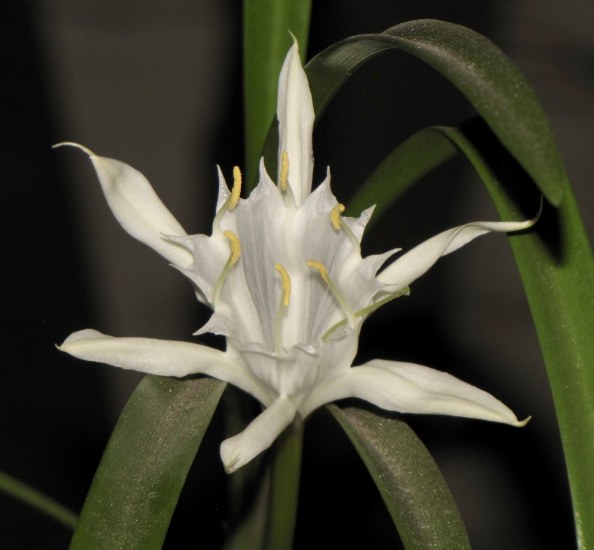
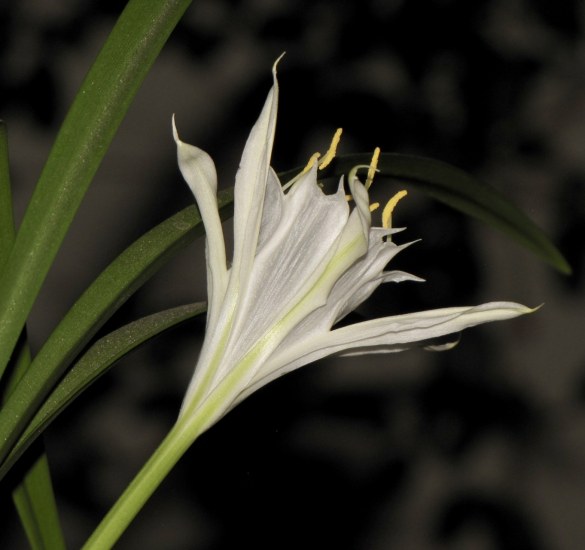
Pancratium parviflorum Desf. ex Redouté in 2025 is considered to be a synonym of Vagaria parviflora (Desf. ex Redouté) Herb.
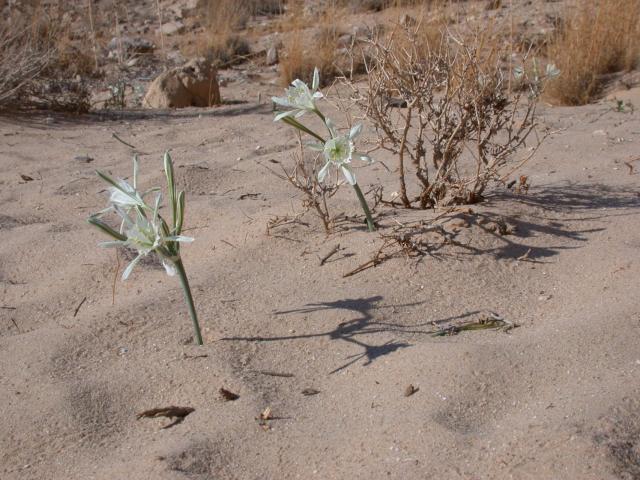
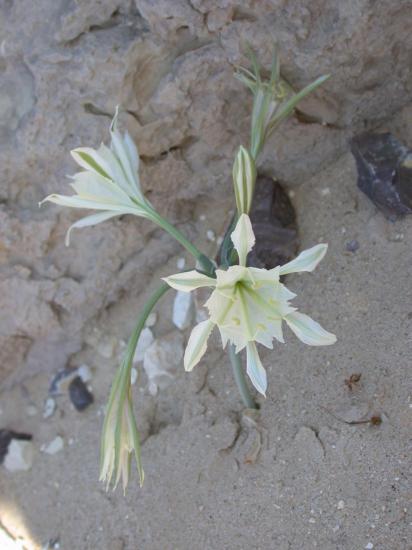
Pancratium sickenbergeri Asch. & Schweinf. ex Boiss. is from Egypt and the Middle East. Height: 20 cm. Photos by Gideon Pisanty.
Pancratium zeylanicum L. is a small tropical species from Asia: India and the Islands of the Indian Ocean. Rain induces flowering and development of the glossy foliage. The flowers are particularly graceful. It is a tender plant, so, except in tropical climate, it must be grown in pots indoors or in a warm greenhouse during autumn-winter-spring and put outside during summer. The small bulbs may be planted in 10-15 cm (4-6 inch) pots in soil with good drainage. The plant has a rest period only if water is withheld. Height range: to about 30 cm. Photos by Alessandro Marinello.