Ungernia Bunge is a small genus with 10 species from the Middle East and Central Asia in the Amaryllidaceae family. The closest relative is the genus Lycoris. Ungernia come from both mild and cold temperate areas. Although the plants resemble Lycoris the seeds are black and flattened, much like Hippeastrum seeds and not like the hard, black, rounded seeds of Lycoris. The bulbs do not replace their basal plate and thus result in a build-up which reportedly can be as long as half a meter (19 inches) (Plant Life, 1970 p. 178). Ungernia oligostroma has the smallest bulbs in the genus. These are about 2 cm across and the largest is 13 cm long. The largest bulbs are found in U. trisphera with some up to 12 cm (nearly 5 inches) in diameter! Most species have bulbs in the 5-7 cm diameter (2-3 inch) range of size. The bulbs should be planted in a deep pot and given plenty of water during spring growth and more restricted in mid-summer to fall. They should be exposed to cold temperatures during winter. Snow might provide cover for most species, although deep freezing may kill the bulbs in pots. Seeds are notorious for difficult germination and even if they do germinate, few growers have managed to keep the seedlings alive. The bulbs take a long time to mature from seeds.
Ungernia sewerzowii B.Fedtsch. (sometimes misspelled as Ungernia severtzovii) comes from central Asia. The book Rix & Phillips Bulbs, 1989 reports that the bulbs do not bloom after a hot summer. Height range: 30-70 cm. Photos below by Panayoti Kelaidis of the Denver Botanic Garden taken in Mid-September, 2010 show the typical flat papery Amaryllid seeds from an estimated bloom in August. They were taken in Kazaakhstan in seed on a steppe just outside the Djabagly ( aka Dzhabagly) Nature Reserve's northeastern corner, very near the small river that makes the boundary with Kirgistan.
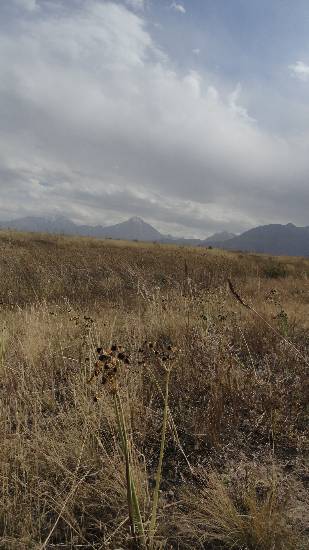
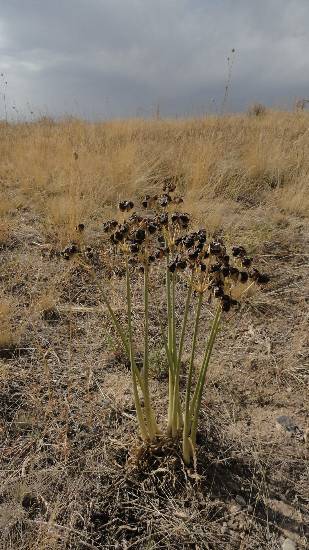

I suppose it's all down to what one thinks is hot. The following photos were taken at altitudes varying from 3,500 ft to more than 7,000 ft in early July 2008 and, in my estimation, it was hot, with temperature up in the low 90's! All photos were taken in the Aksu-Dzhabagly Nature Reserve, which runs along the North slope of the western Tien Shan.
As can be seen, flowering takes place when the foliage is dying down. Flowers vary in colour from pale yellow to a dark red-brown. The flowers are held on robust stems around 15 inches tall. Photos and notes David Victor.
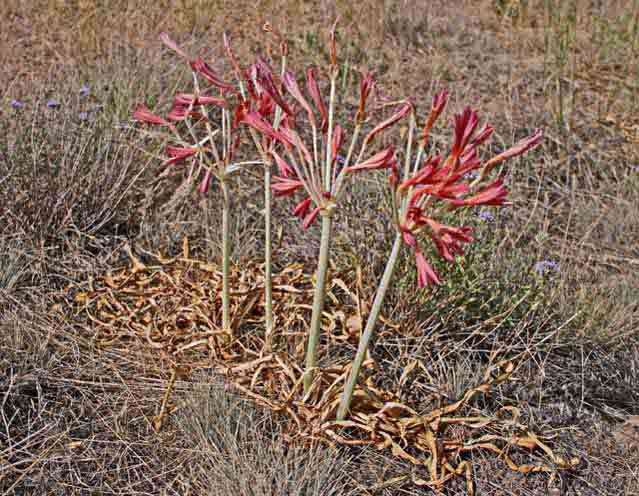
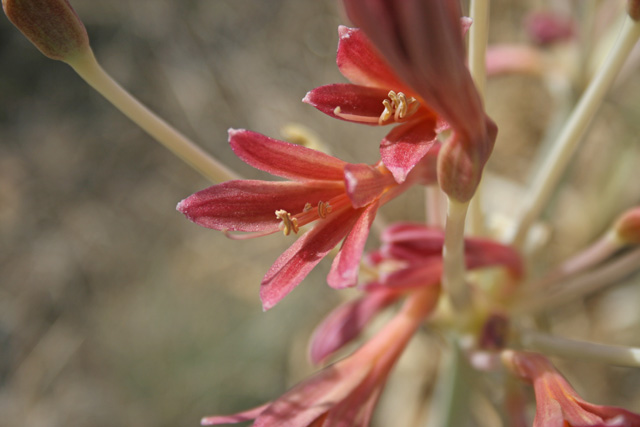
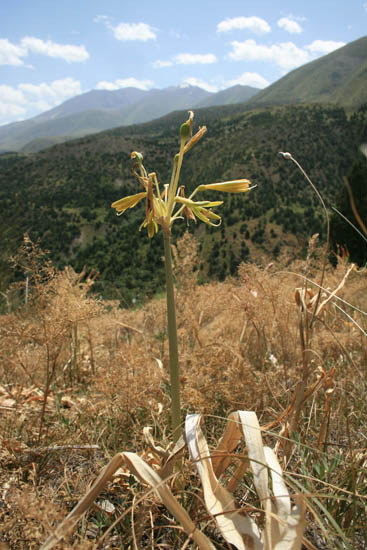
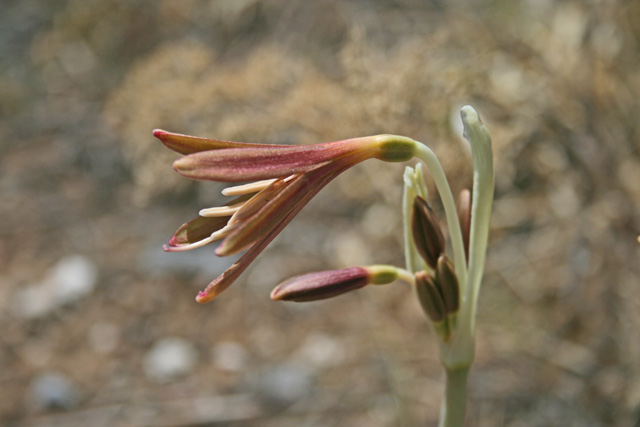
Ungernia sp. (possibly Ungernia oligostroma Popov & Vved.) from Tadjikistan. Photo by Jim Waddick.
