Babiana is a large genus in the family Iridaceae from southern Africa. This genus was revised in 2007 by Peter Goldblatt and John C. Manning. Species a-h are found on this page.
Babiana species i-p - Babiana species r-si - Babiana species sp-z - Babiana index
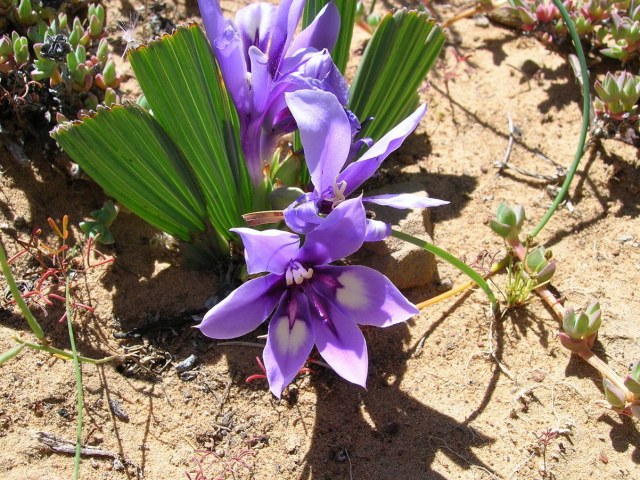
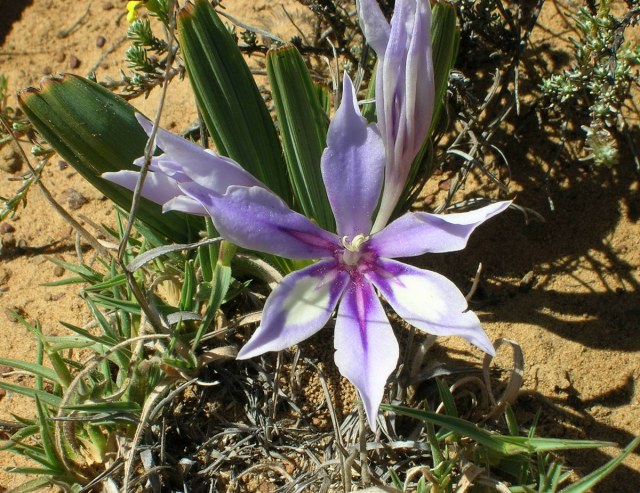
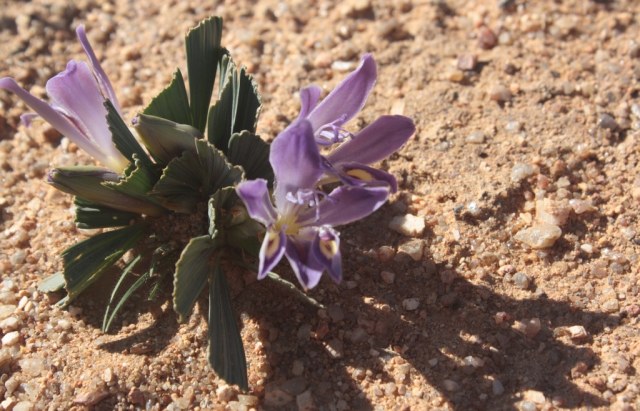
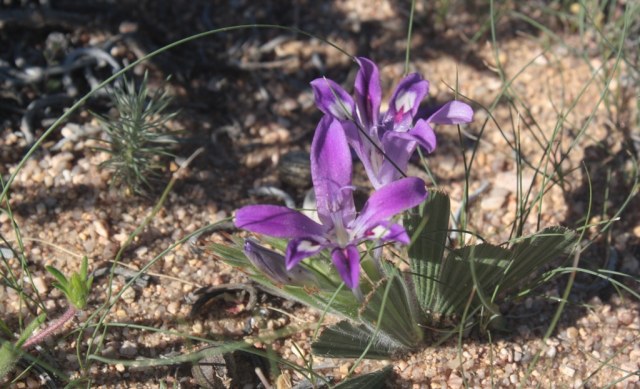
Babiana ambigua (Roem. & Schult.) G.J.Lewis is winter growing, found on sandy flats and slopes in the South African Cape (Gifberg to Riversdale). Growing 5 to 8 cm high, it has linear-lanceolate leaves and bilateral symmetrical blue to mauve fragrant flowers with white to cream markings. It flowers from August to September. This one is easy to grow in the garden. Photos were taken by Mary Sue Ittner. The first photograph was taken in the Western Cape, the next two were taken near Villiersdorp August 2006 of what she believes is this species and the last was taken near Nieuwoudtville.
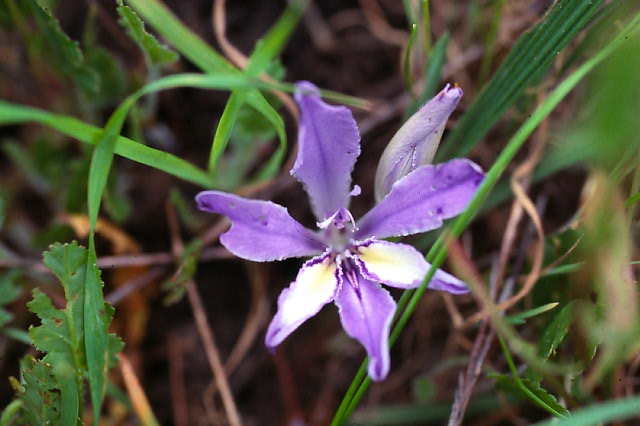
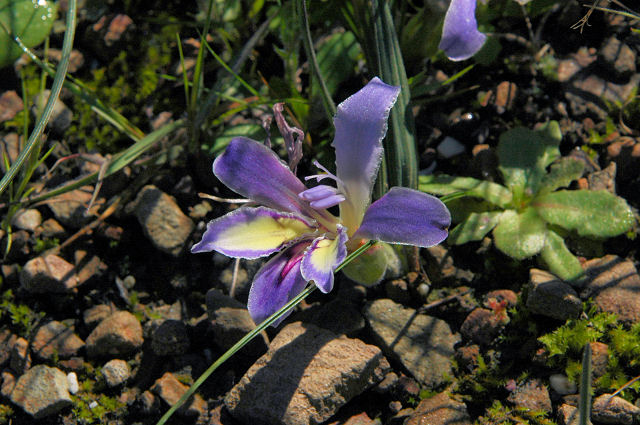
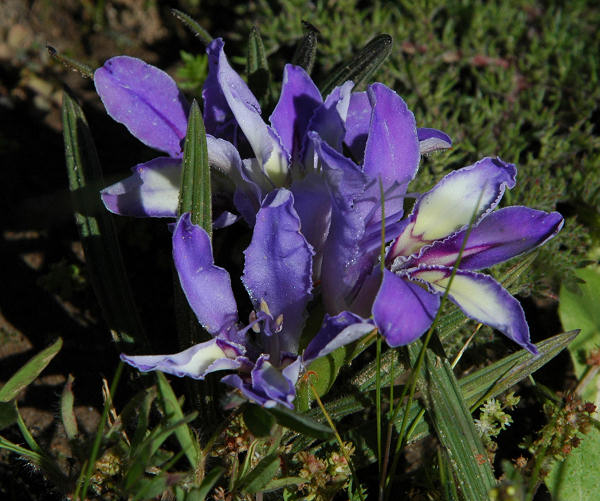
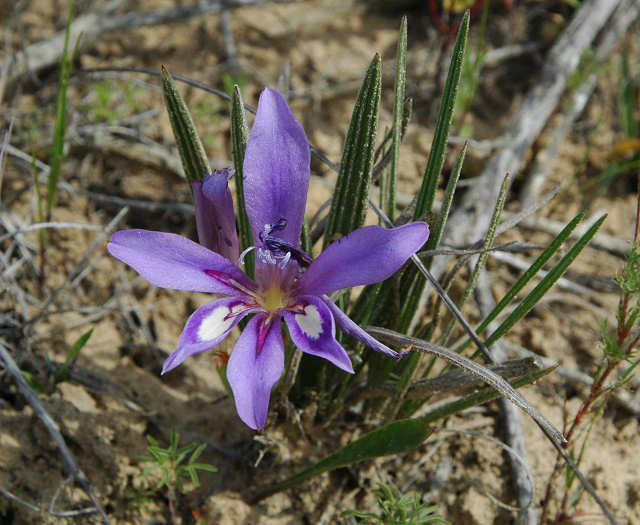
The first photo below was taken by Bob Rutemoeller. The second photo was taken by Rod Saunders. The last photo is from Alan Horstmann.
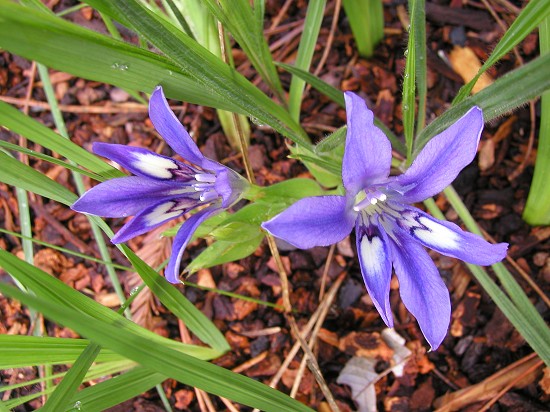
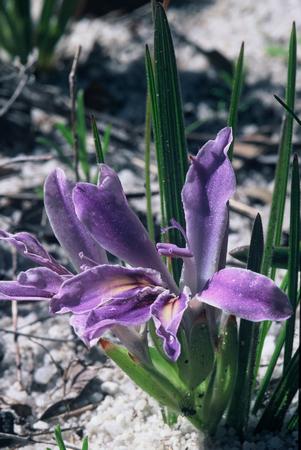
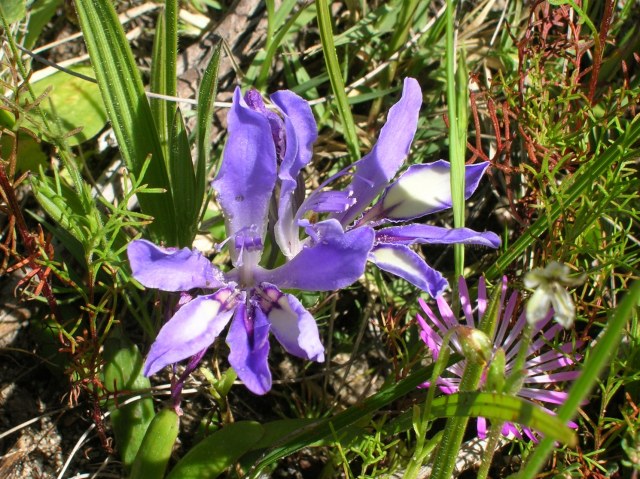
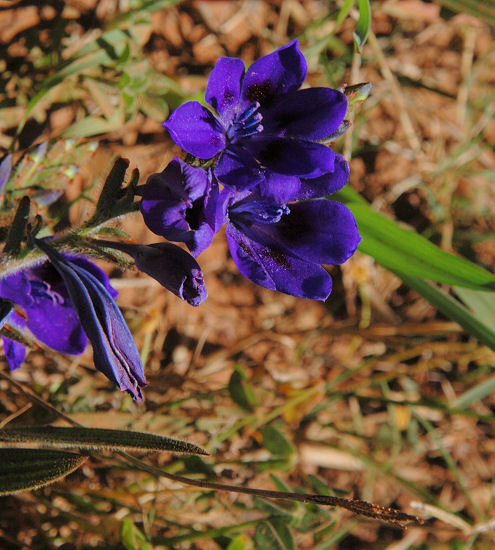
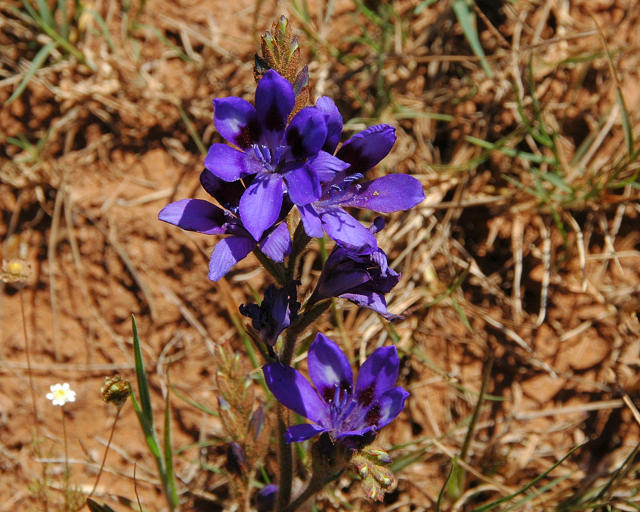
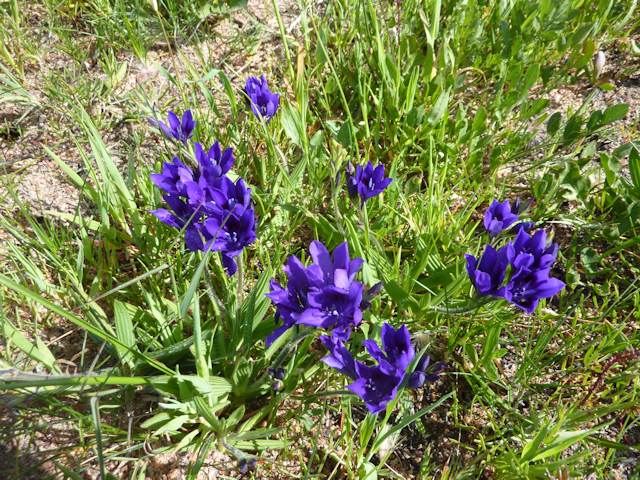
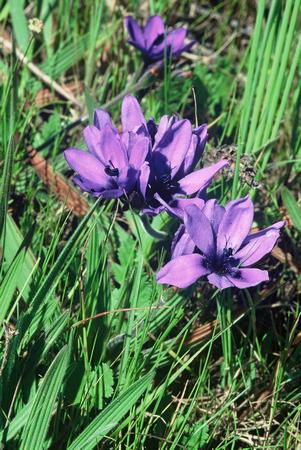
Babiana angustifolia Sweet is found on seasonally damp clay flats and lower slopes in renosterveld in the northwest and southwest Cape. It blooms early spring and has blue to violet flowers with black or red markings on the lower tepals. The subequal tepals are held in a shallow cup that encloses the stamens and style. Height: 10-20 cm. This is one of four species with an inverted perianth with the dorsal tepal and arched stamens facing the spike tip. The first picture was taken by Alan Horstmann. Pictures two and three were taken in habitat near Darling in the southwest Cape by Bob Rutemoeller and Mary Sue Ittner. Photo four was taken by Cameron McMaster in the same location. The last photo was taken by Rod Saunders.
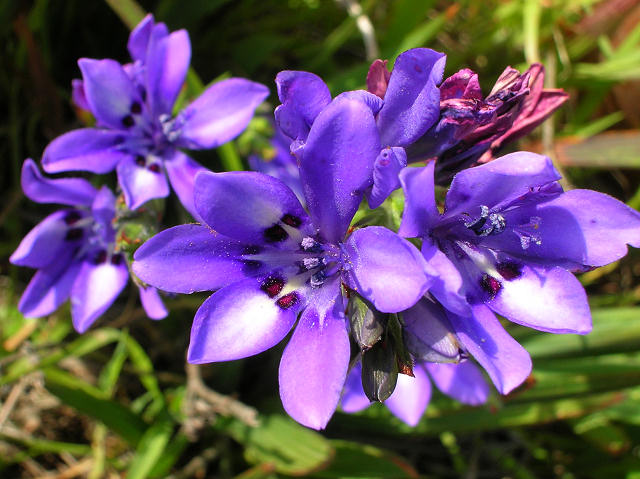
Babiana blanda is a species with large bright rosy pink flowers. It is on the brink of extinction in the wild where its habitat of seasonally wet, sandy or loamy flats in the southwestern Cape is nearly gone. It has rosy pink radially symmetrical flowers and flowers from August to September. Plants to 15 cm high. Photo from iNaturalist taken by Jacques van der Merwe in August in the Southwestern Cape and shared under a CC BY-SA license. The last photo was taken by Rod Saunders.
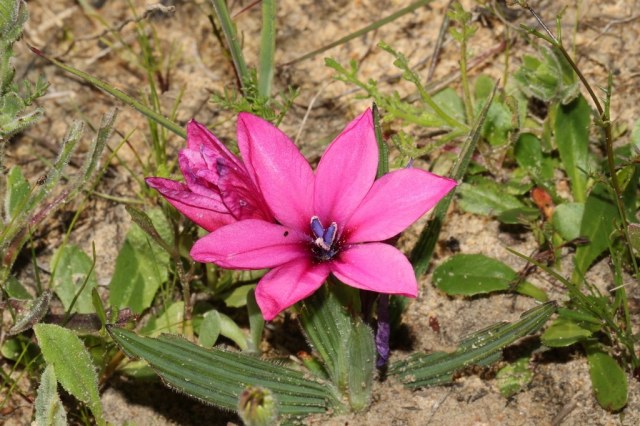

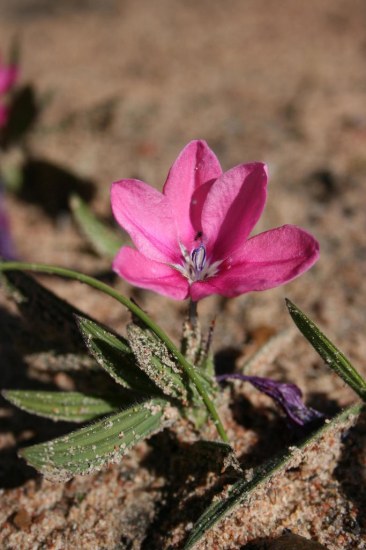
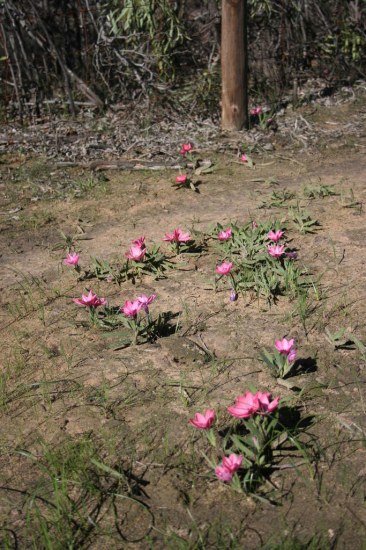
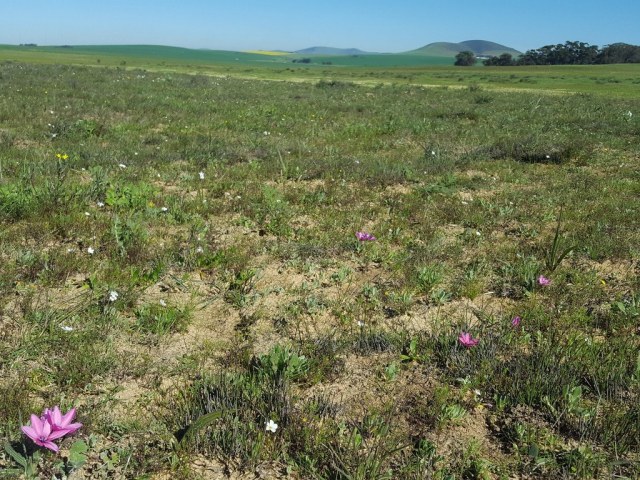
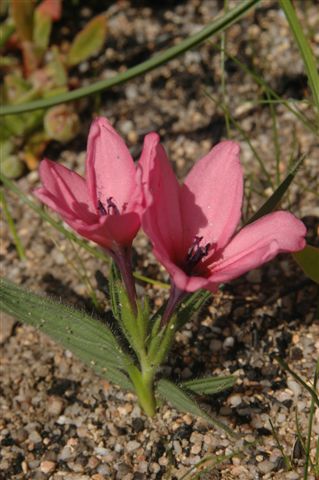
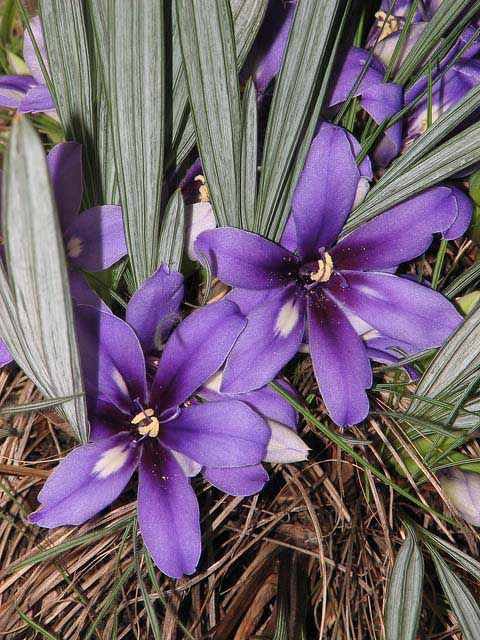
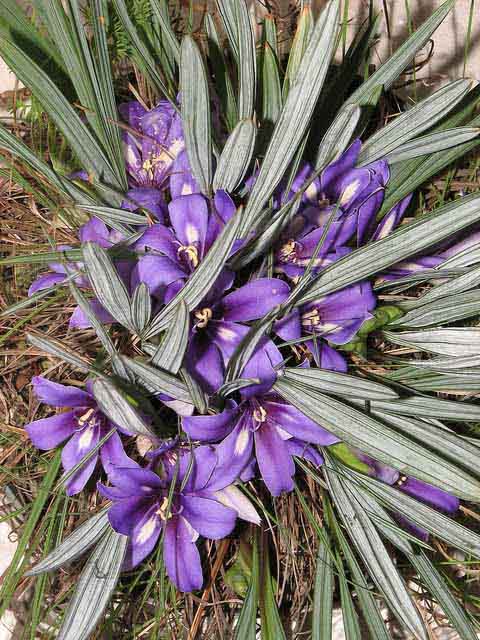
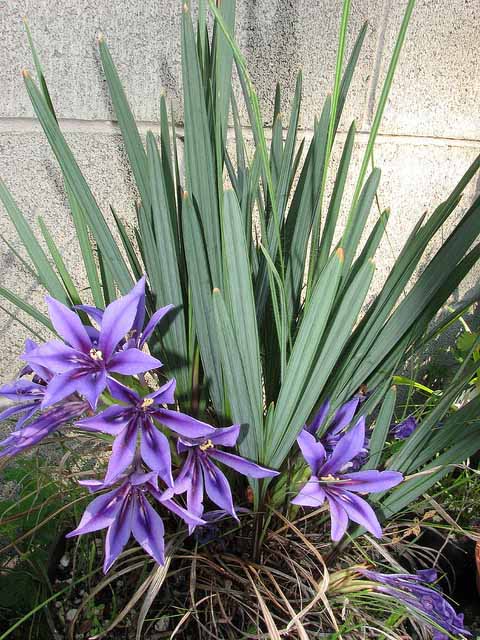
Babiana cedarbergensis G.J. Lewis is found on rocky sandstone flats above 1000 meters in the Cederberg. This is a short plant growing 4 to 6 cm with sword-shaped rigid pleated leaves and pale to deep violet flowers with white markings outlined in dark blue on the lower lateral tepals. It flowers in September. The first two photos are from Audrey Cain and Mary Sue Ittner. The last two photos from Cameron McMaster were taken near the Pakhuis Pass.
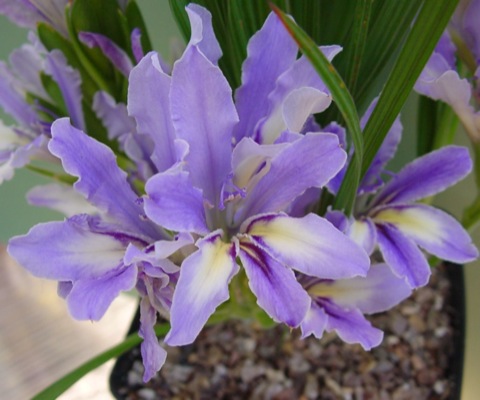
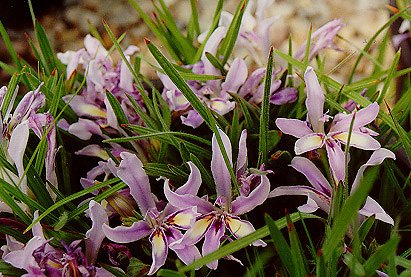
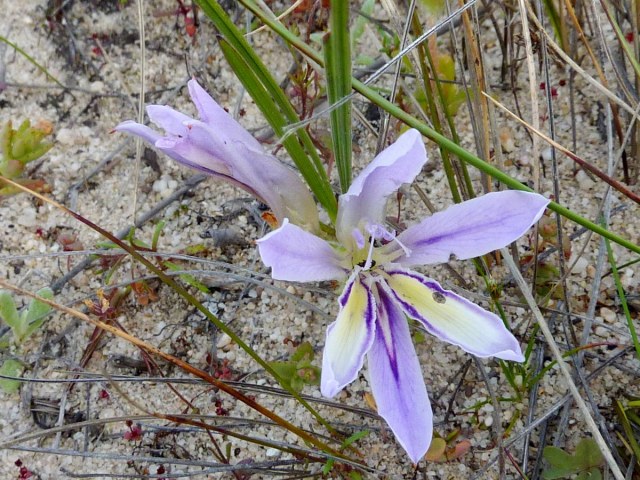
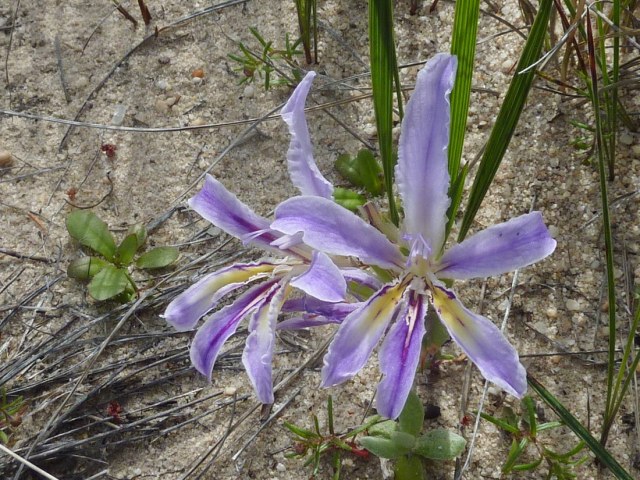
Babiana cuneata J.C.Manning & Goldblatt grows on rocky sandstone or dolerite slopes and flats in the Northwest Cape and the Roggeveld. Height: 15 cm. This species was named in 2004 as a new long-tubed species when former species Babiana cuneifolia and Babiana truncata were included in Babiana flabellifolia. It blooms in late August-September. It is one of four species with leaves that are abruptly truncate. It differs from the others by having an elongated perianth tube (40-60 mm long) and ascending tepals. The pale to deep blue flowers with white spear-shaped markings on the lower lateral tepals outlined in dark violet are at ground level. Flowers closely resemble Babiana sambucina. The first three photos were taken by Cameron McMaster in the Komsberg and the last two photos were taken by Mary Sue Ittner near Middelpos, all in the Roggeveld.


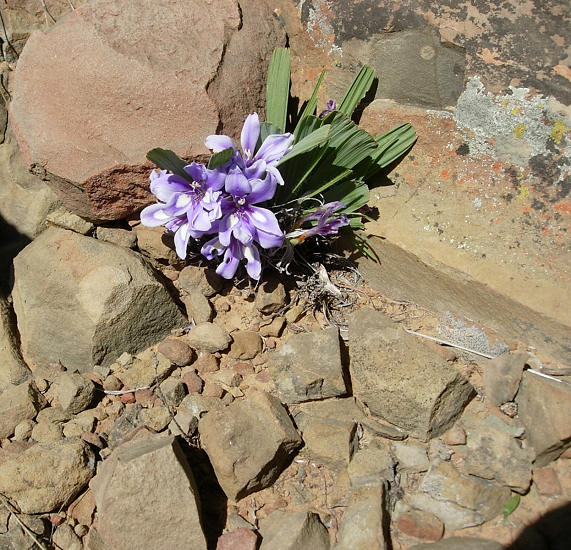
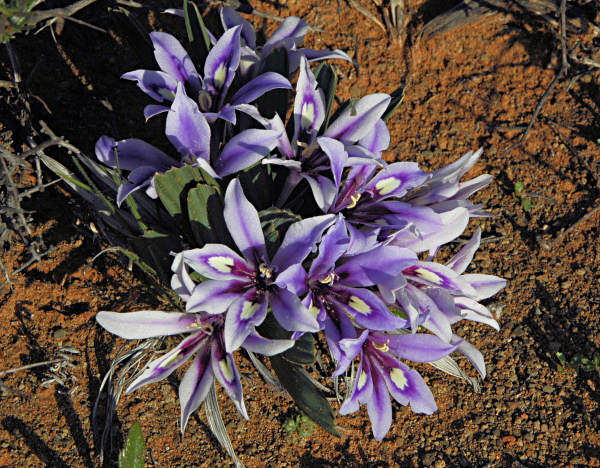
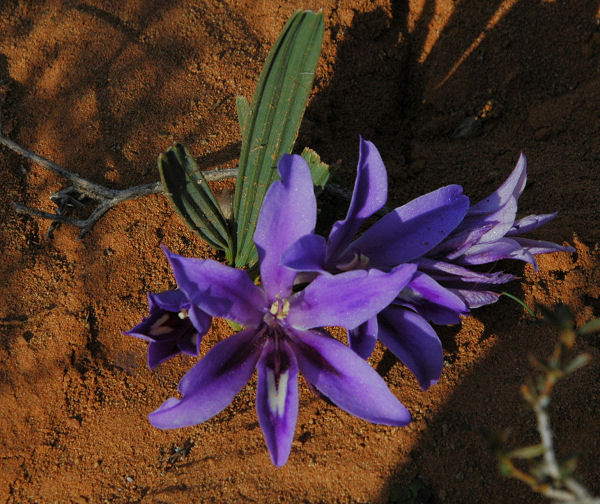
The photos below were taken by Alan Horstmann.
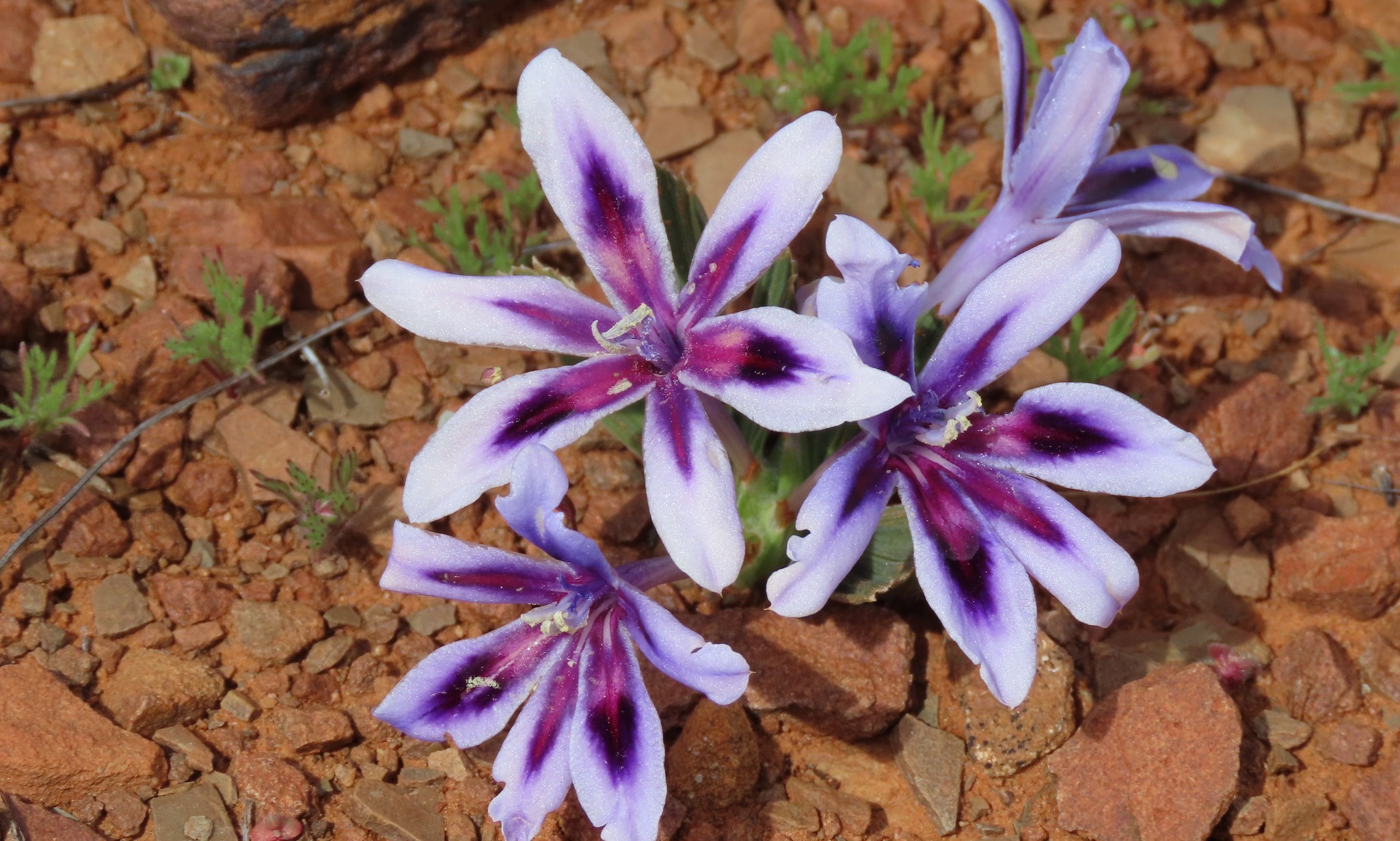
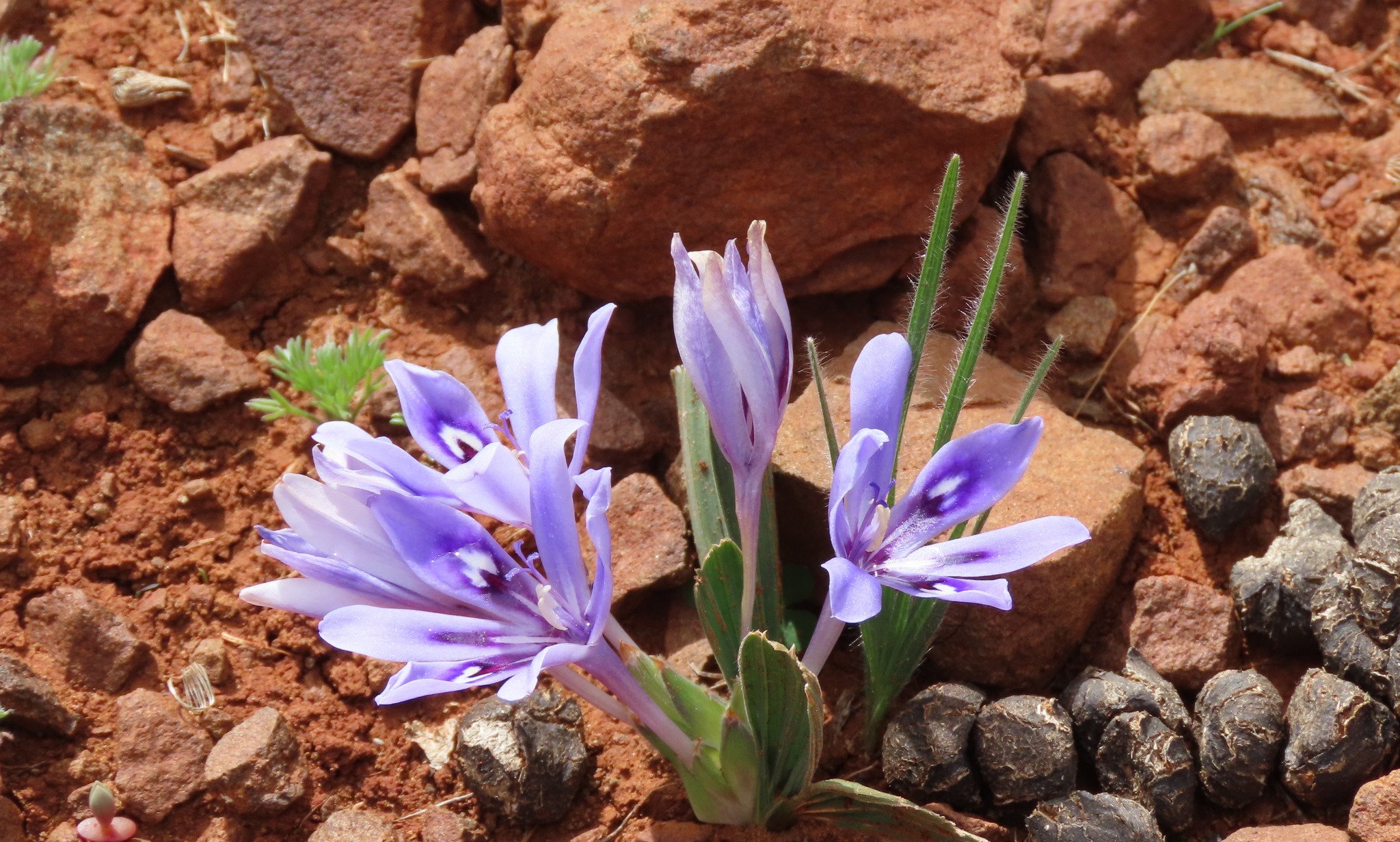
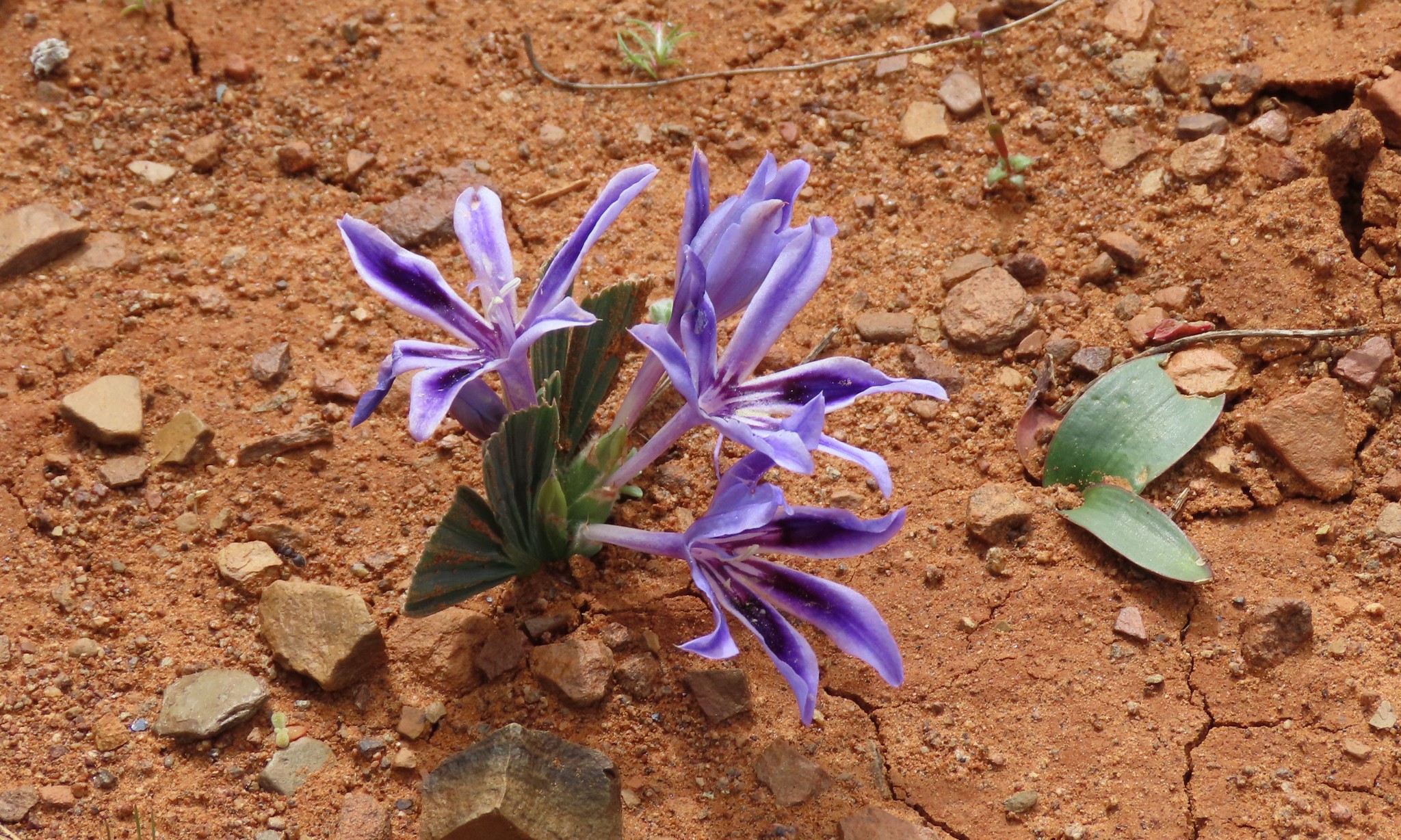
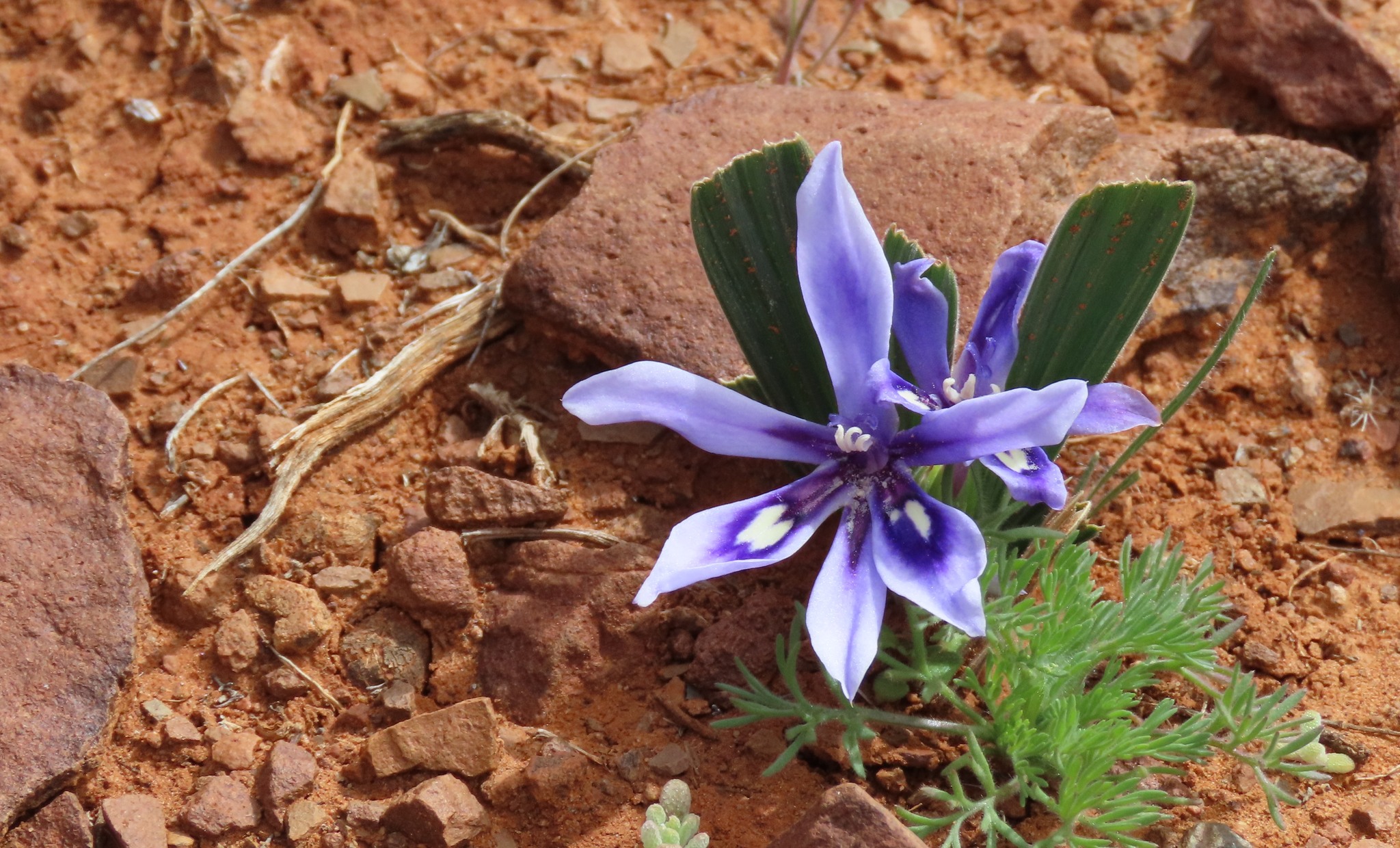
These photos from Dylan Hannon show plants grown (two to four clones together) from material originally collected near Patatsrivier (Lavranos 30427) received as B. truncata
Babiana cuneifolia Baker, see Babiana flabellifolia
Babiana curviscapa G.J.Lewis is a species found in Namaqualand in flat sandy places. Flowers are in a horizontal spike, magenta to violet to deep blue and the lower lateral lobes have spoon-shaped white markings. Height: 15 cm. The first and second photos of what could be this species were photographed in Namaqualand by Mary Sue Ittner. The third photo was taken by Rod Saunders, and the last three were taken by Cameron McMaster in Namaqualand September 2011.

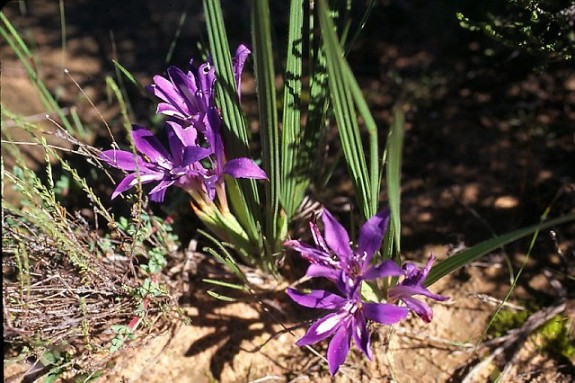


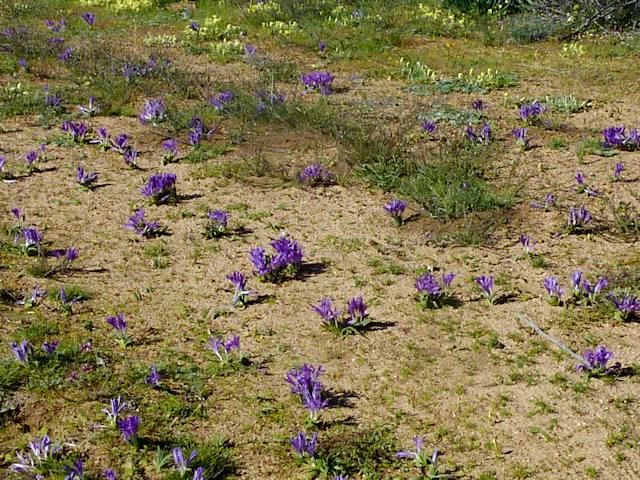

Photos below were taken 2022 near Kamieskroon in Namaqualand by Alan Horstmann.
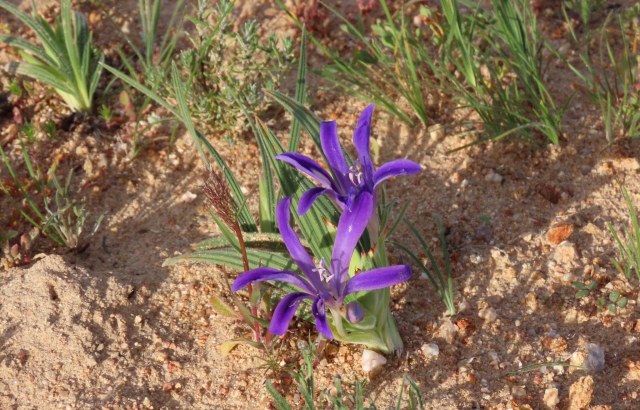
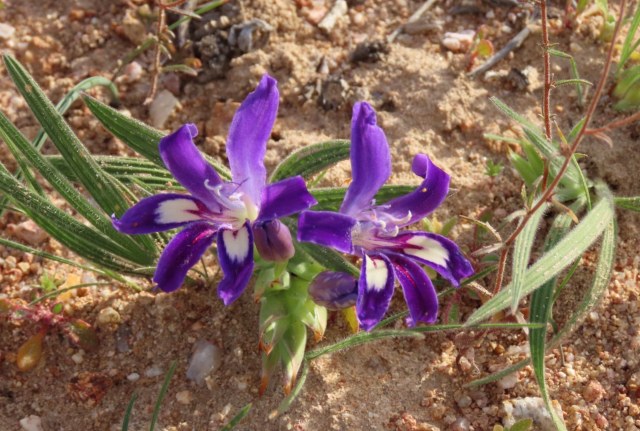
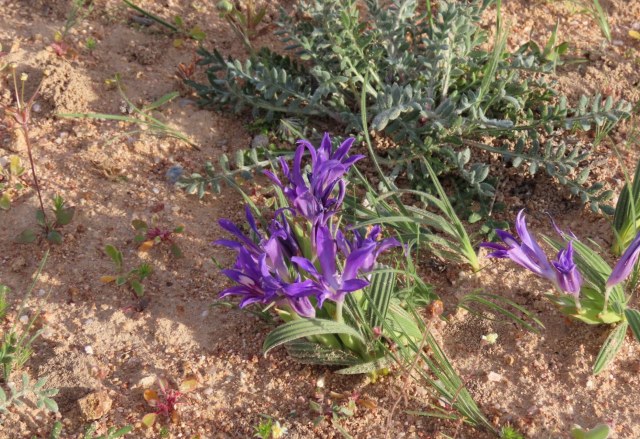
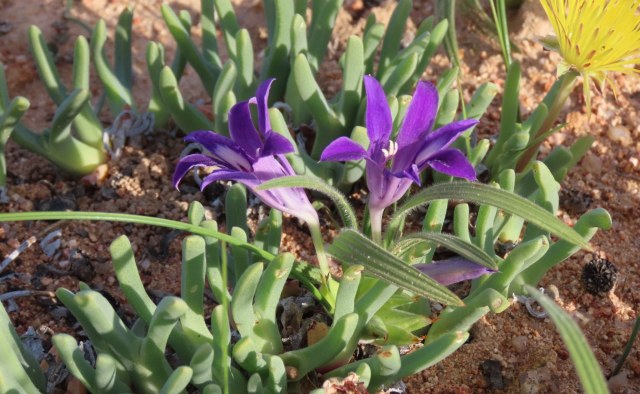
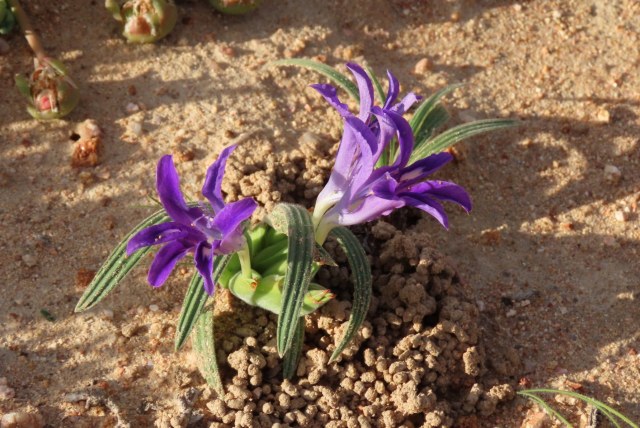
Photos below from Bob Rutemoeller and Michael Mace.
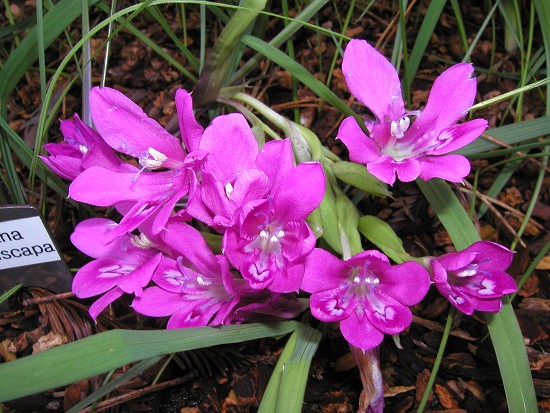
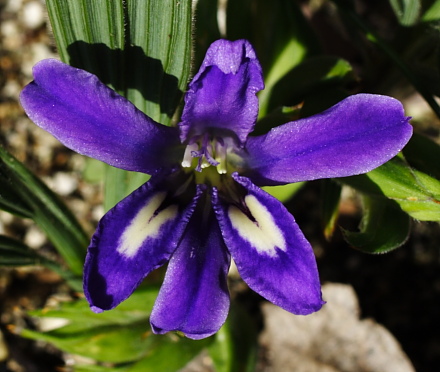
Babiana disticha Ker Gawl. see Babiana fragrans
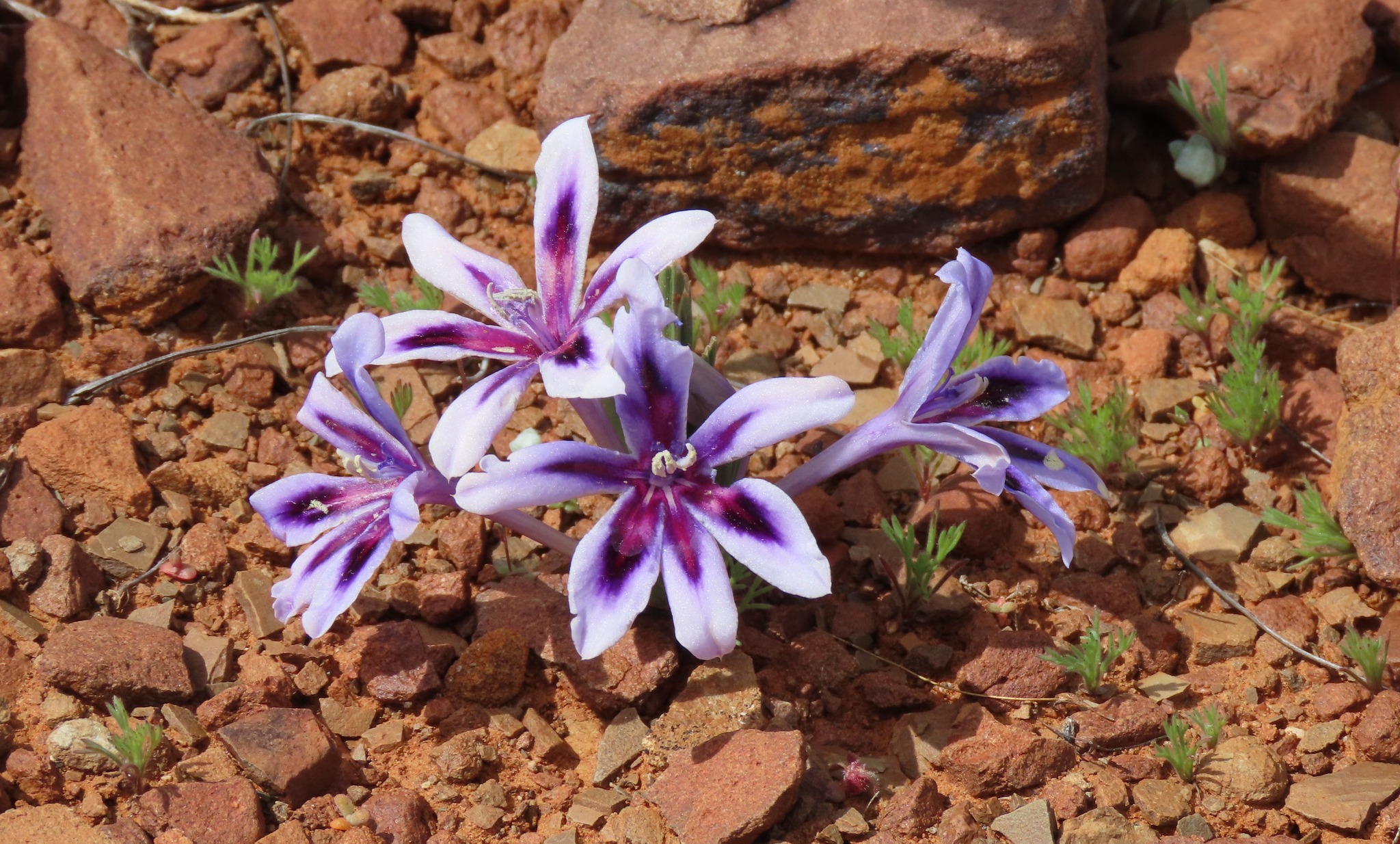
Babiana dregei Baker is found in rock crevices on hills and mountain slopes on sandy stony soil in central Namaqualand. It grows to 15 cm tall with an erect branched stem. Leaves are erect, rigid, sword-shaped, and slightly pleated with thickened veins and margins with a sharp ridged tip. Flowers are deep purple-blue to magenta with white splashes edged with a darker color on the three lower shorter tepals. Flowering occurs mainly in late August and September with the long tubed flowers pollinated by the long proboscid fly. Photos 1-5 were taken in Namaqualand by Bob Rutemoeller and Mary Sue Ittner of what we believe to be this species. Photo 6 taken by Cameron McMaster September 2011 near Kamieskroon.
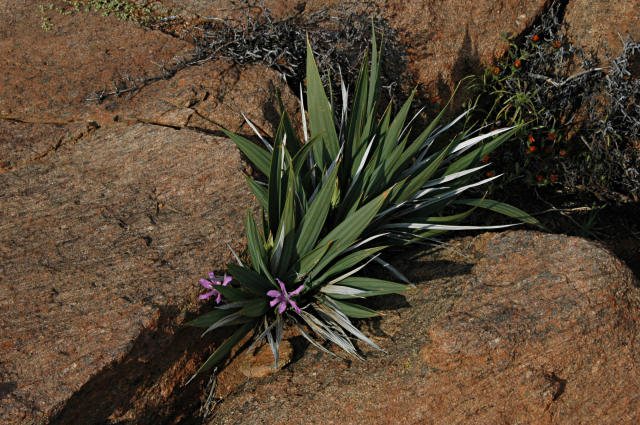

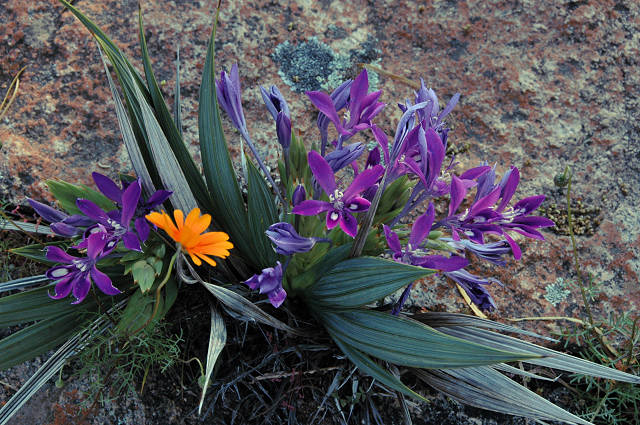
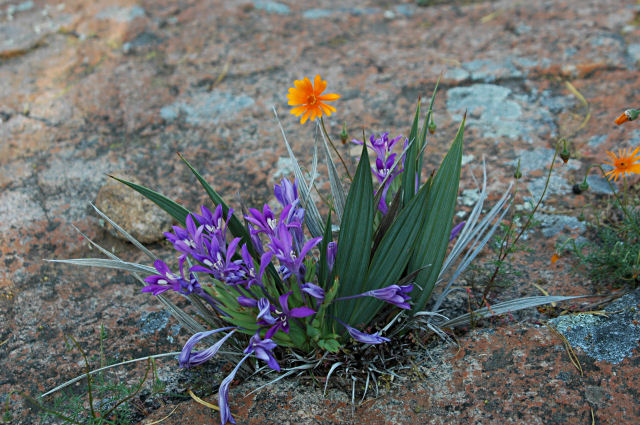
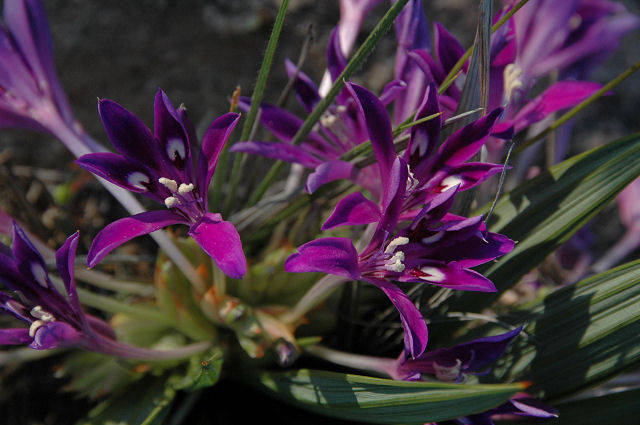
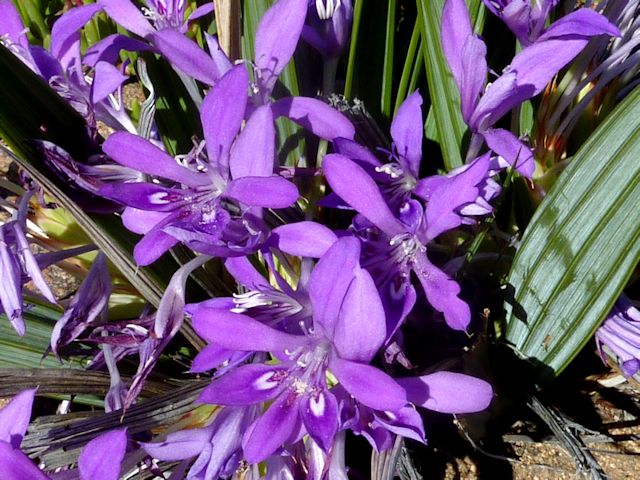
Babiana ecklonii Klatt is found in rock crevices or among rocks on flats and lower mountain slopes from Namaqualand to the Southwest Cape. This species has lance-shaped hairy leaves and blue to violet flowers with a large white to pale yellow blotch on the two lower lateral segments. It has an elongated perianth tube and the stem can be sheathed by the bases of the erect leaves. It flowers from August to September. Plants grow to 10-30 cm high. The first two photos were taken in different years of plants grown from seed received as this species by Mary Sue Ittner. The last photo was taken by Cameron McMaster near Clanwilliam.
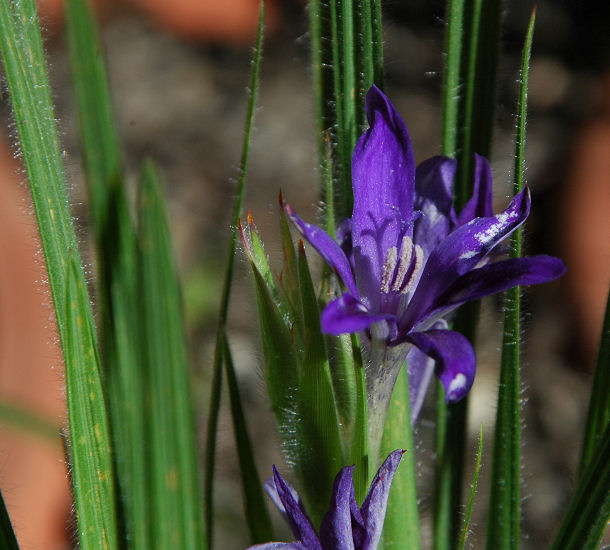
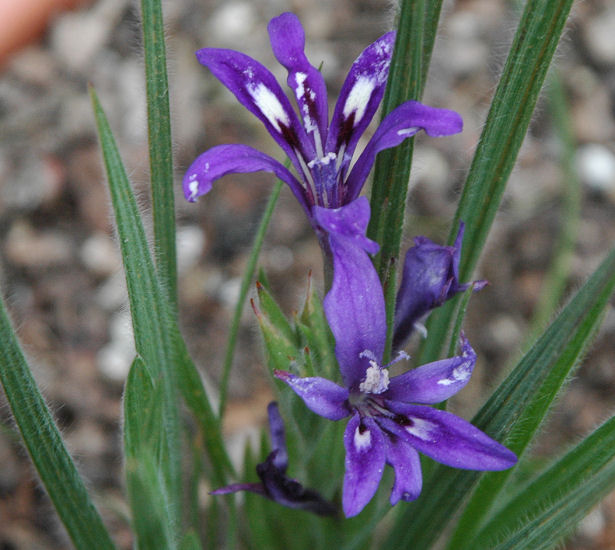

Babiana flabellifolia Harv. ex Klatt grows in doleritic clay outcrops in rock cracks where it is protected from predators. The leaves are wedge-shaped and the flowers violet with cream markings. The tube is white to yellow, cylindrical, straight, 12 to 36 mm long. The sweetly scented flowers smell like carnations. Height: 5-15 cm. In the Babiana revision species Babiana cuneifolia Baker and Babiana truncata G.J.Lewis are now included in Babiana flabellifolia except for longer tubed collections which are now considered to be in a new species, Babiana cuneata. The range of this species is from northern Namaqualand south to the Bokkeveld Plateau. The first photo was taken by Rod Saunders. The next photos are from Alan Horstmann. The first two of those were once considered Babiana cuneifolia. The last three were taken southeast of Garies and north of Concordia in Namaqualand in July.

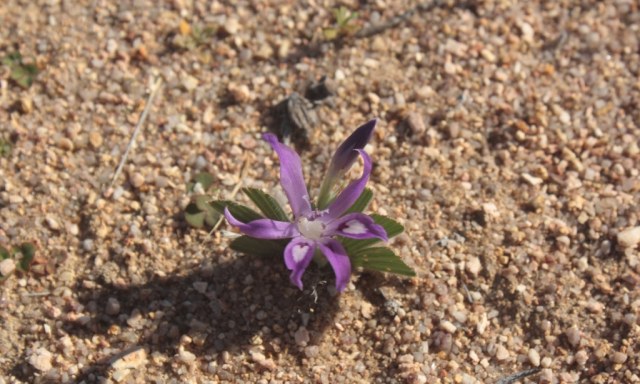
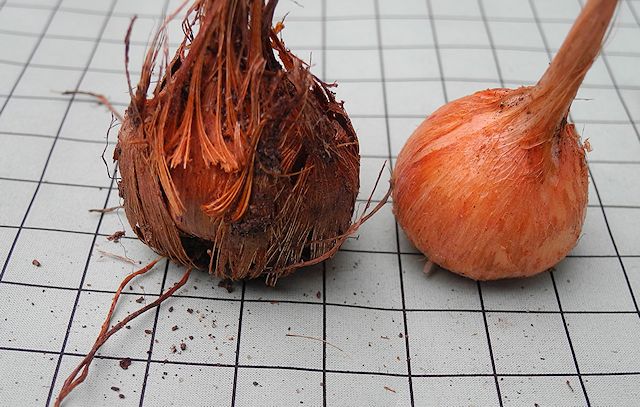
Babiana fragrans (Jacq.) Steud., syn. Babiana disticha Ker Gawl., is a winter grower found on sandstone, granite and occasionally clay slopes in the northwest and southwest Cape of South Africa. It has pale violet flowers that are occasionally creamy yellow usually with a narrow median streak or blotch on the lower lateral tepals and dark blue or purple markings near the base. It flowers from July to September with usually fragrant flowers. Plant grows from 7-20 cm high. The first photo below was taken by Sheila Burrow who was growing it in Australia. In the second photograph by Bob Rutemoeller there is a Sparaxis grandiflora ssp. acutiloba blooming below it. The third photo from Mary Sue Ittner shows the corms on a 1 cm grid.
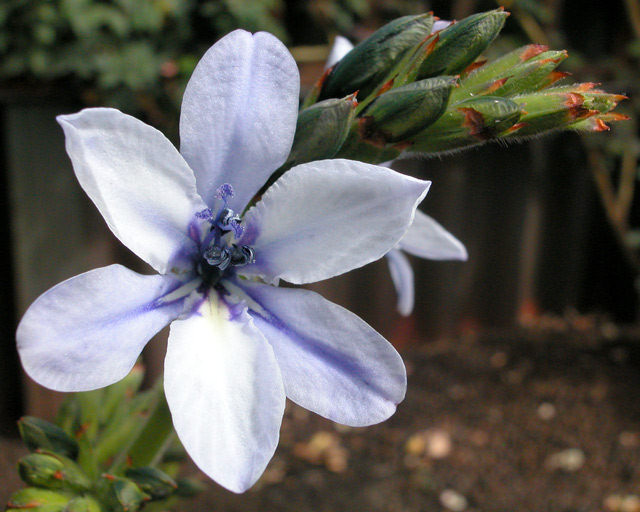
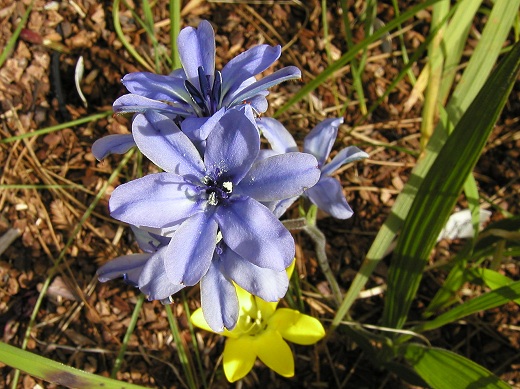
Photos taken in habitat by Mary Sue Ittner September 2006 at Bainskloof and Lion's Head show the variations in flower color and flowers blooming in mass the spring after a fire.
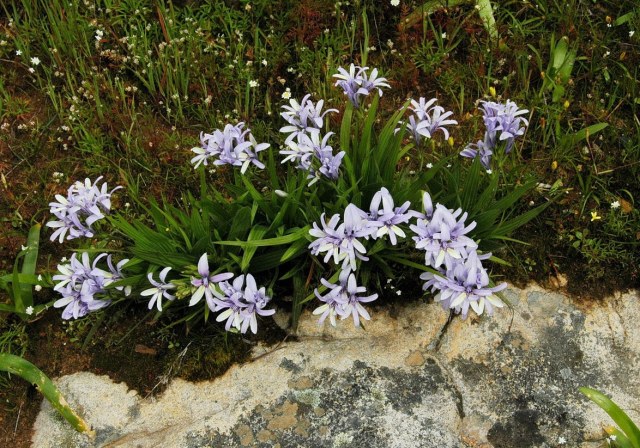


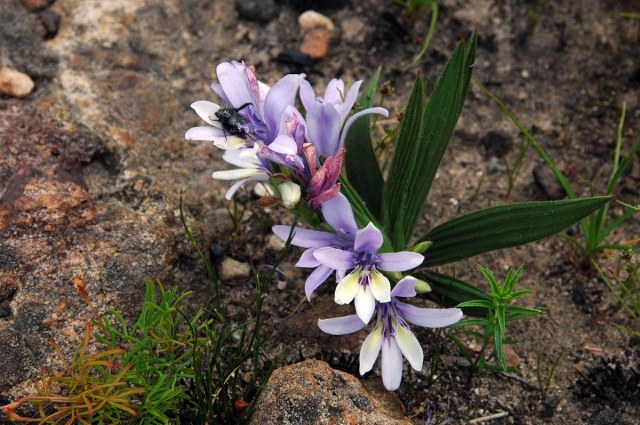
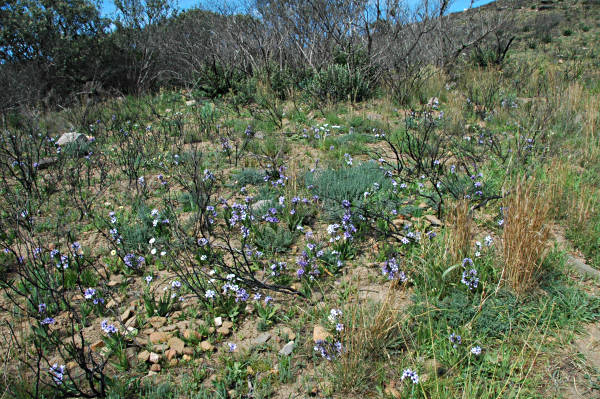
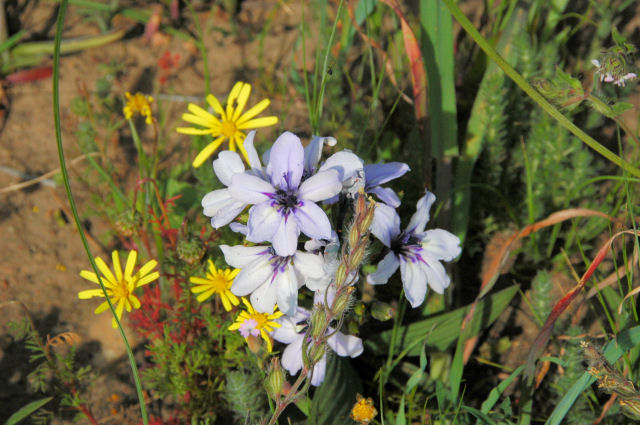
Babiana framesii L.Bolus is found on rock outcrops in karroid scrub on the Bokkeveld Plateau near Nieuwoudtville. Growing to 10 cm high, it has lanceolate, pleated, hairy leaves and dark blue-purple bilateral symmetrical flowers that have arrow-shaped white markings on the midline outlined in darker blue or red on the lower lateral tepals. Tepals are narrow and spread almost at right angles to the elongated (6-7 cm) and slightly curved tube. It flowers from July to September. The first two photographs were taken by Mary Sue Ittner and three and four by Bob Rutemoeller near Nieuwoudtville in September 2006. Photo five was taken near Nieuwoudtville by Cameron McMaster.
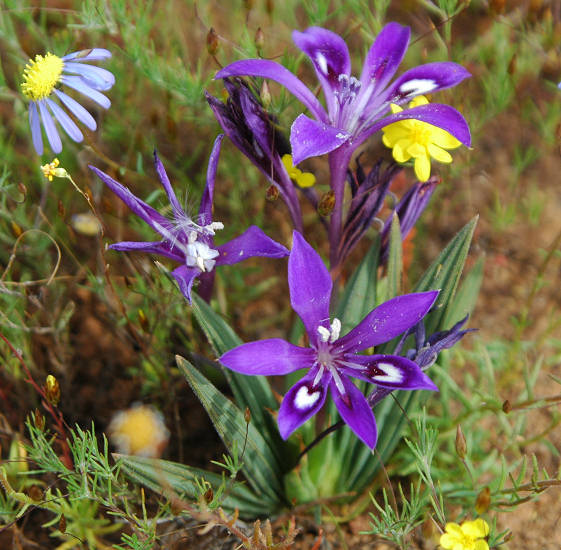
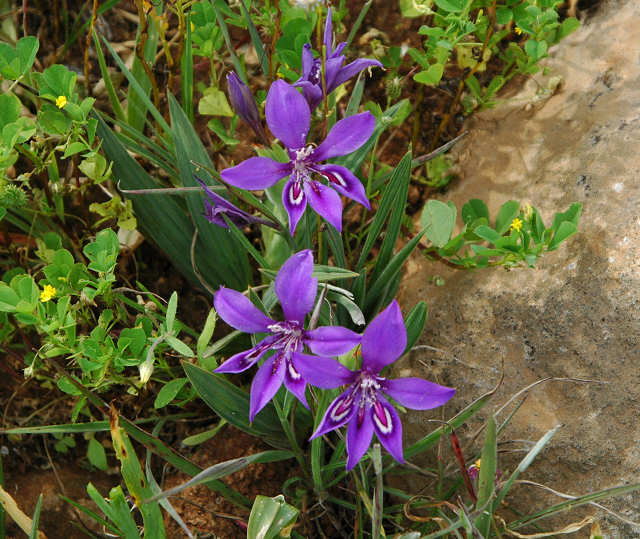
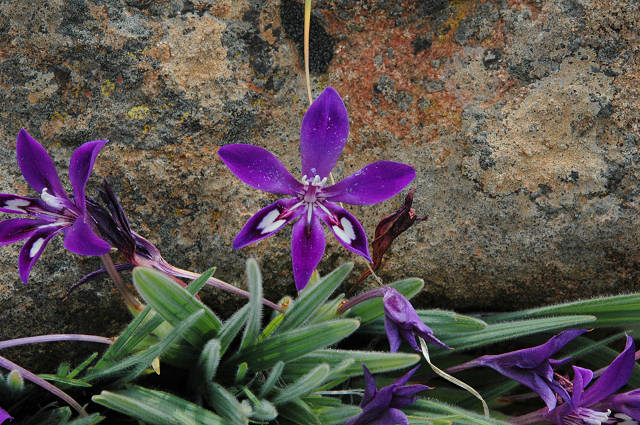

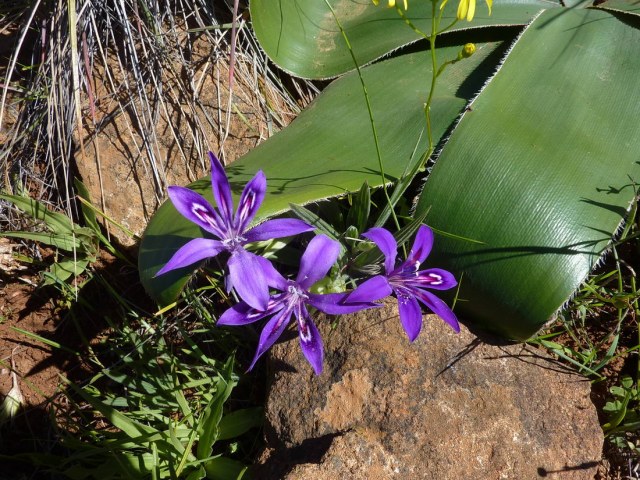
This plant is a reliable bloomer in my Northern California garden where it flowers in February and often gets rained on as illustrated in the second photo. Photos by Bob Rutemoeller and Mary Sue Ittner. The last photo shows corms on a 1 cm grid.
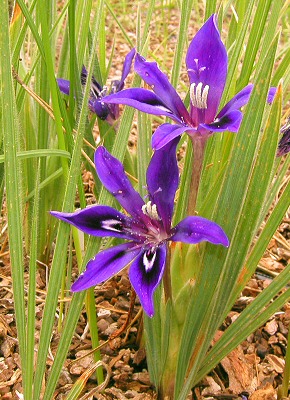
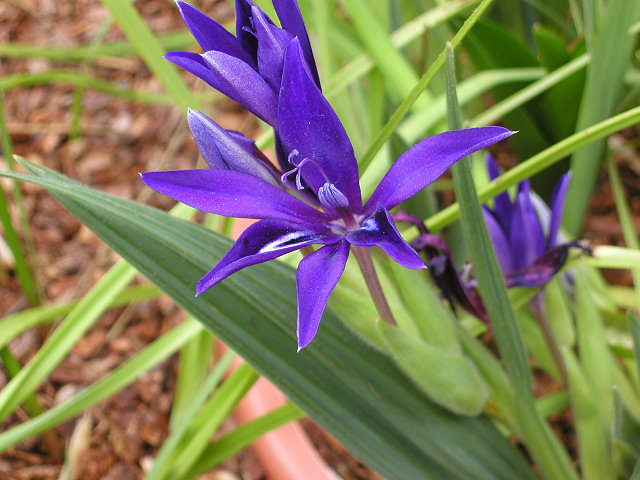
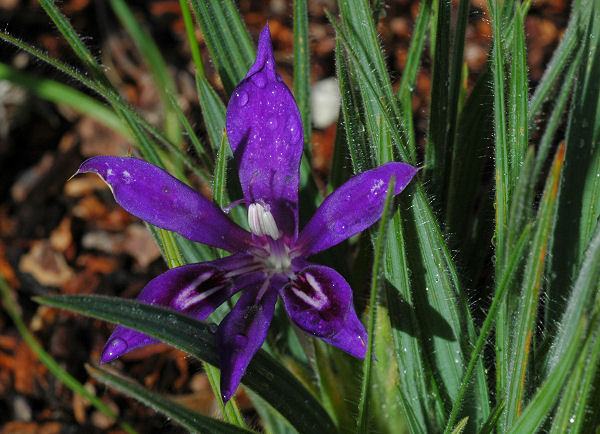
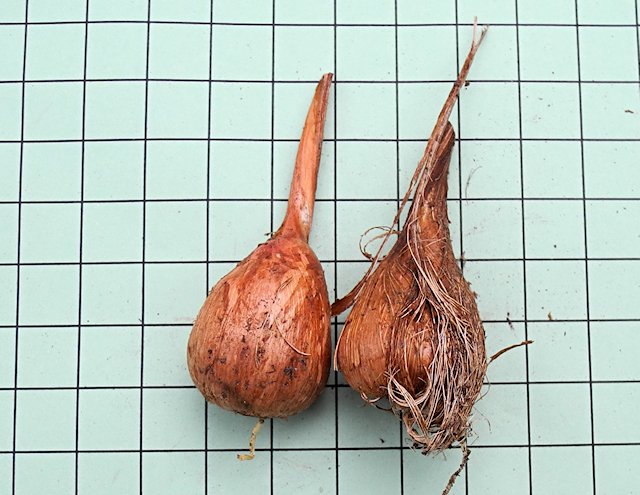
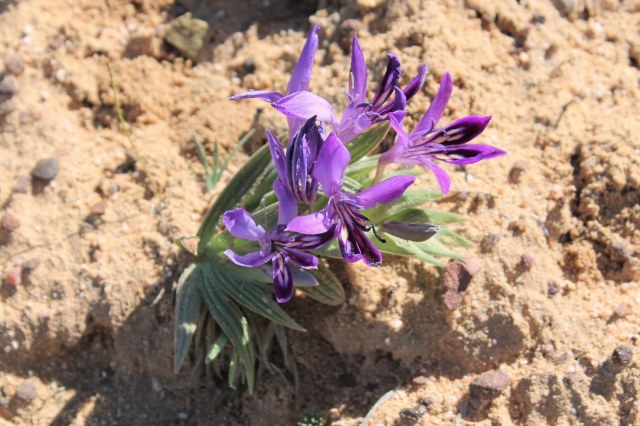
Babiana geniculata G.J.Lewis is found on rocky sandstone slopes in dry fynbos in the Western Cape. It is endemic to the northern Cederberg, Pakhuis and Biedouw Mountains. Flowers are violet, with white median markings on the lower lateral tepals and are unscented. It can be distinguished by flowers with long perianth tubes which are bent like knees, divergent anthers, and the style dividing below the bases of the anthers. Height: 2-6 cm. The photo was taken by Margaret Fox in the Western Cape August 2020.
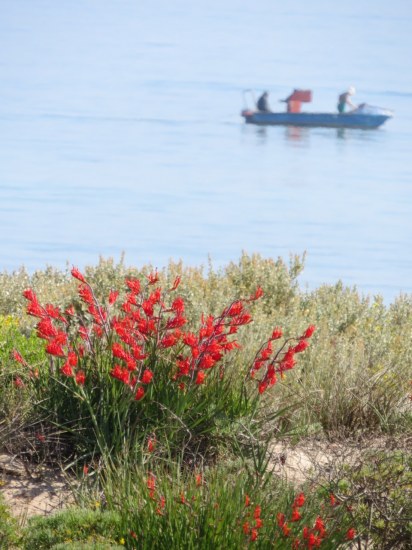
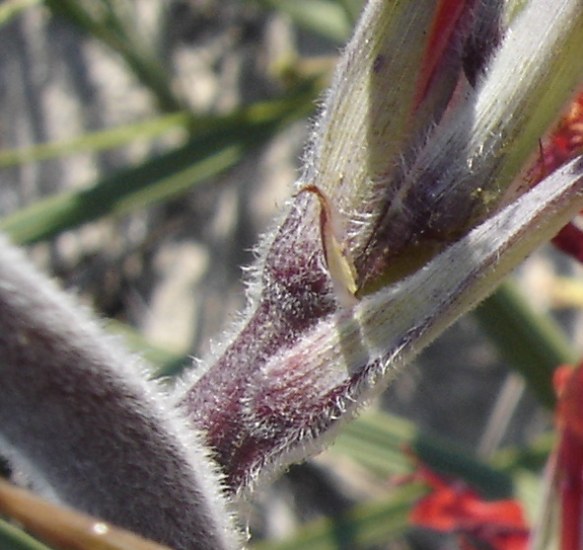
Babiana hirsuta (Lam.) Goldblatt & J.C.Manning (syn. Babiana thunbergii Ker Gawl., Antholyza plicata L.f., Antholyza hirsuta Lam.) is a coastal plant growing on sandy dunes and flats in the northwest and the southwest Cape. It has stiff, pleated velvety lanceolate leaves and red recurved unusual flowers. The lower tepals are yellow marked green to black at the base. Height range: 40-70 cm high. It flowers from July to October. Wild populations of this species are reported to be self-incompatible and depend on birds for pollination. Photos from Cameron McMaster were taken in the Western Cape.
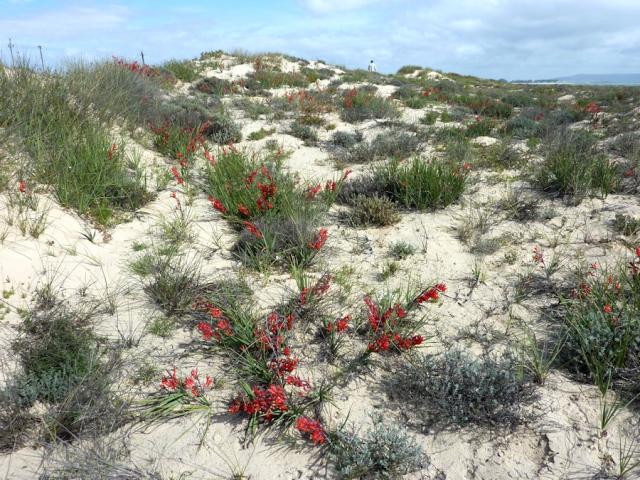
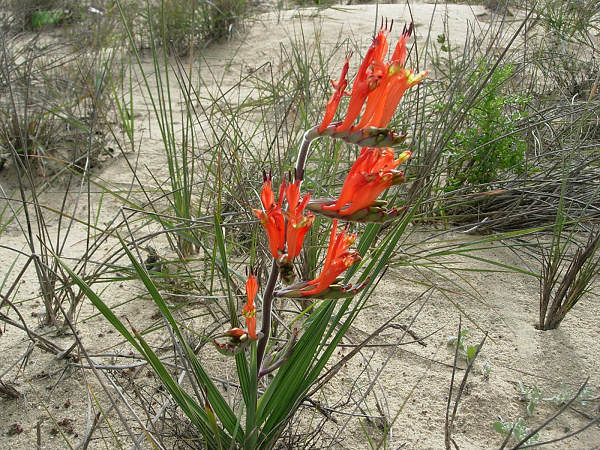
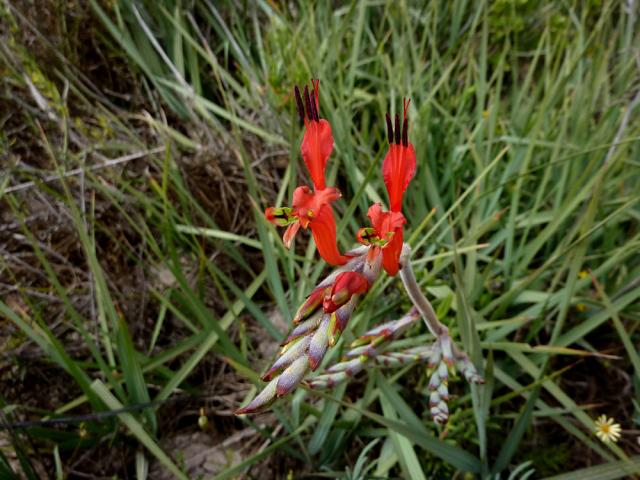
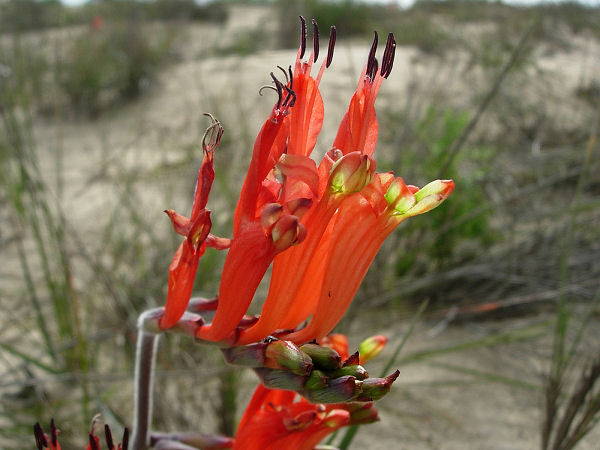
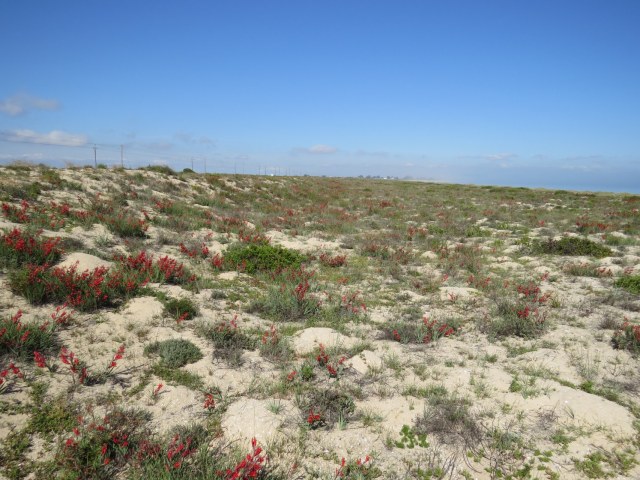
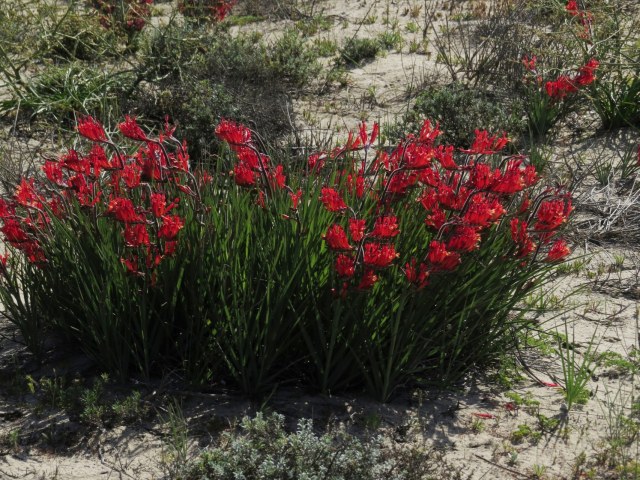
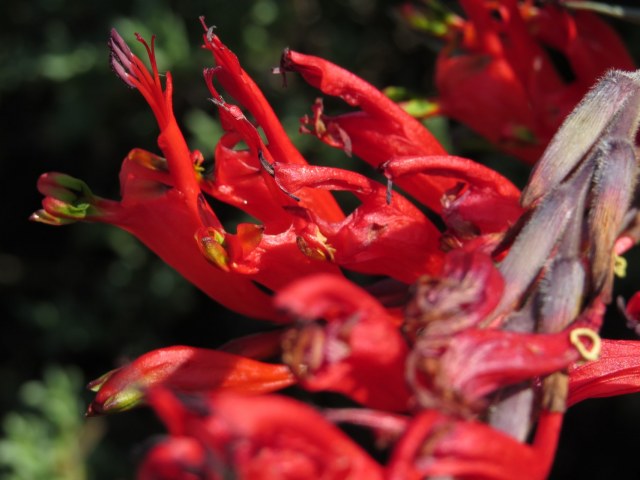
Pictures were taken at Laaiplek on the West Coast of South Africa by Paul Sieben. Photo 1, shows the general area between the primary dunes along the coast, as far as the eye can see there are clusters of flowers; photo 2, shows a group of plants in bloom; photo 3, is a closer view of the flowers; photo 4, close up of the flowers; photo 5, shows a cluster of flowers with the sea in the background to give one an idea of how close to the sea they are. From the epithet "hirsuta" one might expect hairs somewhere and photo 6 shows the hairy stems.

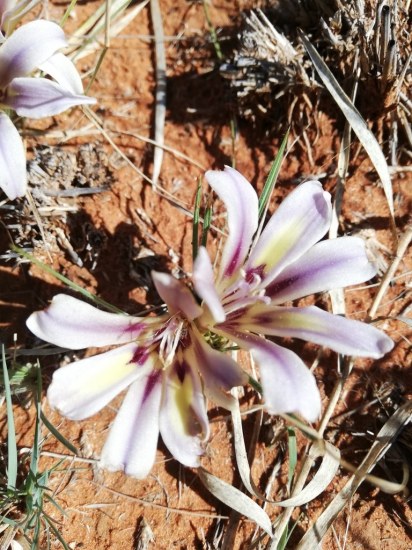
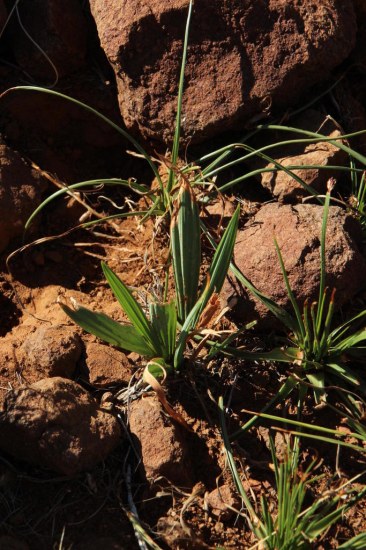
Babiana hypogaea Burch. is found on red sand plains in Namibia, the Northern Cape, Bushmanland, and the Upper Karoo. Even though it grows on the edge of the summer rainfall area, it flowers mainly in the dry late winter and spring (between June and September and sometimes between December and May). Corms are edible with a sweet nutty flavor. The scented flowers are greenish yellow to buff flushed with pale brown or mauve outside and arise from below ground level. The lower tepals have pale nectar guides edged with reddish arrow-shaped marks near the base and with dark reddish streaks in the throat. Leaves are slightly pleated, thinly hairy or hairless and are held horizontally or inclined. Height: 5-8 cm. The photo of the flower is from iNaturalist and was taken by Wynand Calitz in the Free State in August and shared under a CC BY-NC license. The photo of the leaves is from iNaturalist and was taken by Tony Rebelo and is shared under a CC BY-SA license.
Babiana species i-p - Babiana species r-si - Babiana species sp-z - Babiana index