Calochortus is a genus in the Liliaceae family with species distributed in western North America, Mexico, and south to Guatemala. The greatest concentration of species is found in California. Three good sources of information are Frank Callahan, The Genus Calochortus, in McGary, 2001 found listed in References, Calochortus, Gerritsen and Parsons, 2007 found listed in References, and Mariposa, the newsletter of the Calochortus Society, a quarterly issued between 1989 and 2005. Calochortus species starting with o and ending with r are found on this page.
Calochortus species a-b - Calochortus species c-d - Calochortus species e-lo - Calochortus species lu-n - Calochortus species s - Calochortus species t-u - Calochortus species v-z - Calochortus hybrids - Calochortus index
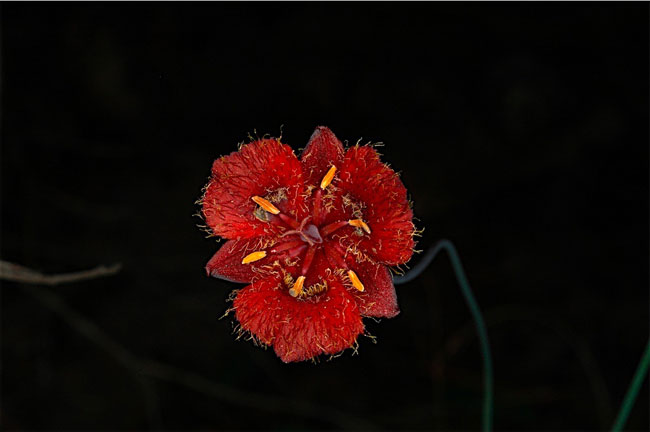
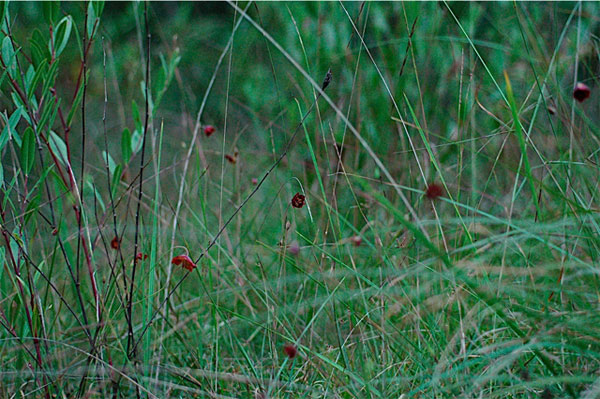
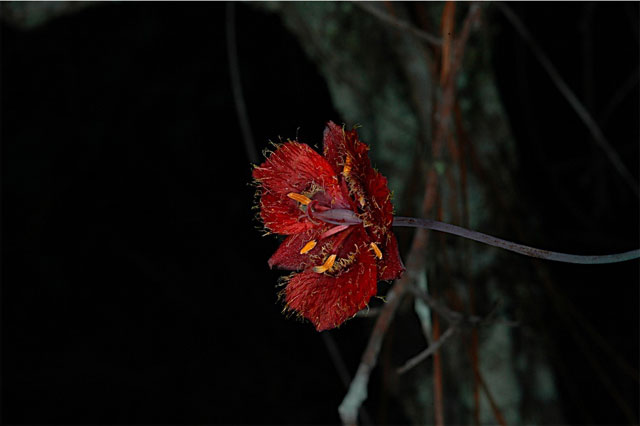
Calochortus obispoensis Lemmon, commonly known as the "San Luis Mariposa" is in Section Cyclobothra, subsection Weediani. This species was featured in Mariposa,Volume 14,#1. This bizarre species was once described as to "assume a most fantastic form, the brownish petals being so much truncated that the sepals far exceed them" (Purdy, 1901). This species has a glaucous, erect, non bulbiferous stem, usually branching, that may have from 2 to as many 70 flowers, or even more. This is one of the Calochortus species that can put on a fabulous display following a fire. It is endemic to San Luis Obispo County, California, and is usually found near the coast where it grows among grasses in full sun along mountain ridges, elevation 75-730 m. Height range: to about 2 ft. The first photo by Ron Parsons, taken in mid June, north of San Luis Obispo, San Luis County, California. The next two were taken by Mary Sue Ittner of plants grown from seed.
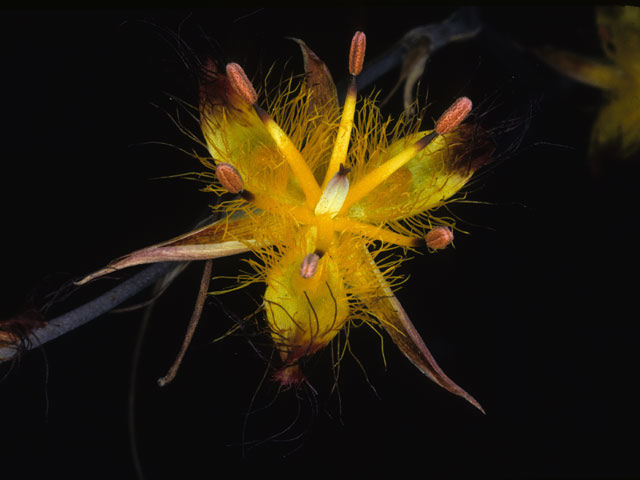
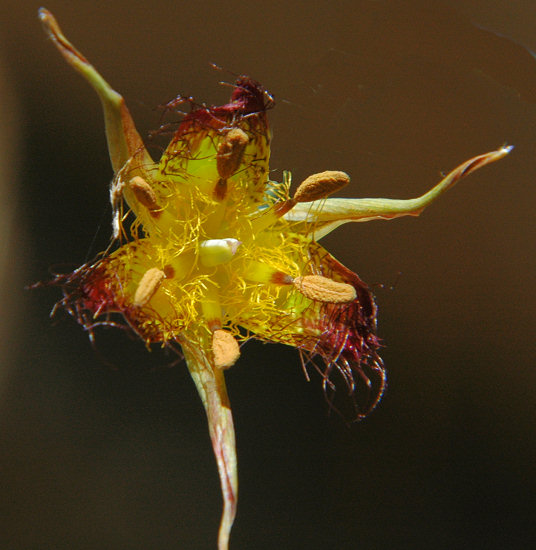
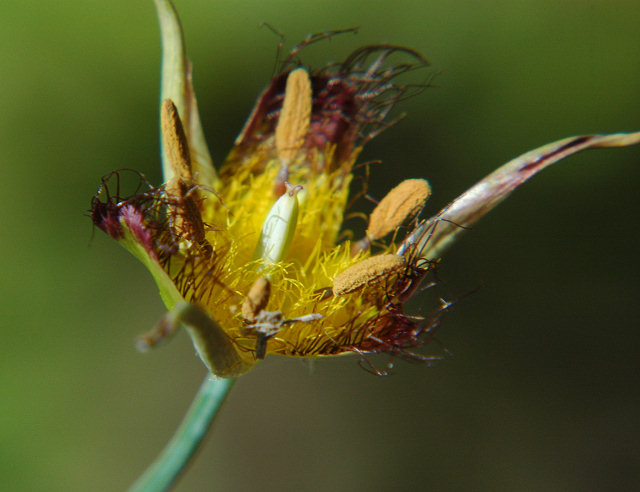
Excerpts and photos from Kipp McMichael's "Calochortus pursuits":
"I returned to San Luis Obispo County 7 times this season to catch its rich flora - and such a sample would not be complete without the eponymous Calochortus obispoensis. Growing on rocky serpentine hillsides right in the middle of San Luis Obispo, this distinctively sparse Calochortus is more anthers and brightly colored hairs than it is showy petals."
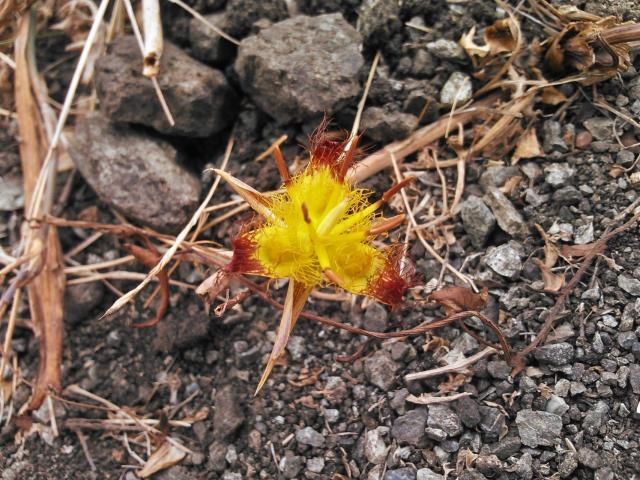
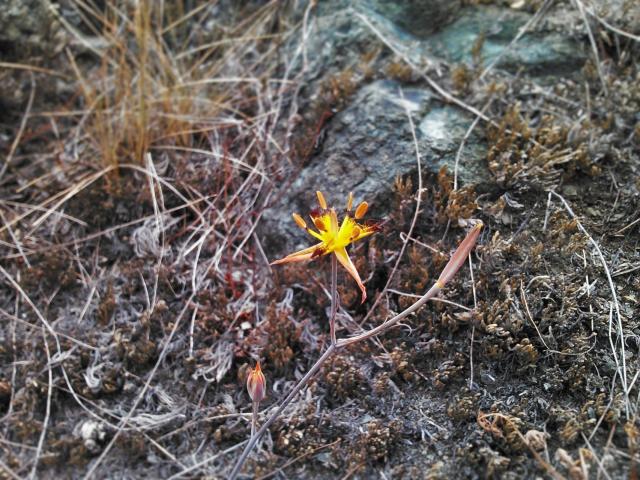
Calochortus ownbeyi M.A.García-Mart., Aarón Rodr. & H.P.McDonald, published in 2017, is quite closely related to Calochortus venustulus, and may be confused with the latter in some floras. A wholly Mexican species, section Cyclobothra, subsection Ghiesbreghtiani, it is found in the Mexican states of Chihuahua and Jalisco, in the Sierra Madre Occidental. It grows in open forests of pine and oak and elevations of 500-2500 m. Height range: 30-60 cm. The photo shown here was taken in Jalisco, in a driving rainstorm (complete with thunder and lightning) in September of 2006. This species was named after Marion Ownbey, whose Ph.D. thesis on Calochortus, written in 1940, is still regarded as a classic. Photo by Mary Gerritsen.
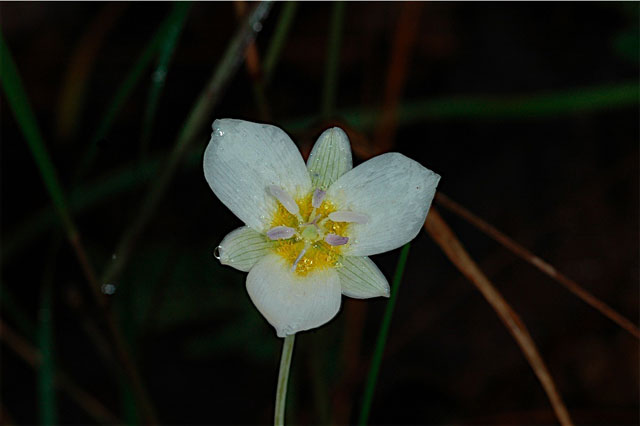
Calochortus palmeri S.Watson is just one of over 100,000 botanical specimens collected by the early botanist, Edward Palmer. This species was featured in Mariposa,Volume 6,#2. The stems of this species are 30-50 cm tall, often branched and bulbiferous, and may bear up to 7 erect, campanulate 3-5 cm flowers. It occurs from San Luis Obispo County, south to the Tehachapi, San Bernardino, and San Jacinto Mountains of California, elevation 1000-2200 m. This is a moisture loving species, and is usually found along streams or in seasonally wet meadows fed by winter streams. Although it grows in boggy meadows, in cultivation it is reportedly easy with standard Calochortus conditions, and needs only moderate water to thrive. Germination of seeds may be enhanced by some stratification. Supposedly it does very well in wet moderate climates like the UK.
Calochortus palmeri var. palmeri - plants in situ (Ventura County) showing a typical pink flower growing next to a white one. Photo by Ron Parsons.
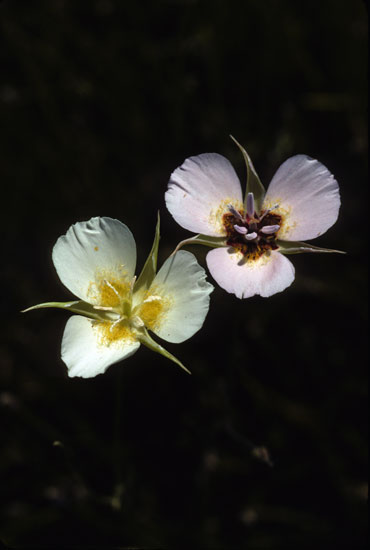
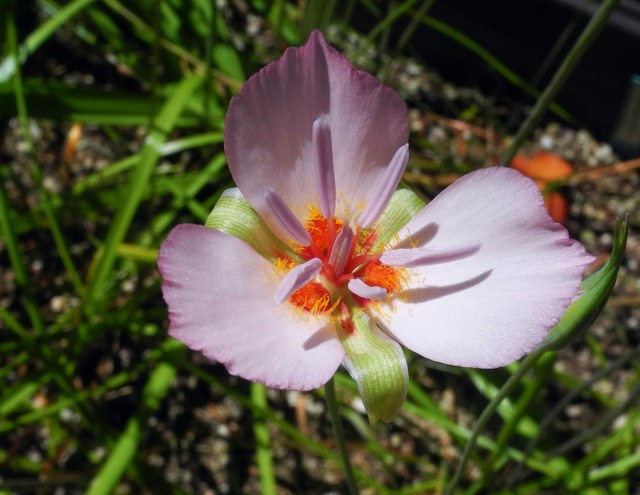
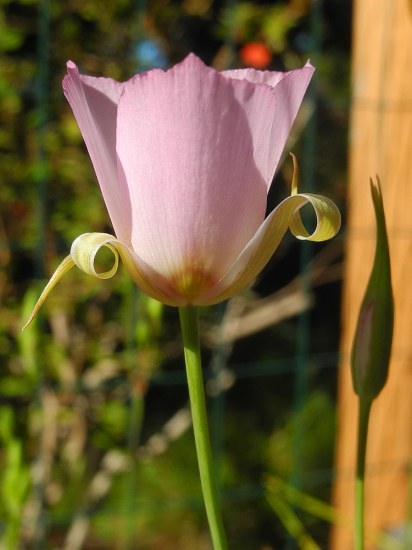
Calochortus palmeri var. munzii Ownbey is distinguished from var. palmeri by the lack of bulbiferous stems, and its habitat, usually dry and grassy. This variety is found in the San Jacinto Mountains of Riverside County California, where photo 1 was taken by Ron Parsons. Photo 2 was taken by Nhu Nguyen at the Tilden Botanic Garden. The last two photos from Mary Sue Ittner who was surprised to find it flowering one year after she thought she had lost it.
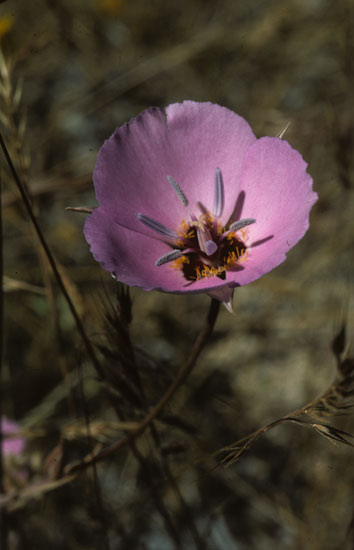

Calochortus panamintensis (Ownbey) Reveal (syn. C. nuttallii v. panamintensis Ownbey) is a species endemic to California, and occurs in a few stands in the Panamint Mountains of Death Valley National Monument, Inyo County. It grows in between rocks and stones in high desert juniper and pine woodlands, at elevations of 2500-3200 ft. It may also occur in eastern Kern County. It is very similar (and perhaps not a distinct taxon at all) to Calochortus invenustus. Height range: 40-60 cm. Photo by Ron Parsons, Panamint Mountains, Inyo County, California.
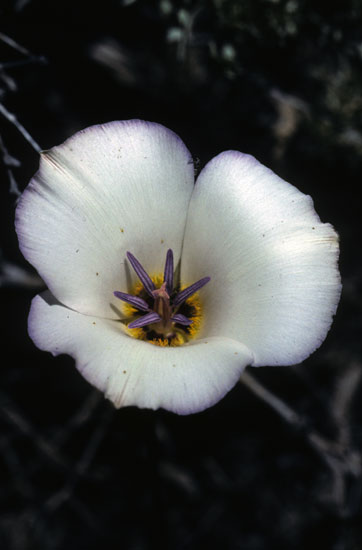
Calochortus persistens Ownbey is a rare and very localized species, known only from a few ridges near Yreka, California (Siskiyou County) and also from the summit of Bald Mountain in Jackson County. This species was featured in Mariposa,Volume 13,#1. Height: 10 cm. The photo below is from Gunsight Ridge, west of Yreka, and was taken in late June, 2007. Photo by Mary Gerritsen.
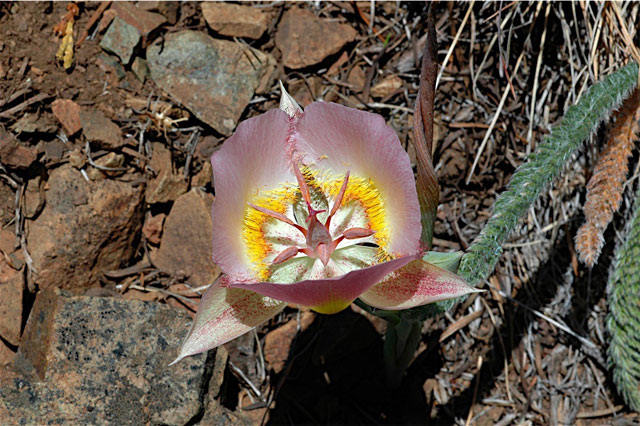
Calochortus plummerae Greene is a species in section Cyclobothra, a section with bulbs that are netted. This southern California species grows in rocky clay soil often found with its base shaded and flowers in sun. A tall species, the flowers range in color from light pink through rose, lavender and purple. It has tulip shaped flowers with sepals longer than petals and is densely bearded with yellow hairs. These plants were once common, but their range has been reduced greatly by development. This species was featured in Mariposa,Volume 3,#3. Height range: to about 2 ft. Photo 1 was taken by Mary Sue Ittner at Telos Rare Bulbs. Photos 2-4 were taken by Nhu Nguyen at the Tilden Botanic Garden. The last photo from Calflora was taken by Amber Bedgood May 2022 in Los Angeles County and shared under a CC BY-NC license.
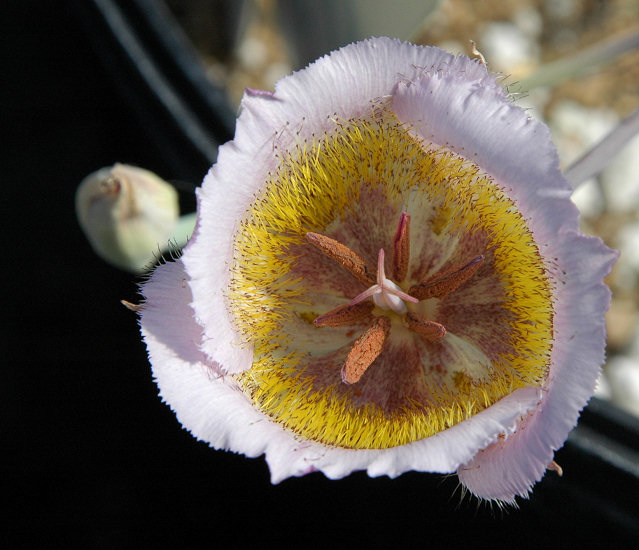
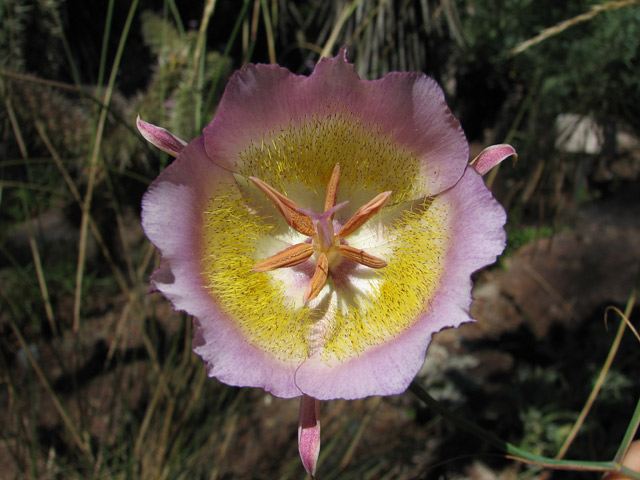


Excerpts and photos from Kipp McMichael's "Calochortus pursuits":
"We left the Mojave and headed southwest toward Soledad Canyon in northern LA County to visit an area home to a few dryland-loving Calochortus species. We hoped to catch a large population of Calochortus plummerae, and perhaps see Calochortus kennedyi or C. clavatus var gracilus, along a short section of the Pacific Crest Trail. Unlike the banner year in the Mojave, the population here - which had bloomed and seeded en-mass in 2014 - was virtually fallow. We located a handful of blooming plants of C. plummerae scattered in the area where thousands of plants were undoubtedly dormant."
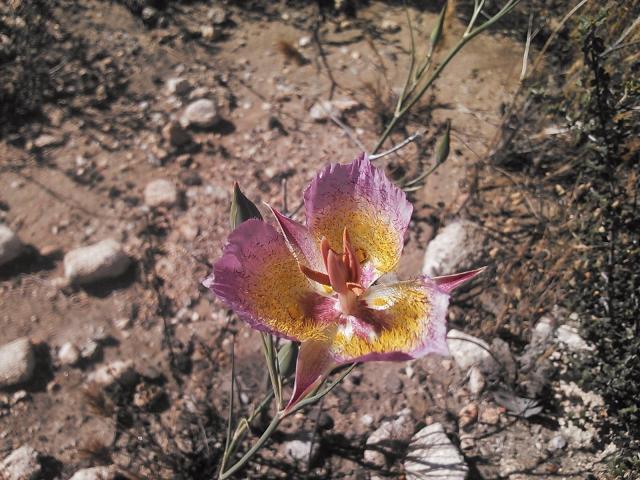
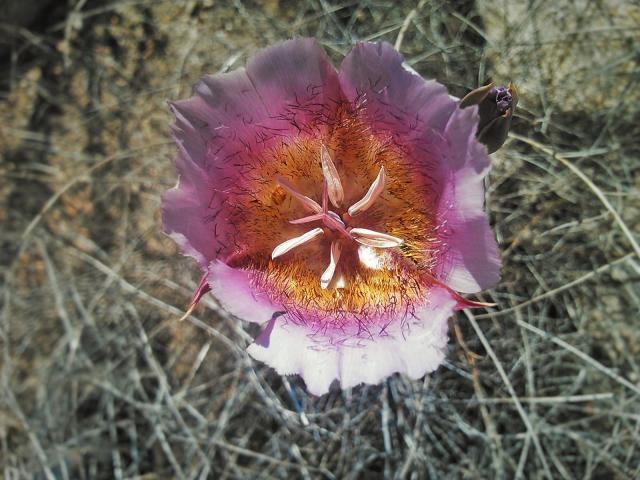
Calochortus pringlei B.L.Rob. is a beautiful little Mexican species, section Cyclobothra, subsection Ghiesbreghtiani. It has erect to somewhat lax, glaucous, sometimes branched stem 20-40 cm high with few, upright to leaning or descending, campanulate brownish red to dark red flowers. It is native to the states of Moreles and Puebla, Mexico, and may also occur in Jalisco. This species does not produce bulbils. We saw only a few of these in bloom (September 2007), in a much disturbed area above the well known silver crafts town of Taxco. The area was highly eroded, and there were only a few pockets of blooming plants. Photos by Mary Gerritsen.
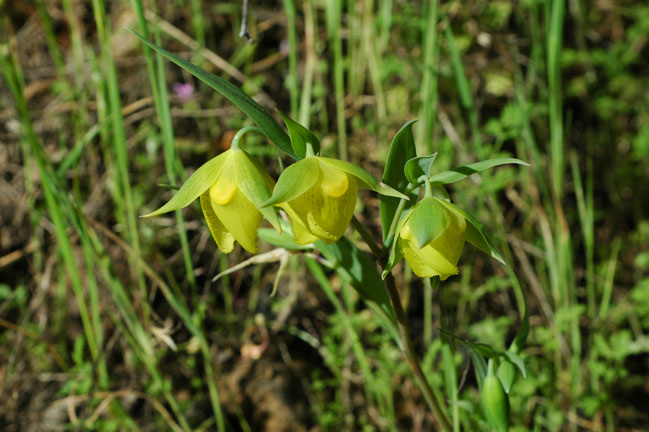
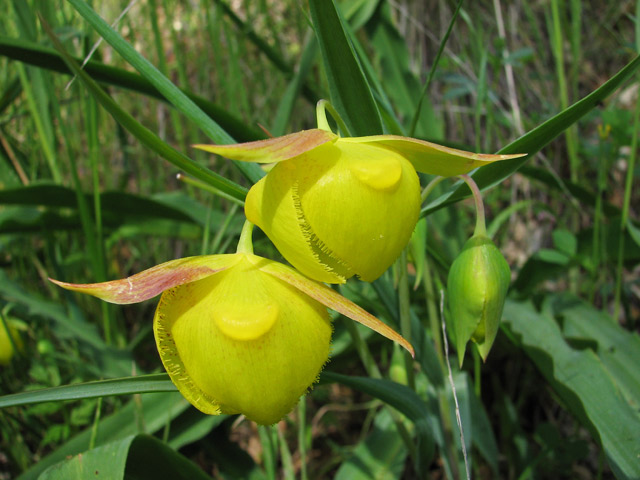
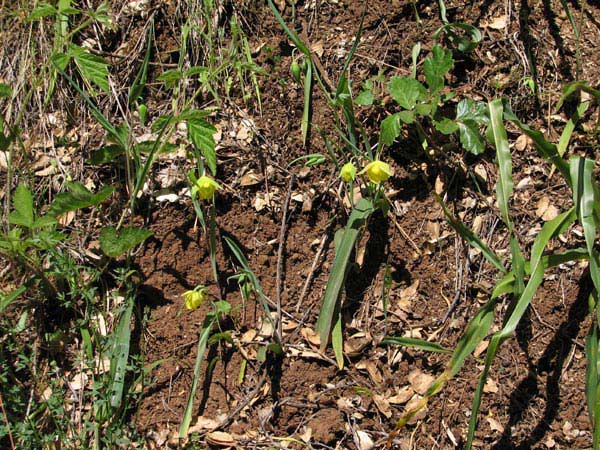
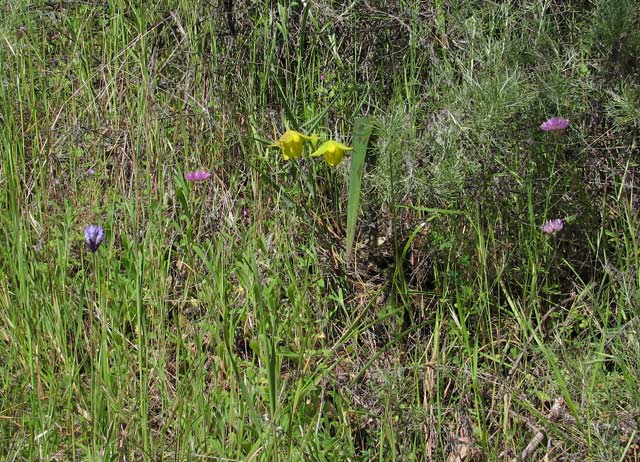
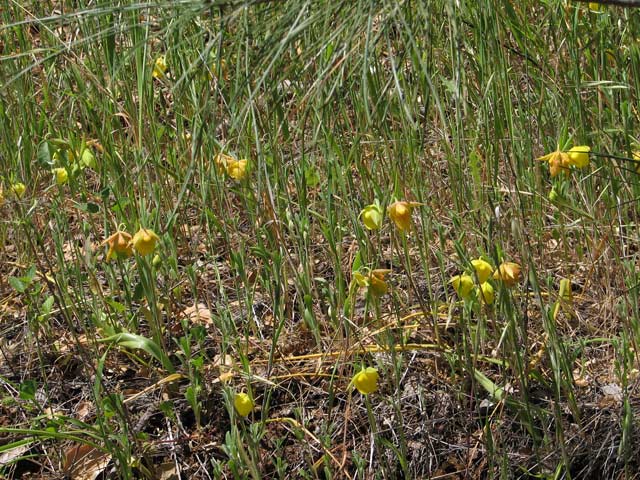
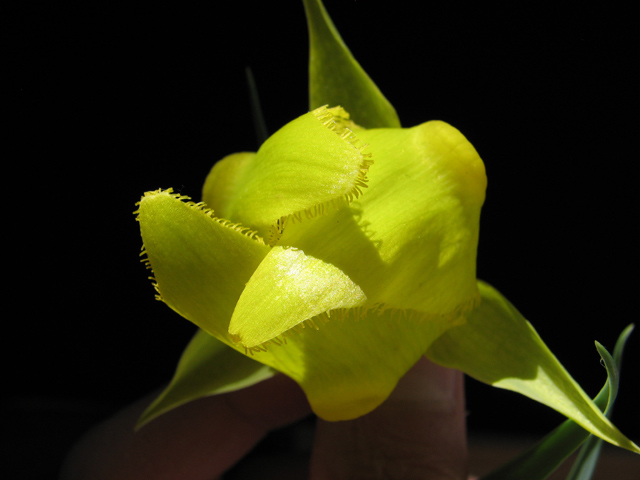
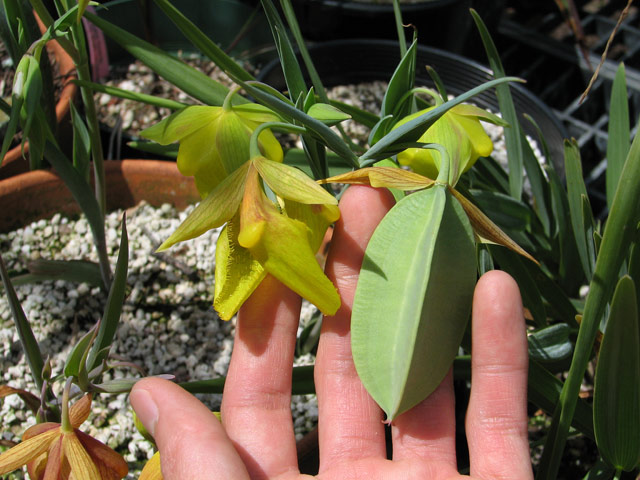
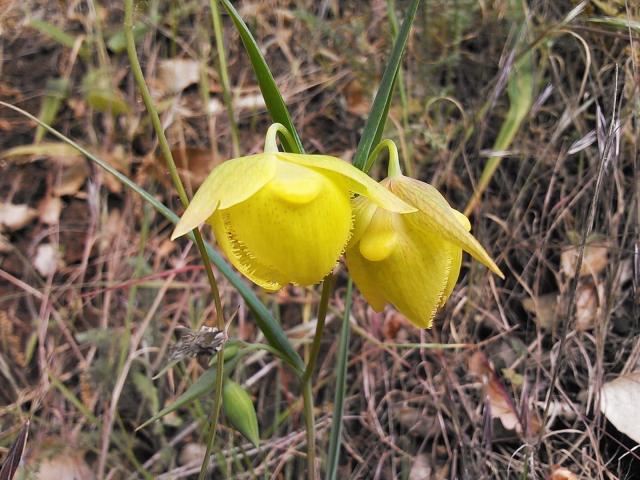
Calochortus pulchellus (Benth.) Alph.Wood is endemic to Mount Diablo near San Francisco. It is a fairy lantern type with yellow globe-shaped flowers. It most closely resembles Calochortus amabilis but the sepals in Calochortus pulchellus have green tinges in them. Calochortus amabilis has pure yellow sepals. The Jepson Herbarium Calochortus key describes the leaves of Calochortus pulchellus as green and those of Calochortus amabilis as more or less glaucous. Height range: 10-30 cm.
Although highly localized, this species can put on a fabulous display if you can find it! Photos 1-2 below by Mary Gerritsen were from some of the hiking trails around Mount Diablo, early May, 2006. Photos 3-6 were taken by Nhu Nguyen. Photos 4-5 shows that the sepals and petals can change color as the flowers age.


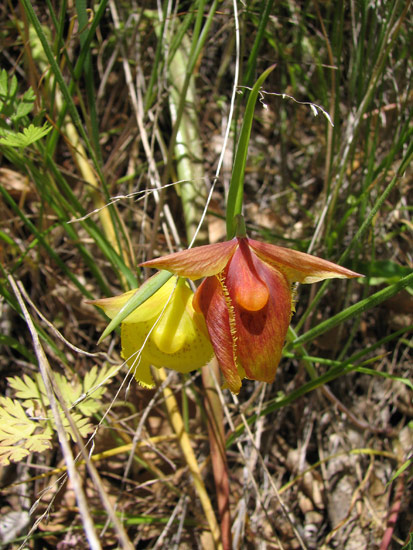
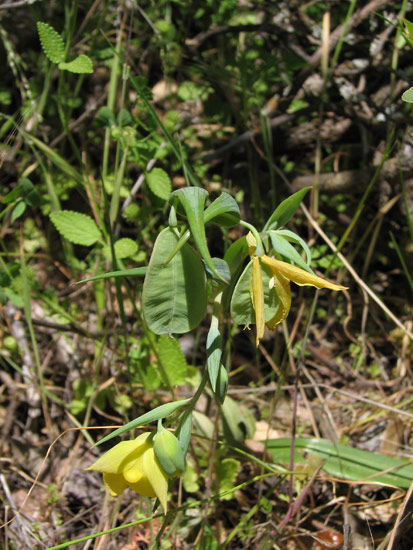
The photos below taken by Nhu Nguyen show how the plants grow in habitat with surrounding vegetation. Photo 3 shows the species with Triteleia laxa and photo 4 shows the species with Dipterostemon capitatus, (syn. Dichelostemma capitatum) and Allium serra.


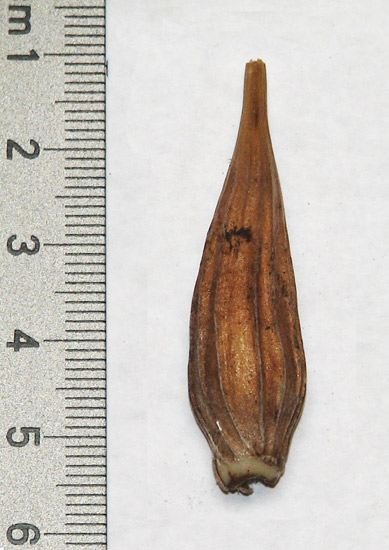
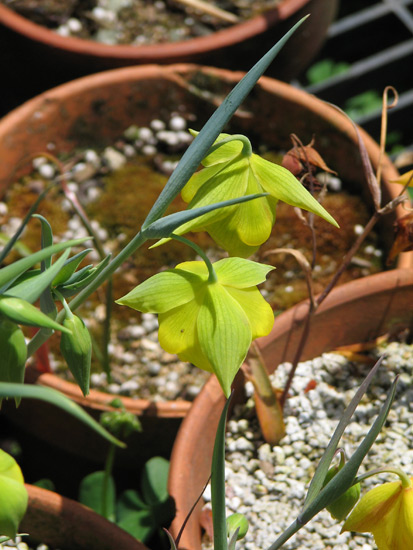
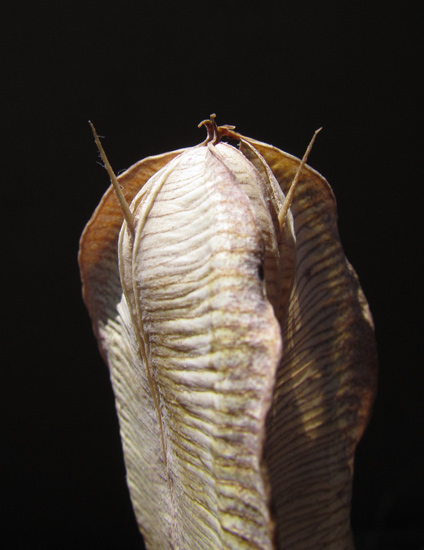
The photos below are of plants in cultivation. Photo #1-6 were taken by Nhu Nguyen showing various aspects of the species. Photo 1 shows the bulb, photo 2 the bud, photo 3 shows the green sepal from above, photo 4 the flower from below, photo 5 shows the fresh fruit, which can be quite large, and photo 6 shows a dried pod with spiky projections that peel away from the locular wall of the pod to release the seeds.

Excerpts and photos from Kipp McMichael's "Calochortus pursuits":
"I am lucky to live in the San Francisco Bay Area, given my interest in Calochortus, as it happens to be the center of diversity for the genus. Just 45 min east of Berkeley is Mount Diablo in Contra Costa County. I went there in mid April to catch Calochortus pulchellus in bloom along the trails in Mt. Diablo State Park. I found a large population spread along a half mile of trailside slopes and ledges with most plants having several flowers each. This was the first example of a Calochortus population that seemed unaware we were in our third and worst year of drought. I would see several more."
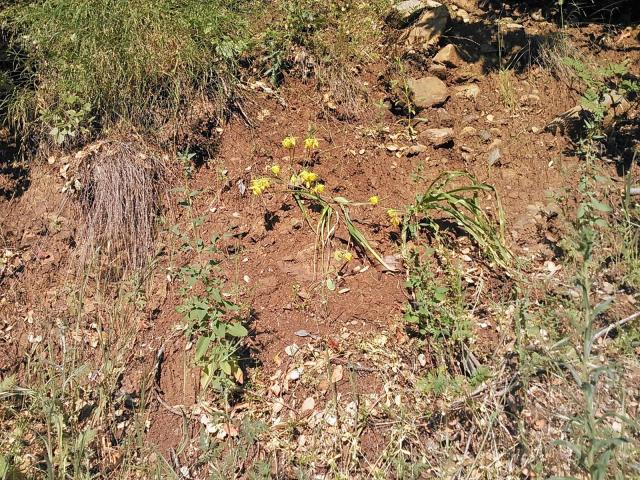
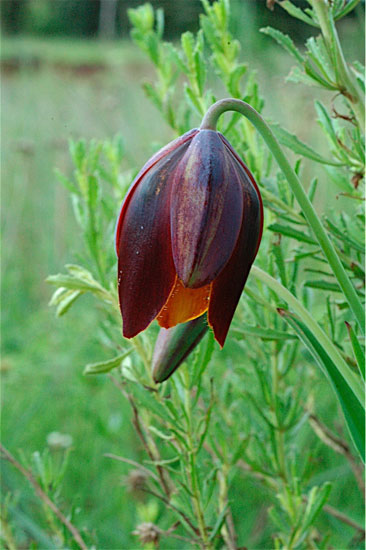
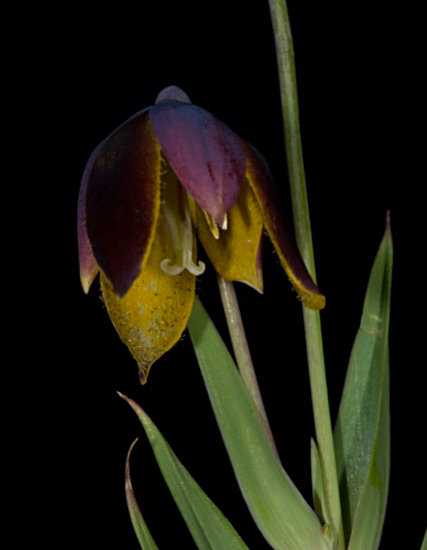
Calochortus purpureus (Kunth) Baker is one of the Mexican Calochortus species, Section Cyclobothra, subsection Purpurei. This species has erect, bulbiferous, glaucous stems that are 20-65 cm and bears two to four nodding, deep, bell-shaped 2.5-3.5 cm flowers. This species grows in meadows and tropical deciduous forests as well as conifer-oak forests in the states of Chihuahua, Durango, Zacatecas, Guanajuato, Jalisco, Mexico, Michoacan, Guerrero, Morelos and Oaxaca at elevations of 1300-2500 m. This species was featured in Mariposa,Volume 4,#2. The plants shown here are from Michoacan, Municipality de Morelia, San Miguel del Monte 2300 m and were photographed in September of 2007. Photos by Mary Gerritsen
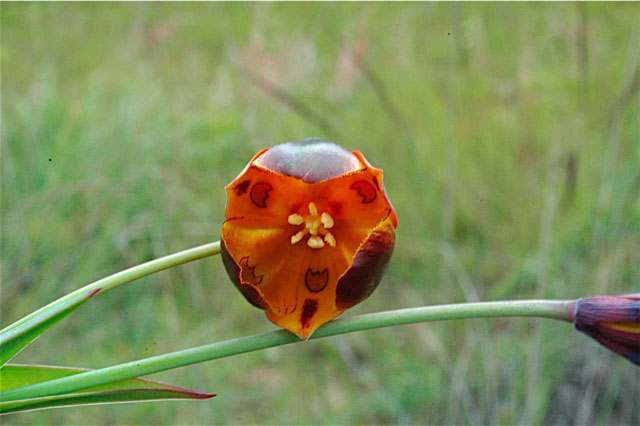
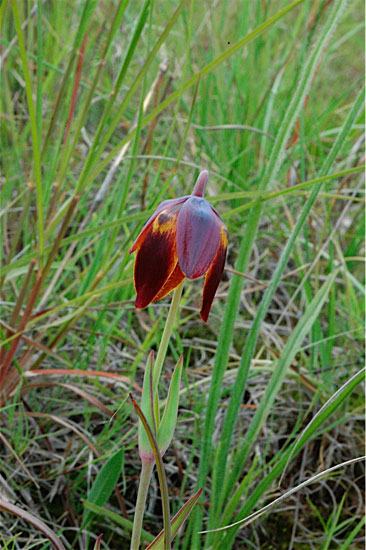
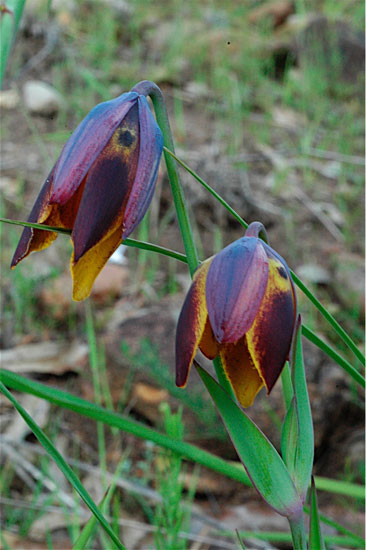
The closeup in the first photo is taken from a plant collected near Santo Tomas de los Platanos, Mexico State in September, 2007. Photo by Dennis Szeszko. The next two photos were taken by Dale Denham-Logsdon in early September from El Divisidero which is just north of Ixtapan de la Sal, Estado de Mexico. Plants were growing in a road cut beneath a power line in rocky soil at an altitude of about 1825 meters.


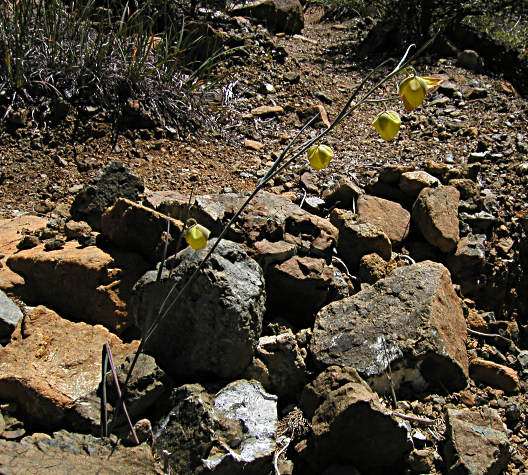
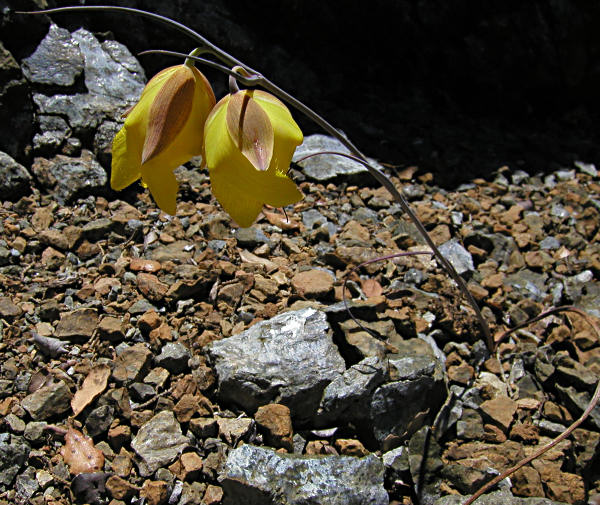
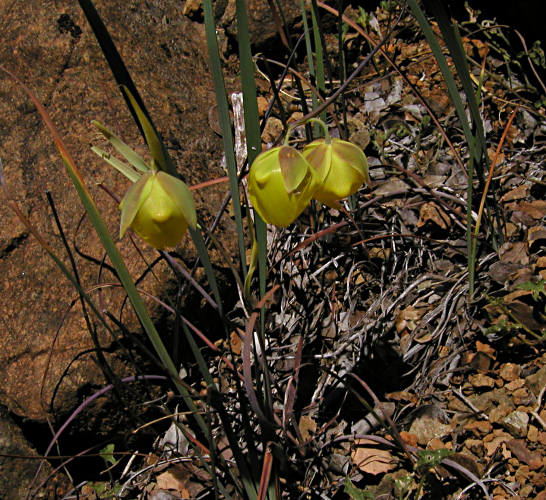
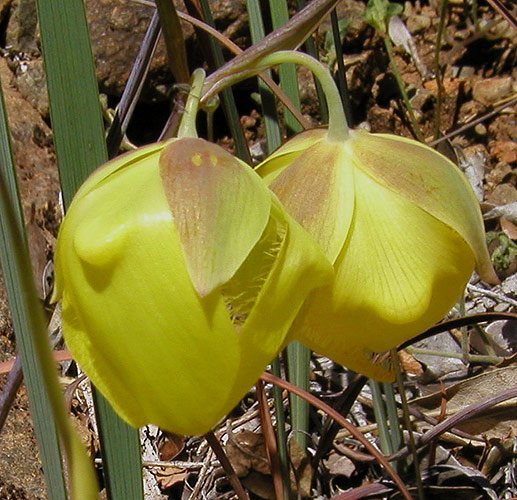
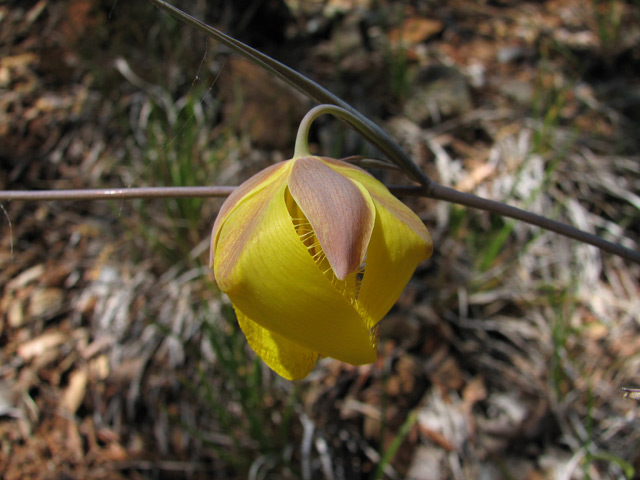
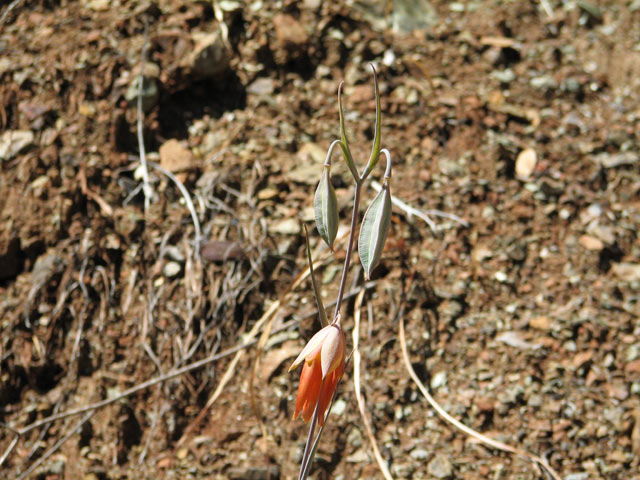
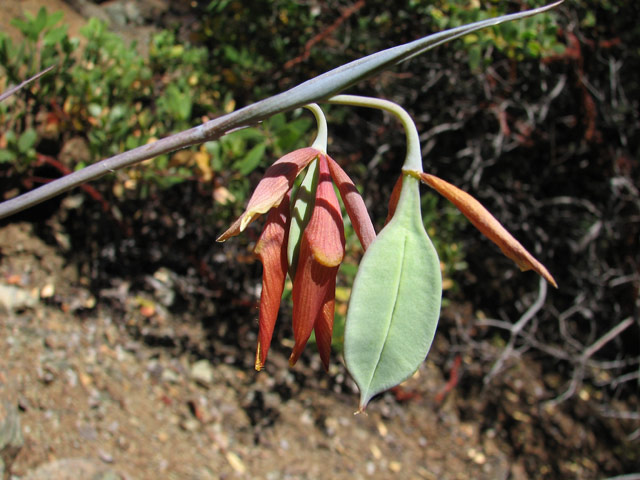
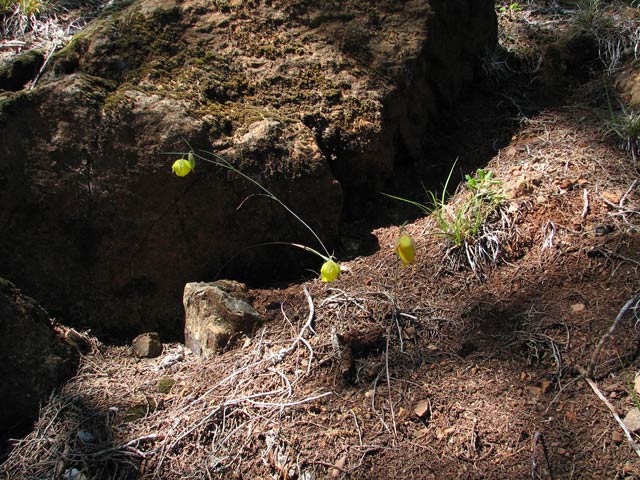
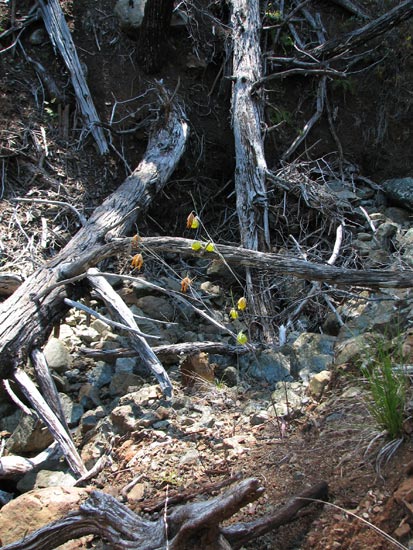
Calochortus raichei Farwig & V.Girard is a rare species endemic to a small rugged area in Sonoma County called The Cedars because of the surrounding trees, which are not true cedars but Sargent cypress, Cupressus sargentii. Much of this area has serpentine soils and this species grows in these soils in mostly dappled or full sunlight. This species has pale green to reddish brown sepals that are shorter than the pale yellow petals. They are slightly overlapped and closed at the tip. There are long tapering hairs in the nectary zone. It grows 2 to 100 cm and flowers late spring to summer, June to August. In color and form of the sepals it differs from Calochortus amabilis and Calochortus pulchellus which are also part of subsection Pulchelli of section Calochortus (commonly called the globe tulips or fairy lanterns). Cultivation of this species outside of habitat has not been very successful, even to experienced Calochortus growers.
The photos below were taken by Bob Rutemoeller on June 17, 2006, at The Cedars showing this species in habitat and finally a close-up of the flowers.
The photos below were taken by Nhu Nguyen of a population near The Cedars. Photos 2-3 show the seed pods.

Calochortus species a-b - Calochortus species c-d - Calochortus species e-lo - Calochortus species lu-n - Calochortus species s - Calochortus species t-u - Calochortus species v-z - Calochortus hybrids - Calochortus index