Calochortus is a genus in the Liliaceae family with species distributed in western North America, Mexico, and south to Guatemala. The greatest concentration of species is found in California. Three good sources of information are Frank Callahan, The Genus Calochortus, in McGary, 2001 found listed in References, Calochortus, Gerritsen and Parsons, 2007 found listed in References, and Mariposa, the newsletter of the Calochortus Society, a quarterly issued between 1989 and 2005. Calochortus species starting with lu and ending with n are found on this page.
Calochortus species a-b - Calochortus species c-d - Calochortus species e-lo - Calochortus species o-r - Calochortus species s - Calochortus species t-u - Calochortus species v-z - Calochortus hybrids - Calochortus index
Calochortus luteus Douglas ex Lindl. - see the Calochortus luteus page.
Representative photos of this species. Photos 1-2 were from Mary Sue Ittner, photos 3-4 were from Mary Gerritsen, photo 5 was from Nhu Nguyen and photo 6 was from Bob Rutemoeller.
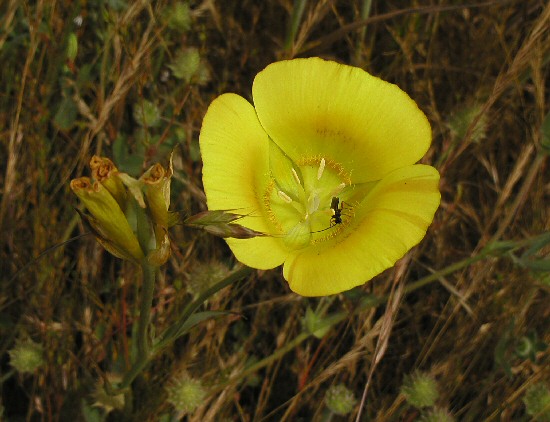

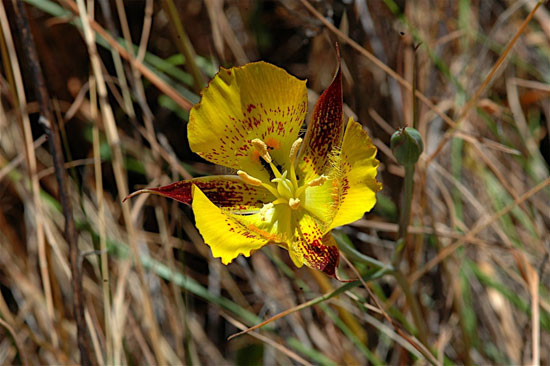

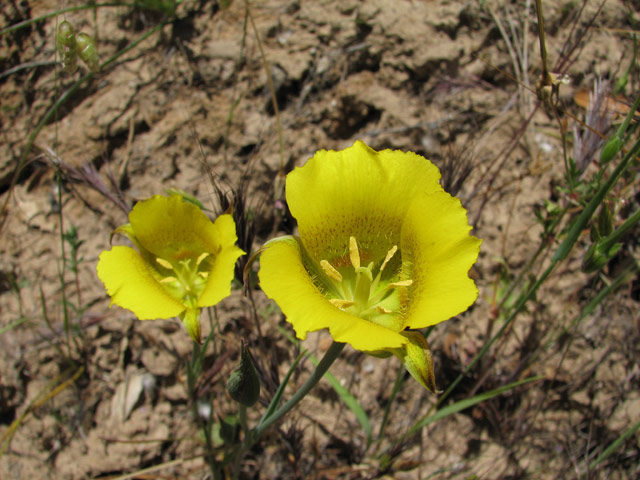
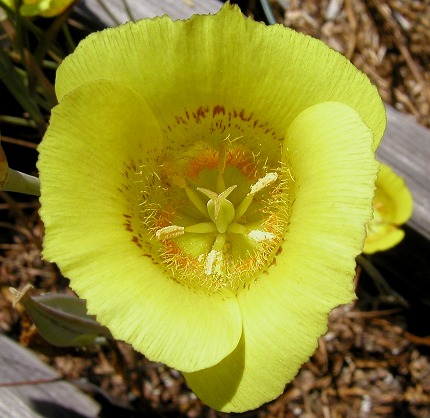
Calochortus lyallii Baker ranges from southern British Columbia, Canada, to Washington state, United States and is a rain shadow species growing in sagebrush habitats at 3330 to 8330' (1000 to 2500 m). It has triangular lanceolate long clawed petals and small flowers and is a member of subsection Nitidi. Photos from iNaturalist were taken by Peter Zika in Okanogan County, Washington June 2021 and shared under a CC BY-NC license. Photo by Richard Haard of a colony of many plants growing to 6 to 12 inches. The last photo by Richard Haard is of a colony of many plants growing to 6 to 12 inches.
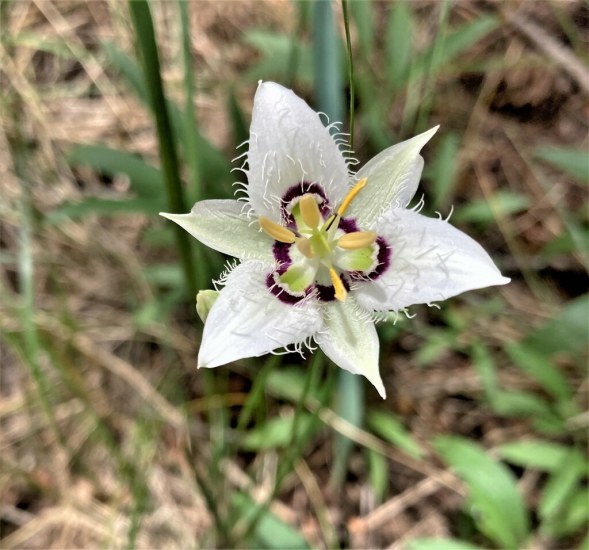
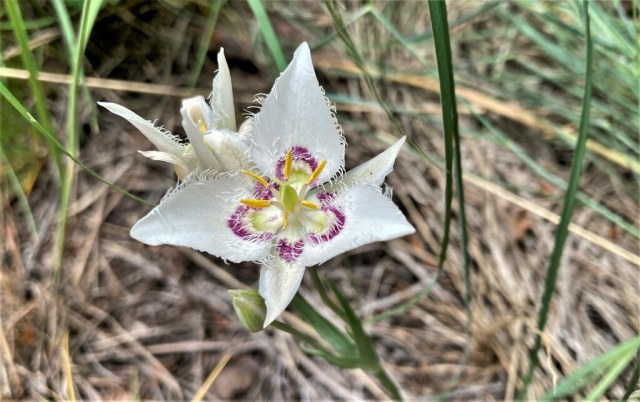
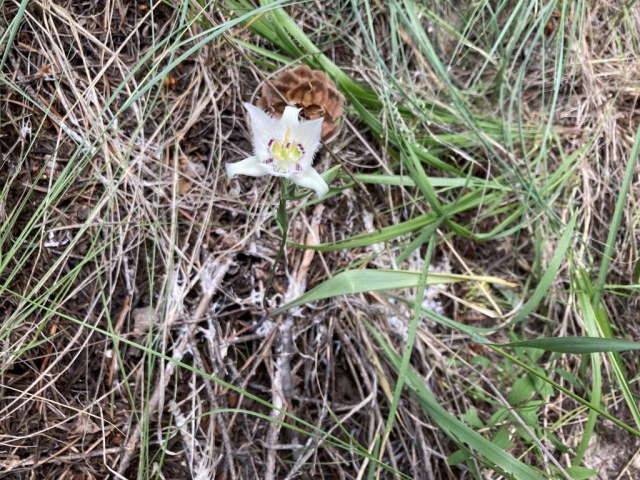
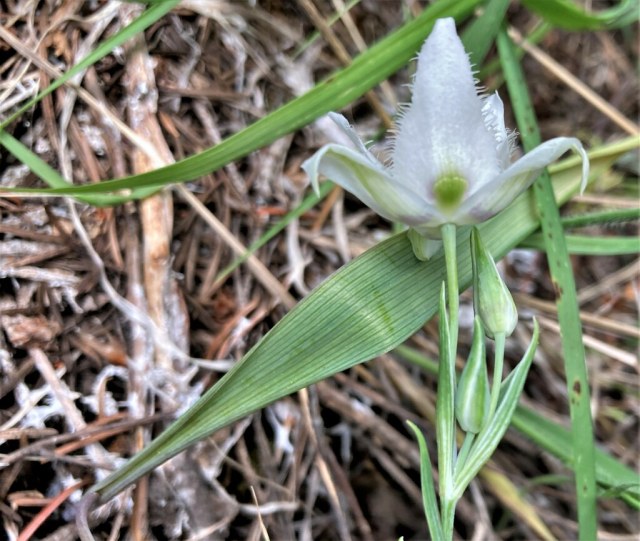
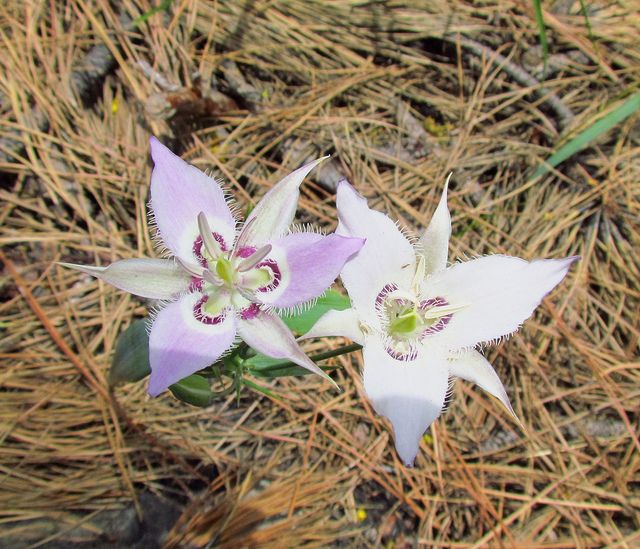
Calochortus macrocarpus Douglas is the sole member of the section Mariposa, subsection Macrocarpi. The flowers characteristically have sepals that exceed the petals, a triangular nectary with branched processes, and bulbs with membranous tunics. Also known as the "Sagebrush Mariposa Tulip, or Green-Band Mariposa Tulip Calochortus macrocarpus is one of the largest flowered Calochortus species, in addition to the honor of being one of the most widespread species. It is found in southern British Columbia, east to Idaho, Montana, and south through Washington, Idaho, and northeast California. There is also a disjunct population in Elko County Nevada. The plants are found in full sun in open prairie, high desert (usually around sagebrush), pine forests, and high montane forests. It is often found in volcanic, ultramafic or sandy soils at elevations from 330-2700 m. Height range: 20-50 cm. This species was featured in Mariposa,Volume 2,#4.
The Calochortus Society pointed out that this species is at home in the brutal climate in and around the Great Basin, where it tolerates winter lows down to -30 °F (-34 °C) with little snow cover, and dry summers with highs of about 110 °F (43 °C). It would typically get about 15 inches (38 cm) of precipitation per year. Bulbs from this climate generally grow in a short season from late winter to early summer. Growers with mild wet winters will need to protect the plants, perhaps by growing them in pure sand or covering them to block most of the rain. The bulbs need to stay cold and dry for the first part of winter. The Calochortus Society recommended starting seeds in late fall by cold-stratifying them for 6-8 weeks, so they will germinate in mid-winter to early spring. The recommendation was to give them an inch (2.5 cm) of water per week until seedlings are an inch tall, and then an inch of water every two weeks. Dry summers are essential.
The first three photos below were taken by Mary Gerritsen from a population on the eastern flanks of the Cascades, Washington, July 2007. The last photo from Robert Parks taken in 2020 where it was growing on the top of a dry mid-elevation ridge in the Warner Mountains (far NE corner of California), open sage brush with some Mtn Mahogany, lightly burned last year.

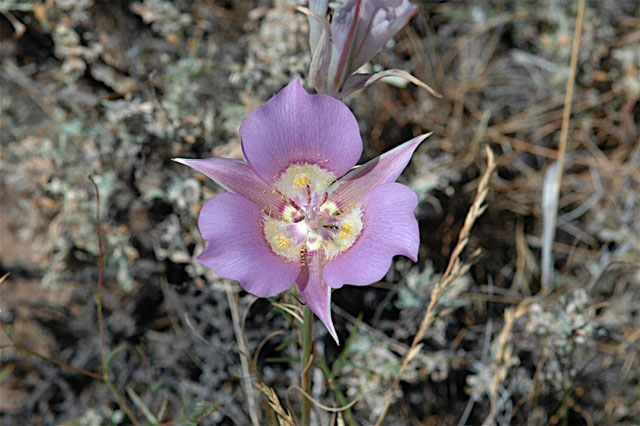
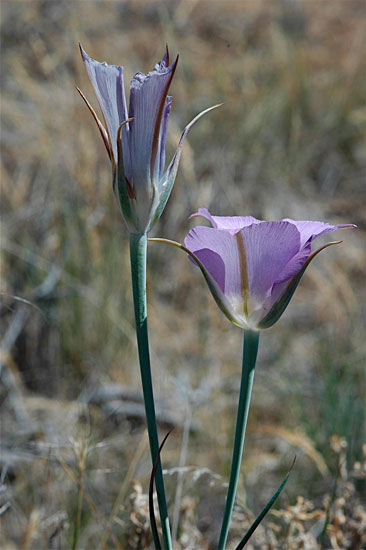
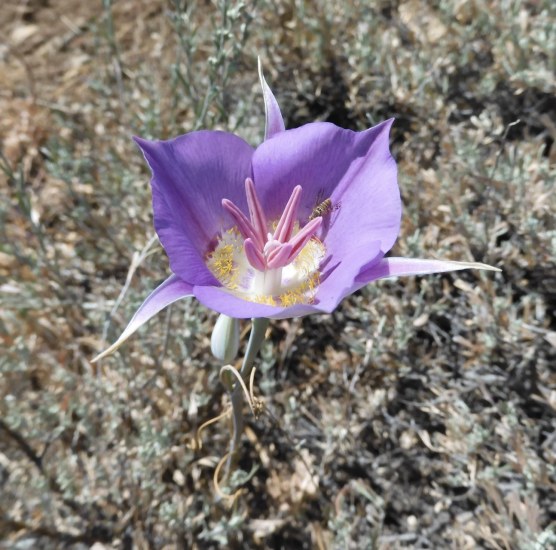
Calochortus macrocarpus var. maculosus (A.Nelson & J.F.Macbr.) A.Nelson & J.F.Macbr. is generally white, with greenish sepals shorter than the nominate race and typically found in hot dry canyons in Idaho and northeast Oregon. This variety was featured in Mariposa,Volume 6,#3. Photos from Mary Gerritsen. The first photo shows a population just east of Lewiston Idaho July 2007.
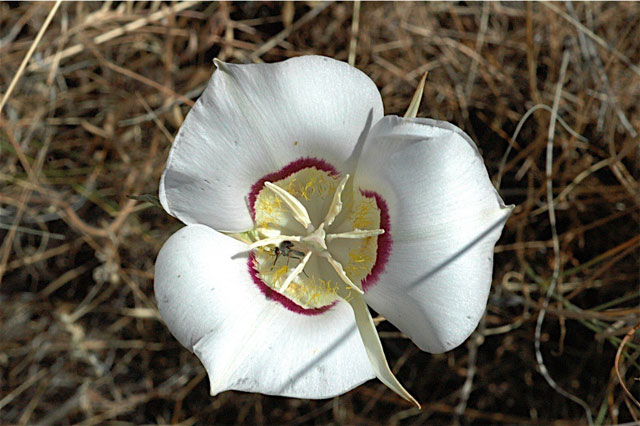
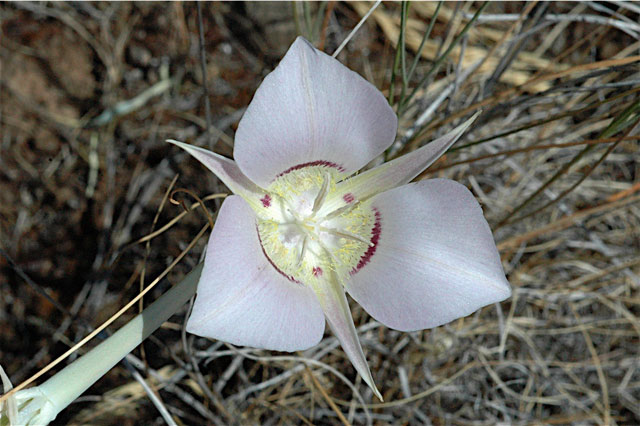
Calochortus mendozae Espejo, López-Ferr. & Ceja is the most recently described Mexican species (2005). Thus far it has only been found in a very limited area near the municipality of San Nicolas Tolentina in the state of San Luis Potosi. This species is in section Cyclobothra, subsection Ghiesbreghtiani. Height range: 30-60 cm. The first photos from iNaturalist was taken by Miguel A.García-Martínez in México September 2015 and shared under a CC BY-NC license. The second photo was taken by Mary Gerritsen September 2007.
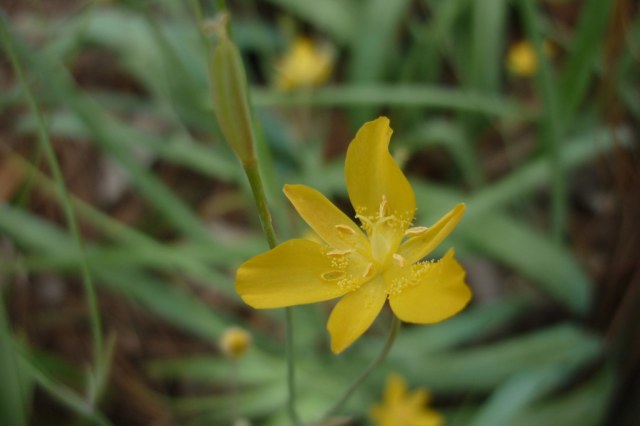

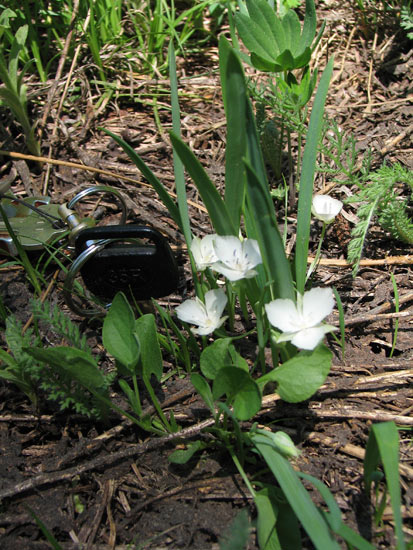
Calochortus minimus Ownbey is a very small subalpine species. It grows in moist open woodlands, meadows and lake edges 1200-3000 m. The species blooms in the summer. This species was featured in Mariposa,Volume 8,#4. Height: 10 cm. The photos below were taken by Nhu Nguyen from Yosemite National Park, CA. Photo 6 shows a plant next to a set of keys for scale.
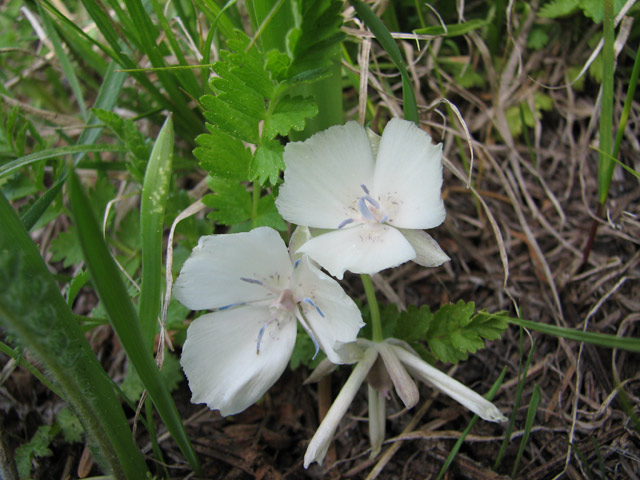
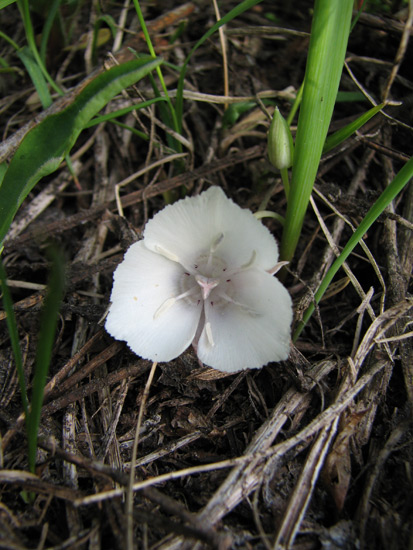
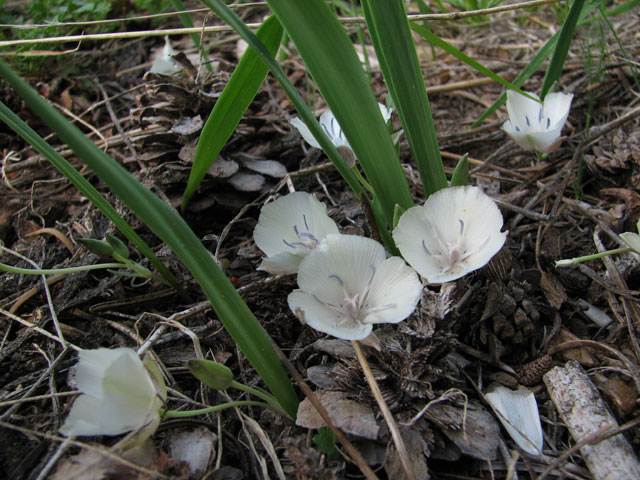
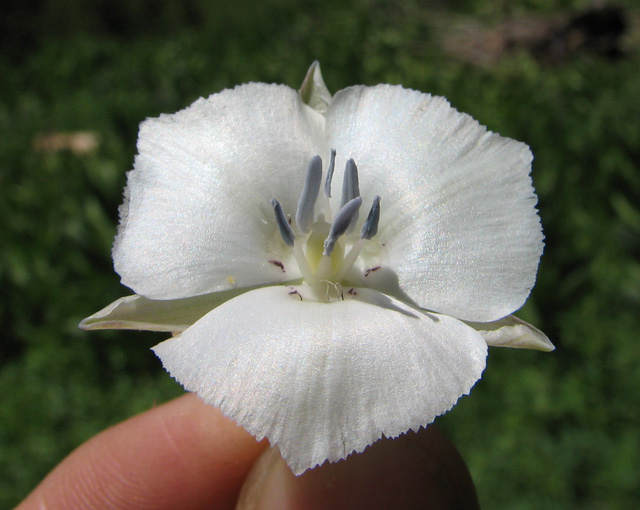
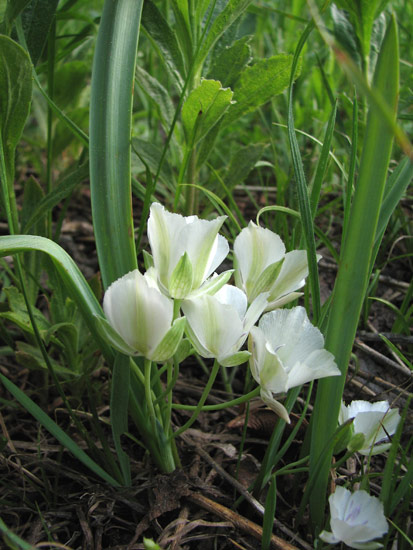
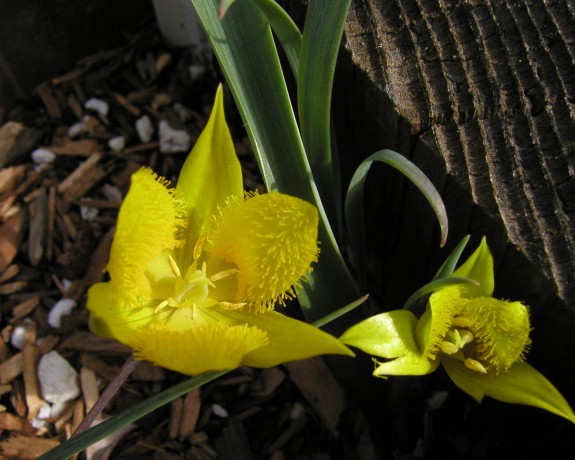
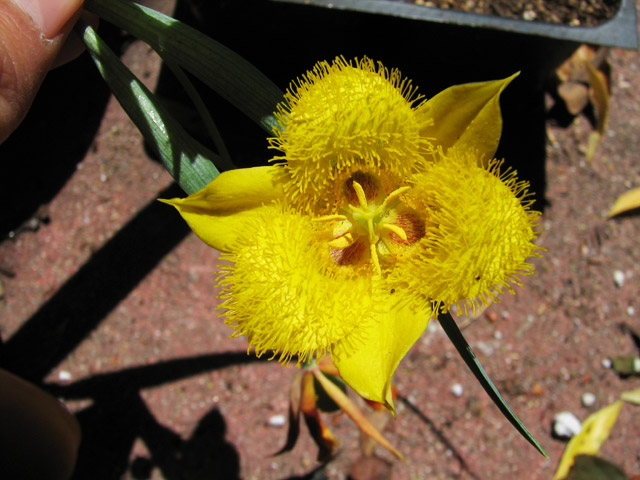
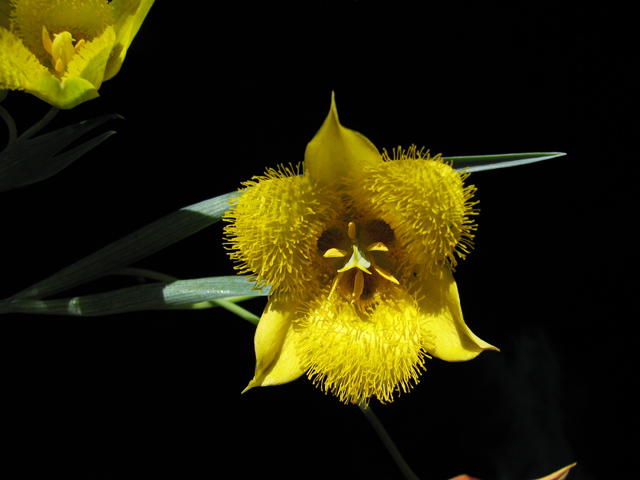
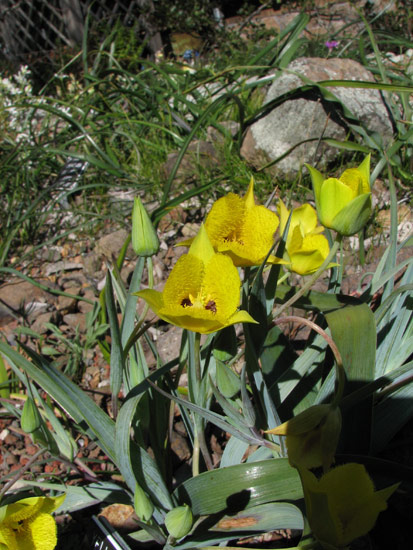
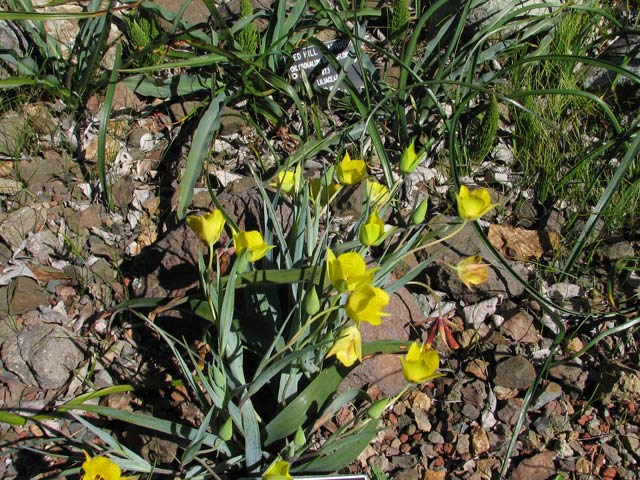
Calochortus monophyllus (Lindl.) Lem. is a woodlands species from the western foothills of the Sierra Nevada. It is a dwarf species and prefers part shade. The flowers are golden yellow, with or without dark red-brown spots and plenty of hairs. This species was featured in Mariposa,Volume 10,#2. Height: 20 cm. Photo 1 was taken by Bob Rutemoeller and the second by Mary Sue Ittner is of wild populations seen in Butte County, California. Photo 3 by Mary Gerritsen is of a wild population in Tuolumne County, CA. Photo 4 was taken by Nhu Nguyen of a wild plant in El Dorado County, CA. The last photo was taken by Richard Haard.
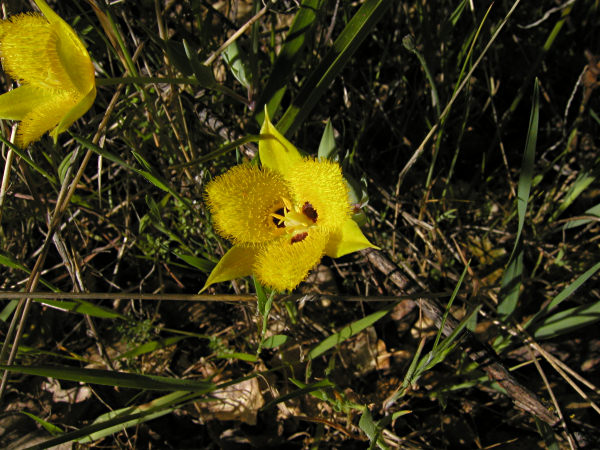
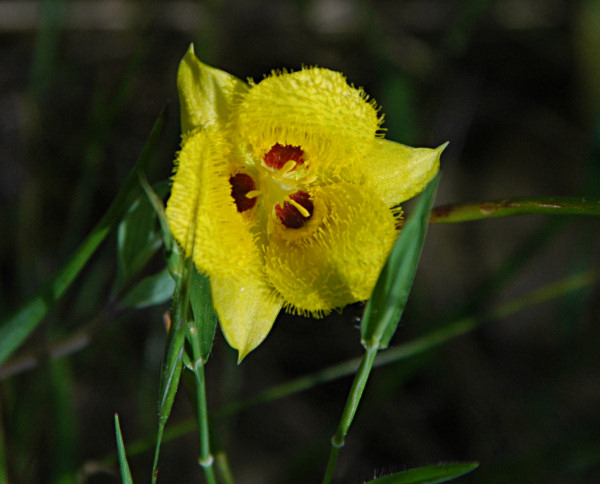
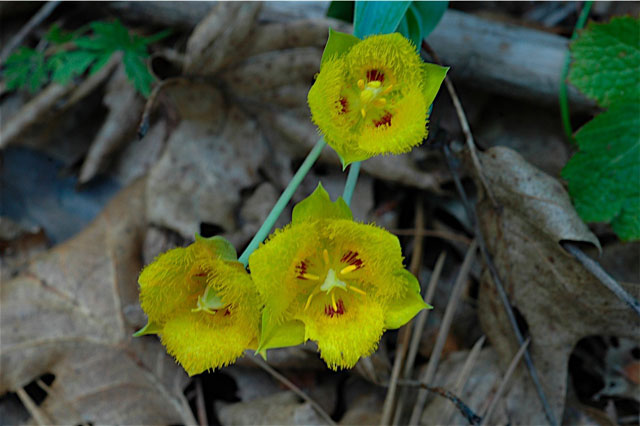
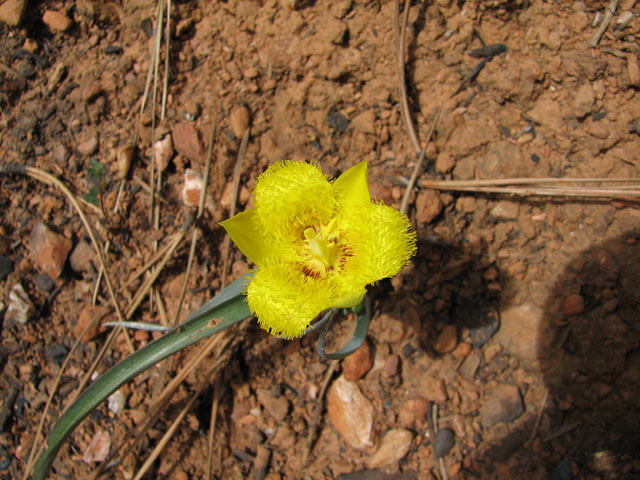
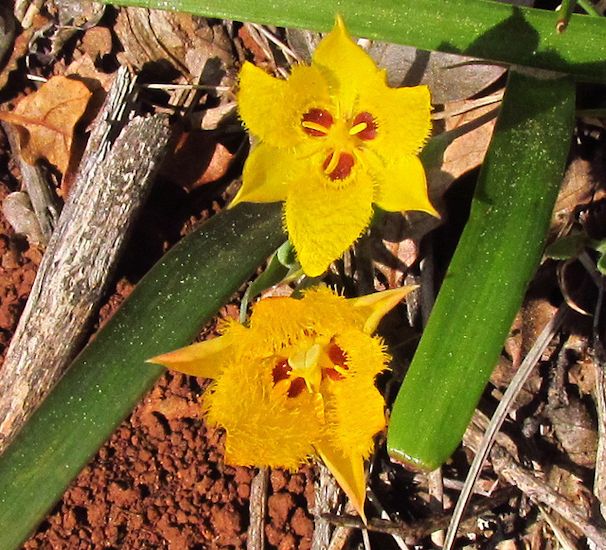
The photos below are of plants in cultivation. Photo 1 was taken by Bob Rutemoeller and photos 2-5 were taken by Nhu Nguyen. Photos 4-5 were taken at the Tilden Botanic Garden.
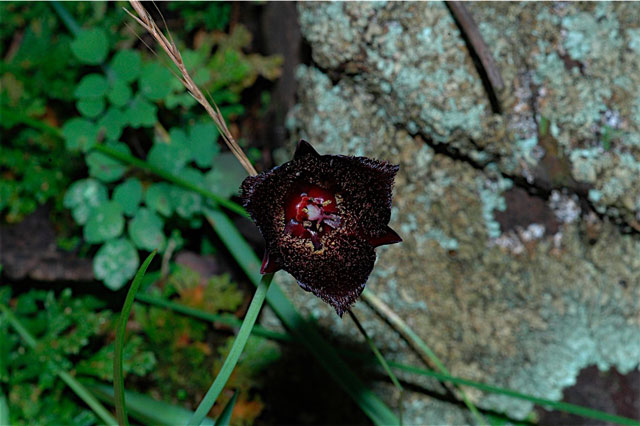
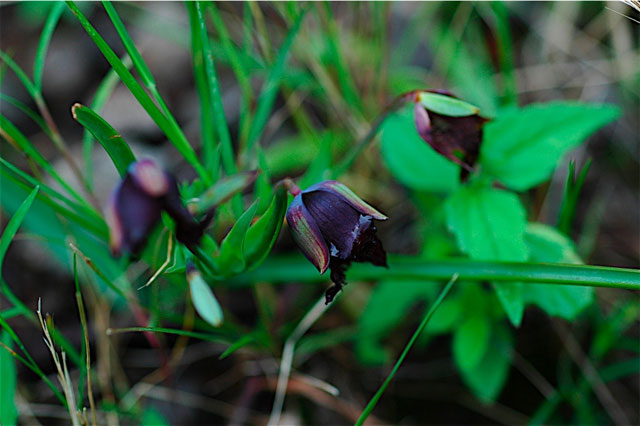
Calochortus nigrescens Ownbey is one of the Mexican species, section Cyclobothra, subsection Barbati. It is also known as the "Black Cyclobothra". This species seems to be quite rare (recently only found in the state of Oaxaca, although it was apparently originally collected in Puebla) and where it does occur, it is either in wetlands surrounded by dry areas or in watercourses. The species is quite diminutive and can be quite difficult to find even in a locality where it is known to occur. This species was featured in Mariposa,Volume 7,#4. Height range: 30-60 cm. Photos by Mary Gerritsen
Calochortus nitidus Douglas is found in low meadows, along creeks, in southeastern Washington and adjacent Idaho. It has large purple flowers with a deep purple crescent on each petal above the gland and some long flexuous hairs. This species was featured in Mariposa,Volume 15,#2. My bulbs were originally purchased from the Robinett Bulb farm and rarely bloomed until I started making sure they had water during their summer dormancy. Height range: 20-40 cm. Photos by Mary Sue Ittner showing the beautiful back and looking down on the flower. I found it a little difficult to photograph.
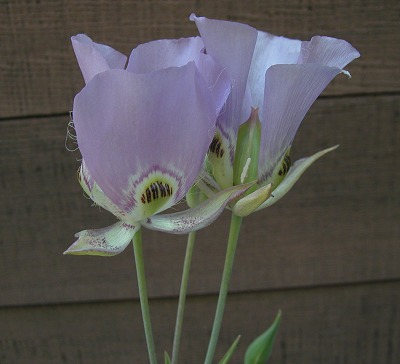

The photos of Calochortus nitidus below were taken at a site south of Moscow, Idaho, July 2007. The photo on the far right gives an idea of the habitat. Photos by Mary Gerritsen
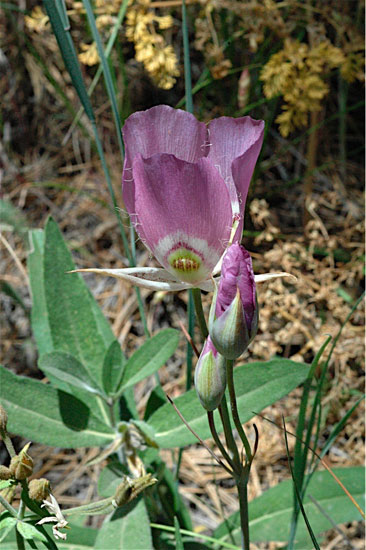
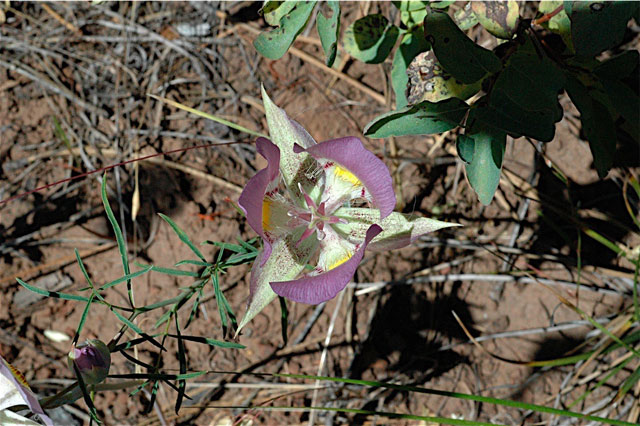
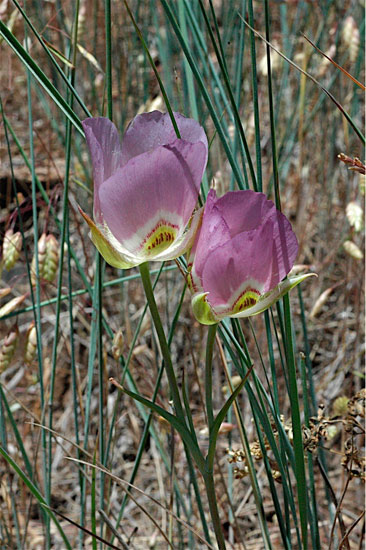
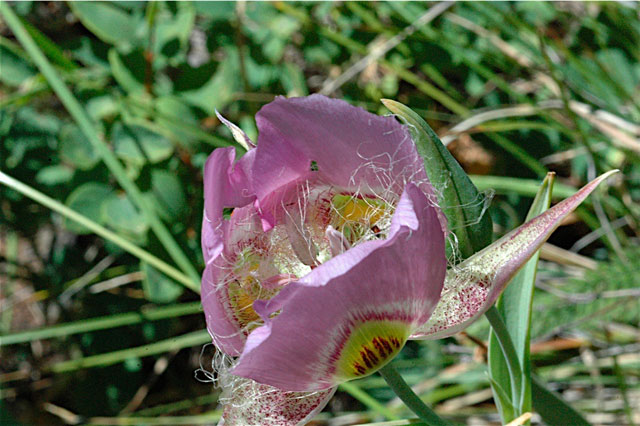
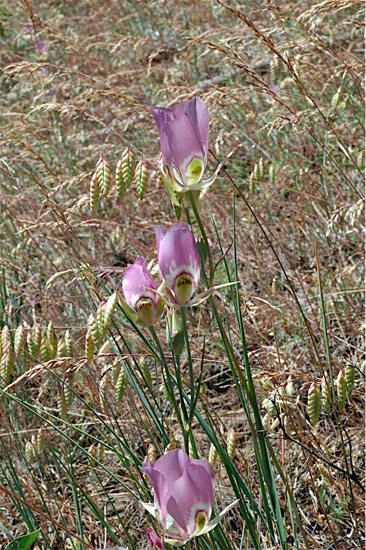
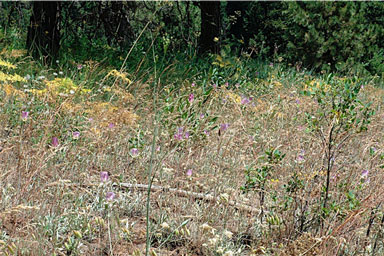
Calochortus nudus S.Watson, commonly known as the "Naked Star Tulip" has a 7-25 cm erect stem usually unbranched, with one to three 15-25 cm flowers (although occasionally as many as six may be found). This species is found in Jackson County Oregon, south to the central Sierra Nevada of California. It is typically found in mountain valleys with vernally moist, grassy meadows, shady conditions, and often near water, elevation 1000-2500 m. Photos by Mary Gerritsen are from a population near Castle Crags State Park, Lassen County, California.
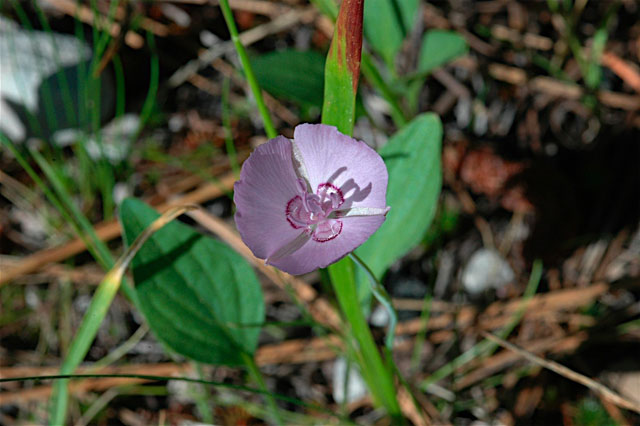
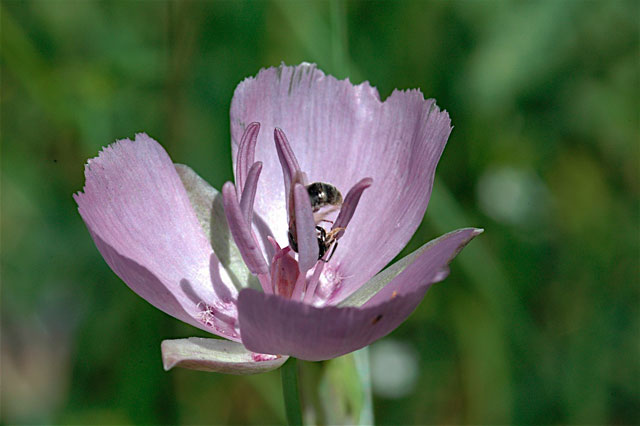
Photos from iNaturalist were taken by passiflora4 in Siskiyou County June 2019 and shared under a CC BY-NC license.
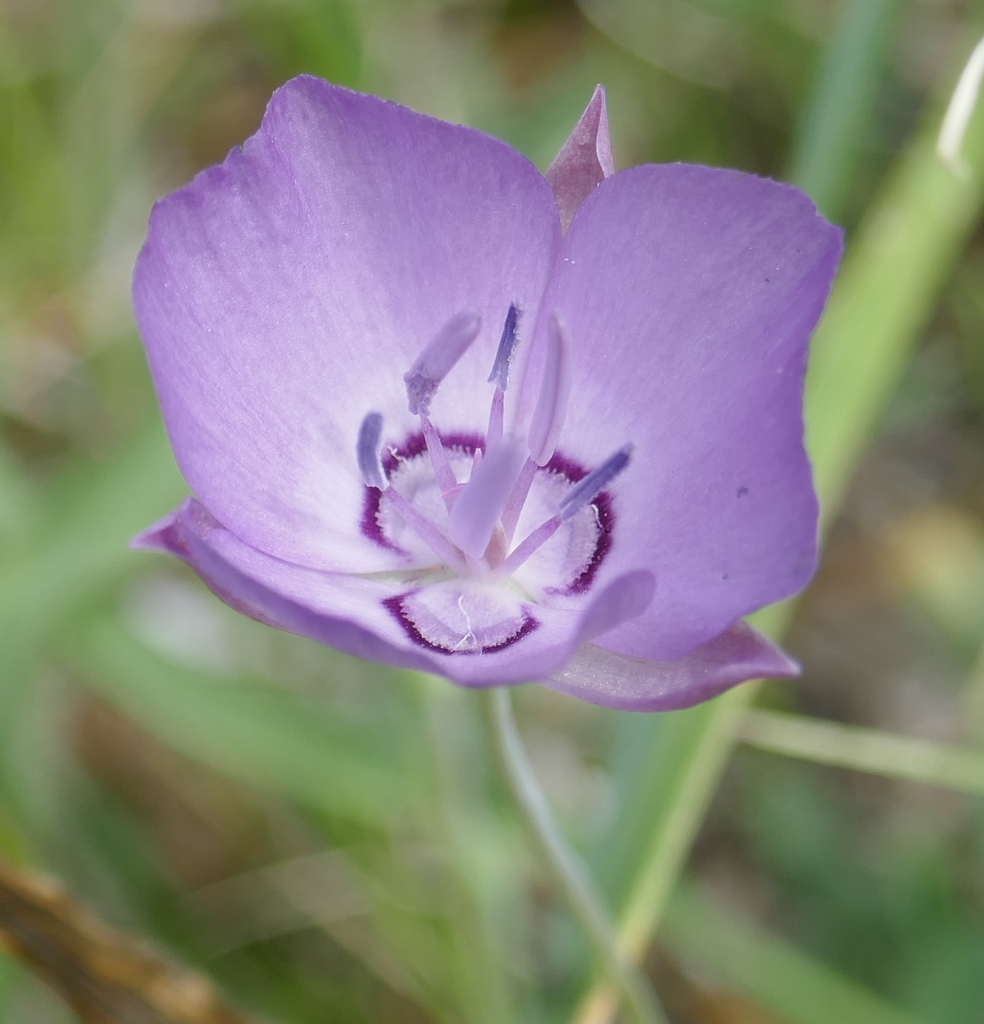
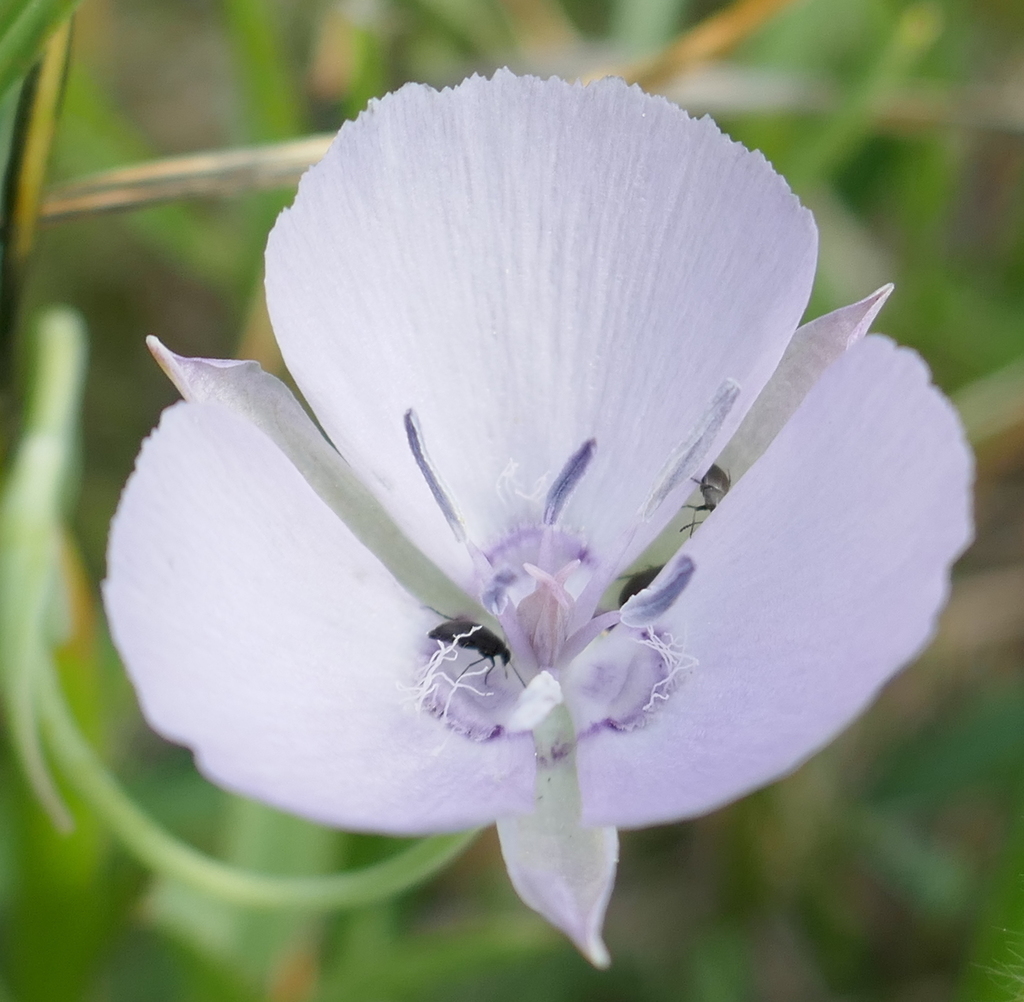
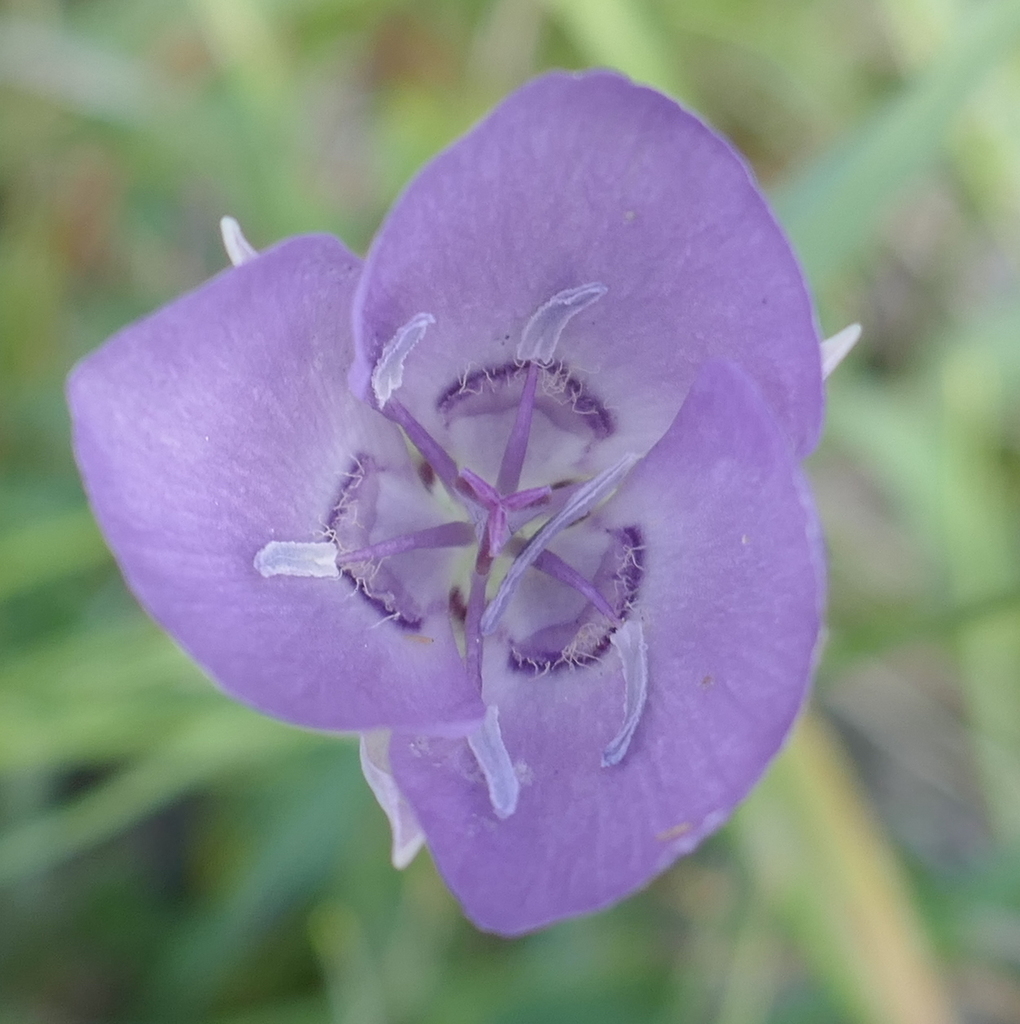
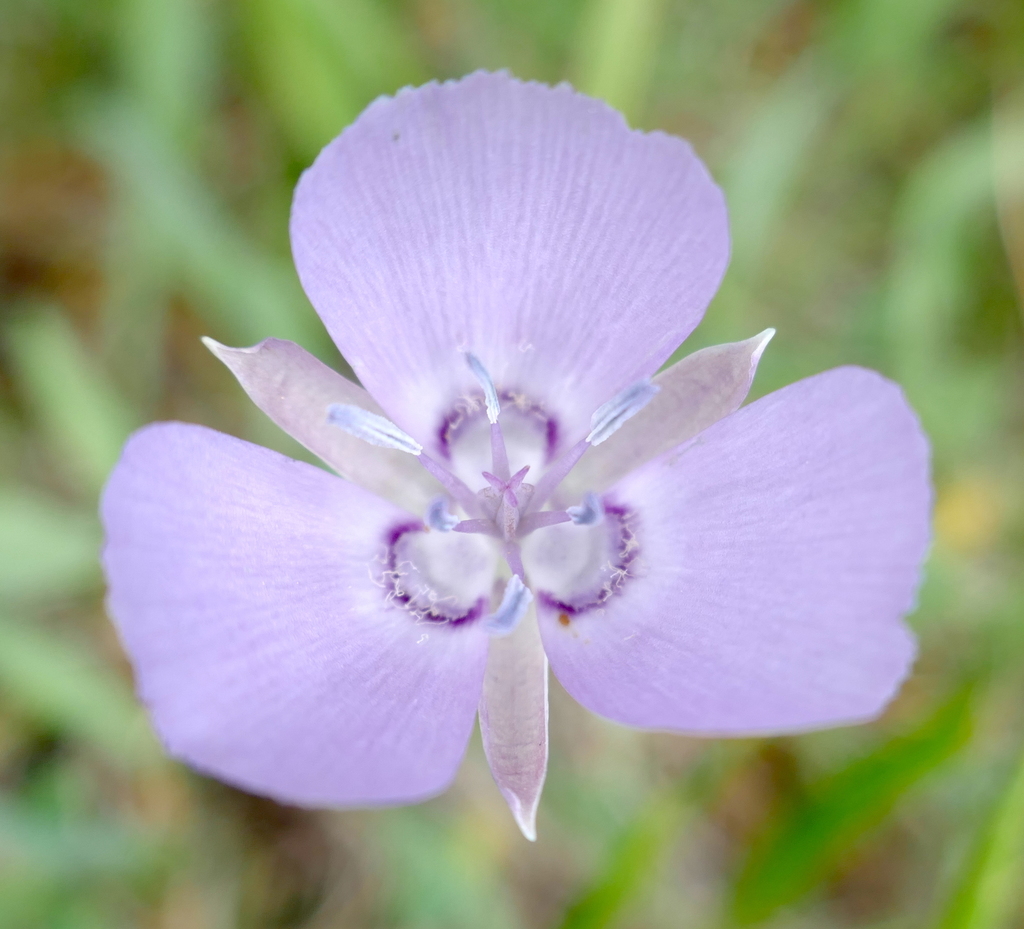
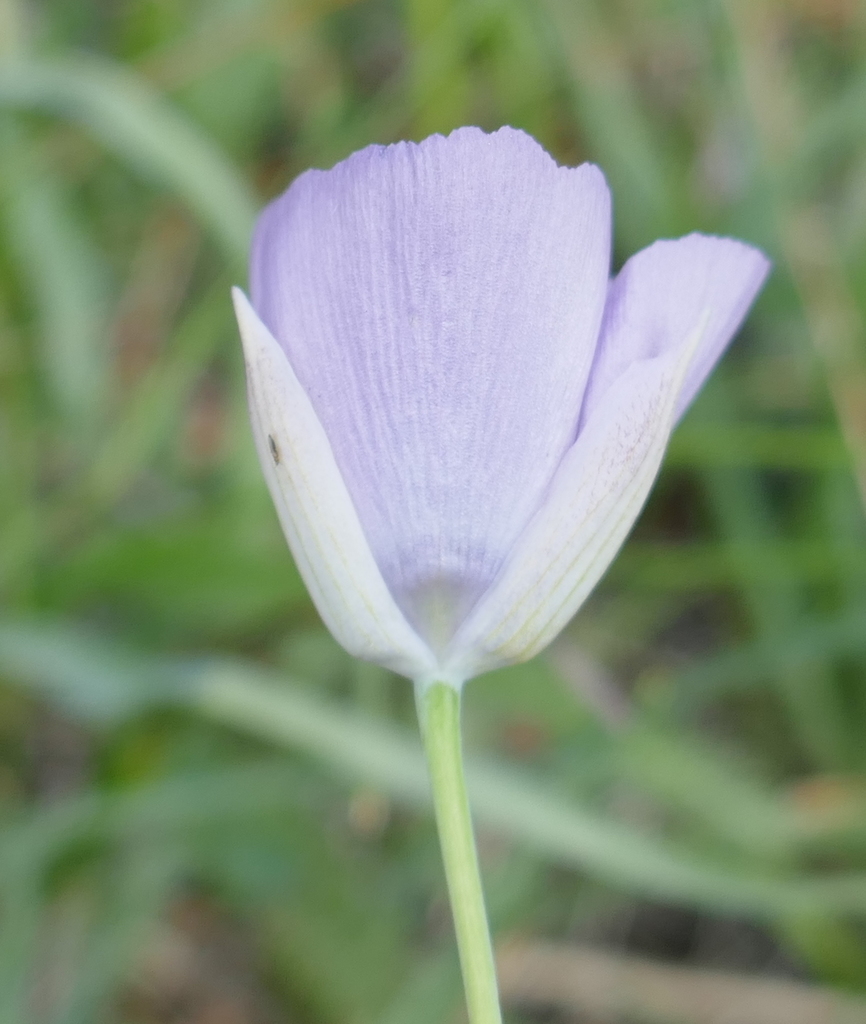
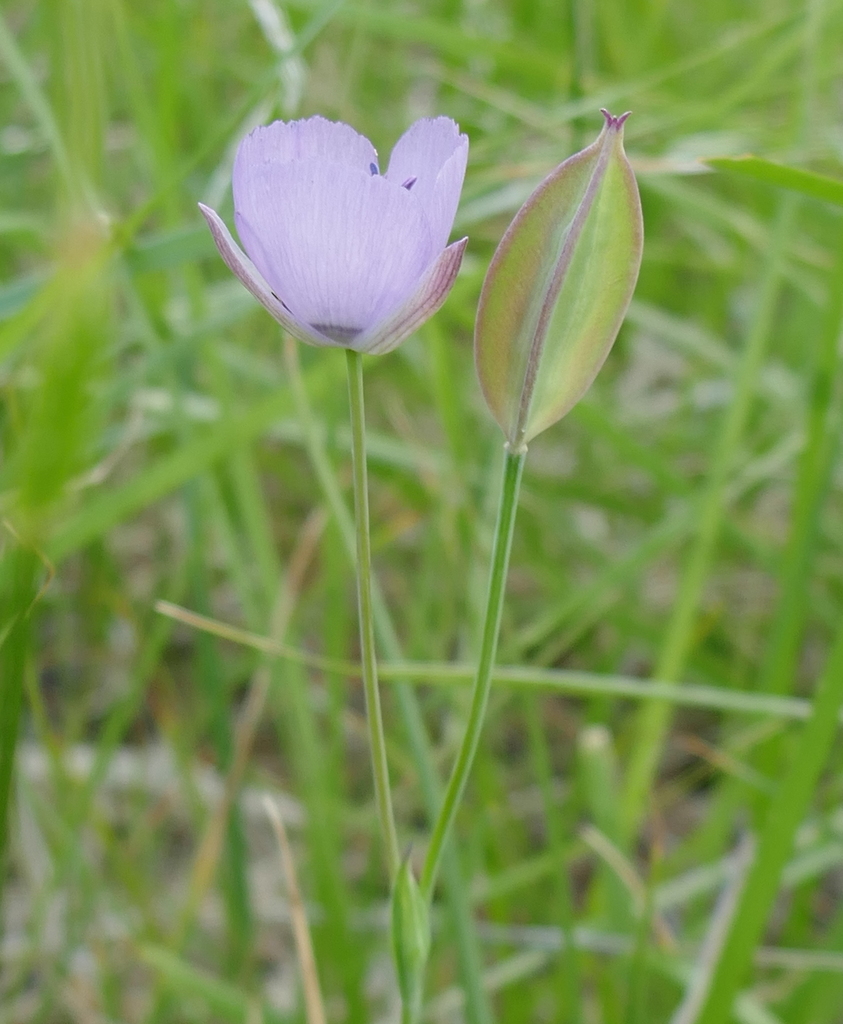
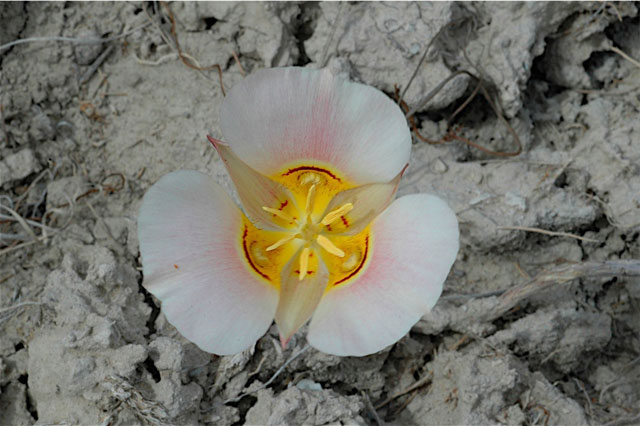
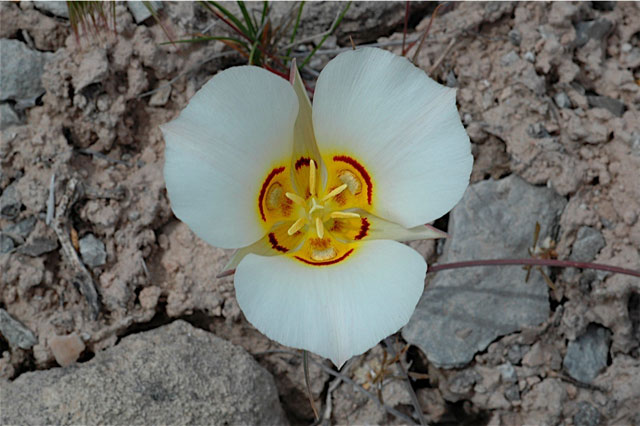
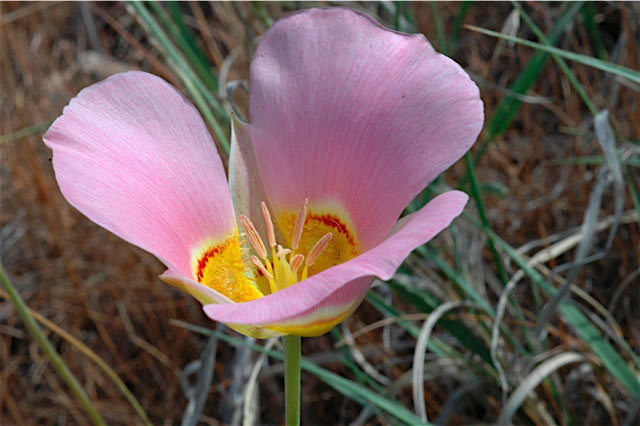
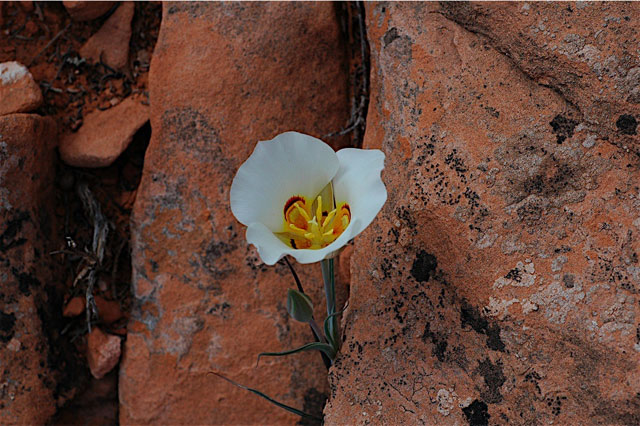
Calochortus nuttallii Torr., also known as the Sego Lily, is the state flower of Utah. In Utah, it is well known as the bulb that the early Mormon settlers dug up and ate, saving them from starvation when food had become very scarce after a crop-devouring plague of crickets (1840-1851). This is a very elegant and widespread species, with erect to somewhat lax stems 10-40 cm bearing one to five open cup shaped flowers. The petals are usually white, but pink, lavender, orange and even plum colored forms have been seen. This species was featured in Mariposa,Volume 6,#4.
Comments from Hugh McDonald of the Calochortus Society: Has a wide range, growing from Nevada to the Dakotas. Seeds from the coldest areas may need stratification, but McDonald reported that it was relatively easy to grow in the San Francisco Bay area. Tolerates some summer water, but is also OK with summer drought. McDonald grew it under the western eaves of his house and watered it once every three weeks. In lowland California, seeds germinate best if kept in a cold part of the yard and gradually acclimated to the sun.
The photos below were taken at various sites in western Colorado (e.g. Colorado National Monument) and nearby areas in eastern Utah (e.g. Arches National Park) in late May, 2007. Photos by Mary Gerritsen


Calochortus species a-b - Calochortus species c-d - Calochortus species e-lo - Calochortus species o-r - Calochortus species s - Calochortus species t-u - Calochortus species v-z - Calochortus hybrids - Calochortus index