Calochortus is a genus in the Liliaceae family with species distributed in western North America, Mexico, and south to Guatemala. The greatest concentration of species is found in California. Three good sources of information are Frank Callahan, The Genus Calochortus, in McGary, 2001 found listed in References, Calochortus, Gerritsen and Parsons, 2007 found listed in References, and Mariposa, the newsletter of the Calochortus Society, a quarterly issued between 1989 and 2005. Calochortus species s are found on this page.
Calochortus hybrids - Calochortus index - Calochortus species a-b - Calochortus species c-d - Calochortus species e-lo - Calochortus species lu-n - Calochortus species o-r - Calochortus species t-u - Calochortus species v-z
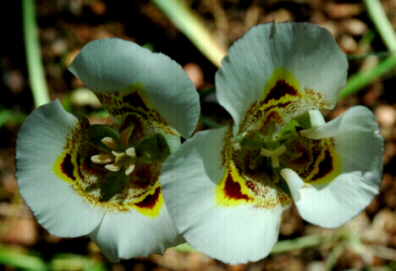
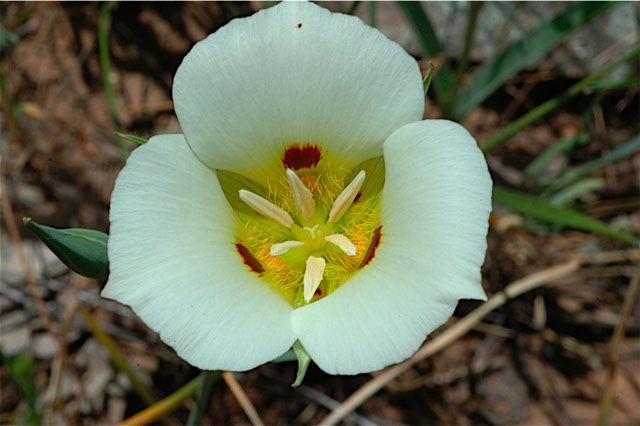
Calochortus simulans (Hoover) Munz is native to the Coast Ranges of San Luis Obispo and Santa Barbara counties, California. It has white petals, often pink on the outside, with the gland surrounded by bright red and a small red spot immediately above it. It grows in hot arid territory where it is frequently found in grassy meadows, but also in chaparral. This species was featured in Mariposa,Volume 15,#3. Height range: 10-60 cm. Photos by Mary Sue Ittner
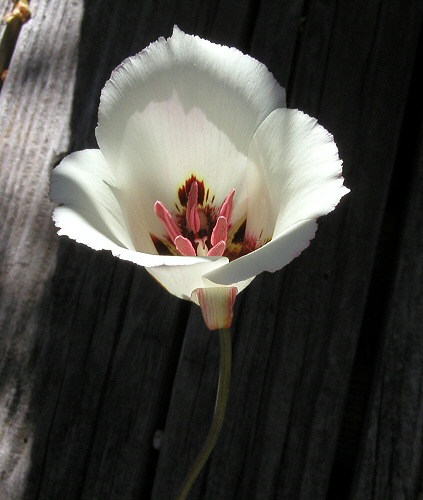
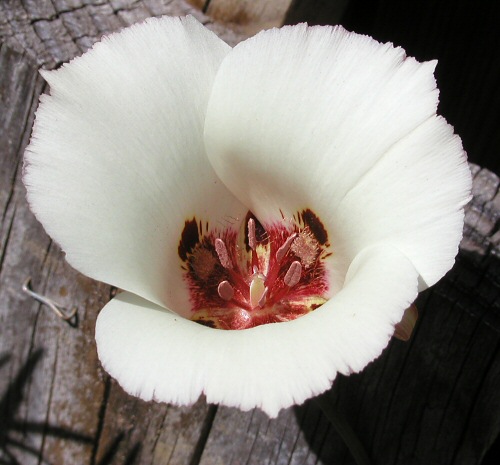
Excerpt and photos from Kipp McMichael's "Calochortus pursuits":
"During the weekender, we had tried and failed to locate Calochortus simulans while we passed through San Luis Obispo county. Armed with better google map planning, I returned on a solo day trip to the Los Padres Natl Forest east of Arroyo Grande. There I found a few colonies in the peak of their bloom."

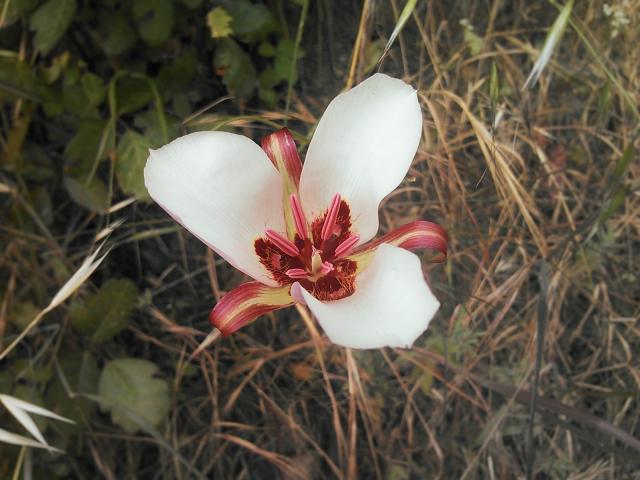
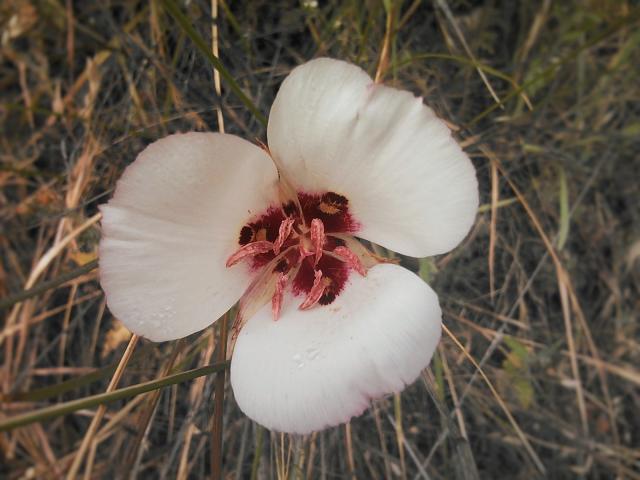
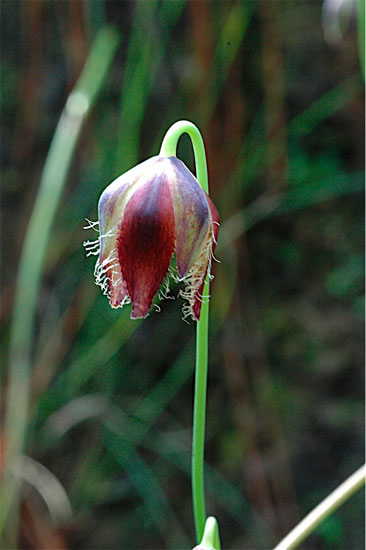
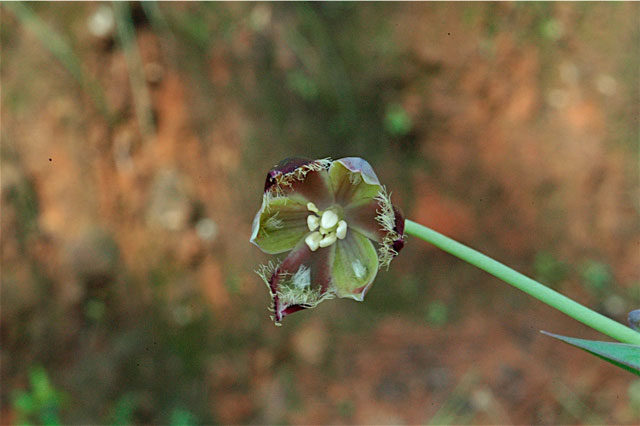
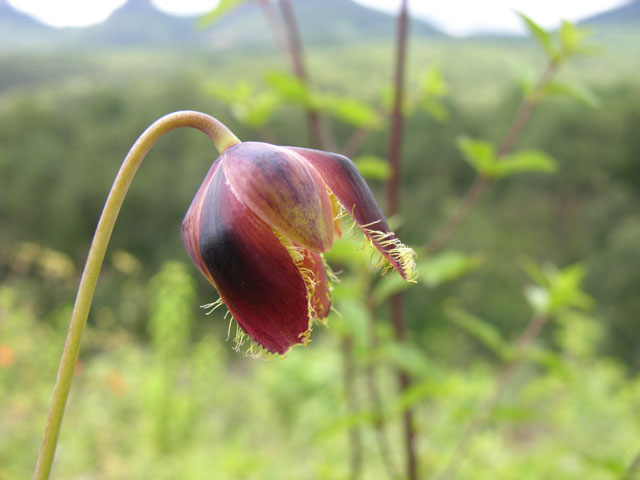
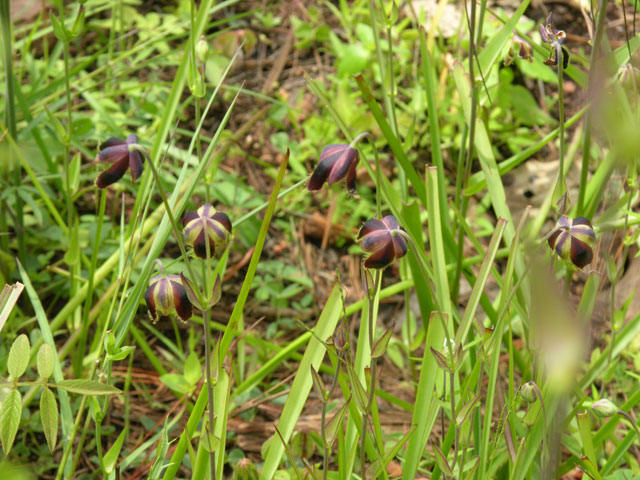
Calochortus spatulatus S.Watson is one of the Mexican species, section Cyclobothra, subsection Purpurei. It is commonly known as "Campanita" (little bell). The name refers to the petals which are often spatula shaped when flattened, and in profile, have a spoon like shape. This species has glaucous stems that are 30-75 cm tall and carry two to four nodding, deep, bell shaped 2-2.5 cm flowers. It has quite a wide range, found as north as Chihuahua and south to Guerrero and Oaxaca (elevations 1200-2200 m). It is usually found in open subtropical woodlands and can be quite abundant where found. This species was featured in Mariposa,Volume 8,#1. The photos by Mary Gerritsen shown here are from Temascaltepec, Mexico State, and were taken in September, 2007.
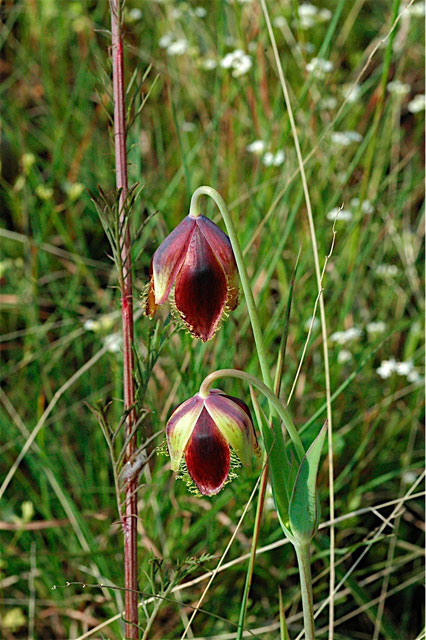
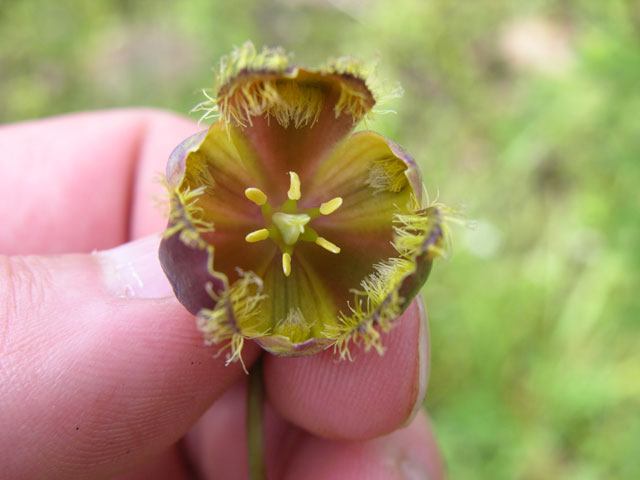
These pictures were taken in September, 2006 in Mexico State about an hour west of where Mary Gerritsen photographed the specimens above. There were large colonies growing in open grasslands and seepage slopes intermixed with Calochortus purpureus, Tigridia meleagris, Echeandia sp., Bessera elegans, and numerous terrestrial orchids from the genera Bletia and Dichromanthus. This species can be distinguished from Calochortus purpureus, which it closely resembles, because the flowers of C. spatulatus are hirsute and because C. spatulatus is more apt to produce bulbils in the leaf axils. Photos by Dennis Szeszko
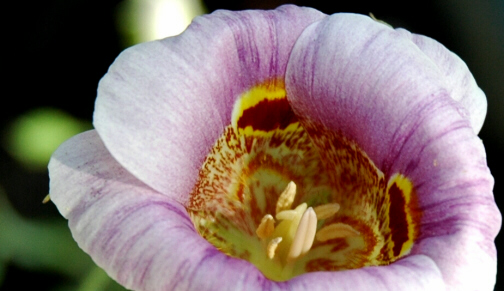
Calochortus splendens Douglas ex Benth. is native to coastal mountains and valleys of Southern California and Baja California, but there are also some inland populations in Northern California as far north as Tehama County. It is found in various habitats, including chaparral and woodland. The bowl-shaped flowers are lavender, often with a purple spot near the base of each sepal and sometimes with a similar spot on each petal above the gland. There are long scattered hairs on the lower third or fourth. This species was featured in Mariposa,Volume 15,#1. Height range: 60-90 cm. Photos by Bob Rutemoeller, Mary Sue Ittner and Alan Horstmann.
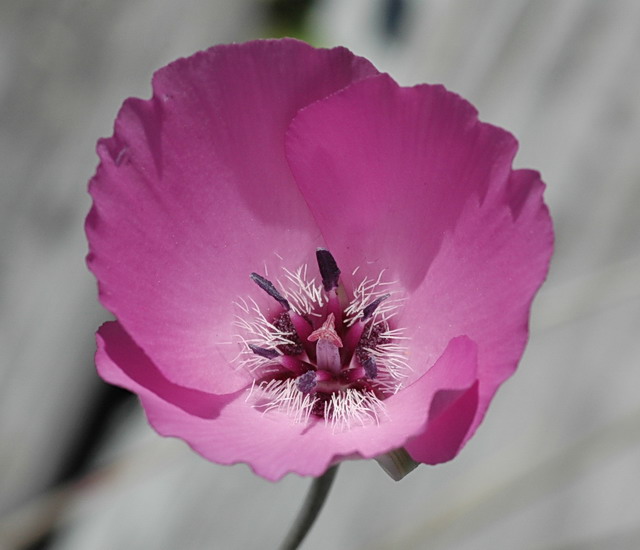
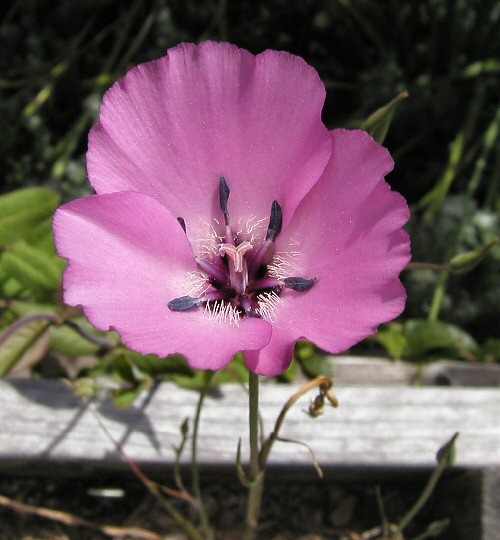


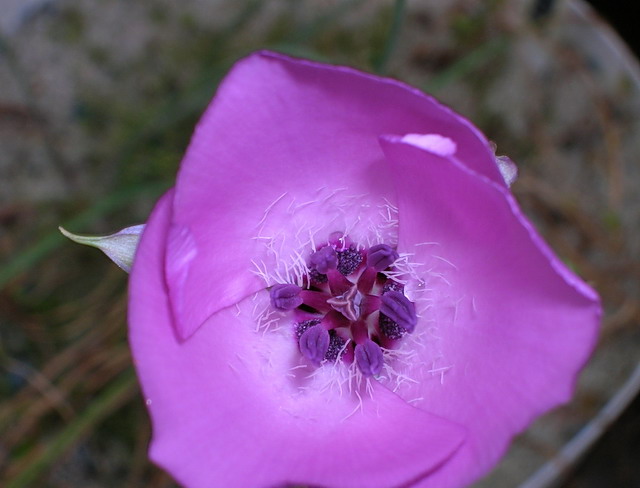
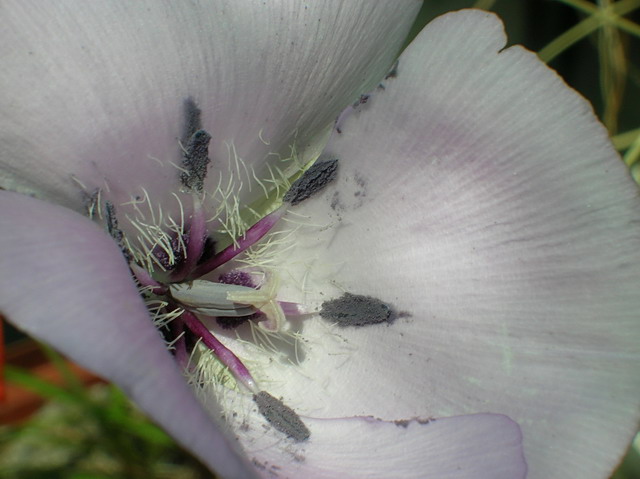
Excerpt and first photo from Kipp McMichael's "Calochortus pursuits":
"After Mt. Pinos, we returned to Lockwood Valley road in hopes of catching the real Calochortus splendens in bloom. Although late for the season, we managed to find a few plants flowering and were able to observe the pale pink, congested hairy blooms that were quite distinct from the dark-centered, nearly hairless blooms of Calochortus davidsonianus. In this same location, we again saw Calochortus kennedyi but these plants were all in seed." The second photo was taken May 2021.
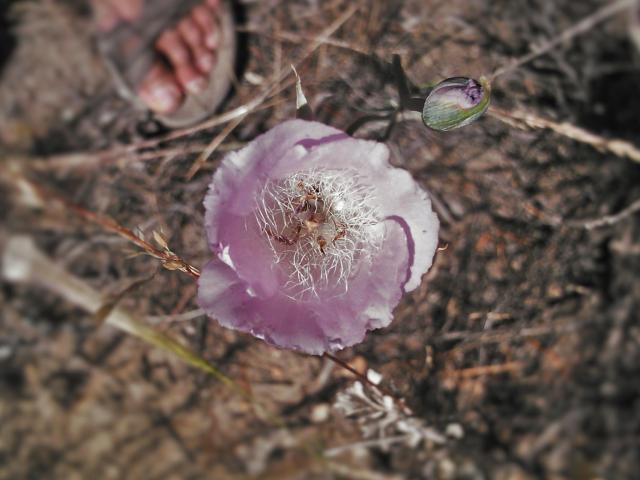
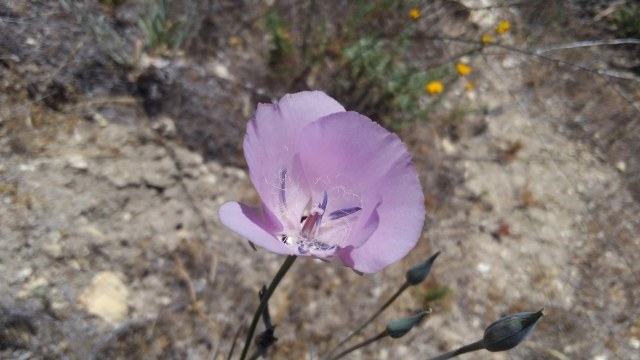
Calochortus striatus Parish is an uncommon species, occurring in low rainfall areas of southern California. Where it does occur, it is usually in vernally wet meadows, seeps and depressions, in semidesert and desert habitats, at elevations 800-1400 m. Comments from Michael Mace: Although it is native to seasonally wet alkali flats in the southern California desert, this one is surprisingly adaptable in cultivation. I tried it in a variety of soils, but found that it was happy in a pot with either a mix of 50-50 vermiculite and sand, or 50-50 peat and sand. Both were supplemented with some complete bulb fertilizer. It did not require cold stratification, and grew reliably when watered once a week and (like most Calochortus from areas north of Mexico) left totally dry in summer. Height range: to about 50 cm. The first two photos from Calflora were taken by Bob Steele in Kern County in the month of May and shared under a CC BY-NC license. The third photo was taken by Dennis Ghiglieri showing it growing in the alkali soil in the desert seeps of Ash Meadows National Refuge in Nevada. The last photo below by Ron Parsons shows a nice cluster of plants in bloom in Kern County, California.
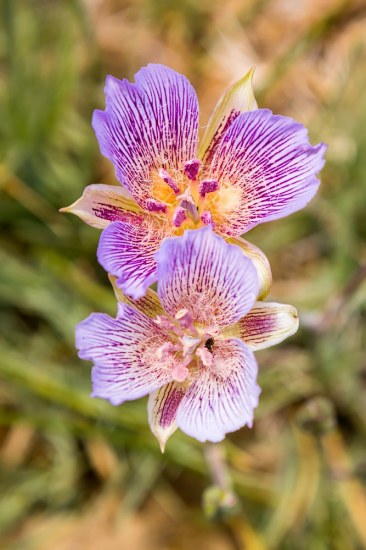
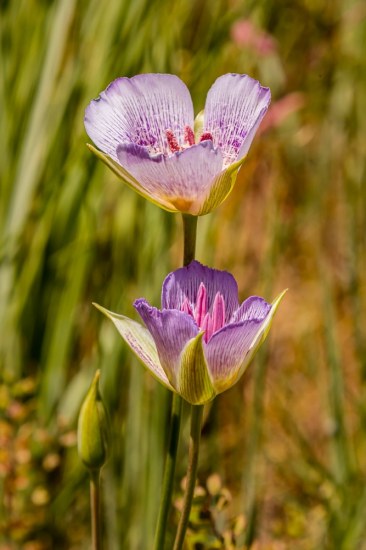
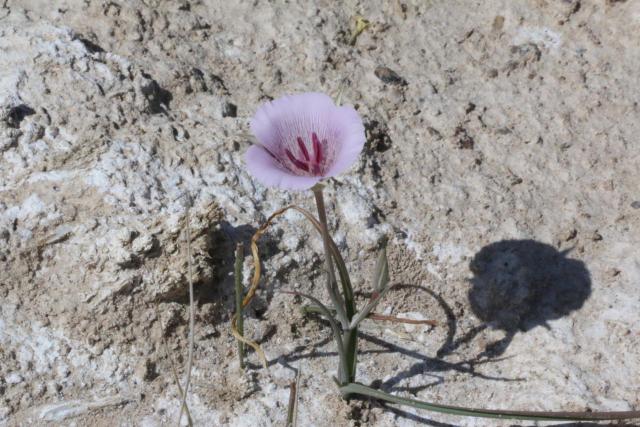
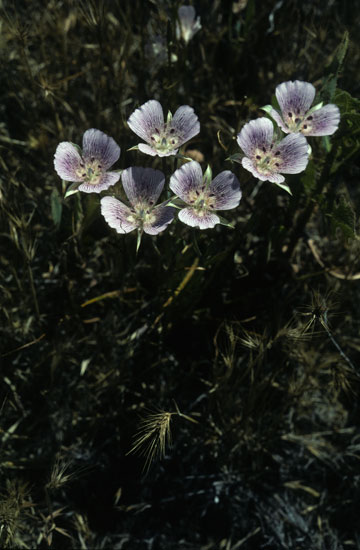
Excerpts and photos from Kipp McMichael's "Calochortus pursuits":
"Having whet my appetite with day trips within a few hours of Berkeley, I lassoed a fellow bulb enthusiast for a full weekend trip to catch species in southern California. We left on a Friday after work and spent the night in Rosamond, CA at the western edge of the Mojave desert. The next morning we got up early to catch Calochortus striatus just east of the town. Having heard it had been a "light" bloom year and that we "might catch a few stragglers" we were delighted to find the population in near-peak bloom in what must certainly have been as good a season as this colony ever sees. Every visible plant showed multi-bloom stalks and every plant not in active bloom held ripening capsules. I would estimate 5000-10000 plants were blooming or fruiting in this colony."
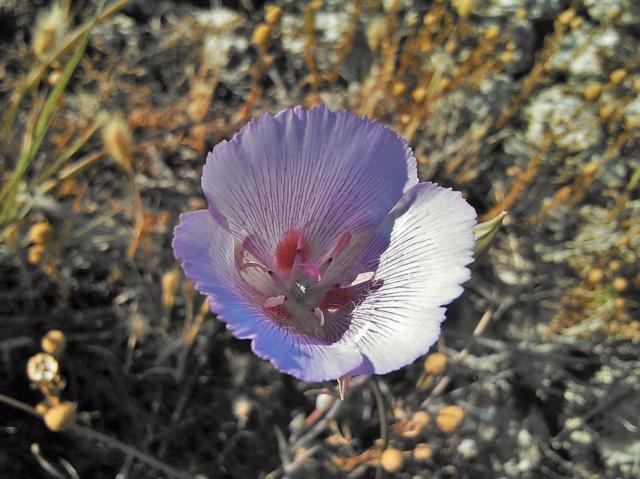

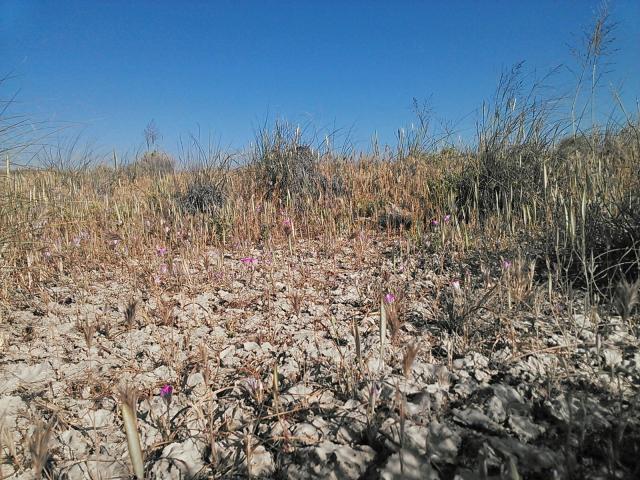
Calochortus subalpinus Piper is found from southwest Washington south to central Oregon. It is found in a number of habitats, including dry meadows, alpine meadows, coniferous woodlands, and open screes. This species was featured in Mariposa,Volume 8,#3. Height range: 5-30 cm. The photos below from Mary Gerritsen were taken at the summit of Burnt Mountain, Oregon (near Roseburg) in late May 2007.
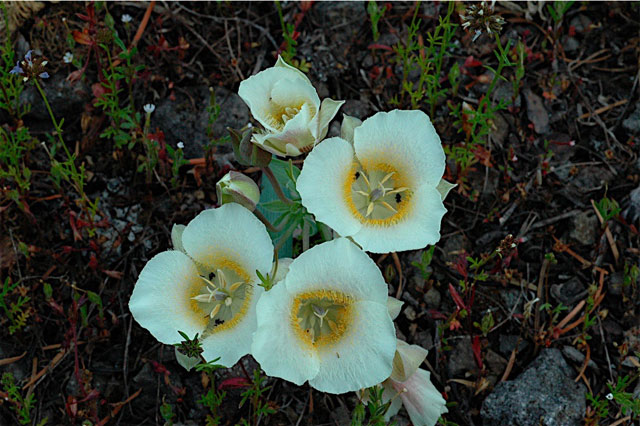
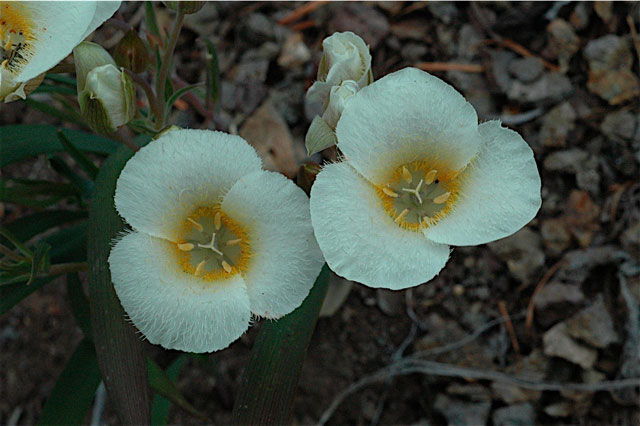
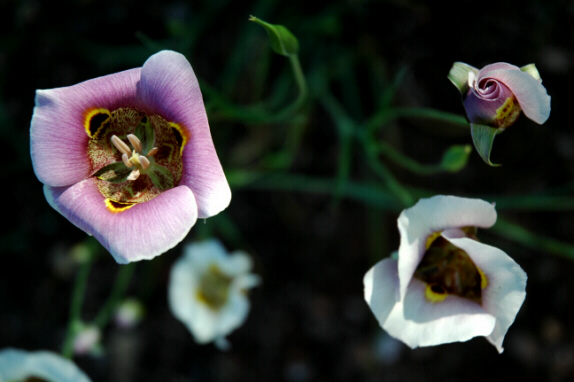
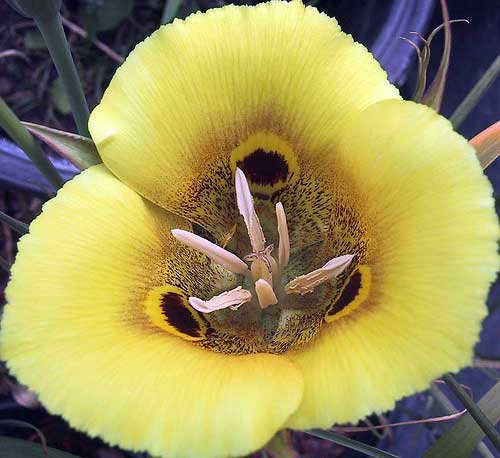
Calochortus superbus Purdy ex Howell grows in grassy clay meadows, level or sloped, occasionally into very open grassy woodlands. It is often found growing in serpentine. Its range is the Sierra Nevada and the North Coast Ranges and the Palomar Mountains in San Diego county. It is usually a creamy white with deep red-brown penciling marks at the base and a reddish brown or purple blotch surrounded by bright yellow. In the wild are pink or lavender varieties as well. The gland is an inverted v. This species was featured in Mariposa,Volume 11,#1. Height range: 30-60 cm. The first three photos from Mary Sue Ittner and the next two of dramatically marked flowers from Alan Horstmann.
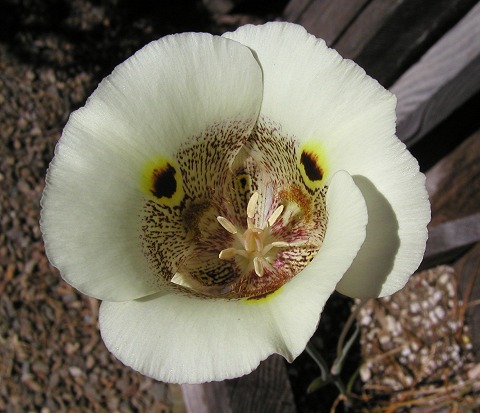

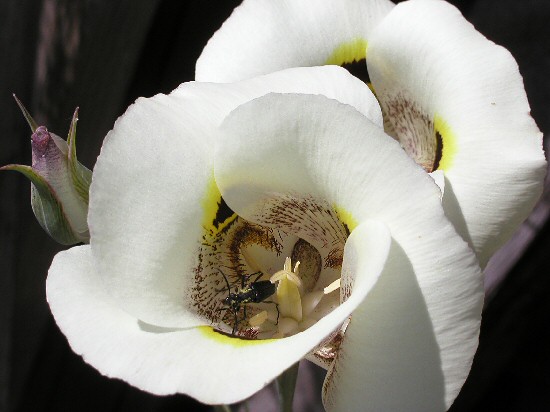
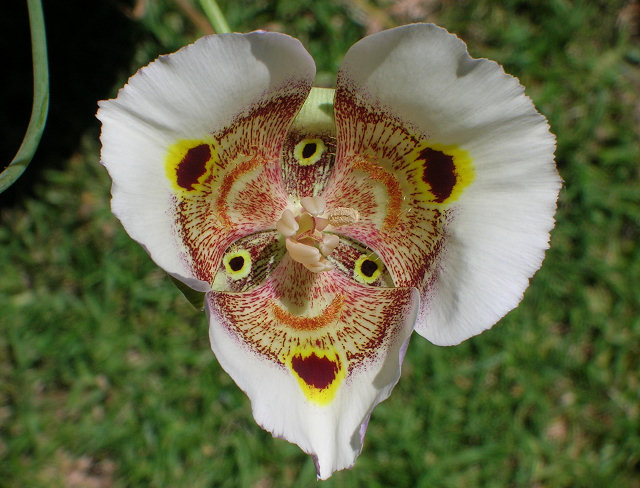
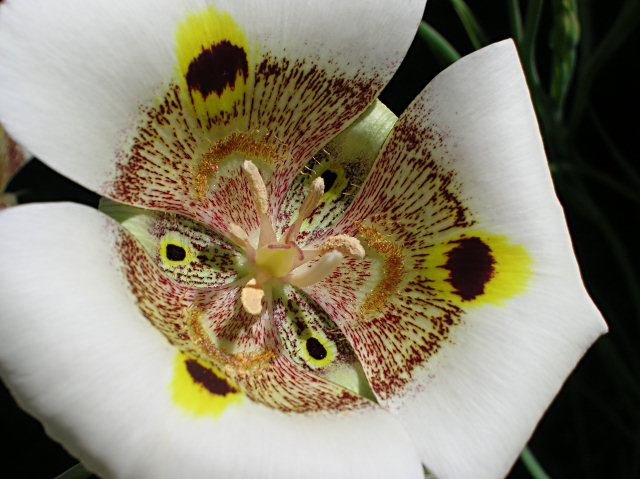
The first three photos from John Longanecker of Calochortus superbus show plants that were obtained commercially growing in his dry garden. The second is a form called 'Symphony' taken June 2006 and the last is a grouping at sunset taken at the same time. The last two photos show plants in the same pot that were purchased at an East Bay Regional Parks Botanic Garden plant sale. One is purple, one yellow, and they both display the chevron-shaped nectary (easiest to see in the purple form, under the splotch). Photos by Max Withers.

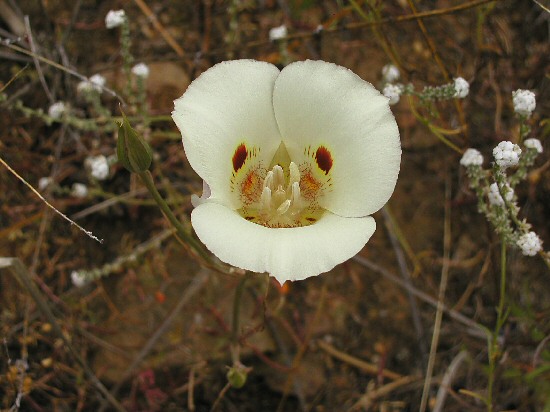
In the wild a number of plants have been observed that resemble this species, especially in color, but with glands that are different from the inverted v. In the July 1999 Mariposa (the newsletter of the Calochortus Society) five variants were described. A population seen in Kern county April 2005 growing right next to the road in the drainage area fit the description for one of these variants, a lunate (inverted crescent) gland with a relatively narrow inverted arc. Whether these plants are intergrade with C. luteus is not clear as that species was not observed nearby. Photos by Mary Sue Ittner.
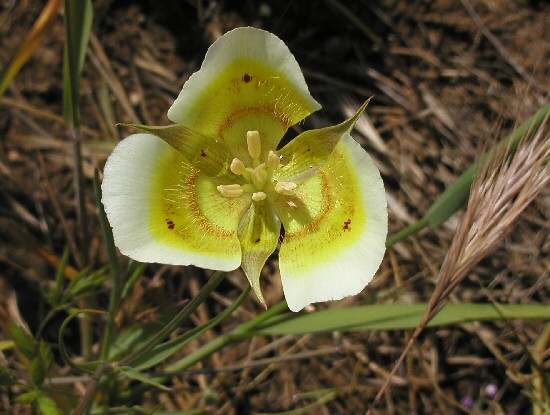
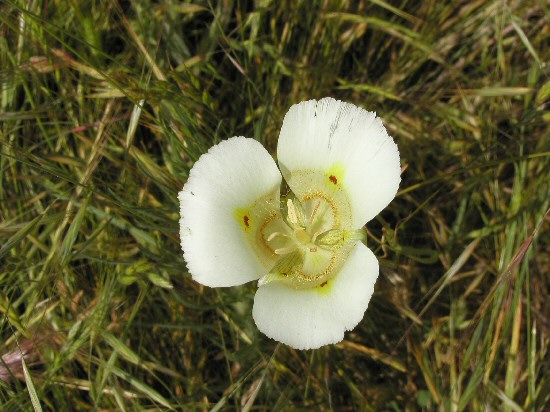
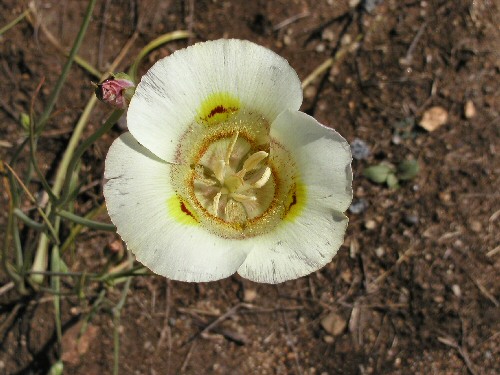
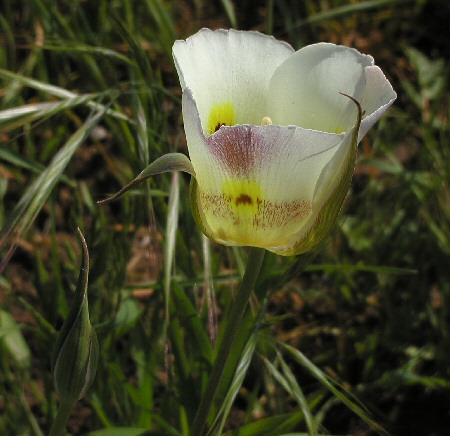
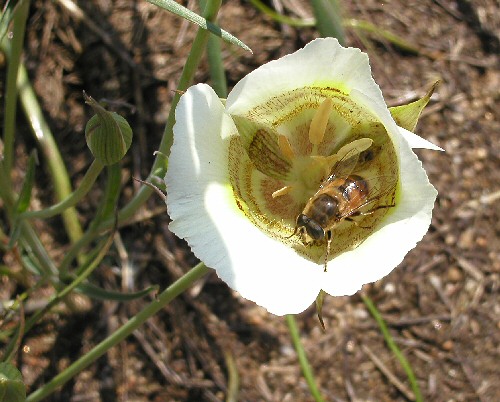
Two other gland variants described in this newsletter were a gland that is a bit like a squiggle across the lower petals and a quasi-square gland. The plant pictured below seen near Lake Isabella in Kern County we at first thought could have been Calochortus venustus, but perhaps it is C. superbus with another variant of the gland.
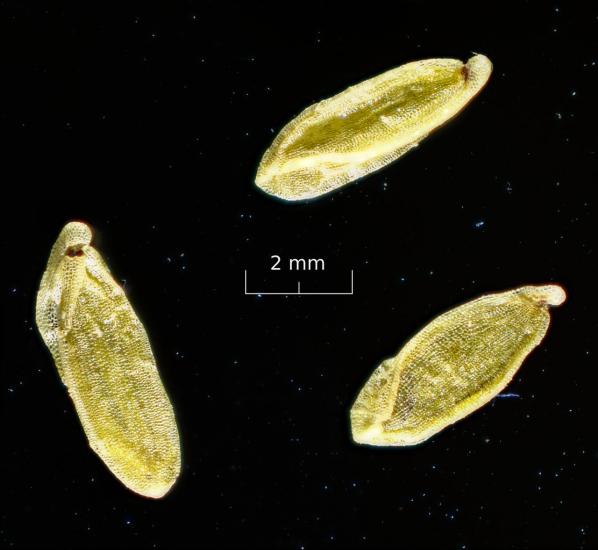
Seed photos by David Pilling. The first uses reflected and the second transmitted light. It is apparent from the second photo that not all seed contains an embryo. For many species it is possible to use light to separate viable seed.

Excerpts and photos from Kipp McMichael's "Calochortus pursuits":
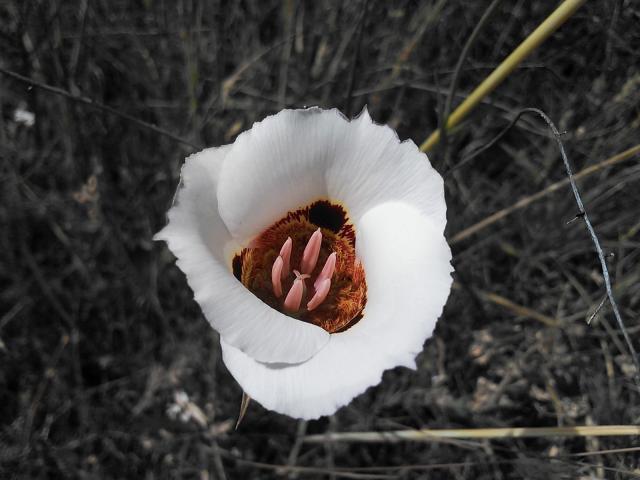
"I was headed for a serpentine meadow north of the Lake where I had seen seed pods of 2 species of Calochortus in 2014. About an hour into the trip along twisting roads in the hills near the Lake, I came to road construction and had to wait 25 minutes for the next escort. Once the escort vehicle arrived, it began what turned out to be a 9 mile escort through a seemingly endless workzone. Just before the end of the escort, as we came to a short bridge over an arm of the lake, I caught some beautiful white blooms standing tall in the grass on the roadside. I could not stop, as I was being escorted, but the other side of the bridge was where the construction closure began in the other direction. When I returned later in the morning (the serpentine meadow that was my intended destination was having a fallow year), I asked to wait for the escort at the other end of the bridge to observe this fine example of Calochortus superbus. These 2+ foot tall plants held large 3" across blooms."
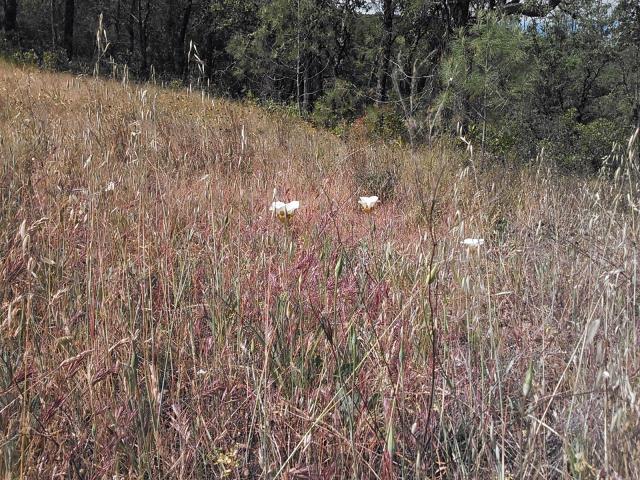


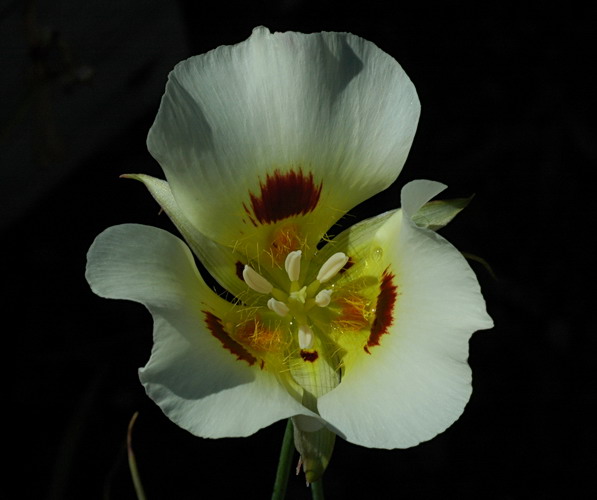
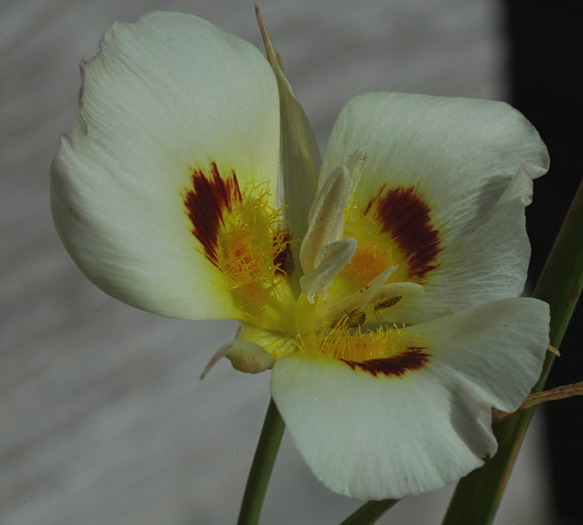
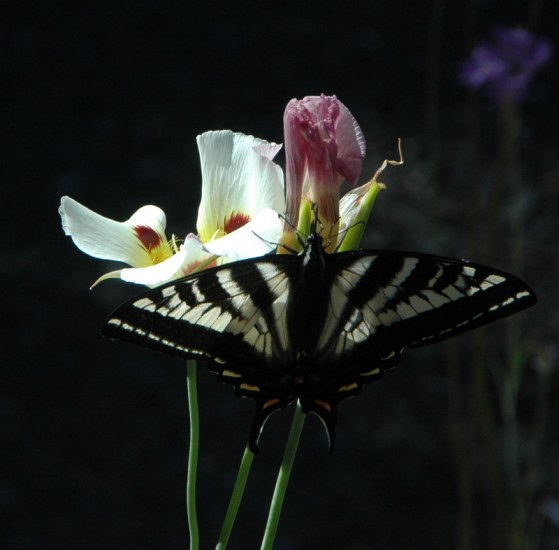
Calochortus syntrophus Callahan, a new species discovered in 1993 in Shasta County, California, grows in thinly grassy open woodland at the edges of gullies or under or close to small oak trees. It is white with half of the petal yellow with a reddish brown blotch. The gland is concave-elliptical. This species was featured in Mariposa,Volume 11,#4. Height range: 30-60 cm. The first two photos below by Mary Sue Ittner were taken of plants blooming for the first time from seed. The third photo taken by Bob Rutemoeller shows a butterfly visiting the flowers. The last photo below by Mary Gerritsen is of plants at the site of the type collection, June 2007.
Calochortus hybrids - Calochortus index - Calochortus species a-b - Calochortus species c-d - Calochortus species e-lo - Calochortus species lu-n - Calochortus species o-r - Calochortus species t-u - Calochortus species v-z