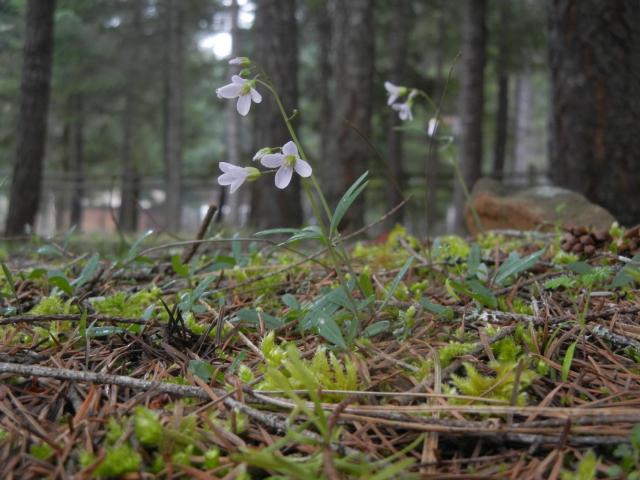
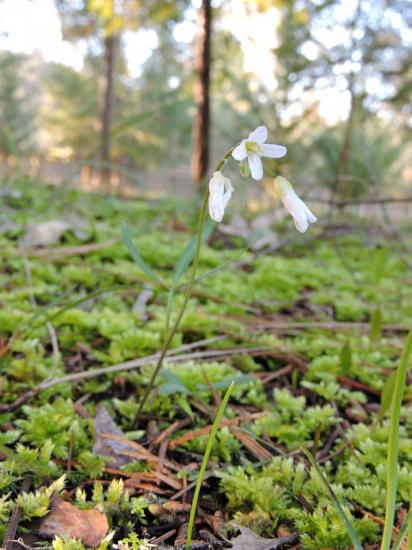
Cardamine is a genus in the Brassicaceae family that has species with fibrous roots, taproots, and tuber-like rhizomes. There are numerous species found in most temperate parts of the world. The ones featured on this page will be ones that have rhizomes.
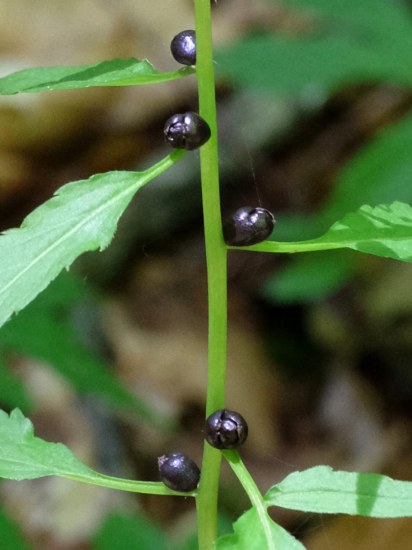
Cardamine bulbifera (L.) Crantz does not only grow from a rhizome, but also produces bulbils in the leaf axils for vegetative propagation. The species is pan-European and grows in light forest habitats. Pictures by Martin Bohnet show plants in habitat on the Swabian Jura.
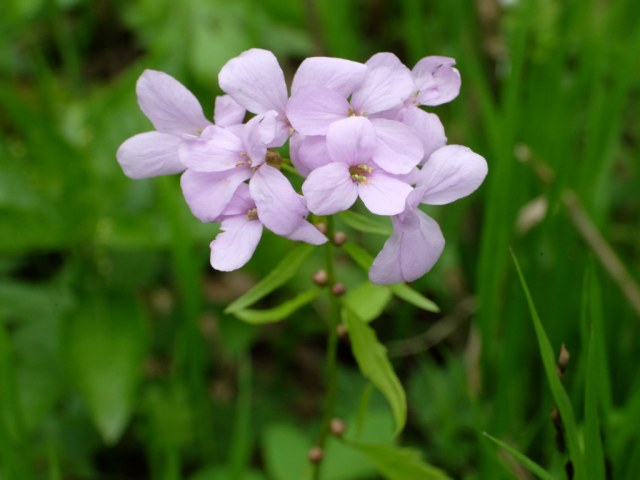
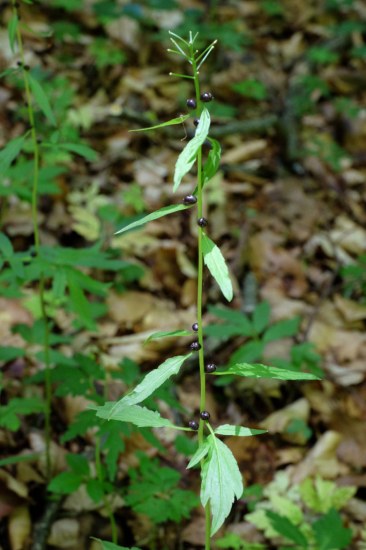
Cardamine californica (Nutt.) Greene is found in shady canyons and woods from Baja California to Oregon. Previous floral treatments included four varieties, but the current Jepson eflora only lists the species even though the leaves can be quite varied. Growing from a tuber-like spheric to ovoid or oblong rhizome 4 to 10 mm wide and deeply buried, it flowers in late winter and is one of the early wildflowers. Height: 30 cm. Photos from Mary Sue Ittner. The first was taken on Skaggs Springs Road and the next two on The Sea Ranch bluffs (both Sonoma County, Californiia.) The final photo shows the cauline leaves of a plant growing along Fort Ross Road April 2016.
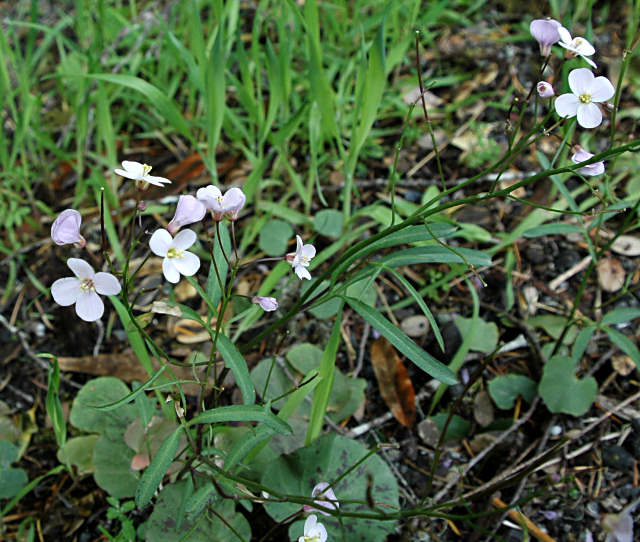
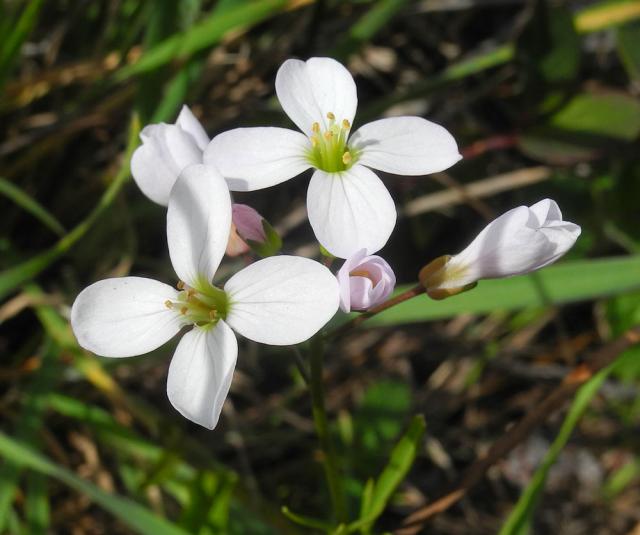
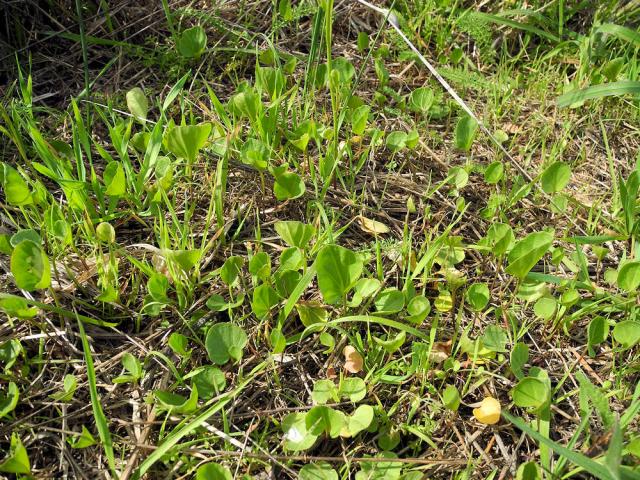
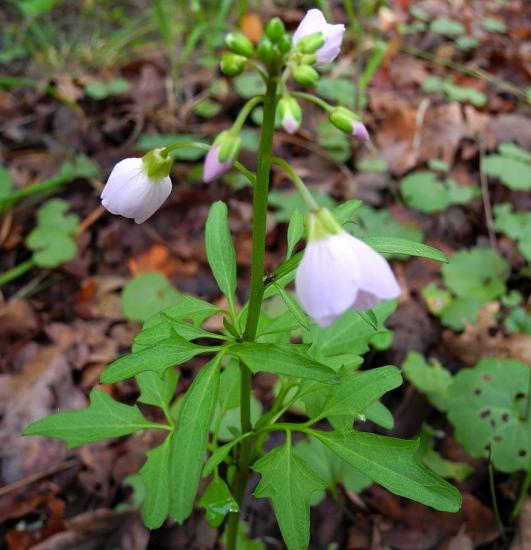
The photos below were taken by Nhu Nguyen of plants growing in a mountain coniferous forest in Tulare Co., California, about 3000 m (9000 ft). This appears to be a hardy form, being under snow every winter.
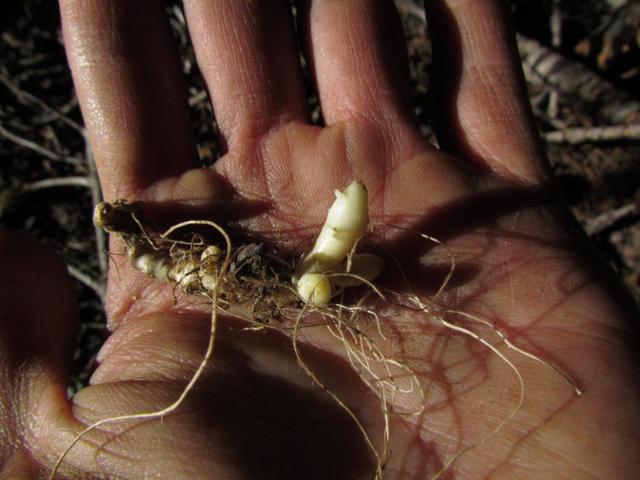
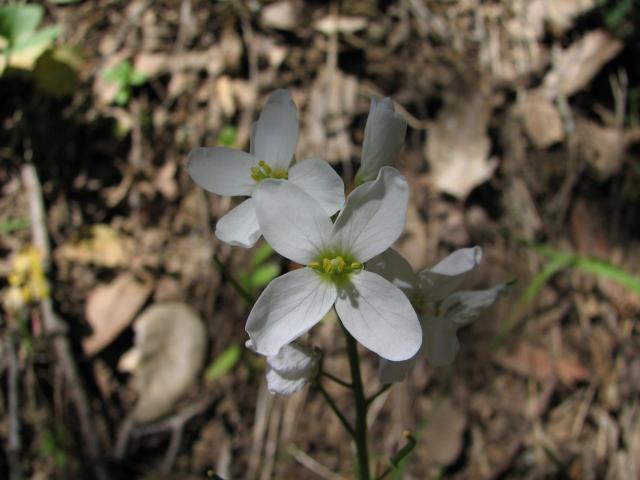
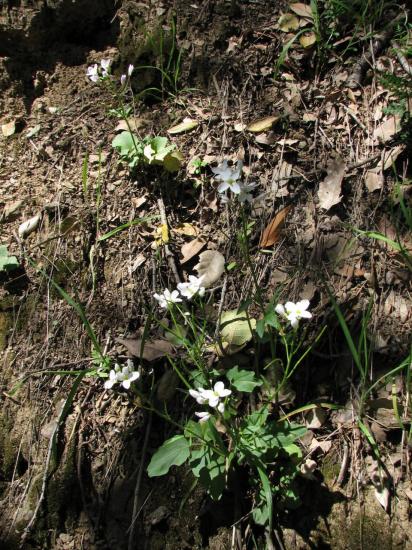
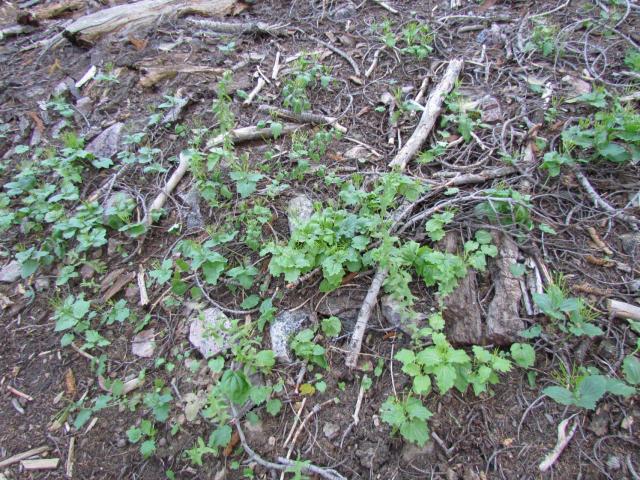
The photos below were taken by Dylan Hannon of plants growing under Coast Live Oaks (Quercus agrifolia) south of Ensenada, Baja California.
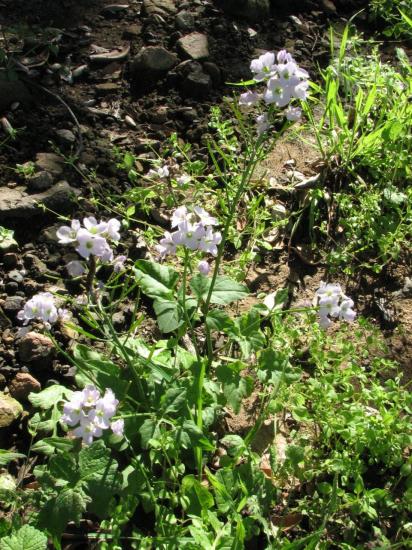
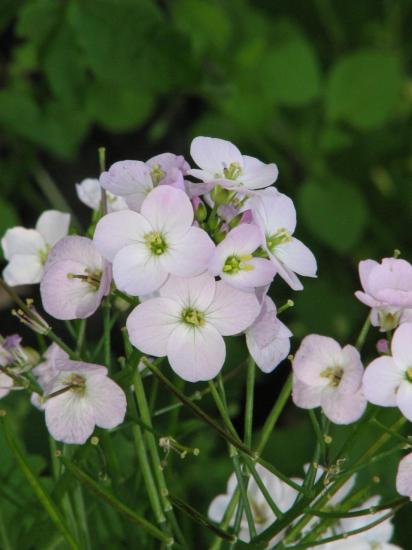
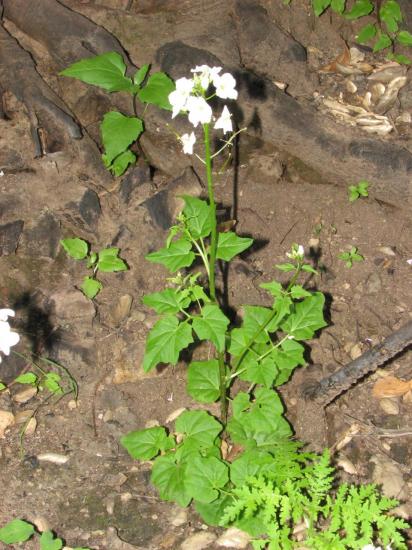
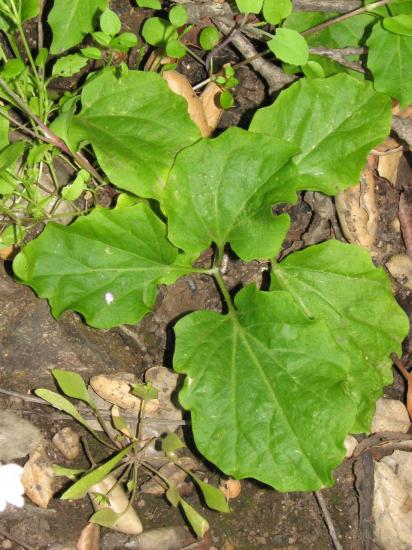
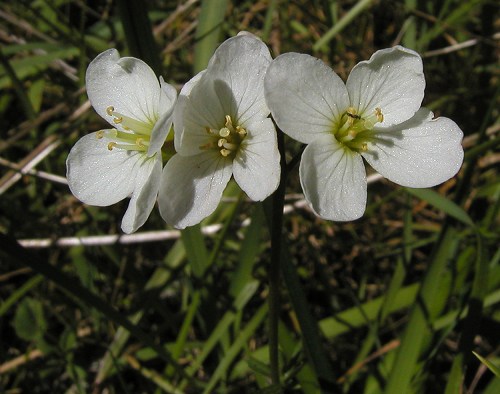
Cardamine californica (Nutt.) Greene var. integrifolia (Nutt.) Rollins was described as having white flowers and being found in open meadows, hill slopes in mostly heavy wet soils below 500 m. Rhizome leaves were described as generally having 3 leaflets, rarely with 5 or simple, entire, blade elliptic to ± round, ± tapered to base. Cauline leaves or leaflets were described as generally 3, rarely 5, leaflets short-petioled, linear to oblong, entire or teeth small, few or only 1 at tip with upper cauline leaves linear to oblong, entire, sessile. In a wet year you can sometimes see a mass of white flowers and wonder what it is. This photo by Bob Rutemoeller shows a close-up of flowers growing through Iris douglasiana. These plants are growing also with Camassia quamash. I found it easy to grow from seed, but not so easy to keep going. Perhaps my soil is too dry in summer.
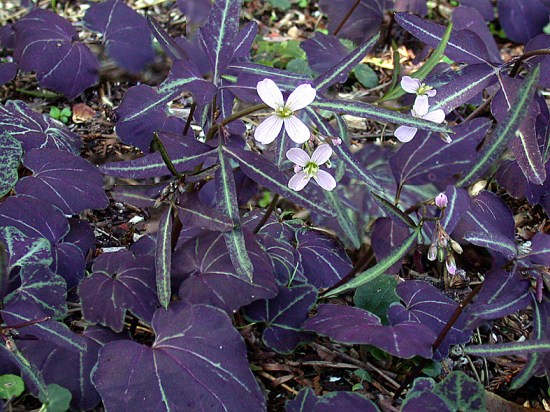
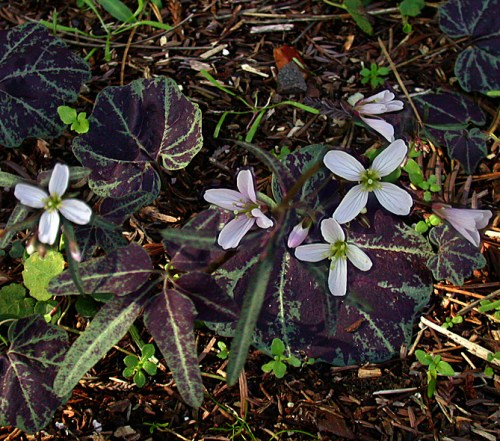
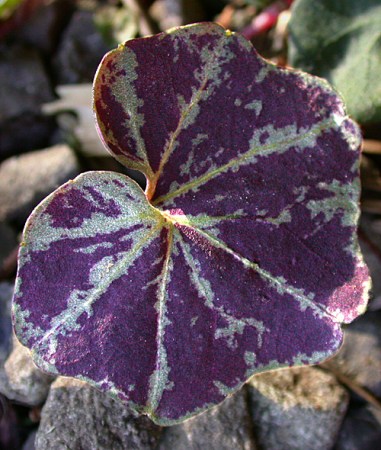
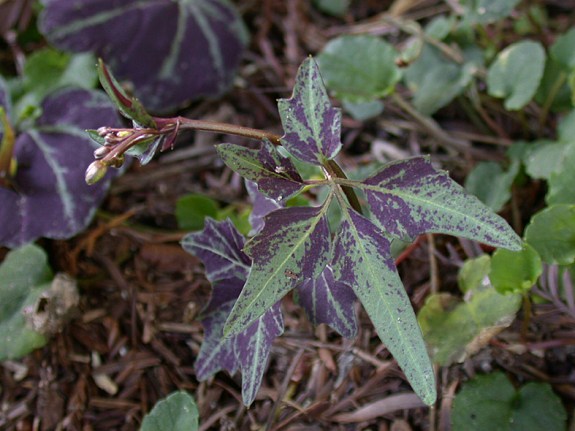
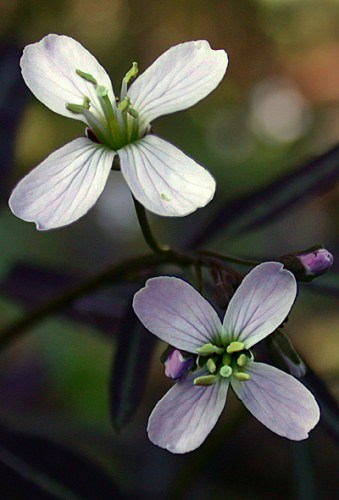
Cardamine californica (Nutt.) Greene var. sinuata (Greene) O. E. Schulz was described as having soft purple flowers and simple, round or heart shaped rhizome leaves with a wavy to dentate margin and the lower surface generally purplish; cauline leaves were described as deeply lobed or generally with 3 leaflets. It was found on forest floors, hillsides, and stream valleys in below 300 m in Northern California and Oregon. The form pictured below from the Mendocino Sonoma Coast has lovely green and purple leaves which reappear around December. Grown from seed, each leaf seems unique and the variation in the color of the leaves increases as the plant ages. Other plants of this form found in this area have green leaves that are purple underneath. Photos 1-5 below were taken by Norm Jensen with a tripod and a long exposure. The first picture shows leaves that are almost completely purple and the second with flowers leaves that are green and purple. The third, fourth, and last picture show a close-up of a basal leaf, a stem leaf, and the flowers.
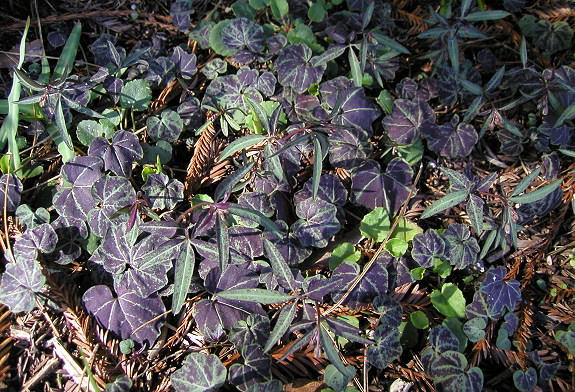
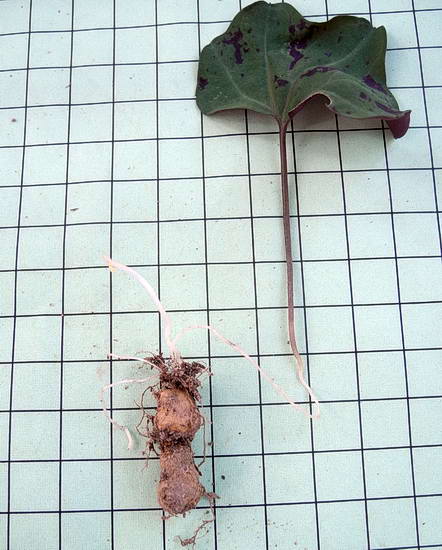
Photos below were taken by Mary Sue Ittner. Although this plant is dormant late summer until fall, it is growing with Chlorogalum pomeridianum and Viola sempervirens . The latter blooms in summer and the leaves stay green for a long time as the viola is evergreen. The second photo shows a rhizome on a 1 cm grid when it was necessary to dig one up to relocate it. The rhizome leaf pictured grows on the surface of the soil and the rhizome is deeply buried.
Cardamine nuttallii, or Oaks toothwort, is a diminutive perennial species native from British Columbia to California in moist mountainous habitats, sometimes in deep shade. It grows from a thin fleshy rhizome. It most often has small pink tinged four-petaled flowers, rarely white, with a few flowers atop each plant. The leaves are divided into two to five oblong sessile leaflets with sharply pointed tips. It grows to around eight inches, but often less. There are several varieties described, but many recent treatments only accept a single variable type species. It blooms very early in the year. Photos below in Rogue River, OR where it is the first insect-pollinated wildflower to bloom, sometimes weeks before anything else. Photos by Travis Owen.