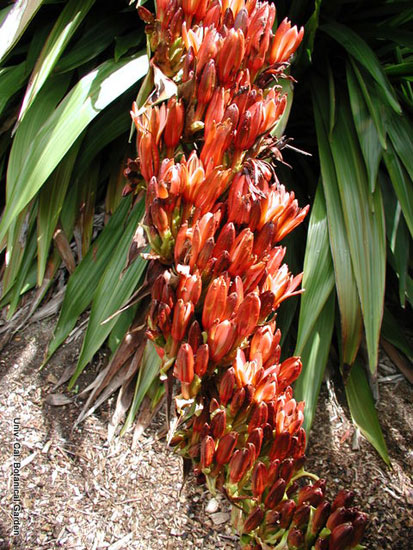
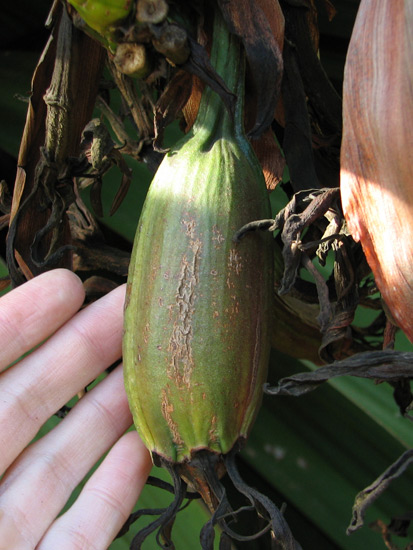
Doryanthes Corrêa is a tuberous genus endemic to Australia initially classified in the families Amaryllidaceae and Agavaceae. Recent genetic data has taken it out of the family Agavaceae and placed it into its own family Doryanthaceae which includes Doryanthes as the only genus and includes 2 species. Doryanthaceae has close links to the Liliaceae. Leaves are long in a large tussock and flowers on a tall stem are red. Plants are very long lived.
Mass flowering in nature of Doryanthes occurs in the year after a bushfire. They usually survive bushfires and grow with renewed energy and the dormant root bulbs will then form new plants eventually extending the breadth of the plant and making for multiple inflorescences when the offsets mature as individual plants. However in most bushland areas where they grow by the road side about 30 to 40% seem to flower each year. Germination of the seed is helped by fire or smoke water.
Native aboriginals from the Sydney region used to eat roasted Doryanthes inflorescences (picked when they were between 1 and 2 feet high like asparagus) and they used to turn the thickened tuberous roots and bulbs into a paste which they roasted and ate as a cake.
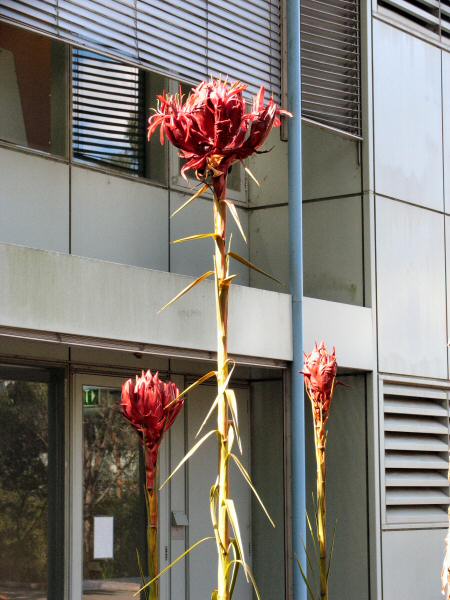
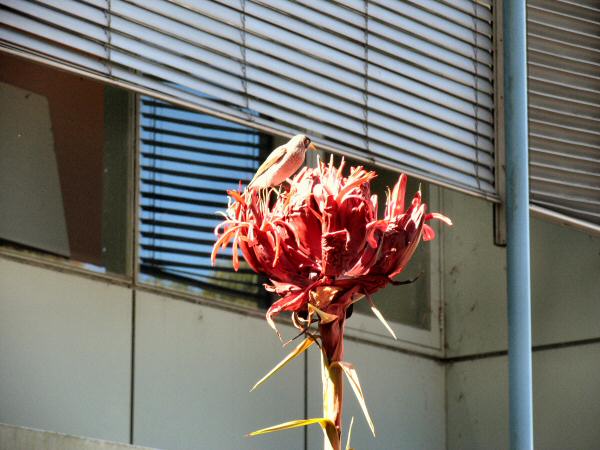
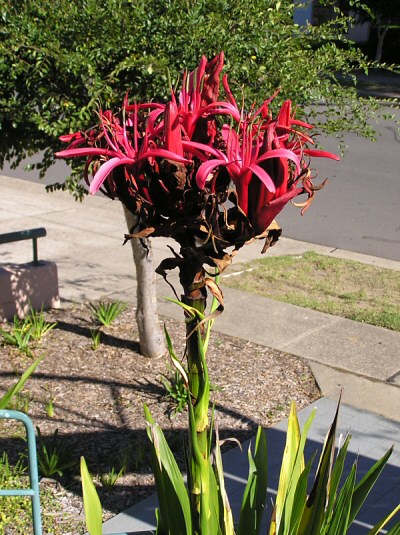
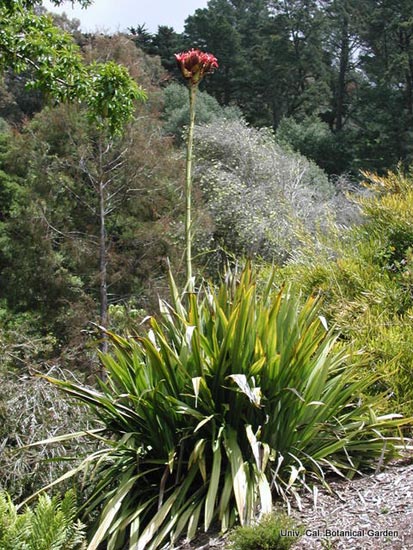
Doryanthes excelsa Corrêa, known as the Gymea Lily, is a showy species found in light forest or open areas in New South Wales. It occurs in coastal sandstone outcrops along the sandstone plateaus within the Sydney region. It has a shortened rhizome and closely packed evergreen bulbs that arise from the fleshy rootstock and give rise to additional plants clustered around the mother plant. Inflorescences from D. excelsa are remarkable in that they can reach up to 8 metres in height in a mature plant and can have between one to two hundred red and very fleshy, lily like flowers up to 23 cm across on a panicle of umbels that open over a couple of months. Within the central well formed by the tepals is a sweet viscous, jelly-like fluid with which it attracts honey eaters and ensures fertilisation. Much of the above information supplied by Jim Lykos.
Photos #1-4 below were taken by Peter Thomson. The largest one with the open flower is about 4 meters high (13 feet). You can see the size of the flower by the Noisy Miner (Manorina melanocephala), which is about the size of a Thrush. Photo #5 from Jim Lykos is of a first flowered short stemmed plant from Sydney's Royal Botanical Garden site. Photo #6 was contributed by the UC Botanical Garden.
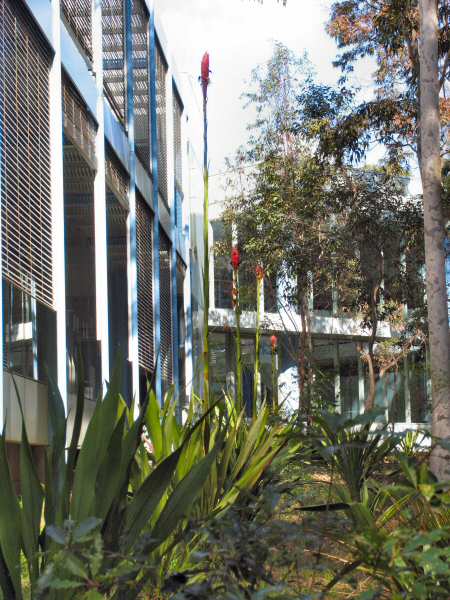
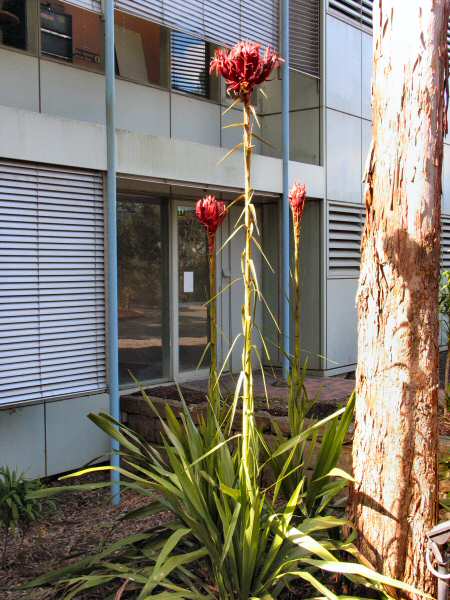
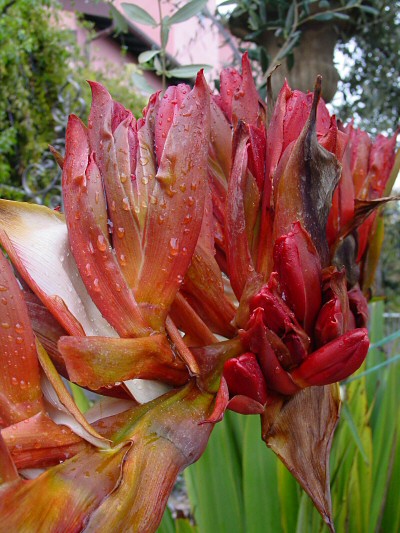
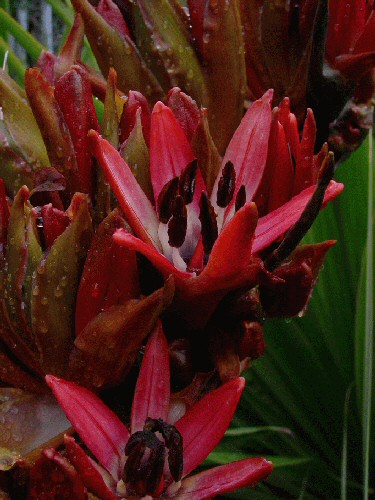
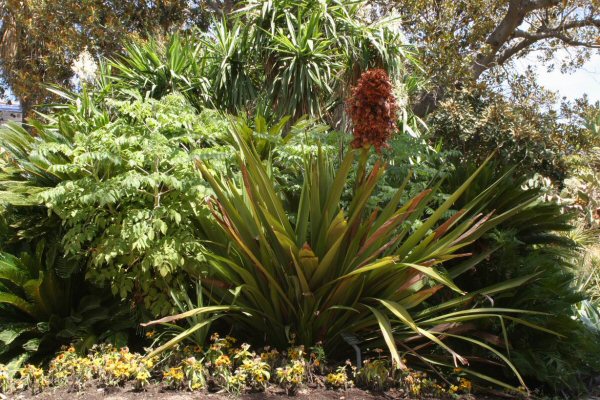
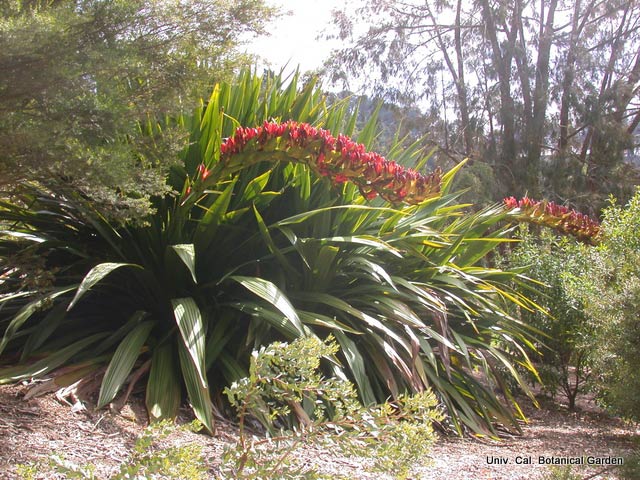
Doryanthes palmeri W.Bull is a species from Queensland and New South Wales known as Spear Lily. Photos #1-3 below were taken by Alberto Grossi in northwest Italy, near the Italian Riviera. Height range: 6-10 ft. The first two pictures of an inflorescence and open flower were photographed at the Botanical Gardens Hanbury at La Mortola, and the third is of a whole plant with fruits at Villa Ormond, San Remo. Photos #4-5 were contributed by the UC Botanical Garden. Photo 6 was taken by Nhu Nguyen at the UC Botanical Garden.