Habranthus is a genus in the Amaryllidaceae family with species from Central and South America extending into southern North America. They have narrow, linear or strap-shaped leaves. Their flowers are very similar to Zephyranthes and both are called rain lilies. Habranthus flowers point upward BUT at an angle and have unequal stamens in 4 different sizes, and Zephyranthes flowers point straight up and have 6 equal stamens, or 3 shorter and 3 taller. Zephyranthes flowers tend to be star shaped and Habranthus have somewhat irregular flowers. Additionally, the seeds of Habranthus are slightly winged (and thicker during the fruit dehiscence). Some Zephyranthes species like Z. candida and Z. minina have few thicker seeds.
Sowing from seeds is not difficult for this genus. Seeds can be sown directly, although some members prefer to float the seeds. Since the seeds are on the smaller size, removing them from the water and planting is more difficult. Sow the seeds in a well drained medium, water, and keep in a warm place. Fresh seeds should germinate in 1-2 weeks. Bulbs can be transplanted after 2 years of growth. Allow plants to go into natural dormancy cycles. Give the plants a light fertilizer during growth.
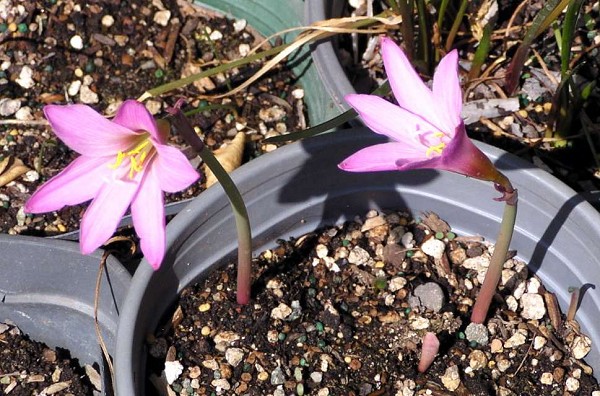
Habranthus arenicola (Brandegee) Flagg, G.Lom.Sm. & Meerow, syn. Zephyranthes arenicola Brandegee, is native to Mexico (Baja California, Island Guadalupe). Height range: 15-30 cm. Photo from José Luis León de la Luz, an investigator from CIBNOR.
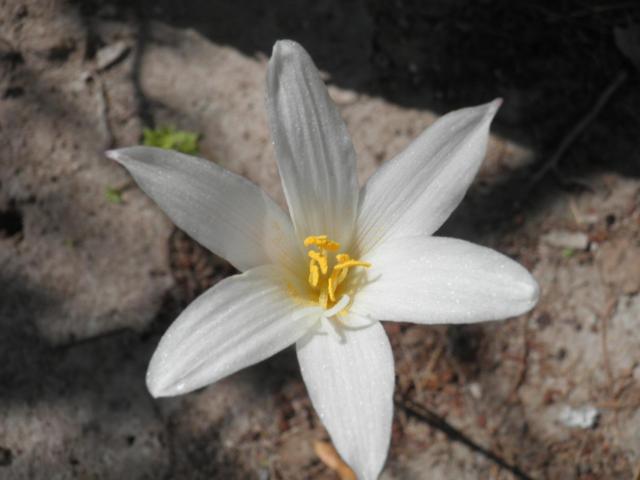
Habranthus brachyandrus (Baker) Sealy from Argentina and Brazil. This came labeled as Habranthus (Rhodophiala) andicola, but has been identified by Germán Roitman as Habranthus brachyandrus. Height: to about 30 cm. The first two photos taken Sept. 2003 by Lee Poulsen. The third by Bill Dijk shows a lot of them in bloom in New Zealand.
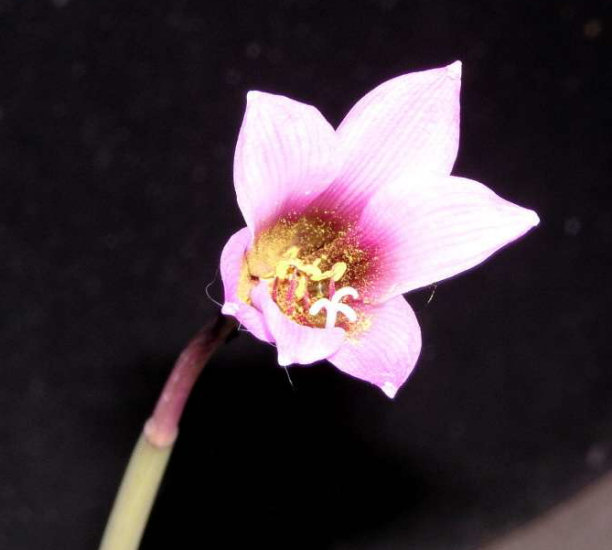

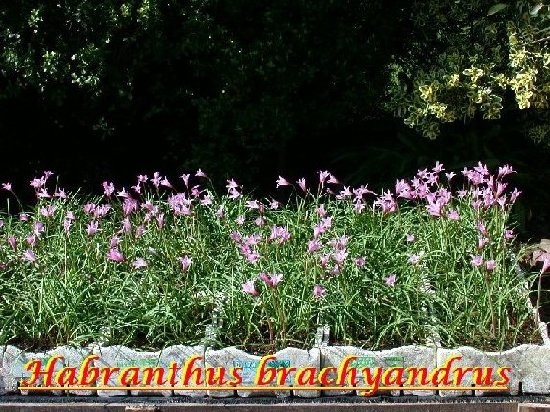
Habranthus caeruleus (Griseb.) Traub is an extremely uncommon small species from northeast Argentina. It has pale lilac flowers that turn blue once the flowers dry up; in a herbarium they would look blue. It needs warmth and it is an autumn/winter/spring grower and is summer dormant growing in an area with almost year round rains. Only a late summer drought precedes flowering in early autumn. In the wild it grows in well drained acid soil and full sun. Height range: 30-40 cm. Photo taken by Germán Roitman.
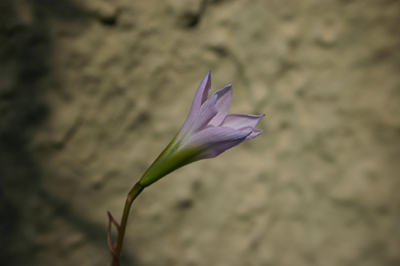
Habranthus cardenasianus (Griseb.) Traub formerly described for Bolivia, was recently found in northwest and central Argentina, Roitman,Castillo et.al, 2006. It is a very attractive habranthus with white flowers that turn pinkish and is very common in dry areas. Habranthus spectabilis, Habranthus niveus, Habranthus maasii, Habranthus steyermarkii, Habranthus crassiblubus and Habranthus cordobensis have to be considered as synonyms of Habranthus cardenasianus. Height range: 3-5 ft. Photos taken by Germán Roitman.
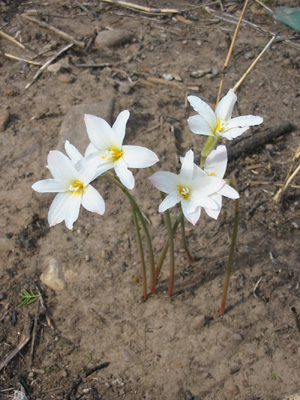
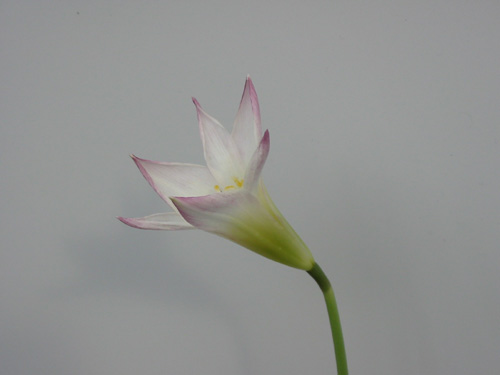
Habranthus correntinus Roitman, J.A.Castillo & M.R.Barrios is found in wet grasslands of northeastern Argentina. This species was described by Germán Roitman, Alberto Castillo, M. R. Barrios, 2008. The summary of that paper describes it as resembling Habranthus tubispathus in size, but easily distinguished by the presence of bulblets, narrow dark green leaves, narrow pinkish tepals with darker bases, a longer style with larger style arms, and the presence of leaves at anthesis. Height range: 3-5 ft. Grown and photographed by Angelo Porcelli.
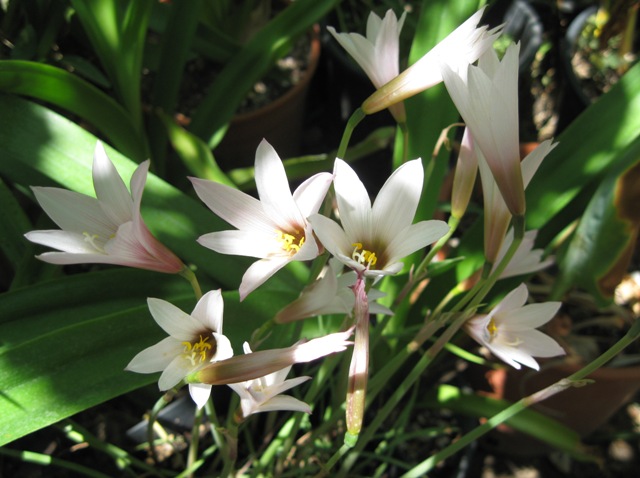
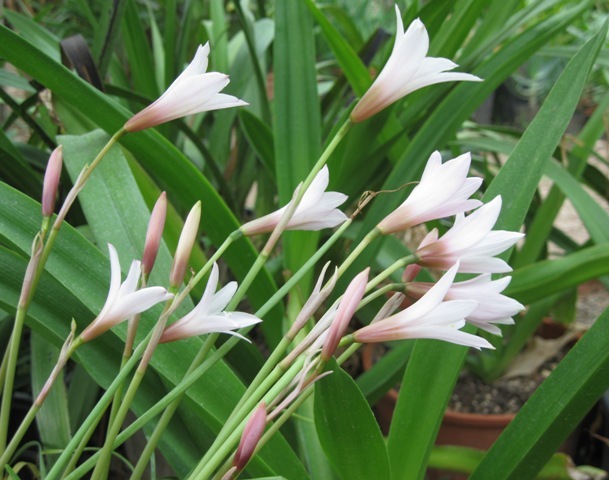
Habranthus estensis Ravenna has wire-like leaves (5-9 mm wide) and is native to the east coast of Uruguay. The leaves fall in December, followed by flowering during March. Although it looks similar to H. gracilifolius, the leaves are larger and wider and the flower tube is green in the base. The inflorescence is 2 flowered and usually geminated (open at the same height but facing in opposite directions) in H. gracilifolius; in Habranthus pedunculosus the inflorescence is not geminated. Height range: 30-45 cm. The third picture shows a spathe with 4 flowers. Photos by Germán Roitman
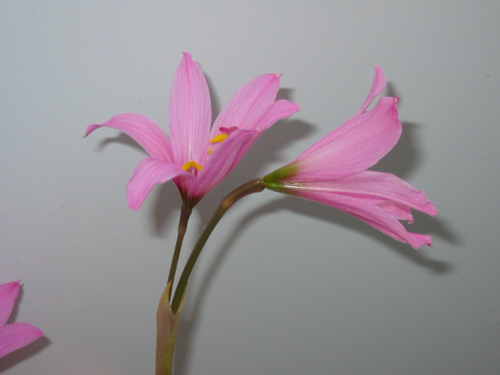
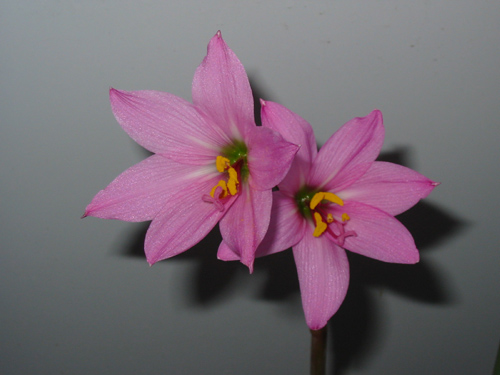
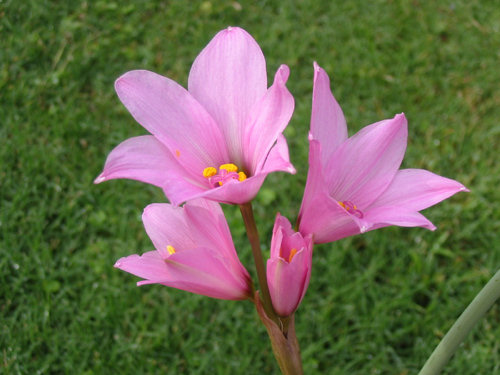
Photos below from Lee Poulsen taken Sept. 2003. Some had color that was almost like pink cotton candy and suddenly appeared together.
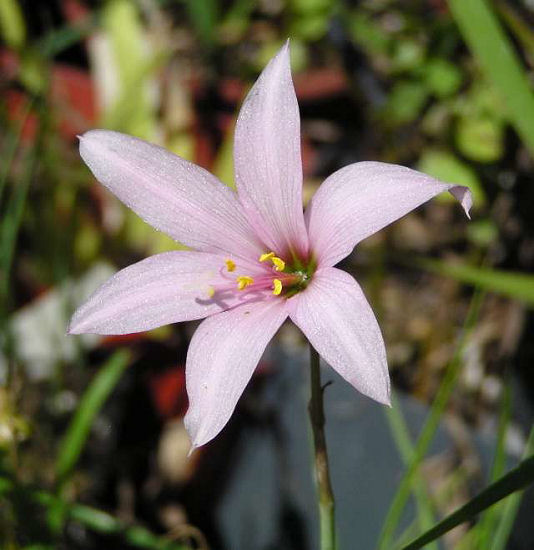
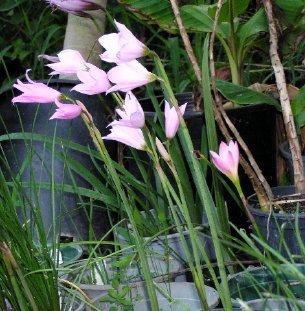
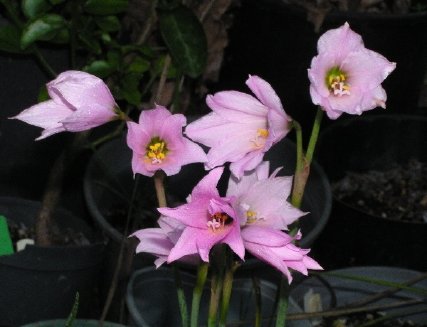
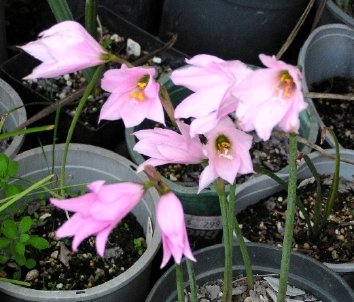
Habranthus × floryi is a hybrid of H. robustus × H. brachyandrus. The photos below from Barbara Weintraub were on the Mystery Bulbs page. She purchased them from eBay and the seller did not know their identity. The plants are robust and flower beautifully outdoors during the summer, and survive the cold of winter inside on a windowsill. The flowers are large, with overlapping pointed tepals, bright pink over white, and with prominent longitudinal veining. She believes the plants to be sterile as there has been no seed produced. Jay Yourch believes it to be this hybrid based on large flower size and deep purple coloration of base and throat.
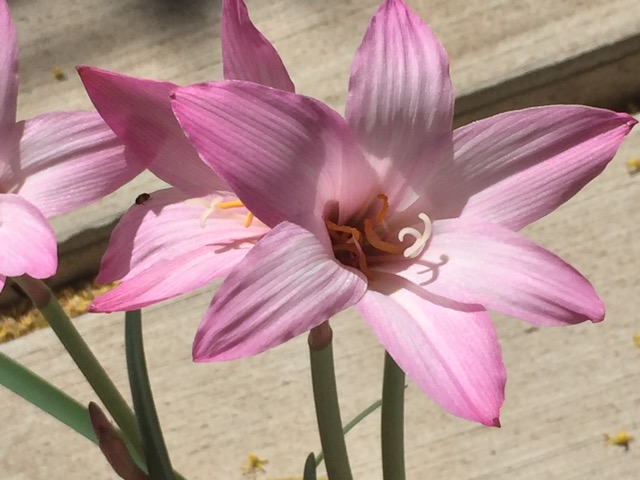
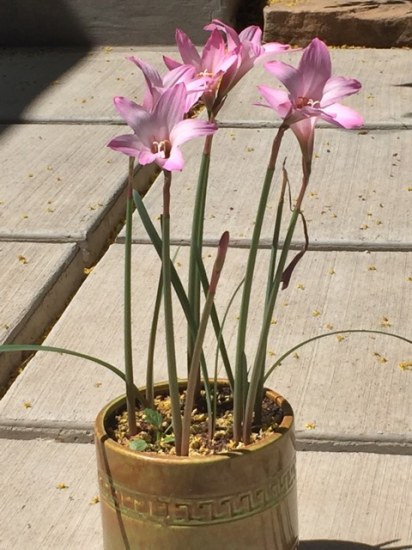
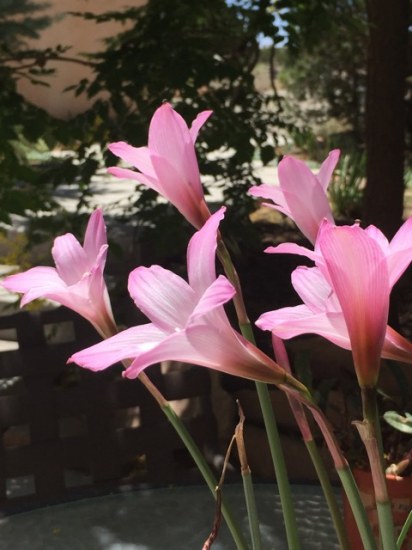
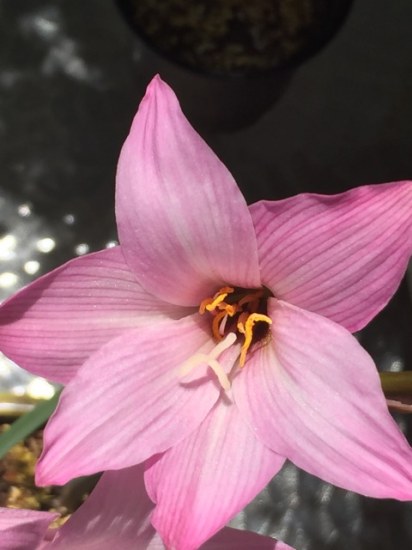
'Cherry Pink' is vigorous and produces an abundance of flowers and seeds. Photos taken August 2005 by Jay Yourch.
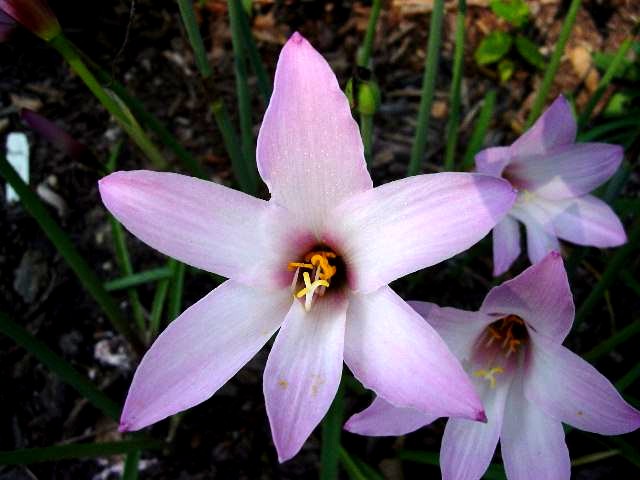
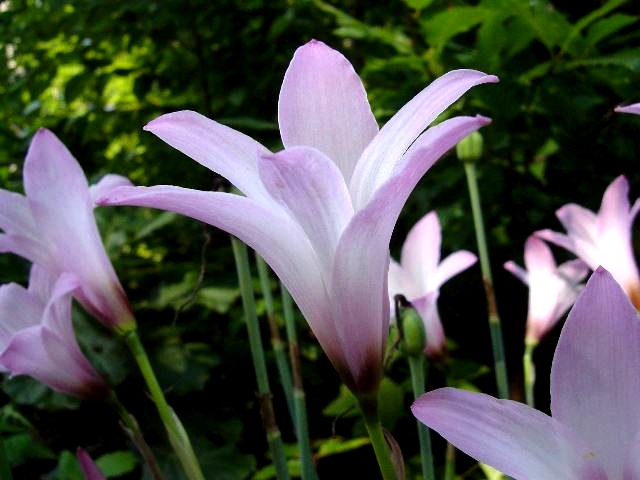
'Green Base' is also beautiful and enormous, but has a green base and throat. Photo taken July 2004 by Jay Yourch.
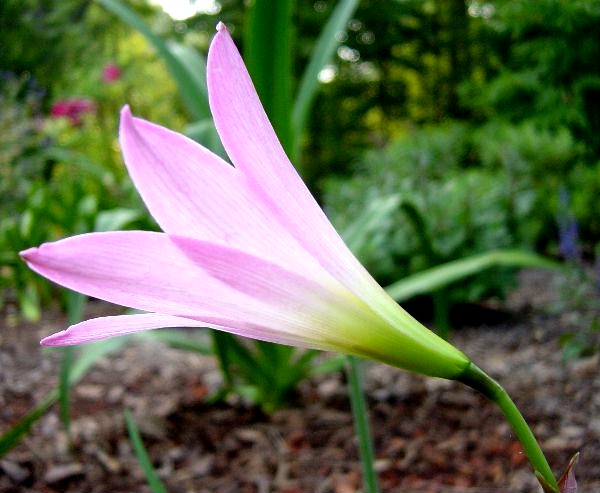
'Purple Base' has a beautiful and enormous flower, almost 4 inches (10 cm) across. Photo taken September 2003 by Lee Poulsen.
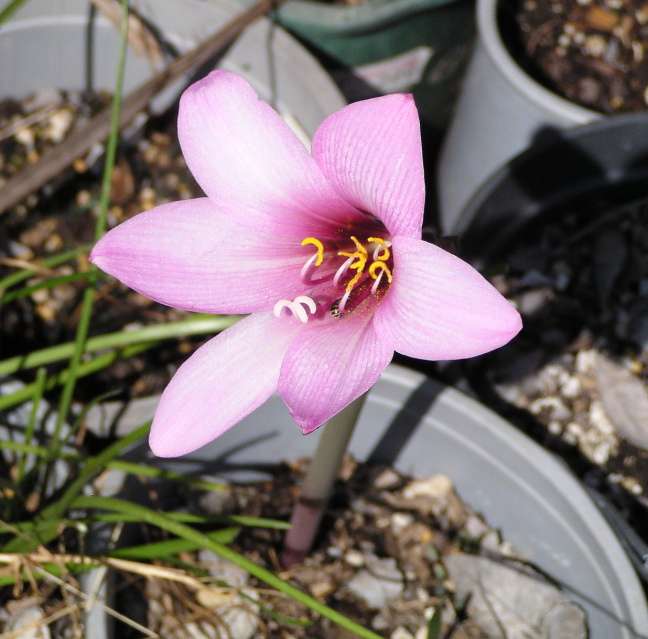
Habranthus gracilifolius Herb. has wire-like leaves (2-3 mm wide) and is native to Uruguay and Argentina and has year round rainfall with a dry spell late summer followed by flowering in late summer or early fall. Inflorescences are 1-2 flowered and flowers are completely pink. Height: to about 1.5 ft. Photos by Germán Roitman and Mark Wilcox.
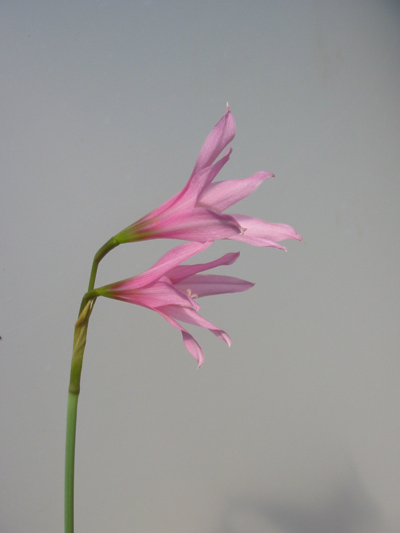
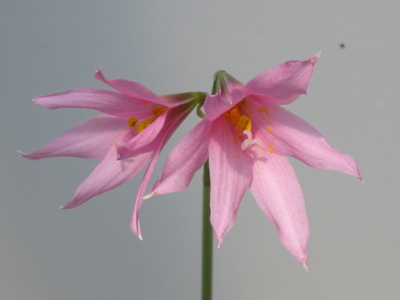
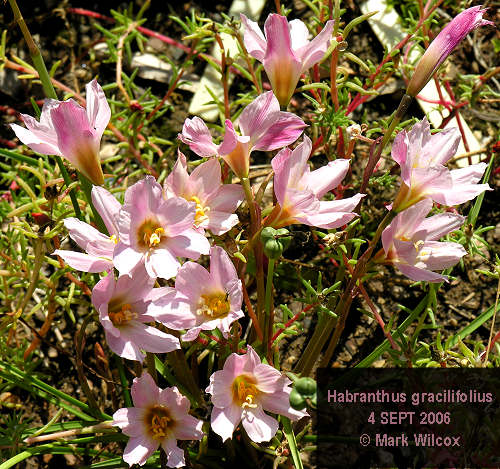
Habranthus itaobinus Ravenna is native to the interior of the Northeast Region of the Brazil, in half-barren climate (dry during 7-8 months of the year), in a type of vegetation called "Caatinga" in the language of the Tupi Nation. Height range: 30-45 cm. Photo taken December 2006 by Tarcísio Eduardo Raduenz.
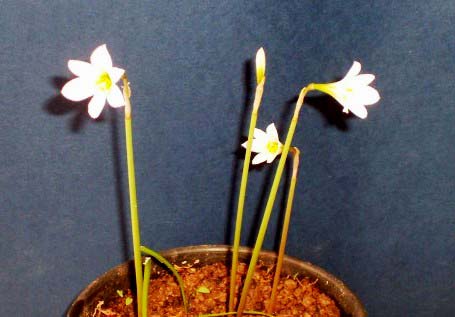
Habranthus jamesonii (Baker) Ravenna is a rare species of Habranthus, with 2-4 flowered inflorescences. Flowers are completely white. Found in sandy soils in the west and center of Argentina. Height: 30 cm. Photo by Germán Roitman
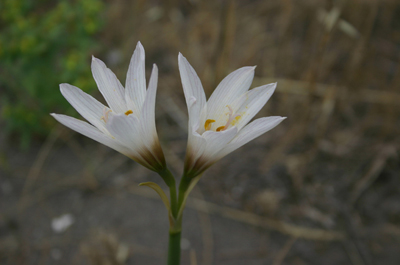
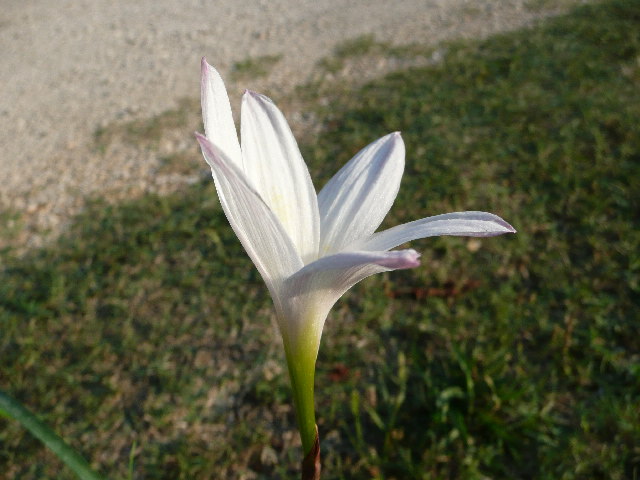
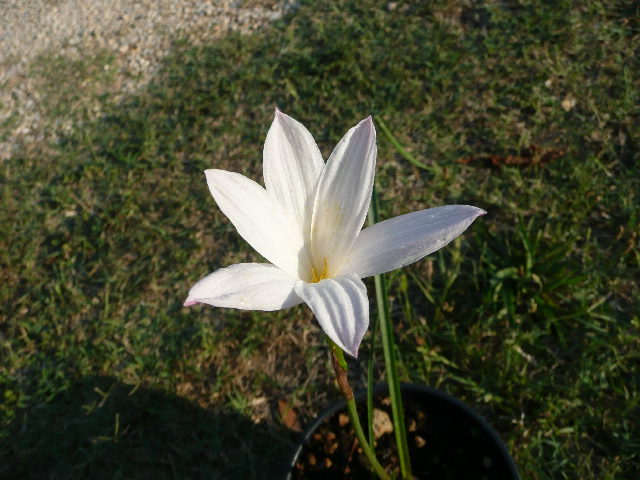
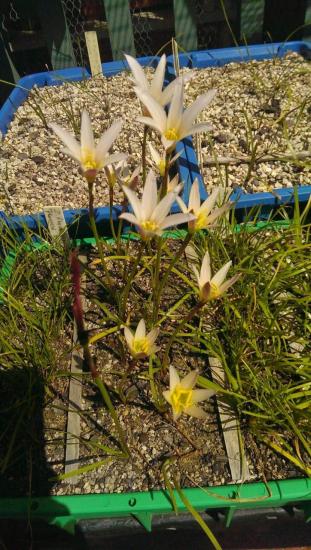
Habranthus magnoi Ravenna is summer growing species from Argentina with white trumpet shaped, non reflexed flowers. Height: about 15 cm. Photos 1 and 2 from Alessandro Marinello. Photos 3 and 4 from Ina Crossley.
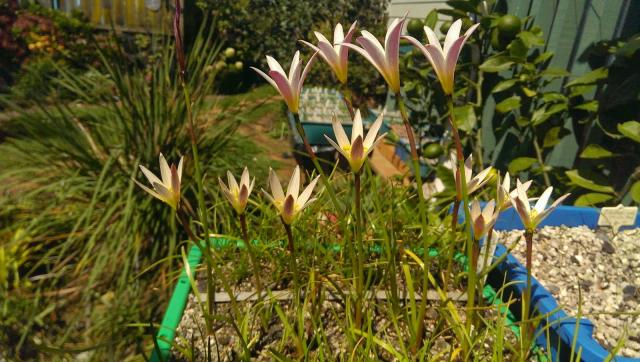
Habranthus martinezii Ravenna is a very nice species with white flowers inside and pink outside. It has a very particular distribution, occurring in northwest, central and northeast Argentina. Height range: 30-45 cm. Photos by Germán Roitman and Jay Yourch.
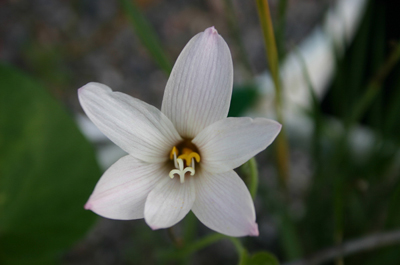
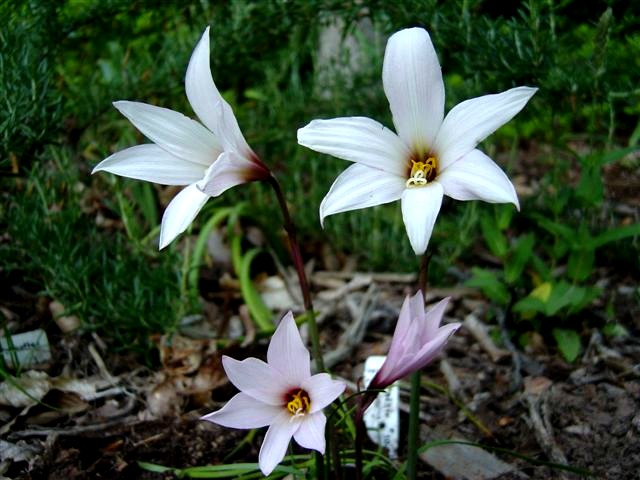
Habranthus pedunculosus Herb. also has wire-like leaves (3-4 mm wide), is native to Argentina with the leaves falling in December, followed by flowering during February. Inflorescences produce 1 to 3 flowers that are pink, white and dark red. Height: to about 25 cm. Photos by Germán Roitman.
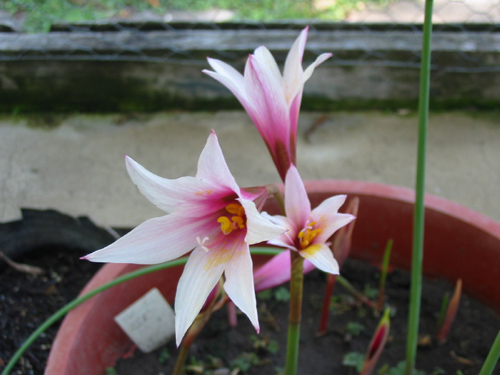
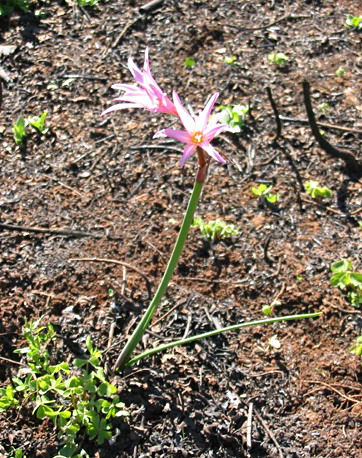
Habranthus robustus Herb. is native to Argentina and Brazil. It grows in an area that gets year round rainfall with a brief dry period in late summer. It can be brought into bloom more than once by providing a dry period and then soaking the pot. It is an autumn/winter/spring grower with a hot summer dormancy. Height range: 15-30 cm. Photos by Bill Dijk, Nestor White, and Doug Westfall. The last photo from Bob Rutemoeller shows the flower of a group of bulbs that were dormant and were soaked in a peroxide solution to treat Stagonospora curtisii and repotted and two days later one was in bloom.
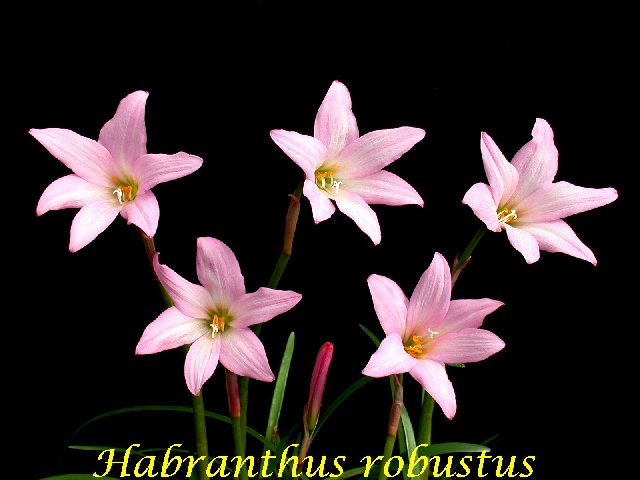
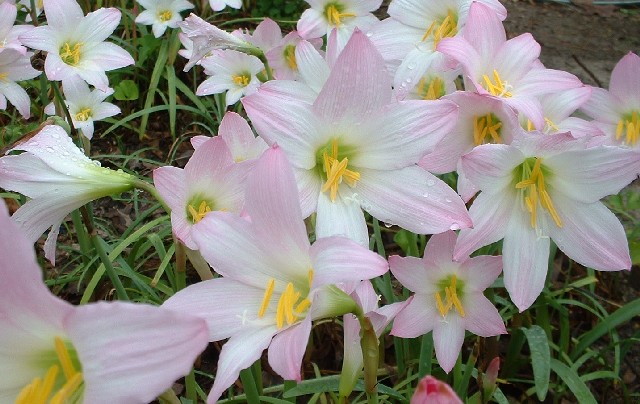
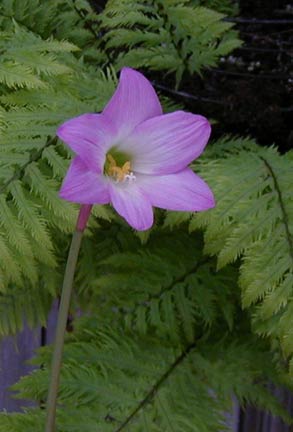
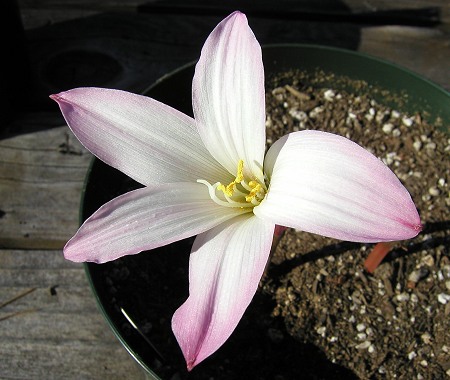
Ted Doremus form has more recurved, darker pink petals with a contrasting white center. It's a selection of H. robustus from Ted Doremus of Warren, Texas. Photos taken July 2007 by Jay Yourch.
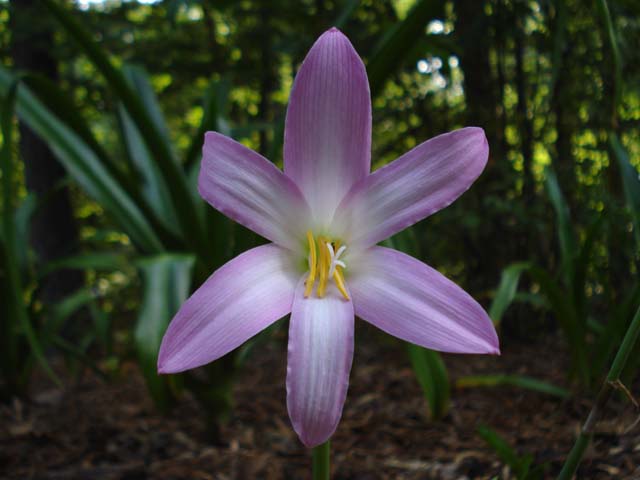
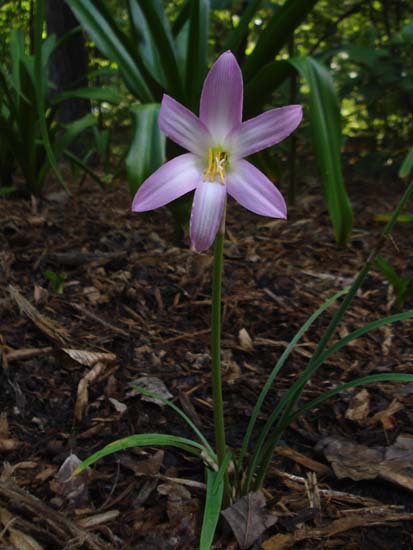
Habranthus sanavirone Roitman, J.A.Castillo, G.M.Tourn & Uria is a newly described and illustrated species from GermánRoitman, Alberto Castillo, Graciela M. Tourn, and Rolando Uria, 2007. It is found in sandy soils of central Argentina and resembles Habranthus robustus in size. It is different as it does not have bulblets, has glaucous leaves and recurved light yellow tepals. Height range: 25-30 cm. Photos by Germán Roitman.
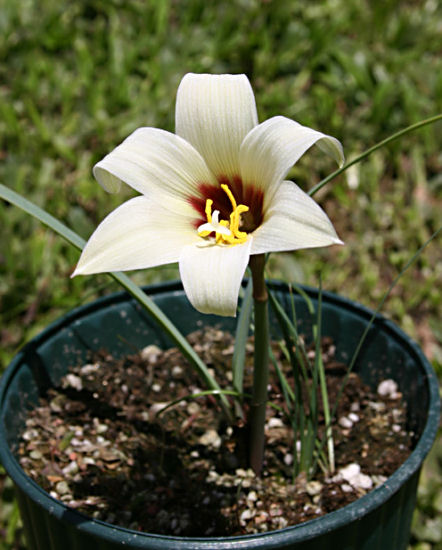
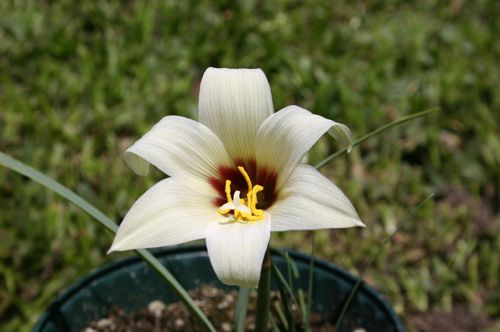
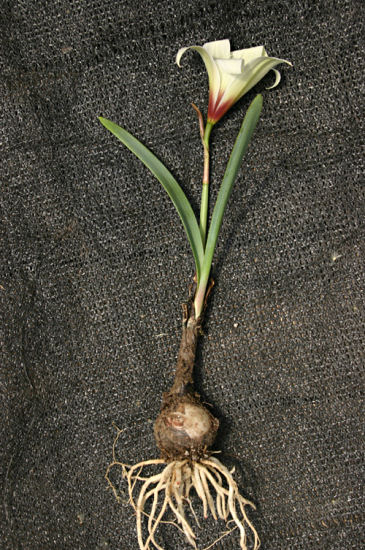
Habranthus sylvaticus (Mart. ex Schult. & Schult.f.) Herb., syn. Zephyranthes sylvatica, is native to the interior of the Northeast Region of Brazil, in half-barren climate (dry during 7-8 months of the year), in a type of vegetation called "Caatinga" in the language of the Tupi Nation. Height range: 15-30 cm. Photos taken December 2006 by Tarcísio Eduardo Raduenz.
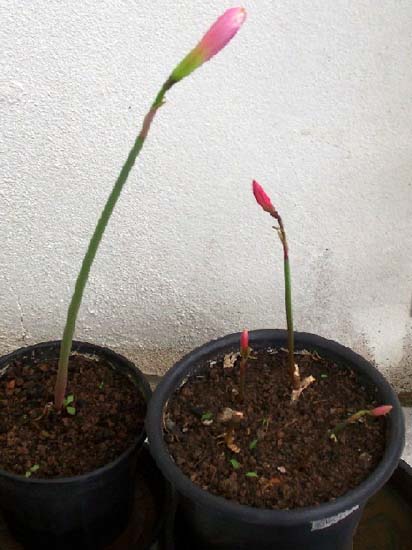
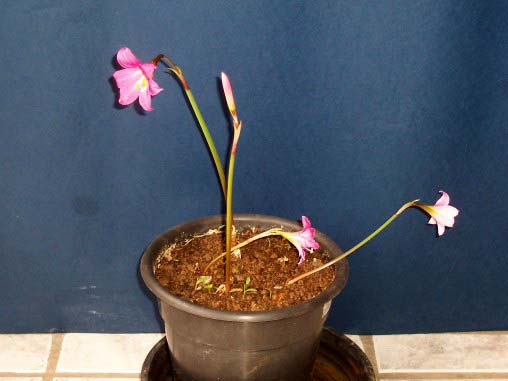
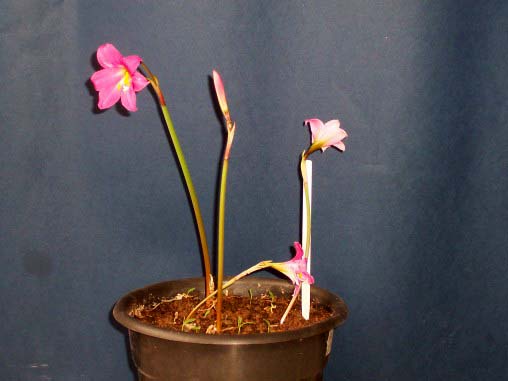
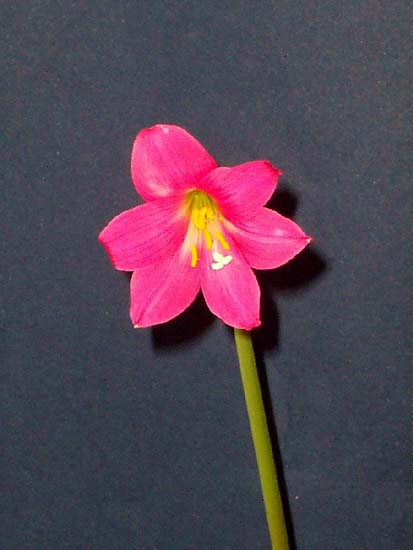
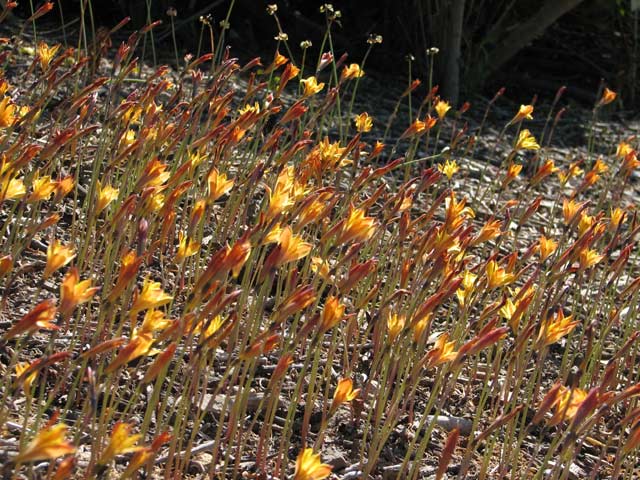
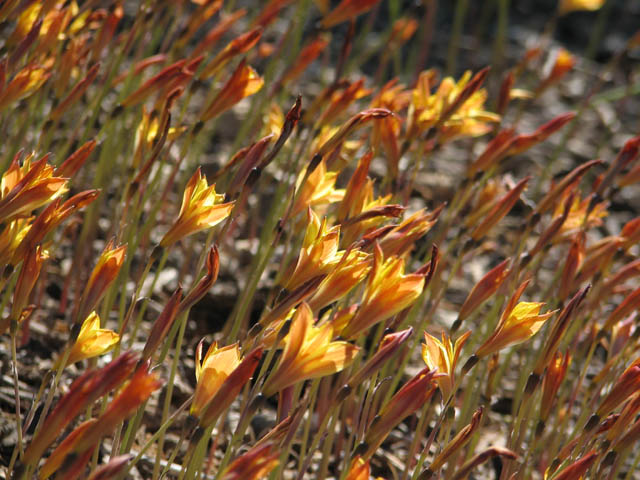
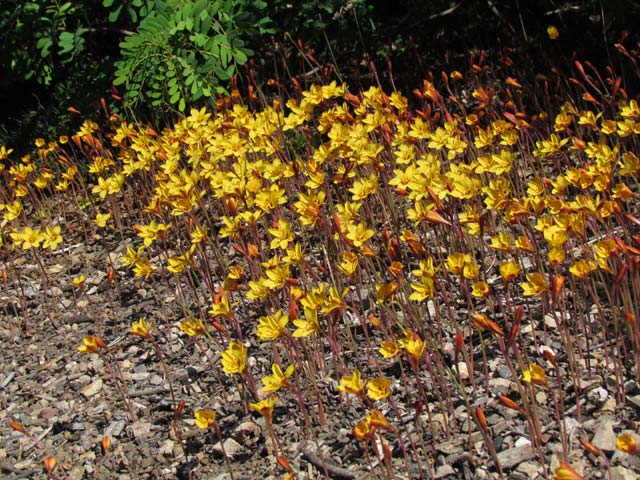
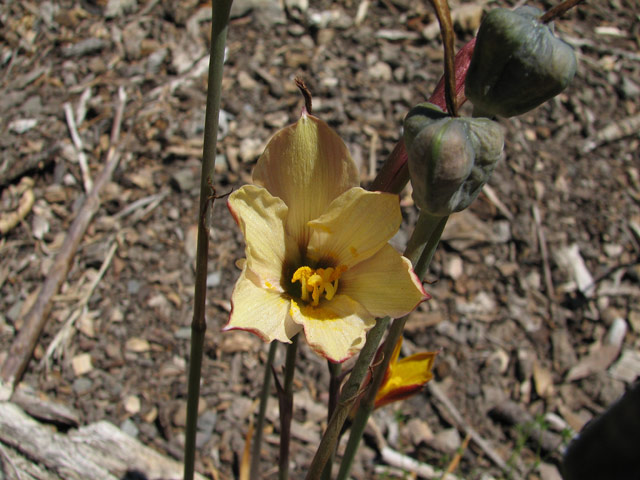
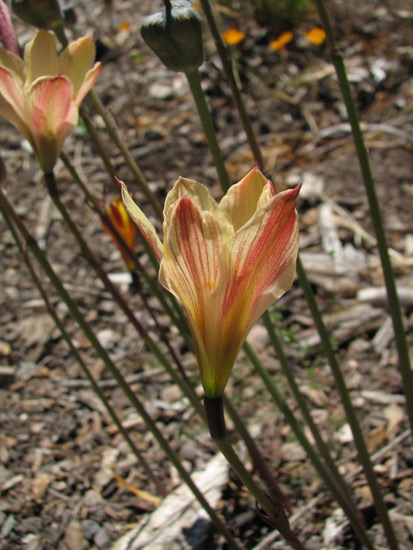
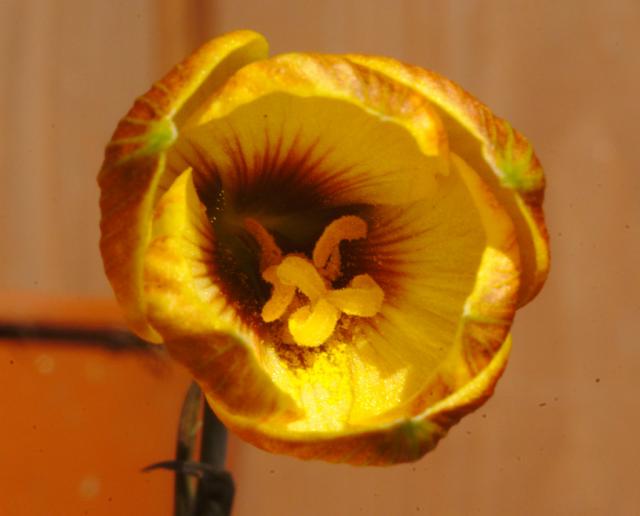
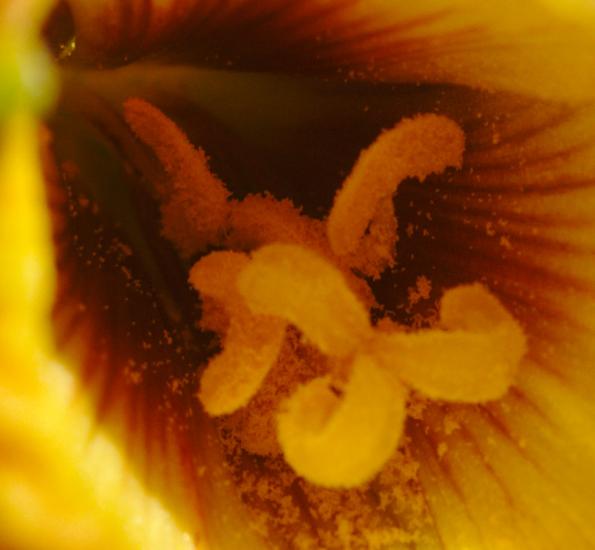
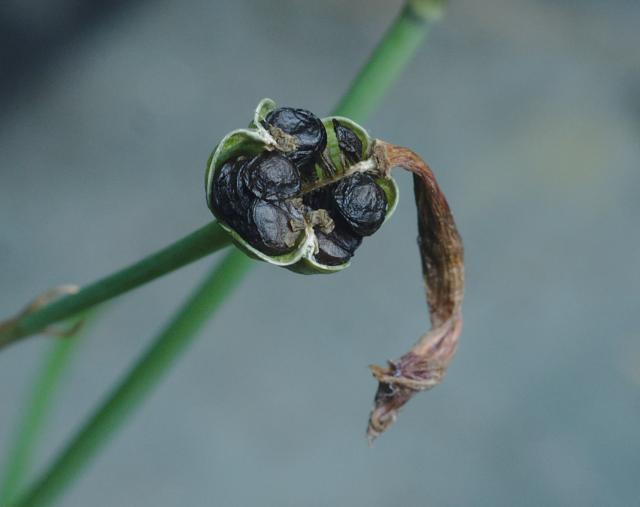
Habranthus tubispathus (L'Hér.) Traub (syn. H. andersonii, H. texanus) is a widespread species that occurs in the states surrounding the Gulf of Mexico, the Caribbean, disjunct in Central America and appearing again in South America. The variety texensis is found in Texas and Louisiana and is yellow-orange with streaks of bronze. In areas with summer rain, it blooms after a good rain. In California where the summer is dry and relatively cool, the blooms appear quickly right after or around the first rain shower of the autumn season. It perhaps responds to the change of barometric pressure. Seeds sown in a well draining mix sprout about 13 days after sowing. Height range: 15-45 cm. Photo 1 was taken by Bob Rutemoeller. Photos 2-3 were taken August 2003 by Lee Poulsen of plants grown from seed purchased from Chilterns. Photo 4 taken by Nhu Nguyen shows the seeds bursting from the pod. This is a summer dry form that grew perfectly fine in Louisiana. Even with the constant wet, it dropped its leaves and bloomed after waking up from dormancy. Photos 5-6 below by Nhu Nguyen show a very nice broadly opened form grown from seeds from PBS BX 179 (received as Zephyranthes katherinae).
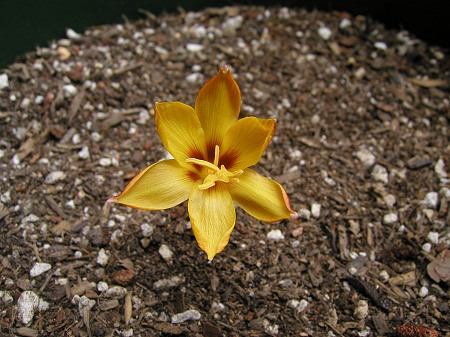
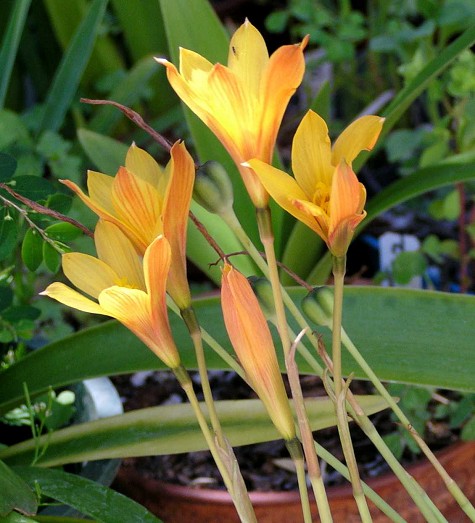
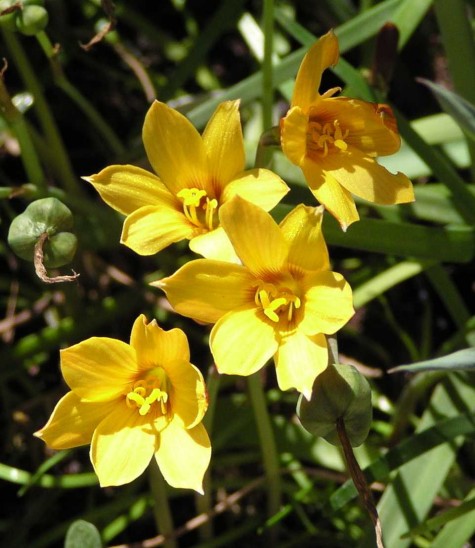
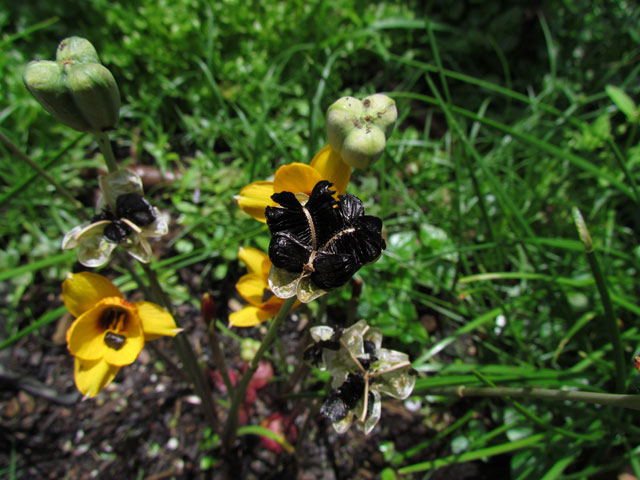
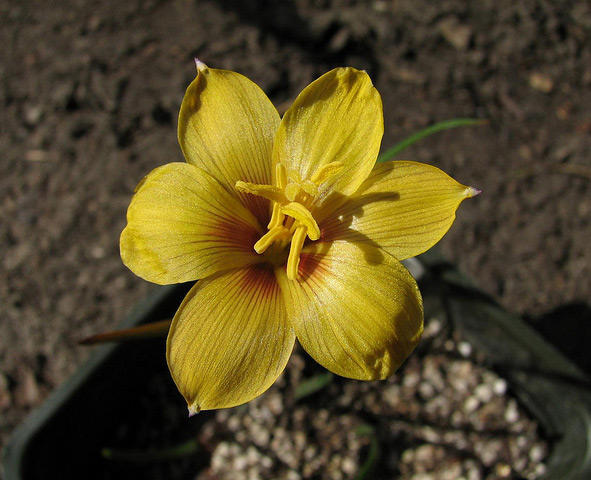
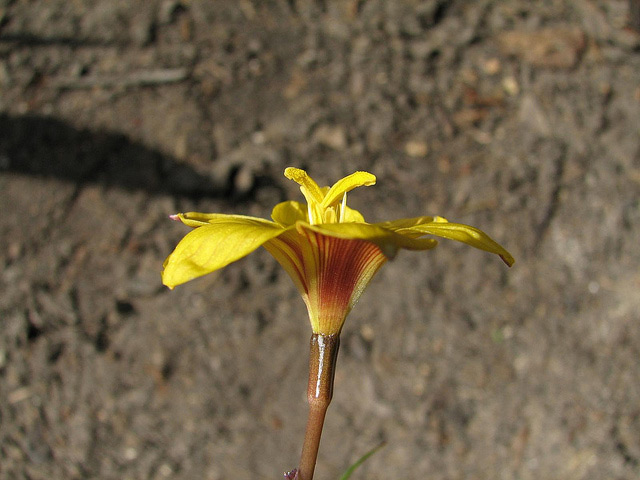
These photos were taken by Nhu Nguyen at the UC Botanical Garden. Photos 1-4 show a fantastic mass blooming. Photos 5-6 show a different color form.

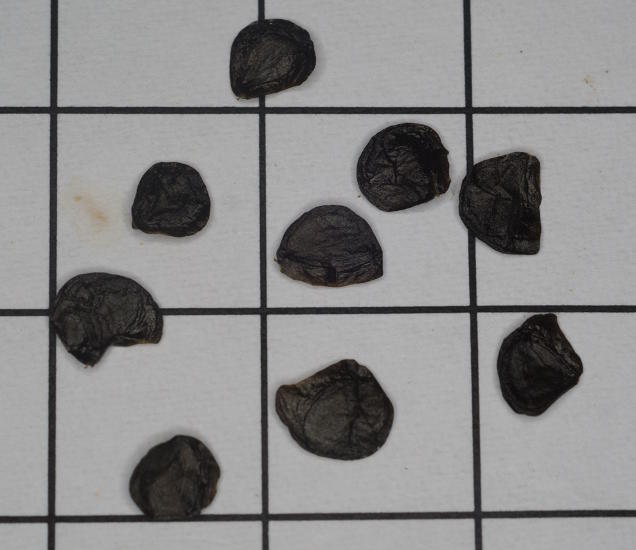
Photographs by David Pilling of flower, resulting seeds on a 10 mm grid and one of the seeds germinating.
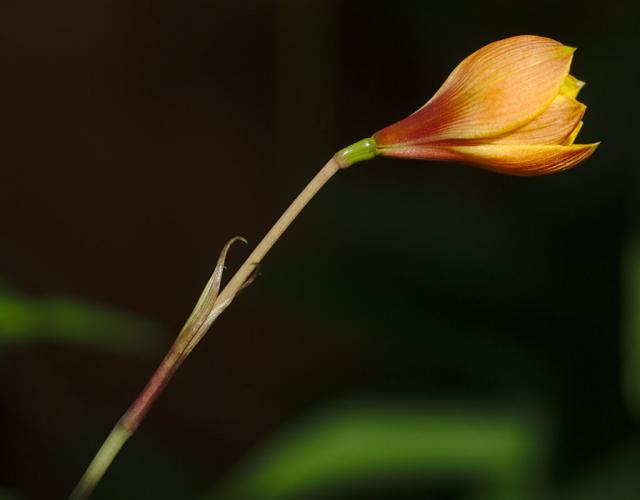

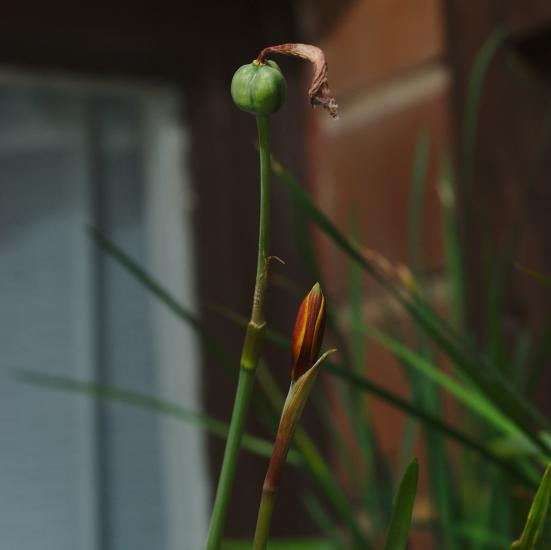
Photos of a seed pod and bud, and an open seed pod.
Habranthus tubispathus var. roseus is no longer treated as a valid variety but we are including it here. The photos show what the flower looks like face on and what the outside of the petals look like. Photos taken August 2004 by Lee Poulsen of seed-grown plants.
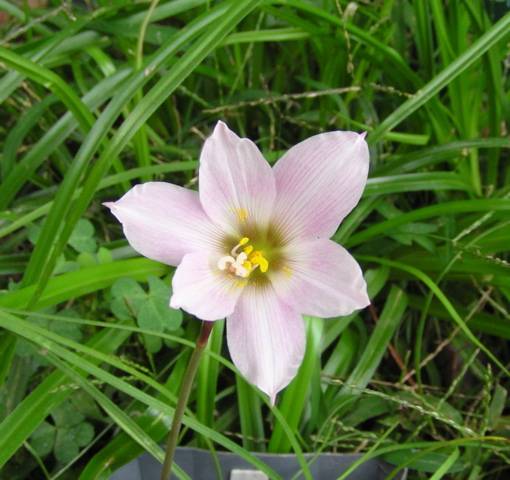
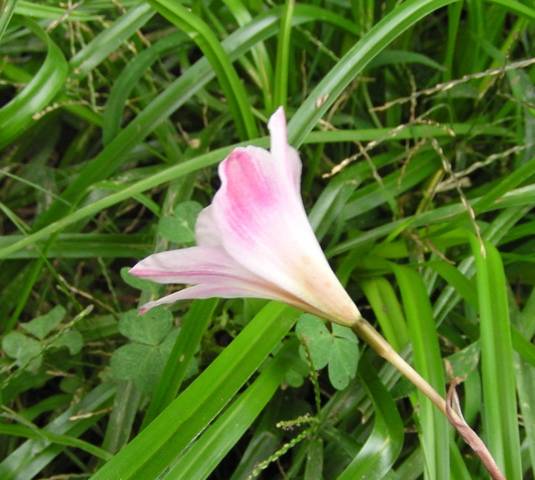
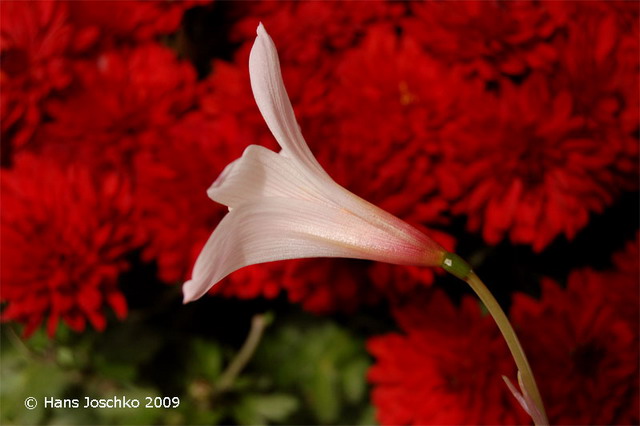
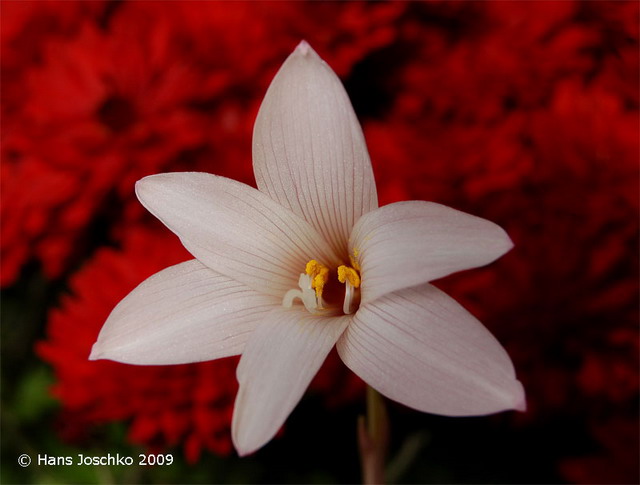
Habranthus versicolor Herb. is listed under the synonym of Zephyranthes versicolor (Herb.) G.Nicholson by Kew, but our South American experts say we should keep it under this genus. It is an Uruguayan species that grows in grassland near the east coast. It is very similar to Habranthus martinezii but has shorter and broader leaves than that species and flowers start with a stunning ruby red bud that opens a pale pink with reddish brown base. It is an autumn/winter/spring grower and summer dormant with almost year round rains. Only a late summer drought precedes flowering in early autumn. It sometimes blooms with leaves present. Height range: 15-30 cm. Photos by Alessandro Marinello and Hans Joschko.
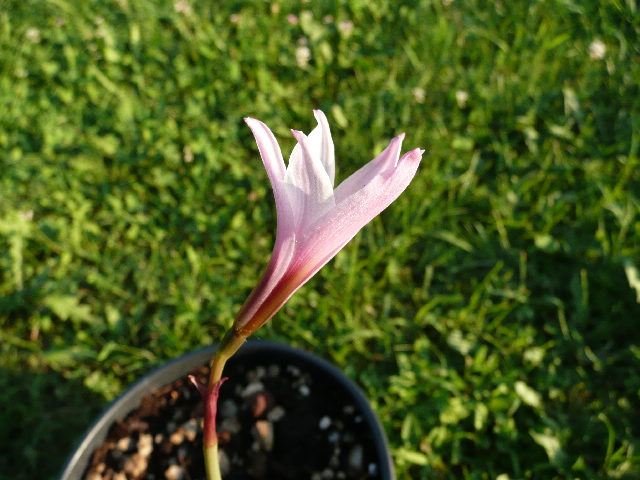
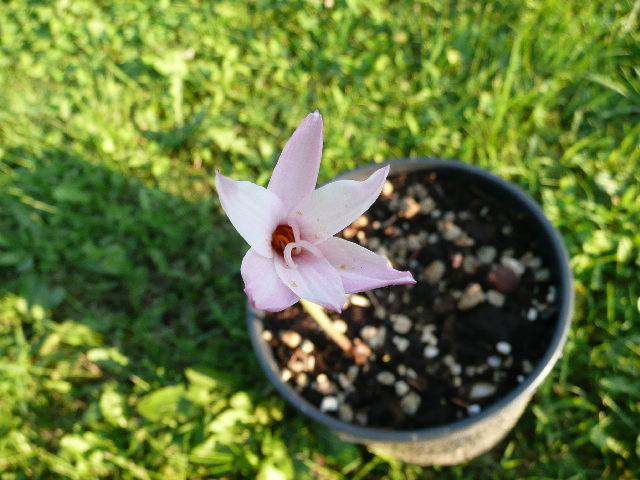
Habranthus × hybrid (ex. Yucca Do) is the name Yucca Do gave when they sold it. I don't think they indicated what they thought it was a hybrid of. It looks somewhat similar to several other pink Habranthuses that are blooming at the moment. Photo taken September 2003 by Lee Poulsen.