Hippeastrum is a genus in the family Amaryllidaceae with 70-75 species and 600+ hybrids and cultivars. The genus is native to tropical regions of the Caribbean, Mexico and South America. The Hippeastrum main page has information about cultivation and lists the species and hybrids that are included in the PBS wiki.
This page contains Hippeastrum species a-o. Other species are found on the Hippeastrum species p-z page.
Hippeastrum aglaiae (A.Cast.) Hunz. & A.A.Cocucci is a rainforest species from northern Argentina with orange, cream or pink flowers. Height range: 30-60 cm. Photograph by Germán Roitman
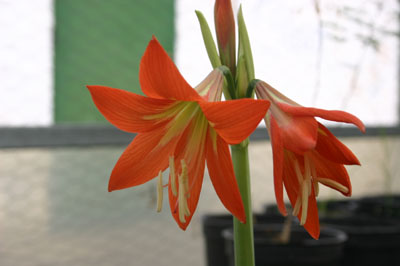
Hippeastrum angustifolium Pax is a bog species from northern Argentina with big and spectacular flowers. Height range: 30-60 cm. Photograph by Germán Roitman.
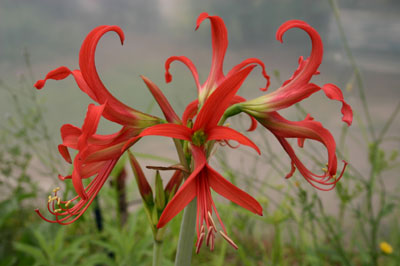
Hippeastrum argentinum (Pax) Hunz. (syn. Hippeastrum tucumanum) is native to Tucuman, Catamarca, and Salta, northwestern Argentina. It is one of the white trumpet species that are commonly known as "azucenas" or "lilies". It has long strap-shaped, and mostly pure white tepals. There is a form with pinkish reflexes and is described by Piero Ravenna as H. argentinum forma rosea. In habitat, plants receive rain from December-March (part of spring and summer). Dormancy takes place during part of autumn, winter, and part of spring. Height range: 45-60 cm. Photos by Doug Westfall.
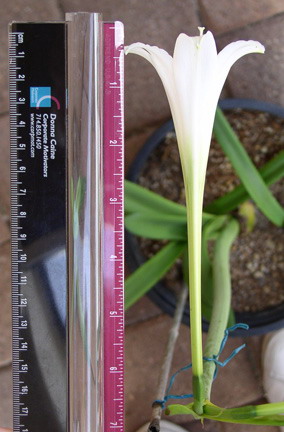
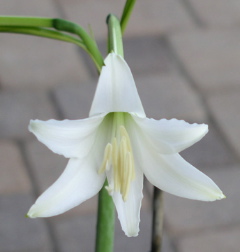
Hippeastrum aulicum (Ker Gawl.) Herb. see the Hippeastrum aulicum page.
Representative photos of this species. Photo 1 was taken by Lee Poulsen, photo 2 by Doug Westfall, photo 3 by Angelo Porcelli, and photos 4-6 by Tarcísio Eduardo Raduenz.
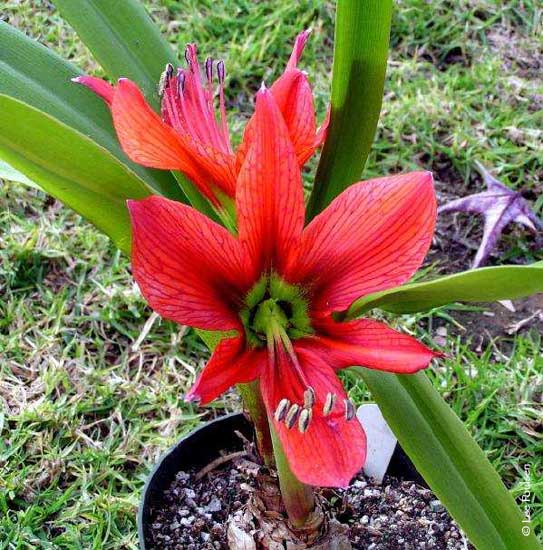
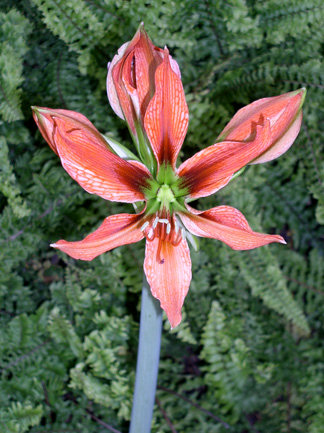
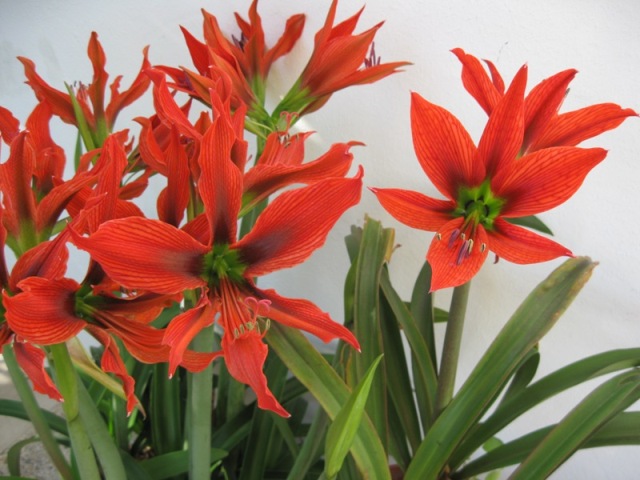
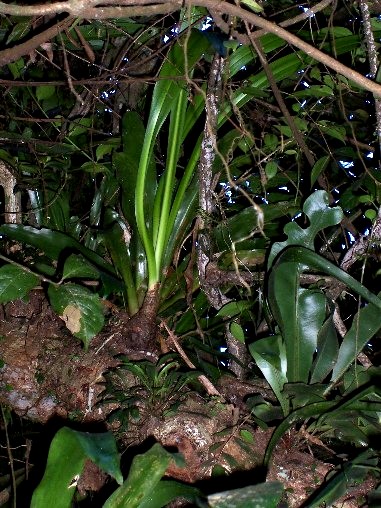
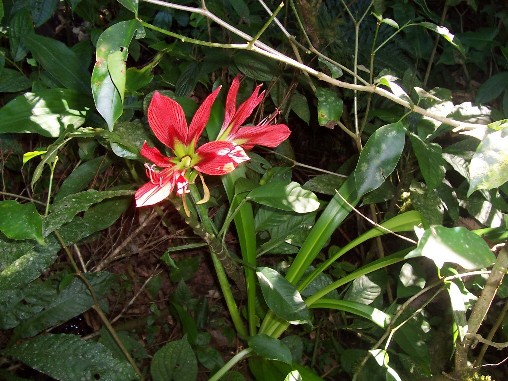
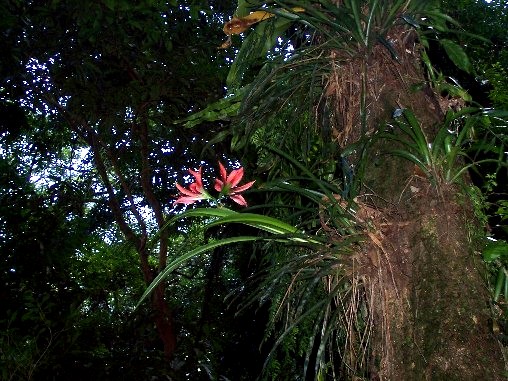
Hippeastrum blossfeldiae (Traub & J.L.Doran) Van Scheepen is native to São Paulo State, Brazil. Bulbs grow on sand banks along the coast. In cultivation this species likes full sun during the growing season and a dry winter rest. During winter rest the plant may stay evergreen. The photos below were taken by Nhu Nguyen.
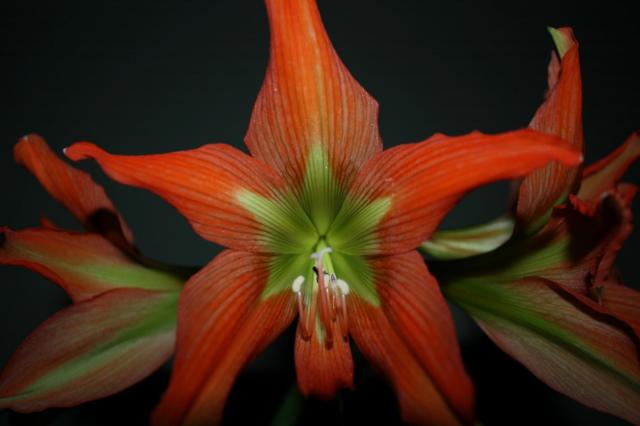
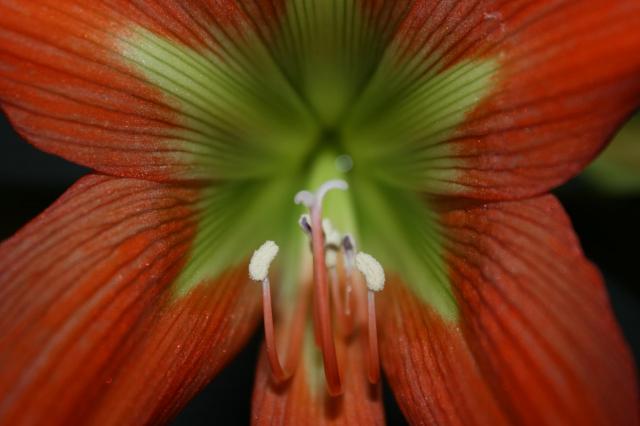
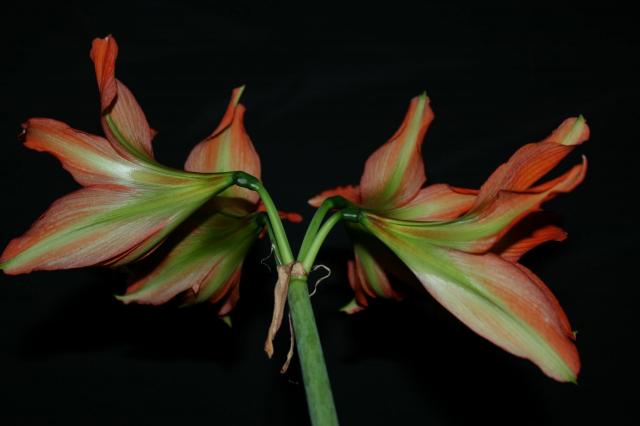
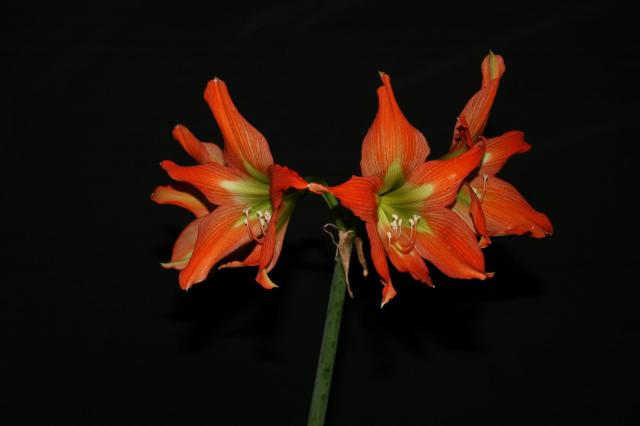
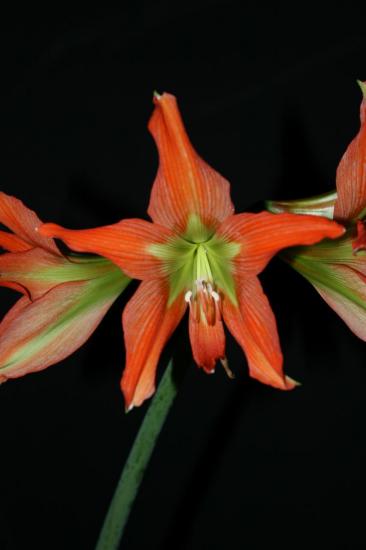

Hippeastrum bukasovii (Vargas) Gereau & Brako is endemic to areas at 1400–1800 m (4600-6000 ft), in heavy forest mulch at the bottom of steep canyons and valleys in Sandia Province in the Department of Puno, eastern Peru. In this native habitat of the Andes, the days are warmish with cool nights. The climate is mild year-round with rainfall mostly spring and summer. Bulbs bloom in September (spring) in habitat. This species can be difficult in cultivation because of the temperature requirements. The species produces large bulbs and leaves and appreciates good water and fertilizer during the growing season. During winter, they should be watered only sparingly around the bulbs as any water that gets into the crown can rot the bulbs. Photo 1 was taken by Doug Westfall in March. Photos 2-3 were taken by Uluwehi Knecht of a different seed-grown form.
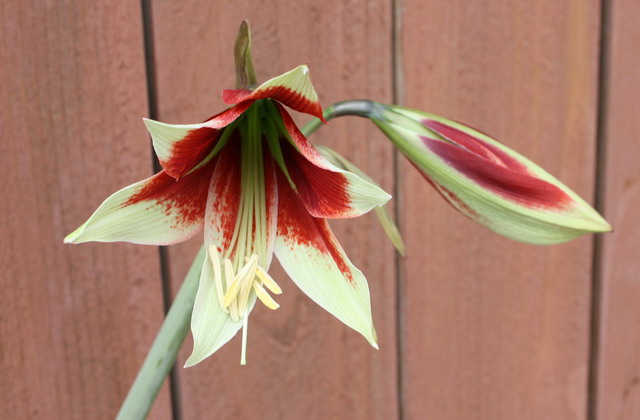
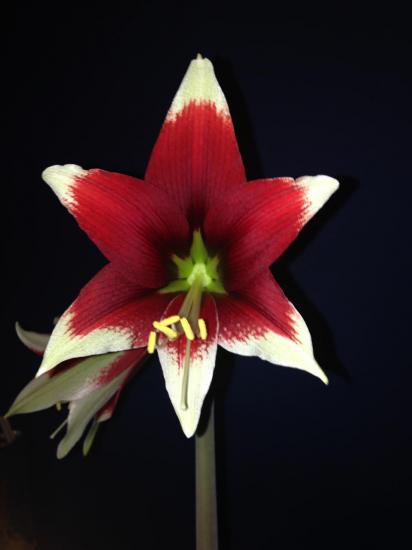
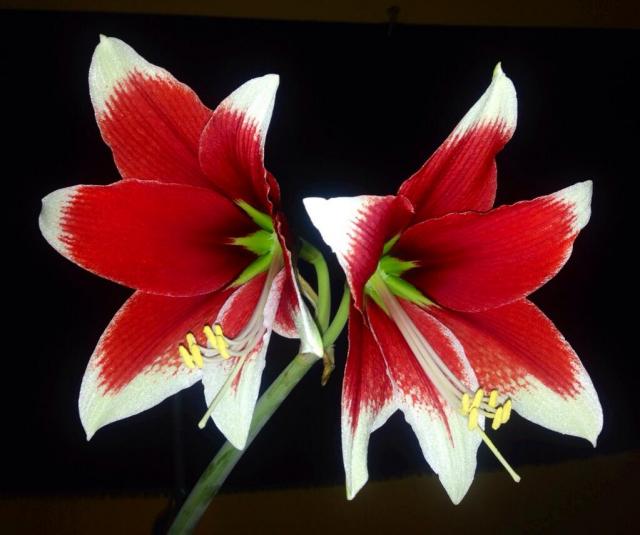
Hippeastrum calyptratum (Ker Gawl.) Herb. see the Hippeastrum calyptratum page.
Representative photos of this species: photo 1 was taken by Digby Boswell, photo 2 was taken by Johannes-Ulrich Urban, photos 3-4 were by Nhu Nguyen, photo 5 was taken by Uluwehi Knecht and photo 6 of the fruit was taken by Gianluca Corazza.
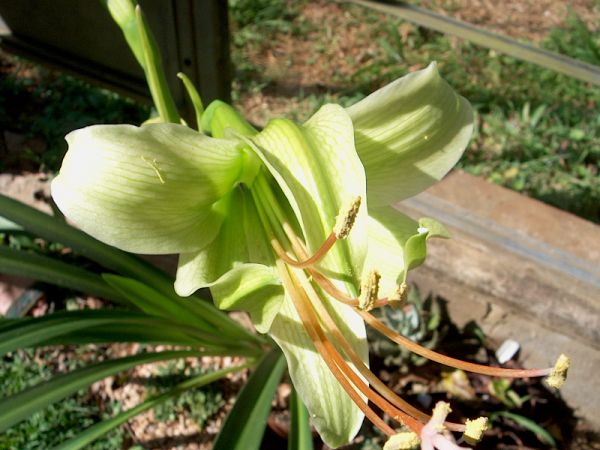
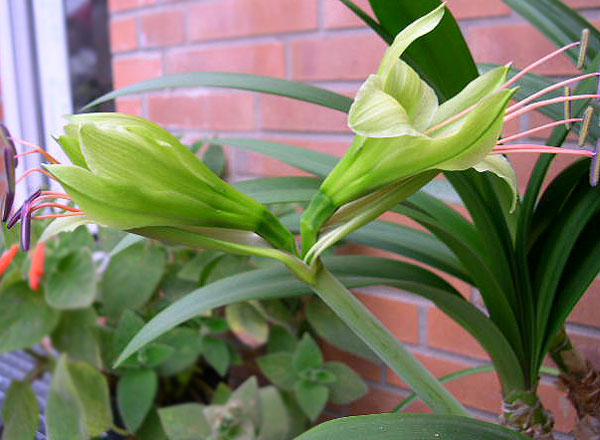
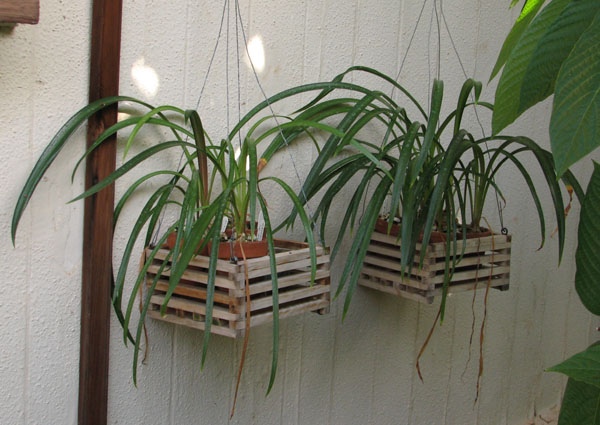
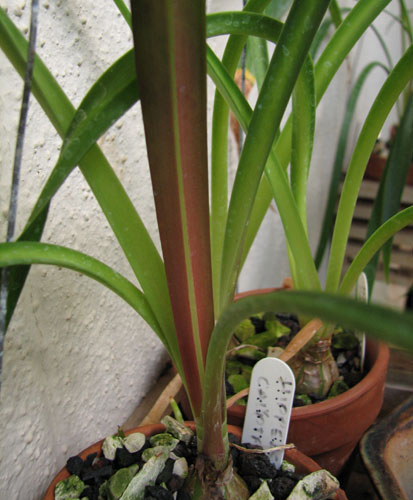
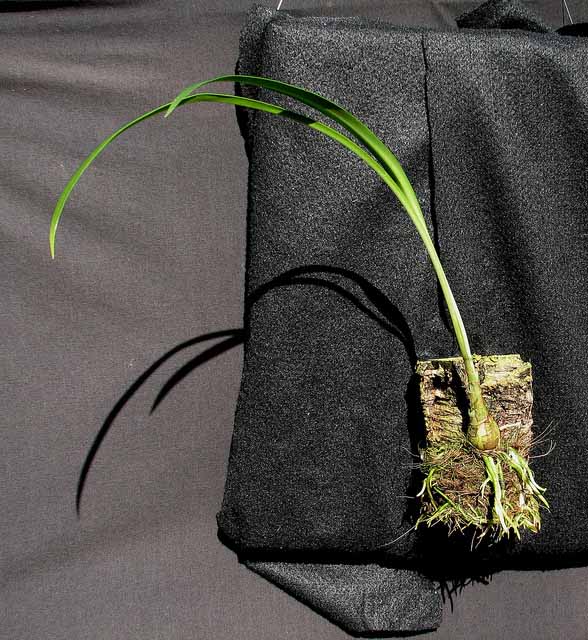
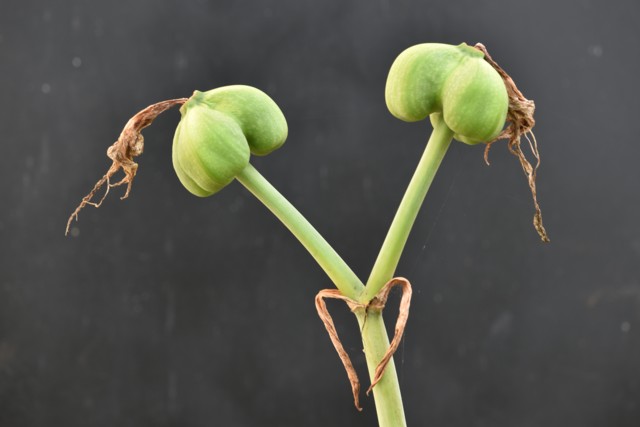
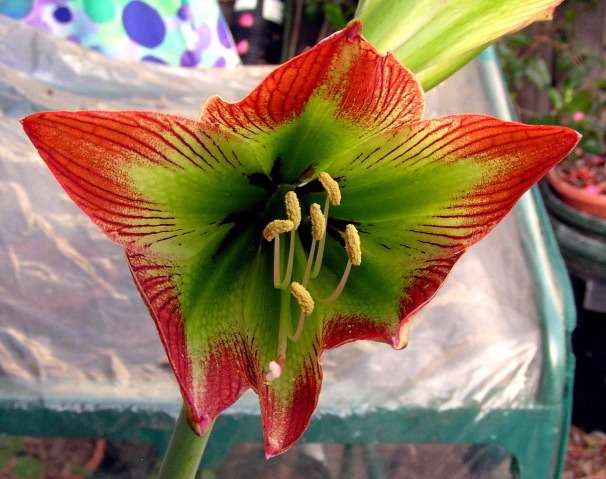
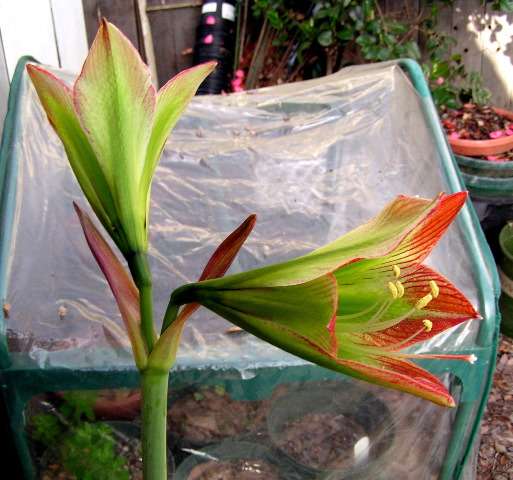
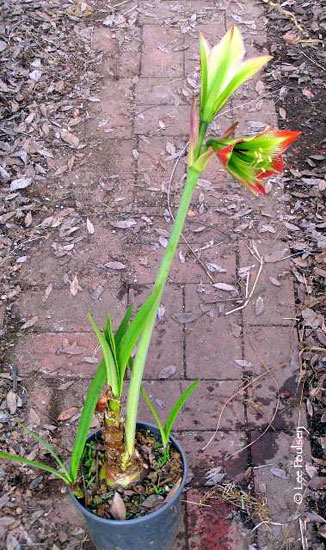
Hippeastrum correiense (Bury) Worsley is native to Brazil. Lee Poulsen wrote: "I got this from a large Japanese bulb company (Komoriya), and was told it was Hippeastrum coliense. I can't find a picture of it on the web anywhere, and when it bloomed, at first I didn't think it looked like the picture in the catalog. But then I realized that the front-on view looked the same and I just didn't know it had such a long trumpet and that this is as wide as it opens. The scape is about 2/3 of a meter tall." Photo taken March 2004 by Lee Poulsen.
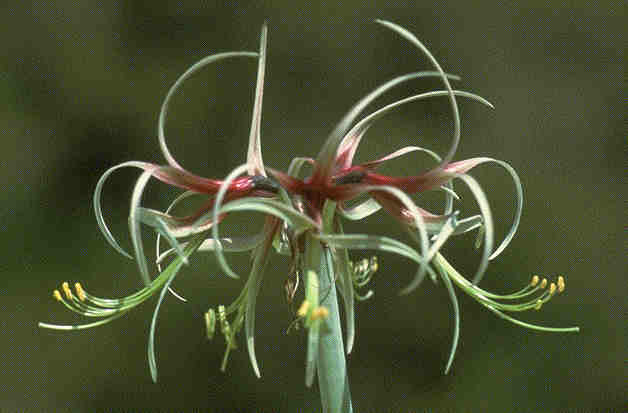
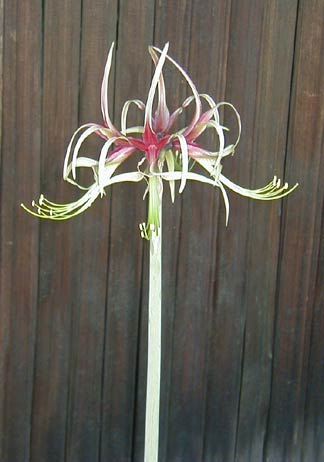
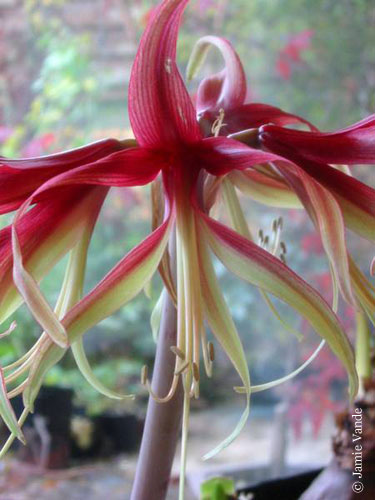
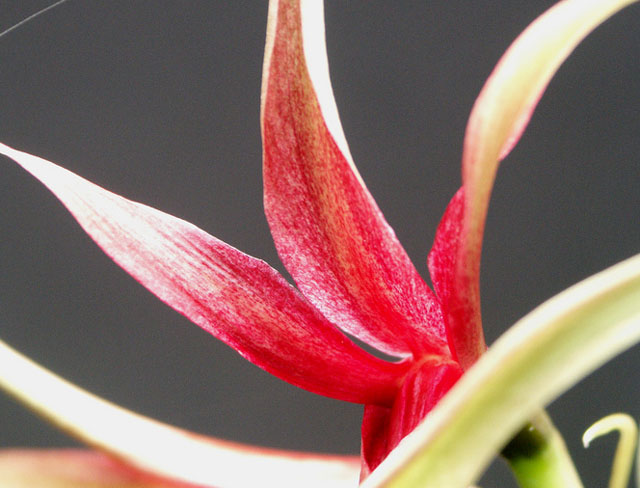
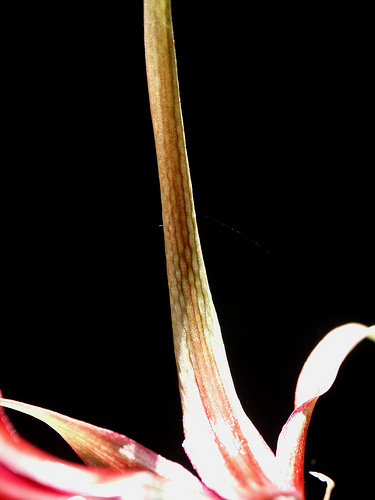
Hippeastrum cybister (Herb.) Benth. ex Baker is native to Bolivia and Argentina and is often mentioned in the literature, but is found in few collections. In habitat, plants receive rain from December-March (part of spring and summer). Dormancy takes place during part of autumn, winter, and part of spring. The stem on this first bloom is 19 inches tall. Doug Westfall says, "I think that it may be my favorite Hippeastrum". Pictures 1, 2 by Doug Westfall, 3 by Jamie Vande of a cultivar that is commonly available in Germany (may be a named clone) 4, 5 of floral colour patterns by Uluwehi Knecht.
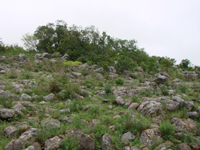
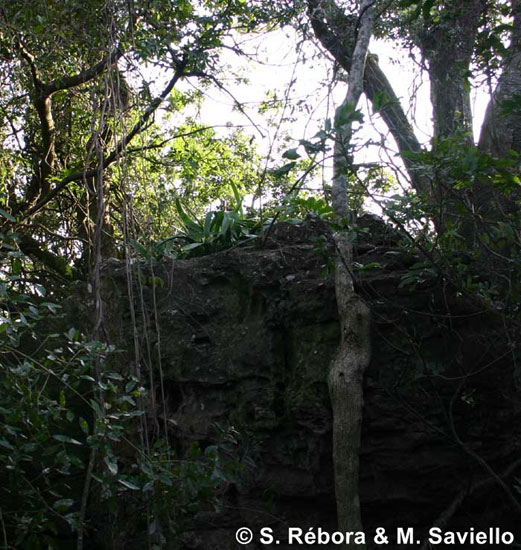
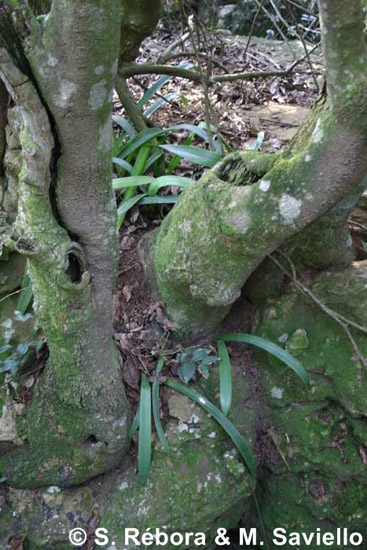
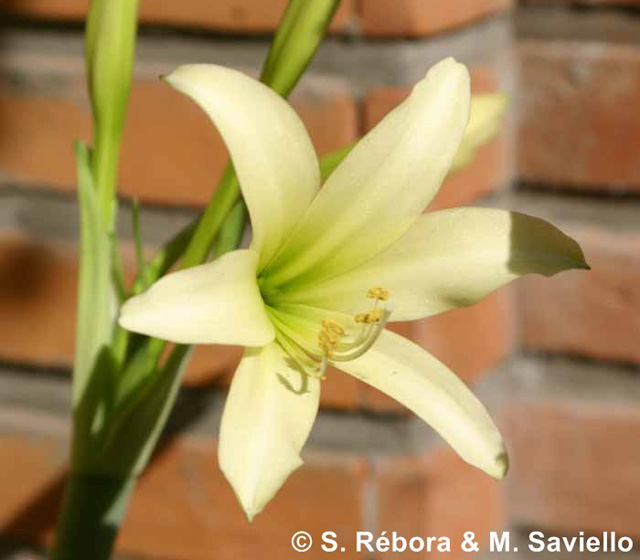
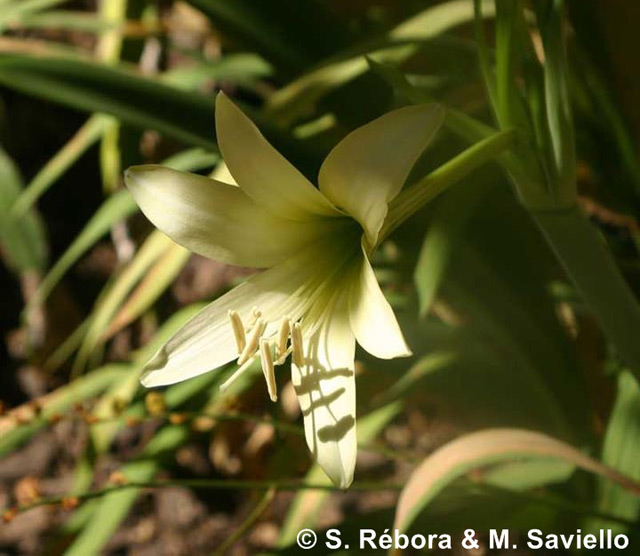
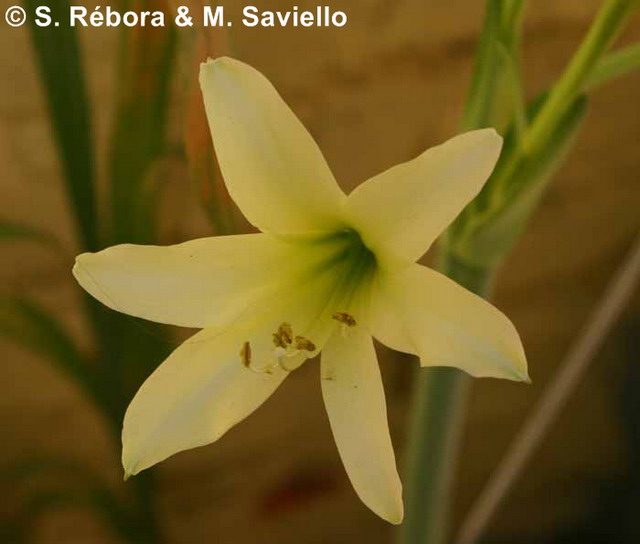
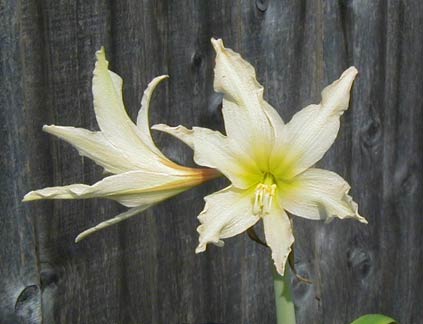
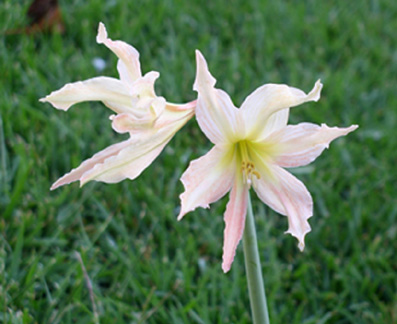
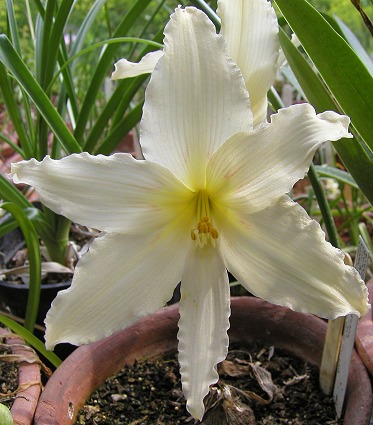
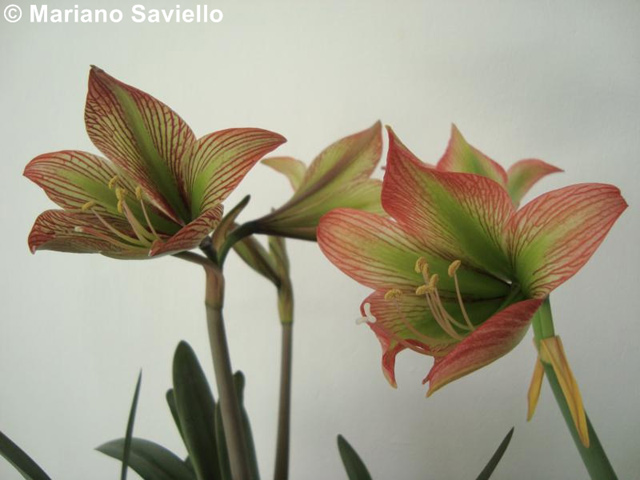
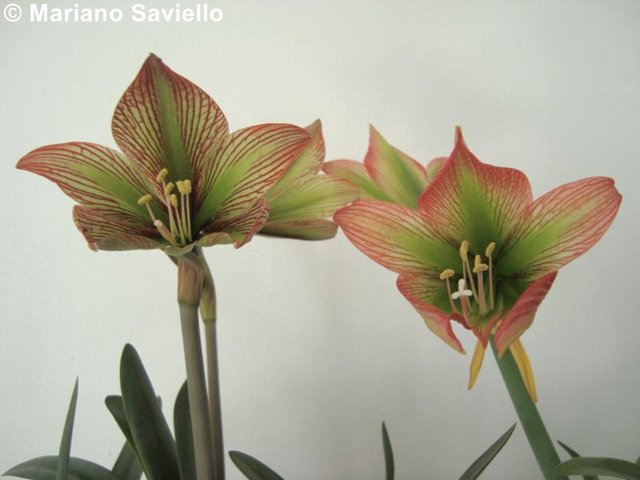
Hippeastrum "euryphyllum" (syn. Amaryllis euryphylla Ravenna 2003) cannot be found as a validly published name in major plant taxonomic databases. However, it is pretty clear that the plant is a Hippeastrum so we are including it here. The species falls within the subgenus Macropodastrum (white flowers with long tubes). In Argentina three other species of this subgenus are recorded: H. argentinum (syn. H. tucumanum, H. candidum, H. immaculatum), H. parodii and H. guarapuavicum. Hippeastrum euryphyllum can be distinguished from the others by the light yellow-creamy trumpet shaped flowers, the very short style arms, as well as the area where it grows among rocks in rocky slopes in the three hills that gave the name to the Tres Cerros hamlet, Department of San Martin, Province of Corrientes. The species also has the broad, comparatively short leaves. Photos 1-3 were taken in northern Argentina by Germán Roitman. Photos 4-6 were contributed by Mariano Saviello of plants from a different site in situ.
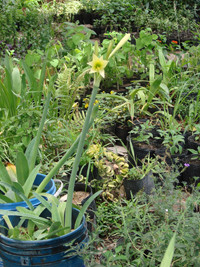
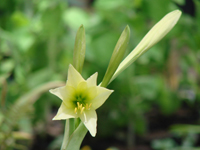
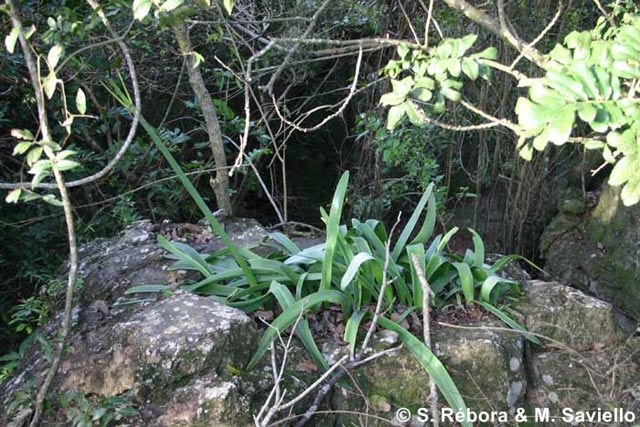
The photos below were taken by Mariano Saviello of cultivated plants.
Hippeastrum evansiae (Traub & I.S.Nelson) H.E.Moore is a species that is now rare because its previous habitats are now being used for agriculture. It grows in hot dry forests and prefers a dry warm winter. While not uncommon in collections, H. evansiae is not seen too often. It is one of the smaller of the species, but it is well worth a place in any bulb collection. This species needs a winter dormancy in order to bloom. The first 2 pictures were taken by Doug Westfall in Southern California and the third by Bob Rutemoeller shows plants blooming in Harry Hay's gardens in May 2004. Photos 3-6 were taken by Nhu Nguyen.
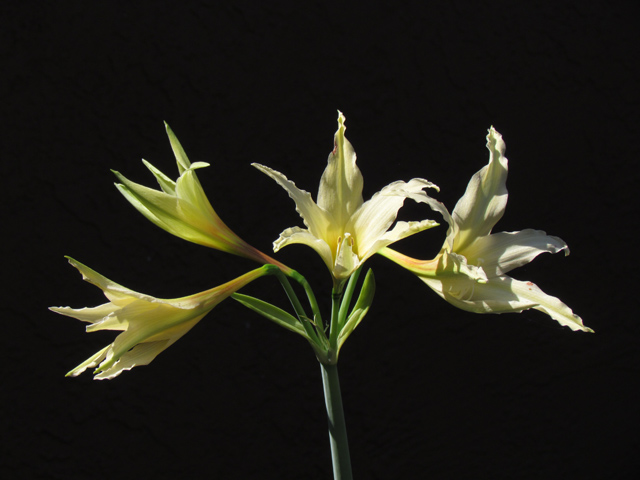
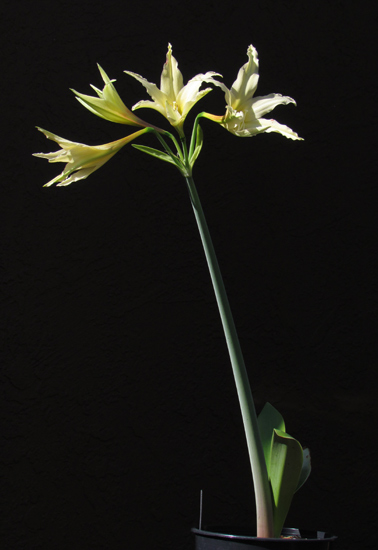
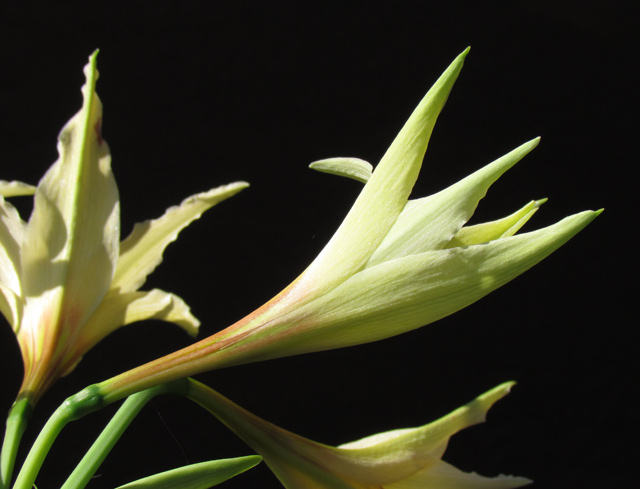
Hippeastrum ferreyrae (Traub) Gereau & Brako was first described and named by Hamilton Paul Traub in 1950 as Amaryllis ferreyrae but was known only from dry herbarium samples (it was transferred to the genus Hippeastrum by Roy Emile Gereau and Lois Brako in 1993). The name honors the Peruvian taxonomist Ramón Ferreyra. It is an endemic species of Peru and according to Blanca León et al 2006 is a bulbous plant known from two isolated populations in the east, one in the Huallaga river valley and the other in the valley of the Rio Purus; it is expected to be in the Alto Purus National Park. It is listed by IUCN (International Union for conservation of nature), as a plant vulnerable to extinction. The flower is orange red, similar to the color of Hippeastrum puniceum, but has a thin white stripe in tepals 3 and 5; it has two flowers per scape; is self-sterile, with a capitate stigma; the foliage is 24-31 inches (60 -80 cms) long; 8 to 10 inches (20 -25 cm) longer than that of Hippeastrum puniceum. Existing specimens are mostly in the hands of growers. It grows well in warm tropical weather, day temperatures of 32 -38 °C (90 -100 °F) and night temperature of 28-32 °C (82 -90 °F), annual rainfall of 120 inches (3000 mm). Photos by Fabio Suarezmotta.
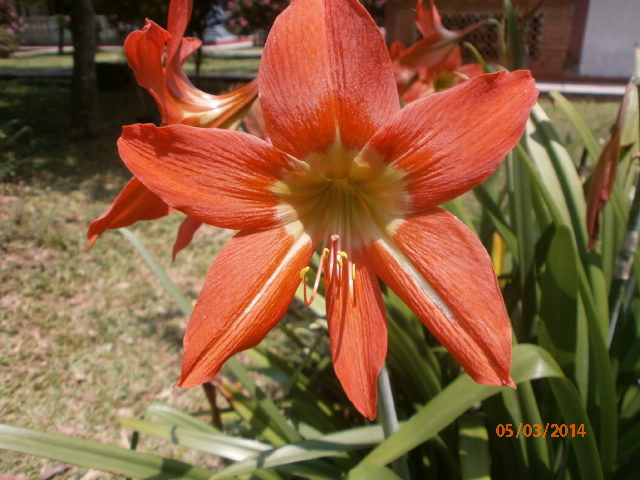
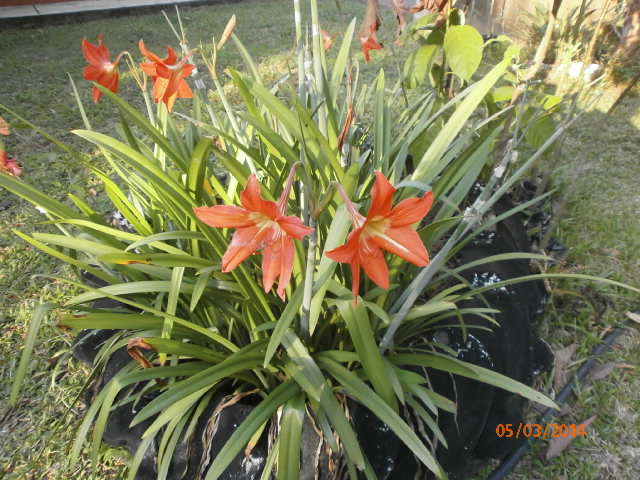
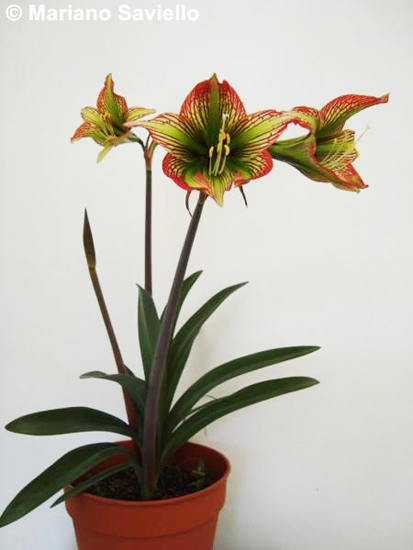
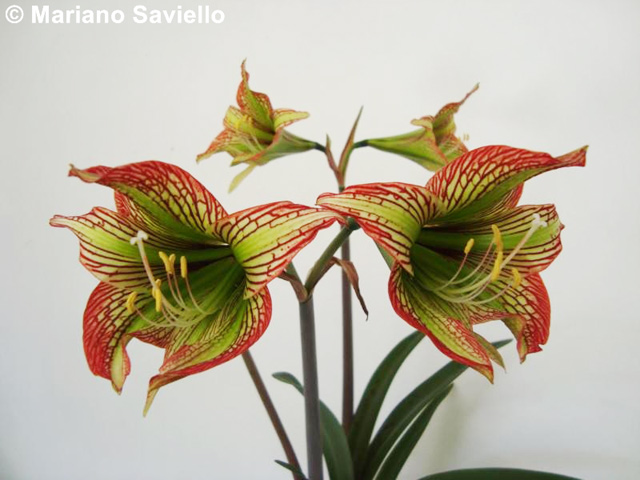
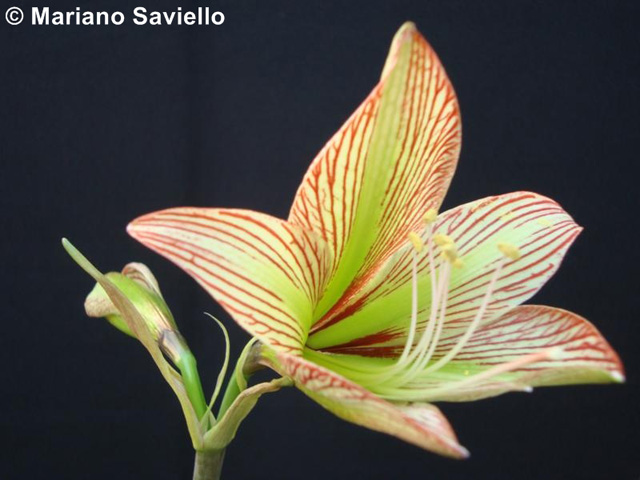
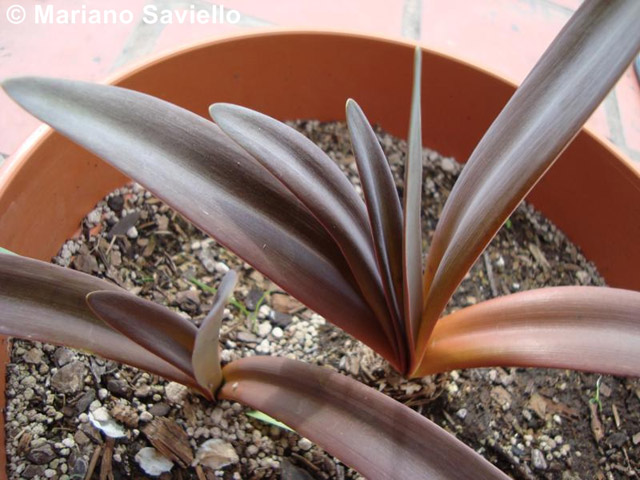
Hippeastrum glaucescens (Mart. ex Schult. & Schult.f.) Herb. is said to be a synonym or a very allied species of Hippeastrum teyucuarense. It is a winter deciduous, very variable species with glaucous leaves native to Brazil, where is known as 'Lirio Do Mato' (Lily of the Mato, referring the Matto Grosso). It is native to biomes of Caatinga, Cerrado and Mata Atlântica in the states of Bahia (North-East Brazil), Goiás, Distrito Federal, Mato Grosso do Sul (Center-West Brazil), Minas Gerais, Espírito Santo, São Paulo, Rio de Janeiro (South-East Brazil) and Paraná and Santa Catarina (Southern Brazil). A recent study by Daviña et al. stated that important similarities exist between this species and H. iguazuanum and H. teyucuarense. It can be grown as a pot plant under full sun. In cultivation (Argentina/Brazil) it flowers in early spring (September-October) and the tepals, unlike H. teyucuarense, tends to fold inwards quite easily, just two or three days after opening. The photos below were contributed by Mariano Saviello. Photo 1-3 detail the flowers. In photo 2, it is possible to appreciate the glaucous leaves which gives the name to this species. Photos 4-5 compares two closely related species: H. iguazuanum (Argentina, left) and H. glaucescens (Brazil, right). Both species flower at the beginning of spring (September-October in the Southern Hemisphere).
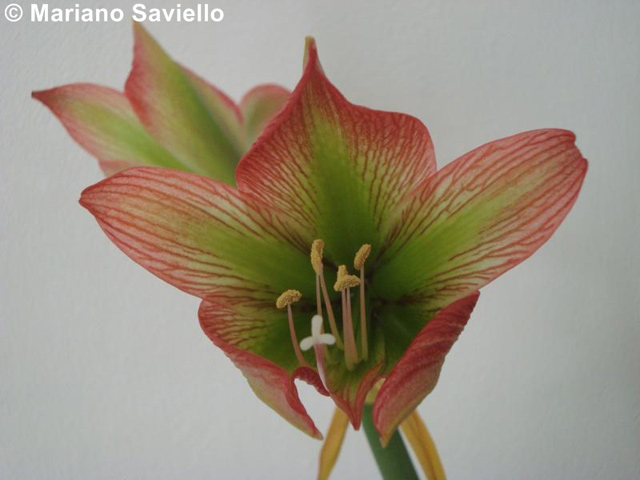
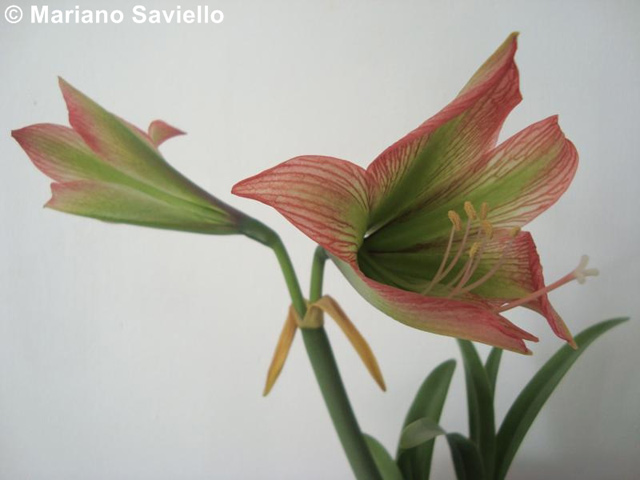
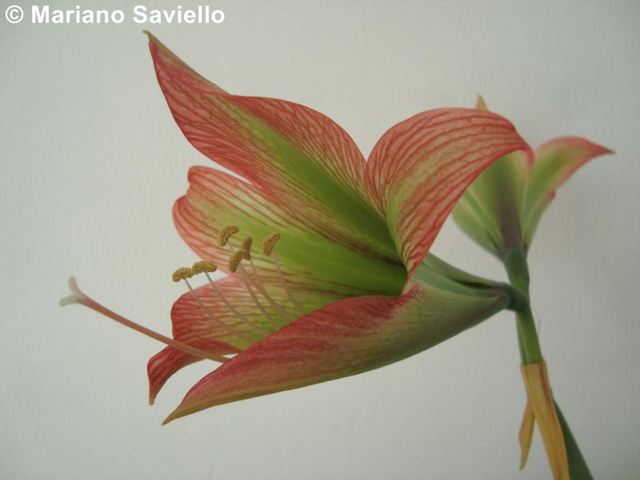
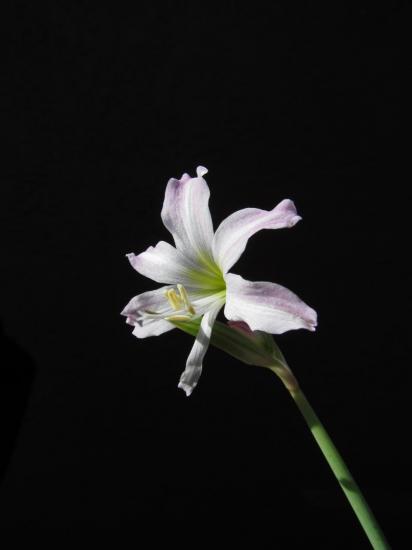
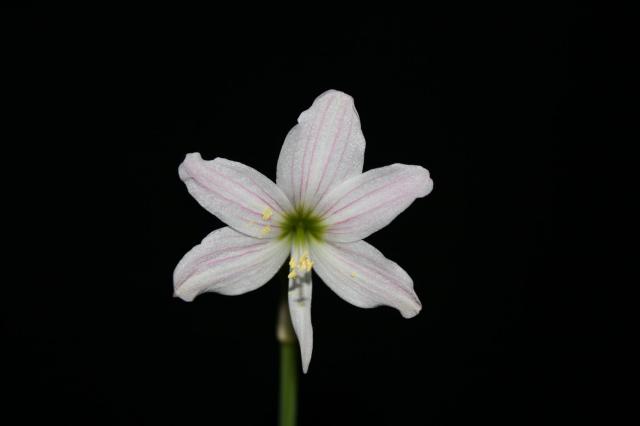
Hippeastrum guarapuavicum (Ravenna) Van Scheepen is native to the province of Misiones, Argentina. It has white and purple-striped flowers.
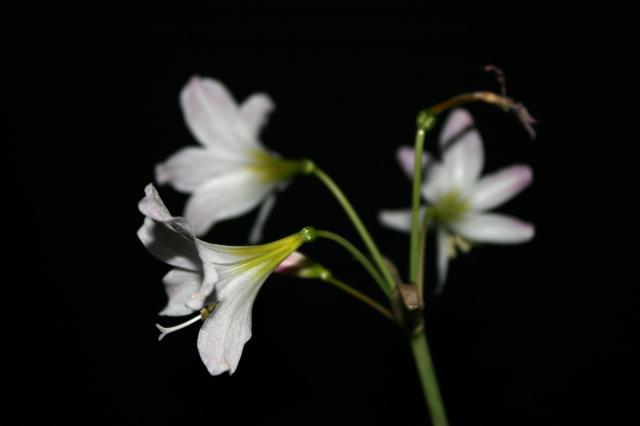
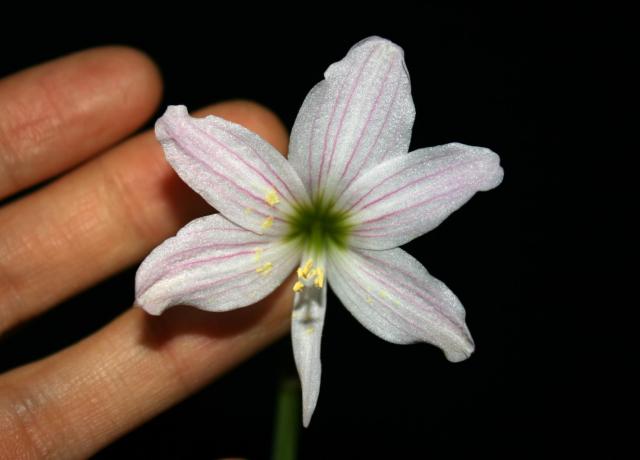
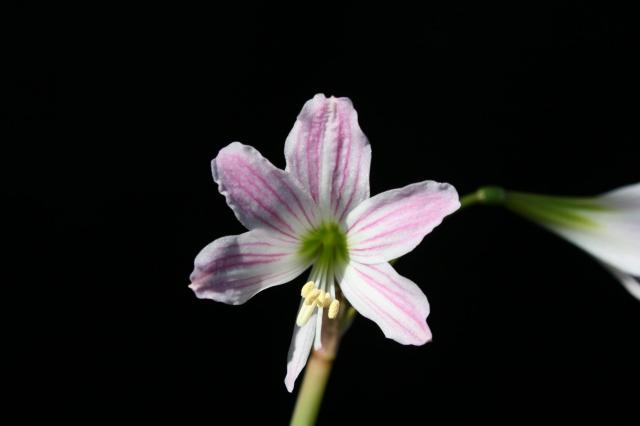
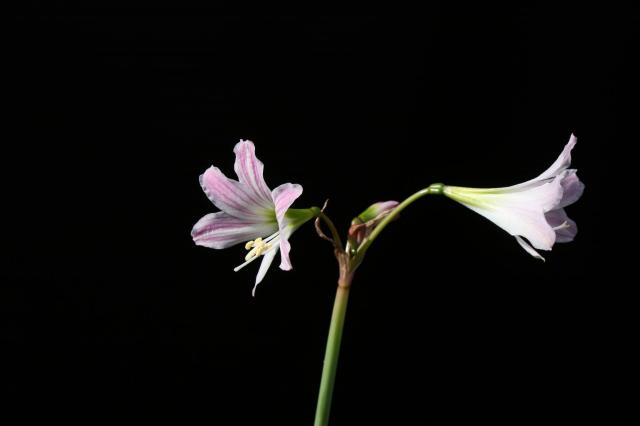
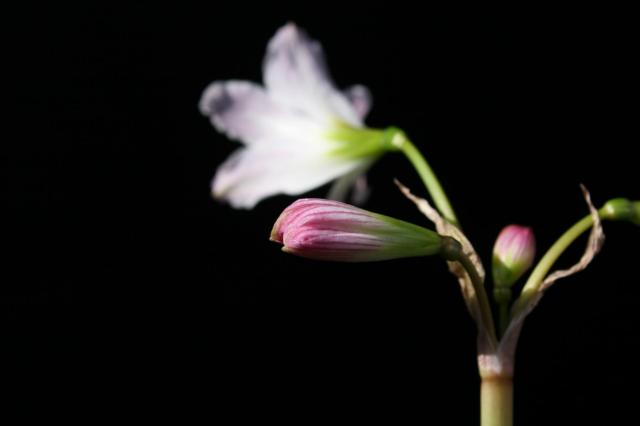
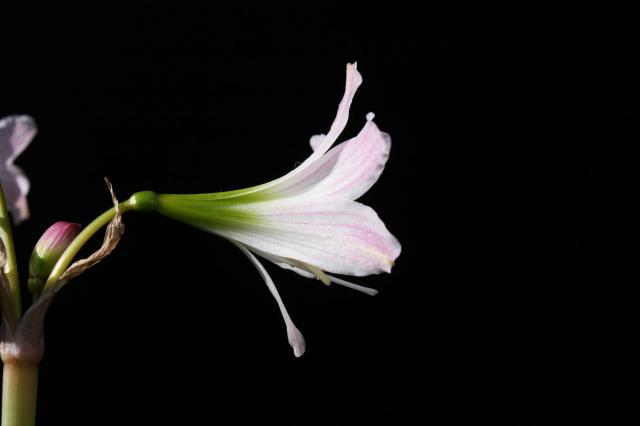
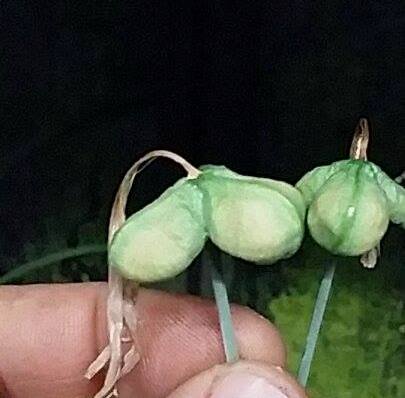
Hippeastrum idimae Dutilh & R.S.Oliveira (was H. sp. ex Cardoso Moreira) is a miniature species whose name was published on May 23rd, 2017. It comes from the city of Cardoso Moreira in the state of Rio de Janeiro, Brazil. Phylogenetically it is considered to be a more "primitive" member of the genus. This species enjoys a rich and well-drained medium with lots of good filtered sunlight and fertilizer during the growing season. It has a winter dormancy in which it should be kept more dry. There is considerable seedling variation, some with darker veins, some with lighter, and some seedlings do not pup whereas others pup quite well. This is the link to the article of the name publication.
The photos below were taken by Nhu Nguyen and Angelo Porcelli.

Hippeastrum iguazuanum (Ravenna) T.R.Dudley & M.Williams see the Hippeastrum iguazuanum page.
Representative photos of this species. Photo 1 was taken by Germán Roitman and photos 2-6 were taken by Mariano Saviello
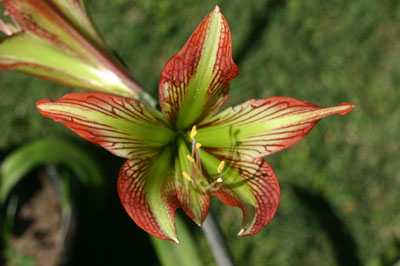

Hippeastrum intiflorum (Vargas) Gereau & Brako is native to Quispecanchis Province in the Department of Cusco, Peru. It grows in deep river gorges above 2,500 meters. Pictures of this seldom seen Hippeastrum were taken by Doug Westfall in Long Beach California. It was grown from seed by Dennis Tsang in Hong Kong and sent to me a couple of yrs. ago. Very little has been written in the literature about Hippeastrum intiflorum. These are the observations made in my Southern California garden. The Inca people believed that "Inti" (Quechua for the sun) was the ancestor of the Inca people. So, the name, "intiflorum" means the "Flower of the Sun," or "Flower of a god". Certainly, the flower is one of the most beautiful of the Hippeastrum. While the bulb probably has a significant amount of shade in the wild, it seems to benefit from a sunny location in cultivation. It should be planted in well draining soil in a two to five gallon container. My soil mix consists of 4 parts sand, 2 parts forest mulch, 2 parts peat, and 1 part perilite or pumice. The growth tip of the bulb is planted at or just below the surface of the planting mix. Hippeastrum intiflorum seems to thrive and bloom with regular feedings of quarter strength liquid fertilizer. (Thanks to Dennis Tsang, Albert Castillo, and the encyclopedia for information on location and meaning of the name.)
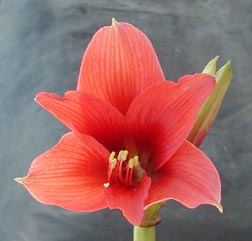
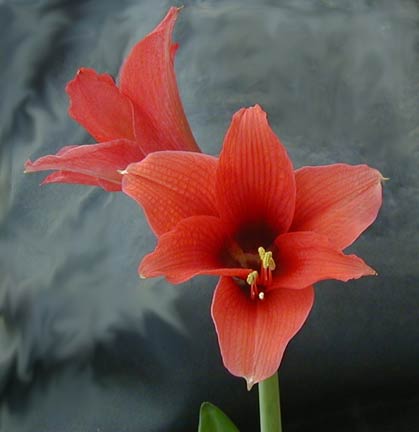
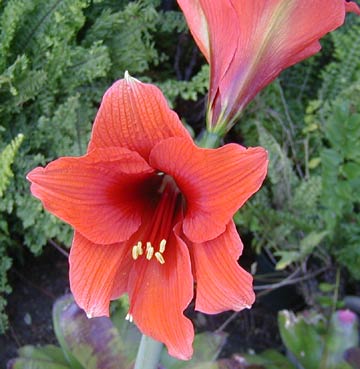
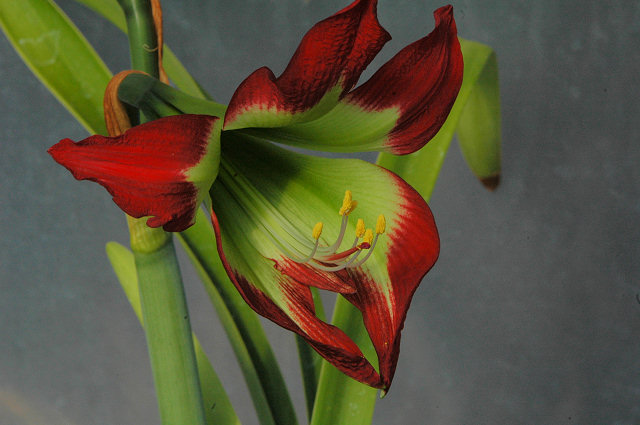
Hippeastrum mandonii Baker was collected by Fred Meyer in Bolivia in the 1970s. Flowers are lime green with red tips. Photos taken by Mary Sue Ittner at Telos Rare bulbs.
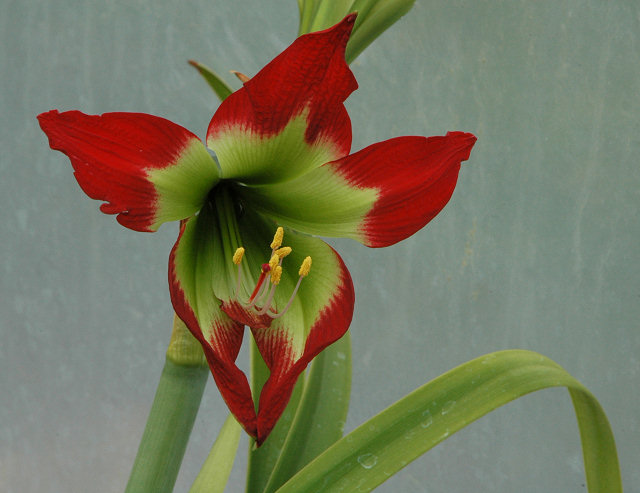
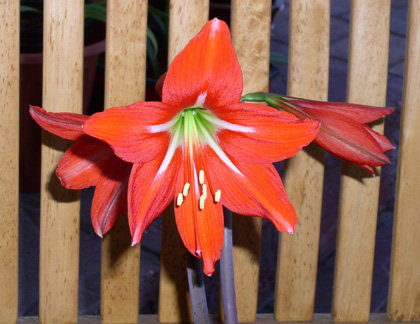
Hippeastrum miniatum (Ruiz & Pav.) Herb. is native to river gorges high in the Peruvian Andes. It seems to prefer part shade and is reported to produce up to six flowers on one stem on mature bulbs in ideal conditions. Photo taken by Doug Westfall.
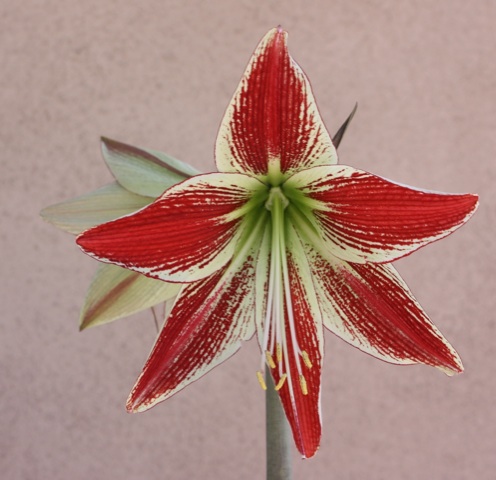
Hippeastrum "neoleopoldii" (syn. Amaryllis neoleopoldii) is from Bolivia. The name has not been published since it was inadvertently left out when other Amaryllis species were transferred to Hippeastrum as it was not clear that it was a separate species from the very similar Hippeastrum leopoldii. Hippeastrum neoleopoldii has a more saturated red color and white flecks. We are adding it under "neoleopoldii" because it is grown under this name in cultivation. Photo from Doug Westfall.
Hippeastrum species p-z - Hippeastrum hybrids A-B - Hippeastrum hybrids C-H - Hippeastrum hybrids I-N - Hippeastrum hybrids O-Unnamed - Hippeastrum index - x Hippeastrelia