Ledebouria is a genus of deciduous or weakly evergreen bulbs in the Hyacinthaceae family. The genus is now regarded as distinct from Scilla which is a genus of the Northern Hemisphere. There are sixty plus species in sub-Saharan Africa, with one or two species each in India and Madagascar. It is found mostly in areas of summer rainfall (there are a few winter rainfall species) in subtropical savannas and grasslands in the eastern and northeastern parts of southern Africa. The greatest species diversity occurs in the eastern and central parts of the Limpopo Province and Mpumalanga. Species have 1 to 20 leaves that are partly or fully developed at flowering and are erect, spreading or depressed, sometimes spirally twisted, linear to suborbicular, fleshy or leathery, smooth to hairy, green to purple with or without darker green or purple markings. Ledebouria was the subject of the PBS list topic of the week May 2004. Rhoda McMaster provided the introduction for the discussion. Cameron McMaster has provided interesting information about this genus in an article he wrote for Farmer's Weekly in 2008.There continues to be discussion about separation of the genera Drimiopsis and Resnova and the same plants are often grown under different names.
Seeds are produced by pollination of two different clones. They are ephemeral and should be sown immediately after ripening. Sow seeds in a well drained medium (1:1 organic:inorganic) and keep in a warm area (room temperature or above) until sprouting. Seedlings may not go into winter dormancy in their first year. Keep seedlings of South African species dry during their winter dormancy (Nhu Nguyen).
Ledebouria atropurpurea (N.E.Br.) J.C.Manning & Goldblatt, syn. Drimiopsis atropurpurea
Ledebouria concolor (Baker) Jessop is native to the Southeastern Cape Province. It is one of the larger species. In 2024 Plants of the World Online lists it as a synonym of Ledebouria nitida (Eckl.) J.C.Manning & Goldblatt, but it is still listed as an accepted species by World Flora Online. Height: 15-30 cm. Photos were taken by Nhu Nguyen.
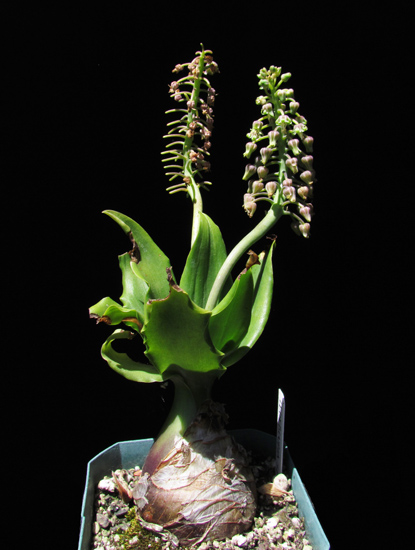
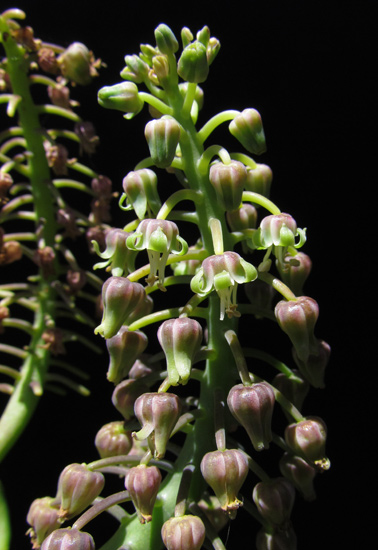
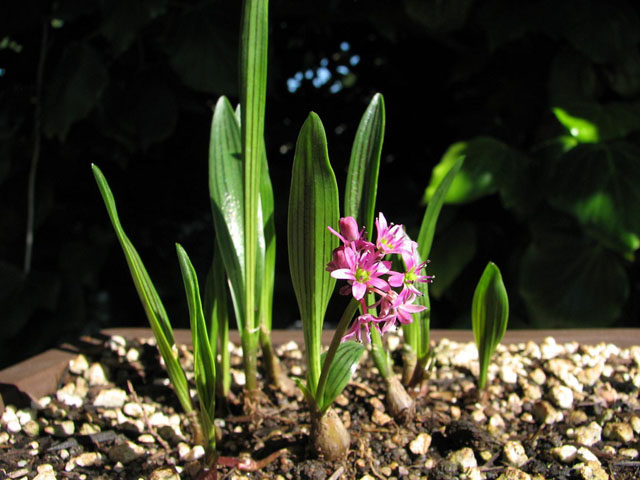
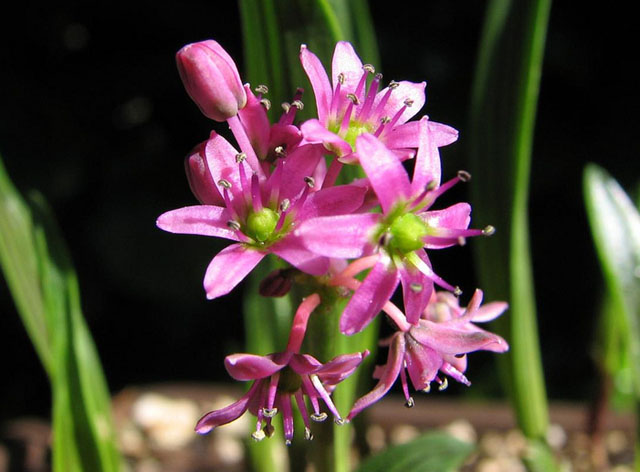
Ledebouria cooperi (Hook.f.) Jessop (syn. Scilla cooperi) is a widely cultivated species. It grows in damp grassland in a wide part of Eastern South Africa. It has glossy green erect or sometimes floppy leaves with purplish spots above and longitudinal purple stripes beneath and bright pink flowers. In South Africa it blooms October to February. Height: 20 cm. The plants in the first photo taken by Bob Rutemoeller are growing in a pot in Northern California where it is kept dryish over the winter when it is dormant. These bulbs are pretty tough and will withstand considerable winter wet (Nhu Nguyen). Plants do well with both exposed and unexposed bulbs. Photos #2-4 were taken by Nhu Nguyen showing the lovely veins on the leaves, habit, and a closeup of the flowers. The last photo was taken by Cameron McMaster.
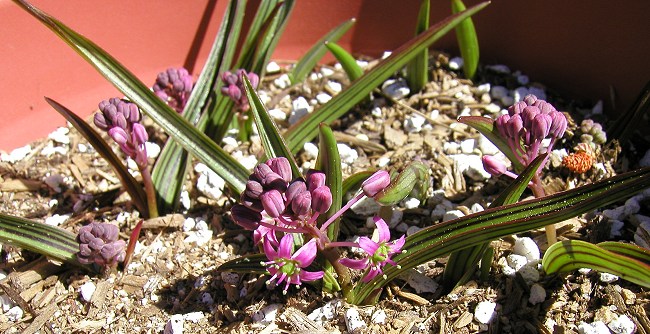
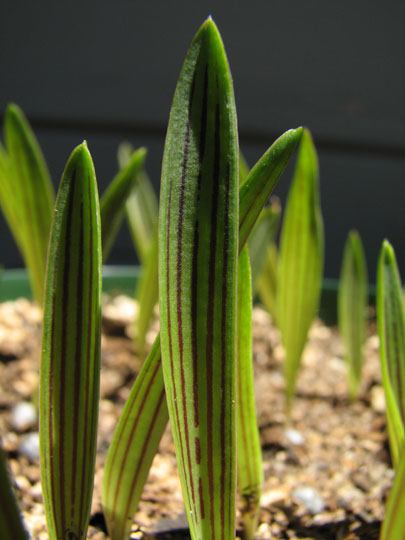

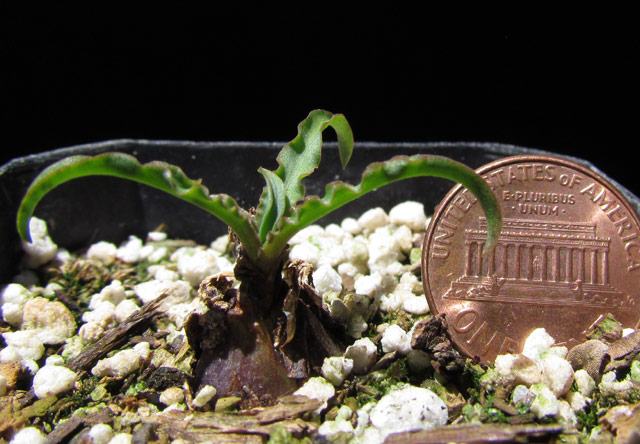
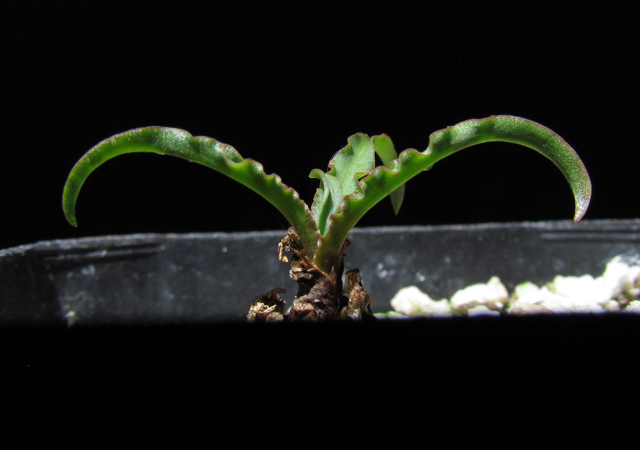
Ledebouria crispa S.Venter is native to Limpopo Province, South Africa. It is a dwarf species with a most attractive crisped leaf margin and spreading leaves to 5 mm wide. The inflorescence is erect with a smooth rachis. The bulbs (15-25 mm long) are semi-epigeal to fully epigeal. The leaves are present when flowering. In cultivation, the bulbs should be potted above soil level, otherwise, it will rot during a wet winter. The bulb can survive below the soil, but the plant does much better once the bulb is raised. Height: 15-30 cm. The photos below were taken by Nhu Nguyen. Photo 1 compares the plant to a US one cent coin.
Ledebouria floribunda (Baker) Jessop has a broad range from Limpopo to Eastern Cape Province, South Africa. It is a large species and is used by traditional healers in the Eastern Cape for a variety of ailments. It is more or less evergreen with spreading lanceolate leaves that are spotted with red and nodding purple and greenish flowers with recurved tepals. The stamens are about as long as the style. Several flowering spikes are produced in spring. It occurs in grassland and on stony slopes from the Eastern Cape to the Northern Cape. Height range: to about 50 cm. Photos by Cameron McMaster.
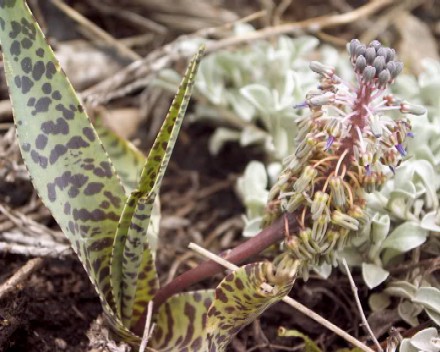
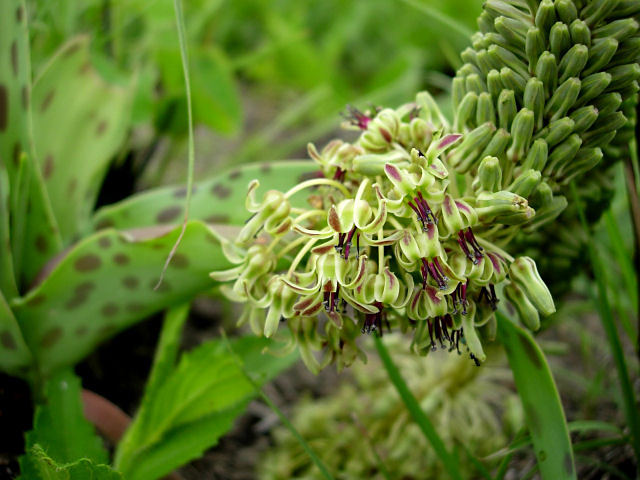
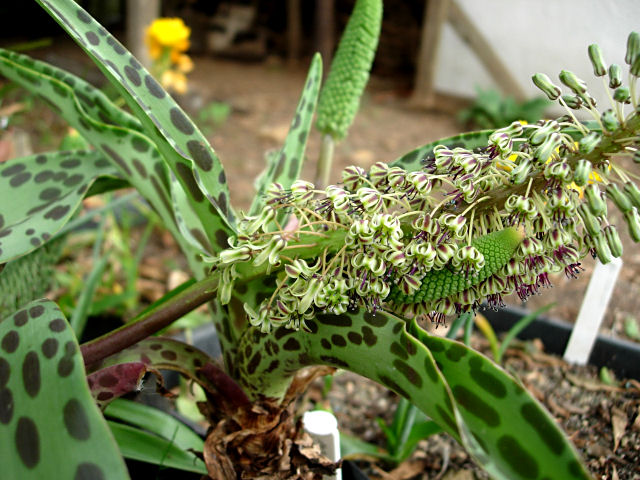
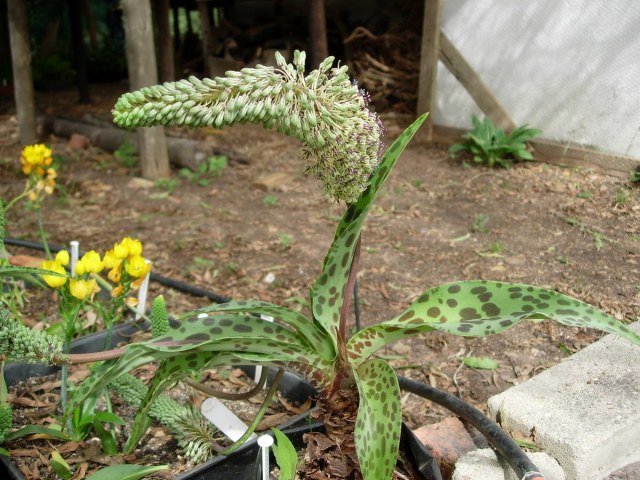
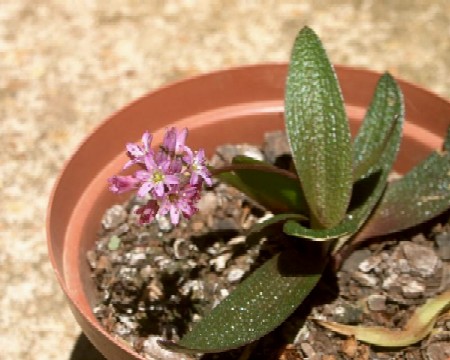
Ledebouria galpinii (Baker) S.Venter & T.J.Edwards native to the Mpumalanga Province, South Africa. It is a dwarf species that is very suitable for pot culture. It has purplish-green well textured leaves and a beautiful little cluster of pink flowers in early spring. Height: 10 cm. Photo by Cameron McMaster.
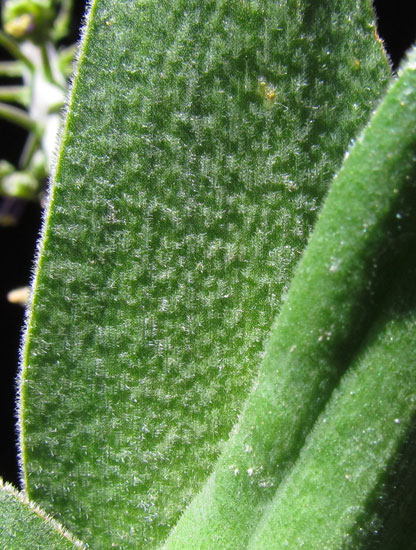
Ledebouria hypoxidioides (Schönland) Jessop is native to the Eastern Cape Province, South Africa where it is confined to the hills around Grahamstown. The leaves are hairy with ciliate margins, making this species the only one in the genus with pilose leaves. The leaves are fully developed at flowering. The tepals are lanceolate and seeds are reddish-brown. In the San Francisco Bay Area, this species does not go completely dormant if some water is available in the winter. However, too much cold and winter rain can cause rotting and browning of the leaf tips as seen in the photos below. Height range: 10-15 cm. The first three photos by Nhu Nguyen. Photo 3 shows the pilose nature of the leaves. The last two from Cameron McMaster.
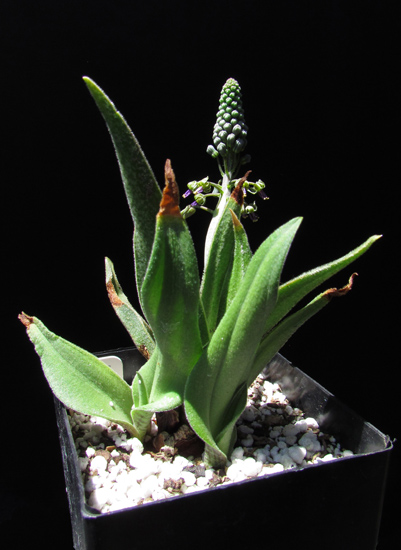
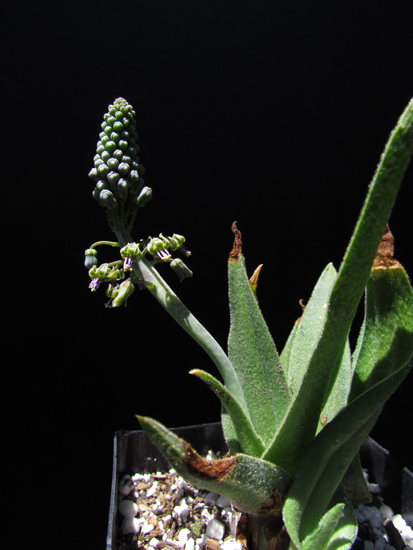
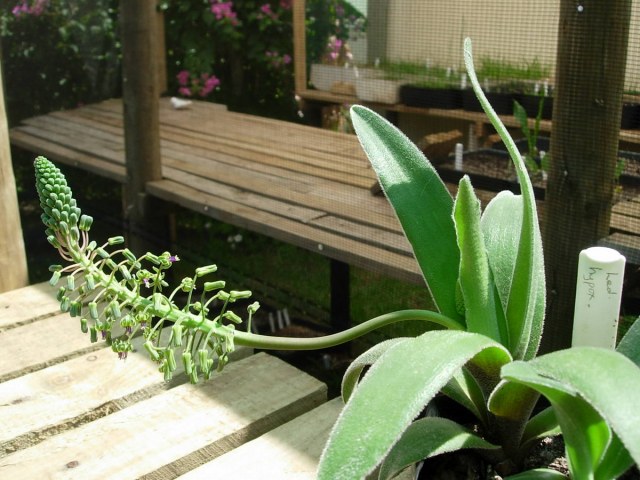
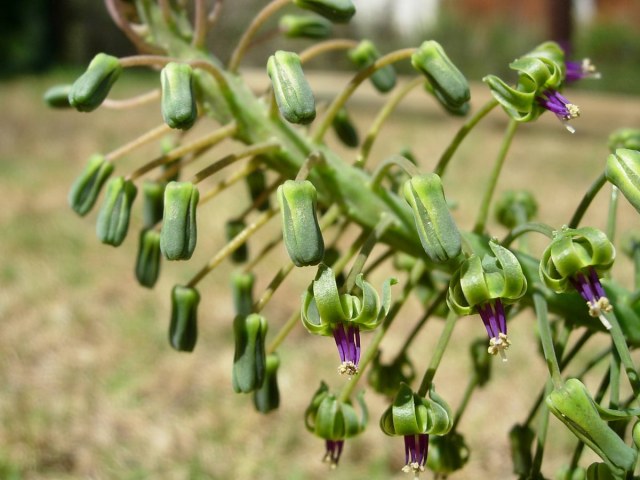
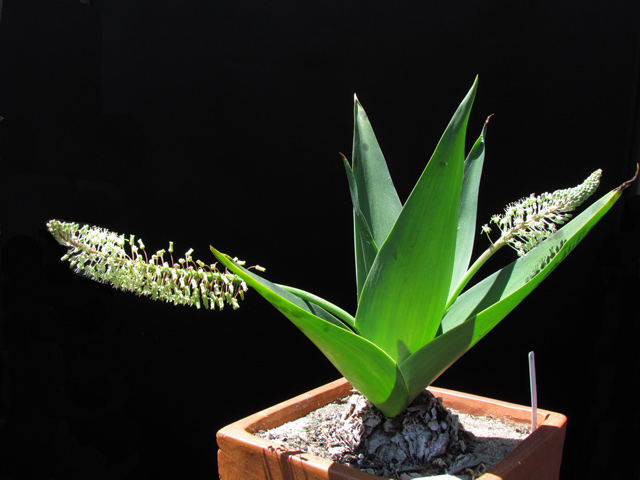
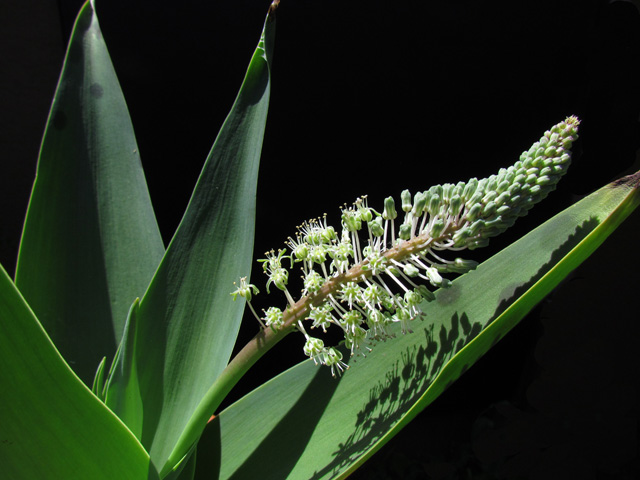
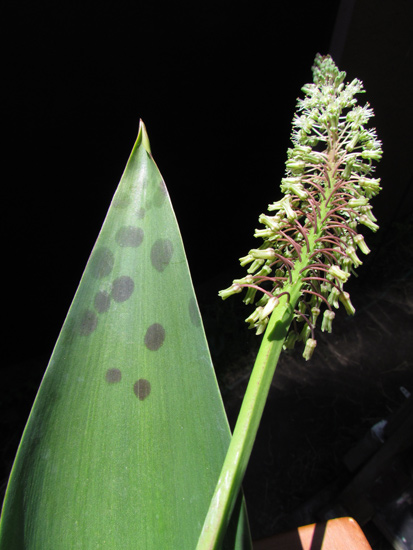
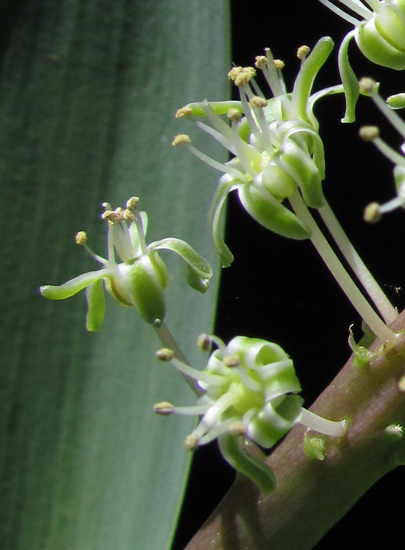
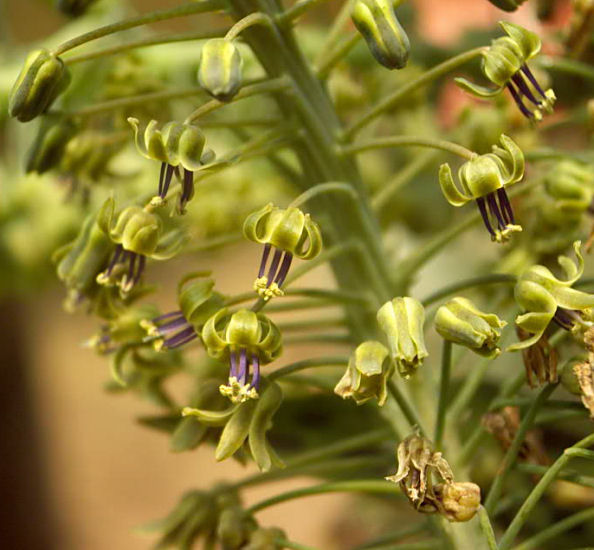
Ledebouria leptophylla (Baker) S.Venter is native to eastern South Africa and may also occur in Zimbabwe. The leaves are very distinctive, resembling a Gethyllis. It grows in full sun and needs a dry to dry-ish winter rest. Height range: 30-45 cm. The photos below were taken by Nhu Nguyen.
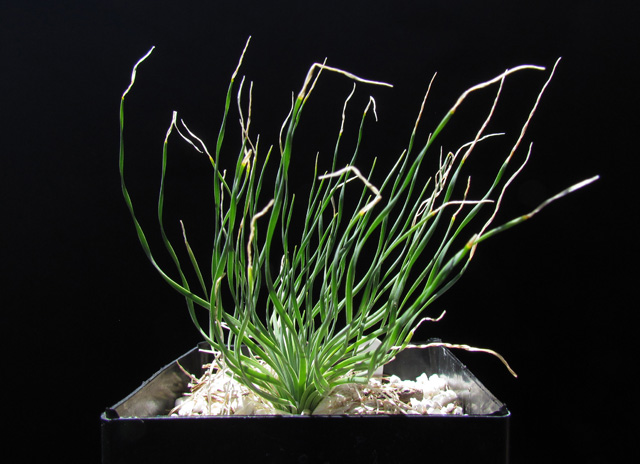
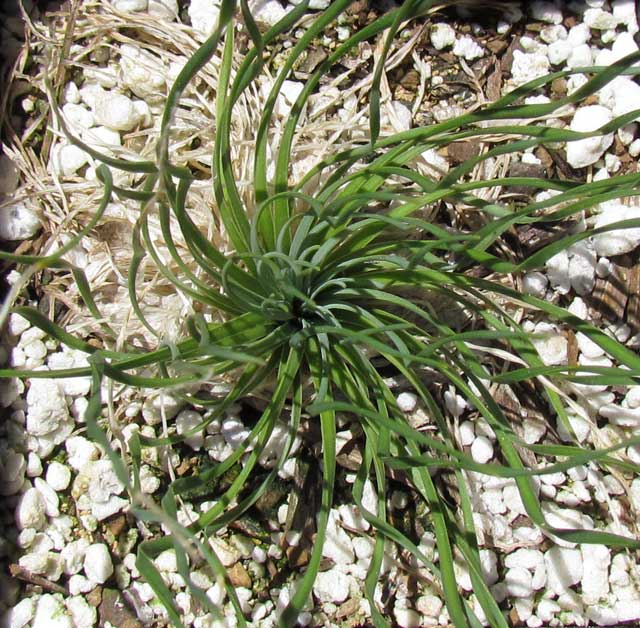
Ledebouria marginata (Baker) Jessop, syn. Scilla marginata is from the Transvaal, South Africa. It has spirally twisted tough glaucous leaves with prominent venation. Leaves are difficult to tear and partly emerged with flowering. The bulb is ovoid. Height range: 15-25 cm.
Ledebouria minima (Baker) S.Venter is native to both eastern and western South Africa. It is a diminutive species with linear leaves (24-36 x 2-3 mm). The base of the leaves have purplish cross bars. The inflorescence is longer than the leaves with a smooth rachis.
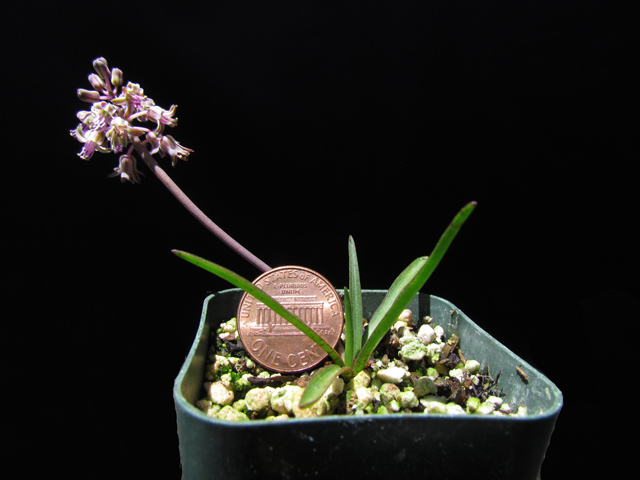
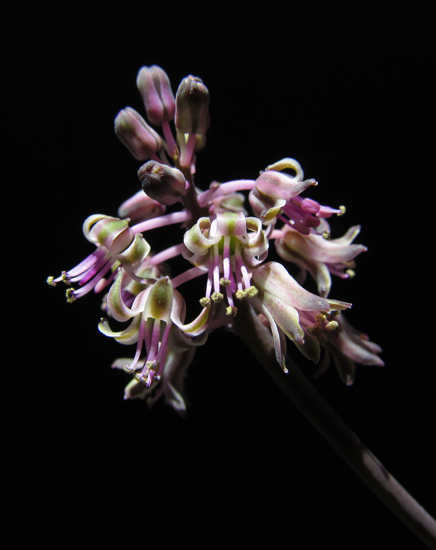
Ledebouria monophylla S.Venter is from Mpumalanga Province, South Africa with usually one fleshy appressed leaf without lines or markings and an erect solitary green spotted purple inflorescence and pink pedicels. Tepals are pink to purple and the upper filaments are purple and the anthers yellow. Height range: to about 3 ft.
Ledebouria ovalifolia (Schrad.) Jessop is found in rocky places, often coastal limestone, from the western Cape to the southeastern Cape. It grows to 12 cm and has ascending, soft, lanceolate to ovate leaves and nodding unscented flowers in broad racemes, purple or pink and white. Leaves are present at flowering. It flowers late summer to fall. Photo from the CD of the book Plants of the Klein Karoo courtesy of Jan and Anne Lise Schutte-Vlok.
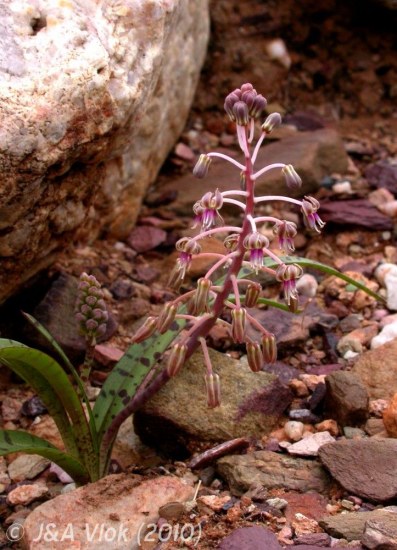
Ledebouria ovatifolia (Baker) Jessop is a species that occurs from the Eastern Cape to tropical Africa and Sri Lanka where it is found in stony grassland up to 1980 m. It has flat glossy ovate leaves, often faintly speckled or with purple spots. Flowers are nodding, pink to purplish green with recurved tepals and are longer than the leaves. This species has brown to purple bulb scales with copious threads when torn. Leaves are only partly emerged at flowering. Flowering occurs in spring. Height range: 15-30 cm. The photos below were taken by Nhu Nguyen at the San Francisco Cactus and Succulent show, 2011, labeled as this species.
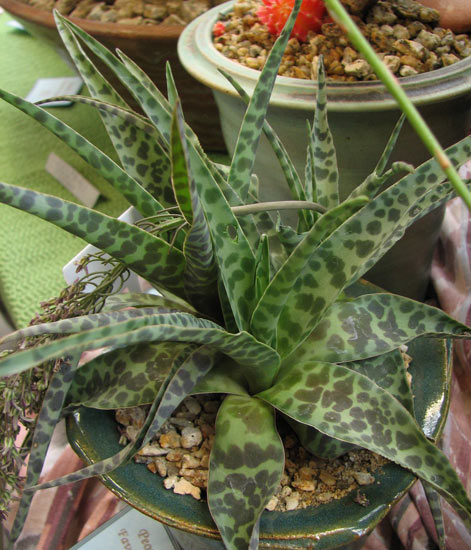
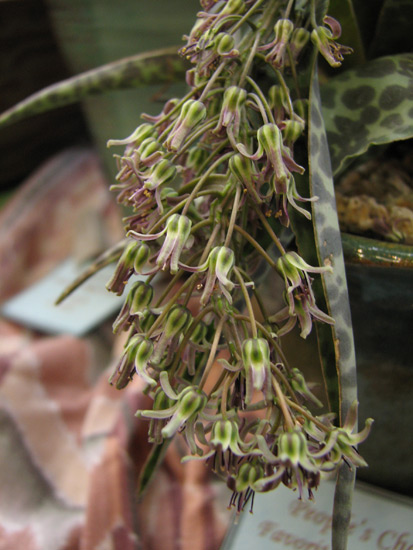
Ledebouria ovatifolia spp. scabrida is only found in KwaZulu-Natal. It is solitary in nature (no offsets). The photos are from Cody Howard. Cody grows this species in a pumice mix with very little organic matter. The plants are allowed to go into a dry dormancy in winter. In the spring when the leaves appear, the bulb can be watered again.
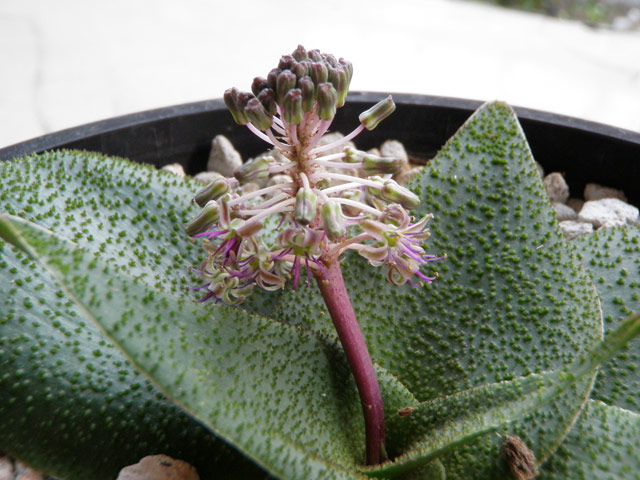
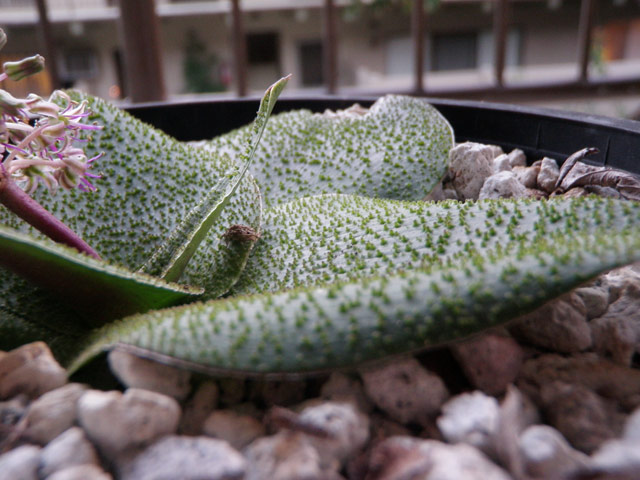
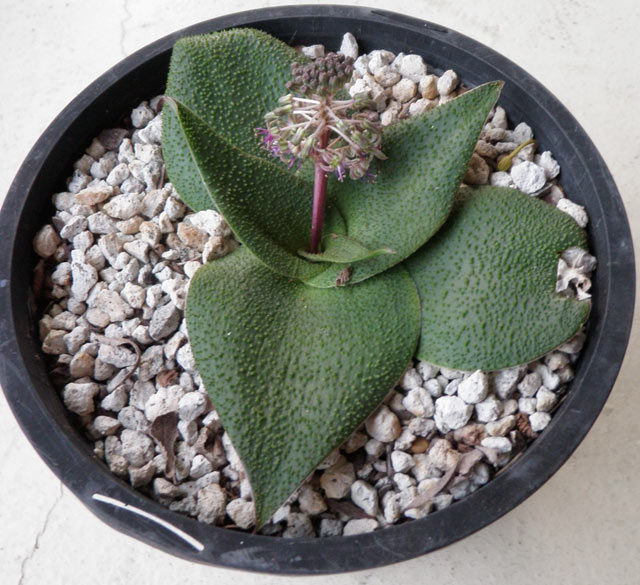
Ledebouria petiolata J. C. Manning & Goldblatt, syn. Drimiopsis maculata
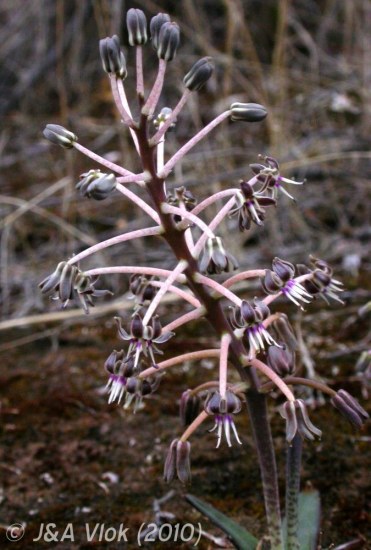
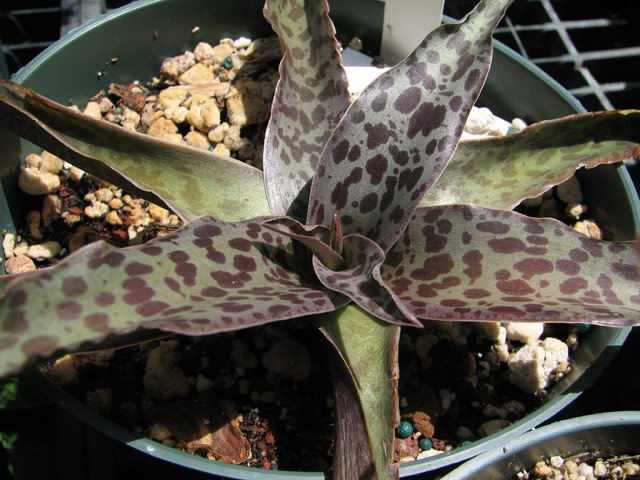
Ledebouria revoluta (L.f.) Jessop is distributed on stony slopes from Swellendam north to eastern southern Africa and to India. Because of the broad geographic range, this species is extremely variable in leaf morphology and warrants further studies. Typically, it grows to 15 cm with spreading fleshy glossy lanceolate mostly evergreen leaves that are spotted with red and margins often crisped. Both fresh leaves and bulbs have threads when torn. The purple and green flowers with recurved tepals are in broad racemes (more than 30 flowers) with stamens longer than the style. The ovaries are 6-lobed. Leaves are present at flowering. The first five photos from Cameron McMaster. The last photo from the CD of the book Plants of the Klein Karoo courtesy of Jan and Anne Lise Schutte-Vlok.
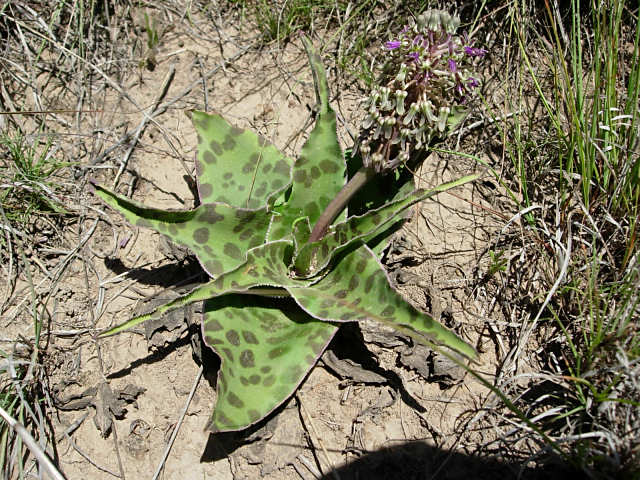
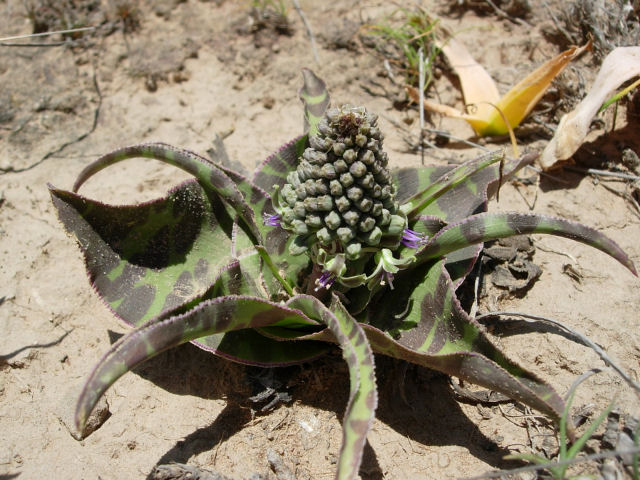
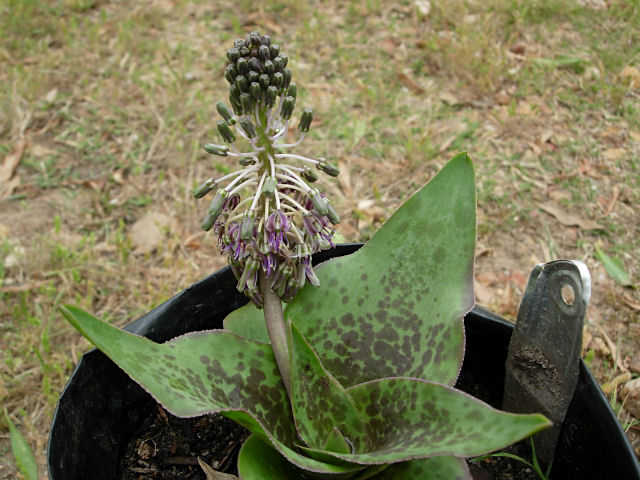

The photos below were taken by Nhu Nguyen of a different form collected by Michael Vassar somewhere in the Eastern Cape, South Africa. Even clones of this form can be very variable in both spotting, color, and leaf margins when grown in different conditions.
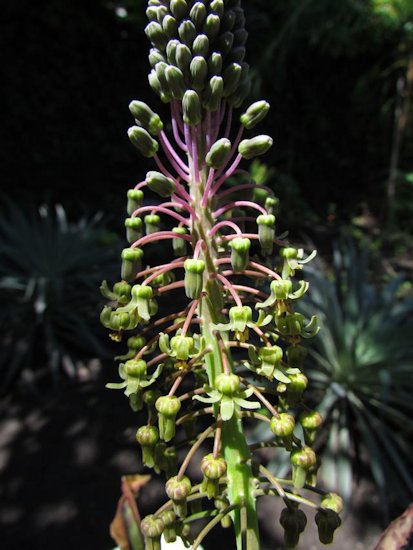
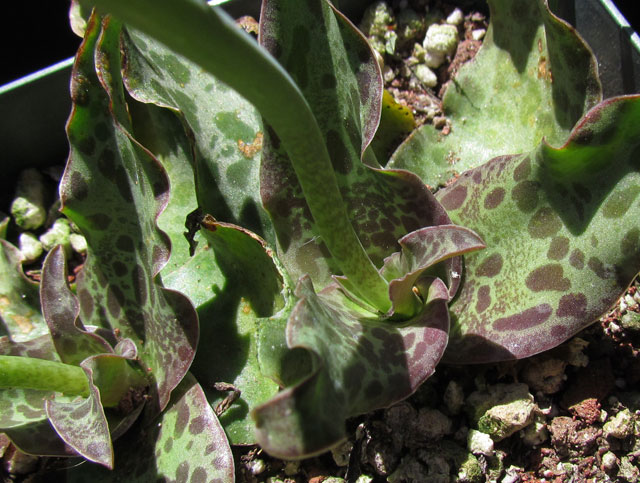
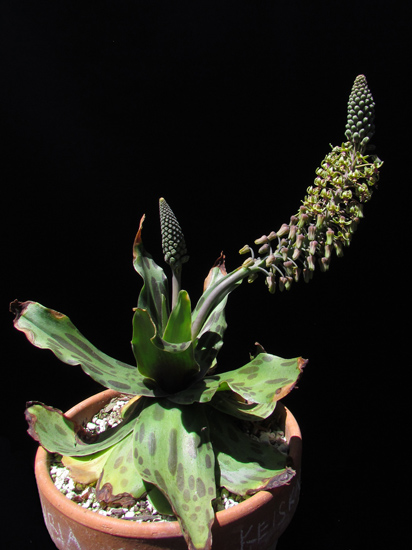
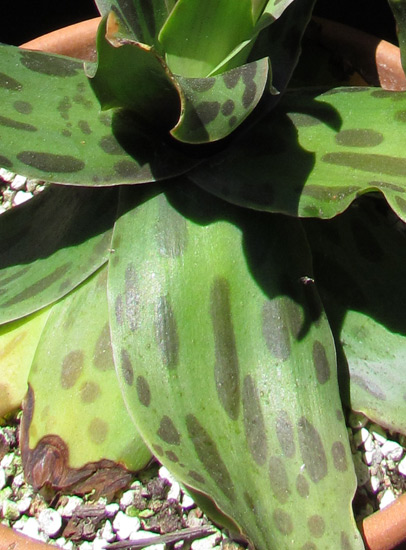
The form below of this species is from the area surrounding the Keiskamma River, South Africa. Photos by Nhu Nguyen.

P M Mathai wrote: "I wonder if you could help in identification of a Ledebouria from an area around Graaff Reinet, in Eastern Cape, South Africa. Here is a photo of the Ledebouria from the old Shooting Range (taken over by housing developments, many years back) of Grahamstown, Eastern Cape, South Africa." Nhu Nguyen thinks it might be one of the many forms of Ledebouria revoluta.
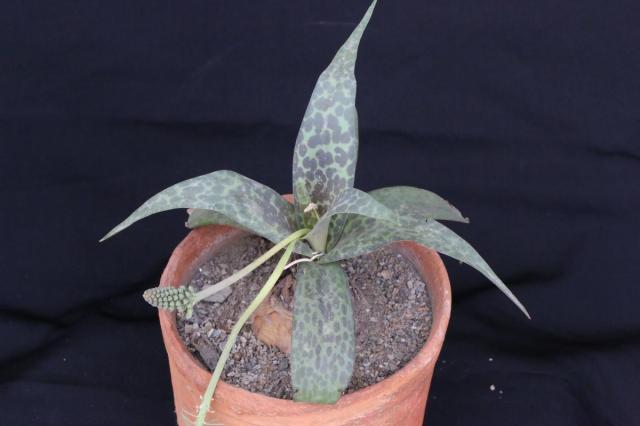
Ledebouria scabrida Jessop is native only to Namibia. Height: 12 cm. The photos below were taken by Cody Howard near Otjinene, Namibia.
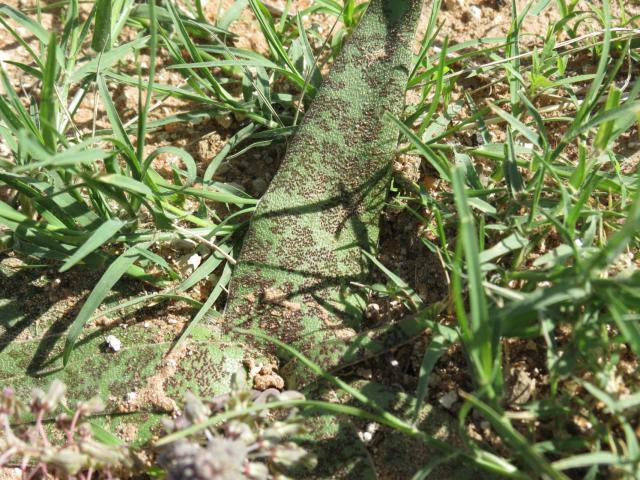
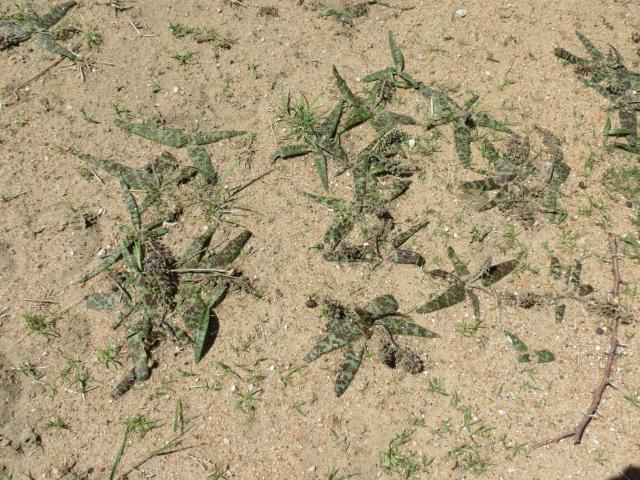
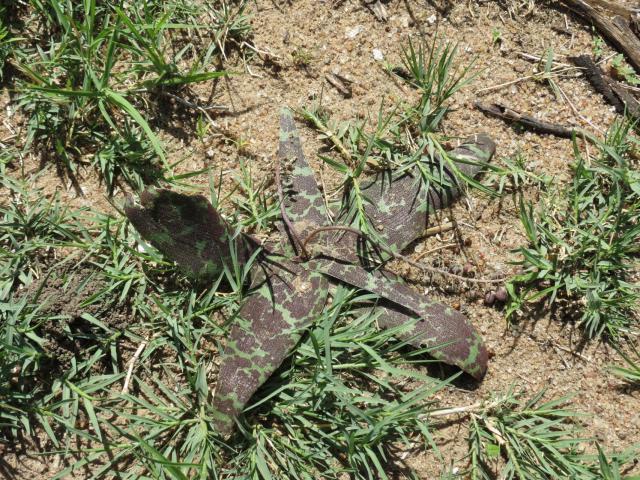
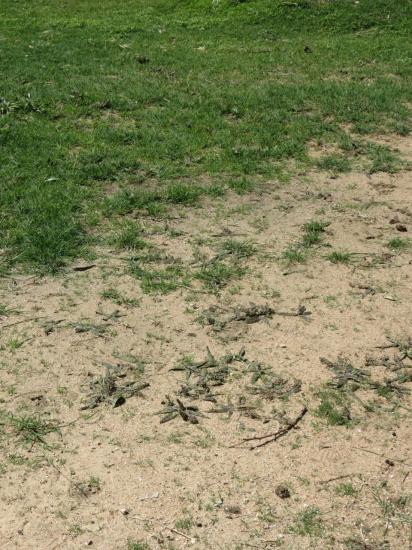
Ledebouria socialis (Baker) Jessop see the Ledebouria socialis page. Representative photos of this species. Height range: 15-25 cm. Photos 1-3 were taken by Nhu Nguyen, photo 4 by Cameron McMaster, and photos 5-6 by David Fenwick.
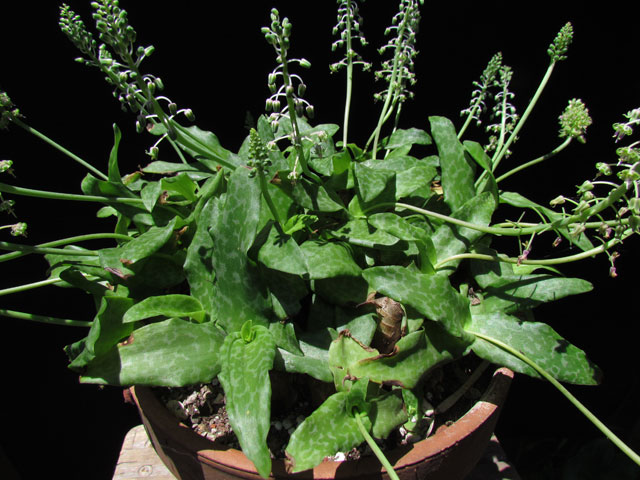
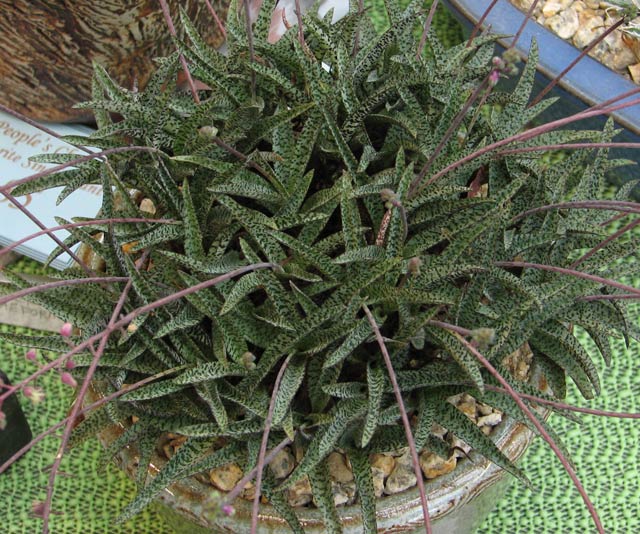
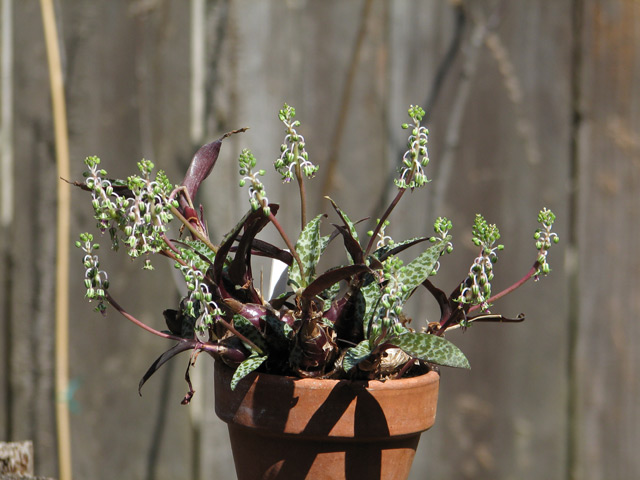
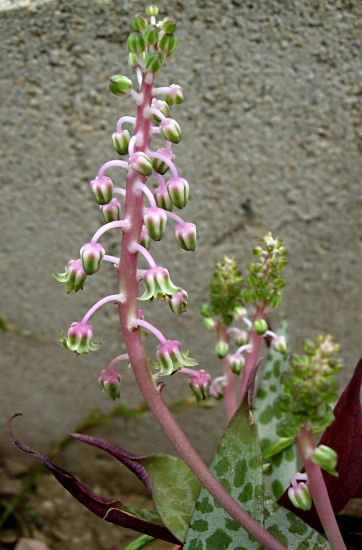
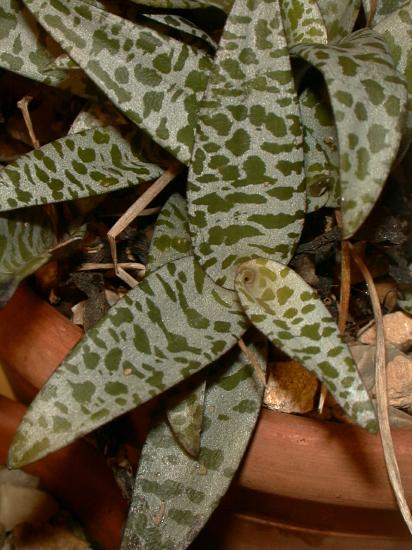

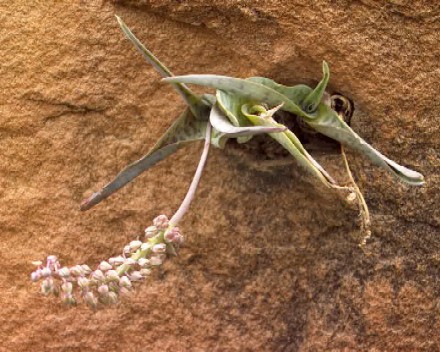
Ledebouria sp. growing out of a hole in a vertical rock face, Eastern Cape. Photo by Cameron McMaster.
Ledebouria sp. was grown from seed labeled Ledebouria ovalifolia but it is not that species as the leaves are very different. I was able to grow it successfully in Northern California for a few years, by sheltering it somewhat from our winter rainfall. It flowers in late spring, early summer. Photos 1-4 were from Mary Sue Ittner. Photos 5-6 were taken by Nhu Nguyen of a form from KwaZulu-Natal that looks similar.
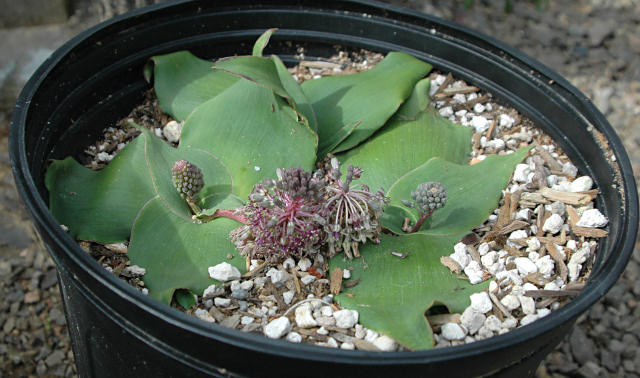
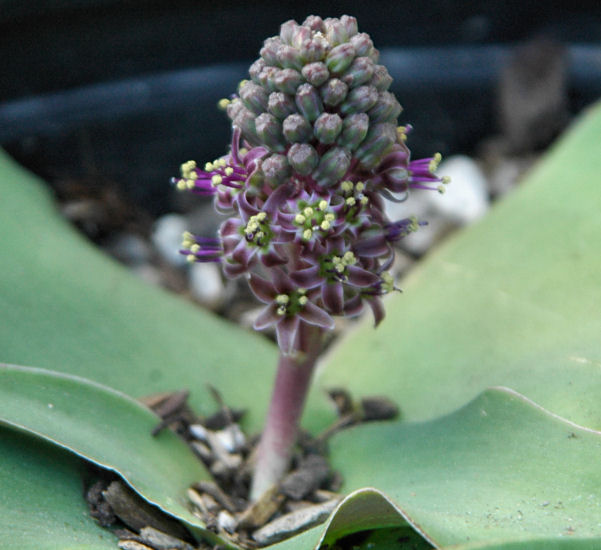


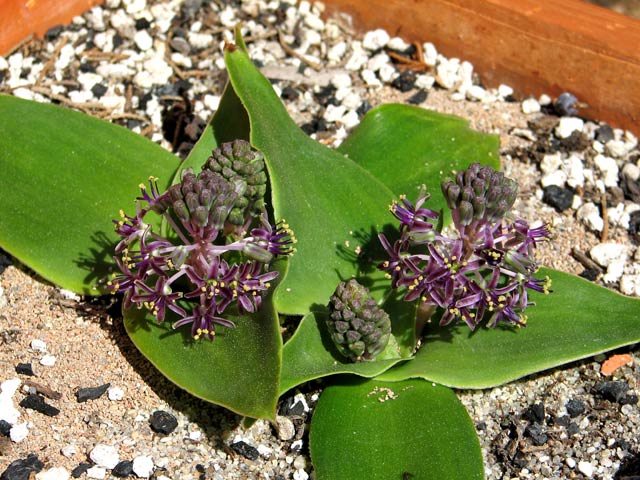
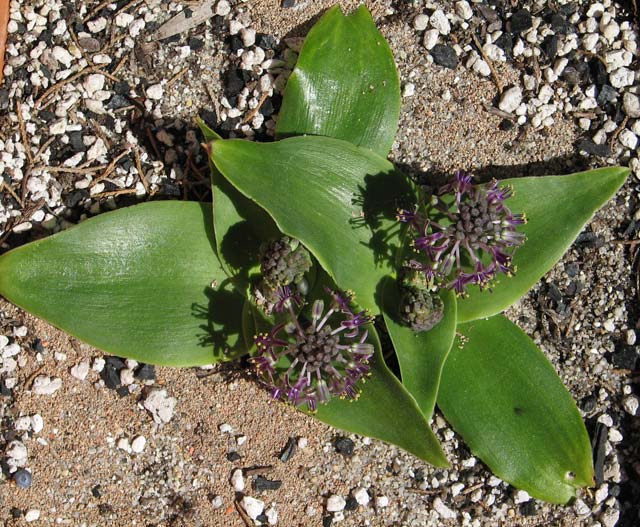
Ledebouria sp. Amatola Mountains is one of the smaller species and grows in montane grassland on the Amatola Mountains, Eastern Cape. Photo by Cameron McMaster.
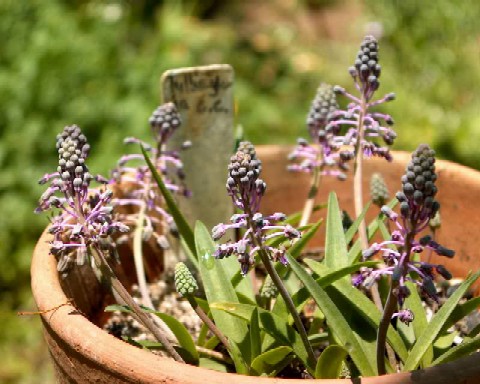
Ledebouria sp. Barberton is widely cultivated. It was originally collected from Barberton, RSA. Photos taken by Nhu Nguyen.
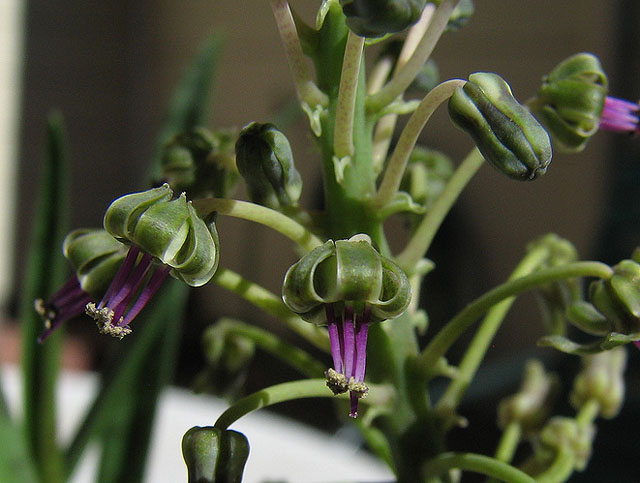
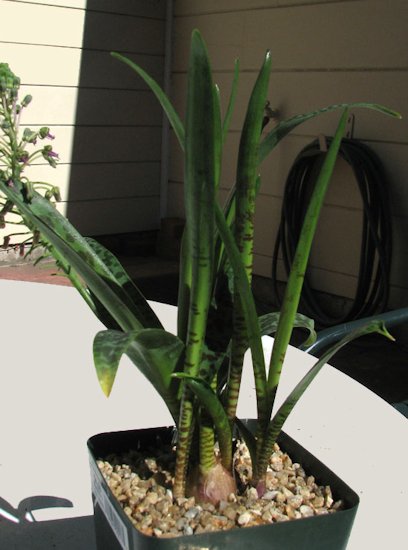
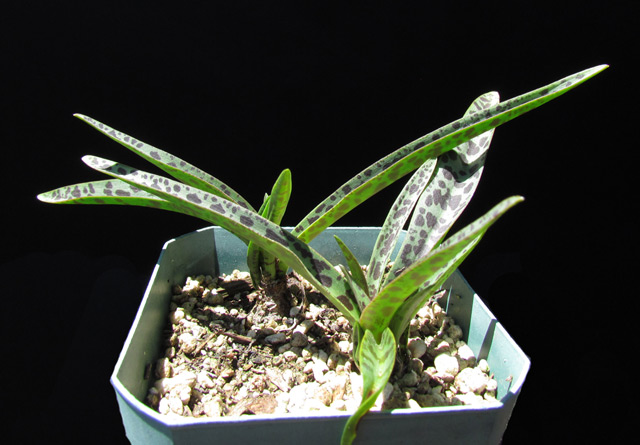
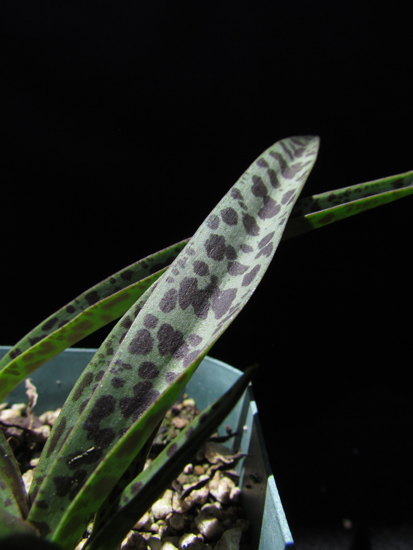
Ledebouria sp. Maclear was seen in Maclear January 2010 and photographed by Mary Sue Ittner.
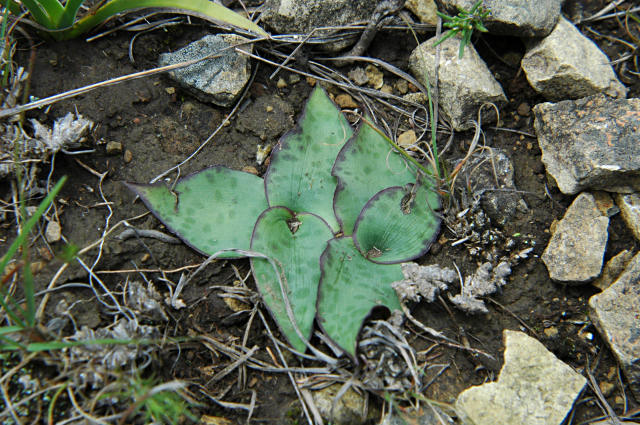
Ledebouria sp. Tanzania is native to Tanzania. Photos by Alessandro Marinello of Italy.
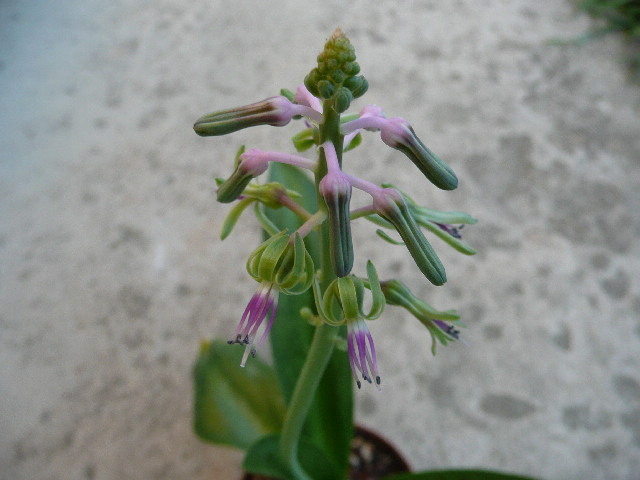
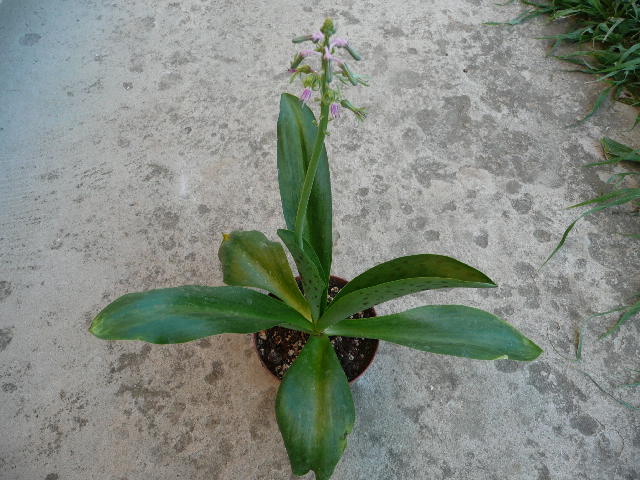
Ledebouria sp. Thendele and Mont aux Sources was found in the Drakensberg, near Thendele and Mont aux Sources, in October 2002 by Roy Herold.
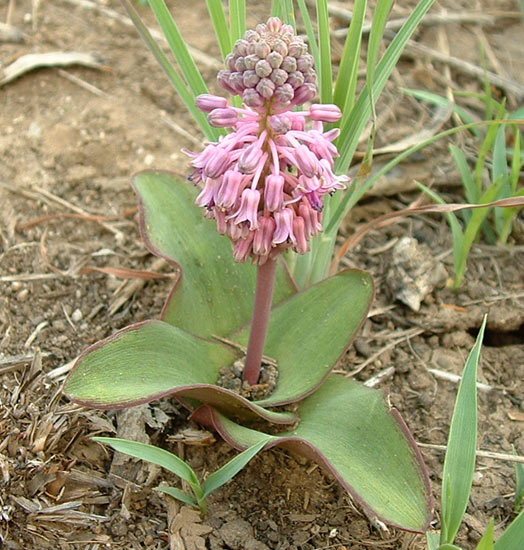
Ledebouria undulata (Jacq.) Jessop is found in rocky places in the western Cape and the Karoo. The leaves, which are not present at flowering, are ascending, narrowly lanceolate with undulated margins. Flowers are in dense racemes, whitish and purple pink or greenish with recurved tepals and acridly scented. The pedicels are about as long as the flowers. Flowering time is late spring to summer. Height range: 30-45 cm. Photo from the CD of the book Plants of the Klein Karoo courtesy of Jan and Anne Lise Schutte-Vlok.
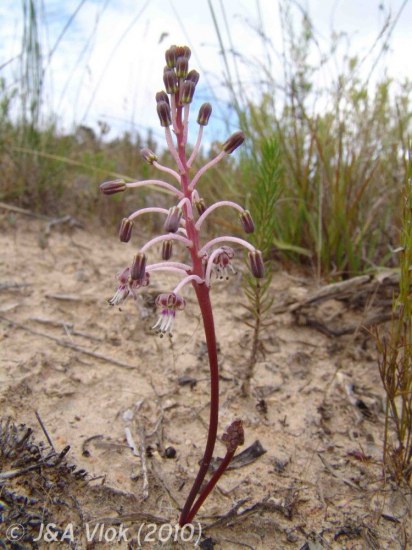
Ledebouria zambesiaca (Baker) Speta is distributed in southern tropical Africa. Height range: 10-15 cm. Photos by Nicholas Wightman taken in Lilayi, Zambia.
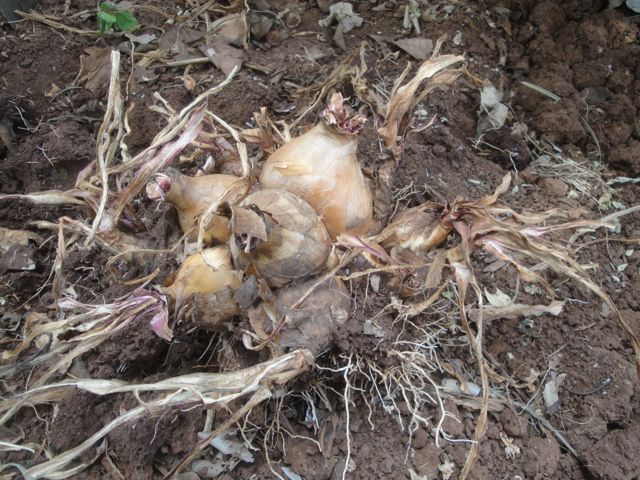
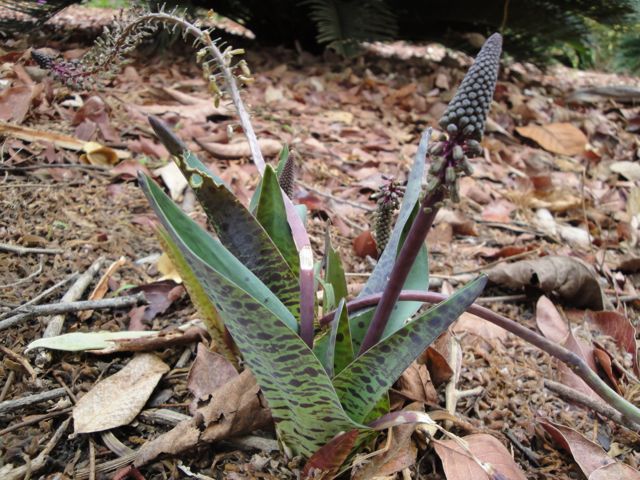
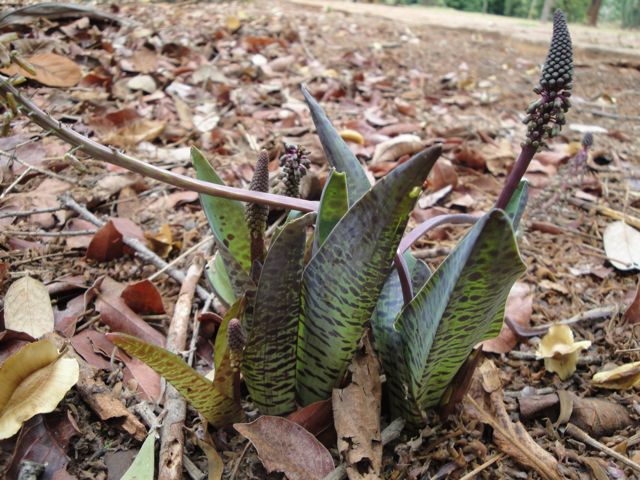
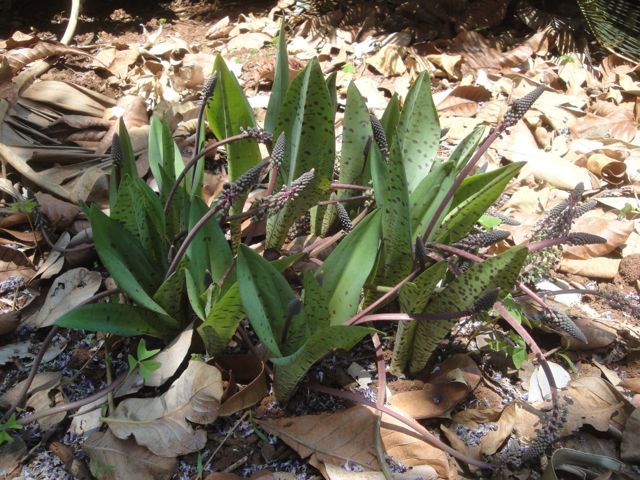
Ledebouria zebrina (Baker) S.Venter is native to the eastern Provinces of South Africa. The leaves are very large (30-50 x 9-12 cm) and can hold as many as 10 inflorescences at once. The tepals are light green with darker green keels. The styles are white to light green style. The photos below by Nhu Nguyen.