This wiki page shows pictures of geophytes growing in the wild in northern California along the Sonoma Mendocino coast arranged alphabetically from Camassia through Dodecatheon. Rainfall in this location starts in the fall with the most rain coming in December and January with less rain continuing sometimes as late as May. Summers are dry although there are periods of fog in summer which brings some moisture. Temperatures are moderate year round. Habitats are mixed evergreen and Redwood forests, bluff scrub, riparian and some limited grasslands, but much of this latter habitat (grasslands) is now gone. Most flowers bloom late spring into summer.
Mendocino Sonoma Coast Index - Allium to Calypso - Epipactis to Maianthemum - Marah to Spiranthes - Taraxia to Zigadenus
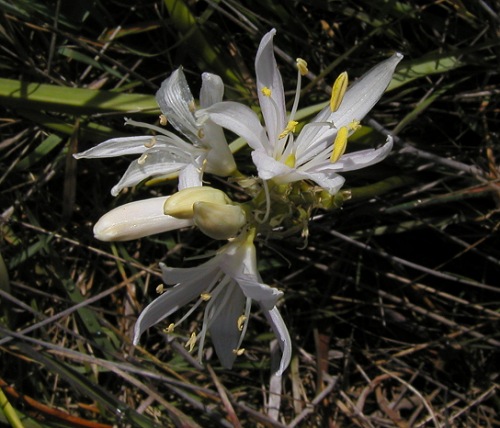
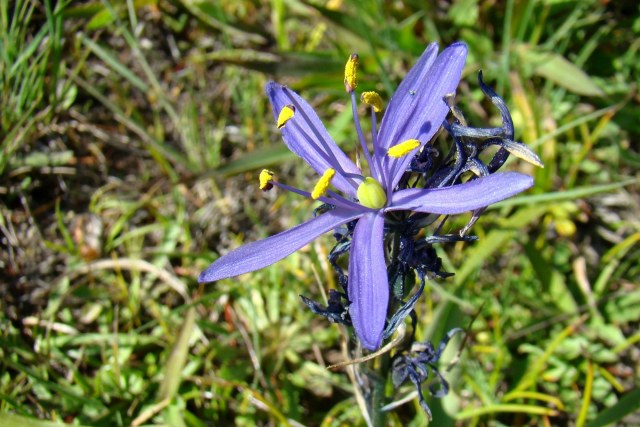
Camassia quamash growing in a wet spot close to the ocean. In the large patch all but one of the flowers were purple. In the midst was one white one. Photos by Bob Rutemoeller taken at this spot. The third photo was taken by Mary Hunter at The Sea Ranch. The last photo shows them blooming in mass on the Mendocino ridge in a wet grassy spot.


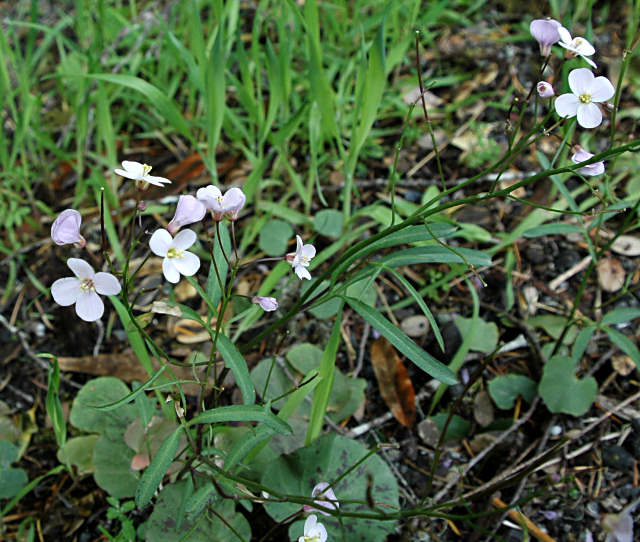
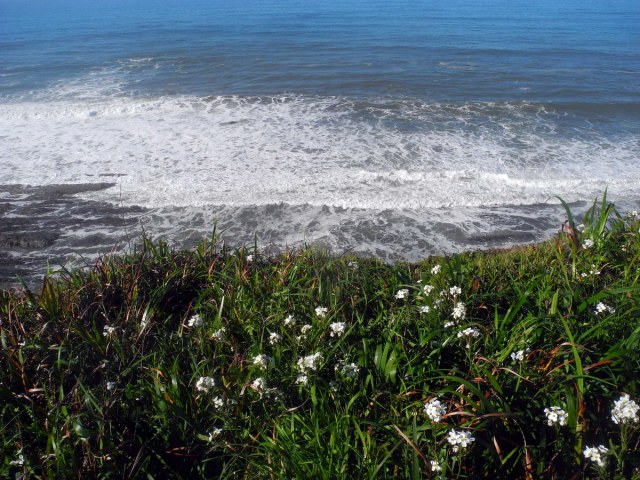
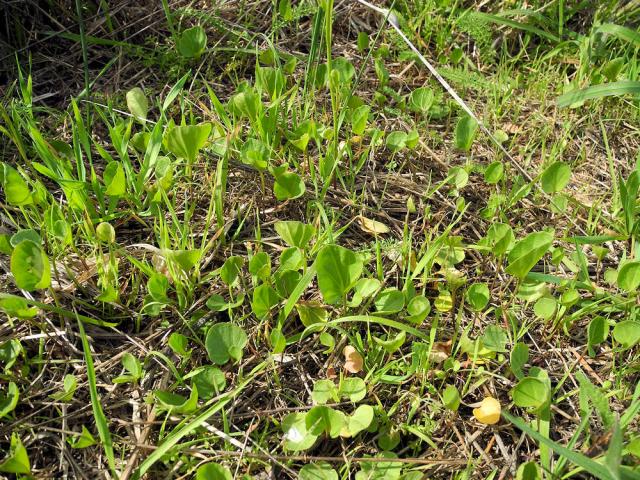
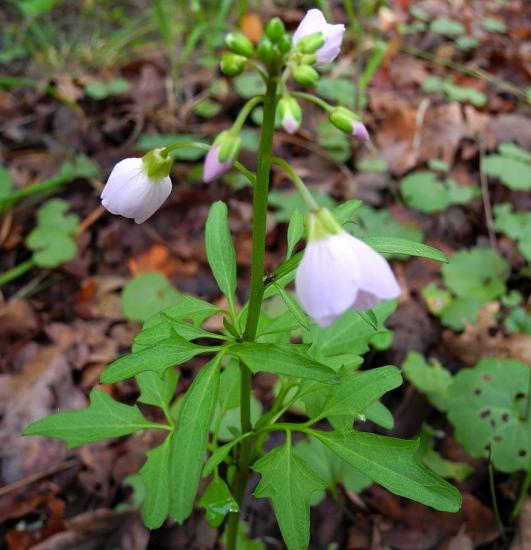
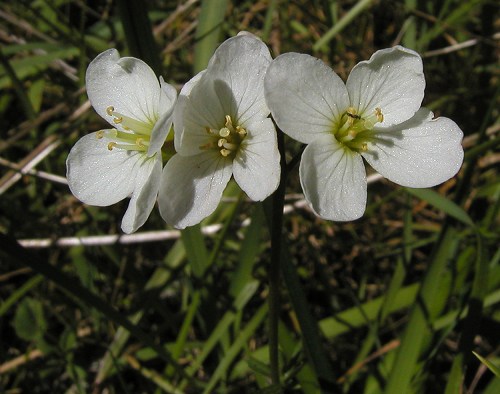
Cardamine californica is found in shady canyons and woods from Baja California to Oregon. It is one of the first flowers to bloom each year. Photos from Mary Sue Ittner taken in Sonoma County and Mendocino Counties. The first was taken on Skaggs Springs Road and the next one on The Sea Ranch. The third and fourth photos were taken at Pelican Bluffs February 2022 showing it flowering in an unusual habitat close to the Pacific Ocean. The last two photos show the rhizome leaves and the cauline leaves.
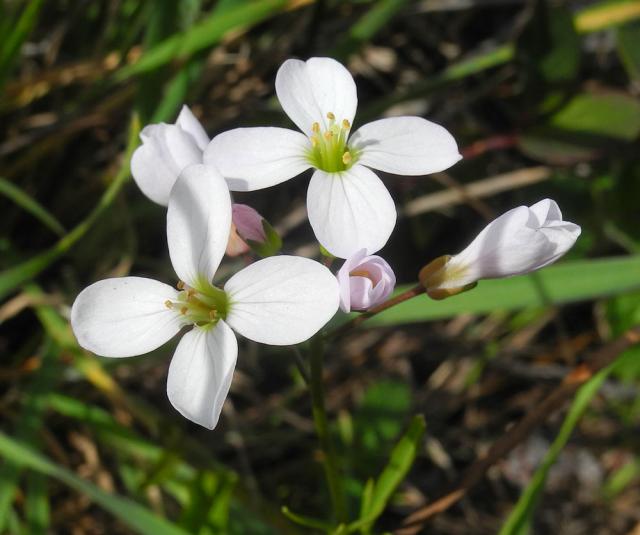
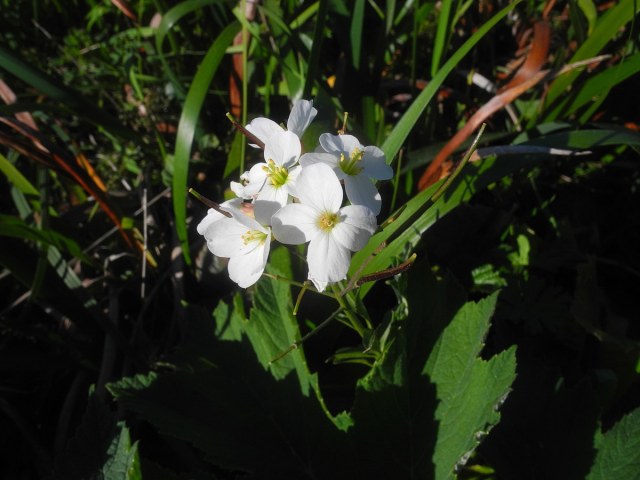
Cardamine californica var. integrifolia is a form no longer recognized as a variety with white flowers. It is found in open fields, in mostly heavy wet soils. In a wet year you can sometimes see a mass of white flowers and wonder what it is. This photo by Bob Rutemoeller shows a close-up of flowers. These flowers are some of the first to bloom each year.
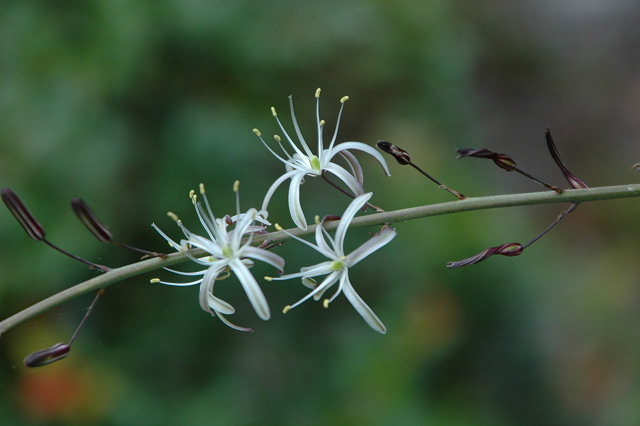
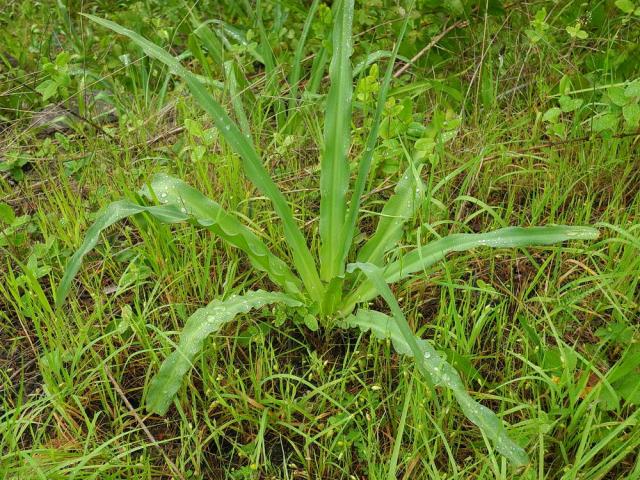
Chlorogalum pomeridianum known as soap plant grows on grassy road banks, open meadows, and slopes. It has basal rosettes of attractive wavy margined leaves that appear late winter and widely branched small star-like fragrant flowers that bloom in summer. The flowers open late afternoon, are pollinated by night insects, and fade by morning. Photos were taken by Mary Sue Ittner.
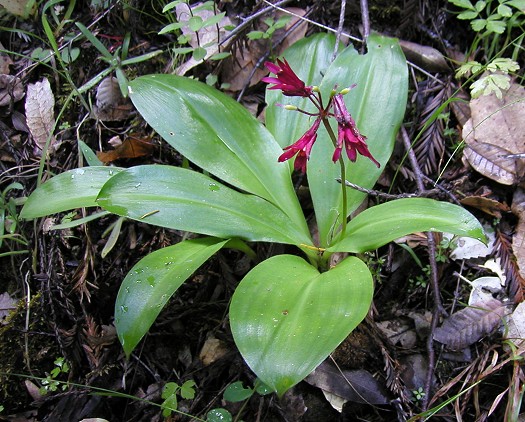
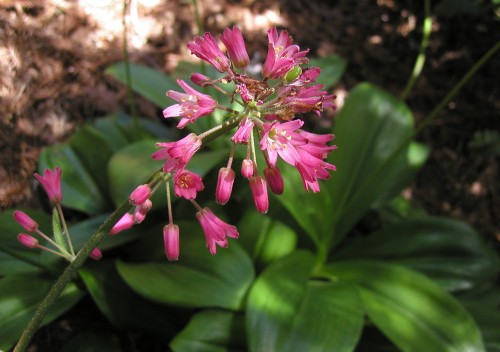
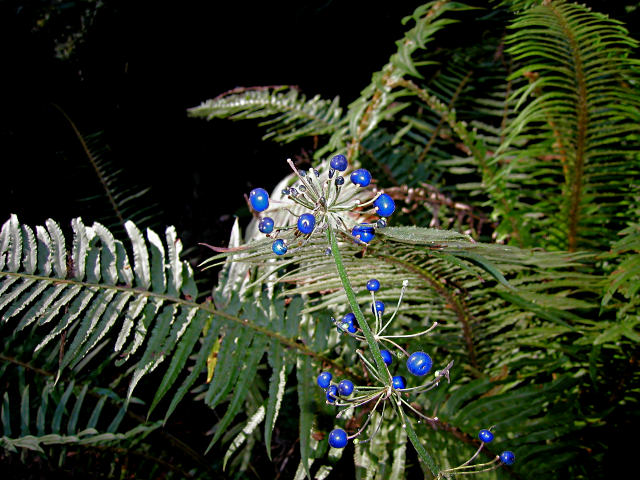
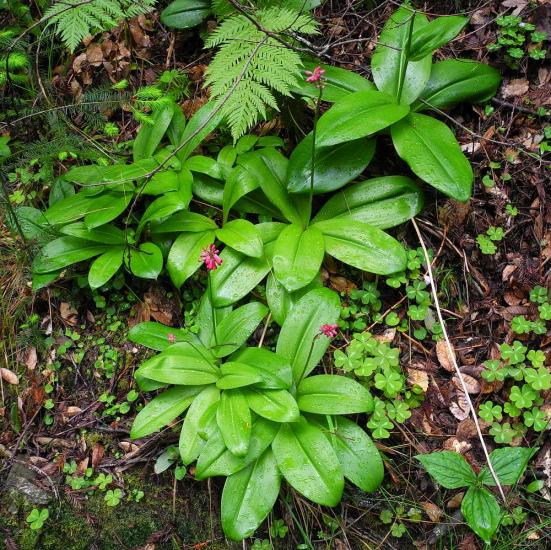
Clintonia andrewsiana is a beautiful plant with bell-shaped red flowers and broadly ovate shiny leaves. The flowers are followed by blue berries if the deer don't eat them first. It is found in the coastal fog belt of northern California and southern Oregon. It is often found growing in or at the edge of the forest with Trilliums and other forest plants. The leaves stay green throughout the dry summer and sometimes almost until new ones are produced in winter. The first three photos by Bob Rutemoeller of wild plants flowering in Sonoma County May 2003 and a later one another year of plants in fruit. The last photo by Mary Sue Ittner shows it growing with companions Oxalis oregana and Trillium ovatum.
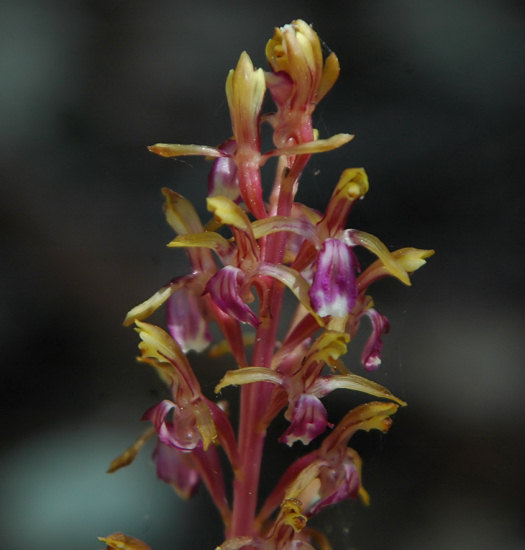
Corallorhiza maculata (spotted coralroot) is found in shaded coniferous forests. It has red brown to pink spotted petals and a white spotted lip. It is a saprophyte, a plant without green parts that receives its nutrients from decaying plant material. The first photo by Bob Rutemoeller was taken in Kruse Rhododendron State Park and others more taken by Mary Sue Ittner in Mendocino and Sonoma Counties.

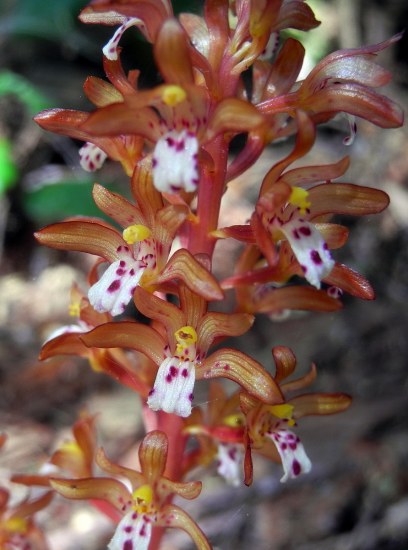
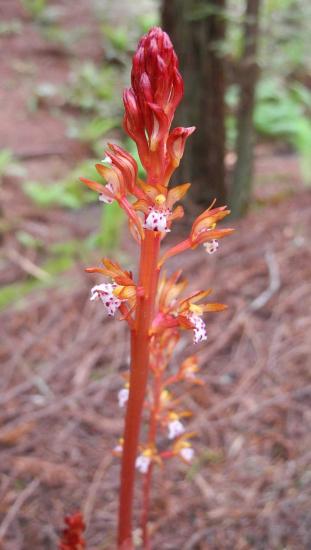
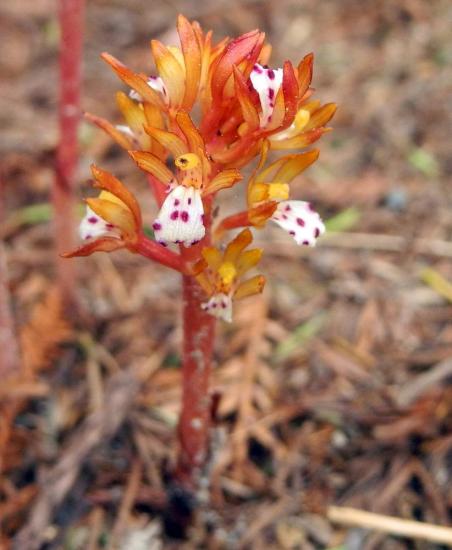
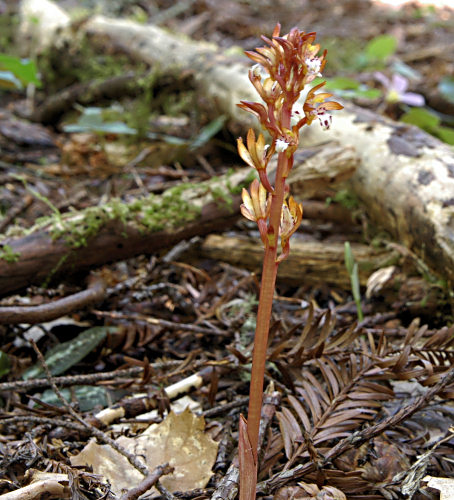
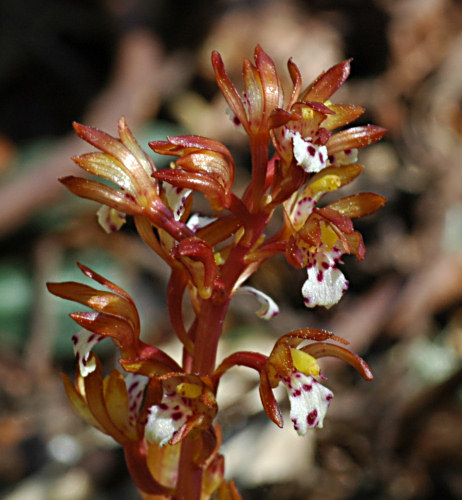
Corallorhiza mertensiana is found in shaded to open mixed-evergreen or coniferous forests in decomposing litter. It has pink to red sepals. Photos below were taken at Kruse Rhododendron State Nature Reserve by Bob Rutemoeller and Mary Sue Ittner different years.
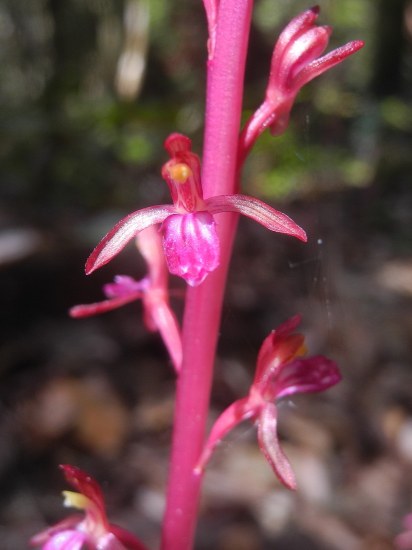
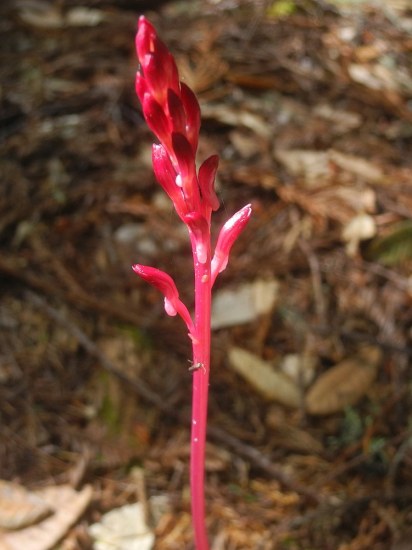
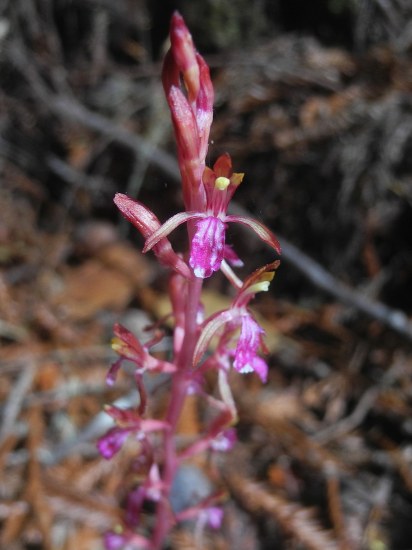
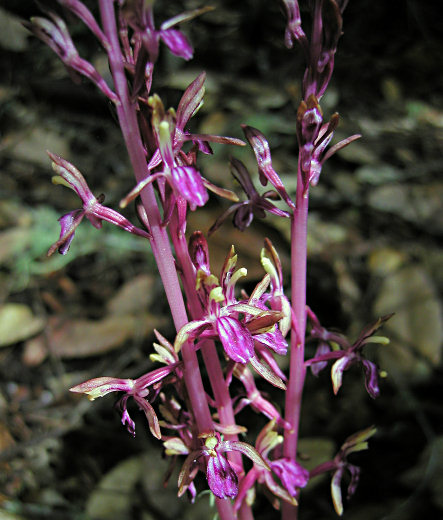
Starting in 2010 they have seen a white variety in the same location.

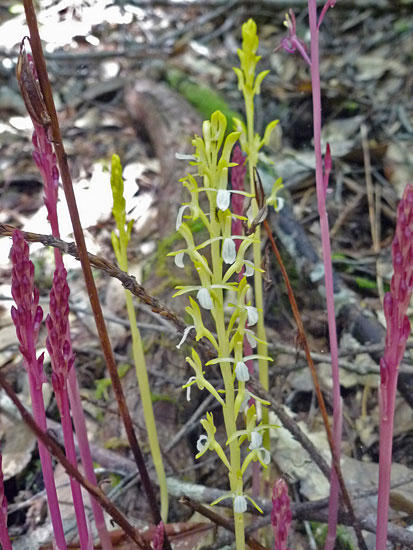
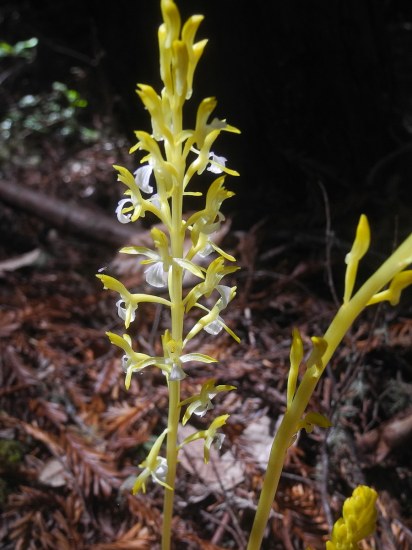

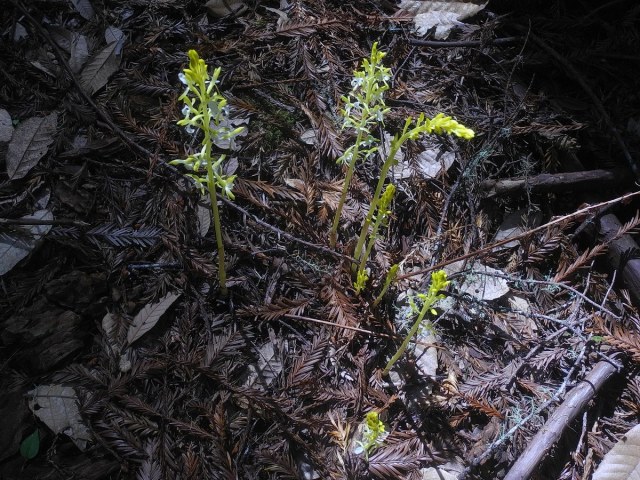
These pictures were taken at Salt Point State Park by Bob Rutemoeller and Mary Sue Ittner.
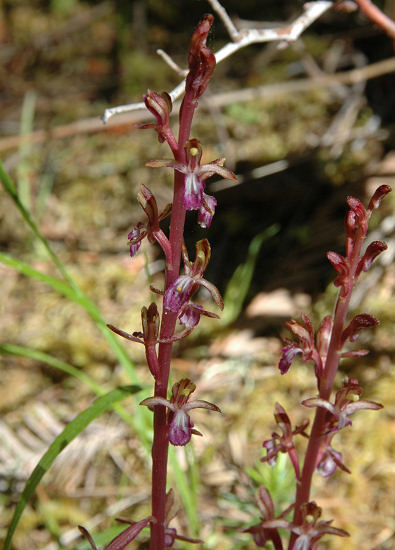
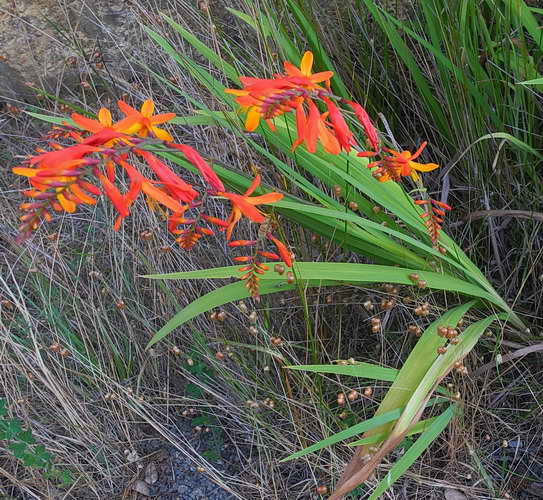
Crocosmia × crocosmiiflora is a frequently cultivated hybrid from South African species of Crocosmia. It has sword shaped leaves and orange-crimson flowers. It can be very invasive where happy as it spreads by stolons which create new corms. Even though it originates in summer rainfall areas and blooms in summer, it has naturalized in areas of the coast where you can find it growing in pockets that retain moisture in summer (eg. road ditches). Photo from Mary Sue Ittner.
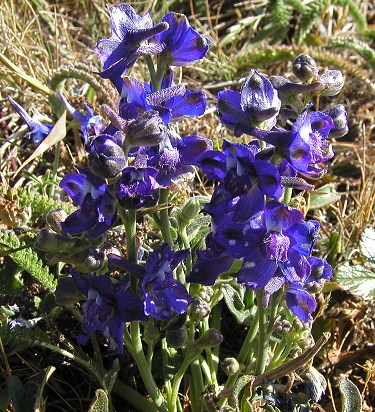
Delphinium hesperium subsp. hesperium has dark blue purple flowers. This photo was taken on the Mendocino Sonoma Coast where it was overlooking the ocean. Photos by Bob Rutemoeller.
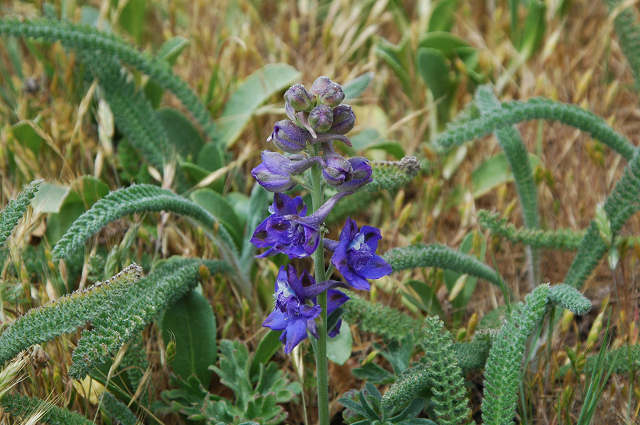
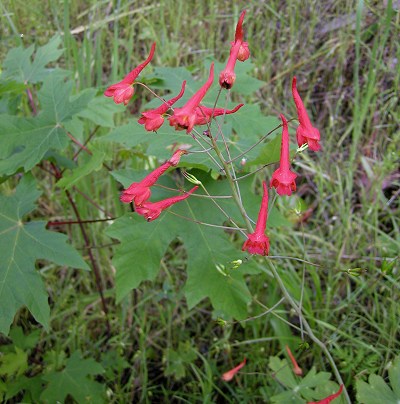
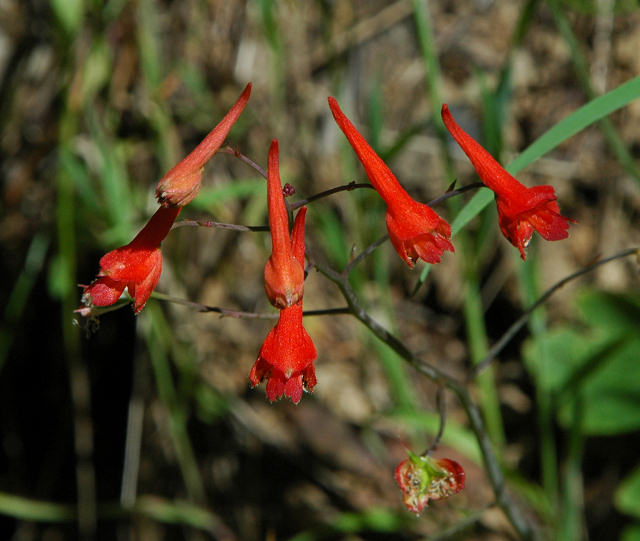
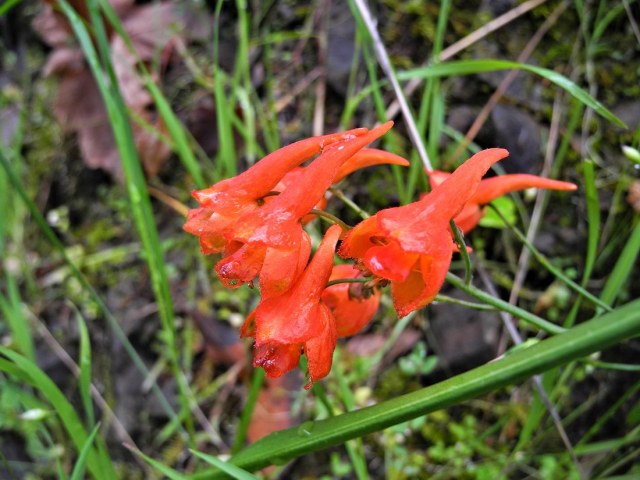
Delphinium nudicaule (red larkspur) with its red flowers is often found on shady banks and road verges, sometimes in large numbers. Photos taken in Sonoma County (including Skaggs Springs Road) by Bob Rutemoeller and Mary Sue Ittner.

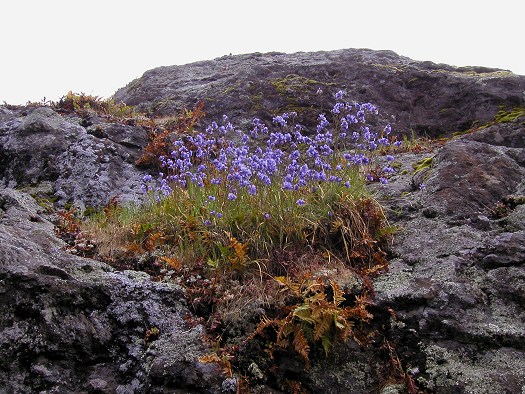
Dipterostemon capitatus (syn.Dichelostemma capitatum) commonly known as Blue Dicks is an early spring bloomer often found growing in the grass. It has 6 stamens. The first two pictures taken by Bob Rutemoeller show it found in two places in Sonoma County. One is the typical grass-weed habitat (sorry for the hand, but it was windy and blowing out of the frame) blooming May 2003 and the other an amazing clump growing in the rocks above Highway one, safe from all predators (and people) I'd expect blooming April 2004. The third picture was taken in 2007 with a zoom lens in the same place by Mary Sue Ittner. The last photo from Mary Sue Ittner was taken on Skaggs Springs Road.

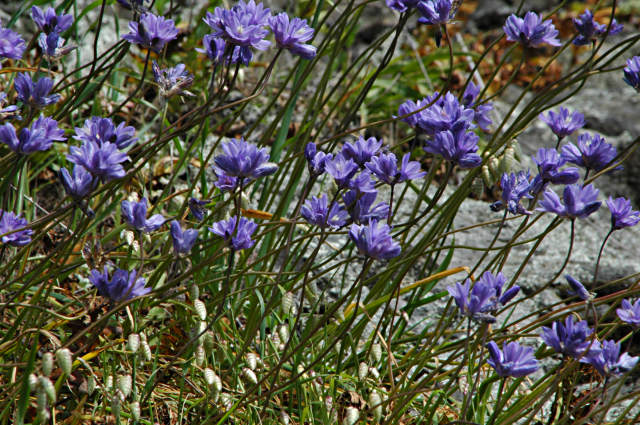
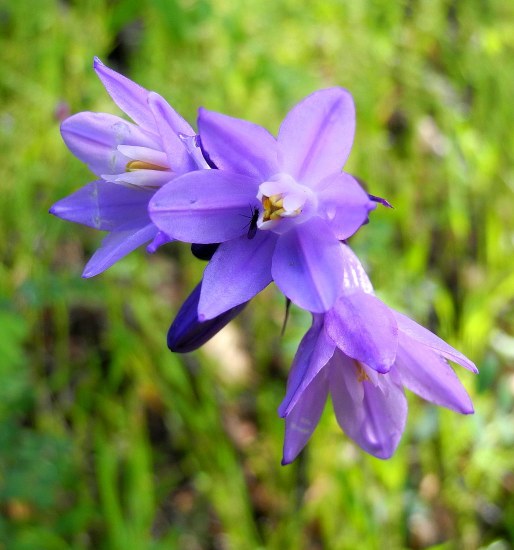
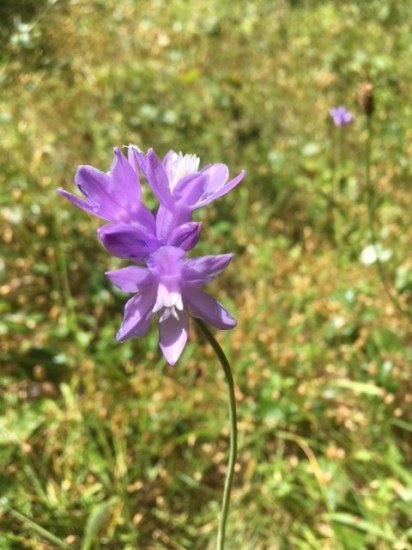
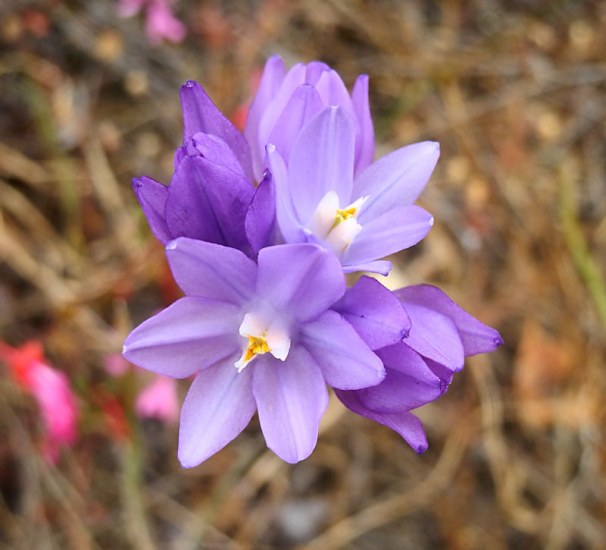
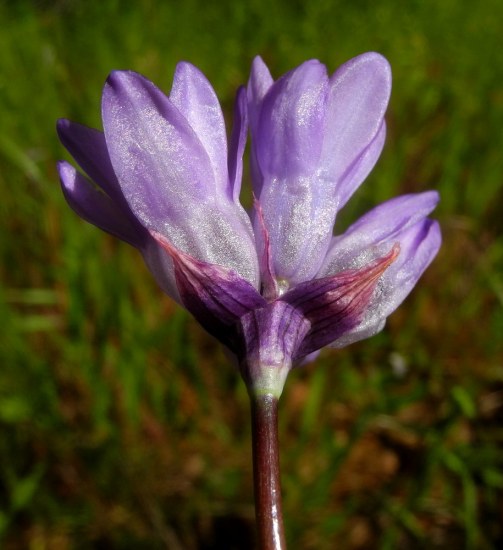
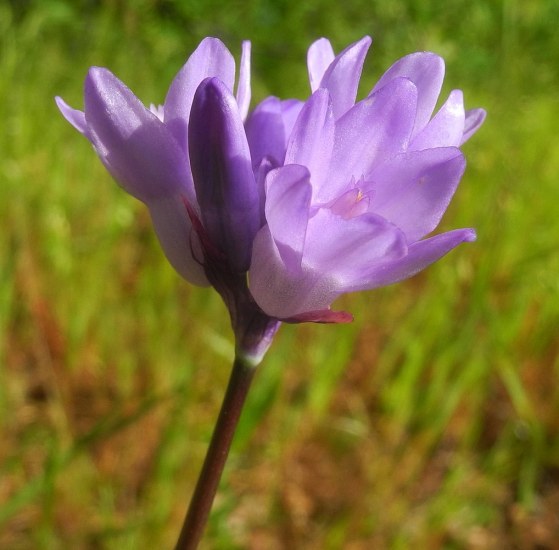
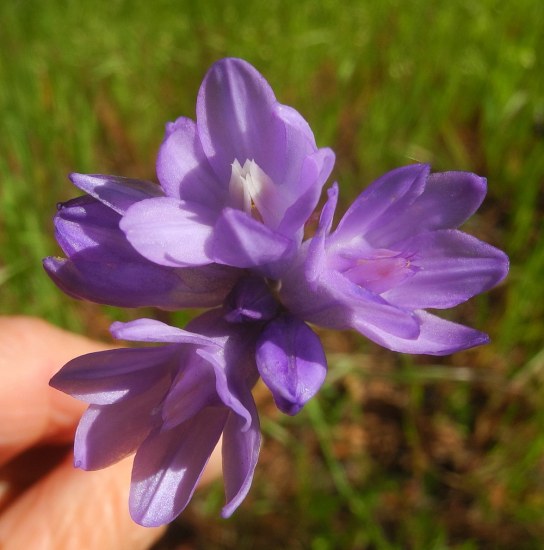
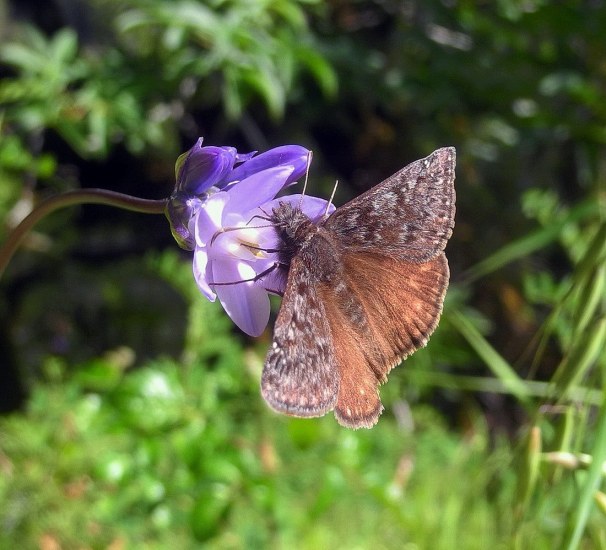
Dichelostemma congestum with the common names of forktooth ookow or congested snake lily usually flowers later than Blue Dicks. It has three stamens instead of six and a flowering tube that is pinched slightly at the top. The filament crown is forked. Photos from Loren Adrian and Mary Sue Ittner. The last four photos were taken along Fort Ross Road in Sonoma County late March 2022.
Disporum smithii see Prosartes smithii
Dodecatheon hendersonii is now considered to be Primula hendersonii.
Mendocino Sonoma Coast Index - Allium to Calypso - Epipactis to Maianthemum - Marah to Spiranthes - Taraxia to Zigadenus