This wiki page shows pictures of geophytes growing in the wild in northern California along the Sonoma Mendocino coast arranged alphabetically from A through Calypso. Rainfall in this location starts in the fall with the most rain coming in December and January with less rain continuing sometimes as late as May. Summers are dry although there are periods of fog in summer which brings some moisture. Temperatures are moderate year round. Habitats are mixed evergreen and Redwood forests, bluff scrub, riparian and some limited grasslands, but much of this latter habitat (grasslands) is now gone. Most flowers bloom late spring into summer.
Mendocino Sonoma Coast Index - Camassia to Dodecatheon - Epipactis to Maianthemum - Marah to Spiranthes - Taraxia to Zigadenus
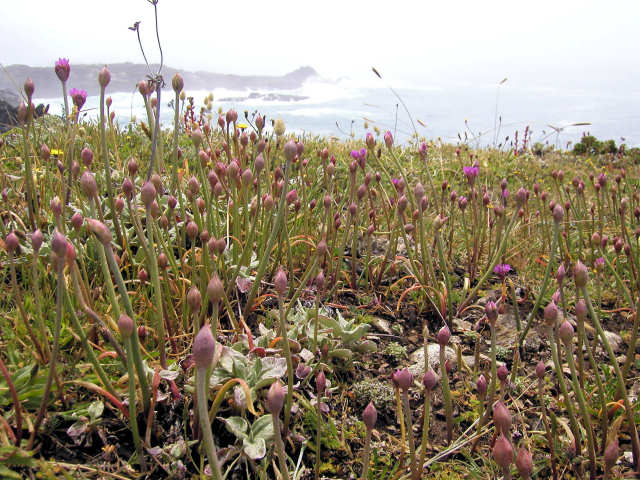
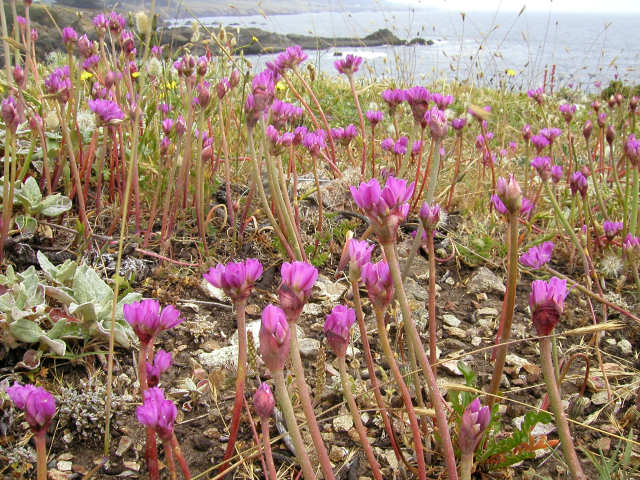
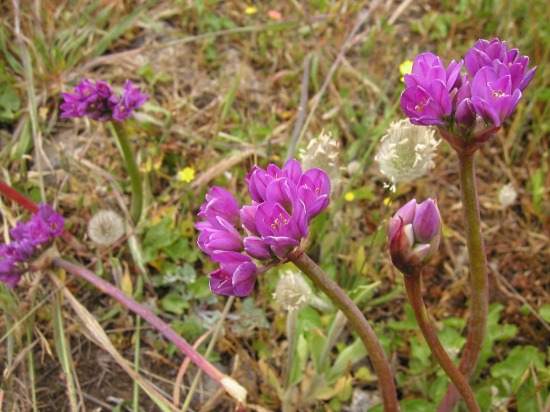
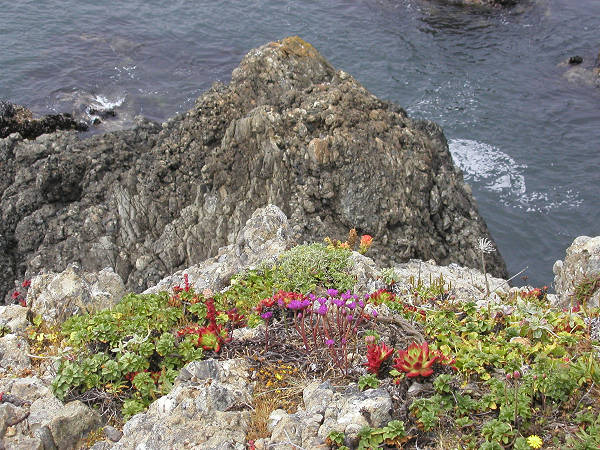
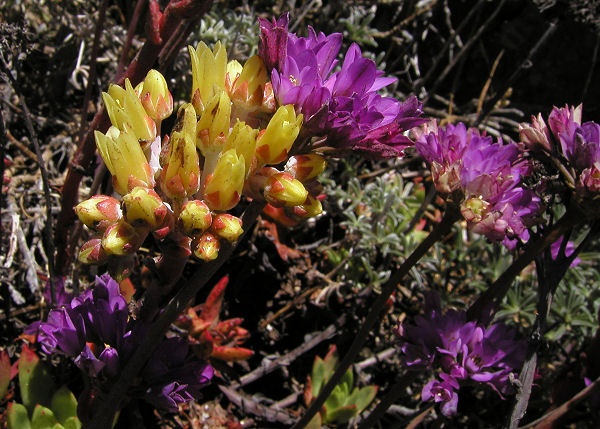
Allium dichlamydeum (coast onion) grows near the coast in Northern and central California. These pictures by Bob Rutemoeller show it in bud on a coastal bluff in Sonoma County, in bloom in the same spot a few weeks later, a close-up, growing in a wild rock garden where it would be difficult for predators to get it, and finally almost two months after the first pictures in mid July 2003 it is still in bloom, now with Dudleya farinosa blooming at the same time. A final picture taken another year where both were growing in the rocks at Salt Point State Park.

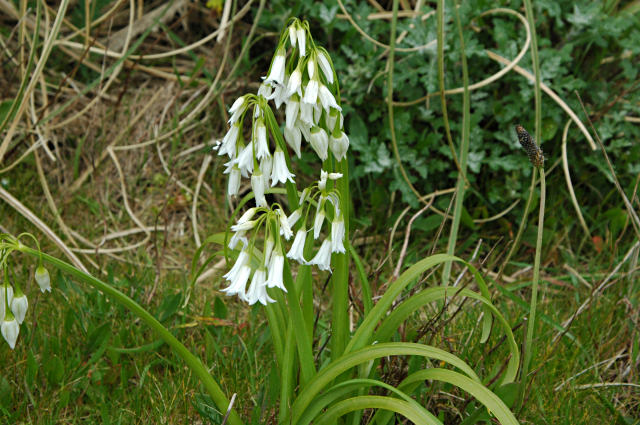
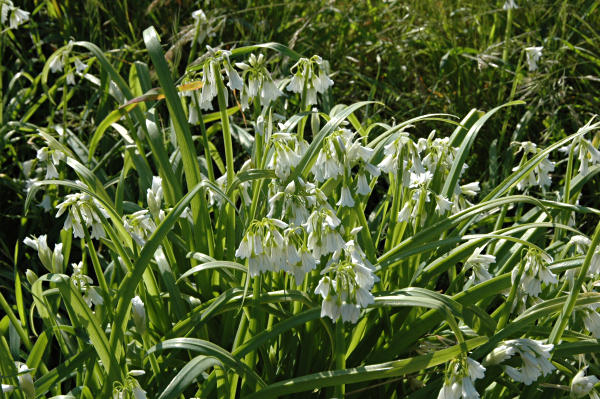
Allium triquetrum is not native. It is from Europe, but has naturalized in our area as it has in New Zealand and Australia. The first photo by Mary Sue Ittner was taken at Manchester State Beach near an abandoned house and the second photo taken by Bob Rutemoeller shows another large population on the Mendocino Coast.
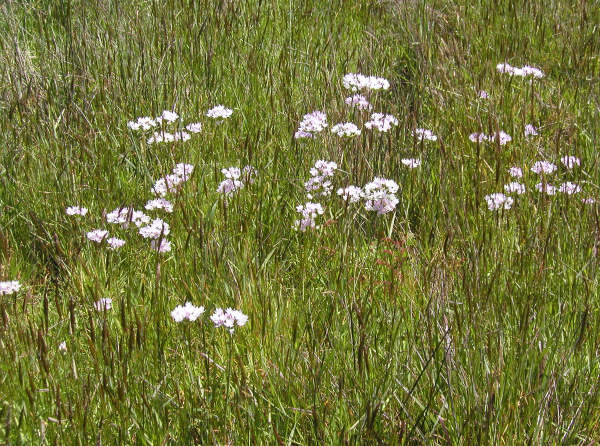
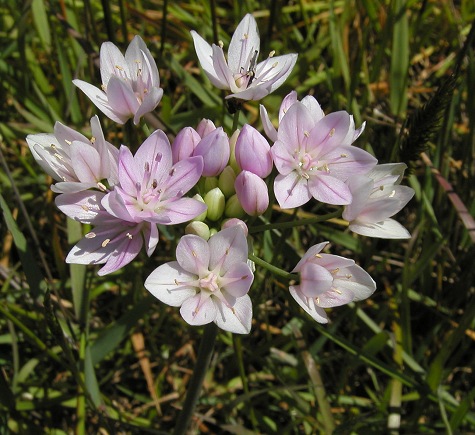
Allium unifolium is found in grasslands moist in spring. These pictures taken by Bob Rutemoeller show it in habitat on the Sonoma coast and a close-up too.
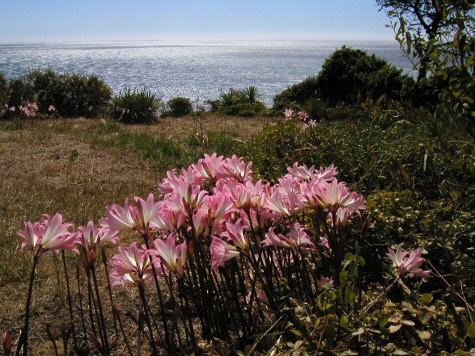
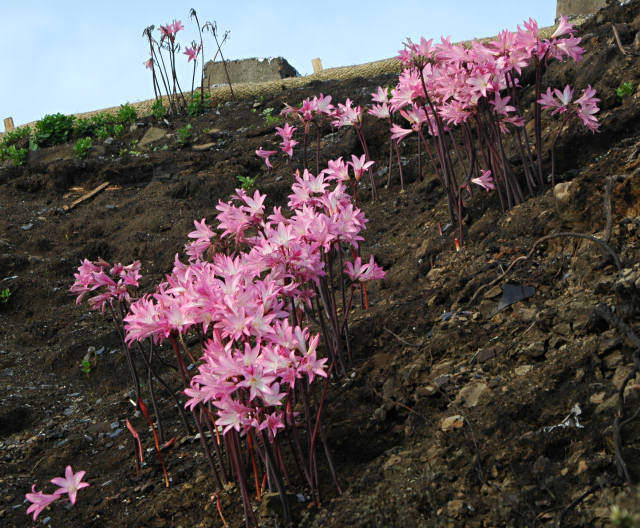
Amaryllis belladonna known to many as "Naked Ladies," is native to the Cape Floral province of South Africa. It has a great variation in time of bloom, starting in summer and extending into fall. It has naturalized in many Mediterranean climates throughout the world including our coast. The first picture below from Bob Rutemoeller shows some in bloom September 2004. The second photo shows some on a slope blooming after a fire.
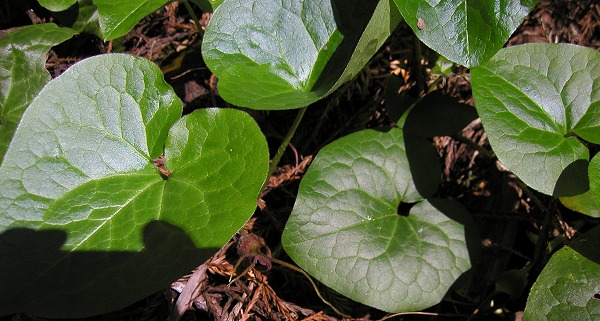
Asarum caudatum or wild ginger is a rhizomatous perennial found in shady moist areas. It has evergreen cordate leaves with red-brown flowers that are hidden under the leaves. Photos by Mary Sue Ittner

Brodiaea elegans is found is meadows and open woods, mostly inland from Central California north to southern Oregon. Photos were taken June 2011 in Sonoma County on Tin Barn Road. Photos by Bob Rutemoeller.
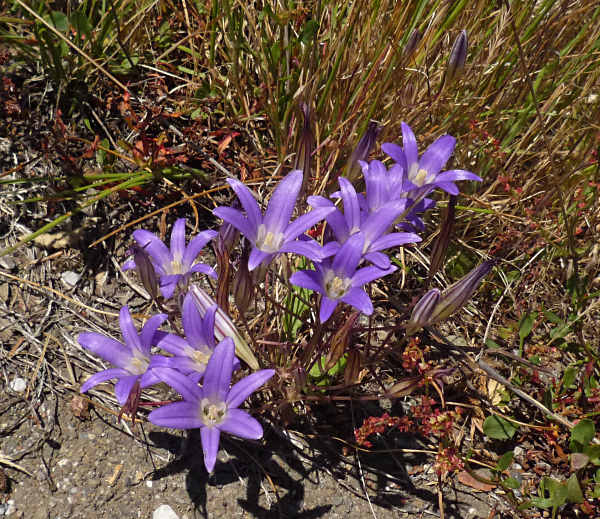
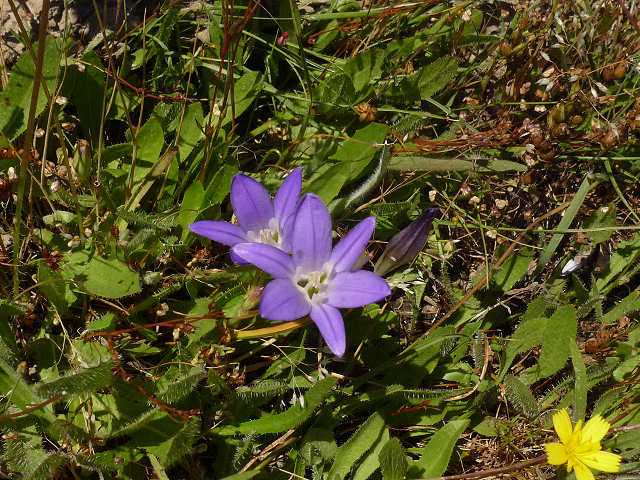
Brodiaea terrestris ssp. terrestris (Earth Brodiaea) shown in habitat at Salt Point State Park and along the Sonoma coast. Photos by Mary Sue Ittner and Bob Rutemoeller
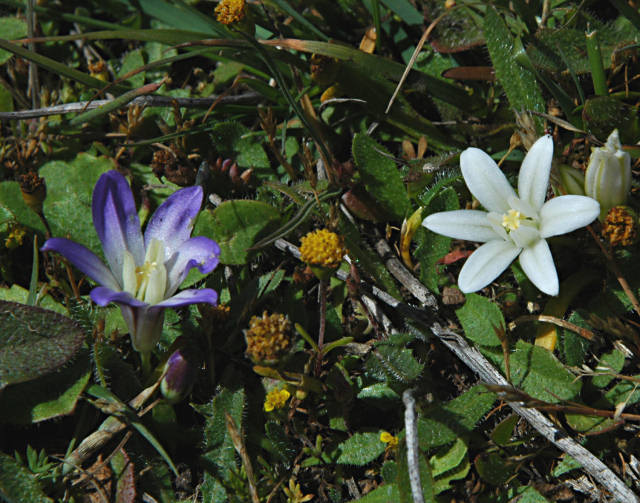
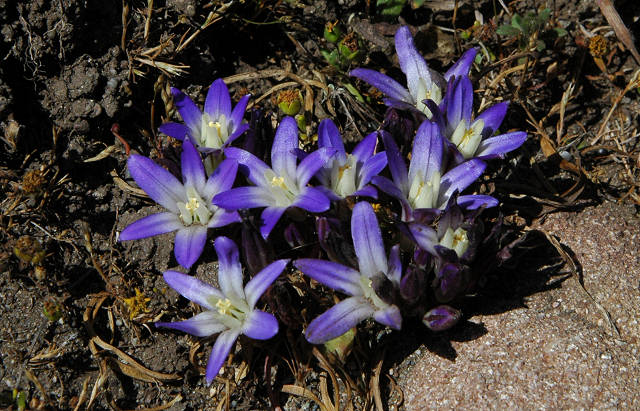
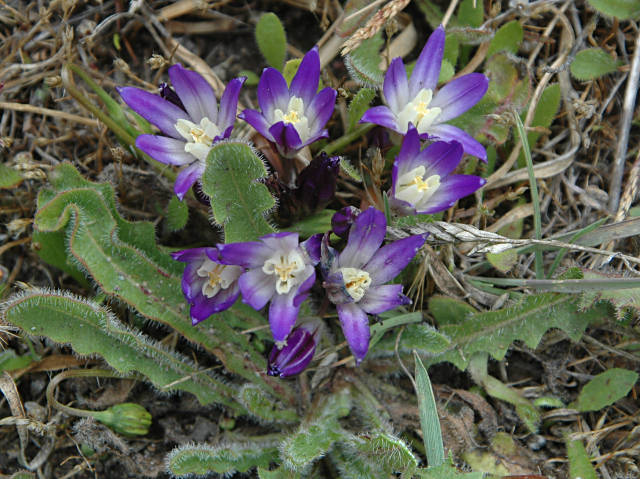
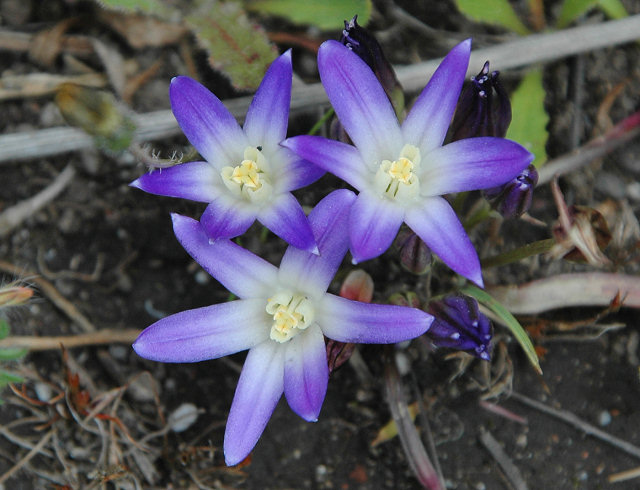
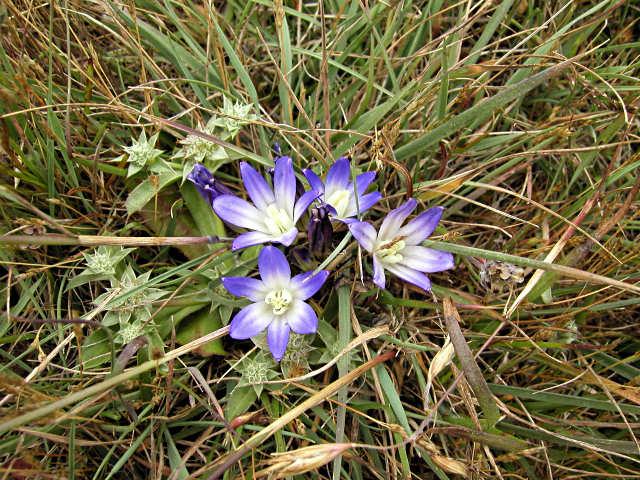
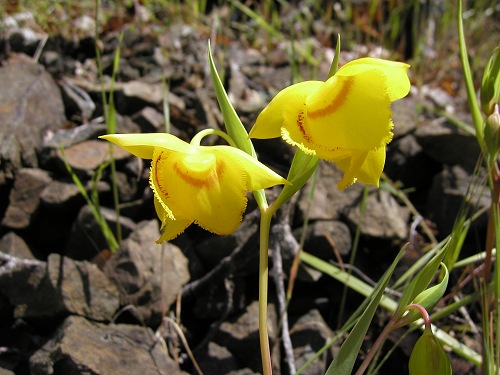
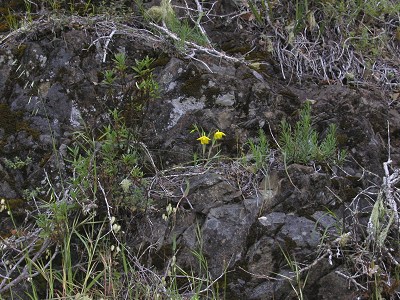
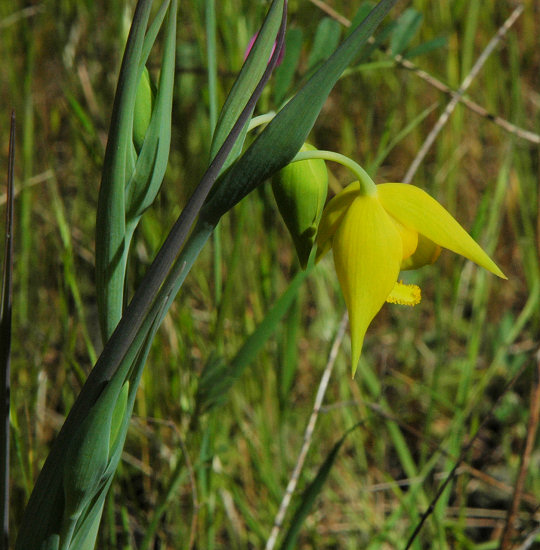
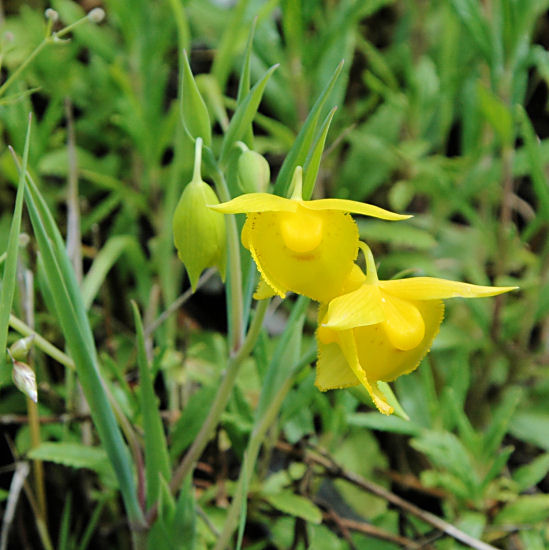
Calochortus amabilis found on open hillsides and in woodlands in the Coast Ranges of California has yellow globe flowers and is knows as Diogenes' lantern. The first two photos by Bob Rutemoeller were taken on a hillside in Sonoma County. One was one high up, too difficult to get close to in order to photograph. The last two photos were taken by Mary Sue Ittner.
Calochortus tolmiei (Pussy Ears) is found in scree and coastal meadows at low to moderate elevations, on flats and slopes, in mixed conifer forests and from deep shade to sun. The pictures below taken by Bob Rutemoeller and Mary Sue Ittner show it in habitat in two very different conditions. The first four photos show it growing on the rocky bluff next to the Pacific Ocean in Sonoma County, California where it is growing in a windy sunny spot. The last two photos were taken at a more inland location where plants were growing along the road bank in the shade of trees, but still blooming in profusion in a very wet spring, June 2011. It was difficult to get good pictures since it was so shady where they were growing in the last location. Not a lot of plants grow well under Coast Redwoods and we were surprised to see so many in bloom.
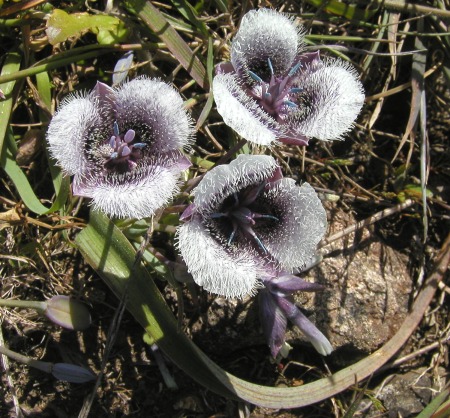
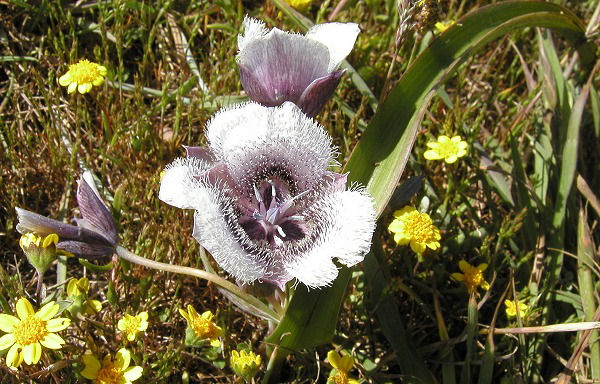
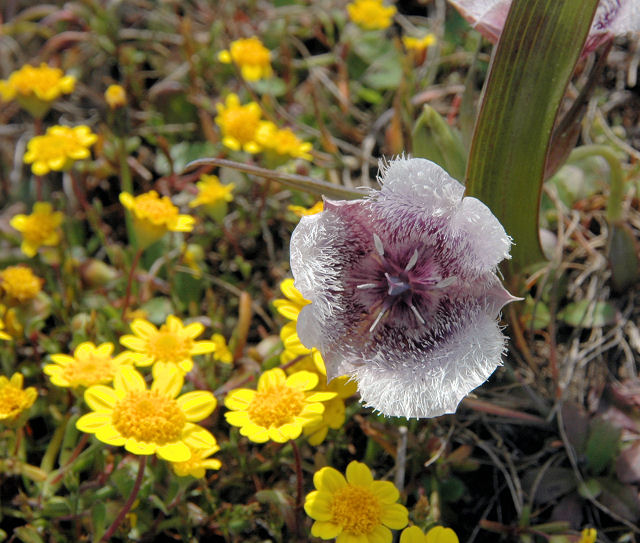
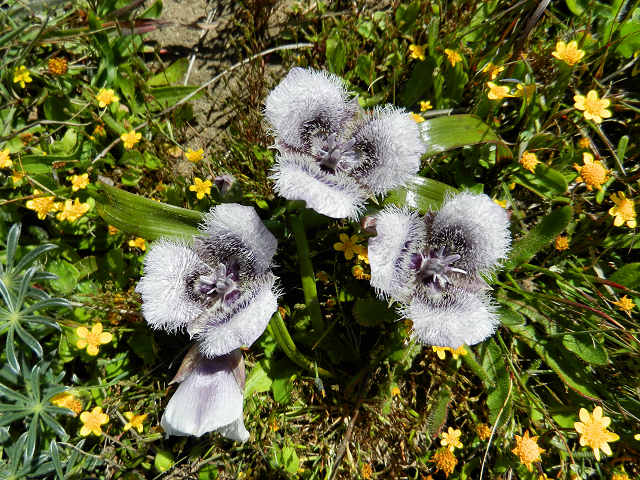
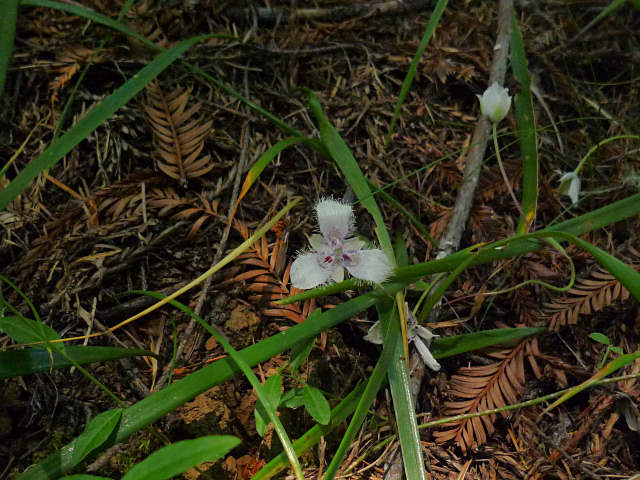
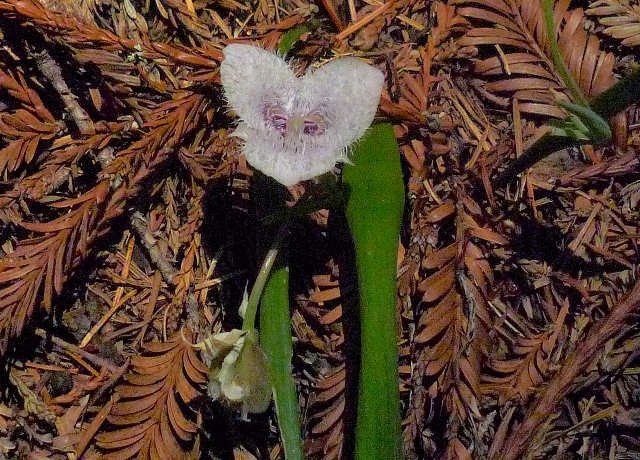
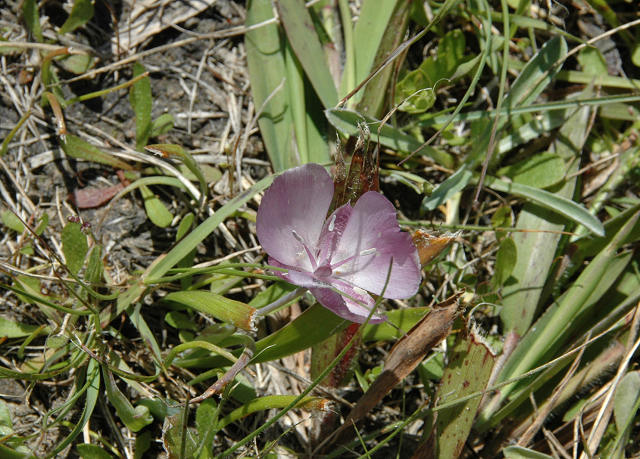
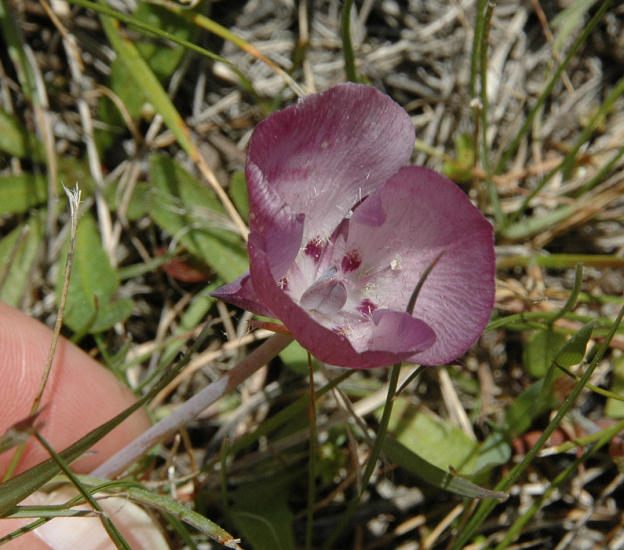
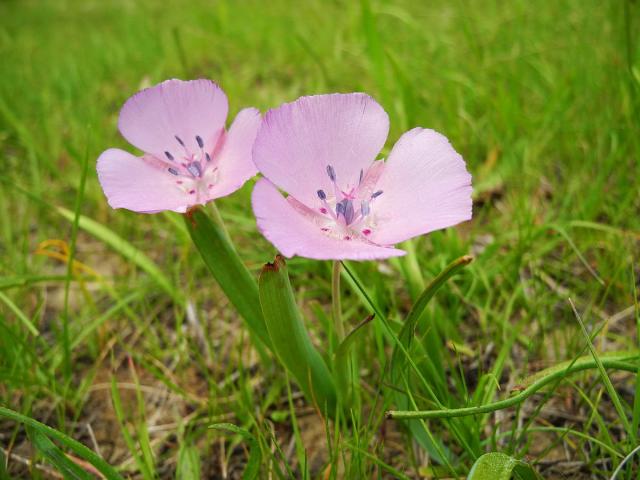
Calochortus uniflorus (pink star tulip) is found in temporary wet meadows and prairies. Photos taken in Sonoma County by Bob Rutemoeller and Mary Sue Ittner of plants growing in open grassy areas not far from the Pacific Ocean and at Salt Point State Park.

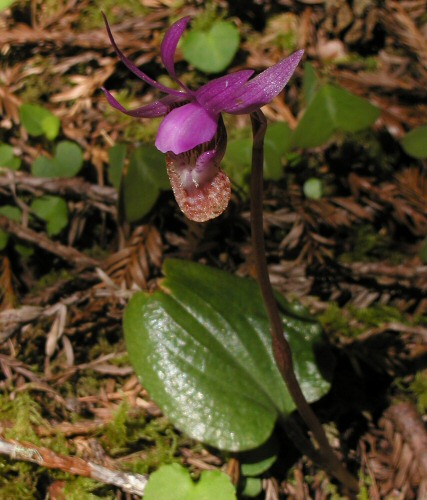
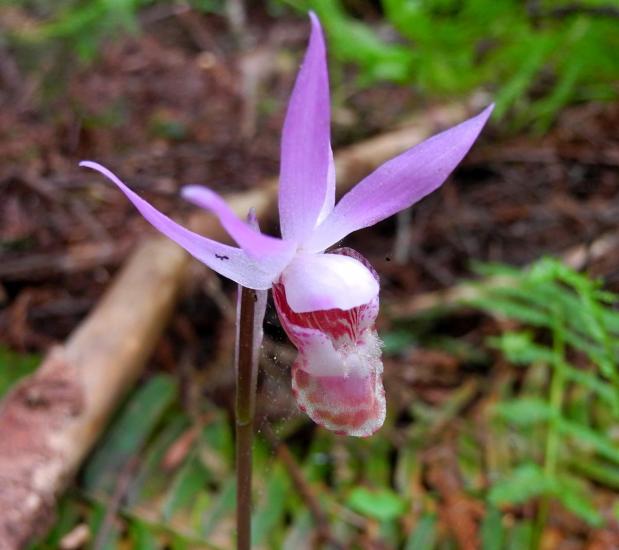
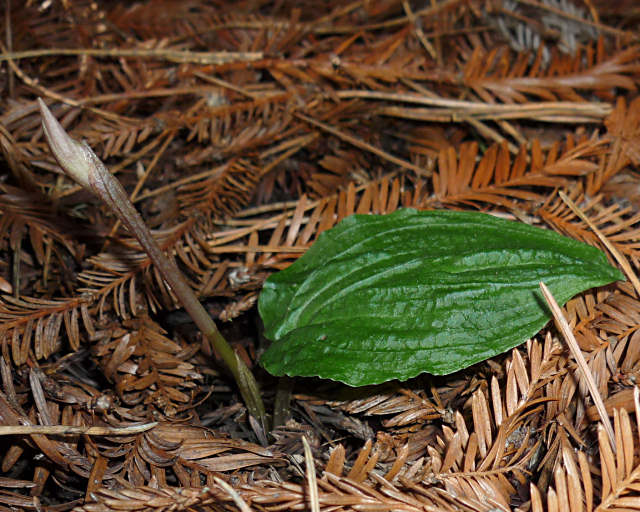
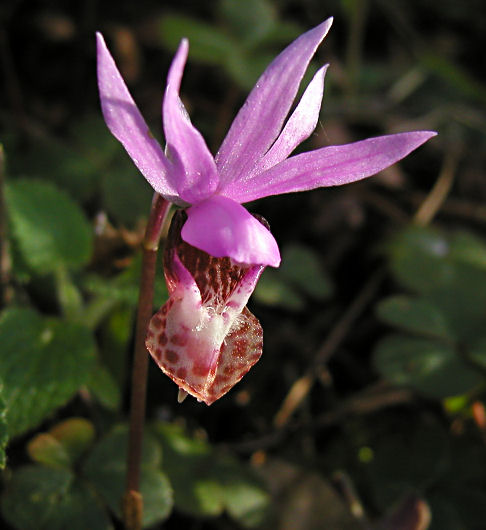
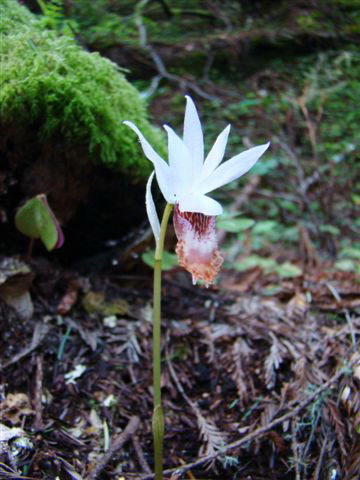
Calypso bulbosa var. occidentalis is found in moist woods and is one of the early spring wildflowers that people delight in seeing each year. The first three photos from Mary Sue Ittner were taken at various locations in Sonoma and Mendocino Counties between March and May. In photo #3 a spider web has captured some insects. Photos #4-5 from Bob Rutemoeller show the new leaf with an emerging flower bud and a close-up of the flower. The last photo taken by Mary Hunter shows a rare white form.