Milla is a genus of about six species once considered to be in the Alliaceae or the Liliaceae families and now in the Milla clade of Themidaceae. This clade includes Behria, Bessera, Dandya, Jaimehintonia, and Petronymphe. It is found from Central America to southern Arizona. This genus is cormous.
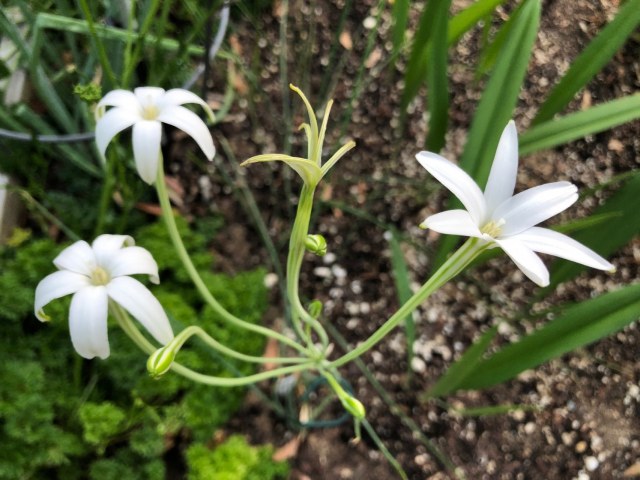
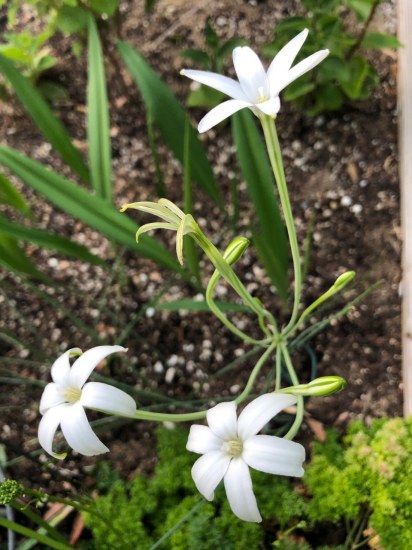
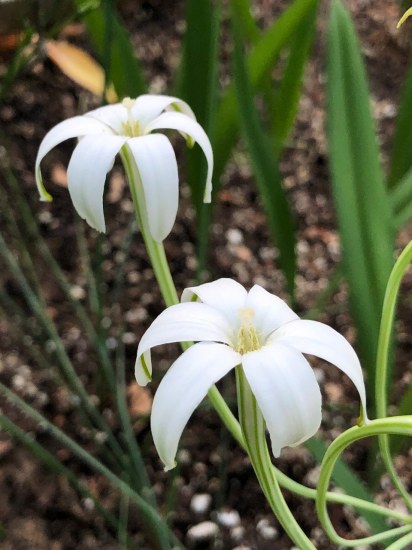
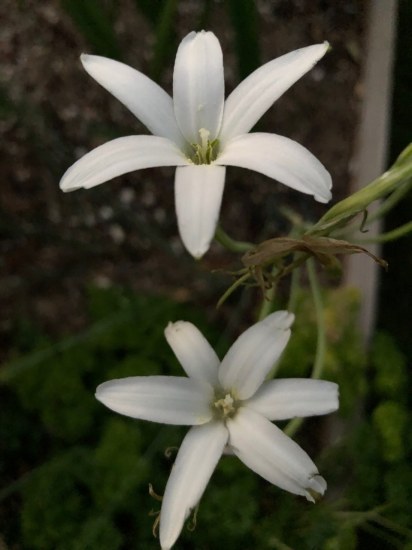
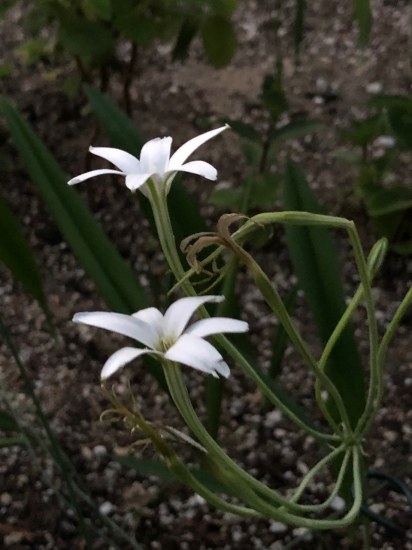
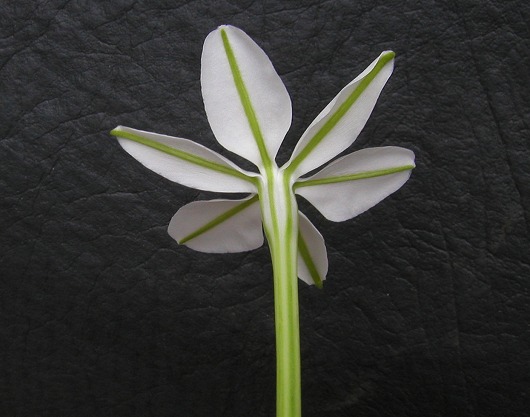
Milla biflora Cav. (Mexican stars) is locally abundant in the southwestern United States and Mexico at middle elevations (4,000-7,000 ft) in hilly areas associated with desert grassland and chaparral. Depending on rainfall and probably other factors, it can bloom from June-September. It has bright white flowers and thin terete leaves. The flower stalk can be up to 60 cm tall with each flower 6 cm across. This first photo was taken by Bob Rutemoeller of one blooming, purchased from Telos Rare Bulbs and flowering in June 2003. The following year each corm produced one or two flowers extending the bloom time to almost a month since no flower bloomed at the same time. Photos by Mary Sue Ittner from June and July 2004 show the flowers in bud, in bloom, and the attractive back. The last photo from Mary Sue Ittner shows the corms on a 1 cm grid.
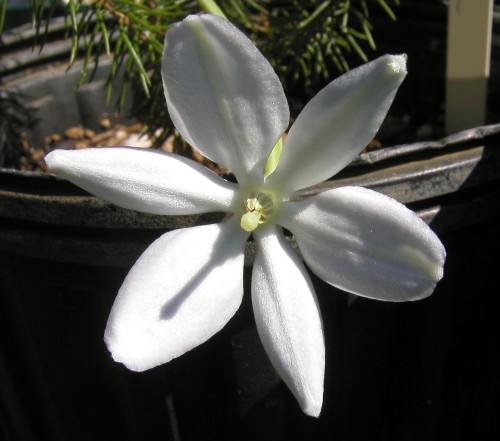
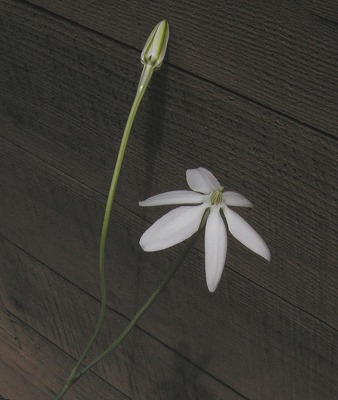
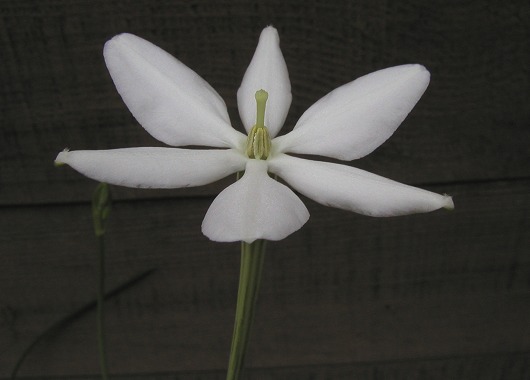
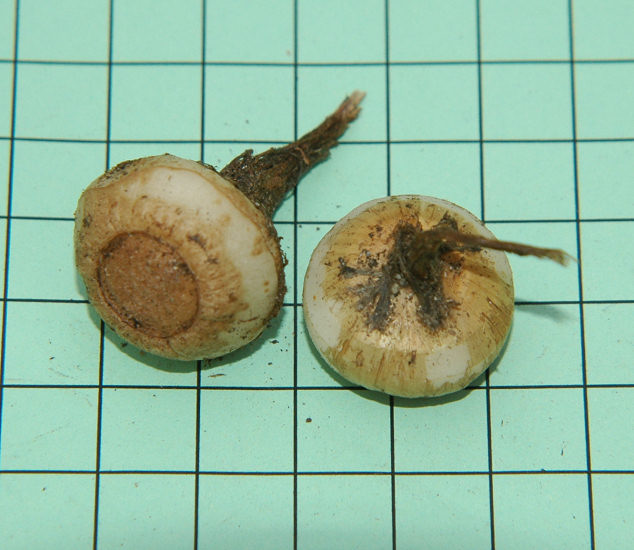
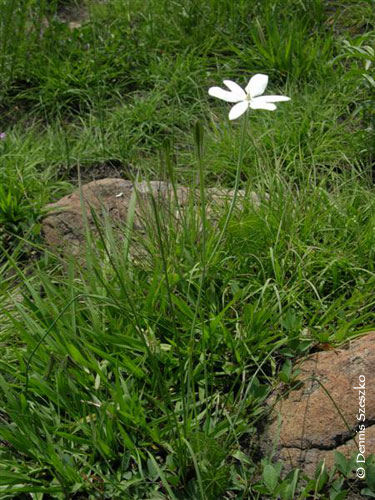
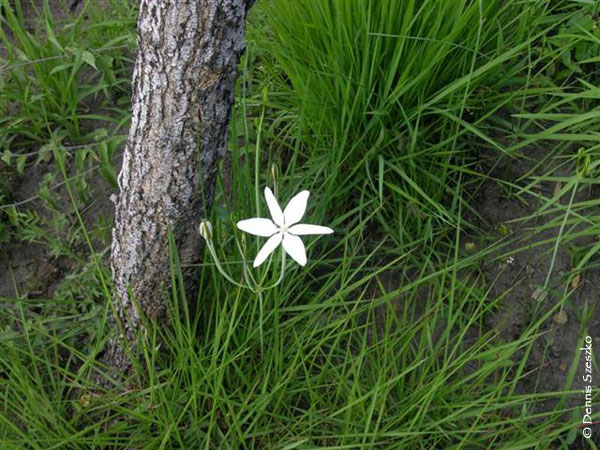
Milla biflora can produce up to 6 flowers per corm in exceptional specimens, but they are usually limited to 2 flowers that open in sequence. The corms are shallow and grow in rocky areas with good drainage in full sun. The following pictures were taken in situ in Mexico State in June 2006 by Dennis Szeszko.
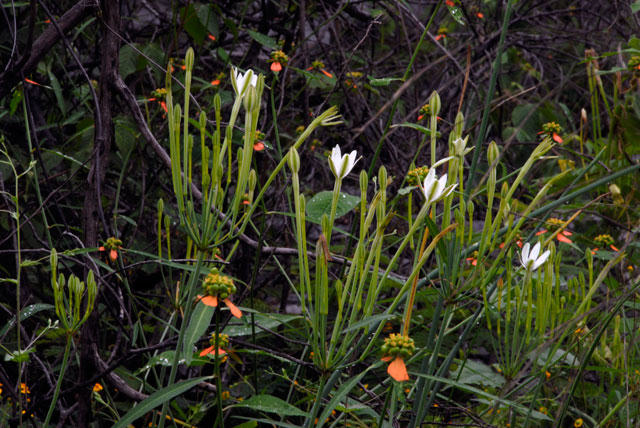
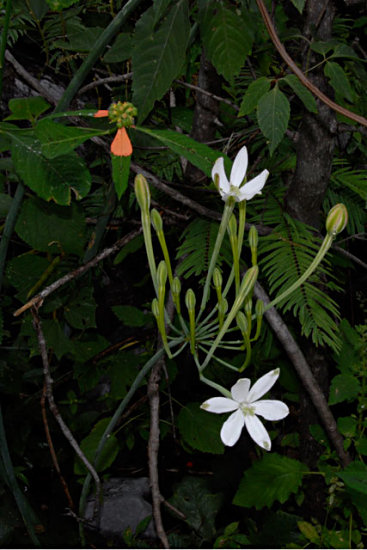
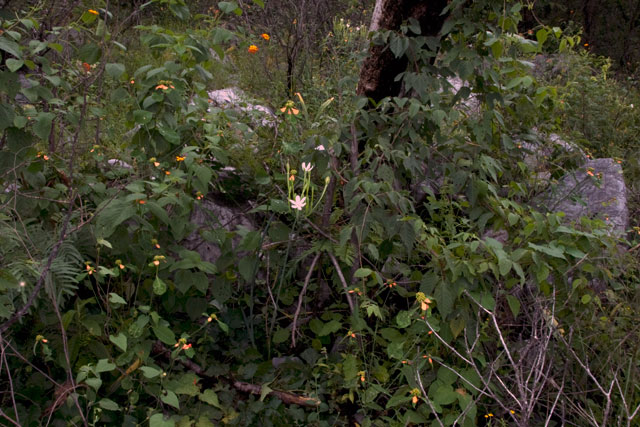
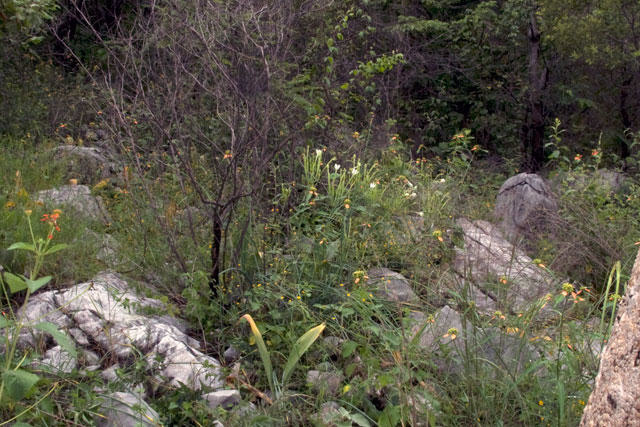
Milla magnifica H.E.Moore is native to southwestern Mexico (Guerrero, in limestone hills around Taxco and Iguala; and Mexico State in the mountains near Zumpahuacan). This spectacular species is like Milla biflora on steroids! The hollow, tubular foliage grows to over 1 meter in length and the flower spike can produce up to 20 flowers with several opening at once. This plant is likely visited by a species of night-flying moth with a long proboscis required for pollination. It grows with Euphorbia sp., Lantana camara, Manfreda sp., Habenaria sp., and Tigridia ehrenbergii in pockets of clay soils interspersed with limestone boulders. It grows at relatively low elevations (1500 meters above sea level) in tropical deciduous jungle. For 7 months out of the year it is bone-dry in its habitat, but there are monsoon rains between May-October. Photos taken at the end of September, 2007 in-situ by Dennis Szeszko.
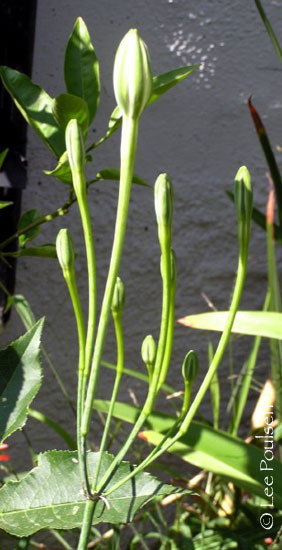
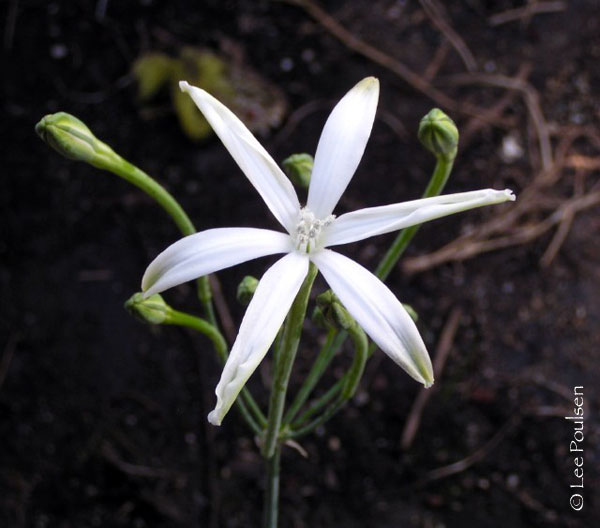
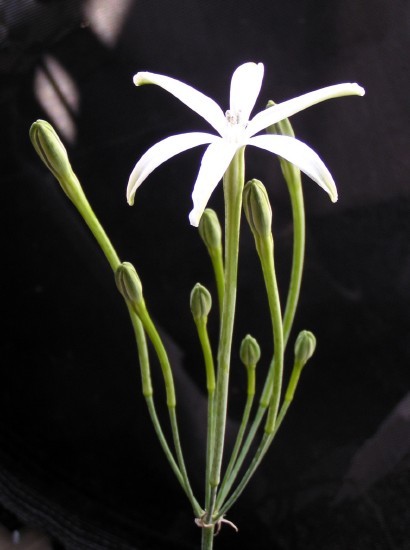
Thad Howard says that "at last we have a Milla for Everyman." Scott Ogden says the flower's fragrance is rich and cloying but Lee Poulsen didn't find it cloying at all. It is a summer grower, dormant in winter, and flowers in late summer and fall. It is a night blooming flower, but in cooler weather will stay open into the morning. Here in southern California it stays open all through the day. Each flower lasts for about 3 days in cool weather. Both Howard and Ogden feel it is easy to grow and propagate. Photos taken October 2006 by Lee Poulsen.
Photos below are of a specimen grown by Uluwehi Knecht. The corms are grown in tall pots to allow free root-run. The mix is 1:1 organic:inorganic. It requires warm weather to initiate growth so summers in Northern California isn't ideal. However, it can be started indoors and then allow to grow outdoors in partial sun. This treatment seems to work decently well. Photos below were taken by Nhu Nguyen in mid December.
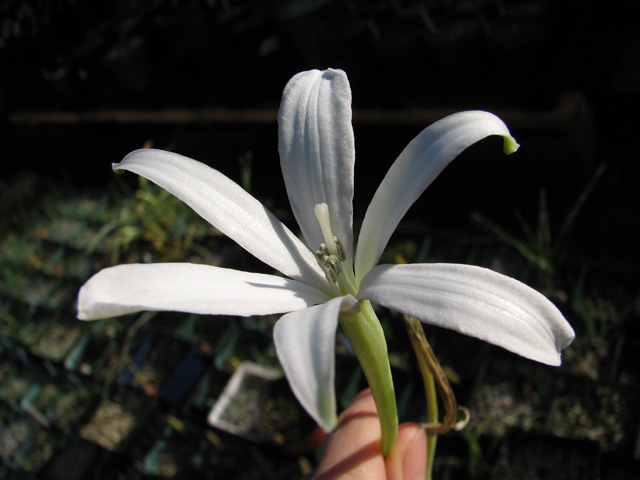
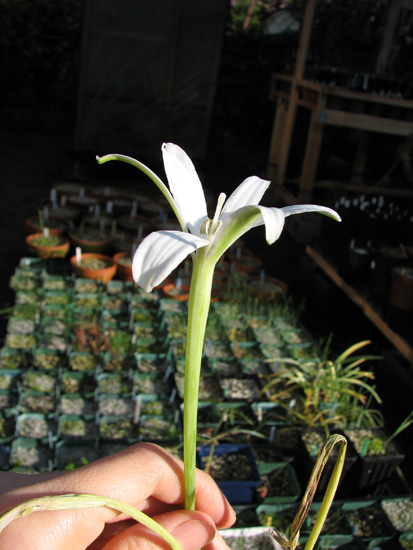


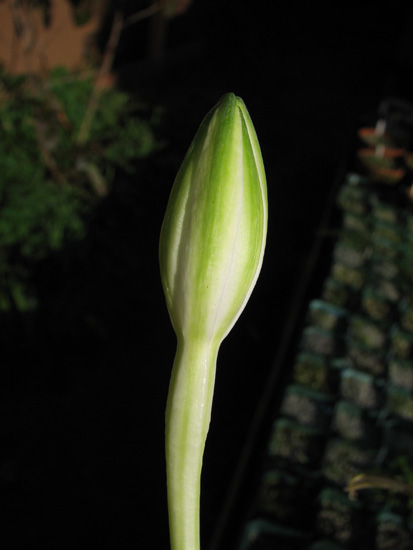
Milla oaxacana Ravenna is native to the Mexican state of Oaxacana.
Photos by Rimmer de Vries, who comments, "Grown from seed from Dylan Hannon started April 2016 (5 yrs old, first bloom in 4 yrs). Milla are night blooming, opening before dusk and they close at dawn. Flowers last 2 nights."
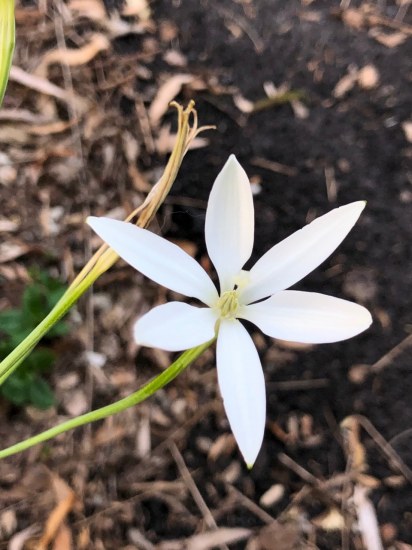
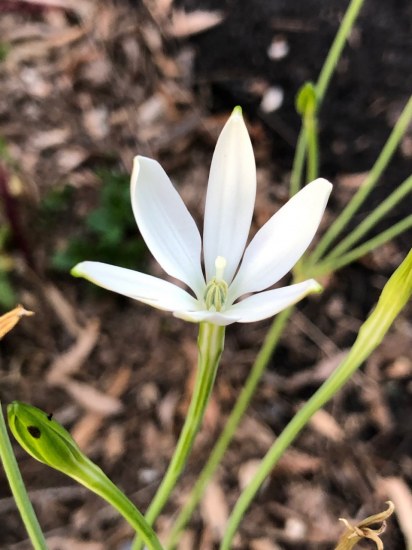
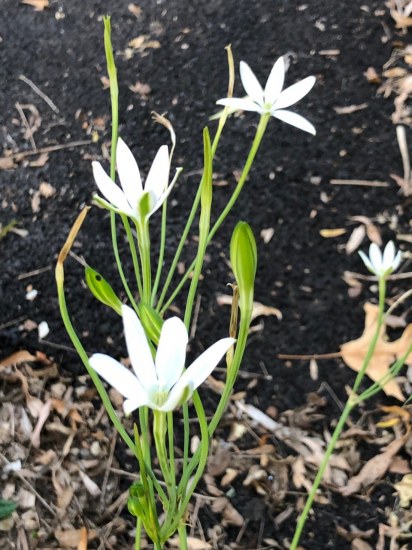
Milla potosina T. M. Howard named for the Mexican state of San Luis Potosí. Photos by Rimmer de Vries, who comments, "Blooming in the middle of June here. These are the first Milla to bloom."