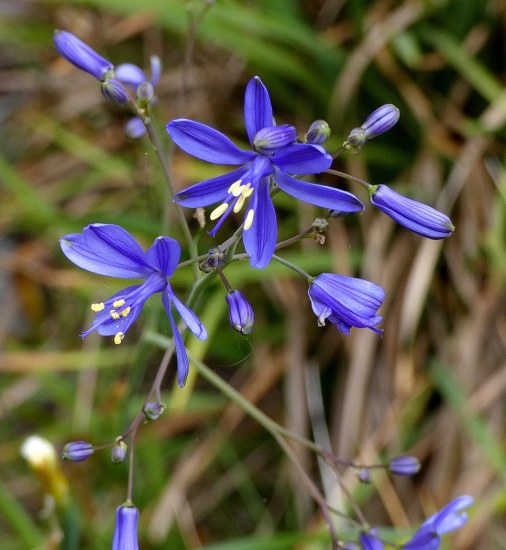
Pasithea is a monotypic genus originally considered to belong in the Anthericaceae family from Chile. The single species was named Anthericum caeruleum by Ruiz & Pavon in 1802 when discovered in what was then Peru and subsequently became part of Chile and renamed Pasithea caerulea (Ruiz & Pav.) D.Don in 1832. The Angiosperm Phylogeny Group II, 2003 suggested Anthericaceae could optionally be included in the Agavaceae or Asparagaceae family. In the APG III system of 2009 Anthericaceae was included in the Agavoideae family. In 2023 Pasithea is generally considered to belong in the Asphodelaceae family, subfamily Hemerocallidoideae. The only species has grasslike keeled leaves and blue flowers with yellow stamens. It is one of the most widespread "bulbous" plants in Chile growing in the coastal zones to altitudes higher than 2,000 meters above sea level. It even grows in the Desert of Atacama. You can see this plant listed as Pasithea caerulea or Pasithea coerulea.
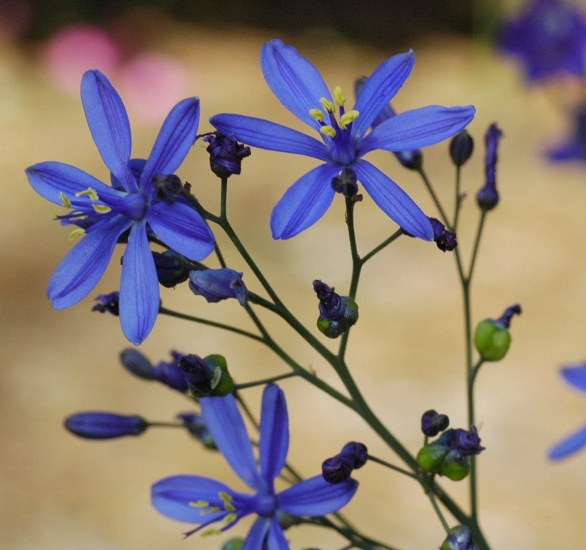
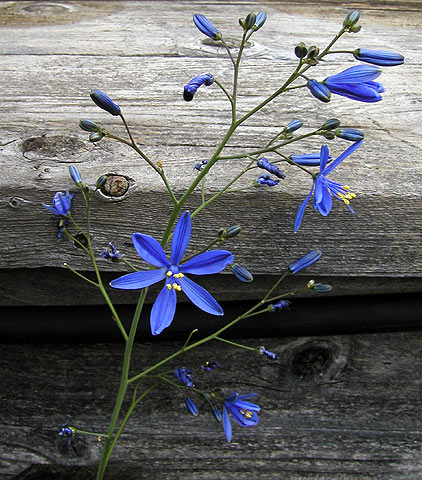
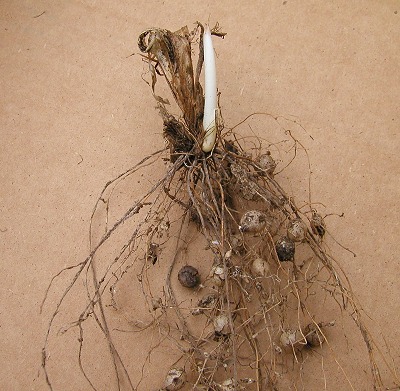
In late September and early October, 2011, Eugene Zielinski accompanied others on a trip to Chile to observe (and photograph) the flowering desert. See ChilesFloweringDesert2011BulbousFlora. He reported seeing this species frequently on the trip observing plants up to 1 meter (3 feet) or more in the interior and much shorter along the coast. Photos 1-2 were taken by him on this trip. The close up of the flowers was photographed at Parque Nacional Fray Jorge; the photo of the plant was taken at Reserva Nacional Las Chinchillas. Photo 3 was taken by Osmani Baullosa.
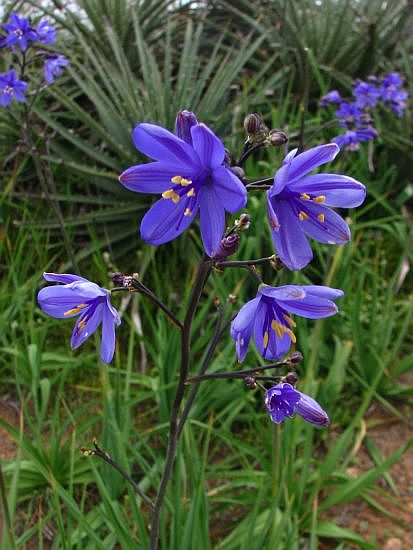
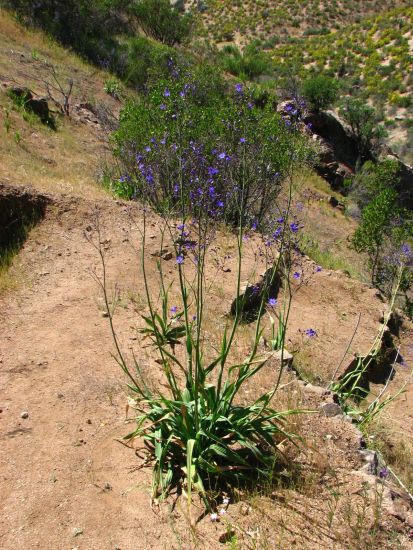
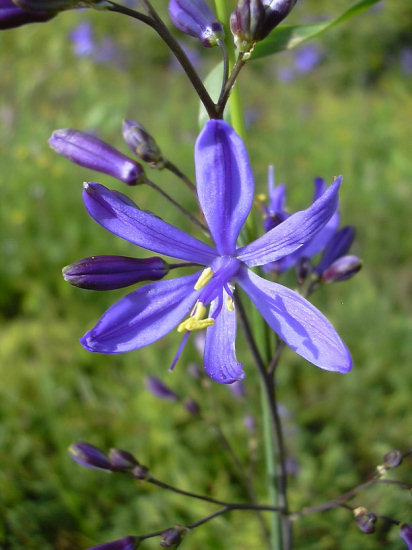
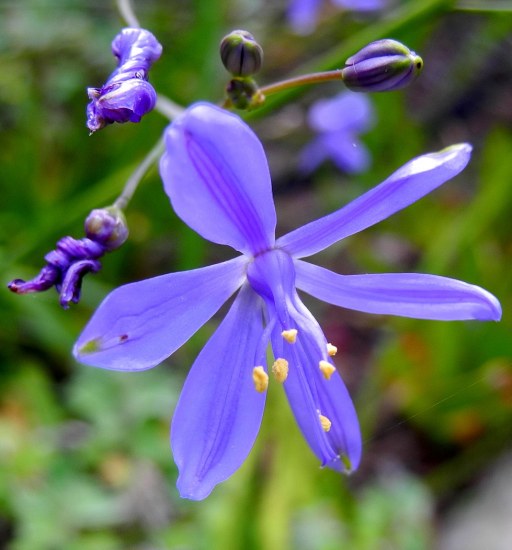
Mary Sue Ittner grew and flowered this plant for a number of years in the Northern Hemisphere and found it responded better when it was not kept completely dry during its summer dormancy. Photos below were taken by her. The second photo is a picture of this plant just as it is beginning to start into growth again showing the unusual storage organ, described by Alberto Castillo as radial threads connected to terminal "sausages". She thought it was lost, but it reappeared in 2017 and then stayed underground through dry years until another wet year in 2023. This suggests that growth is stimulated by very wet winters. The last two photos are from 2017 and 2023