Phycella Lindl. is a genus in the Amaryllidaceae family related to Hippeastrum and Rhodophiala. It is native to the Andes, mostly Chile. The taxonomy of these species is not well determined. The most recent work, not yet published, has found that Phycella is in a clade with Rhodolirion and Placea. This is supported by both chloroplast and nuclear genes. This clade is sister to the rest of the Hippeastreae. This clade has 18 chromosomes and capitate stigmas.
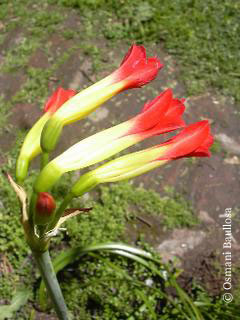
Phycella australis Ravenna is very similar to Phycella cyrtanthoides, but has smaller flowers, is not as tall, and has narrower leaves. A coastal species, it is the southernmost growing species in Chile. Height range: 30-50 cm. Photo by Osmani Baullosa.
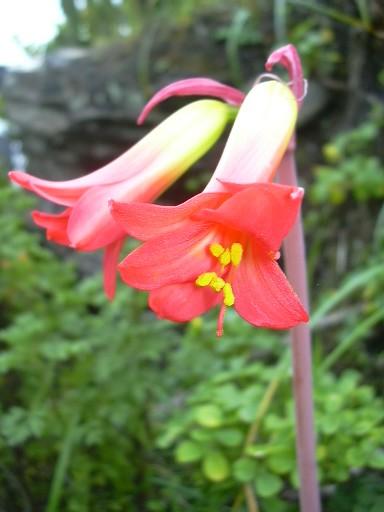
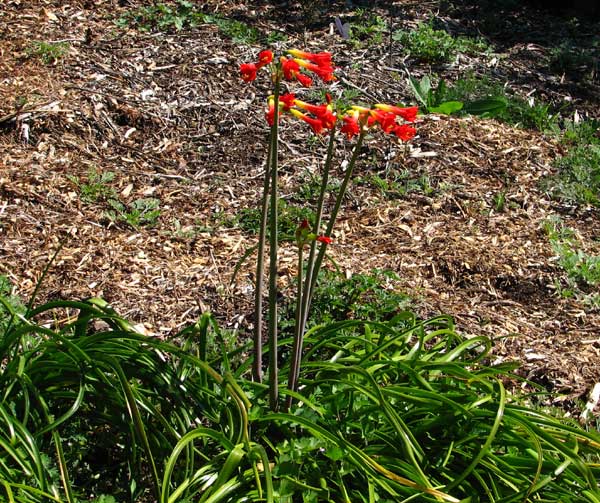
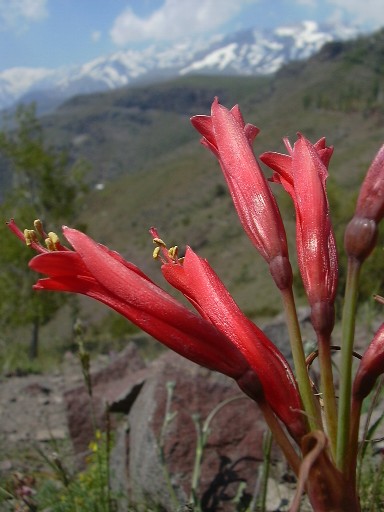
Phycella cyrtanthoides (Sims) Lindl, syn. Phycella ignea (Lindl.) Lindl., syn. Phycella bicolor Lindl., syn. Phycella angustifolia Phil. is endemic to Chile. Although this species has been grown under many names, in 2025 this is the accepted name. This species has strap shaped leaves and big tubular bicolor flowers (bright red above and yellow at the base). Although rare in its homeland, it is easily cultivated and makes an excellent bedding plant. It is an autumn and winter grower that flowers in late winter or early spring. Leaves may remain green after blooming time. It goes dormant in early summer. Height: to about 40 cm. Photos #1-3 were taken by Osmani Baullosa. The last photo was taken by Nhu Nguyen.


Phycella herbertiana Lindl. is a species renamed by Ravenna as Famatina herbertiana (Lindl.) Ravenna. According to Alan Meerow at one time taxonomic research found that Famatina is more closely related to Rhodophiala with both having trifid stigmas and 2n = 16 chromosomes. However, in 2025 this species native from Chile to Argentina according to Plants of the World Online is considered to be a synonym of Zephyranthes graciliflora (Herb.) Nic.García . World Flora Online however lists it as an accepted species. Until this is settled, we will keep this photo taken by Osmani Baullosa here.
Phycella scarlatina Rav. is another species from Chile.