Polianthes L. was a tuberous genus of approx. 13 species from Mexico in the family of Asparagaceae. Species have narrowly lance-like to strap shaped leaves and white, pink, or red flowers. The red flowered species were sometimes separated into the genus Bravoa. Dormant in winter, the species are summer growing and blooming. Some species need protection from freezing temperatures. The species most commonly grown, the former Polianthes tuberosa, is known for its fragrance.
First hinted at by the appearance of hybrids between what has been thought of as different genera, including the former Manfreda, another member of the subfamily Agavoideae, further phylogenetic studies revealed the genera of Polianthes, Bravoa, Manfreda and Prochnyanthes to be nested within the large genus Agave L., and have subsequently been transferred there as subgenus Manfreda, which in many cases created the need for a change of epithet. While scientifically well supported, the re-organization is counter-intuitive from a horticultural point of view, which is why we keep the former structure for now.
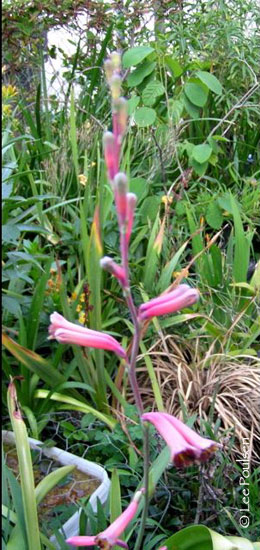
Polianthes × bundrantii T.M.Howard, now Agave × bundrantii (T.M.Howard) Thiede & Eggli, is a hybrid between Polianthes howardii and Polianthes tuberosa. However, unlike Polianthes tuberosa, it doesn't have any scent that I can detect. Height: to about 75 cm. Photos taken Aug. 2004 by Lee Poulsen. Note from wiki administrators: Kew refers to this name as unplaced, but we're not sure what that means.

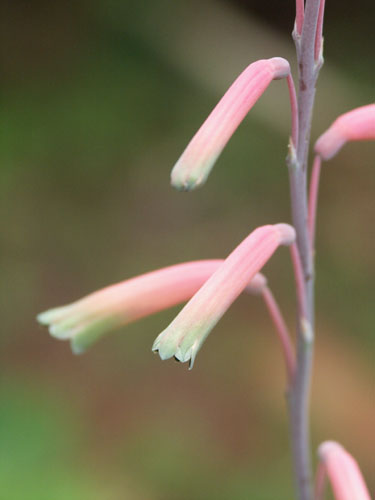
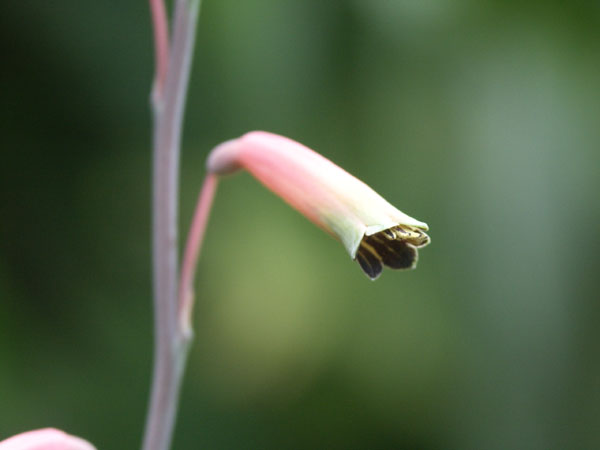
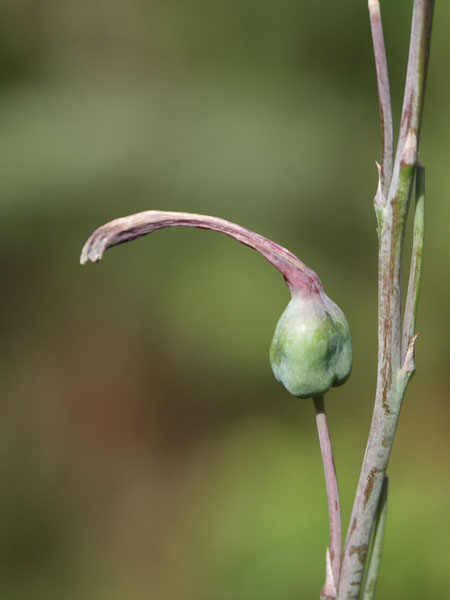
Polianthes geminiflora syn. Bravoa geminiflora, now Agave coetocapnia (M.Roem.) Govaerts & Thiede grows naturally in winter-dry oak forests in Mexico. It has flowers in pairs in early to midsummer that are reddish orange to yellow. This species may be a bit hardier than some of the others. This species increases vegetatively and is evergreen for Uluwehi Knecht in Honolulu, Hawai`i, but fails to bloom, most likely due to lack of sufficiently cooler winter temperatures. Some PBS mail list members caution against giving this species too much water in winter, although it can apparently tolerate some. Tony Avent from North Carolina reported that he does not protect it from wetness when it goes dormant in winter. He says it has survived temperatures down to about 6 °F in his garden (-14 °C). Dennis Szeszko wrote: "I have seen this species growing in warm oak forests in Mexico that are seasonally very dry. They grow in highly mineralized clay soils and are accustomed to a 6 month dry season. "Water your plants and provide almost full sun from May 15 to October 15 but then only just enough water (once per month?) to keep the soil from completely drying out from October 15 to May 15. Almost all of the bulbous plants (Bessera, Tigridia, Calochortus etc.) in the same habitat as P. geminiflora react to the onset of summer rain by starting growth immediately after receiving a good soaking, so I'd be careful of overwatering during the dry season lest they commence growing unnaturally. This species grows in warm temperate oak forests at around 1700 m, so it should adapt well to growing outdoors in the US during the summer." Height range: 2-3 ft. The first photo from Nhu Nguyen. The other photos by Mary Sue Ittner show flowers in bud, then more fully open, and finally tubers on a 1 cm grid.
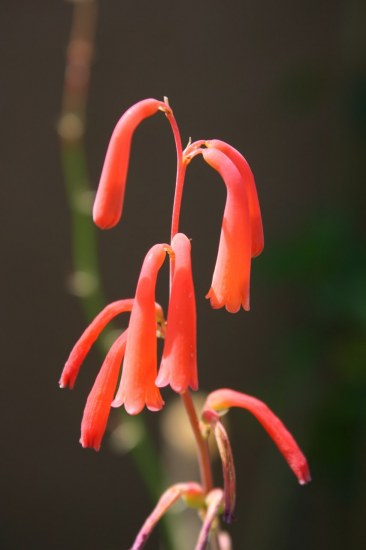

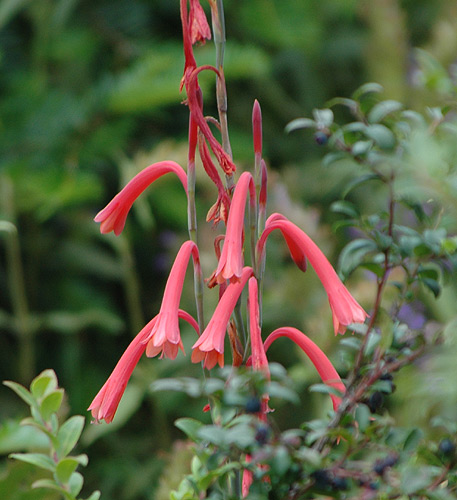

Polianthes howardii, now Agave howardii (Verh.-Will.) Thiede & Eggli, is native to Jalisco and Colima in Mexico. It's a vigorous grower for me here in Honolulu, Hawai'i and blooms year-round. The flower colours are attractive in their unusual tones of coral, dusky pink, greyish-green and black. Inflorescences can grow up to 1 m tall. The foliage is evergreen. Height range: to about 3 ft. The fourth photo is by Nhu Nguyen. Photos 1,2,3,5 and 6 by Uluwehi Knecht.
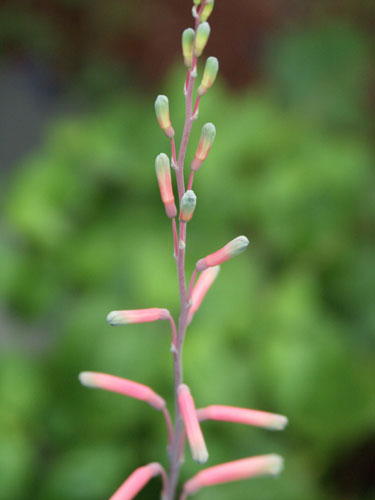


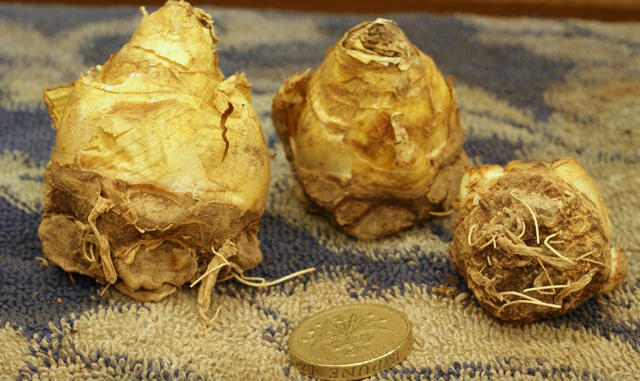
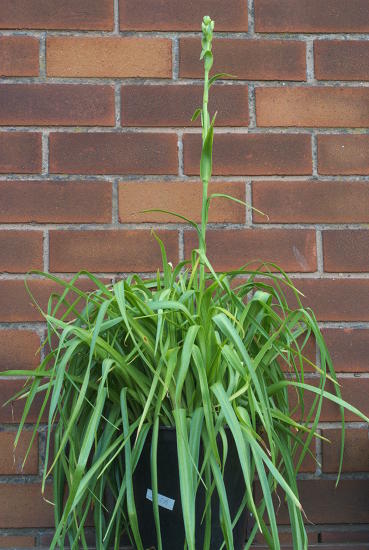
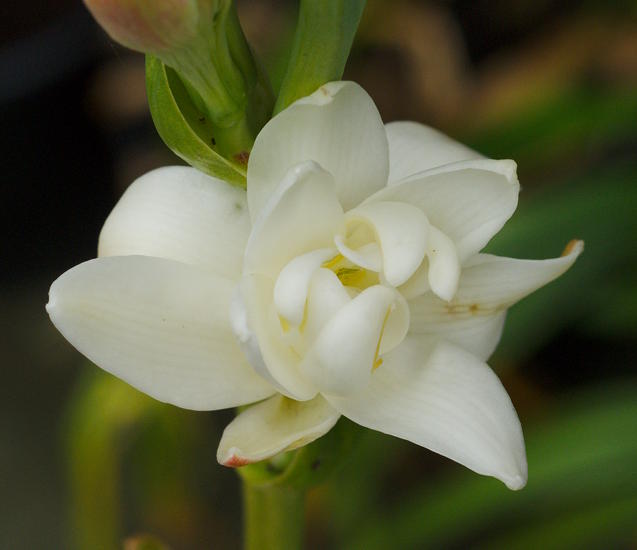
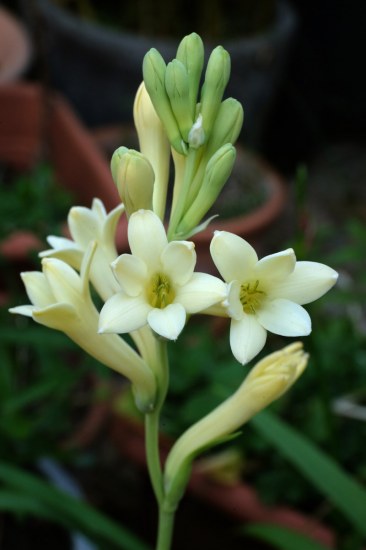
Polianthes tuberosa, now Agave amica (Medik.) Thiede & Govaerts, is often sold as "the most fragrant bulb". It was popular in the Victorian era with the common name "tuberose". One synonym is Agave polianthes. It has a long history of cultivation around the world which makes its origin confused; it appeared in Europe around 1600 having been discovered in Central America. Some growing advice appeared on the PBS list here. Height range: 2-3 ft. Photos 1 to 3 by David Pilling who writes: "The second photo shows the result of unwisely planting 10 bulbs in a 12" pot. In a cold spring in northwest England growth was slow to appear, and in future I would be inclined to keep the bulbs indoors until there were signs of life above ground." The last photo by Martin Bohnet shows a plant sold as cultivar "Pink Sapphire", which it clearly is not. As the flowers are somewhat lemon to cream and the smell is present, but not overpowering, it could be the cultivar "Yellow Baby".