Tecophilaea Bertero ex Colla is a genus from Chile in the Tecophilaeaceae family. There are only two species: Tecophilaea cyanocrocus which grows in the Cordillera of Santiago at around 3000 m, where it grows on stony slopes kept dry and protected by snow cover in winter and Tecophilaea violiflora growing on the coastal ranges north of Santiago.
The bulbs will multiply, but another way to get a good crop is to sow seeds. It is best to sow the seeds when they are fresh, but they will last for at least a year (Michael Mace). Sow the seeds 5-10 mm deep in a well-drained mix of 1:1 organic:inorganic material in the fall when the temperature is cool 5-7 °C (41-45 °F). Keep the pots from freezing temperatures. The seeds should start germinating in about a month (Nhu Nguyen), but they may not start germinating until late winter or spring (Bill Dijk). Allow the seedlings to grow throughout the season and supplement with a little bulb fertilizer (Michael Mace). Protect the seedlings from slugs and snails. In places with freezing cold winters, the seedlings can be sown in spring, but only if summers are very cool (John Bryan). Keep the seedlings completely dry in their summer dormancy. It will take 3-4 years for the seedlings to reach maturity (Bill Dijk).
Tecophilaea cyanocrocus Leyb. is known for the bright blue flowers and is now believed to be critically endangered in the wild because of over-collecting and grazing by cattle and sheep. Plants are usually grown in an alpine house or cold glasshouse where they can be protected from extreme cold and excessive wet, although they do need adequate moisture during the winter growing period. They should be protected from snails and slugs. Plant in late fall in well-drained fertile potting mix 2 inches or 5 cm deep. Allow dry summer dormancy. In the San Francisco Bay Area they enjoy full sun and flower in the middle of the growing season. Height range: 10-20 cm.
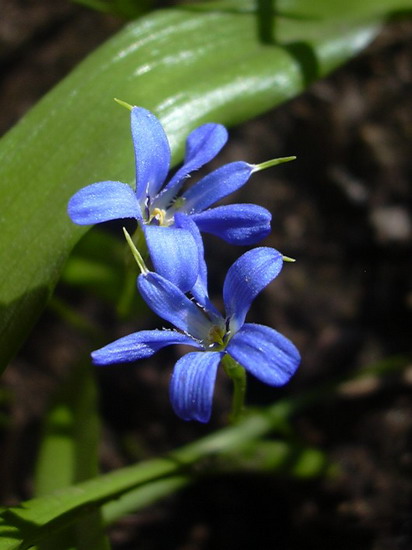
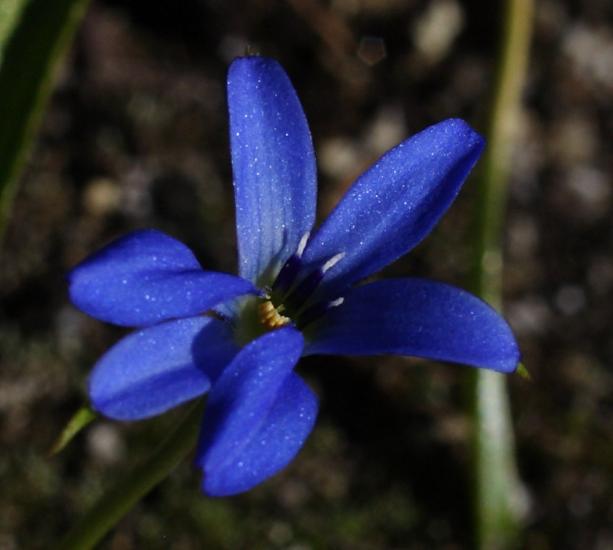
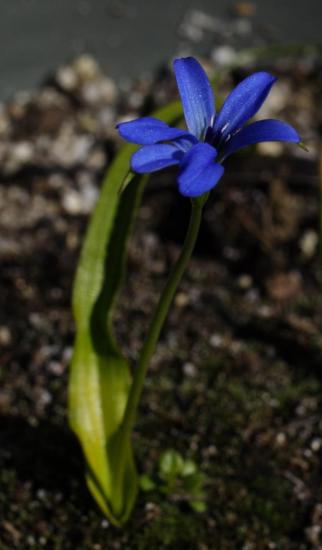
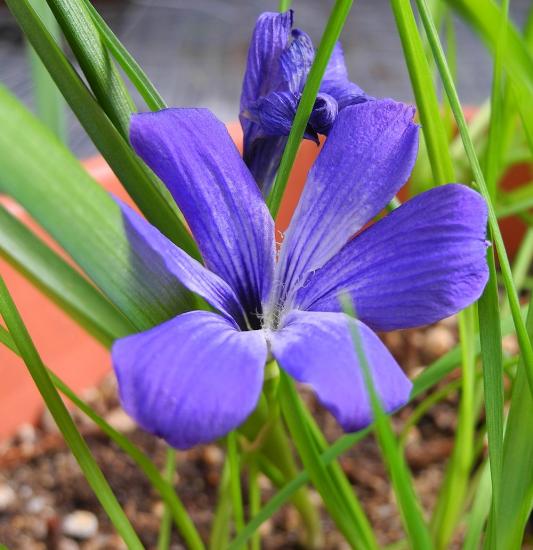
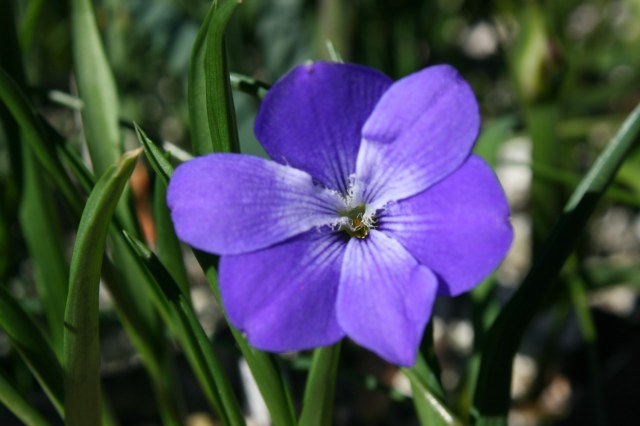
One, often two flowers are produced per stem in succession. The petals are of an intense, vivid gentian blue with a white throat. The flowers are 2 inches across when fully open. Photos #1-2 were taken by Bill Dijk who grows these to perfection in New Zealand and by Lee Poulsen who wrote of his photo (#3) taken March 2004: "They really are this intensely blue. It's a hue I've never seen in any other flower." Photo #4 taken by Nhu Nguyen shows the habit of the plant growing in a 4 inch pot. Nhu agrees with Lee that it's definitely a most beautiful blue!
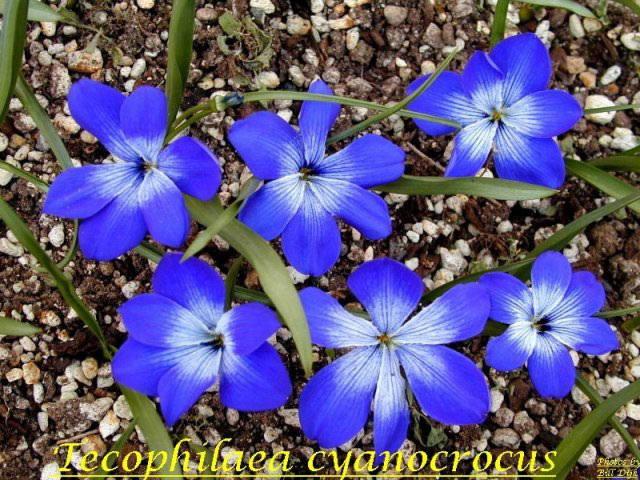
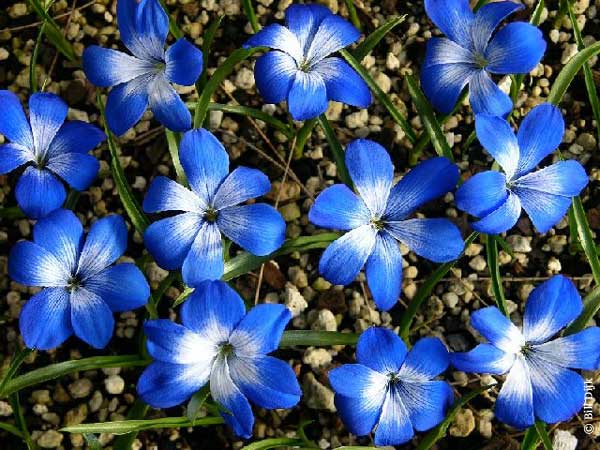
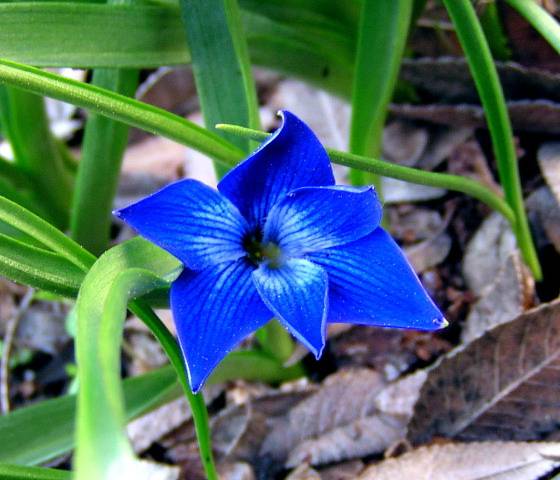
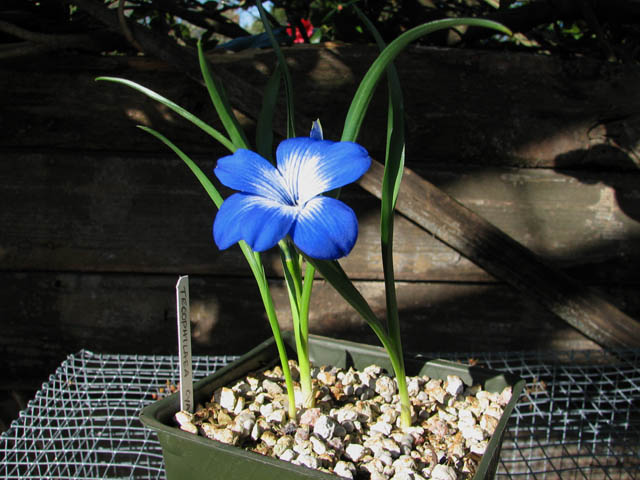
There are three varieties listed in data bases as synonyms. They are not recognized by everyone. We are including the two most commonly grown forms under variety names since they are often sold and grown under these names. Composite photos below show all the forms together. Photos by Bill Dijk and John Lonsdale.
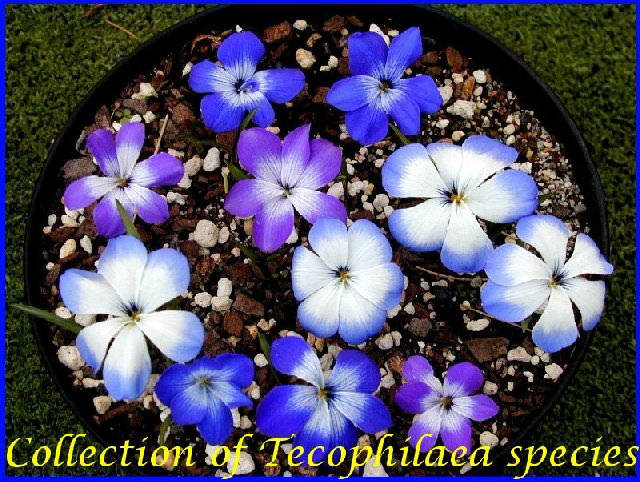
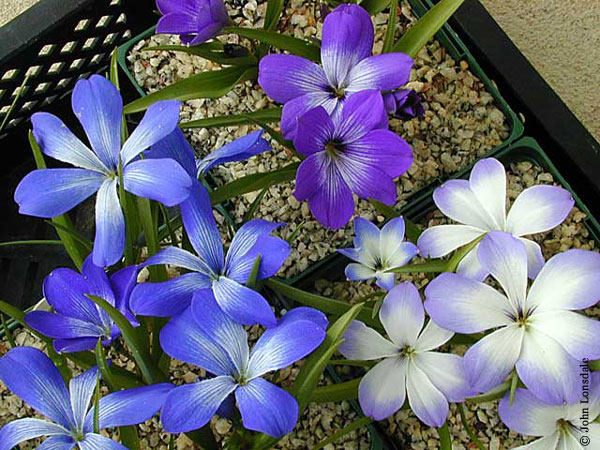
Tecophilaea cyanocrocus var. leichtlinii Regel has 2 inch, sky-blue flowers with large white centres and broader leaves. Height range: 10-20 cm. Photos #1-2 were taken by Bill Dijk, #3 was taken by John Lonsdale, and #4 was taken by Nhu Nguyen showing the habit of the plant growing in a 4" pot.
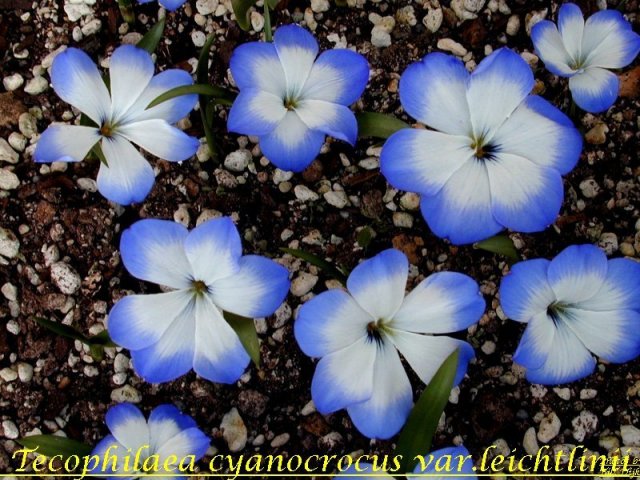
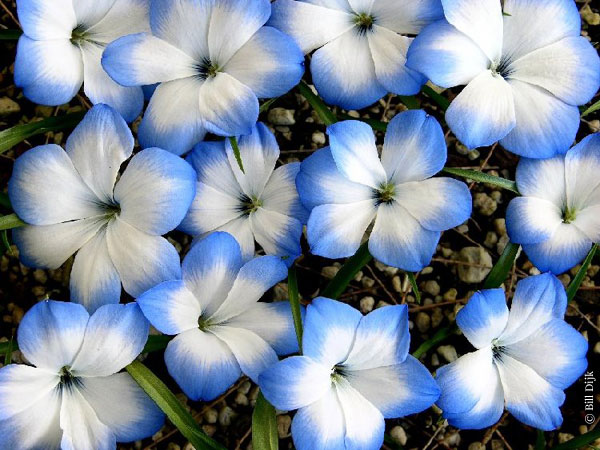
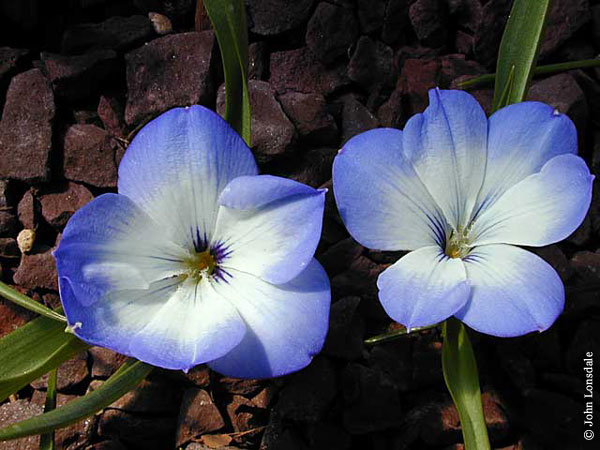
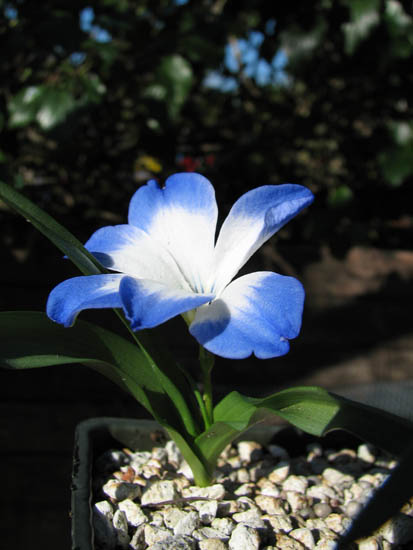
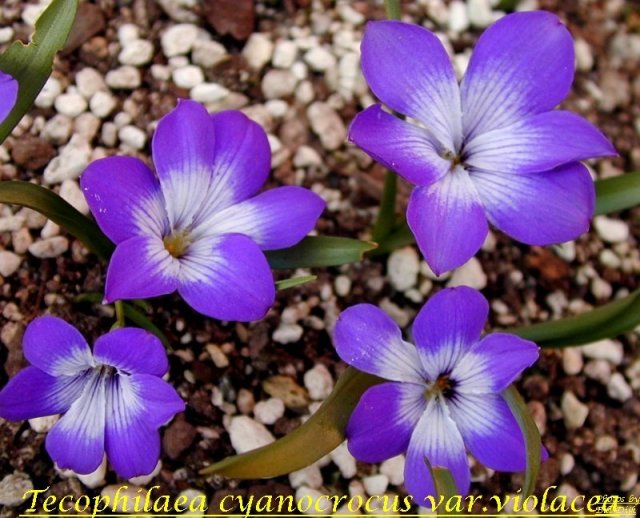
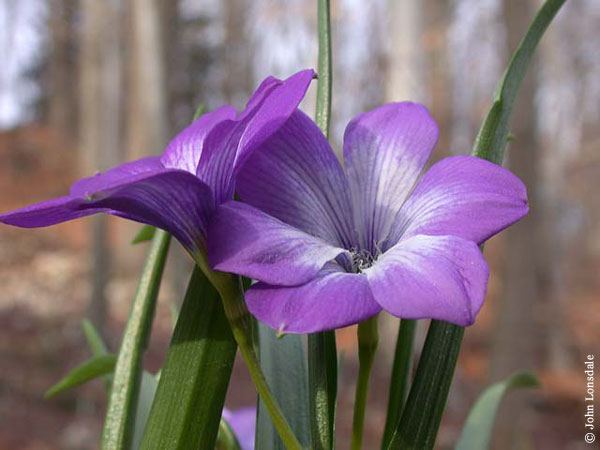
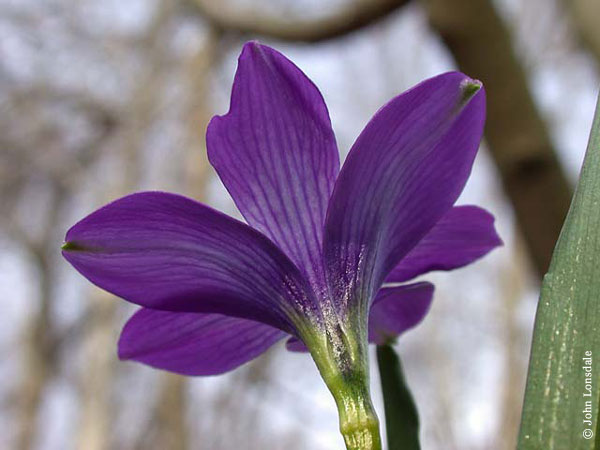
Tecophilaea cyanocrocus var. violacea Leichtlin has bright violet blue flowers and has great charm. Height range: 10-20 cm. Photos 1-2 were taken by Bill Dijk, photos 3-4 were taken by John Lonsdale, photo 5 was taken by Mary Sue Ittner, and photo 6 was taken by Nhu Nguyen.
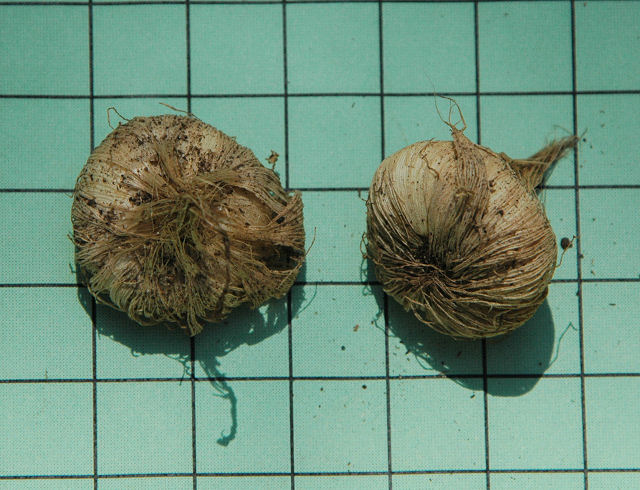
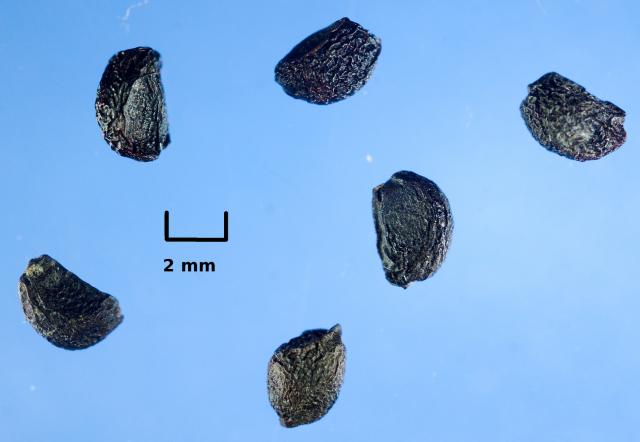
The first picture from Bill Dijk is of successfully germinated Tecophilaea seedlings after 3 months. The second photo from Mary Sue Ittner shows the corms on a 1 cm grid. Photograph three from David Pilling shows seed.

Tecophilaea violiflora Bertero ex Colla is the other species of Tecophilaea. A much smaller plant and flower, it usually only has a single leaf. It can be grown as you would most other Mediterranean climate bulbs. First photo by Osmani Baullosa, other photos by Michael Mace.