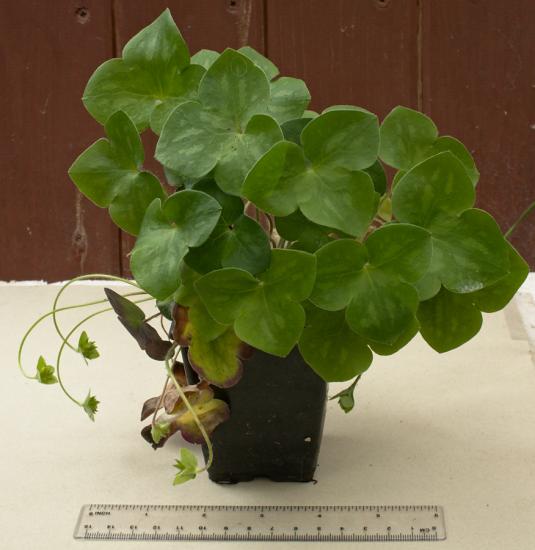
Hepatica Mill. is a genus in the Ranunculaceae family native to Europe, parts of Asia, and Eastern North America. All have blue flowers, sometimes white or pink, and are rarely offered in doubled forms and are very expensive. Many species are so similar, even across oceans, that recent taxonomists have lumped most into the all inclusive Hepatica nobilis, merely as subspecies or even simply just as varieties. Most of the species have fibrous roots, but one, Hepatica nobilis, has a short thick, rhizomatous rootstock.
A good page with growing tips and descriptions of various Hepatica species can be found here.
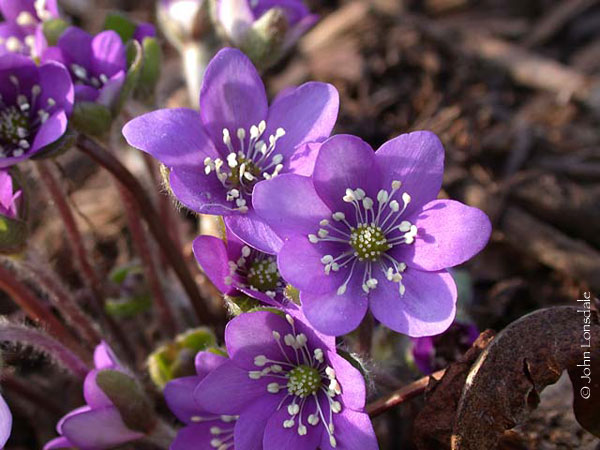
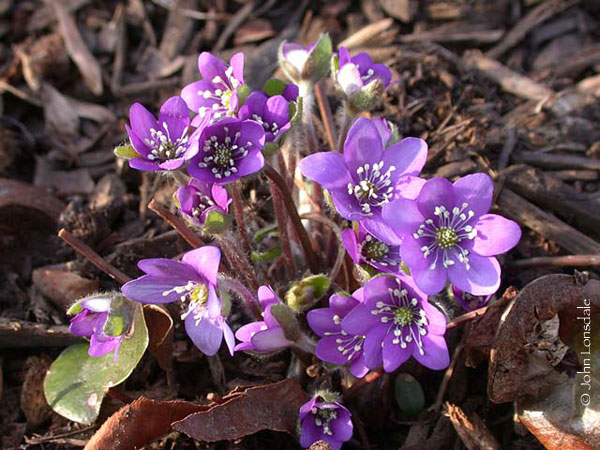
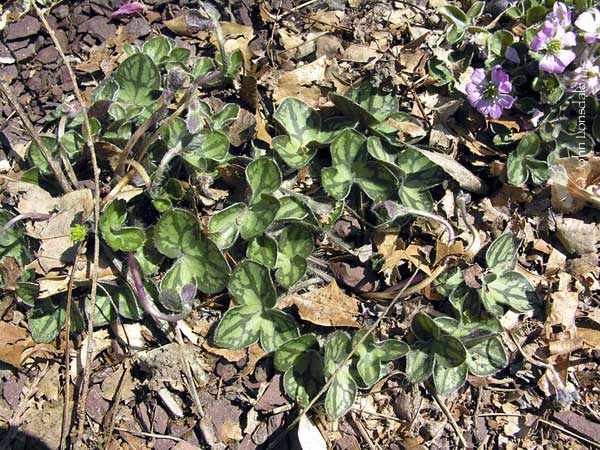
Hepatica nobilis Mill. has a wide distribution and is found in Europe, Asia, Russia and eastern North America. It has glossy green or sometimes marbled leaves that are purple underneath. Flowers with 6 to 7 showy sepals are mostly blue, but there are white and pink flowers found in the wild and many cultivars being grown. This is the one species some claim to be a bulb, because it has a short thick, rhizomatous rootstock. Height range: 7-15 cm. Photos by John Lonsdale.
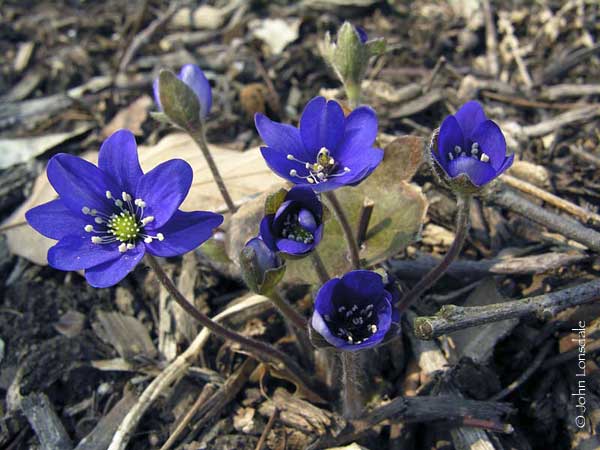
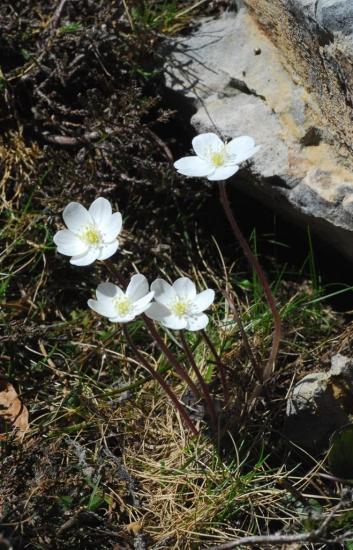
The form pictured below is native to Italy where it is found growing in the shade at an elevation of 300 to 1000 m. It blooms mid February to March. Photos from Alessandro Marinello, Padova, Italy.
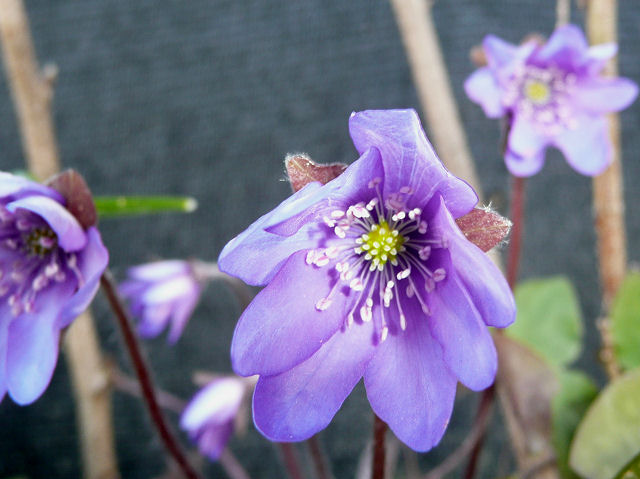
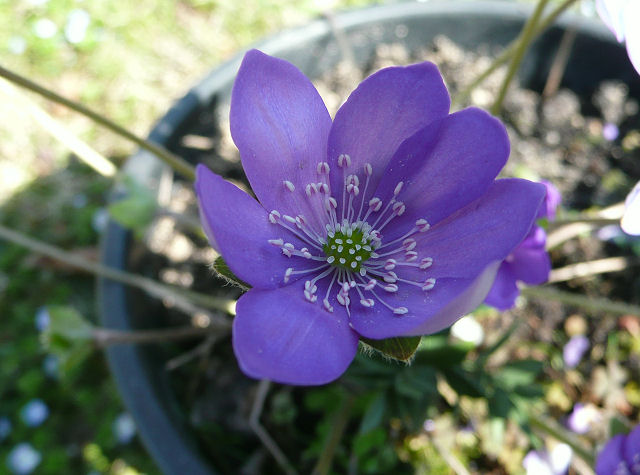
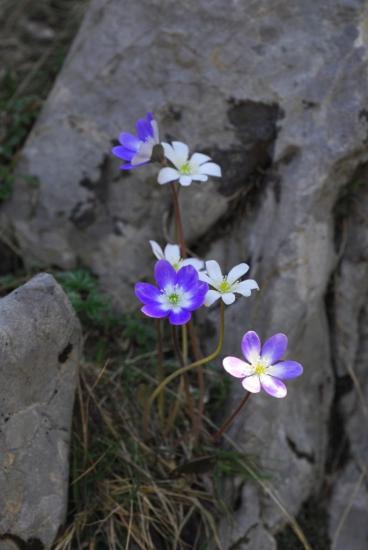
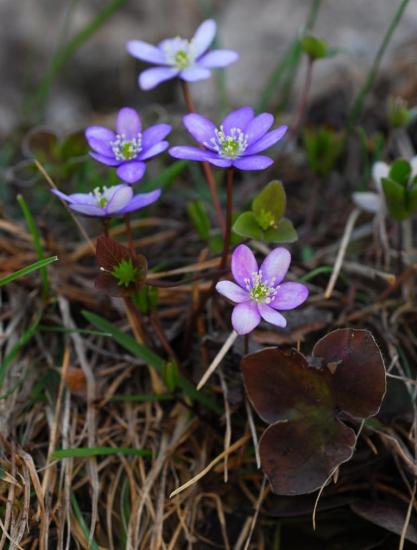
Different color forms photographed by Oron Peri in the Pyrenees on the border between Spain and France.

Seed is not viable for long if stored dry. It is common to find it sold fresh for immediate sowing at the start of summer. A temperature cycle is required; a root emerges on the transition from summer to fall temperatures and the first leaves will appear the following spring. Photographs by David Pilling of seed (first on a 10 mm grid) and germinating seed in mid-winter. I obtained a large amount of seed from the surplus distributions of the Alpine Garden Society and Scottish Rock Garden Club seed exchanges; in other words, seed that had dried out. I kept it in zip-lock bags with moist kitchen paper and it germinated after a year. An anecdote which may indicate a modest fraction of seed is viable after dry storage, but needs a complete annual temperature cycle to germinate. Photo 4 shows seed forming and in photo 5 taken six weeks later, it is almost ripe. Photo 6 after another couple of weeks shows ripe seed; it turns brown later; a millimetre scale is visible.
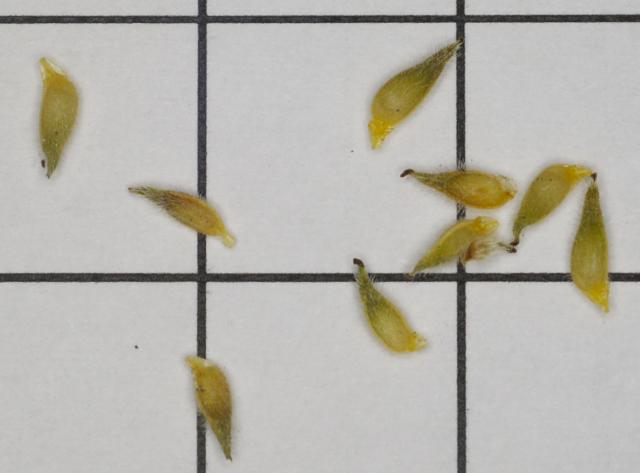
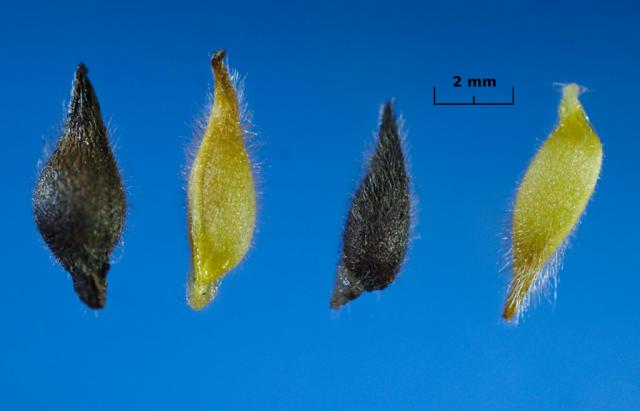
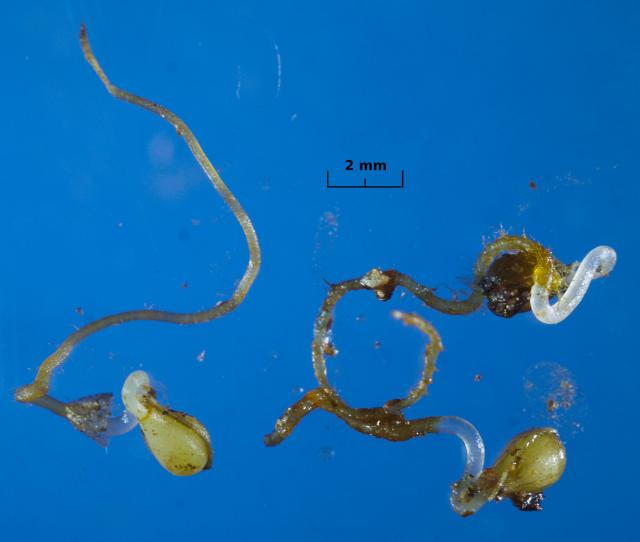
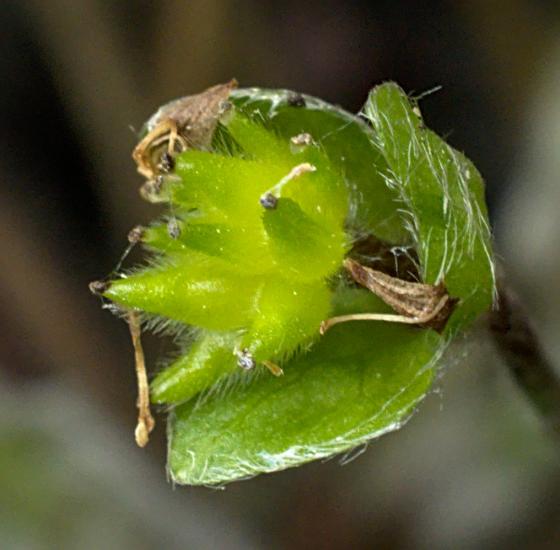
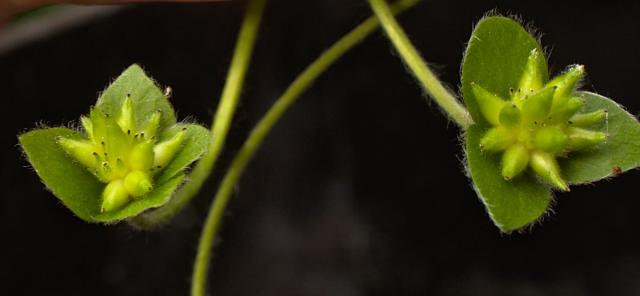
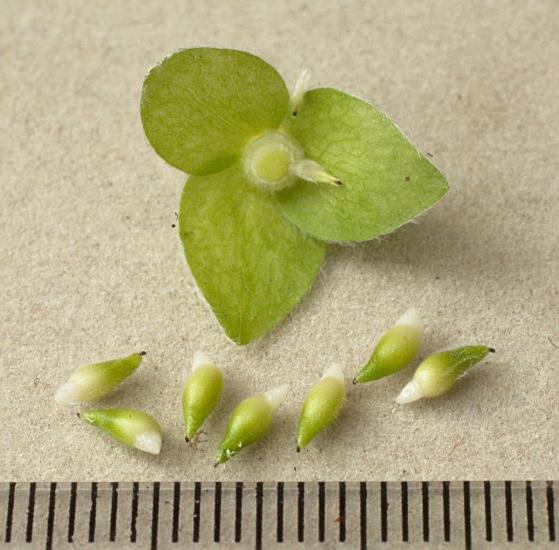
Photo shows a plant with a 6 inch ruler.