Albuca L is an African genus of more than 100 species belonging to the Hyacinthaceae family and includes some species more recently included in Ornithogalum. All Albuca species grow from bulbs, and most have a dormancy period after flowering whereby they lose their leaves. The flower scape is unbranched. The flowers are white and yellow and are embellished with a green to brown stripe down the middle of each outer tepal. Species G-P are found on this wiki page.
Albuca index - Albuca a-f - Albuca r-z - Ornithogalum
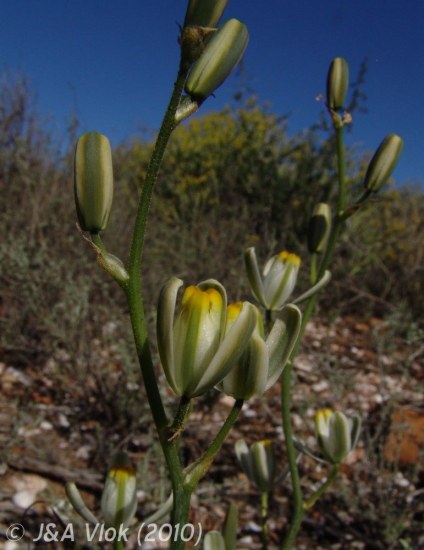
Albuca glandulosa Baker, syn. Ornithogalum glanduliferum J.C.Manning & Goldblatt, is a widespread species that occurs from Namaqualand to the Little Karoo where it grows on dry stony shale slopes. It is a winter rainfall species that grows up to 35 cm tall when in flower in spring (August to September). It has several channelled leaes with glandular hairs and greenish yellow upright flowers. Photo from the book Plants of the Klein Karoo courtesy of Jan and Anne Lise Schutte-Vlok.
Albuca hallii U. Müller-Doblies is native from the winter rainfall area in Namibia through the Hantamsberge to South of Calvinia. It is similar to Albuca spiralis. Plants are 10-15 cm tall, leaves are few, silvery glacous, corkscrewed only on the upper half of the leaves. In habitat flowers are formed March-May (autumn). Flowers are glaucous but not yellow-green found in other species. This species often produces a scape without leaves.
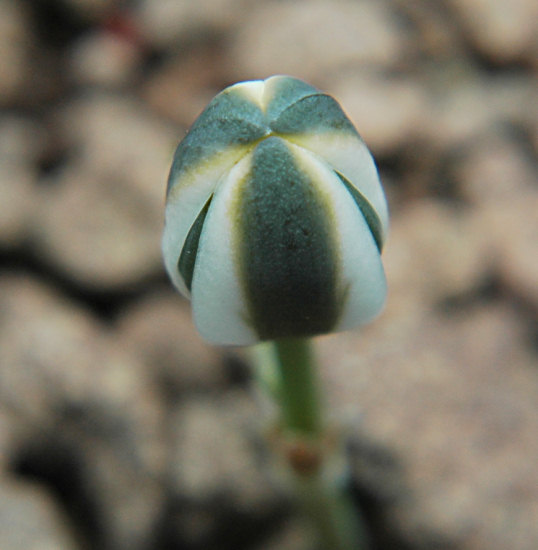
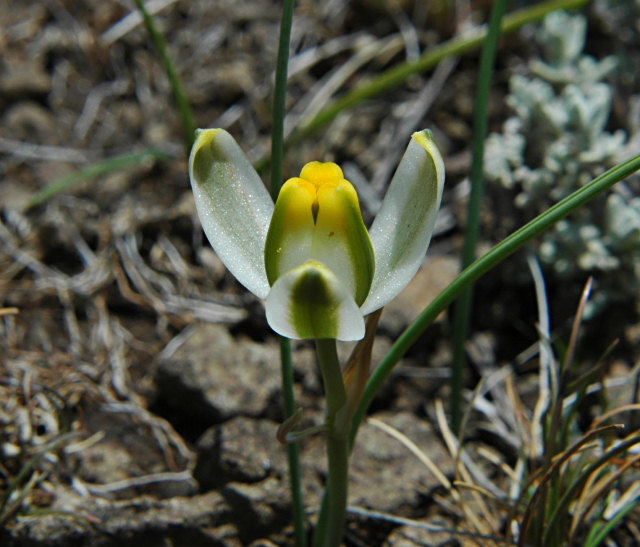
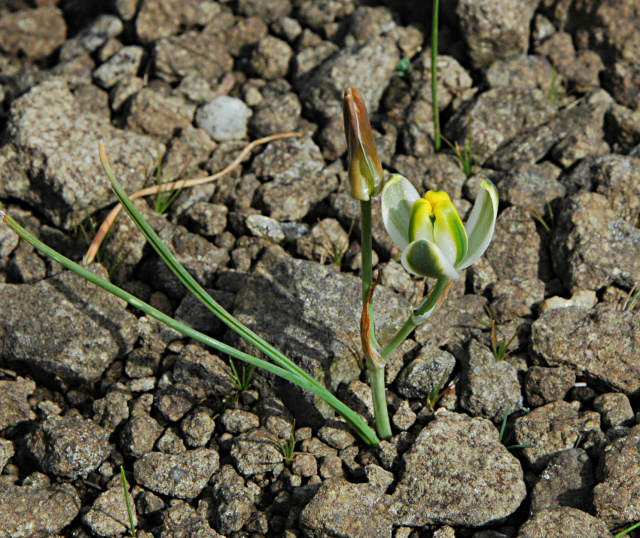
Albuca humilis Baker (syn. Ornithogalum humile (Baker) J.C.Manning & Goldblatt) is found on the edges and seams of rock sheets, gravel and silt patches and rock grassland up to 2800 meters in the Eastern Mountain Region of the Eastern Cape and KwaZulu-Natal. It grows from 3 to 25 cm and has white flowers with the outer tepals striped green and the inner tepals tipped yellow. Photos taken at Naude's Nek January 2010 by Mary Sue Ittner.

Albuca juncifolia Baker grows on sandy and calcareous flats in the western and southern Cape. Plants grow from 15 to 30 cm and have 4 to 10 slender stiff leaves that are not clasping below and usually terete above and nodding flowers that are yellow with green keels. It flowers in spring (September to October). Illustration from Curtis’s Botanical Magazine, vol. 104 [ser. 3, vol. 34]: t. 6395 (1878)
![Albuca juncifolia, Curtis’s Botanical Magazine, vol. 104 [ser. 3, vol. 34]: t. 6395 (1878)](https://www.pacificbulbsociety.org/pbswiki/files/Albuca/Albuca_juncifolia_PD.jpg "Albuca juncifolia, Curtis’s Botanical Magazine, vol. 104 [ser. 3, vol. 34]: t. 6395 (1878)")
Albuca leucantha U.Müll.-Doblies, syn. Ornithogalum leucanthum (U.Müll.-Doblies) J.C.Manning & Goldblatt, is a Northern Cape Species. The photos below were taken by Cameron McMaster in Namaqualand.
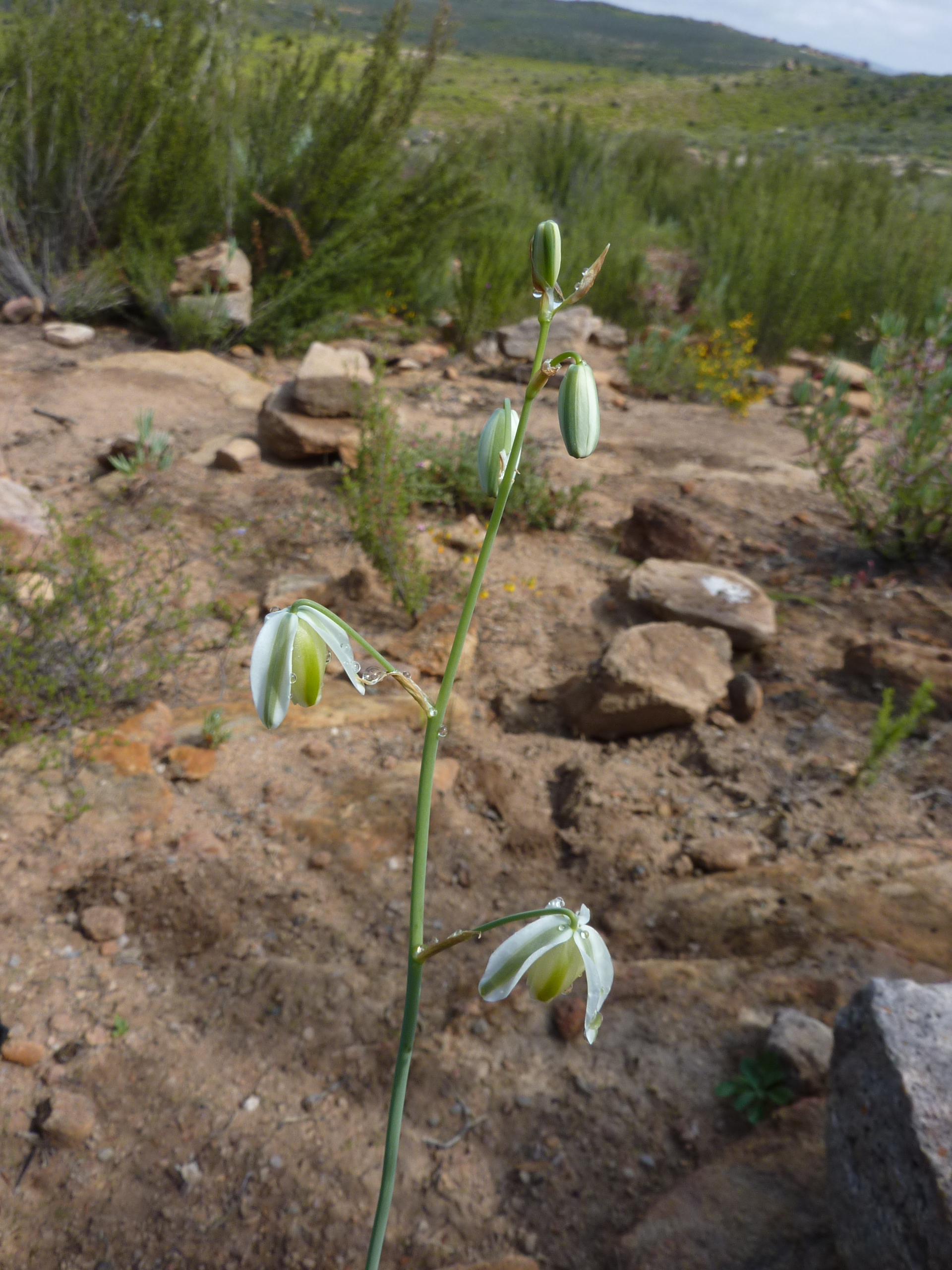
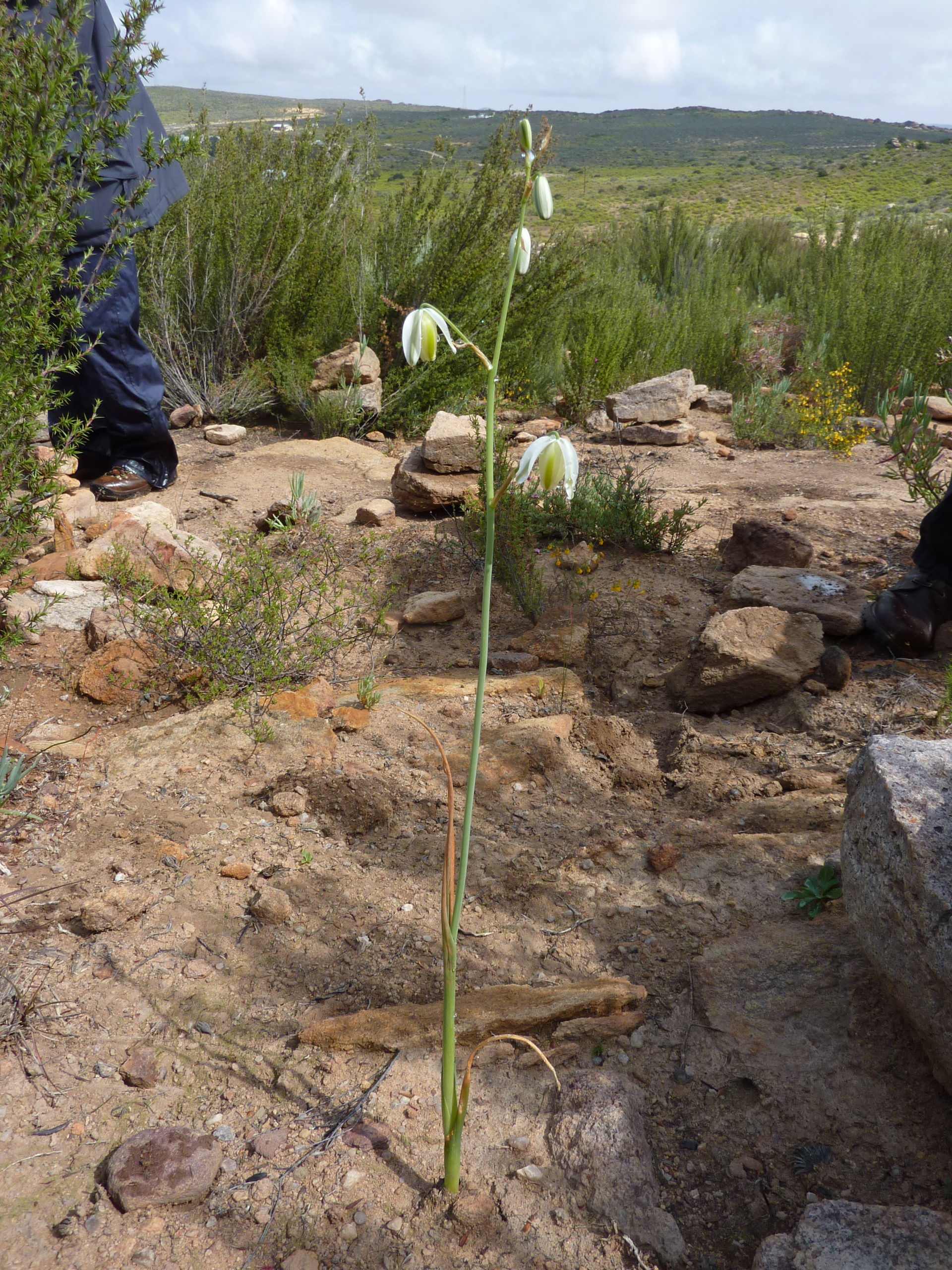
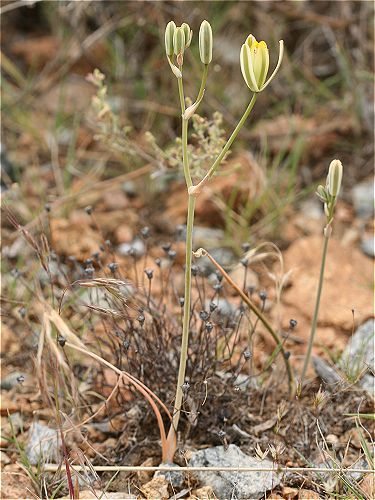
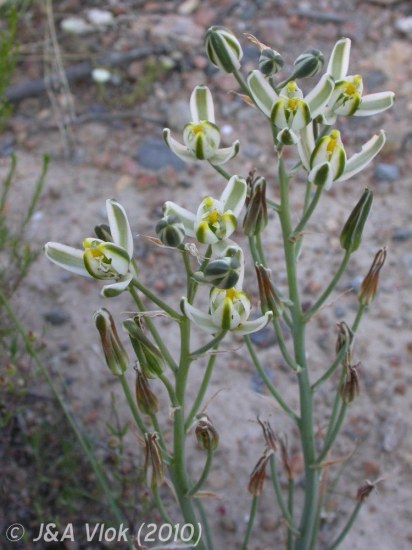
Albuca longipes Baker is a wide spread species that grows in dry silty loam to clay soils from the Richtersveld and the Western Karoo, to the Cape Peninsula to Willowmore in winter rainfall areas. It has a few erect channeled leaves that are usually dry at flowering in late spring and white erect flowers with green keels. The hooded inner tepals have golden yellow tips. Flowers are 20 to 25 mm across and plants grow to about 30 cm. Photo 1 was taken by Alan Horstmann. Photo 2 was taken in the Cederberg by Mary Sue Ittner October 2006. Photos 3-4 were taken by Andrew Harvie near Springbok in Namaqualand. The last photo from the book Plants of the Klein Karoo courtesy of Jan and Anne Lise Schutte-Vlok.

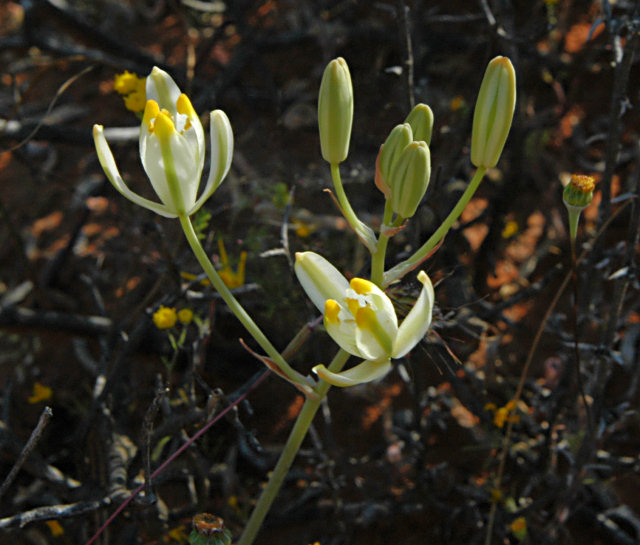
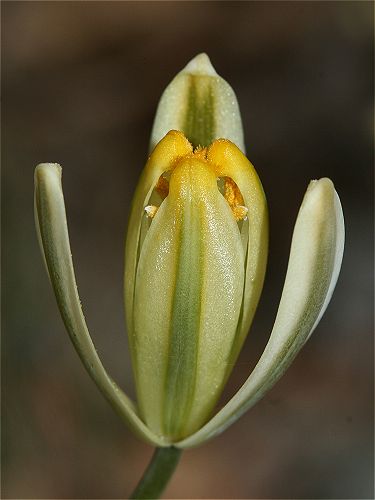
The photos below taken by Andrew Harvie in the De Hoop Nature Reserve have been tentatively identified as this species.
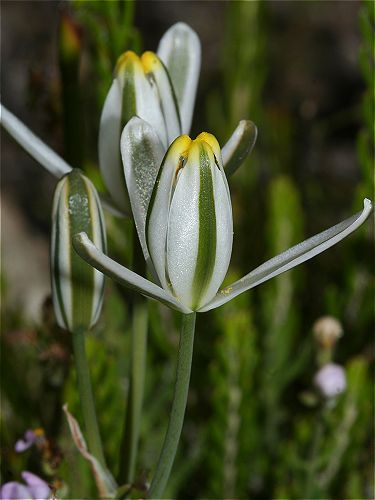
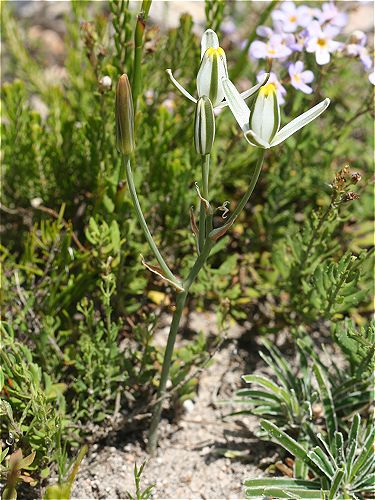
Albuca massonii Baker grows on sandstone slopes in the northwest Cape and flowers September to October. Plants are 20 to 30 cm high with two or three channeled slender leaves and nodding yellow to green flowers with green keels. Photos taken in habitat in the Oorlogskloof Nature Reserve by Andrew Harvie. The flowers were very small, about 10 mm long.

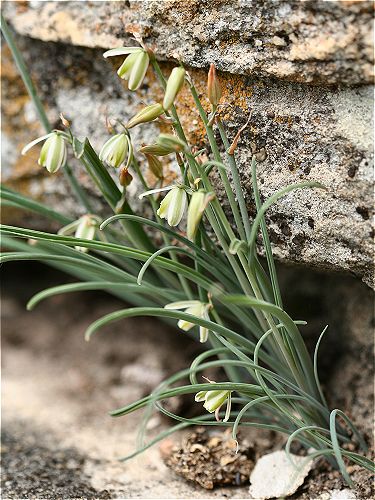
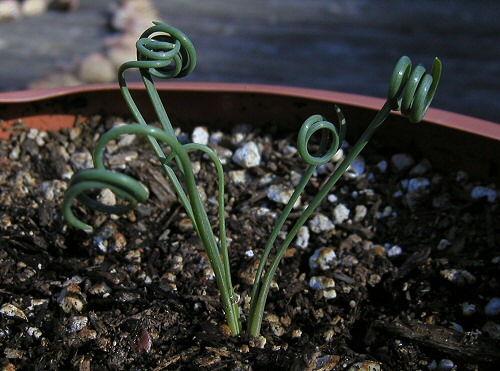
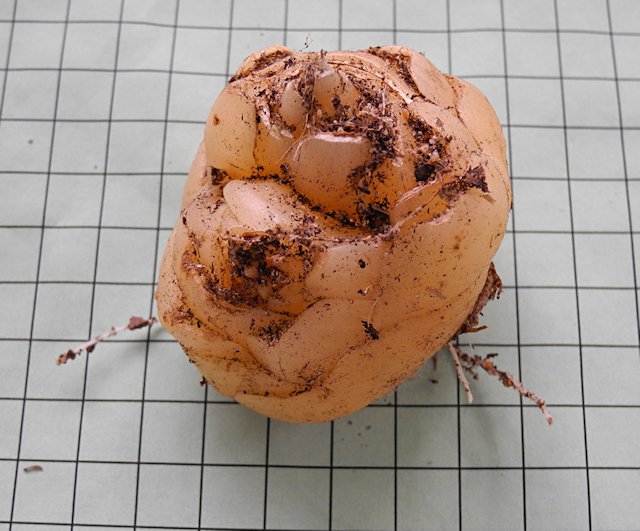
Albuca namaquensis Baker (syn. Albuca circinata Baker) is distributed from Namibia to the Eastern Cape, South Africa. It is found on sandstone slopes and grows up to 30 cm high. The leaves are scabrid (rough or scaly) or hairy or smooth. If hairs are present, they are not glandular. In dry and sunny conditions its leaves coil like Albuca spiralis and thus these plants are often mistakenly called A. spiralis. In cultivation, the leaves may remain evergreen if water is available. The first three photos below were taken by Mary Sue Ittner and Bob Rutemoeller near Middelpos in the Roggeveld. The first photo shows a plant that is typically different from the other ones in cultivation in having a reddish pedicel. The fourth photo was taken by Cameron McMaster in Namaqualand.
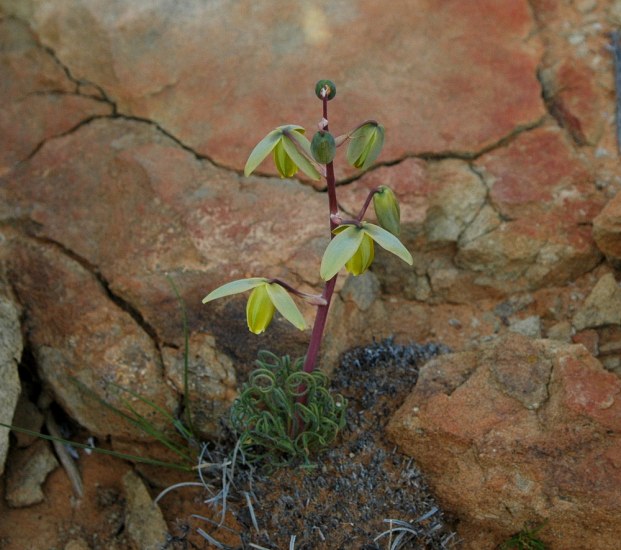

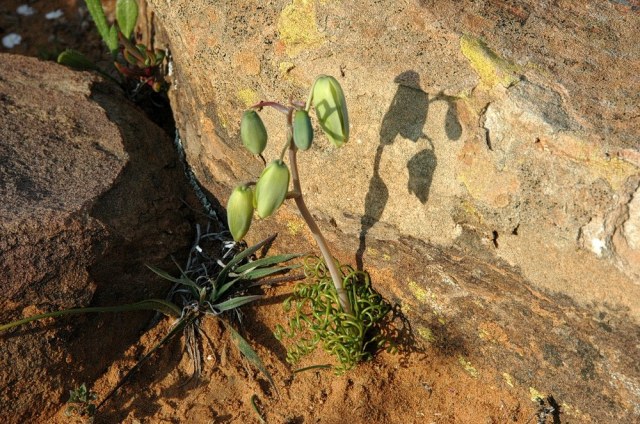
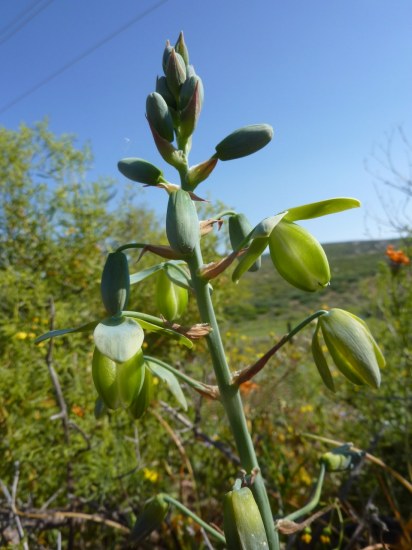
Photos 1-6 below by Mary Sue Ittner show new leaves emerging September 2004 after a dry period in the summer and the flowers. The last photo shows a bulb on a 1 cm grid.
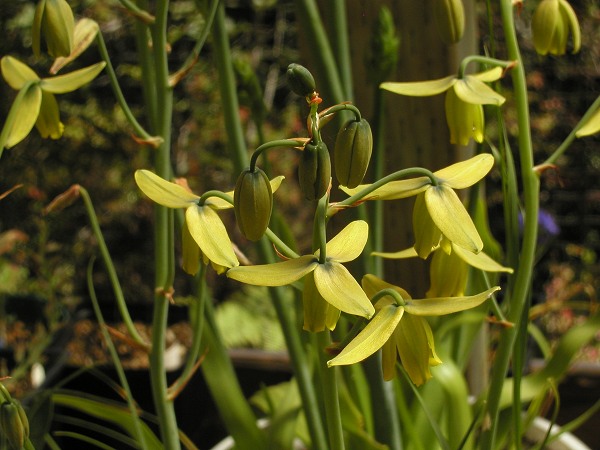
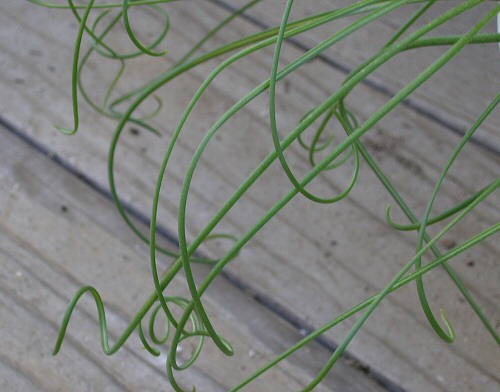
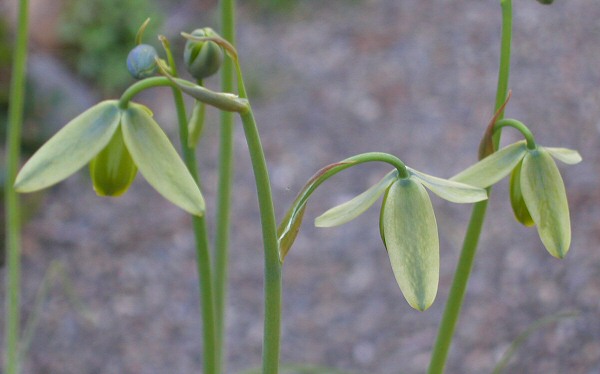
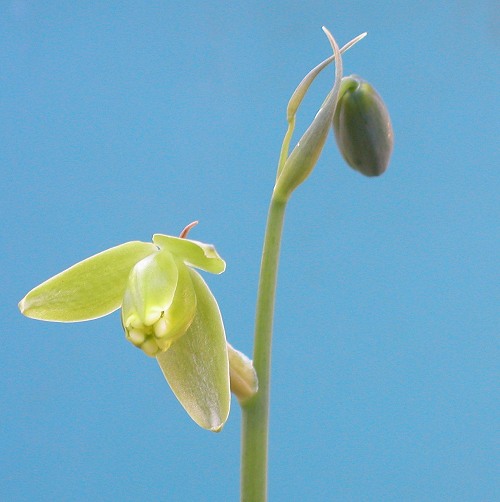
The first two photos below were taken by Uluwehi Knecht, who feels the flowers smell like Play-Doh. The last photo by Bob Rutemoeller was taken of a plant growing in a pot in the bulb room at Kirstenbosch National Botanical Garden.
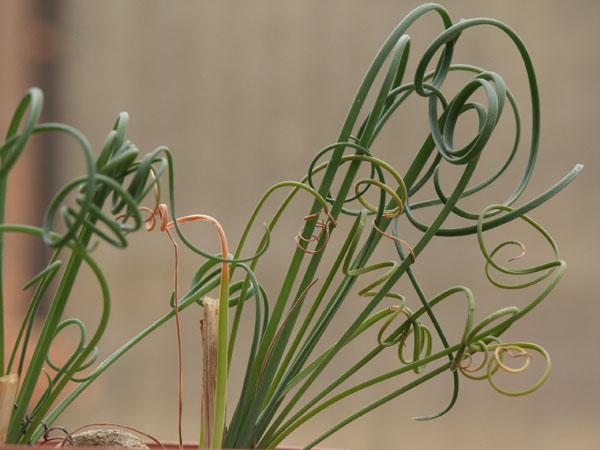
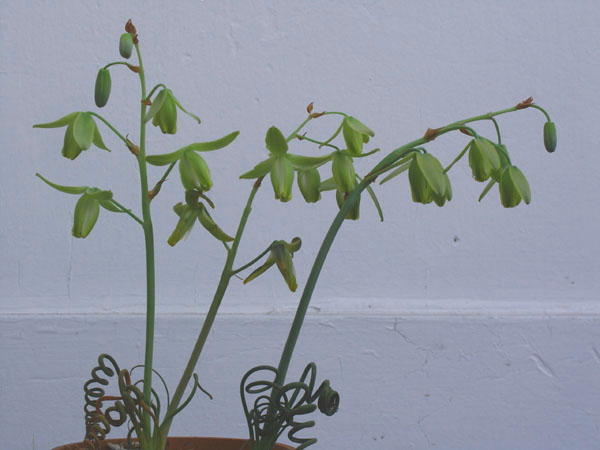
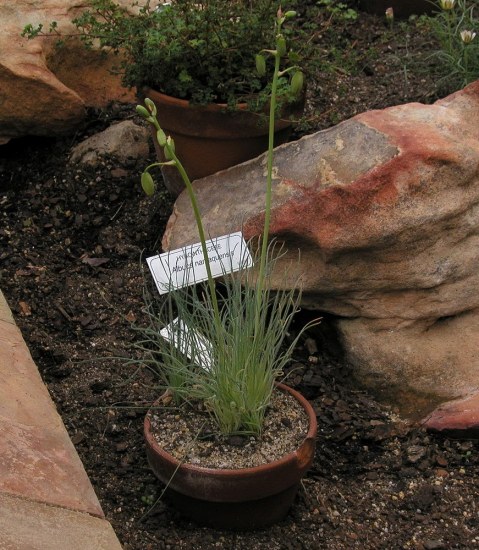
The photos below were taken by Nhu Nguyen showing various aspects of the plant.
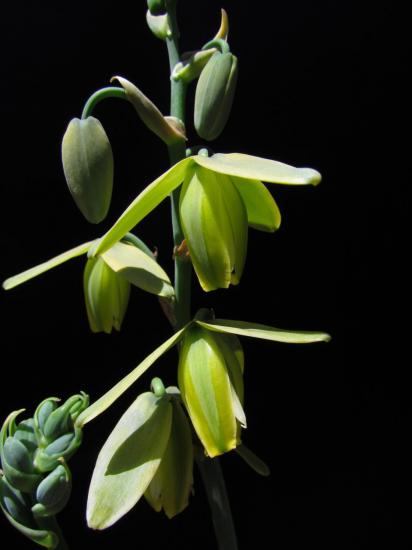
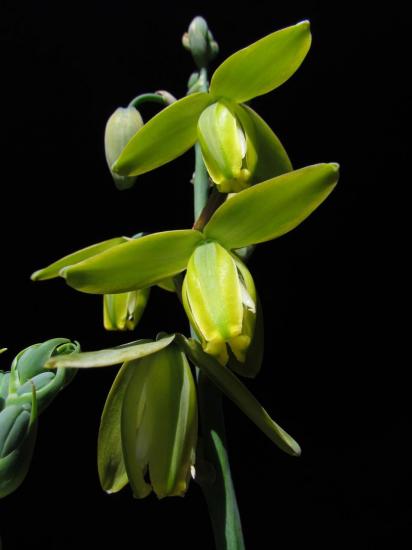
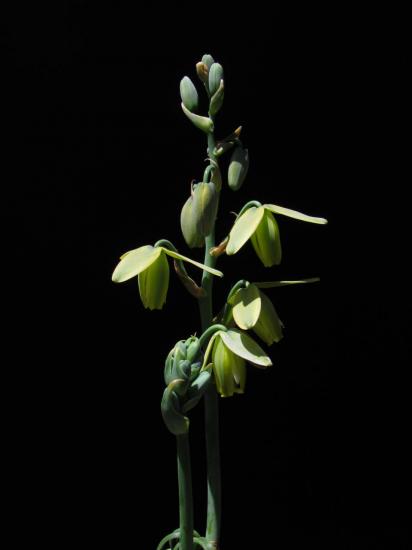
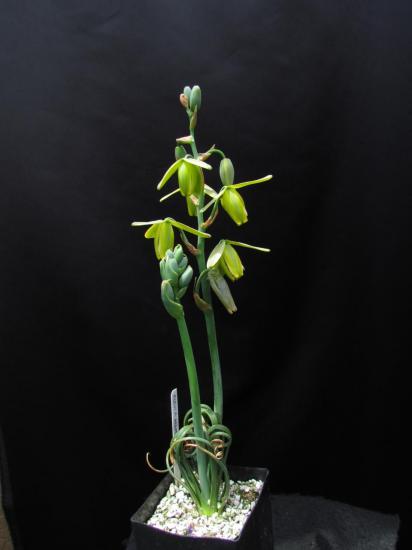
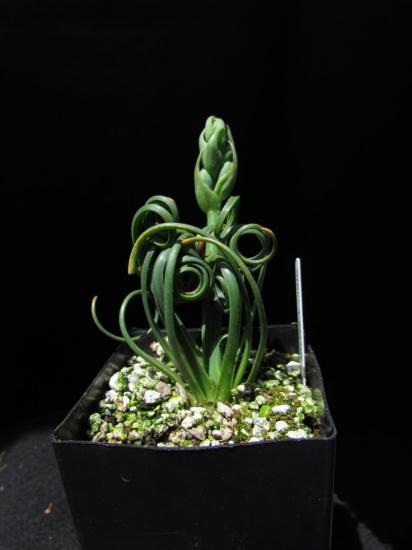
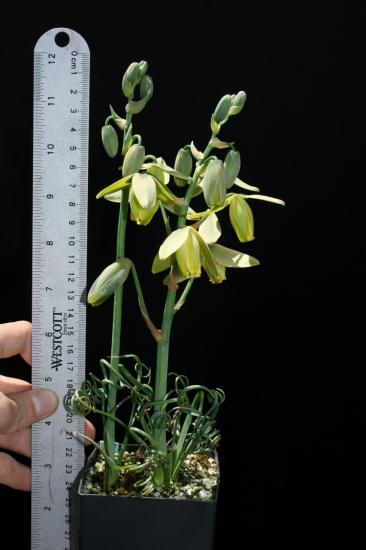
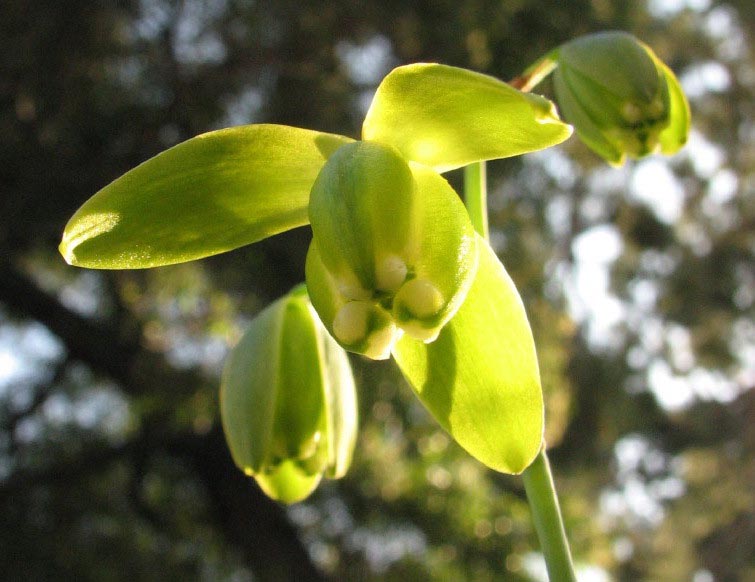
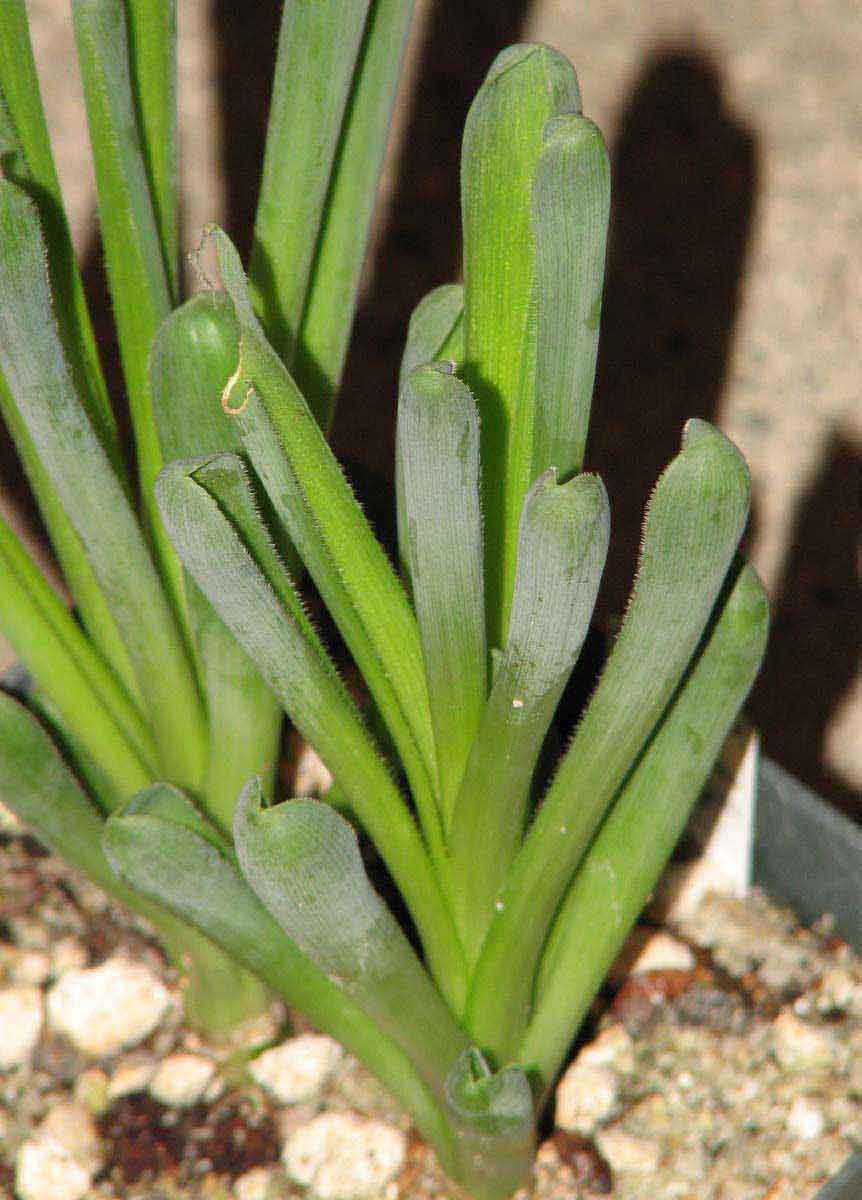
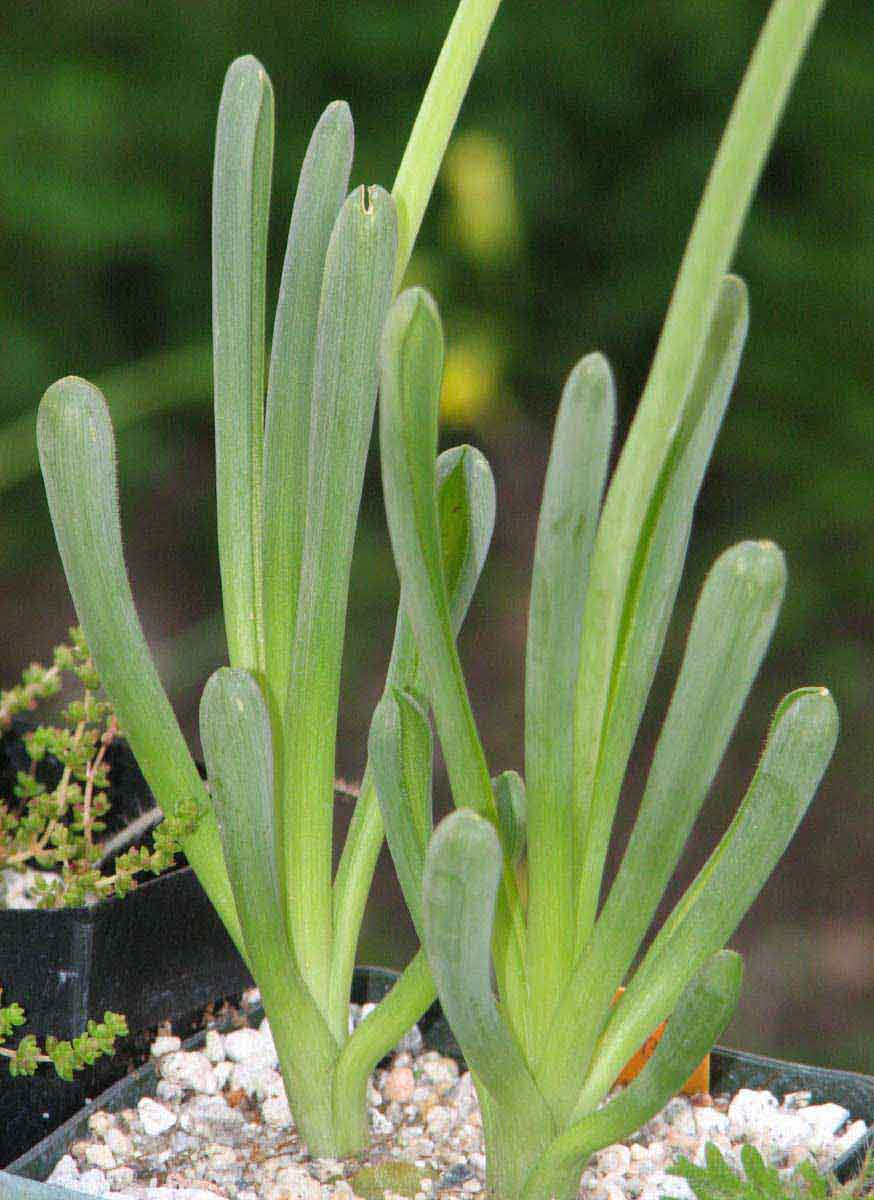
Albuca navicula U. Müller-Doblies, was described as new in 1994 and it occurs on red sandy flats from Clanwilliam to Namaqualand. It grows to 20 cm tall, its bulb typically depressed-globose. Leaves erect-ascending, straight and channeled like the hull of a boat (navicular), glaucous, finely hairy along the margins. Flowers in spring (about March) few per scape, dull green and nodding. This species is marked especially by its small size and "boat-like" leaves.
This is an excellent winter bulb for small pots. Dylan Hannon reports that it has grown well planted shallowly (not more than 1" deep) in 3" pots in a mix comprised mostly of sand and pumice with about 10% organic matter. A. navicula appreciates bright light and even full sun so long as hot temperatures are avoided. The soil mix should be allowed to dry between waterings. As with some other albucas and hyacinths, this species may remain dormant through a whole growing season-- in other words, it can skip a year of growth. This can happen in spite of abundant rain or watering and even with the development of a healthy new root system. This phenomenon appears to be a sort of stasis rather than a setback and a normal growth cycle can be expected the following season.
The photos below depict material collected by John Lavranos in southeastern Namaqualand, near Platbakkies in 1997 (Lavranos & Teissier 30685). Photographed and grown by Dylan Hannon.
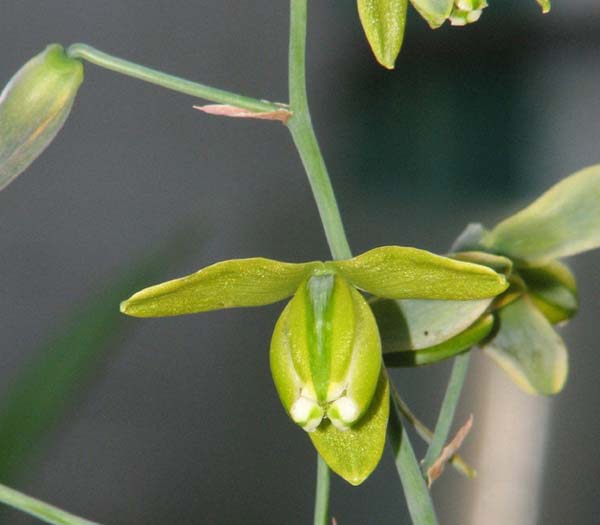

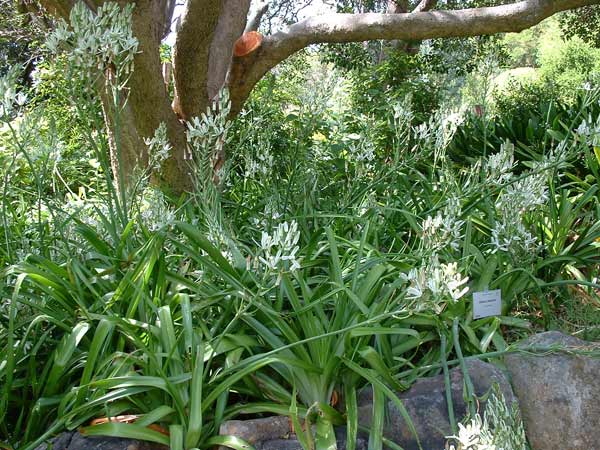
Albuca nelsonii is one of the larger species, and is quite common in the nursery trade these days. It is an evergreen species that grows to 60 cm tall, has erect white flowers with pale greenish keels on long pedicels and flowers September to December. It is found in grassland in southern Africa. The first two photos below by Roy Herold are of a nice planting at Kirstenbosch National Botanical Garden in Cape Town, South Africa, in November, 2006. The next two photos were taken in habitat, Kei Mouth, Eastern Cape by Andrew Harvie. The last two photos were on the mystery bulbs page and were identified as this species. Photos from Garry Koenigsberg who wrote at the time:"I bought an onion-sized bulb at the San Francisco Arboretum years ago, but lost track of the name. The plants multiply at a ridiculous rate and thrive on neglect. The leaves are about a foot tall, and the stems a bit taller, bearing several florets. Each has four white and green petals that open around four more petals that remain attached at the top."
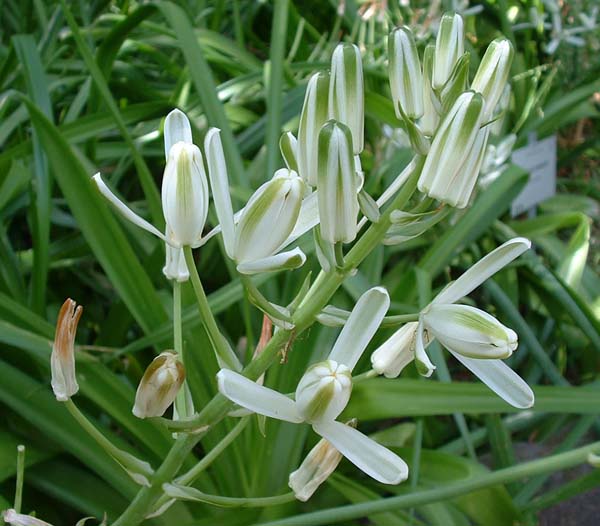
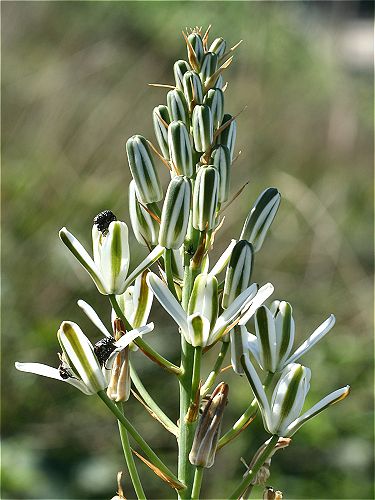
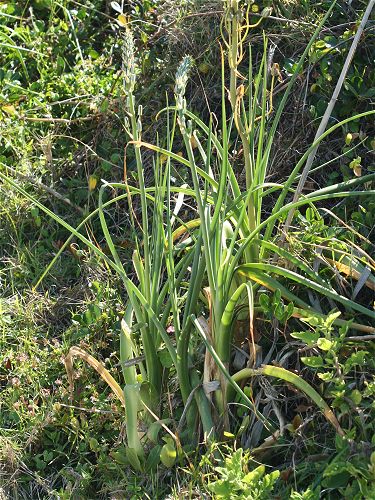
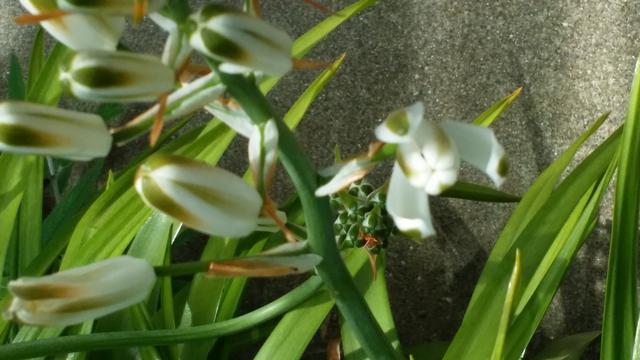
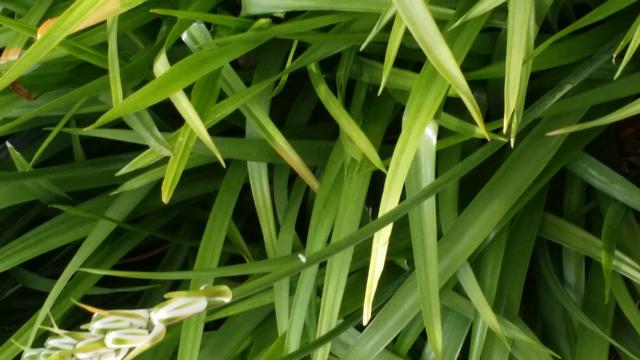
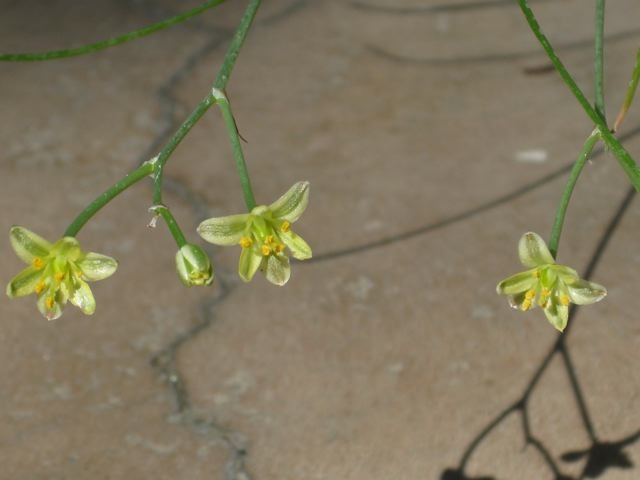
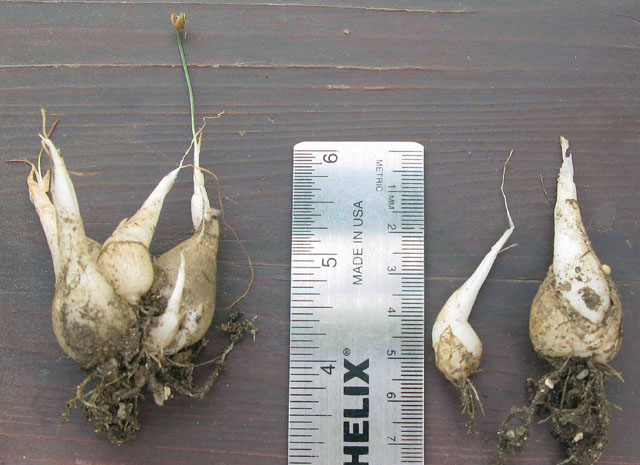
Albuca osmynella (U.Müll.-Doblies & D.Müll.-Doblies) J.C.Manning & Goldblatt, Ornithogalum osmynellum U.Müll.-Doblies & D.Müll.-Doblies, is endemic to the Oograbies Hills, Namaqualand, Northern Cape, South Africa. It is a Red List species. Height: to about 45 cm. The first three photos from Monica Swartz show the mounding bulbs and the strange branching flowers. The leaves of this species are spiral but these photos don't show that. The last photo by Pamela Slate shows the bulbs.


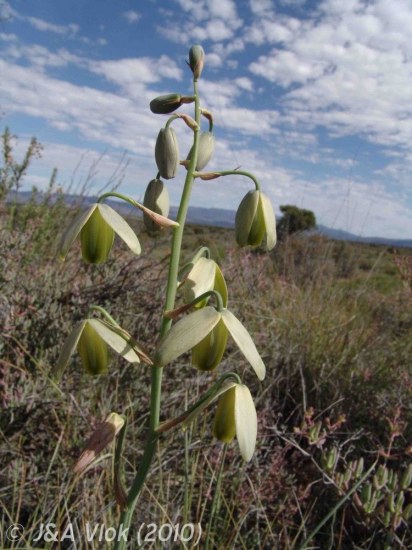
Albuca papyracea J.C.Manning & Goldblatt, syn. Ornithogalum papyraceum (J.C.Manning & Goldblatt) J.C.Manning & Goldblatt, is endemic to the Little Karoo where it grows on stony shale slopes in loamy and clay soils and flowers from September to November. Plants grow from 50 to 80 cm with 2 linear clasping leaves and yellow with green keels drooping flowers. Photo from the book Plants of the Klein Karoo courtesy of Jan and Anne Lise Schutte-Vlok.
Albuca pendula B. Matthew (1994) is native to southwestern Saudi Arabia. It is a cliff-dwelling species with pendulous leaves. It grows during winter and goes dormant in the summer. It is not tolerant of cold temperatures like South African natives. A light frost (-1 to -2 °C) will severely damage the foliage. It must therefore be protected during very frosty nights. The photos below were taken by Nhu Nguyen. Photo 1 shows a younger plant with a more erect habit. In later years as the bulb matures and the leaves get longer (up to a meter in length), the plant will take on a more pendulous habit.

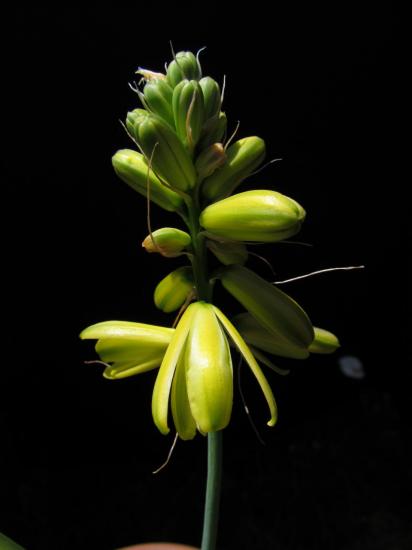

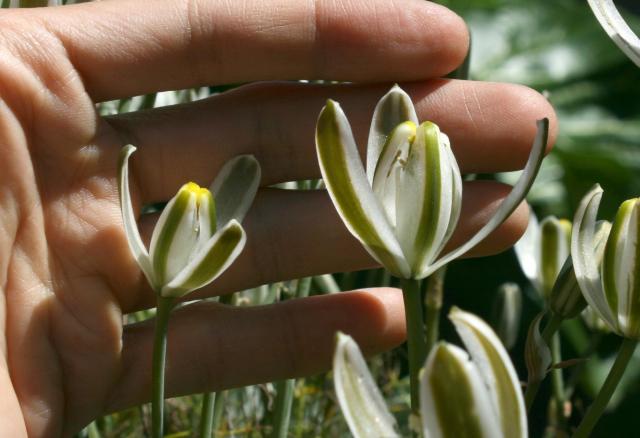
Albuca polyphylla Baker (syn. Ornithogalum teretifolium Manning & Goldblatt) is native to the Eastern Cape and the eastern part of the Western Cape. According to Elsa Pooley in her book Mountain Flowers, this species is found in crevices of rock sheets and gravel and silt patches on rock sheets, in seasonally waterlogged areas in the Drakensberg Mountains. Flowers resemble Albuca humilis. See the full description of this species when it was published. The widely grown Albuca 'Augrabies Hills' probably belongs to this species. Height: to about 30 cm.
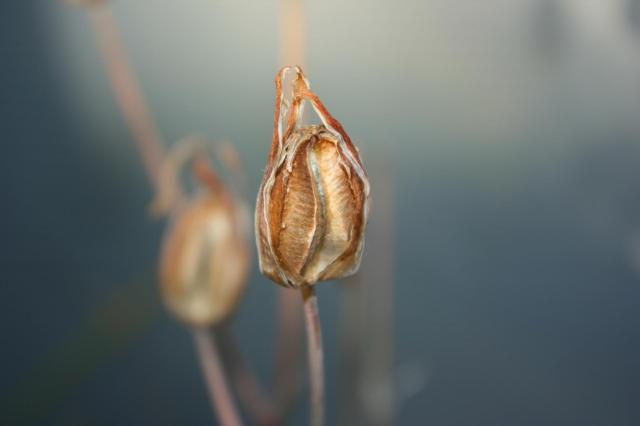
The photos below were taken by Nhu Nguyen of a form from Willowmore, South Africa. Photos 4-6 show seedpods that resulted from crossing with Albuca 'Augrabies Hills'. Neither of these forms seem to be self fertile.
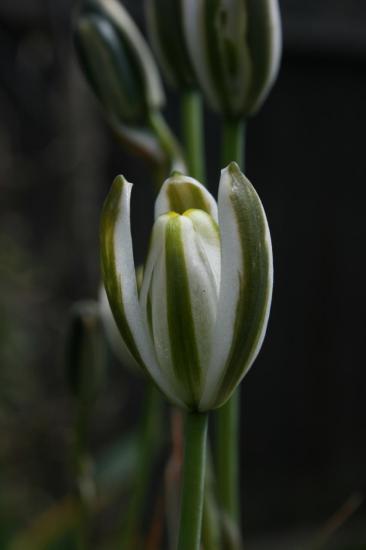

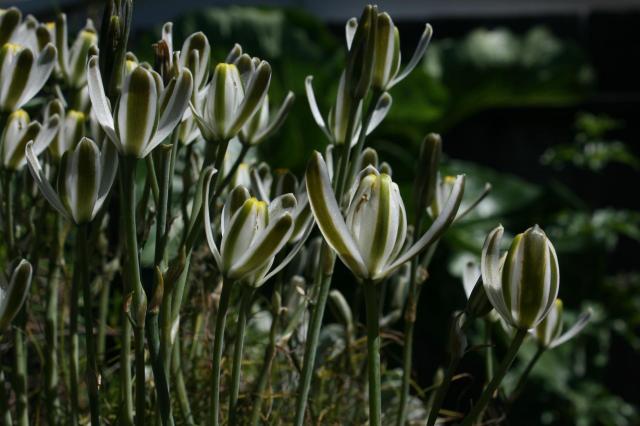
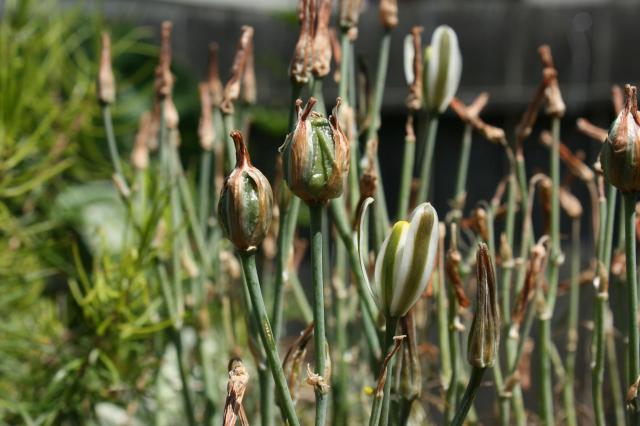

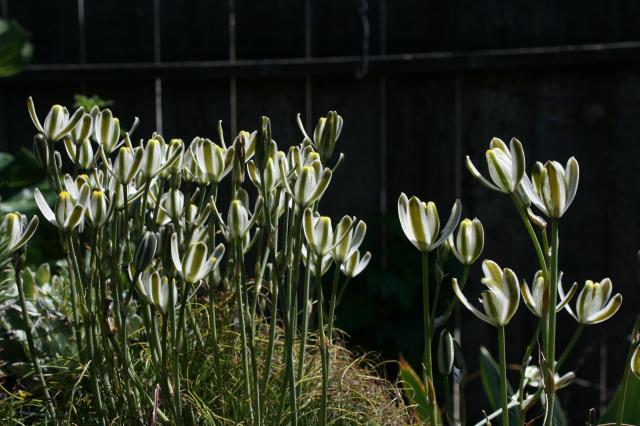
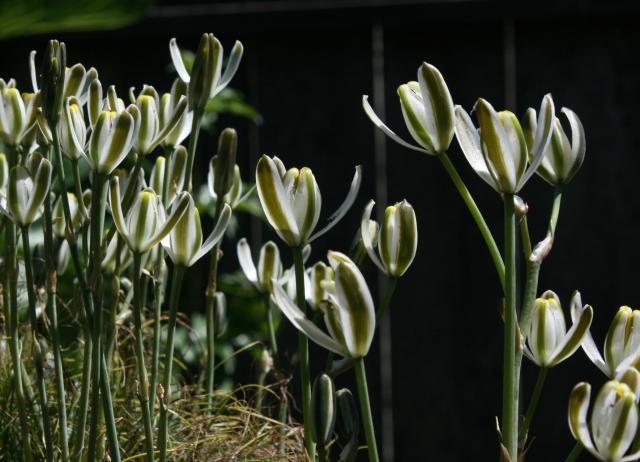
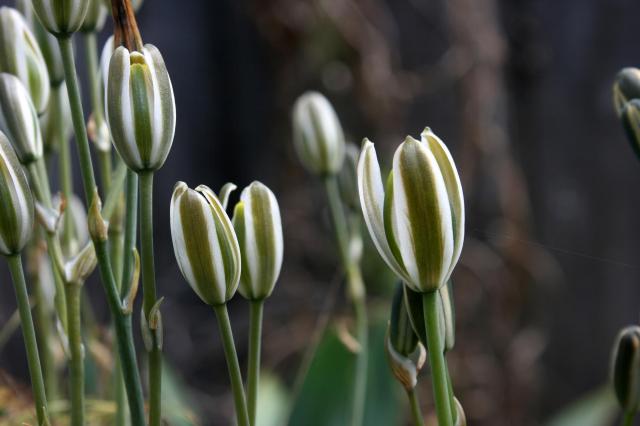
The photos below were taken by Nhu Nguyen showing a comparison between Albuca 'Augrabies Hills' (left) to the Willowmore form (right). The only noticeable differences between these two forms are the sizes of the flowers. The Willowmore form is larger. Reciprocal crosses between these two forms have been successful.
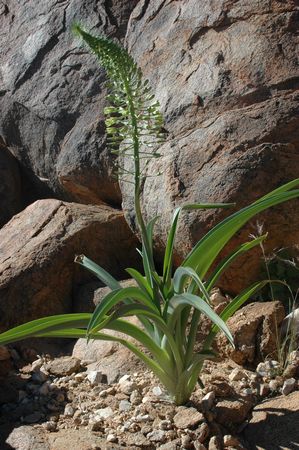
Albuca pulchra (Schinz) J.C.Manning & Goldblatt, syn. Ornithogalum pulchrum Schinz is a tall summer growing species distributed from Namibia to Botswana. Height: 20 cm. Photo by Rod Saunders.
Albuca index - Albuca a-f - Albuca r-z - Ornithogalum