Albuca is an African genus of more than 100 species belonging to the Hyacinthaceae family and includes some species more recently included in Ornithogalum. All Albuca species grow from bulbs, and most have a dormancy period after flowering whereby they lose their leaves. The flower scape is unbranched. The flowers are white and yellow and are embellished with a green to brown stripe down the middle of each outer tepal. Species A-F are found on this wiki page.
Albuca index - Albuca G-P - Albuca R-Z - Ornithogalum
Albuca abyssinica Jacq. (syn. A. angolensis) is native to Southern and tropical Africa. Height range: 60-100 cm. Photos from Monica Swartz of a plant purchased from Tim Harvey under A. angolensis.
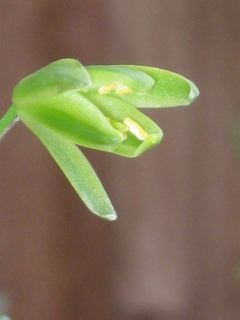
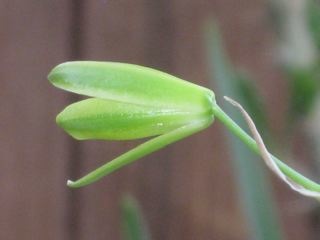
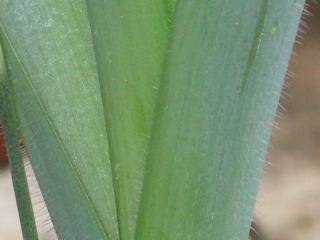
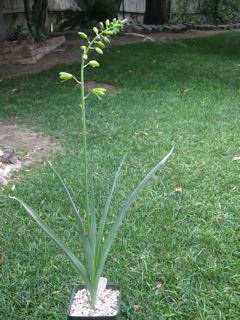
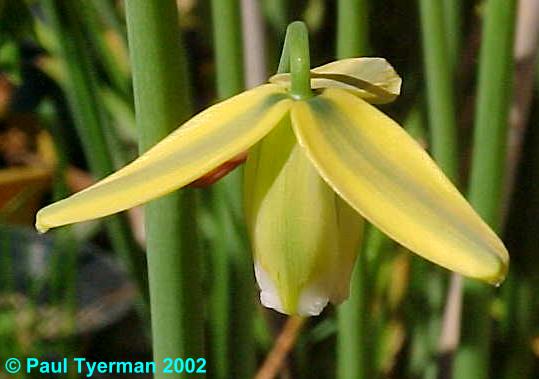
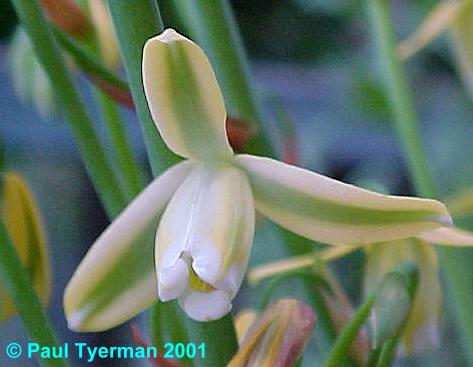
Albuca acuminata Baker is from the winter rainfall region of Namibia to the southern Cape east of Mossel Bay. It grows in deep sands and has nodding yellow to green flowers with green keels. It flowers in the spring. Height is 20-30 cm. The plants below were grown and photographed by Paul Tyerman. These plants were purchased under the name A. flaccida but that species has white tepal tips instead of yellow. This is the best guess for what they are.
Albuca albucoides (Aiton) J.C.Manning & Goldblatt is native to the Western Cape Province. The general appearance of the flowers is very similar to Albuca suaveolens. Manning and Goldblatt describes this species as having solitary bulbs (12-20 mm diameter), leaves 3-5 per bulb, absent or emergent at flowering, flattened to weakly canaliculate with translucent median longitudinal strip, 50-80 x 1-1.5 mm, dull green. The flowers are light yellow with broad brown keels, flowering in autumn (late March-early May in habitat). Height range: to about 45 cm. The photos below taken by Nhu Nguyen are tentatively identified as this species. Although the characters do not match the description exactly (darker flowers, green keel, flowering in summer) these plants may have come from a different population than those described by Manning & Goldblatt Bothalia (2009) 39:153-163.
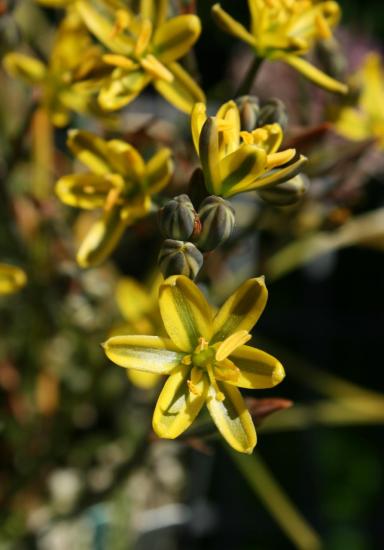
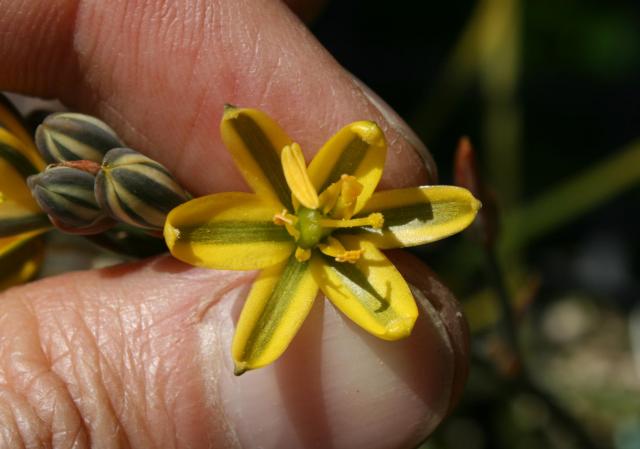
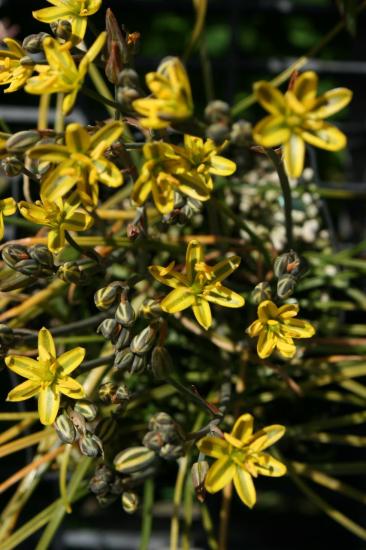
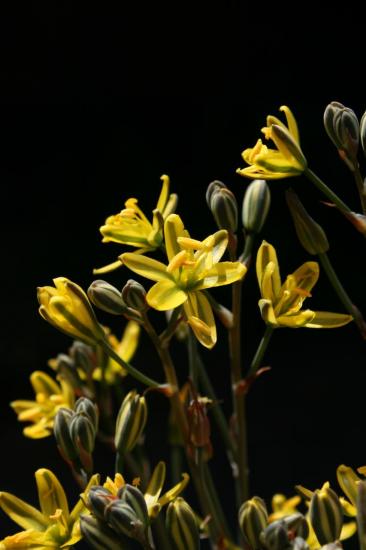
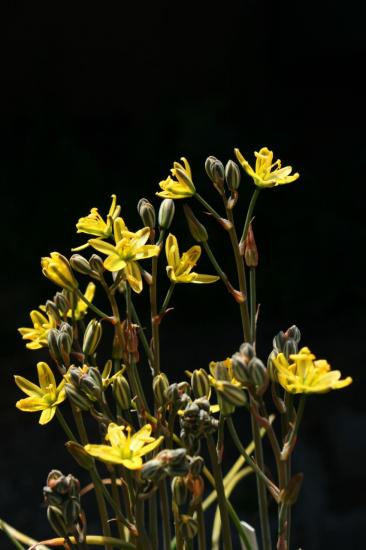
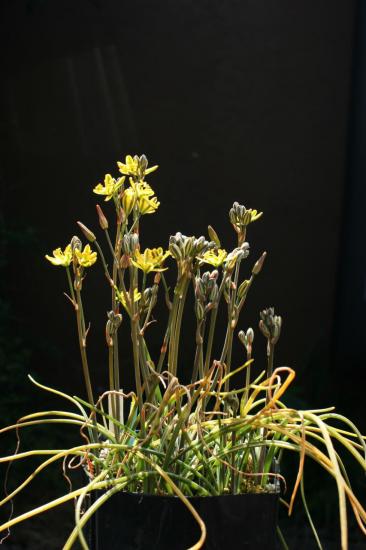
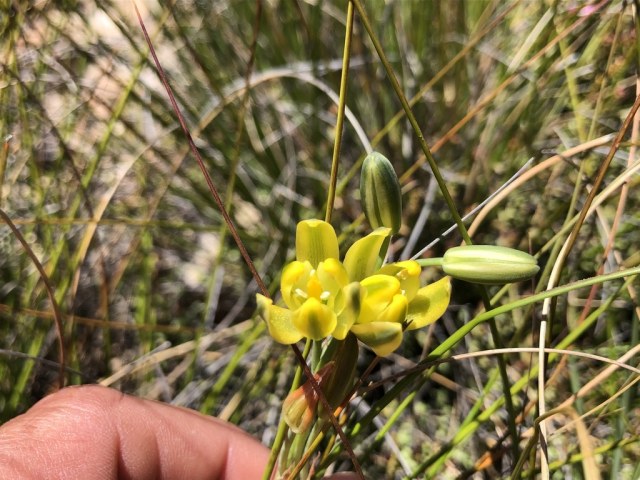
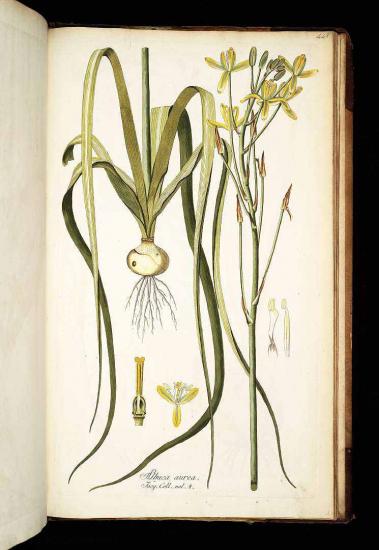
Albuca aurea Jacq., syn. Ornithogalum auratum J.C.Manning & Goldblatt, is native to the Western Cape Province, South Africa, where it grows on stony clay slopes and flowers mostly September-December. Plants grow to 50 cm high. The first four photos from iNaturalist were taken by danielkamen and gerhardmalan and shared under a CC BY-NC license. The illustration is from Jacquin, N.J. von, Icones plantarum rariorum, vol. 2: t. 441 (1786-1793).


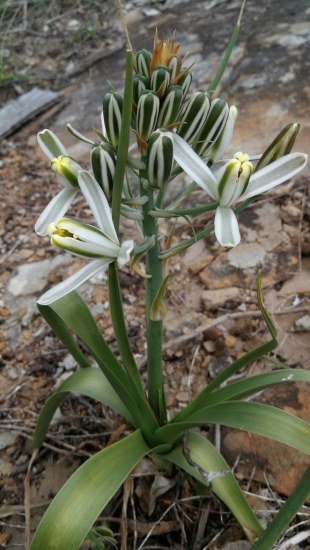
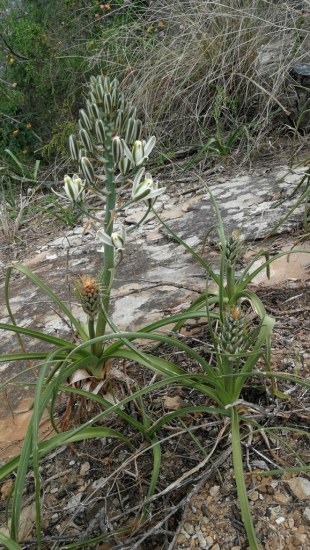
Albuca batteniana Hilliard & B.L.Burtt is found on coastal cliffs in the southeastern Cape. Growing to 60 cm, it has lanceolate evergreen leaves and white flowers with pale green keels borne on long pedicles. Flowering takes place between July and October. The first two photos from iNaturalist were taken by Craig Peter in September in the Eastern Cape and shared under a CC BY-NC license. The last three photos were taken by Cameron McMaster in the Eastern Cape.
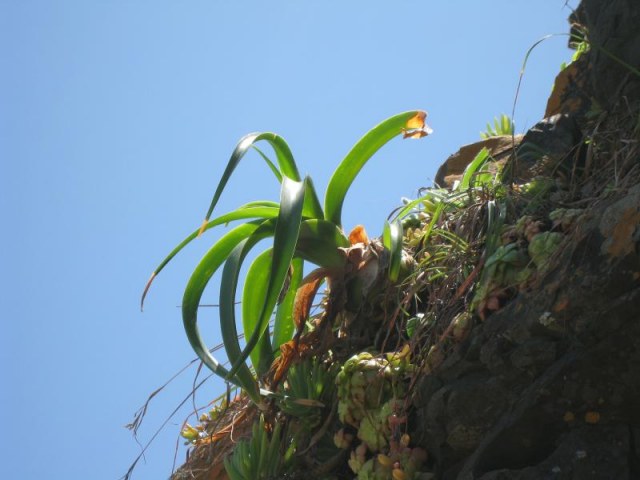
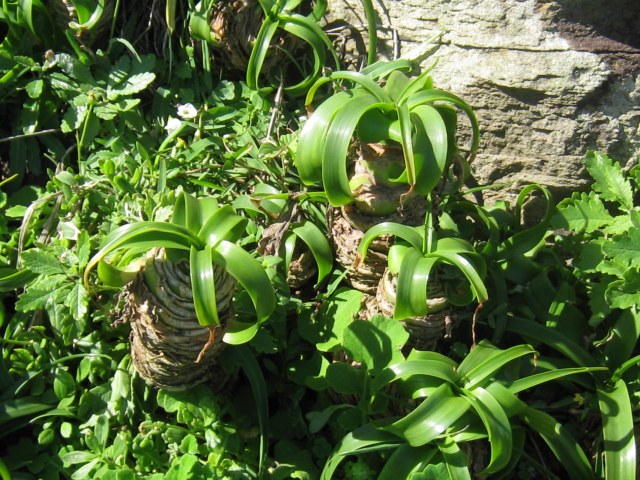
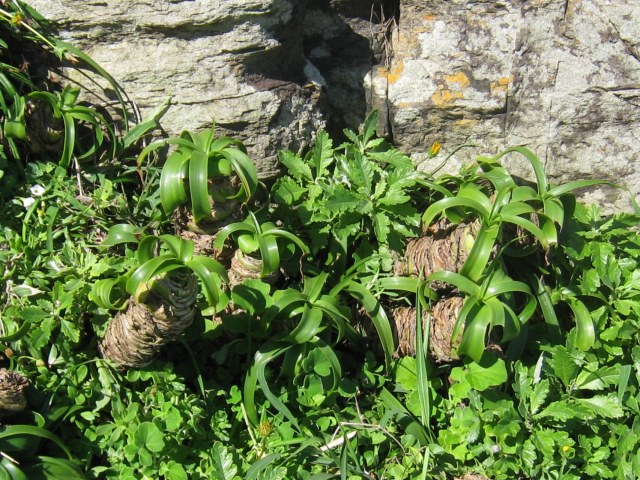
Albuca bracteata (Thunb.) J.C.Manning & Goldblatt (syn. Ornithogalum caudatum, O. longibracteatum), is found on shaded slopes and forest margins from the southeastern Cape of South Africa to tropical East Africa. It grows to 1.5 m high and has whitish flowers with broad green keels formed in a dense raceme. Photos of cultivated plants, first two from Janos Agoston remainder from David Pilling.
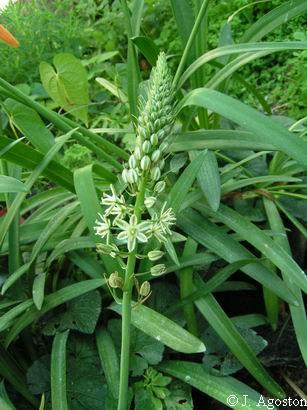
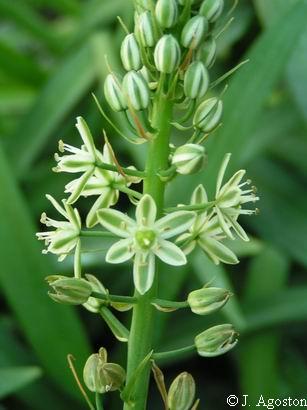

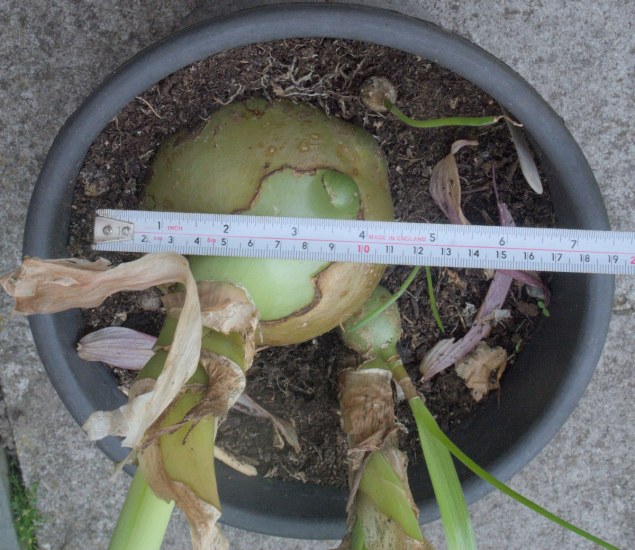
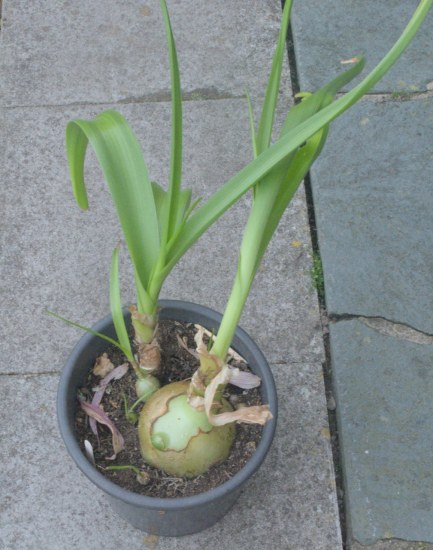
The first two photos of plants below photographed in the wild were taken by Andrew Harvie. The next two taken in the Drakensberg Mountains were taken by Bob Rutemoeller and Mary Sue Ittner.
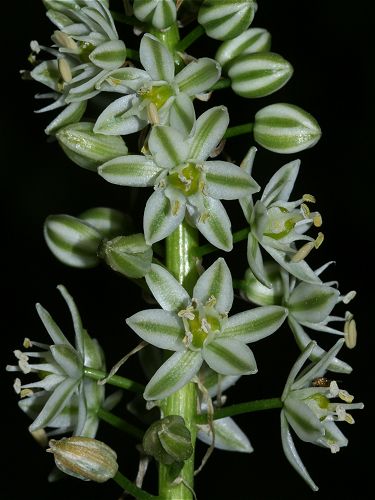
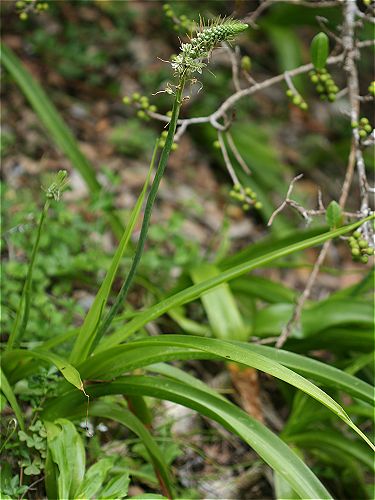
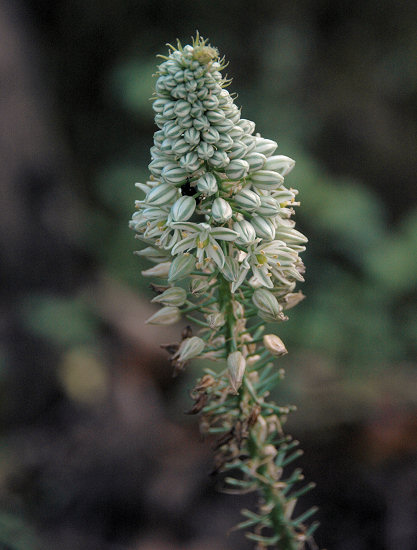
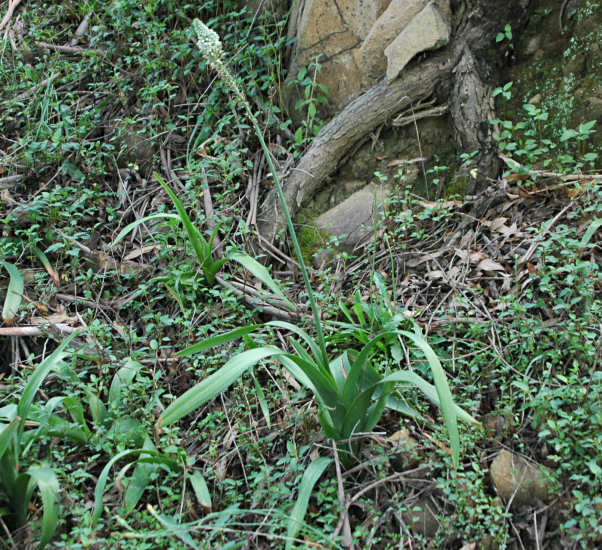
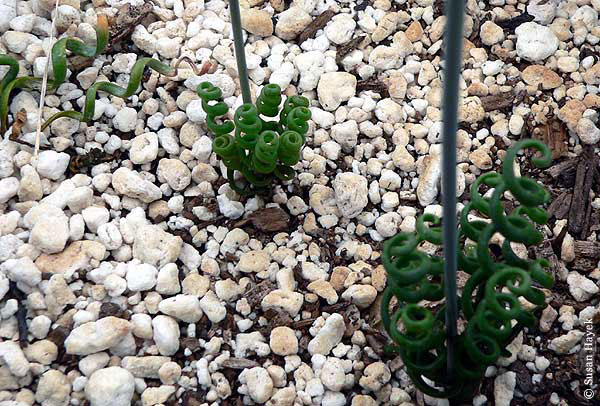
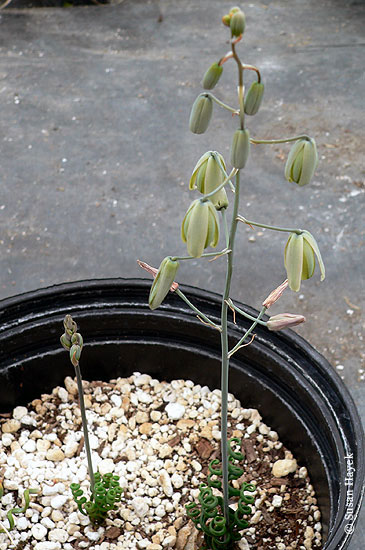
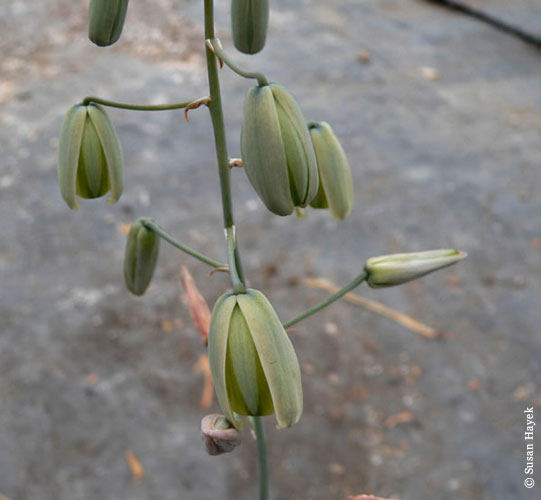
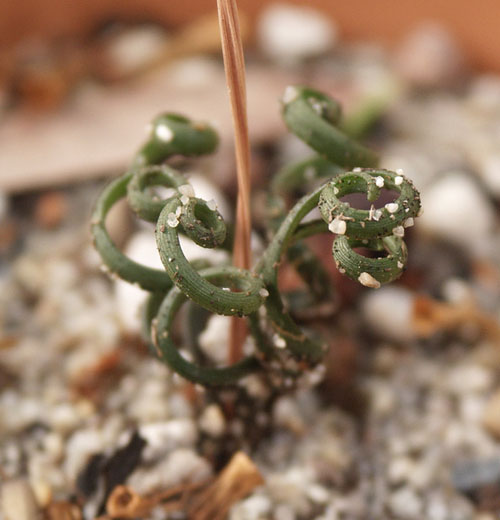
Albuca bruce-bayeri U.Müll.-Doblies is native only to the Little Karoo of the Western Cape. The species was named for Bruce Martin Bayer, the curator of the Karoo Garden at Worcester 1969-1987. It is similar to A. hallii, but the scape is completely glabrous, tepals are 13-17 mm long, greenish glaucous. The leaves have sessile and sticky glands, are green and strongly corkscrewed starting from the base of the leaves. Plants flower in the autumn along with the leaves. Height: 30 cm. Photos 1-3 were taken by Susan Hayek. Photo 4 was taken by Uluwehi Knecht, showing the leaves with sand grains sticking to the sessile glands.
Albuca canadensis (L.) F.M.Leight. (syn. Albuca maxima Burm.f.) is found on rocky soils from Namaqualand to Riversdale. There is some controversy over the name A. canadensis and A. maxima due to a misapplication of the name A. canadensis. The name A. canadensis was misused for a species with yellow flowers that we now know as Albuca flaccida; this fact had been confirmed by John Manning, a researcher of Albuca. The flowers on A. canadensis are white with a green stripe, nodding or drooping with somewhat succulent leaves that are rigid and deeply channeled. It is winter growing with a very short summer dormancy and flowers in late winter and spring. It grows to 5-6 feet (1.5-1.8 m). This species also produces copious seed, and has reportedly become naturalized in Italy. The origin of the name canadensis was explored in PBS list discussions here and here. The name was bestowed by Linnaeus (as Ornithogalum canadense Species Plantarum page 308). Although he visited Canada and specialised in plants from there, for this species he was misled by a wrongly labelled plant.
The first photo was taken by Cameron McMaster in Namaqualand. Photos 2-4 were taken by Mary Sue Ittner. Photo 2 was taken in South Africa in August 2001, showing a plant in bud growing in the rocks. Photos 2-4 were taken near Nieuwoudtville in October 2006. Photos 5-6 were taken by Bob Rutemoeller in Namaqualand October 2006.
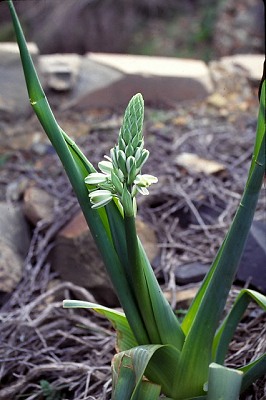
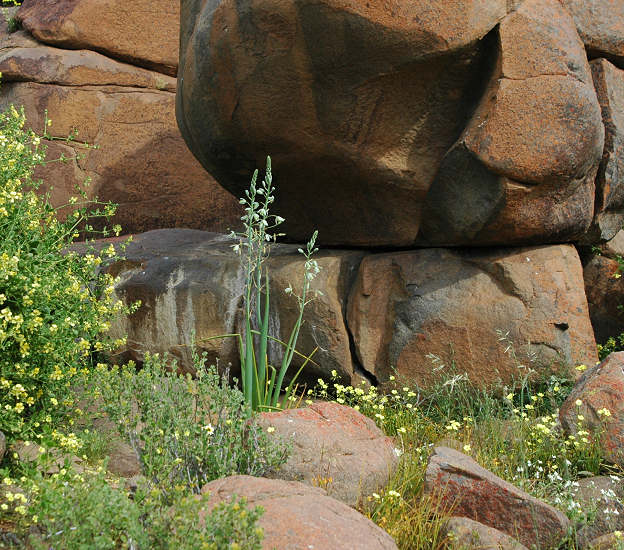
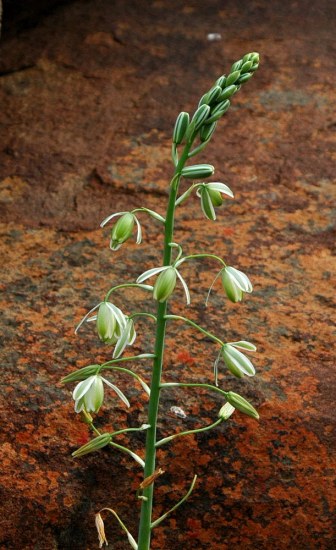
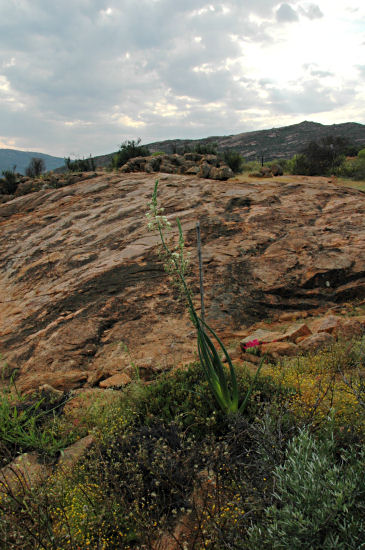
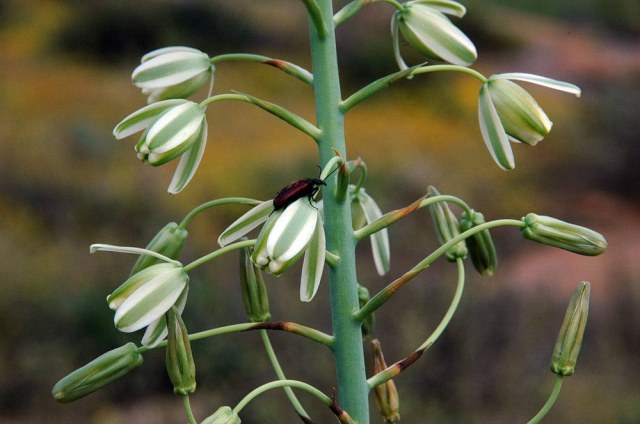
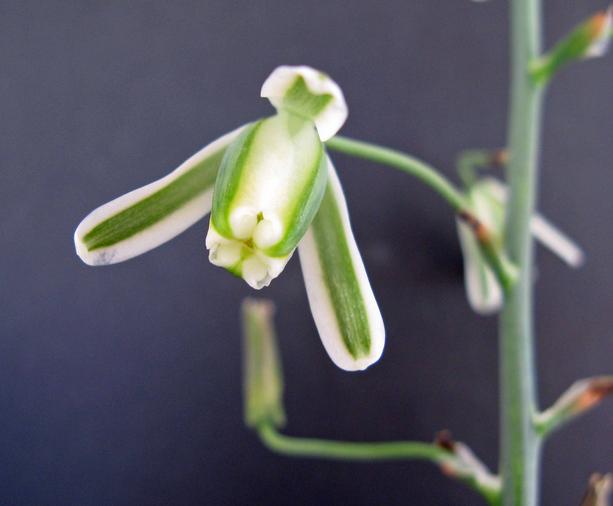
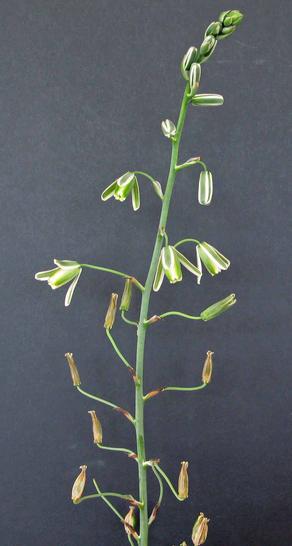
The first photo is from Paul Tyerman. The rest of the photographs were taken by Pamela Slate of plants grown from bulbs supplied to BX 139 in February 2007 by Alberto Castillo as Albuca juncifolia, which is a much shorter plant with yellow flowers. The pot is a foot tall and even though the plants flowered, I would recommend a pot 2-3 times this deep, I think that if planted in deeper containers they would grow faster and flower sooner.
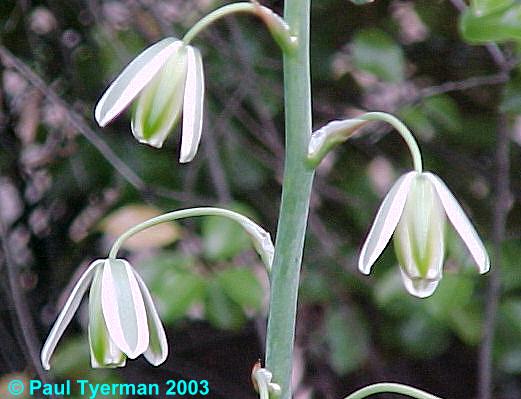
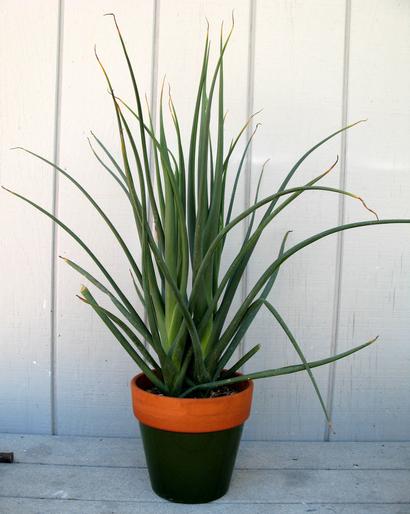
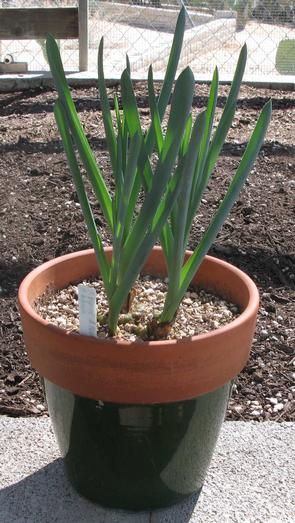
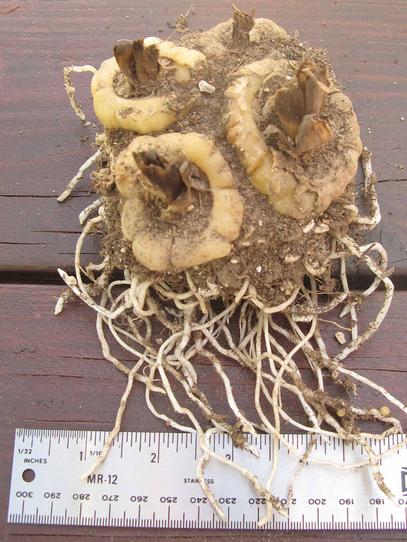
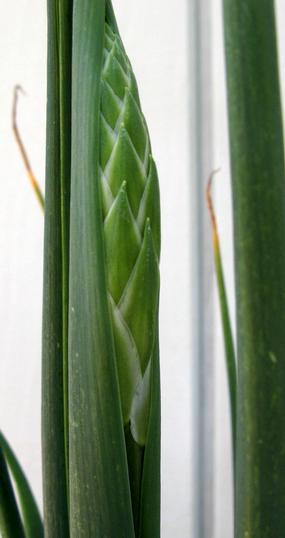
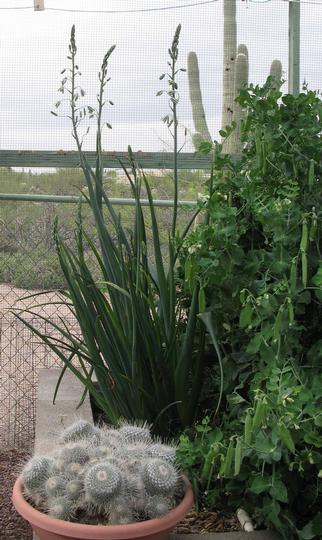
The next set of photos by Pamela Slate show these plants in 2011; the first was taken when flowering was beginning. In full flower the plant was 1.5 m tall from the ground to the tallest inflorescence and had 20 scapes. It flowers over a three-month period.
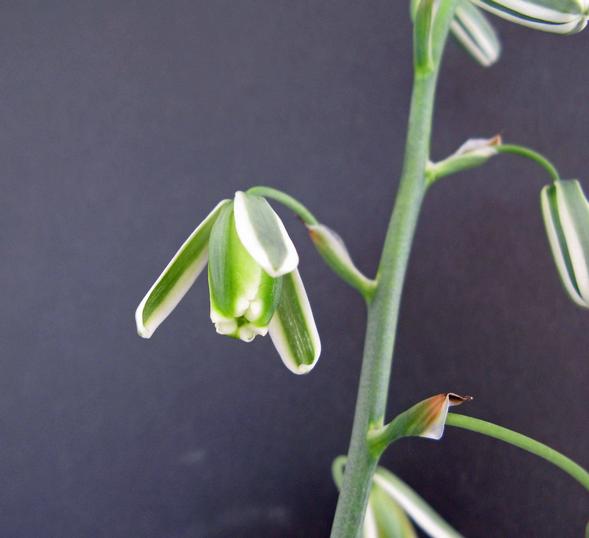
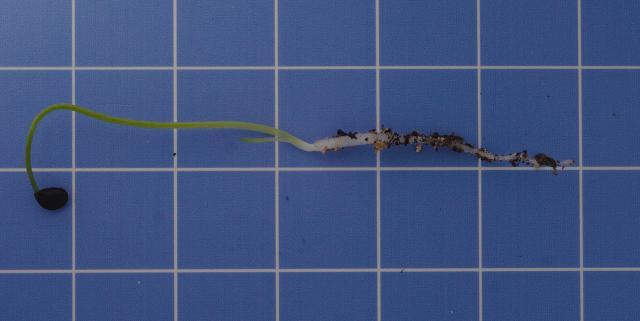
Photographs by David Pilling show seed and a seedling about 21 days after the seed was exposed to moisture at 65 °F, both on a 10 mm grid.

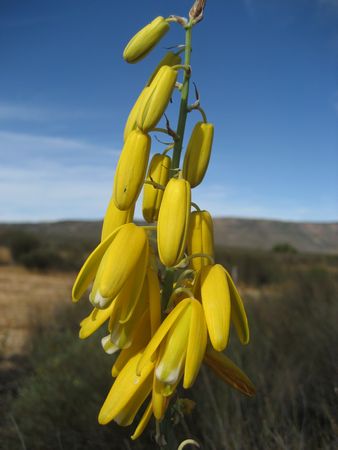
Albuca clanwilliamae-gloria is found on deep sandy soils in fynbos in the northwestern Cape region of South Africa, near Clanwilliam. The name, which translates as "the glory of Clanwilliam", was given by Ute Müller-Doblies to exalt the area of Clanwilliam. It produces an inflorescence that is the largest within the genus. Plants grow to 2 m. This species seems to be tolerant of summer heat and grows well for gardeners in southern California and Arizona. Photo courtesy of Silverhill Seeds.
Leo Martin who raised these plants in Arizona offers the following advice, which works for him in his desert conditions: These have been some of the most neglect-tolerant of all bulbs I've raised from seed. I planted seed from Silverhill in February 2002 in builder's sand in a 20 ounce (550 ml) foam drinking cup. By spring 2008 they had burst the cup. They were the size of large Lachenalia bulbs. I stored them unpotted inside my house in a zip baggie with some sand. I forgot about them for 18 months, discovering and repotting them into their current container (18 x ~18 inches/46 cm) in fall 2009. Only two or three sprouted in 2009-2010, barely reaching 3 inches (7.5 cm) tall. In 2010-2011 they all returned, 2011-2012 they grew strongly, and this season (2013) they bloomed. No doubt with better care and faster potting on they would have flowered much sooner. Each growing season they have been outside in full sun, fully exposed. The first few summers I brought them into my house. Since moving to the large container in 2009, they have summered dry under my carport, where temperatures frequently exceed 110 Fahrenheit (43 °C). They have been completely undamaged by cold spells to the mid teens Fahrenheit /-9 °C overnight for 3 consecutive nights each in January 2007, December 2010 and January 2011 and six nights in a row in 2013.
See Microwaving Pollen to Overcome Self Incompatibility / Self Sterility.
Photos below were taken by Leo Martin of the first seedling bloom, April 2013 in Phoenix, Arizona, USA. Leo is 5'11" (180 cm) tall. They were beautifully upright until a windstorm and are tied together for the photo.
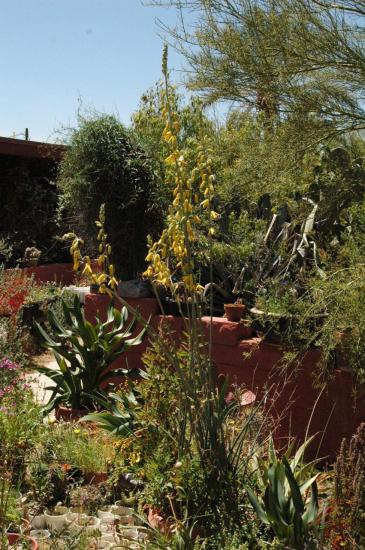
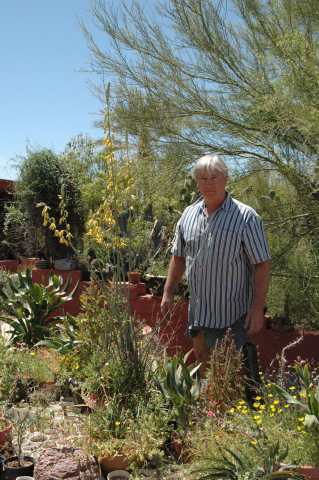


The photos below were taken by Nhu Nguyen of plants growing in the San Francisco Bay Area. These plants are temperamental where they may or may not break dormancy every year. Perhaps a warmer summer would be helpful.
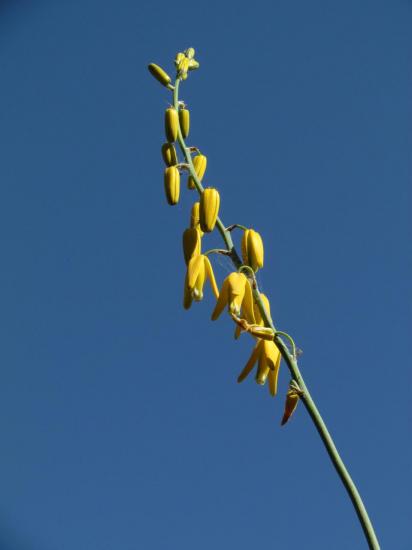
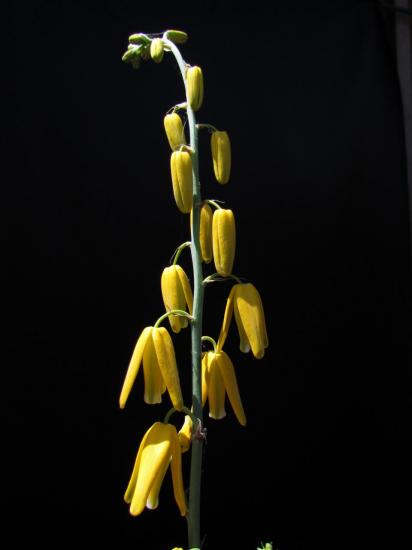
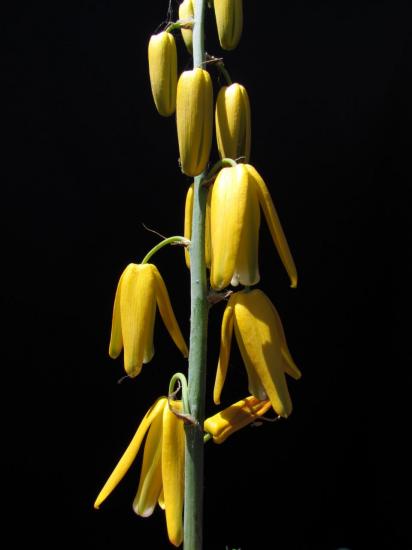
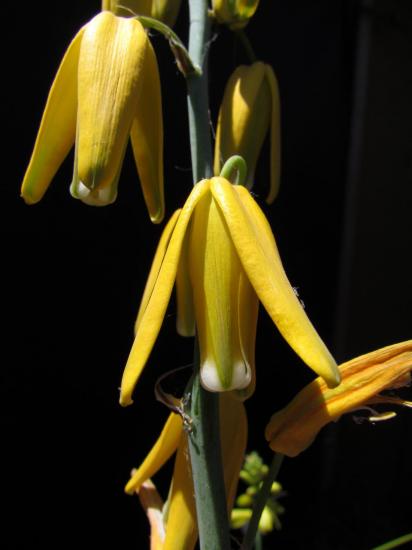
Albuca concordiana Baker, syn. Ornithogalum apertum (I.Verd.) Oberm., syn. Ornithogalum concordianum (Baker) U.Müll.-Doblies & D.Müll.-Doblies, grows on stony flats from southern Namibia through the northwest Cape to the Karoo and the southeast Cape. It flowers August through September and is distinguished by corkscrew-coiled leaves that are often dry when it flowers. It has yellow flowers with broad green keels. Height: 20 cm. The first two photos taken September 2006 by Mary Sue Ittner near Calvinia. The last photo from the book Plants of the Klein Karoo courtesy of Jan and Anne Lise Schutte-Vlok.
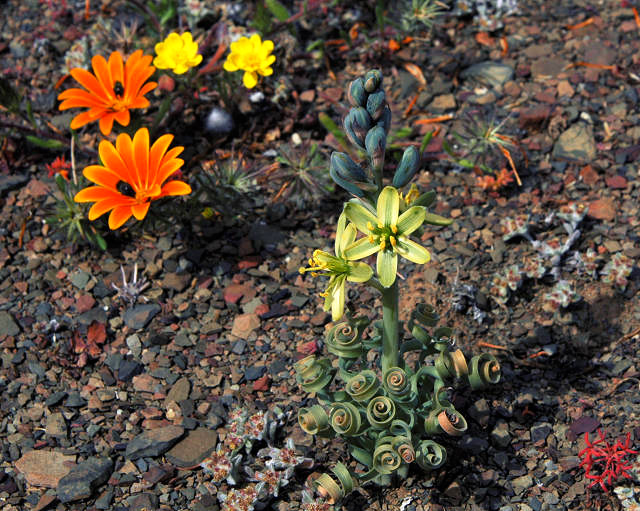
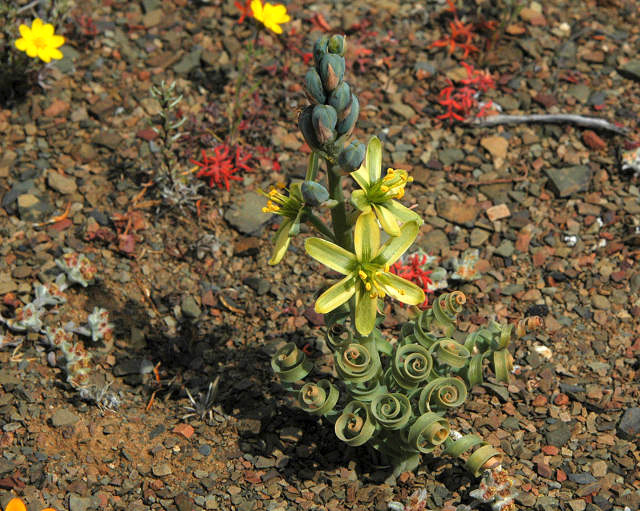
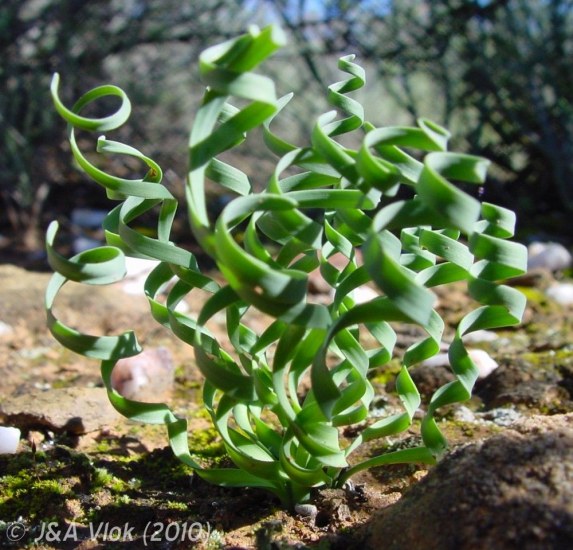
Albuca cooperi is found on stony, mostly sandy slopes, coastal dunes, and flats over a broad distribution: (Namaqualand, western Karoo, Cape Peninsula to the southeastern Cape). Plants grow to 50 cm. The two to three leaves are narrow, linear, channeled, clasping and warty basally. Flowers are nodding, sweetly scented, yellow with green keels. Flowering is from September to January, probably depending on the location. First photo taken by Cameron McMaster September 2011 near Nieuwoudtville. The next two photos taken near Stanford by Christopher Whitehouse. The last photo from the book Plants of the Klein Karoo courtesy of Jan and Anne Lise Schutte-Vlok.
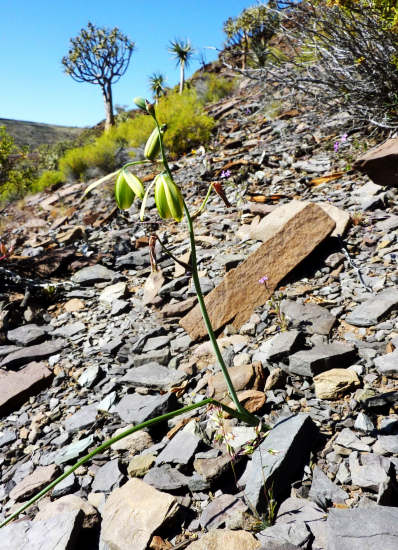
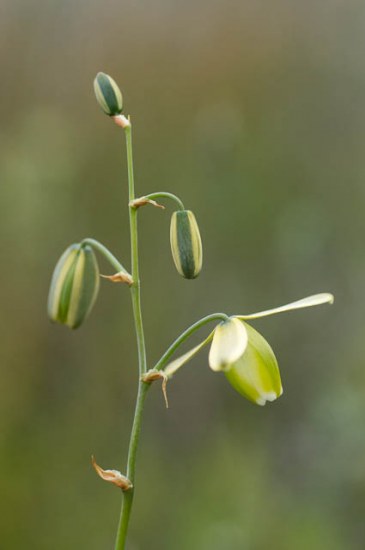
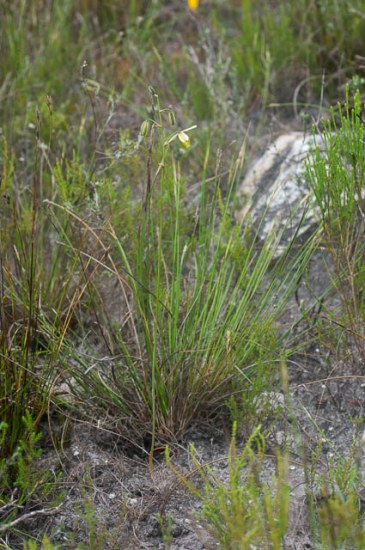

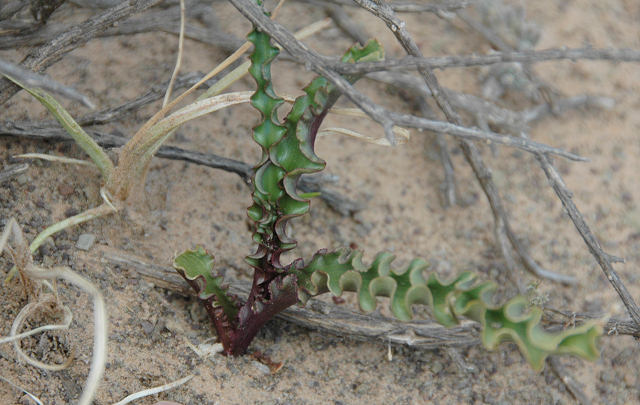
Albuca crispa J.C.Manning & Goldblatt was described in 2009. It appears to be endemic to the Great Karoo in rocky flats. Plants range from 10 to 30 cm tall and flower in summer. Photo taken January 2010 by Bob Rutemoeller in a very dry area of the Eastern Cape.
Albuca deaconii van Jaarsv. was described in 2013. It is native to the west-facing vertical slopes and sandstone cliffs of the southern Drakensberg in the Eastern Cape. It is an uncommon and obligate cliff-dweller (cremnophilous). The leaves are evergreen, spreading, and glaucous, much like a leek. In habitat, the plants flower in late spring. It resembles several other species with evergreen leaves. Height range: 10-30 cm. Photos from iNaturalist were taken by James Deacon in October and shared under a CC BY-SA license.


Albuca dilucula (Oberm.) J.C.Manning & Goldblatt, (syn. Ornithogalum diluculum Oberm.) grows to 25 cm tall with a solitary spreading leaf that is dry at flowering. It has yellow slightly nodding flowers with greyish green keels and grows in the Northern Cape and the Western Cape to the western Karoo of South Africa. Photos from Andrew Harvie taken northeast of Springbok in Namaqualand.
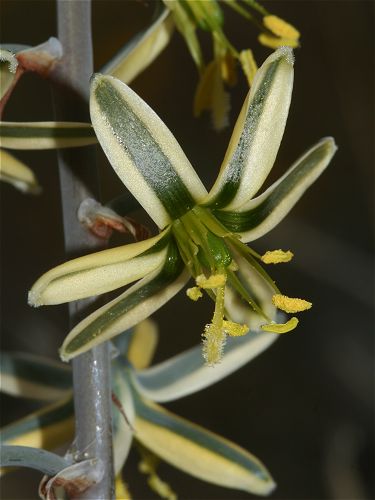
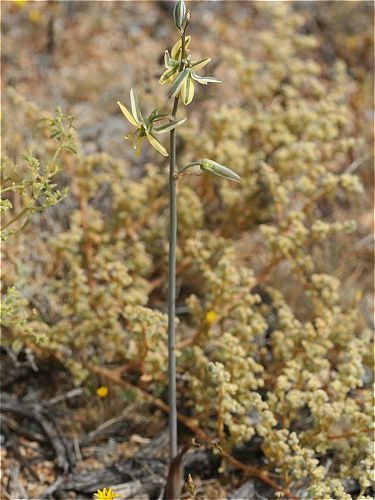
Albuca fastigiata Dryand. grows on crevices and ledges of damp sandstone cliffs at 1800 to 2400 metres. Flowers are held erect, and are white with broad green stripes beneath the tepals with an unpleasant scent. Height range: 2-4 ft. Photo taken at Sentinel Peak in the Eastern Cape by Cameron McMaster.
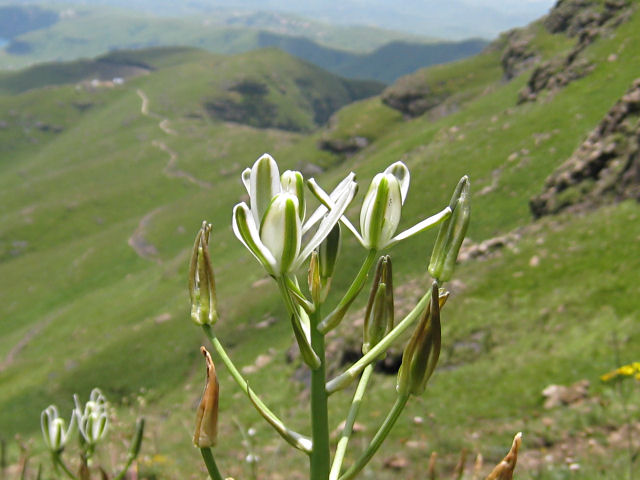
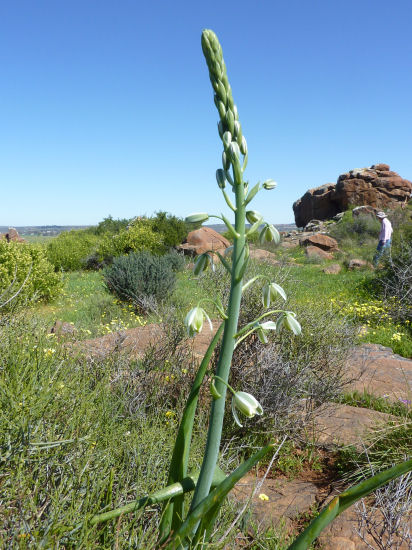
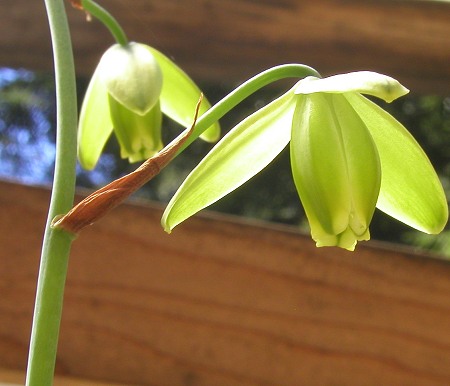
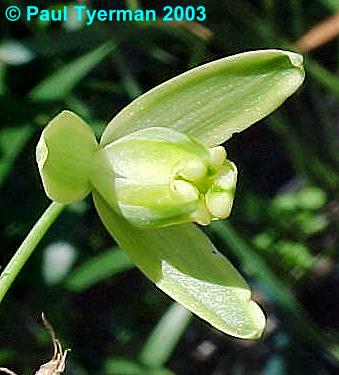
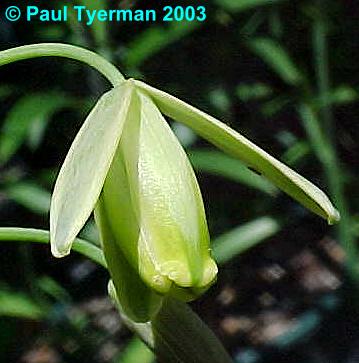
Albuca flaccida was known for many years as Albuca canadensis which is now considered to be the correct name of another species with white flowers. Albuca flaccida has yellowish green, nodding flowers and is strongly and pleasantly perfumed. Height: 40-100 cm high. Plant flowers late winter and spring and is winter growing, summer dormant. This species produces copious seed which is easily dispersed by the wind, and has become naturalized in southwestern Australia. The first photo taken by Bob Rutemoeller and the second two photos from Paul Tyerman
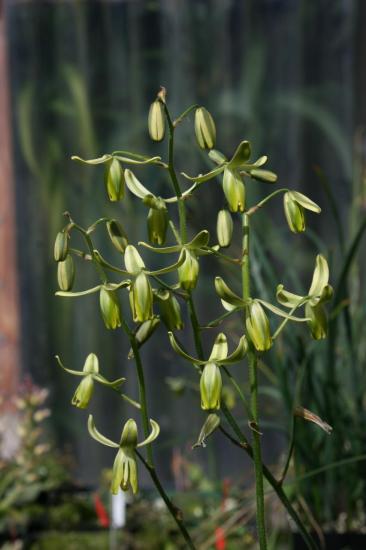
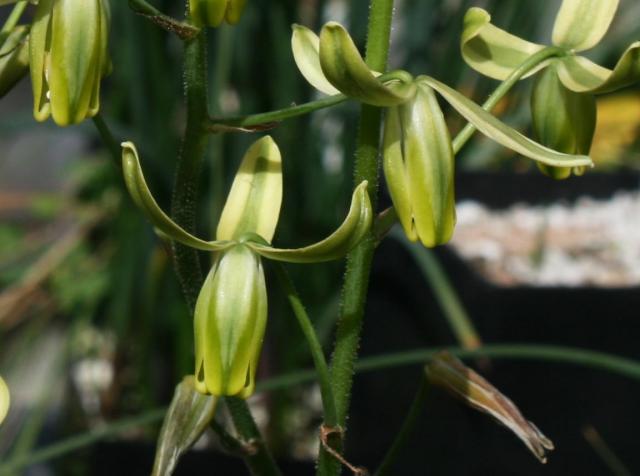
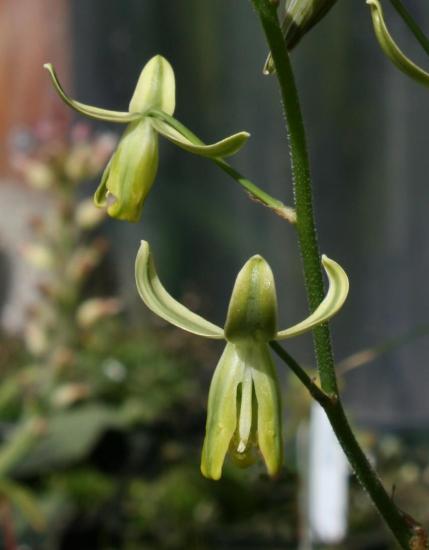
Albuca foetida U.Müll.-Doblies is native to Steinkopf in Namaqualand south to Worcester and east to Prince Albert. In general appearance it is very similar to A. spiralis but the glandular hairs only appear in the upper margins of the leaves. The glandular hairs can also be found on the bracts and all the way up the peduncle. Apart from these characters, the glands produce an unpleasant smell, hence the species epithet foetida. Height: 20-40 cm. The photos below were taken by Nhu Nguyen.
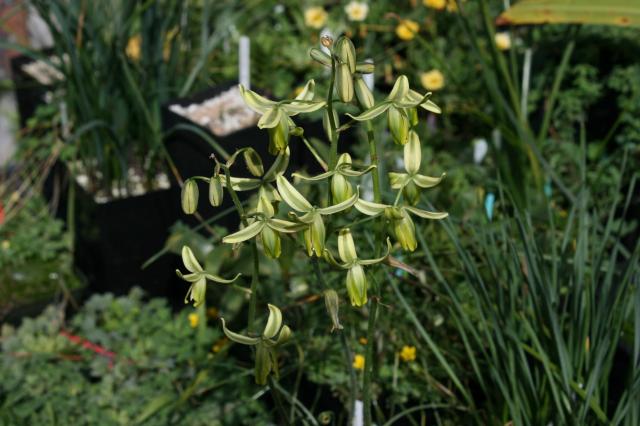
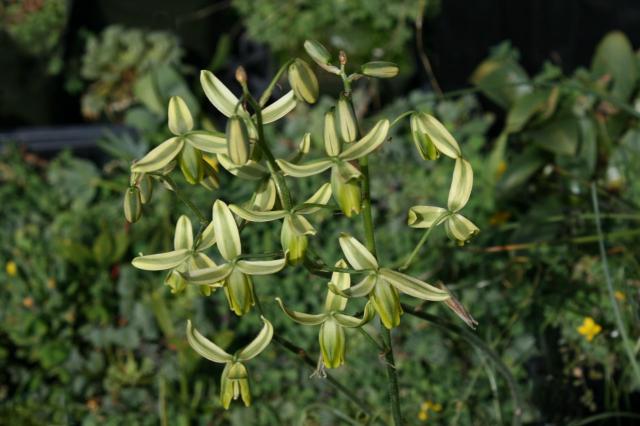
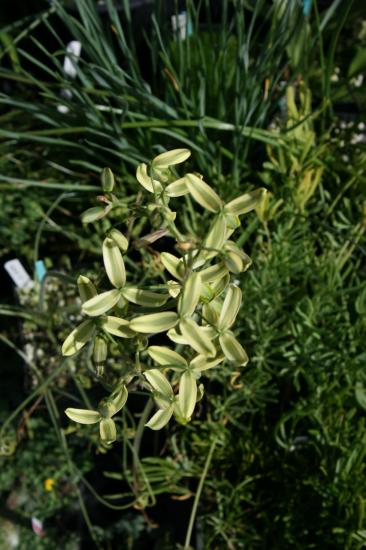
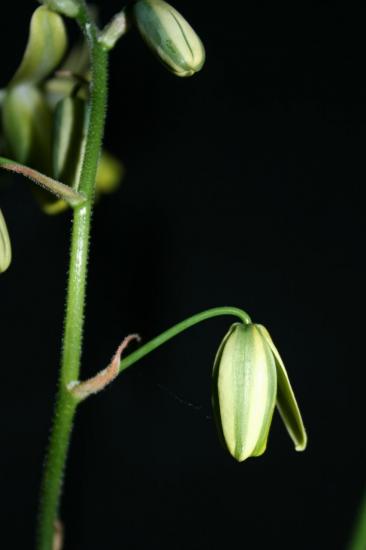

The photos below by Nhu Nguyen show close-ups of the flowers.

Albuca index - Albuca G-P - Albuca R-Z - Ornithogalum