This page is devoted to the variable and colorful European species Allium flavum and Allium flavum ssp. tauricum. Also covered here, are images of species closely allied with A. flavum and those that will putatively hybridize with it under garden conditions.
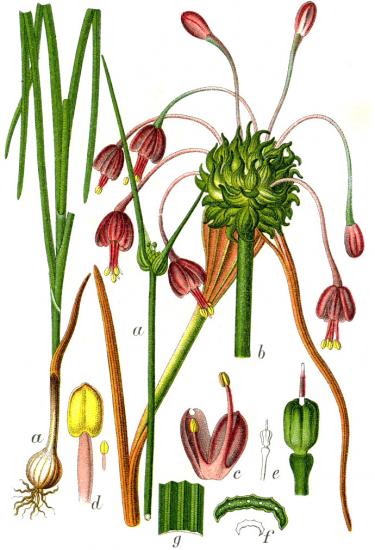
Allium carinatum L. is from much of Europe into Asia, naturalized elsewhere (the British Isles). Informal sprays of little rose-purple, rose-pink, to white flowers dangling on very long slender pedicels, sometimes with bulbils (though many selections are bulbil-free). Height range: 30-60 cm. Illustration below showing many green bulbils from "Deutschlands Flora in Abbildungen (nur Tafeln)" (1796) Stuttgart Anzahl gescannter Seiten: 883.
Allium carinatum ssp. pulchellum (G.Don) Bonnier & Layens is a European species that is very close to Allium flavum, flowering at the same time in June or July depending on the variety grown. The second photo is of a a dwarf bluish-purple form and a creamy white form, collected on Mt. Olympus, Greece. This is the plant that was offered by Hoog & Dix as a blue-flowered form of Allium flavum ssp. tauricum, but it is undoubtedly a "pulchellum" variant. Since the photograph shows such a confusing jumble of flowers, I circled the topic species in red. Behind the blooms are the white flowers of an Achillea and pinkish A. flavum ssp. tauricum in the foreground. Finally there is a drawing of a dark pink form. Photos #1-2 and drawing #3 by Mark McDonough. Photos 4-5 were taken by Nhu Nguyen.
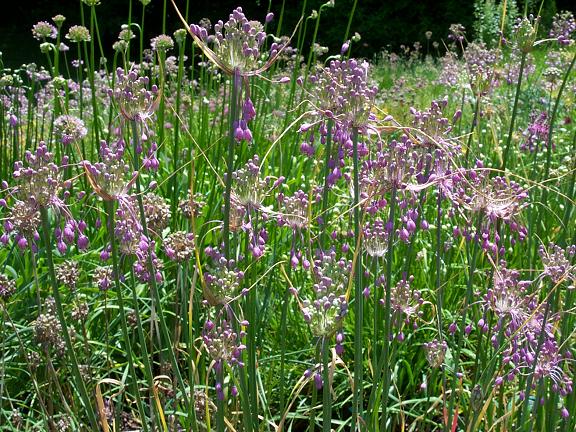

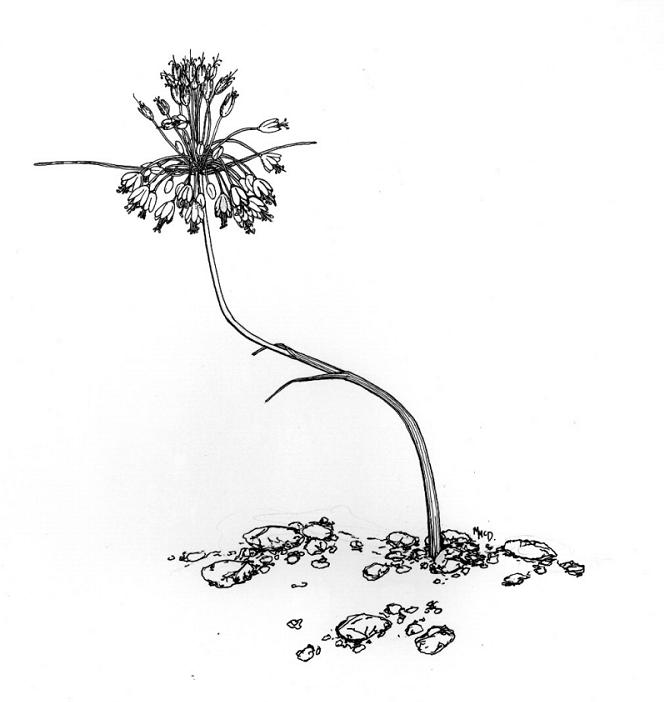
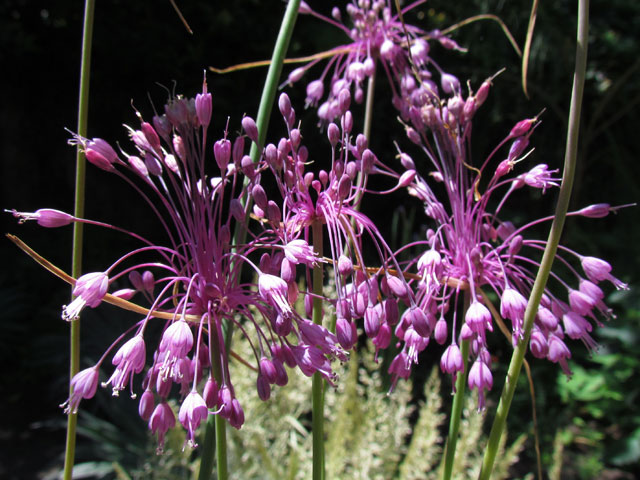
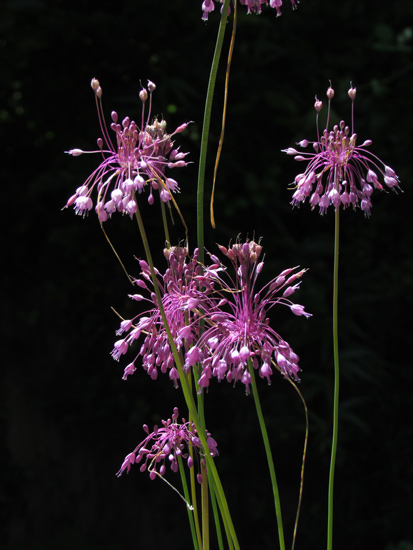
Allium carinatum ssp. pulchellum f. album is a white form often sold by Dutch bulb dealers. Photos below by Travis Owen of an adaptable selection. It has thrived in sun and shade, though it flowers better in the sun. The leaves are nearly evergreen in irrigated beds, dying down after new leaves have already broke the soil surface. The third photo shows a tiny bee, shorter than a pencil is wide, visiting the florets. The last photo shows the seed pods, like most Alliums the florets turn up for the seeds to ripen.
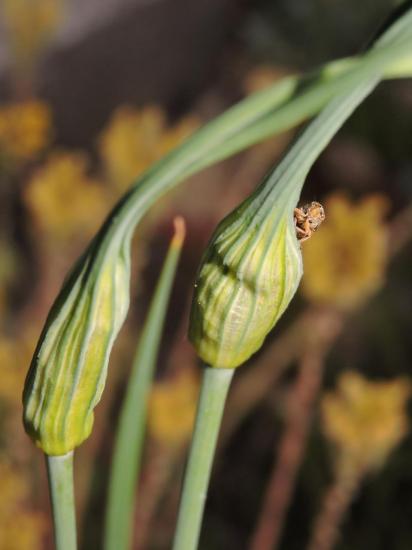
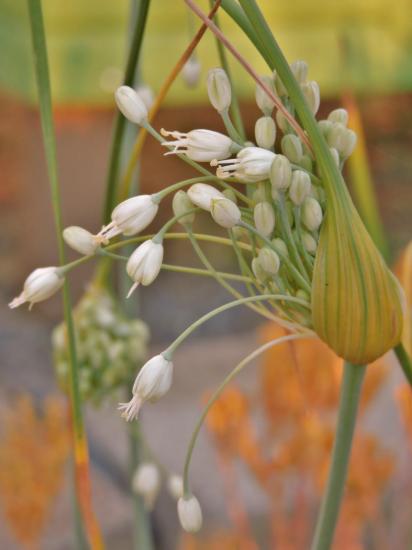
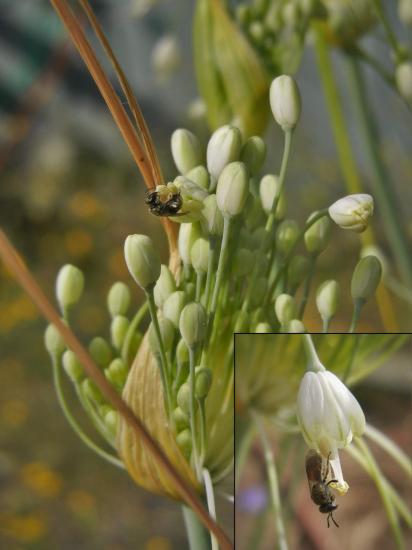
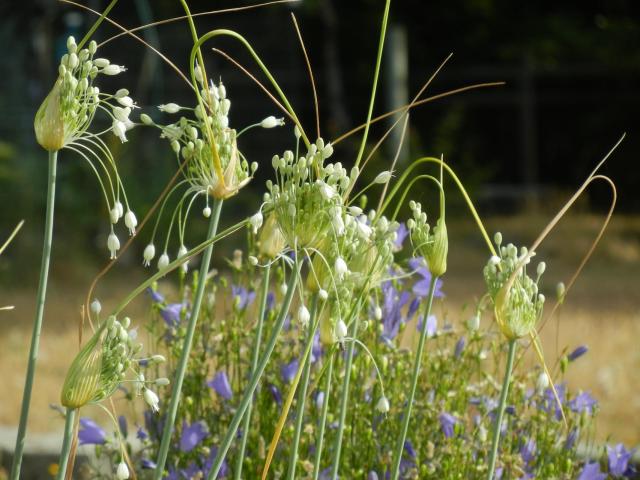
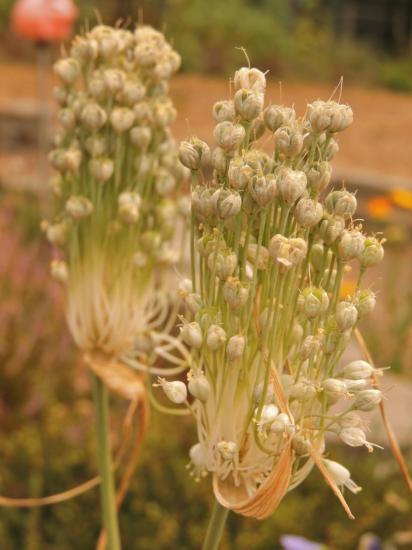
Allium convallarioides Grossh. is a European species that's not generally in cultivation. It is a pleasing species with handsome umbels of white flowers. It is similar in appearance to Allium paniculatum L. and Allium pallens L., but in this species the slightly "ballooned" hollow leaves distinguish it from the other species. It flowers in June and July. Height: to about 60 cm. Photos by Mark McDonough.
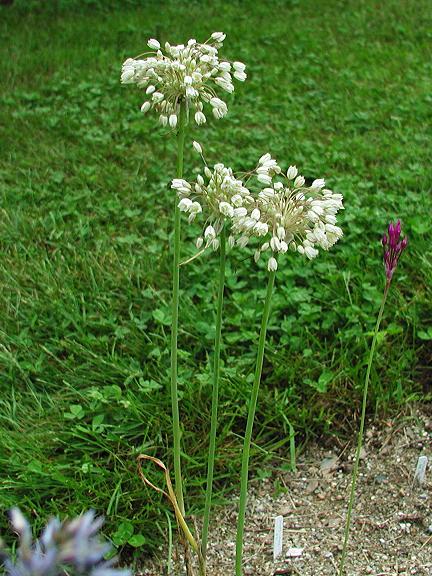
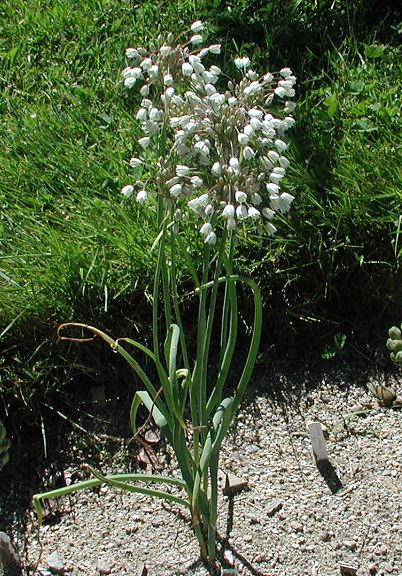
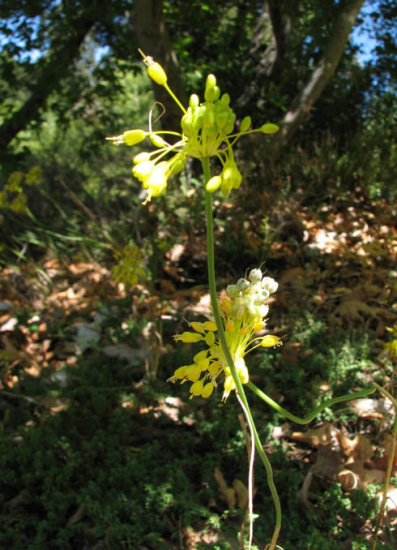
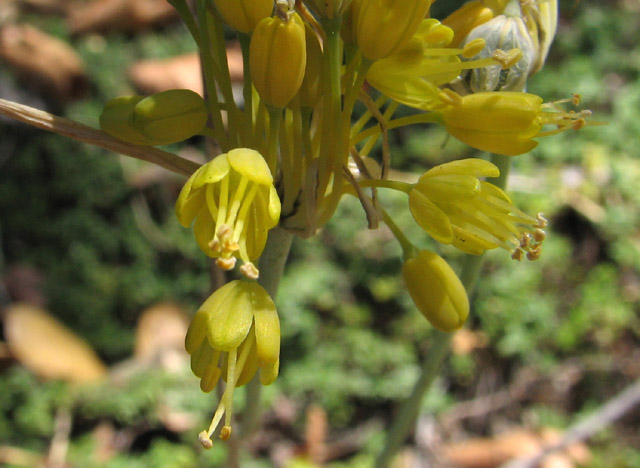
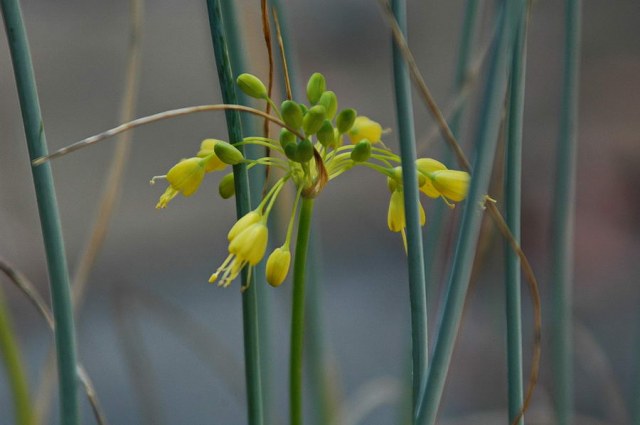
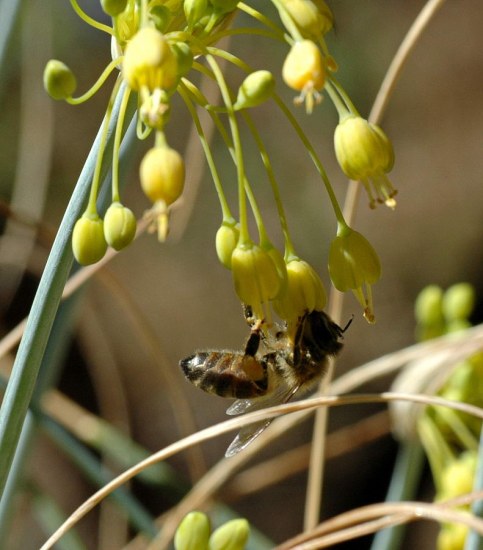
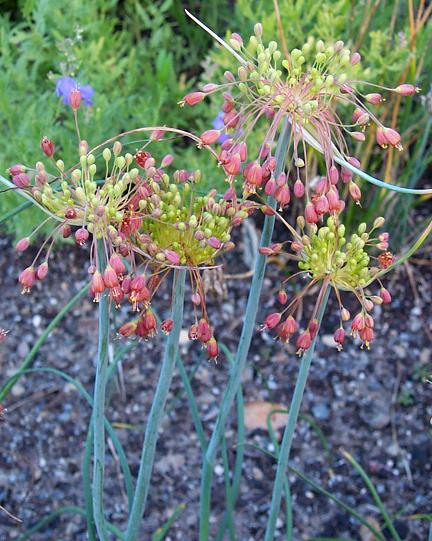
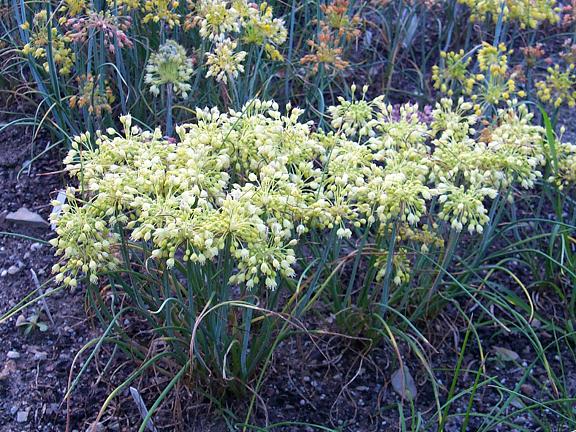
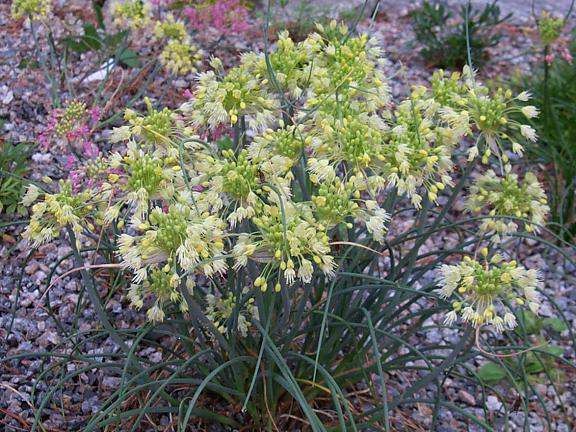
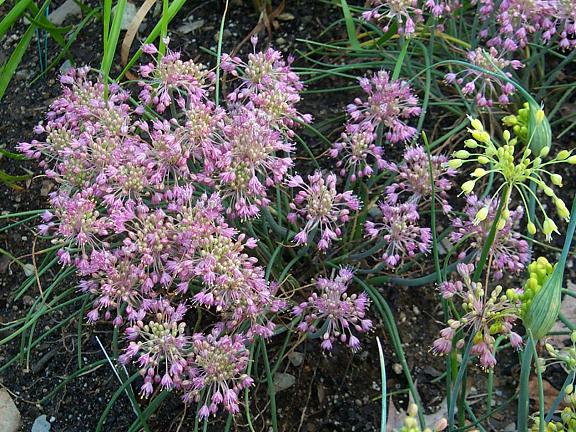
Allium flavum L. is native to the Mediterranean. It is one of the species which has been selected for numerous color forms as seen in the entries below. Height range: to about 60 cm. The first two photos below were taken by Nhu Nguyen at the UC Botanical Garden in August 2008. The particular accession was collected from France. It grows under the shades of oak trees where it gets filtered sunlight. The next two photos from Mary Sue Ittner, including one with a pollinator.
Allium flavum ssp. tauricum (Besser ex Rchb.) K.Richt. (syn. Allium paczoskianum Tuzson) "selected mixed colors" photo taken July 8, 2002 followed by "Selected mixed colors in the morning". You have to love these things; the colors are so lovely, refreshing, and variable. Due to their pastel flower colors, and the fact the florets are waxy and have an underlying color, then covered with a dusty "bloom" or powder of another color on the outside, the color rendition is hard to characterize and each looks very different depending on light and time of day. I particularly like to observe them in the low morning light. Notice too, the wide, boat-shaped spathe valves that mix in with the flower heads, more pronounced on some specimens than others. Photos by Mark McDonough.
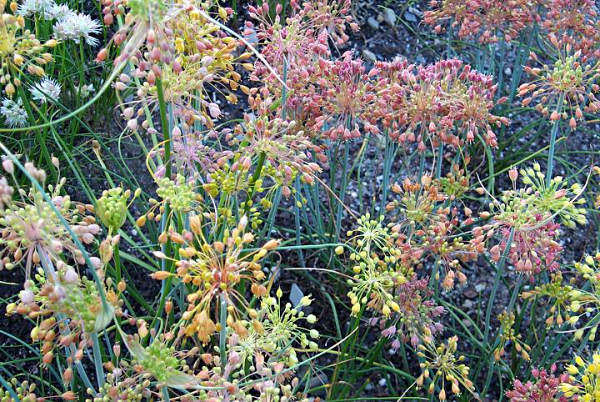
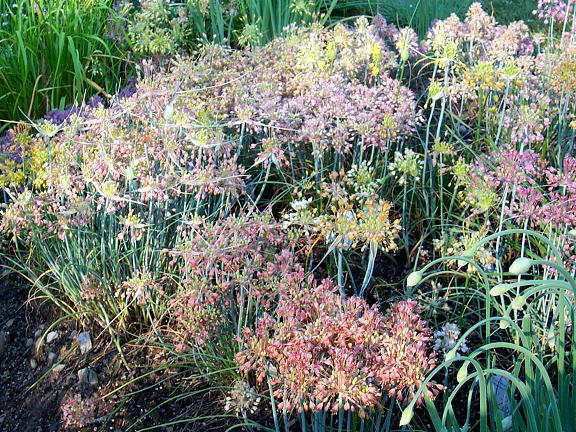
Named Color Forms - The following list represents a sampling of named color forms that I selected over the past several years. All photos by Mark McDonough.
The first two photos below are of 'Boston Baked Beans' and the third shows 'Cantaloupe' and 'Tan'. The fourth photo is of 'Cinnamon' - one of my favorite colors, and the first to be selected in the deep orange range. The color changes over its bloom cycle, but in general could be characterized as a burnt brownish or burnt reddish-orange. As with most "tauricums", the growth is compact and stocky, typically 8"-10" (20-25 cm) in height, clumping well, and with gray or silvered foliage, the silver patina most evident on the stems.
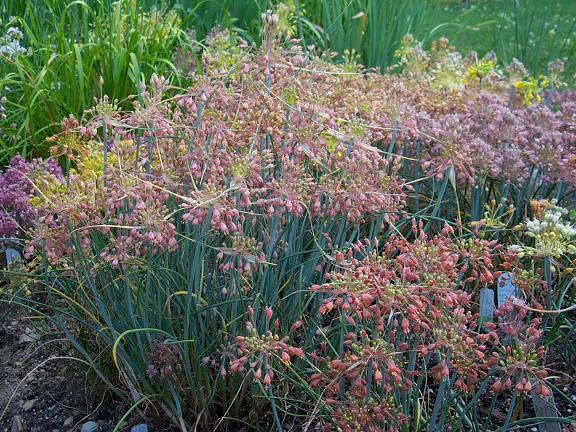
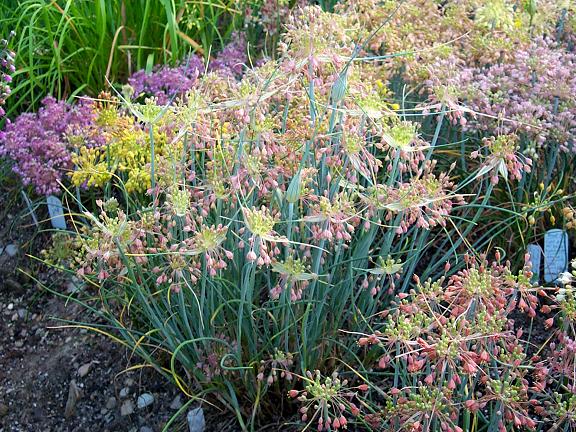
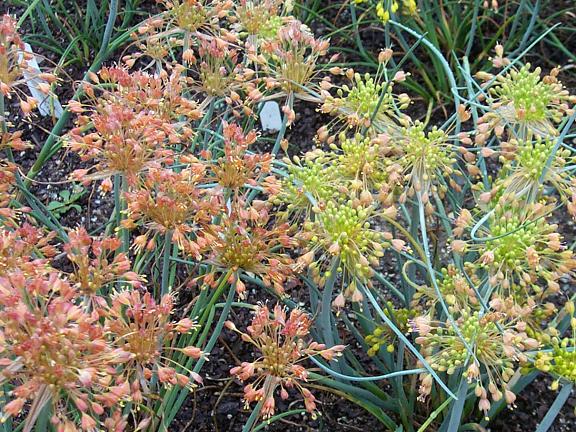
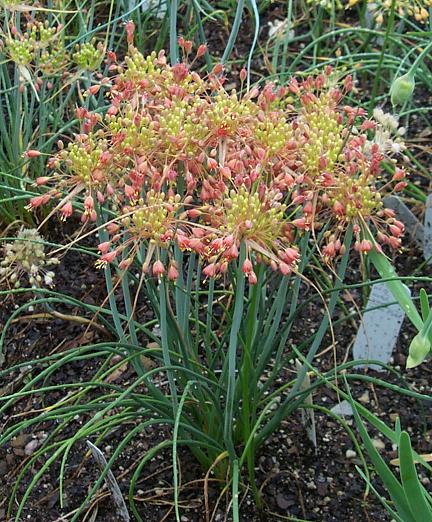
The first two photos show 'Drawn Butter' and 'Hot Cauldron 1'. The third photo is of 'Hot Molasses' followed by two of 'Lemon Cooler' the latter is one of the more lively colored selections I made in summer 2001 with orangy-yellow and pink flowers. There was a "Hot Cauldron 2" selected as well. I believe both were lost over winter due to rodent predation, but I did save seed. In the foreground is a dwarf, deep pink form just "going over".
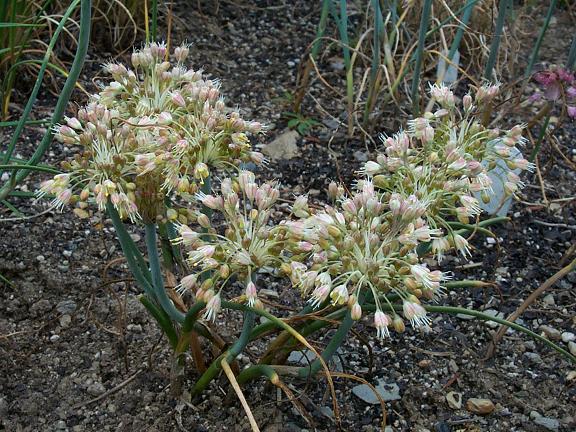
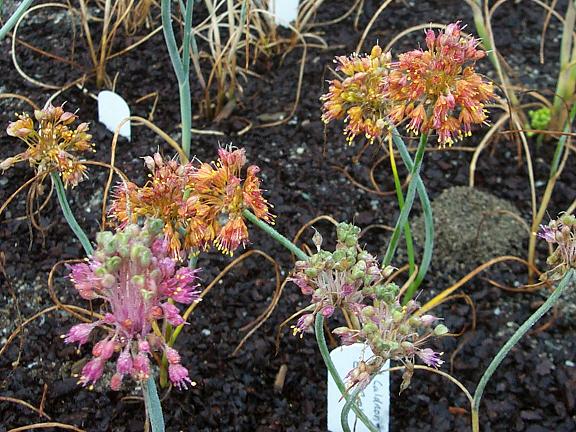
Photos of 'Lindsey', 'Pastel Parasol', 'Silver Shrimp', and 'Truely Faded', the last in bud, showing the striking silver coloration of stems and spathes.
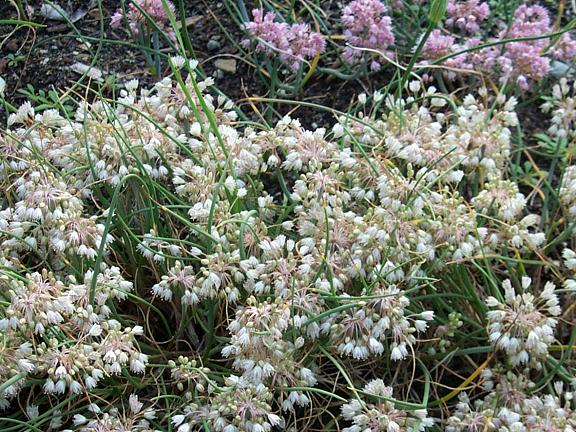
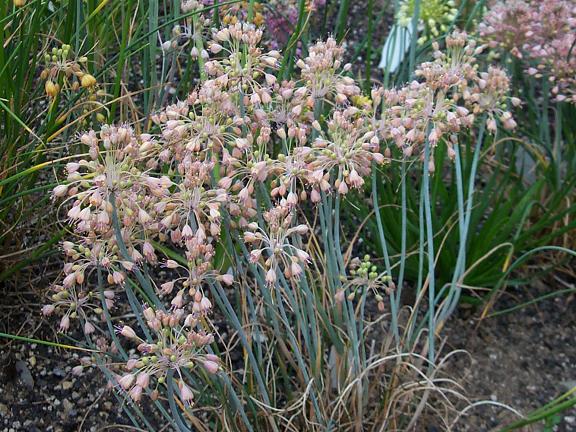
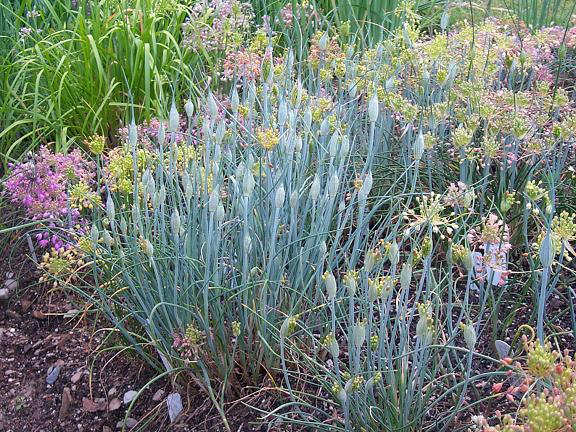
Unnamed Color Forms - The following list show yet more variation in flower color and plant form. All photos by Mark McDonough.
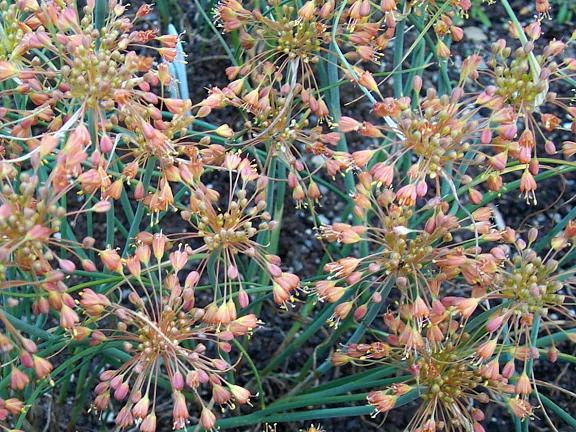
First mixed colors, 2 yr. old seedlings, then 3 yr old seedlings, an orange form at late anthesis, ageing to rose, and orange and pink forms from a squirrel's eye view.
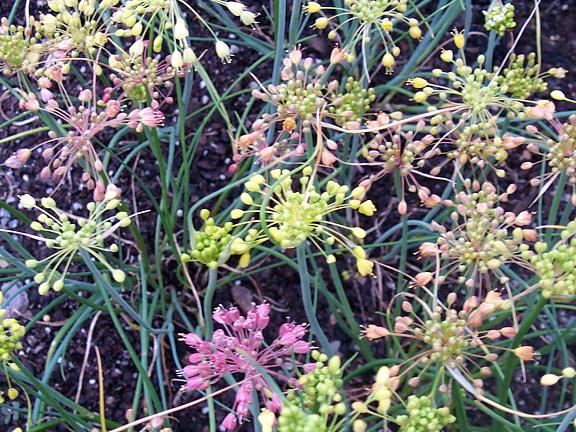
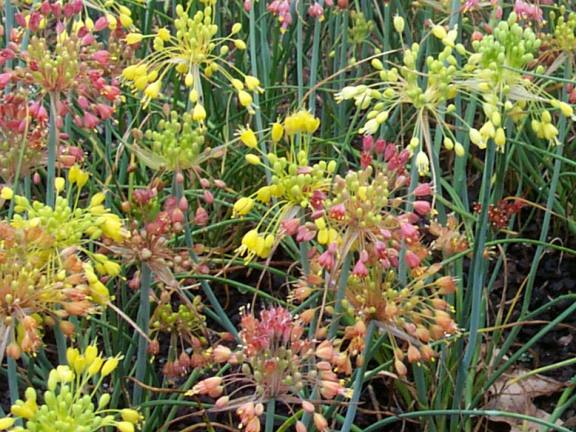
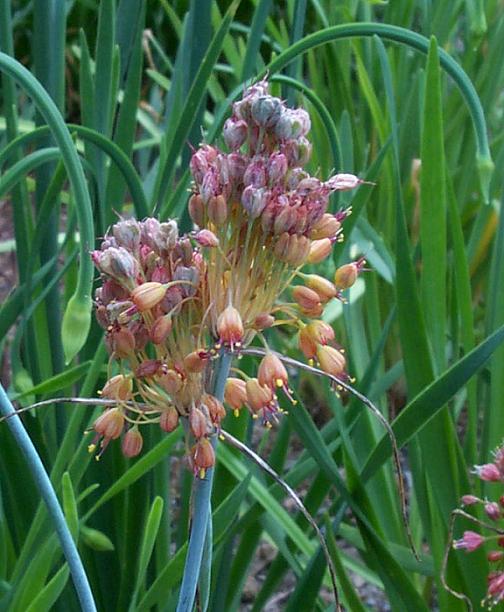
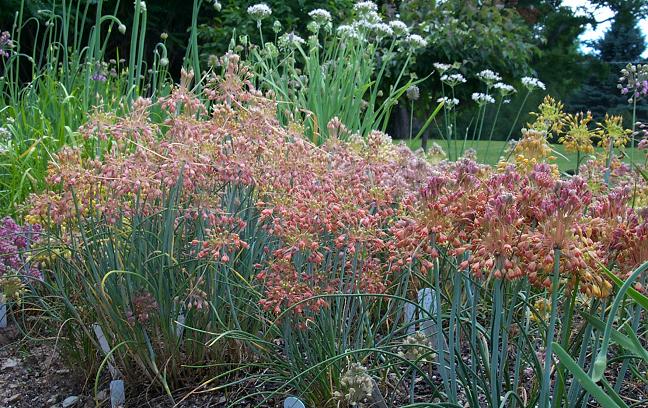
Photos below illustrate orange, pastel two-toned yellow and orange form and pink, a light yet lively form with blue-white stems, a robust wiry-leafed form with bright pink flowers, tawny pastels in pale melon colors, and white-aging-pinkish, and an orange-aging-rose form.
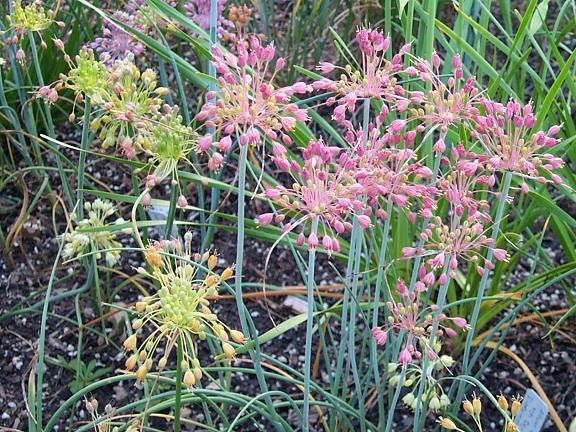
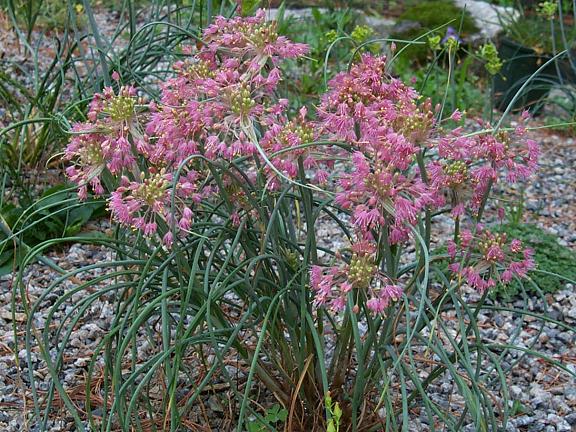
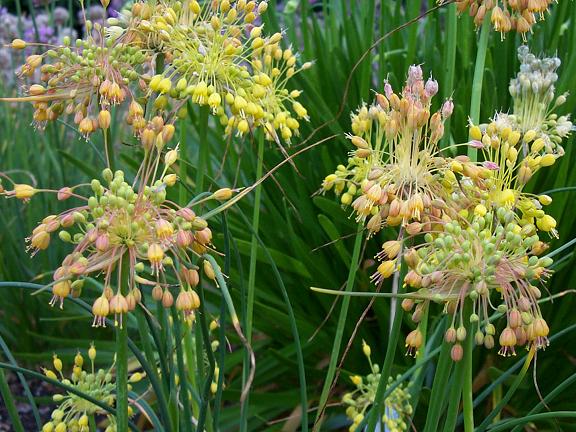
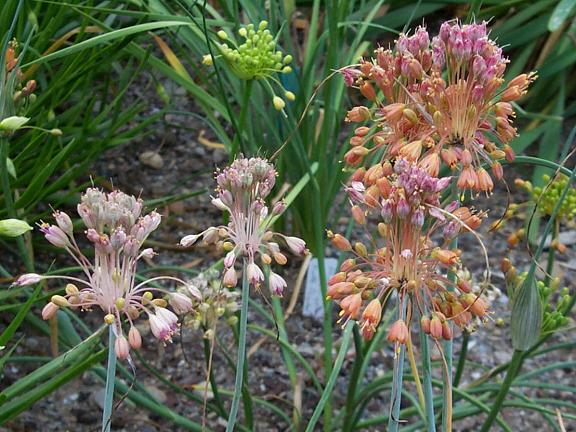
Allium paniculatum L. is found throughout Europe, North Africa, and Asia. The diversity of forms is rather pronounced. In Mediterranean climates, this species blooms in spring, goes dormant in late summer and grows leaves throughout winter. Height range: 30-70 cm. The photo below was taken by Nhu Nguyen at the UC Botanical Garden where it has escaped and can be found on dry hillsides.
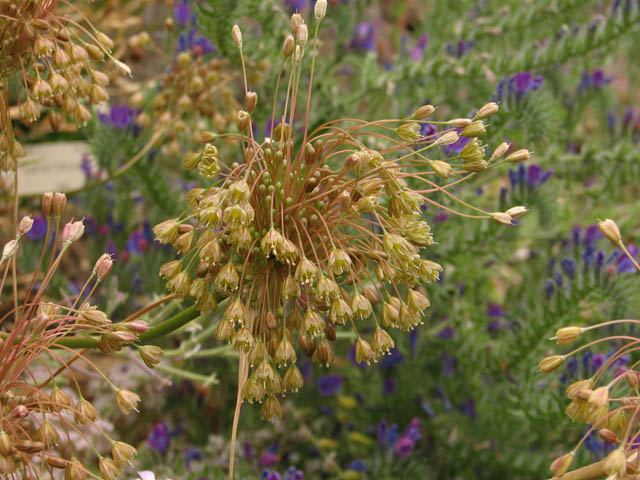
According to World Flora Online in 2025 there are five subspecies, but Plants of the World Online considers most of them to be species in their own right. Allium obtusiflorum is now included in this species as Allium paniculatum ssp. obtusiflorum (Redouté) Brand by World Flora Online.
The first photo by Mark McDonough, a "tall white and brown form", is a nice attractive form growing up to 2' tall (60 cm) with a higher bud count than many paniculatum forms, spilling over with nodding bowl-shaped florets of white, subtlety stained pale olive-tan.

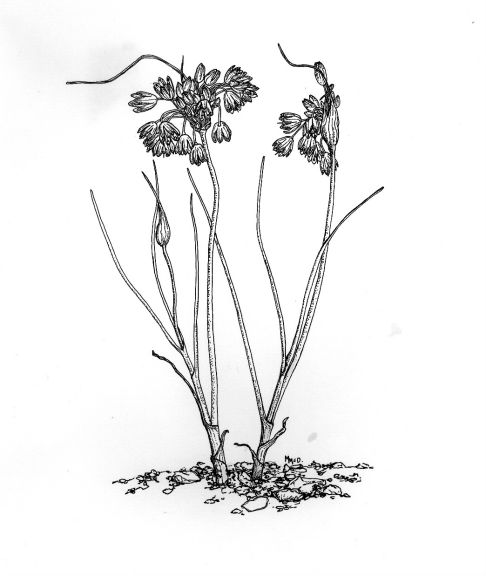
"Dwarf reddish form" -- This species occurs in a wide variety of colors. The one shown here is a common theme; basically having white flowers flushed and edged with brownish red. Growing only about 4"-6" (10-15 cm), it is well suited to the sunny rock garden in sandy soil. Photo and drawing by Mark McDonough
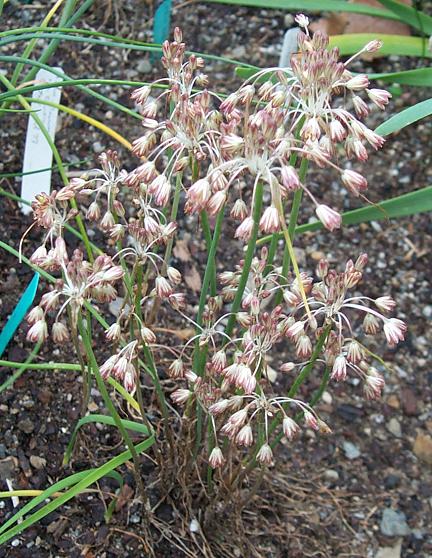
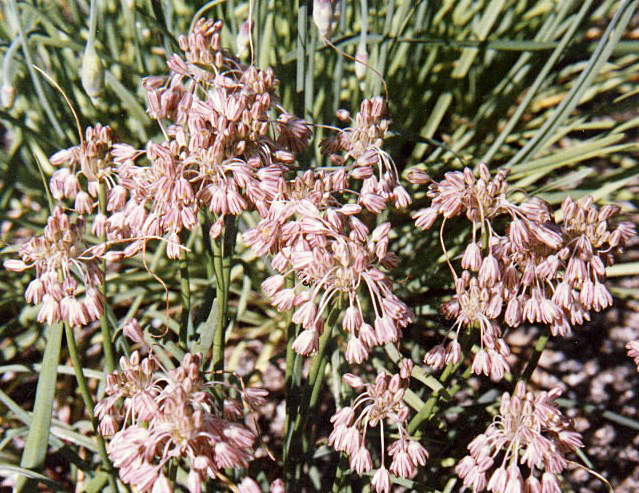
Allium paniculatum ssp. fuscum (Waldst. & Kit.) Arang., in 2025 is considered to be a synonym of Allium fuscum Waldst. & Kit. Photo by Mark McDonough who writes: "Of the dwarf reddish flowered forms of Allium paniculatum I liked this form the best, given to me by Jerry Flintoff. The white flowers are so generously tinged red that the mass of little flower sprays appears a pale flesh color when in bloom in July.
Allium sibthorpianum Schult. & Schult.f. is a gem among many fantastic species native to Turkey. It's a tiny, clustering, rock garden sort that's ideal in troughs, well drained containers, or sand beds out in the garden. The key here is excellent drainage. This species looks something like Allium flavum ssp. tauricum (Besser ex Rehb.)K.Richt. and Allium paniculatum L. in the shape and disposition of the little dangled bell florets, and several other diagnostic characteristics shared by this group of allied species. The flowers appear in June; the clusters of silvery pink bells are held atop chunky stems only 2"-3" (5-8 cm) high. As the flowers age, the florets deepen to a raspberry rose color and turn upright. I believe that this species hybridizes with Allium flavum ssp. tauricum, giving rise to dwarf, earlier flowering progeny. In the bud stage, it's intriguing how the buds appear as contorted prostrate snakes! In the final view of Alliums growing in a trough, we see Allium sibthorpianum and a couple of pale-flowered forms of Allium flavum ssp. tauricum. Photos 1-5 by Mark McDonough. Photo 6 was taken by Arnold Trachtenberg of a pot grown from NARGS seed in 2000.
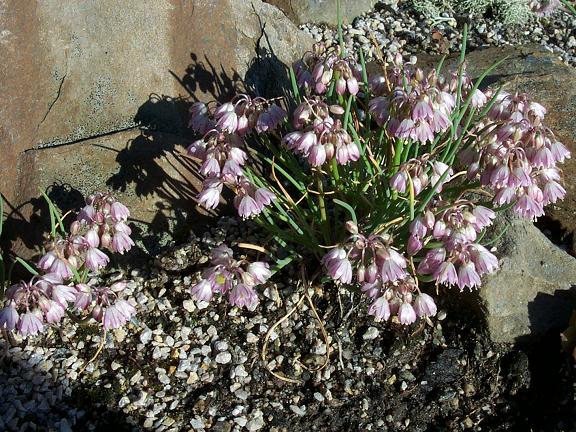
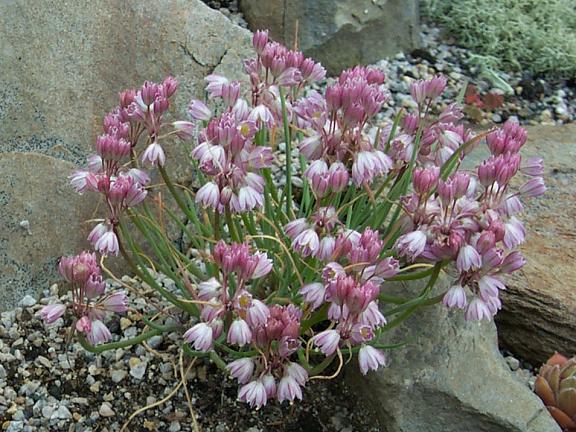
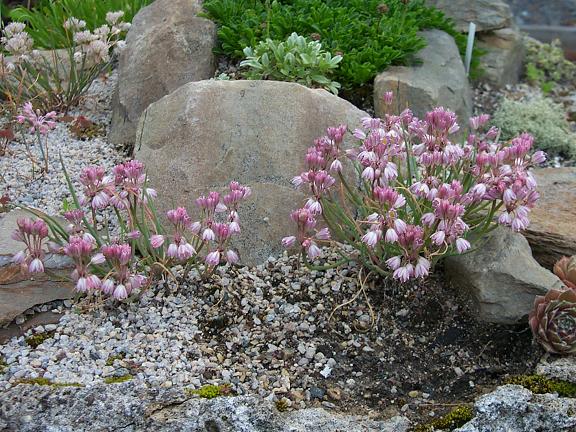
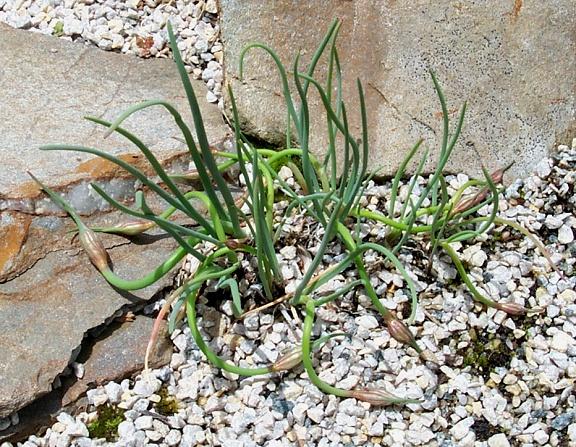

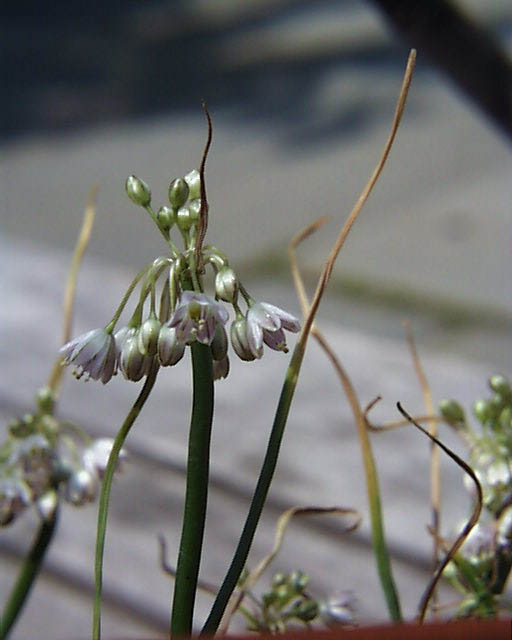
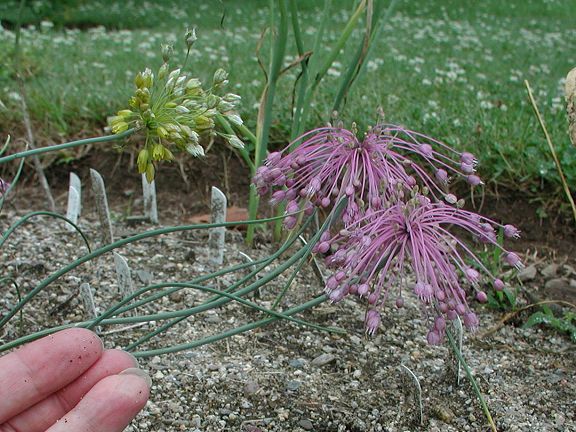
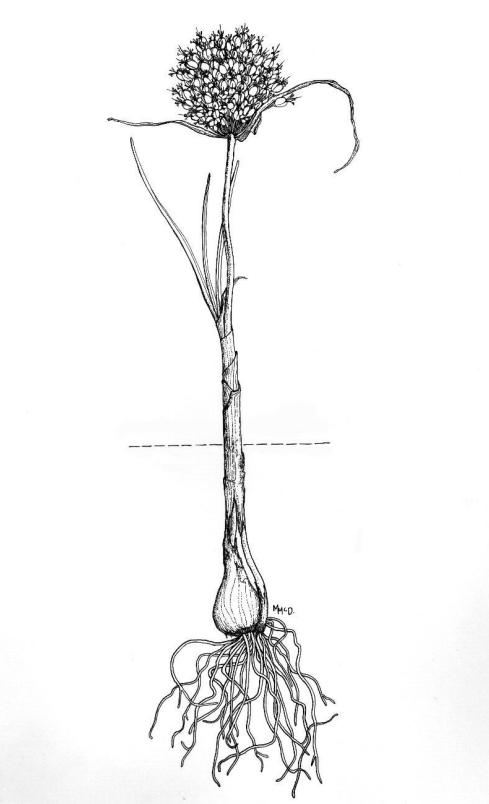
Allium sieheanum Hausskn. ex Kollmann is a dwarf Turkish species that resembles a miniature version of Allium carinatum ssp. pulchellum (Regel)Bonnier & Layens, with procumbent wiry stems, and numerous tiny rose purple flowers suspended on very long pedicels of the same intense rose color. Blooms in June-July. Height: to about 25 cm. Photo by Mark McDonough. The second image is a black and white drawing from Mark McDonough. It illustrates a form from Turkey, originally from the MacPhail and Watson expedition back in the 1970s; the heads of bloom varied from loose and open, to tight and globular. The drawing shows the beautiful form with tight, globular heads of blue-purple floret.
Allium index -All alliums - American alliums A-F - American alliums G-Z - Big Ball alliums - Blue alliums - Chives - Domed alliums - Drumstick alliums - Rhizomatous alliums