Arisaema species d-g are found on this wiki page
Arisaema a-c - Arisaema h-n - Arisaema o-s- Arisaema t-z - Arisaema index
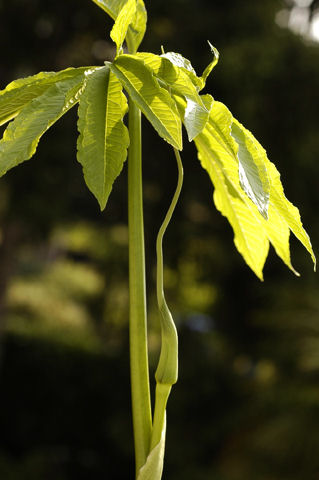
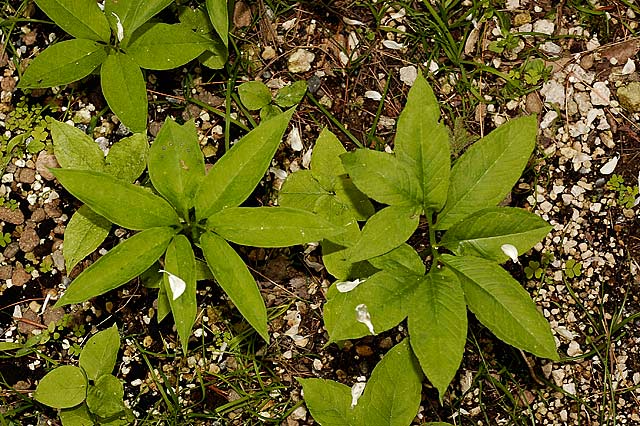
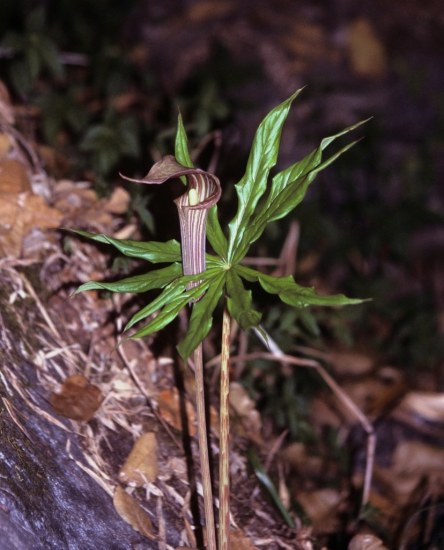
Arisaema dracontium (L.) Schott is a medium sized (40 cm tall) May flowering species native to North America that is also called 'Green Dragon'. The plant in the picture is just unfolding its leaves. Note the spathe is below the leaves. This is one of the differences between A. dracontium and Pinellia pedatisecta, a plant that is very similar and often confused with this species. Pinellia pedatisecta is a bit taller (up to 80-90 cm), produces many spathes during the same growing season and the spathes, whose peduncles grow separated from the stem, are above the leaves. The pedate leaf is similar but the central leaflet is longer than others in Pinellia pedatisecta, and shorter in A. dracontium which produces only one spathe per year, with the peduncle originating from the stem. The fruit spike is different with green seeds without pulp but covered only by a thin membrane in Pinellia pedatisecta and the seed pod is not completely separated from the spathe. The second picture shows the leaves with the central leaflet shorter than others. Photos by Giorgio Pozzi, May 2008.
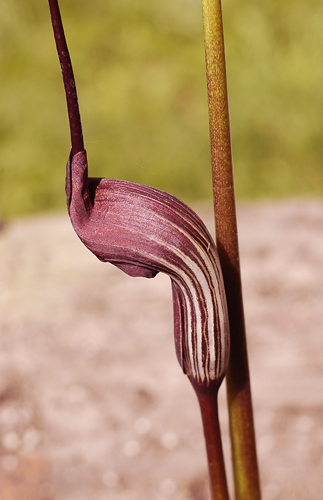
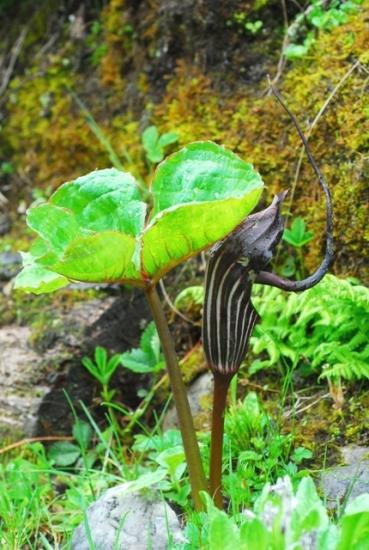
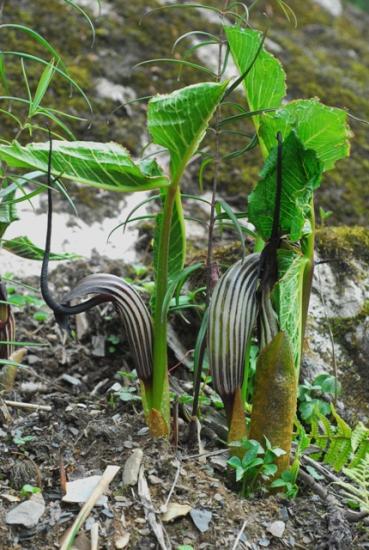
Arisaema elephas Buchet is a medium sized plant with a purple spathe with white veins. Height range: 10-30 cm. Photos 1-2 were taken by Giorgio Pozzi, May 2006. He writes: "Note the vertical spadix appendix exerted over the spathe." Photos 3 and 4 were taken in habitat in Sichuan by Oron Peri.

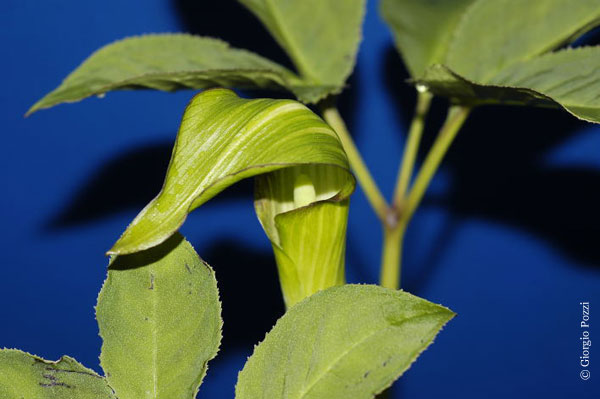
Arisaema engleri Pamp. is considered in 2023 to be a synonym of Arisaema bockii Engl. Plants were received from Chen nursery (China) as A.12/A.28 with the wrong name (A. sikokianum). Height range: to about 3 ft. The first picture shows a green spathe; the second picture shows a purple spathe: March 2006. The third picture shows the detail of the inner portion of the spathe and the last shows a clump flowering in open ground: April 2007. Grown and photographed by Giorgio Pozzi.
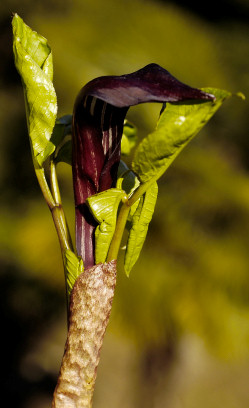
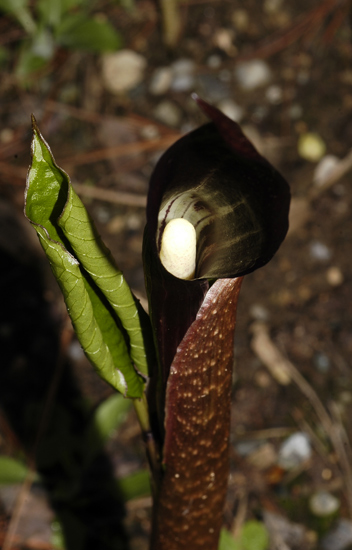
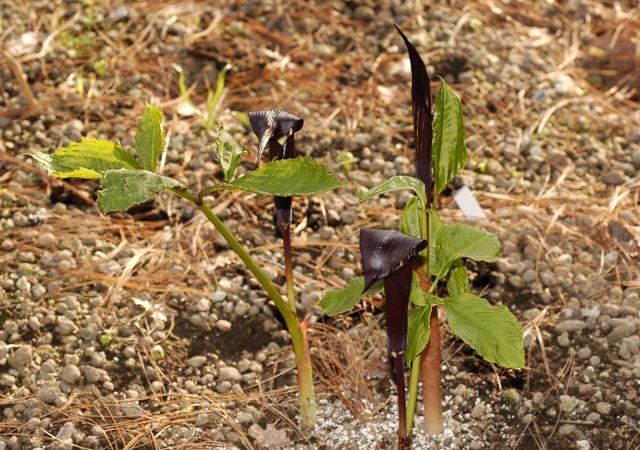
The following were not identified. Giorgio Pozzi suggests they are two forms of this species. Photos by Arnold Trachtenberg.
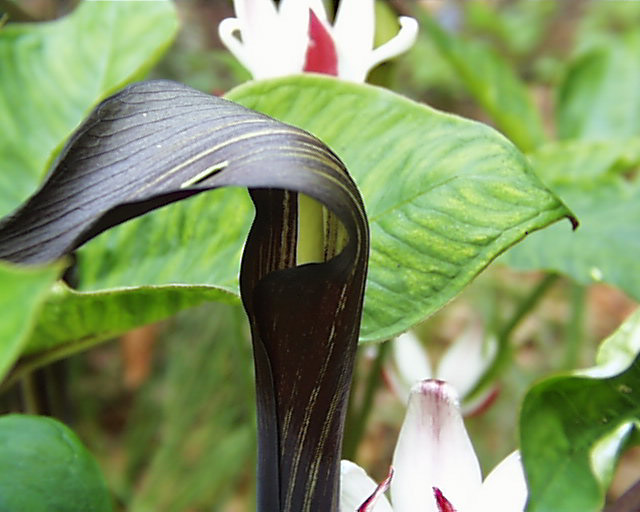
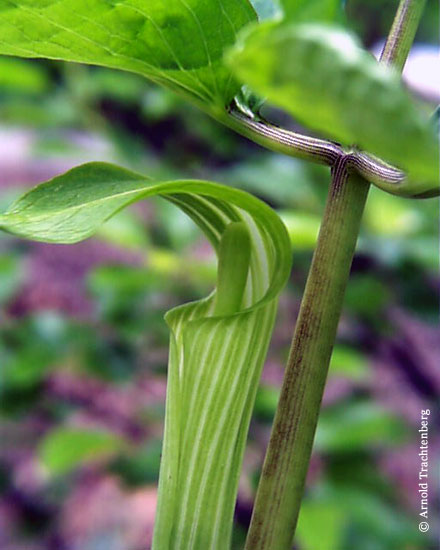
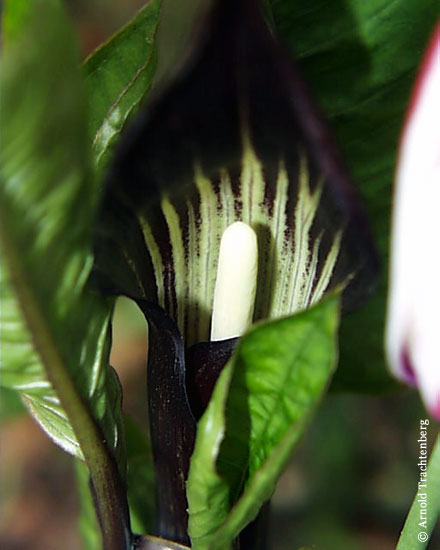
Arisaema erubescens (Wall.) Schott is native to Nepal and is about 80 cm tall. It is often confused with Arisaema consanguineum. The spathe is pinkish with white stripes, but some specimens with a green spathe have pinkish stripes and are reddish at the bottom. The leaves don't show filiform extensions typical in A. consanguineum. The photo from iNaturalist was taken by desertnaturalist in May in Nepal and shared under a CC BY license.
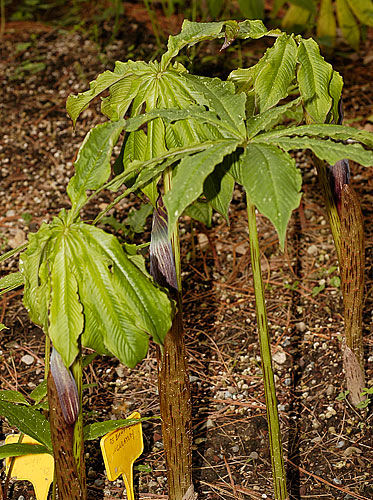
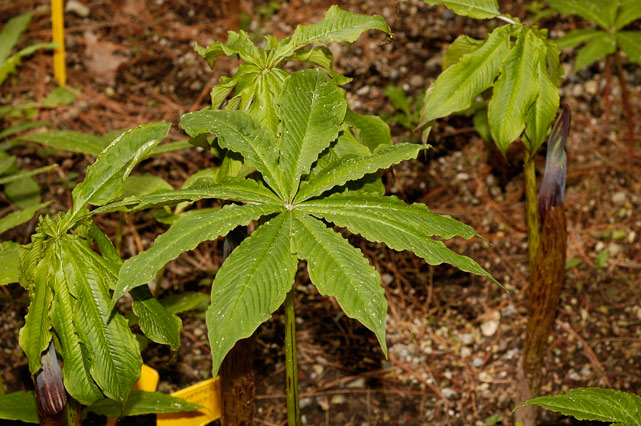
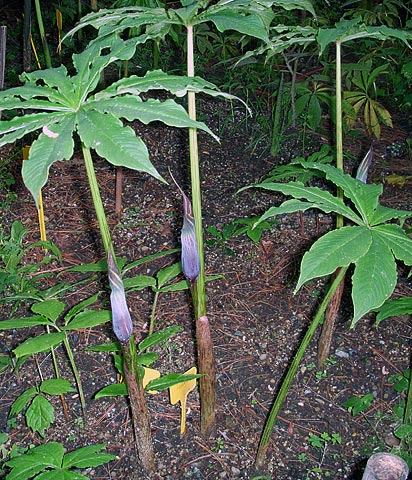
Arisaema exappendiculatum H.Hara is a tall species (up to 1.2 m) similar to A. concinnum with indistinguishable leaves and a green or purple inflorescence. The spathe hasn't a visible spadix appendage. This absence gives the name to this species. The margins of the spathe's limbs are overlapped, hiding the male or female spadix. The plant produces stolons each year that extend up to 50 cm from the tuber and a rich clump is formed in a short time. The first picture shows the plant while the spathe is still unfolding, the second picture shows the leaves, and the third shows the spathes unfolding one week later. Photos by Giorgio Pozzi, May 2008.
Arisaema fargesii Buchet is a species that offsets freely and has an attractive purple/white striped spathe. The tuber is reddish and somewhat glossy. Trifoliolate leaves with a large apical leaflet turn a pleasant golden in the fall. It is very similar to Arisaema franchetianum, but differs in having strongly recurved mouth-margins, whereas A. franchetianum does not. Height range: 60-90 cm. The first three photos were taken by Mark Mazer. The last two photos were contributed by Paige Woodward.
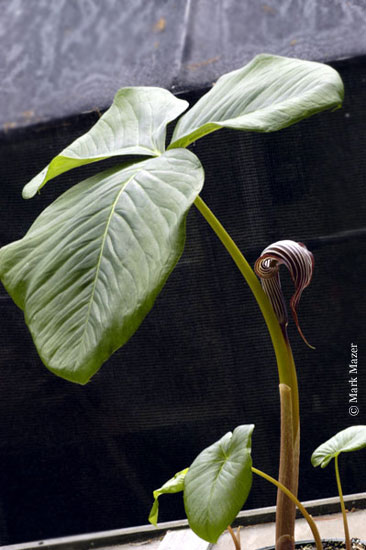
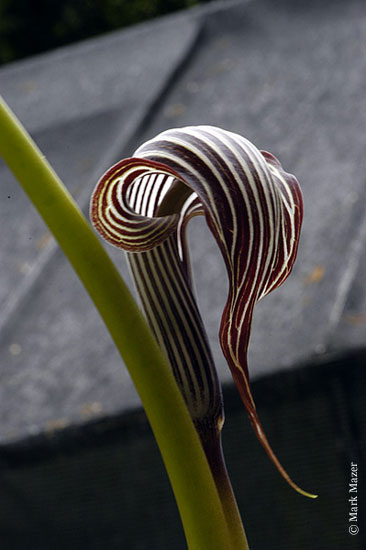
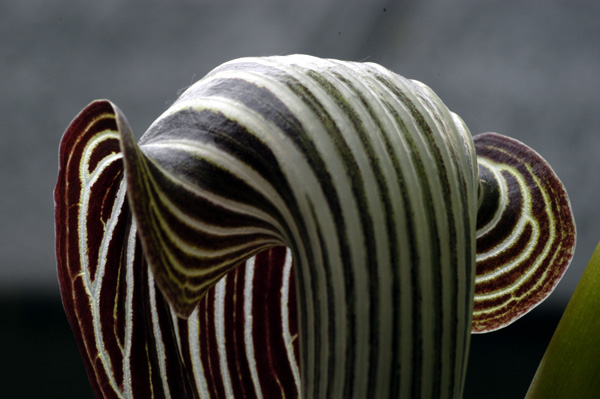
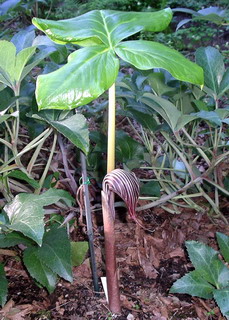
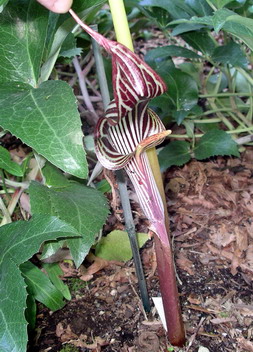
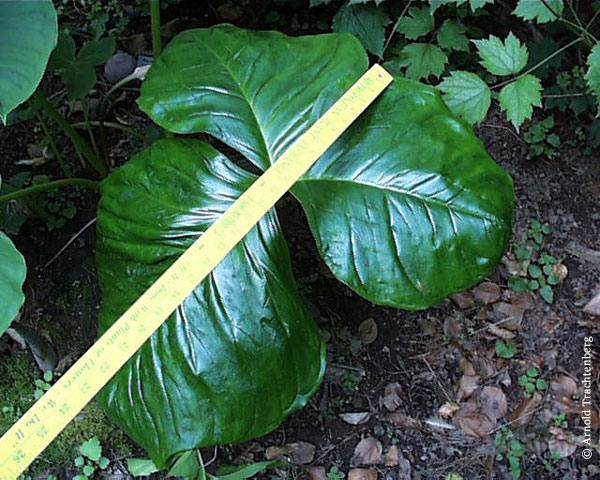
Photos 1-5 by Arnold Trachtenberg of plants from Chen Yi in China. The large leaf obscures the spathe below. Photo 6 illustrates another plant from Chen nursery, grown and photographed by Giorgio Pozzi, April 2005.
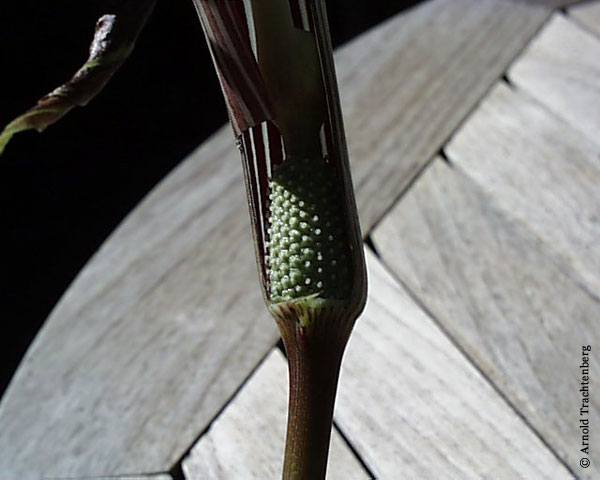
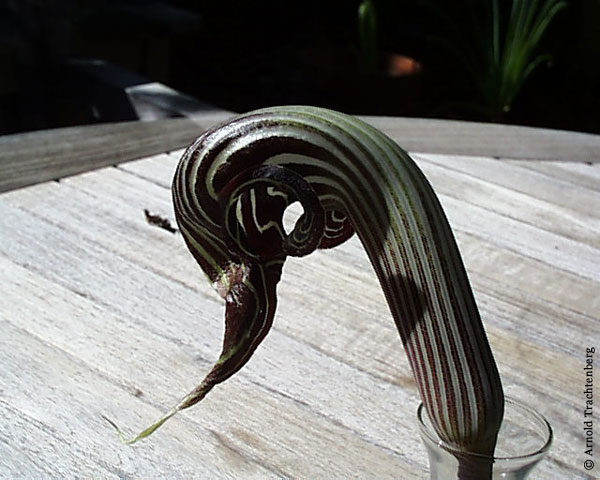

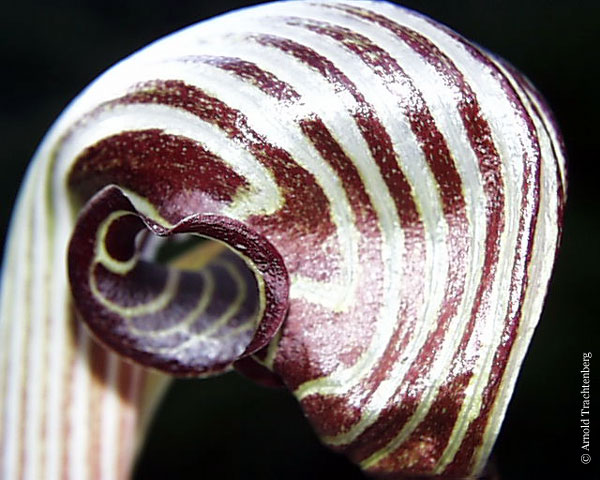

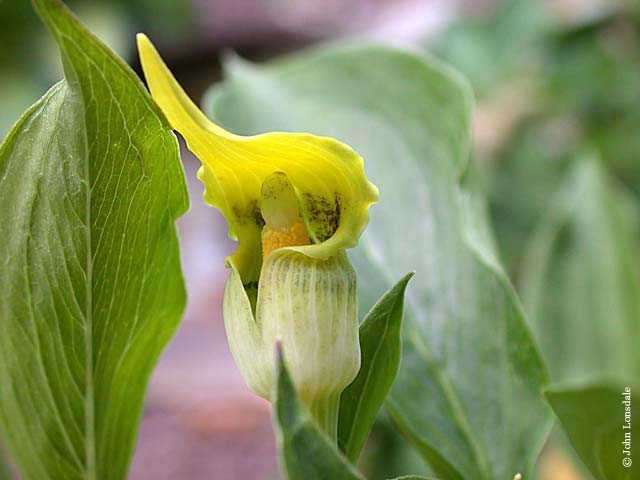
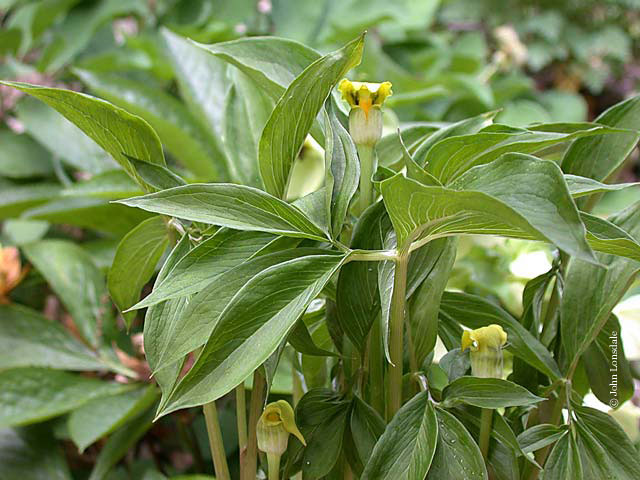
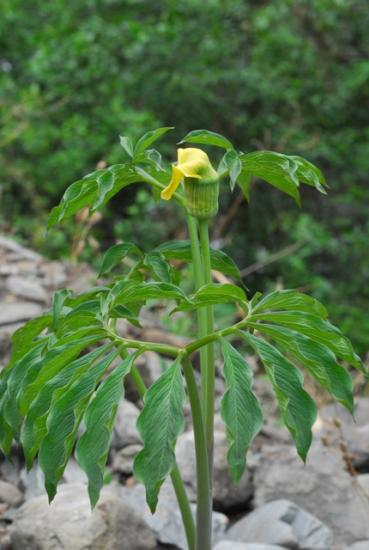
Arisaema flavum (Forssk.) Schott comes in many different clones varying in size of plant and flower and intensity of the color of the flower. It is the commonest species in cultivation, probably owing to its setting seed freely by self-pollination. It has cute, tubby little yellow flowers and pedatisect leaves, radiating in a fan from the petiole. Size varies from about a foot at first flowering to 3' in the "giant form". It is native to China and Yemen. Photos 1,2 by John Lonsdale, photo 3 in its habitat in Sichuan by Oron Peri, and photo 4 by David Pilling.
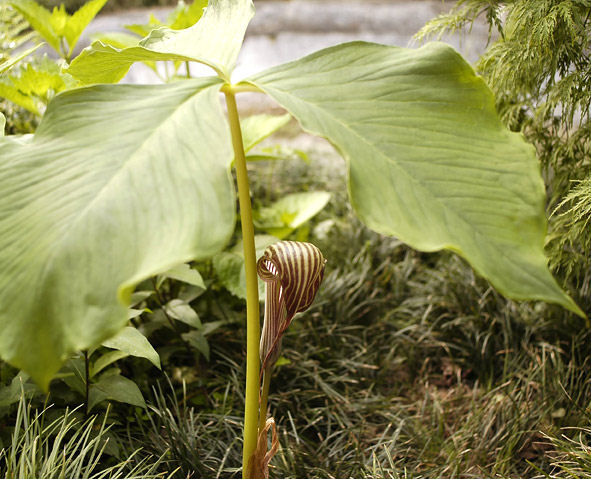
Arisaema franchetianum Engl. is very similar to Arisaema fargesii. It is difficult to separate them as their characters give a continuum of forms and colours. A. franchetianum has a more galeate spathe; these plants have a reddish colour. Grown and photographed by Giorgio Pozzi, May 2006. Height: to about 60 cm. The first picture shows the plant, and the second picture shows the spathe.
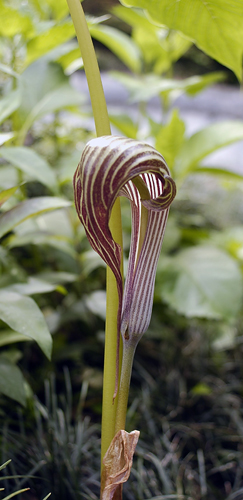
Arisaema galeatum N.E.Br. has a recurved helmet-like spathe just like Arisaema ringens, but is plain green to brown-purple with whitish veins and purple inside. It grows in the high forests of the Sino-Himalayan area. Grown and photographed by Giorgio Pozzi, May 2006. The plant shown in the first picture is 100/120 cm tall; the second picture is a close-up of the flower. The third picture is of another view and the fourth shows a clump in cultivation in pots May 2006. The last picture shows the plants in the ground in the woods May 2008; the plants are now over 1 m tall.
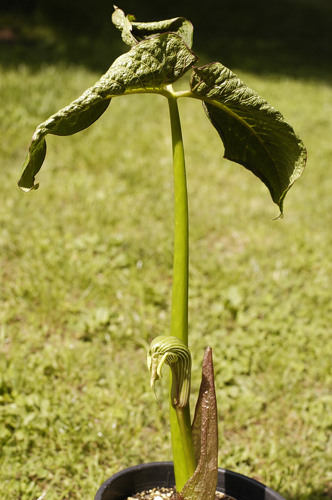
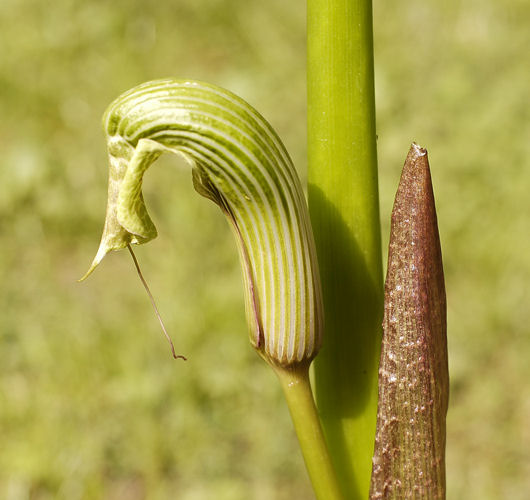

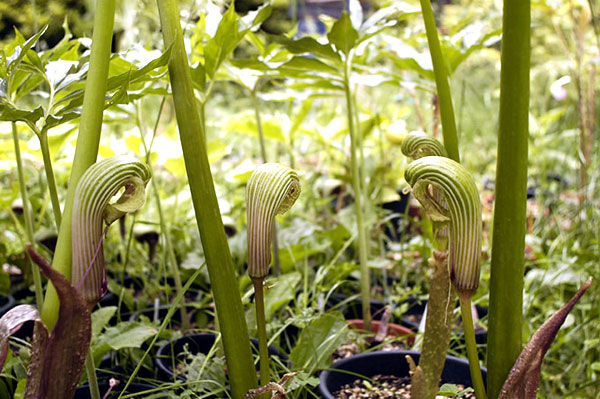
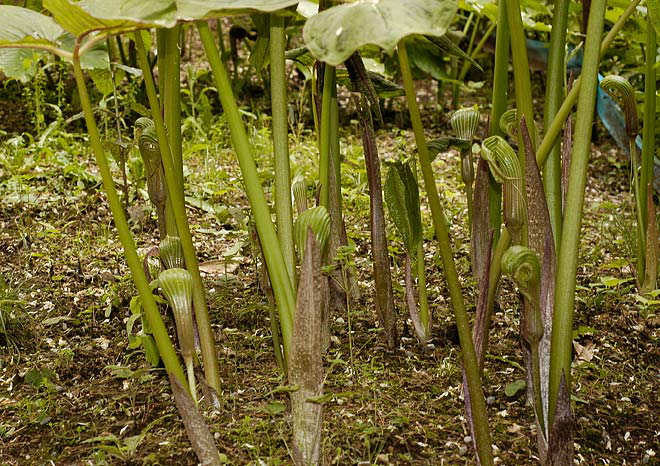
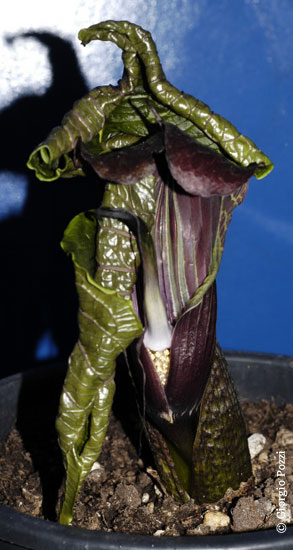
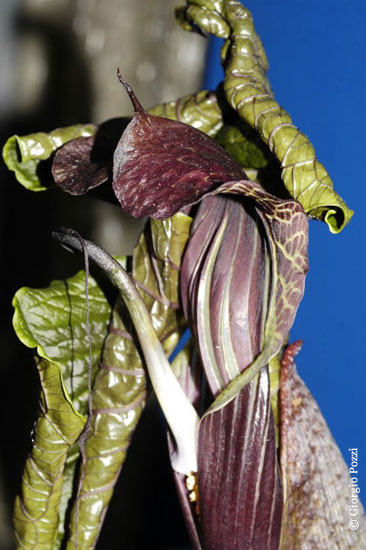
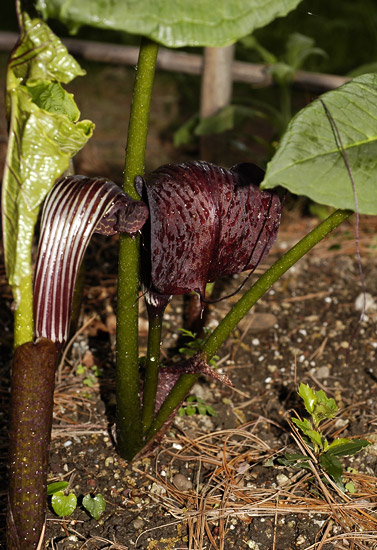
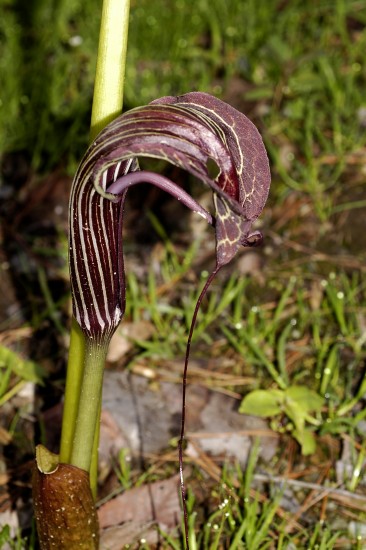
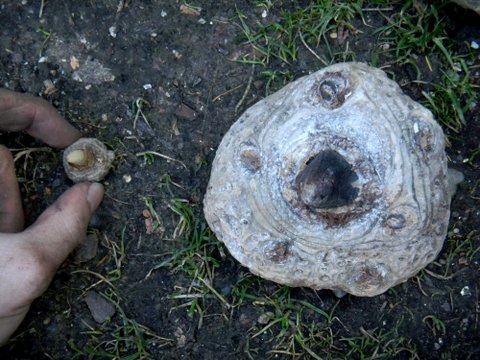
Arisaema griffithii Schott is a stunning plant with an impressive spathe. This plant came from Ganesh Mani Pradhan nursery (India). The male specimen is shown below, grown and photographed by Giorgio Pozzi. Height range: 30-60 cm. The second photo is a close up of the male spadix. Note the long spadix appendix. The third image shows a couple of plants in the garden, male at left and female at right. The fourth picture shows a classic spathe, April 2007. He explained that for two years he harvested seeds from this species from different plants. They were fine and appeared healthy. He tried to start the germination process with some seeds just after the fruit spikes were ripened; no germination took place but the seeds developed fungus and soon were rotten. The same happened with the seeds he sent to a friend in the USA. The remaining few seeds which were stored in the fridge till the following spring germinated at a rate of about 50% and he collected nearly 25% tuberlets. He wondered if this species needs a period with partial water loss at low temperatures to complete the ripening process so fungus cannot assault the seeds. The fifth photograph by Pontus Wallstén shows a tuber of Arisaema griffithii var pradhanii (C.E.C.Fisch.) Pradhan (in 2023 included in the species) on the right compared with a tuber of Arisaema kiushianum.
Arisaema a-c - Arisaema h-n - Arisaema o-s- Arisaema t-z - Arisaema index