Babiana is a large genus in the family Iridaceae from southern Africa. Species r-si are found on this page.
Babiana species a-h - Babiana species i-p - Babiana species sp-z - Babiana index
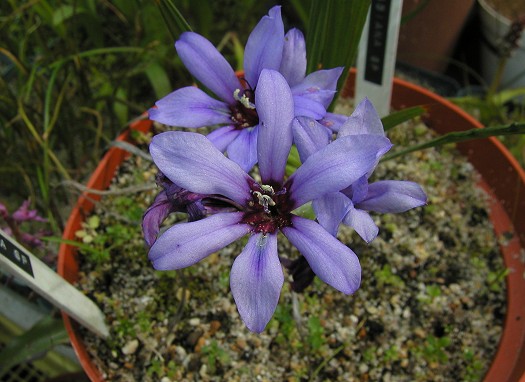
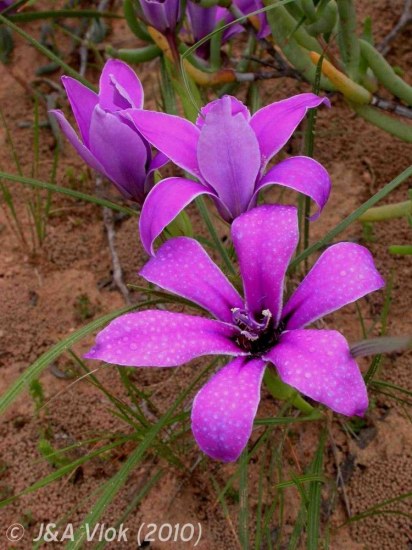
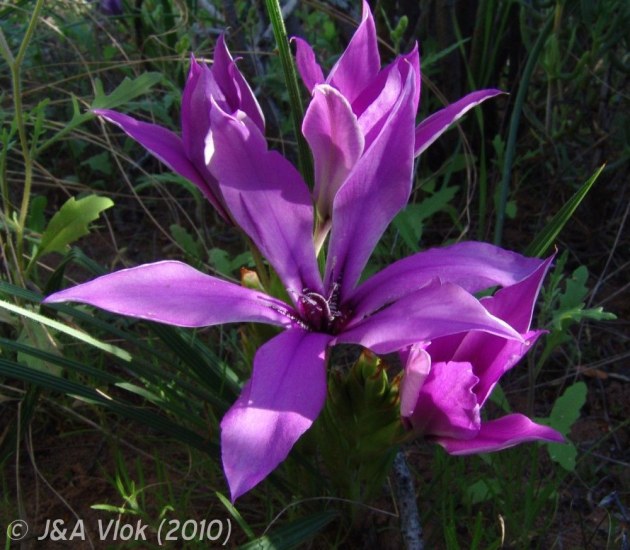
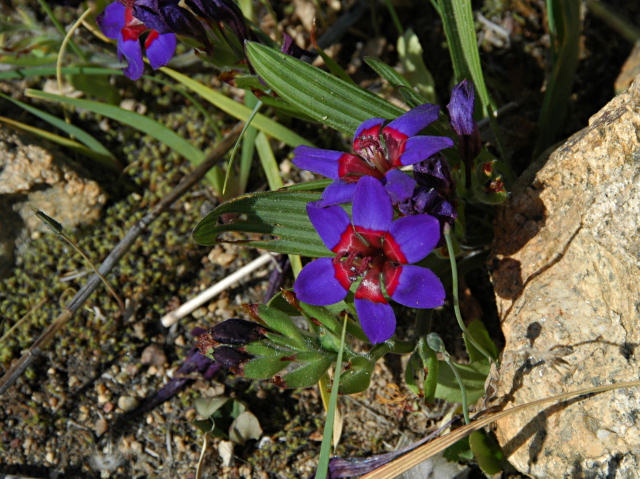
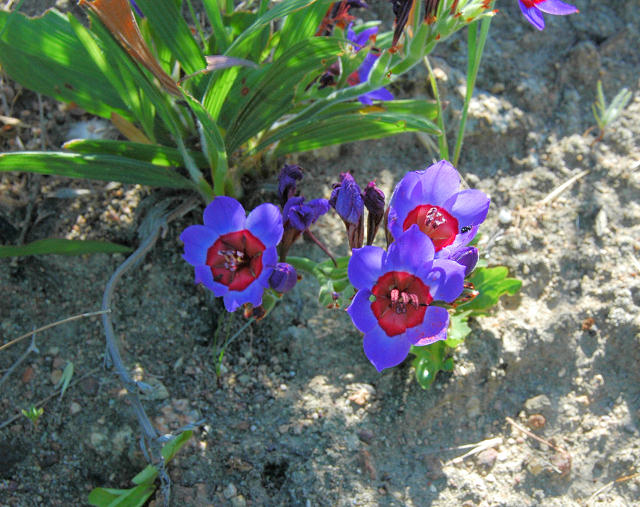
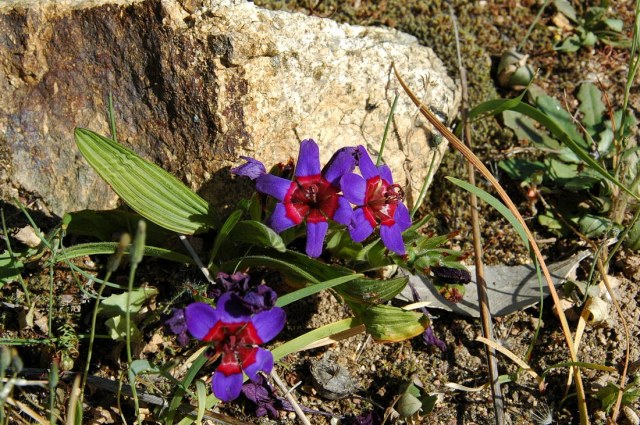
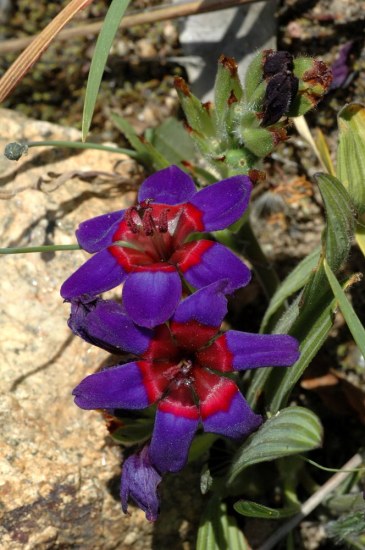
Babiana radiata Goldblatt & J.C. Manning is found on sandy flats in the Little Karoo. This species has firm hairy linear pleated erect leaves and cerise pink to mauve blue symmetrical slightly scented flowers in short erect spikes with a red center. Height range: 5-14 cm. This species flowers in spring. It is seriously threatened as it is only known from two populations that occur on road verges and are declining. The first photo was taken by Bob Rutemoeller of one of Alan Horstmann's plants. The next two photos from the book Plants of the Klein Karoo courtesy of Jan and Anne Lise Schutte-Vlok.
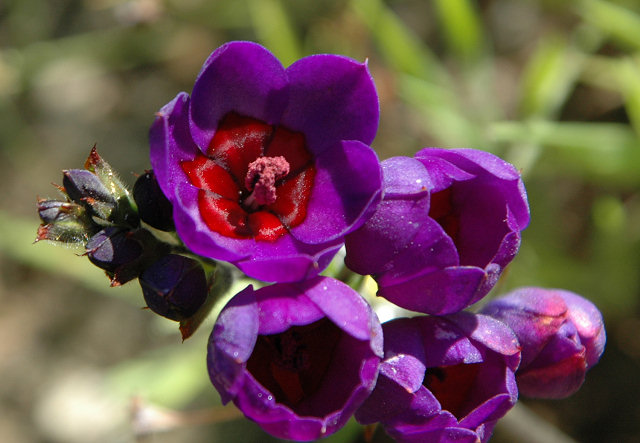
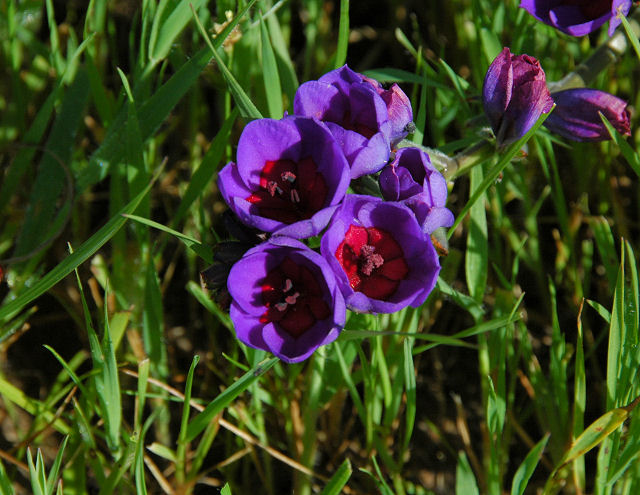
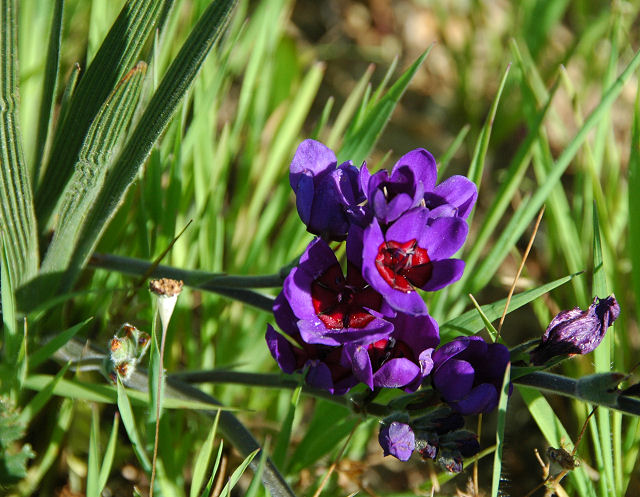
Babiana regia (G.J.Lewis) Goldblatt & J.C.Manning, syn. Babiana stricta var regia G.J.Lewis, was raised to species rank in 2004. It grows on seasonally wet sandy and gravelly flats in the southwest Cape. It grows from 5 to 12 cm high and has pleated hairy lanceolate leaves and deep blue radially symmetrical flowers with a red cup sometimes edged with a diffused white zone and stamens with reddish brown pollen. It flowers from September to October. This species is very similar to Babiana rubrocyanea but has stamens symmetrically arranged in the center of the flower enclosing the stigma. Photos were taken by Bob Rutemoeller and Mary Sue Ittner in the southwest Cape in September 2006.
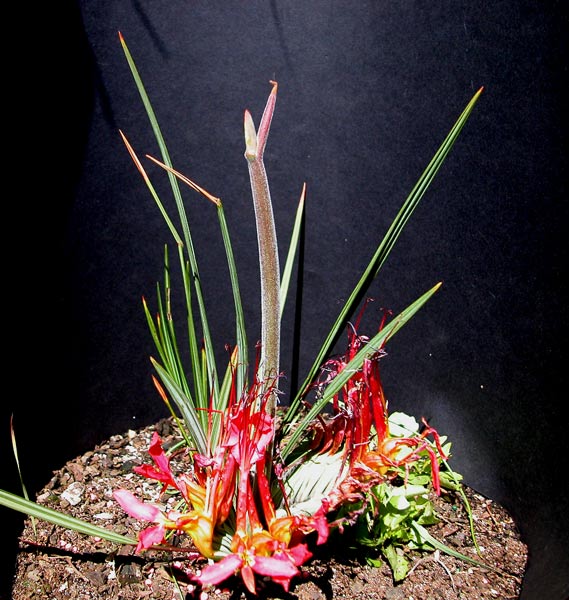
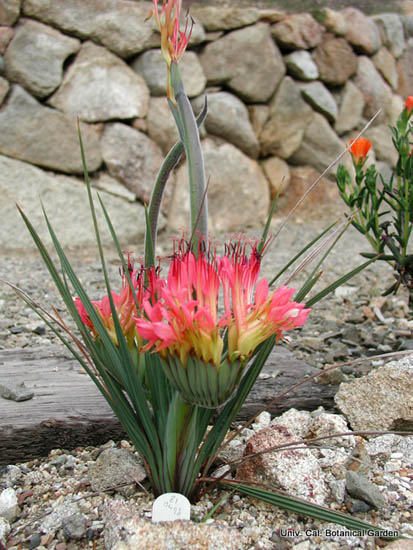
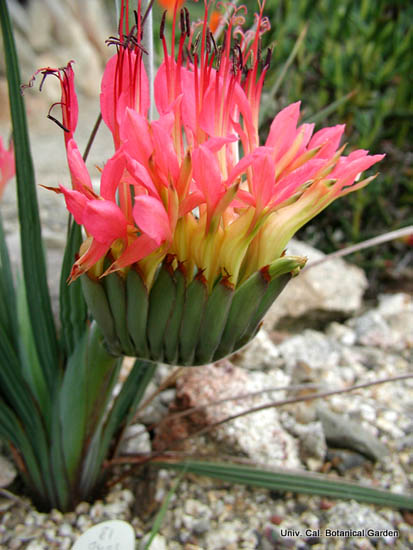
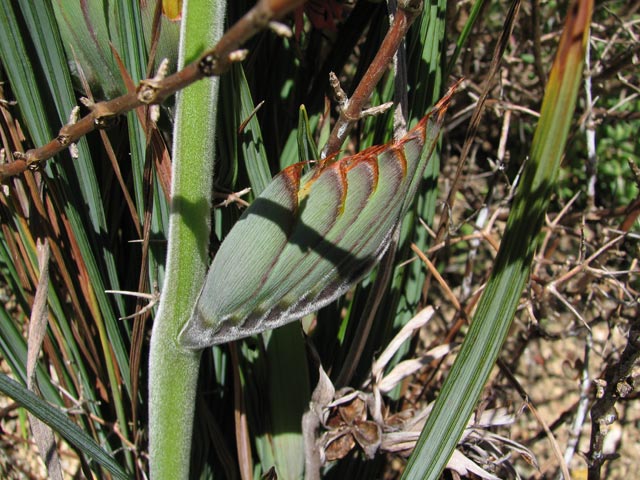
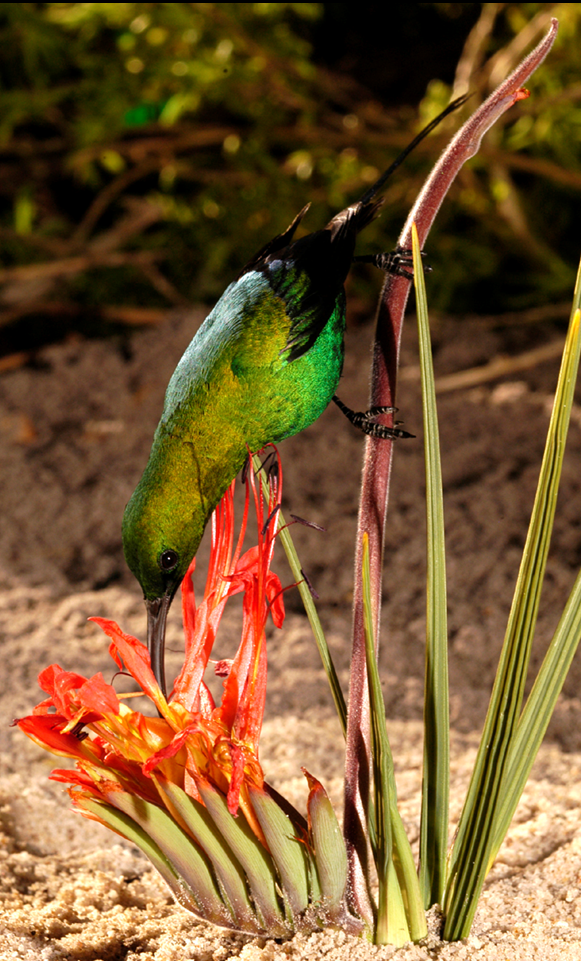
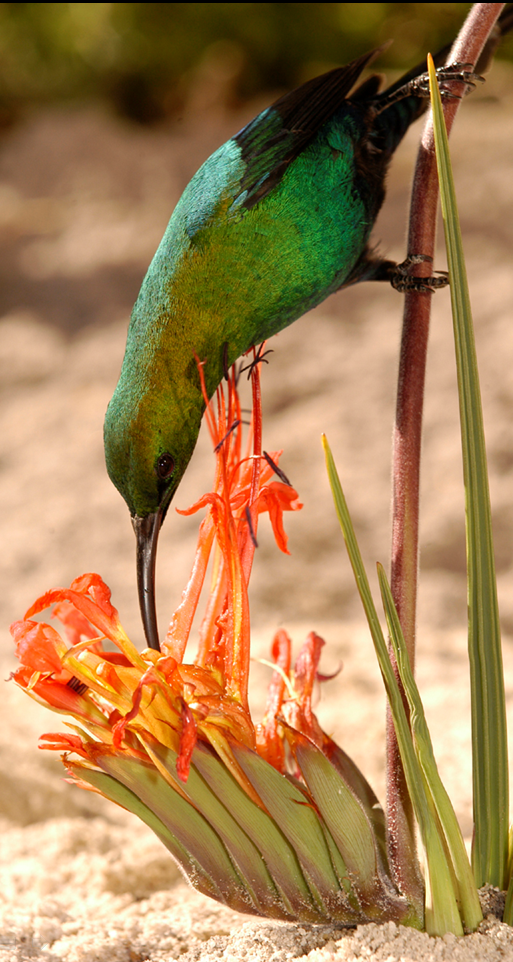
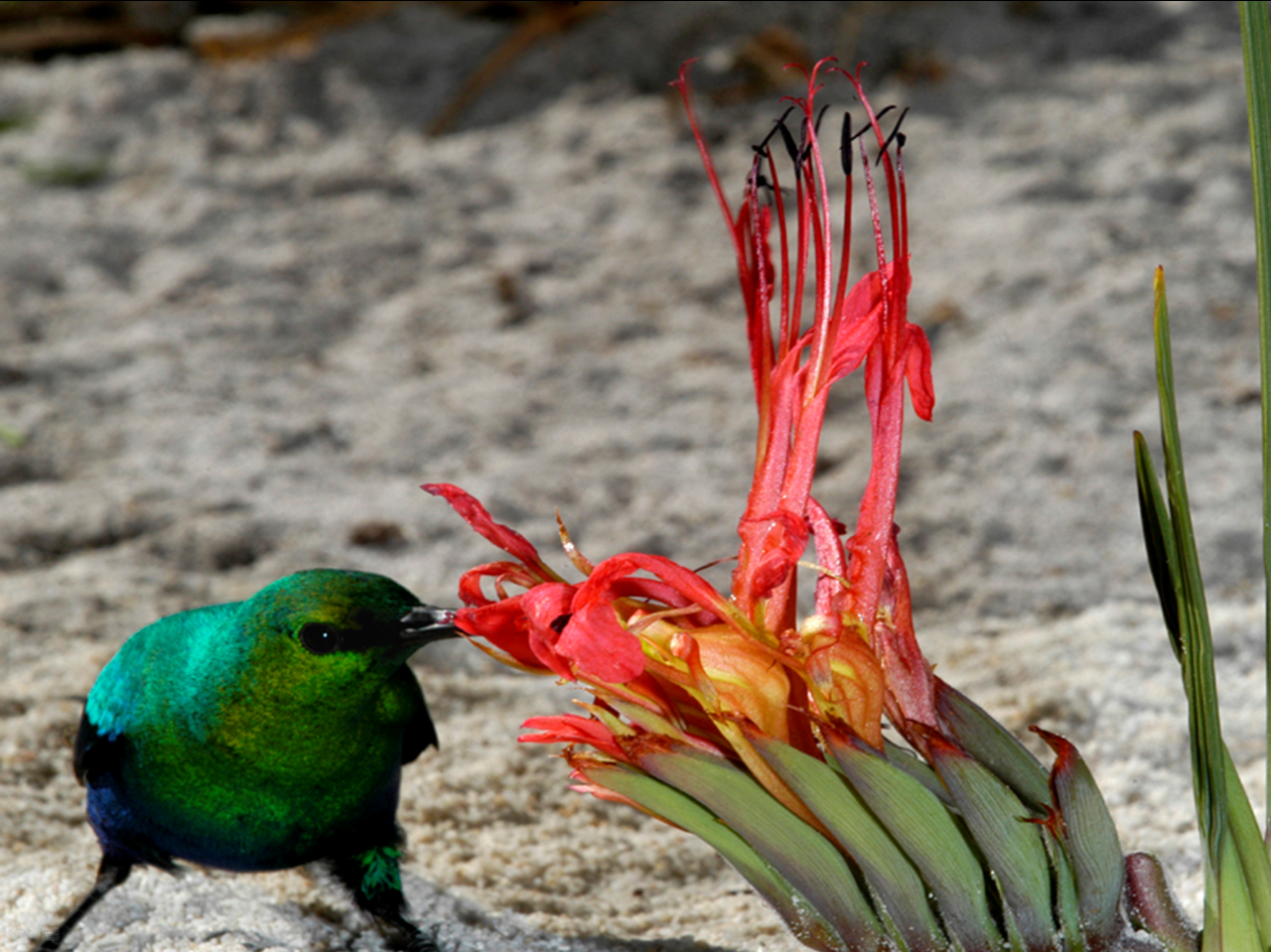
Babiana ringens (L.) Ker Gawl., syn. Antholyza ringens L., is found on sandy flats and slopes in strandveld and fynbos mainly along the coast in the Western Cape. Plants grow 15 to 40 cm high with deeply pleated linear-lanceolate stiff leaves, the stem branched at ground level, and bilateral symmetrical unscented red flowers with a yellow throat. Its most striking feature is its sterile main axis that acts as a perch for visiting sunbirds. In 2010 Goldblatt and Manning recognized a subspecies, ssp. australis, a southern coastal population with smaller flowers, filaments not reaching the apex of the dorsal tepal and the style dividing at or below the bases of the anthers. Babiana ringens is known as a "Rot stert", in Afrikaans. Directly translated it means rats tail with reference to the stem or tail that protrudes from the flower which is very hairy like a rat's tail.
Mark Mazer reports that it takes 6-7 years to bloom this species from seed. Photos 1-2 were taken in Western Australia by Sheila Burrow. Photos 3-4 were contributed by the UC Botanical Garden and photos 5-6 were taken by Nhu Nguyen at the UC Botanical Garden. The last photo shows how even the bracts can be pretty in this species. A blog post from the Garden discusses this species.

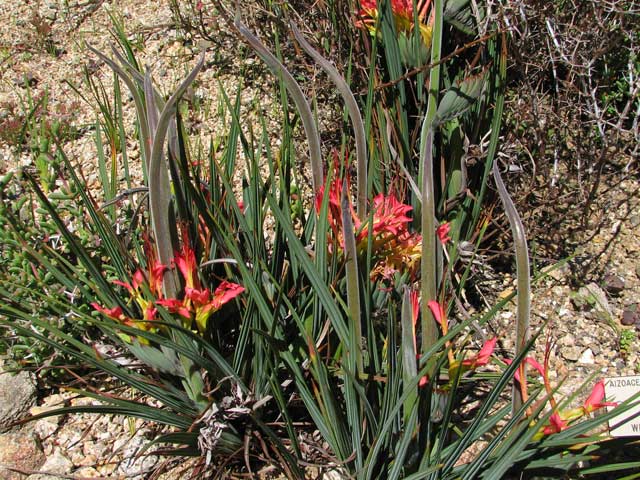
The next three photos were taken in the wild in South Africa. Two were taken by Bob Rutemoeller near Darling, South Africa, September 2006. The third was taken by Rod Saunders.
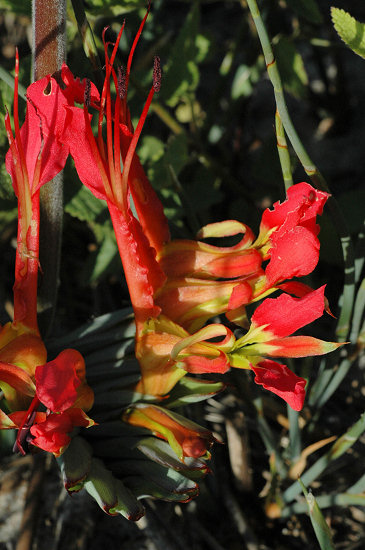
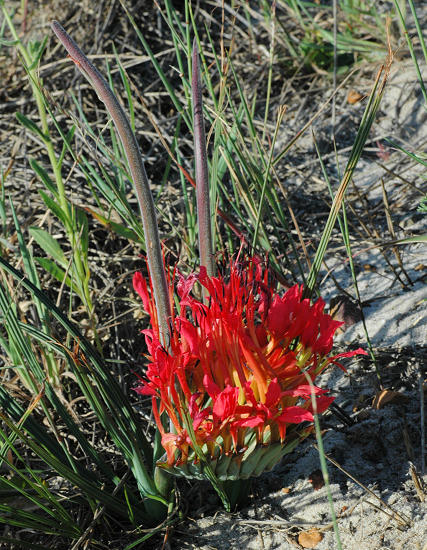
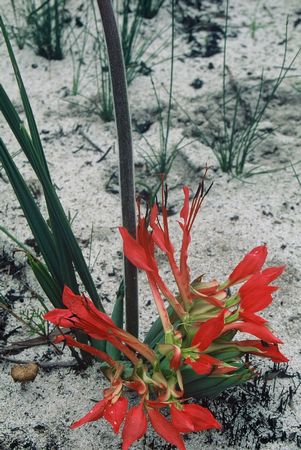
These photos by Spencer Barrett show African sunbirds using the perch to feed on the flowers. The pictures were taken in part of a study by Spencer Barrett et al 2011, (The natural history of pollination and mating in bird-pollinated Babiana (Iridaceae), Annals of Botany 109: 667-679. doi:10.1093/aob/mcr172. The third photo shows a plant where the perch was removed. Note the position of the fertile stamens. One of the things the study found was that despite the presence of a specialized perch, a considerable amount of self-pollination still resulted.
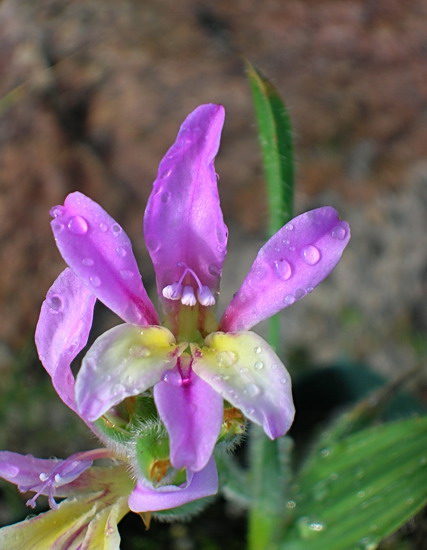
Babiana rubella Goldblatt & J.C.Manning grows on sandy flats in the southern coastal plain in Namaqualand. It grows 10 to 12 cm high and has lanceolate to ovate hairy leaves held at right angles to the leaf sheaths and pale to deep pinkish purple fragrant (rose-like scent) flowers with yellow lower lateral tepals with pink tips. Photos were taken by Alan Horstmann.
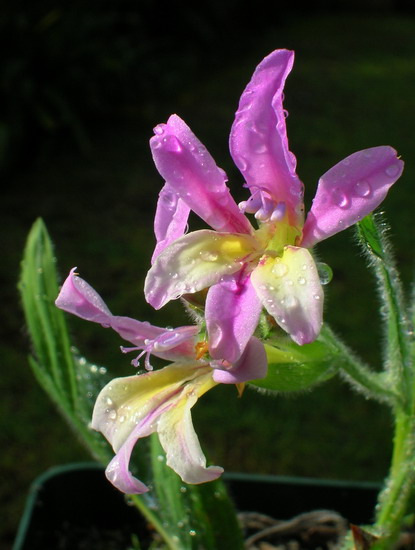
Babiana rubrocyanea (Jacq.) Ker Gawl. is found on granitic sands in the southwestern Cape where it flowers August to September. Growing from 5 to 15 cm, it has lanceolate, hairy, pleated leaves, and deep blue flowers with a red center outlined in white. This species is self fertile but will only make seeds with active pollination. Photos 1-2 were taken in Western Australia by Sheila Burrow. Photo 3 was taken by Doug Westfall in Southern California where his plants were attracting a lot of attention. Photos 4-5 were taken by Nhu Nguyen. Photo 5 shows this species photographed next to Babiana villosa. The last photo was taken by Alan Horstmann.
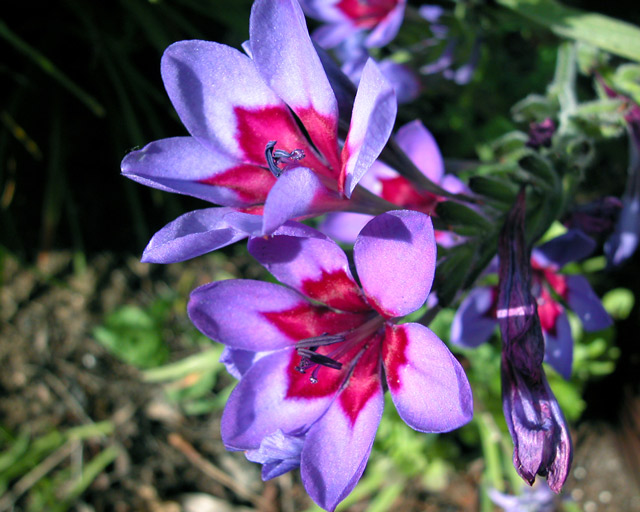

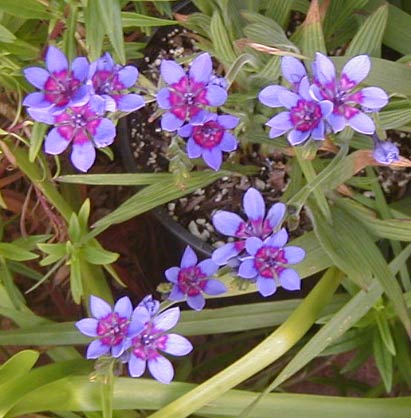
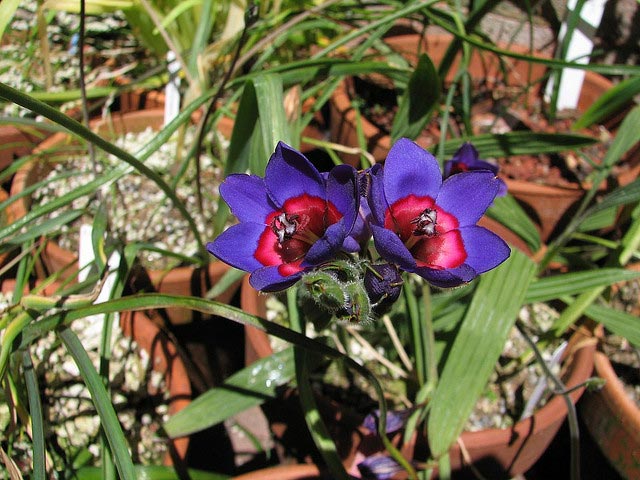
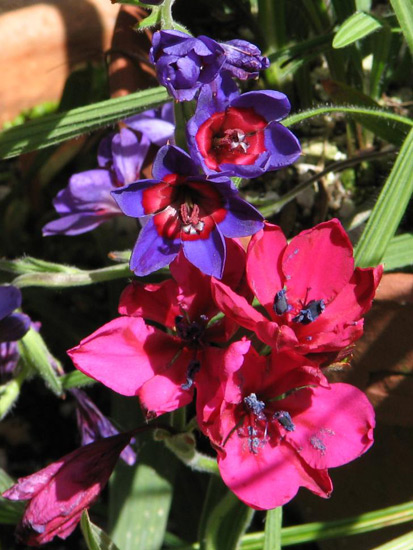
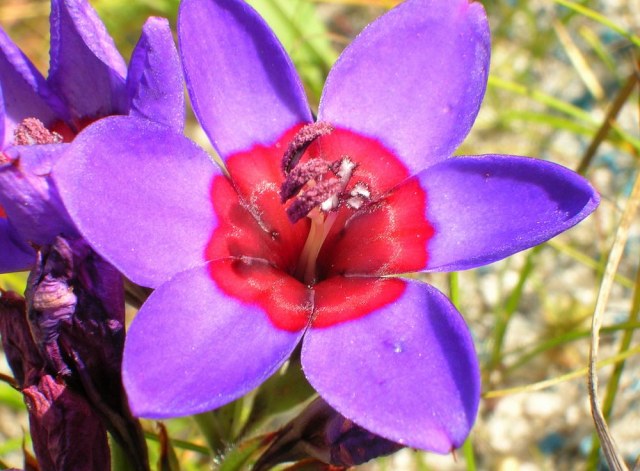
The first four photos were taken in habitat near Darling, South Africa September 2006 by Mary Sue Ittner and Bob Rutemoeller. In the last picture it is shown with Romulea eximia. The last photo was taken by Cameron McMaster near Darling.

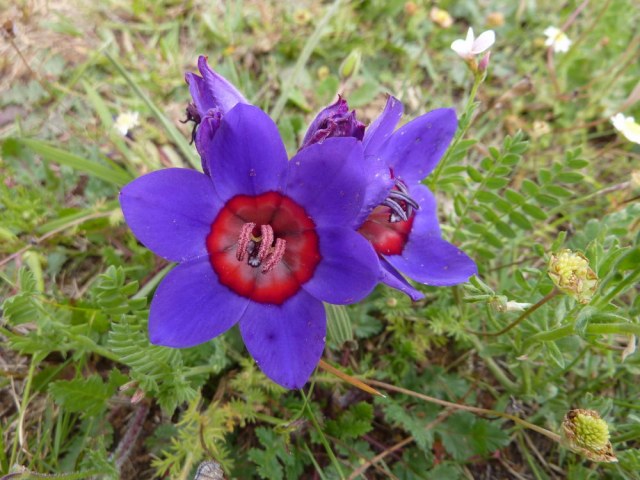
Babiana salteri G.J.Lewis grows on dry stony flats and lower mountain slopes in the northwest Cape. It is a small plant, 7 to 10 cm, with pale mauve flowers with white to yellow blotches on the lower lateral tepals and lanceolate-oblong pleated hairy leaves held nearly at right angles to the stem. It flowers from June to late July. The first photo by Alan Horstmann. The last two photos from iNaturalist were taken by Nick Helme in July in the Western Cape and shared under a CC BY-NC license.
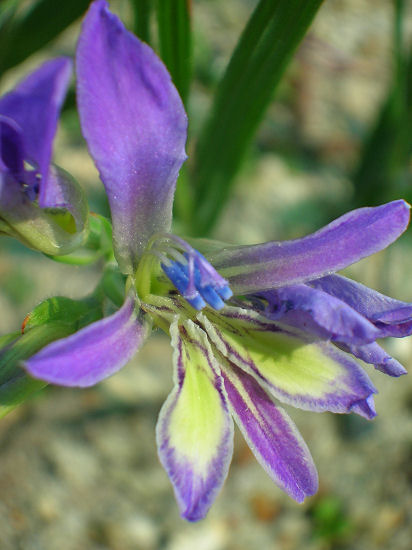
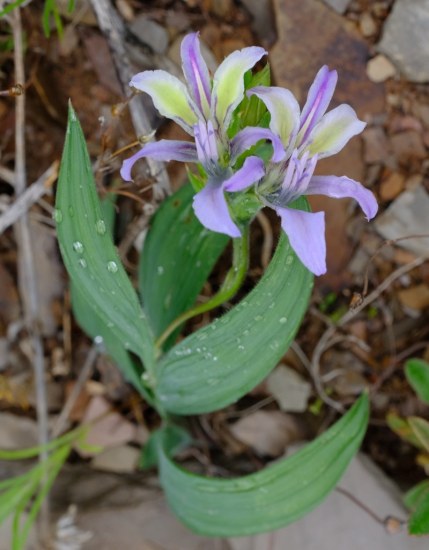
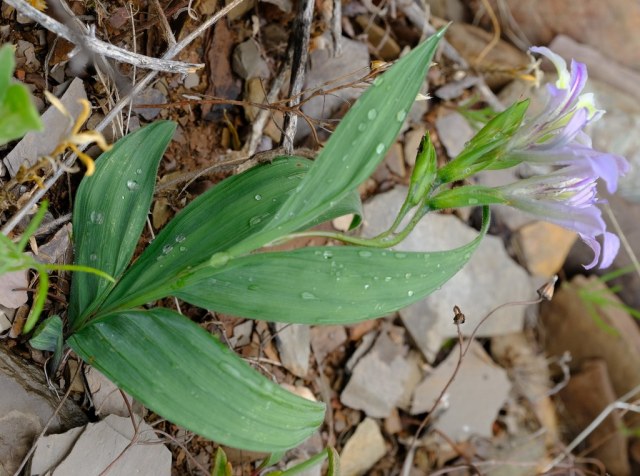
Babiana sambucina (Jacq.) Ker Gawl. grows on sandstone slopes and flats in fynbos and renosterveld over a broad area (northwest, southwest, southern, eastern Cape and the Karoo). This is a short plant growing from 5 to 14 cm high with hairy, pleated, linear to lanceolate leaves higher than the flowers and fragrant mauve to violet flowers with white and sometimes red markings. It is similar to Babiana framesii but has narrower and softer leaves and a straight flower tube. It flowers from July to September. The first photo was taken by Rod Saunders and the second by Alan Horstmann. Pictures 3 and 4 by Mary Sue Ittner were taken at the Karoo Desert NBG August 2006 in a raised bed. Number two may have been taken at the same time. The last two photos were taken by Bob Rutemoeller September 2006 near Nieuwoudtville.
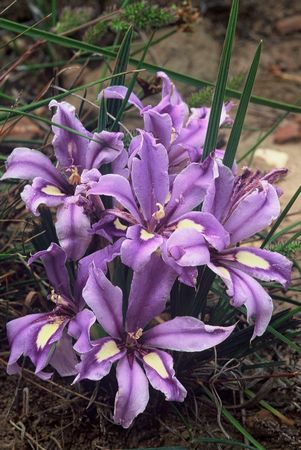
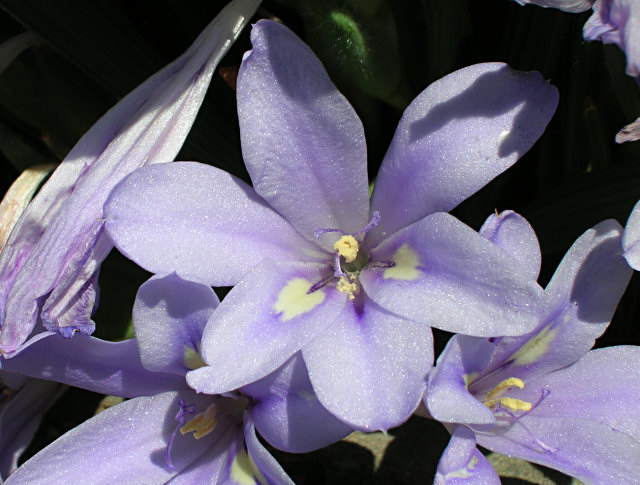
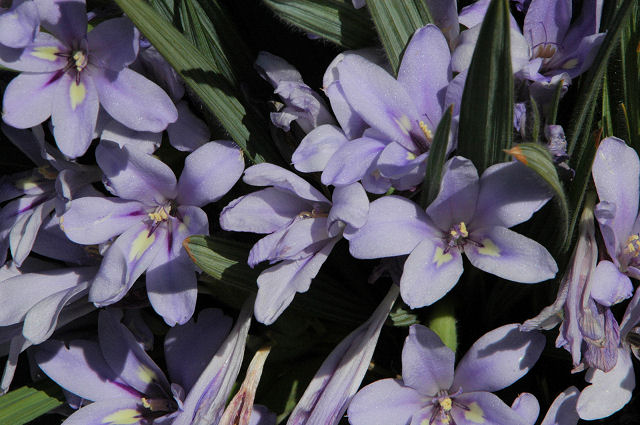


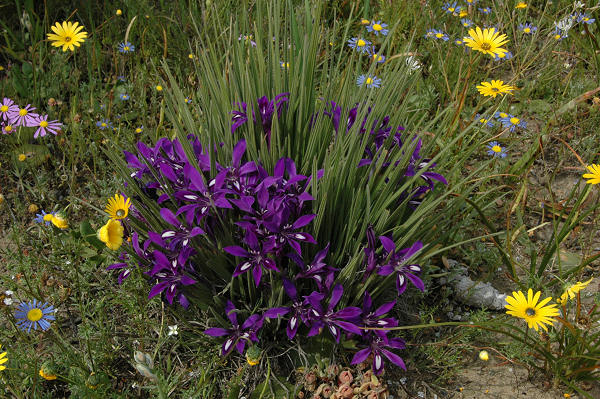
Babiana sambucina ssp. longibracteata (G.J.Lewis) Goldblatt & J.C.Manning grows on sandy ground in the Bokkeveld Mountains in the Northern Cape. Leaves are linear and hairy, 2 to 6 mm wide with long silky hairs. The flowers have a 40-55 mm long perianth tube, hollow to the base. It usually is found growing singly in sandy ground.
Babiana scariosa G.J.Lewis grows on dry sandstone or clay in fynbos or karroid scrub from the Bokkeveld Mountains in the northwest Cape to the western Little Karoo. It flowers from August to September. It has linear-lanceolate, pleated leaves and blue to mauve flowers with white to pale yellow markings on the lower tepals. The lower tepals are clawed and united. Height range: 10-40 cm. The first photo was taken by Alan Horstmann and the second by Cameron McMaster in the Hex River Pass.
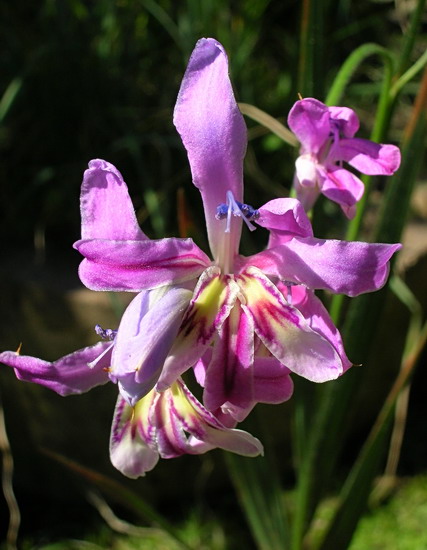
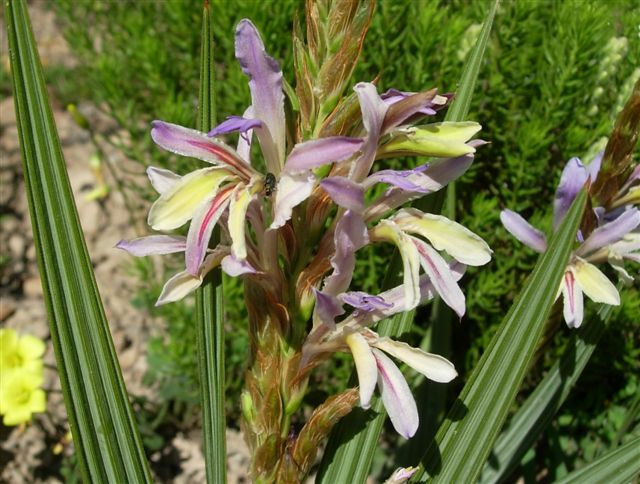
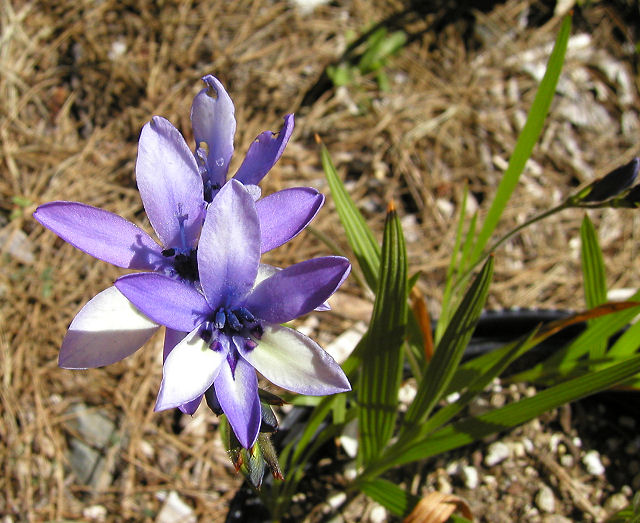
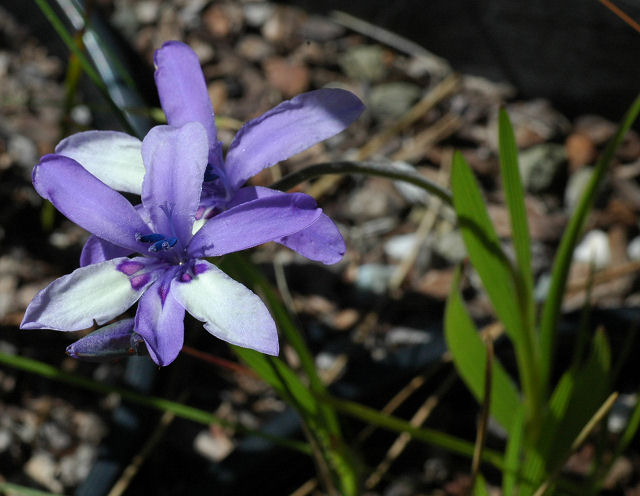
Babiana secunda (Thunb.) Ker Gawl. grows on clay flats and lower slopes in renosterveld in the southwest Cape. It grows from 15 to 35 cm high and is later flowering (October to November). Flowers are blue with yellow or white markings. This species is one of four species that has inverted flowers. The spike is inclined and the flowers face upward and the dorsal tepal and the unilateral stamens face the spike apex. The stamens and pollen of this species are supposed to be yellow and that is not the case in the photos below. The first photo was taken by Audrey Cain. The next three photos were taken by Mary Sue Ittner of plants she purchased as this species, but could be something else. Whatever it is, it has been a satisfactory plant, growing and blooming well for a number of years. See also Babiana inclinata which also has inclined flowers, but has anthers and pollen that are white, purple, or lilac.
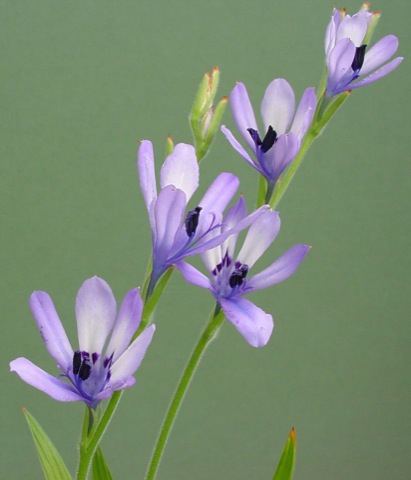
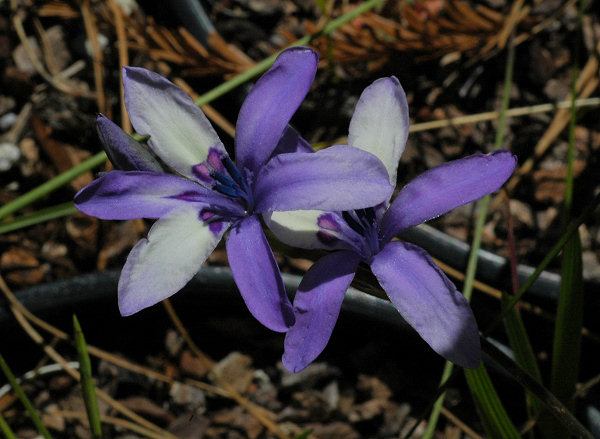
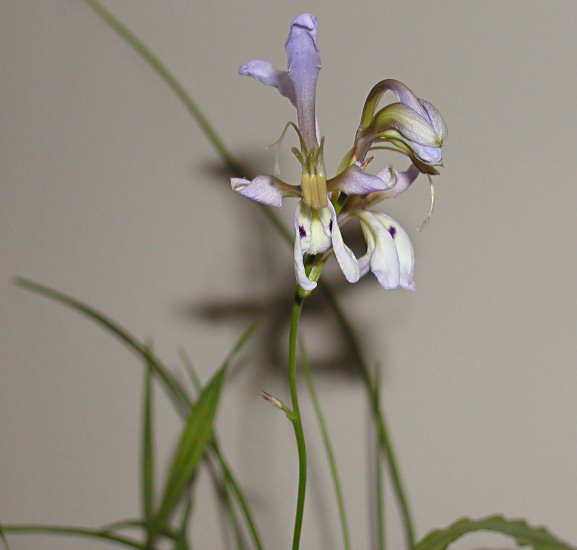
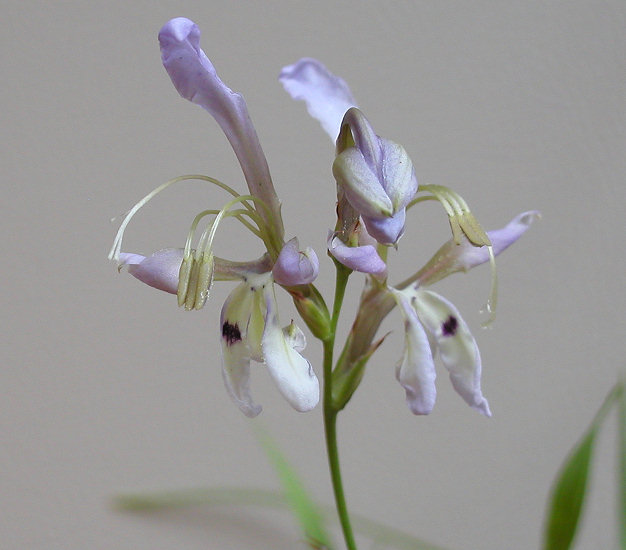
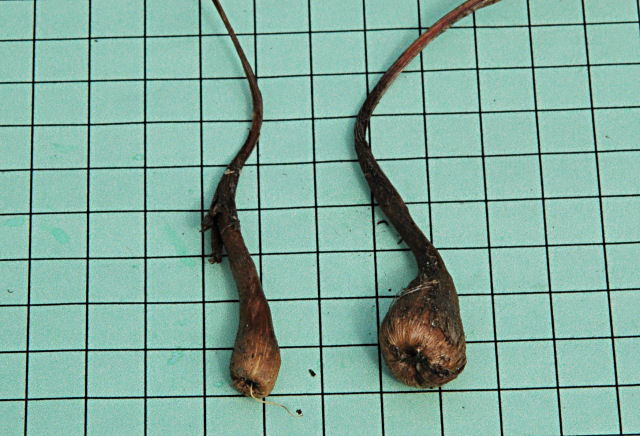
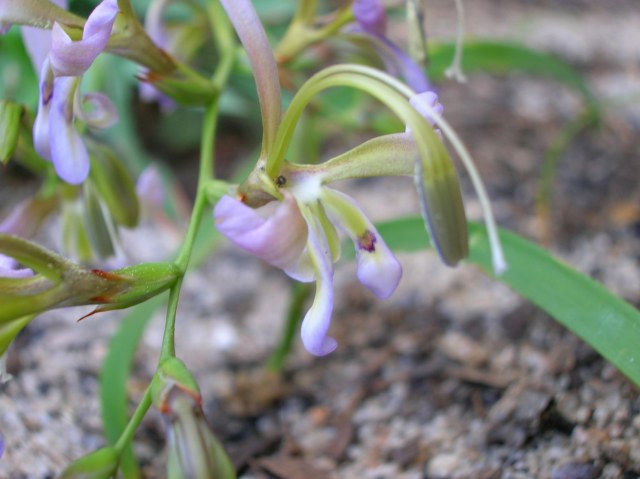
Babiana sinuata G.J.Lewis grows on stony shale slopes in the northern and western Cape. It is a very distinctive species with crisped and undulate leaves with hairy margins that are twisted in the upper half. The pale blue mauve flowers are large with a violet central mark on the median tepal and have long arched stamens with united anthers. Height range: 10-25 cm. It flowers from August to mid September. The first three photos by Mary Sue Ittner of flowers and corms on a 1 cm grid who writes that this plant was not very successful in her northern California garden and in cultivation in an area with more rainfall and humidity the leaves were not very crisped and undulate. The last photo from Alan Horstmann.
Babiana species a-h - Babiana species i-p - Babiana species sp-z - Babiana index