This group, the big ball onions with great spherical heads of bloom, is probably the best known of all the "ornamental onions". The group is better known as Allium section Melanocrommyum, with Allium giganteum probably the most famous of the lot. Available in the autumn where Dutch bulbs are sold, these spring to early summer blooming onions are easy to grow when given good drainage or light loamy soil in full sun, making spectacular accents in the garden. They dry up and retreat into dormancy immediately after flowering.
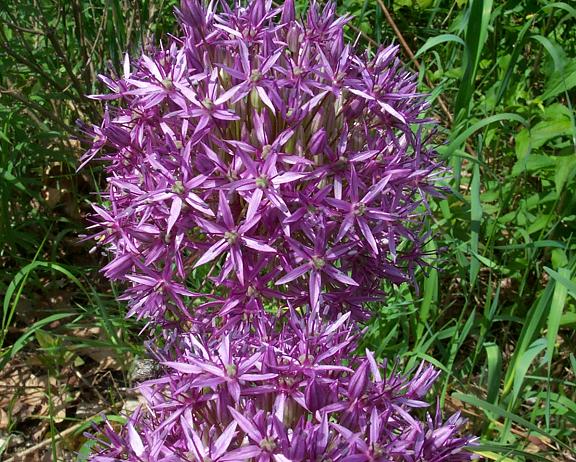
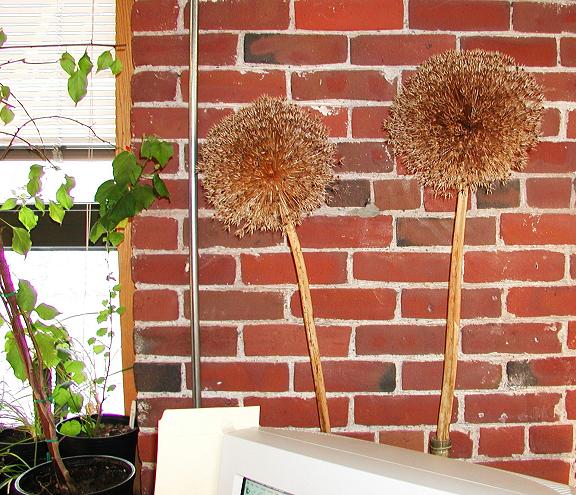
Allium 'Globemaster' is a fantastic cross (Allium macleanii x cristophii) made by Jan Bijl, requiring nearly 20 years to bring it into commercially scaled production. It has dense globes of purple starry flowers that have that same metallic sheen evidenced by Allium cristophii (often misspelled "christophii"). The floral globes start out 4-5" across, but since the new buds pop out just beyond the spent blooms, the great spheres of bloom grow in size over several weeks. Under good conditions, the bloom heads can exceed 11" (28 cm) across! One of the best features of the "big ball" type of alliums are the fantastic seed heads. In the second photo taken 3/6/03 there are two dried 'Globemaster' seed heads. The dried seed structures are about 8 years old now, but still hold their decorative appeal. Photographed up against a brick wall, and knowing that a brick is 8" (20 cm) wide, you'll get a good idea just how huge the bloom heads can get. Photos by Mark McDonough.
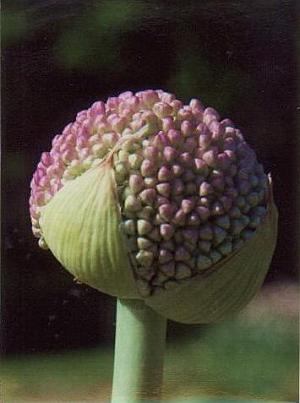
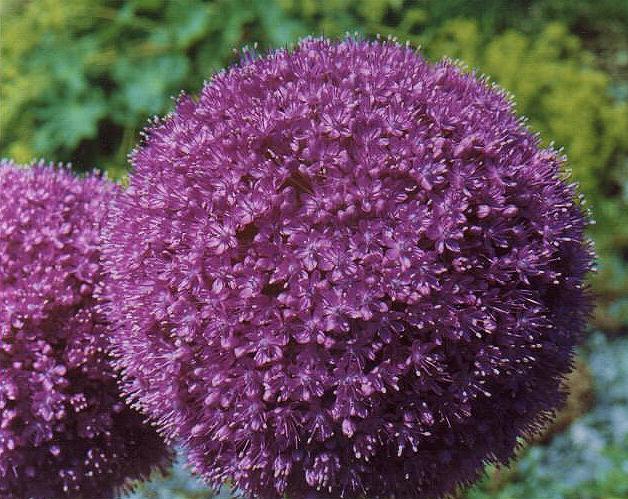
Allium 'Lucy Ball' is another cross from the same parentage as 'Gladiator', namely between A. hollandicum (syn. A. aflatunense of Hort.) x macleanii (probably). The cultivar seems prone to rot in my garden, and I haven't bothered replacing it recently. The first photo shows the tight buds, and the second photo shows an inflorescence at full anthesis. Photos by Mark McDonough.
Allium backhousianum Regel is a tall (over 100 cm) onion with greenish white flowers. It grows best in a sandy well drained medium in a sunny position. Photo by Wietse Mellema.
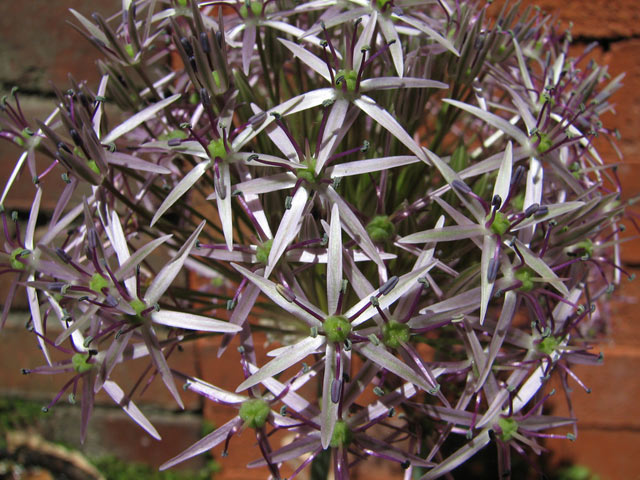
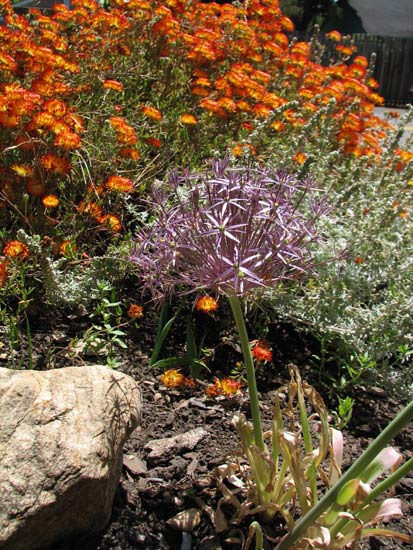
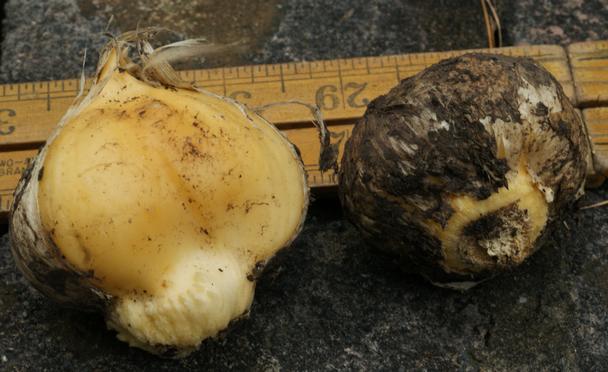
Allium cristophii Trautv. (often misspelled as christophii) is a species with blue-purple flowers. It is native to central Turkey (Kayseri), northern Iran, and Turkmenistan. It widely cultivated. In cultivation, I put the plants into a dry summer dormancy after flowers/seeds have developed. When winter comes around, even if water is available, the bulbs will only make roots and will not emerge until spring. Flower photos by Nhu Nguyen. Height: to about 45 cm. Photo 1 shows details of the flowers. Photos 2-3 show the inflorescence(s) grown in the ground in front of a dazzling display of the iceplant Drosanthemum bicolor L.Bolus. Bulb photo by David Pilling.

Allium jesdianum Boiss. & Buhse ssp. angustitepalum (Wendelbo) F.O.Khass. & R.M.Fritsch. was previously sold as A. rosenbachianum Regel (a very different species). It seems that the nomenclature is sorted out. I like this species as it has beautiful two-toned flowers (rose-purple and prominent white stamens), held in graceful hemispheres, on stems only about 24-30" (60-75 cm). There are several named cultivars, but I like this subspecies the best. Photo by Mark McDonough.
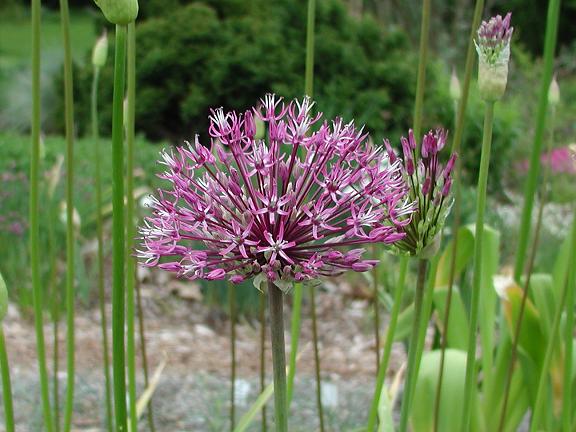
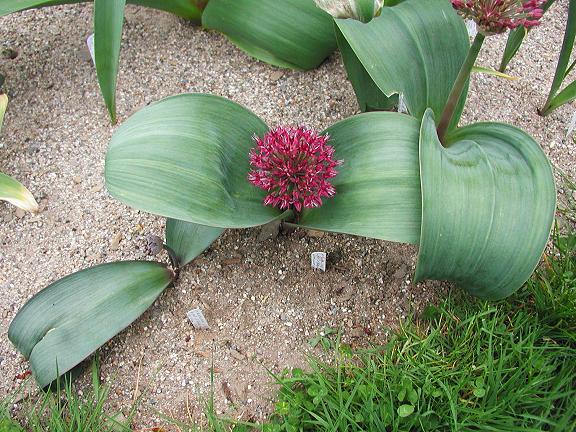
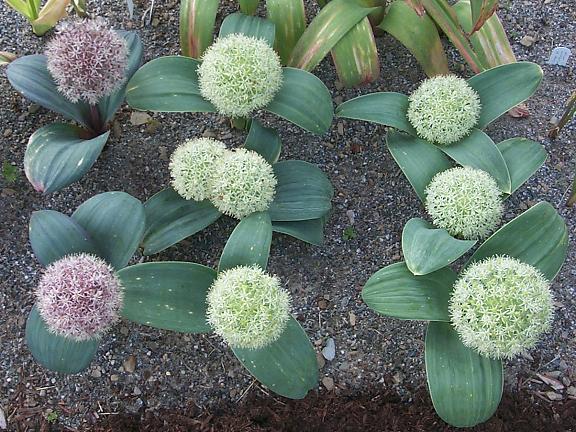
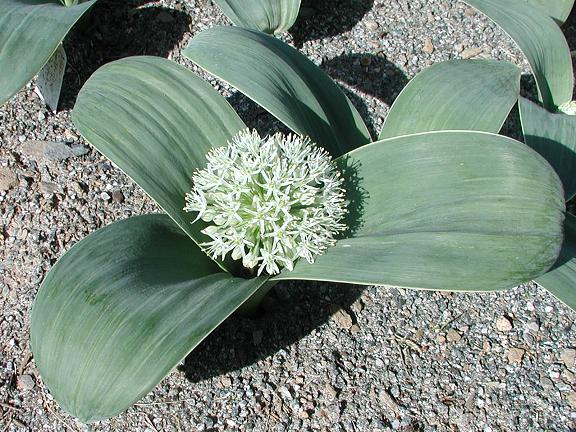
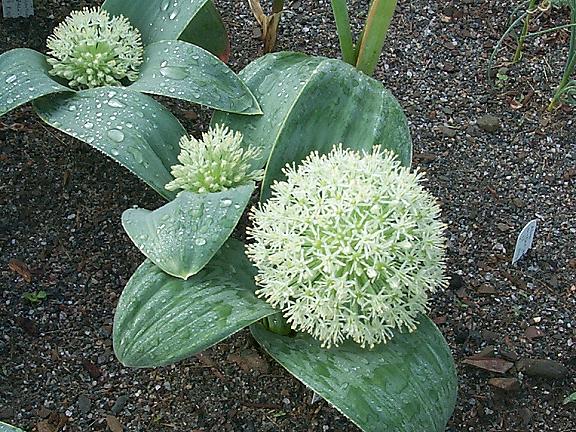
Allium karataviense Regel is a native of Central Asia where it grows in loose limestone scree and blooms in April and May. It is a popular rock garden plant with flowers that are dried for flower arrangements. It also had beautiful broad foliage. Height: to about 22 cm. In the first two photographs below taken by Mark McDonough we see regular A. karataviense on the left (purplish tinged foliage) and A. karataviense 'Ivory Queen' on the right (no purple tinge). The next two show 3 different forms of wild collected Allium karataviense, showing considerable diversity in foliar and flower form. The one in the center, with red flowers, is from the same locale where 'Red Globe' was first collected. All three collections are from Central Asia. The final photo by Oron Peri is of A. karataviense in its habitat.
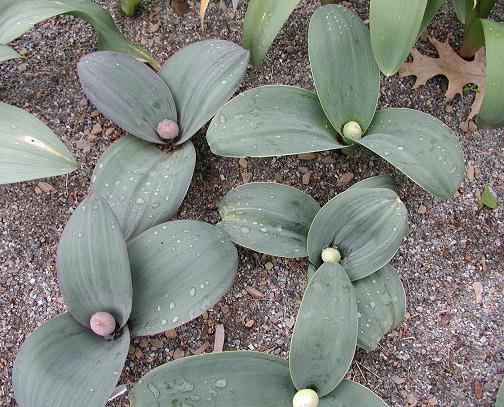
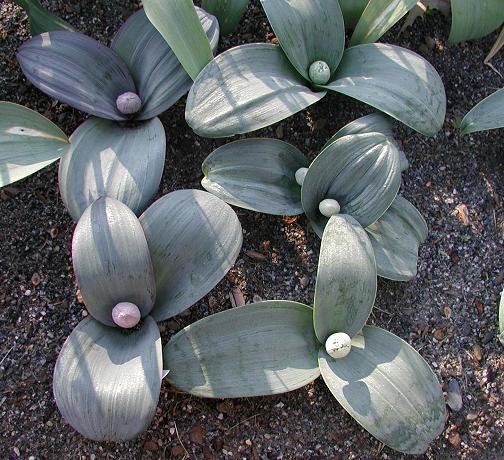
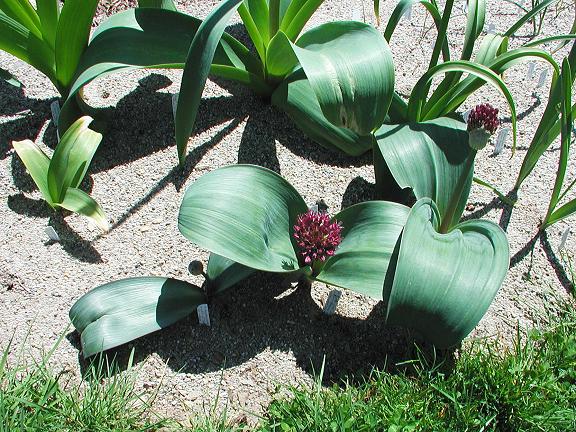
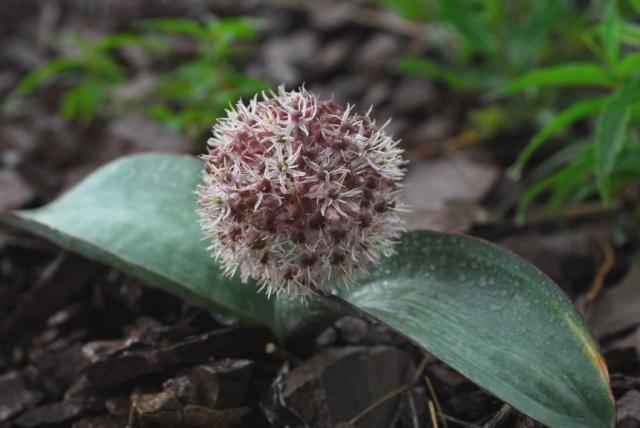
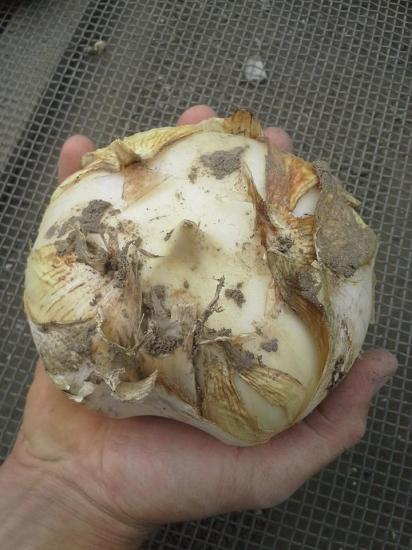
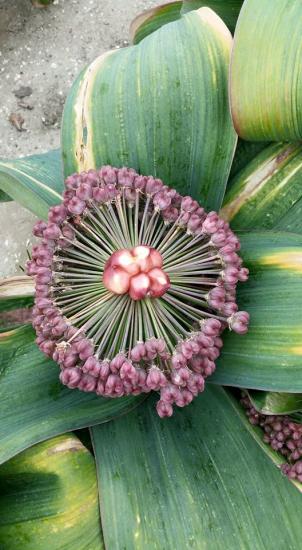
Photos below by Wietse Mellema of a huge bulb and a plant with bulbils, respectively. It is not advisable to propagate Alliums by bulbils, it will likely result in plants that create more bulbils in place of flowers.
Allium karataviense 'Ivory Queen' is a fantastic clean white form of this popular species. It flowers the same time as the regular pinkish form, seen on the left. Photos by Mark McDonough.
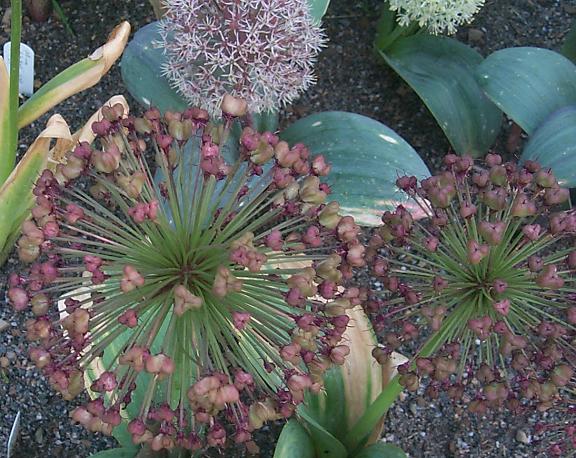
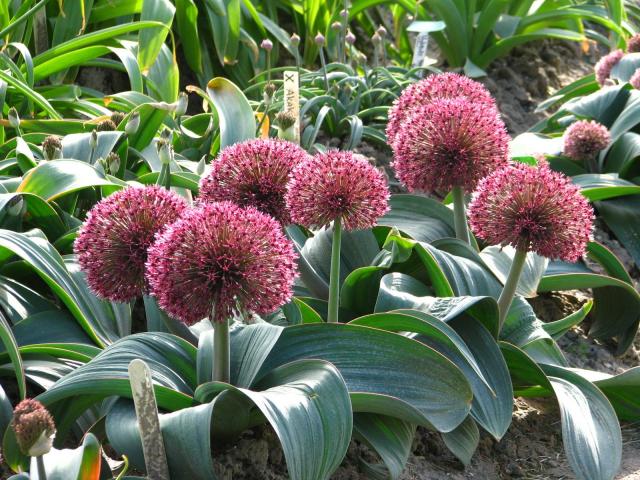
Allium karataviense 'Red Globe' - This is a recently available form of A. karataviense ssp. henrikii Rukšans that's very different, flowering much earlier, with much larger and longer gray foliage, and huge globes of dark red-violet flowers. The first photo shows 3 bulbs in full bloom. The second shot shows the inflorescence swelling with red-purple seed pods and the much smaller flower globe of typical A. karataviense in the background. It's hard to believe that this hasn't been identified as a new species of subspecies of A. karataviense. Evidently, A. karataviense in the wild is extremely variable. Photos 1-2 by Mark McDonough. Third photo by Wietse Mellema.

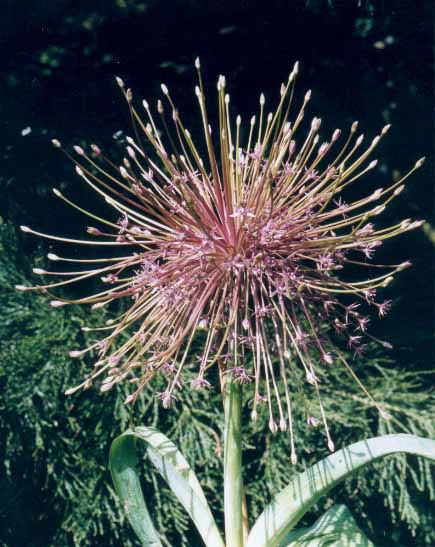
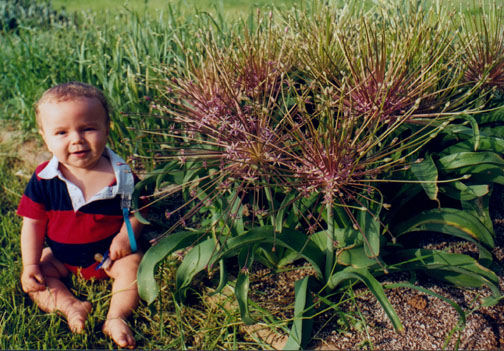
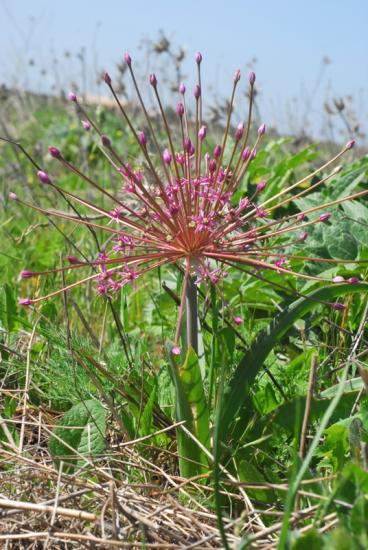
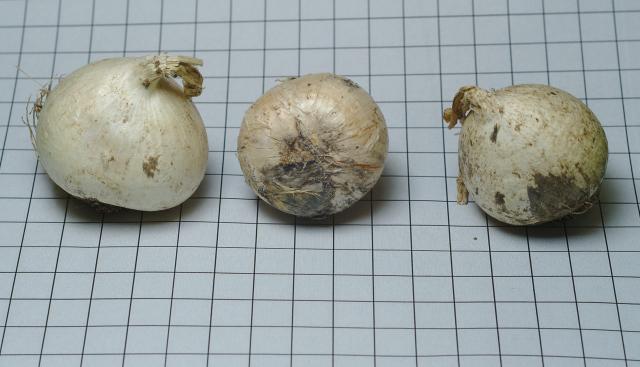
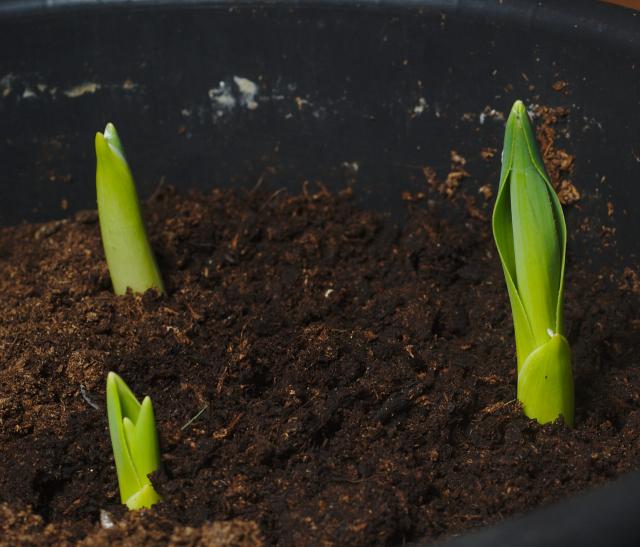
Allium schubertii Zucc. is a fantastic, whimsical giant onion, with flower pedicels of various length, creating a big spidery ball of blooms, growing to about 30 cm. Not reliably hardy in cold climates. The first photo was taken by Lauw de Jager. The second from Kelly Irvin is an example where they are planted too close together. This picture might help with imagining the actual size of the inflorescence. The young model accompanying the onions goes by the name Gabriel. The third was taken in its habitat in the Golan Heights, Syria by Oron Peri. Photo 4 of commercially supplied bulbs on a 10 mm grid and photo 5 of shoots in January by David Pilling.
Allium index -All alliums - Allium flavum Relatives - American alliums A-F - American alliums G-Z - Blue alliums - Chives - Domed alliums - Drumstick alliums - Rhizomatous alliums