Calochortus is a genus in the Liliaceae family with species distributed in western North America, Mexico, and south to Guatemala. The greatest concentration of species is found in California. Three good sources of information are Frank Callahan, The Genus Calochortus, in McGary, 2001 found listed in References, Calochortus, Gerritsen and Parsons, 2007 found listed in References, and Mariposa, the newsletter of the Calochortus Society, a quarterly issued between 1989 and 2005.
Calochortus species with names starting with a and ending with b are pictured on this page.
Calochortus species c-d - Calochortus species e-lo - Calochortus species lu-n - Calochortus species o-r - Calochortus species s - Calochortus species t-u - Calochortus species v-z - Calochortus hybrids - Calochortus index
Calochortus albus (Benth.) Douglas ex Benth. see the Calochortus albus page.
Representative photos of this species. Photos 1 & 4 were from Mary Sue Ittner, photo 2 was from Ron Parsons, photos 3 & 5 were from Nhu Nguyen, photo 6 was from Mark Mazer.
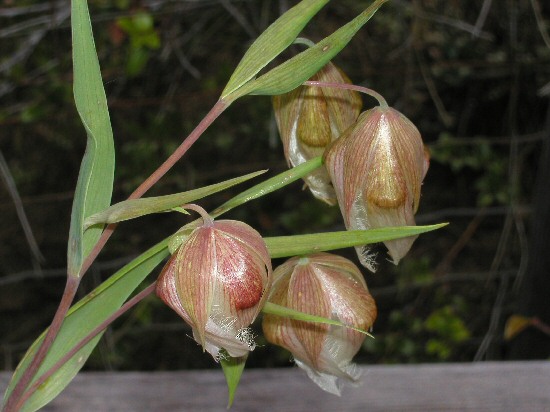
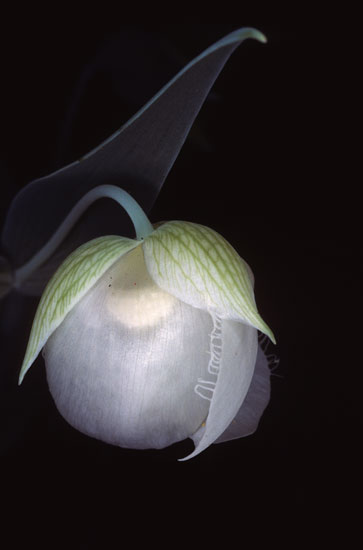
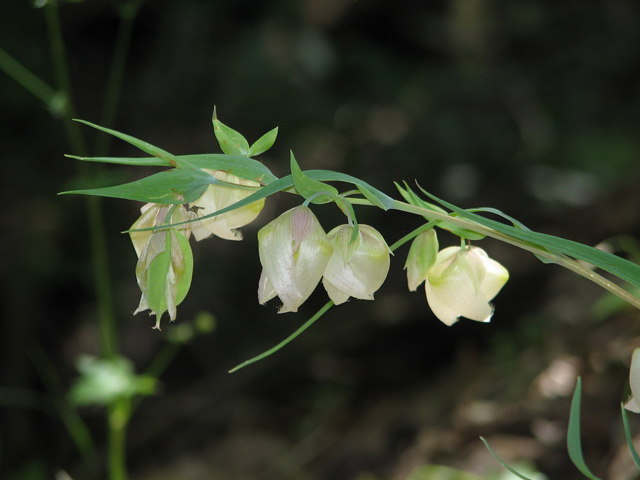

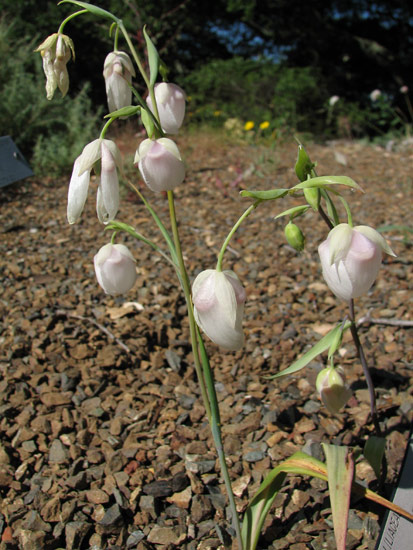
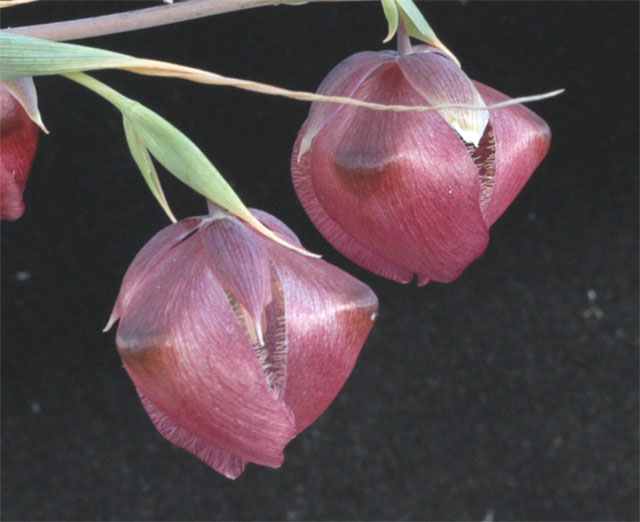
Calochortus amabilis Purdy see the Calochortus amabilis page.
Representative photos of this species. Photos 1-2 were taken by Bob Rutemoeller, photo 3 was taken by Alan Horstmann, and photos 4-6 were taken by Nhu Nguyen.
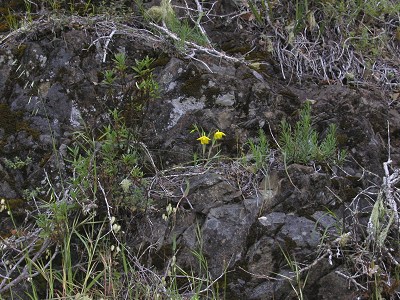
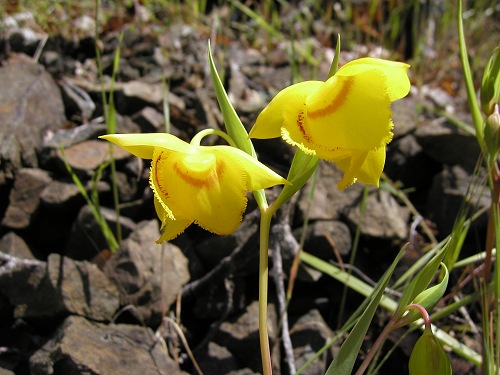
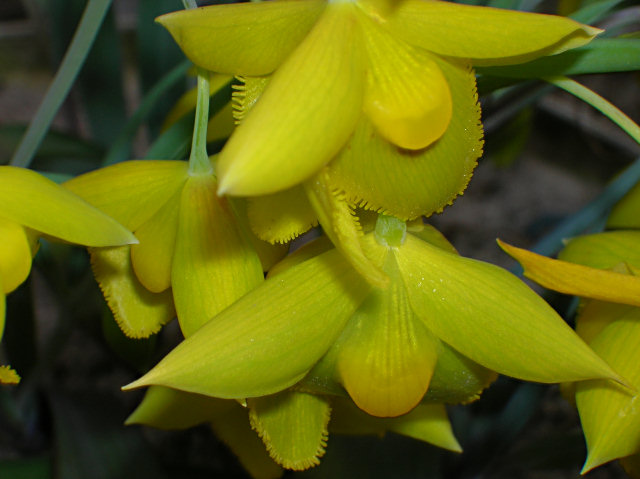
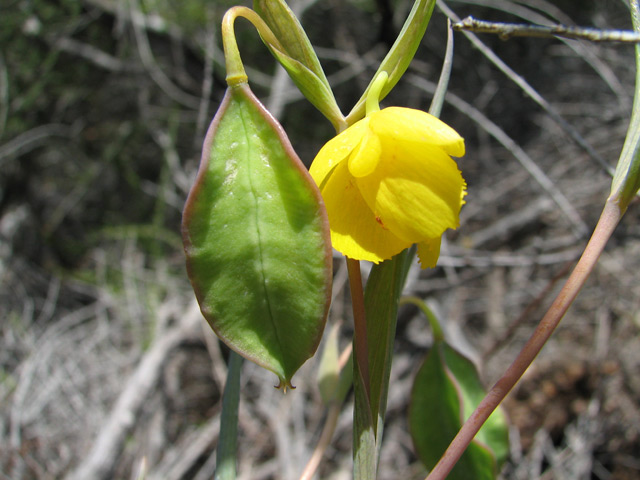
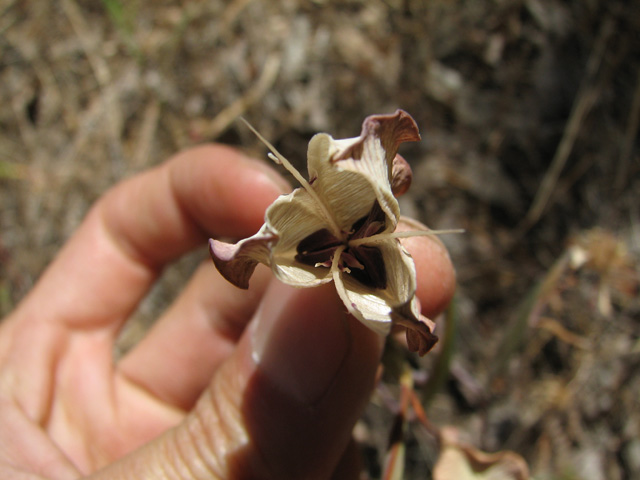
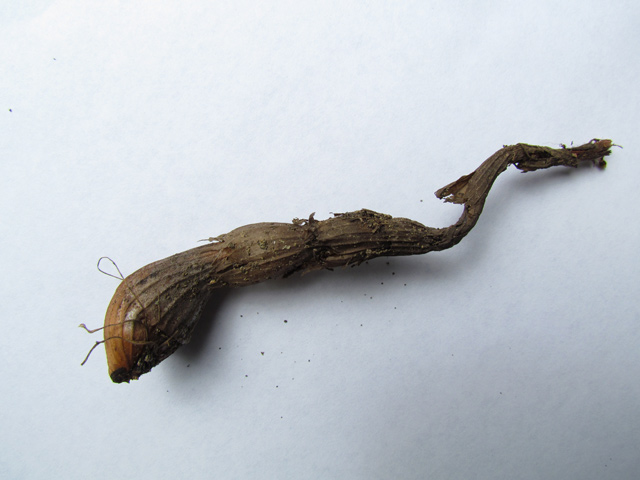
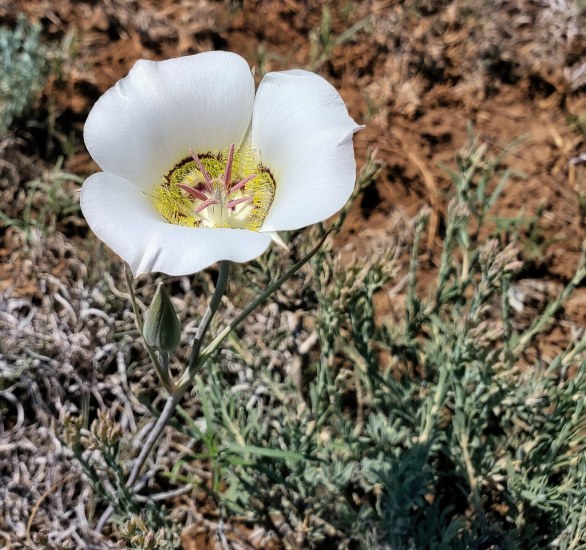
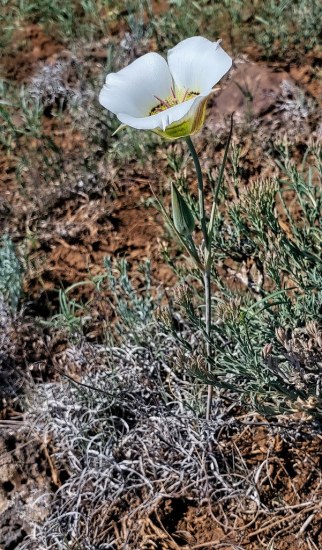
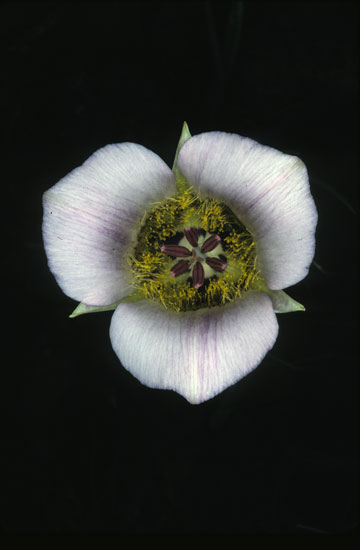
Calochortus ambiguus (M.E.Jones) Ownbey, also known as the "Doubting Mariposa Lily" or "False Sego Lily" is most commonly found in Arizona, extreme southwest New Mexico, and Sonora, Mexico. The plants are usually found on rocky open slopes in juniper, pine or oak forests, or in meadows, in clay soils, at elevations of 1000-3300 m. Height: about 50 cm. It is fairly closely related to Calochortus gunnisonii, but is distinguished by its different distribution, obtuse anthers and shorter gland. This species was featured in Mariposa,Volume 3,#2. Photos from iNaturalist taken by https://www.inaturalist.org/people/clyde_joelle in June in Arizona and shared under a CC BY-NC license. The last photo by Ron Parsons.
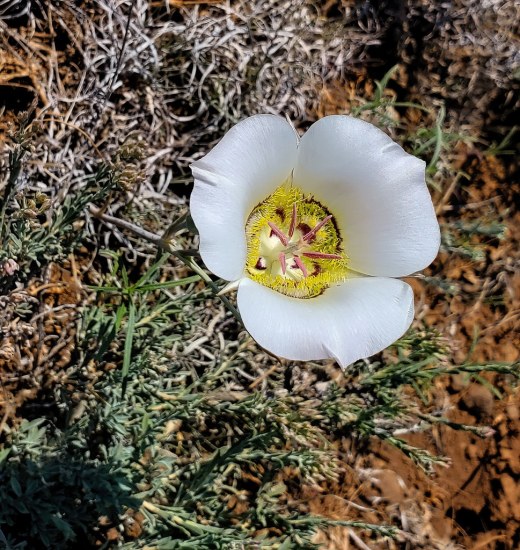
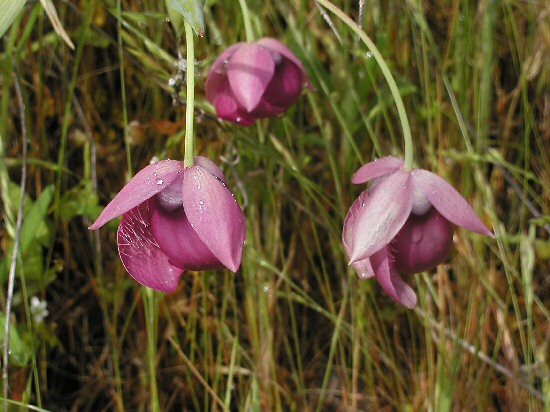
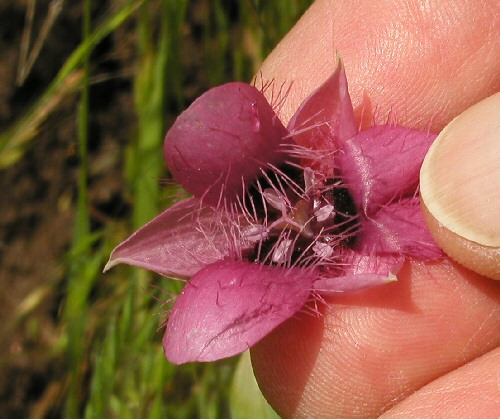
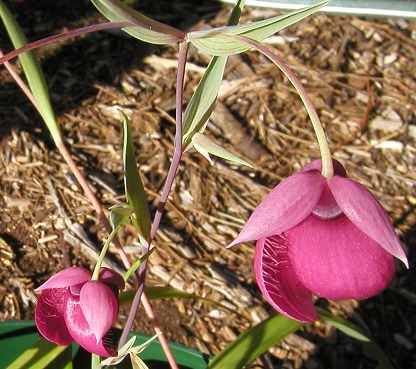
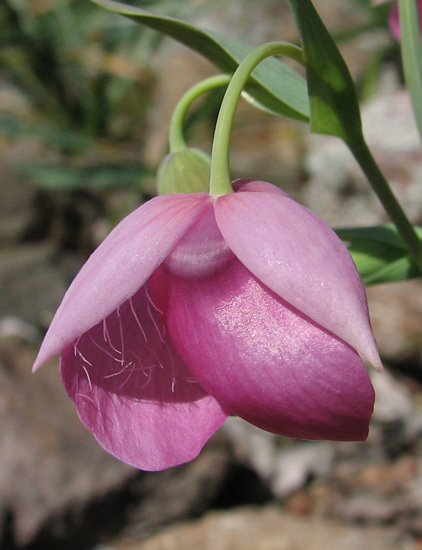
Calochortus amoenus Greene is found in the foothills of the central Sierra Nevada, from Madera to Kern County, California, growing from 20-50 cm tall. It is often found on north and western slopes, frequently on steep walls of river canyons. Known as the Rosy Fairy Lantern, it is similar to Calochortus albus and has similar cultural requirements, but has half closed two-toned petals. This species was featured in Mariposa,Volume 8,#2. Photos 1-2 were taken by Mary Sue Ittner in Kern County, California in April 2005 where they were growing on a grassy slope. In photo 2, the flower is turned upside down to see it from a bottom view. Photo 3 was taken by Mary Gerritsen in Tulare County, North Fork of the Tule River, April 2008.
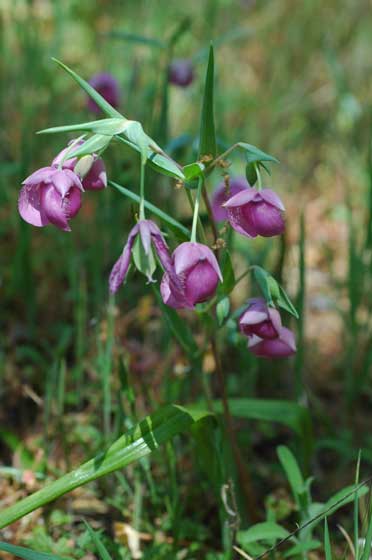
The photos below are of plants in cultivation. Photo 1 was taken by Mary Sue Ittner. Photos 2-4 were taken by Nhu Nguyen of a nice blooming in a one gallon pot.
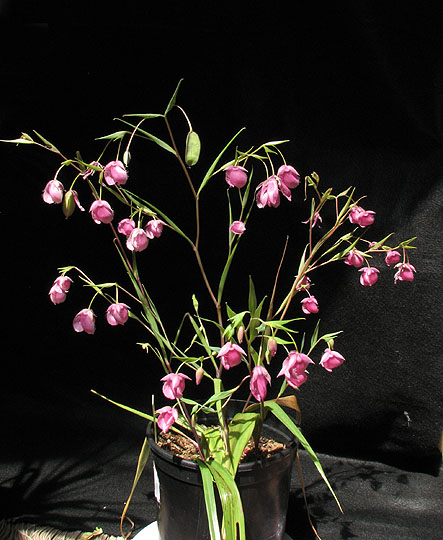

Calochortus apiculatus has many common names, including "Three spot Mariposa Lily" and "Baker's Mariposa Lily (or Cat Ear)". Height range: 10-35 cm. It is a member of the Section Calochortus, subsection Eleganti. Flowers of subsection Eleganti are characterized by their bell-like bearded petals and upright orientation. Calochortus apiculatus is a northern species, one of the few (the others are Calochortus lyalli and Calochortus macrocarpus) that extend north of the border into Canada. This species is readily seen in mountain meadows of Glacier National Park (US) and the adjoining Waterton National Park (Canada). This is a species well adapted to cold winters and is a good choice for the northern gardener. The photos below were taken in July 2007, just south of Priest Lake in Bonner county, Idaho. Photos by Mary Gerritsen.
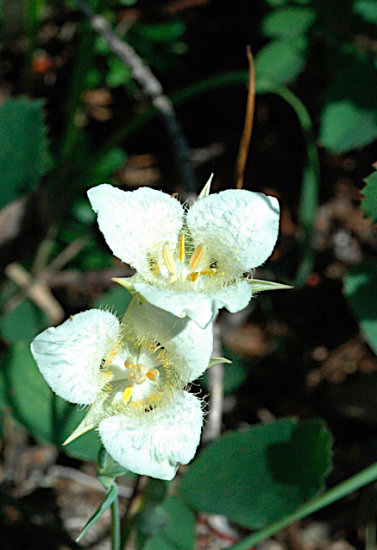
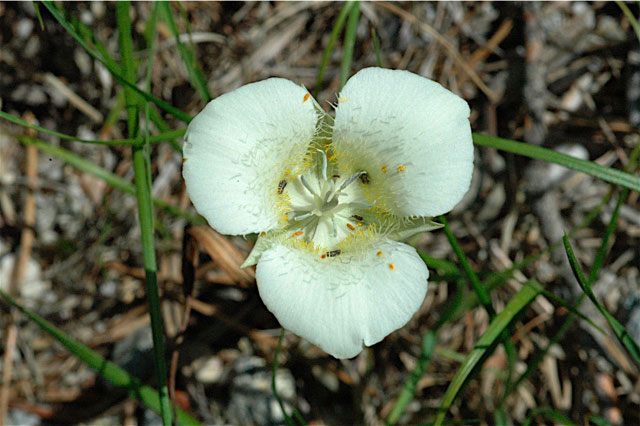
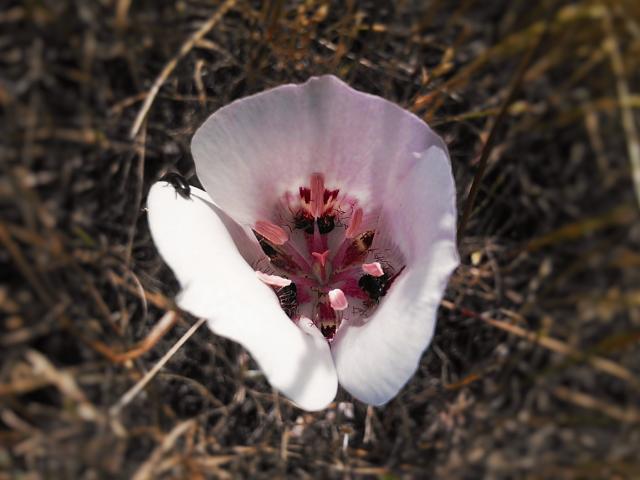
Calochortus argillosus (Hoover) Zebzll & Fielder is found on open grassy clay meadows in California. Height range: 40-60 cm. There are three forms. The northern form has the most variety of colors and petal markings. Spots are banded and may include brick-red, yellow, and pink colors. Flowers are white, often blushed pink. This species was featured in Mariposa,Volume 12,#3-4. The first two photos were taken by Mary Sue Ittner. The third shows the back of the flowers, equally beautiful, and was taken by Bob Rutemoeller. The last two photos were taken at Edgewood County Park, San Mateo County, California, by Mary Gerritsen.
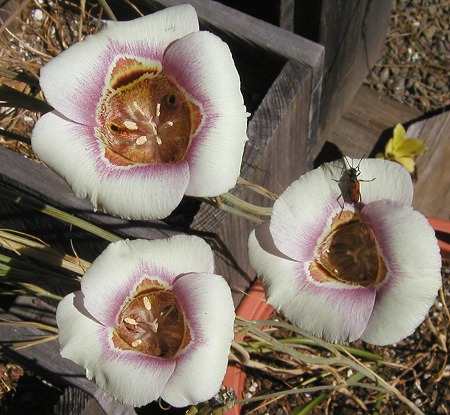
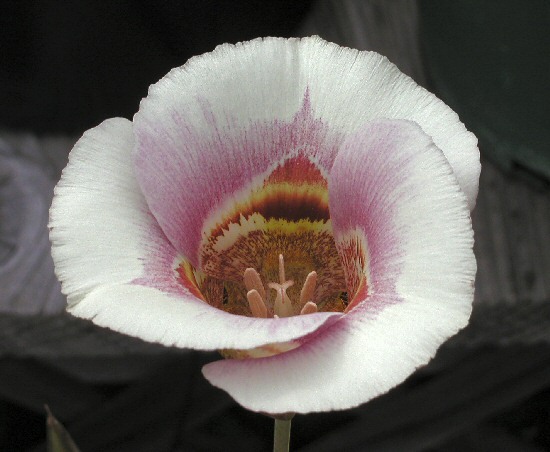
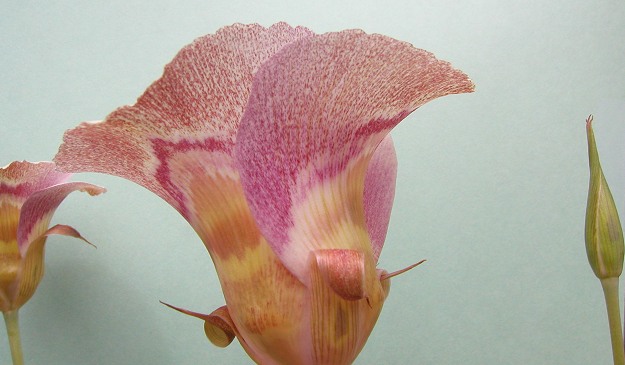
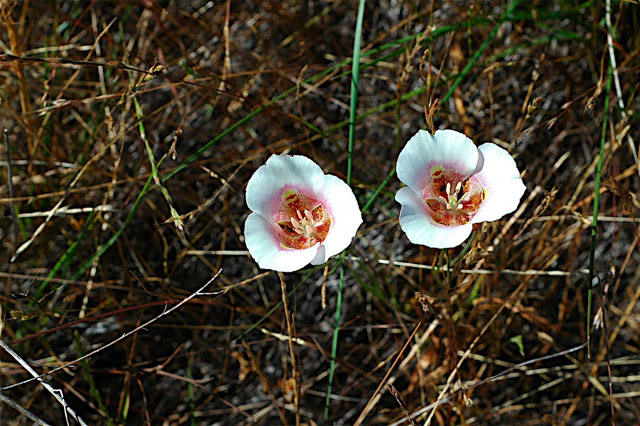
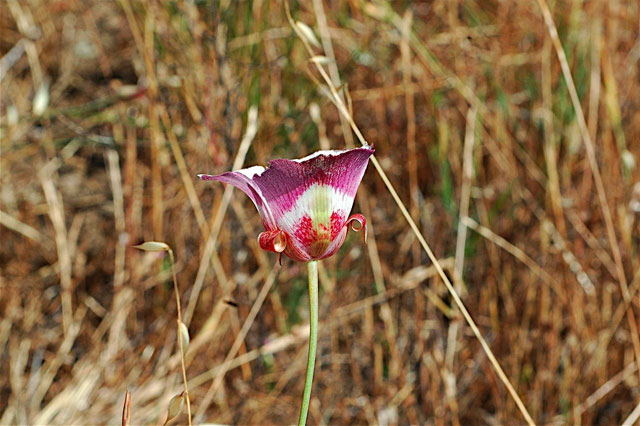
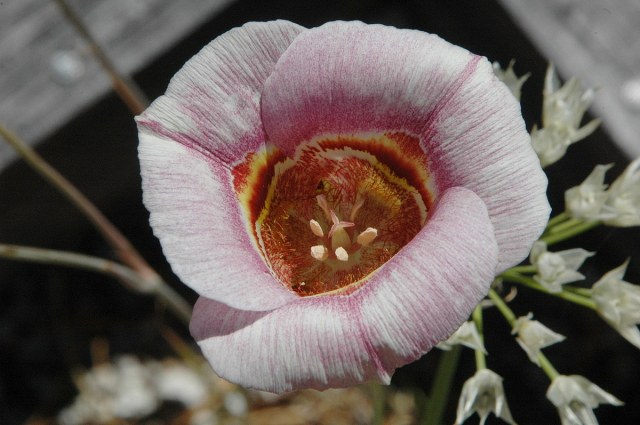
Photos below from Mary Sue Ittner taken different years showing variations and a pollinator.
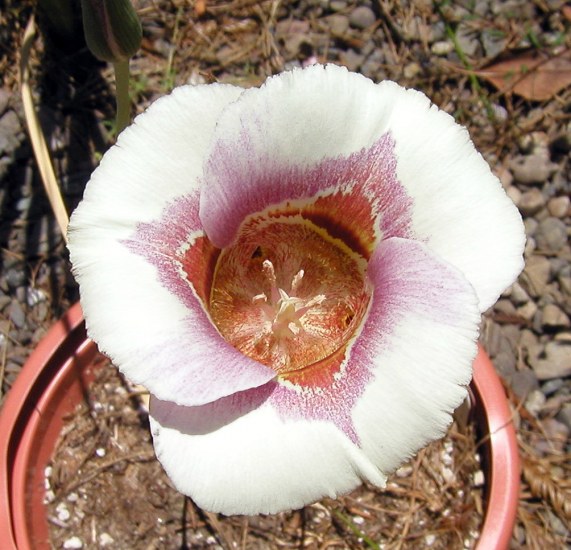
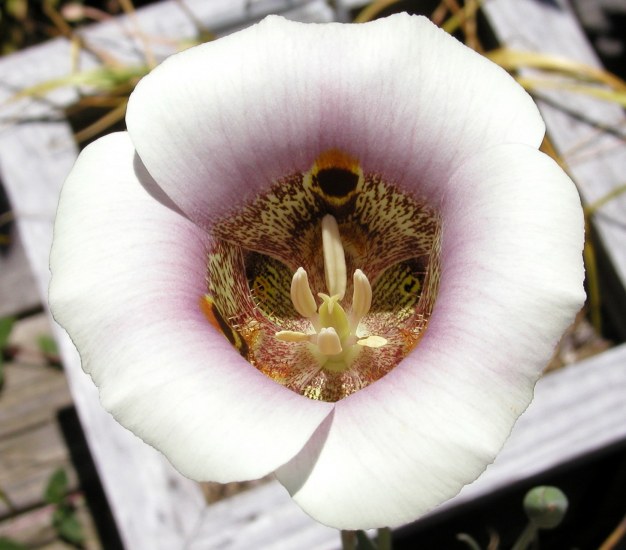
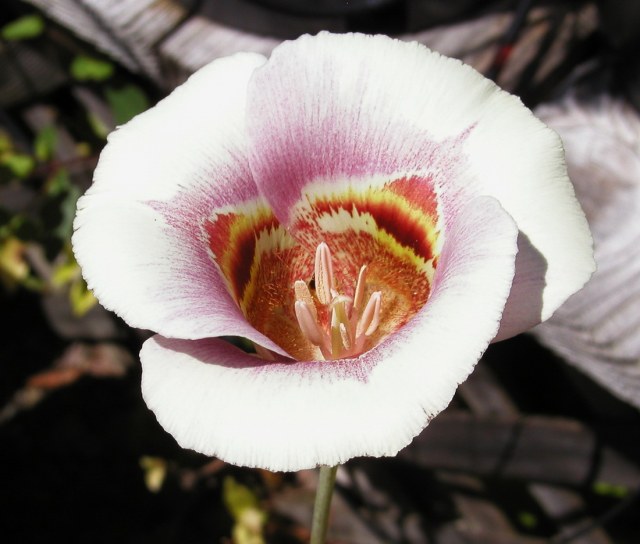
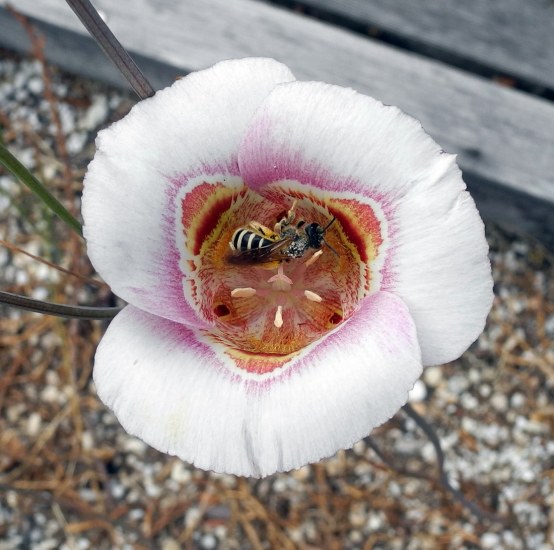
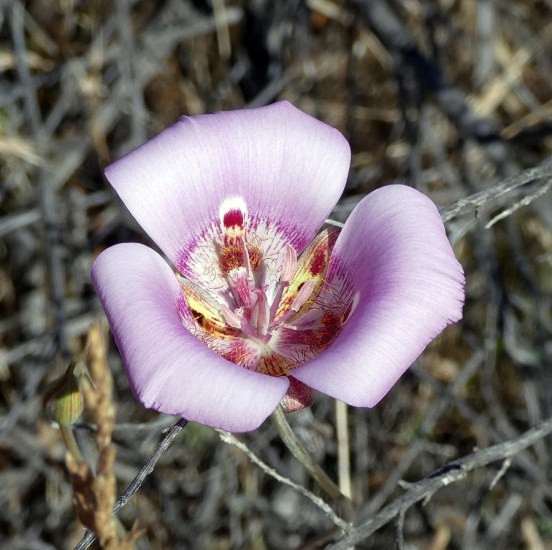
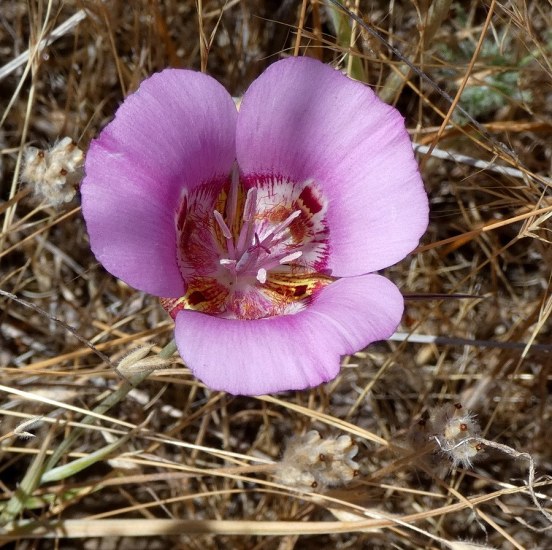
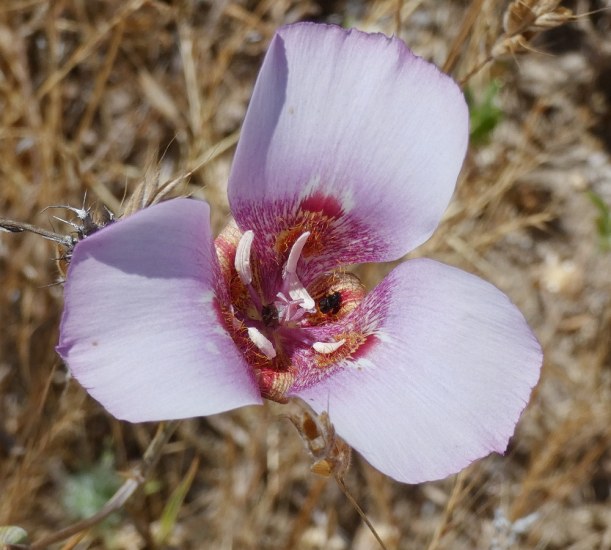
The central form ranges from pale lavender to deep rich purple with colored petals on the front and back. The central spot is banded. The gland is transversely irregular and the flowers have a longitudinal pink blotch at the base of each segment. The first five photos were taken by Mary Sue Ittner in San Benito County in late May 2024. The last photo from iNaturalist was taken by catchang in late May in Henry W. Coe State Park and shared under a CC BY-NC license.


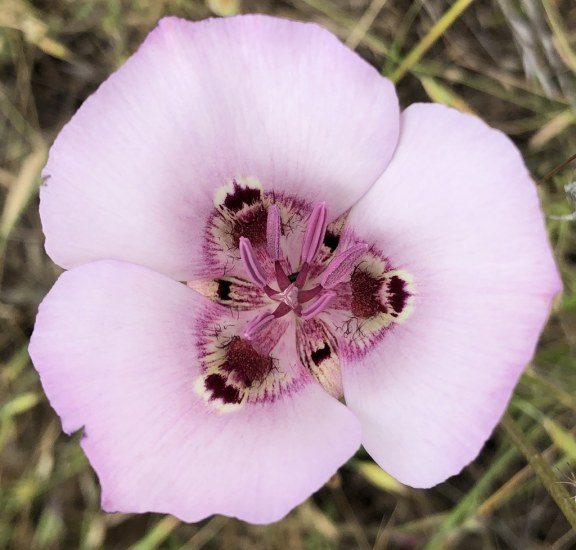
The southern form is a satiny white and marked by a single dark red purple squarish or round spot above the gland which is wider than high and somewhat lunate. The first two photos were taken by Mary Sue Ittner and the third photo by Susan Hayek for Diana Chapman. The last three pictures were taken by Alan Horstmann.
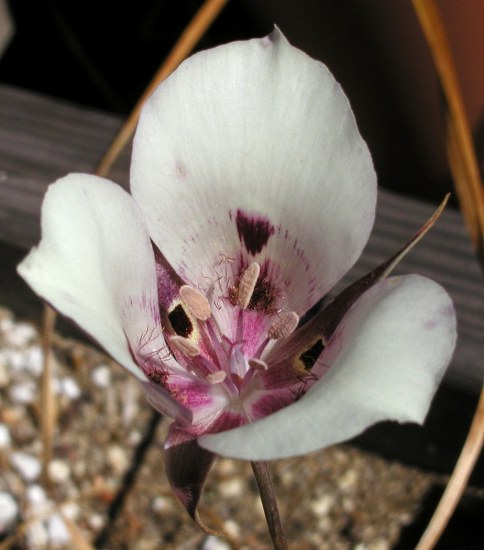
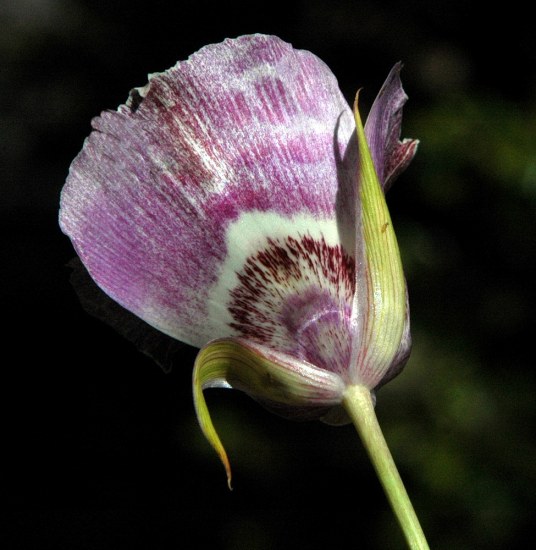
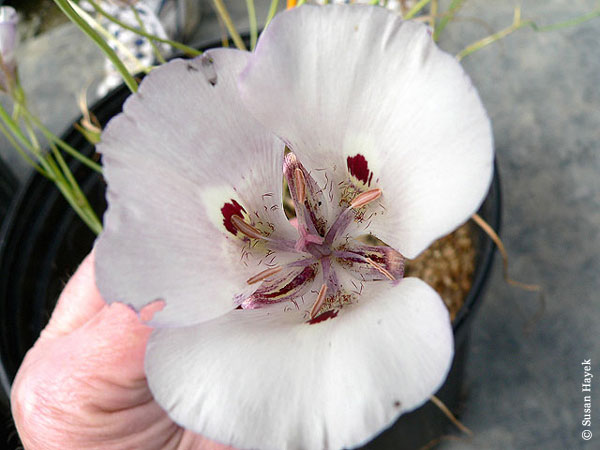
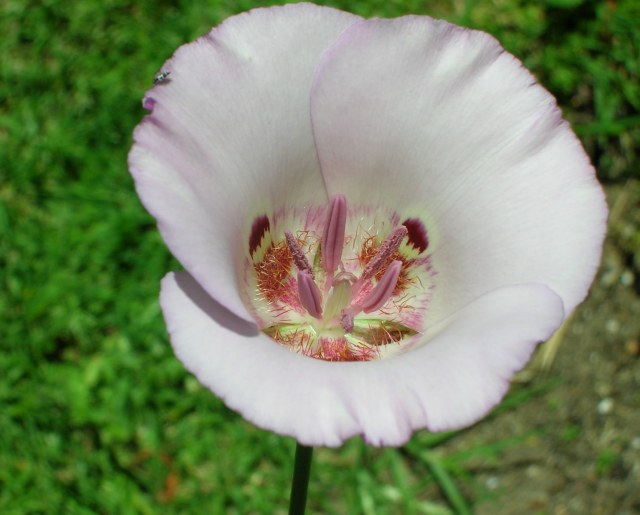
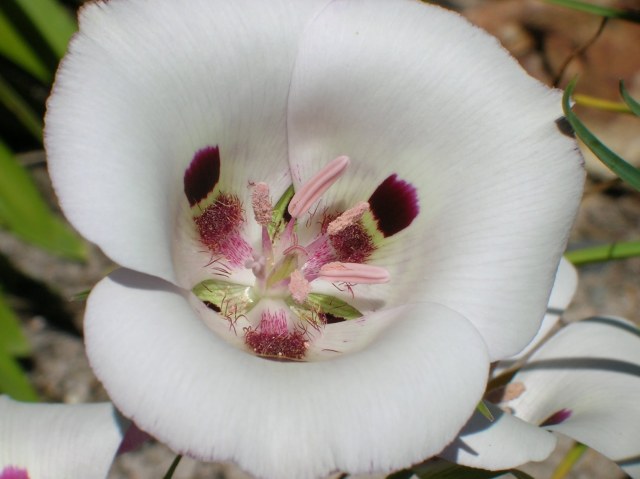
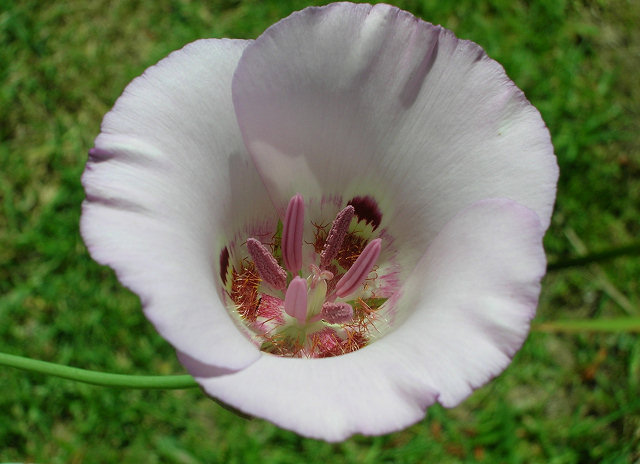
Excerpts and photos from Kipp McMichael's "Calochortus pursuits":
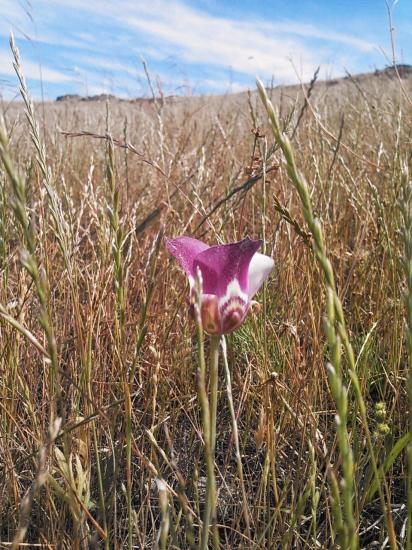
"On our way back north from Figueroa Mountain, we stopped in San Luis Obispo, CA to see if we might catch Calochortus obispoensis in bloom in its preferred rocky, serpentine hillside habitat. We were too early for that species, but we did find Calochortus argillosus growing in the moister saddle between serpentine hills. The southern populations of C. argillosus often have a rich magenta outer petal."
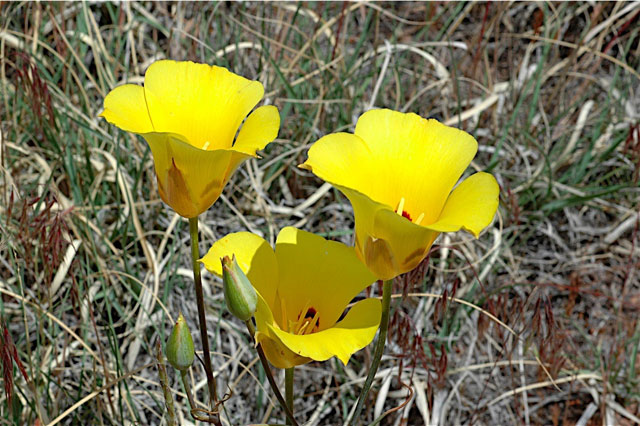
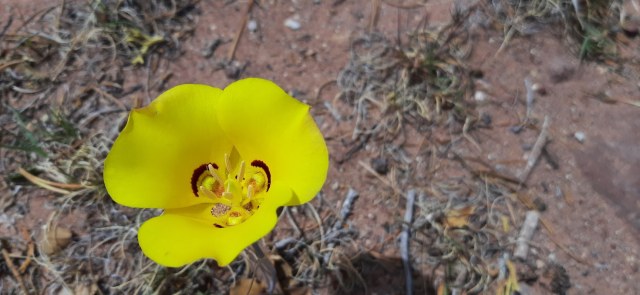
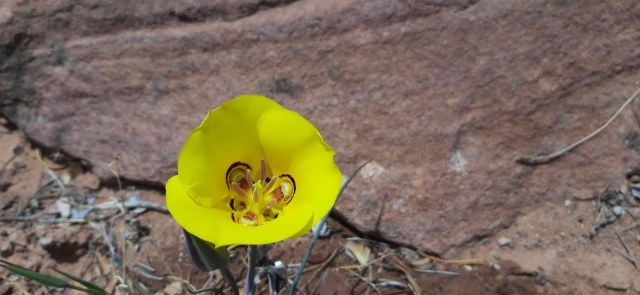
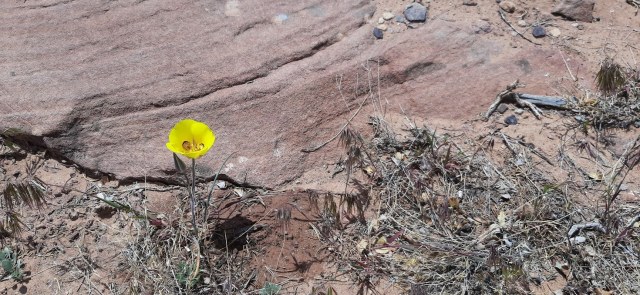
Calochortus aureus S.Watson is a species of the southwestern United States where it is found on flats and slopes, often among grasses in red clay soils at 750-2500 m. Height: 45 cm. It is a member of the Nuttalliani subsection and has bright yellow flowers with a transverse, reddish-brown crescent or triangular blotch above the small fan shaped round or semicircular depressed gland. The gland is covered in white to yellowish hairs. This species was featured in Mariposa,Volume 13-3. Photos taken by Mary Gerritsen.

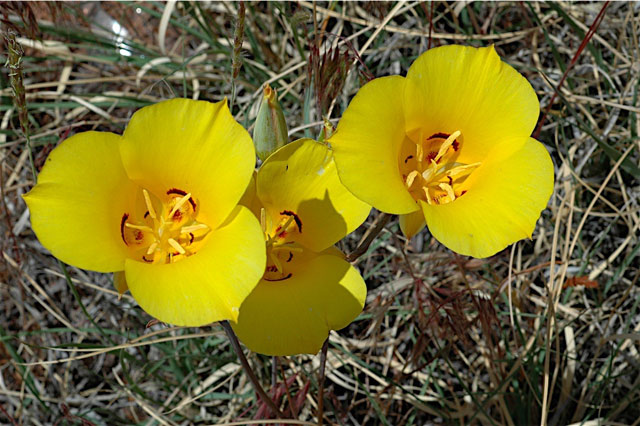
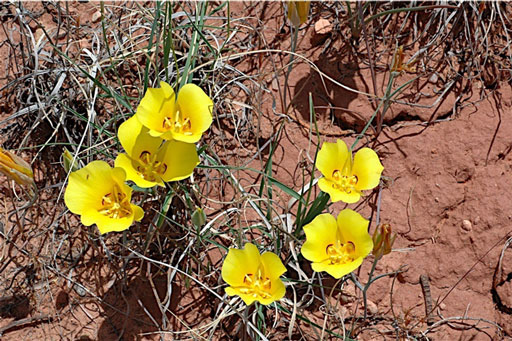
The photos below from Kipp McMichael were taken in 2026 in Canyon de Chelly.
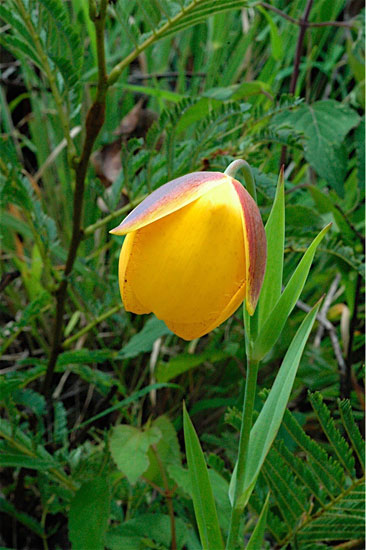
Calochortus balsensis García-Mend. is a summer flowering species from high elevations in Mexico. This species has glaucous, branched, bulbiferous 50-70 cm stems, that can bear one to four showing nodding, 2.5-3.5 cm flowers that appear almost squarish in profile. This species is restricted to the coastal mountains of Guerrero and Oaxaca. The climate here is tropical, with hot, humid and very rainy summers. These photos were taken by Mary Gerritsen in September of 2007 on a trip to see the Mexican Calochortus species with her co-author, Ron Parsons.
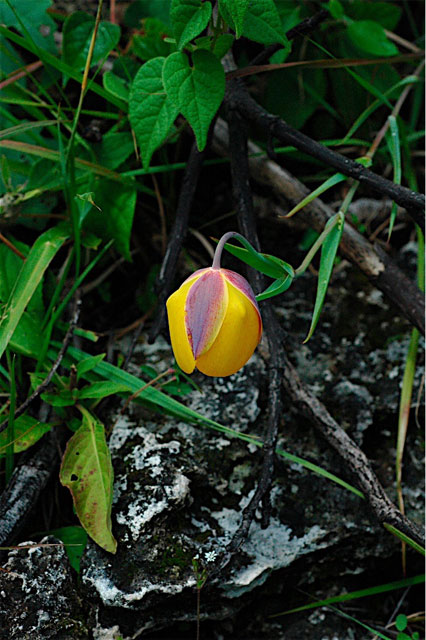
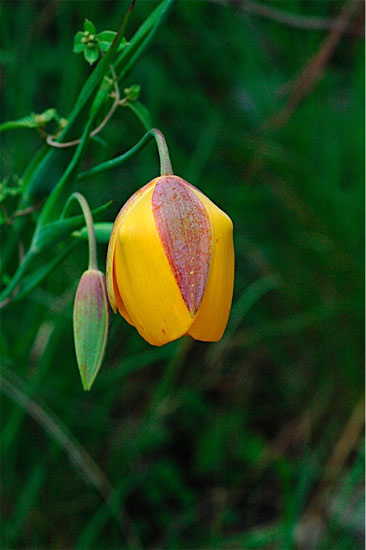
Calochortus barbatus (Kunth) Painter is a summer grower from high elevations in Mexico where it grows on volcanic soils in forests. The name derives from the Latin barba, barbed or bearded. This is a quite variable species with erect to somewhat lax, glaucous stems bearing two or more 2.5-3 cm descending to pendant flowers. Height: to about 60 cm. It is a species in the Cyclobothra section of Calochortus, subsection Barbati. This species is quite widely distributed, ranging from southern Chihuahua to central Mexico and Oaxaca. It is common at elevations between 2200-3100 meters above sea level. It can be found in open fields, scrub-brush, Quercus forest, Pinus-Quercus forest, and roadside cuts. This species was featured in Mariposa,Volume 4,#1. The first two photos by Sheila Burrow. The second picture was taken with the flower pegged so that it was front on instead of hanging, to see the marvelous interior. The next three pictures by Dennis Szeszko were taken in-situ in September near Texcoco in Mexico State where there are distinct rainy and dry seasons. This plant grows alongside Tigridia vanhouttei in rocky soils at the locality where these pictures were taken. Photo 6 by Caroline Langensiepen.
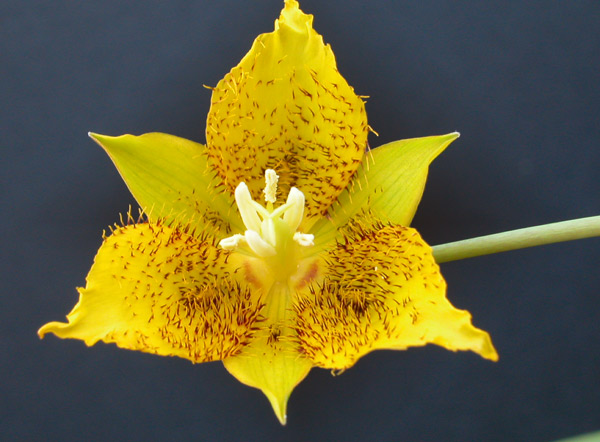
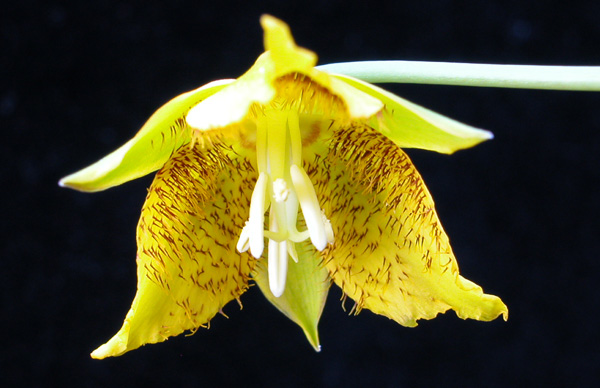
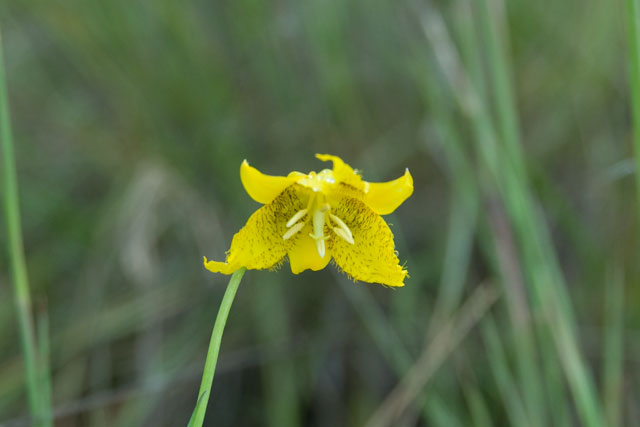
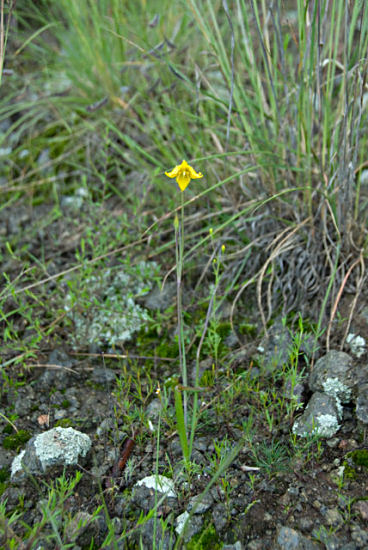
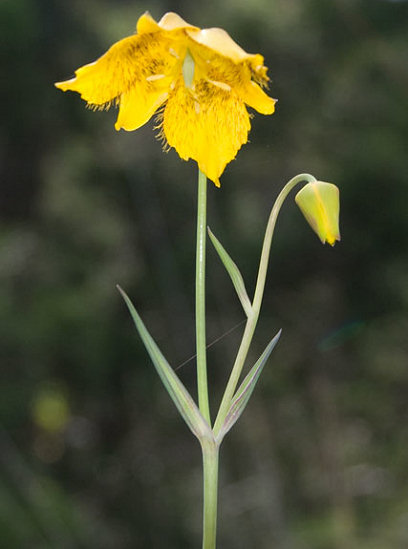
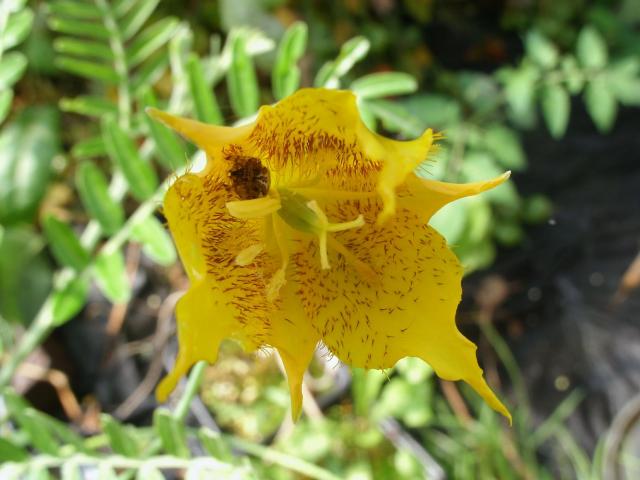
The photos below are from a population that occurred at an elevation of about 8000 ft above the city of Pachuca (September 2007). Photos by Mary Gerritsen.
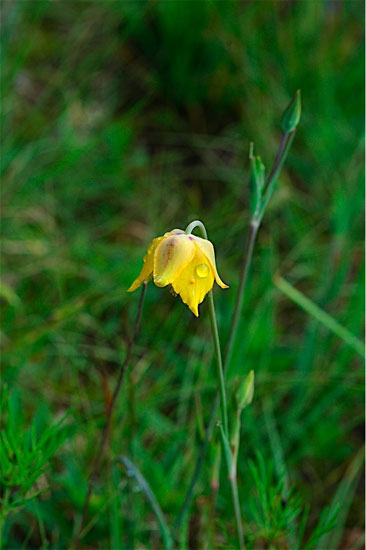
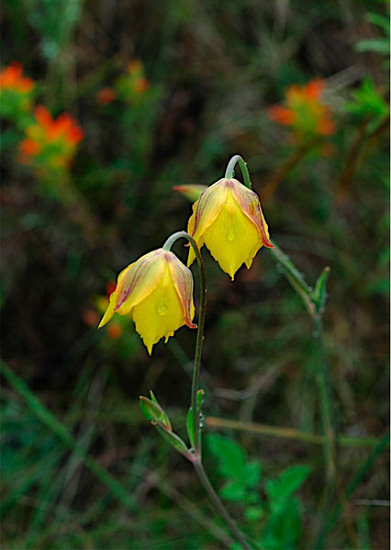
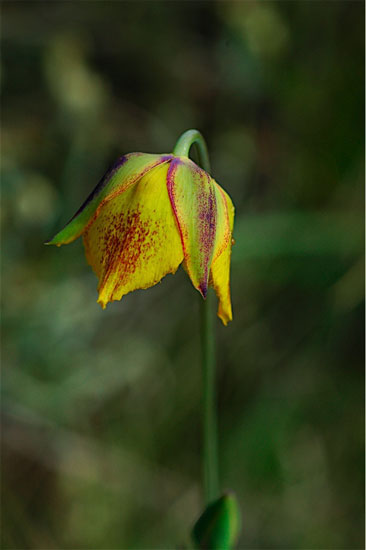
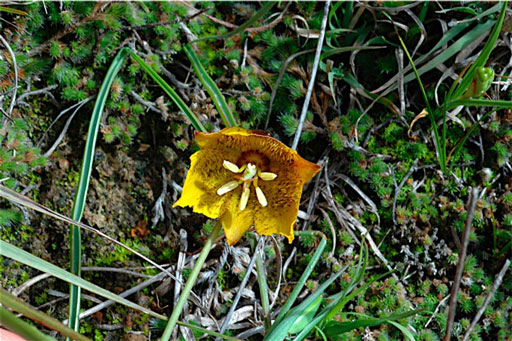
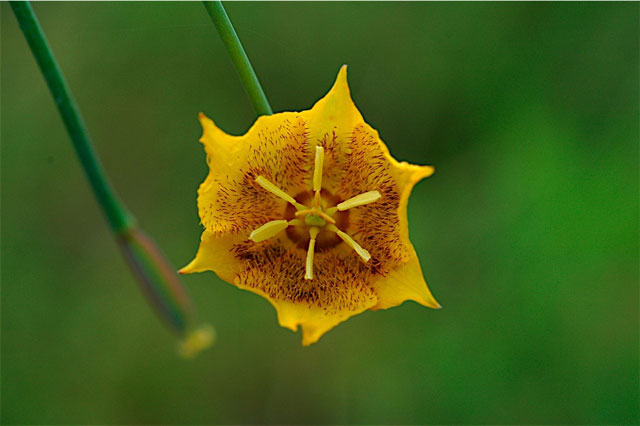
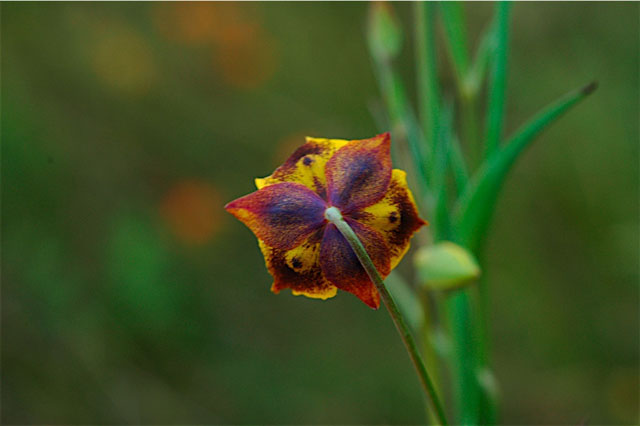
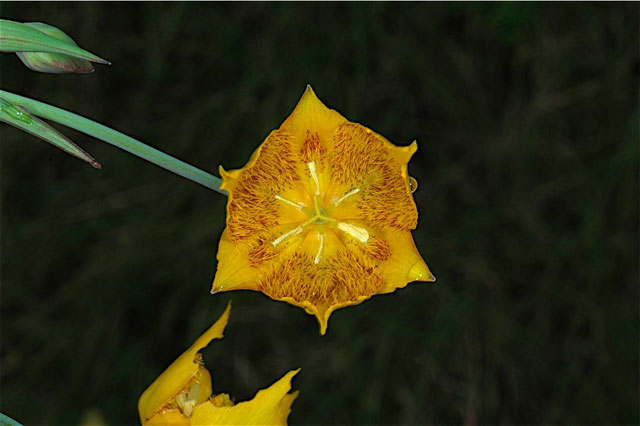
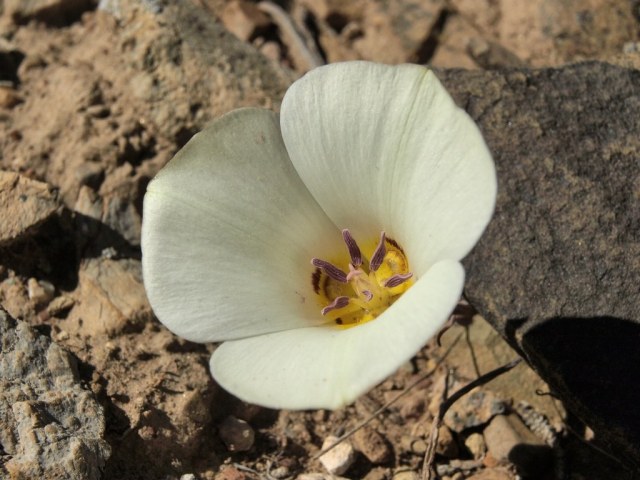
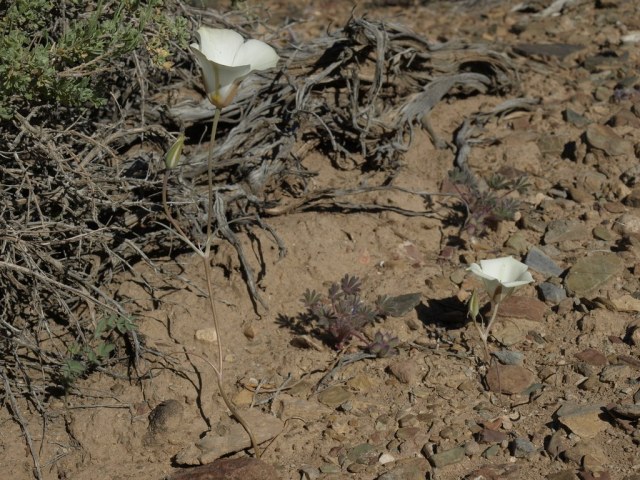
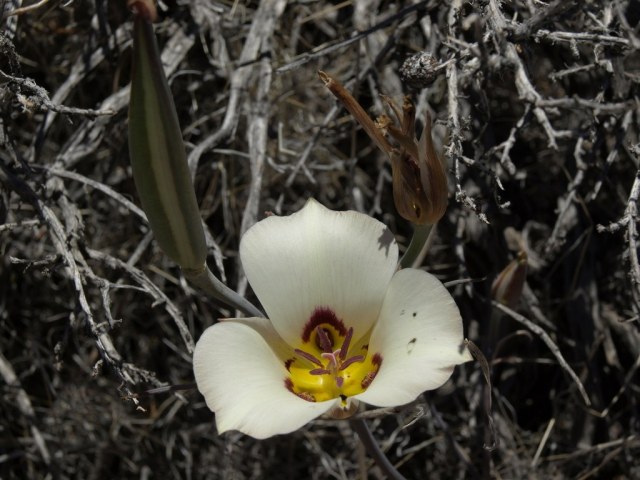
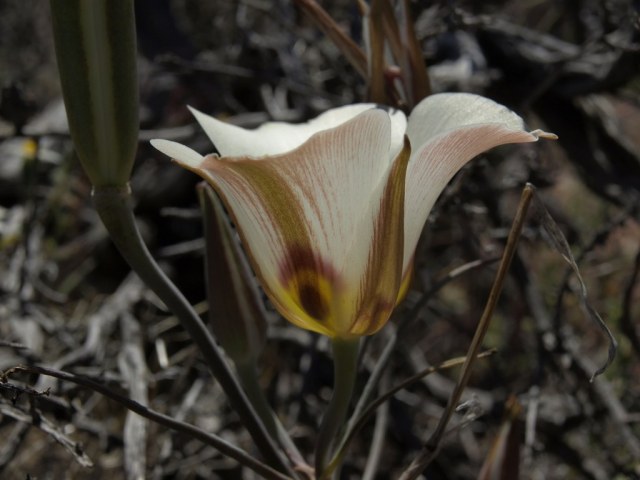
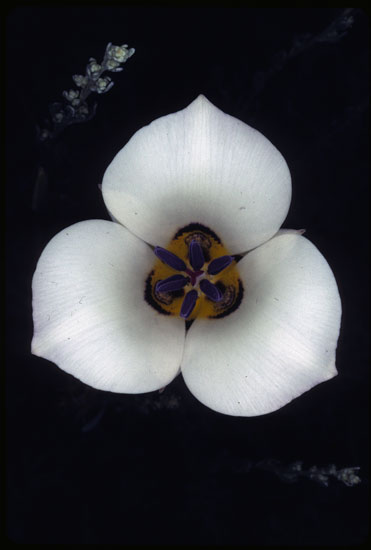
Calochortus bruneaunis A.Nelson & J.F.Macbr., named for Bruneau Creek in southern Idaho, is a wonderful species, with erect, 10-40 cm, usually unbranched and often bulbiferous stems bearing one to four flowers. It is a widespread species, found in Idaho, Montana, Oregon, Nevada and eastern California in high desert scrub, pine and juniper woodlands, at elevations of 700-3200 m. Comments from Hugh McDonald of the Calochortus Society: "A cold-winter desert species. Stratify the seeds. After they sprout, water once a week until they are an inch high, and then water once a month." Photos 1-4 from iNaturalist taken by Jim Morefield and shared under a CC BY-NC license. The first two photos were taken in Nevada County, California in June and the next two in the state of Nevada in June. The last photo of a plant in the White Mountains, Inyo County, California, by Ron Parsons.
Calochortus species c-d - Calochortus species e-lo - Calochortus species lu-n - Calochortus species o-r - Calochortus species s - Calochortus species t-u - Calochortus species v-z - Calochortus hybrids - Calochortus index