Dahlia Cav. is a genus of about 37 species in the family Asteraceae. It is named in honor of Dr. Andreas Dahl. The genus is often characterized by showy flowers and is usually tuberous rooted with species from Mexico, Central America and Colombia. From these few species, thousands of selections and hybrids had been made.
Dahlia species and related genera was the subject of the Pacific Bulb Society topic of the week in July 2003. It was introduced by Johannes-Ulrich Urban. He provided the following information about cultivation. All dahlias are easily grown from seed, if treated like tomato seed, i.e. given an early germination and then greenhouse treatment until they can be planted out after the last frosts are over. Many of them will flower the first year. Some may flower the first year but reach their eventual height in subsequent years. In cold winter countries the tubers will have to be dug up in autumn, usually after the first frost has destroyed growth. Tubers should be stored cold but frost free and should NOT be totally dry. They may survive total dryness but will suffer. I put mine in large plastic bags only one big tuber per bag. I leave the bag wide open until the surface of the tubers has become totally dry and then close it but not hermetically. I watch for condensing water inside the bag and if this occurs I open it again and let everything dry a bit more for some days. I have had no losses this way. The emerging shoots in spring are in great danger of slug damage, even total loss is possible! Click for the rest of his introduction.
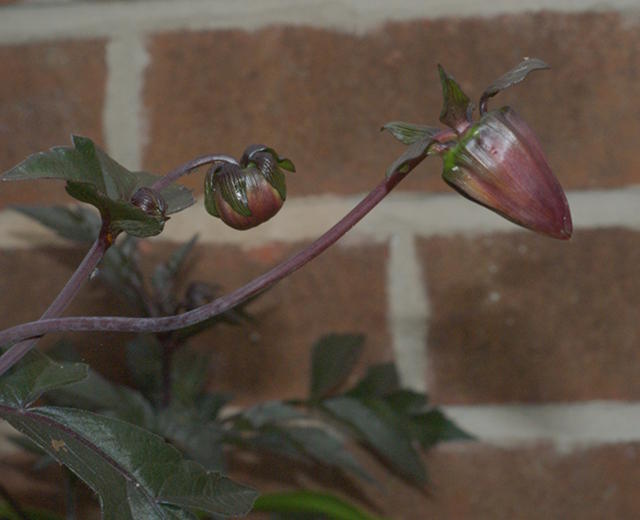
Dahlias go on flowering as long as the old flowers are removed. The first photo is of Dahlia pinnata hybrid seed and the second shows a new bud and a spent flower. Successful cultivation requires distinguishing the pointed usually squishy (wet when squeezed) object on the right and cutting it off. The stems of Dahlias are hollow; they were used as water pipes by the indigenous people. After winter, growth usually starts from an 'eye' around the old stem at the top of the tuber, for which reason it is important to preserve this part of the root. Photographs by David Pilling.
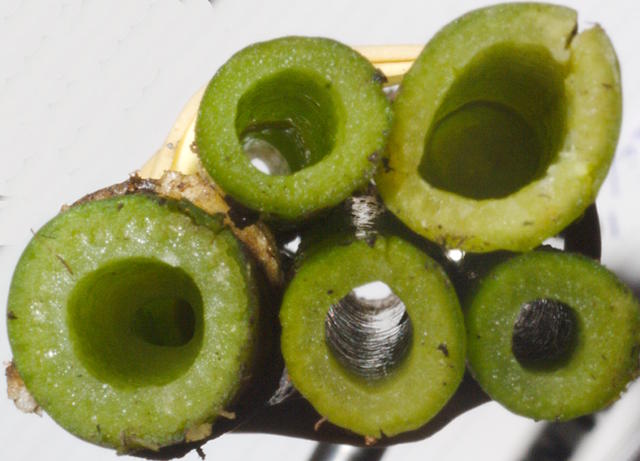
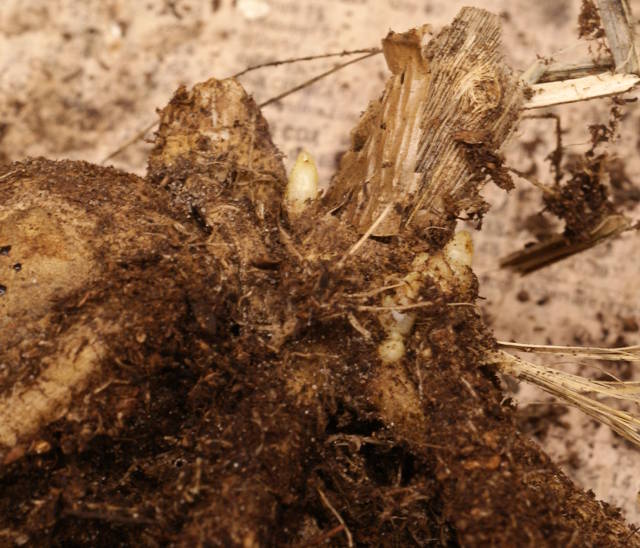
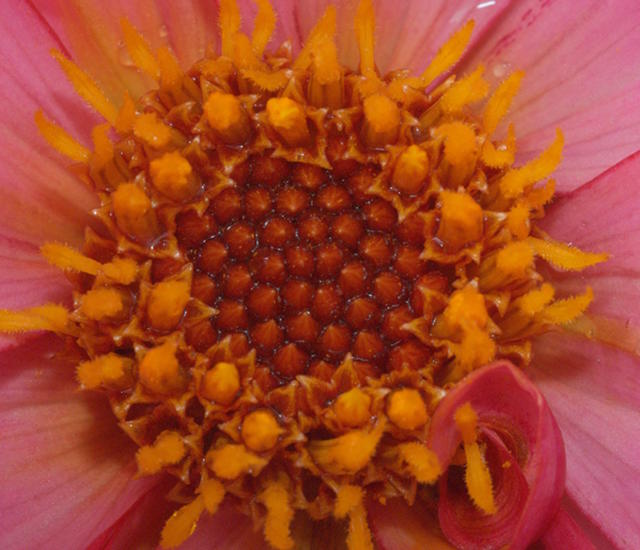
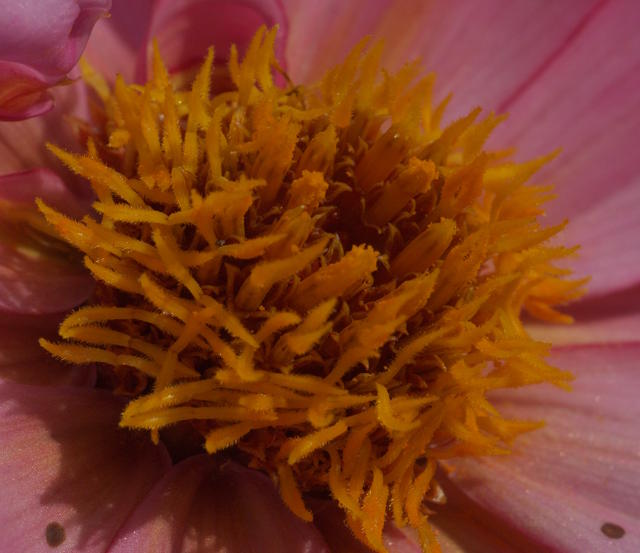
The flower is typical of Asteraceae with the centre being formed from lots of mini-flowers or disc florets; the place of the petals in normal flowers is taken by special ray florets; the florets are contained in a structure known as a capitulum surrounded by involucral (wrapper) bracts. Photographs by David Pilling.

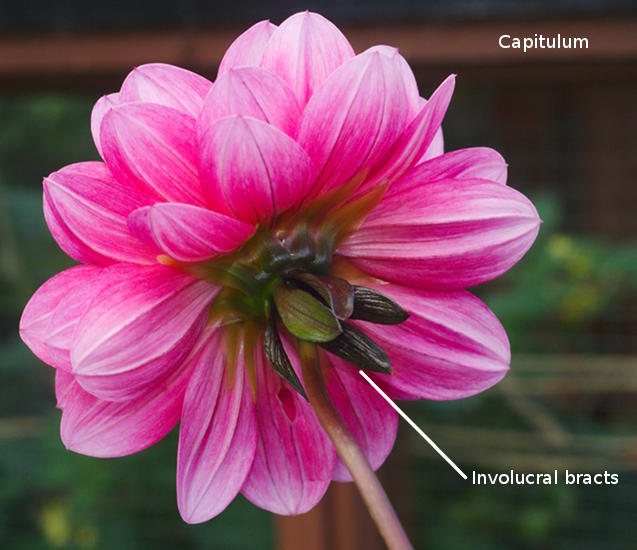
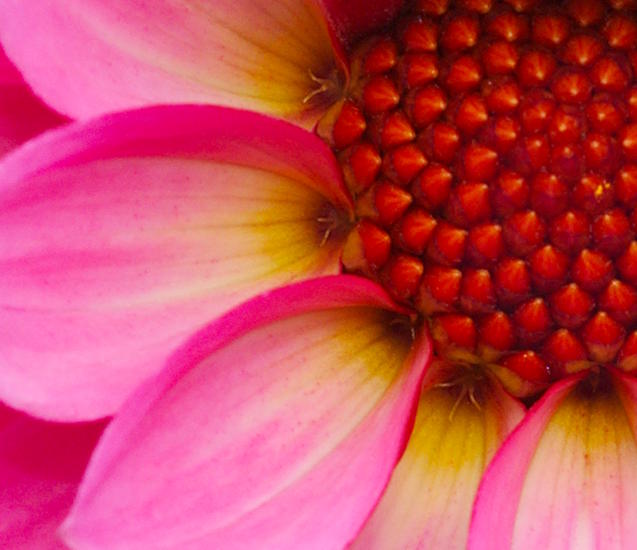
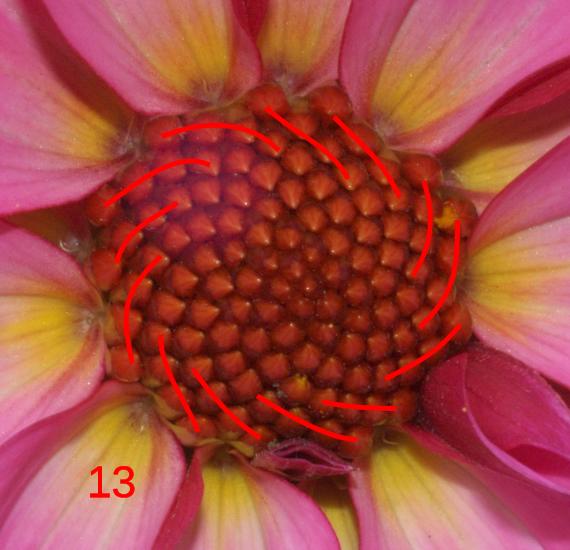
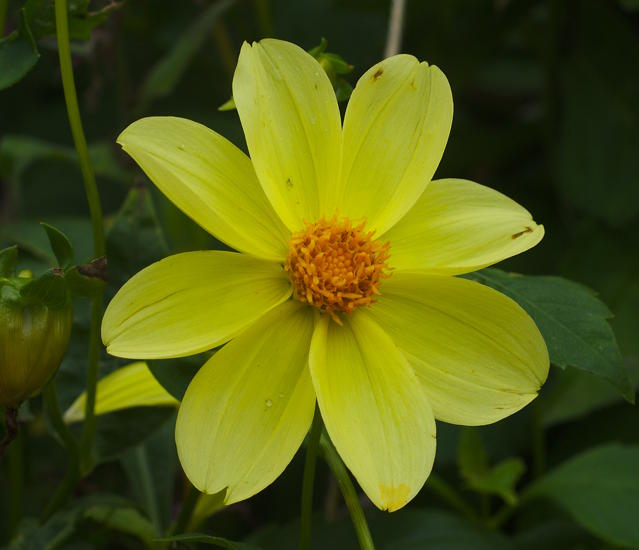
The disc florets appear to be arranged in spirals known as parastiches and are an optical illusion. The photos below show the florets, the clockwise and anti-clockwise spirals. Such spirals only appear if the florets are created with an angle of 137.5° (the 'golden angle') between them and if the oldest are at the outside. Counting the spirals reveals 21 anticlockwise and 13 clockwise; as the theory predicts, these are consecutive numbers in the Fibonacci series (1+1+2+3+5+8+13+21...). Attempting to pack the most florets in by positioning new ones as far away as possible from existing ones gives the same result. It comes as little surprise that single flowers have eight ray florets.
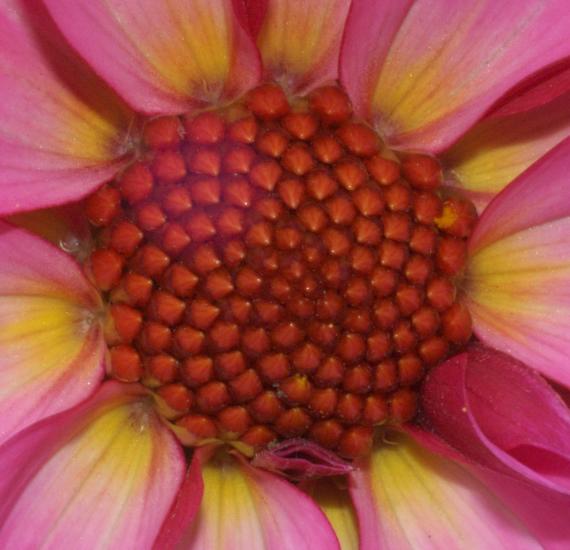

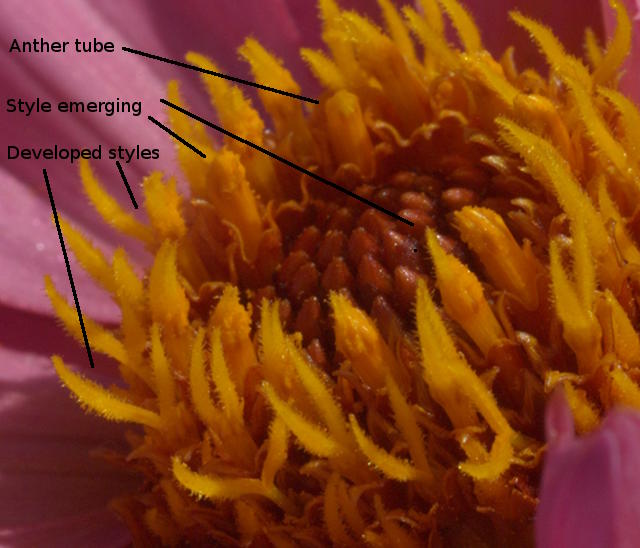
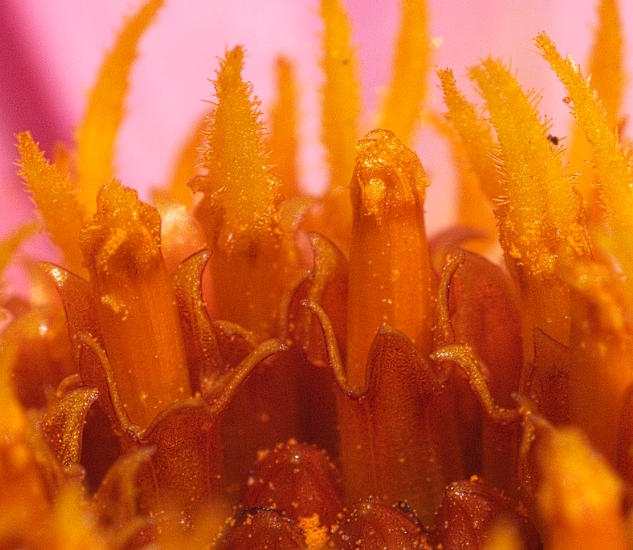
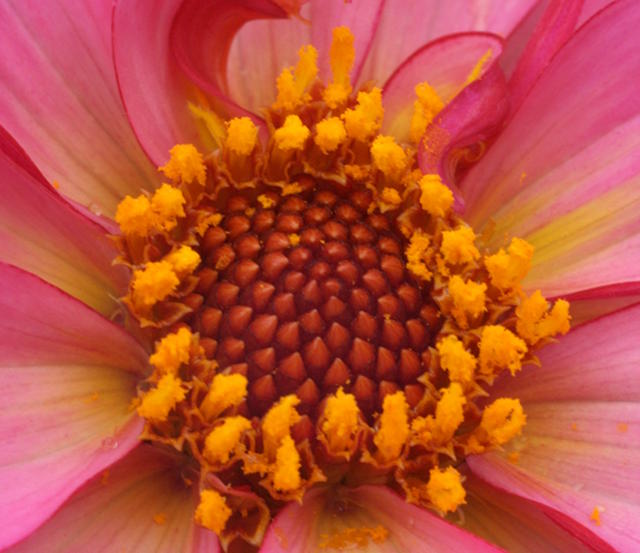
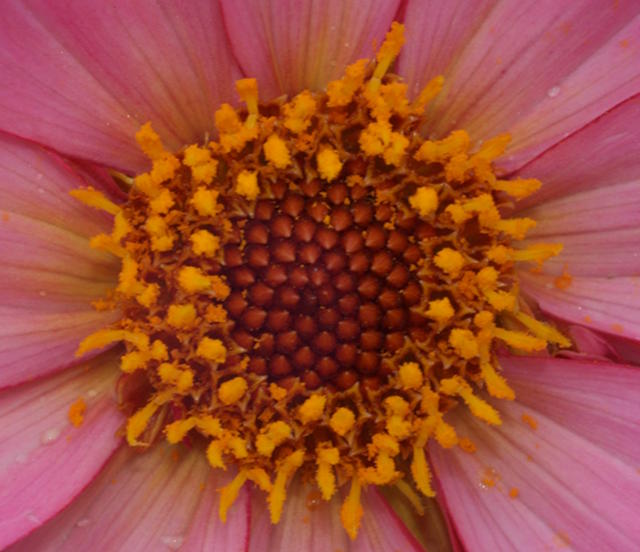
In the pictures above all the florets in the centre of the flower are closed. When they open, a tube formed from five stamens fused together emerges; the style grows through this pushing out pollen. The result is that each floret is a source of pollen first and then turns into a female flower; florets open from the outside of the flower inwards. The first annotated photograph details the parts of the disc floret, the second is a close up of an anther tube, and the remainder show how the flower develops from a few pollen bearing florets around the outside to a mass of pollen receptive styles.
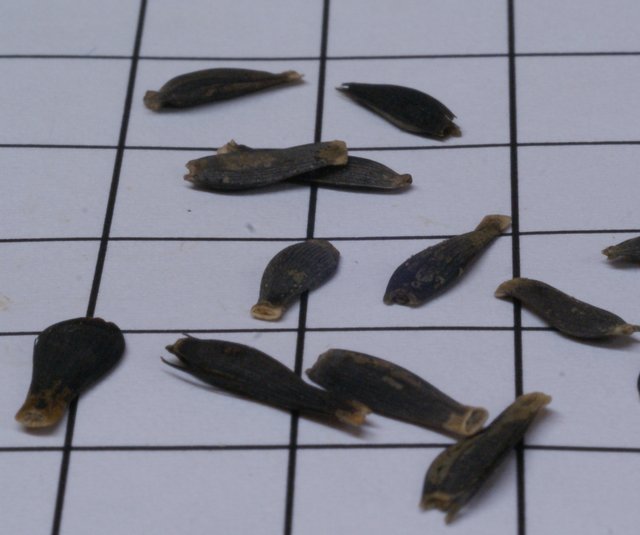
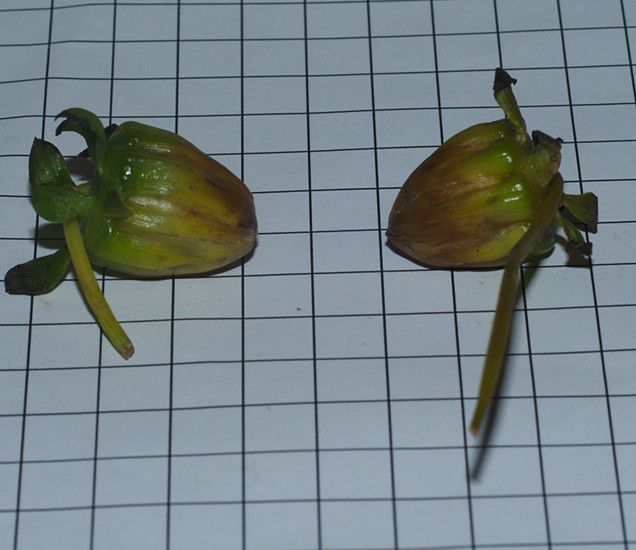
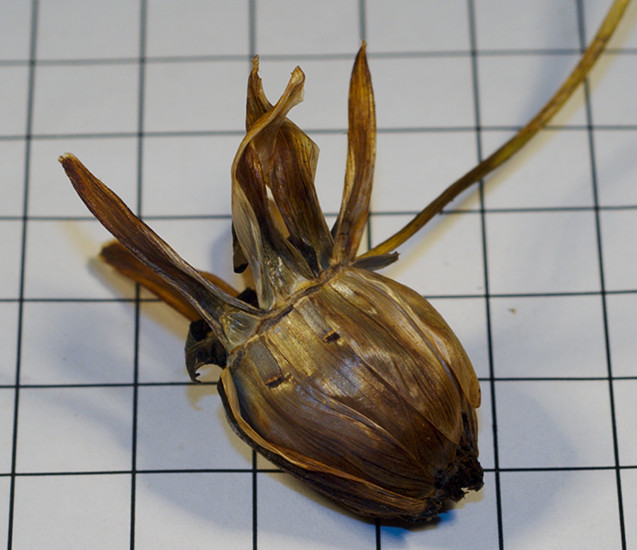
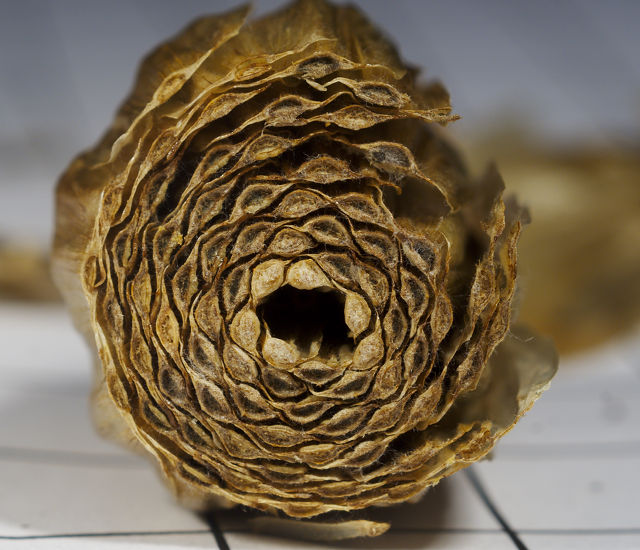
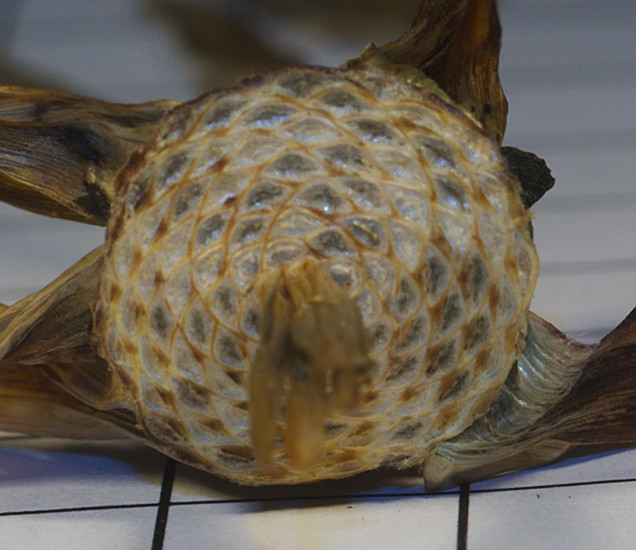
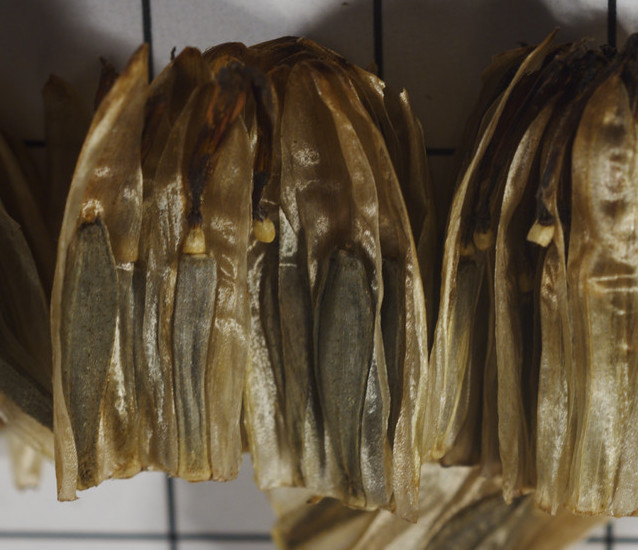
This sequence of photos starts with two seed heads on a 10 mm grid; ideally they should have been left on the plants longer. The second photo shows one of them after drying. This seed head was split roughly along the line of the stem. Photo three shows the rear of the front section, which is a spiral containing seeds. Photo four shows the face of the back part; here one can see an echo of the spirals of florets in the flowers (the lines in the photo actually occur). The last two photos show the seeds unrolled, and an individual seed.

Dahlia Cultivars is our wiki page where pictures of some commonly named and unnamed dahlias that are popular garden plants are pictured.
See this article from 'The Plantsman' by Keith Hammett (reproduced with permission of the author and publisher) on Dahlia breeding, including extending the range of Dahlia imperialis colors beyond lavender and white.
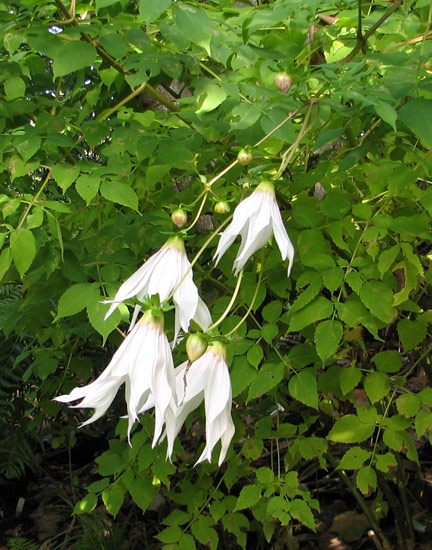
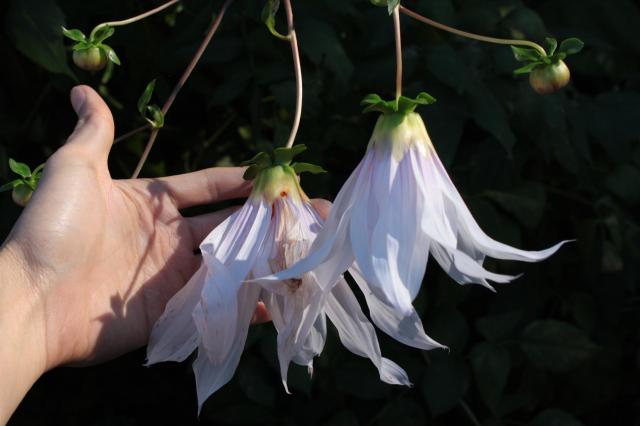
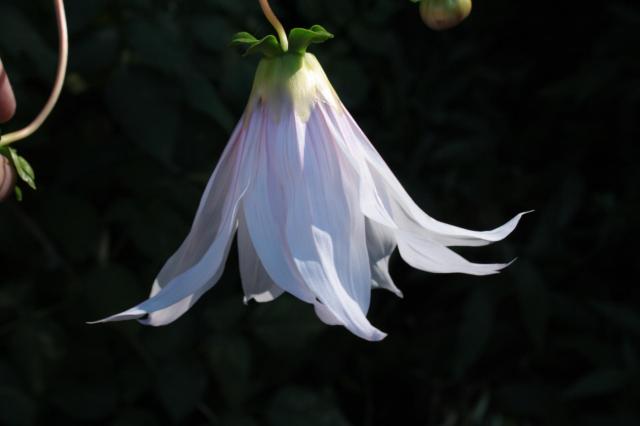
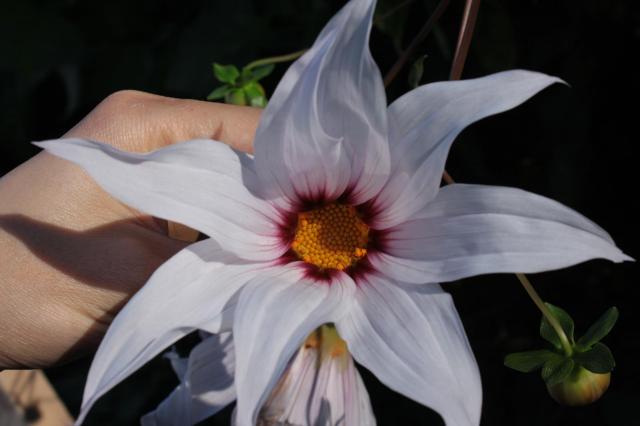
Dahlia campanulata Saar, Sorenson & Hjert. is native to Oxaca, Mexico and was described in 2003. The species is distinguished by the exceptionally large, elegant, pendulous and campanulate flowers that are white to light pink with a darker center. Leaf bases have petioles that clasp around the deeply sculpted stem. The tubers are enormous and can grow to 0.5 m (1.5 ft). Plants are also large, reaching 2.5 m (8 ft). The photo below was taken by Nhu Nguyen at the UC Botanical Garden of a plant that matches the description of the species, except that the stems are smooth and not sculpted. Regardless, it is a beautiful species with large pendant flowers and should be planted in many gardens.
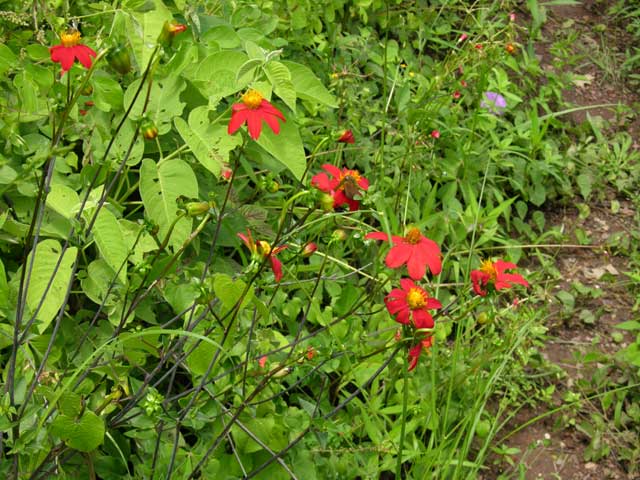
Dahlia coccinea Cav. is an extremely common species in most of the Mexican altiplano. The colors of the flowers are variable and range from orange to red with every tone in between. It prefers cool conditions and can be seen growing at an altitude between 1500-2500 meters above sea level in oak or pine-oak forest. It likes growing in rich, forest humus but on a few occasions it can be seen growing as a lithophyte or even as an epiphyte. It blooms from August-October near the end of the rainy season. Photos 1-2 are closeups of flowers by Arnold Trachtenberg. Photos 3-5 were taken by Nhu Nguyen at the UC Botanical Garden.

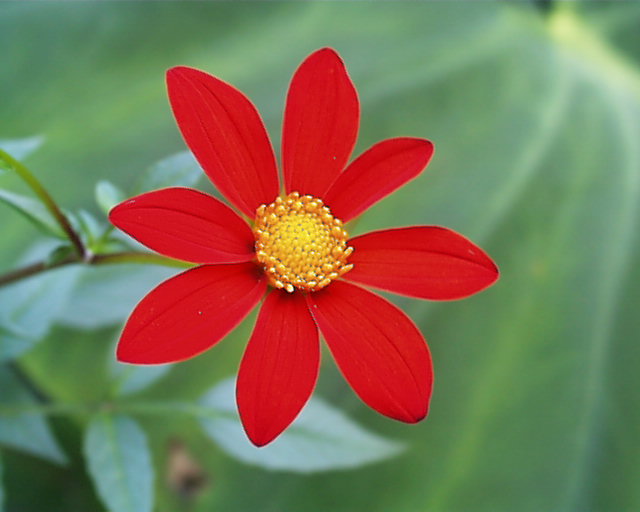
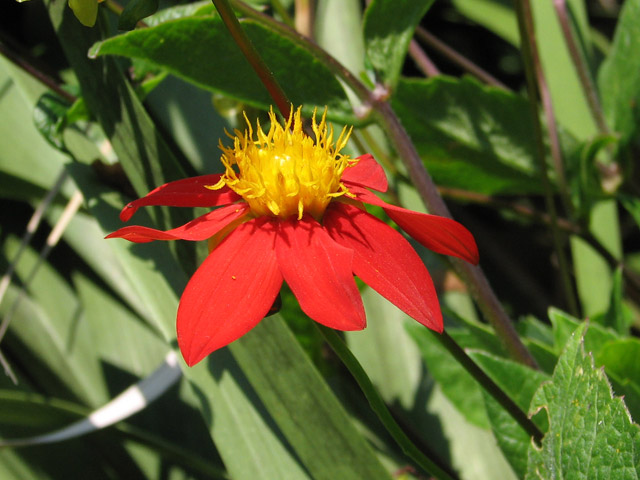
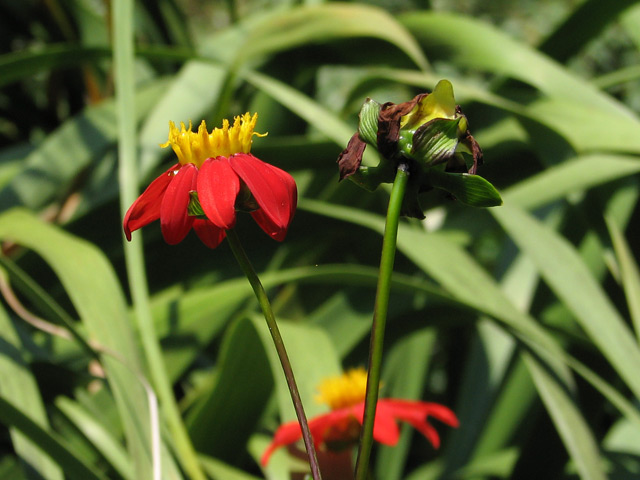

The photo below by Dennis Szeszko was taken in-situ in Mexico State at 1500 meters above sea level at the ecotone between oak forest and deciduous jungle.
Dahlia imperialis Roezl ex Ortgies is native to Central from Mexico to Panama. It is known as a tree dahlia because it can reach enormous heights up to 9 m (30ft). It is a winter dormant and summer growing species. New growth appears from either the tubers or the old stems (in milder climates) in the spring. Plants will continue to put on height until the fall when they will bloom. In climates where early frost occurs, the plants will not have a chance to bloom before they go dormant again for the season. During their growing phase, fertilize them occasionally and keep them well watered in full to partly full sun. Plants must be in the ground to grow and bloom well. In mild climates such as the San Francisco Bay Area, old stems will not die down completely and they must be cut down once every few years to induce more robust, fresh, and cleaner looking growth from the base. Stem cuttings can be made in the fall after the flowers have faded. Cut the stems into sections with 2-3 nodes and plant them horizontally (or at a slight slant) either directly in the ground or in a long tray with a well-drained mix. Keep the cuttings from freezing temperatures. New shoots appear in about 2 months and the cutting can be planted in the ground when the weather has warmed up.
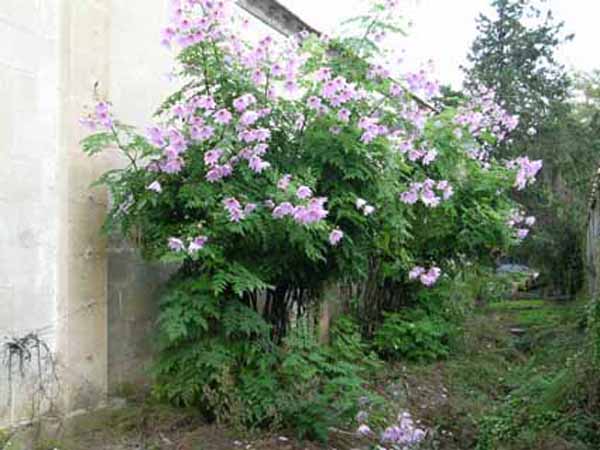
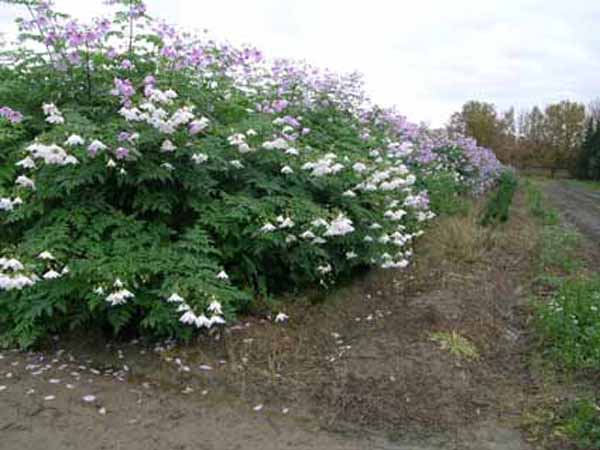
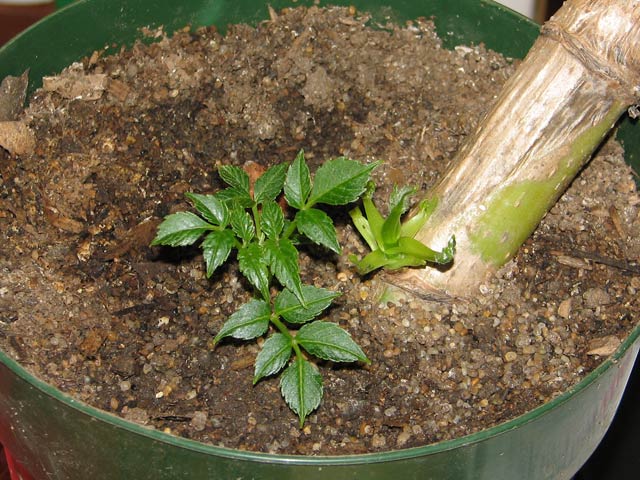
Photo 1 was taken by Rob Hamilton. Photos 2-3 were taken by Lauw de Jager of plants that started flowering 6-7 November 2005; if no severe winds or frosts intervene flowering will last until Christmas. The height is about 4 m (15 ft). Photo 2 was of an old plant against a 6 m (20 ft) high south facing wall of a wine cave, where it receives water from the roof. The plants was staked against the wall in August. All the shoots in the early part of the season were removed for propagation. Photo 3 shows the field nursery where the plants were planted out in June 2005 very close together; they support each other, while the outer stems tend to fall over. Photo 4 was taken by Nhu Nguyen of young sprouts from a stem cutting.
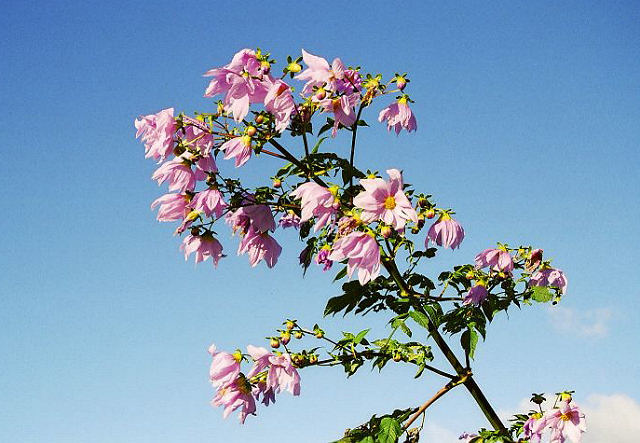
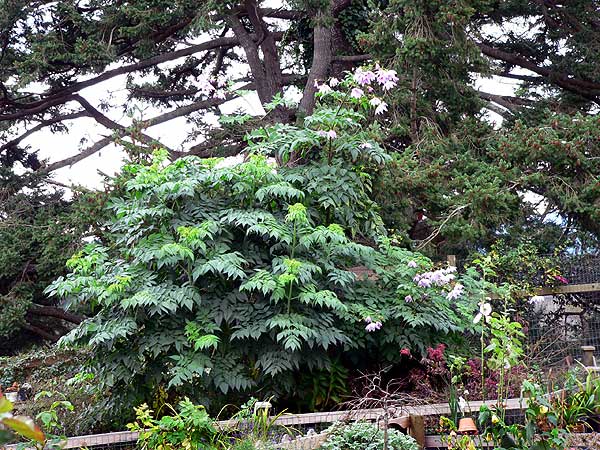
Plants in the North Coast of California, US, bloom in late November. Photos 1-2 were taken by Susan Hayek of plants in the southeast part of the yard with a dog pen and a large Douglas Fir behind. Photo 2 shows a close-up of the flowers. Photos 3-4 were taken by Bob Rutemoeller at the Mendocino Coast Botanical Gardens.
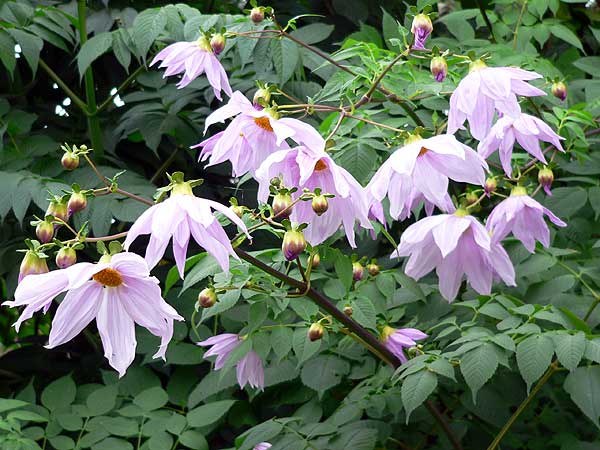
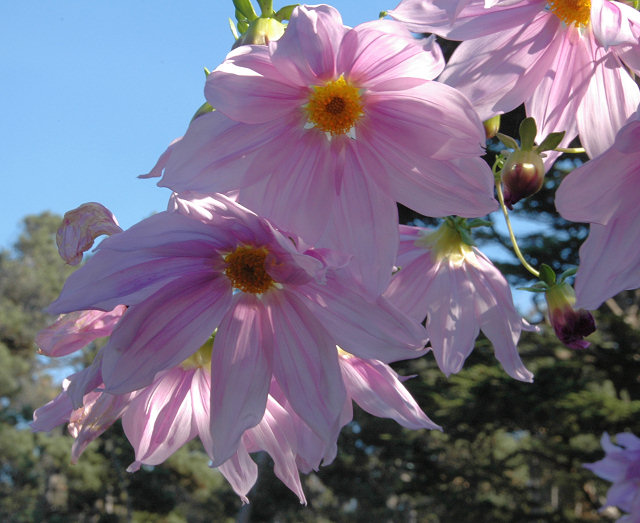
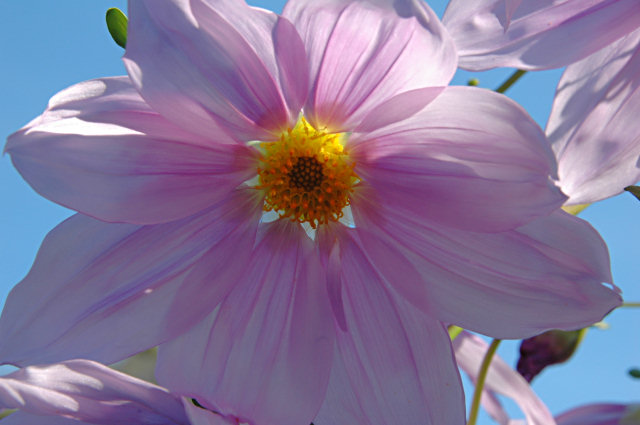
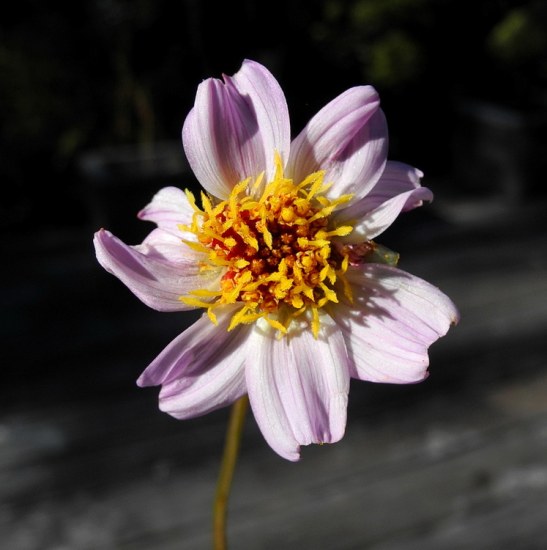
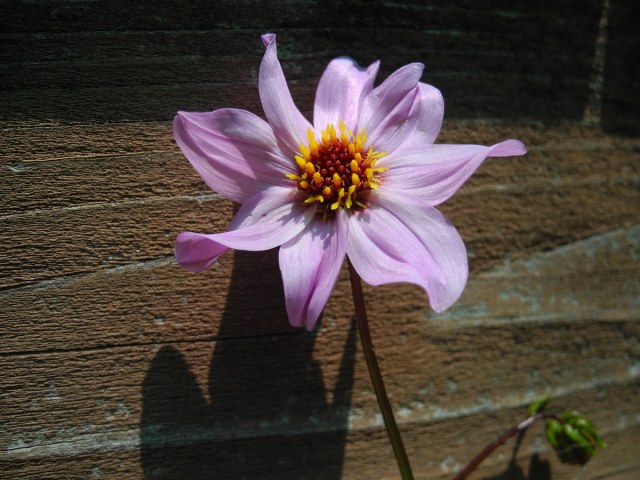
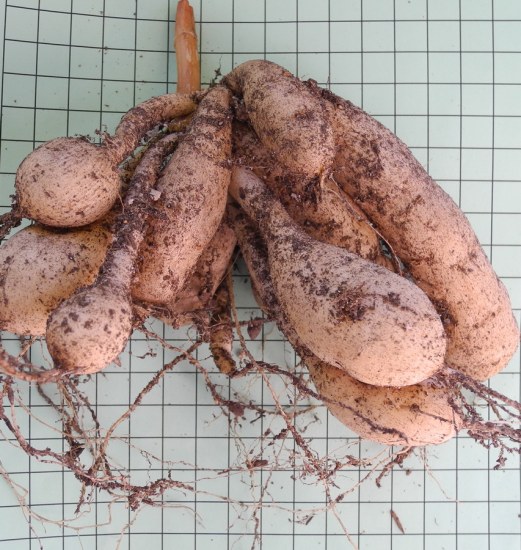
Dahlia merckii Lehm. is native to Mexico and grows to 2.5 meters (8 ft). It has shiny divided foliage on branching stems and single flowers in shades of lilac, white, and pink in late summer and autumn. Various sources report it is hardy only in areas without prolonged frosts and needs moist soil while in growth. Photos from Mary Sue Ittner who grew it from seed she started in May and had flowers in August that same year. The first two photos were taken the first year of flowering and the others the second year with the tuber on a 1 cm grid.