Erythronium is a genus of about 20 species in the Liliaceae family. Most of the species are from Western North America but there are also a few in eastern North America and Eurasia. They are spring blooming woodland or mountain meadow plants enjoying humus rich but well drained soil. Erythronium species and cultivars p-z are found on this page.
Erythronium a-g - Erythronium h-o - Erythronium p-z - Erythronium index
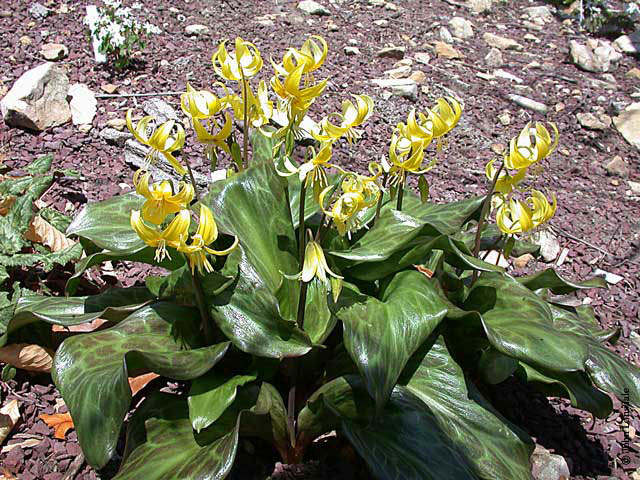
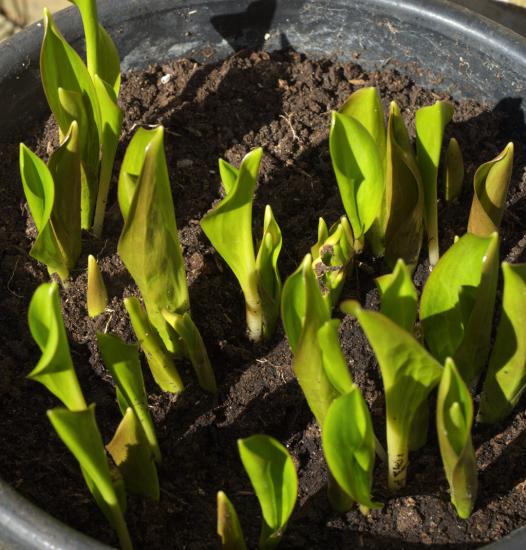
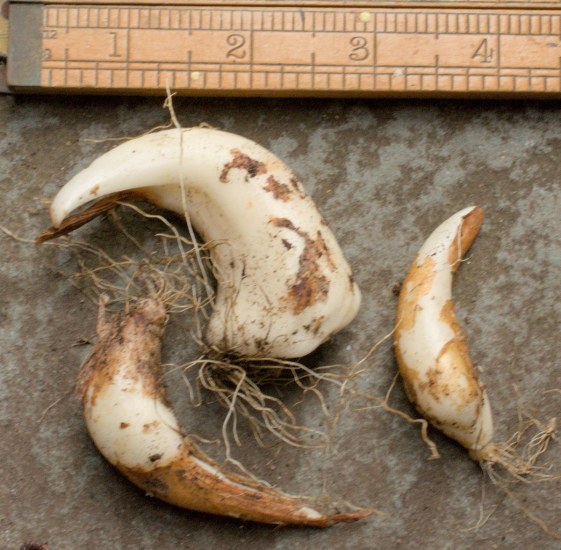
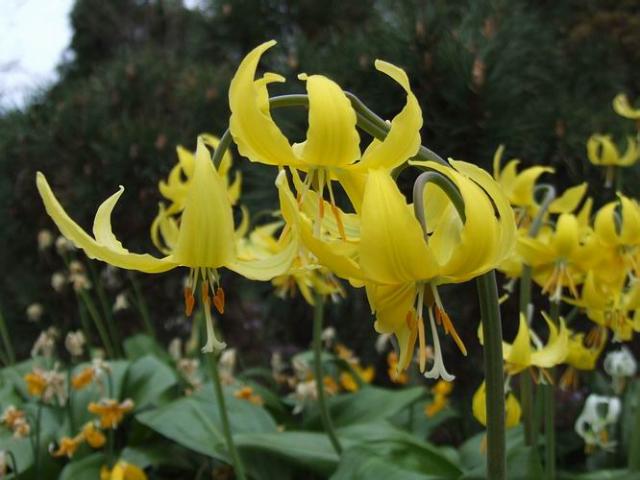
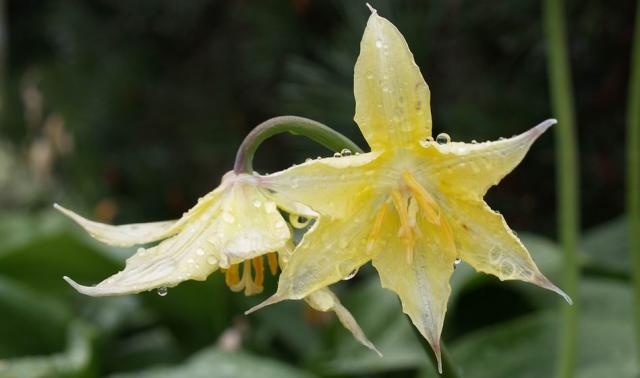
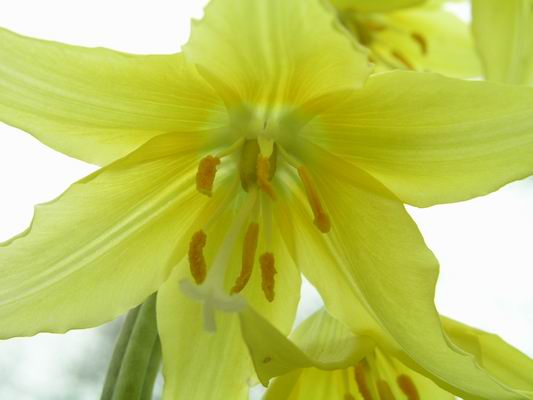
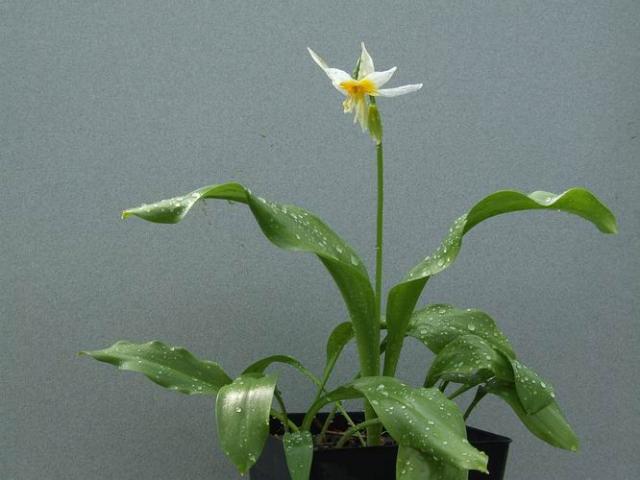
Erythronium 'Pagoda' is a yellow flowered erythronium that is a cross between E. tuolumnense and E. californicum 'White Beauty'. Photos 1 and 2 by John Lonsdale; photo 3 of shoots and photo 4 of bulbs by David Pilling.

Erythronium pluriflorum Shevock, Bartel & G. A. Allen is a rare species endemic to California, specifically Madera County, where it grows in isolated populations along the San Joaquin River and its tributaries in the Sierra Nevada. The plant was first described in 1990. It has multiple yellow flowers on each scape.Original photo from CalPhotos taken by Dean Wm. Taylor under a Creative Commons Attribution-ShareAlike 3.0 (CC BY-SA 3.0) license.

Erythronium propullans A. Gray is a rare plant endemic to Minnesota. The plants are believed to be a mutation Erythronium albidu, and evolved following the most recent ice age. The plants produce stolons (flowering plants produce one, nonflowering plants produce several), vegetative clones being their primary mode of reproduction. The plant was described as a new species by botanist Asa Gray in 1871. Public domain photo courtesy of the US Fish and Wildlife Service.

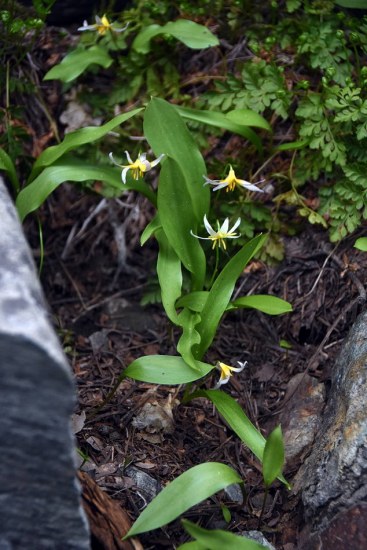
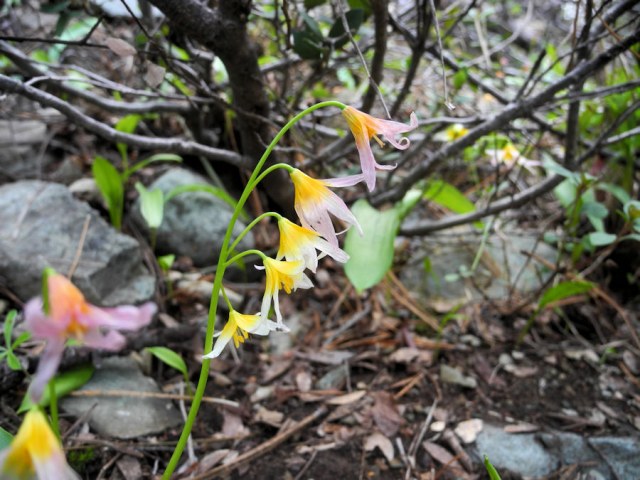
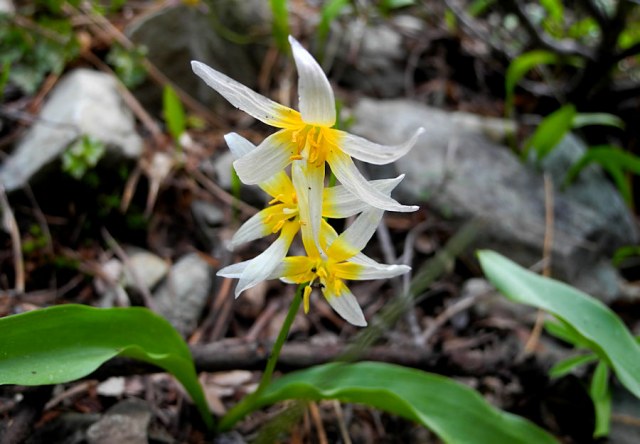
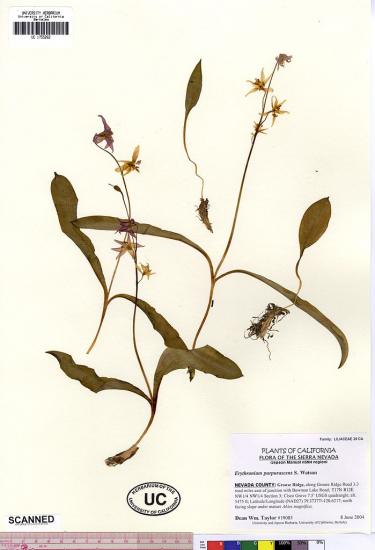
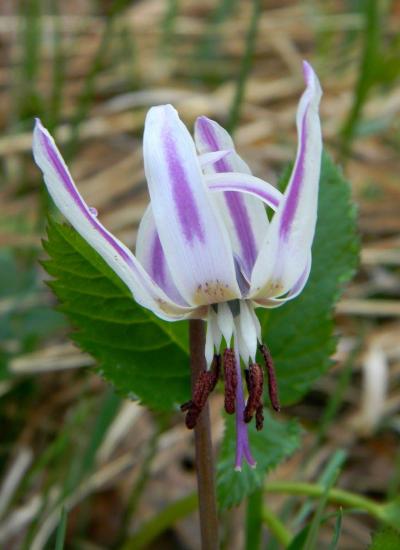
Erythronium purpurascens S.Watson (syn. Erythronium grandiflorum var. multiflorum Torr.) is a species endemic to the Cascade and Sierra ranges in California. The flowers open white with yellow bases and age to purple. The leaves are plain green. First two photos by Wikipedia user Jimmyleg under a Creative Commons Attribution-ShareAlike 3.0 (CC BY-SA 3.0) license. Photos three to five were taken by Mary Sue Ittner and Bob Rutemoeller in the Lakes Basin Recreational Area of California. The last photo of an herbarium specimen courtesy of Dean Wm. Taylor
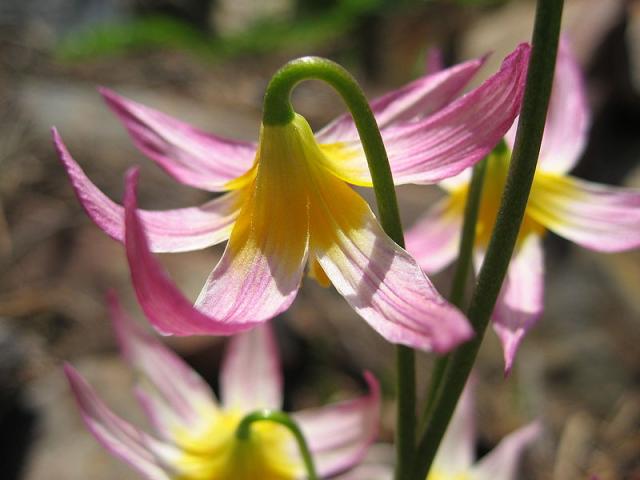

Erythronium pusaterii (Munz & J.T. Howell) Shevock, Bartel & Allen is endemic to central Tulare County, California. It is known from only about ten occurrences in the southern Sierra Nevada's. The scapes reach around 15" and have white flowers with yellow bases, aging to pink. Photo courtesy of John Game, used from CalPhotos under a Creative Commons Attribution-ShareAlike 3.0 (CC BY-SA 3.0) license.
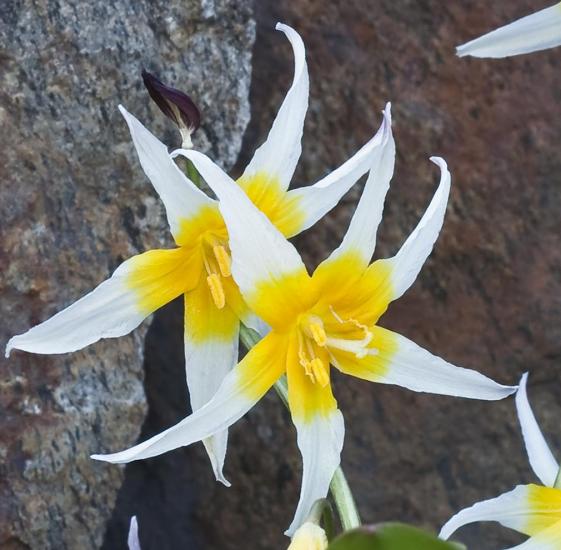
Erythronium quinaultense G.A.Allen is a rare plant species endemic to a small region around Lake Quinault in Olympic National Park, Washington. Flowers have yellow, white and pink bands perpendicular to the veins, 1-3 per scape. The Washington State Dept. of Natural Resources produced this document on the species, describing the habitat and tips for identification, as well as a distribution map. Photo from iNaturalist taken by gina_smith in May and shared under a CC BY-NC license.
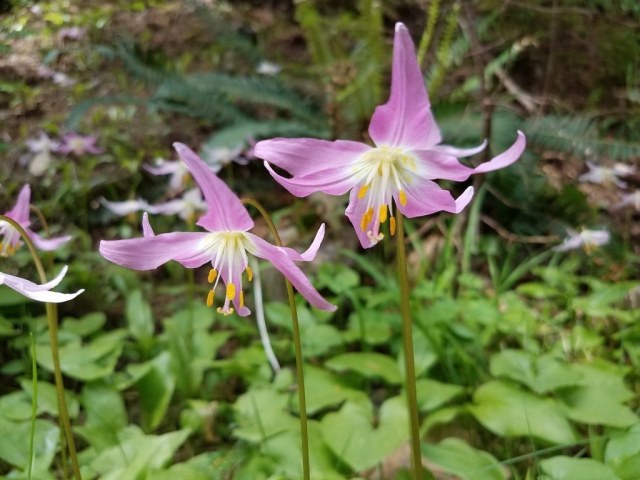
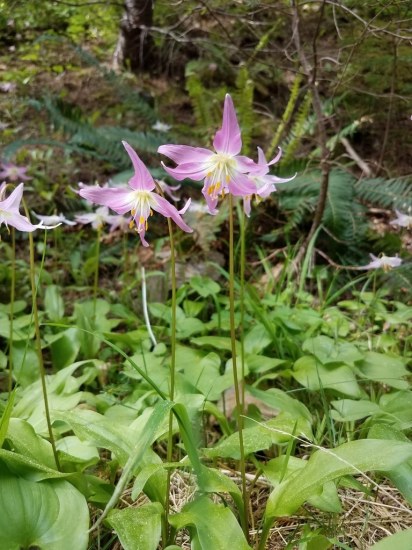
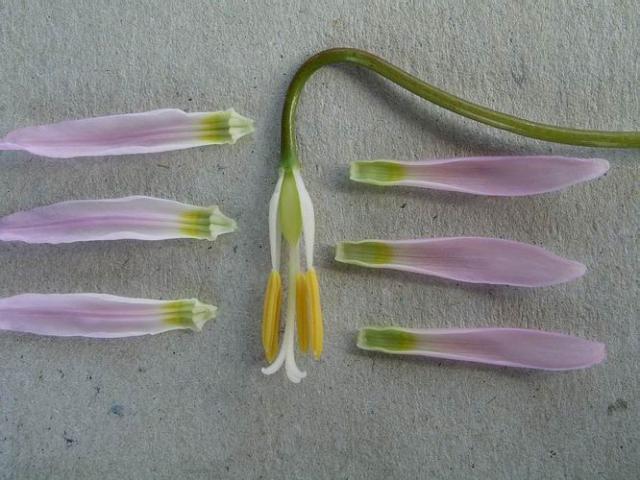
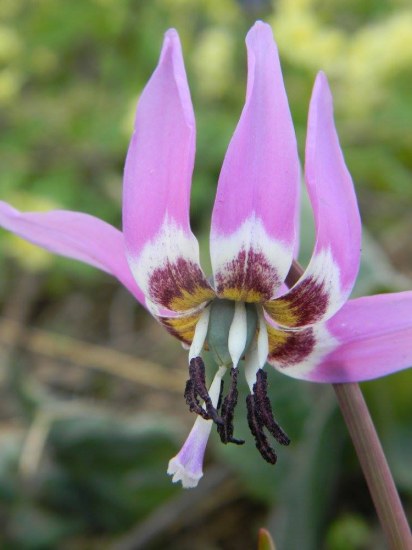
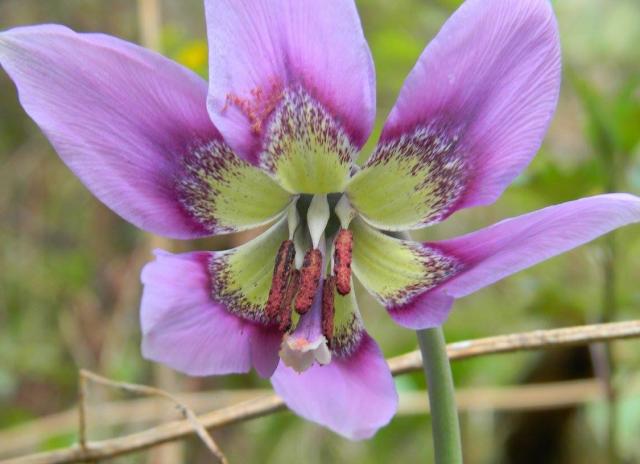
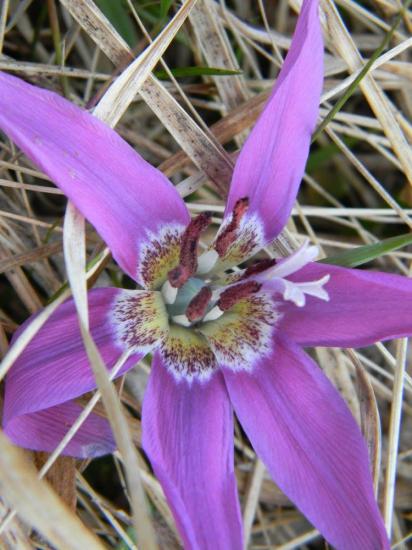
Erythronium revolutum Smith is native to the Coast Ranges from southern British Columbia south to central California. It prefers well drained habitats that are moist (woods near streams.) It has dark mottled leaves and rose pink flowers with yellow centers and auricles at the base of the petals. Photos 1-2 by John Lonsdale, 3-4 by Mary Sue Ittner, and 5 by Kathleen Sayce. The last photo from Mike Rummerfield who wrote that his plants were slowly colonizing by seed and tuber clump increase.
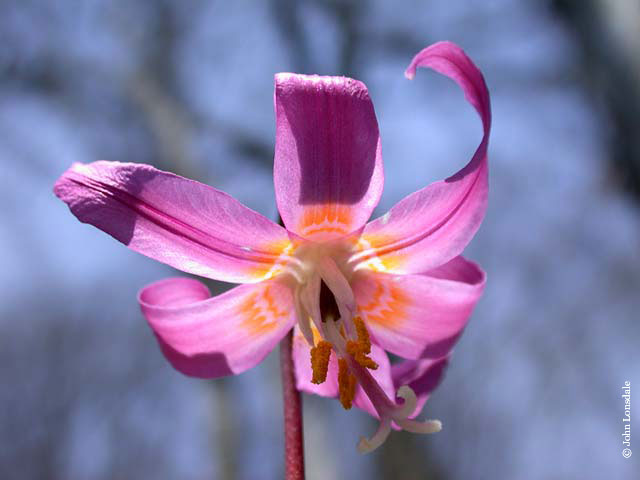
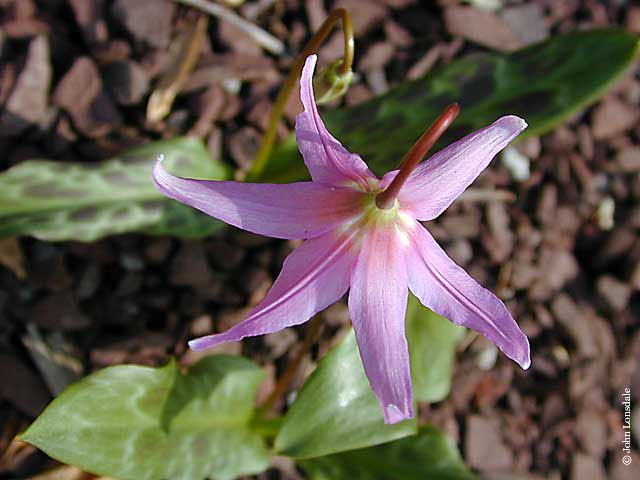
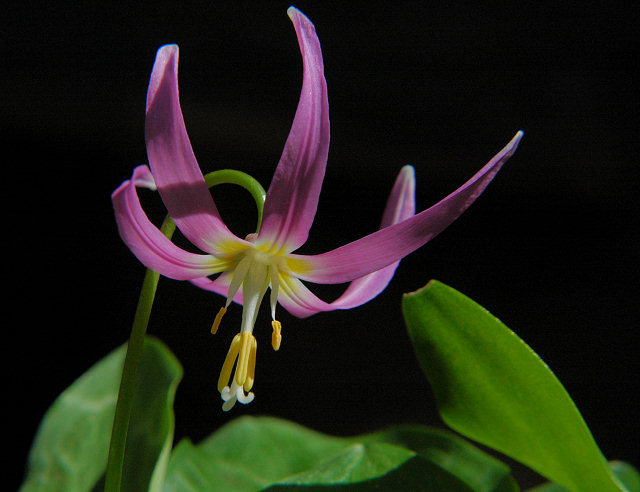

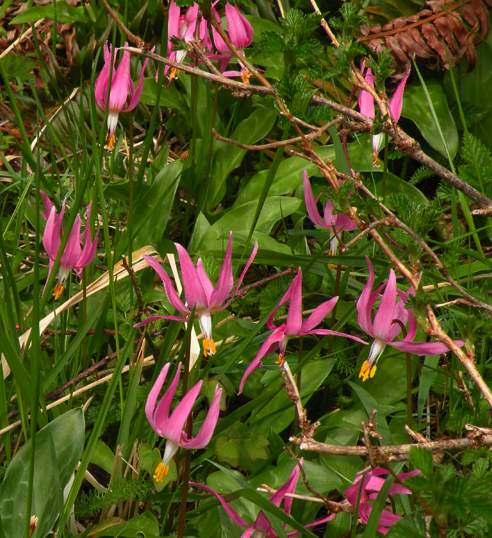
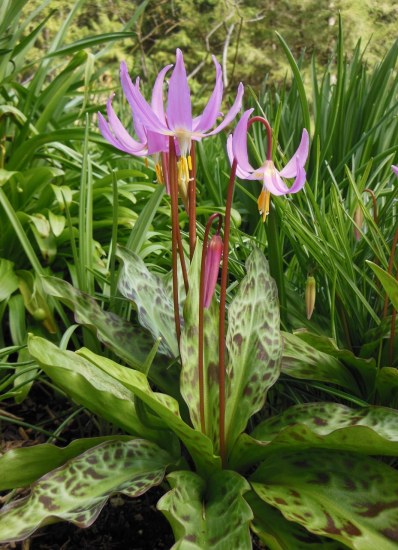
Photos by Ian Young. Second photo shows a dissected flower, and the auricles at the bases of three of the petals.
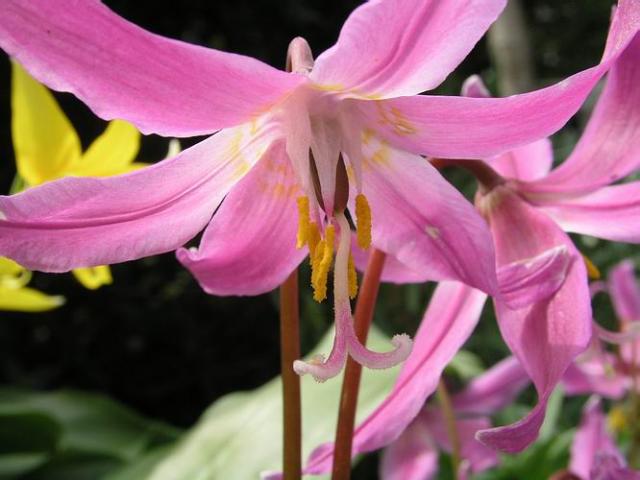
Remarks by Rodger Whitlock: The banks of Sutton Creek, a stream flowing into Lake Cowichan on southern Vancouver Island, are lined with E. revolutum for miles upstream from the mouth. This is an easily accessible area thanks to a logging road in good condition that runs parallel to the stream. There is a BC government ecological reserve near the mouth, but the erythroniums in it are gradually waning. At one time, this now-reserve was privately owned and cattle were turned into it in the summer. Thanks to their cropping of later-rising herbaceous vegetation, the erythroniums thrived and spread. Cattle have not been run on the property now for a long time, and the usual stream-side vegetation has recovered, so the display of Erythronium revolutum in the reserve is greatly surpassed by that upstream. Nonetheless, this is a site worth visiting if you are on Vancouver Island in mid-April. Paved road right to the reserve. The parking area has been blocked off due to the locals using it as a rubbish dump, so you must park by the side of the road. If you choose to follow Sutton Creek upstream, remember that you are on an actively used logging road and be careful on weekdays when logging trucks are in transit on it.
Erythronium rostratum W.Wolf is native to the southern central US. It has spotted leaves and bright yellow, upfacing flowers. Almost all parts of the flowers are yellow. Each scape has a single flower. Photos by John Lonsdale.
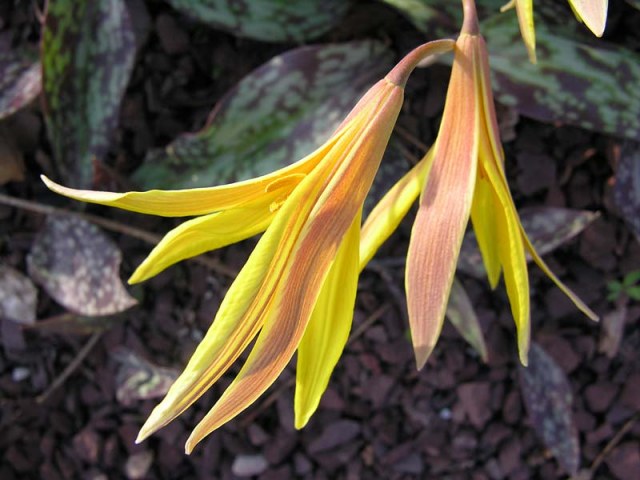
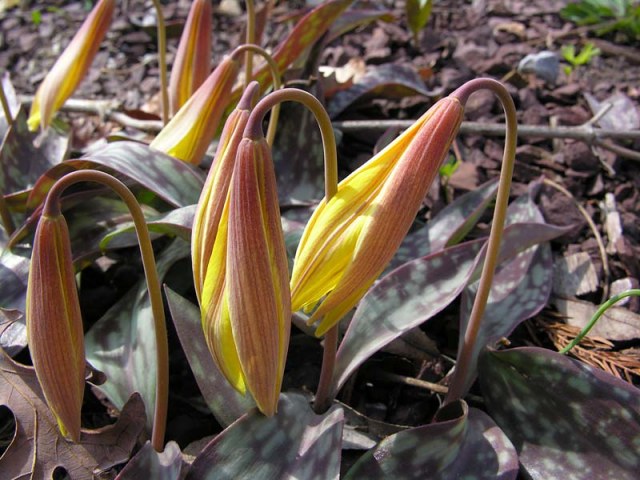
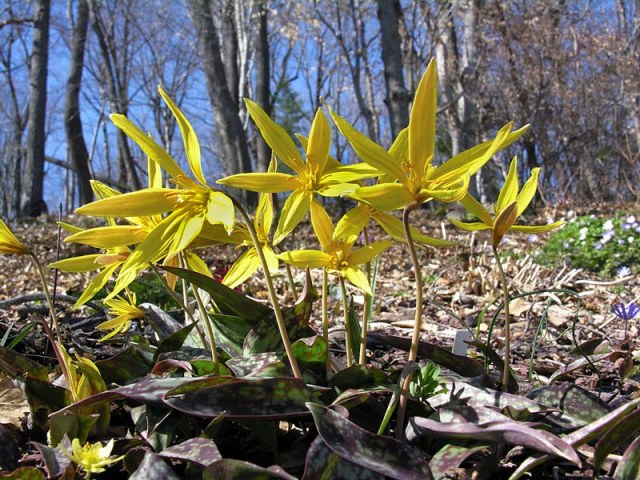
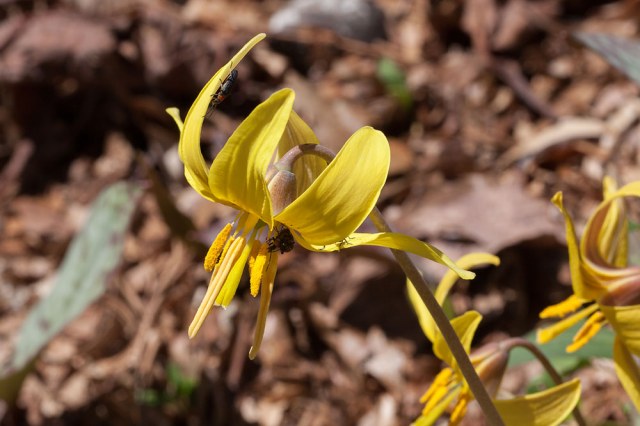
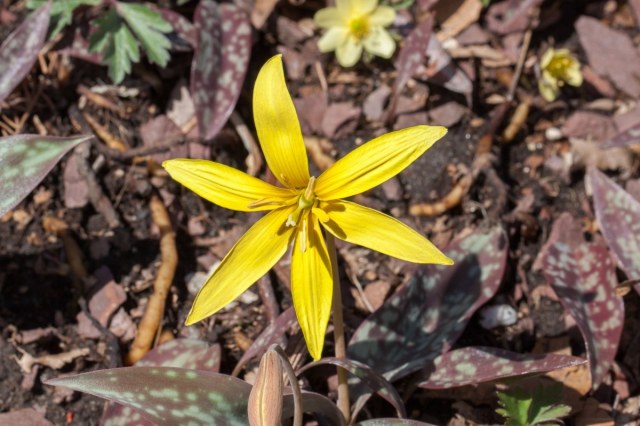

Erythronium 'Ruapuna Dawn' is a hybrid between E. revolutum and (possibly) E. 'White Beauty'. It was a spontaneous hybrid from a garden of Joan Whillans in New Zealand. Photo from Ian Young.
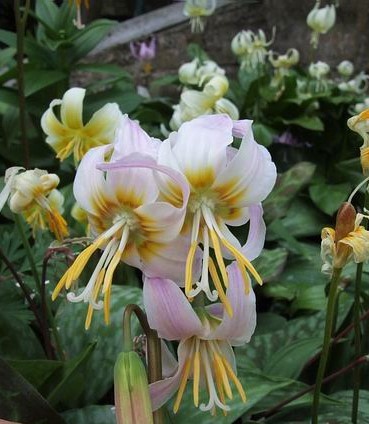
Erythronium sajanense Stepanov & Stassova is endemic to the Krasnoyarsk region in Siberia. Photo by Nikolai Stepanov shared under a CC BY-SA 3.0 license.

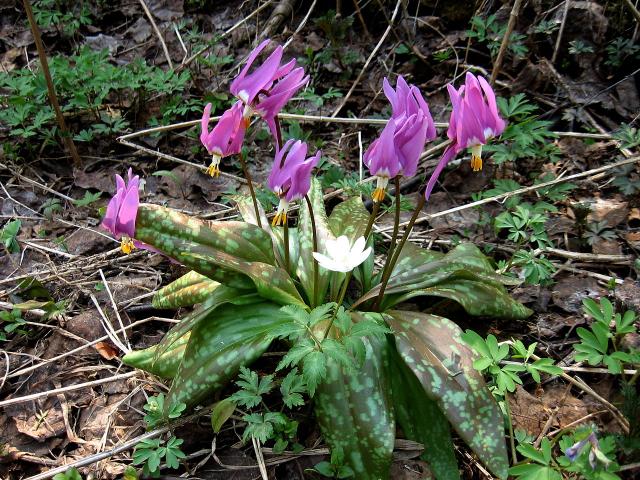
Erythronium sibericum (Fisch. & C.A.Mey.) Krylov (syn. E. dens-canis var. sibiricum) is native to Siberia, Northeastern Kazakhstan and in Northern Xinjiang and Mongolia in the Altai and Sajan mountains. The species inhabits forests and subalpine meadows at altitudes of 8,000 ft. The style is branched at the tip and the leaves are spotted. Photos by Ian Young.
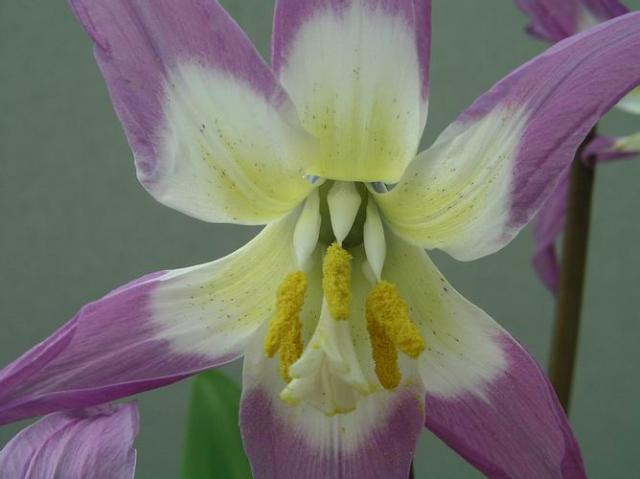
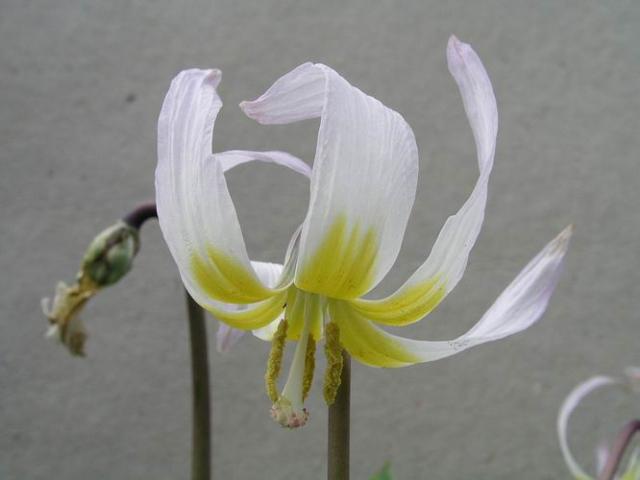
Erythronium sibiricum subsp. sulevii Rukšans (syn. E. sulevii) is endemic to the Altay region of Siberia. Photos below by Andrey Dedov of Erythronium sulevii in the Altai Mountains.
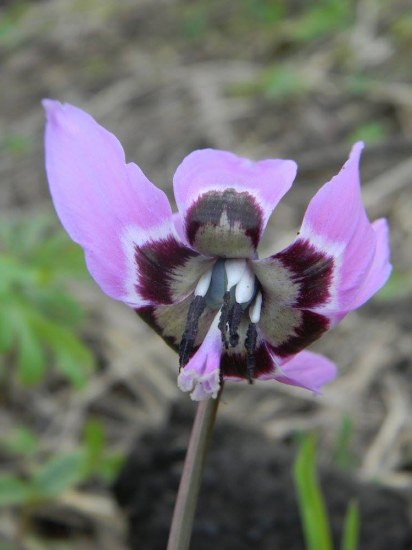

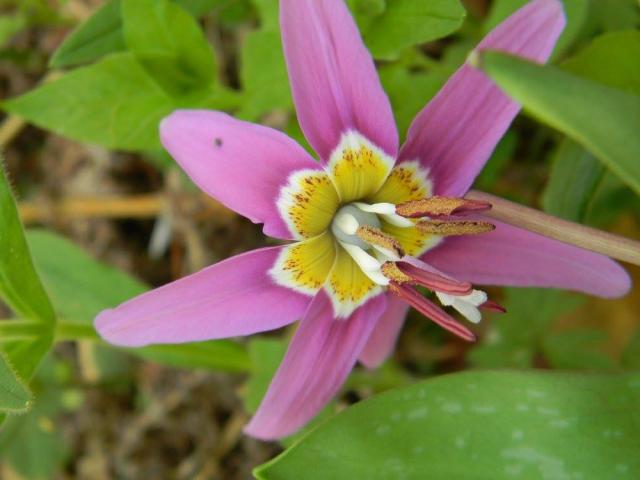
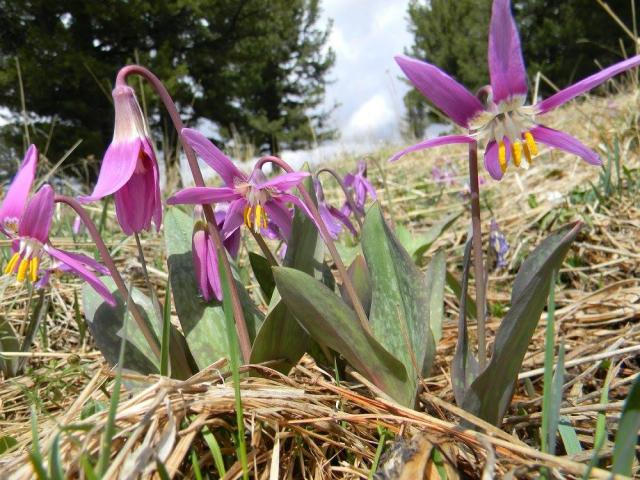
Erythronium 'Sundisc' is a yellow hybrid that has E. tuolumnense and a white Erythronium in its heritage. Photos by John Lonsdale.
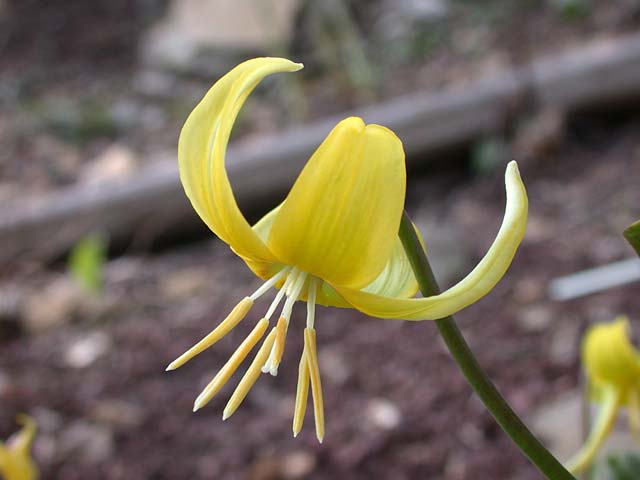

Erythronium 'Susannah' is a hybrid between E. tuolumnense and oregonum. It has large pale pure yellow (no red in the throat) flowers, as many as nine flowers per scape, usually three or four. It has plain green leaves. Photos by Ian Young.
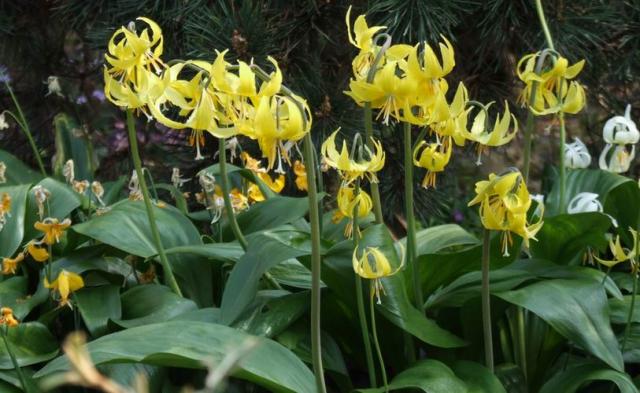
Erythronium taylori (sometimes incorrectly spelled as "taylorii") is a California endemic native only to Pilot Ridge, a small mountainous ridge in Tuolumne County, just outside of Yosemite National Park. Erythronium taylori is similar to E. tuolumnense, with plain green leaves and two to four flowers per scape. It also has a clumping habit, increasing vegetatively by offsets from the bulb. It has white tepals that are yellow at the base with auricles present. The anthers are cream colored but the anther filaments are a darker yellow color. Photos by Ian Young.
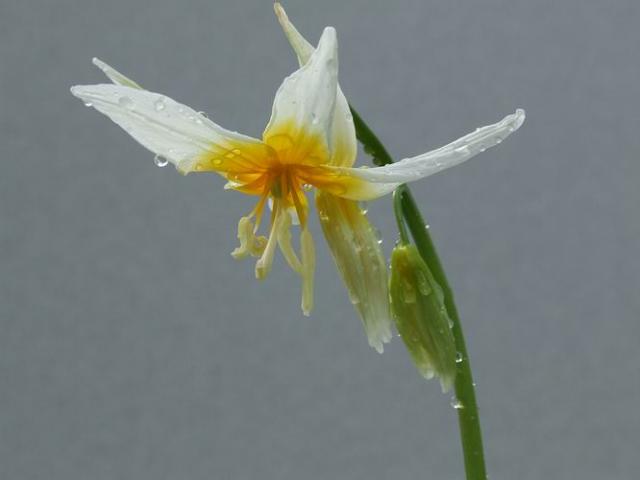
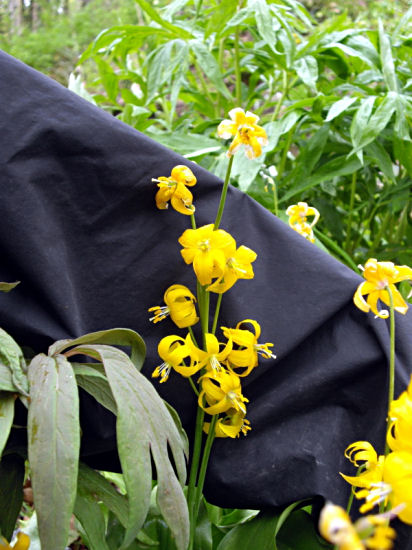
Erythronium tuolumnense Applegate grows in rich gritty humus in open woodland in Tuolumne County, California, an area with dry hot summers. Its native habitat is threatened by logging. It has yellow flowers and uniformly green leaves and is the parent of many of the hybrids. It increases by offsets and is reported to appreciate some moisture during its summer dormancy. The first three photos were taken by John Lonsdale. On a pbs list discussion Paige Woodward told the group how many flowers the ones she grows have. Photo four and five illustrate this. "The crowd scene is to confirm that all the side branches converge in one main stem. There are 10 flowers on the plant. I found several others with 10, several with 9, many with 8 and 7. The black background is one sleeve of my rain jacket."
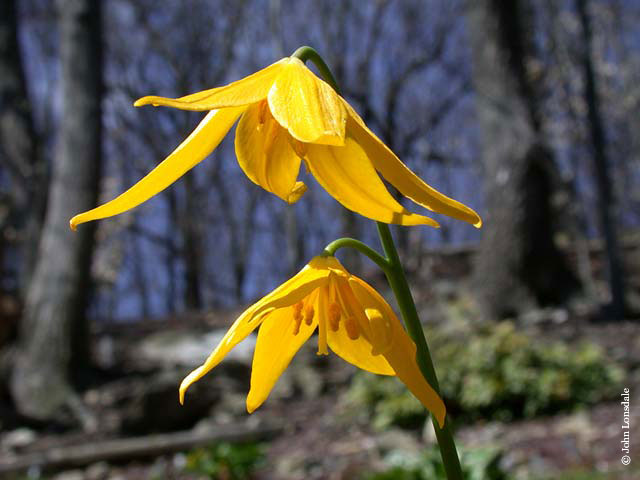
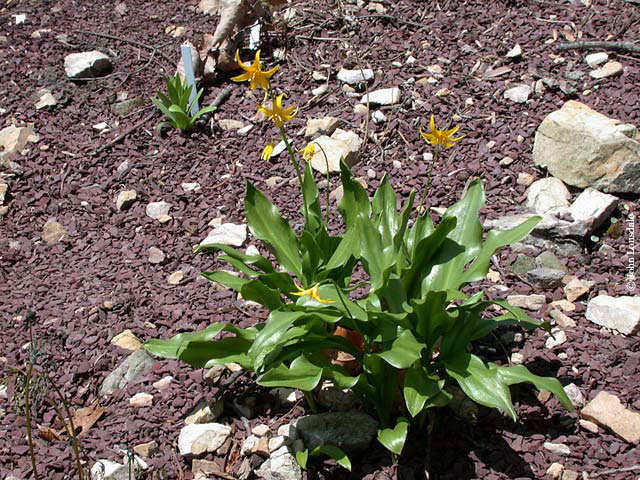


On the other hand the photos below from Mary Sue Ittner show her plants finally blooming nine years later from seed with one flower. Paige gave this theory for her success: "I suspect that Erythronium tuolumnense is a pig for water, duff bearing appropriate fungi, and haze-filtered sunshine such as we helplessly give it in our garden." The water may be the larger factor since after this plant had several years of good blooming in Mary Sue's garden, in the unusually dry spring of 2013 it did not bloom. The last photo is from Mike Rummerfield. He wrote on the pbs list: "The second is a group selfie by disinterested Narcissus jonquilla var. henriquesii being photo bombed by Erythronium tuolumnense and Iris unguicularis.
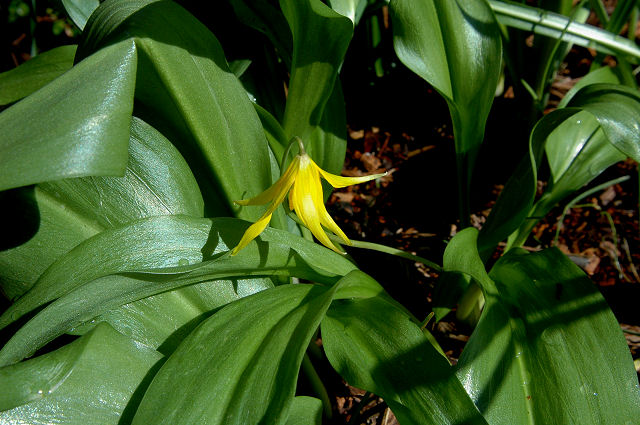
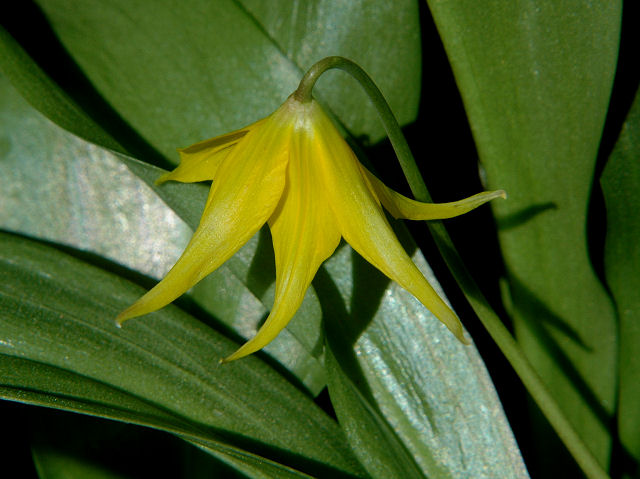
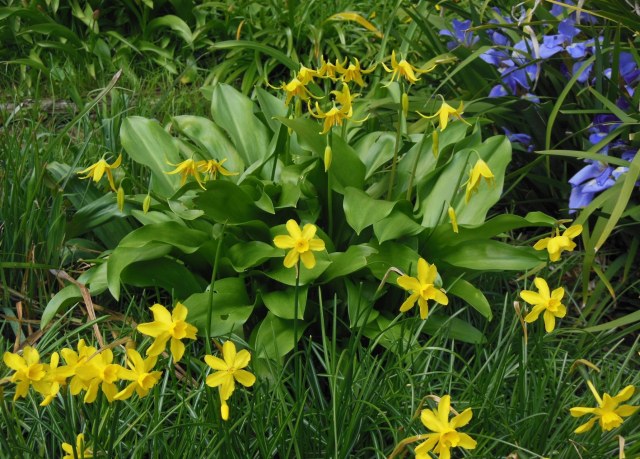
The next three photos were taken in March 2008 by Mary Gerritsen. We found several well flowered populations along steep hills in a river valley in Tuolumne County.
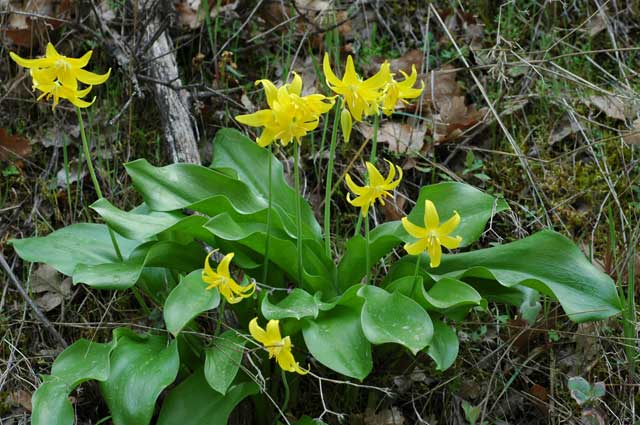
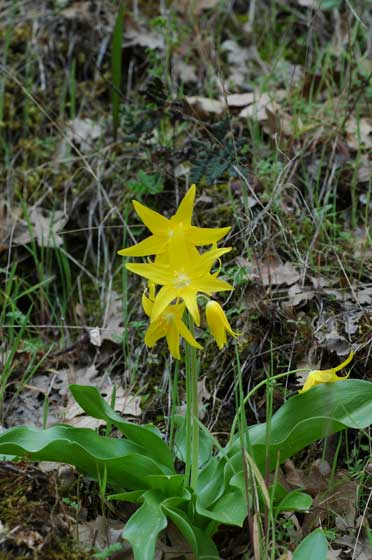
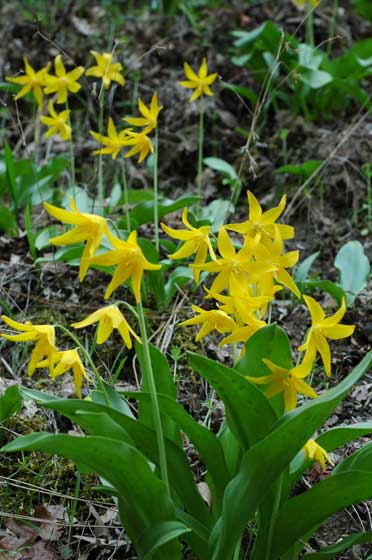
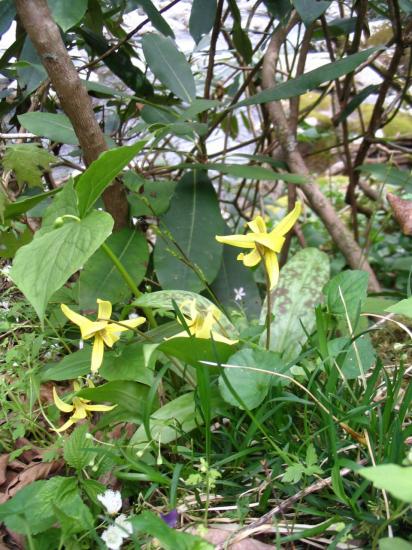
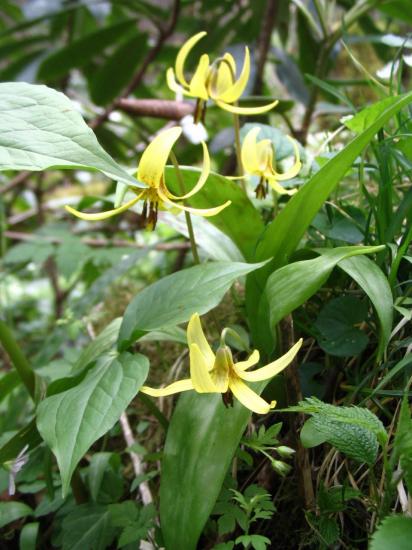
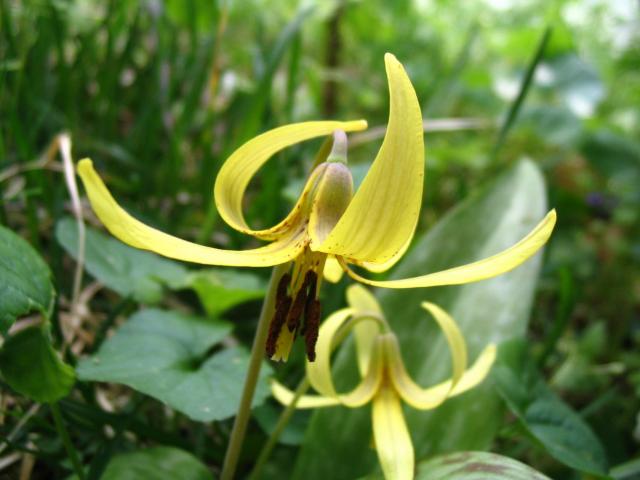
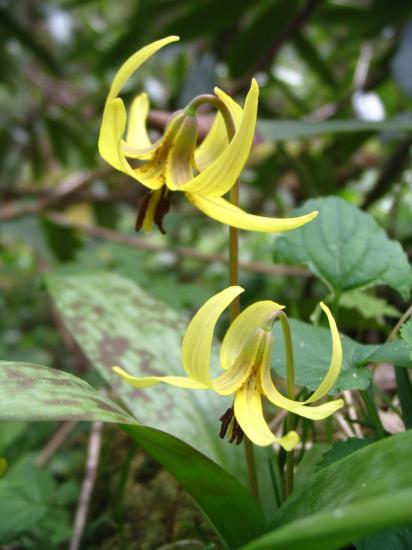
Erythronium umbilicatum Park & Hardin is native to West Virginia and North Carolina. It has spotted leaves and deep gold flowers flushed rusty red. The photos below were taken by Alani Davis were taken of a natural population in the Florida panhandle.

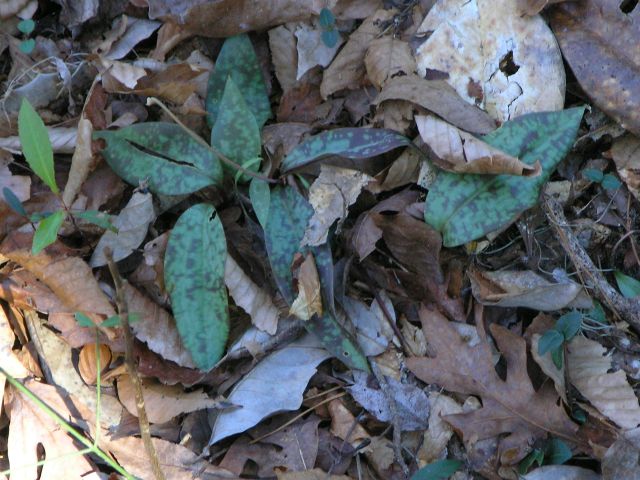
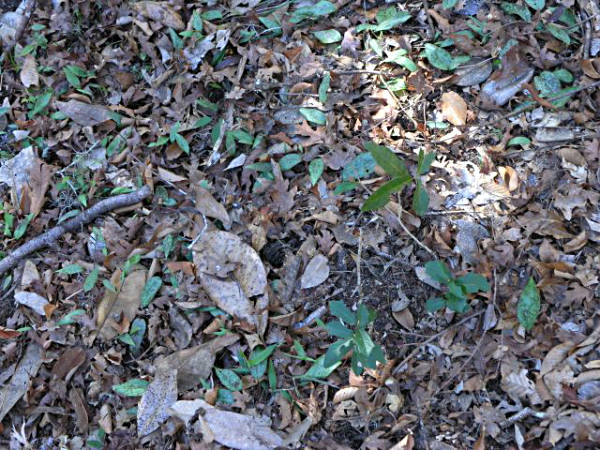

The photos below were taken by Nhu Nguyen from the Great Smoky Mountains National Park in mid-March.
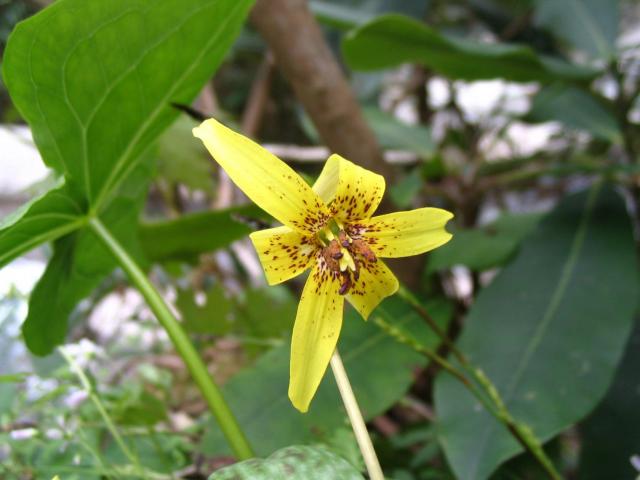
The photo below of plants in cultivation was taken by John Lonsdale.
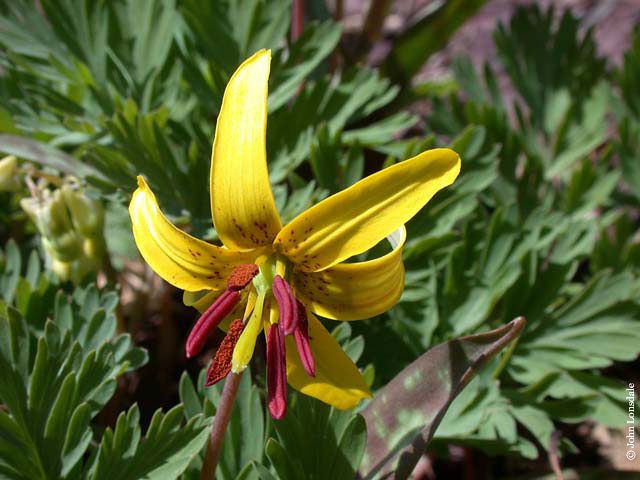
Erythronium 'White Beauty' is considered a cultivar of Erythronium californicum
Erythronium a-g - Erythronium h-o - Erythronium p-z - Erythronium index