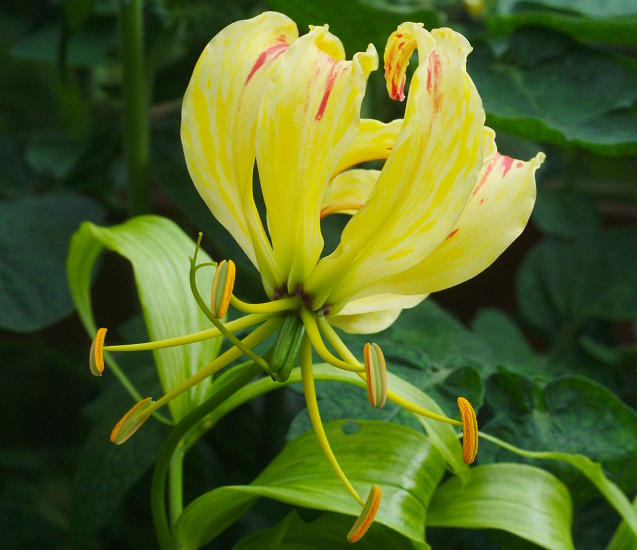
Gloriosa L. is a tropical or subtropical genus in the family Colchicaceae from Africa and India. They have tubers with long fingers. Gloriosas are summer-growers needing warm temperatures, but can be grown in greenhouses and dried off and kept warm in winter. They need support as they twine. Recent taxonomic changes by Vinnersten & Manning (2007) provided clear evidence that Littonia is very closely related to Gloriosa and thus had been sunk into Gloriosa.
Gloriosa lindenii (Baker) J.C.Manning & Vinn., syn. Littonia lindenii Baker, is found in Tropical Africa (Tanzania, Malawi, Zambia, and Zaire) where it grows up to 65 cm high. Flowers are green at the base, orange, vermillion, light red to red outside, yellow to orange inside. Photos were taken by Nicholas Wightman of a plant found growing in the hills of central Zambia where the weather is wetter and cooler generally than in Lilayi.
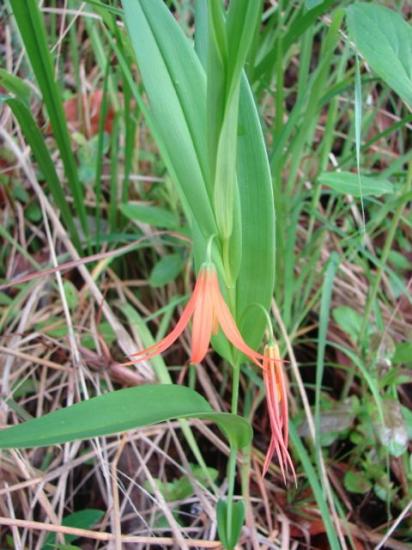
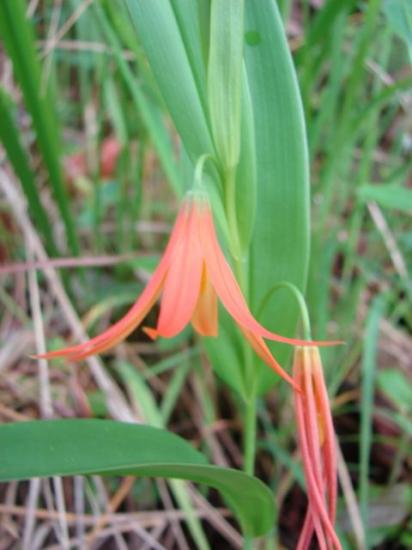
Gloriosa modesta (Hook.) J.C.Manning & Vinn. (syn. Littonia modesta Hook.) is native to South Africa where it is found in woodland, forest and montane grassland in summer rainfall areas (Eastern Cape, KwaZulu-Natal, Swaziland, the northern Transvaal, and the Orange Free State). It is a climber, growing from .3 to 2 meters. The plants are summer-flowering (January in Tasmania, July in Berkeley, California). This species is best multiplied by seeds since the tubers do not readily split themselves into two pieces like Gloriosa superba. Fresh seeds germinate easily. Sow them in early spring and keep the seeds more or less in a warm place. They should germinate in about 6 weeks. Photos below were taken by Cameron McMaster and Mary Sue Ittner at Maclear.

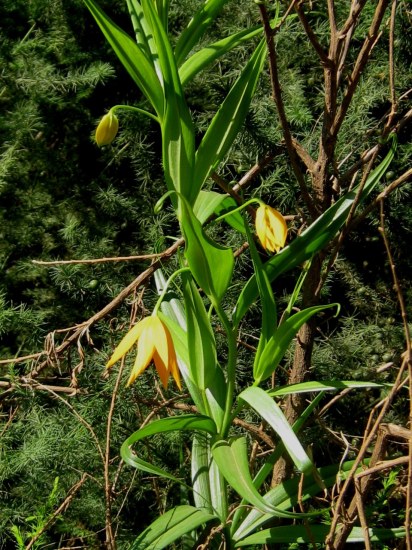


The first photo was taken by Cameron McMaster. Photos 2-3 were taken by Mary Sue Ittner. Photo 4 was taken by Nhu Nguyen. The last photo was taken by Rob Hamilton.
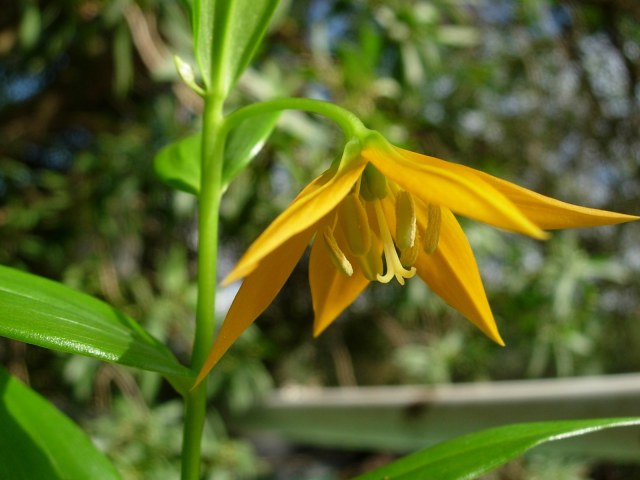
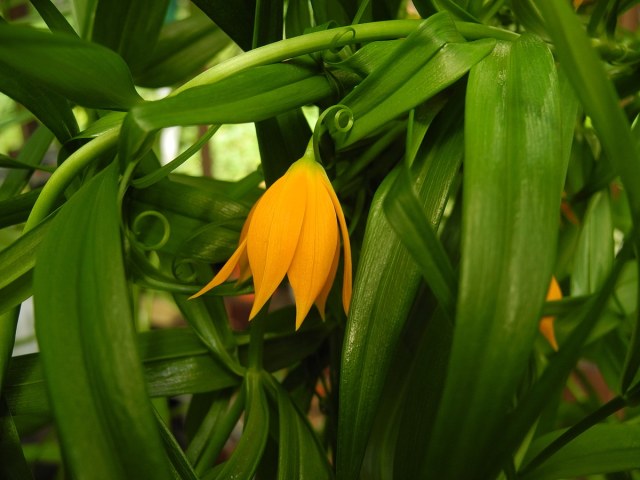
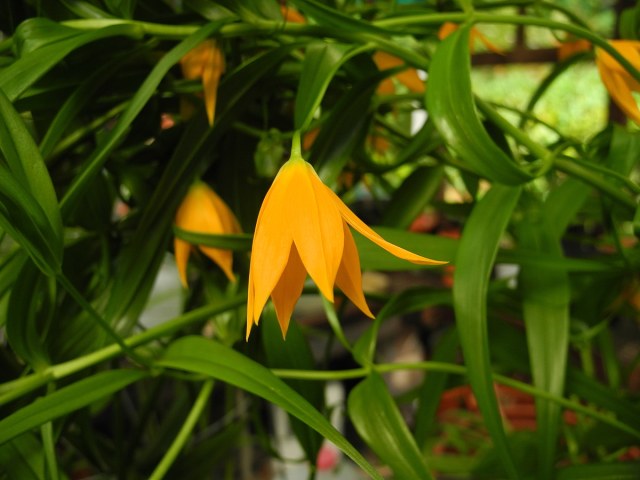
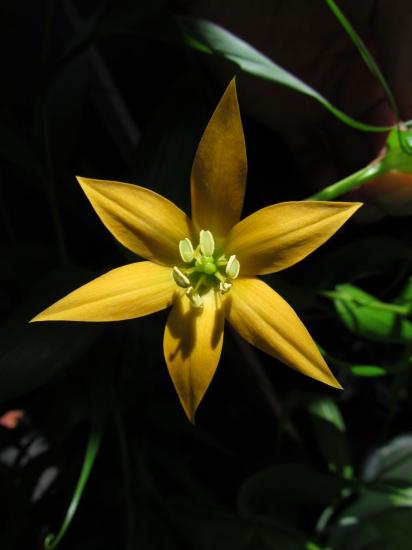
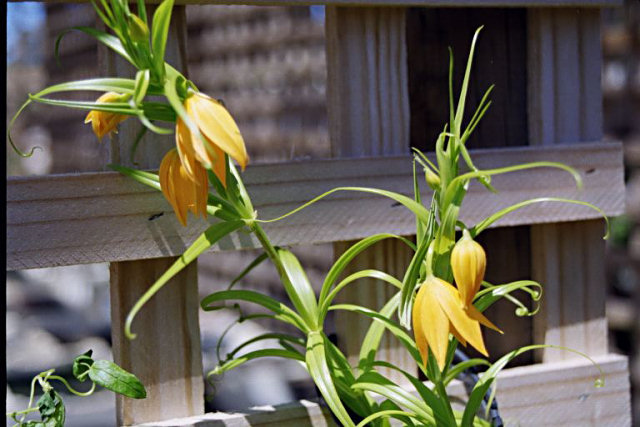
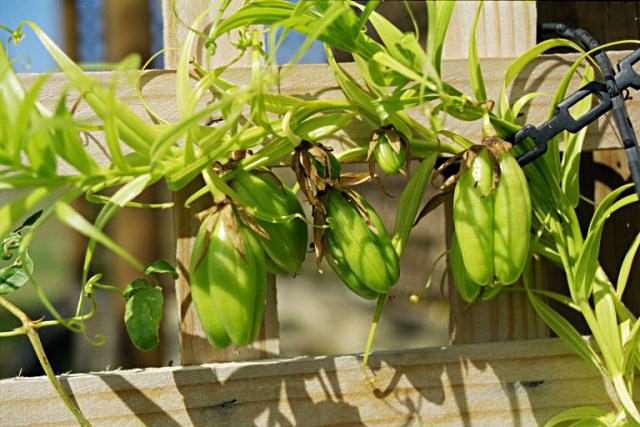
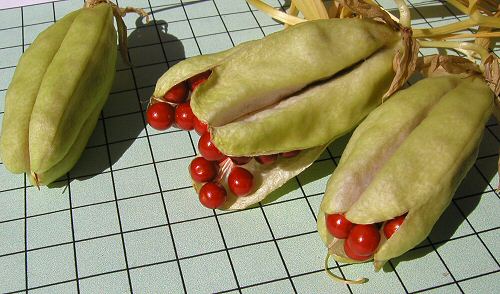
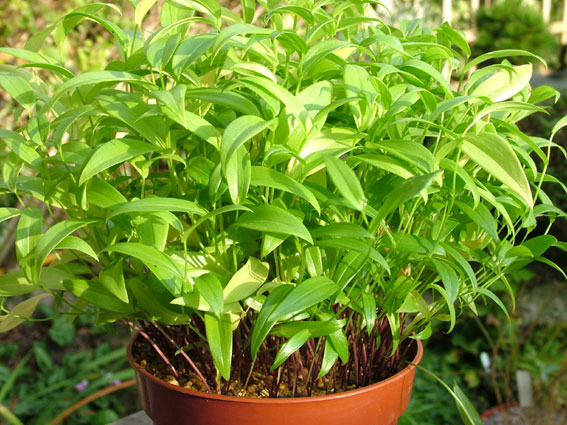
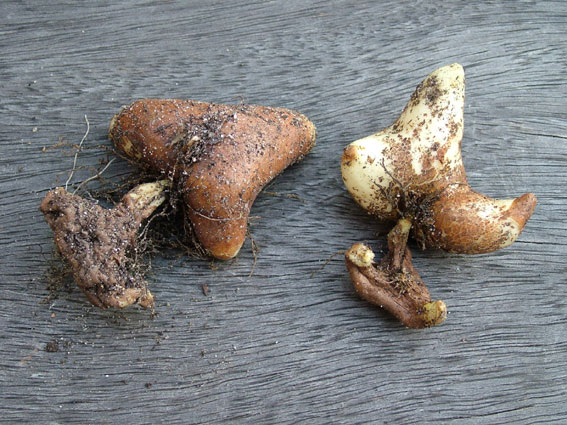
Photo 1 by Rob Hamilton shows the fruits 3 months after blooming. Photo 2 by Bob Rutemoeller shows the bright red seeds as the pods are splitting (on 1 cm squares). Photo 3-4 were taken by Brian Whyer. Photo 3 shows a pot of over-crowded seedlings. Photo 4 shows old and new tubers at the end of the season, showing the dominance of one leg in forming the next season's tuber.
Gloriosa superba L. includes many forms previously known under species names including Gloriosa rothschildiana O'Brien. It is a climbing or erect plant, growing from 0.25-2.43 m high as undergrowth in coastal forest and dune bush, estuaries, and riverbanks from eastern South Africa into tropical Africa. Its gorgeous, colorful flowers in late summer make it exciting in the garden and in the vase. The flowers make long lasting corsages and come in shades and combinations of yellow, red and orange. This species can be grown in full sun, but partial shade is advisable in hot and dry districts. Drainage is very important to make sure they perform well for a good display.
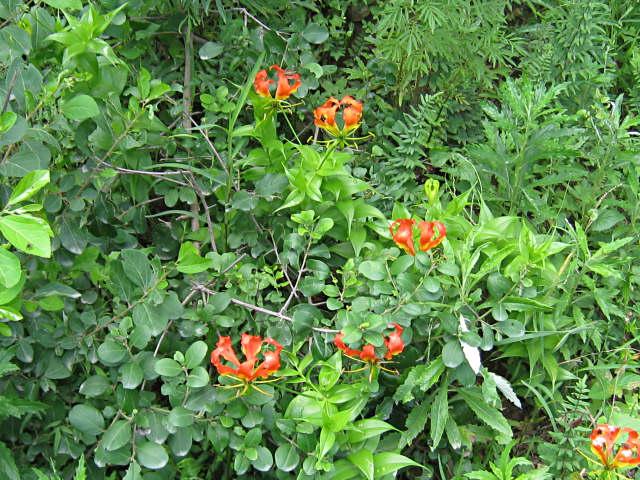
Photos from Cameron McMaster, Bob Rutemoeller, and Mary Sue Ittner show this species growing in habitat in the mouth of the Kei River in the Eastern Cape of South Africa.
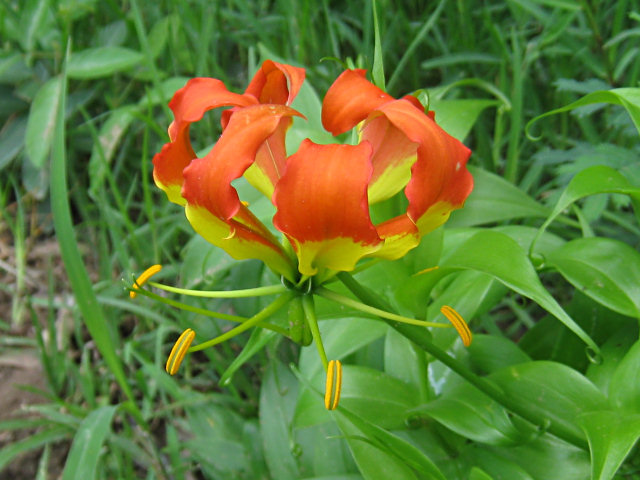
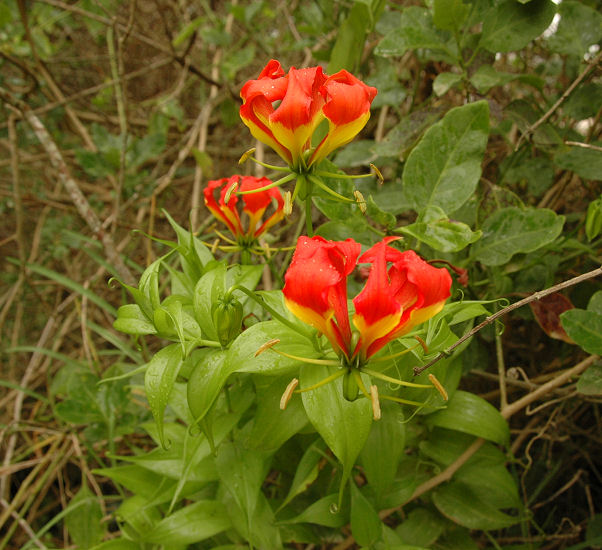
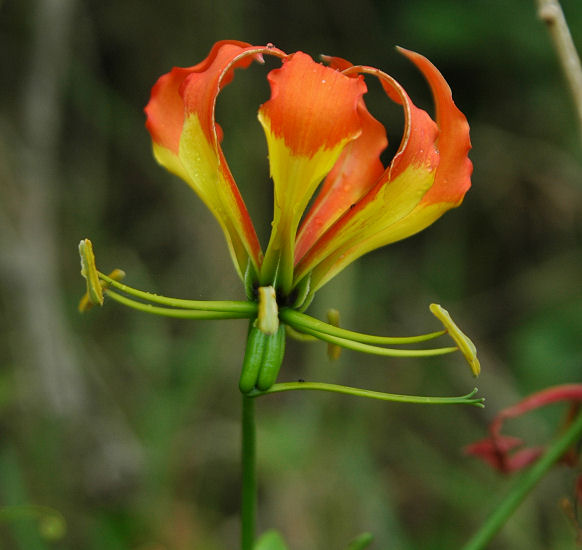
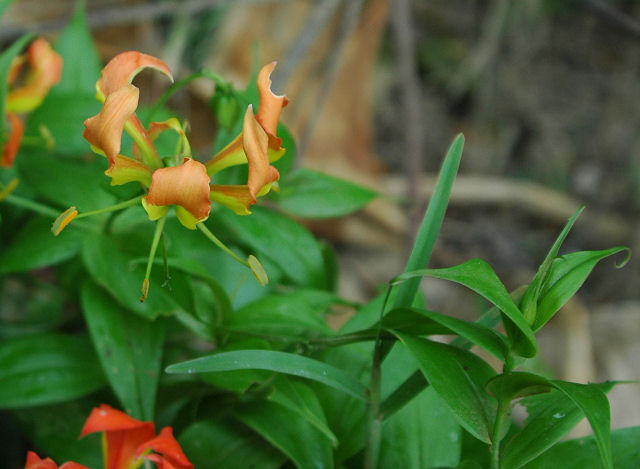
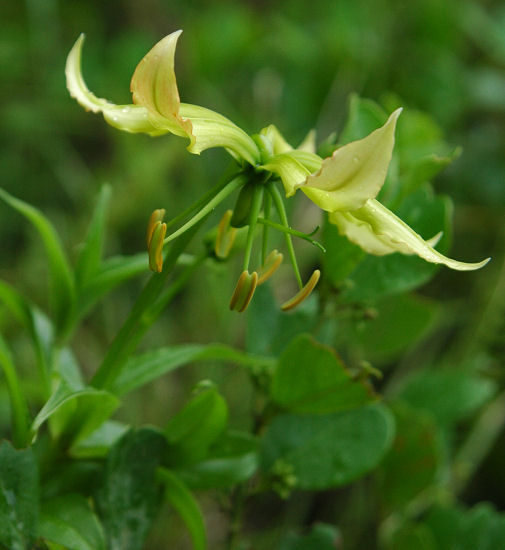
Photos 1-2 by Bill Dijk show the variations in color. Photo 3 by Sheila Burrow shows the "glorious" detail of the individual flowers.
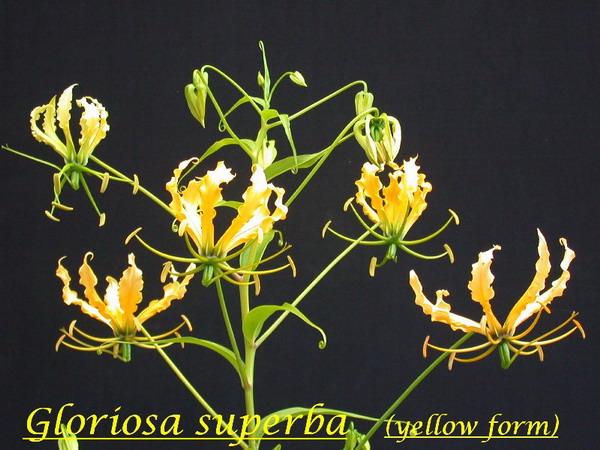
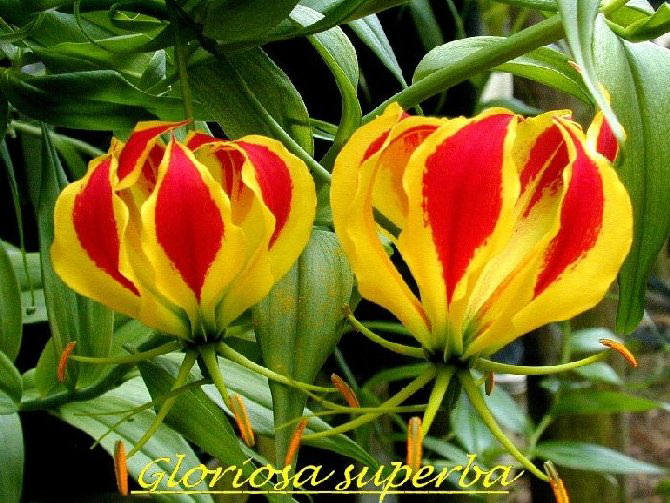
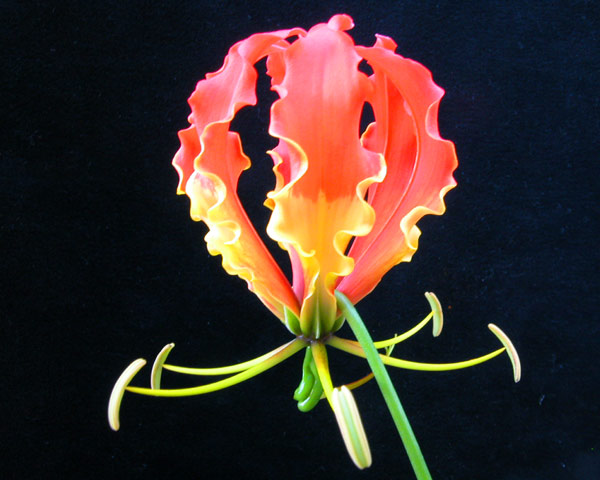
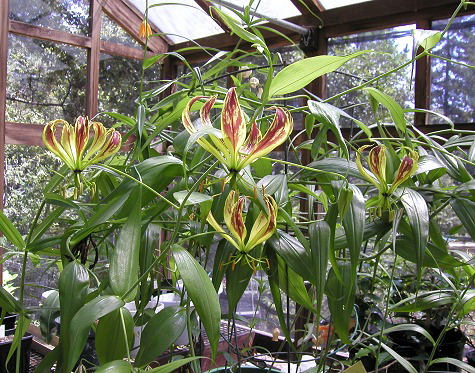
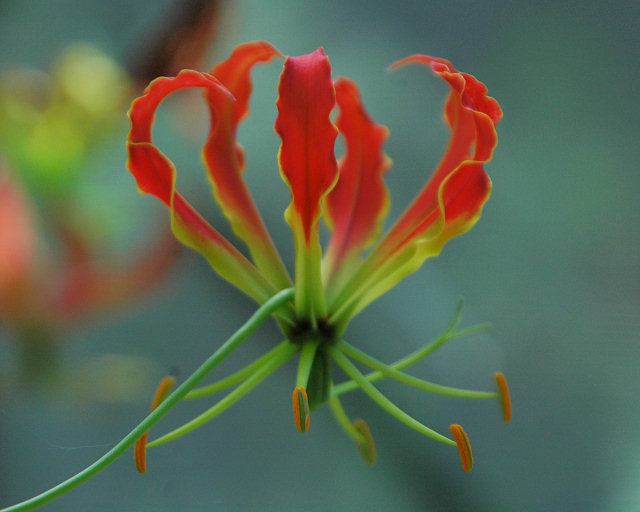
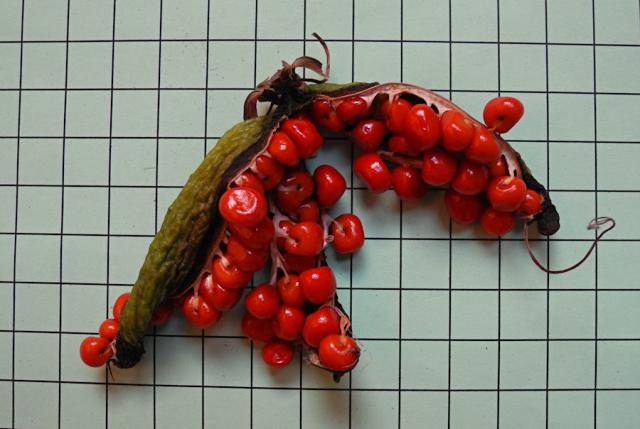
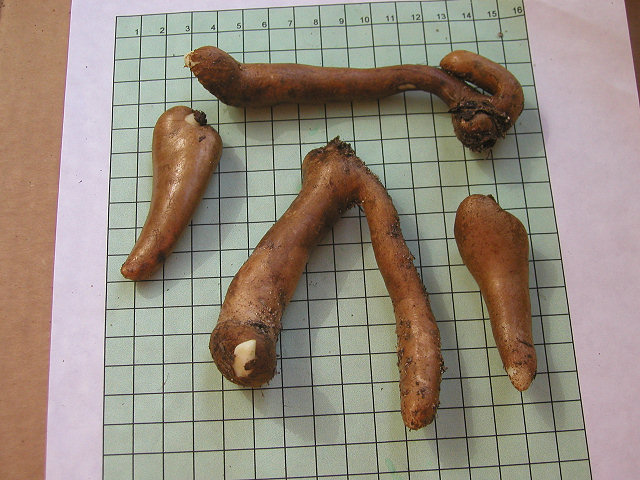
Photos below were taken by Mary Sue Ittner who grows plants in her greenhouse in coastal Northern California where they do much better than outside, perhaps because they prefer the warmer temperatures day and night in summer and the protection from wind. Photo 1 shows why they need space and support. Photo 2 is of one grown from seed with flowers that are a different color. Photo 3 shows the seed pod and seeds on a 1 cm grid. Photo 4 shows tubers in April as they are just starting into growth. Tubers are arranged on a 1 cm grid. In this photo the root appears as V shaped. Rapacious bulb merchants split such roots into two pieces for sale.
An extra frilly form with yellow & orange coloration. Grows as a perennial outdoors to USDA zone 8b. Photos by Alani Davis.
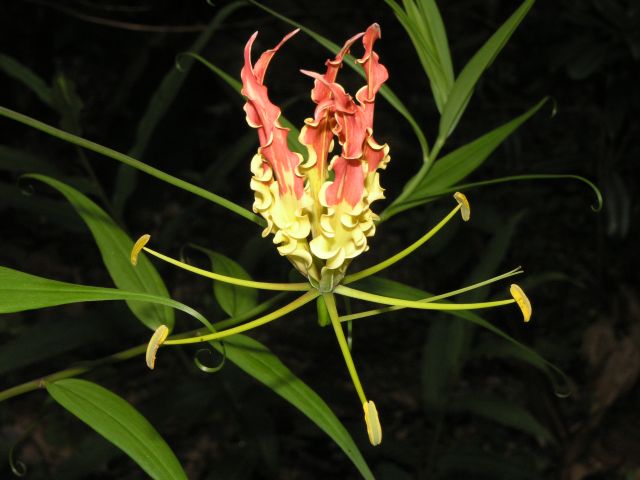
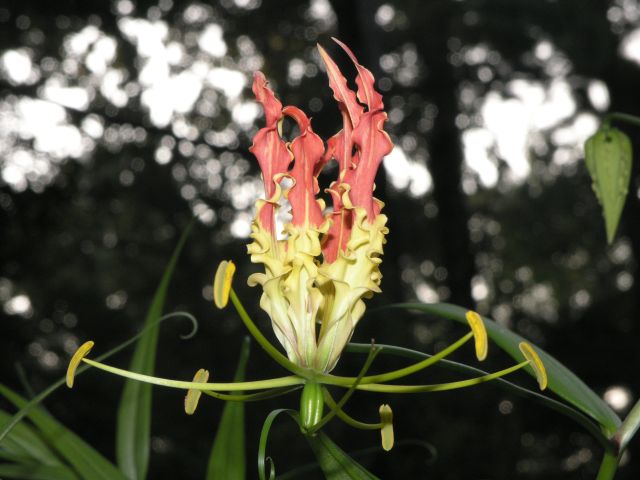
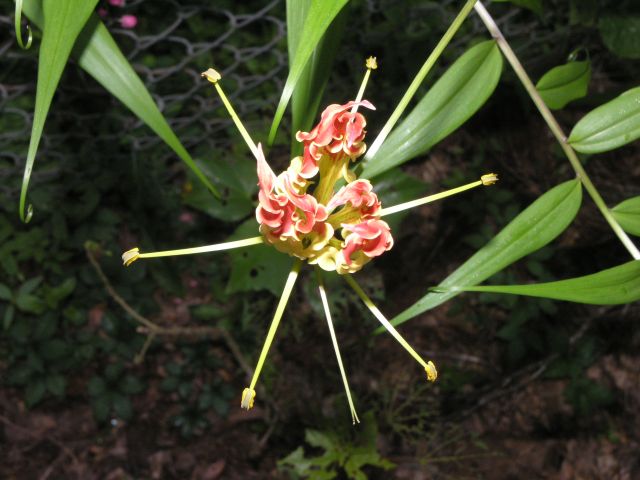
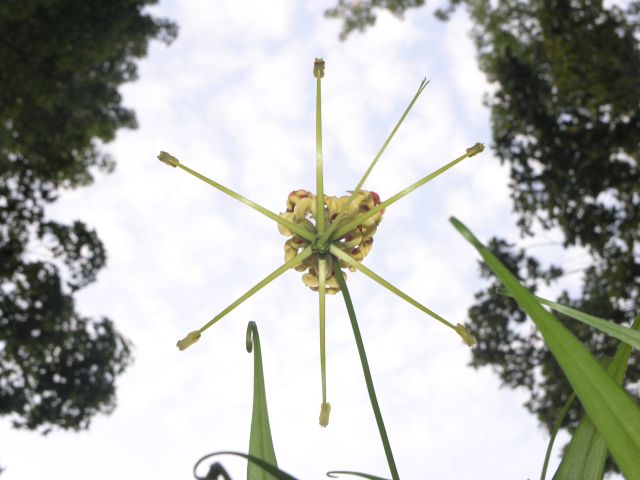
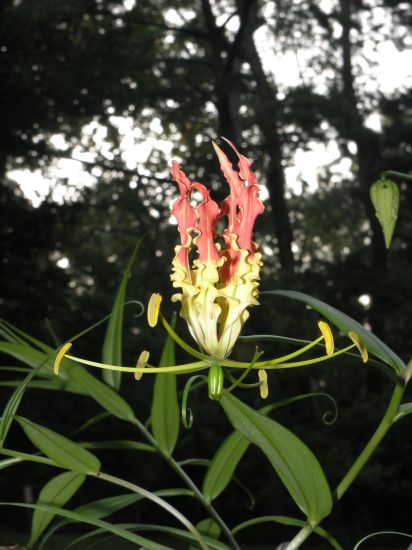
The photos below were taken by Nhu Nguyen from various botanical institutions. Photo 1 was taken from the Missouri Botanical Garden. Photo 2-4 were taken at the Lyon Arboretum, Honolulu, Hawai`i. Photo 5 is of a yellow form taken at the Waimea Arboretum, Honolulu, Hawaii.
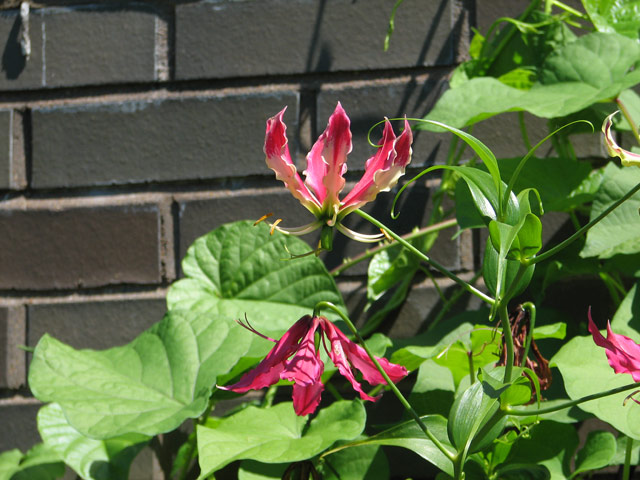
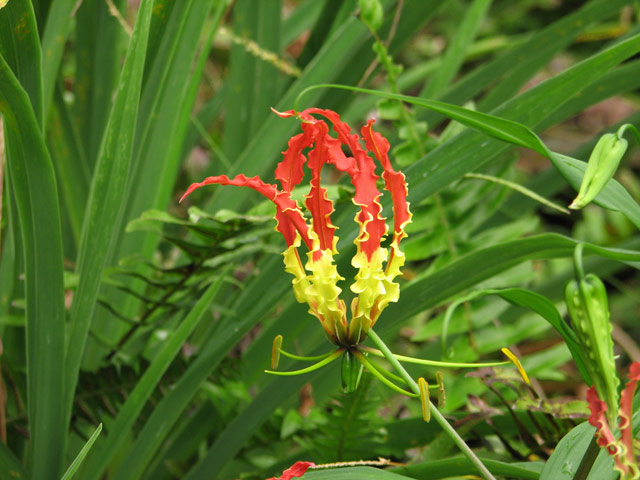
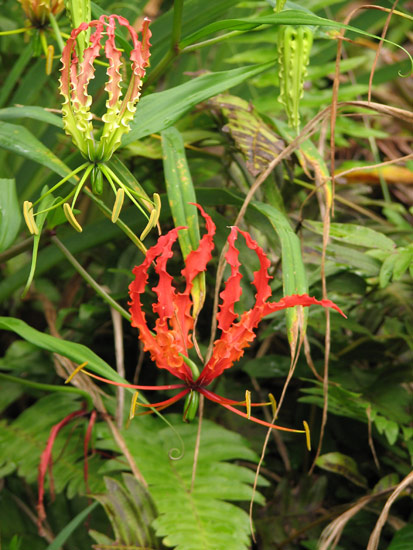
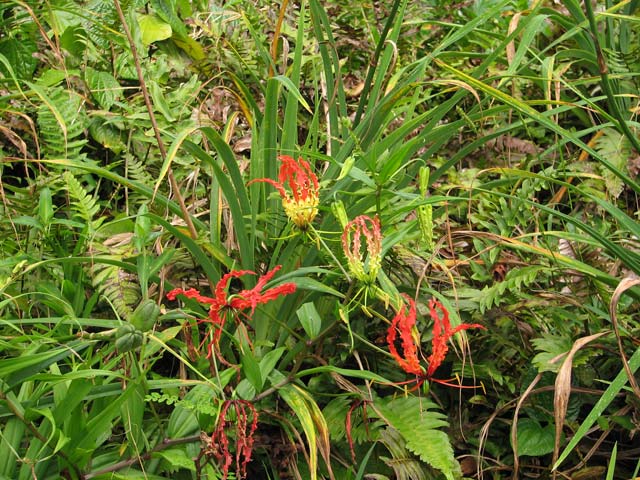
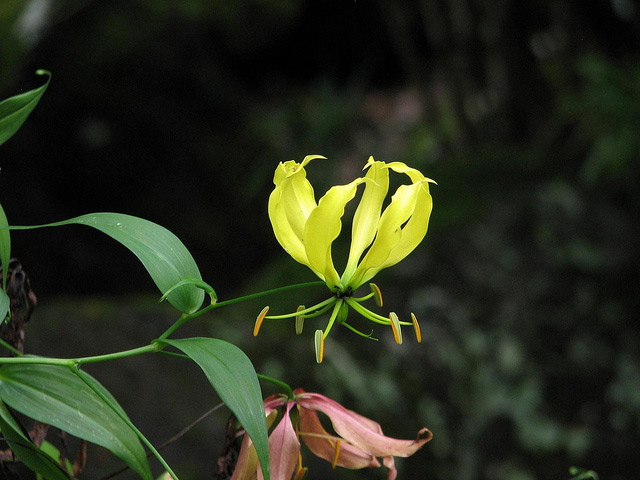
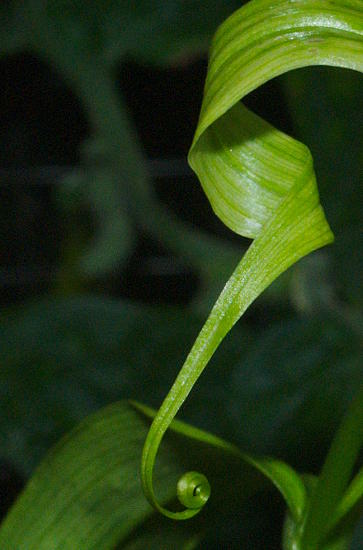
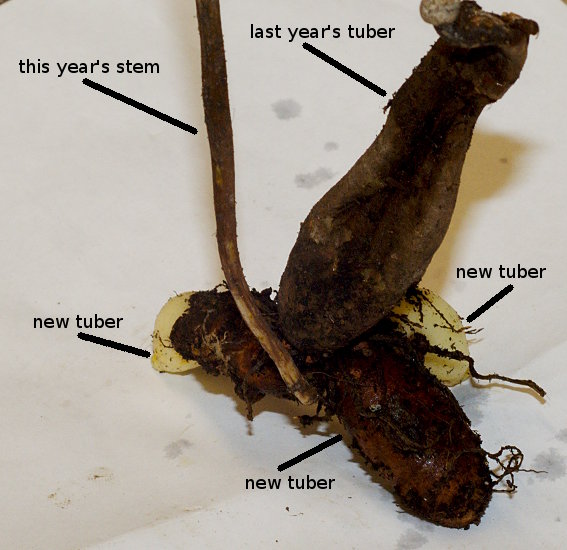
Photographs by David Pilling. The first shows how the leaves are adapted for climbing, the last annotated photo demonstrates how new tubers are formed each year. The example below was a commercial bulb sold as Gloriosa rothschildiana; I found that I had to bring the plant indoors for growth to start as Spring in North West England was too cold.