Nothoscordum Kunth is a genus of bulbs in the former Alliaceae family (now included in Amaryllidaceae), mostly from South America. Some, such as Nothoscordum gracile are noxious weeds that are best avoided, whereas others are delightful little treasures, particularly the yellow-flowered species. This genus is subject to much taxonomic debate and species have been known by many different names and there is no consensus about what is the correct name for them. A few of the yellow flowered species have been making the rounds of genera (Milla, Tristagma, Brodiaea, Ipheion, Beauverdia ) but the debate for them now seems to be between Nothoscordum, Ipheion, and Tristagma. In a paper written in 2014 entitled Beauverdia, a Resurrected Genus of Amaryllidaceae (Allioideae, Gilliesieae) by Agostina B. Sassone, Liliana M. Giussani, and Encarnacio´n R. Guaglianone the authors proposed resurrecting Beauverdia based on morphological differences and renaming 4 species found in southern Brazil, Uruguay, and Argentina. But this was not accepted. There is a difference in seeds, but this cannot be seen without magnification. Nothoscordum species usually have several flowered umbels and Ipheion species one-flowered inflorescences, but there are exceptions. There have been many proposed new additional species added to Nothoscordum, but many of these have not been verified and they are difficult to tell apart and almost impossible from Herbarium specimens which often look alike. Further confusing the issue is that one botanist moved Ipheion to Tristagma, a move not supported by everyone. As time permits we will update with current names knowing they may change and in the meantime display the names as they were published.
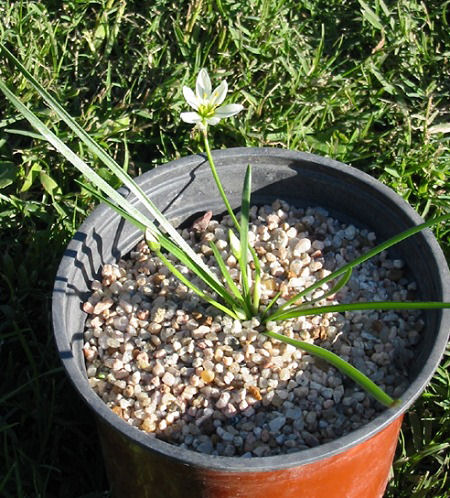
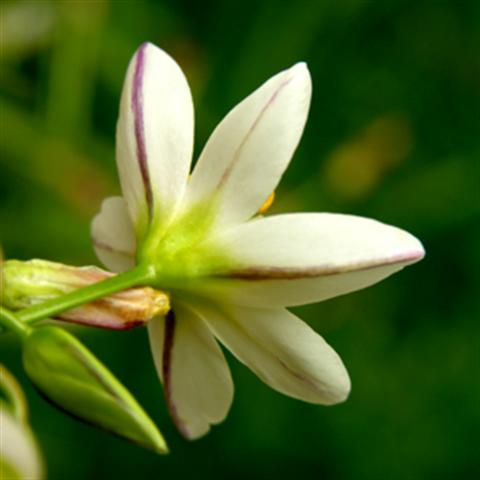
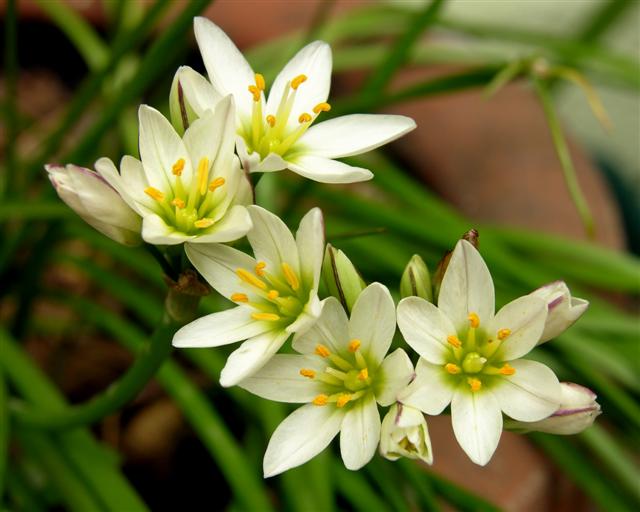
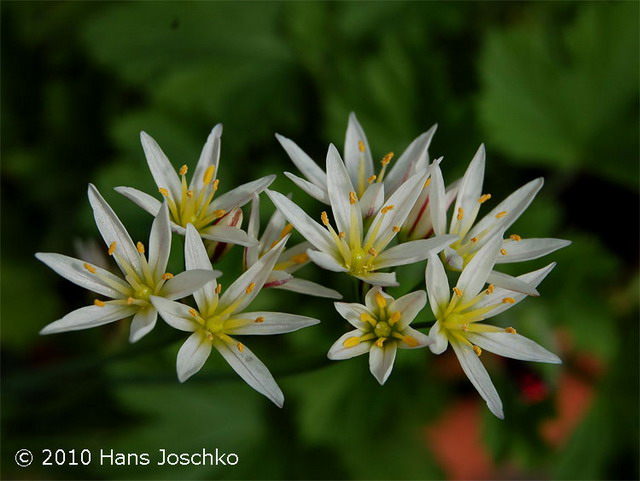
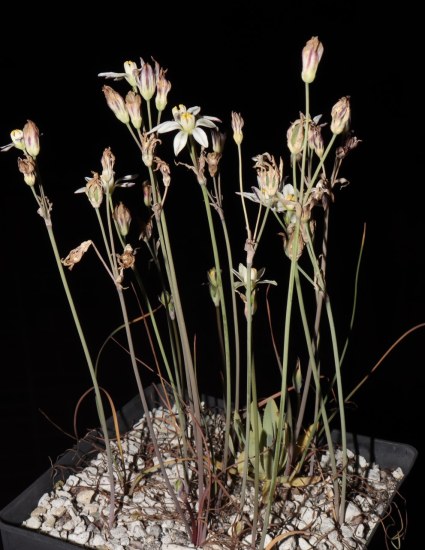
Nothoscordum bivalve (L.) Britton is found in both North and South America. In North America it is found in the southeastern and southwestern United States and Mexico, in South America in Argentina and Uruguay. Flowers are creamy white with yellowish centers and have a honey-like perfume released on warm and sunny days. Nothoscordum bivalve has a tall scape with minute flowers not unlike Nothoscordum gracile and two broadish "valves" (bracts) much like a crab's claws. Nothoscordum bivalve is a rather common species related to Allium. The leaves are strap-like (not hollow as in Allium), and the sap does not have an onion or garlic-like scent. The flowers are pretty and deliciously fragrant, but open only in direct sunshine. It readily forms offset bulbils but is well-behaved in the garden and not weedy. Photos 1-3 by: Dennis Szeszko showing a closeup view of the flower showing striping on sepals, a closeup view of the flower from the side and a closeup view of flowers at noon on a sunny day. (Note the hypogynous flowers with the ovary positioned in front of the flower parts.) Photos 4-5 from Hans Joschko.


Nothoscordum castilloi T.M. Howard, synonym of Nothoscordum gracile var. gracileis, is from southernmost Brazil, near the city of Uruguaiana. Dylan Hannon writes "I received seeds from the species' author, Dr. Thad Howard, in 2002. This region receives rainfall all year round-- for me Nothoscordum castilloi is an orthodox winter grower with a dry dormant period in summer, as is Nothscordum montevidense. It is a "selfer" but has not volunteered itself so far. Bulbs are solitary." Photos by Dylan Hannon.



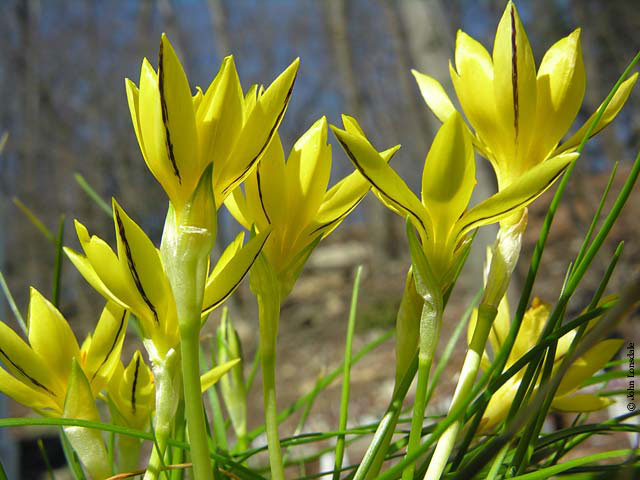
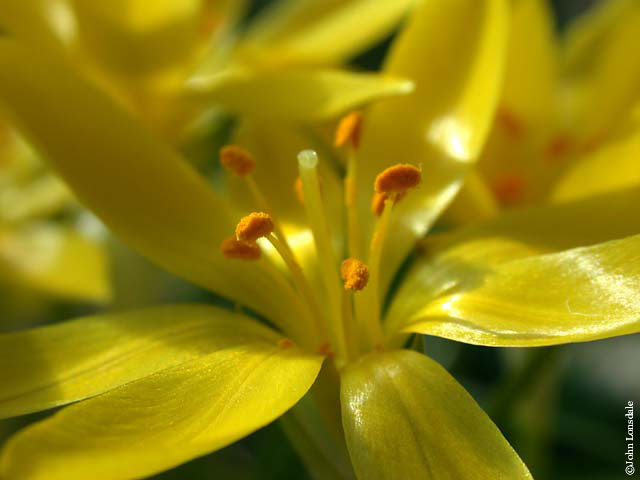
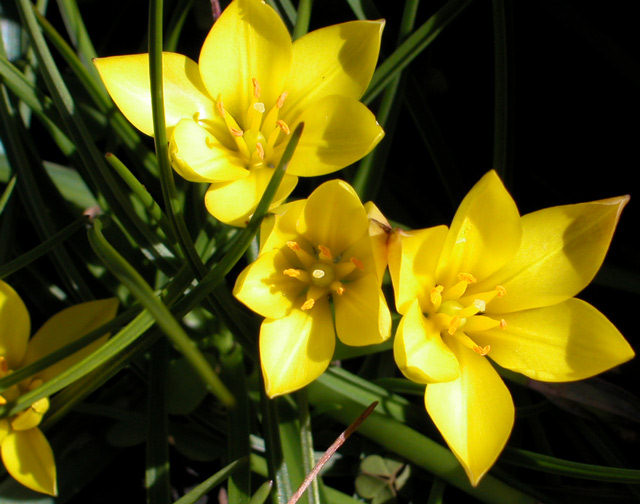
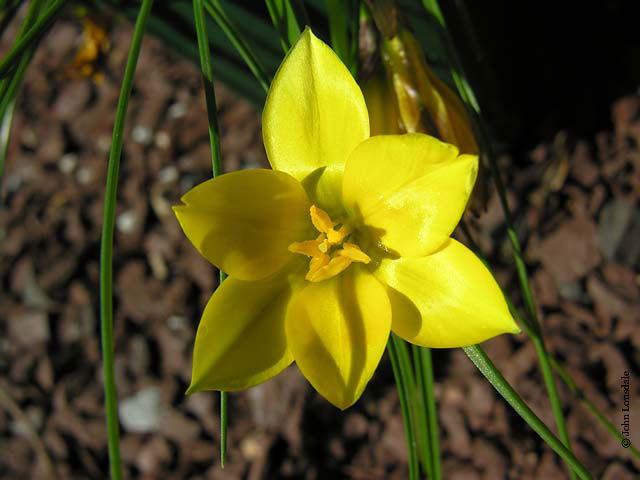
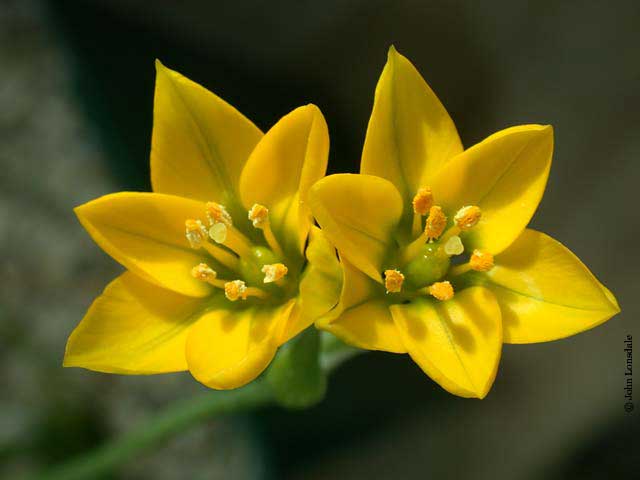
Nothoscordum dialystemon (Guagl.) Crosa, syns. Ipheion dialystemon Guagl. and Beauverdia dialystemon (Guagl.) Sassone & Guagl., is a yellow-flowered plant with 8 tepals instead of the normal six, growing from 5 to 10 cm. In its native habitat it grows in full sun in powdery soil in an area with regular rainfall and is dormant in summer when it is hot. In areas with dry summers this plant benefits from occasional water during dormancy since it has perennial roots. Failure to flower was discussed on the PBS list in February 2019. Suggestions for success were ample fertilizer, water, and sunshine in growth and some moisture during summer dormancy. One respondent found it did better in organic soil kept soggy year round and another had success with soil kept dry in summer. After division they sometimes skip a year of flowering. The first three photos were taken by John Lonsdale. The last photo from Michael Mace appears to be this species as it has 8 tepals even though he received it as Ipheion sellowianum.
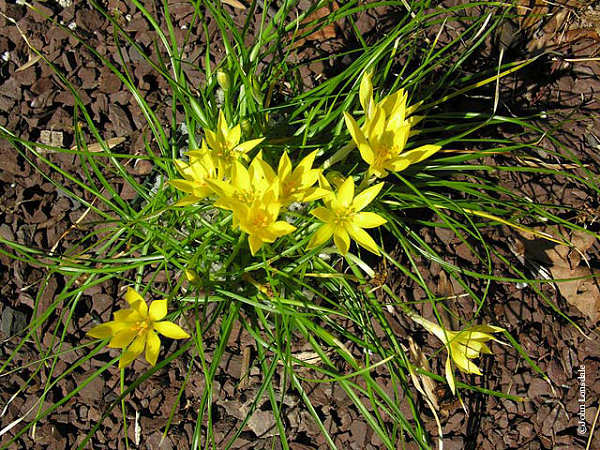
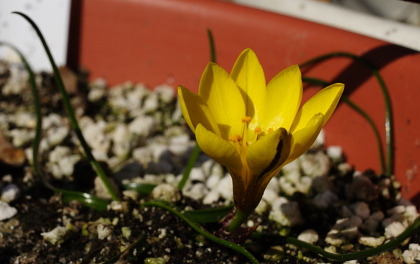
The first photo was taken by Bob Rutemoeller and the rest by Mary Sue Ittner. Mary Sue has found that her plants sometimes did not break dormancy and did better when kept in her greenhouse which is warmer in summer and watered occasionally.
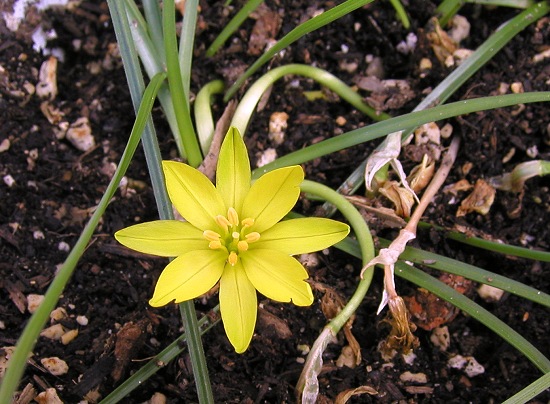
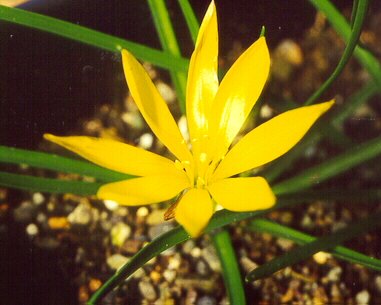
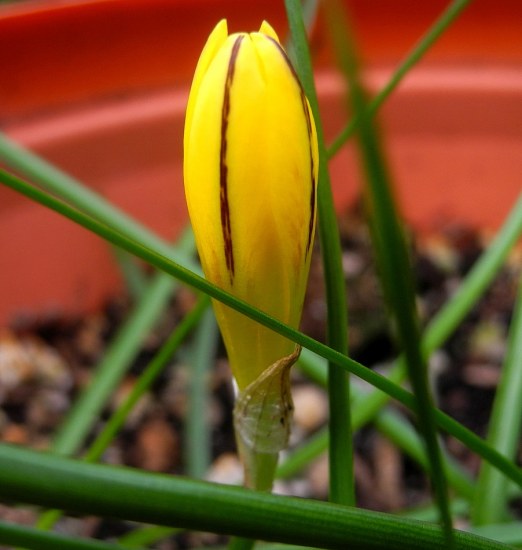
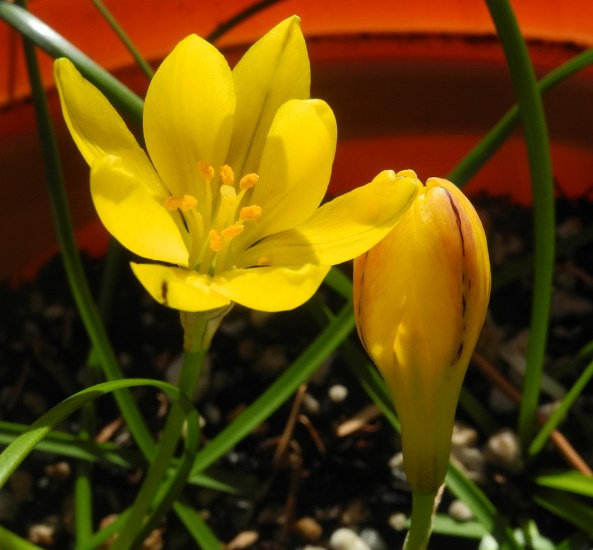
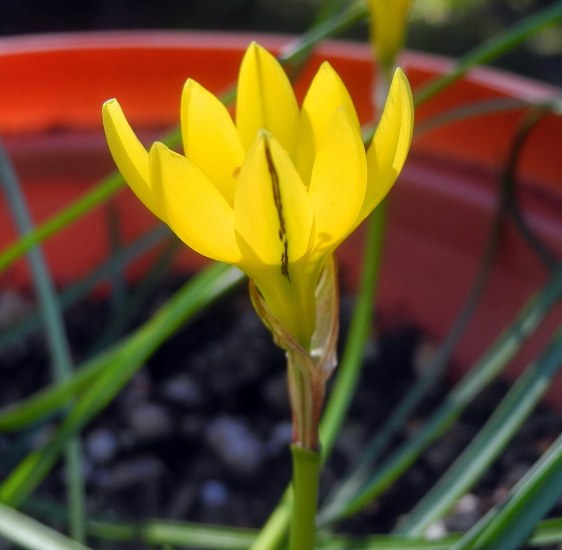
Photos below from Kenneth Preteroti who described it on the pbs list as "A pretty and pleasantly sweet smelling flower for a dreary winter day."
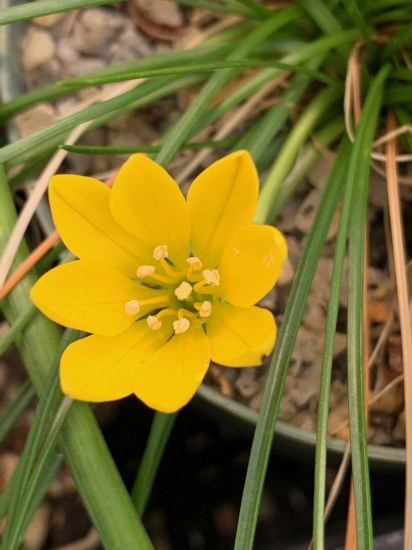
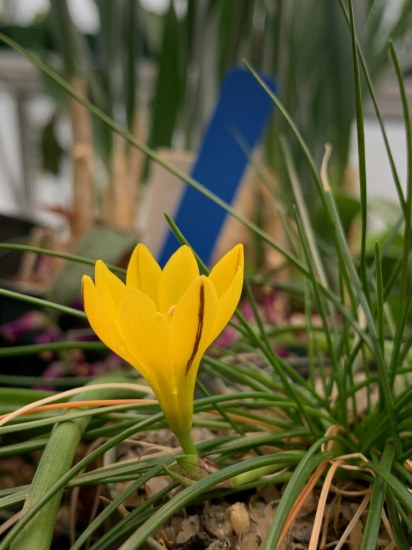
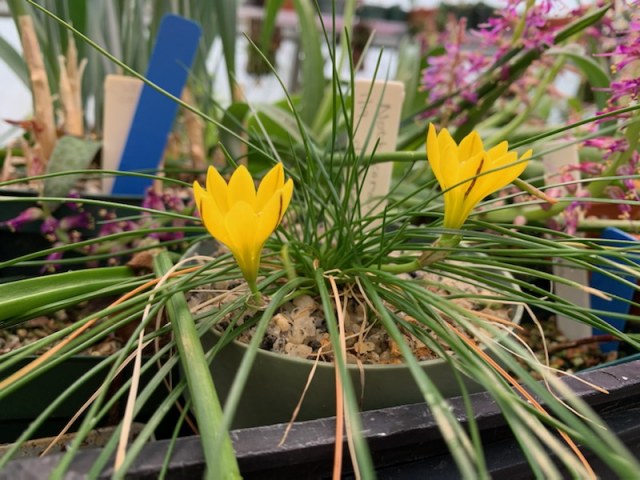
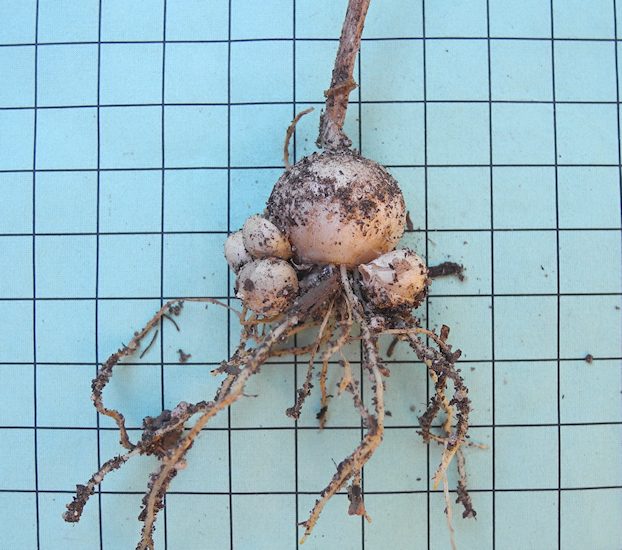
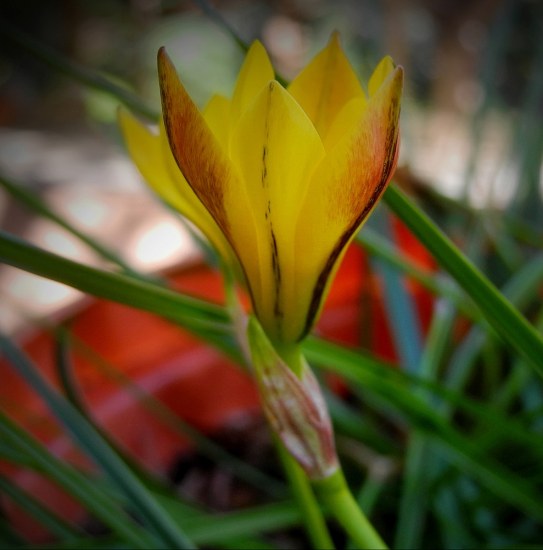
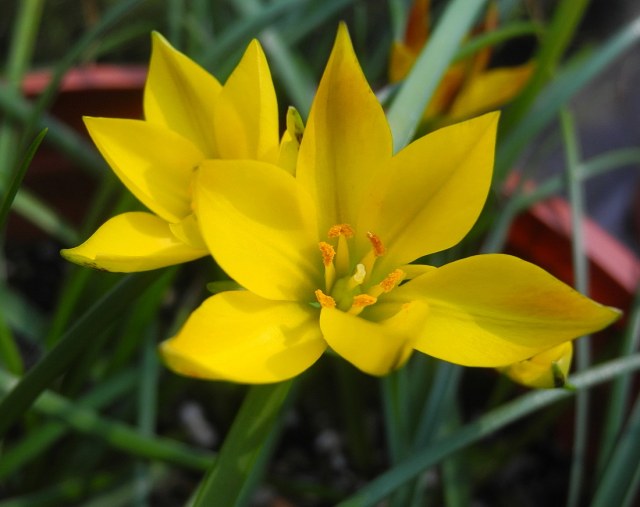
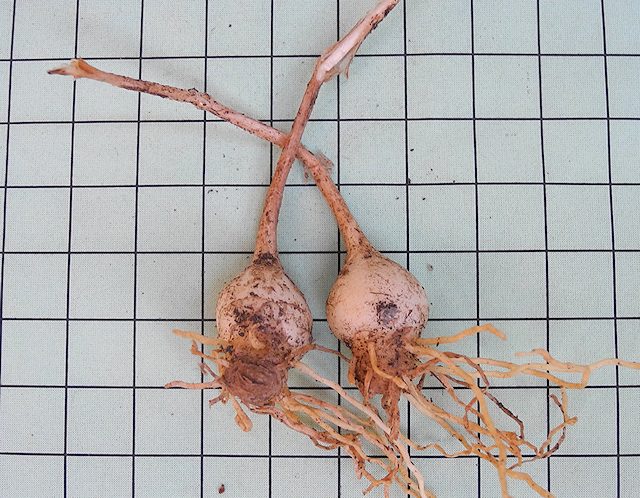
Nothoscordum felipponei Beauverd is native to Argentina and Uruguay. Plants of the World online lists 12 synonyms including Nothoscordum ostenii Beauverd, Ipheion sellowianum(Kunth) Traub, Beauverdia sellowiana(Kunth) Herter, and Tristagma sellowianum (Kunth) Traub. Whatever the name, it's a cheerful little plant that's easy to grow in a pot in Mediterranean conditions. The plant most of us grow is from South America where it is found in clay soil, that is slightly acidic and rich in organic matter in an area with rainfall for most of the year with a brief dry period in late summer. It is lemon yellow with 6 tepals. Height: about 3-10 cm. The first three photos were by Sheila Burrow and John Lonsdale. The last three photos were taken by Mary Sue Ittner and include the bulbs on a 1 cm grid.
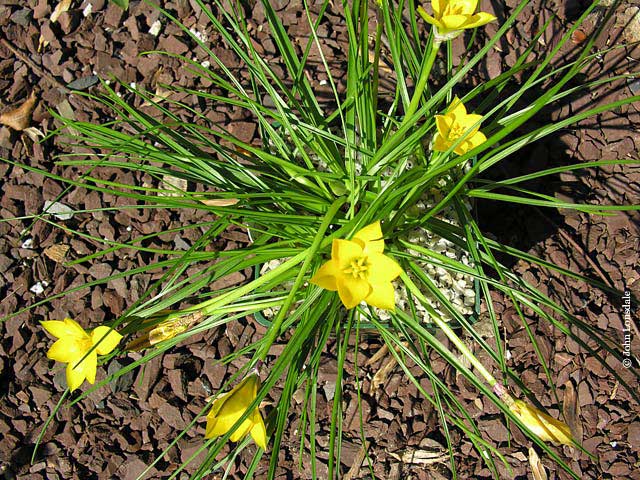
Lee Poulsen writes: "Here are a couple of photos showing this species and Nothoscordum dialystemon side by side showing the noticeable difference in their leaves. The second photo is a close-up so you can see more detail. Nothoscorum dialystemon has leaves that, while narrow, are twice as wide as those of my Nothoscordum felipponei. They are also much flatter. The leaves of this species are almost tubular."
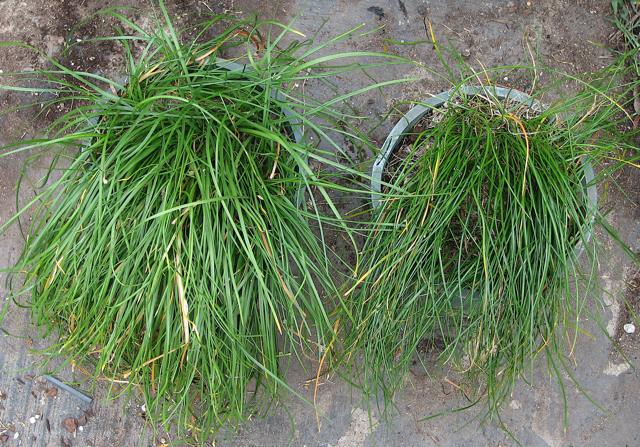
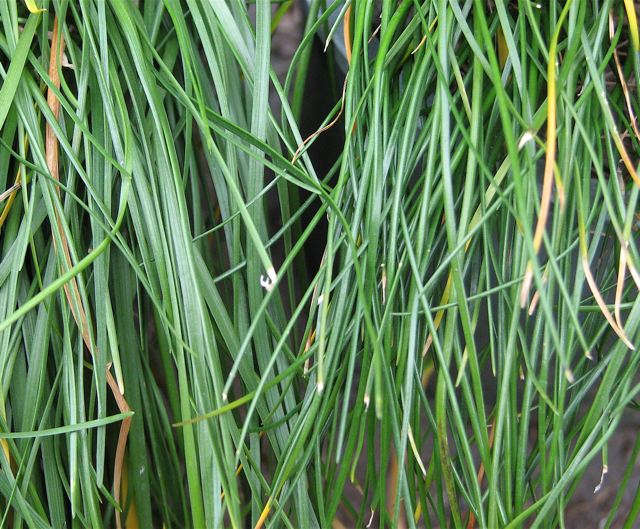
Photos below from John Lonsdale of plants he grew as Nothoscordum ostenii Beauverd which is a synonym.
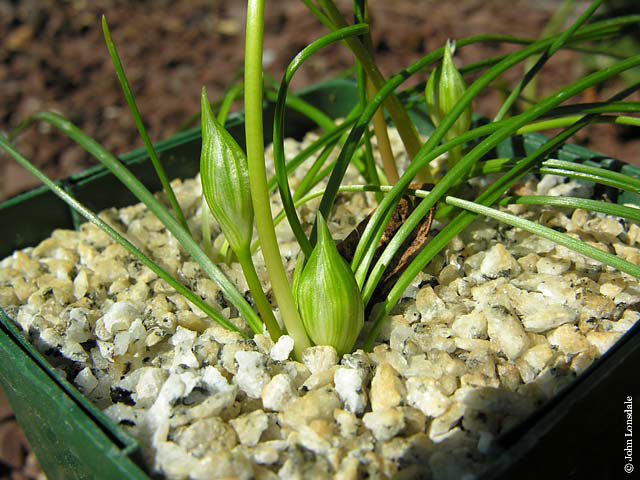
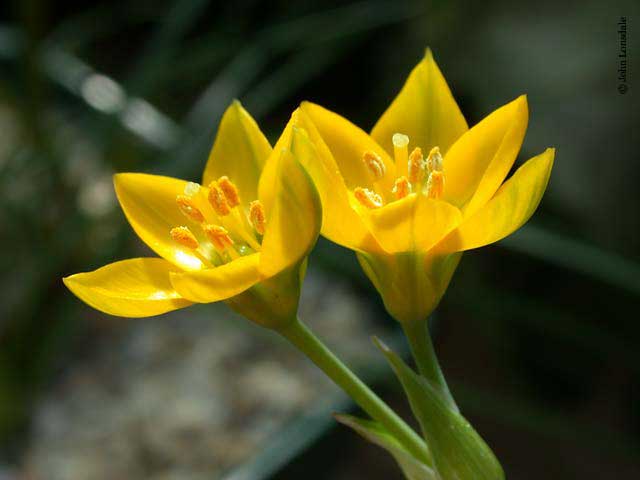
Nothoscordum gracile (Aiton) Stearn, syns. Nothoscordum fragrans (Vent.) Kunth, Allium gracile Aiton, and Allium fragrans Vent. from South America has grass-like leaves. It is closely related to Allium species, but lacks the onion or garlic odor when crushed. Height: to .5 meter. It is extremely prolific, invasive, and difficult to eradicate and often seen in botanical gardens for this reason. It is native to Argentina, Bolivia, Brazil, Chile, Colombia, Costa Rica, Ecuador, Guatemala, Honduras, Mexico, Panamá, Paraguay, Peru, and Uruguay, but is found in Algeria, Australia, Azores, Baleares, Bermuda, Canary Is., Cyprus, East Aegean Is., Egypt, France, Great Britain, Greece, Jamaica, Jawa, Kenya, Libya, Madeira, Malawi, Mauritius, Morocco, New Zealand, Norfolk Is., Palestine, Portugal, Réunion, Sicilia, South Africa, Spain, St.Helena, Tanzania, United States (Alabama, California, Florida, Georgia, Louisiana, Mississippi, South Carolina), and Zimbabwe
Flowers are bell-shaped, white with greenish bases and reddish to brown midveins on the back of the tepals. Each umbel has 8 to 15 fragrant flowers. Seed is very viable and germinates well. It produces many small bulblets on short stalks from the base of the parent bulb that are easily dislodged when you try to remove the parent bulb so there are several ways for increase to occur. The best remedy if you find one in a pot is to remove the plant and soil and repot any other bulb you want to keep with new soil. This picture shows a flower of this species. Three or four batches of Tulbaghia seeds with different species names from NARGS seed exchanges have turned out to be this pest and seed of other things as well. Beware as this has escaped in many areas, especially Mediterranean climates. Photos by Mary Sue Ittner show the flowers before they open, fully opened on a warm day late in the afternoon and the leaves with another spike forming. The last photo shows the bulb with bulblets around the bottom. A large amount of the small dark bulbs came off while I was pulling this out of the pot (another wrongly named batch of seeds) to photograph it before I destroyed it and since they are dark, it is difficult to find them which is why a lot of people do not reuse the soil once one of these appears in a pot.
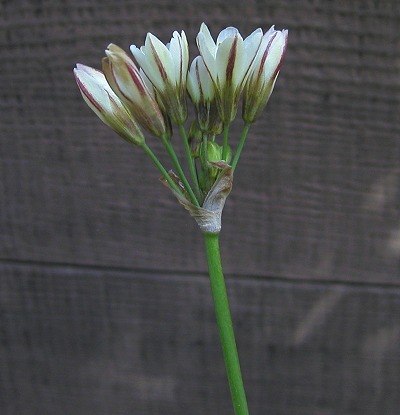
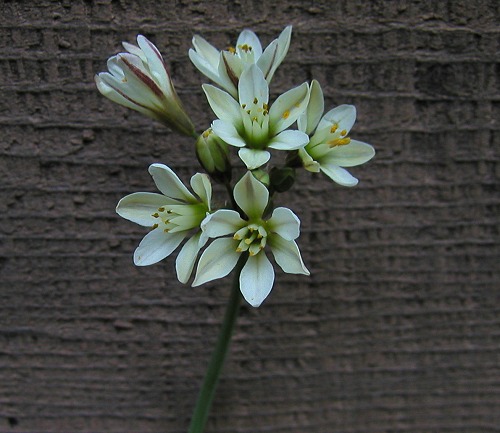
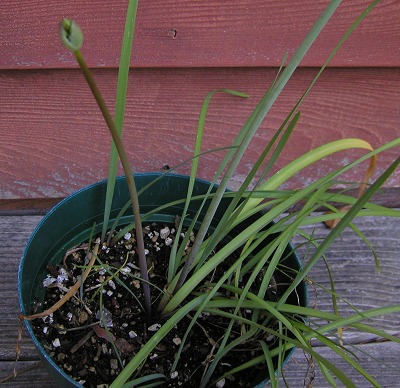
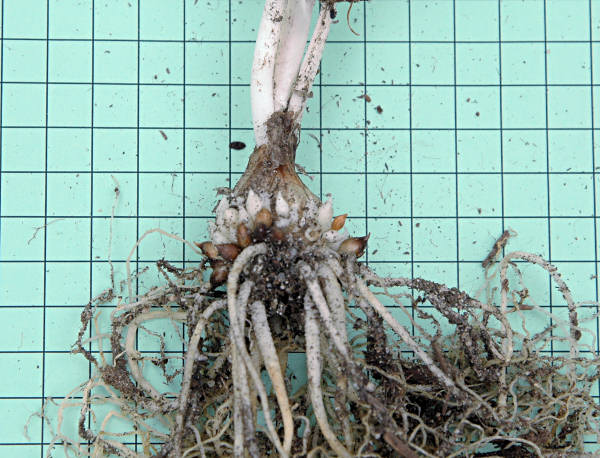
Nothoscordum gracile var. macrostemon (Kunth) Guagl., syn. Nothoscordum macrostemon Kunth grows in grassland in southern Brazil and is also distributed in Argentina, Uruguay, and Paraguay. The plants illustrated below have tentatively been identified as perhaps this variety. These plants were grown from seed labeled as another species. The leaves are long and broad and the bulbs get very large so I am growing it in a deep pot. The flowers are fragrant, but most days don't open very wide. It doesn't increase vegetatively very fast unlike most of the plants I have grown of this species (all from seed exchanges labeled as something else.) The bulbs in the photo (on a 1 cm grid) have only one small bulblet next to the mother bulb. This species is dormant in summer and blooms March-April in Northern California. It would be interesting to learn if it also grows in winter in South America. Photos by Mary Sue Ittner.
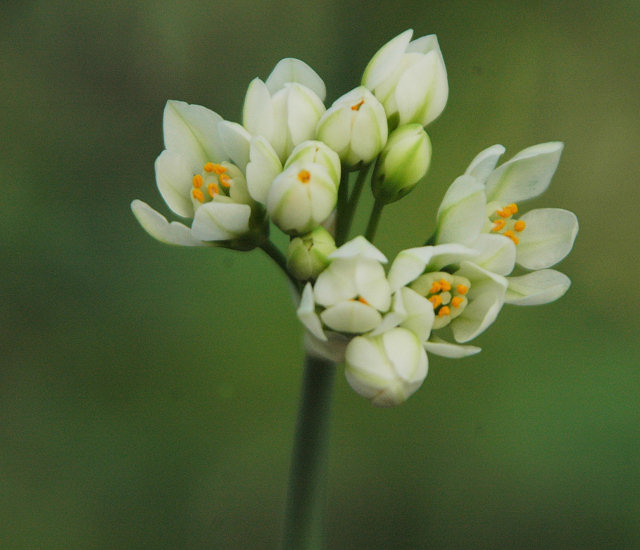
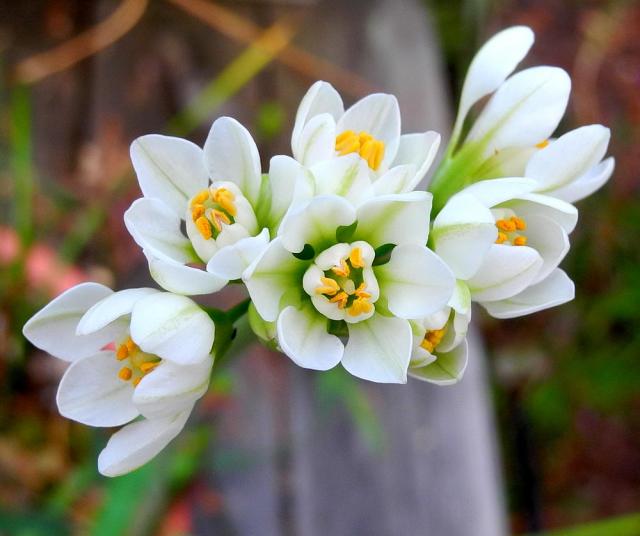
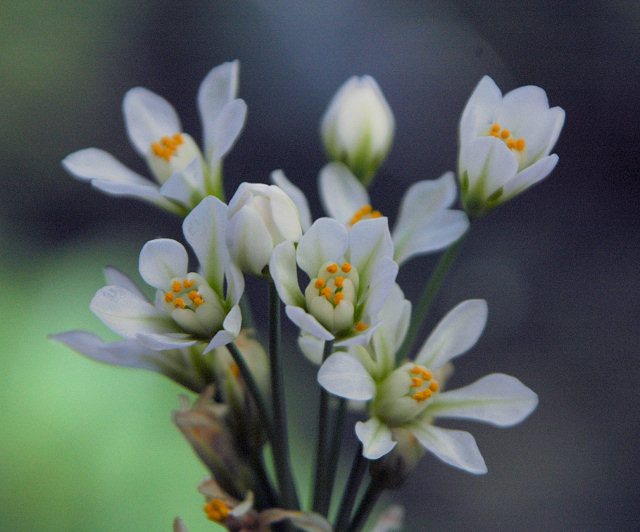
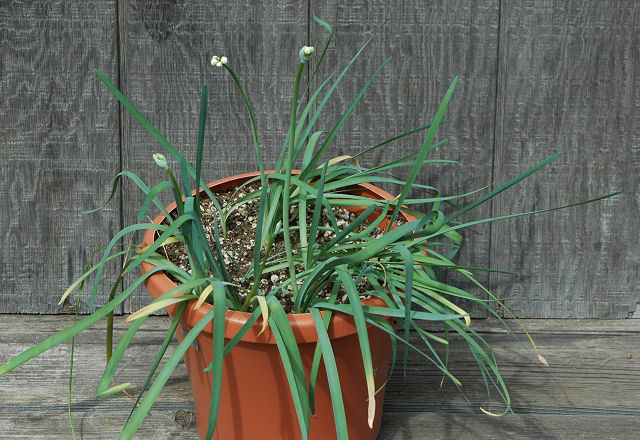
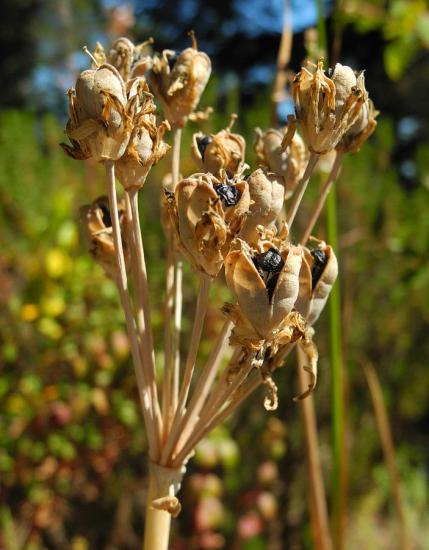

Nothoscordum hirtellum (Kunth) Herter (syn. Ipheion hirtellum (Kunth) Traub, syn. Tristagma hirtellum (Kunth) Traub) is found in E Argentina and in Uruguay in open pastures and never in low ground. In this yellow flowered species it is common to find flowers with 8 tepals instead of 6. In the wild it is in bloom from April to June. It is from an area with year-round rainfall, higher in spring and autumn, but is dormant in summer.
Nothoscordum hirtellum ssp. hirtellum is found in Uruguay and has 6 tepals. Photos from Alessandro Marinello.
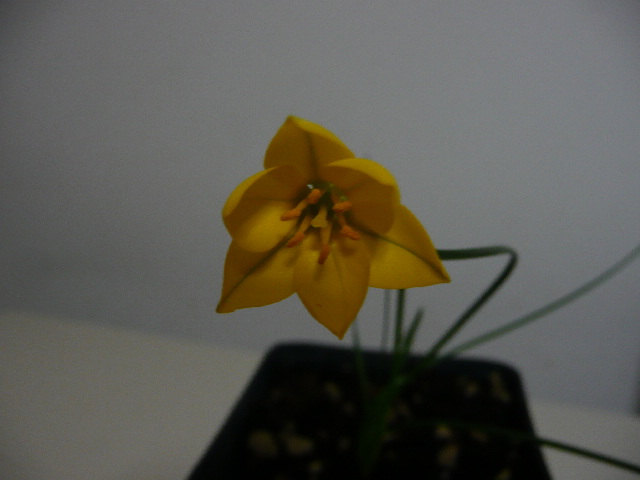
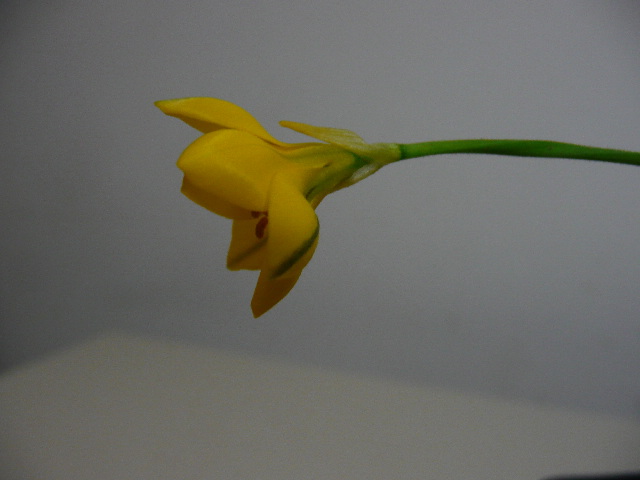
Nothoscordum hirtellum ssp. lorentzii (Herter) Ravenna, syn. Beauverdia hirtella ssp. lorentzii (Herter) Sassone & Guagl. has 8 tepals and is found in Argentina. Photo below was taken by Germán Roitman
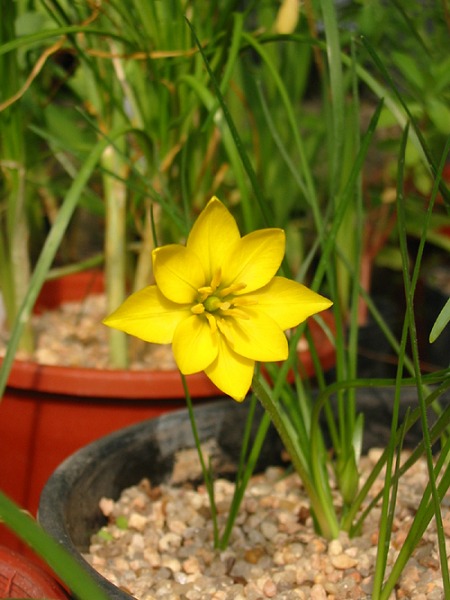
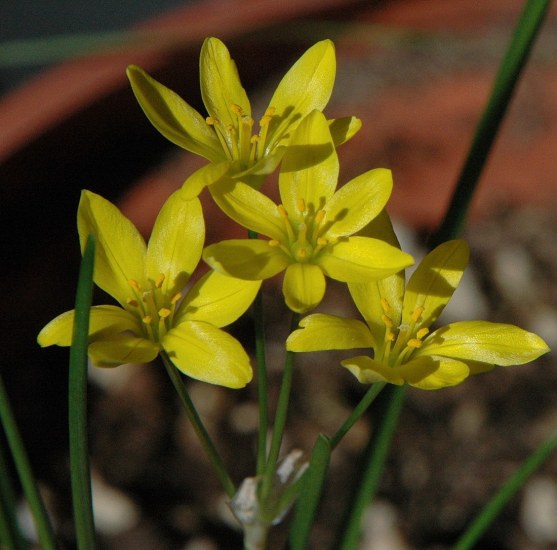
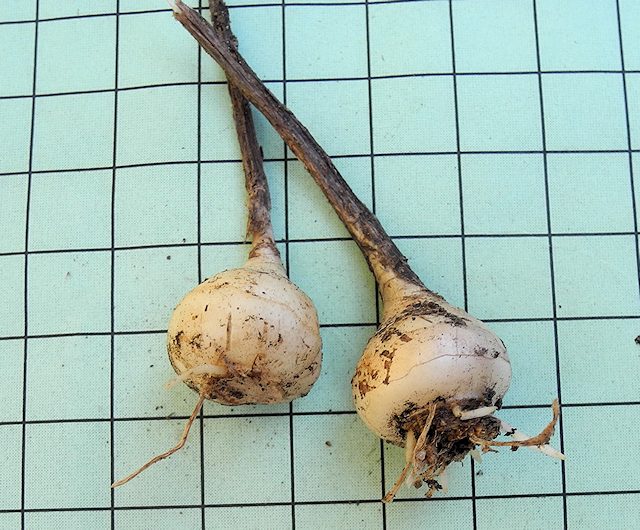
Nothoscordum montevidense Beauverd is from Argentina, Brazil, and Uruguay. The first photo is from Mark McDonough who writes: this is "a wonderful small plant that flowers up a storm both in spring and again in fall and early winter. The stems only reach a few inches in height (about 10 cm). As it is not hardy in my USDA Zone 5 garden in northern New England (Massachusetts), I take the potted plants inside over winter. The sunny yellow globlets have a nice lemony scent." The second and third photos are from John Lonsdale. The last three photos were taken by Mary Sue Ittner including the bulbs on a 1 cm grid. After years of growing this successfully in her unheated greenhouse and enjoying flowers twice a year, in 2023 something ate the leaves and flowers (and only that plant and no other). She moved it outside where it recovered.
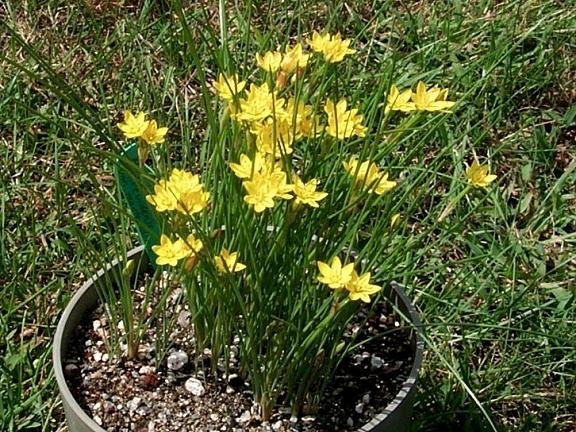
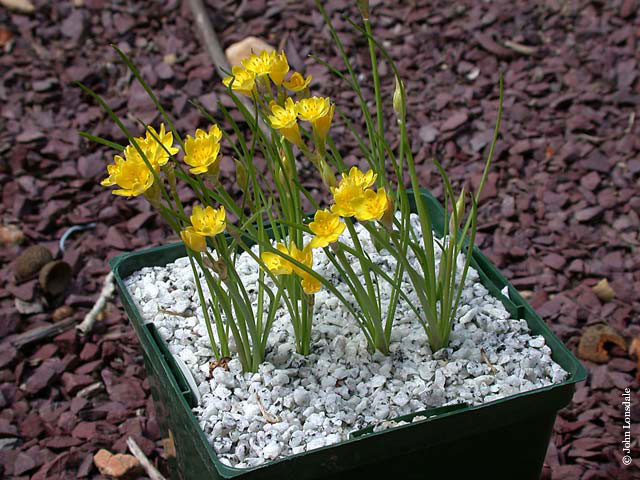

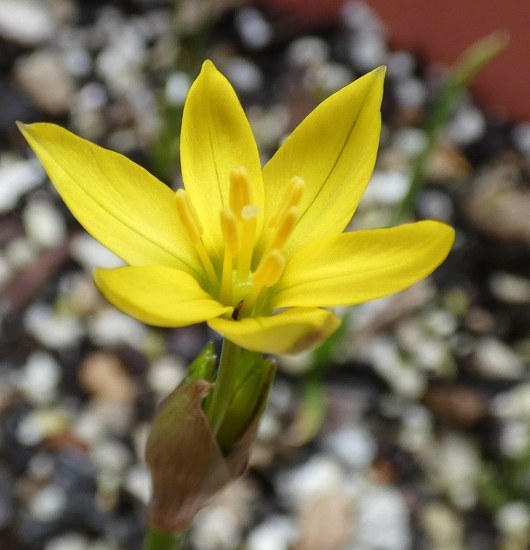
Nothoscordum montevidense ssp. minarum (Beauverd) Ravenna, syn. Nothoscordum minarum Beauverd, has larger bulbs and smaller and more numerous flowers. It is fragrant and can bloom in autumn and again in spring. Photo from John Lonsdale.
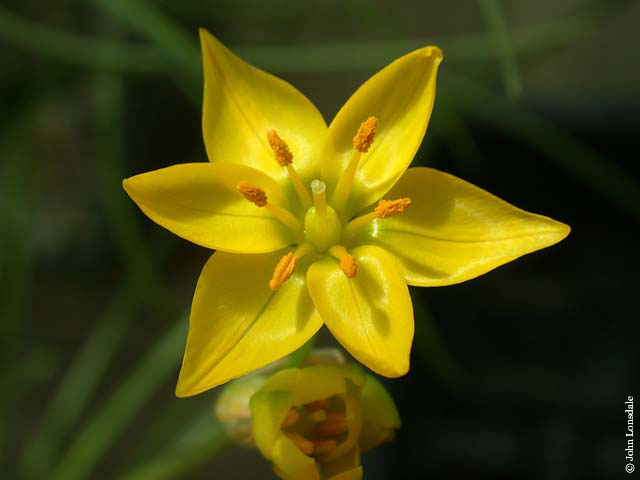
Nothoscordum vittatum (Griseb.) Ravenna, syn. Ipheion vittatum (Griseb.) Traub, syn. Tristagma vittatum (Griseb.) Traub, syn. Beauverdia vittata (Griseb.) Herter, has white flowers and is found in Brazil, Uruguay and Argentina in grasslands, flowering from April to June. It grows in areas with year-round rainfall. This species is dormant in summer, but keeps its perennial roots. Height: to about 5 cm. Photos by Germán Roitman.