Pelargonium species q-s are found on this wiki page
Pelargonium a-c - Pelargonium d-l - Pelargonium m-p - Pelargonium t-z - Pelargonium index
Pelargonium radiatum Pers. is a tuberous plant from the Southwest Cape area of South Africa, on the Dutoitskloof and Slanghoek mountains and on Jonaskop in the Riviersonderend Mountains, on sandstone. The flowers may be pink, yellow or cream, with wine red feathering on the upper two. Flowering takes place between October and January. The name refers to the way the leaves radiate out from the tuber. (Section Hoarea, Incrassatum Group). Photos David Victor.
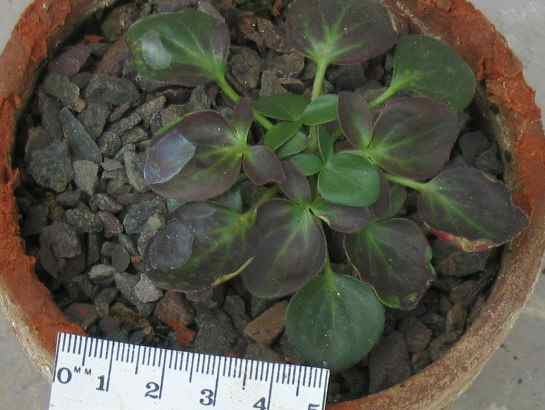
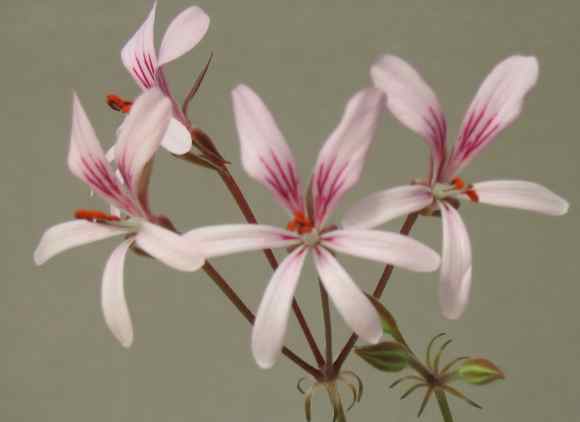
Pelargonium radulifolium Harv. is a tuberous species that grow to 60 cm and can sprout after fire. It is found in open places on well drained soil over a broad area of the Cape, from Clanwilliam to Port Elizabeth. It has soft hairy leaves that are dissected into large lobes with toothed margins. Flowers are brownish yellow or salmon pink, sometimes marked with maroon or black. Plants flower in summer and autumn (August to May). Photo from the book Plants of the Klein Karoo courtesy of Jan and Anne Lise Schutte-Vlok. The second photo from iNaturalist was taken by gerhardmalan in the Western Cape in September and shared under a CC BY-NC license.
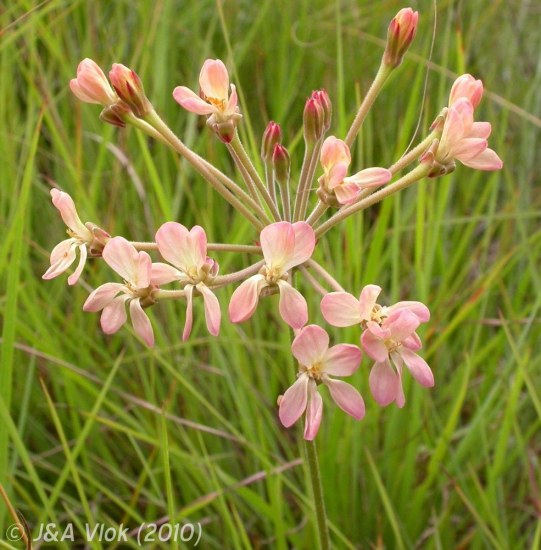
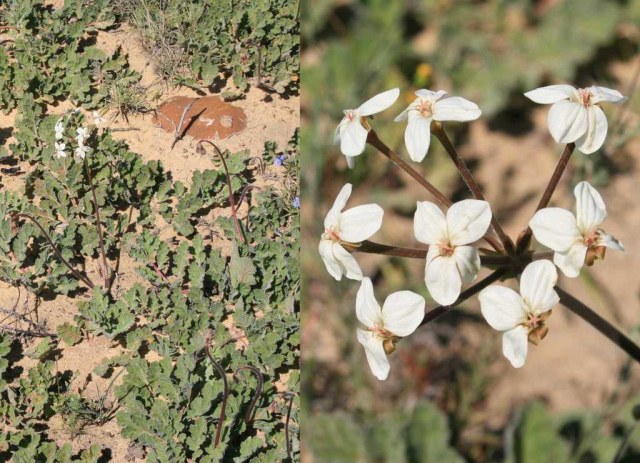
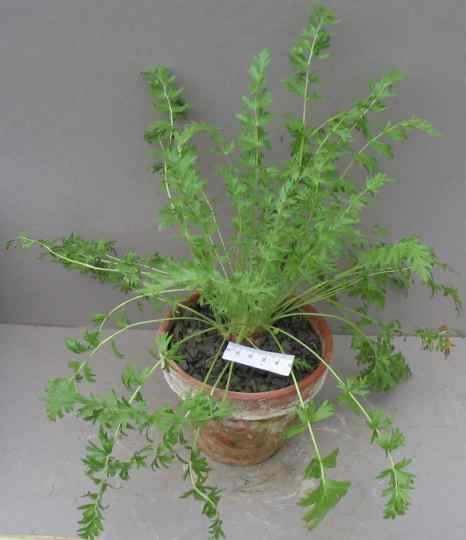
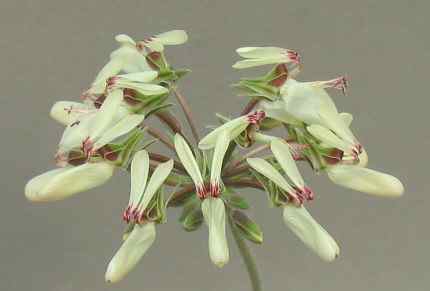
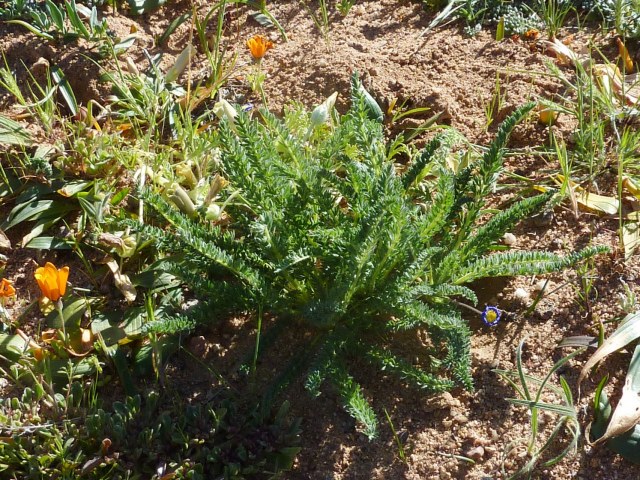
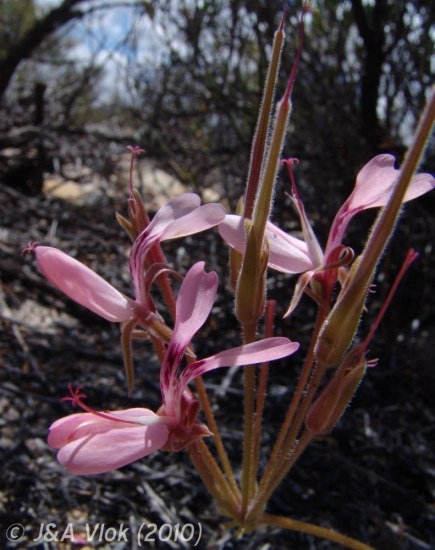
Pelargonium rapaceum (L.) L'Hér. is a species with the widest South African distribution of all those species in Section Hoarea, from the Richtersveld, along the West coast on the coastal plain and then along the south coast as far as Grahamstown, on fynbos, renosterveld and marginal strandveld. Growing to 40 cm tall when in flower, this species has finely dissected leaves that are usually dry when the plants are in flower. The flowers are unmistakable, with their pea shape and can be white, cream, yellow, or pink, with wine red feathering on the "knees" of the upper two. Flowering takes place from October to February. The name refers to the turnip shaped, thickened tuber. (Section Hoarea, Rapaceum Group). The first two photos from David Victor. The third photo was taken in Namaqualand by Cameron McMaster. The last photo from the book Plants of the Klein Karoo courtesy of Jan and Anne Lise Schutte-Vlok.
Pelargonium reflexum Pers. is a tuberous species from the western side of South Africa, from the Bokkeveld escarpment around Nieuwoudtville. It occurs in fynbos on sandy flats or rocky areas. The flowers are white with the upper two having wine red feathering. Flowering takes place from December to January. The name refers to the fact that many parts of the plant are reflexed, including petals, stigma and posterior stamen. (Section Hoarea, Pinnatum Group). The first four photos from iNaturalist were taken by Douglas Euston-Brown in the Northern Cape in August and shared under a CC BY-SA license. The last photo from David Victor may be this species.
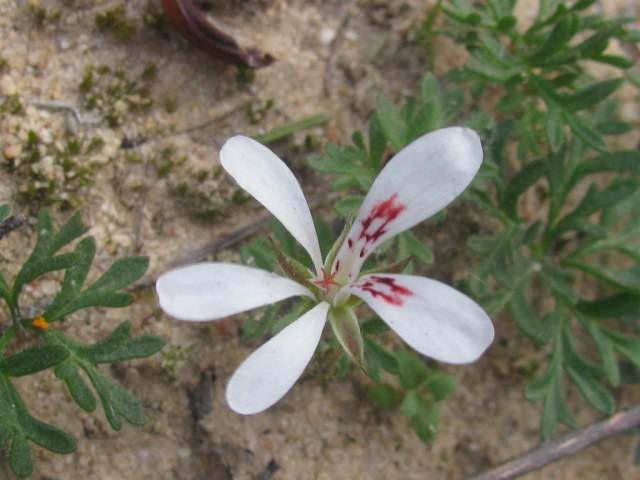
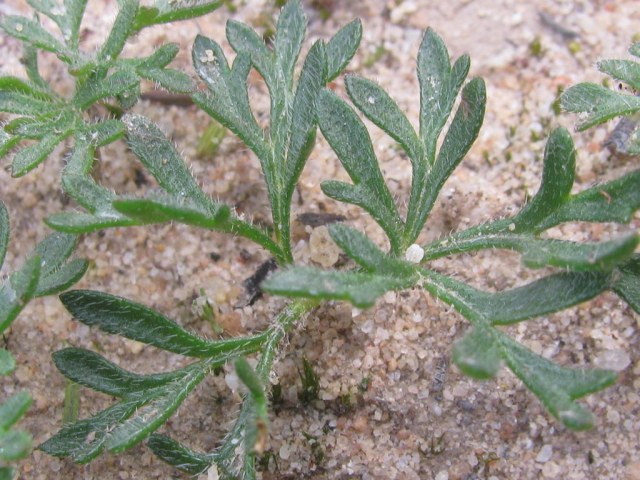
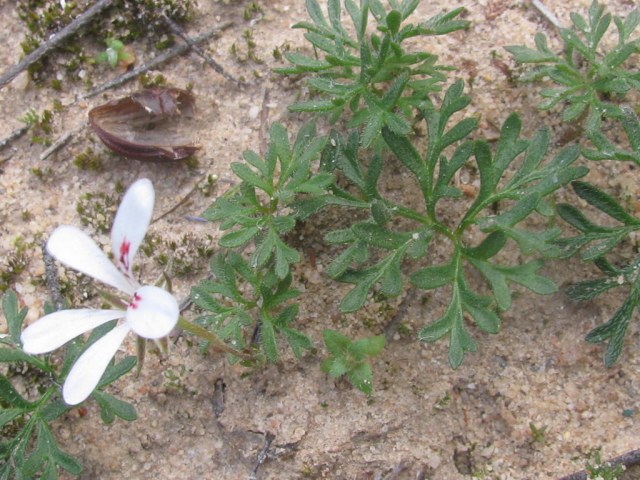
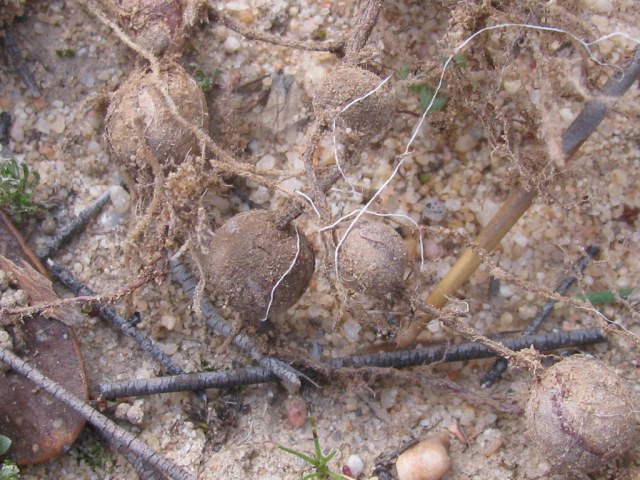
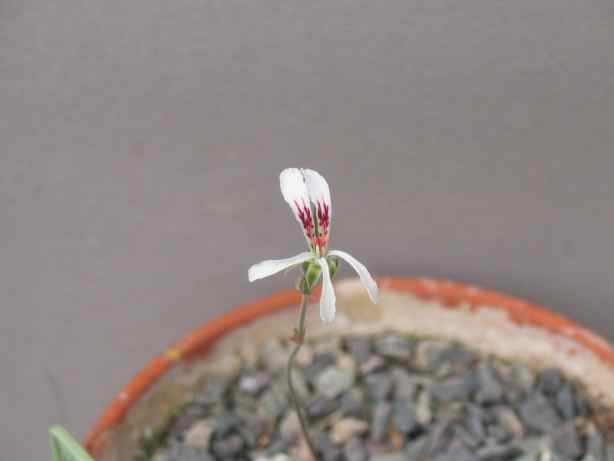
Pelargonium reniforme Curtis is a perennial shrublet growing to about 50 cm, but occasionally taller, with tuberous roots. It is found on dry flats and open grassland in the Eastern Cape, South Africa. It has kidney-shaped velvety grayish-green leaves and bright pink to magenta flowers with a darker spot and stripes on the upper 2 petals. It flowers throughout the year. More descriptive information can be found here. Photos from Cameron McMaster and Rod Saunders.
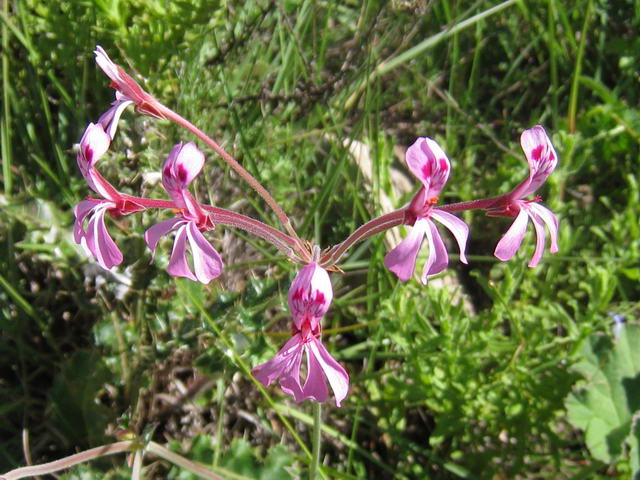
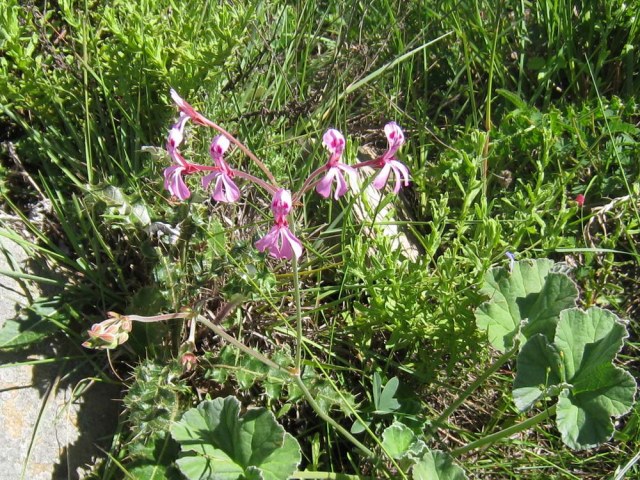
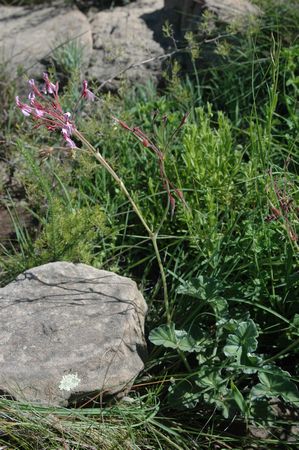
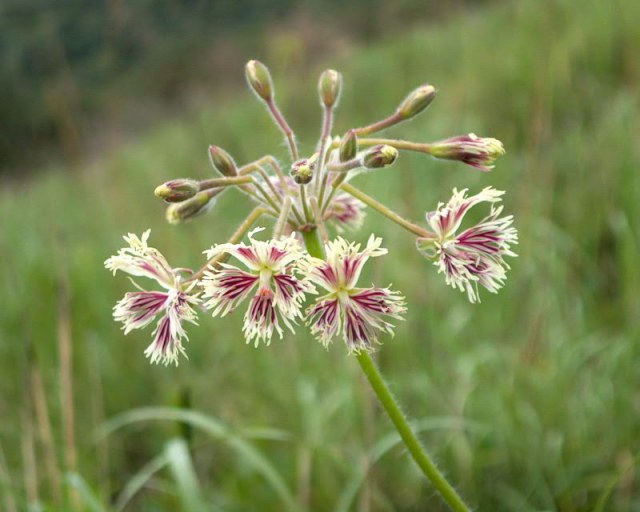
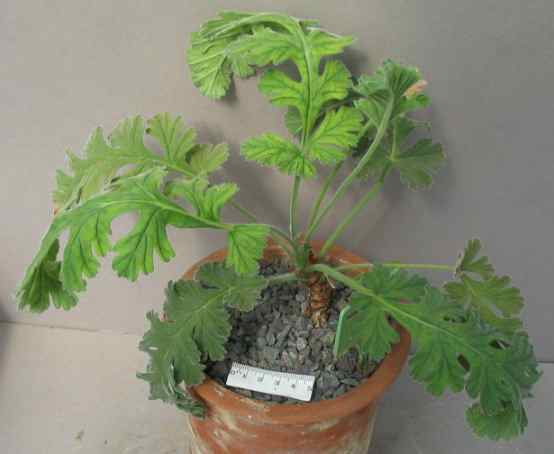
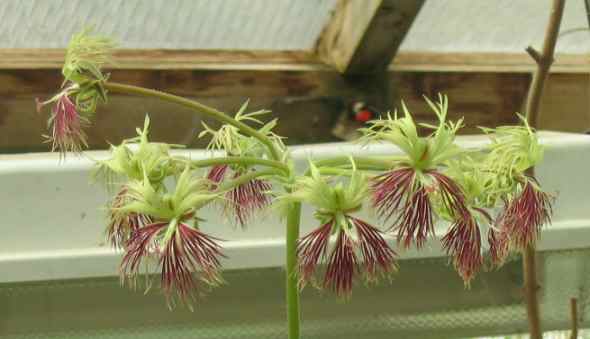
Pelargonium schizopetalum Sweet is a tuberous species found in grassland in the Southeastern Cape Province of South Africa. the leaves are deeply cut and softly hairy. The pale flowers tinged with purple are highly fimbriate and on stems up to a foot high. (Section Polyactium). The first two photos were taken by Cameron McMaster in the Eastern Cape. The other photos are from David Victor.

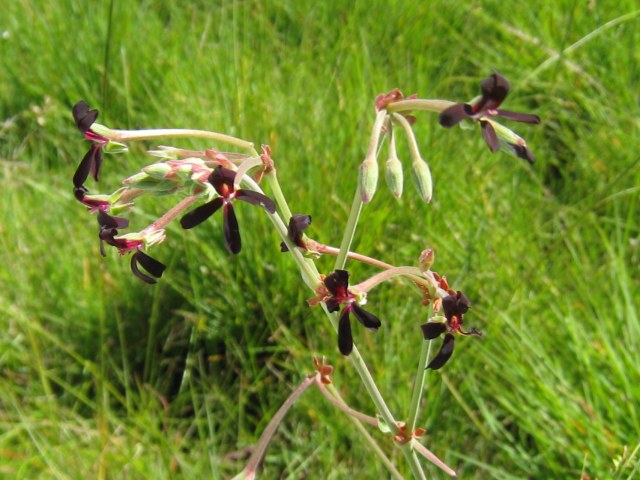
Pelargonium sidoides DC. is a species with forms that have flowers which are close to a true black. Considered by some to be a perennial, it has thick roots and has been used in traditional South African medicine. Andrew Wilson noted that wild-collected seeds are better since the version sold in nurseries is a hybrid and is merely a dark maroon. When the weather is hot, the flowers don't look as black as they do in the cool springtime. The first photo from Cameron McMaster was taken in KwaZulu-Natal. Photo 2 was taken July 2003 by Lee Poulsen grown from Silverhill seeds. Photos 3-5 were taken in October 2004 by Susan Hayek of plants from a commercial source.
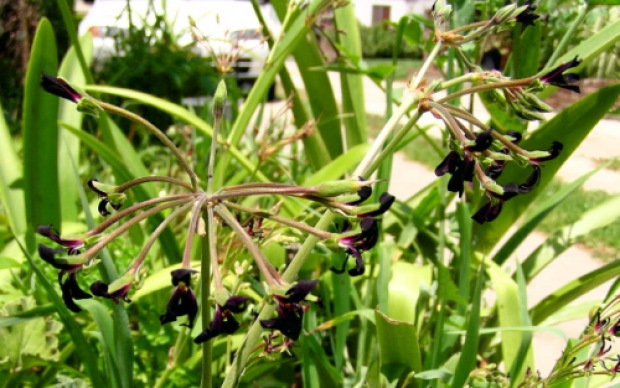
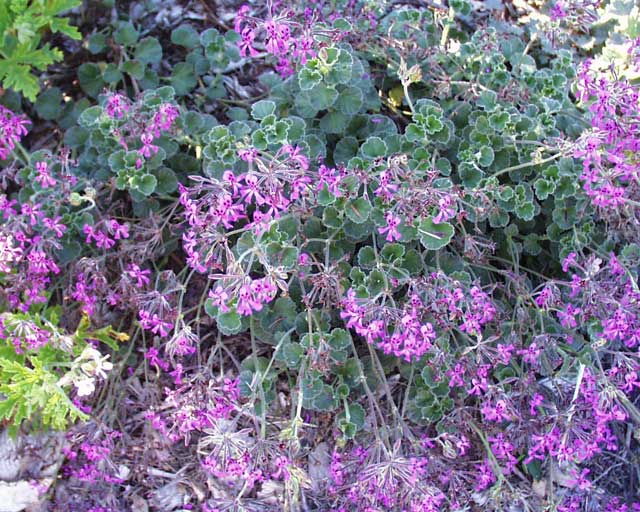
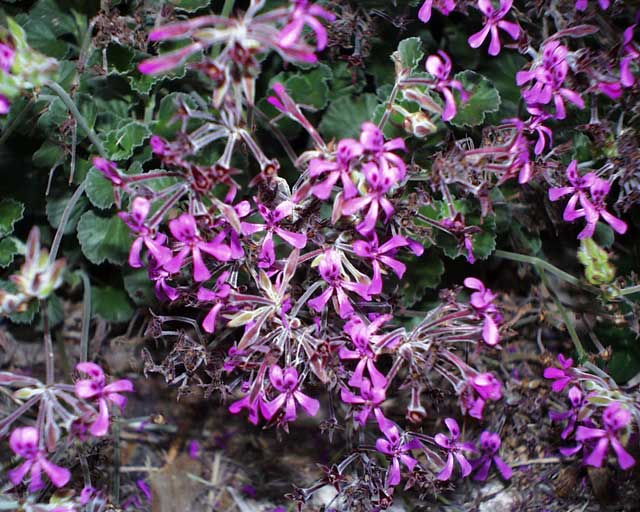
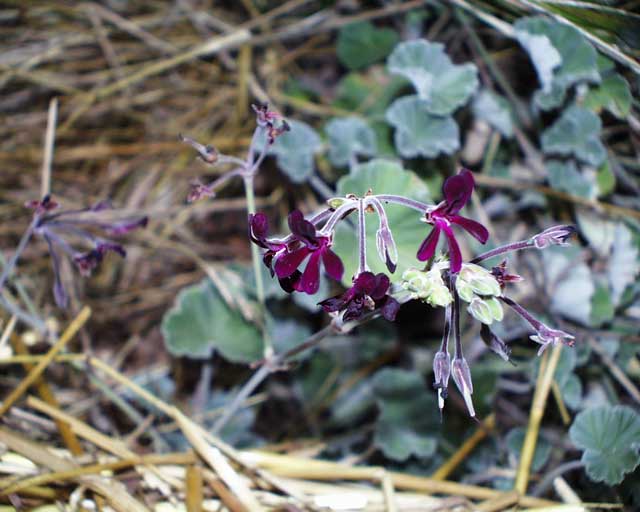
Pelargonium species This is a plant grown from seed obtained from Silverhill seeds as P. incrassatum. Whilst it is clearly a plant of Section Hoarea, it is not P. incrassatum, but I have not yet identified it. Photos David Victor.
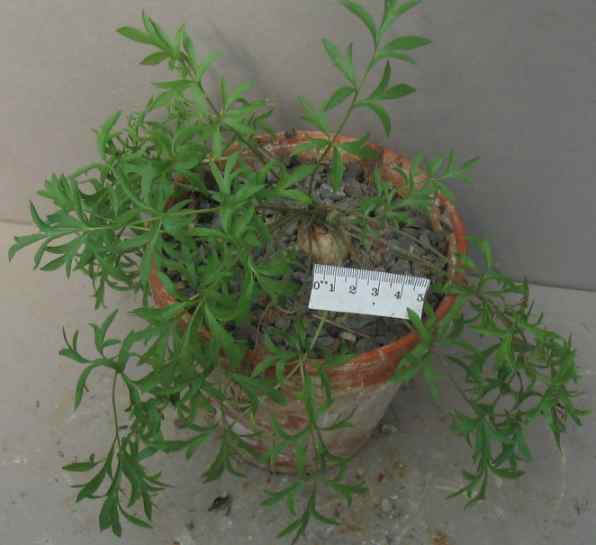
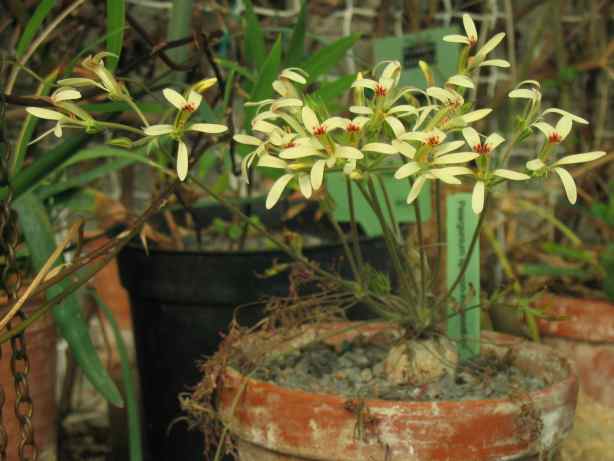
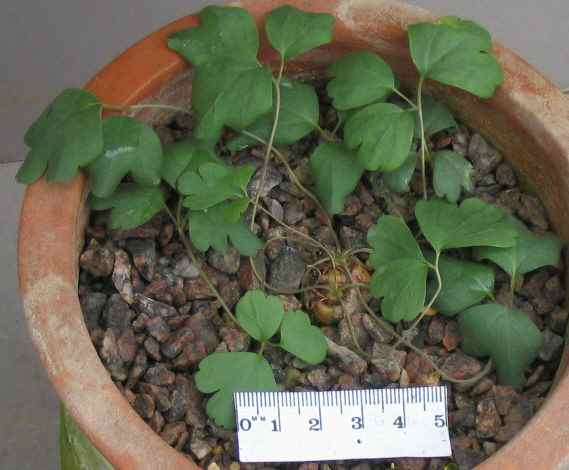
Pelargonium species nova This is a recently discovered tuberous species that comes from the Western side of South Africa, in the foothills of the Nardouwsberg North of Clanwilliam. It grows under the shelter of clumps of Restionaceae. The flowers are white, with a small red "v" on the upper two. They are on long stems to allow the flowers to appear above local vegetation. Flowering takes place during February and March. (Section Hoarea). Photos David Victor.
Pelargonium a-c - Pelargonium d-l - Pelargonium m-p - Pelargonium t-z - Pelargonium index