There are more than 200 species of Oxalis in South Africa and 270 varieties and probably many new species as well. The only handbook on the Southern African species, by Salter, is almost sixty years old and out of print so there are many challenges in identifying them. Cape Plants, a conspectus of the Cape flora of South Africa by Peter Goldblatt and John Manning lists 118 in the Cape Floral Kingdom but there is only a brief botanical description, location sometimes with habitat information, and time of bloom in this book.
South African species N-O are found on this wiki page.
Oxalis index - Miscellaneous Oxalis - Oxalis flava - Oxalis hirta - Oxalis obtusa - Oxalis pes-caprae - Oxalis purpurea - South African oxalis A-B - South African oxalis C - South African oxalis D-E - South African oxalis F-G - South African oxalis H-K - South African oxalis L-M - South African oxalis P - South African oxalis R-S - South African oxalis T-Z - South American oxalis
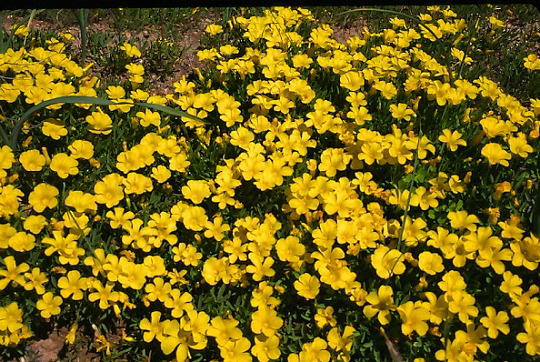
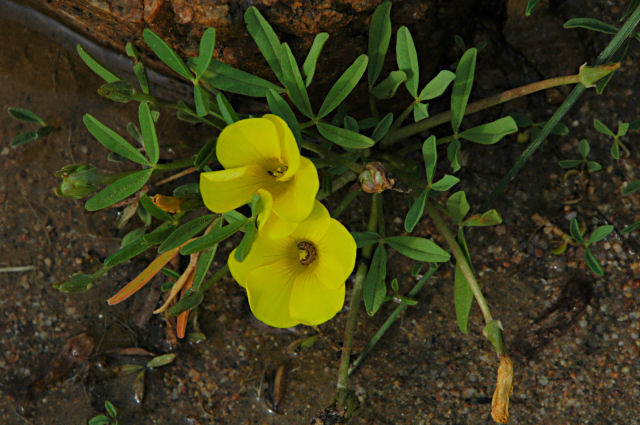
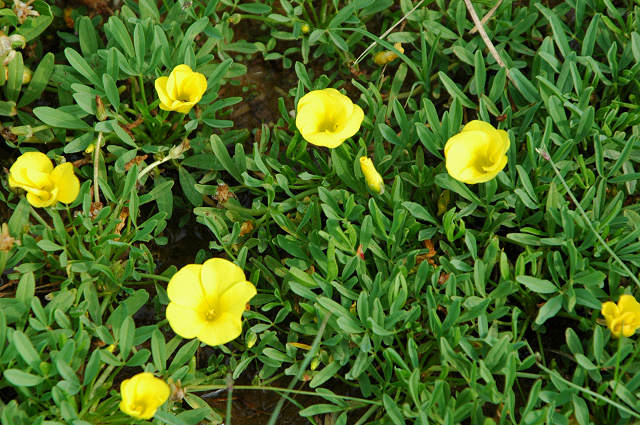
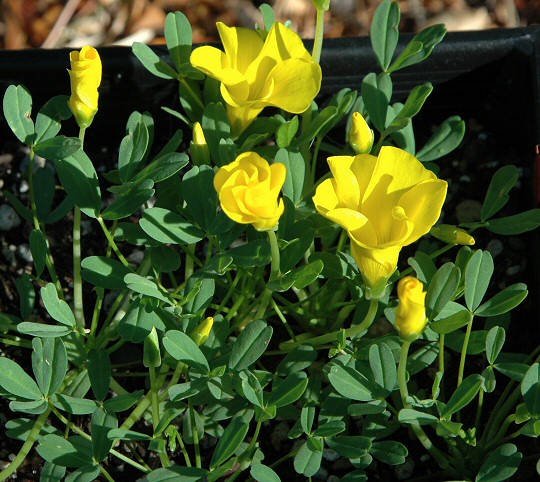
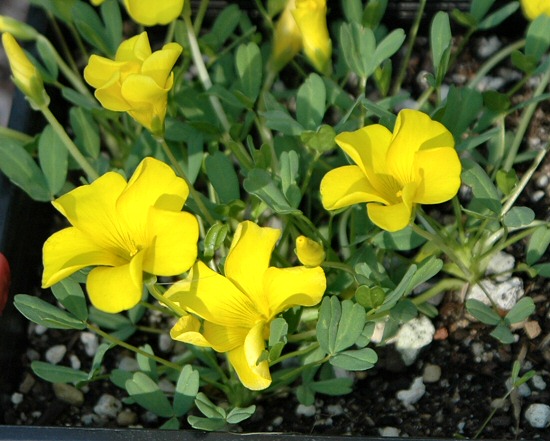
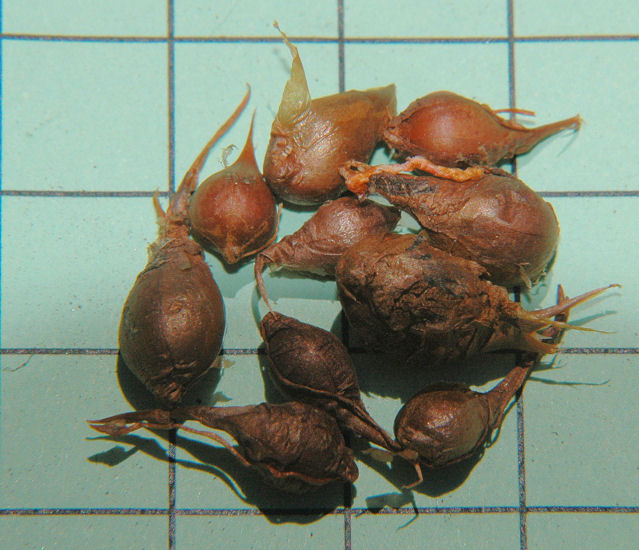
Oxalis namaquana Sond. is usually found in moist places. Leaves are in a rosette with 3 linear or oblong leaflets. Flowers are bright yellow with a short broad tube. The first photo shows this species blooming in Namaqualand in a wet spot in a wet year (August 2001). The second two habitat pictures were taken in Namaqualand in September 2006. The last three photos below are of bulbs from Johannes-Ulrich Urban he named Uli-54. His description of them as seen in habitat was "tiny leaves, yellow flowers, low in habitat forming an extremely low carpet of leaves very dense on the ground, growing mat like over rocks in only a thin layer of soil fairly close to running seasonal water. Very large bright yellow flowers. One of the best Oxalis seen blooming in the wild, near Leliefontein. This area has a relatively high altitude and I am sure it gets some frost. Bulbinella species and Kniphofia species growing there also." It has subsequently been identified as Oxalis namaquana and is growing and blooming well in Northern California. Photos by Mary Sue Ittner. The last one shows the bulbs on a 1 cm grid.
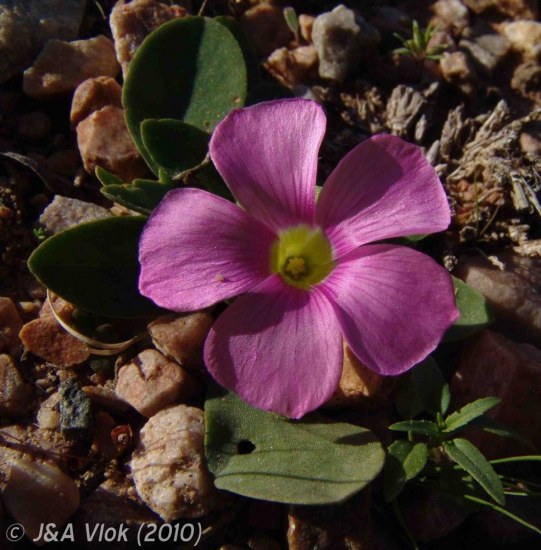
Oxalis nortieri T.M.Salter is an acaulescent species that occurs sporadically in clay soils in the eastern Little Karoo. Growing up to 10 cm, this species has leaves with one succulent elliptic-obovate leaflet and one dark pink flower with a yellow center per stalk. Plants flower in winter (June). Photo from the book Plants of the Klein Karoo courtesy of Jan and Anne Lise Schutte-Vlok.
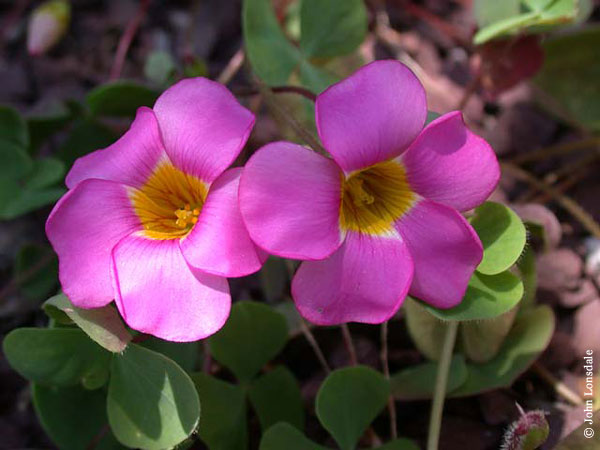
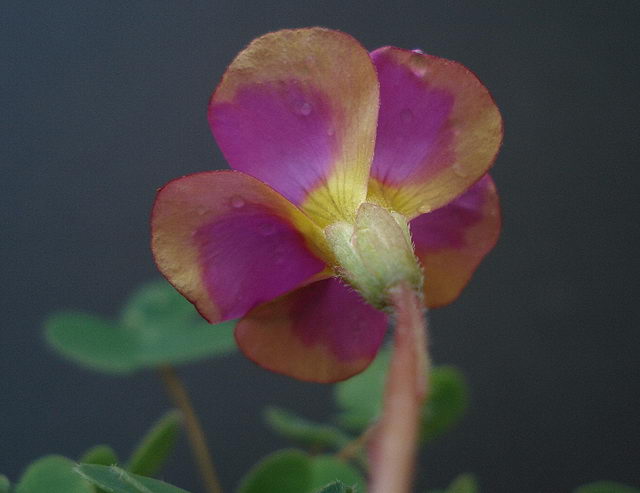
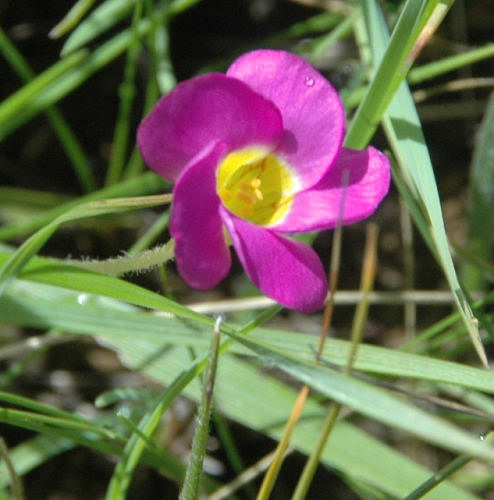
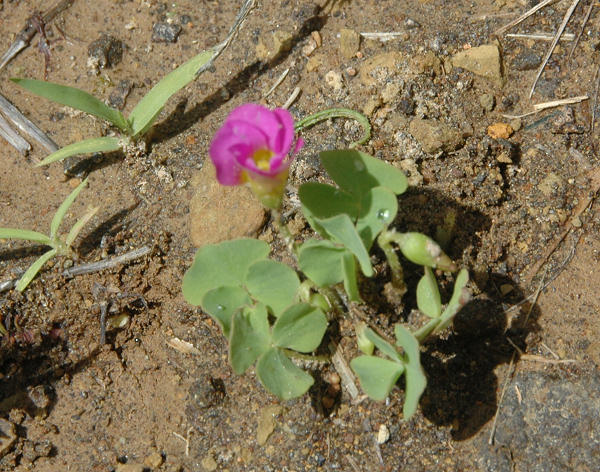
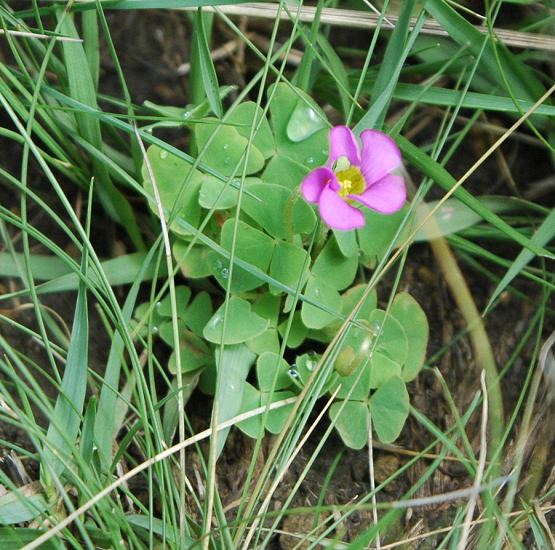
Oxalis obliquifolia Steud. ex A.Rich. is found in grassland up to 3000 meters elevation from Ethiopia to South Africa. It grows 7 to 10 cm tall and has leaflets that are broader than long with broad tips and very slender stalks with long hairs near the base. The flowers are solitary, bright pink with a white throat and yellow tube. Photo 1 by John Lonsdale. Photo 2 showing the back of the flower was taken by Ron Vanderhoff.
The photos below were taken near Maclear and Naude's Nek by Bob Rutemoeller and Mary Sue Ittner.
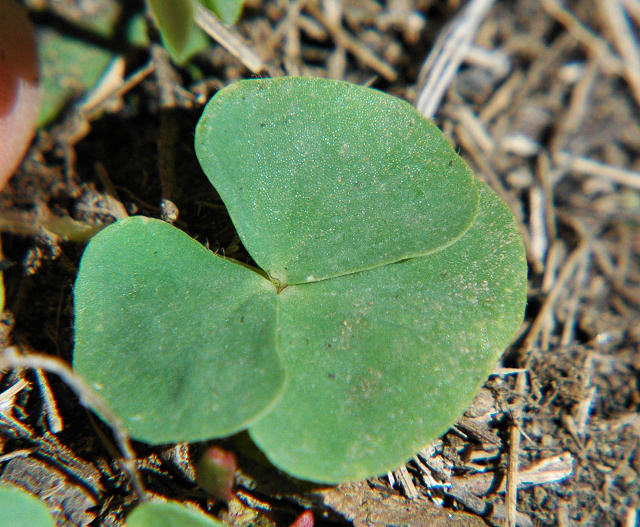
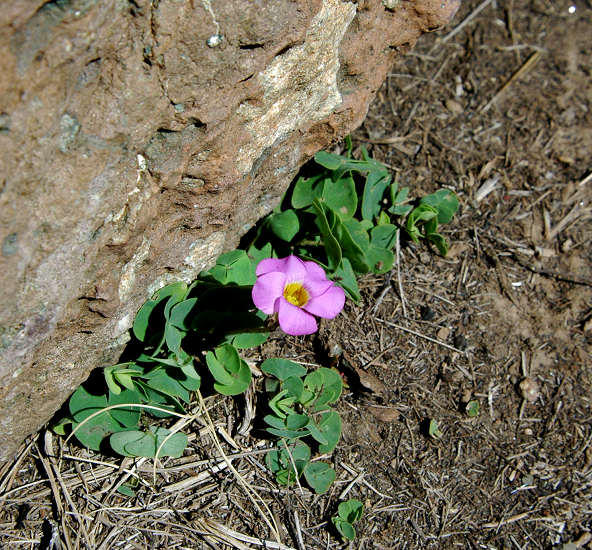
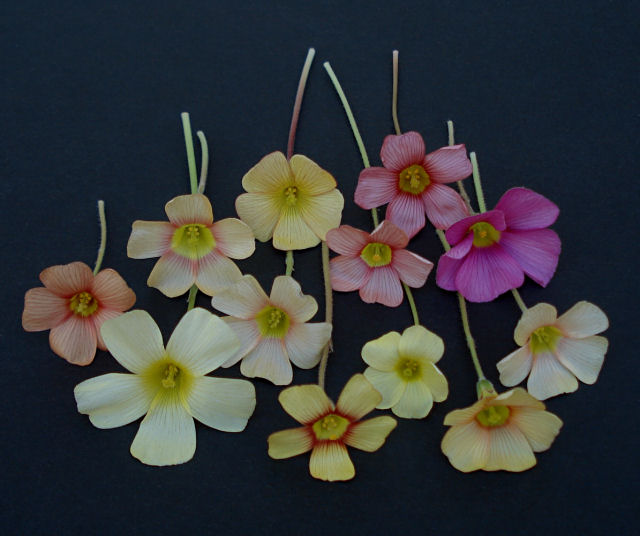
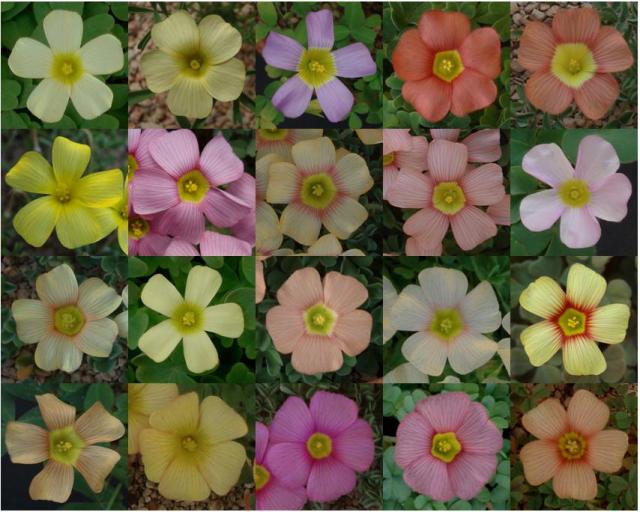
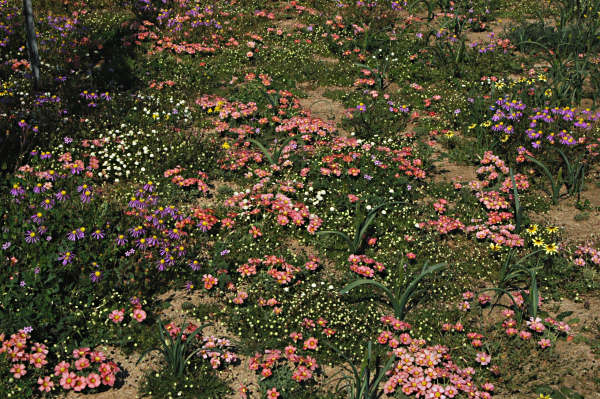
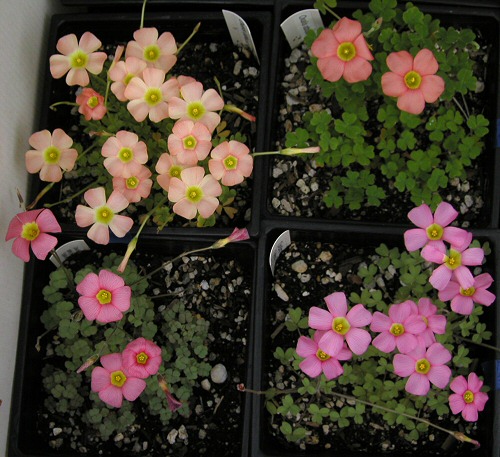
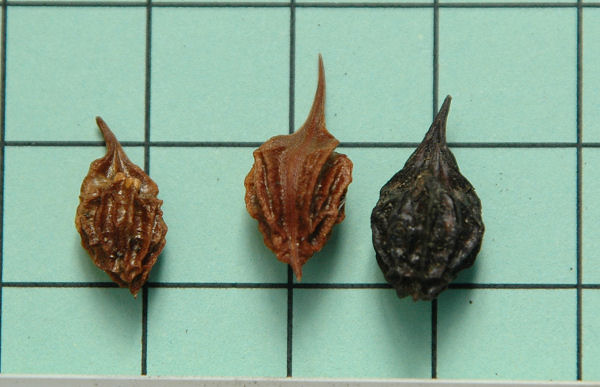
Oxalis obtusa Jacq. is common and widespread and found on sandy or clay soils from Namaqualand to Knysna. Leaves are different shapes and sizes. Flowers are solitary and come in many colors: pink, shades of peach to apricot and orange, brick red, yellow, white, multicolored. The first two photos courtesy of Ron Vanderhoff show scanned flowers of the different colors and a composite of individual pictures in Ron's collection. The last three from Mary Sue Ittner are of a massed display in the wild near Middlepos, four varieties in bloom at the same time, and the corms on a 1 cm grid. For more examples see the Oxalis obtusa page.
Oxalis index - Miscellaneous Oxalis - Oxalis flava - Oxalis hirta - Oxalis obtusa - Oxalis pes-caprae - Oxalis purpurea - South African oxalis A-B - South African oxalis C - South African oxalis D-E - South African oxalis F-G - South African oxalis H-K - South African oxalis L-M - South African oxalis P - South African oxalis R-S - South African oxalis T-Z - South American oxalis