Triteleia species h-i are featured on this wiki page.
Triteleia Hybrids - Triteleia a-g] - [[TriteleiaSpeciesThree | Triteleia j-z - Triteleia index
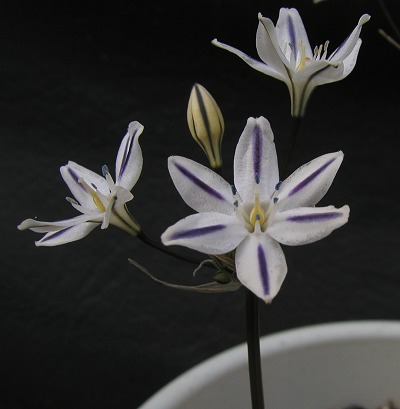
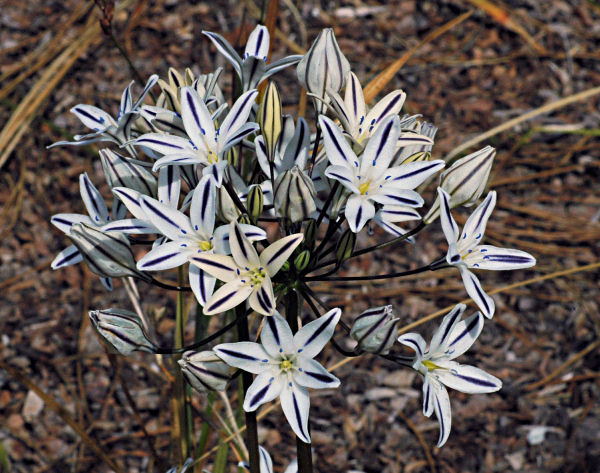
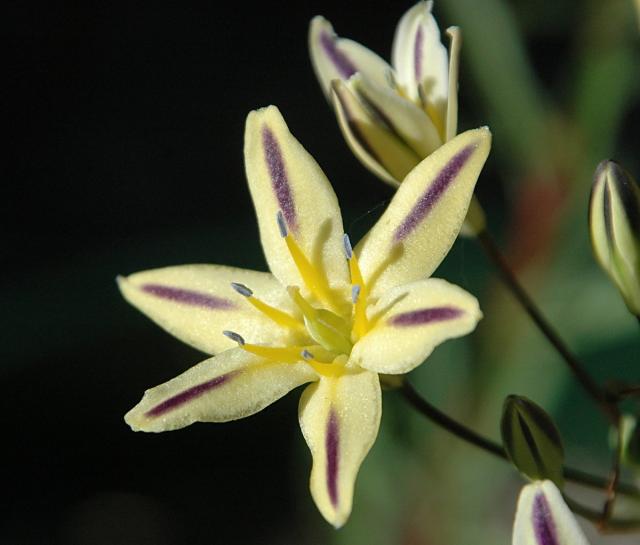
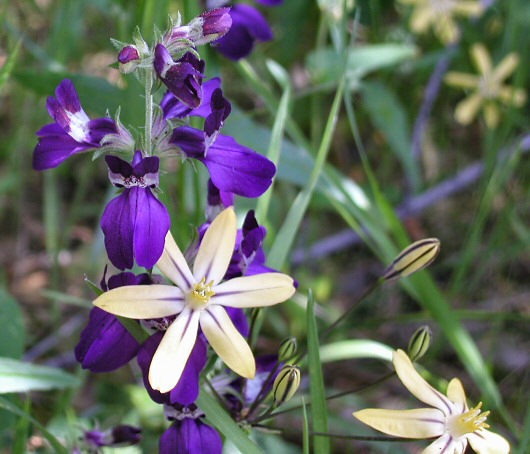
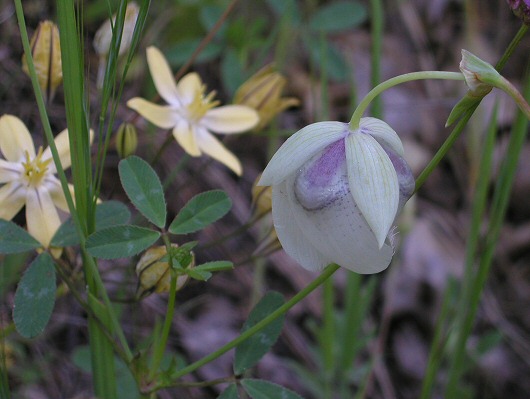
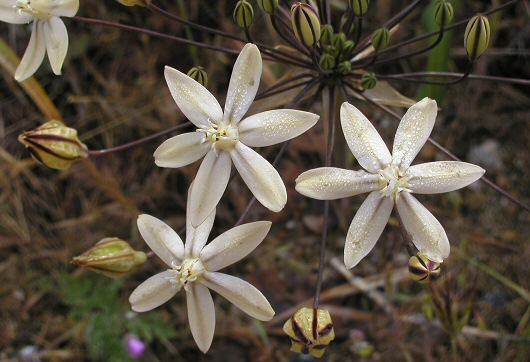
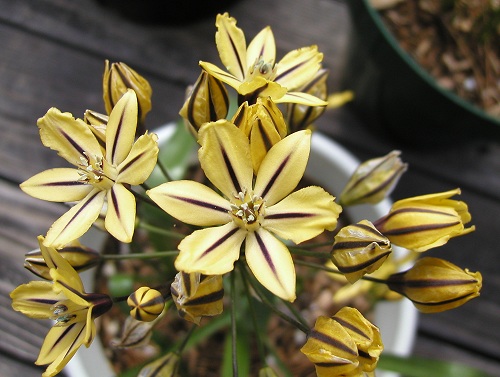
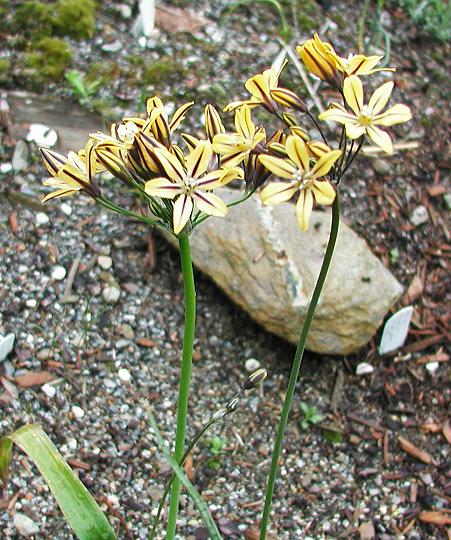
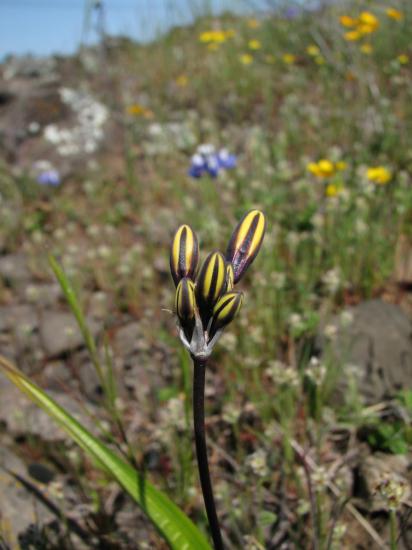
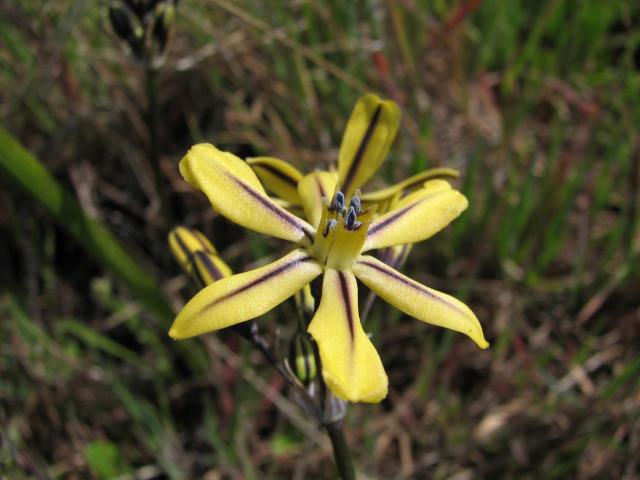
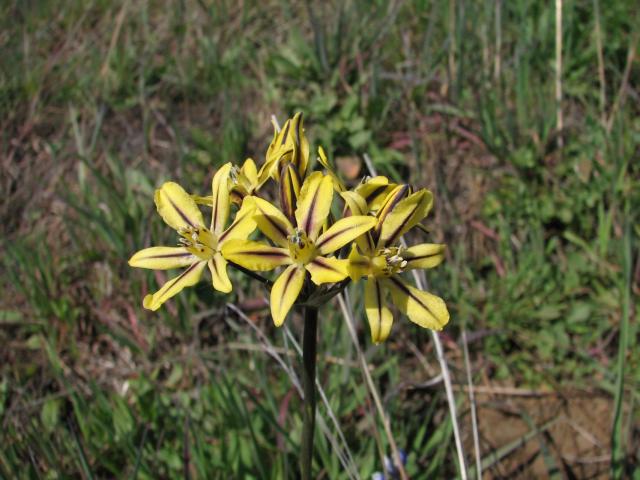
Triteleia hendersonii Greene is commonly known as Henderson’s triteleia, Henderson's stars, or yellow tiger-lily. It is a rare plant found in dry foothill woodland on canyon slopes and rocky hillsides or near serpentine from 100-3000 m in a small area of Northern California and Oregon. The flowers are yellow or white, often tinged or fading blue with a funnel-like tube and spreading lobes and dark purple or brown midveins. Stamens are attached at one level and nearly equal. Anthers are blue or sometimes white. Flowering occurs from May to July in the wild. A form known as var. leachiae (M. Peck) Hoover, or Triteleia leachiae, but not recognized by everyone, is limited to Curry County, Oregon, and has a white perianth. Plants in these photos were grown from different batches of seed in California, zone 9. Height range: 20-70 cm. This first picture was taken by Bob Rutemoeller and the rest by Mary Sue Ittner in different years.
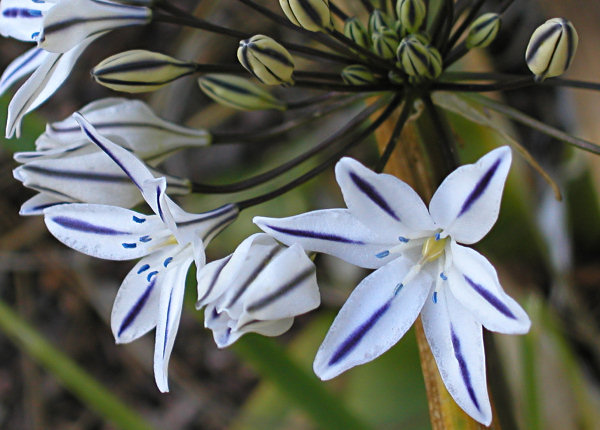
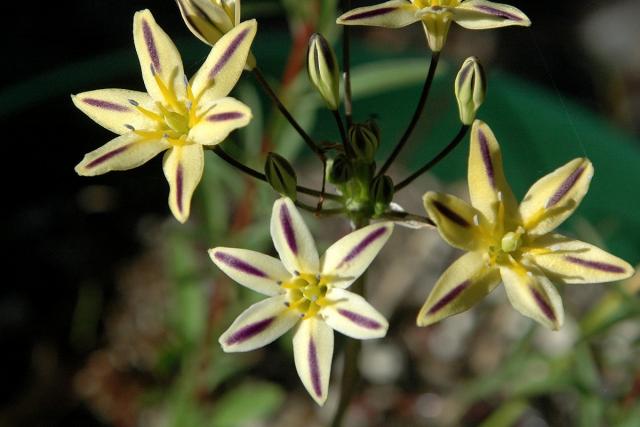
Photos below by Travis Owen of ones growing in his yard with white anthers, about 10" tall, and with the same purplish stripes inside the tepals except for one, shown in two of the photos, which has much paler brownish stripes inside.

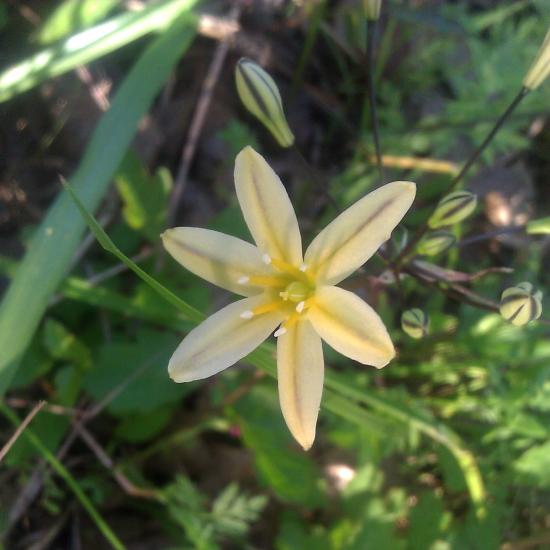
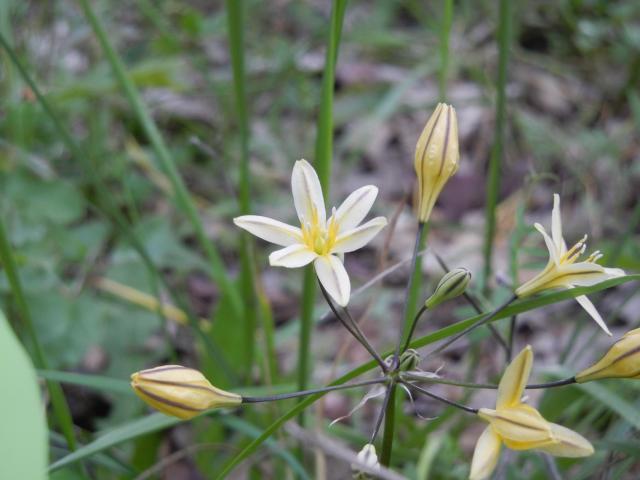
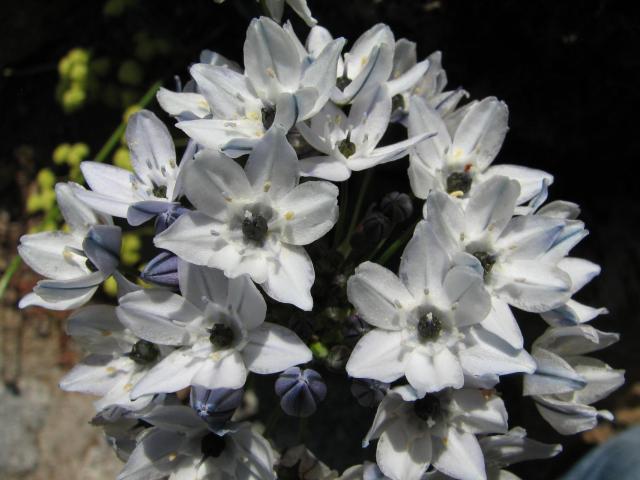
Triteleia hyacinthina (Lindl.) Greene is found in areas that are temporarily wet in spring from northwest California and the Cascade Ranges to the Sierra Nevada, Great Central Valley and northern and central portions of central California and all the way to Canada and into Idaho. Flowers are white or tinted blue and are shallowly bowl-shaped with a very short tube and cream or yellow anthers and widely flared ascending lobes. The petal midribs are green. Its shorter pedicels and therefore tighter umbel distinguish this species. Filaments are wider at the base, anthers white to blue, and the ovary is green. There is much variation in height from 4 to 15 in. (10 to 40 cm) and size of flowers. Some forms offset heavily and some do not. As might be expected from all this variation, the time of bloom is from March to August. In cultivation as noted below these numbers can change.
The photos below were taken in Sonoma County, CA, in May 2007 by Bob Rutemoeller along the Mendocino Sonoma Coast.
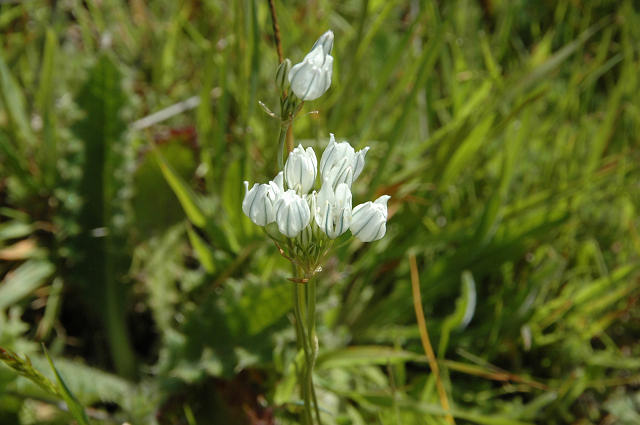
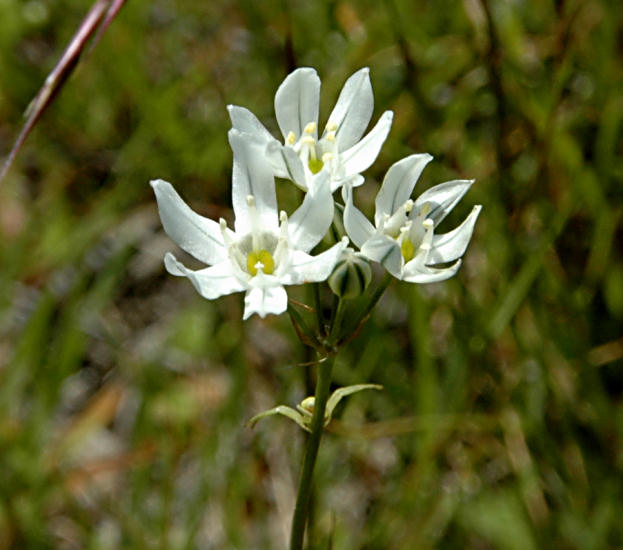
The photos below were taken in Contra Costa County, CA, in Las Trampas Regional Wilderness by Nhu Nguyen. This area is more inland and does not have a strong influence of the ocean. The first photo shows a beetle in the family Cleridae as a pollinator.
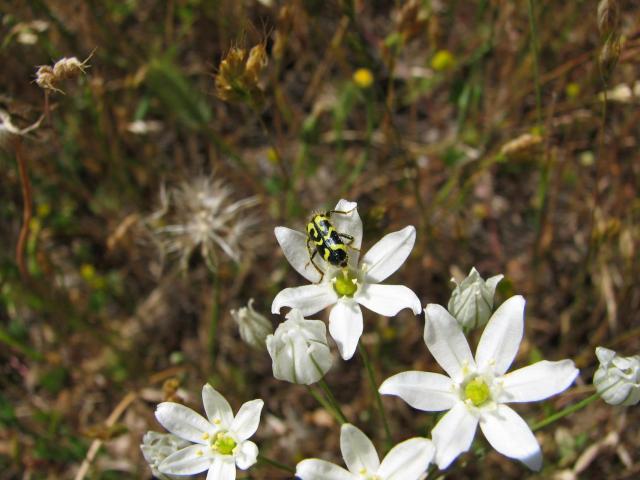
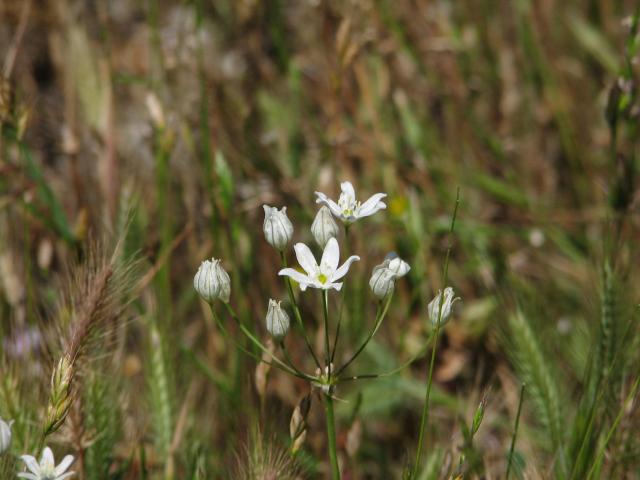
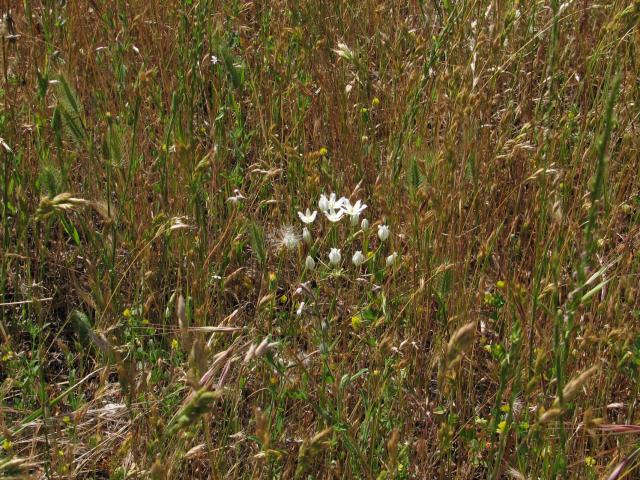
The photos below were taken in Merced County, CA, in April 2005 by Mary Sue Ittner. The plant was growing in an open grassy area along with Brodiaea californica and Calochortus luteus in the foothills of the Sierra Nevadas.
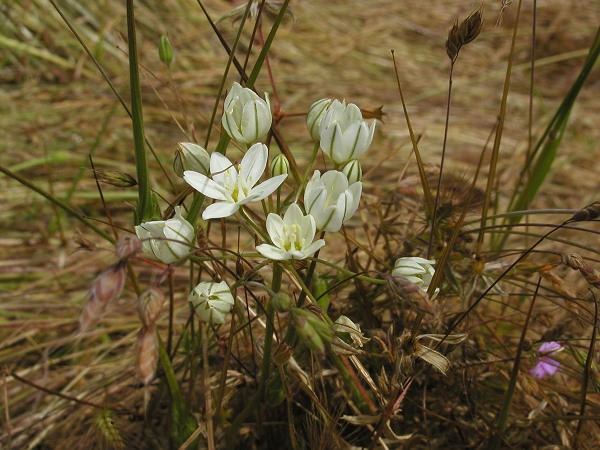
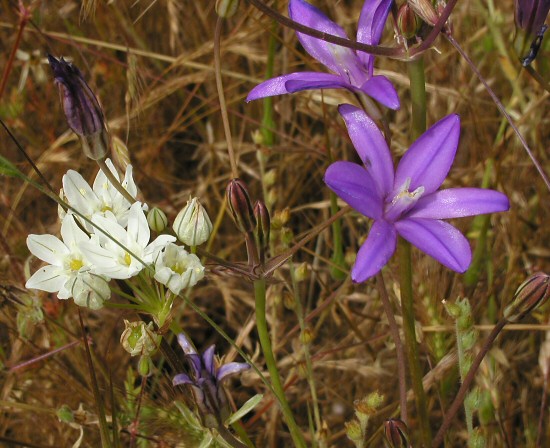
The photos below were taken in Tuolumne County, CA, in the foothills of the Sierra Nevadas by Nhu Nguyen.

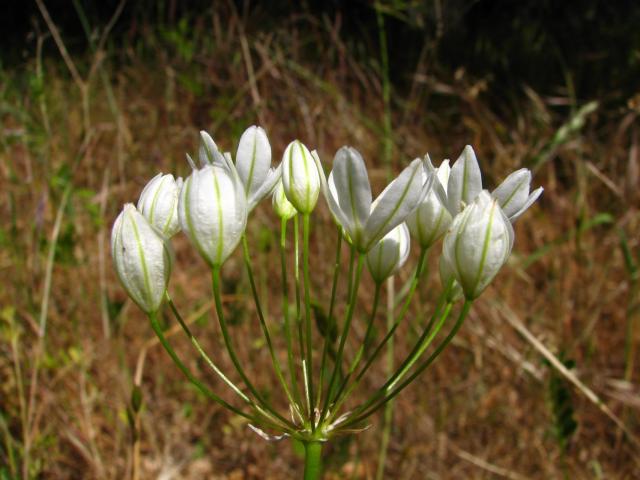
The photos below were taken in Nevada County, CA, around 5500 ft (~1600 m) by Nhu Nguyen. Nevada County lies in the Sierra Nevada Range of California.
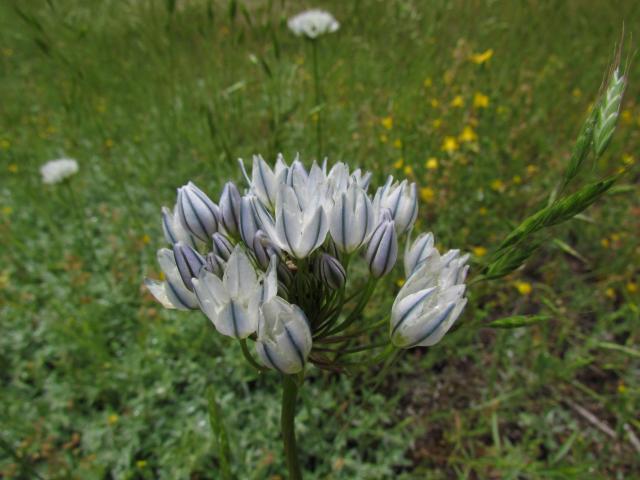
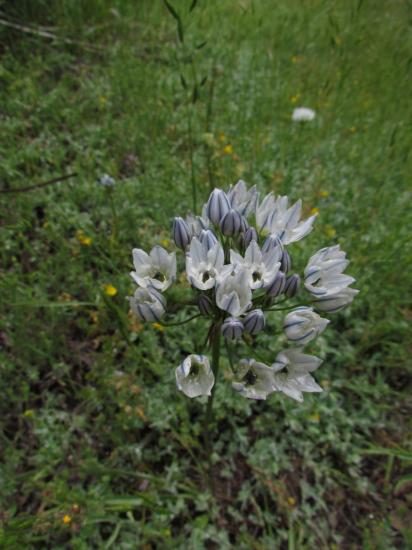
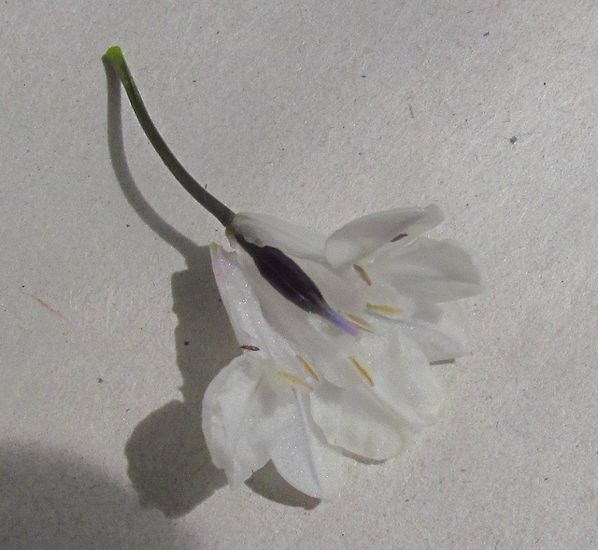
The first photo taken by Mary Sue Ittner illustrates a robust tall form with larger flowers with a bluish tint that increases rapidly by offsets. The second form which is intermediate in height and has white flowers was photographed by Bob Rutemoeller. The third photo was taken by Mark McDonough. He writes: "In my northern Massachusetts garden, this species is easy and dependable, seeding around moderately. A fully mature bulb is very beautiful, with large full heads of pristine white blooms, and central nerves of blue, green, or aqua. Flowers are mildly fragrant, appearing in mid June-early July. Stems can reach nearly 30" (75 cm)." The last two photos from Richard Haard illustrate the details of the flower of a form he grows.

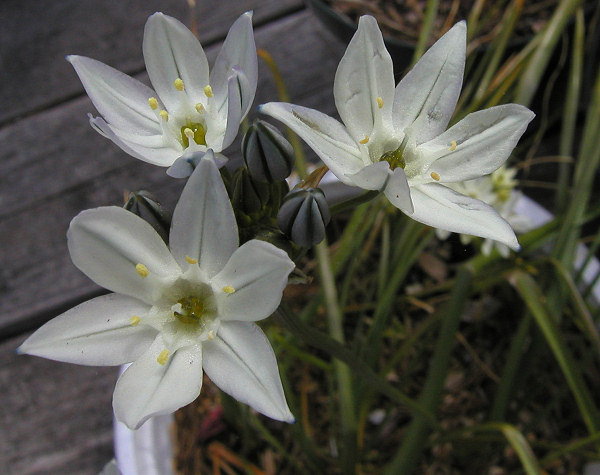
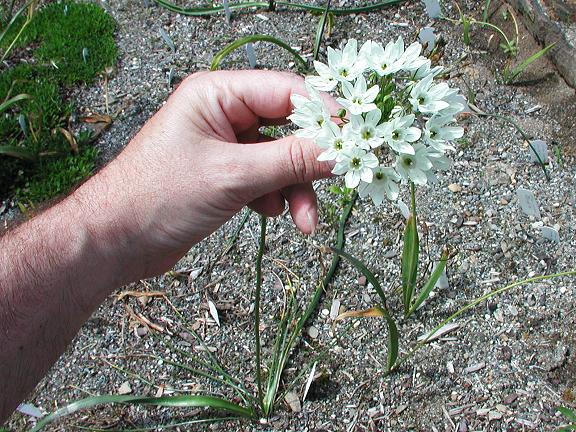
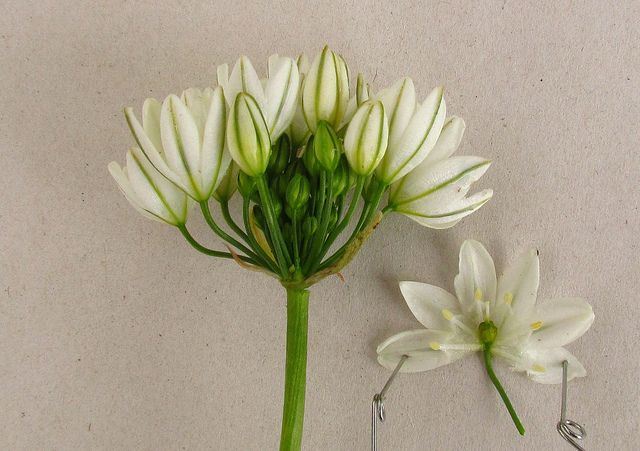
Triteleia hyacinthina 'Dwarf Blue' is a form named by the Robinetts when they were growing and selling bulbs. This form was grown from seed from an unknown location. It has very small flowers, and a short flowering stem, but has an early and long blooming time. It often starts blooming early in coastal Northern California (January to February) and some years is still in bloom in May. Unlike other forms of this species I grow it forms roots very early in the fall before it starts to rain and before the pot has been watered. I was able to grow it successfully for a number of years in a pot kept dry in summer. Photos by Mary Sue Ittner.

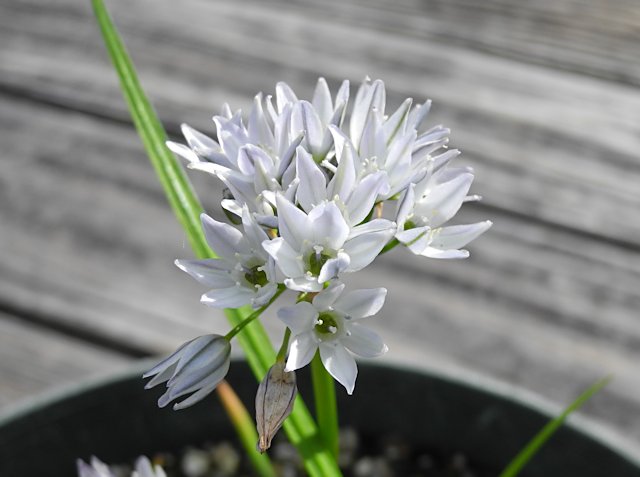
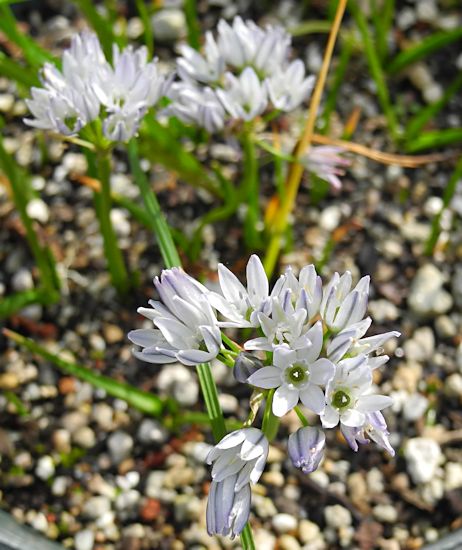
The photos below were taken by Nhu Nguyen at the Tilden Botanic Garden. It is a robust form, much like the high altitude form found in Nevada County of the Sierra Nevada.
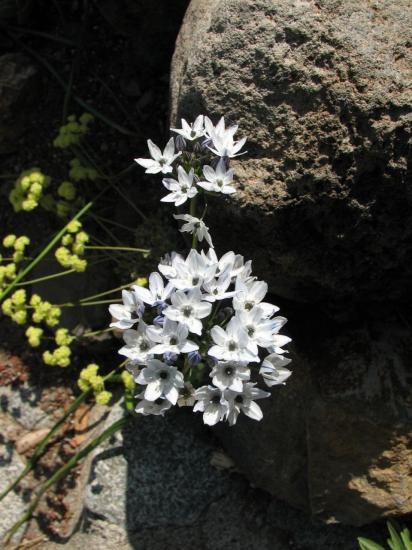
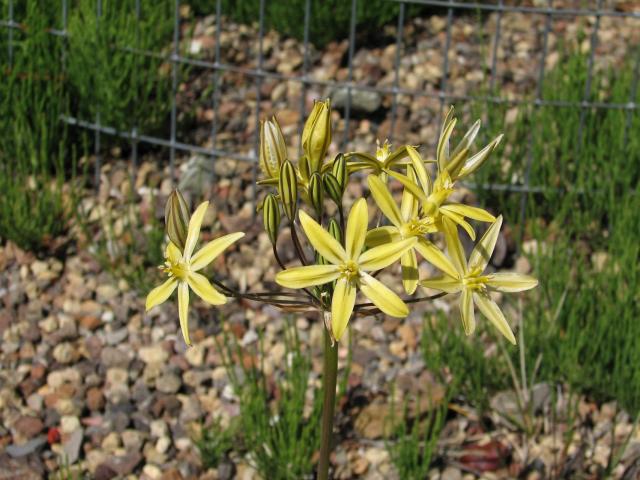
Triteleia ixioides (Dryand. ex W.T.Aiton) Greene (syn. Brodiaea lutea) is commonly known as Golden Brodiaea or Pretty Face. It is found in dry conditions in various plant communities from forest margins to scrub in gravely or sandy soils. It has a shallow tube that is much less than the lobes and petals pale straw to yellow in color with gray-green stripes on the front and brown to purple stripes on the back. The distinctive feature of this species is the crown-like ring of forked appendages behind the stamens. The anthers are generally yellow. It blooms May to August. There are four to five taxa contained within this species. Height range: 15-80 cm. The first photo below was taken by Nhu Nguyen of a plant growing at the Tilden Botanic Garden.
Triteleia ixioides ssp. anilina (Greene) L.W.Lenz is a mountain form that emerges in spring and is the last to bloom. It is found in coniferous forest margins and mountain meadows, often in sand or gravel, from the northern Klamath Range to the Sierra Nevada (Oregon to California). It has anthers that are generally blue or cream and straight or incurved filament tip appendages. Plants grown from seed by Mary Sue Ittner didn't increase much and slowly dwindled away in her much different garden. The first photo was taken by Bob Rutemoeller, the next two by Mary Sue Ittner and the last by Mark McDonough. He writes about his photograph: "growing in my northern Massachusetts garden, this small form of ixioides has only flowered twice in the 4 years I've grown it. This year (2003), perhaps due to constant spring rains, the brodiaeas and triteleias budded up well. About 4" tall and has not increased. Upon close inspection, it can be seen that the anthers are blue."
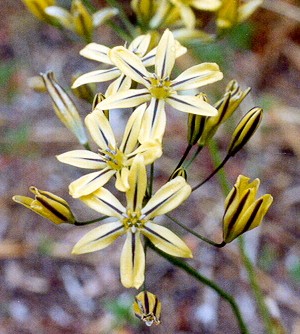
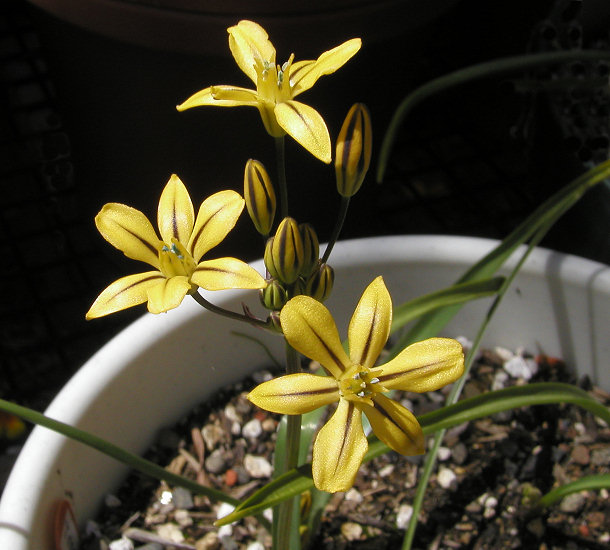
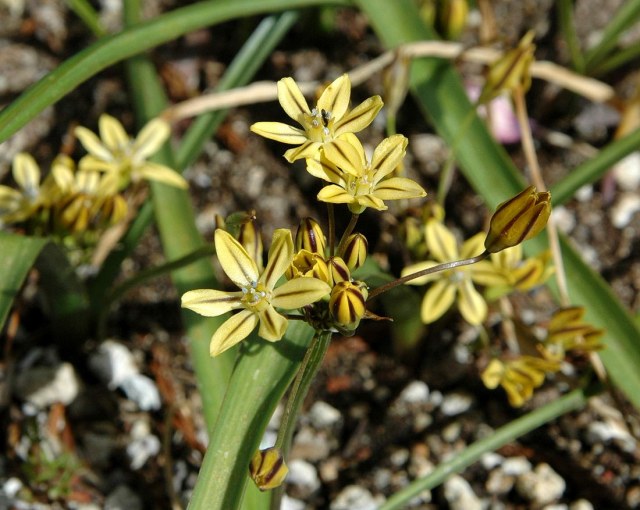
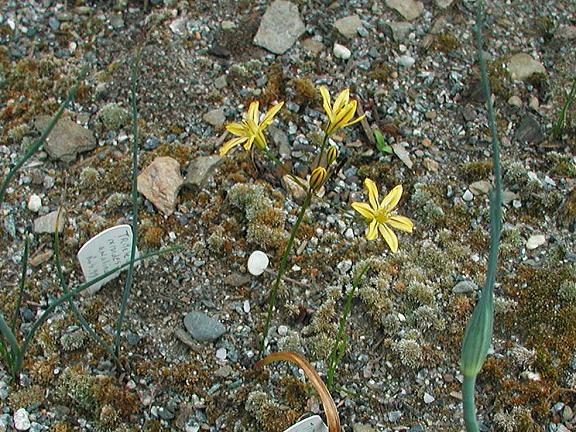
The photos below were taken by Nhu Nguyen from Yosemite National Park in late June and July.
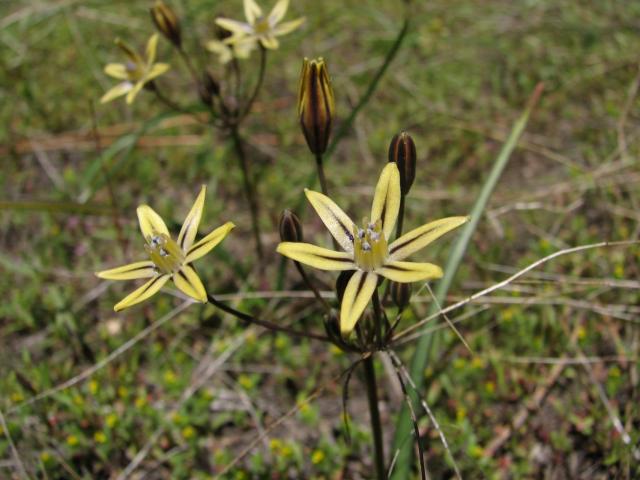
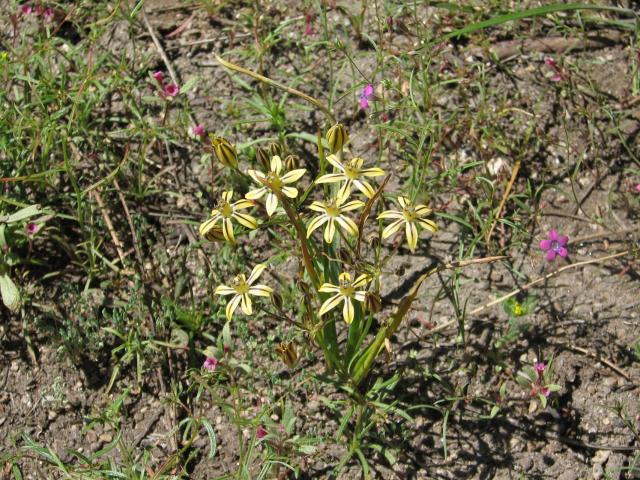
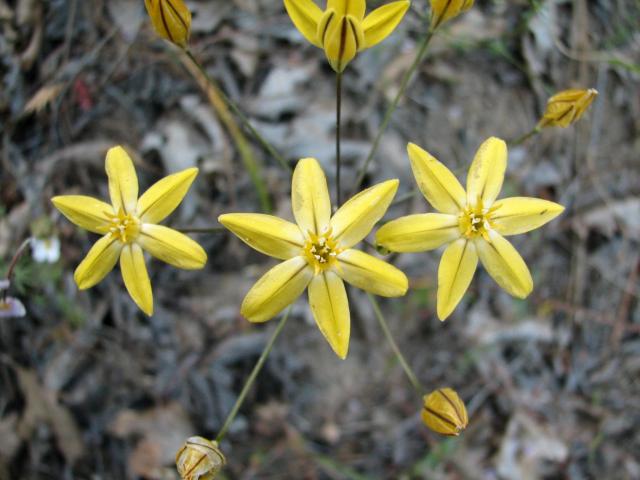
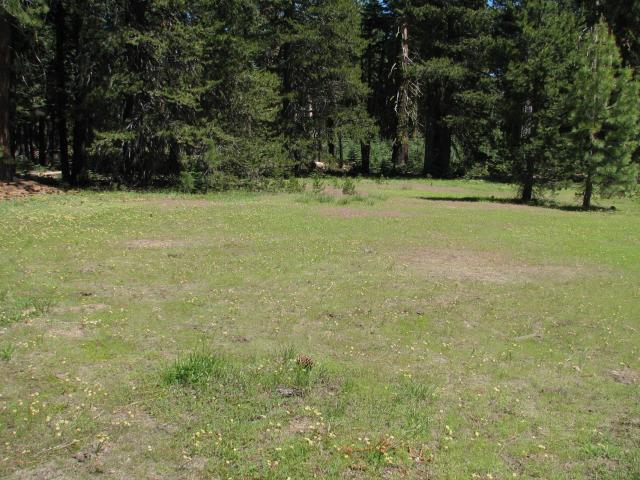
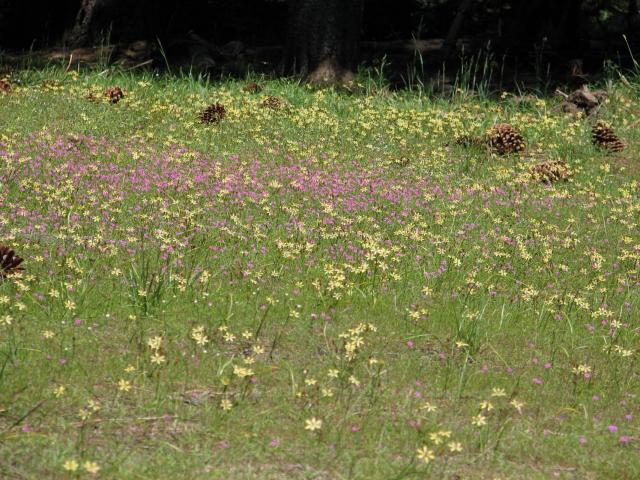
The photos below were taken by Mary Sue Ittner in the Lakes Basin Recreation Area, Plumas County, California in May in a dry year when the ground wasn't covered by snow as it normally would be at that time of the year.
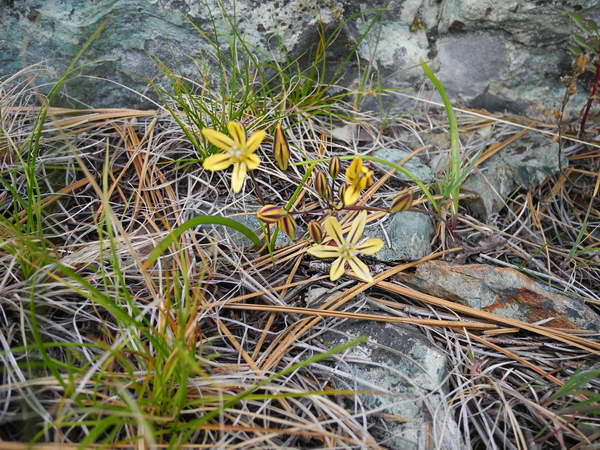
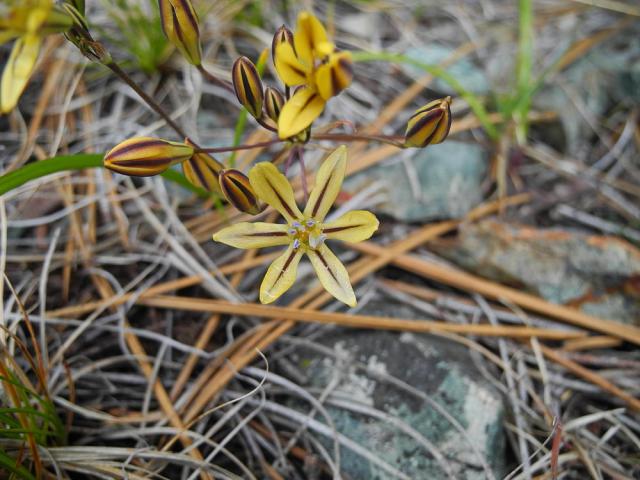

Triteleia ixioides ssp. cookii (Hoover) L.W.Lenz is a rare plant that occurs in serpentine in seep habitats in the Santa Lucia Range of California. It is white to pale yellow, purple-tinged without and with strongly reflexed lobes and appendages that curl away from the anthers. Height range: 10-80 cm. Photos were taken by Bob Rutemoeller at the UC Botanical Garden, Berkeley, California.
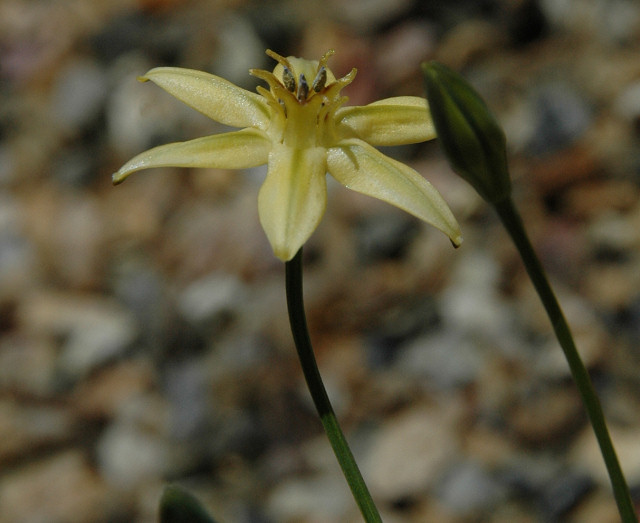

Triteleia ixioides ssp. ixioides known as coast pretty face or Golden brodiaea is found between 0 and 984 feet (below 300 meters) in the coastal hills from San Francisco south to San Luis Obispo (California). It has bright yellow flowers with ascending to spreading lobes, cream or yellow anthers with straight to recurved filament tip appendages and the longest tube of any of the subspecies (7 to 10 mm). Height range: 10-40 cm. Photos from Bob Rutemoeller and Mary Sue Ittner.
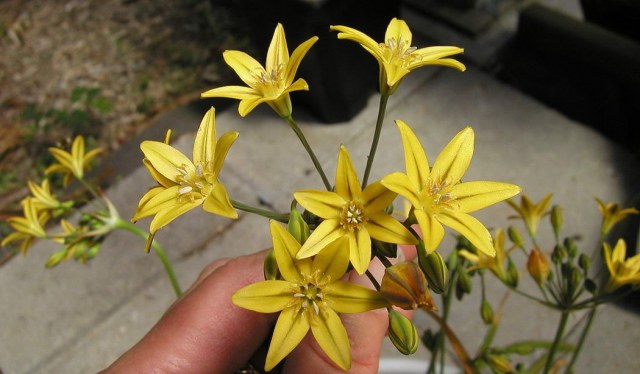
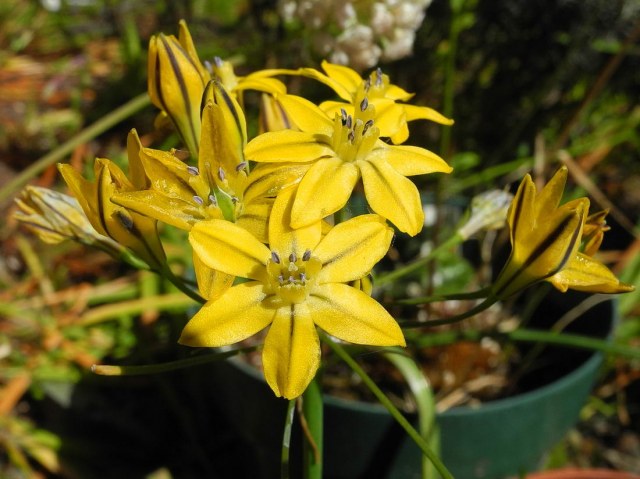

Triteleia ixioides ssp. scabra (Greene) L.W.Lenz is found in the grasslands and woodlands of the Sierra Nevada foothills of California in heavy to granitic soils. It usually has flat wheels of straw to creamy yellow flowers with broad petal segments and a shorter tube than subspecies ixioides (3 to 7 mm), but flowers are occasionally brighter yellow. It has cream or yellow anthers with straight to recurved filament tip appendages. It flowers earlier than some of the other species (from March to May) and is usually the tallest subspecies (to 32 in or 80 cm).
The photos below were taken in Mariposa County, CA, on the Hite Cove Trail along the Merced River. Photos 1-3 were taken by Mary Sue Ittner late in the day when the plant was found growing with various wild flowers including Collinsia heterophylla and Calochortus albus. Photos 4-5 were taken by Nhu Nguyen in late March, 2009.

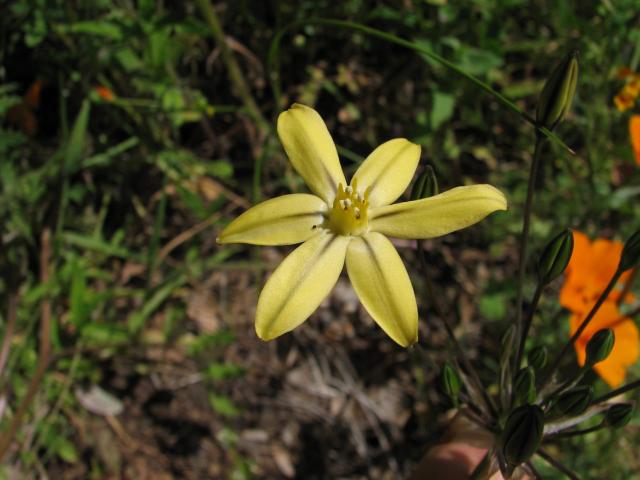
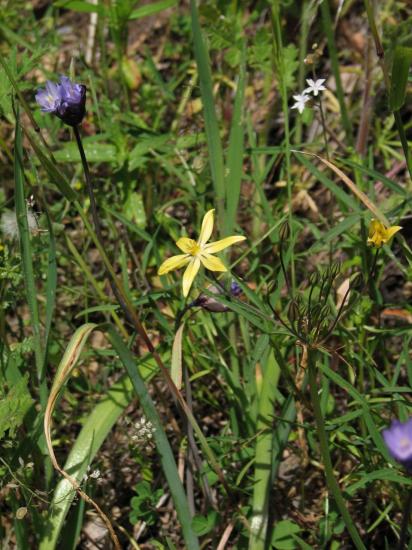
Photos below all taken by Mary Sue Ittner in April 2005 show this subspecies growing in two habitats. The first two pictures are from grassy areas in Kern County, California.

Photos 1-3 by Bob Rutemoeller and Mary Sue Ittner below are of plants grown from wild collected seed. They are very robust and long blooming, tall with bright yellow flowers, many on each scape and with brown stripes on the back. Photos 3-6 were taken by Nhu Nguyen. Photo 3-5 were of plants from Telos Rare Bulbs.
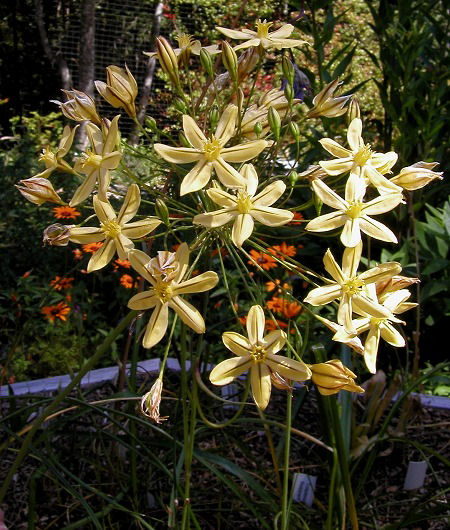
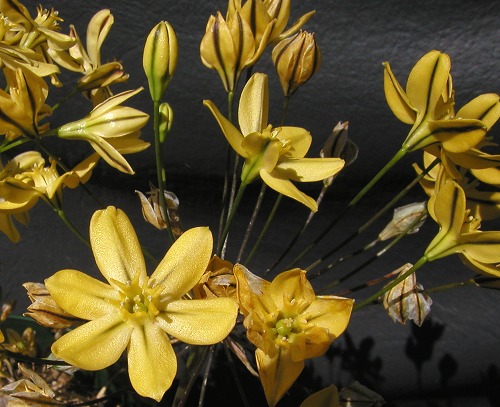
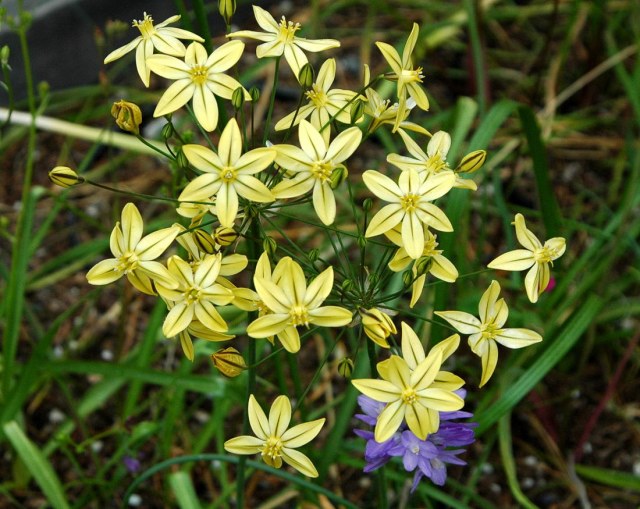
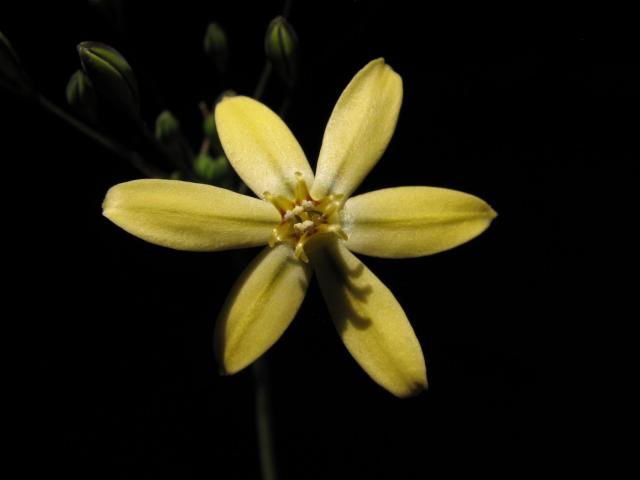
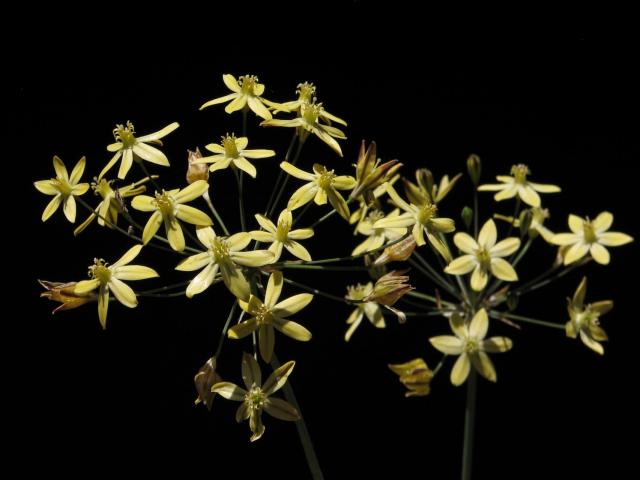
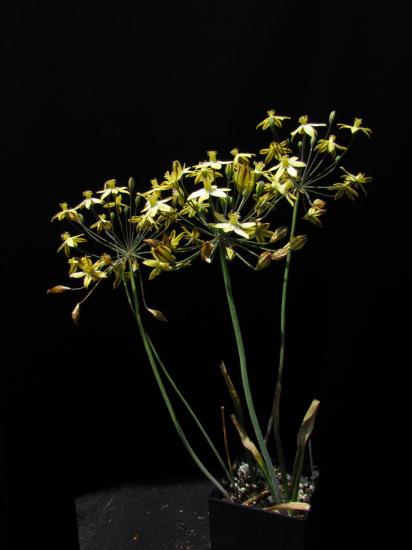
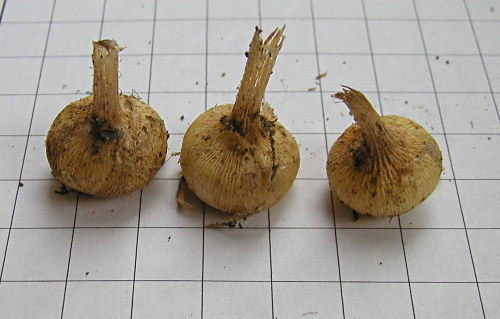
The next four photos by Mary Sue Ittner show one in cultivation with the usual pale color and the corms on a 1 cm grid.
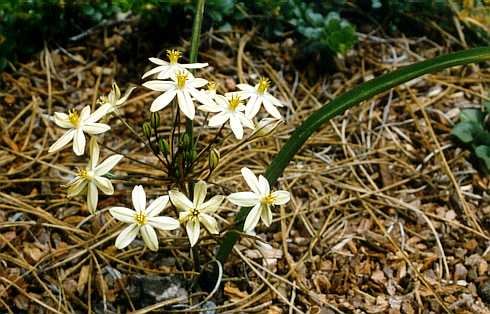
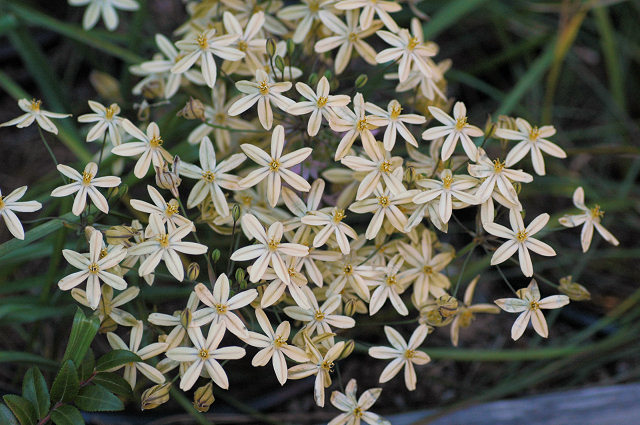
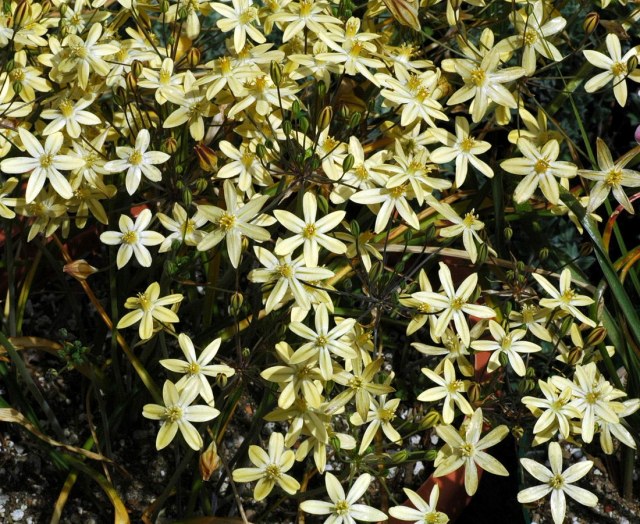
Triteleia ixioides 'Starlight' is a cultivar that is most likely a form of Triteleia ixioides ssp. scabra. It has the flat wheels and straw color typical of that species. Photo by John Lonsdale.
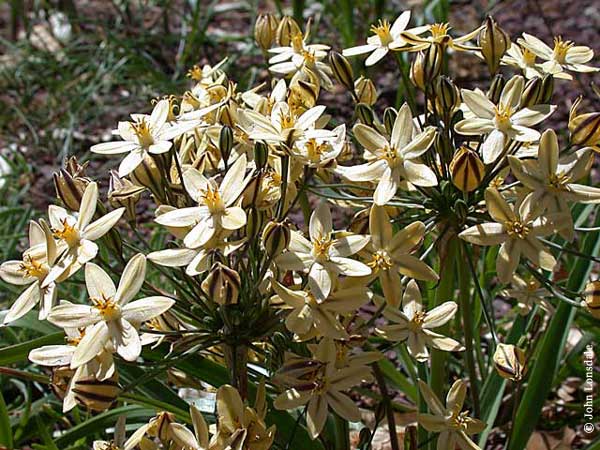
Triteleia ixioides 'Tiger' is a form named and sold by the Robinett Bulb Farm. They labeled it as a form of subspecies scabra. This is an early blooming taxa that was grown from seed from the Table Mountain area of California. This plant is probably the form named by Lenz as T. ixioides ssp. unifolia and known as Triteleia unifolia by others and now once again considered to be a subspecies. It is a great plant and very long blooming. Height range: 30-60 cm. Photos 1-2 were taken by Bob Rutemoeller. Photo 1 was taken January 26, 2003 when it was just starting to bloom and photo 2 two months later of the same pot. Photo 3 was taken by Mary Sue Ittner and the last photo taken by Mark McDonough shows it growing in the ground in a colder climate.


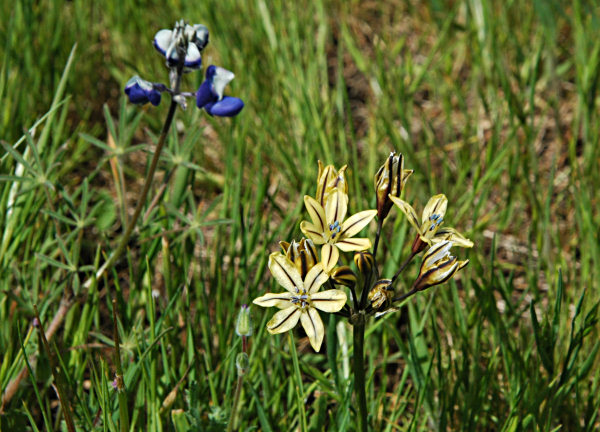
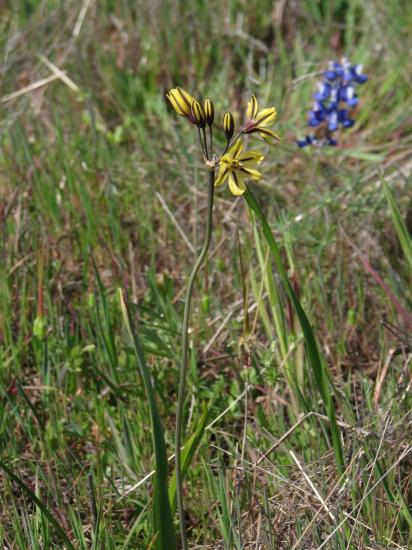
Triteleia ixioides ssp. unifolia L.W.Lenz is a subspecies with one short leaf. It is listed in the revised Jepson Manual as distributed in Mariposa, Tuolumne, Placer, El Dorado, Amador, Calaveras, and Butte Counties. Height range: 10-80 cm. Photo 1 was taken by Mary Sue Ittner on Table Mountain of this taxa blooming in April 2006. These plants were pollinated by butterflies. Photos 2-5 were also taken on Table Mountain by Nhu Nguyen.
Triteleia Hybrids - Triteleia a-g - Triteleia j-z - Triteleia index