Watsonia is a genus in the Iridaceae family of over 50 species in southern Africa where it is distributed from the mountains and coastal belt of the Western Cape to the Drakensberg escarpment of Swaziland and the eastern Transvaal. It therefore grows in both the winter and summer rainfall areas. Growing from a corm, species are both evergreen and perennial. Many are quite tall with fans of sword-shaped leaves and spikes of showy (often many) flowers that are usually pink, bright red or orange. Species g-m are found on this page.
Watsonia species a-f - Watsonia species n-z - Watsonia index
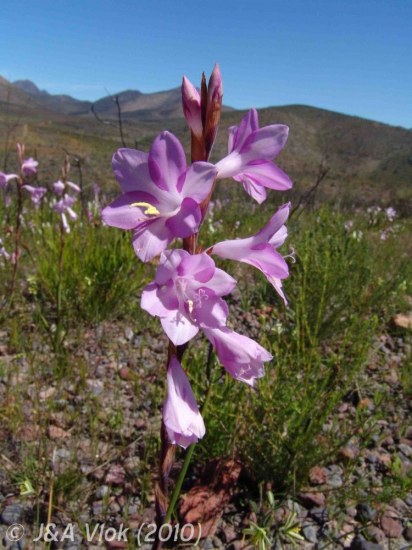
Watsonia galpinii L.Bolus is a rare species found in wet sites along streams in the southern Cape. It grows to 1.2 to 2 m and has an unusually short perianth tube. It has red-orange or mauve-pink flowers and blooms from January to April in the wild. The first photo below from the book Plants of the Klein Karoo is courtesy of Jan and Anne Lise Schutte-Vlok. Other photos from iNaturalist were taken by Sandra Falanga in January in the Little Karoos and shared under a CC BY-NC license.
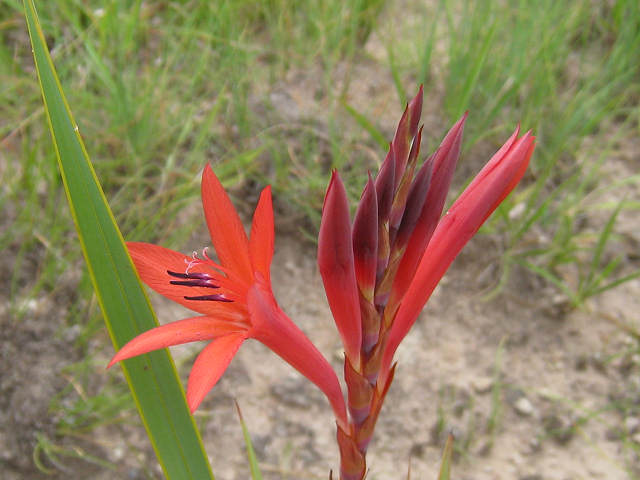
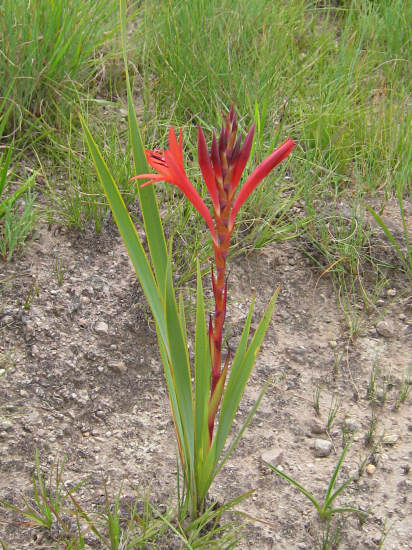
Watsonia gladioloides Schlechter grows in rocky grassland in mountains from the Eastern Cape province to Swaziland. It has dark red flowers in a closely packed unbranched inflorescence. It blooms September to January. Height: 18 cm to 1 m. Photos were taken by Cameron McMaster February 2008 at Aurora Peak, Maclear.
Watsonia humilis Miller is one of the dwarf watsonias (15 to 40 cm). It has pink to white flowers and flowers in late spring. It grows on sandstone or granite flats in the Southwest Cape. The large leaf in the second picture belongs to Watsonia marginata. The pink form, once known as Watsonia roseoalba (Jacquin) Ker is now included in this species. Photos by Mary Sue Ittner.
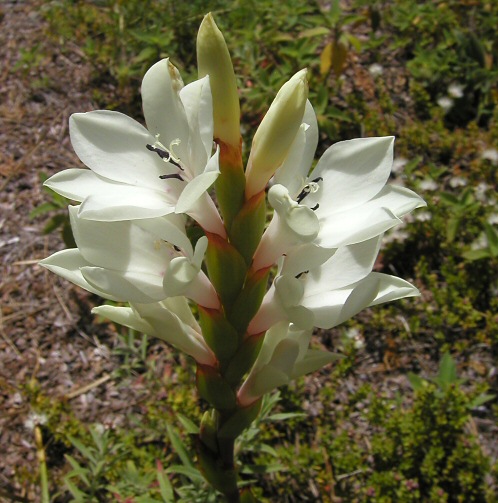
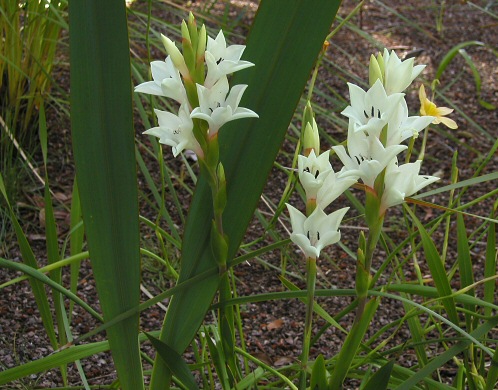
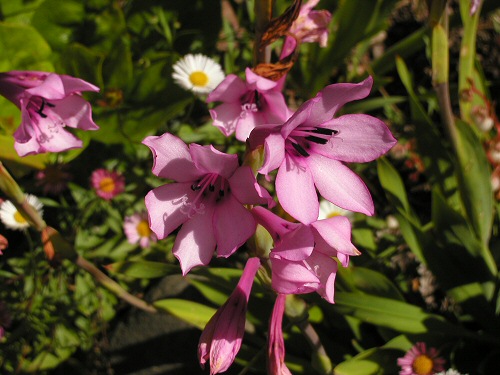
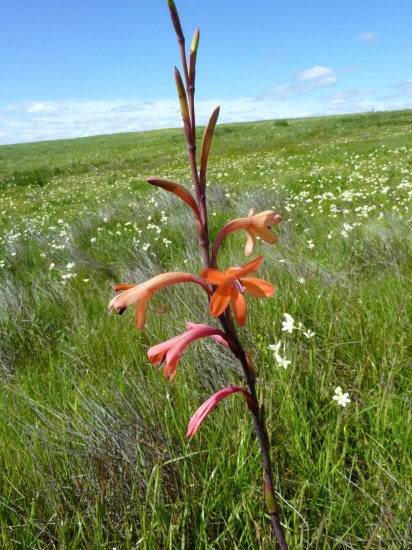
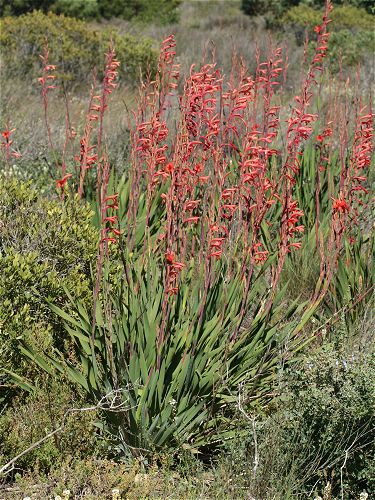
Watsonia knysnana L.Bolus is found on sandstone slopes and flats, especially at forest edges in the Eastern Cape. It is tall (1.6 m) with sword-shaped leaves in a fan and red, purple or pink flowers in a wide tube. It flowers late spring to summer. Photo #1 by Cameron McMaster at Tsitsikamma. Photo 2 taken by Mary Sue Ittner at Gaika's Kop of a plant that could be this species. Photos 3-6 from Bob Rutemoeller and Mary Sue Ittner were taken in a grassy field in the Eastern Cape of plants that could be this species.
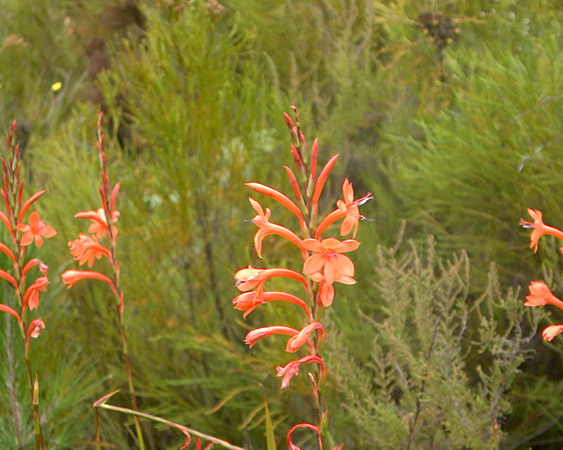
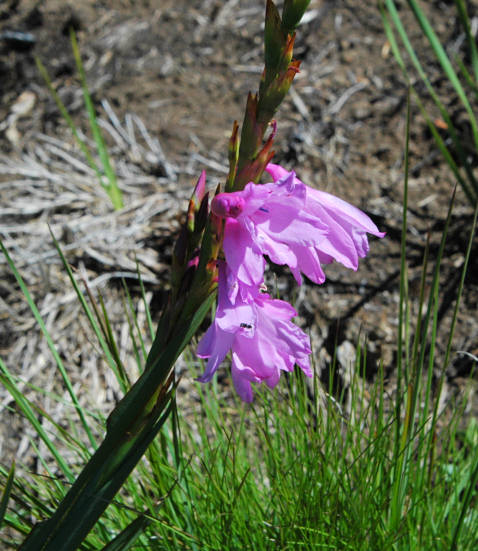
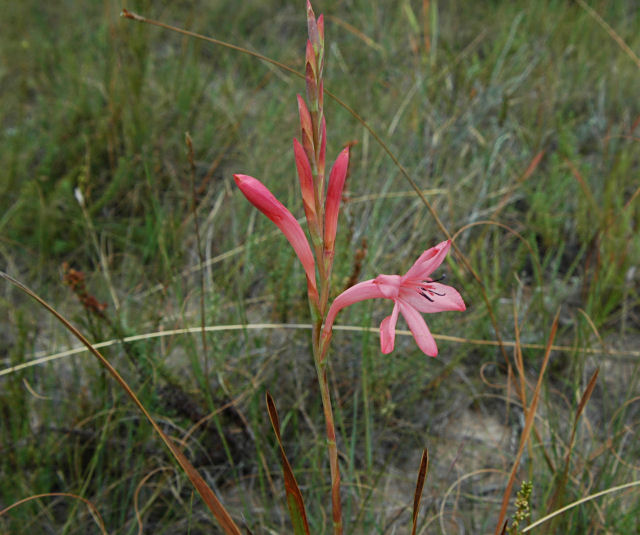

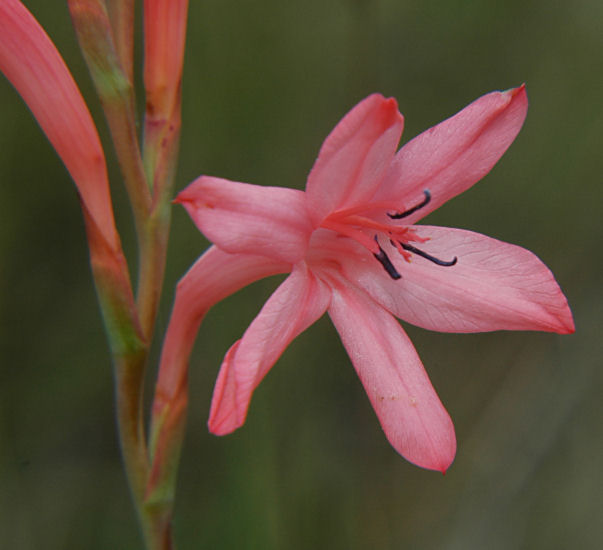
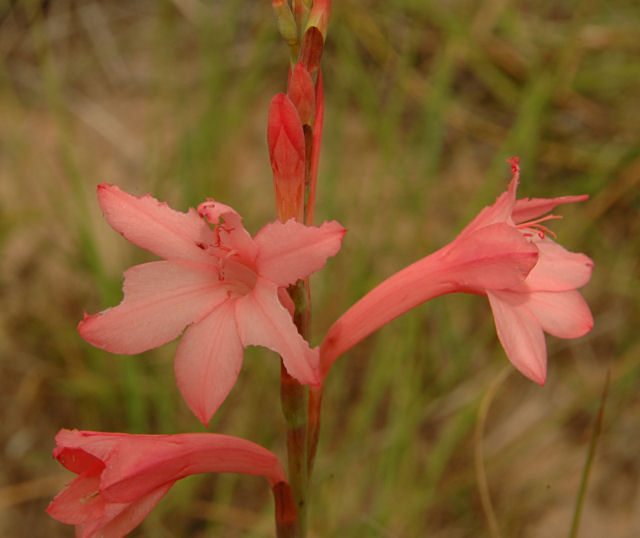
It is closely related to the bright orange flowered Watsonia pillansii and the two are difficult to tell apart. When found in the same range a series of intermediates can be found. These are hybrids with variability of bract length and flower color from cream to pale pink to red or maroon. Plants seen January 2010 and photographed by Mary Sue Ittner near Hogsback on Gaika's Kop could be either Watsonia pillansii or this species or intermediates between the two.
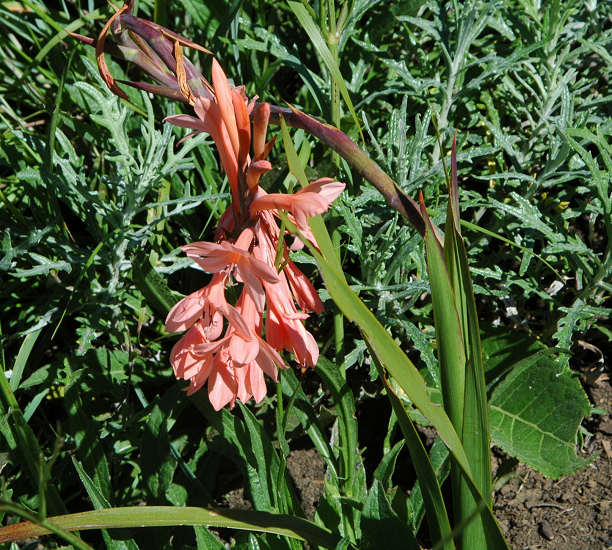
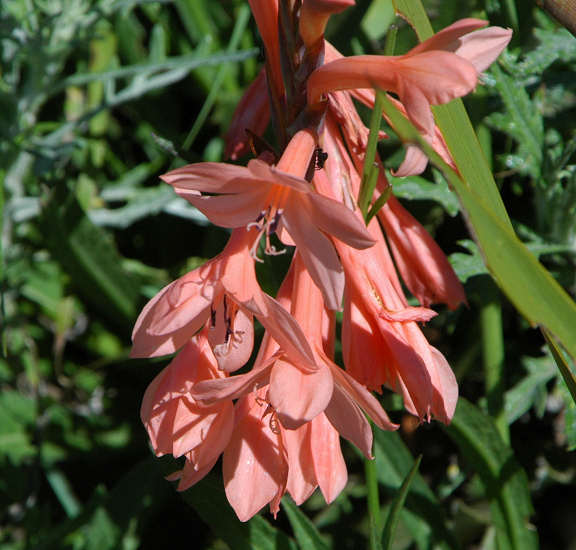
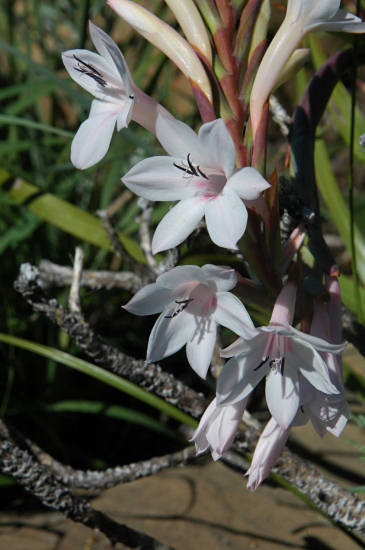
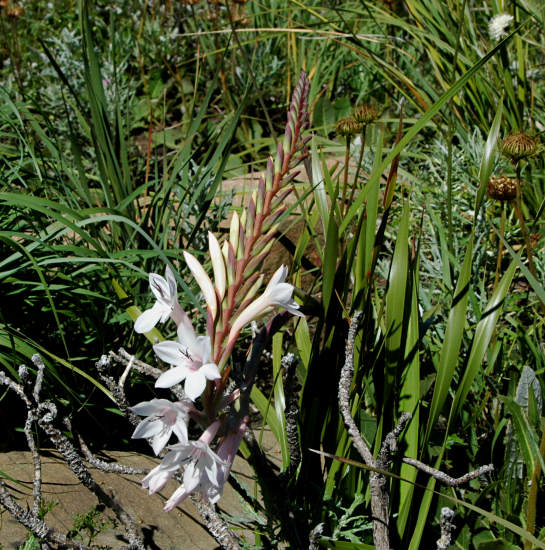
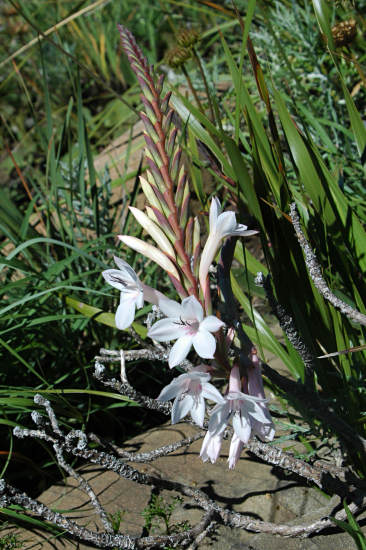
Watsonia laccata(Jacquin) Ker Gawler is a smaller watsonia (30 to 40 cm) with pink, purple, orange or white flowers found on sandstone slopes in fynbos in winter rainfall areas. The first four photos were taken in the Overberg by Cameron McMaster. The fifth photo is from Rod Saunders. The last photo from the book Plants of the Klein Karoo courtesy of Jan and Anne Lise Schutte-Vlok.
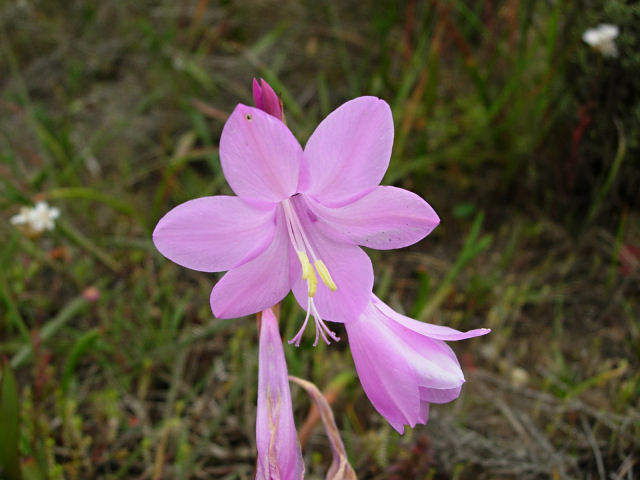
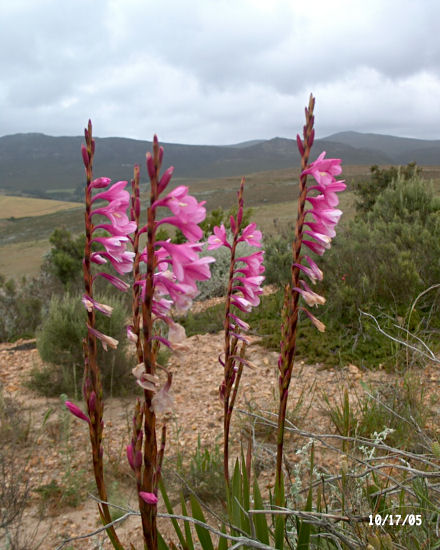
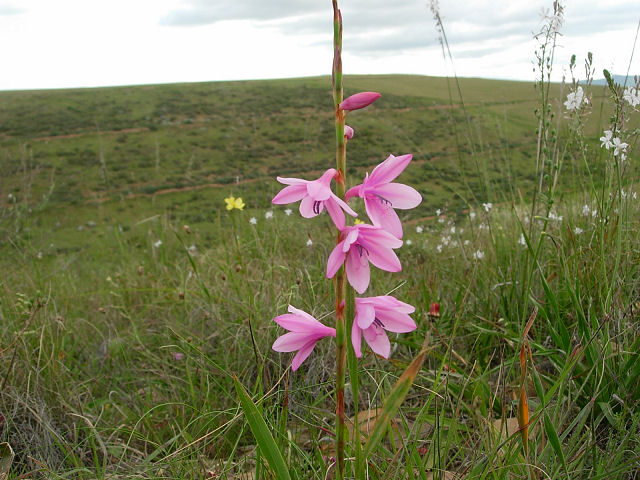
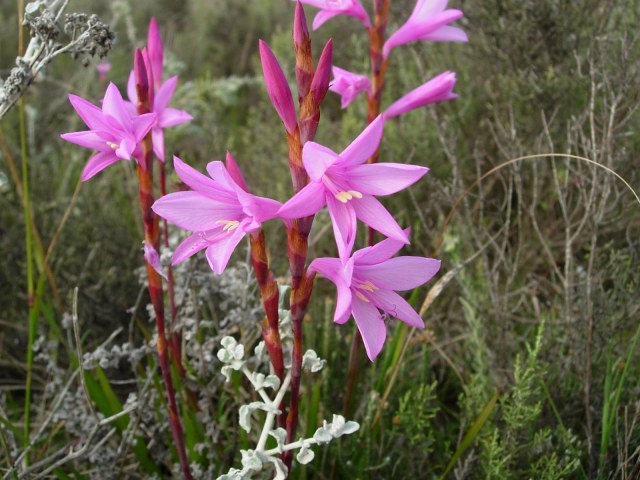
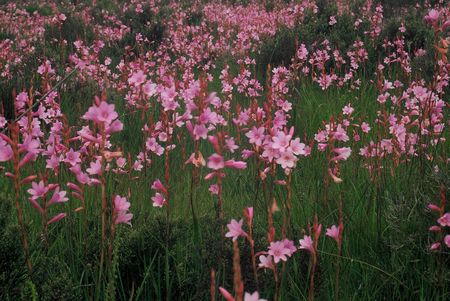
Watsonia latifolia N.E.Brown ex Obermeyer grows in high altitude grassland in thin rocky soil or around granite outcrops in the summer rainfall areas of the Transvaal, Swaziland and KwaZulu-Natal. Plants grow from .7 to 1.5 m high and have broad leaves, usually about 5 to 6 cm wide and long tubed dark red to maroon flowers. The first photo was taken by Rod Saunders. The rest of the photos from iNaturalist were taken by David Hoare in KwaZulu-Natal and shared under a CC BY-NC license.
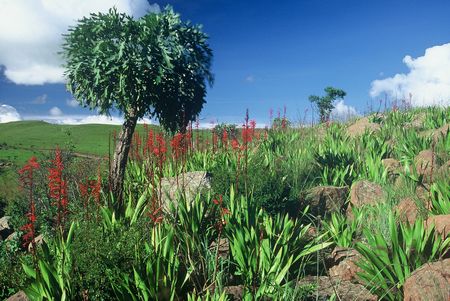
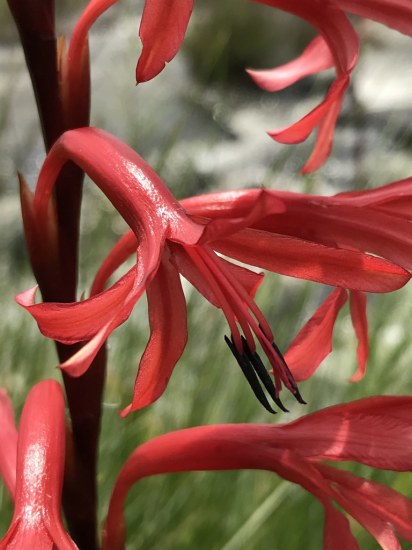
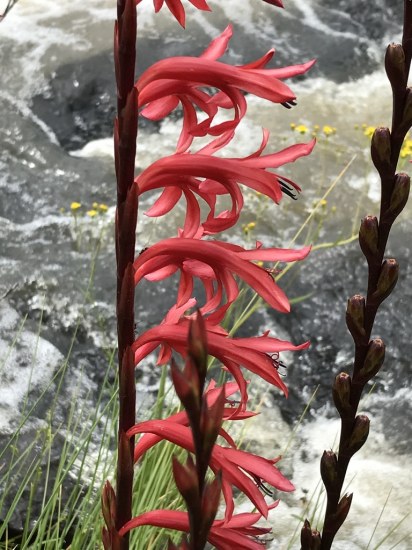
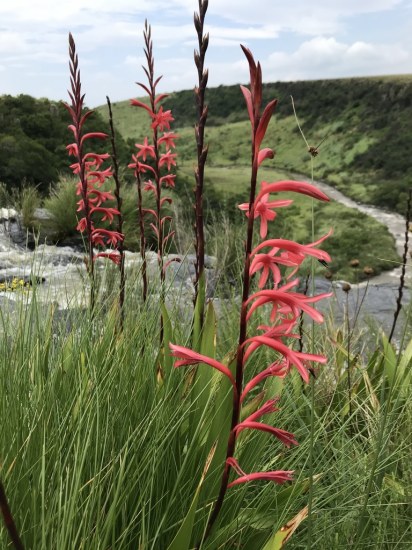
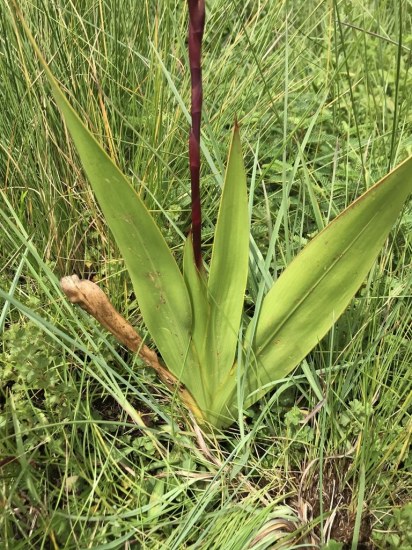
Photos of plants in cultivation by Pamela Harlow, who comments "We had unusual heat this summer in Seattle, enabling the plants to flower. Only two plants bloomed. I grew them from Archibald seed many years ago; this is only the second time I've seen flowers. Looking at the photos I now realize that one has a purple flowering stem while the other is green. The Saunders plants appear to be purple-stemmed. Bloom came in mid to late September."
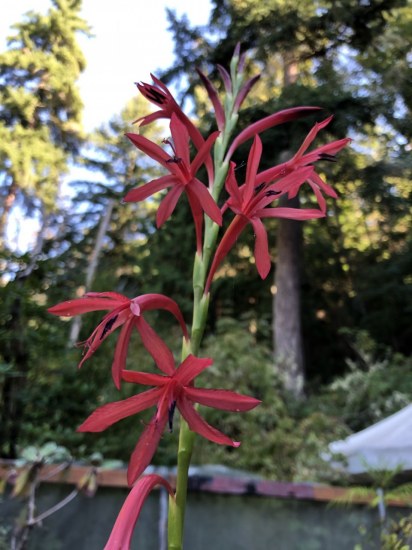
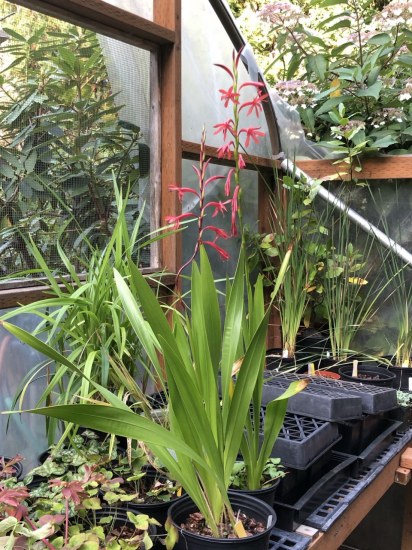
Watsonia lepida N.E.Br. is a summer rainfall species found in grassland, rocky areas at 1500-1980 m in the Free State, KwaZulu-Natal, and Lesotho. Growing from 25-65 cm, it has 3-4 leaves with thickened margins with the flowering stem leaves overlapping and sheathing and pink to pink-purple flowers in a crowded inflorescence. The stem is sturdy and erect. Flowering time is from November to February. The first photo was taken by Rod Saunders. The rest of the photos from iNaturalist and in the public domain were taken by Peter Warren in the Free State in November.
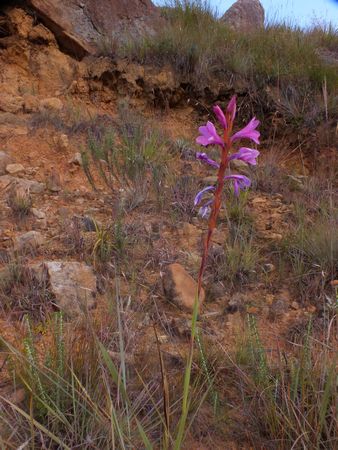
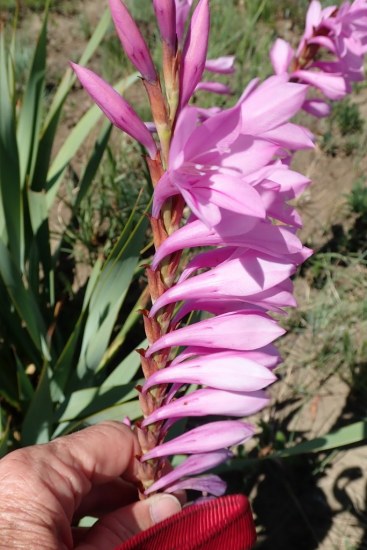
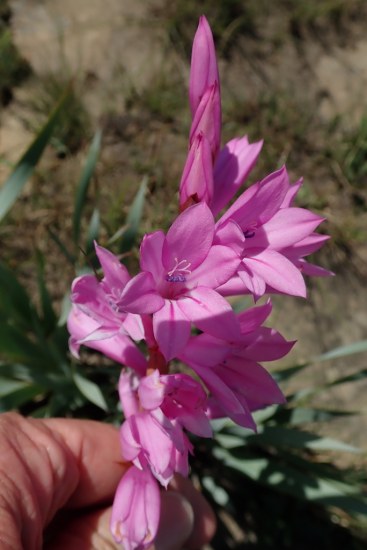
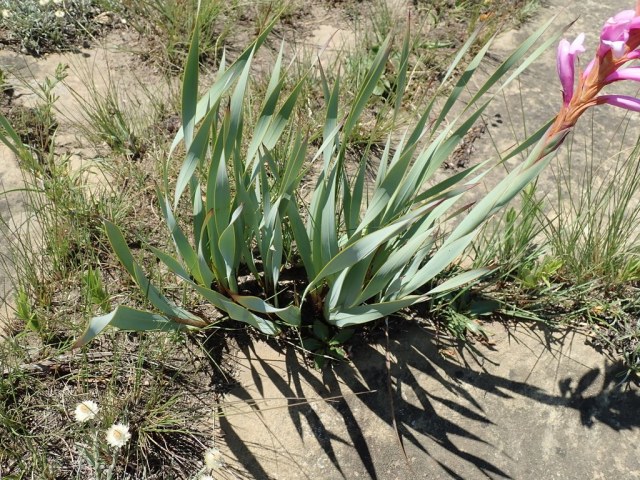
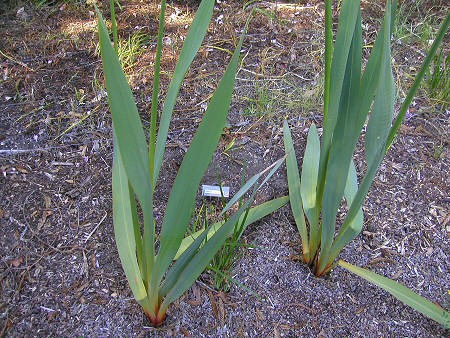
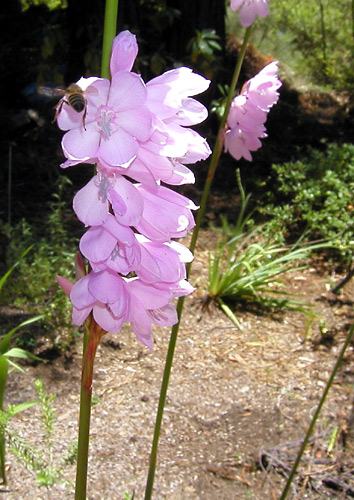
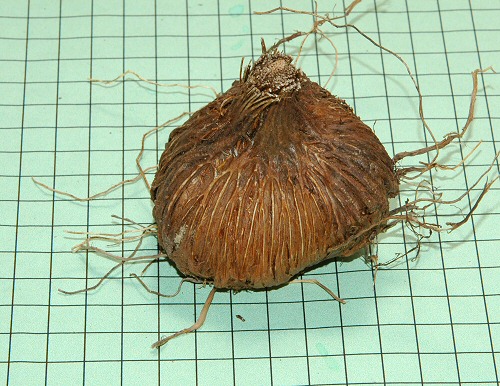
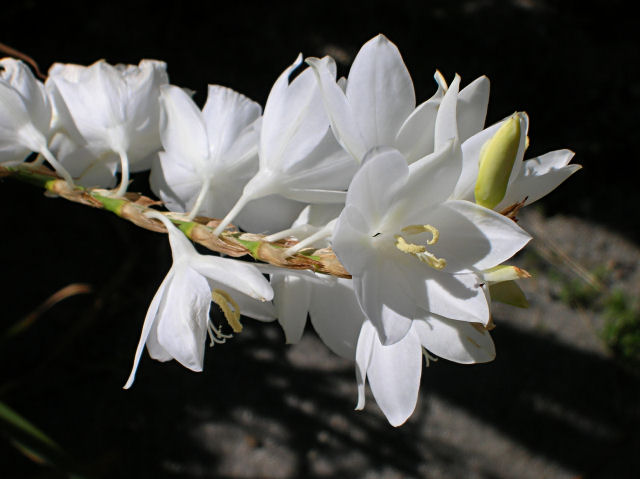
Watsonia marginata (Linnaeus fil.) Ker Gawler can be a very tall species (.5 to 2 m) with leaves that have thickened margins, hence the name. It grows on sandy and granitic soils in the Northwest and Southwest Cape and flowers late spring. It has pink, occasionally white or purple flowers. Since it is hard to get the whole plant in a picture since it is tall and still have detail the first three photos by Mary Sue Ittner show the leaves and beginning of the flower stalk, then the lower flowers on the stalk with a pollinator and finally a rather large corm. The corm is on a grid of 1 cm squares. The fourth photo was taken by Alan Horstmann. The last two photos were taken near Tulbagh by Andrew Harvie.
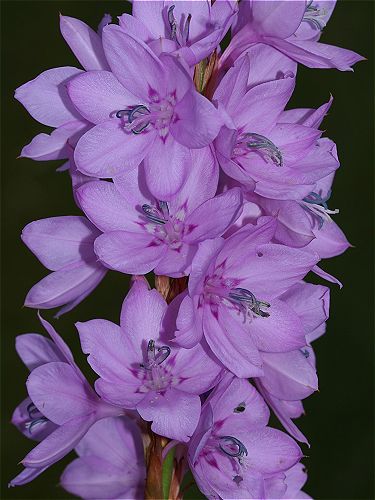
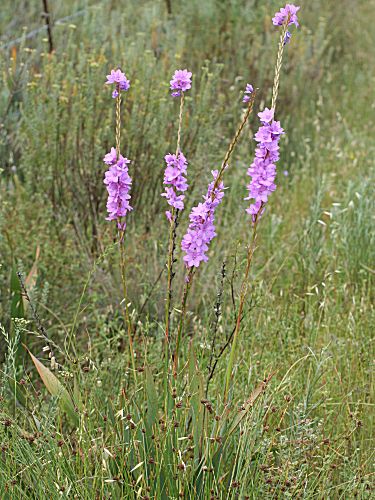
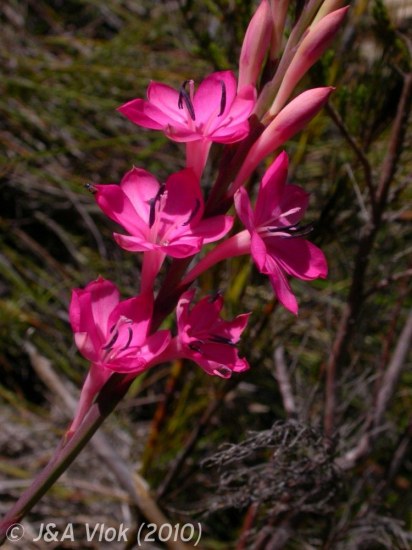
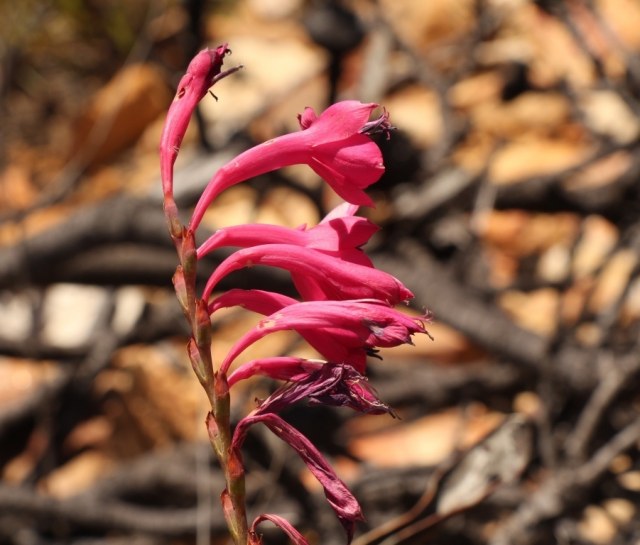
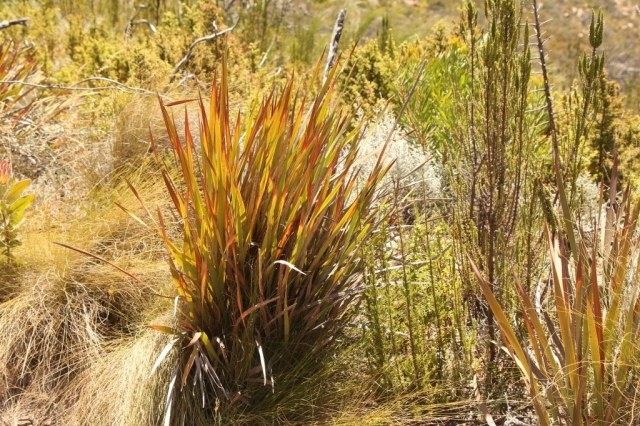
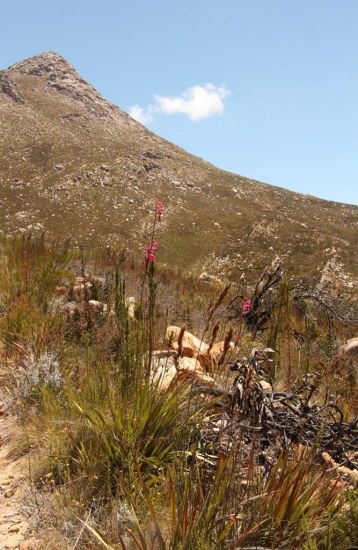
Watsonia marlothii L.Bolus grows from .6 to 1.2 m and is found on rocky sandstone slopes in fynbos in the Swartberg Mountains. It has sword-shaped leaves with thickened margins and midrib and red to pink flowers in an elongate spike. It flowers November to January. The first photo below is from the book Plants of the Klein Karoo courtesy of Jan and Anne Lise Schutte-Vlok. The second photo from iNaturalist was taken by Nick Helme in the Western Cape in January and shared under a CC BY-SA license. The other photos from iNaturalist were taken by Felix Riegel near the Swartberg Pass in October and shared under a CC BY-NC license.
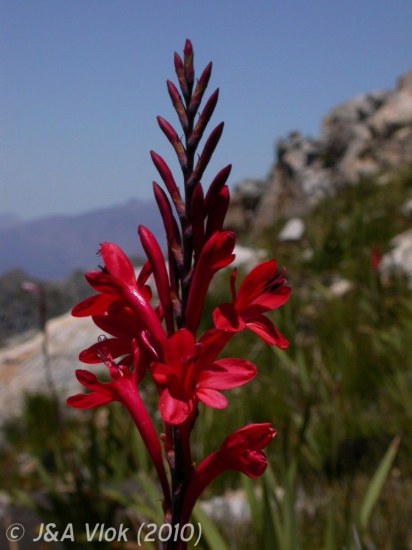
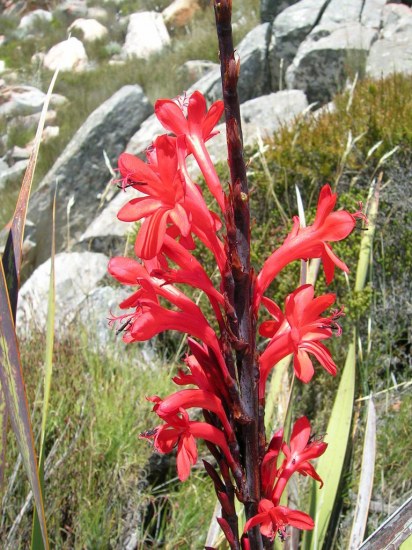
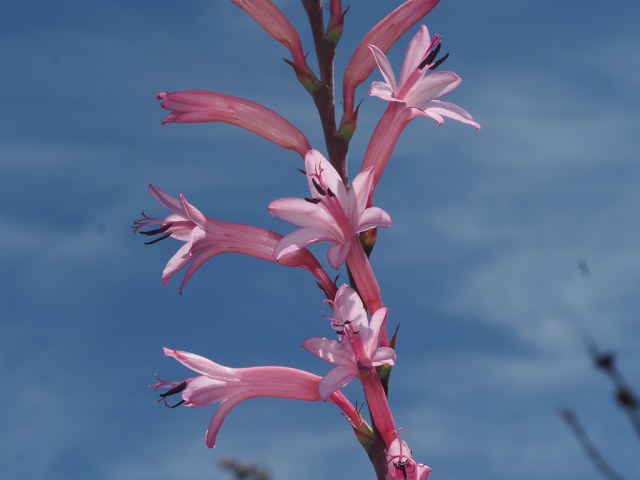
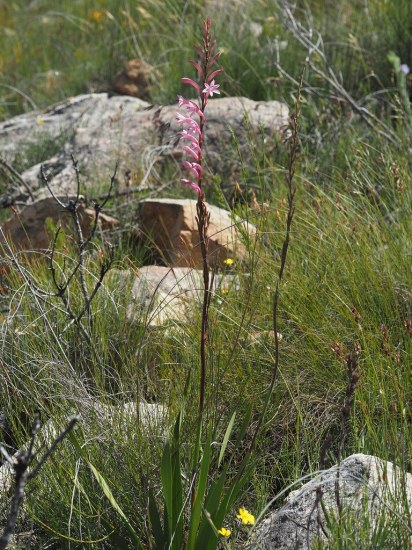
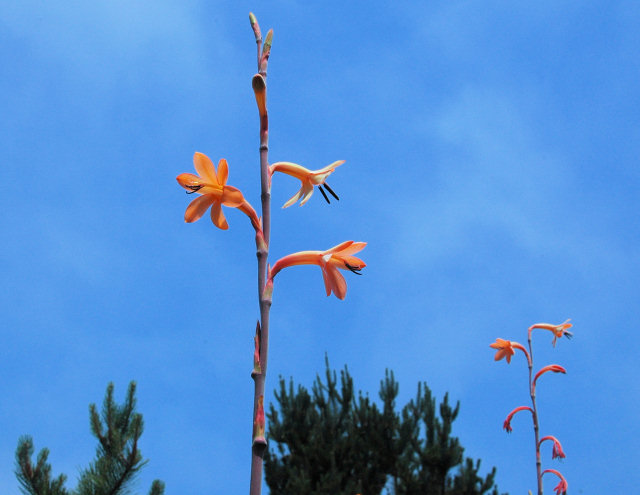
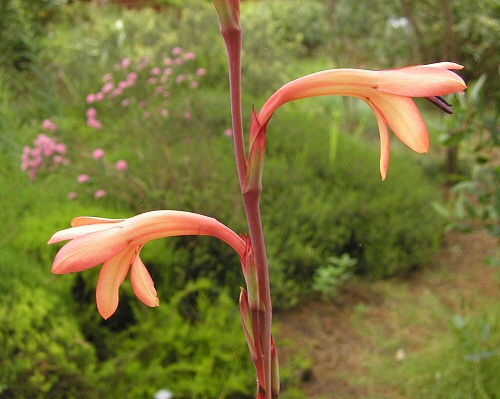
Watsonia meriana (Linnaeus) Miller is distinguished from others that look like it by its tall stature (60-200 cm high) and long herbaceous bracts. It can have up to 25 usually red or orange flowers on a spike (rarely pink or purple.) It is widespread along the southwest coast and adjacent interior of South Africa, usually in seasonally wet spots on sandy or granitic soils, often in marshes or along streambanks, from Namaqualand to Bredasdorp. There are two varieties.
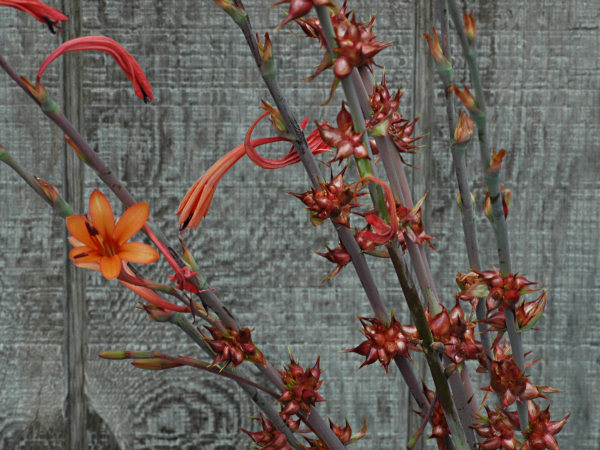
Watsonia meriana var. bulbillifera (J.W.Mathews & L.Bolus) D.A.Cooke develops clusters of cormlets (not bulbils) in leaf and branch axils and at floral nodes, but does not form seed. In the right climate it can become a big pest as it has in coastal northern California. The first photo by Bob Rutemoeller shows the drying foliage which makes an ugly and ever extending display along Highway One in Sonoma and Mendocino Counties. The next two photos were taken of a large stand near Salt Point State Park. The fourth photo shows a flower. Bloom time is short. The last photo was taken with the cormlets formed and still in flower before they go to the dump. Photos two through five by Mary Sue Ittner.
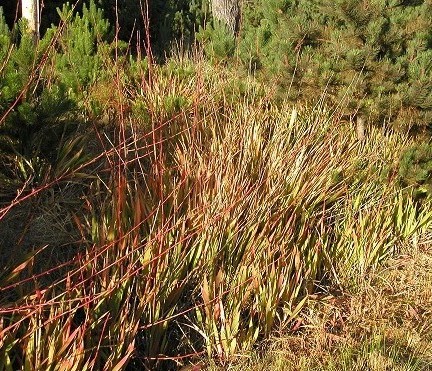
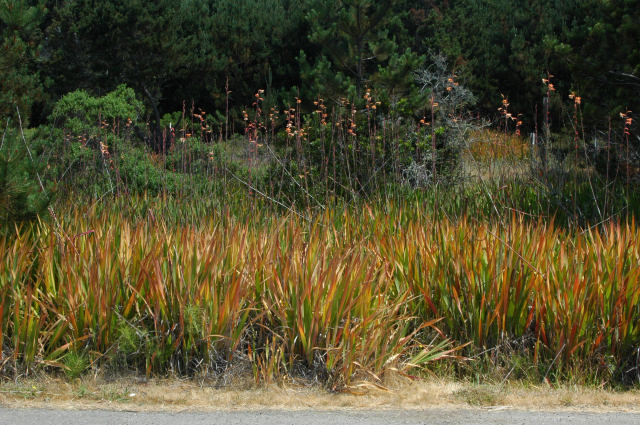
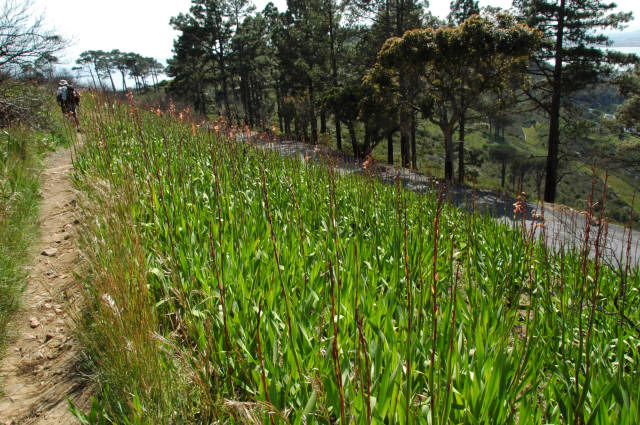
The photos below taken by Mary Sue Ittner show how even in South Africa this variety can spread. The photo was taken September 2006 at Lion's Head, Table Mountain National Park September 2006.
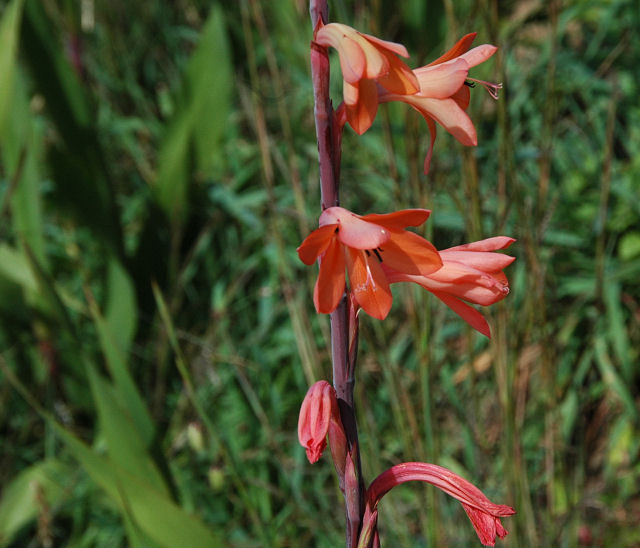
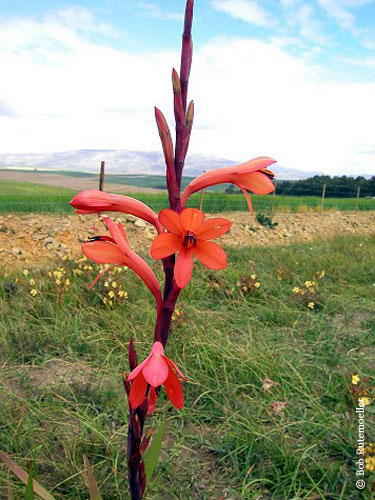
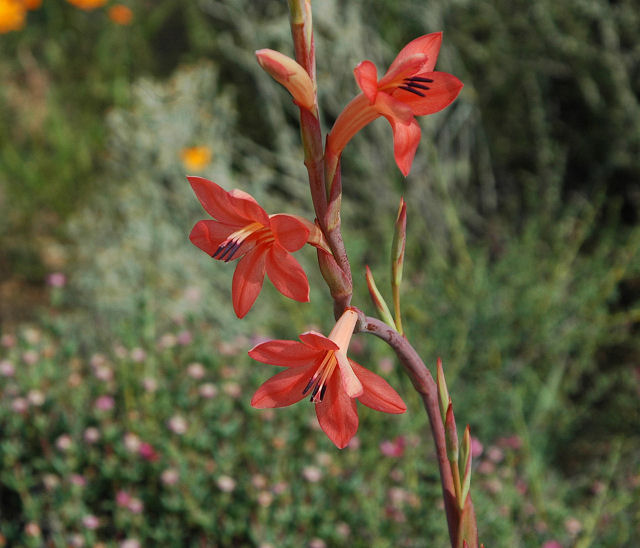
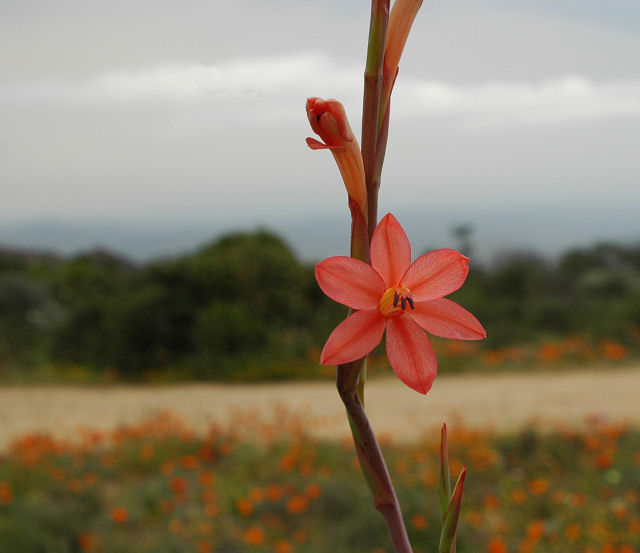
Watsonia meriana var. meriana can, but does not always, produce cormlets, but when it does, it does not develop them at spike nodes. Unlike the other variety, it does produce seed capsules. The first photo was taken September 2003 near Caledon by Bob Rutemoeller. The next two were taken in Namaqualand by Mary Sue Ittner. The fourth photo was taken by Cameron McMaster on the West Coast. The final two photos were taken by Andrew Harvie in the southwestern Cape.

Watsonia species a-f - Watsonia species n-z - Watsonia index