Cyanella is a genus of Southern Africa in the Tecophilaeaceae family that grows from a corm. Five of the seven species are found in the Cape Floral Province. Species are mostly characteristic of the more arid parts of the winter rainfall region and are pollinated by bees. They should be planted in deep pots in a coarse well drained medium and grow best in full sun.
Cyanella alba Linnaeus fil. has one or two white, pink, or yellow flowers on long pedicels. Plants grow 12-25 cm high. It flowers late winter to spring and grows on stony clay and sandstone soils in dry winter rainfall areas. Flowers are solitary, usually on pedicels more than 10 cm long. This beautiful yellow form pictured first occurs in the Biedouw Valley, but is not common in cultivation. This first photo was taken at the Karoo Desert NBG in Worcester, August 2003 and the second photo was of plants grown by Jim Holmes and on display at the IBSA Bulb and Corm Symposium August 2003. Photos by Bob Rutemoeller.
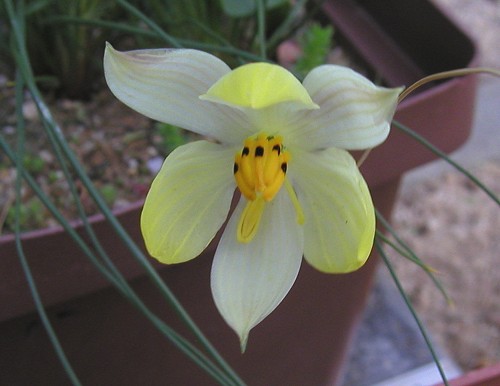

Photos taken of the yellow form near the Biedouw Valley September 2006 by Bob Rutemoeller and Mary Sue Ittner.

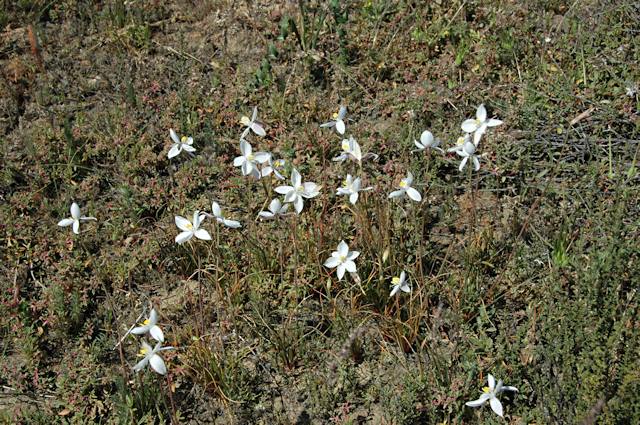
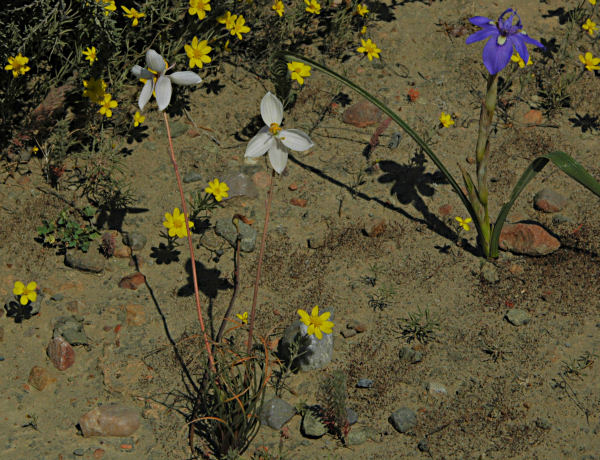
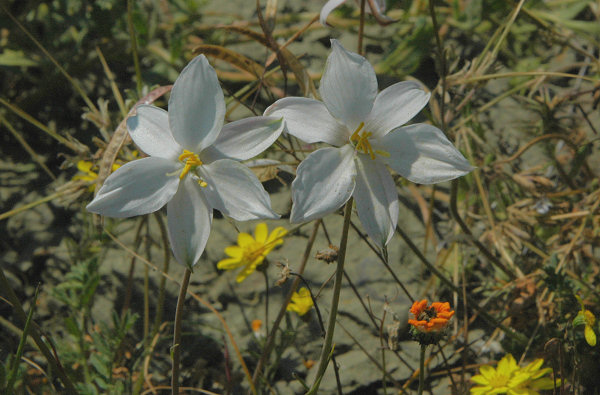
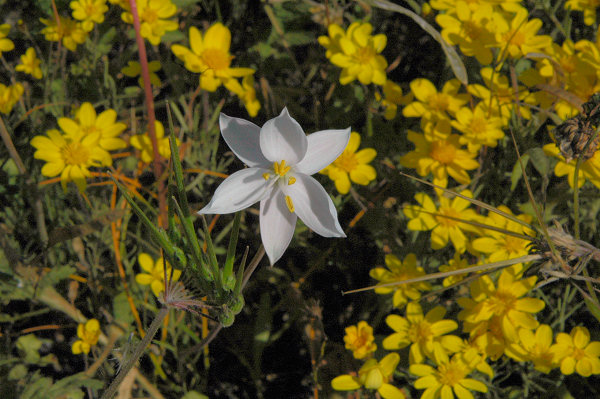
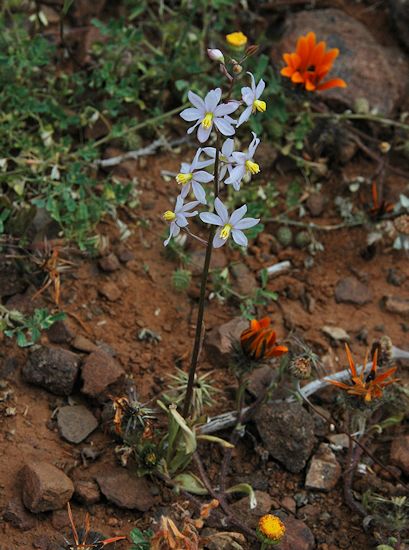
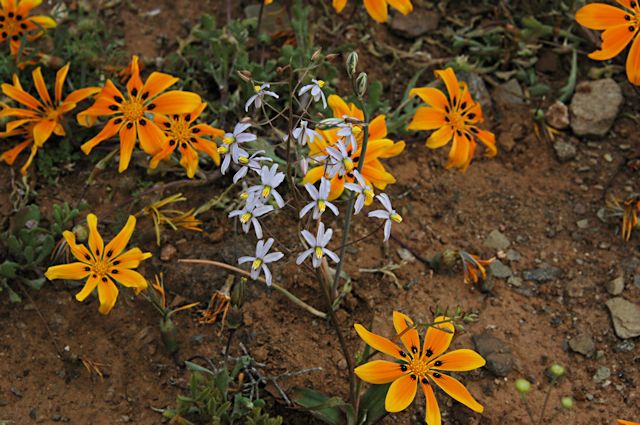
The first five photos below were taken by Bob Rutemoeller and Mary Sue Ittner of the white form which is more common, seen south of Nieuwoudtville in the Bokkeveld Plateau September 2006. In the second picture it is growing with Moraea pritzeliana. The yellow flower seen in many of these photos is Ursinia nana. The last photo was taken by Bob Rutemoeller in the bulb room of the Kirstenbosch National Botanical Garden.


Cyanella aquatica Obermeyer ex G.Scott grows in seasonally waterlogged dolerite outcrops in the Roggeveld. Plants grow to 40 cm high and have orange lightly scented flowers. This species has five upper stamens and one larger lower.
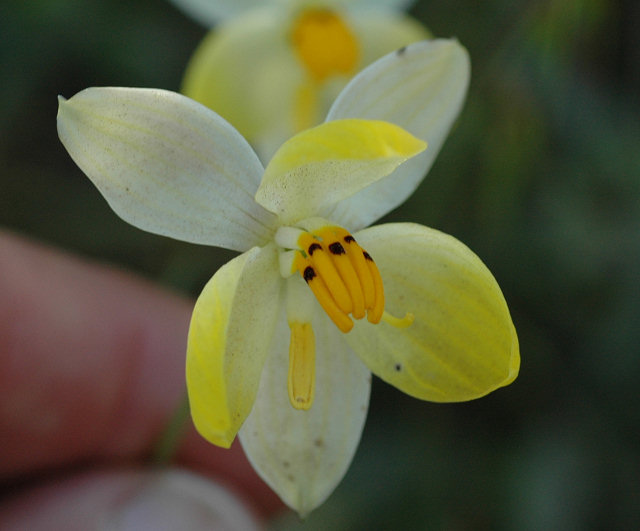
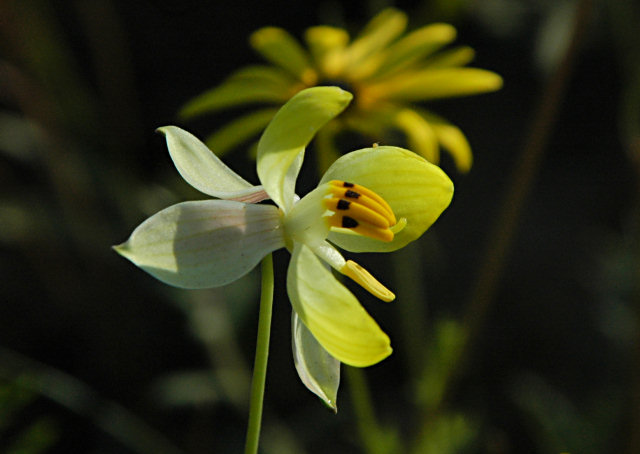
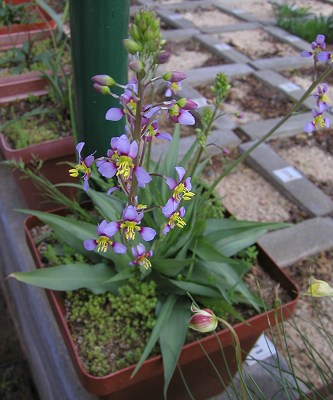
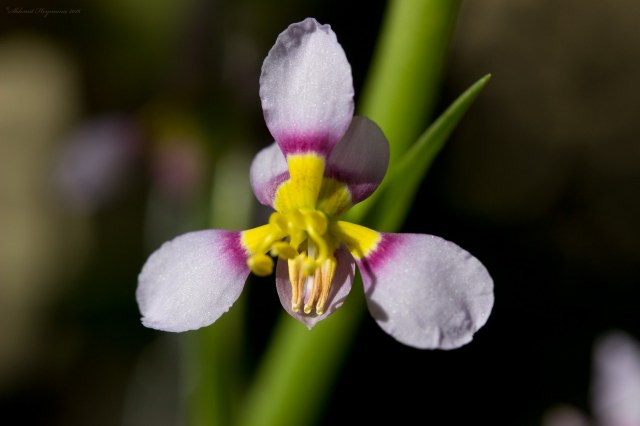
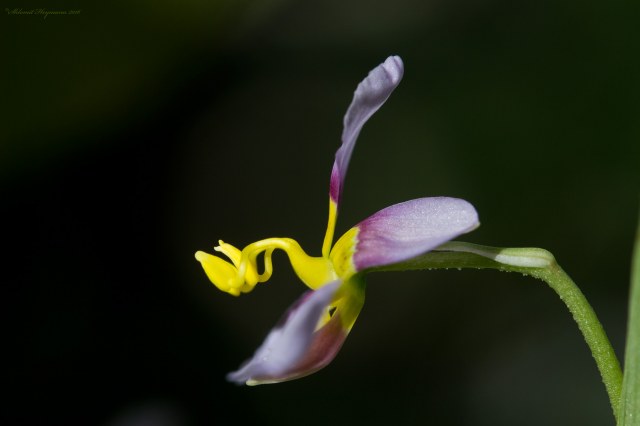
Cyanella cygnea G.Scott is a species from northern Namaqualand which is distinguished by the upper 3 stamens that are free and curved like the neck of a swan. First photo is of plants grown at the Karoo Desert NBG in South Africa taken August 2003 by Bob Rutemoeller. Macro photos by Shlomit Heymann show the swan shaped stamens. These bloomed in early winter, January and February, in her balcony garden.
Cyanella hyacinthoides Linnaeus grows on mostly clay and granite slopes, often in renosterveld from Namaqualand to the southern cape and the Karoo. Flowers are in a branched raceme, blue to mauve, rarely white and are violet scented. This species also has five upper stamens and one larger lower. Height: 25-40 cm. The first three photos below photographed by Bob Rutemoeller and Mary Sue Ittner were taken in Namaqualand September 2006.
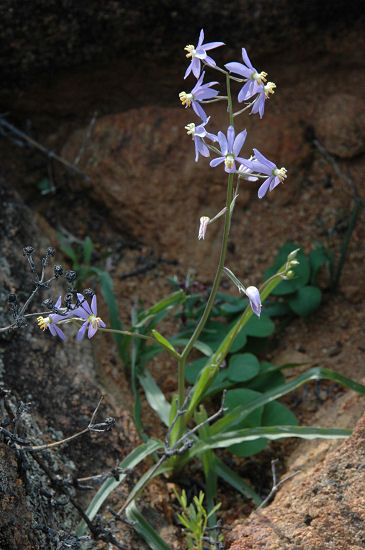
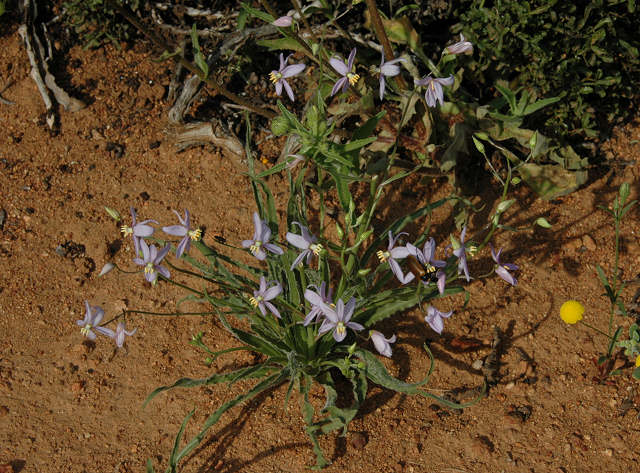

Photos 1-4 below were taken by Mary Sue Ittner. Photos 1-3 were taken near Clanwilliam September 2006 where there were many patches of them along the road. One was growing near an Albuca which could be Albuca suaveolens which has yellow flowers with green keels, but Albuca pentheri grows in this area too. In photo 3 they are seen growing with Lapeirousia fabricii. Photo 4 shows white flowered ones photographed near Nieuwoudtville. Photos 5-6 were taken near Nieuwoudtville by Bob Rutemoeller.
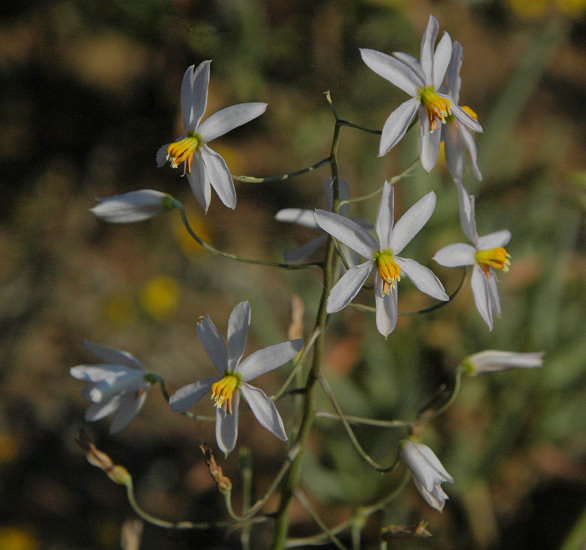
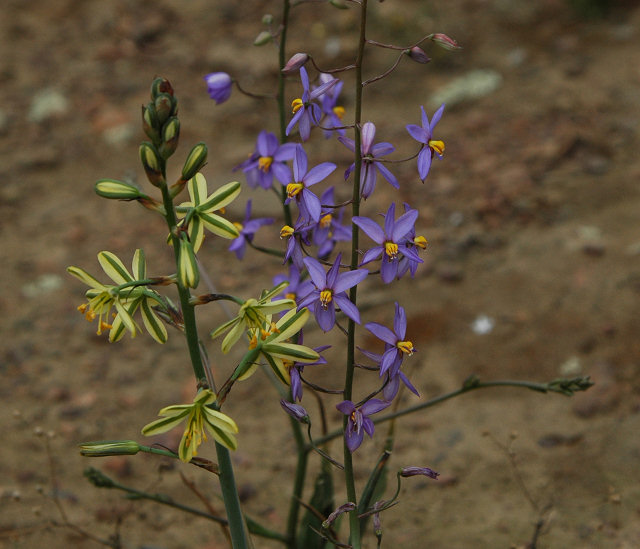
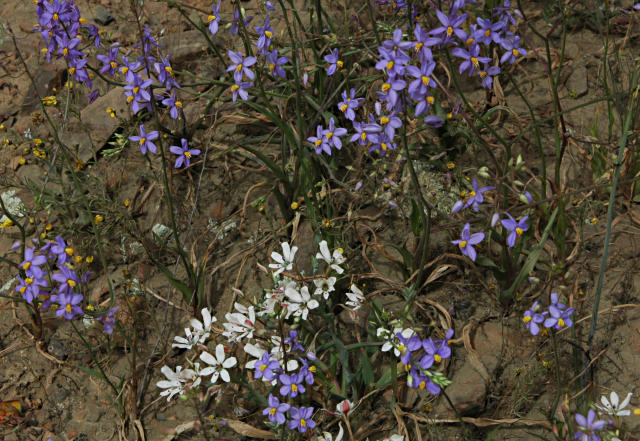

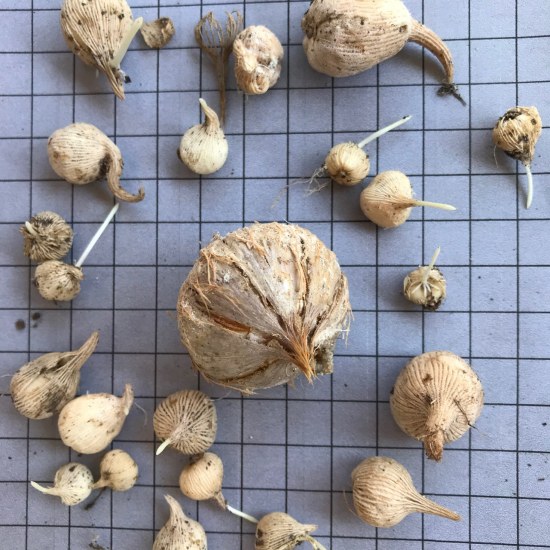
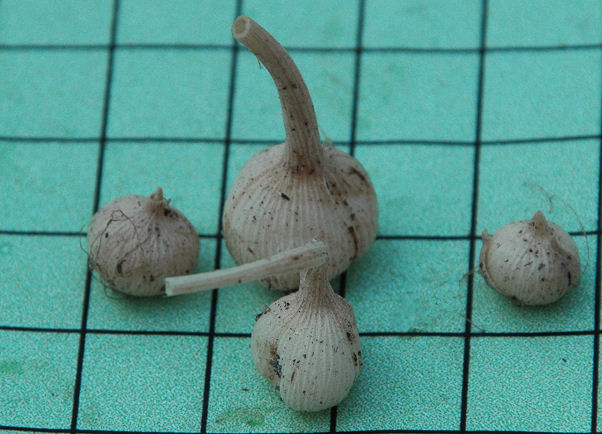
Photos 1-3 were taken by Nhu Nguyen at the UC Botanical Garden. Photos 4-5 taken by Mary Sue Ittner show a plant grown from seed and corms on a 1 cm grid.
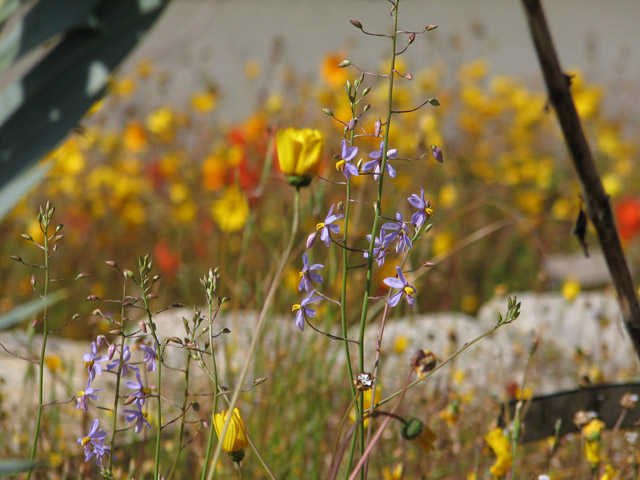


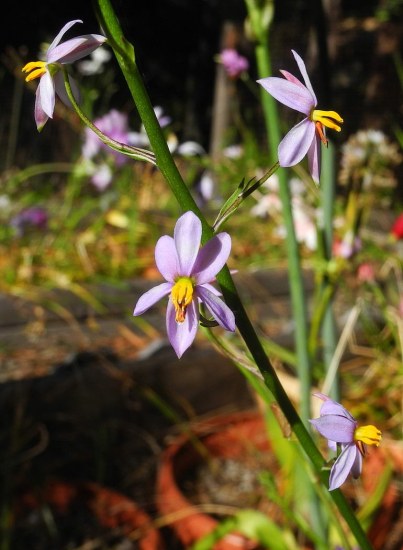
Cyanella lutea L.f. is widely distributed through the winter-rainfall region of southern Namibia and South Africa and around the interior margin of the central plateau, but absent from the central and Great Karoo. It grows in coastal fynbos, grasslands, and karroid scrubs. Growing from 15 to 35 cm high, it has pink or yellow enantiomorphic flowers (from SANBI- "they show a kind of floral asymmetry where the flowers have 2, mirror-image morphs) and linear leaves in a basal tuft with prominent ribs. There are two subspecies. It is distinguished from the other species by the color of its flowers, ± enantiostylous flowers with almost free filaments, connate only at the extreme base, and the lower anther ± twice as large as the upper anthers.
Cyanella lutea L.f. ssp. lutea is endemic to winter rainfall regions of South Africa, extending from Namaqualand, Bokkeveld Plateau and the Roggeveld, to the Cape Flats and Bredasdorp in the south and eastwards through the Little Karoo to Uitenhage. This subspecies is restricted to renosterveld shrubland on fine-grained clay soils, rarely on stony limestone flats. In Namaqualand it is also found in loamy soils. It has pale to golden yellow fragrant flowers, often flushed reddish on the reverse. Photos were taken by Mary Sue Ittner who found that her plants often spent the year underground and finally stopped coming up.


The first photo was taken in Montagu in the Little Karoo September 2003 by Bob Rutemoeller. The rest of the photos were taken by Mary Sue Ittner and Bob Rutemoeller near Calvinia September 2006.


Cyanella lutea L.f. ssp. rosea (Eckl. ex Baker) J.C.Manning & Goldblatt is distributed from Southern Namibia south-eastwards through the dry interior of South Africa to the Eastern Cape coast between Port Elizabeth and East London. It grows on sandy, sometimes calcareous, flats in dry shrubland or grassland, often sheltered under small shrubs. Flowers are pink. Photos from iNaturalist were taken by Nicola van Berkel in September near Grahamstown, Eastern Cape, and shared under a CC BY-SA license.


Cyanella orchidiformis Jacquin grows on rocky flats and lower slopes, often in wet spots, from Namibia to the western Cape (Clanwilliam). Growing to 40 cm high, this species has mauve flowers with a maroon center. Flowers are carnation scented and unlike many of the other species, this species has three upper and three larger lower stamens. The photos below were taken by Bob Rutemoeller and Mary Sue Ittner September 2006. Photos one through five were taken in Namaqualand including a rare white one. The last photo was taken near Clanwilliam.
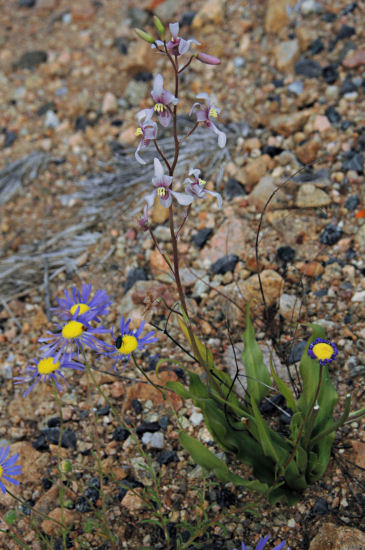
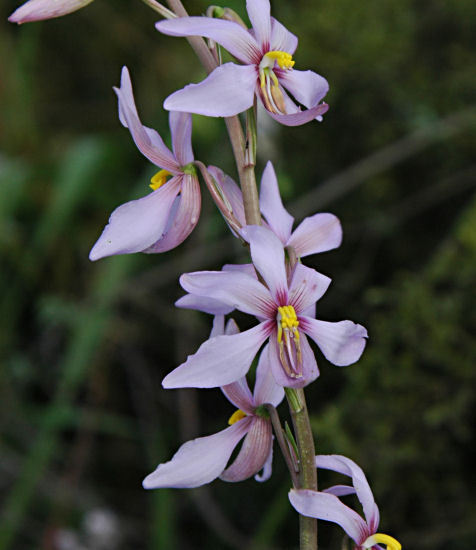
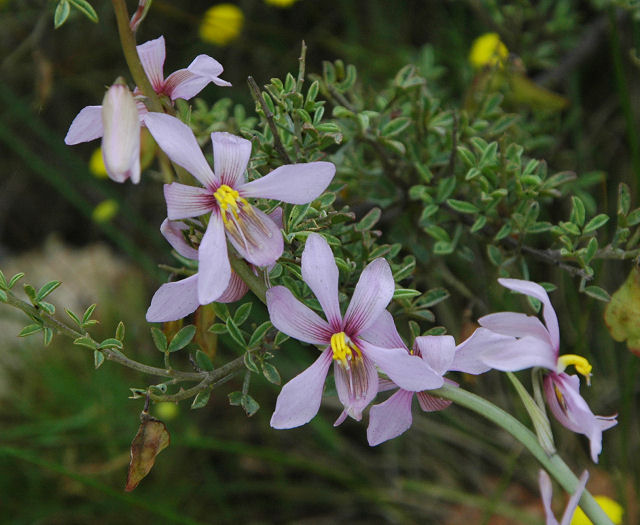
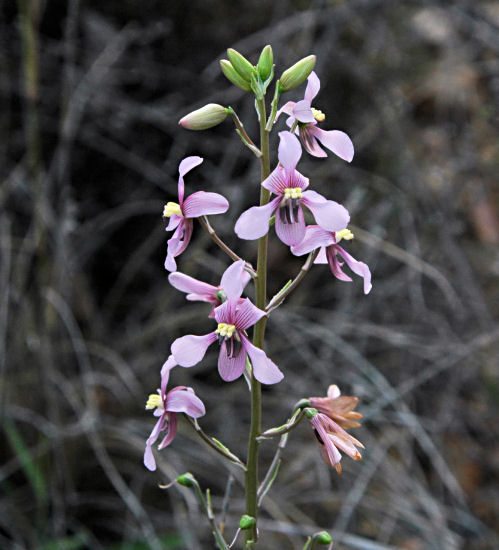
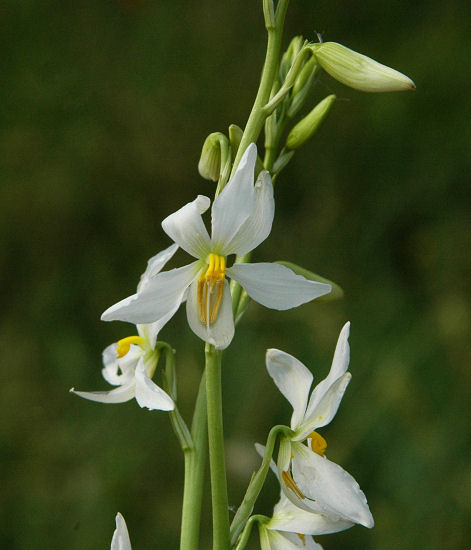
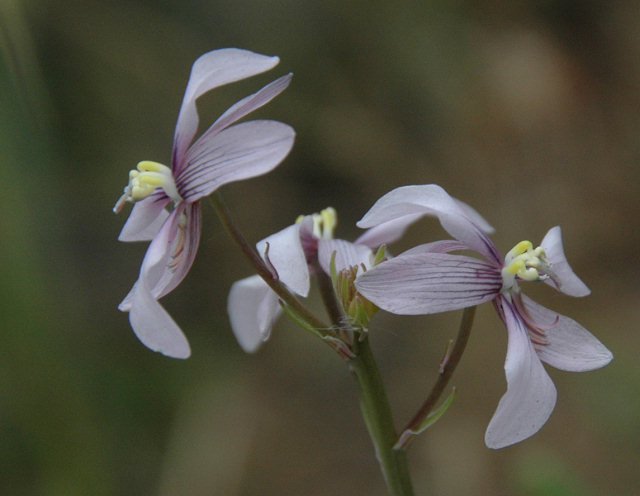
The photos below were taken by Cameron McMaster in Namaqualand in 2011.


This species thrives in the open garden plunge bed of M. Gastil-Buhl, blooming in March and corms already sprouting in September. Corms on a 1 cm grid.