Dioscorea Plum. ex L. is a large genus of more than 600 world-wide species in the Dioscoreaceae family. It was named for Pedanios Dioscorides, 1st century Greek pharmacologist. Many with tubers are economically important (D. alata, D. esculenta, D. japonica, D. polystachya, etc.). Tubers, sometimes quite large, can be situated below or above the soil. Some of the more commonly grown ornamental species have caudices, which brings into question if they can be considered geophytes. We include those species here based on the criteria that we have set up on the What is a Bulb? page.
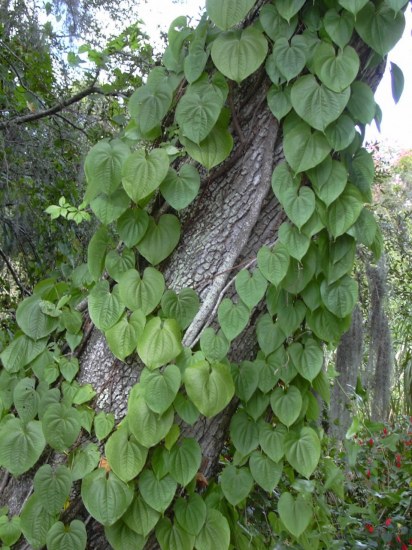
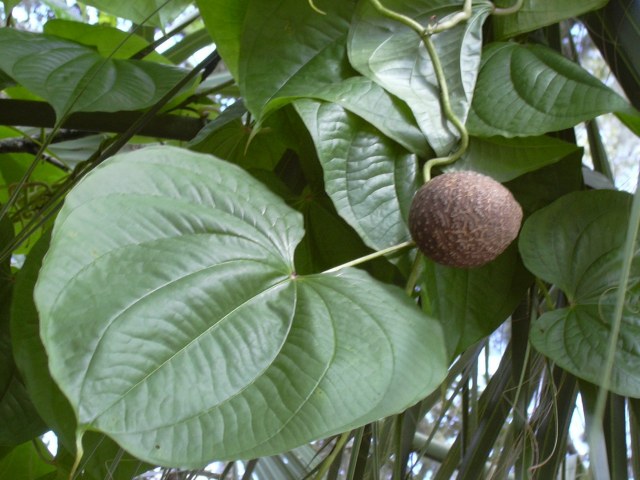
Dioscorea bulbifera L. is a perennial vine with broad, alternate leaves, and two types of storage organs. The plant forms bulbils in the leaf axils of the twining stems and tubers beneath the ground. These tubers are like small, oblong potatoes, which explains its common name, Air Potato. Source: Wikipedia. The bulbils can sprout even when tiny, causing this species to be considered a noxious weed with the potential to be invasive. Height range: up to 65 ft. Photos from Wikimedia Commons. The first two photos are from Forest & Kim Starr (source) and (source) and are shared under a CC BY 3.0 license. The third photo is from Dinesh Valke (source) and is shared under a CC BY-SA 2.0 license.



Dioscorea discolor Kunth. in 2025 is considered to be a synonym of Dioscorea dodecaneura Vell., but you can still find many resources under the previous name. It is from Ecuador and Brazil and has nicely colored leaves. The tubers should be planted in a rich medium that is well drained. Give the plants part to full sun, depending on your location, and plenty of water as it is a thirsty tropical plant. Nhu Nguyen grows this plant on a sunny south facing windowsill. When the leaves have died down, stop watering and allow the tubers to dry out almost completely. When spring arrives, resume watering. Height range: 10-12 ft. Photos 1-2 taken by Tarcísio Eduardo Raduenz show an almost completely green form. Photos 3-6 by Nhu Nguyen show a mottled leaf form, a beautiful magenta-red backside, the upper and lower portion of the tubers with distinctive warts found in the genus.

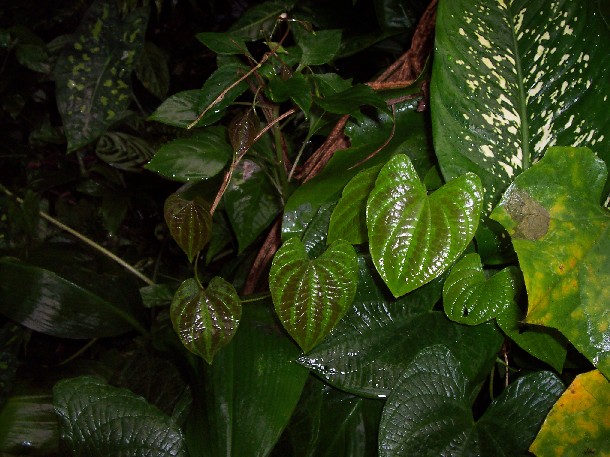
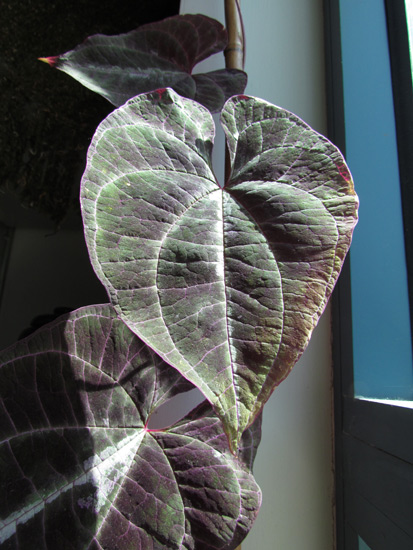
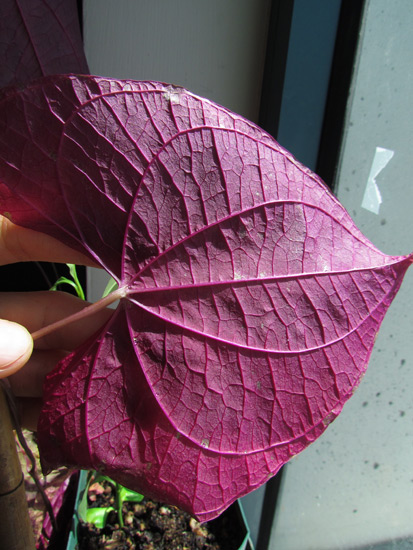
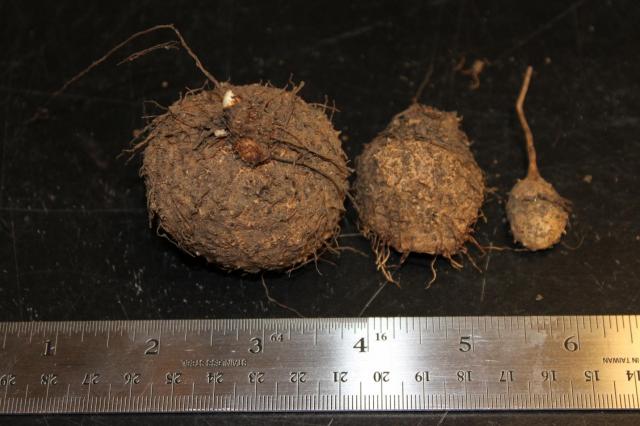
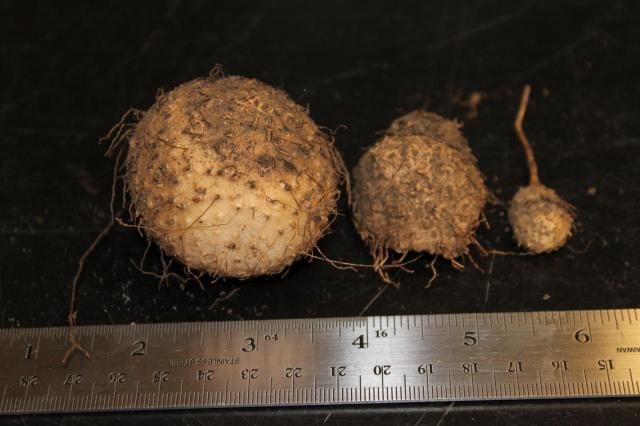
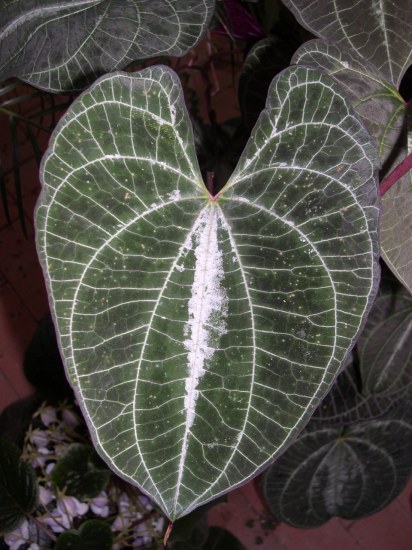
Photo by Johannes-Ulrich Urban shows leaf detail from a plant originating in Bolivia, Lowland Santa Cruz, cultivated under glass. It is a rewarding tuberous climber. The dormant tubers need some bottom heat to start (slowly) in spring.
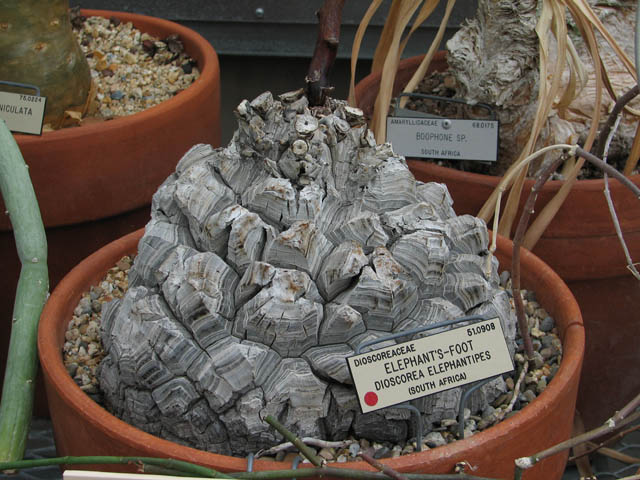
Dioscorea elephantipes (L'Hér.) Engl. is a species native to the Cape Province of South Africa. The plant grows very slowly, can live for some 70 years, and produces an above-ground tuber which may reach 1 meter tall. The tuber is covered by hard gray scales which protect the starchy interior. The species can withstand temperatures from 4 °C to 40 °C. The plant needs a dry summer dormancy, but can be an opportunistic grower and decide on its own when it wants to go into dormancy. Photo taken by Nhu Nguyen at the UC Botanical Garden.
Dioscorea mexicana Scheidw. (syn. Dioscorea macrostachya Benth.) is native from Mexico to Central America. This species seems to go dormant in winter (although this depends on individual specimens, some of which grow in winter in cultivation). Height range: 10-20 ft. The first photo shows a specimen at the UC Botanical Garden and the 2nd & 3rd show a specimen at the Plant Conservatory, San Francisco, CA. Photos by Nhu Nguyen.
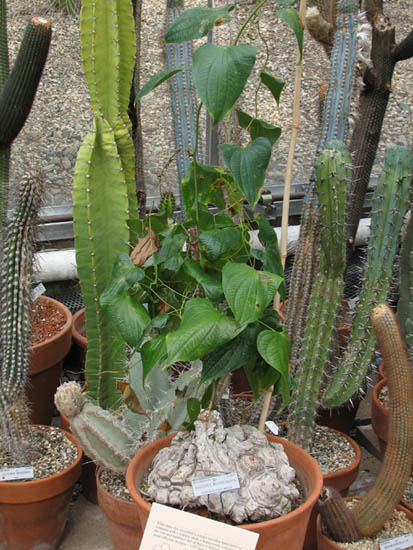
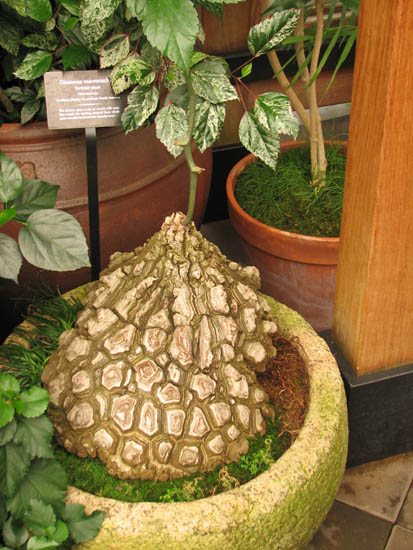
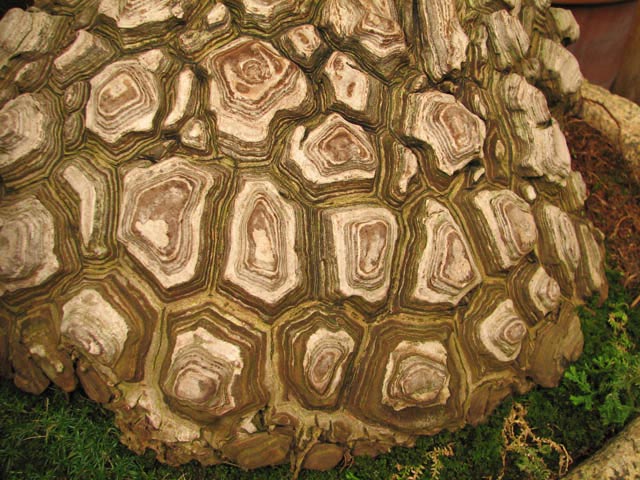
Dioscorea sylvatica Eckl. bears massive, reticulated storage organs on the surface of the soil. The ones illustrated here average 40 cm in diameter. It has vigorous, annual climbing stems that can grow to as much as 4 or 5 meters in a season; however, these can be trained quite comfortably around a wire hoop set in a pot when grown indoors. Male and female flowers are borne on separate plants. Photo and measurements by Rogan Roth.
