Goodyera, commonly called Ladies'-tresses, is a genus in the Orchidaceae family named after botanist John Goodyer. There are about 25 species of Goodyera worldwide. Creeping rhizomes and rosettes of evergreen leaves characterize the genus. Goodyera is closely related to the genus Spiranthes. Species of this genus grow in environments ranging from alpine valleys in Scandinavia to the laurisilva (Laurel forest) of Macaronesia to North American coniferous forests. It is widespread across much of Europe, Asia, Australia, North America, and various islands of the Pacific, Indian and Atlantic Oceans. The four species endemic to North America are commonly called "rattlesnake plantain".
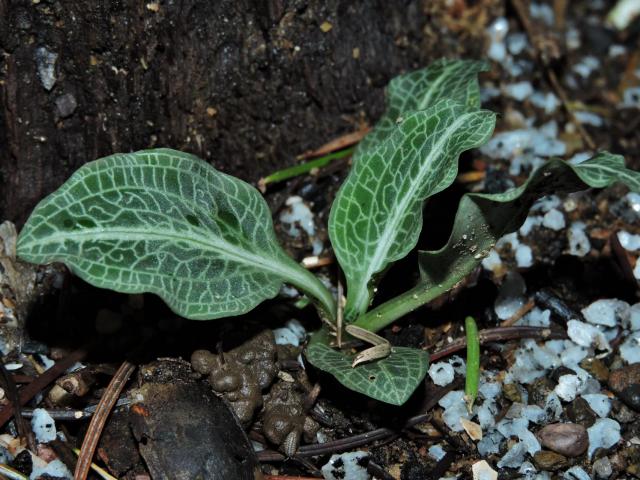
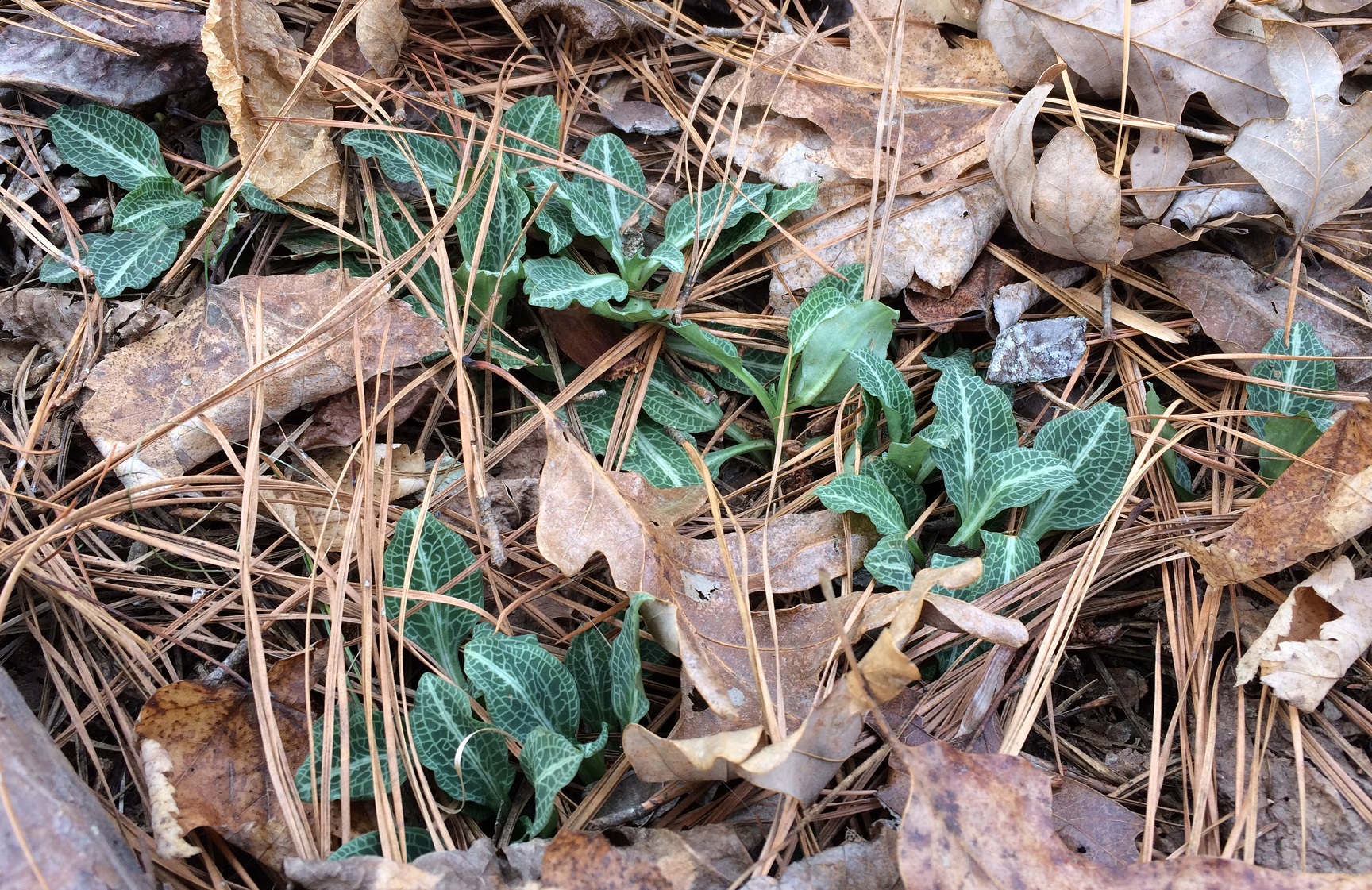
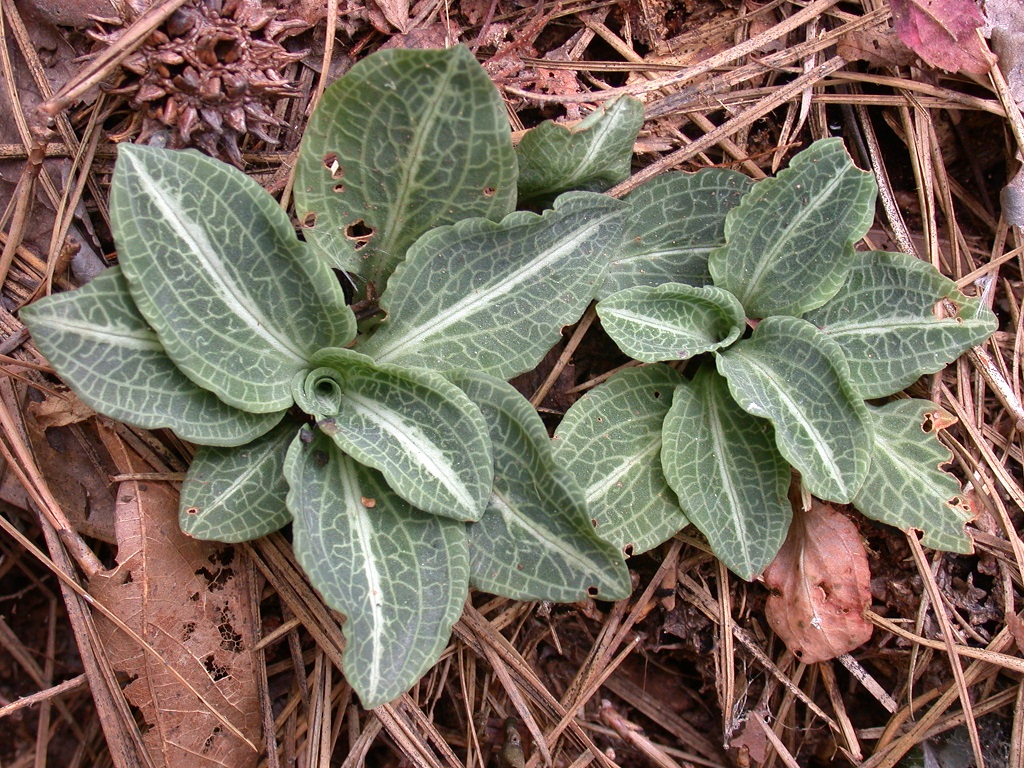
Goodyera oblongifolia Raf. has a basal rosette of thick leaves and an erect flower stem. The leaves are sessile, oblong, tapering to base, entire, deep green usually with a prominent white midvein and smaller white side veins, often white patches, but occasionally entirely plain green. The flower stem has few bracts, with the flowers held densely at the top. The white flowers are tubular, with upper petals and sepals forming a hood over the lower. This species grows in dry conifer forests in leaf compost at low to mid-elevations. The leaf rosettes are often found without flowers. Height range: 25-40 cm. The first two photos by Travis Owen were taken August 2014 on an empty seaside lot in Bandon, Oregon growing in the pine needle litter under a group of small conifers. The next two photos were taken by Mary Sue Ittner, who has this species growing on her property in a mixed evergreen (mostly redwood) forest.
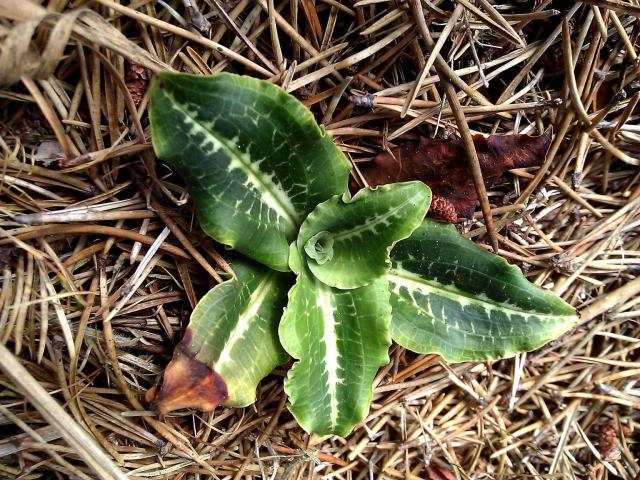

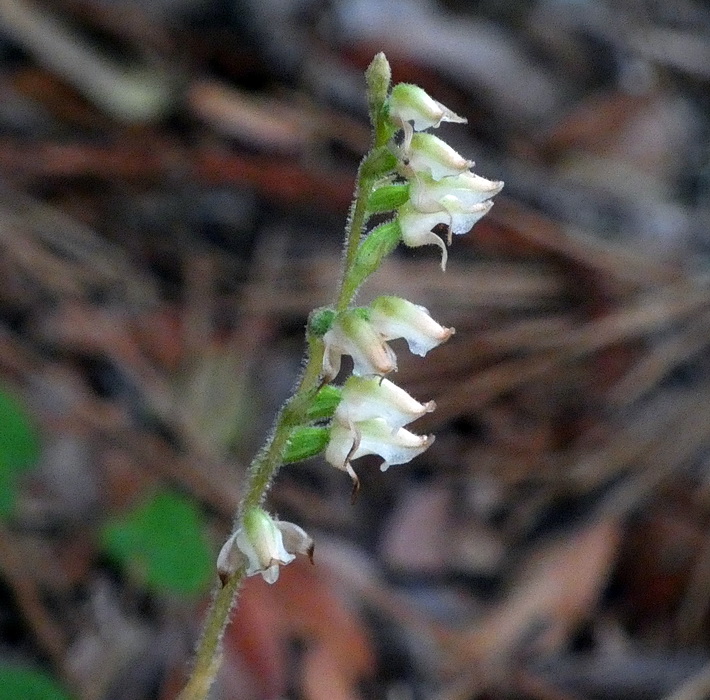
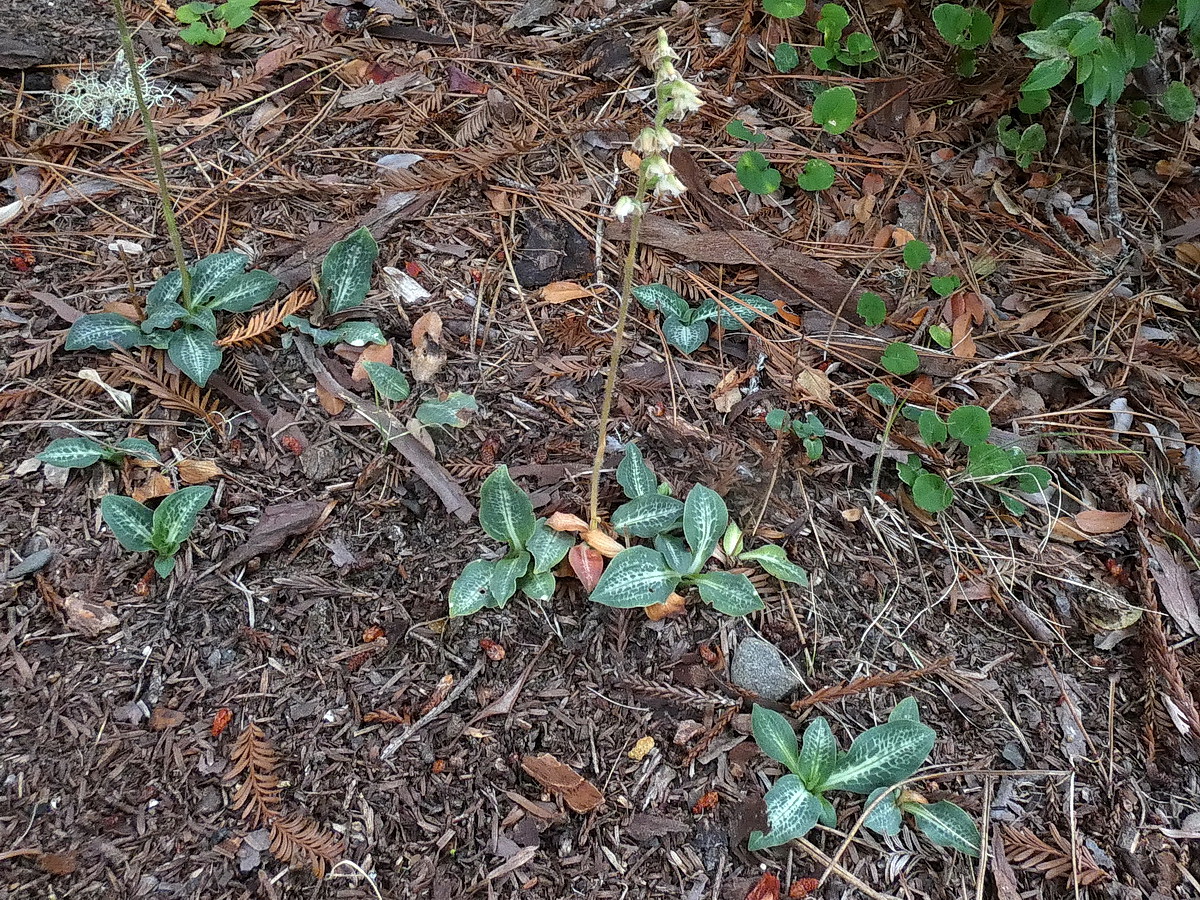
Photos below were taken by Bob Rutemoeller and Mary Sue Ittner at Stillwater Cove and on The Sea Ranch on the Mendocino Sonoma Coast.
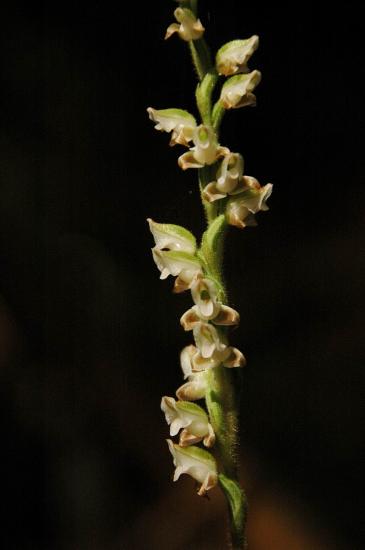
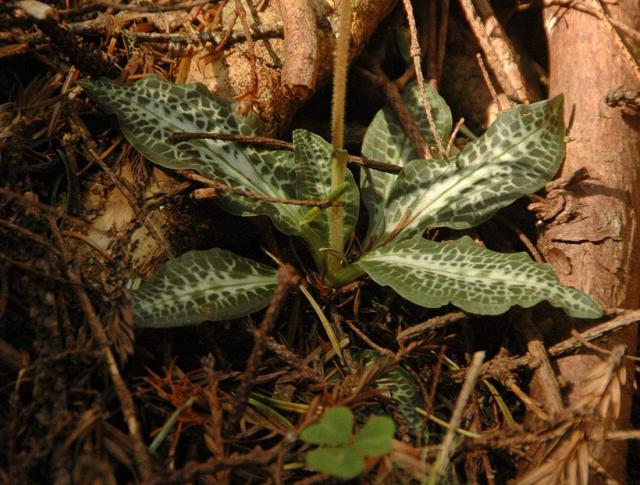
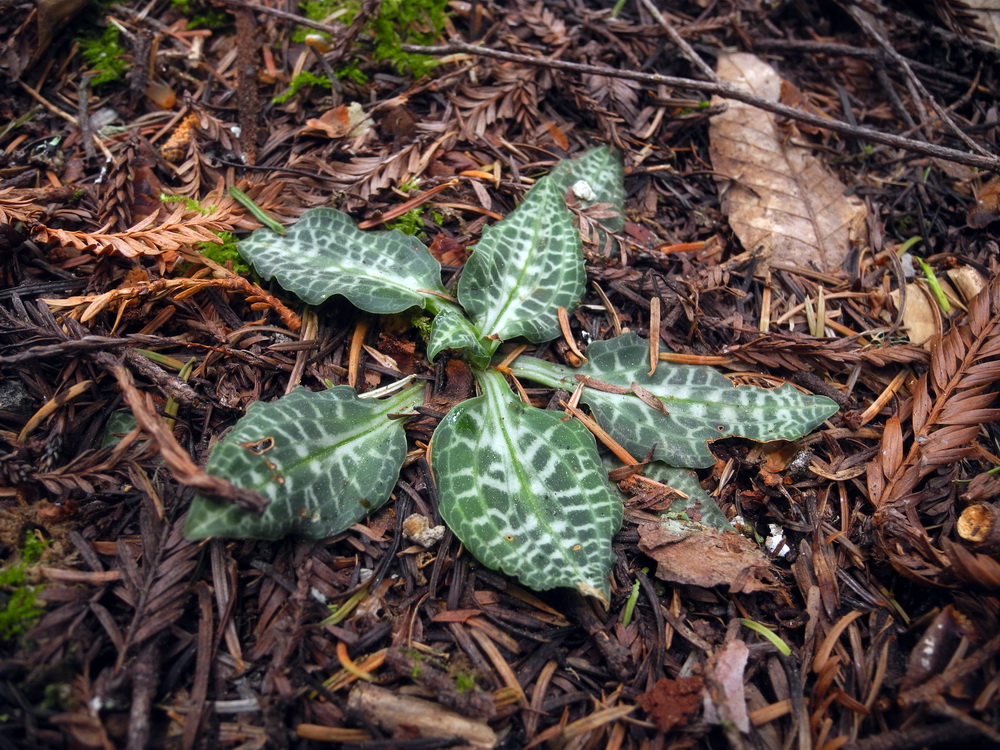
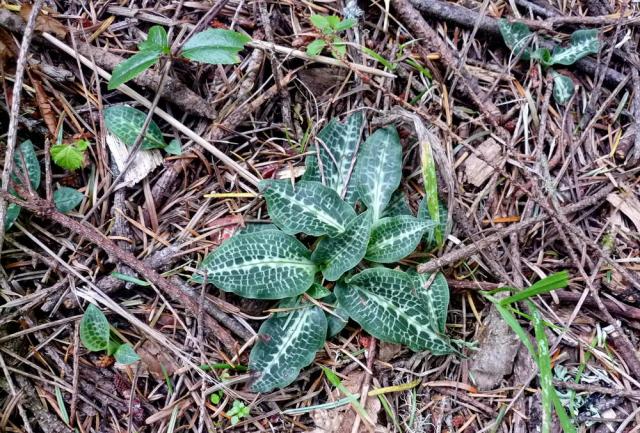
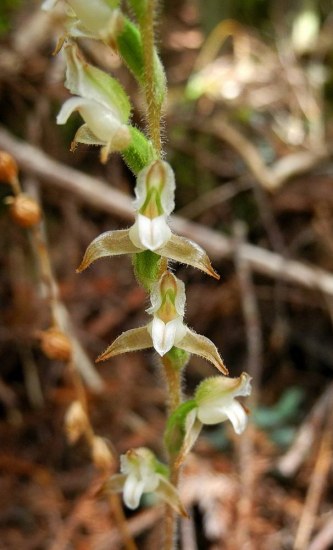
Goodyera pubescens (Willd.) R. Br is an Eastern United States orchid, and is known as the downy rattlesnake plantain due to the fine pubescence covering the leaves and flowering stalk. Height: 45 cm. See USDA NRCS fact sheet on Goodyera pubescens. The first photos of an image of cultivated plant taken by Travis Owen. The next two photos were taken by Nicholas Plummer who grows it in North Carolina and wrote: "Its foliage is very beautiful, and various sources report that it has suffered from over-collection for gardens, terrariums, and flower arrangements."