Ranunculus L. is a very large genus in the Ranunculaceae family. Plants are both annual or perennial, and can grow from tuberous roots, caudices, rhizomes, stolons, or bulbous stem bases. One source quotes about 250 species in temperate and subarctic regions of both hemispheres. Many of the flowers are yellow or white and are known as buttercups.
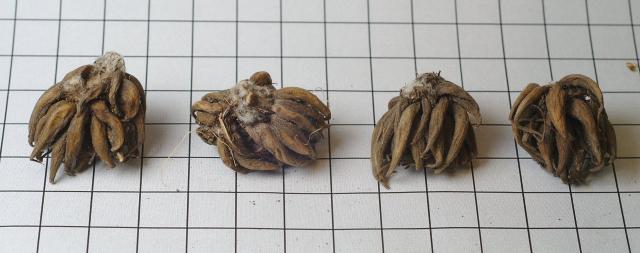
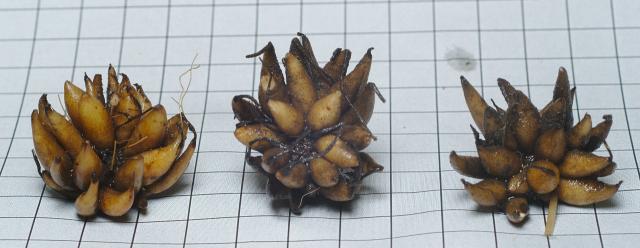
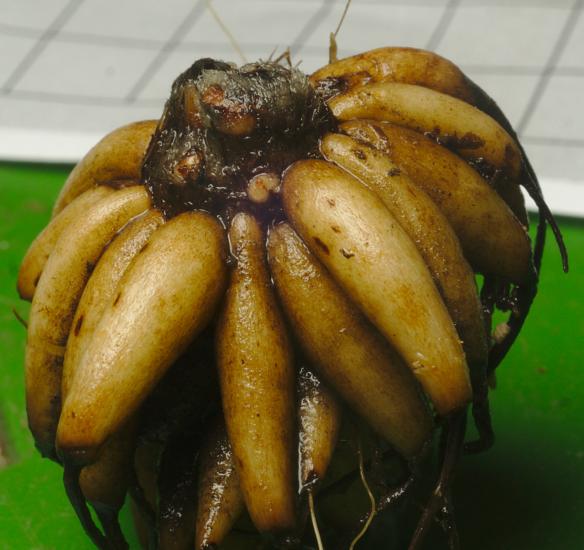
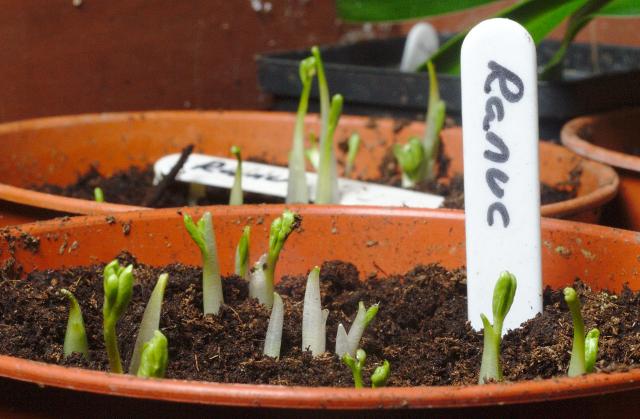
Ranunculus asiaticus L., commonly known as 'Persian Buttercup' is native to the eastern Mediterranean region in southwestern Asia, southeastern Europe (Crete, Karpathos and Rhodes), and northeastern Africa. Height range: 30-60 cm. All photos by David Pilling. Photograph 1 shows commercially supplied tubers on a 10 mm grid. The free ends of the tubers point downwards, and the ends that are joined go uppermost in the ground. Before planting tubers are soaked for 24 hours and plump up, as shown in photos 2 and 3. Photo 4 shows the resulting shoots a couple of weeks later.
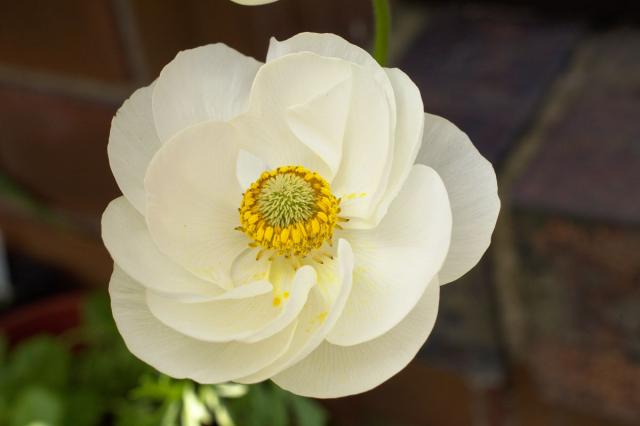
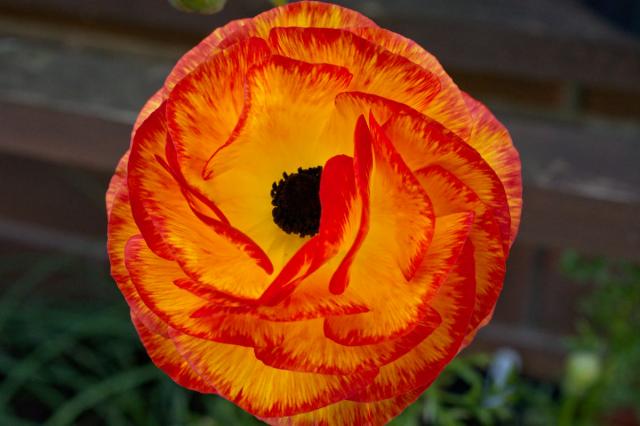
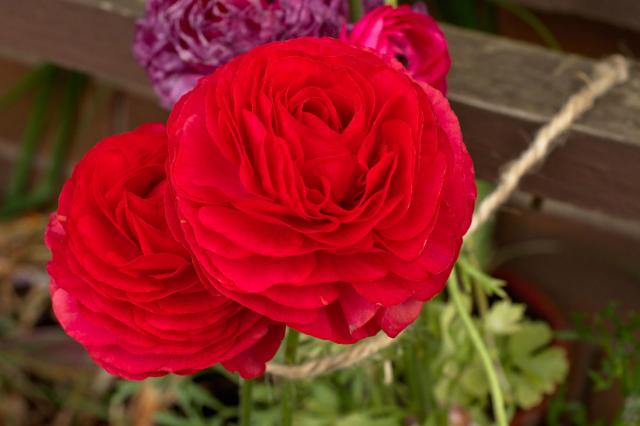
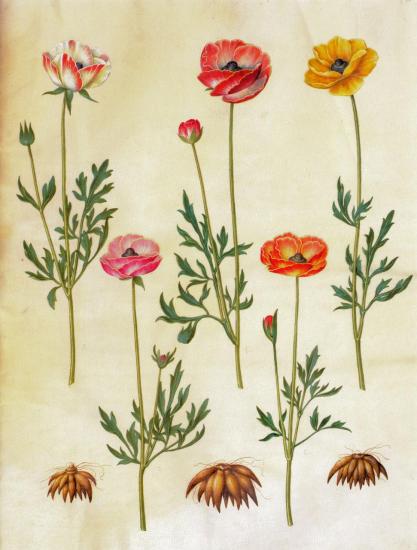
Photos showing the resulting flowers in Spring. Illustration from the Gottorfer Codex, a collection paintings on vellum depicting flowers of the garden of Schloss Gottorf, created between 1649 and 1659.
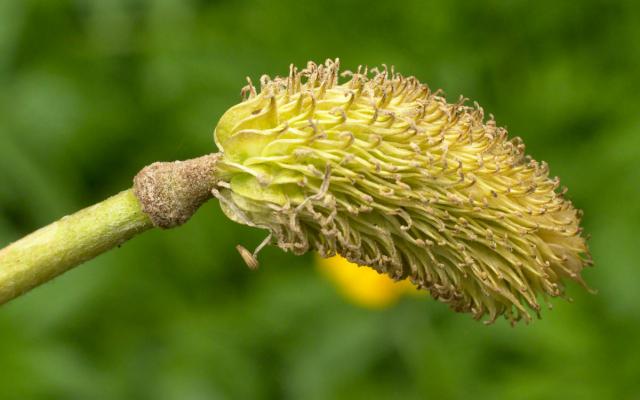
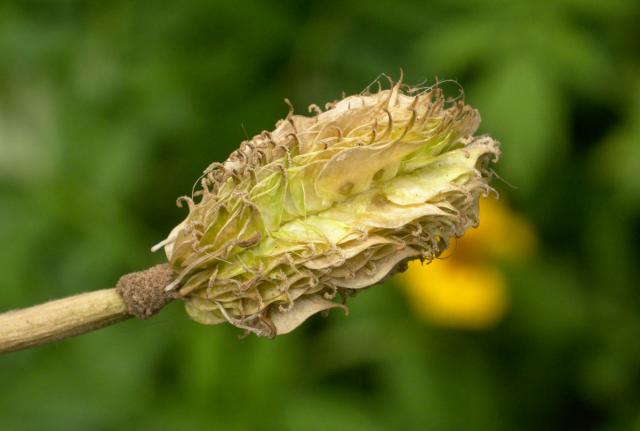
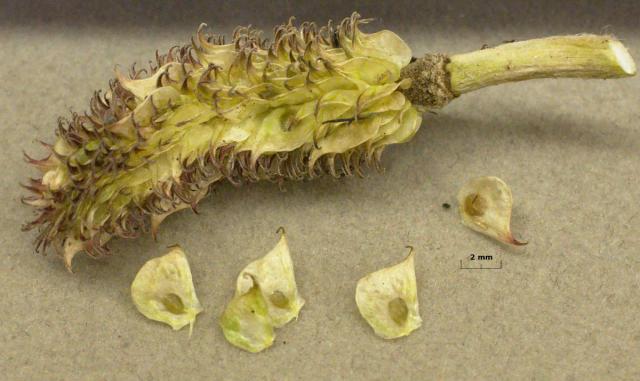
Seed related photos.
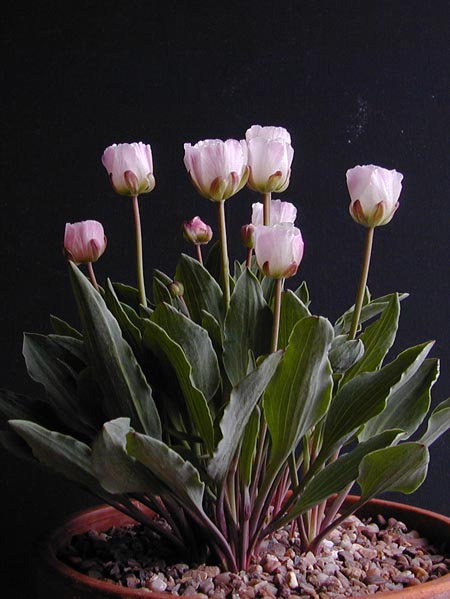
Ranunculus calandrinioides Oliv., a summer dormant buttercup native to the Atlas mountains in Morocco, has a thick rootstock with fleshy roots. It is easily grown under cold glass. Grow it as hard as possible (i.e. don't keep it frost free under glass) and give it as much light as possible. I have also found that it keeps much more compact and much more beautiful if kept bone dry until mid winter. In this way growth does not commence above ground until early spring and is much less lax. (Watered in early autumn, after a summer rest it comes into growth well before Christmas.) Height range: 8-20 cm. Photos and much of the text by Tony Goode.
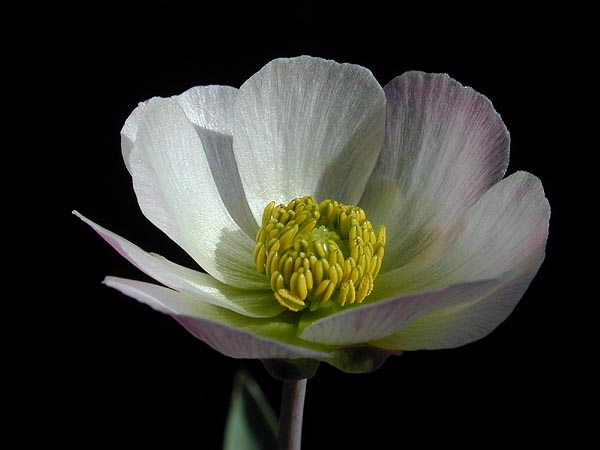
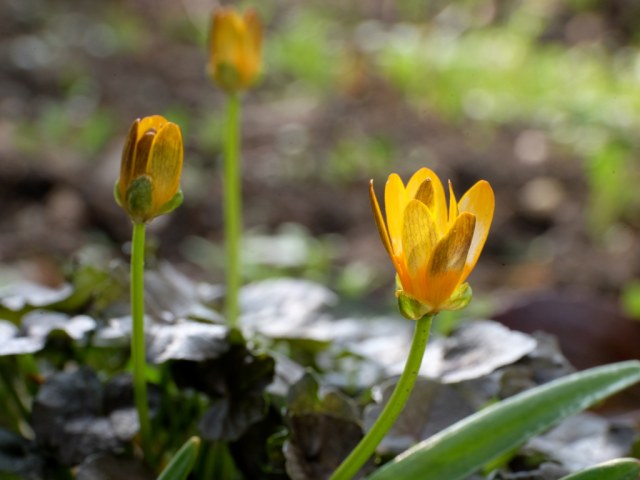
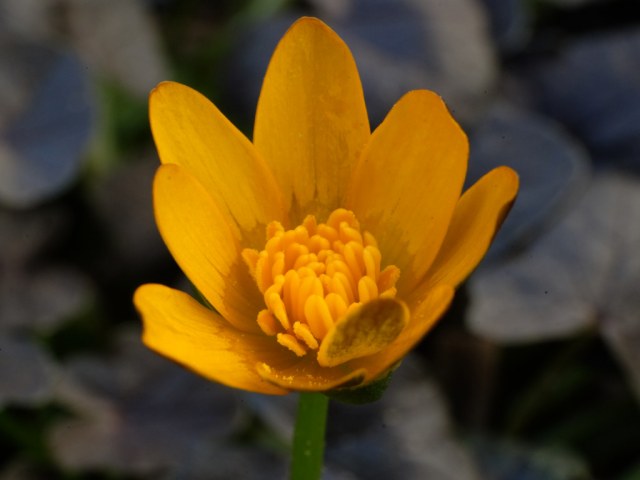
Ranunculus ficaria L., syn. Ficaria verna Huds., is listed in 2025 in both World Flora Online and Plants of the World Online list as the accepted name, but most searches list it under Ficaria verna. Plants of the World Online lists the native range of this species as Canary Islands, Europe to the Mediterranean and Kazakhstan. We will list it both places until there is a clearer consensus. It dwells in a wide variety of habitats from shady places to open fields. It has become invasive in large parts of North America, partly because of its small, brittle cluster of tubers, each of which may form a new plant, allowing them to spread rapidly through insufficiently cleaned agricultural tools.
The plants appear in early spring, flower quickly and go dormant by the end of May, so they can be useful as an early ground cover around plants which are later to emerge. Height range: 10-30 cm. There is quite a variation in appearance partly due to the fact that there are diploid and tetraploid forms around. Some report the usage of Ranunculus ficaria as food, though it is like most Ranunculaceae poisonous when fresh. The toxins are destroyed both by cooking or drying.
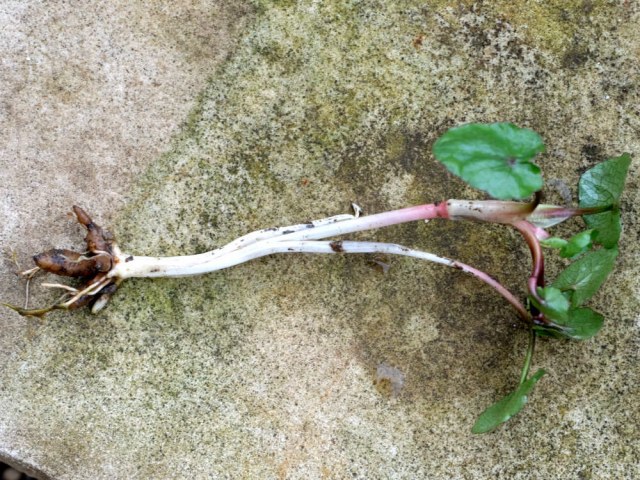
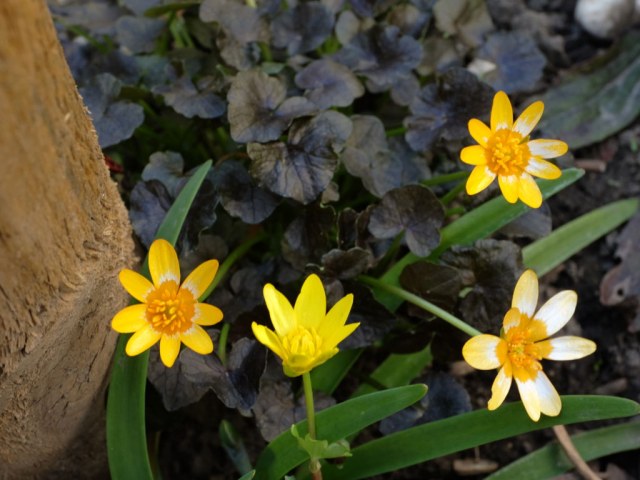
The first photo was taken by Angelo Porcelli. The second photo was taken by Jim McKenney who wrote: "Shown here are two forms, both presumably forms of Ranunculus ficaria. The one on the right is typical of the several feral forms which infest local woodlots and gardens here in Maryland. The one on the left is a large-flowered form which grows in a local garden. This large-flowered form has been identified as Ranunculus ficaria ssp ficariaeformis Rouy & Foucaud which in turn was later identified as the tetraploid form. The third photo shows a form with patterned leaves which appeared in Martin Bohnet's garden in southern Germany among the green forms, while the fourth shows the underground organs, proving tolerance against being dug under.
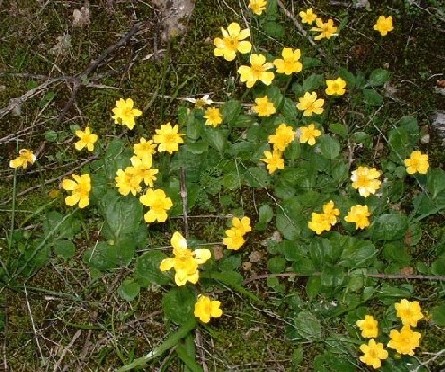
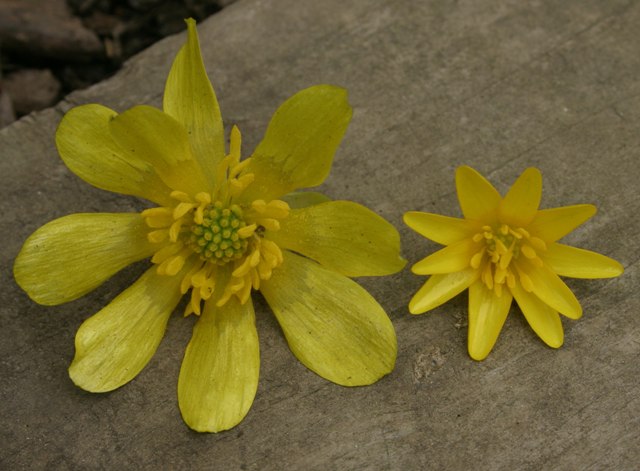

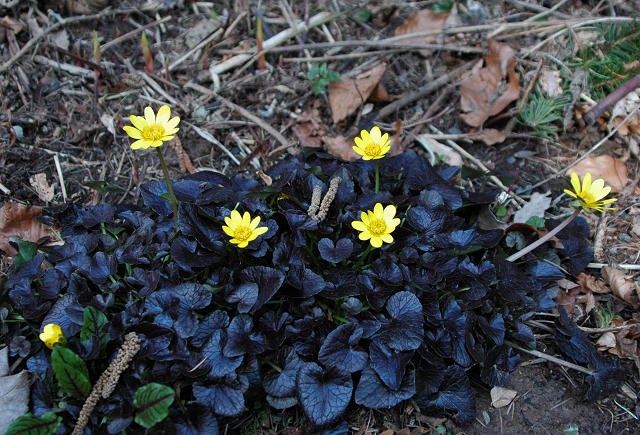
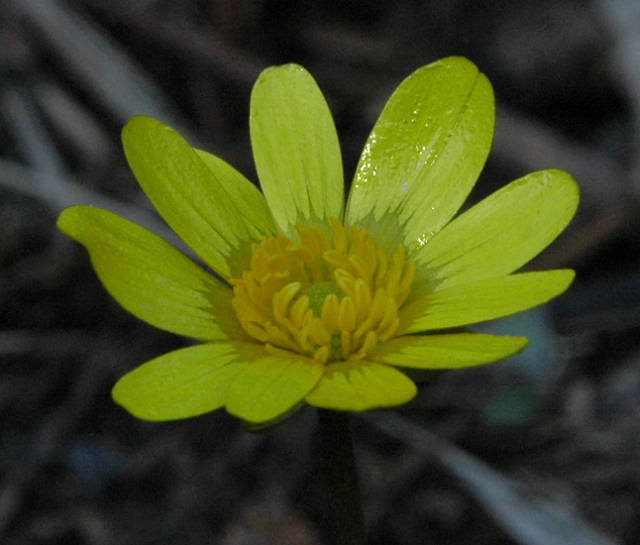
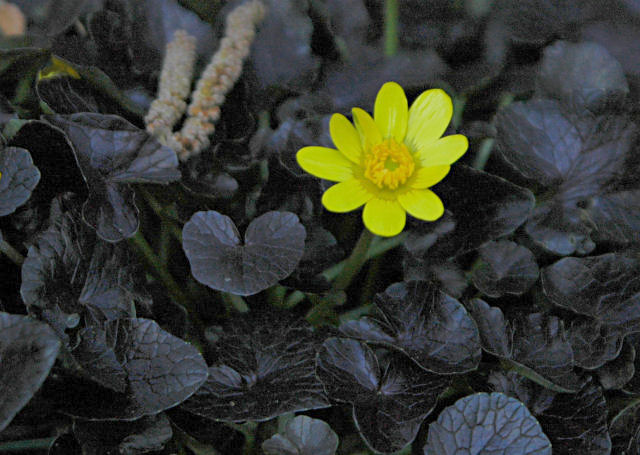
Ranunculus ficaria 'Brazen Hussy' is a cultivar with dark brown to black leaves and shiny bright yellow satiny flowers. Some pbs list members say it can be a bit of a thug spreading over time and others have trouble keeping it going. If moved, a few tubers are often inadvertently left behind to keep the patch going. It is dormant for part of the year. Photos taken by Mary Sue Ittner in a Portland, Oregon garden.
Ranunculus ficaria 'Copper Knob' is another dark-leaved cultivar with a somewhat warmer but fading flower color than the basic form. Photo 1 shows three flowers of Copper Nob in three stages of fading and a base form flower for color comparison. Photo 2 shows the dark color of the leaves is also affecting the outside of the flower buds.
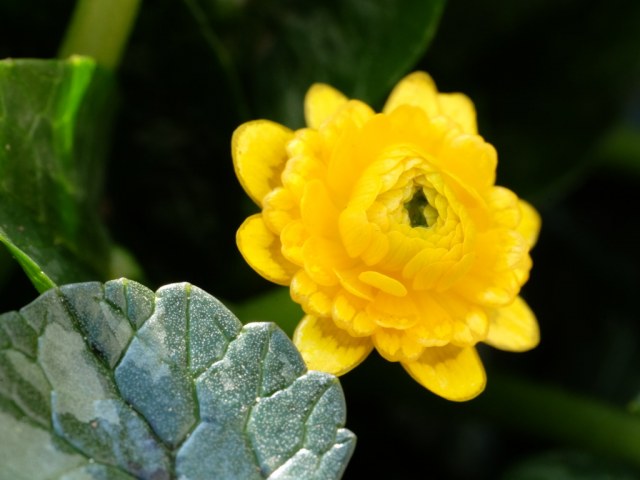
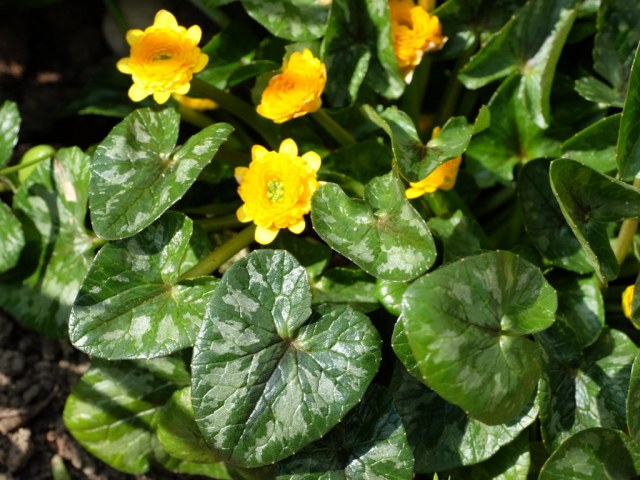
Ranunculus ficaria 'Yoko Sun' features double flowers and patterned leaves reminding of Cyclamen.
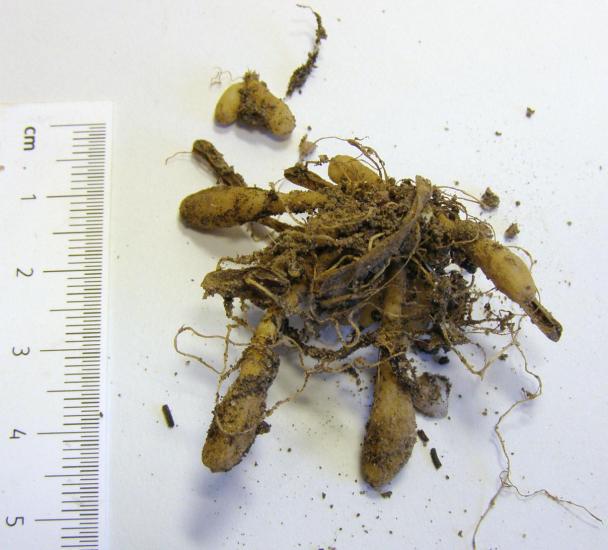
Ranunculus kotchii Ledeb., syn. Ficaria kochii (Ledeb.) Iranshahr & Rech.f. is a temperate Asian species growing from 5-10 cm. It is another species that is accepted in 2025 by Kew, but can be found on the Internet under both names. Tuber photo by Peter Taggart.
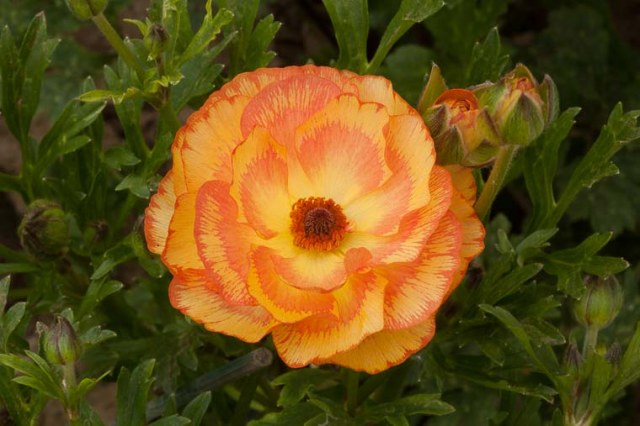
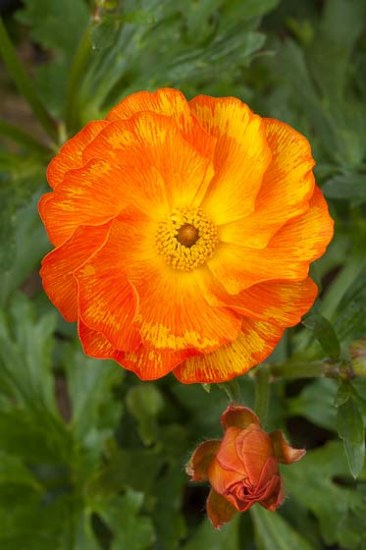
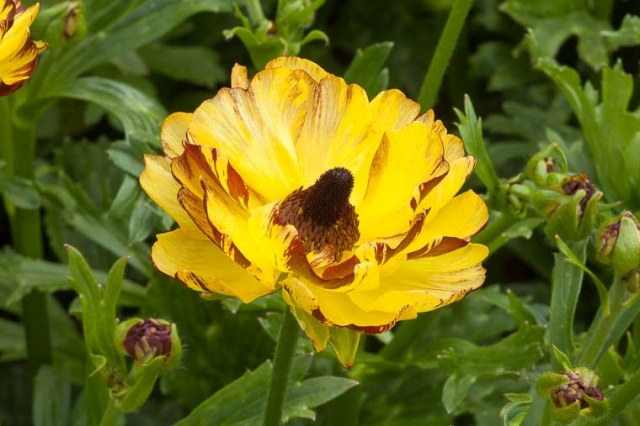
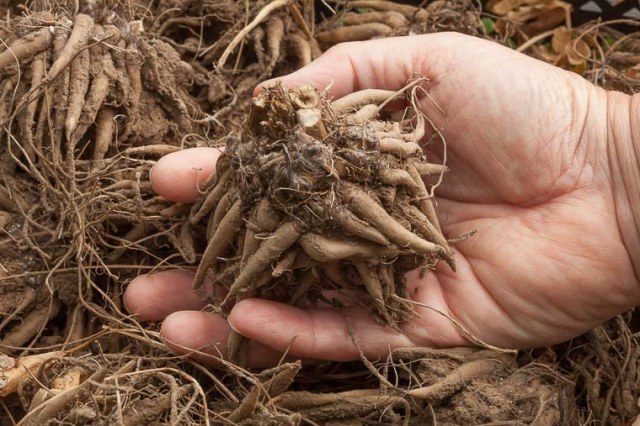
Ranunculus 'Rococo Series' John Fielding writes "Well over 20 years ago I attempted some crosses with Ranunculus asiaticus and other species. The resulting hybrids proved to be remarkably hardy winter growing perennials and have experienced -15 ºC without harm in UK conditions. Given the Mediterranean origin of the parent Ranunculus asiaticus they are tuberous rooted and go through a summer dormant period. During this time they are more than happy to be totally dry but can remain in the ground if not watered or can be lifted and stored in a cool, dry place. The roots need to be planted just below soil level in autumn in a sunny position. They respond dramatically to feeding and put on masses of growth producing more flowers per stem than typical Ranunculus asiaticus. The thicker stems are also more robust meaning staking is not necessary and have proved themselves as excellent weather proof cut flowers. They are also excellent bedding plants associating well with late flowering tulips and other spring bedding flowering in early May. The many side buds continue to flower as the first flowers fall. The flowers develop a two tone effect as they age which is particularly attractive.
We are releasing four cultivars this year (2019), Peach, Pink, Orange and Yellow at the RHS Malvern flower show, 9th to 12th May and also the peach and pink online. I also say a huge thank you to Lyndon Mason who ran the trial for us at the National Cut Flower Centre at Holbeach St Johns".