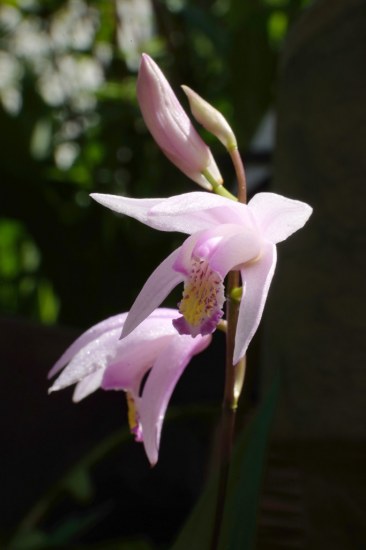
Bletilla Rchb.f. is a genus in the Orchidaceae family. Its native range spans from Tibet in the west throughout China, Taiwan, Korea and Japan, as well as reaching the northern parts of Thailand, Myanmar and Vietnam. The species most often grown is Bletilla striata. Although it is an orchid with delicate-looking flowers, Bletilla striata is a reliable and undemanding plant when grown in a pot.
Like with many other widespread genera there has been some confusion about the number of species. In 2026 World Flora Online accepts five species, but classifies Bletilla szetschuanica Schltr. and Bletilla yunnanensis Schltr. as synonyms of Bletilla formosana, though both have been utilized in RHS-registered grexes.
Bletilla formosana (Hayata) Schltr. is, despite the name, not limited to Taiwan but is also present in central China and even Tibet. Although plants from Chinese origins initially were described as Bletilla szetschuanica Schltr. and Bletilla yunnanensis Schltr., they are both regarded as synonyms as of July 2022. Both its leaves and its pale pink to white, yellow lipped flowers are significantly smaller than the more often cultivated Bletilla species, Bletilla striata. They are about half the size. It does not completely go dormant in Winter for Martin Bohnet under barely frost free conditions, even though the distribution implies it can.

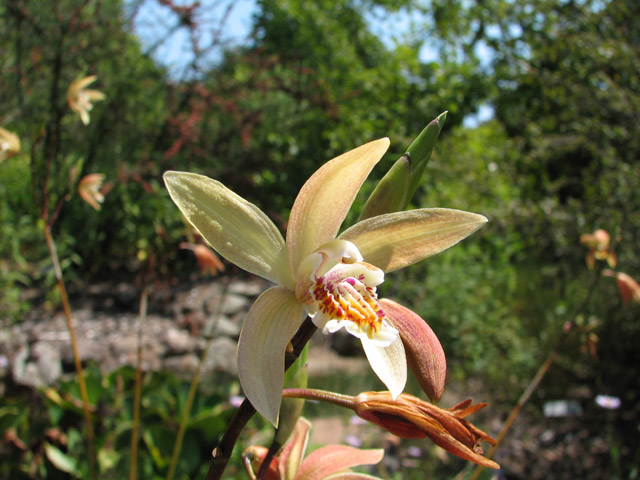
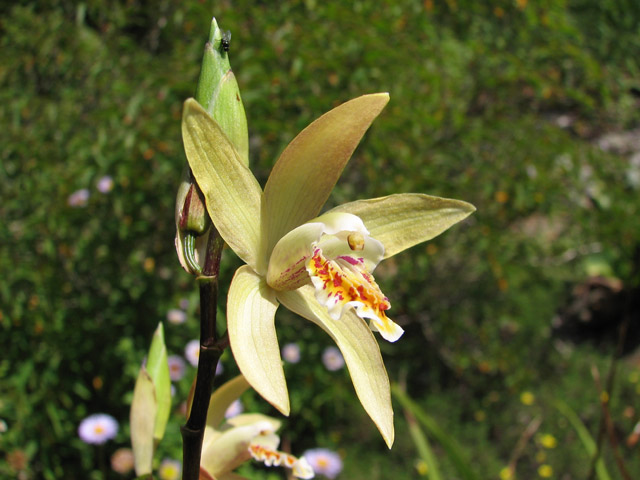
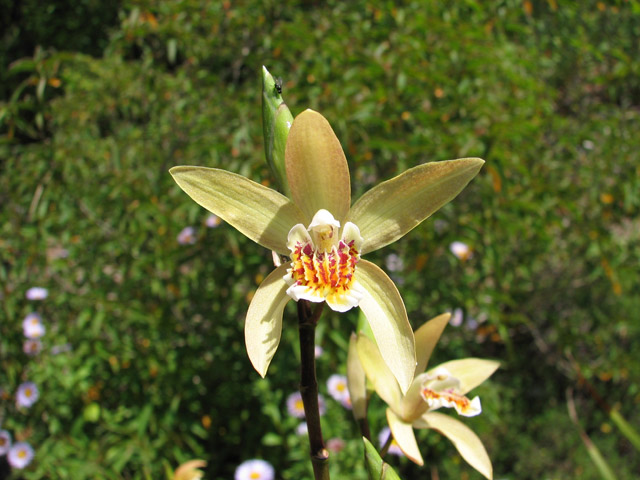
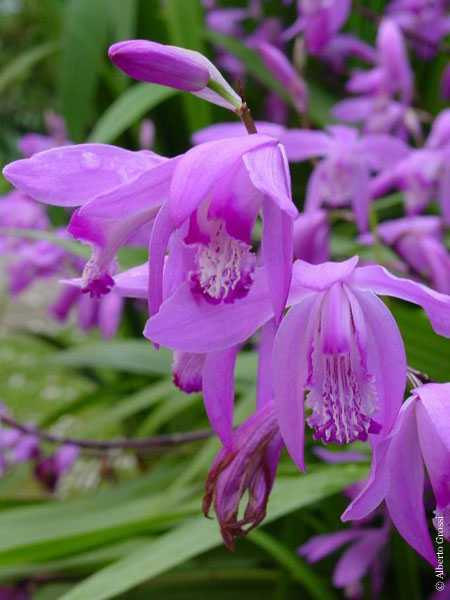
Bletilla ochracea is native to Yunnan and Sichuan provinces, China. It is the only yellow Bletilla. It grows well in full sun in the Bay Area where it gets natural rain in the winter and artificial watering during the summer. Plants produce a corm-like resting structure. Photo 1 was taken by Alberto Grossi and photos 2-4 were taken by Nhu Nguyen at the UC Botanical Garden.
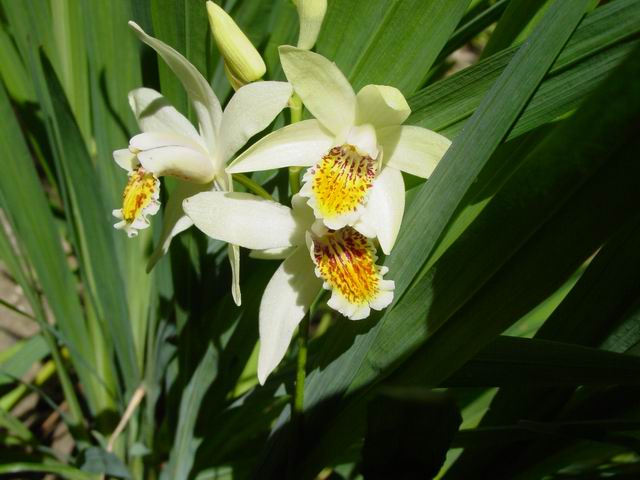
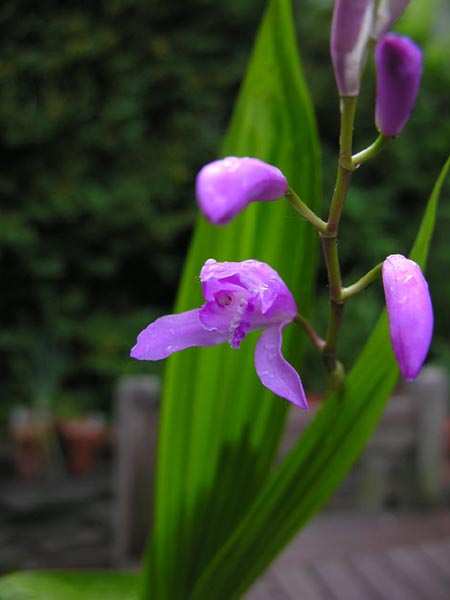
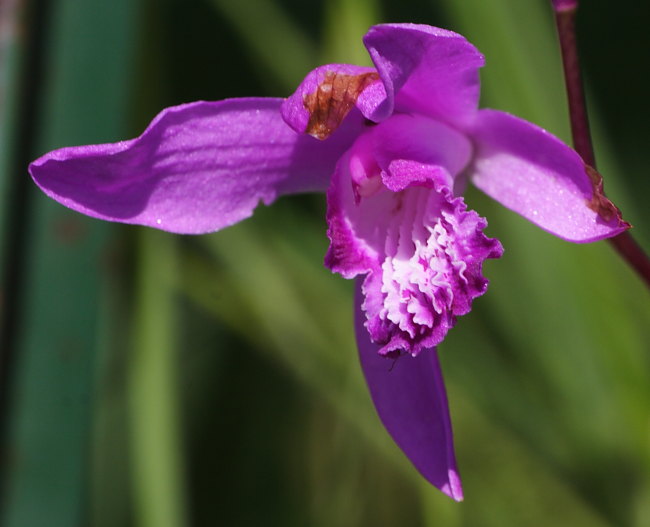
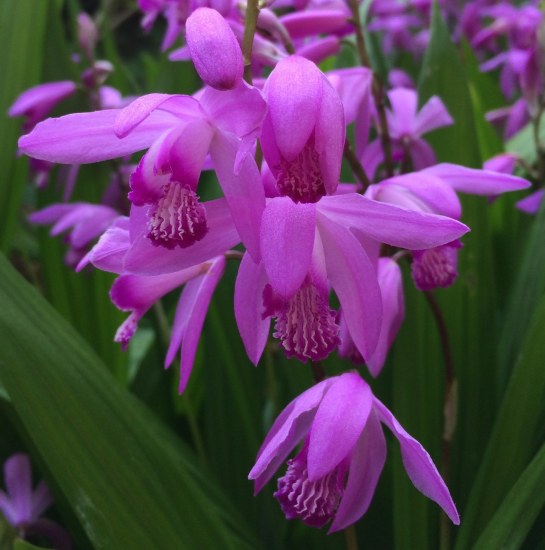
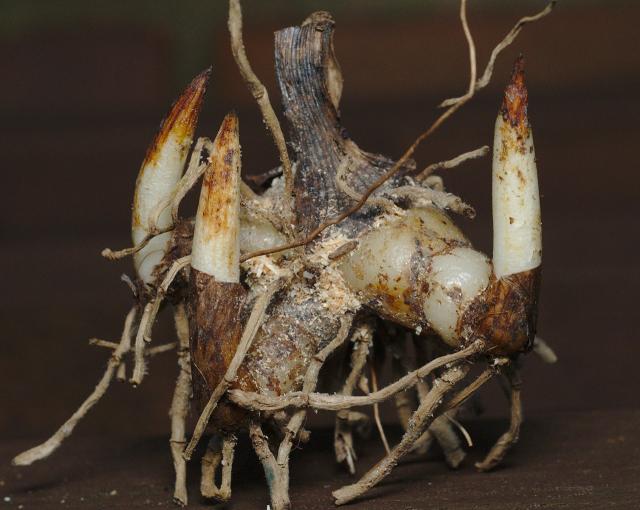
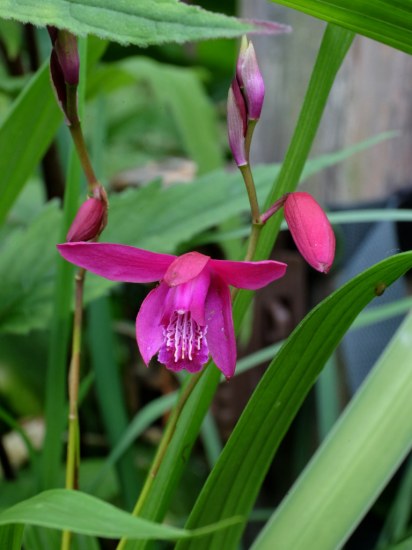
Bletilla striata (Thunb.) Rchb.f. is a terrestrial orchid from China, Taiwan and Japan. The rhizomes will form pseudobulbs half in and half out of the soil from which the leaves and flower stems appear early in the year. It has lance like, ribbed, mid-green leaves and bears bright purple-pink flowers between April and July. Plant in leafy, moist but well-drained soil in light shade in a sheltered site. It needs to be on the dry side in winter when dormant and may need a winter mulch in regions that get regular frosts. It can also be planted with the pseudobulbs completely underground to improve hardiness. The flowers are relatively short-lived, but the buds open successively for several weeks. In addition to the standard pink form, there are white-flowered and blue forms. Several clones with variegated leaves are also widely distributed. The first two photos by Arnold Trachtenberg are of a pot grown plant. The third photo was taken by Michael Mace, who grows them in California in a pot with good drainage and year-round water. His photo shows the very pronounced ruffles in the throat of the flower. The fourth and fifth photos were taken by Nicholas Plummer who has found this orchid easy to grow in the ground in North Carolina. He writes that given a modicum of care it will steadily increase in size until you have a huge clump to impress your friends. Some years it comes into growth early and the leaves and flowers have to be protected from the cold, even though the plants can survive freezing temperatures. The last photo was taken by David Pilling of the pseudobulbs.
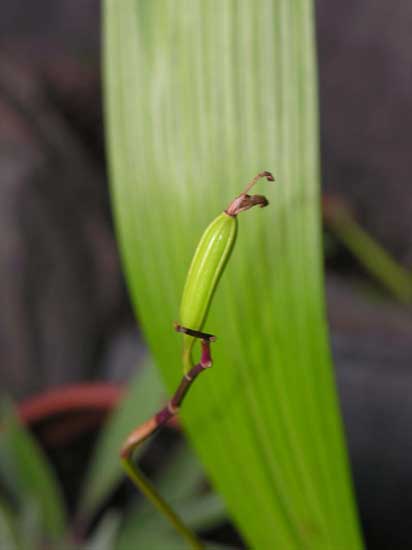
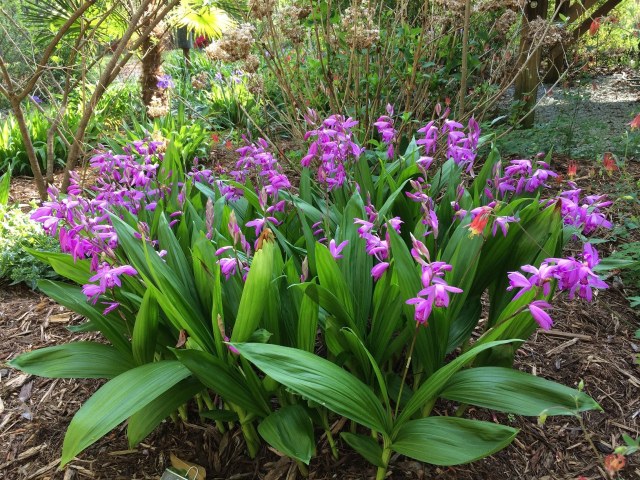
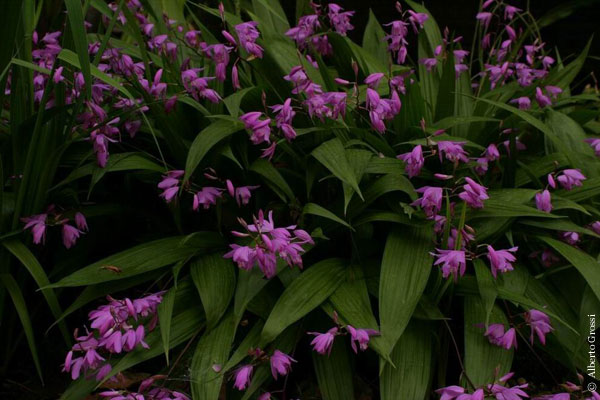
Alberto Grossi supplied the photos below and wrote: "I planted the pseudobulbs about four years ago in a border. In winter (I live in the North of Italy and we usually experience -10/-15 °C) I mulch them with dried leaves. I noted that it is frost resistant, but it is very sensitive to late frost."
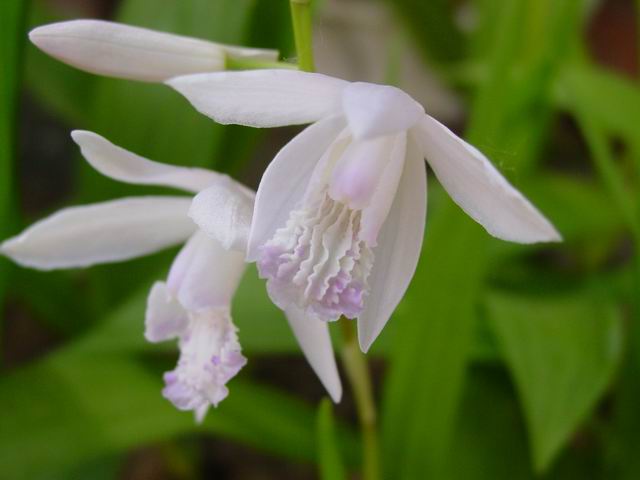
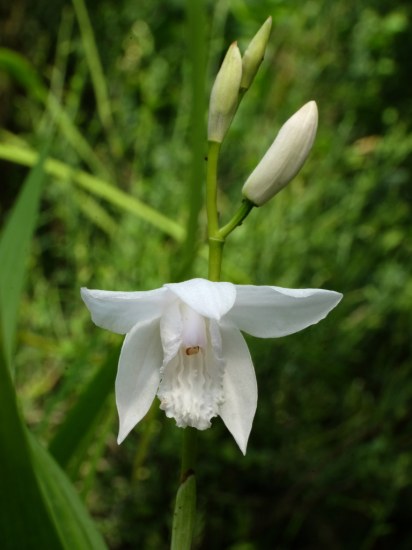
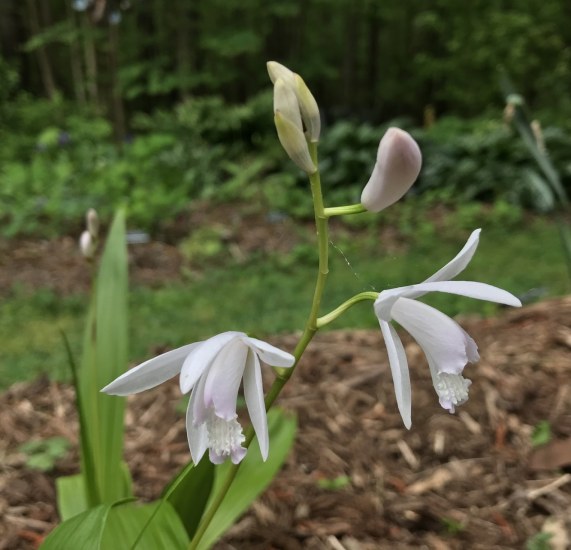
Bletilla striata 'Alba' is not as vigorous as the pink forms. The white flowers get a purplish tinge with age. Pictures by Alberto Grossi, Martin Bohnet, and Nicholas Plummer.
Bletilla striata 'Albostriata' has delicately white edged leaves. Photo from Martin Bohnet.
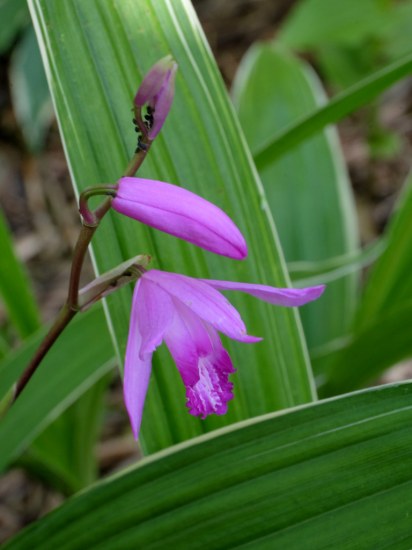
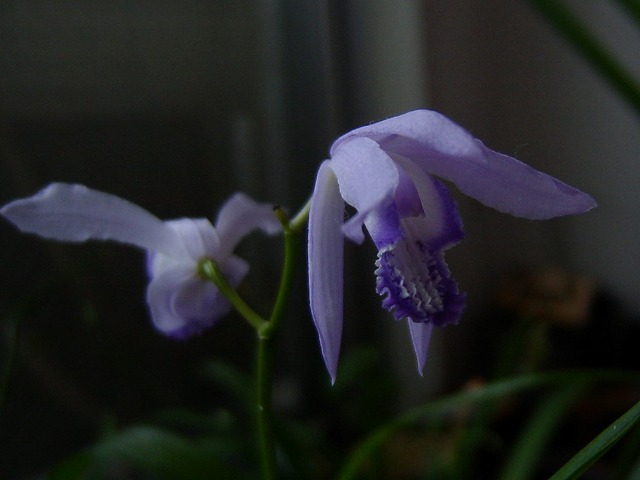
Bletilla striata 'Soryu' has blue flowers; photographs by Mari Kitama and Martin Bohnet. Soryu means Blue Dragon.
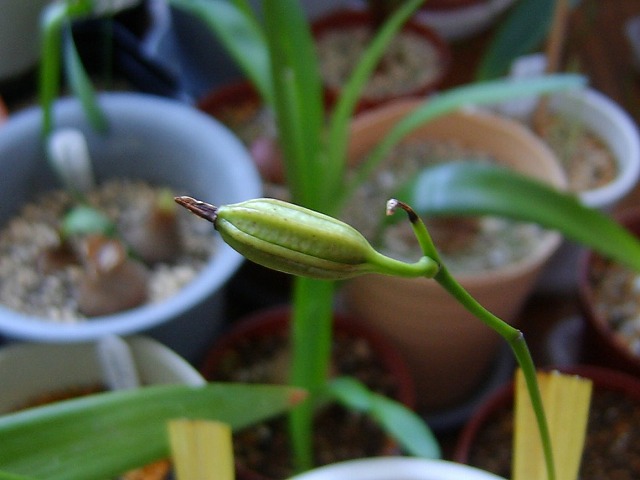
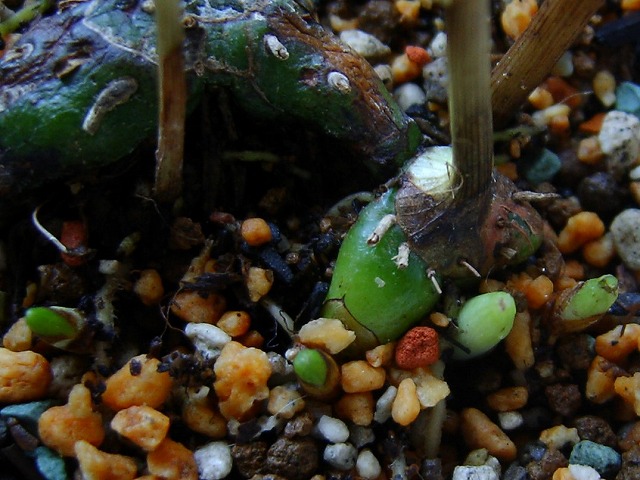
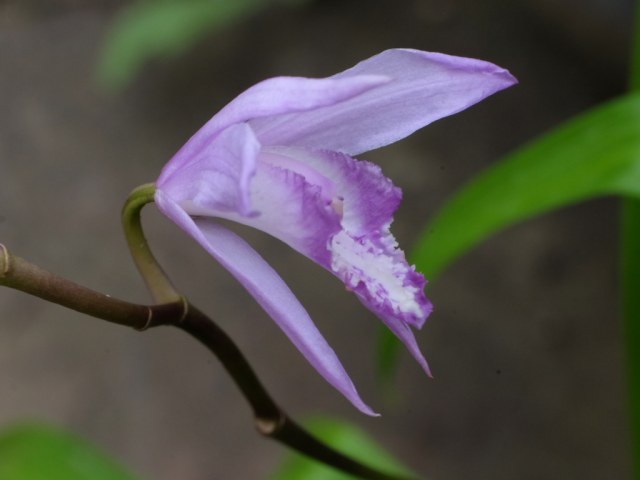
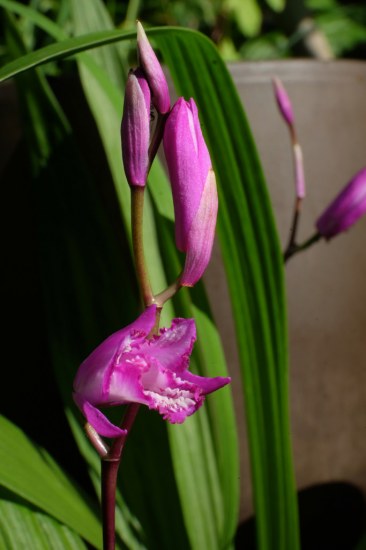
Bletilla striata 'Tri-Lips' has a very peculiar flower mutation, forming ruffled lip structures from all three inner petals. Photos from Martin Bohnet.

Hybrids
Most of the registered hybrids in Bletilla have been created by Richard Evenden and are recognizable by their name starting with "Penway". There are however a few unregistered clones and forms from other sources available.
Bletilla 'Arizona Sun' is advertised as having bright apricot flowers with a yellow blotch on a wide lip. A clone grown by Martin Bohnet shares the wide lip, but only shows traces of pale apricot and instead has an intense red zone on the lip. As a RHS registration is missing, this could hint at a high generation non clonal hybrid with a wide range of color forms - always hoping there was no mix up at the source. The plant is somewhat shorter than the average Bletilla.
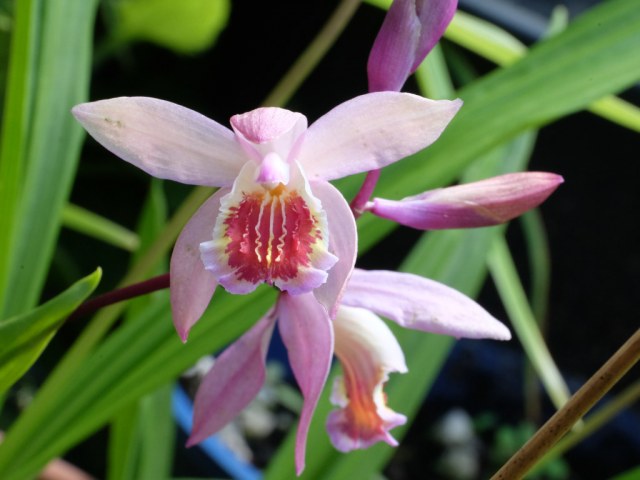
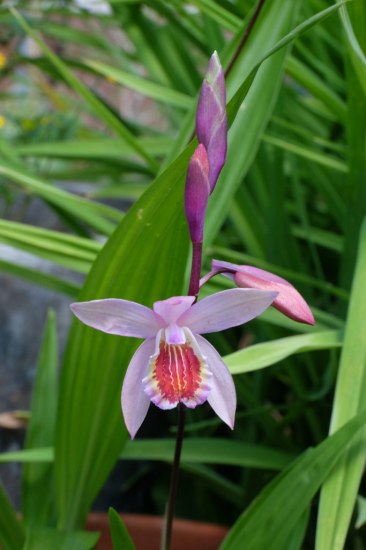
Bletilla 'Brigantes' is a primary hybrid of Bletilla striata and Bletilla ochracea registered by Evenden in May 1994, and can sometimes be found in trade with the "Penway" name prefix shared by other Evenden registrations from August 1994 onwards. Brigantes is the name of an ancient Briton tribe from northern England. The name is derived the Proto-Celtic "*brigant" meaning "high, elevated", and thus fits the high growing, relatively large flowered hybrid well. The base flower color is a very pale rose pink with small hints of pale yellow, while the patterned lip mostly resembles the ochracea parent.
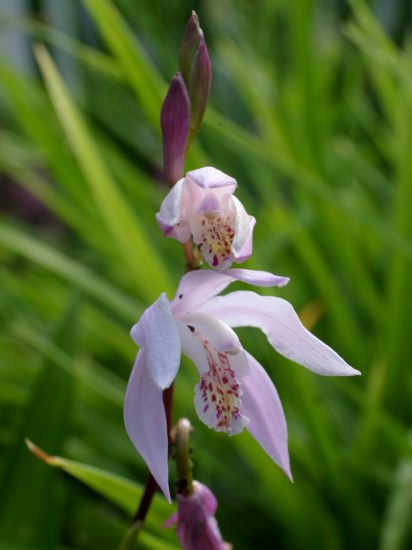
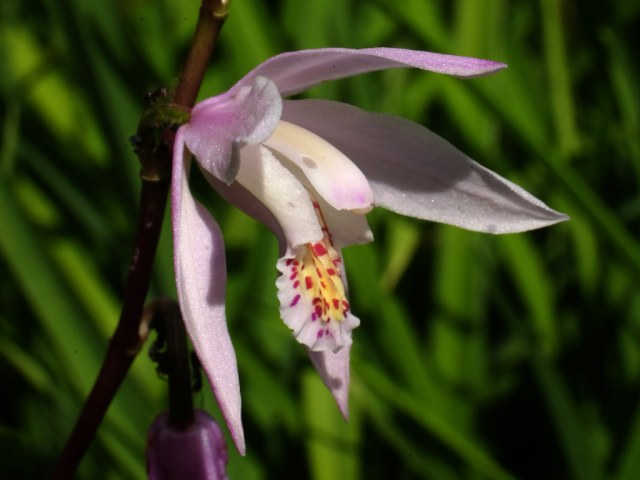
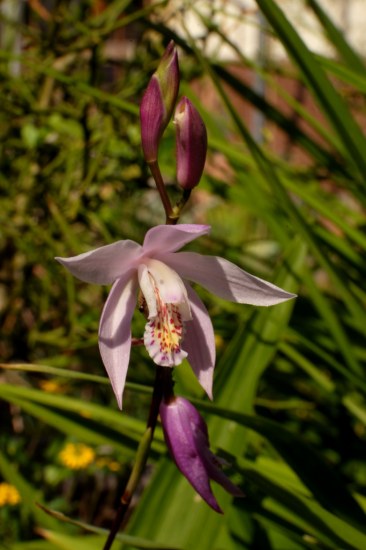
Bletilla 'Dark Red' is a not RHS-registered hybrid or selection which is especially advertised for expanding the Bletilla color range towards red. As it is common with "red" crossings in families containing magenta and yellow base colors, the red impression seems to be limited to certain conditions and lighting situations. For Martin Bohnet magenta seemed to be the dominant color; only the buds showed a clear burgundy red coloration.
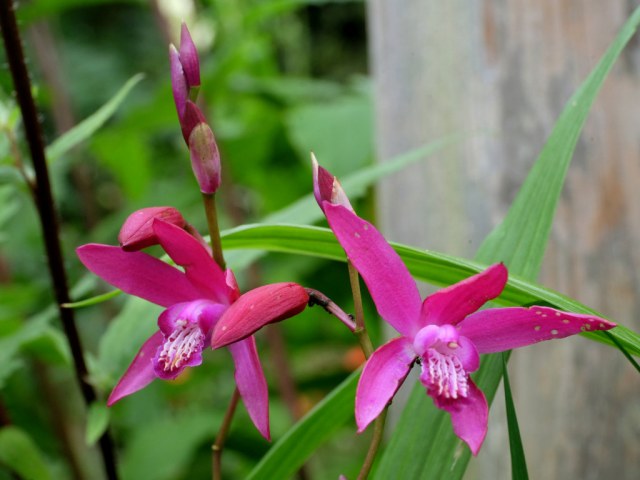
Bletilla 'Penway Paris' is a primary hybrid of B. striata and B. szechuanica registered by Evenden in 1994, but in case the synonymy of B. szechuanica as B. formosana is verified, this would be overridden by the grex name 'Yokohama', registered by Suzuki in 1956. It's a pale pink Bletilla, with purple marks on the yellow lip.