Bobartia is an evergreen genus in the Iridaceae family that has a creeping or erect rhizome as a rootstock. Leaves range from linear and flat to elliptical or round and are usually crowded together basally. Most of the flowers are fleeting and yellow. The 14 species are found in the western and eastern Cape of South Africa and are mostly montane and found in rocky low nutrient sandstone soils and are most conspicuous after fires. The flowers are very similar in most of the species and leaves, stems, color of the spathes, and capsules often are distinguishing characteristics.
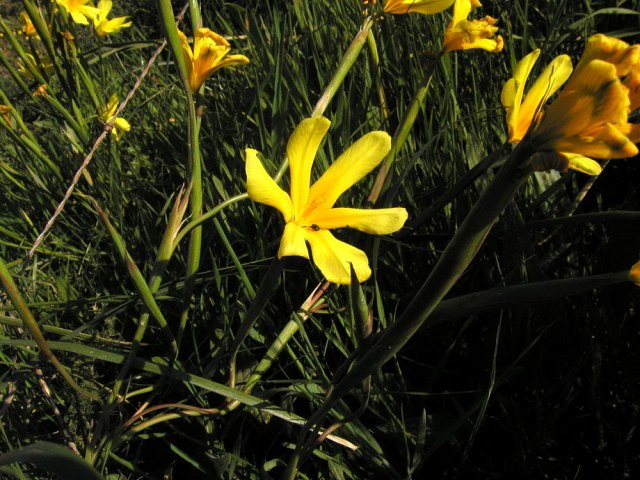
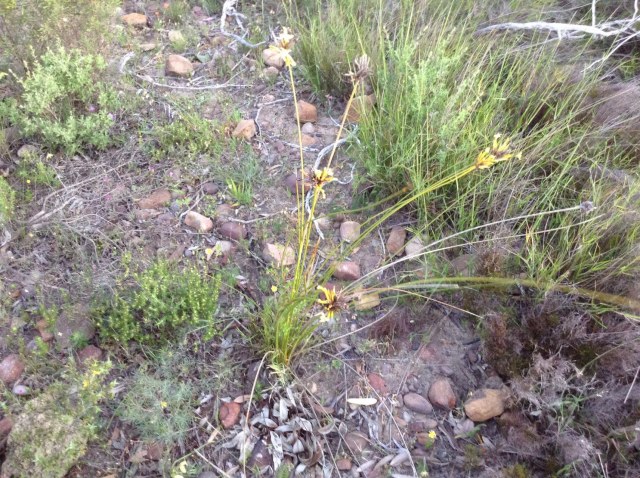
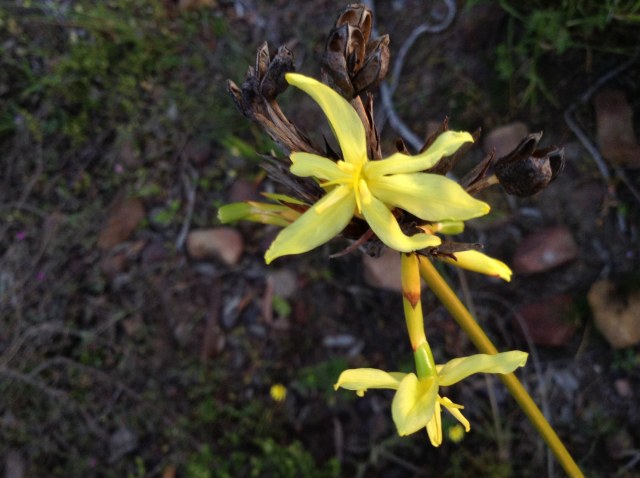
Bobartia aphylla (L.f.) Ker Gawl. is found on grassy, mainly coastal slopes from Mossel Bay to Plettenberg Bay. Growing from 30 to 60 cm high, it flowers November-March. Photos from iNaturalist taken by Peter Thompson in the Western Cape in March and shared under a CC BY-NC license.
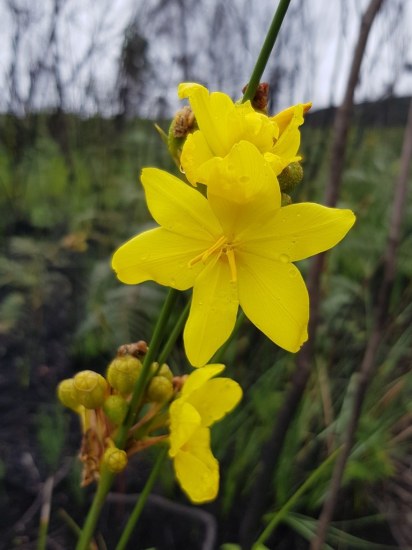
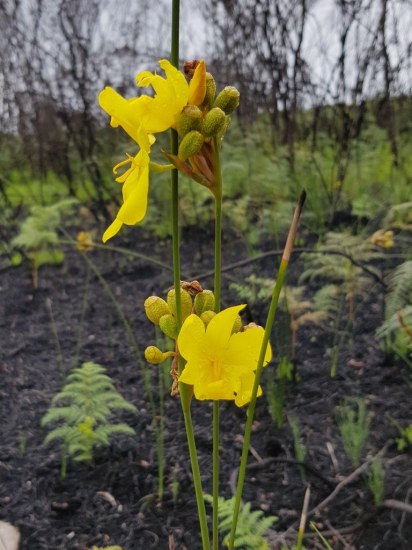
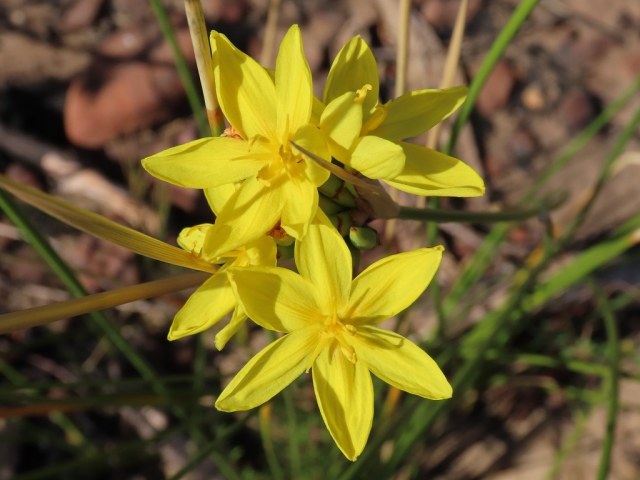
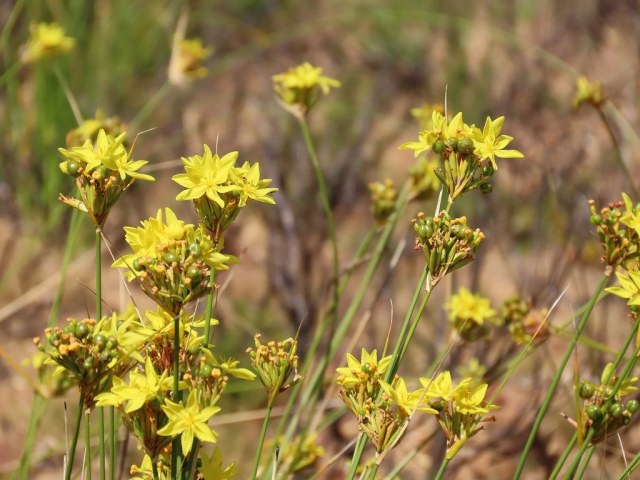
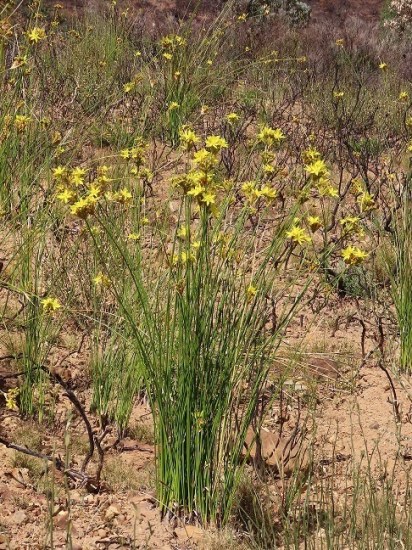
Bobartia gracilis Baker is an Eastern Cape species with long whip-like leaves and bright yellow flowers in clusters at the tops of willowy stems. It grows in coastal grasslands and blooms sporadically, but especially in spring. Height range: 15-50 cm. The first photo by Cameron McMaster. The next three photos from iNaturalist taken by Kathy in the Eastern Cape in May and November and shared under a CC BY-NC license.
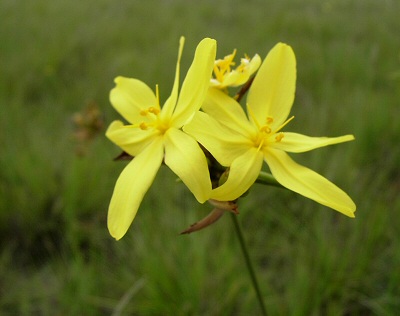
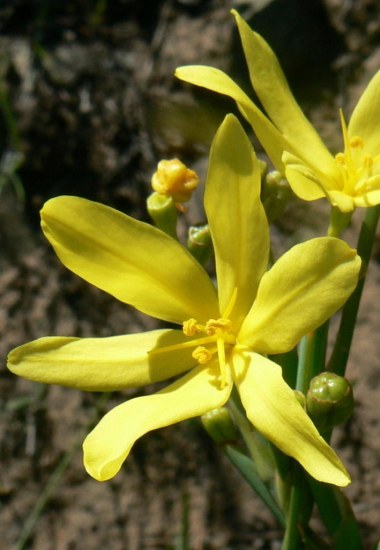
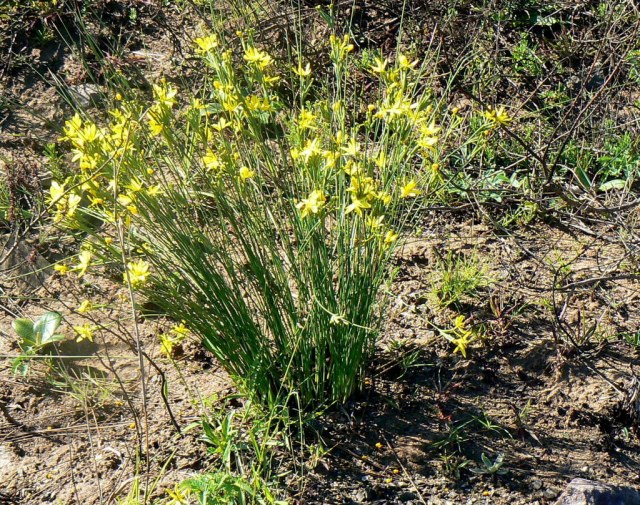
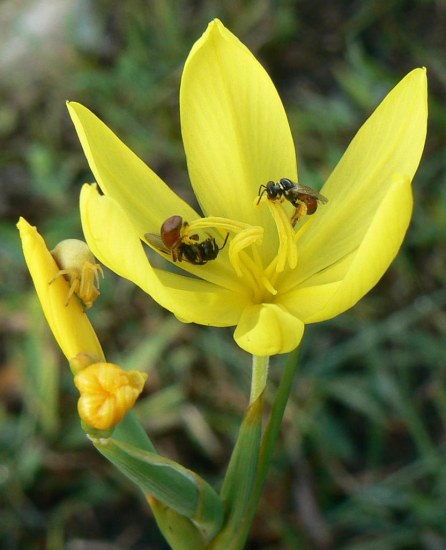
Bobartia indica L. is found in the southwest and southern Cape (Mamre to Caledon) where it grows on sandy flats and slopes, flowering October to March. It grows from 50 to 100 cm tall with long terete trailing leaves taller than the stems and yellow flowers enclosed by green spathes. The first six photos from iNaturalist taken by Fiona Hellmann in the western Cape in January and Hamish Robertson in Table National Park in January and shared under a CC BY-NC license.

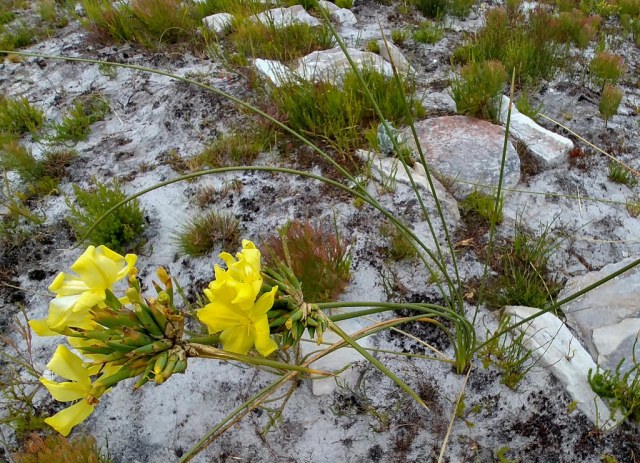
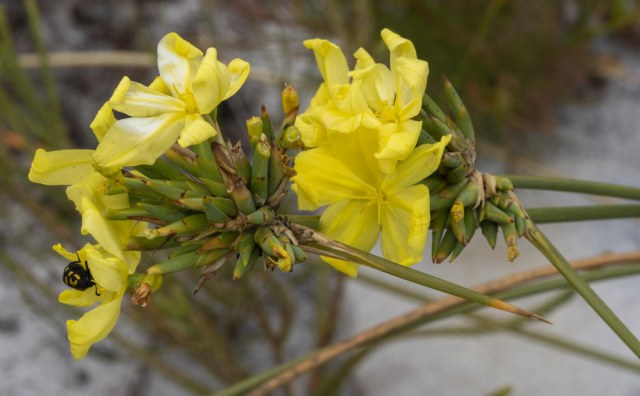
The first two photos from iNaturalist taken by Tony Rebelo in the western Cape in December and shared under a CC BY-SA license. The last photo from Rod Saunders.
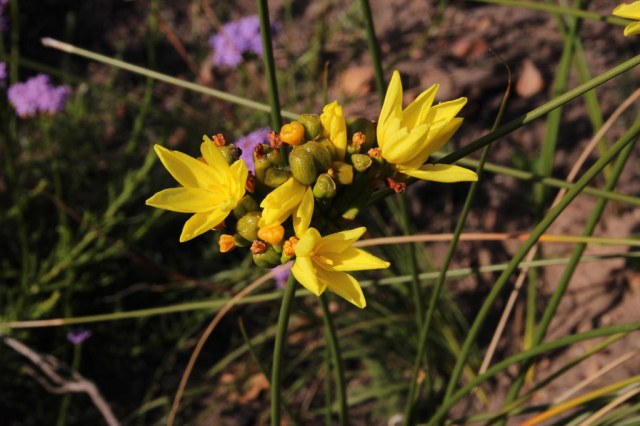
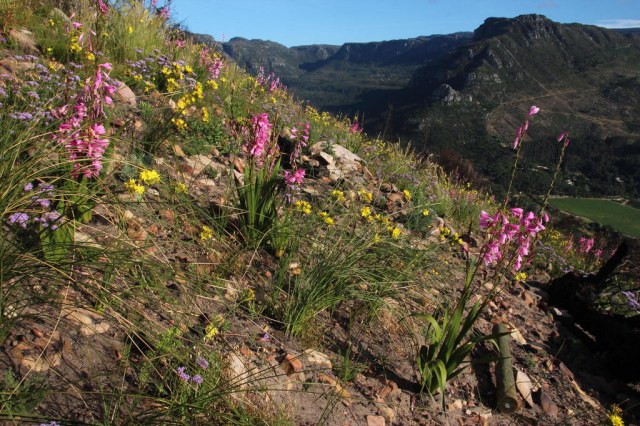
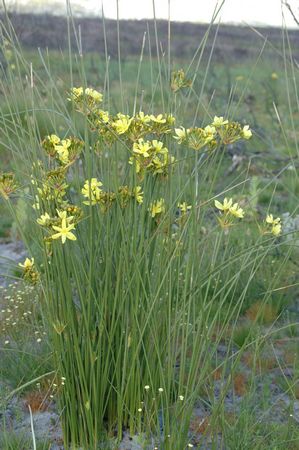
Bobartia lilacina G.J.Lewis is found on mountain slopes on shale in the southwestern Cape. It grows from 30 to 70 cm and has narrowly sword-shaped leaves and is the only species with violet flowers. Photos of flowers taken by Rachel Saunders March 2011 in the southwestern Cape. The third photo shows the seedpods.

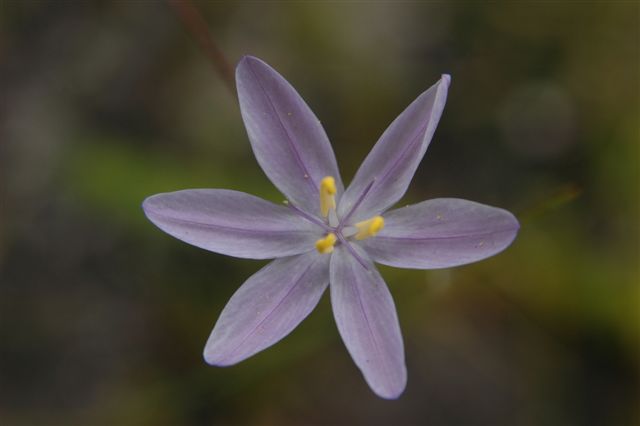
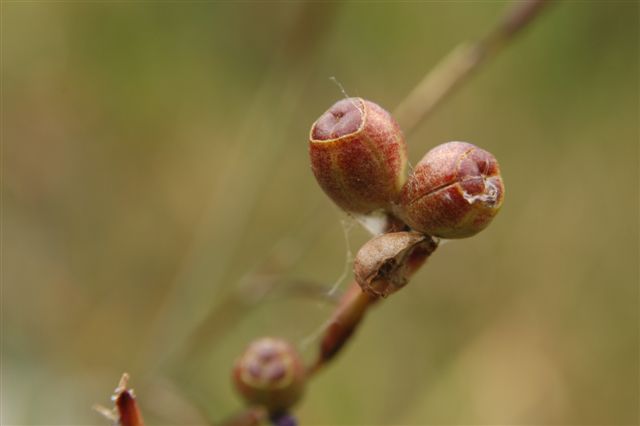
Bobartia longicyma Gillett in found on sandy flats and lower slopes in the southwest and southern Cape. The yellow flowers are enclosed by green to purple spathes, arranged in a small head of long individual clusters. Plants grow to 1.8 m high. Photos by Cameron McMaster taken in the Overberg.
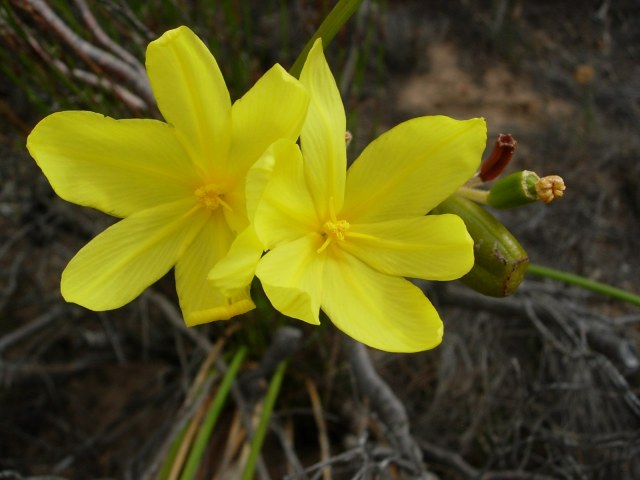
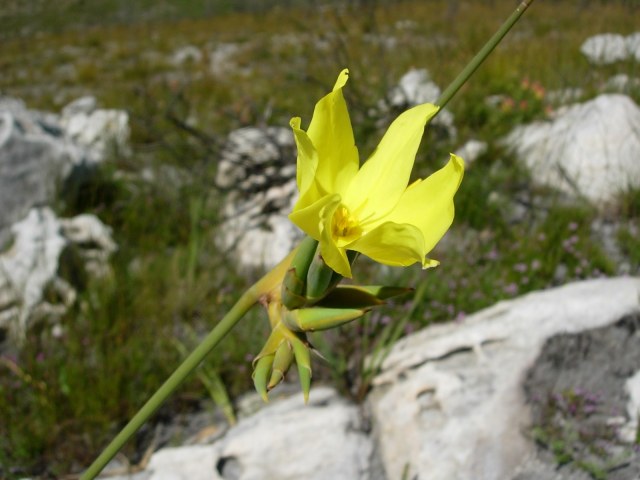
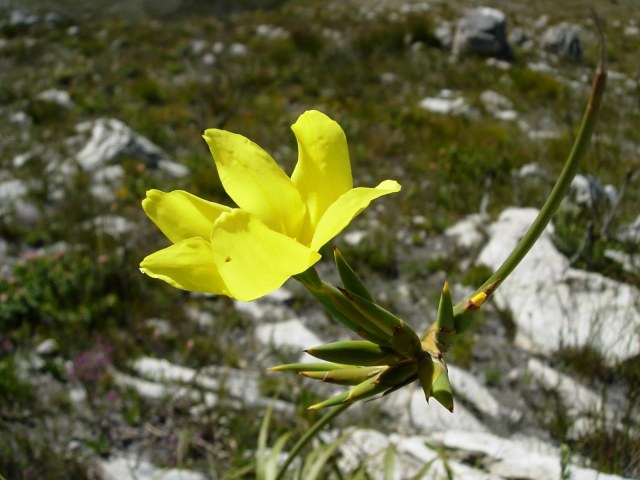
Bobartia macrocarpa Strid is an evergreen plant growing to 1 m that is found on grassy slopes in the southeastern Cape. This species has terete leaves and yellow flowers enclosed by dull green to brownish spathes arranged in a small head of two to six clusters. Photos taken by Andrew Harvie in the Suurberg area of the southeastern Cape.
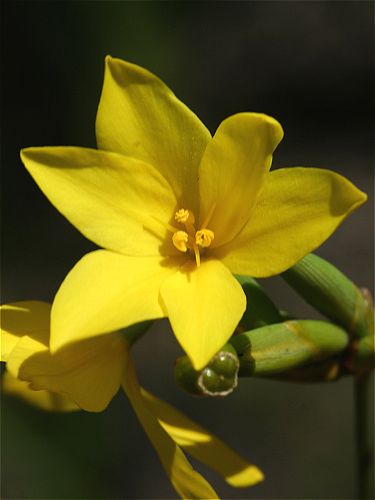
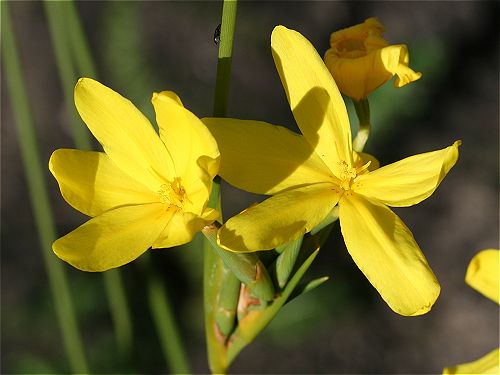
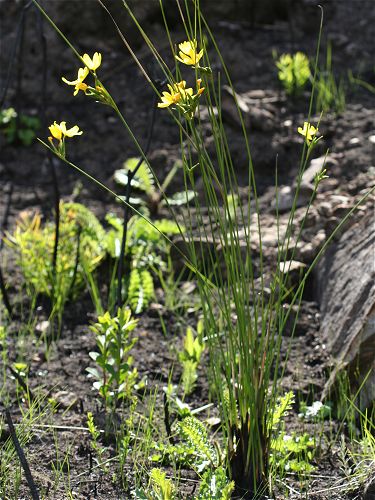
Bobartia macrospatha Baker is a southern Cape species that is found on mountain slopes in fynbos. It grows from 50 to 110 cm with terete to linear leaves. The yellow flowers are arranged in a dense head of mostly 10 to 30 individual clusters and are enclosed by fibrous, slightly inflated spathes. It flowers spring to summer. The first three photos taken by Andrew Harvie in the Buffelsnek State Forest, southern Cape. The last photo below from the book Plants of the Klein Karoo courtesy of Jan and Anne Lise Schutte-Vlok.
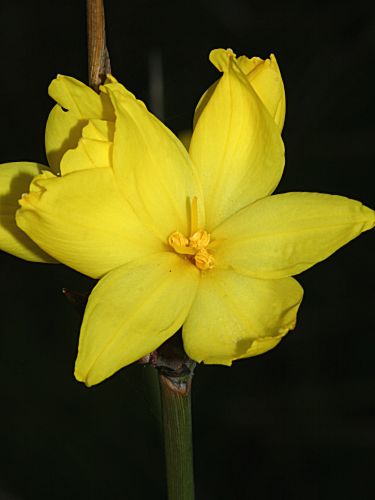
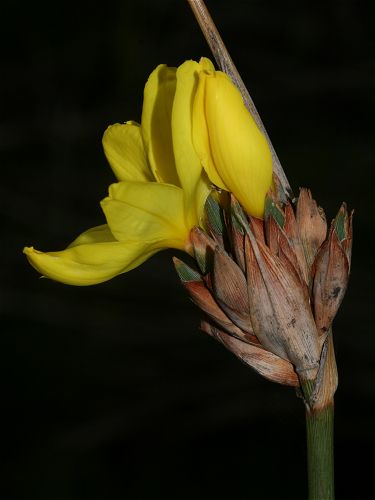
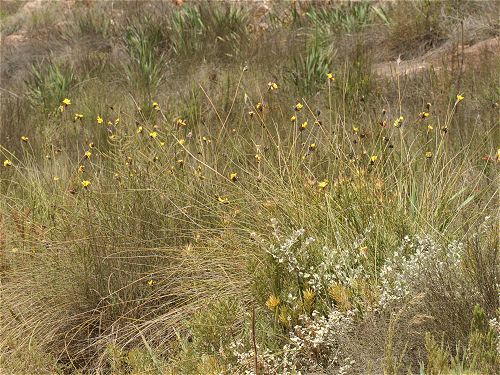
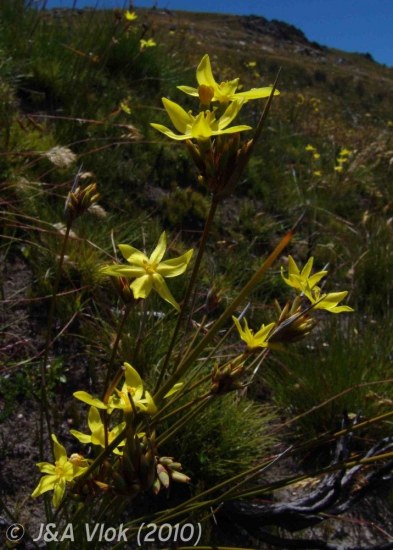
Bobartia orientalis J.B.Gillett is distributed on dry stony sandstone slopes over a broad area. Growing from 40 to 130 cm, it flowers August-November. Capsules have conspicuous valves. Photos from iNaturalist taken by Craig Peter in the Eastern Cape from March to June and shared under a CC BY-NC license.
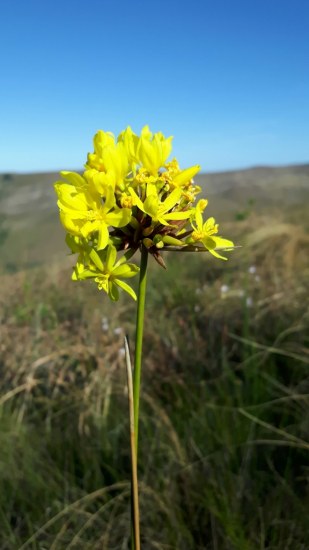

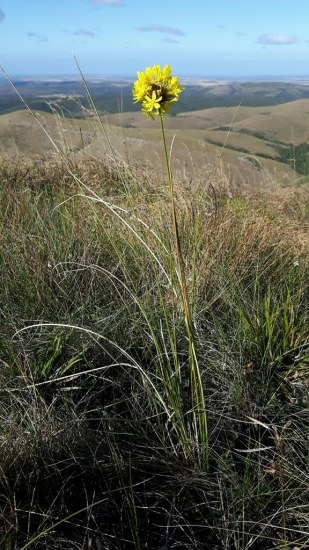

Bobartia paniculata G.J.Lewis is found on middle to upper slopes in fynbos in the Kammanassie Mountains. Growing from 40 to 100 cm high, it has flat leaves and yellow flowers loosely arranged near the top of the sticky branched flowering stem. It flowers in midsummer. The first photo from the book Plants of the Klein Karoo courtesy of Jan and Anne Lise Schutte-Vlok. The next three photos from iNaturalist taken by Adriaan Grobler in the Kammanassie Nature Reserve in November and shared under a CC BY-NC license.
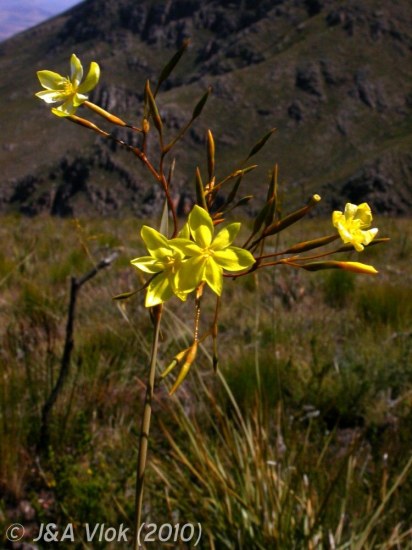

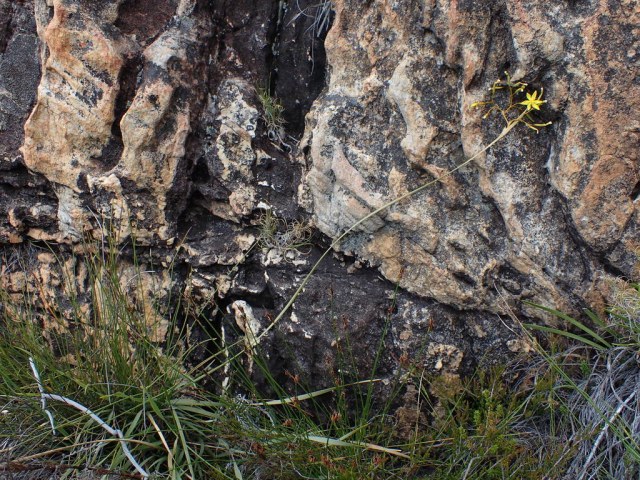
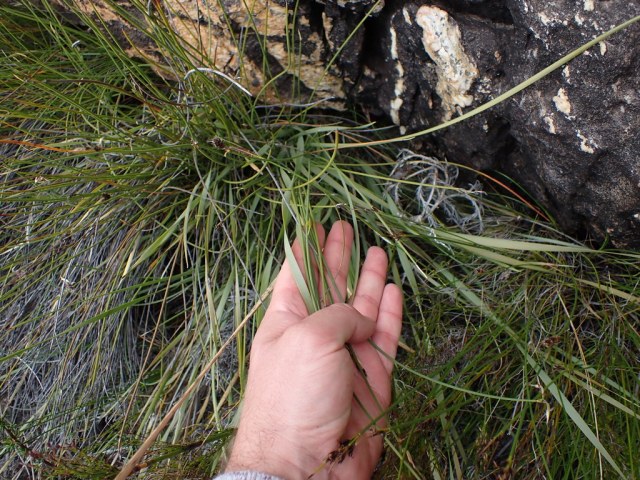
Bobartia robusta Baker is found on coastal and lower mountain slopes from Riversdale to George. Growing from 70 to 210 cm, it has yellow flowers enclosed by dry, brownish spathes with a warty ovary and capsules. Photo from iNaturalist taken by Nicola van Berkel in May, June, and August and shared under a CC BY-SA license.
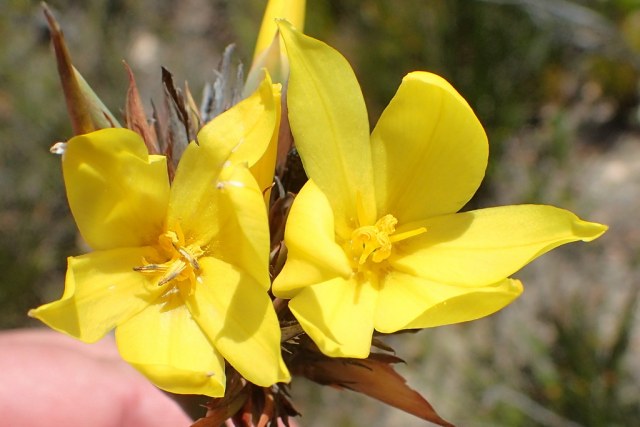
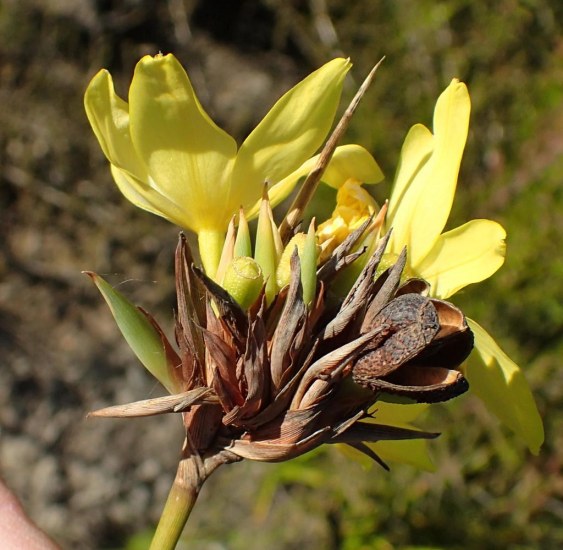
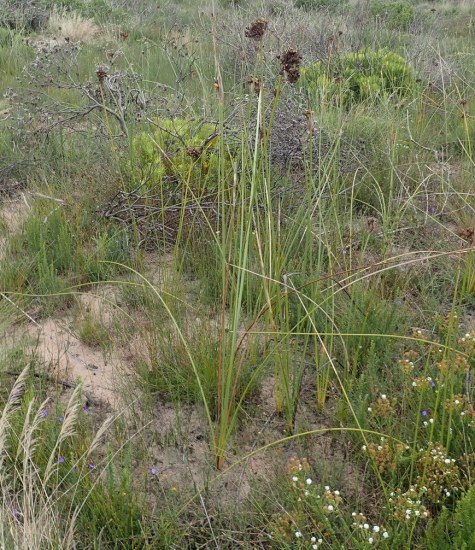

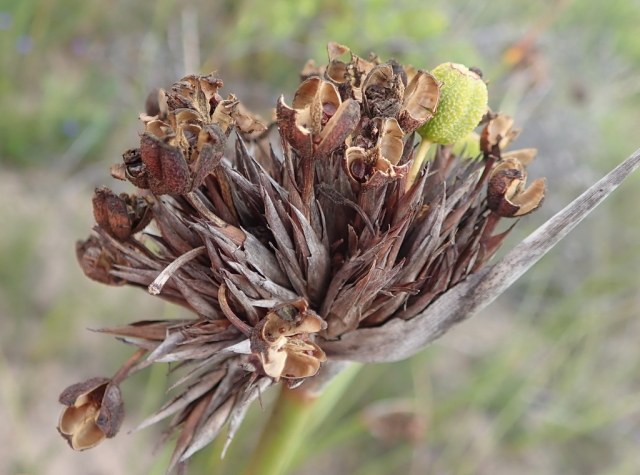
Bobartia spp. The first photo from Bob Rutemoeller is of an unidentified species that was flowering in the southwestern Cape in September 2003. The next two photos from Michael Mace are views of a species taken at Elandsberg.