Calochortus is a genus in the Liliaceae family with species distributed in western North America, Mexico, and south to Guatemala. The greatest concentration of species is found in California. Three good sources of information are Frank Callahan, The Genus Calochortus, in McGary, 2001 found listed in References, Calochortus, Gerritsen and Parsons, 2007 found listed in References, and Mariposa, the newsletter of the Calochortus Society, a quarterly issued between 1989 and 2005. Calochortus species t through u are found on this page.
Calochortus species a-b - Calochortus species c-d - Calochortus species e-lo - Calochortus species lu-n - Calochortus species o-r - Calochortus species s - Calochortus species v-z - Calochortus hybrids - Calochortus index
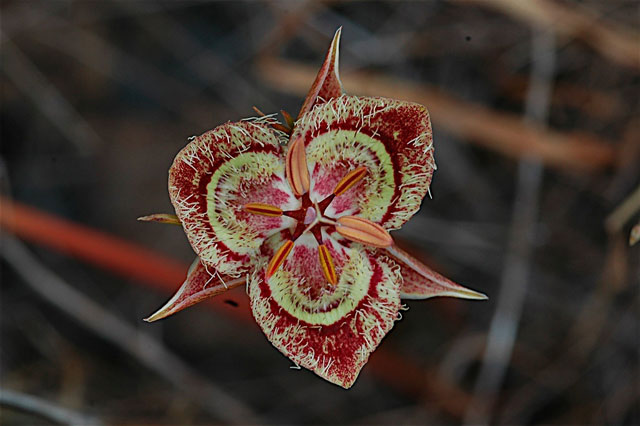
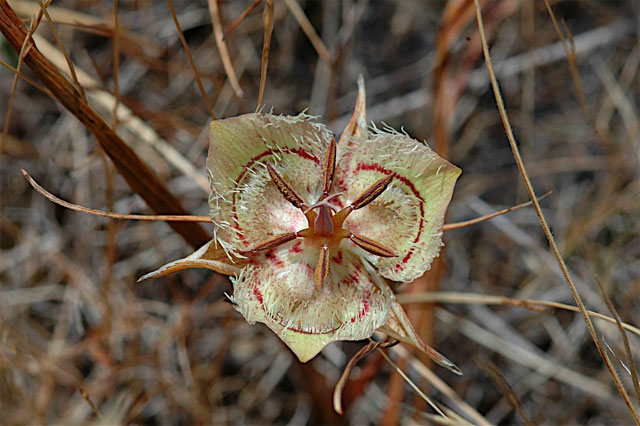
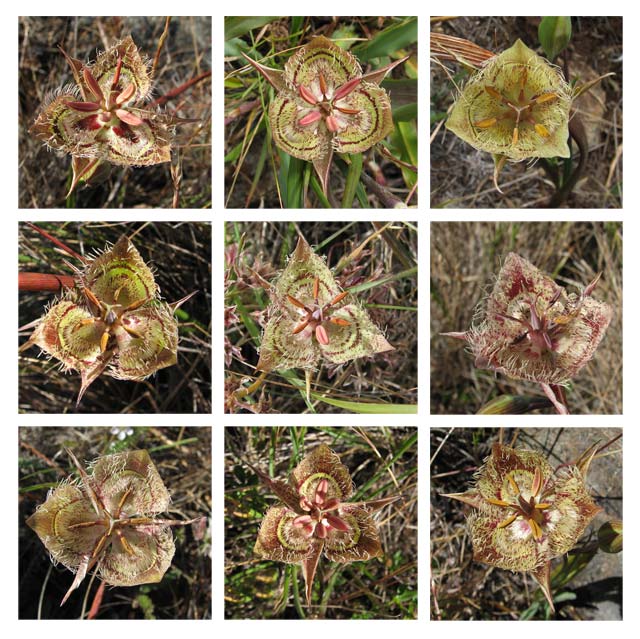
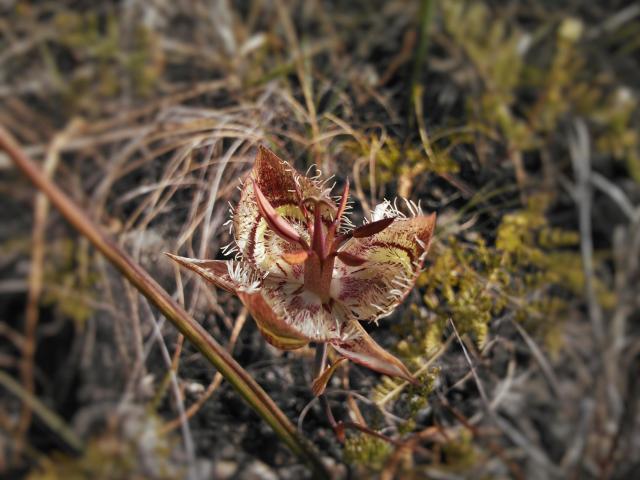
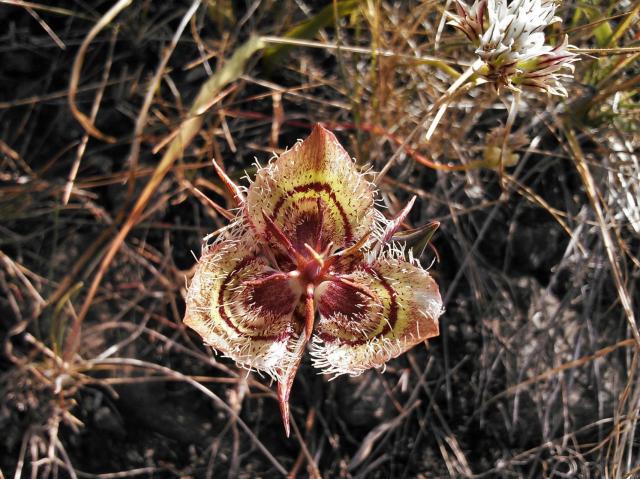
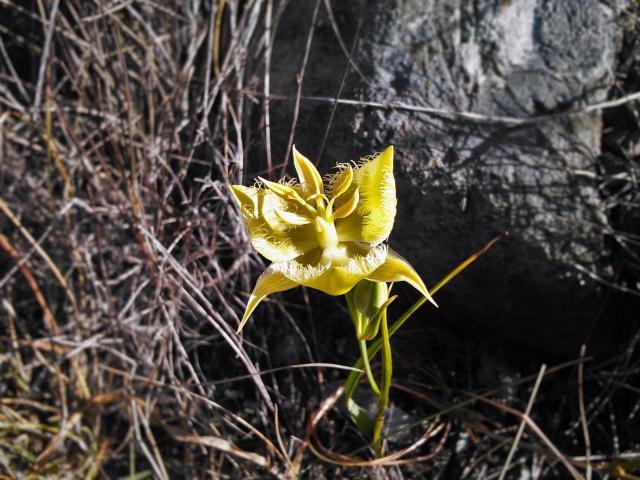
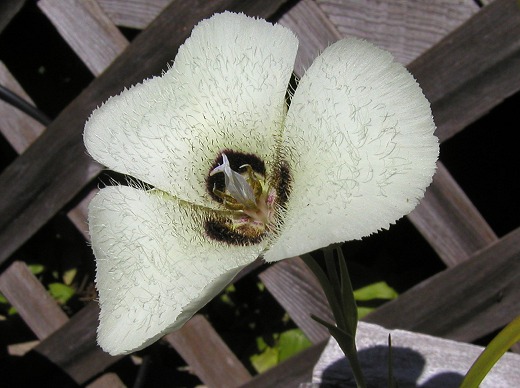
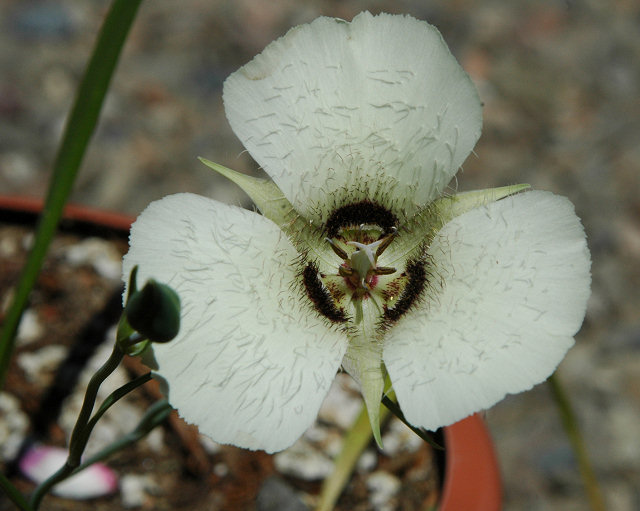
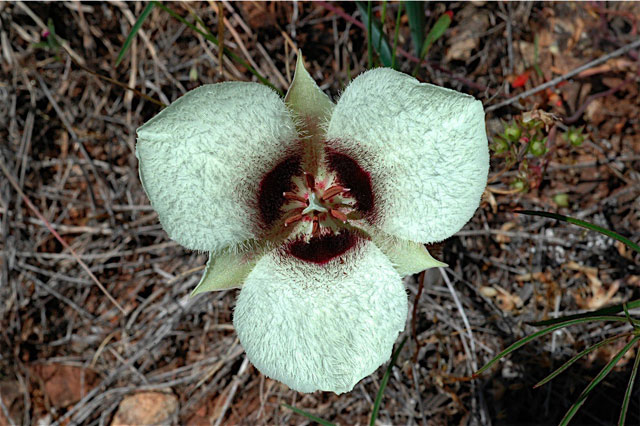
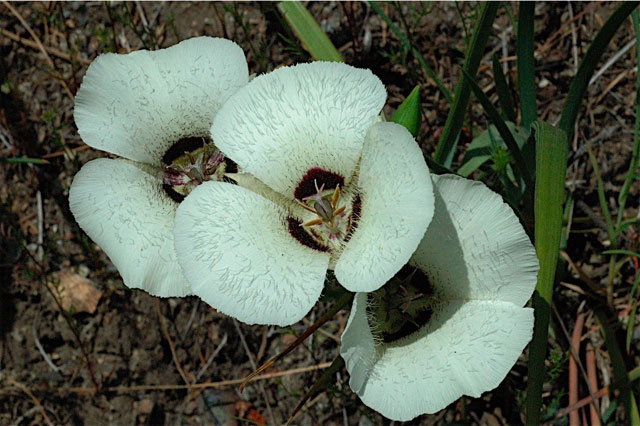
Calochortus tiburonensis A.J.Hill, also known as the Tiburon Mariposa, probably has the most limited range of all Calochortus species. This species was featured in Mariposa,Volume 14,#3. It is only known from one very small locality, the summit (and a little below) of Ring Mountain on the Tiburon Peninsula in Marin County California. It is also a very "secretive" plant. You can be looking right at it, and not even see it! The colors are well camouflaged against the backdrop of dried grasses, and greenish-brown rocks. This species has erect, 10-60 cm glaucous stems, usually unbranched, bearing one to eight, 3-4 cm bowl shaped flowers. Michael Mace wrote a very nice note about his adventure in finding these plants here.
Photos 1-3 were taken by Mary Gerritsen. You can see more of Mary's photos of C. tiburonensis here. Photos 4-6 were taken by Nhu Nguyen. Photo 4 is panel showing various different morphs of this variable species. Photo 5 shows the seedpod and photo 6 shows the bulb.
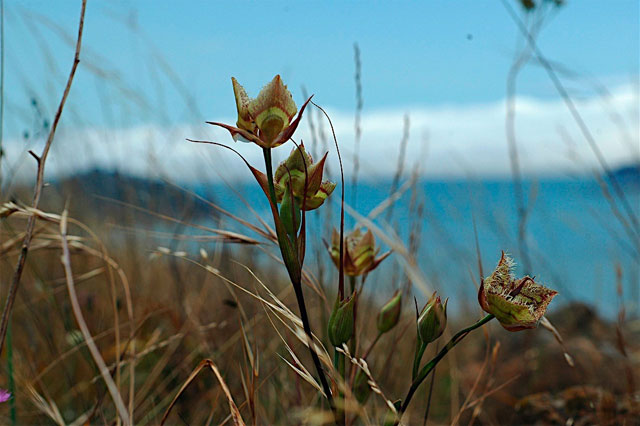
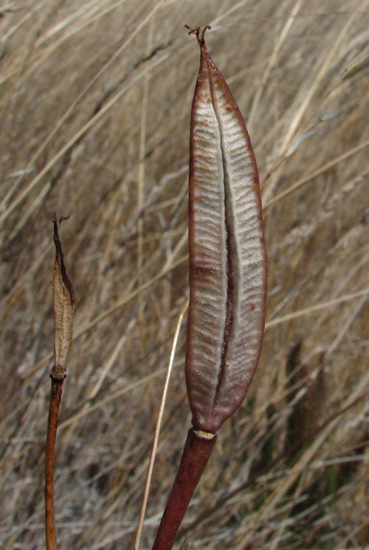
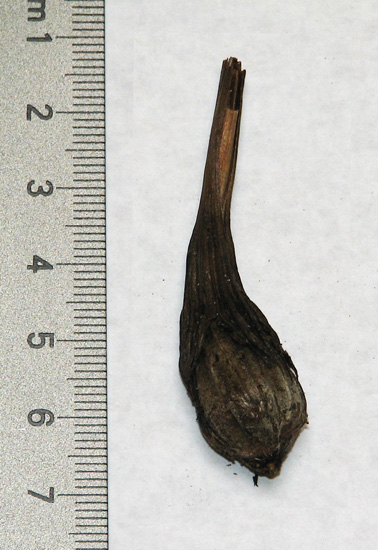
The photos below by Nhu Nguyen shows how the plants grow in their native habitat. Photo 3 shows the species growing with Allium lacunosum var. lacunosum, Triteleia laxa, and Chlorogalum pomeridianum.
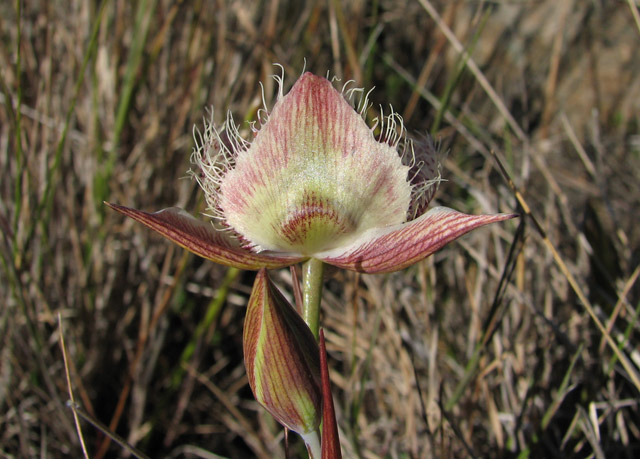
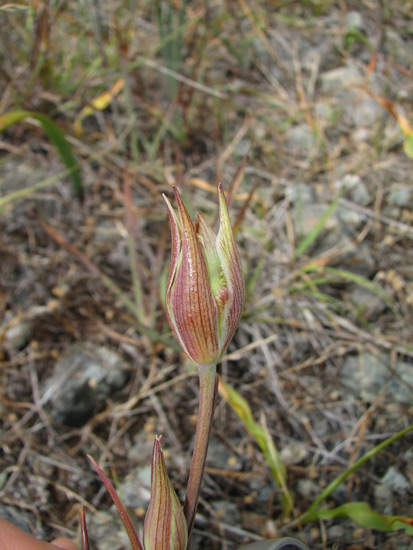
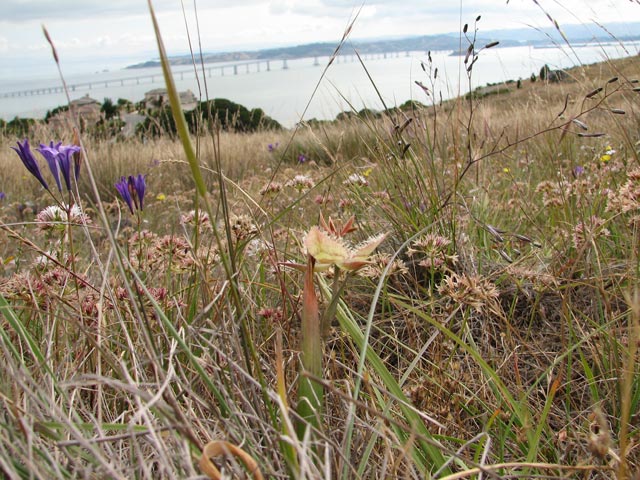
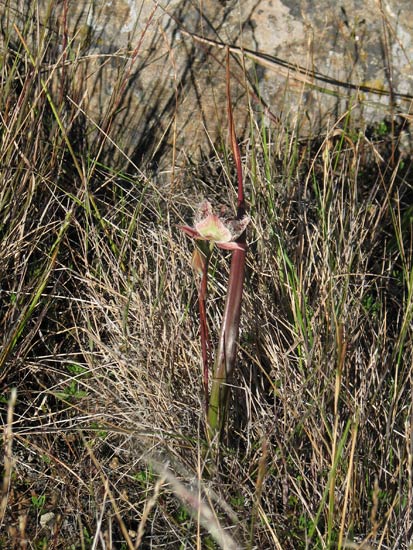
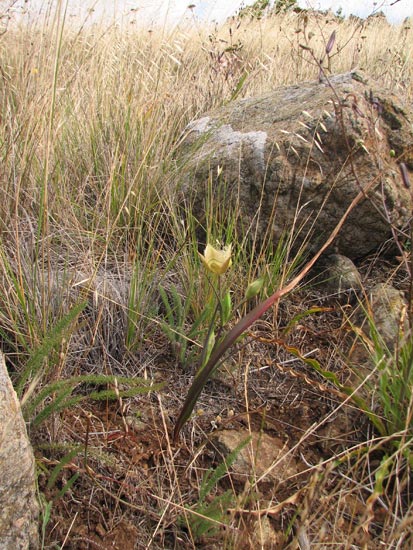
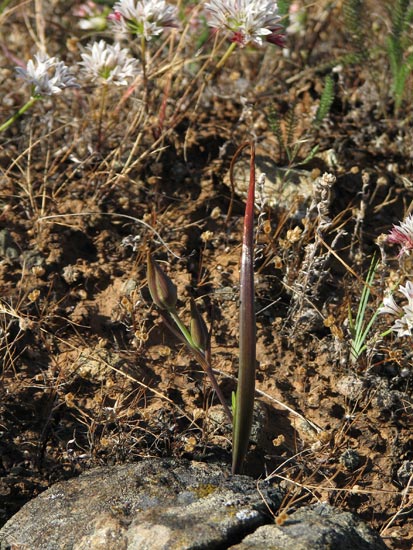
Excerpts and photos from Kipp McMichael's "Calochortus pursuits":
"The most geographically confined Calochortus taxa is most likely Calochortus tiburonensis on Ring Mountain in Tiburon, CA. For an ultra-local, federally-protected endemic, the plant is both fairly common and easy to access on the beautiful serpentine mountain top, overlooking San Francisco Bay, that these plants call home. Many trails wind through the serpentine rocks and gravel fields where these intriguing lilies find protection from burrowing rodents. C. tiburonensis flowers are an acquired taste with greens, creams and browns the norm - but the population is highly variable and especially striking plants are not hard to locate. I was especially delighted to find an anthocyanin-free plant in bloom as well - the hairiness of its petals accentuated by the uniformly pale chartreuse of this unusual flower. Given the size of this taxon's entire population, this red-pigment-free variant might be the only plant like that in existence!"
Calochortus tolmiei Hook. & Arn. has a long range from the north central Coast ranges of California to the Willamette Valley of Oregon. This species was featured in Mariposa,Volume 5,#1. It is found in scree and coastal meadows at low to moderate elevations, on flats and slopes, in mixed conifer forests and from deep shade to sun. It often occurs in areas with a lot of winter rainfall. It is also part of the diverse flora occupying Table Rocks in Jackson County, Oregon. It is very similar to Calochortus coeruleus and Calochortus elegans. It can be white, lavender, purple, or bicolored. It is often challenging to grow, perhaps because it is so variable in where it is found that it would be difficult to know exactly what each bulbs wants. Seed is difficult to collect because the pendant pods dehisce very quickly. One must either collect the pod prematurely or place a paper bag around the pod before the seed is lost. Height range: 10-35 cm.
The photos below taken by Bob Rutemoeller and Mary Sue Ittner show it in habitat on the Mendocino Sonoma Coast. The first four photos show it growing on the rocky bluff next to the Pacific Ocean in Sonoma County, California. The last two photos were taken at a more inland location where they were growing along the road bank in the shade of trees, but still blooming in profusion in a very wet spring, June 2011.
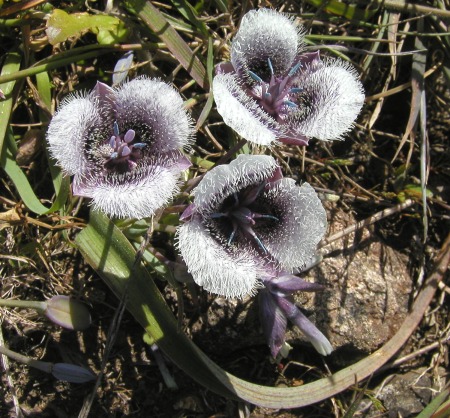
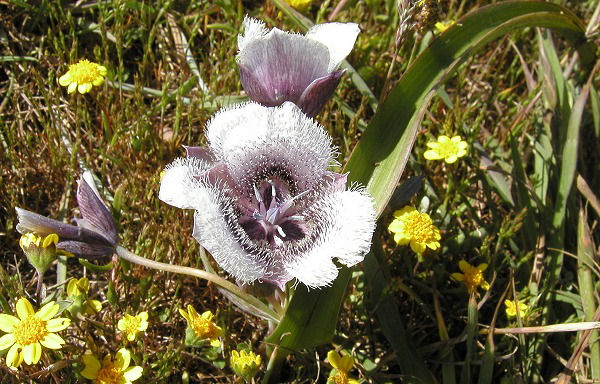
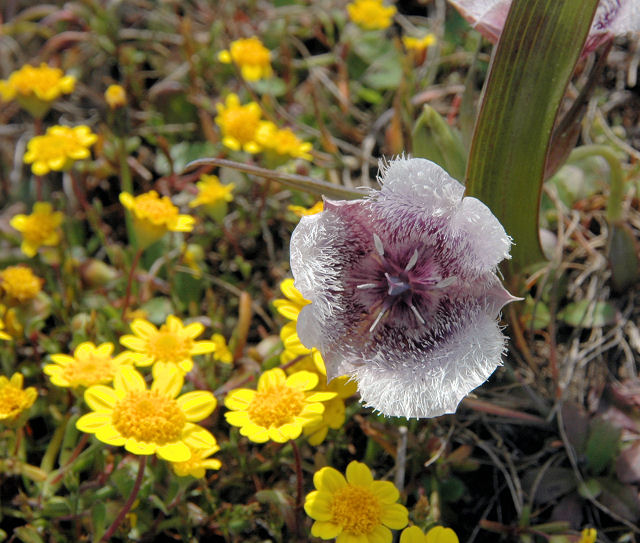
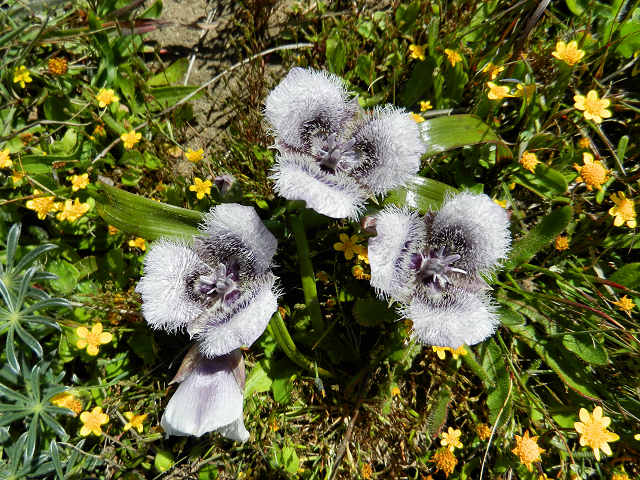
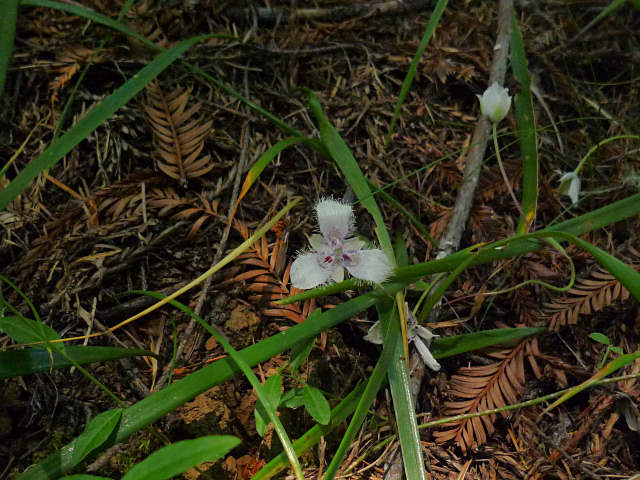
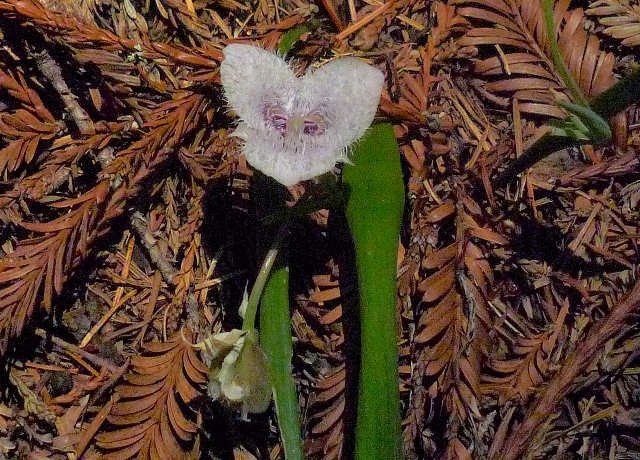
Photos 1-5 were taken by Mary Sue Ittner of several different forms. Photo 5 is called the "Humboldt" form by Telos Rare Bulbs that grows very low to the ground. Photo 6 by Nhu Nguyen shows the bulb.
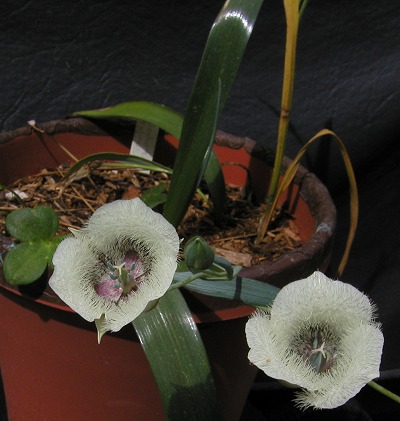
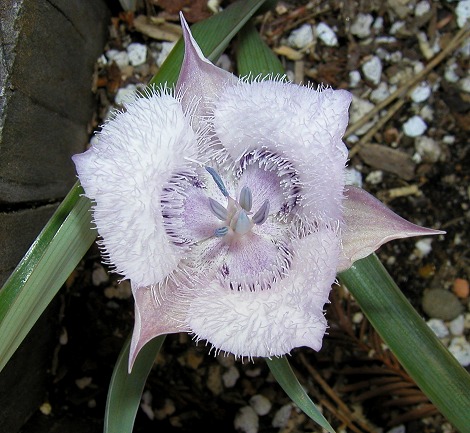
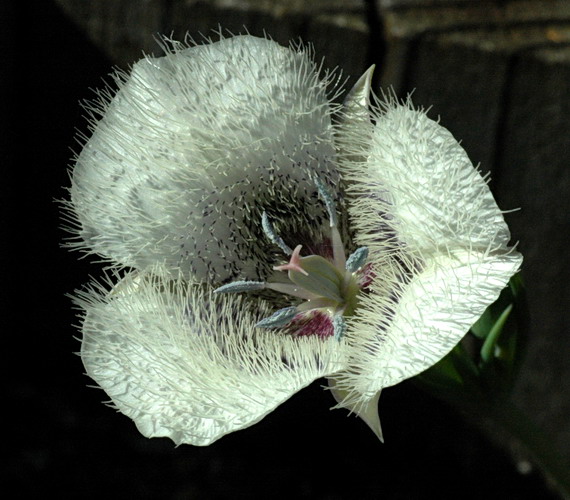
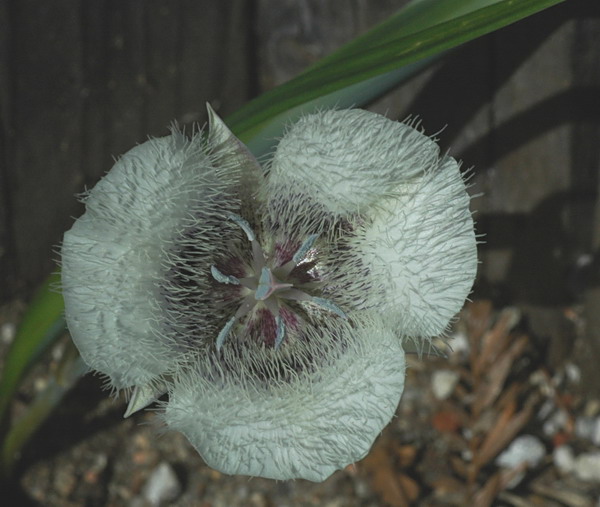

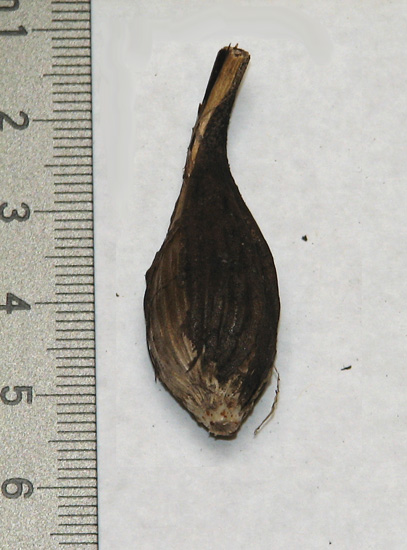
Photo 1 was taken by Jim McKenney. Photo 2 was taken by Mark Mazer of one grown from Ron Ratko seed. Photo 3-6 were taken by Nhu Nguyen. Photo 3 shows a very nice purple form and photos 4-5 shows another form, both obtained from Telos Rare Bulbs. Photo 6 shows a plant in habitat on the Mendocino Coast.
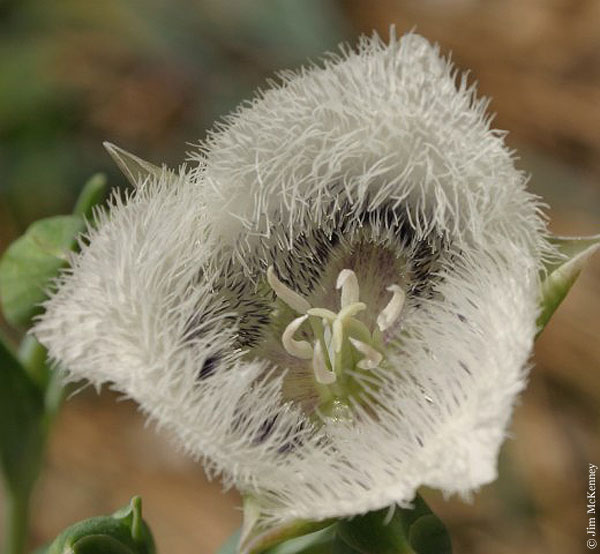
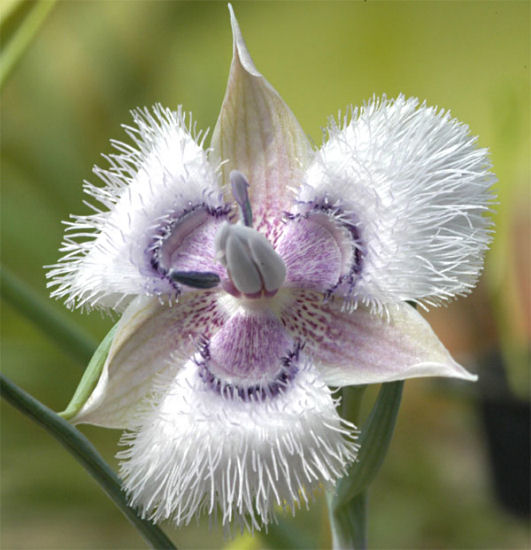
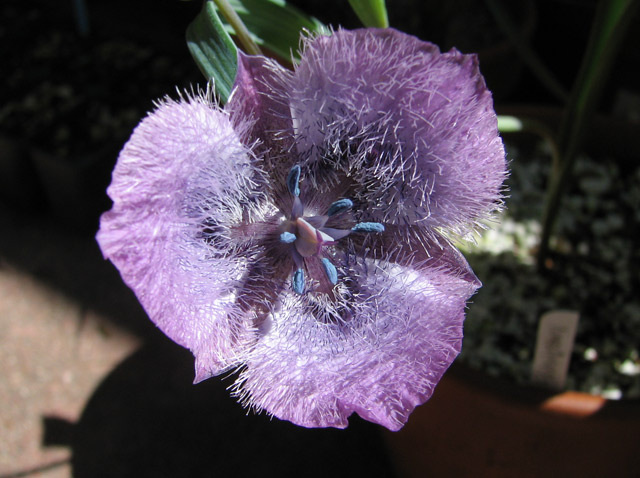
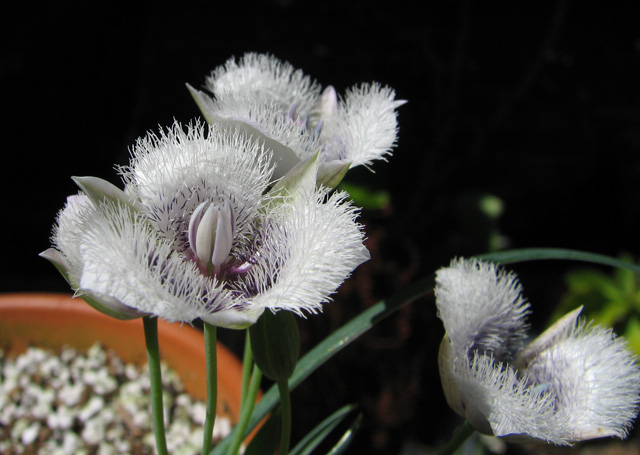
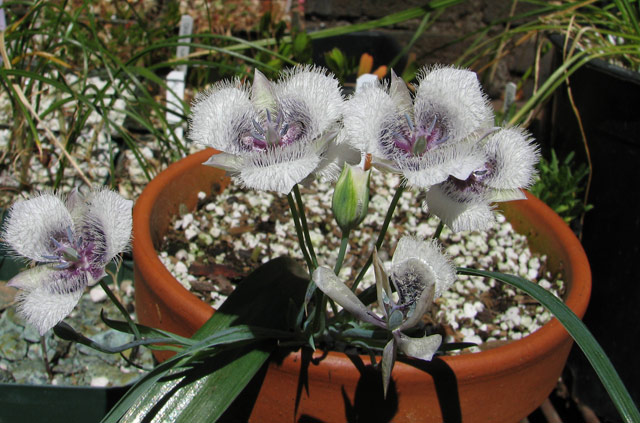
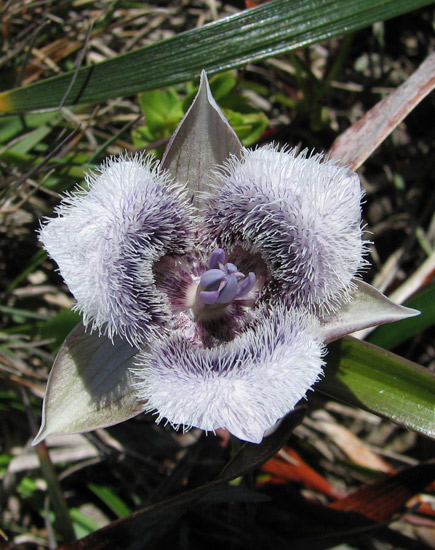
Photo below by Travis Owen shows fertilized flowers and the developing seed pods in Rogue River, OR. The pods hang pendant as the seeds develop. The pods often open quickly and drop the seeds instantly making seed collection difficult.
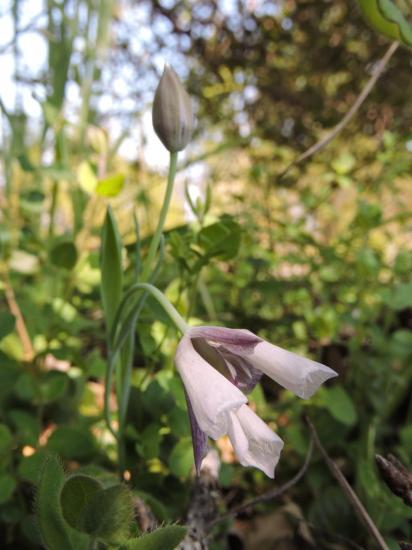
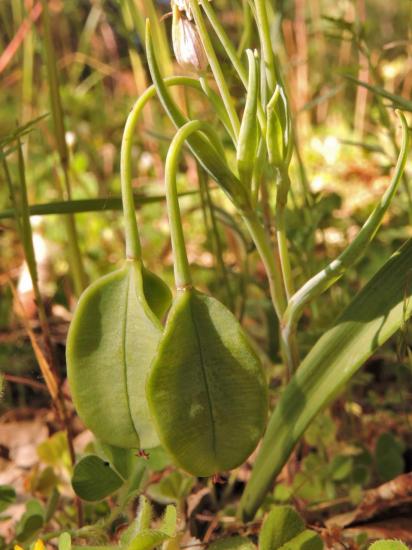
Excerpts and photos from Kipp McMichael's "Calochortus pursuits":
"My season began at Pt Reyes National Seashore in late May. On the barren hills and bluffs overlooking the ocean, Calochortus tolmiei grows no higher than 6 inches. That lofty 6 inches is in the shelter of a shrub; these plants grow in large populations on barren rocky spots where the flowers open only an inch above the soil."
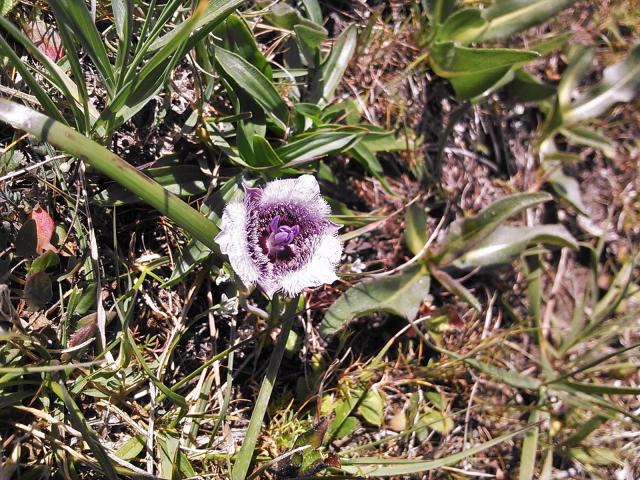
"On my way home from Santa Cruz that morning, I stopped in the hills above Woodside, CA to catch the southernmost race of Calochortus tolmiei. Unlike the thickly-hairy blooms of the plants at Pt. Reyes, the flowers in this population are very sparsely haired. Additionally, the plants here grow in the shade of redwoods, madrones and tanoaks along a park trail - thriving even in the packed, gravelly "tailings" of the downhill side of the trail."
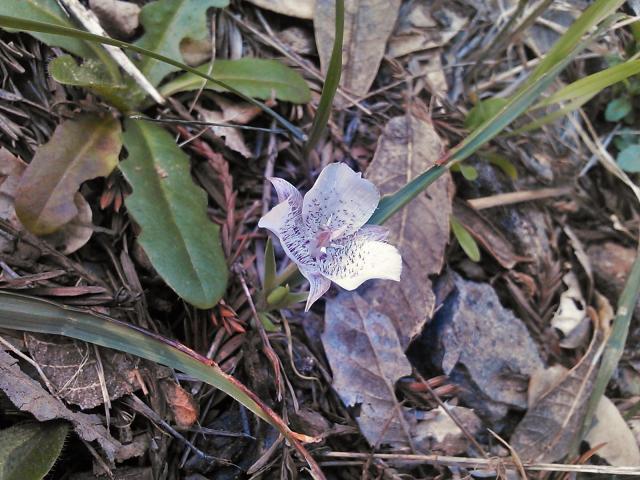
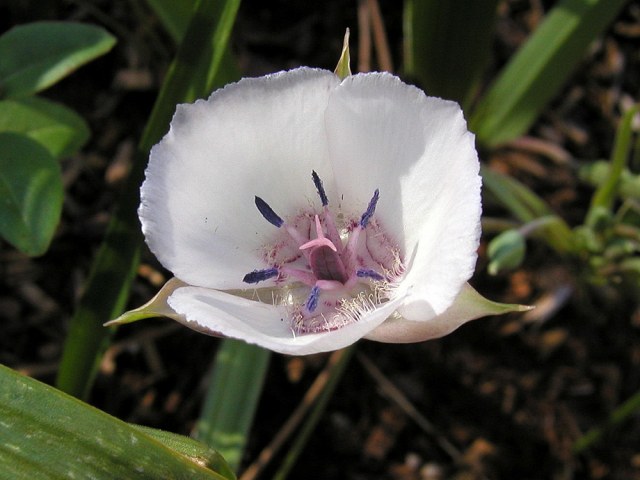
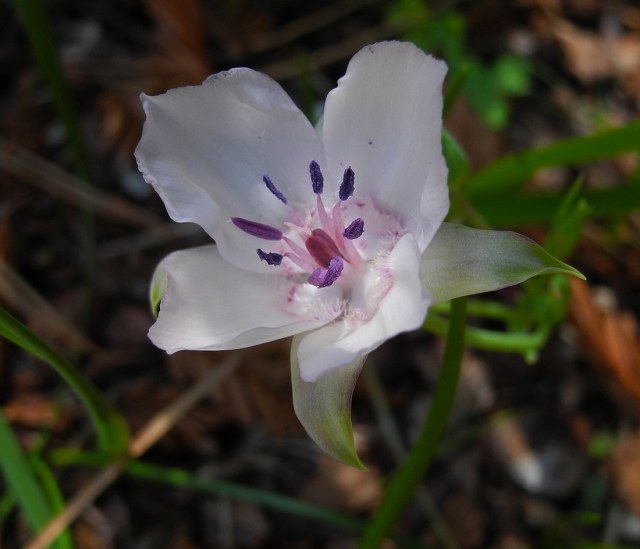
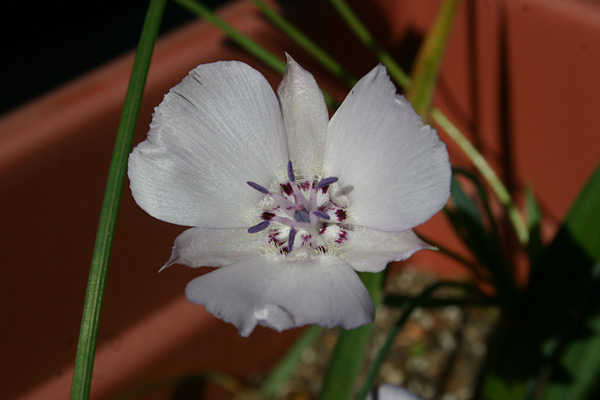
Calochortus umbellatus Alph.Wood is found on hillsides and slopes, either under trees or shrubs or in grasslands in areas where there is moderate rainfall and mild cool winters in the central Coast ranges of California around San Francisco Bay. This species was featured in Mariposa,Volume 5,#2. It is very similar to Calochortus uniflorus but does not form bulbils, has longer stems which are often branched and is usually white. It often has lavender or purple spots at the base of the petals or pink and lavender stripes. It is often the first species in bloom for me and sometimes the longest (December to March some years.) Height range: 8-25 cm. The first two photos by Mary Sue Ittner, the third by Bob Werra.

The photos below were taken by Nhu Nguyen of plants growing in mixed serpentine soil on Ring Mountain, Marin Co., California.
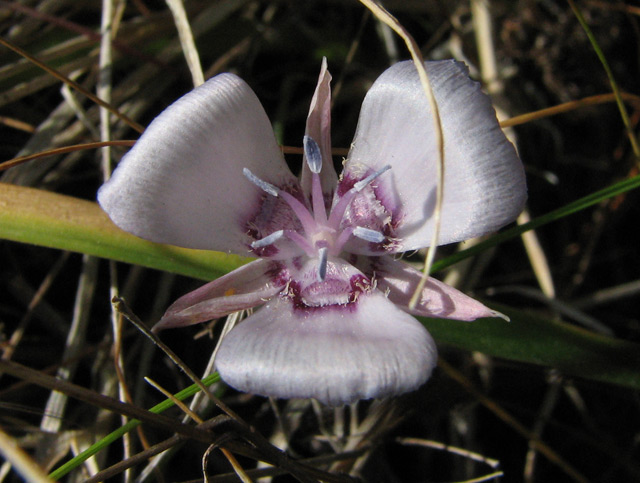
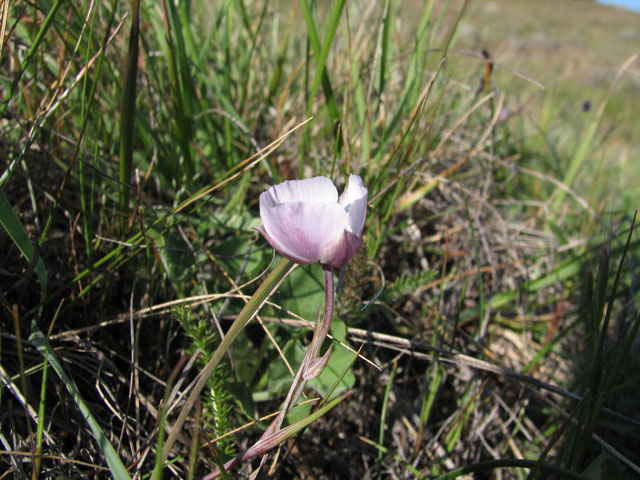
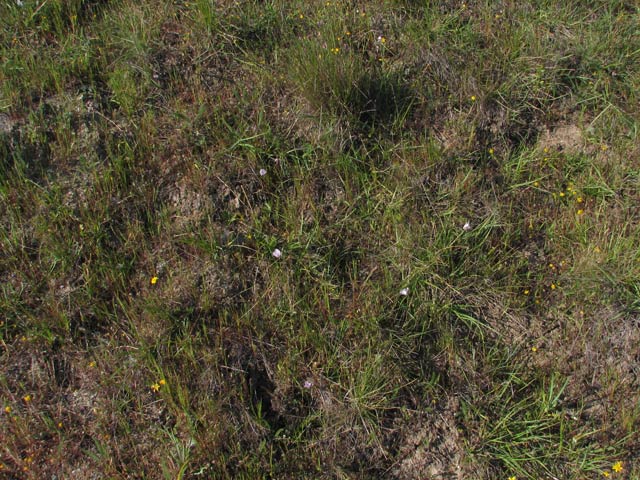
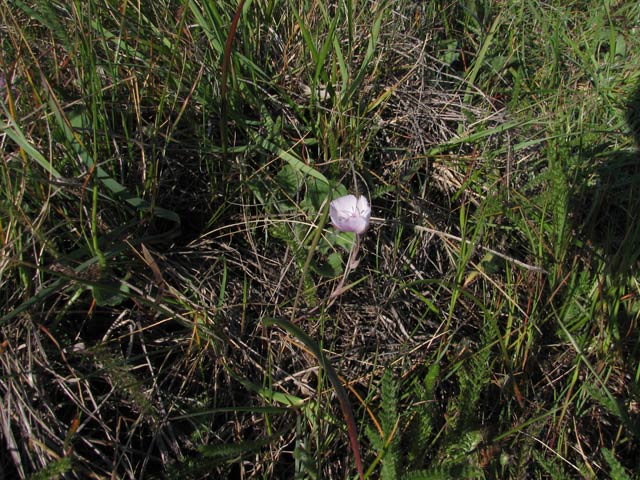
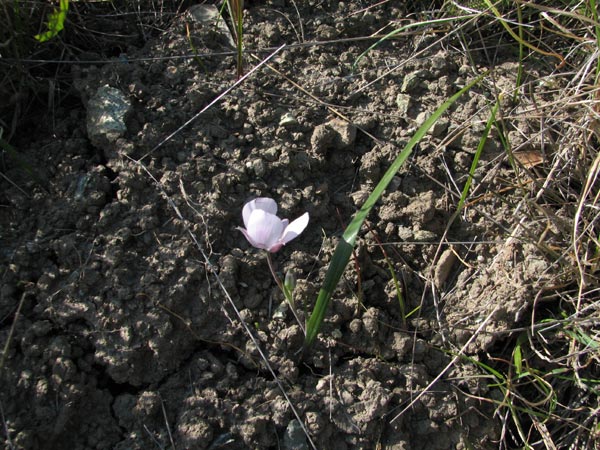
Calochortus umpquaensis Fredricks is restricted to a small area in Douglas County, southwestern Oregon. This species is found in open areas of coniferous forest, often on steep, gravelly or rocky north facing banks along the Umpqua River. Plants grow in serpentine soils, high in nickel, chromium, and zinc. Plants can be cultivated successfully in well drained soils, but need to be well watered during growth. C. umpquaensis is tolerant of some moisture during dormancy. Height range: 20-30 cm. Photo 1 was taken by Bob Rutemoeller and photo 2 by Mary Sue Ittner of bulbs purchased from the Robinett Bulb Farm in 1999, their last year. Photos 3-4 by Mary Gerritsen are photos of wild populations. Photos 5-6 were taken by Victoria Powell near Glide, Oregon, May 2014.
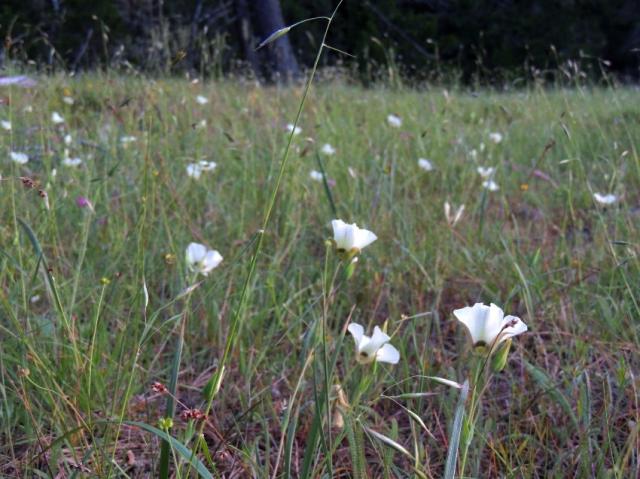

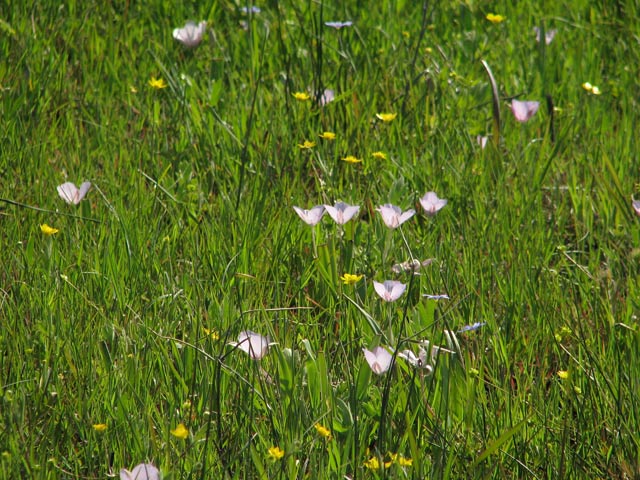
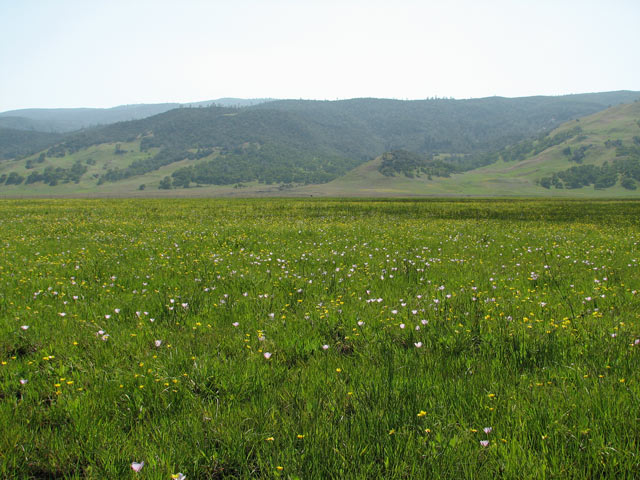
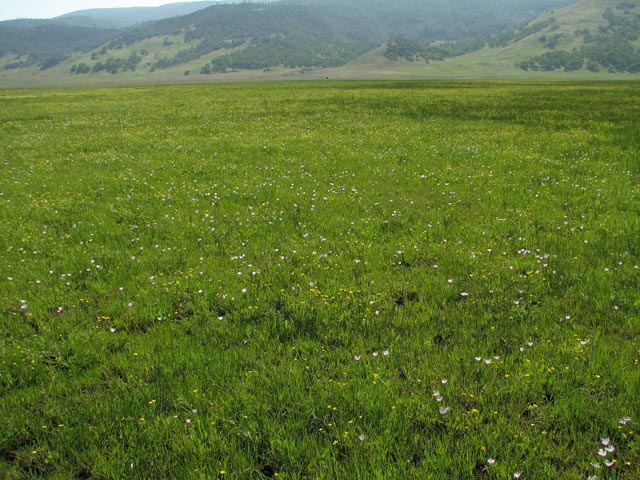
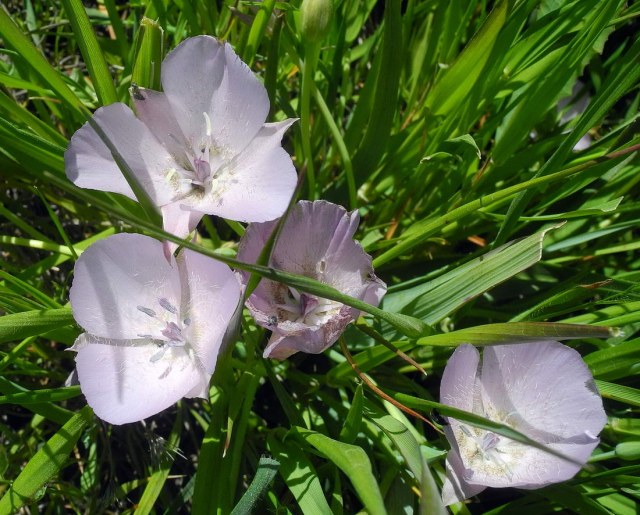
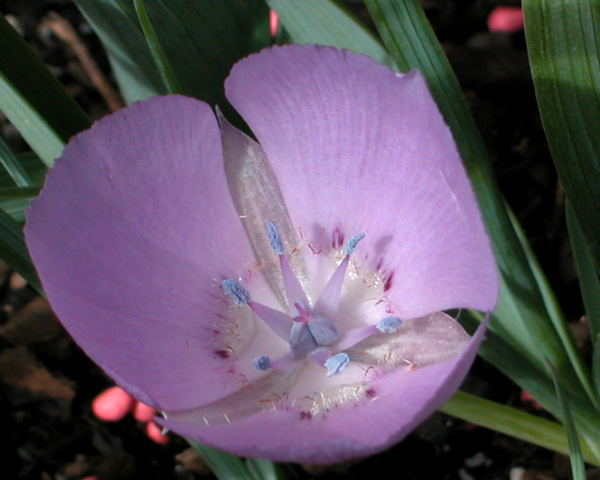
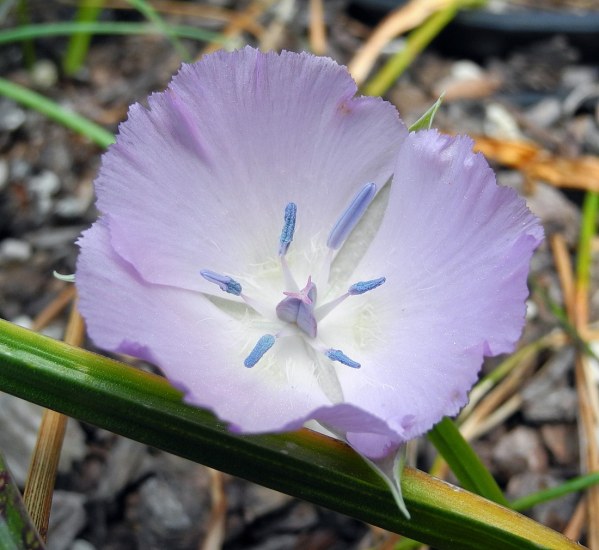
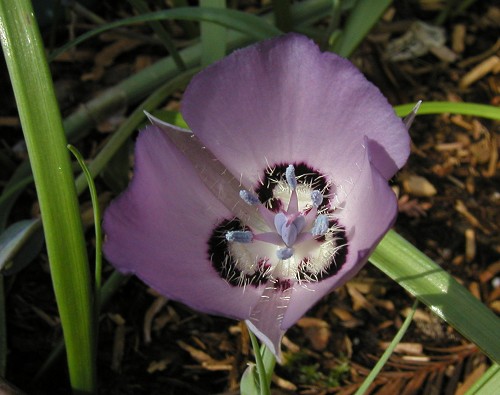
Calochortus uniflorus Hook. & Arn. is found in temporarily wet meadows and prairies in the central and north coast ranges. This species is one of the easiest to grow and increases by bulbils. This species was featured in Mariposa,Volume 1,#4. Height range: 15-20 cm.
Habitat pictures taken in Sonoma County by Bob Rutemoeller and Mary Sue Ittner of plants growing in an open grassy area not far from the Pacific Ocean, at Salt Point State Park and on The Sea Ranch.
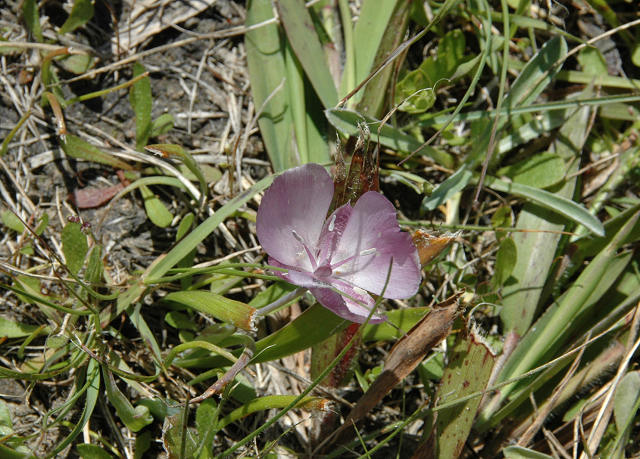
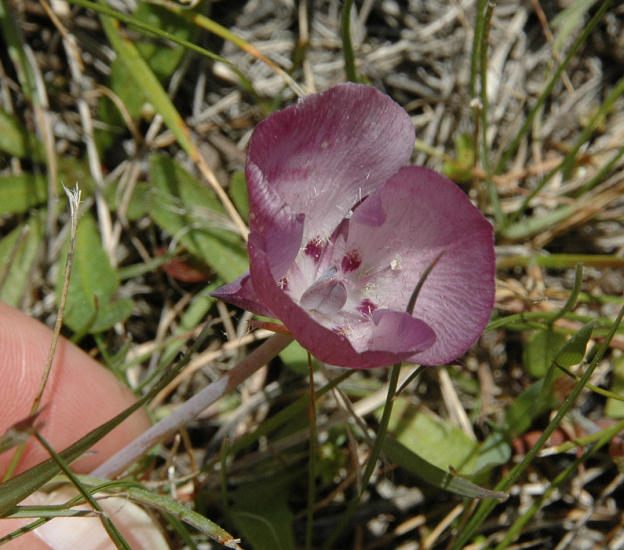

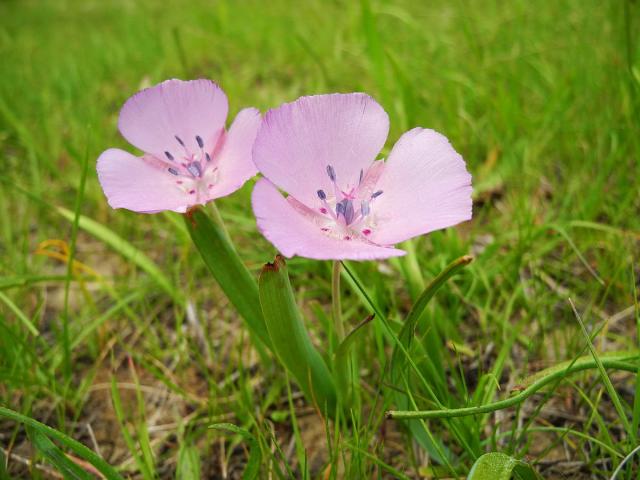
Habitat photos taken by Nhu Nguyen at Bear Valley Road, Colusa Co., California. At the right time, these flowers bloom by the thousands producing a nice display. The last photo from Mary Sue Ittner.
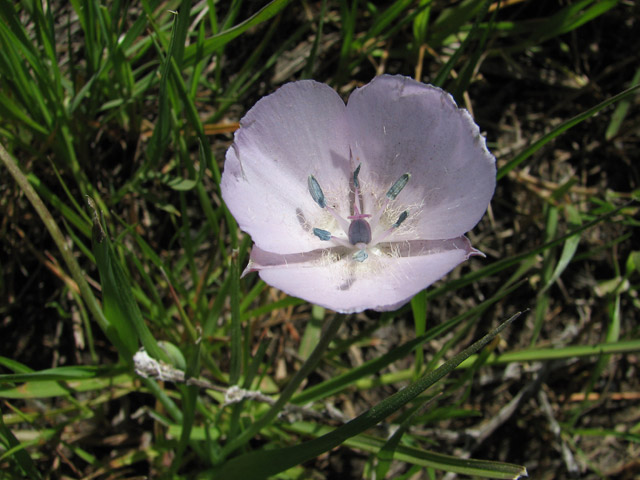

The photos below are of plants in cultivation. Photo 1 was taken by Sheila Burrow. Photo 2 was taken by Mary Sue Ittner. Photos 3-4 were taken by Bob Rutemoeller showing several forms grown from seed collected from a Mendocino County, California population where it grew in an open area near the Pacific Ocean. The rest of the photos from Mary Sue Ittner of those plants in different years.
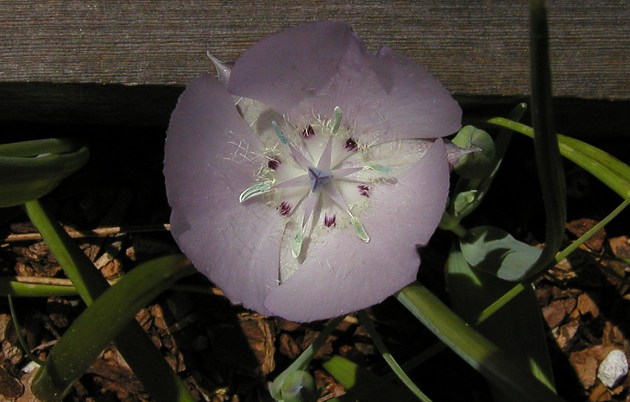
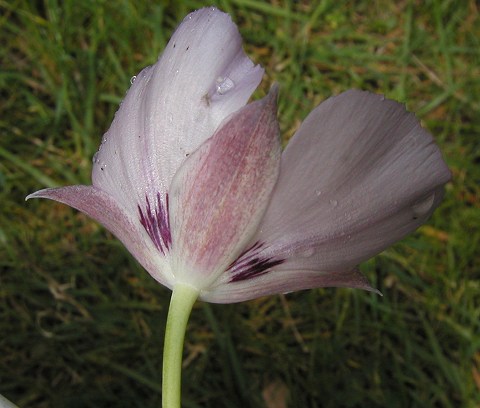
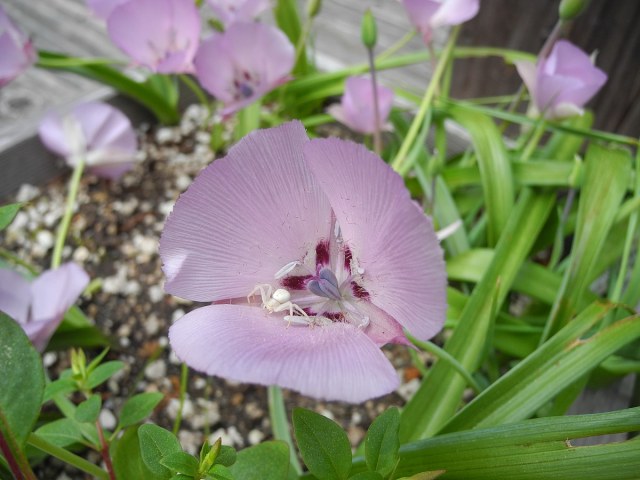
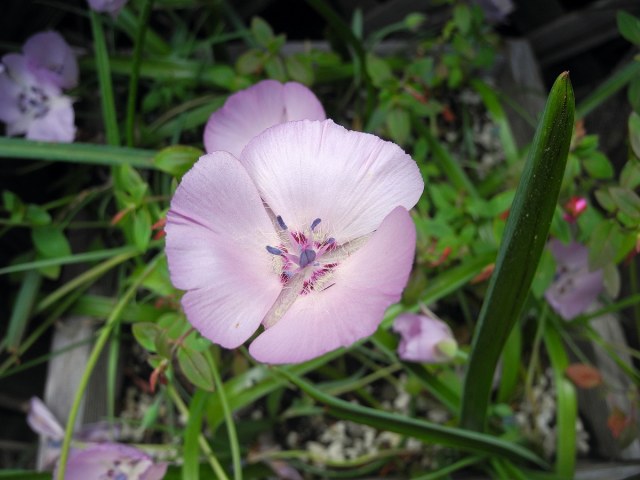
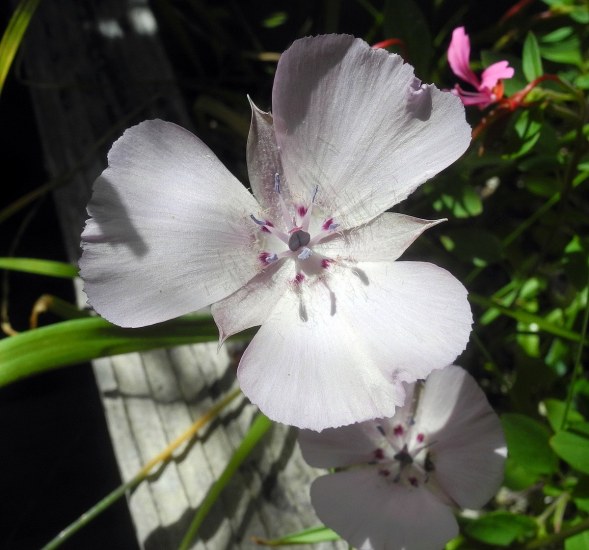
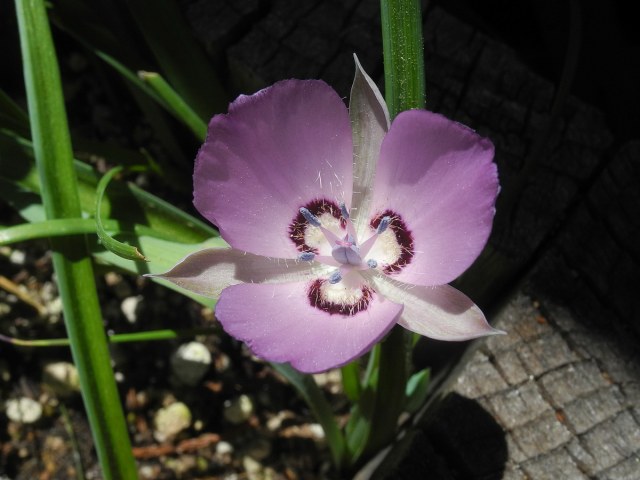
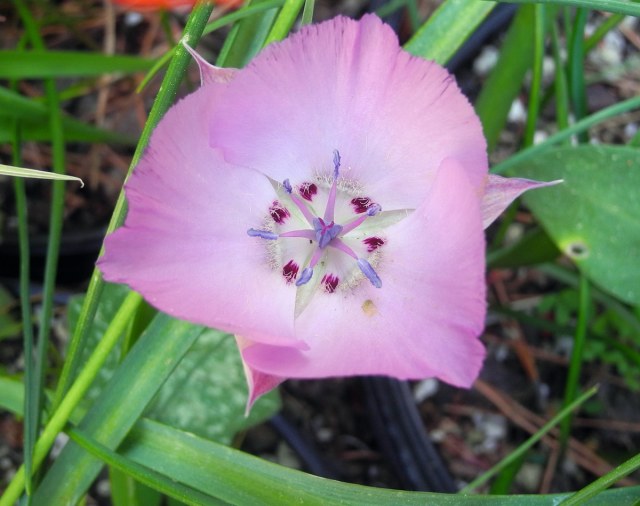
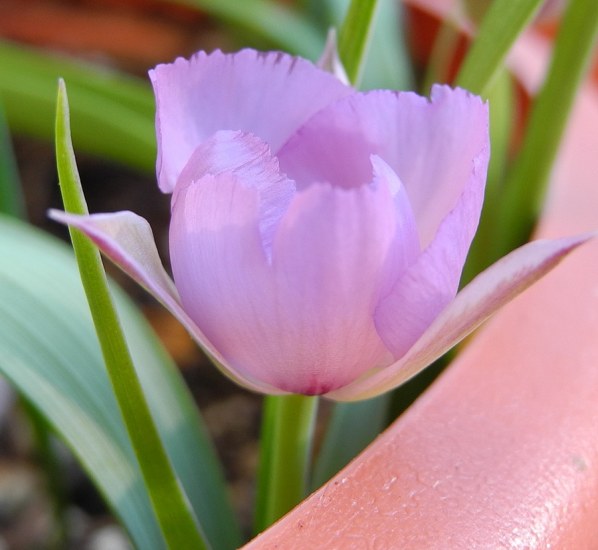
Excerpts and photos from Kipp McMichael's "Calochortus pursuits":
"The meadows where Calochortus uniflorus grows are surrounded by redwood and madrone forests. The delicate purplish pink flowers were heavy with dew on stems as tall as 8 inches. Crowded, but not too much by grass, both the Calochortus and many other geophytes (Brodiaea, Dichelostemma) were fairly common here."
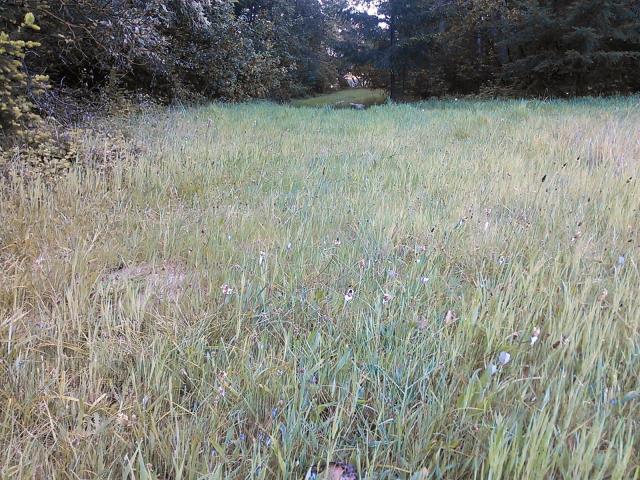
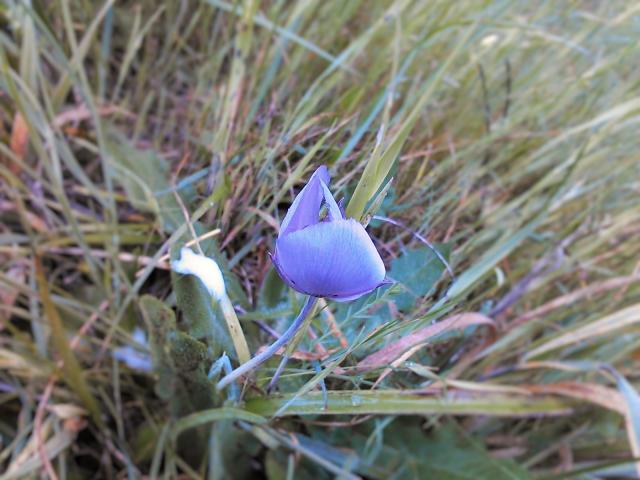
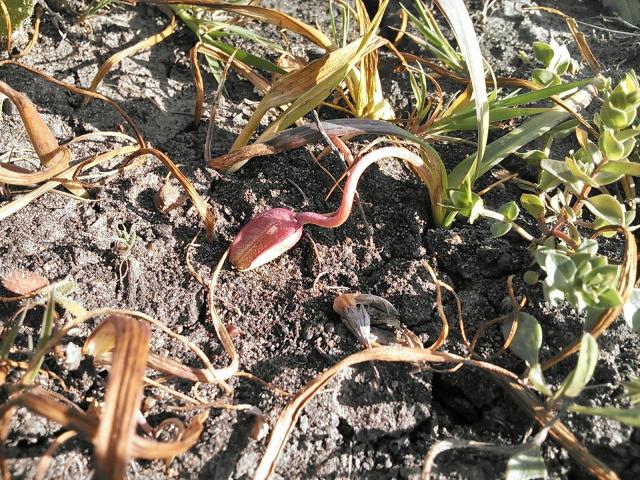
"I wrote previously of the very special bluff north of San Simeon, CA where 4 different species of Calochortus grow side-by-side. Alas, but the plants do no bloom synchronously - so catching them all takes trips across 3 or so months from April to June. My first visit in late April was too late for the bloom of Calochortus uniflorus here, but I did catch a seedpod ripening."
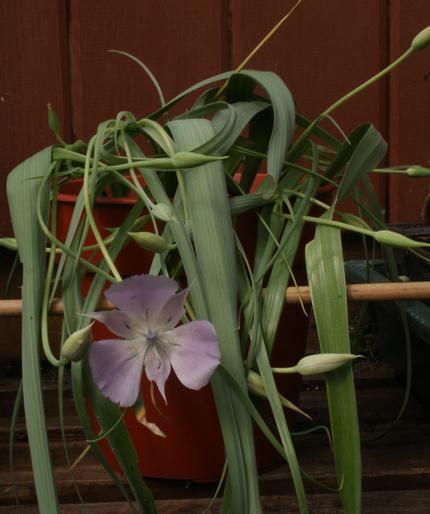
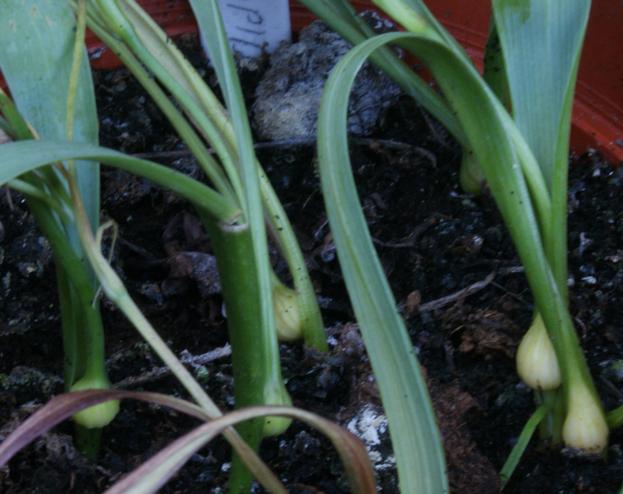
Calochortus uniflorus 'Cupido' is a commonly sold selection. Photos by David Pilling. The final one shows bulblet formation around the stem base.
Calochortus species a-b - Calochortus species c-d - Calochortus species e-lo - Calochortus species lu-n - Calochortus species o-r - Calochortus species s - Calochortus species v-z - Calochortus hybrids - Calochortus index