Chasmanthe is a genus in the Iridaceae family endemic to South Africa where it is found in bush or forest margins from the Western Cape to Transkei. The rootstock is a corm that roots from below. There are three species. Although similar in appearance to Crocosmia and Tritonia, DNA data shows it is most closely related to Babiana. It is in the tribe Croceae along with the last two genera and 11 others. Information about this genus can be found in Goldblatt, Manning, and Dunlop, 2004, listed in References. To key these species see this excerpt from that reference. Cameron McMaster has provided extremely interesting information about this genus in an article he wrote for Farmer's Weekly in 2008.
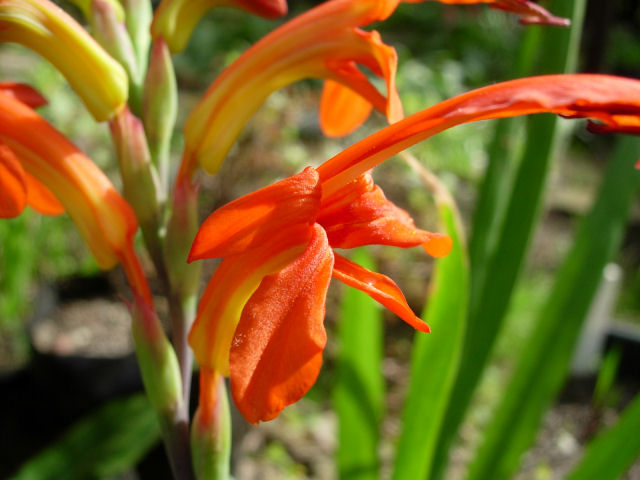
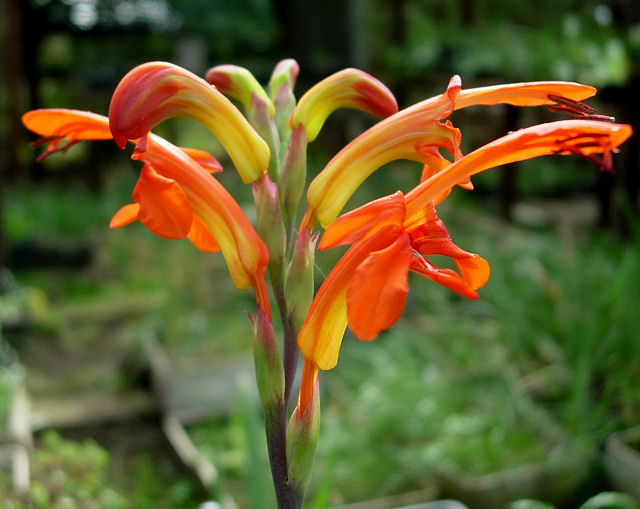
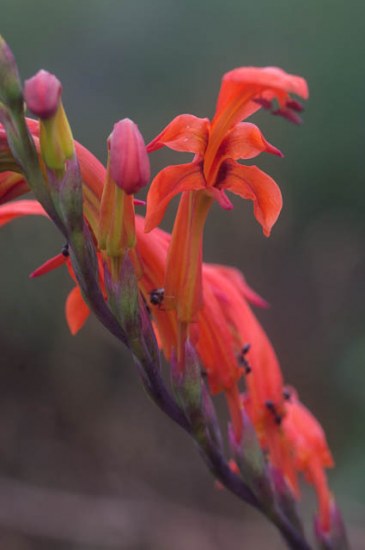
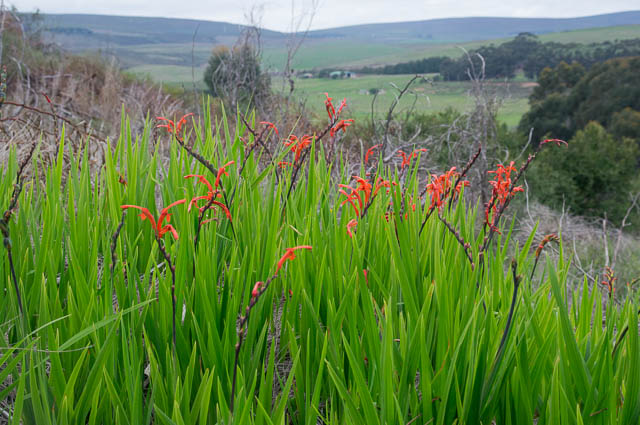
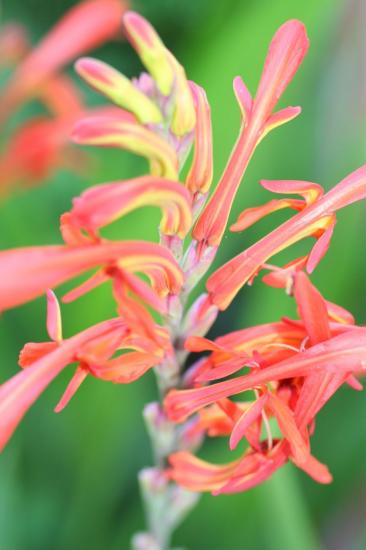
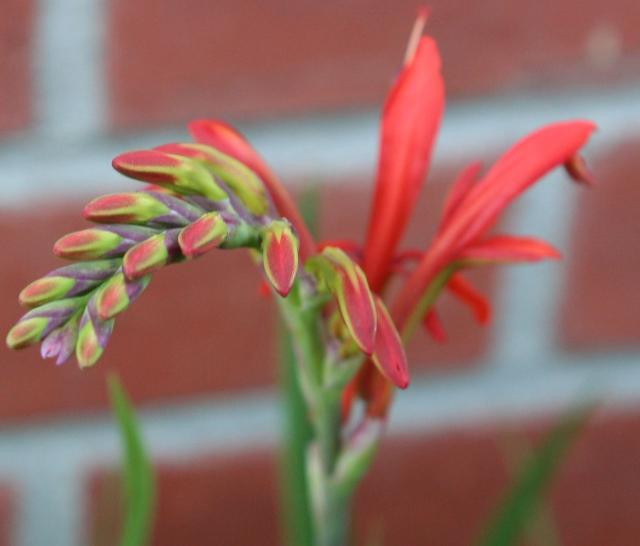
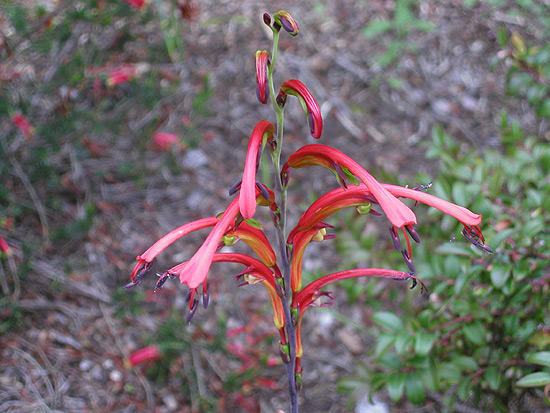
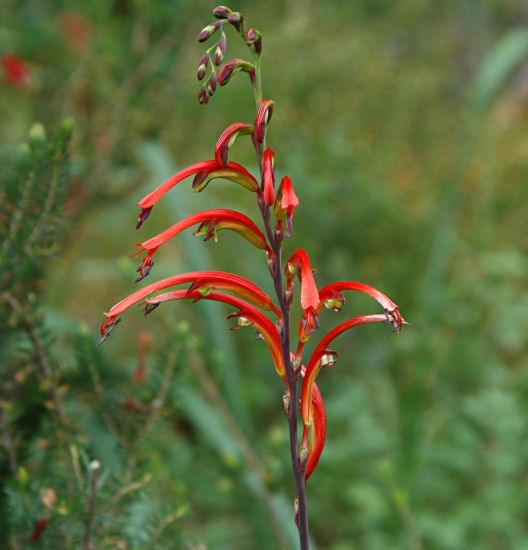
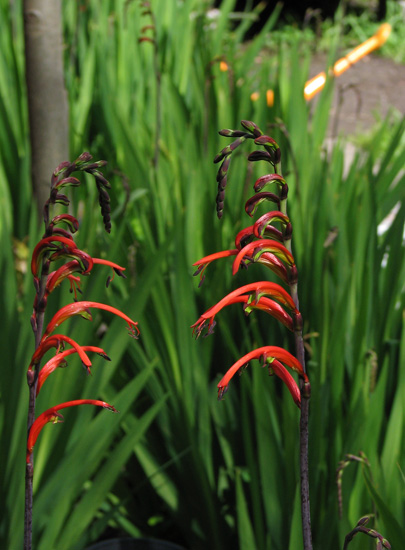
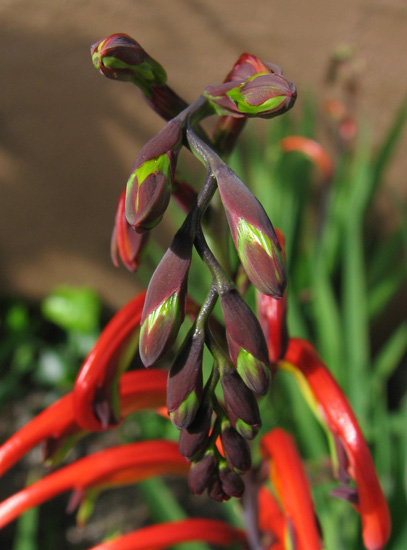
Chasmanthe aethiopica (L.) N.E.Br. is found mostly in the winter rainfall zone of South Africa from the Western Cape along the southern coast to the Eastern Cape. Plants grow in coastal bush and along forest margins. This species is shorter than some of the others with a spike that is seldom more than 20 inches (50 cm). The bright orange to scarlet flowers with a yellow tube on the underside are on an unbranched stem that is inclined horizontally. The flowers face to one side. The orange seeds are fleshy when first exposed. Height: to about 3 feet (90 cm). The first two photos by Cameron McMaster were taken in Napier in the Overberg and the second two were taken of a form found in the Eastern Cape. The last two photos were taken by Christopher Whitehouse in the Phillipskop Mountain Reserve near Stanford.

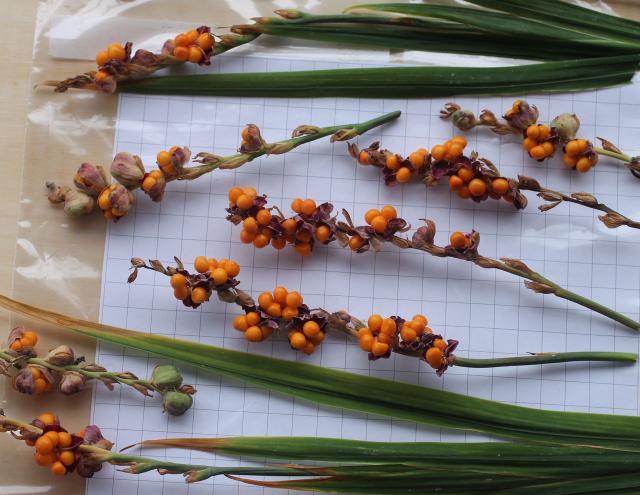
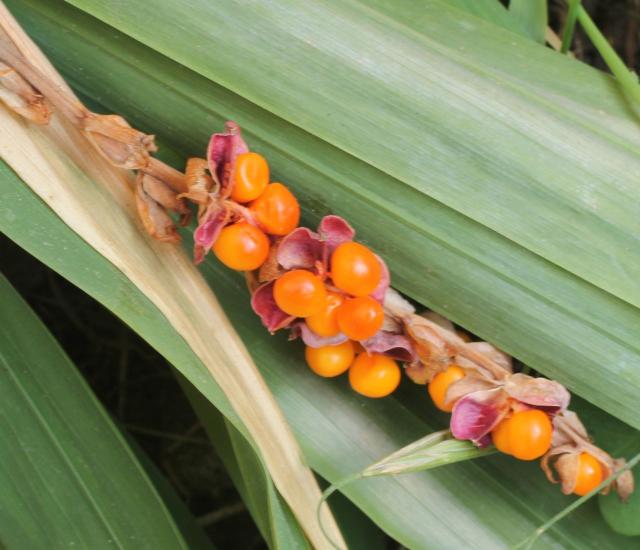
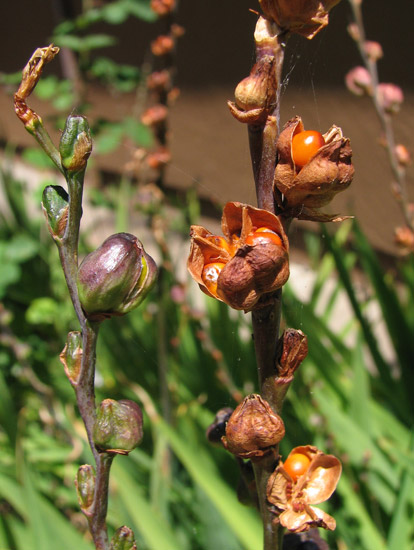
This species can be distinguished by the reddish to purple color on the inside of its seed capsules and how the seeds appear fleshy when the capsules first open, as shown in photos below by M. Gastil-Buhl. In Southern California these plants have the reputation of being weedy or legacy plants because they require no irrigation and multiply by corm offsets and self-sown seeds.
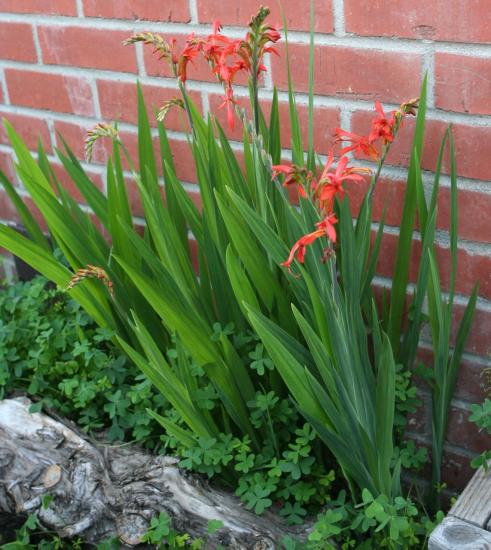
Chasmanthe bicolor (Gasp.) N.E.Br. is endemic to the Western Cape. It has an erect spike with orange scarlet flowers with lower lateral green tepals and a yellow tube. Flowers face to two sides. It grows to 28-36 inches (70-90 cm) and blooms midwinter to early spring. Photos 1-2 by Mary Sue Ittner. Photos 3-6 were taken by Nhu Nguyen.
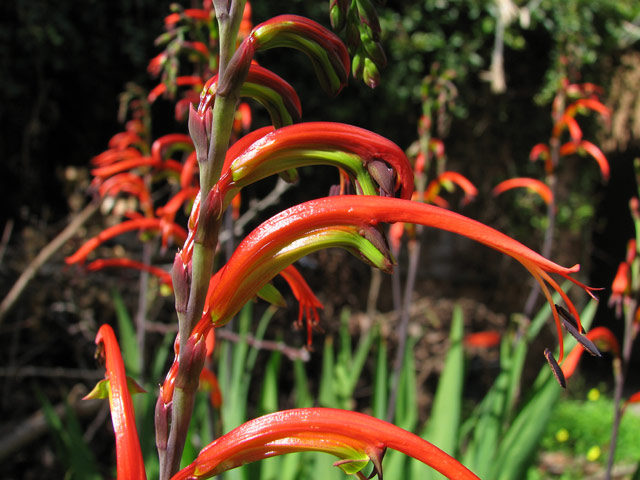
The photos below by Nhu Nguyen shows the pods and very pretty shiny orange seeds and the fleshy roots below the new corms during the growing season. Notice the seed capsules are straw colored on the inside.

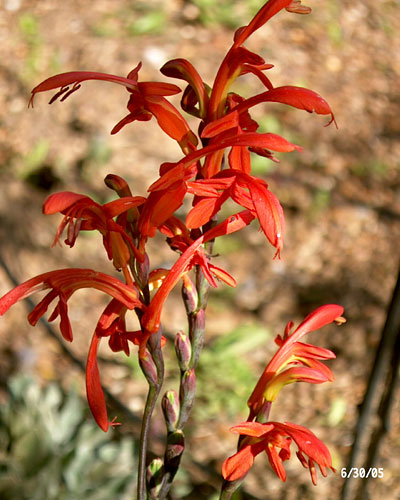
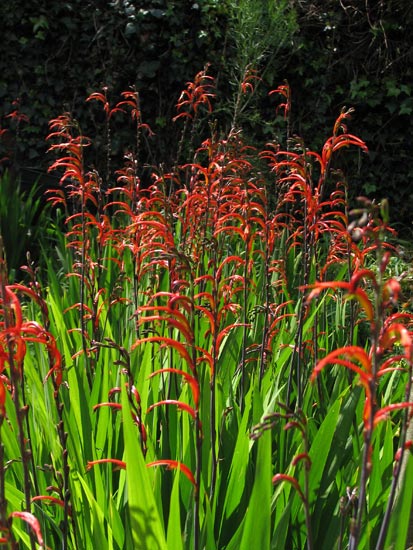
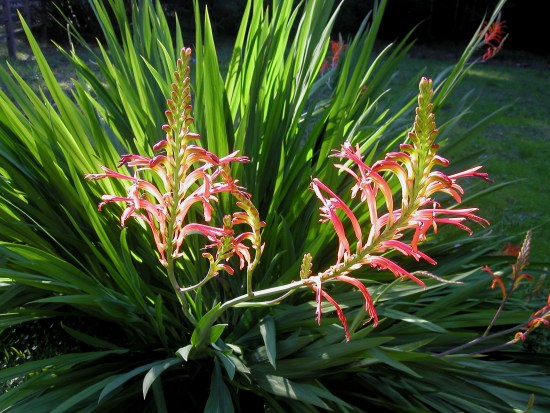
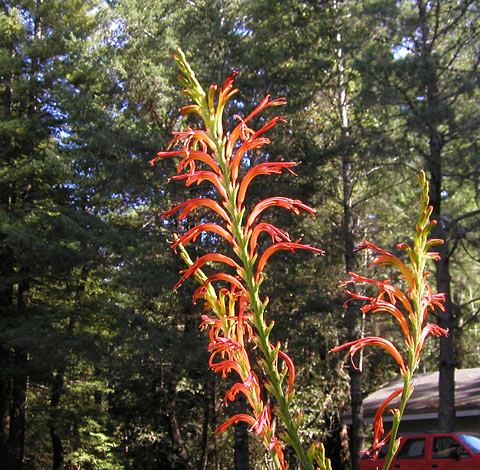
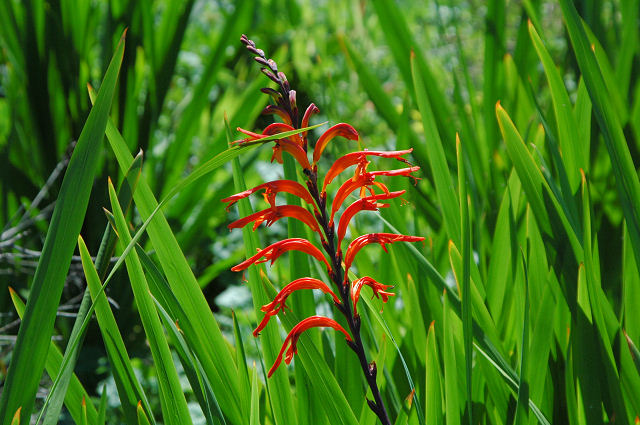
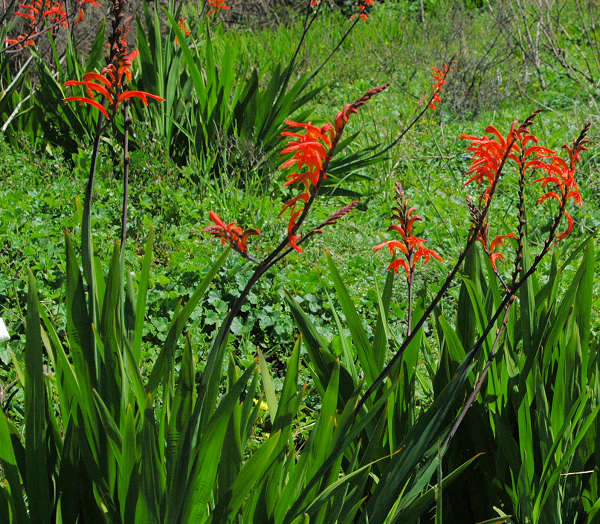
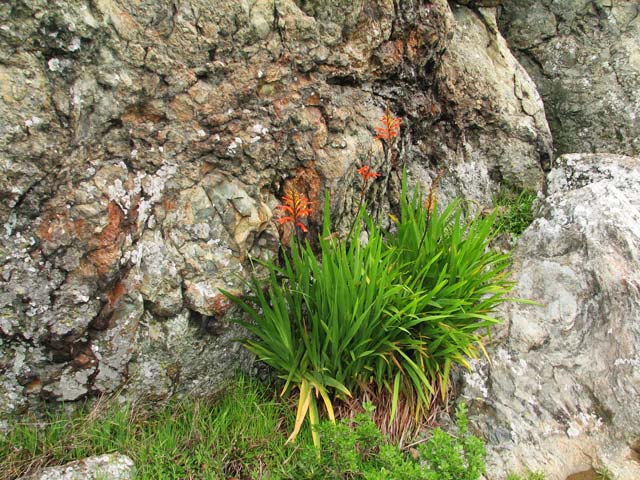
Chasmanthe floribunda (Salisb.) N.E.Br. grows on sandstone and granite in the northwest and southwest Cape. It can get to be quite large: 20-47 inches (50-120 cm) high with orange-red flowers on a two-ranked erect spike. It flowers in spring. Photos 1-2 by Bob Rutemoeller were taken in Northern California where it can be weedy (and the flowers can be eaten by deer too). It can make quite a statement in a landscape however. Photos 3-4 were taken in South Africa near Brackenfell, August 2006 by Mary Sue Ittner. Photo 5 was taken by Nhu Nguyen in northern California where it had escaped nearby gardens but it looks nice against the rocks.
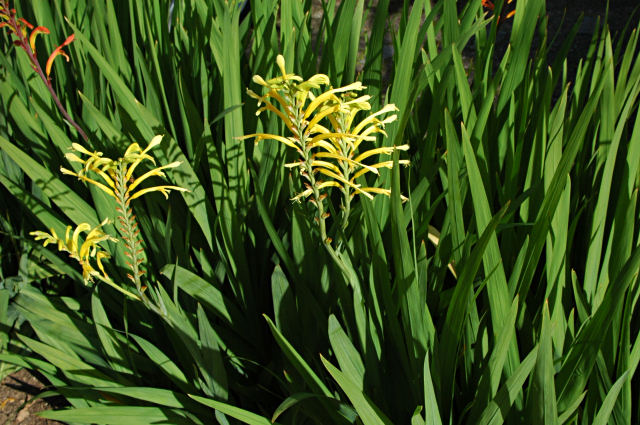
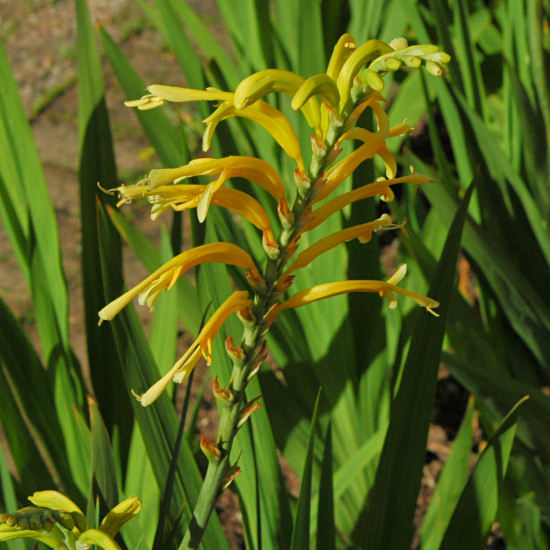
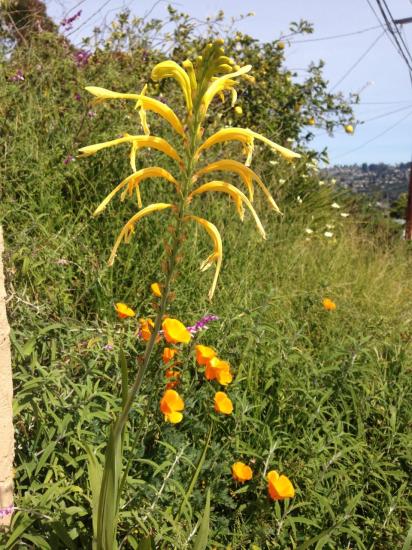
A variety in cultivation, named var. duckittii G.J.Lewis ex originated from a plant or colony near Darling in the 1920s. It has pale yellow flowers. Authors in the book cited above argue that it is not different enough for variety status, but is certainly worthy of cultivar status. Photos 1-2 taken by Mary Sue Ittner September 2006 at Kirstenbosch National Botanical Garden where it was growing next to the parking lot. Photo 3 was taken by Arnold Trachtenberg. Photo 4 was taken in a wild area (probably a legacy garden) in Berkeley by Uluwehi Knecht.